Skip to content

Considering the Bible

  • Testimony
  • Purpose
  • Contact Me
  • Home
  • About
  • Jeremiah 7 – The Temple of the Lord 1

    2020-04-13

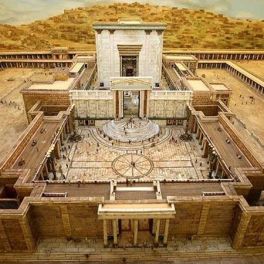
    Temple_Jerusalem

    The Temple of the Lord

    I was in Sunday School a few weeks back and we were studying Jeremiah 7. All during the class, something seemed “off”. It is usually a great class, but this particular time, the focus did not seem to be on the passage.

    Why is Jeremiah harping about “The Temple of the Lord”, when it is obvious that the Jewish worshipers are attending faithfully?

    How is “The Temple of the Lord”, referred to in Jeremiah 7, applicable to the modern day Christian?

    What did Jeremiah say? First off, let’s read the passage.

    Jeremiah 7:1-15

    1 The word that came to Jeremiah from the LORD:

    2 “Stand in the gate of the LORD’s house, and proclaim there this word, and say, Hear the word of the LORD, all you men of Judah who enter these gates to worship the LORD.

    3 Thus says the LORD of hosts, the God of Israel: Amend your ways and your deeds, and I will let you dwell in this place.

    4 Do not trust in these deceptive words: ‘This is the temple of the LORD, the temple of the LORD, the temple of the LORD.’

    5 “For if you truly amend your ways and your deeds, if you truly execute justice one with another,

    6 if you do not oppress the sojourner, the fatherless, or the widow, or shed innocent blood in this place, and if you do not go after other gods to your own harm,

    7 then I will let you dwell in this place, in the land that I gave of old to your fathers forever.

    8 “Behold, you trust in deceptive words to no avail.

    9 Will you steal, murder, commit adultery, swear falsely, make offerings to Baal, and go after other gods that you have not known,

    10 and then come and stand before me in this house, which is called by my name, and say, ‘We are delivered!’–only to go on doing all these abominations?

    11 Has this house, which is called by my name, become a den of robbers in your eyes? Behold, I myself have seen it, declares the LORD.

    12 Go now to my place that was in Shiloh, where I made my name dwell at first, and see what I did to it because of the evil of my people Israel.

    13 And now, because you have done all these things, declares the LORD, and when I spoke to you persistently you did not listen, and when I called you, you did not answer,

    14 therefore I will do to the house that is called by my name, and in which you trust, and to the place that I gave to you and to your fathers, as I did to Shiloh.

    15 And I will cast you out of my sight, as I cast out all your kinsmen, all the offspring of Ephraim.

    What is it that Jeremiah wants from these worshipers?

    AMEND YOUR WAYS

    • amend your ways and your deeds
    • if you truly amend your ways and your deeds
    • if you truly execute justice one with another
    • if you do not oppress the sojourner, the fatherless, or the widow, or shed innocent blood in this place,
    • if you do not go after other gods to your own harm

    Only if the nation of Israel amends their ways, will they be able to remain in the land. (see vs 7)

    But Carl – The Temple of the Lord – that is the security, the promise, the TEMPLE. How could anything go wrong since the nation of Israel had the blessing and privilege granted to them to have the TEMPLE OF THE LORD.

    Verse 8 speaks of deceptive words again, that the nation was trusting in. These words are…

    THE TEMPLE OF THE LORD

    Wait, the blessing and privilege of having the temple of the Lord in the nation of Israel is becoming a stumbling block to the nation of Israel. At the very least it was a massive distraction. You see, the Lord is not so concerned about edifices, buildings, construction, brick and mortar….

    My wife’s favorite verse goes something like this

    1 Samuel 16:7

    But the LORD said to Samuel, “Do not look on his appearance or on the height of his stature, because I have rejected him. For the LORD sees not as man sees: man looks on the outward appearance, but the LORD looks on the heart.”

    Although Samuel was referring to the stature and appearance of David’s first son, the principle applies here. As idolatrous humans, we seek to honor and worship that which we can see, feel and own.

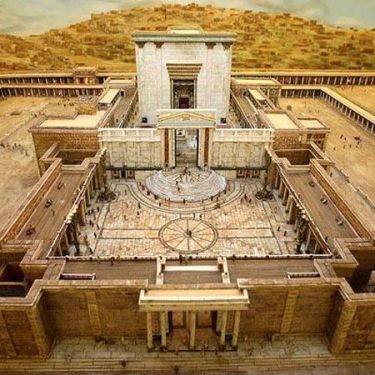
    Temple_Jerusalem 2

    The Temple fell into that category. And the Temple was to be abandoned, just like the Father abandoned Shiloh. He did it once before. His word is faithful, and looking back upon Jeremiahs time, it is easy for us to see the fulfillment his prophecy. The Babylonians swept in, and the nation was taken away to Babylon for 70 yrs.

    Another prophet (and so much more) came on the scene, and recognized the nation of Israel’s spiritual condition. He spoke of abandoning the Temple.

    They crucified Him.
    The temple was sacked 40 yrs later. Think of it. The mercy of the Crucified One to allow for 40 years to pass, seeking repentance, prior to bringing final judgement on the nation.

    I have more to say, but I would like to finish this post simply considering the mercy and kindness of the One who died for me.

    He is good.


    ← Back

    Thank you for your response. ✨

    Follow Considering the Bible on WordPress.com

    Thanks again for coming to visit. I hope you found something of interest in this post and would appreciate a comment, to begin a discussion.
    Share this:

    • Email a link to a friend (Opens in new window) Email
    • Print (Opens in new window) Print
    • Share on Telegram (Opens in new window) Telegram
    Like Loading…
  • Conditional Security – 1 Peter 1:5-9

    2020-04-12

    Conditional Security - if-150x150 - Red with Splash

    It’s been a while since I have blogged on the topic of “Conditional Security”. Probably too long.

    I admit, I struggle with the topic, and yearn for the days when I was convinced of the “Once Saved Always Saved” (OSAS) belief.

    But I have considered what “those other believers” teach (as if there is such a group as “those other believers”!), and have found their argument to have some strength.

    How do you handle other opinions and teachings within the church? Are they a threat? Do you automatically consider the source heretical?

    Generally, when a believer teaches something your denomination avoids or condemns, do you assume your group is right, or do you test the teaching by studying the Word? Simply refusing it since you may not have been taught it seems shortsighted, and kinda arrogant.

    I fell into that religious swamp for far too many years, and I thank God that He gave me the willingness to consider opposing teachings. I was in a religious ghetto, an echo chamber that was creating a spirit of deadness in me.

    Don’t live in da ghetto brudder!

    Consider some opposing view that good Christian men and women believe. Be challenged by it and do not avoid it. Search the Scripture to see if it be so.

    Okay, enough of my rant. Back to conditional security.

    This particular set of verses may seem to argue against conditional security, and if that be, that be good. We all need to be corrected by the Word, to be humble enough to admit that our knowledge base is tiny, somewhat full of hot air, and shot through with bias’s and wrong motivations.

    If the Bible teaches something that we are to rely on, it needs to be clearly taught and without contradictions. The rest is potential fodder for destructive argument and distractive red herrings. But I digress (again).

    Let’s consider the passage.

    1 Peter 1:3-9
    3 Blessed be the God and Father of our Lord Jesus Christ! According to his great mercy, he has caused us to be born again to a living hope through the resurrection of Jesus Christ from the dead,
    4 to an inheritance that is imperishable, undefiled, and unfading, kept in heaven for you

    5 who by God’s power are being guarded through faith for a salvation ready to be revealed in the last time.
    6 In this you rejoice, though now for a little while, if necessary, you have been grieved by various trials,
    7 so that the tested genuineness of your faith—more precious than gold that perishes though it is tested by fire—may be found to result in praise and glory and honor at the revelation of Jesus Christ.
    8 Though you have not seen him, you love him. Though you do not now see him, you believe in him and rejoice with joy that is inexpressible and filled with glory,
    9 obtaining the outcome of your faith, the salvation of your souls.

    I suppose a point of strength for the OSAS folks in this verse is the reference to God’s power that is guarding us.

    What a promise that the imperishable undefiled inheritance is being kept in heaven while we are being guarded.

    Notice that “kept” and “guarded” seem to have the same thought. Let’s chase this idea a bit and consider any difference between these two words.

    Kept

    The word “kept” in 1 Peter 1:4 is sometimes translated as reserved.

    Thayers Greek says this term is this verse refers to something “to be used some day for some purpose” The idea of something that is not being used right now, but is stored, kept, maintained and secured until it is needed.

    Ok I think I get that idea.

    Guarded

    The word “guarded” in 1 Peter 1:5, per Thayers Greek is a term that refers to “watching and guarding to preserve one for the attainment of something (R. V. guarded unto etc.), passive.”

    Interesting. Two things catch my eyes in that definition.

    • To preserve one for the attainment of something.
      • This definitely relates to salvation, future salvation, per the verse.
      • What is being preserved?
        • The believer
      • What is the intent of the preservation?
        • Future salvation.
    • Passive?
      • Why is the word passive included in this definition?
        • Does the word passive describe the activity of the participant in the sentence? Like, the guarding is being done to (or for) the believer, not by the believer.
          • This is a general call out to any NT Greek student – I am not schooled in Greek and am open to be corrected. Please let me know.

    Let’s dig a bit more and consider Vines Dictionary.

    Vines refers to “guarded,” in verse 5 stating it to define “that security that is his when he puts all his matters into the hand of God” (Italics mine)

    OSAS 1

    I think that is the issue that I missed (avoided?) as an OSAS fella!

    If the verse had a period after “guarded”, the message would be completely different. We would be the passive recipients of God’s guarding. Who wouldn’t want that?

    But Peter did’t stop there – he seems to have something else in mind. Something called faith, the faith of the believers he is talking to.

    But isn’t the initial faith when we first believed sufficient? Peter mentions “through faith”. Note that the power of God is guarding us through faith.

    Would Peter accept the notion that the guarding of God would continue if we renounced our faith?

    Faith is a decision to believe the known character of God, to act on His promises. The believers in Peter’s letter were undergoing persecution and needed to exercise thier faith in the guarding power of God.

    Peter wanted them to understand thier faith would be tested for genuineness, and that would result in praise to the Lord Jesus. Being tested requires an active faith in the Lord Jesus.
    Praise God we are being guarded by the mighty hand of God, that His loving protection and guidance is available for believers through faith unto salvation.
    Let’s not presume upon the grace of God, but continue to learn of His ways through the Word.


    ← Back

    Thank you for your response. ✨

    Follow Considering the Bible on WordPress.com

    Thanks again for coming to visit. I hope you found something of interest in this post and would appreciate a comment, to begin a discussion.

    Share this:

    • Email a link to a friend (Opens in new window) Email
    • Print (Opens in new window) Print
    • Share on Telegram (Opens in new window) Telegram
    Like Loading…
  • What Jesus Probably Didn’t Mean – Matthew 16:18

    2020-04-11

    Institution?

    when+jesus+said+loves+your+enemies.jpg?format=original

    Organism?
    Whats the difference?
    Does it matter?

    Matthew 16:18

    And I tell you, you are Peter, and on this rock I will build an institution called the church, and the gates of hell shall not prevail against it.

    This misunderstanding held sway in my life for far too long. I mistakenly assumed that the status quo of a building and professional clergy were the correct interpretation of Jesus statement in Matthew 16:18.

    Below are 20 points describing the differences between the institutional church and the Traditional Church, as described in the New Testament.

    Each of these 20 points of difference are worthy of much more discussion, but these posts are intended to be brief and to the point – kinda like a bumper sticker!

    The Traditional Church The New Testament Church
    1. The church meets in a special building Churches met primarily in homes.
    (Acts 2:46-47; 5:42; 8:3; 12:12; 16:40; 20:7-8; 20:20; Rom.16:3-5; 1Cor.16:19; Col.4:15; Philemon 2; 2Jn.9-11)
    2. New converts are added to the existing church to make it bigger. When the number of believers outgrew a home, a new church was formed.
    (Rom.16:3-5; 14-15; Acts 2:41-47)
    3. The Christian church is fractured into hundreds of different denominations. There were no denominations; instead there was one church in each city, meeting in various homes.
    (Acts 8:1; 11:26; 18:22; Rom.16:1; 1Cor.1:2; Rev.2:1; Col.4:16; 1Thess.1:1; Rev.2:12; 3:7; 3:1; 2:8; 2:18)
    4. Pastors are trained in seminaries and sent out to serve in a congregation which has no real knowledge of his life or character. Elders were local brothers who arose from within a local church where their life and character were known.
    (Acts 14:23; Titus 1:5)
    5. The Sunday “worship service” is characterized by passivity among the laity with the Pastor or a select group of leaders doing nearly all the ministry. Church meetings were participatory and interactive – every member had a function and contribution to make.
    (1Cor.12:4-27; 14:26; Eph.4:15-16; Rom.12:3-8; 1Pet.4:10-11; Heb.10:23-25; Rom.12:15; 1Cor.12:26)
    6. The Sunday morning worship service is characterized by a rigid and inflexible order of service. Church meetings were characterized by informality, flexibility, and spontaneity. (Acts 20:7-12; 1Cor.14:26-31)
    7. The goal of the meeting is worship, listening to a sermon or evangelism. The goal of the meeting was mutual edification.
    (1Cor.14:3,4,5,12,17,26; Eph.4:11-12,16; Heb.10:24-25)
    8. The church is led by the Pastor (or Senior Pastor in a large church). The church was led by a plurality of co-equal Elders.
    (Acts 14:23; 20:28; Phil.1:1; 1Tim.4:17; Heb.10:17; James 5:14; 1Pet.5:1-2)
    9. The Senior Pastor is seen as set apart from and over the other pastors and elders. The church was cared for by a team of pastors who were accountable to each other and the church; they were also known as elders or overseers. No one elder functioned as the head of the church. (Acts 20:28; Titus 1:5-7; 1Pet.5:1-2)
    10. The Pastor is paid a salary by the church. Some elders might be financially supported, but they were usually bi-vocational
    (1Tim.5:17-18; Acts 20:33-35)
    11. The church is composed of both clergy and laity. There was no clergy/laity distinction in the church – all the members comprised a fully functioning priesthood.
    (Heb.13:15-16; 1Pet.2:5,9; Rev.1:6)
    12. The Lord’s Supper is observed monthly, quarterly, or annually. The Lord’s Supper was observed as often as the church regularly gathered and was the stated purpose for their meetings.
    (Acts 20:7; 1Cor.11:18-20,33)
    13. The Lord’s Supper is observed with a piece of cracker and a sip of juice. The Lord’s Supper was observed as a full meal.
    (Acts 2:42,46; 1Cor.11:20-21; Jude 12)
    14. The Lord’s Supper is observed in a solemn funeral-like atmosphere as the worshippers reflect on Christ’s sufferings and death. The believer’s vertical relationship with Christ is emphasized. The Lord’s Supper was observed with glad and sincere hearts as the church not only reflected on Christ’s death, but also on the future marriage supper of the Lamb which it depicted. The believer’s horizontal relationship with other believers was emphasized.
    (Acts 2:46; Luke 22:15-18,30; 1Cor.11:26; Acts 2:42; 1Cor.10:16)
    15. A new believer must go through membership or instructional classes before he can be baptized. New believers were baptized as soon as it was humanly possible.
    (Acts 2:37-41; 8:12; 8:36-38; 9:17-18; 10:45-48; 16:31-34; 19:5)
    16. Baptism is performed by the clergy. Baptism was performed by any Christian.
    (Jn.4:2; Acts 8:12; 8:36-39; 9:18; 22:16; 1Cor.1:17)
    17. The church must be present when someone is baptized.. The church was not always present when someone was baptized.
    (Acts 8:12; 8:36-39; 16:31-34)
    18. Pastors deliver monologue sermons with no opportunity for questions or input from the congregation. Various brothers taught the church, and allowed the congregation the opportunity to question them and/or add their own insights.
    (Acts 20:7; 1Cor.14:29-35)
    19. The church allocates the great majority of its finances for administrative overhead (salaries and building expenses). The church gave primarily to relieve the poor and assist Christian workers, often beyond their means; they had very little if any administrative expenses
    (Acts 2:44-45; Gal.6:9-10; 1Jn.3:17; 1Tim.5:17-18; 1Cor.9:6-14; 2Cor.8:3; Phil.4:15-18; Lk.12:33-34; Eph.4:28; James 1:27)
    20. Believers are often urged to tithe; that is, they are taught to give a minimum of 10% to the church. Believers gave voluntarily as God had blessed them and they had purposed in their heart; tithing was not carried over into the NT church.
    (2Cor.8:3-4; 9:7)

    Matthew 16:18

    And I tell you, you are Peter, and on this rock I will build my church, and the gates of hell shall not prevail against it.

    Gates-of-Hell-Sign

    Remember that the gates of hell shall not prevail against His church.

    I don’t know if there is any guarantee for the institutional church. (I am afraid it might be skating on thin ice!!!)

    Leave me a comment, lets start a discussion.


    ← Back

    Thank you for your response. ✨

    Follow Considering the Bible on WordPress.com

    Thanks again for coming to visit. I hope you found something of interest in this post and would appreciate a comment, to begin a discussion.

    Share this:

    • Email a link to a friend (Opens in new window) Email
    • Print (Opens in new window) Print
    • Share on Telegram (Opens in new window) Telegram
    Like Loading…
  • Patience – Mimics God’s Character

    2020-04-10

    Patience – No one asks for it. To do so, brings catastrophe. At least in the here and now.Patience 2

    Yet, as painful as trials are, exercising patience in the trials of our lives, produces plenty of fruit.

    Hebrews 12:9-11

    9 Besides this, we have had earthly fathers who disciplined us and we respected them. Shall we not much more be subject to the Father of spirits and live?

    10 For they disciplined us for a short time as it seemed best to them, but he disciplines us for our good, that we may share his holiness.

    11 For the moment all discipline seems painful rather than pleasant, but later it yields the peaceful fruit of righteousness to those who have been trained by it.

    Patience 3

    Patience Mimics God’s Character

    Romans 2:4

    4 Or do you presume on the riches of his kindness and forbearance and patience, not knowing that God’s kindness is meant to lead you to repentance?

    How often I have considered that the best way to bring one into the kingdom is through threats of hell, punishment, and judgment.

    No Carl that is so wrong!

    We are called to exercise love, patience, goodness and forbearance (self-restraint/tolerance) to those who oppose us.  This is the Christian life and part of the cross we are to carry.

    Romans 9:22

    22 What if God, desiring to show his wrath and to make known his power, has endured with much patience vessels of wrath prepared for destruction,

    This verse starts out with God willing to shew wrath, and ends with a display of God’s patience to those who  deserve the wrath.  What an amazing God we serve!

    Galations 5:22
    22 But the fruit of the Spirit is love, joy, peace, patience, kindness, goodness, faithfulness,

    Although we have the privilege to walk in the Spirit, we have to remember that this is not our fruit, but the fruit of the Spirit that is being displayed in our lives as we yield to the truth.

    Patience 1


    ← Back

    Thank you for your response. ✨

    Follow Considering the Bible on WordPress.com

    Thanks again for coming to visit. I hope you found something of interest in this post and would appreciate a comment, to begin a discussion.



    End Notes
    1  The following information is found in The Complete Word Study Dictionary, AMG Publishers. (emphasis mine)
    G2347 – θλίψις – thlípsis; gen. thlípseōs, fem. noun from thlíbō (G2346), to crush, press, compress, squeeze, which is from thláō (n.f.), to break. Tribulation, trouble, affliction.
    (I) In a figurative manner, pressure from evils, affliction, distress (2Co_2:4; Php_1:16); of a woman in travail (Joh_16:21). Often as a metonym for evils by which one is pressed, i.e., affliction, distress, calamity (Mat_13:21; Act_7:10-11; Rom_5:3; 2Co_1:4; Heb_10:33). In apposition in Mar_13:19. With the syn. stenochōría (G4730), literally narrowness of room, anguish, distress (Rom_2:9); with anágkē (G318), constraint, necessity (2Co_6:4; 1Th_3:7). See Sept.: 1Sa_10:19; Psa_119:143; Isa_8:22.
    (II) Related to stenochōría (G4730), distress, narrowness, occurring only four times with the connotation of narrowness, from stenós (G4728), narrow of room, confined space. In three of the four occurrences in the NT, stenochōría is associated with thlípsis (Rom_2:9; Rom_8:35; 2Co_6:4). Thlípsis refers more to being crushed while stenōchoría refers more to narrowness of room or discomfort. Tribulation may affect either body or mind or both.
    2  The following information is found in The Complete Word Study Dictionary, AMG Publishers. (emphasis mine)
    Patience – G5281 ὑπομονή hupomone
    to persevere, remain under. A bearing up under, patience, endurance as to things or circumstances
    Hupomonḗ is associated with hope (1Th_1:3) and refers to that quality of character which does not allow one to surrender to circumstances or succumb under trial.
    Generally meaning endurance, patience, perseverance or constancy under suffering in faith and duty.
    Specifically patience as a quality of mind, the bearing of evils and suffering with tranquil mind.
    Longsuffering – G3115 μακροθυμία makrothumía;
    To be long-suffering. Forbearance, long-suffering, self-restraint before proceeding to action. The quality of a person who is able to avenge himself yet refrains from doing so
    In Heb_6:15, makrothuméō (G3114) is used of Abraham’s patient faith in God under the pressure of trying circumstances (Jas_5:7-8).
    Makrothumía is patience in respect to persons while hupomonḗ (G5281), endurance, is putting up with things or circumstances. Both words are often found together (2Co_6:4, 2Co_6:6; 2Ti_3:10).
    Makrothumía is associated with mercy (éleos [G1656]) and is used of God.

    Share this:

    • Email a link to a friend (Opens in new window) Email
    • Print (Opens in new window) Print
    • Share on Telegram (Opens in new window) Telegram
    Like Loading…
  • What Jesus Probably Didn’t Mean – Matthew 5:9

    2020-04-09

    I admit it it – I am Canadian by birth.

    I am thankful for my Canadian heritage. As I grew up in the Great White North, I assumed many social norms as being absolutely without debate, the way it should be.

    One of these social norms, that carried with it a certain nationalistic pride, was the Canadian armed forces . It was commonly understood that the Canadian armed forces were principally a peace keeping force throughout troubled areas of our planet.

    Making Peace for Our Benefit

    Fast forward to 2001. I had moved to the USA and was living in a small town in the Texas panhandle. The towers had just fallen and the church I was attending had a special meeting to hear what the President had to say about this. The nation I was living in was going to hunt all terrorists down. The populace demanded peace and security. I felt the national pride oozing out of my friends and understood their desire for defending their nation.

    But, as a Christian, I was confused. I had been brought up within a peace keeping society, and was now I lived in a nation that has been involved in warfare for 214 of 235 yrs of existence. (see bottom of post for further information)

    Peace Keeper or Peace Maker

    Imagine my surprise when I read the Masters words (without the group dynamic of believers cheering on a social norm). His words are simple and incredibly challenging, not only for a believer in America, but also for a Canadian believer. You see, He didn’t say…

    Blessed are the peacekeepers: for they shall be called the children of God. Nope – nice try but that’s not what He said.

    Lets read what He said

    Matthew 5:9

    “Blessed are the peacemakers, for they shall be called sons of God.

    Believers are to make peace. Being a peace keeper or at least being associated as one, was not His intent.

    Some may say that His intent was only to direct the believer in their personal relationships, foster peace among friends, but this seems to unnecessarily compartmentalized His words, dontcha think?

    Maybe He meant “Blessed are the peacemakers (cept for situations where the enemy has done something bad)”.

    Duh, that don’t make no sense. It’s easy, even pleasurable to be at peace with those who at peace with you.

    It is important to remember that as believers we have become followers of another King, and that any time a conflict between an earthly king and our Heavenly King becomes apparent, we must follow Him. When the nation we live in decides to pursue military action, as believers we have the privilege of praying for the safety of all those involved, and relieving those who have suffered due to the conflict.

    Do we have the freedom to kill or hurt?

    Matthew 5: 9

    Blessed are the peacemakers: for they shall be called the children of God.

    As an aside, consider the list “American involvement in warfare” at the bottom of the post, and reflect on the effectiveness of using violence to engender enduring peace.

    Of course, Jesus was speaking to His followers when He gave these instructions, and not to government power.

    Government power ultimately used violence/war to shut Him up.


    ← Back

    Thank you for your response. ✨

    Follow Considering the Bible on WordPress.com

    Thanks again for coming to visit. I hope you found something of interest in this post and would appreciate a comment, to begin a discussion.


    American involvement in warfare

    1. The American Revolution
      1775-1783
    2. The Indian Wars
      1775-1890
    3. Shay’s Rebellion
      1786-1787
      Rebellion
      Anti-(state)Government Rebels vs. Massachusetts
    4. The Whiskey Rebellion
      1794
      Rebellion
      Anti-Tax Rebels in Western Pennsylvania
    5. Quasi-War With France
      1798-1800
      Inter-State (Naval) War
      France
    6. Fries’s Rebellion “The Hot Water War”
      1799
      Rebellion
      Anti-Tax Rebels in Pennsylvania
    7. The Barbary Wars
      1800-1815
      Inter-State War
      The Barbary States
      (Tripoli, Algiers & Morocco)
    8. The War of 1812
      1812-1815
      Inter-State War
      Great Britain
      The Growing & Troubled Republic
    9. Mexican-American War
      1846-1848
      Inter-State War
      Mexico
    10. U.S. Slave Rebellions
      1800-1865
      Slave Rebellions
      Various Slave groups
    11. “Bleeding Kansas”
      1855-1860
      Civil War (state of Kansas)
      Pro-Slavery vs. Anti-Slavery Kansans
    12. Brown’s Raid on Harper’s Ferry
      1859
      Rebellion
      Anti-Slavery Rebels (Led by John Brown)
    13. United States Civil War
      1861-1865
      Civil War
      United States (The North)
      vs.
      The Confederate States (The South)
    14. U.S. Intervention in Hawaiian Revolution
      1893
      Internal Rebellion & Foreign Intervention
    15. The Spanish-American War
      1898
      Inter-State War
    16. U.S. Intervention in Samoan Civil War
      1898-1899
      Civil War & Foreign Intervention
    17. U.S.-Philippine War
      1899-1902
      Colonial War, War of Imperialism
    18. Boxer Rebellion
      1900
      Internal Rebellion & Foreign Intervention
      Chinese Government & “Boxer” Rebels
    19. The Moro Wars
      1901-1913
      Colonial Wars
      Philippine Muslim Rebels
    20. U.S. Intervention in Panamanian Revolution
      1903
      Secessionist Revolution & Foreign Intervention
      Colombia
    21. The Banana Wars
      1909-1933
      Civil Wars & Foreign Intervention
      Various Rebel Groups In Central America
    22. U.S. Occupation of Vera Cruz
      1914
      Inter-State War
      Mexico
    23. Pershing’s Raid Into Mexico
      1916-1917
      Inter-State, Border War
      Mexican Government & Mexican Rebels (“Bandits”)
    24. World War I
      1917-1918 (American involvement only)
      Inter-State War
      Germany
    25. Allied Intervention in Russian Civil War
      1919-1921
      Civil War & Foreign Intervention
      Russian Bolshevik (Soviet) Government
    26. World War II
      1941-1945 (American involvement only)
      Inter-State War
      Germany, Japan & Italy
    27. The Cold War
      1945-1991
      Global Inter-State Cold War
      The Soviet Union & Communist China
    28. The Korean War
      1950-1953
      Inter-State War
      North Korea & China
    29. The Second Indochina War “Vietnam War”
      1956-1975
      Civil War, Inter-State War
      North Vietnam & South Vietnamese “Viet Cong” Rebels
    30. U.S. Intervention in Lebanon
      1958
      Civil War & Foreign Intervention
      No real foe for U.S. Troops landed to support Lebanon Gov.
    31. Dominican Intervention
      1965
      Civil War & Foreign Intervention
      Rebels in the Dominican Republic
    32. The Mayaguez Rescue Operation
    33. News Story 1975 (May 15)
      Hostage Rescue & Inter-State Conflict
      Khmer Rouge Guerrillas (the new government of Cambodia)
    34. Iranian Hostage Rescue “Desert One” or “Operation Eagle Claw”
      1980 (April 25)
      Hostage Rescue & Inter-State Conflict
      Iran
    35. U.S. Libya Conflict
      1981, 1986
      Inter-State War
      Libya
    36. U.S. Intervention in Lebanon
      1982-1984
      Civil War,Foreign Intervention & Inter-State War
      Syria & Various Muslim and Leftist Lebanese Militias
    37. U.S. Invasion of Grenada
      1983
      Inter-State War
      Marxist Grenadian Faction & Cuba
    38. The Tanker War
    39. “Operation Earnest Will”
      1987-1988
      Inter-State War
      Iran
    40. U.S. Invasion of Panama
      1989
      Inter-State War
      Panama
    41. Second Persian Gulf War “Operation Desert Storm”
      1991
      Inter-State War
      Iraq
    42. “No-Fly Zone” War
      1991-2003
      Inter-State War
      Iraq
    43. U.S. Intervention in Somalia
      1992-1994
      Civil War & Foreign Intervention
      Various Somali Militias
    44. NATO Intervention in Bosnia (Operation Deliberate Force) Summary
      1994-1995
      Civil War,Foreign Intervention & Inter-State War
      Bosnian Serb Rebels
    45. U.S. Occupation of Haiti
      1994
      Foreign Intervention
      Haitian Government
    46. U.S. Embassy bombings and strikes on Afghanistan and Sudan (The bin Laden War)
      August, 1998
      Terrorist Conflict
    47. “Desert Fox” Campaign (part of U.S./Iraq Conflict)
      December, 1998
      Inter-State War
      Iraq
    48. Kosovo War
      1999
      Civil War, Foreign Intervention & Inter-State War
      Yugoslavia/Serbia
    49. Attack on the USS Cole
      October 12, 2000
      Terrorist Conflict
      Terrorists associated with Osama bin Laden
    50. Attack on the World Trade Center and the Pentagon
      September 11, 2001
      Terrorist Conflict
      Osama bin Laden’s al-Qaida organization
    51. Afghanistan War (Operation Enduring Freedom)
      October 7, 2001-Present
      War against Terrorism
      The Taliban and Osama bin Laden’s Al-Qaida organization
    52. Third Persian Gulf War “Operation Iraqi Freedom”
      March 19, 2003-Present
      Inter-State War
      Iraq

    Share this:

    • Email a link to a friend (Opens in new window) Email
    • Print (Opens in new window) Print
    • Share on Telegram (Opens in new window) Telegram
    Like Loading…
  • Local Church Membership Q&A – 10

    2020-04-08
    Church on a hill

    Previous posts in this series were based on a pamphlet provided to me in my search for direction regarding local church membership.  A brother named Cody sought to help me and I wish him well.

    When I replied with the previous responses, I did not hear from him for a period of time.  Of course, I feared I may have come off a bit strong, and in the interest of maintaining communication, reached out to him again.


    As I have been thinking on this topic, I have considered 9 questions.

    One question will be offered for comment in each of the following posts. Consider and respond, or again, if you want to discuss just let me know.

    Time for Questions

    Does Local Church Membership actually create divisions among Christians?

    If I were to join your church, would you restrict me from joining any other church?

    How does this not create a condition of partiality?

    James 2:4

    4 have you not then made distinctions among yourselves and become judges with evil thoughts?

    These distinctions are not described as unnecessary, illogical or evil in themselves, but simply “distinctions among themselves”

    James 2:8-9

    8 If you really fulfill the royal law according to the Scripture, “You shall love your neighbor as yourself,” you are doing well. 
    9 But if you show partiality, you are committing sin and are convicted by the law as transgressors.

    submit-to-authority-728x500

    Even though James does not describe these distinctions as evil, he does describe the outcome of the actions as sin.

    Although many time the Bible speaks of a particular teaching only once, it is not so with this concept.

    James is echoed by Paul in Galations.

    Galations 3:25

    25 But now that faith has come, we are no longer under a guardian, 
    26 for in Christ Jesus you are all sons of God, through faith. 
    27 For as many of you as were baptized into Christ have put on Christ. 
    28 There is neither Jew nor Greek, there is neither slave nor free, there is no male and female, for you are all one in Christ Jesus. 
    29 And if you are Christ’s, then you are Abraham’s offspring, heirs according to promise.

    Galatians 6:10

    10 So then, as we have opportunity, let us do good to everyone, and especially to those who are of the household of faith.

    Notice that Paul did not restrict the act of goodness to a particular household of faith.  There is no law against love.  I think Paul said something about that in this very book of Galations.

    I let you look it up!


    Our next post will address another question concerning the teaching of loacal church membership.  I do hope you will join me in my discussion with Cody, and supply comment or correction from the Word for our mutual edification.

    If you read something in this discussion that concerns you, please take the time to send me your comments or reply within the post.  I look forward to hearing from you.

    ← Back

    Thank you for your response. ✨

    Follow Considering the Bible on WordPress.com


    Share this:

    • Email a link to a friend (Opens in new window) Email
    • Print (Opens in new window) Print
    • Share on Telegram (Opens in new window) Telegram
    Like Loading…
  • What Jesus Probably Didn’t Mean – John 13:19

    2020-04-07

    when+jesus+said+loves+your+enemies.jpg?format=originalWho wants to know the future? 

    Come on – I see you out there, just famished for a bit of prophecy to understand.

    And when do you want to know it? 

    Of course, I wanna know the future, and I wanna know it NOW!

    But more importantly, WHY? 

    Doh, this is a bit hard to admit to.

    Jesus helps us to get our head on straight in the following passage.  Let’s read it together.

    John 13:19

    Now I tell you before it come, that, before it is come to pass, ye may know the future.

    Ah, Carl – you have not been honest with us!  Is that what the Word actually says?  Or is it just what you understand it to say?

    OK – you found me out.  Lets look at the passage as it is written.

    John 13:19

    I am telling you this now, before it takes place, that when it does take place you may believe that I am he.

    What is wrong with me?  Again, I understand the message of the Bible differently than what the Bible is trying to communicate to me.

    A few days back I was listening to Mark 15.  In that passage Joseph of Arimathaea took the body of Jesus, wrapped it in fine linen and placed it in a tomb.  My thoughts turned to questions.

    1. Did he perform this action out of obedience to the Word? 
    2. Did he see an Old Testament passage and decide to take action to fulfill the prophecy? 

    Joseph’s decision to take Jesus body and bury it fulfilled…

    Isaiah 53:9.

    And he made his grave with the wicked, and with the rich in his death; because he had done no violence, neither was any deceit in his mouth.

    In this instance, the text seems to teach that the fulfillment of the prophecy was not Joseph’s objective.  If so,  this particular prophecy in Isaiah was not given to inform prior to its fulfillment, but after its fulfillment. 

    What????

    Well – if that is generally true of prophecy, do we in the modern church look at Biblical prophecy incorrectly?  Do we try to find out the future for our own purposes? 

    Granted, some information (ex. Olivet discourse) was given to the disciples prior to the destruction of Jerusalem, that they might escape the judgement of God on the nation of Israel.  Even considering the Olivet discourse though, might the higher purpose of that prophecy be somewhat different from merely saving the disciples lives?  After all, most of the apostles were going to be martyred, and persecution was going to fall on the church shortly after the fall of Jerusalem.

    I suppose the general thought of trying to figger out the future is very popular among western Christians (of a certain stripe).  I admit I used to delve into the future forecasting quite heavily, but am now considering the wisdom of this attitude.  After all, each of the obvious prophetic fulfillments I spoke of failed to materialize – I was 100% wrong and in using the Scriptures to prove my point, only made a mockery of the Word – to my shame!)

    A year or so back, a particular passage in John got me thinking.  Actually, when I read it carefully, it created more questions than answers!  Jesus is talking to His disciples, telling them of a particular future event and actually lets them know WHY He tells them.

    John 13:19

    Now I tell you before it come, that, when it is come to pass, ye may believe that I am he.

    Did you catch the WHY when I supplied this verse above?  Get ready – here it comes 

    exploding head

    Why did you supply that prophecy Jesus?

    “…that, when it is come to pass, ye may believe that I am he.”

    The purpose was to direct the disciples faith to the person of Christ, not to instruct them of how to save their own bacon.  Not for some temporal reason, but to direct the attention to the Messiah.

    Consider

    1. Could revealing the Son of God be the highest purpose of prophecy? 
    2. Should we consider revealing the Son of God to be the primary focus of prophetic interpretation? 
    3. When we come to a particular prophecy in the Word, would the revelation of the Son of God in understanding the prophecy help us to know the heart of God better? 
    4. Would considering the revelation of the Son of God help us to rest in Him instead of hurrying about protecting ourselves from what we think may happen?

    Lets consider Biblical prophecy to be a gift, not to inform us of future events, but direct our attention to the One who is faithful!


    ← Back

    Thank you for your response. ✨

    ← Back

    Thank you for your response. ✨

    Follow Considering the Bible on WordPress.com

    Thanks again for coming to visit. I hope you found something of interest in this post and would appreciate a comment, to begin a discussion.

    Share this:

    • Email a link to a friend (Opens in new window) Email
    • Print (Opens in new window) Print
    • Share on Telegram (Opens in new window) Telegram
    Like Loading…
  • Patience – Christian Service Demands it

    2020-04-06

    Patience – No one asks for it. To do so, brings catastrophe. At least in the here and now.Patience 2

    Yet, as painful as trials are, exercising patience in the trials of our lives, produces plenty of fruit.

    Hebrews 12:9-11

    9 Besides this, we have had earthly fathers who disciplined us and we respected them. Shall we not much more be subject to the Father of spirits and live?

    10 For they disciplined us for a short time as it seemed best to them, but he disciplines us for our good, that we may share his holiness.

    11 For the moment all discipline seems painful rather than pleasant, but later it yields the peaceful fruit of righteousness to those who have been trained by it.

    Patience 3

    Christian Service Demands Patience

    2 Corinthians 6:4

    4 but as servants of God we commend ourselves in every way: by great endurance, in afflictions, hardships, calamities,

    How do men judge themselves as minister of God?  Sometimes, when a man states he is called to the ministry, he sometimes supports the claims with worldly criteria.

    Flamboyant, articulate, verbose, charismatic, personable, handsome, grave, organized….

    Paul states that his approval as a minister of God came through exercising much patience.

    Patience takes time.

    Character is different from personality.

    1 Timothy 6:11

    11 But as for you, O man of God, flee these things. Pursue righteousness, godliness, faith, love, steadfastness, gentleness

    2 Timothy 3:10

    10 You, however, have followed my teaching, my conduct, my aim in life, my faith, my patience, my love, my steadfastness,

    Both of these verses describe the importance of patience in the minister’s life.

    I sometimes consider the attributes described above (both prescriptive and descriptive) of the minister to be like a coat of fur on an animal.

    A porcupine does not grow fur like a mink. The fur comes from within.  No matter how hard a porcupine tries, they can not grow fur like a mink!

    The inner life is what produces a minister.  How is your inner life?

    Patience 1


    ← Back

    Thank you for your response. ✨

    Follow Considering the Bible on WordPress.com

    Thanks again for coming to visit. I hope you found something of interest in this post and would appreciate a comment, to begin a discussion.


    End Notes
    1  The following information is found in The Complete Word Study Dictionary, AMG Publishers. (emphasis mine)
    G2347 – θλίψις – thlípsis; gen. thlípseōs, fem. noun from thlíbō (G2346), to crush, press, compress, squeeze, which is from thláō (n.f.), to break. Tribulation, trouble, affliction.
    (I) In a figurative manner, pressure from evils, affliction, distress (2Co_2:4; Php_1:16); of a woman in travail (Joh_16:21). Often as a metonym for evils by which one is pressed, i.e., affliction, distress, calamity (Mat_13:21; Act_7:10-11; Rom_5:3; 2Co_1:4; Heb_10:33). In apposition in Mar_13:19. With the syn. stenochōría (G4730), literally narrowness of room, anguish, distress (Rom_2:9); with anágkē (G318), constraint, necessity (2Co_6:4; 1Th_3:7). See Sept.: 1Sa_10:19; Psa_119:143; Isa_8:22.
    (II) Related to stenochōría (G4730), distress, narrowness, occurring only four times with the connotation of narrowness, from stenós (G4728), narrow of room, confined space. In three of the four occurrences in the NT, stenochōría is associated with thlípsis (Rom_2:9; Rom_8:35; 2Co_6:4). Thlípsis refers more to being crushed while stenōchoría refers more to narrowness of room or discomfort. Tribulation may affect either body or mind or both.
    2  The following information is found in The Complete Word Study Dictionary, AMG Publishers. (emphasis mine)
    Patience – G5281 ὑπομονή hupomone
    to persevere, remain under. A bearing up under, patience, endurance as to things or circumstances
    Hupomonḗ is associated with hope (1Th_1:3) and refers to that quality of character which does not allow one to surrender to circumstances or succumb under trial.
    Generally meaning endurance, patience, perseverance or constancy under suffering in faith and duty.
    Specifically patience as a quality of mind, the bearing of evils and suffering with tranquil mind.
    Longsuffering – G3115 μακροθυμία makrothumía;
    To be long-suffering. Forbearance, long-suffering, self-restraint before proceeding to action. The quality of a person who is able to avenge himself yet refrains from doing so
    In Heb_6:15, makrothuméō (G3114) is used of Abraham’s patient faith in God under the pressure of trying circumstances (Jas_5:7-8).
    Makrothumía is patience in respect to persons while hupomonḗ (G5281), endurance, is putting up with things or circumstances. Both words are often found together (2Co_6:4, 2Co_6:6; 2Ti_3:10).
    Makrothumía is associated with mercy (éleos [G1656]) and is used of God.

    Share this:

    • Email a link to a friend (Opens in new window) Email
    • Print (Opens in new window) Print
    • Share on Telegram (Opens in new window) Telegram
    Like Loading…
  • What Jesus Probably Didn’t Mean – Matthew 22:39

    2020-04-04

     Interpretation

    Gotta Love Ourselves?

     I have often heard in Sunday School classes and small fellowships, (heck – even in big churches!) that in order to love God we need to first love ourselves.

    Sort of like when Jesus said in Matt 22:39 …

    Thou shalt love thy neighbor after you love thyself.

    What?  Is that what the Lord meant?

    No.  As a matter of fact, it may be important to simply read what Matthew actually records from the Masters lips.

    Matthew 22:39

    And a second is like it: You shall love your neighbor as yourself.

    Notice that the Lord made a command with an assumption embedded within it.  The assumption is that we already love ourselves.  The command does not say, “You shall love your neighbour after you have fully loved and honored and satisfied thyself.”

    Lets read it once more

    Matthew 22:39

    And a second is like it: You shall love your neighbor as yourself.

    This seems so obvious, but I still find the occasional believer who has not read what Jesus said but merely listened to some teacher refer to this passage in propping up his humanistic message.  The teaching goes somewhat like this.

    In order to love your neighbor, God said that you have to love yourself first.  Only a believer full of love for themselves can supply love for their neighbor.

    Is it not obvious that when Jesus said to love our neighbor as we love ourselves, self love was assumed.  This self love is the standard that Jesus was using to compare the amount of love that needs to be expressed to the neighbor.

    Love myselfTo Love Ourselves is the Problem

    As a matter of fact, it seems that self love is a problem.

    2 Timothy 3:2-5

    For people will be lovers of self, lovers of money, proud, arrogant, abusive, disobedient to their parents, ungrateful, unholy,

    heartless, unappeasable, slanderous, without self-control, brutal, not loving good,

    treacherous, reckless, swollen with conceit, lovers of pleasure rather than lovers of God,

    having the appearance of godliness, but denying its power. Avoid such people.

    Verse 2 includes self love but it sho isn’t in a list of admirable qualities.  It is also interesting that the culmination of this type of life will produce an appearance of godliness, but alas, denying the power of godliness.

    Finally, Paul says – Avoid such people.

    Wow.  Kinda harsh a bit, Paul?  He didn’t say to teach them, or to pity them, or to correct them, or to love them ….

    Avoid such people.

    Jesus also had something else to say about self love.  In Luke 9:23 he states that denying ones self is the way of discipleship, not to find some nebulous self love as the foundation of loving others.

    Luke 9:23

    And he said to all, “If anyone would come after me, let him deny himself and take up his cross daily and follow me.

    i-love-myself-quote-1I don’t know about you, but when I have fallen into this thinking, I just can’t seem to love myself enough.  I gotta coddle myself just one more time, one more pleasure, one more right exercised, one more time of me me me.

    My problem is that I love myself more than my neighbor, more than Jesus.  I hate it!

    Lets read the Word for what it says, not what we want it to say!

    Matthew 22:39

    And a second is like it: You shall love your neighbor as yourself.


    ← Back

    Thank you for your response. ✨

    Thanks again for coming to visit. I hope you found something of interest in this post and would appreciate a comment, to begin a discussion.

    Follow Considering the Bible on WordPress.com

    Share this:

    • Email a link to a friend (Opens in new window) Email
    • Print (Opens in new window) Print
    • Share on Telegram (Opens in new window) Telegram
    Like Loading…
  • Patience – Required to Inherit the Promises

    2020-04-03

    Patience – No one asks for it. To do so, brings catastrophe. At least in the here and now.Patience 2

    Yet, as painful as trials are, exercising patience in the trials of our lives, produces plenty of fruit.

    Hebrews 12:9-11

    9 Besides this, we have had earthly fathers who disciplined us and we respected them. Shall we not much more be subject to the Father of spirits and live?

    10 For they disciplined us for a short time as it seemed best to them, but he disciplines us for our good, that we may share his holiness.

    11 For the moment all discipline seems painful rather than pleasant, but later it yields the peaceful fruit of righteousness to those who have been trained by it.

    Patience 3

    Patience is Required to Inherit the Promises

    Romans 2:5-8 (note verse 7)

    5 But because of your hard and impenitent heart you are storing up wrath for yourself on the day of wrath when God’s righteous judgment will be revealed.

    6 He will render to each one according to his works:

    7 to those who by patience in well-doing seek for glory and honor and immortality, he will give eternal life;

    8 but for those who are self-seeking and do not obey the truth, but obey unrighteousness, there will be wrath and fury.

    Paul is speaking something hard here.

    Verse 6 speaks of judgment according to deeds.  (A fairly consistent teaching in the Word It fairly surprised me coming from the evangelical background of my past.)

    The hard thing is that Paul links immortality / eternal life somehow with patient continuance in good works.  How you work that out in your mind is up to you, but no matter how you do it, it is obvious that patience is necessary.

    Hebrews 6:12, 15

    12 so that you may not be sluggish, but imitators of those who through faith and patience inherit the promises. …

    15 And thus Abraham, having patiently waited, obtained the promise.

    Inheriting the promises and obtaining the promise.  For the sake of staying on focus concerning patience, I won’t venture into why “promises” in verse 12 morphs into a singular promise in verse 15.  It may be immaterial.  The point is, Abraham had a promise and it wasn’t realized until all his time was “wasted.”

    Sometimes patience is hardest to exercise due to our lack of understanding God’s promise.  But Abraham eventually understood.  Through patience, he obtained the promise.

    Hebrews 10:36

    36 For you have need of endurance, so that when you have done the will of God you may receive what is promised.

    Whoever wrote Hebrews was beating the same drum again.  Christians need to exercise patience.  We are on this earth to perform the will of God.  After that, the promise will be received.  Consider what Abraham had to do, between first hearing the promise and actually realizing the promise.  He was told to…

    • Leave his family behind.
    • Leave his country behind.
    • Leave his gods behind.
    • Leave his security behind.
    • Leave his reputation behind.

    I think you get the point.  Abraham had to exercise incredible patience with the demands put upon him.  We often think of him as the father of our faith, and rightly so, but the patience he exercised while his promise of an heir seemed to vaporize was incredible.

    Not perfect, but incredible.

    We have to exercise patience as we see some of our hopes and dreams seemingly vaporize in our lives.  Patience isn’t patience if everything is going the way we want it to go!

    Consider.

    Patience 1


    ← Back

    Thank you for your response. ✨

    Follow Considering the Bible on WordPress.com

    Thanks again for coming to visit. I hope you found something of interest in this post and would appreciate a comment, to begin a discussion.


    End Notes
    1  The following information is found in The Complete Word Study Dictionary, AMG Publishers. (emphasis mine)
    G2347 – θλίψις – thlípsis; gen. thlípseōs, fem. noun from thlíbō (G2346), to crush, press, compress, squeeze, which is from thláō (n.f.), to break. Tribulation, trouble, affliction.
    (I) In a figurative manner, pressure from evils, affliction, distress (2Co_2:4; Php_1:16); of a woman in travail (Joh_16:21). Often as a metonym for evils by which one is pressed, i.e., affliction, distress, calamity (Mat_13:21; Act_7:10-11; Rom_5:3; 2Co_1:4; Heb_10:33). In apposition in Mar_13:19. With the syn. stenochōría (G4730), literally narrowness of room, anguish, distress (Rom_2:9); with anágkē (G318), constraint, necessity (2Co_6:4; 1Th_3:7). See Sept.: 1Sa_10:19; Psa_119:143; Isa_8:22.
    (II) Related to stenochōría (G4730), distress, narrowness, occurring only four times with the connotation of narrowness, from stenós (G4728), narrow of room, confined space. In three of the four occurrences in the NT, stenochōría is associated with thlípsis (Rom_2:9; Rom_8:35; 2Co_6:4). Thlípsis refers more to being crushed while stenōchoría refers more to narrowness of room or discomfort. Tribulation may affect either body or mind or both.
    2  The following information is found in The Complete Word Study Dictionary, AMG Publishers. (emphasis mine)
    Patience – G5281 ὑπομονή hupomone
    to persevere, remain under. A bearing up under, patience, endurance as to things or circumstances
    Hupomonḗ is associated with hope (1Th_1:3) and refers to that quality of character which does not allow one to surrender to circumstances or succumb under trial.
    Generally meaning endurance, patience, perseverance or constancy under suffering in faith and duty.
    Specifically patience as a quality of mind, the bearing of evils and suffering with tranquil mind.
    Longsuffering – G3115 μακροθυμία makrothumía;
    To be long-suffering. Forbearance, long-suffering, self-restraint before proceeding to action. The quality of a person who is able to avenge himself yet refrains from doing so
    In Heb_6:15, makrothuméō (G3114) is used of Abraham’s patient faith in God under the pressure of trying circumstances (Jas_5:7-8).
    Makrothumía is patience in respect to persons while hupomonḗ (G5281), endurance, is putting up with things or circumstances. Both words are often found together (2Co_6:4, 2Co_6:6; 2Ti_3:10).
    Makrothumía is associated with mercy (éleos [G1656]) and is used of God.

    Share this:

    • Email a link to a friend (Opens in new window) Email
    • Print (Opens in new window) Print
    • Share on Telegram (Opens in new window) Telegram
    Like Loading…
  • What Jesus Probably Didn’t Mean – John 14:1-6 – Part 2

    2020-04-02

     Interpretation

    In our last post, we were considering the message Jesus was trying to communicate to his disciples in John 14. If you haven’t read it, this post will be of no benefit to you.

    Go ahead and check the previous post out – I will wait for you.

    WHAT JESUS PROBABLY DIDN’T MEAN – John 14:1-6 – Part 1

    OK – so what did He intend for his disciples to understand?

    We discussed the “Father’s house” concept and settled on a possibility.

    Lets dig a bit more.

    The ESV took a word that John uses only twice in his gospel. In the first instance it is translated as “rooms” The greek word is μονή, (mone).

    Interestingly John is the only author that uses this word and he uses it twice in the same chapter. Of course the first instance is where “rooms” is used as the translation.

    The second instance is found in verse 23.

    John 14:23
    Jesus answered him, “If anyone loves me, he will keep my word, and my Father will love him, and we will come to him and make our home with him.

    Can you guess where we will find the greek work μονή? In the verse above, μονή is translated as “our home”.

    Let’s think about this. Using Vine’s Expository Dictionary as reference material (see below) we find that the word μονή, (mone) defines an abiding place, a dwelling place.

    So we have the following considerations:

    • The Fathers House is the Temple.
      • Heaven is not referred to in the passage,
    • The rapture was unknown to the disciples at this time, so they could not have associated Jesus message with any catching up after His death and resurrection and ascension and church age and…. (They had a lot to still learn!)
    • The reference to room in verse 2 seems to cloud the intended meaning of an “abode”.

    So what is the Master’s intended message for His people in this passage?

    He is speaking of the fulfillment of God’s desire to abide with His people. He will prepare a place by way of His crucifixion and resurrection. He will come to take up residence in His church.

    John 14:2
    In my Father’s house are many rooms. If it were not so, would I have told you that I go to prepare a place for you?

    I am thinking that He is talking to His disciples in a manner that they can understand, referring to the temple (the Fathers House) as a place that has many abiding places. I don’t see in this portion any reference to who is abiding in these abiding places. Is it for the believer or for the Father? Could He be saying I am going to prepare a place for you (that place being the church, the body of Christ?) Consider verse 23, where John is speaking of the Father and the Son as abiding with His people.

    John 14:3
    And if I go and prepare a place for you, I will come again and will take you to myself, that where I am you may be also.

    When he prepares this place (the Church, the Body of Christ), He will come again (Pentecost?) accepting/receiving the disciples unto Himself (in the Church, the Fathers House, the new Temple), with the purpose of having His people with Him in the same place (the Church, the Fathers House, the new Temple).

    This kinda make sense!

    John 14:4
    And you know the way to where I am going.”

    And you know the way to where I am going. He is going to prepare the body of Christ, and the disciples have been with Him for three years by now – of course they knew “the way” He IS the way. No wonder Jesus was surprised by the question posed by Thomas.

    Do we sometimes insert later revelation into a text to support our ideas? Do we sometimes miss the tremendous blessing of the Body of Christ by hoping for something better? The rapture and end of the world is coming, the resurrection has been secured by the Savior. We need to enjoy His presence, and that of others in the Body now, and not simply look to the future as the beginning of (real) eternal life.

    It is available now. Are you abiding in his room?

    With these thoughts, I would ask you to read the passage with new eyes and consider His message for your life today.


    ← Back

    Thank you for your response. ✨

    Follow Considering the Bible on WordPress.com

    Thanks again for coming to visit. I hope you found something of interest in this post and would appreciate a comment, to begin a discussion.

    Share this:

    • Email a link to a friend (Opens in new window) Email
    • Print (Opens in new window) Print
    • Share on Telegram (Opens in new window) Telegram
    Like Loading…
  • Local Church Membership Q&A – 9

    2020-04-01
    Church on a hill

    Previous posts in this series were based on a pamphlet provided to me in my search for direction regarding local church membership.  A brother named Cody sought to help me and I wish him well.

    When I replied with the previous responses, I did not hear from him for a period of time.  Of course, I feared I may have come off a bit strong, and in the interest of maintaining communication, reached out to him again.

    This is a continuation of a previous study on the definition of “Church” as found in the New Testament.


    Many Churches, One Membership

    We are not to be independent, different or detached from other believers.  Consider the famine that occurred in Jerusalem in the book of Acts. This suffering enabled all the churches of Asia to contribute to the needs in Jerusalem.  It wasn’t just the  Episcopal, Lutheran or Pentecostal churches that Paul received gifts from.  Every Church, or should I say the Universal Church came to the assistance of the famine stricken area.

    submit-to-authority-728x500

    The Bible teaches a Universal Church with “membership granted” by faith in Christ.  The Bible also teaches of many local churches, both defined by the local area (eg. a province or a city) or a group of believers (ie in a home).

    In none of the following passages describing this phenomenon, is there any evidence that it conflicts with the teaching of the universal singular church.  This is important to realize in order to keep a proper perspective on the Body of Christ. 

    Churches defined by province

    Galatians 1:2

    2 and all the brothers who are with me, To the churches of Galatia:

    Churches defined by locality

    1 Corinthians 1:2

    2 To the church of God that is in Corinth, to those sanctified in Christ Jesus, called to be saints together with all those who in every place call upon the name of our Lord Jesus Christ, both their Lord and ours:

    Churches defined by meeting place

    Romans 16:5

    5 Greet also the church in their house. Greet my beloved Epaenetus, who was the first convert to Christ in Asia.

    1 Corinthians 16:19

    19 The churches of Asia send you greetings. Aquila and Prisca, together with the church in their house, send you hearty greetings in the Lord.

    Colossians 4:15

    15 Give my greetings to the brothers at Laodicea, and to Nympha and the church in her house.

    Philemon 1:2

    2 and Apphia our sister and Archippus our fellow soldier, and the church in your house:

    The churches are local expressions of a united membership.  Remember, that when Paul heard of the those in the Corinthian church joining to a “man”, that was fighting words for him!


    Our next post will begin 9 questions concerning local church membership.

    I do hope you will join me and supply comment or correction from the Word for our mutual edification.

    If you read something in this discussion that concerns you, please take the time to send me your comments or reply within the post.  I look forward to hearing from you.

    ← Back

    Thank you for your response. ✨

    Follow Considering the Bible on WordPress.com


    Share this:

    • Email a link to a friend (Opens in new window) Email
    • Print (Opens in new window) Print
    • Share on Telegram (Opens in new window) Telegram
    Like Loading…
  • What Jesus Probably Didn’t Mean – John 14:1-6 – Part 1

    2020-03-31

     Interpretation Is Jesus preparing a mansion for you?

    I was in Sunday School a while back and we ventured into John 14 for some discussion.  It was a good class but I was distracted with something I discovered a while back.

    I suppose that is why I am writing this very post.

    Whenever I read John 14:1-6, I previously understood it as follows. (italicized inserts my understanding)

    John 14:1-6

    “Let not your hearts be troubled. Believe in God; believe also in me.

    2 In heaven are many buildings. If it were not so, would I have told you that I go to heaven to build a castle/palace/house for you?

    3 And if I go and prepare a castle/palace/house for you, I will come again at the end of time and will take you to myself in the rapture, that where I am in heaven you may be also.

    4 And you know the way to where I am going.”

    5 Thomas said to him, “Lord, we do not know where you are going. How can we know the way?”

    6 Jesus said to him, “I am the way, and the truth, and the life. No one comes to the Father except through me.

    Is this the message the apostles understood from the Master?  I am not so sure and I would like to try to explain why.

    This message was given to the disciples after the last supper and prior to the arrest of the Messiah.  At this point in the life of the Messiah, the apostles had not yet accepted the idea of the Master being taken from them in death.  Jesus had informed them of His departure,  but they did not want to accept it, they had no idea of a resurrection, and the rapture as we understand it was a completely foreign concept to them.  (To insert the idea of a rapture into this passage seems to be a very fine example of eisegesis*.)

    But Carl – he talks of mansions in heaven.  Does He?  Does he really?  Consider the following.

    Is Jesus referring to heaven when He speaks of His Fathers house? Are there any passages in the Old or New Testaments that are able to reinforce this teaching?

    Consider all of the passages I found in the Bible that equate the Fathers house to heaven.

    …tick tock tick tock…..

    Dang – I couldn’t find any either.

    But I did find passages that speak of the Fathers house as being the earthly temple of God.  Try these passages out, eh?

    John 2:16

    And he told those who sold the pigeons, “Take these things away; do not make my Father’s house a house of trade.”.

    At no time have I ever considered that the thief’s had set up shop in heaven – It was in the temple that the thieves created a “house of merchandise”

    Often in the Scriptures, the Lord speaks of dwelling with His people on earth.  Currently I understand that His house is with the saints, the Body of Christ and we are the living stones, creating a holy temple for the Lord.  These concepts and truths are easily recognized by those who have spent time in the Word.

    But I still can’t find where the Fathers house is equated with heaven.  Maybe – just maybe that wasn’t His message.  Maybe heaven is what Jesus probably didn’t mean.

    Well then – what did He intend for his disciples to understand?

    Lets consider this question in our next post.  Hope to see you then.

    Thanks again for coming to visit.  I hope you found something of interest in this post and would appreciate a comment, to begin a discussion.


    ← Back

    Thank you for your response. ✨


    *Definition of EISEGESIS  : the interpretation of a text (as of the Bible) by reading into it one’s own ideas — compare exegesis
    Vines is helpful in understanding how “mansions” became the popular translation  primarily “a staying, abiding” (akin to meno, “to abide”), denotes an “abode” (Eng., “manor,” “manse,” etc.), translated “mansions” in Jhn 14:2; “abode” in Jhn 14:23. There is nothing in the word to indicate separate compartments in heaven; neither does it suggest temporary resting-places on the road.

    Share this:

    • Email a link to a friend (Opens in new window) Email
    • Print (Opens in new window) Print
    • Share on Telegram (Opens in new window) Telegram
    Like Loading…
  • Patience – A Goal in the Christian Life

    2020-03-30

    Patience – No one asks for it. To do so, brings catastrophe. At least in the here and now.Patience 2

    Yet, as painful as trials are, exercising patience in the trials of our lives, produces plenty of fruit.

    Hebrews 12:9-11

    9 Besides this, we have had earthly fathers who disciplined us and we respected them. Shall we not much more be subject to the Father of spirits and live?

    10 For they disciplined us for a short time as it seemed best to them, but he disciplines us for our good, that we may share his holiness.

    11 For the moment all discipline seems painful rather than pleasant, but later it yields the peaceful fruit of righteousness to those who have been trained by it.

    Patience 3

    Patience is a Goal in the Christian Life

    Colossians 1:9-11

    9 And so, from the day we heard, we have not ceased to pray for you, asking that you may be filled with the knowledge of his will in all spiritual wisdom and understanding,

    10 so as to walk in a manner worthy of the Lord, fully pleasing to him: bearing fruit in every good work and increasing in the knowledge of God;

    11 being strengthened with all power, according to his glorious might, for all endurance and patience with joy,

    I have often considered this set of verses my favorite text in the Bible.  So much in the prayer of Paul for the Colossians, and it all ends with patience and longsuffering.

    But isn’t patience the same thing as longsuffering?

    There are many similarities between these two terms.

    I really like the explanation given by the The Complete Word Study Dictionary, AMG Publishers.

    Longsuffering (makrothumía) is patience in respect to persons while patience (hupomone) endurance, is putting up with things or circumstances. Both words are often found together (2Co_6:4, 2Co_6:6; 2Ti_3:10).

    Paul doesn’t leave much room for a believer to be impatient.

    Patience 1


    ← Back

    Thank you for your response. ✨

    Follow Considering the Bible on WordPress.com

    Thanks again for coming to visit. I hope you found something of interest in this post and would appreciate a comment, to begin a discussion.


    End Notes
    1  The following information is found in The Complete Word Study Dictionary, AMG Publishers. (emphasis mine)
    G2347 – θλίψις – thlípsis; gen. thlípseōs, fem. noun from thlíbō (G2346), to crush, press, compress, squeeze, which is from thláō (n.f.), to break. Tribulation, trouble, affliction.
    (I) In a figurative manner, pressure from evils, affliction, distress (2Co_2:4; Php_1:16); of a woman in travail (Joh_16:21). Often as a metonym for evils by which one is pressed, i.e., affliction, distress, calamity (Mat_13:21; Act_7:10-11; Rom_5:3; 2Co_1:4; Heb_10:33). In apposition in Mar_13:19. With the syn. stenochōría (G4730), literally narrowness of room, anguish, distress (Rom_2:9); with anágkē (G318), constraint, necessity (2Co_6:4; 1Th_3:7). See Sept.: 1Sa_10:19; Psa_119:143; Isa_8:22.
    (II) Related to stenochōría (G4730), distress, narrowness, occurring only four times with the connotation of narrowness, from stenós (G4728), narrow of room, confined space. In three of the four occurrences in the NT, stenochōría is associated with thlípsis (Rom_2:9; Rom_8:35; 2Co_6:4). Thlípsis refers more to being crushed while stenōchoría refers more to narrowness of room or discomfort. Tribulation may affect either body or mind or both.
    2  The following information is found in The Complete Word Study Dictionary, AMG Publishers. (emphasis mine)
    Patience – G5281 ὑπομονή hupomone
    to persevere, remain under. A bearing up under, patience, endurance as to things or circumstances
    Hupomonḗ is associated with hope (1Th_1:3) and refers to that quality of character which does not allow one to surrender to circumstances or succumb under trial.
    Generally meaning endurance, patience, perseverance or constancy under suffering in faith and duty.
    Specifically patience as a quality of mind, the bearing of evils and suffering with tranquil mind.
    Longsuffering – G3115 μακροθυμία makrothumía;
    To be long-suffering. Forbearance, long-suffering, self-restraint before proceeding to action. The quality of a person who is able to avenge himself yet refrains from doing so
    In Heb_6:15, makrothuméō (G3114) is used of Abraham’s patient faith in God under the pressure of trying circumstances (Jas_5:7-8).
    Makrothumía is patience in respect to persons while hupomonḗ (G5281), endurance, is putting up with things or circumstances. Both words are often found together (2Co_6:4, 2Co_6:6; 2Ti_3:10).
    Makrothumía is associated with mercy (éleos [G1656]) and is used of God.

    Share this:

    • Email a link to a friend (Opens in new window) Email
    • Print (Opens in new window) Print
    • Share on Telegram (Opens in new window) Telegram
    Like Loading…
  • Thanks eh?

    2020-03-29

    followed-blog-100-2x

    When I started “Considering the Bible” last November, it was primarily for my own benefit.  I enjoy putting my thoughts together and working to improve my skill in communicating my beliefs in an orderly and irenic way.

    Since beginning, I have received comments and “likes”, and some of y’all have even decided to follow me.

    As a matter of fact, I just broke 100 followers.

    I am humbled by this and would like to express my appreciation for your interaction with this blog.

    As always, I enjoy your comments and would like to maintain an open and honest discussion with all.

    Will we agree on everything?  Most likely not.

    Will we understand each others thoughts and beliefs?

    Hopefully, and because of that, we all become somewhat richer in the faith.

    Thanks again – Carl


    ← Back

    Thank you for your response. ✨

    Follow Considering the Bible on WordPress.com


    Share this:

    • Email a link to a friend (Opens in new window) Email
    • Print (Opens in new window) Print
    • Share on Telegram (Opens in new window) Telegram
    Like Loading…
  • Share His Holiness – 2

    2020-03-29

    Holiness

    A few posts back, I spent some time in Hebrews 12:10. considering the benefits of patience.

    I’ve been a believer for well nigh onto 4 decades and the phrase “share his holiness” in Hebrew 12:10 somewhat caught me off guard. I must have read it dozens of times, and yet it jumped off the page this time.

    Hebrews 12:9-11

    9 Besides this, we have had earthly fathers who disciplined us and we respected them. Shall we not much more be subject to the Father of spirits and live?

    10 For they disciplined us for a short time as it seemed best to them, but he disciplines us for our good, that we may share his holiness.

    11 For the moment all discipline seems painful rather than pleasant, but later it yields the peaceful fruit of righteousness to those who have been trained by it.

    What is tarnation is this holiness.  That “thing” we considered in our previous post that we are to receive, take, and have a right to?
    I kinda understand the Bible to teach two truths about holiness.

    Absolute Holiness – A State of Being for the Believer

    1 Peter 2:9

    But you are a chosen race, a royal priesthood, a holy nation, a people for his own possession, that you may proclaim the excellencies of him who called you out of darkness into his marvelous light.

    We are a holy nation, having been set apart for service to the Master. This is what I am calling Absolute Holiness. Check out the cool graph below – and yes I think graphs are cool – I s’pose my geekiness is starting to ooze out in this post.

    This Absolute Holiness is expressed by the yellow flat line residing at 100, and is the condition we, as believers find ourselves in. Peter describes it as being a citizen of a country – it is not a commentary of behavior (since there can be bad citizens and good citizens), so much as a privilege to accept and live up to. It is a condition that has been provided to us and is not dependent on our actions or obedience. His death and resurrection supplied this blessing to all who believe.

    In a sense, it is the goal for which we strive, knowing that it is not only attainable (some day) but it is also the life to which we are called to.

    Experiential Holiness – A Goal to Chase for the Believer

    1 Peter 1:15-16

    but as he who called you is holy, you also be holy in all your conduct, since it is written, “You shall be holy, for I am holy.”

    Experiential holiness is a different animal. It is a command to the believer, not a statement of fact.
    As a believer walks with the Lord, confessing his sin, and obeying the Master, his experiential holiness increases daily. The jagged solid blue line on my fancy graph below typifies 50 yrs of a believer’s sanctification. All through his journey with Jesus, he has had some victories and some defeats.
    Some years, like his 27 and 28th year, this believer was experientially walking like the world, being dominated by the flesh and the devil. He was in rebellion, and some folk that knew him at that time felt he may have fallen away.
    Repentance and renewal came for him in the 28th year, and he again began to seek the Lord, confess his sin and obey what he knew would please the Lord.

    Progressive Holiness

    I think this graph, if it portrays the Bible’s teaching on holiness correctly, shows the importance of keeping short accounts with the Lord. Continuously responding to the Lords urging and recognizing sin in our lives will produce the type of growth in holiness seen in the first 20 yrs of the believer typified on the graph.

    The graph identifies points of repentance in the believers life. Each valley in the graph above is a point of decision, a decision to repent of an action or attitude. Each peak is a point of rebellion in the believers life.

    Strive For Peace

    Each day in a believers life is to be a life of repentance from dead works. While on this earth, we cannot attain to a sinlessly pure and absolutely clean lifestyle, thought life and emotional existence. Our hearts desire it, but we are in a struggle. A struggle/striving to receive the holiness of God in our lives through staying under the discipline of God.

    Don’t give up in your struggle.  Strive for peace and holiness.  They are both goals to be sought for in our travelling with the Lord.

    Hebrews 12:14

    Strive for peace with everyone, and for the holiness without which no one will see the Lord.


    ← Back

    Thank you for your response. ✨

    Follow Considering the Bible on WordPress.com

    Thanks again for coming to visit. I hope you found something of interest in this post and would appreciate a comment, to begin a discussion.

    Share this:

    • Email a link to a friend (Opens in new window) Email
    • Print (Opens in new window) Print
    • Share on Telegram (Opens in new window) Telegram
    Like Loading…
  • Share His Holiness – 1

    2020-03-28

    HolinessMy last post, I spent some time in Hebrews 12:10. considering the benefits of patience.

    I’ve been a believer for well nigh onto 4 decades and the phrase “share his holiness” somewhat caught me off guard.  I must have read it dozens of times, and yet it jumped off the page this time.

    Hebrews 12:9-11

    9 Besides this, we have had earthly fathers who disciplined us and we respected them. Shall we not much more be subject to the Father of spirits and live?

    10 For they disciplined us for a short time as it seemed best to them, but he disciplines us for our good, that we may share his holiness.

    11 For the moment all discipline seems painful rather than pleasant, but later it yields the peaceful fruit of righteousness to those who have been trained by it.

    To Share His Holiness.

    First off. lets consider what this sharing issue is.

    The word translated “to share his” is metalambánō.  I found a word study  that seems to help.

    • 3335 metalambánō
    • from 3326 /metá, “change after being with,”
    • and 2983 /lambánō, “aggressively take or receive” –
      • properly, to lay hold of with initiative which prompts “a change afterward,” i.e. to show real interest which brings certain change.

    This term is found in seven verses within the New Testament.  Lets take a quick look.

    Act 2:46

    And day by day, attending the temple together and breaking bread in their homes, they received their food with glad and generous hearts,

    The believers took food into thier bodies, consumed the bread, ate the grub, internalized the material.  They chewed it, experienced it, took it for thier own.

    Act 24:25

    And as he reasoned about righteousness and self-control and the coming judgment, Felix was alarmed and said, “Go away for the present. When I get an opportunity I will summon you.”

    Felix was in command of the situation.  He would decide when to summon Paul.  He was in control of this prisoner and, possibly in his mind, in control of the message (Not really!)

    Act 27:33

    As day was about to dawn, Paul urged them all to take some food, saying, “Today is the fourteenth day that you have continued in suspense and without food, having taken nothing.

    Same concept as Acts 2:40, only in the negative – they hadn’t taken any food.

    Act 27:34

    Therefore I urge you to take some food. For it will give you strength, for not a hair is to perish from the head of any of you.”

    Golly, this term is used alot in reference to gulpin’ food stuff into the machine.

    2Ti 2:6

    It is the hard-working farmer who ought to have the first share of the crops.

    Paul is simply setting priorities and making the observation that the farmer has a right to the first crops.  This idea of “a right” is interesting.  Could this term have the connotation of a right, and if so, how does that impact the verse we care considering?

    Heb 6:7

    For land that has drunk the rain that often falls on it, and produces a crop useful to those for whose sake it is cultivated, receives a blessing from God.

    What is the blessing that the land takes/receives?  Not sure that it is important in this study, but it is a curious statement, and makes me want to figger what that blessing is. Someone help me with this???

    Heb 12:10

    For they disciplined us for a short time as it seemed best to them, but he disciplines us for our good, that we may share his holiness.

    Back to our original verse.

    The term “share” in our verse is sometimes translated as take, receive, or even more interesting “ought to receive”, implying a right.

    As believers this verse holds much promise.  Under the discipline of God, one of the intended outcomes is that we “ought to receive” His holiness.

    Do I get this?  The aim of Godly discipline, if we are patient and stay under the discipline,  is that I have a right to receive holiness from the Lord.  I understand this as an experiential holiness, a holiness that a believer walks in, is part of his life and can be seen by others.

    Check out the next blog to find out where I’m going with this.


    ← Back

    Thank you for your response. ✨

    Follow Considering the Bible on WordPress.com

    Thanks again for coming to visit. I hope you found something of interest in this post and would appreciate a comment, to begin a discussion.

    Share this:

    • Email a link to a friend (Opens in new window) Email
    • Print (Opens in new window) Print
    • Share on Telegram (Opens in new window) Telegram
    Like Loading…
  • Patience – Brings Two Fruits

    2020-03-28

    Patience – No one asks for it. To do so, brings catastrophe. At least in the here and now.

    Patience 2


    Hebrews 12:9-11

    9 Besides this, we have had earthly fathers who disciplined us and we respected them. Shall we not much more be subject to the Father of spirits and live?

    10 For they disciplined us for a short time as it seemed best to them, but he disciplines us for our good, that we may share his holiness.

    11 For the moment all discipline seems painful rather than pleasant, but later it yields the peaceful fruit of righteousness to those who have been trained by it.

    Patience Brings Two Fruits

    Yet, as painful as trials are, exercising patience in the trials of our lives, produces mucho fruito.  The patience exercised during a time of discipline allows us to share in His love.

    Nope – that is not what it says Carl – Read the Word!!!

    The patience we exercise during painful trials gives two fruits.

    Fruit one is sharing His holiness.  Whaaaa?  Share His holiness – that is a bit beyond me right now.  I’m gonna have to ponder on that for a spell.  Reckon I will need some porch time.

    Fruit two is the peaceful fruit of righteousness.  This is awesome. So often when I think of righteousness, I think of conflict, striving to do right, fighting the good fight.

    This fruit of righteousness is peaceful.  Consider the ramifications of that statement.  How different than my expectations of what the Word should say.

    Patience 3


    ← Back

    Thank you for your response. ✨

    Follow Considering the Bible on WordPress.com

    Thanks again for coming to visit. I hope you found something of interest in this post and would appreciate a comment, to begin a discussion.


    End Notes
    1 The following information is found in The Complete Word Study Dictionary, AMG Publishers. (emphasis mine)
    G2347 – θλίψις – thlípsis; gen. thlípseōs, fem. noun from thlíbō (G2346), to crush, press, compress, squeeze, which is from thláō (n.f.), to break. Tribulation, trouble, affliction.
    (I) In a figurative manner, pressure from evils, affliction, distress (2Co_2:4; Php_1:16); of a woman in travail (Joh_16:21). Often as a metonym for evils by which one is pressed, i.e., affliction, distress, calamity (Mat_13:21; Act_7:10-11; Rom_5:3; 2Co_1:4; Heb_10:33). In apposition in Mar_13:19. With the syn. stenochōría (G4730), literally narrowness of room, anguish, distress (Rom_2:9); with anágkē (G318), constraint, necessity (2Co_6:4; 1Th_3:7). See Sept.: 1Sa_10:19; Psa_119:143; Isa_8:22.
    (II) Related to stenochōría (G4730), distress, narrowness, occurring only four times with the connotation of narrowness, from stenós (G4728), narrow of room, confined space. In three of the four occurrences in the NT, stenochōría is associated with thlípsis (Rom_2:9; Rom_8:35; 2Co_6:4). Thlípsis refers more to being crushed while stenōchoría refers more to narrowness of room or discomfort. Tribulation may affect either body or mind or both.
    2 The following information is found in The Complete Word Study Dictionary, AMG Publishers. (emphasis mine)
    Patience – G5281 ὑπομονή hupomone
    to persevere, remain under. A bearing up under, patience, endurance as to things or circumstances
    Hupomonḗ is associated with hope (1Th_1:3) and refers to that quality of character which does not allow one to surrender to circumstances or succumb under trial.
    Generally meaning endurance, patience, perseverance or constancy under suffering in faith and duty.
    Specifically patience as a quality of mind, the bearing of evils and suffering with tranquil mind.
    Longsuffering – G3115 μακροθυμία makrothumía;
    To be long-suffering. Forbearance, long-suffering, self-restraint before proceeding to action. The quality of a person who is able to avenge himself yet refrains from doing so
    In Heb_6:15, makrothuméō (G3114) is used of Abraham’s patient faith in God under the pressure of trying circumstances (Jas_5:7-8).
    Makrothumía is patience in respect to persons while hupomonḗ (G5281), endurance, is putting up with things or circumstances. Both words are often found together (2Co_6:4, 2Co_6:6; 2Ti_3:10).
    Makrothumía is associated with mercy (éleos [G1656]) and is used of God.

    Share this:

    • Email a link to a friend (Opens in new window) Email
    • Print (Opens in new window) Print
    • Share on Telegram (Opens in new window) Telegram
    Like Loading…
  • Patience – Brings Experience

    2020-03-27

    Patience – No one asks for it. To do so, brings catastrophe. At least in the here and now.Patience 2


    Patience Brings Experience

    Romans 5:3, 4

    3 Not only that, but we rejoice in our sufferings, knowing that suffering produces endurance,

    4 and endurance produces character, and character produces hope,

    This is the famous text, that when mentioned in a study, invariably invokes a statement like – “Oh Carl – don’t ask for patience – all you are gonna get is problems!”

    I suppose asking for tribulation is not prescribed here, but when tribulation (pressure) does come, it is not to be feared, although that seems to be my first reaction. If we understand that pressure works patience in us, and we have our long term goals correctly positioned in our lives, we can glory (boast, exult?) in our tribulations.

    I need work in this!

    I have seen that in the past 3 decades, as my wifey and I go through tough times, the experience we gain, by properly reacting (occasionally) gives us experience to fall back on in future trials. We have learned experientially that the Lord is merciful, kind, full of goodness and tender hearted to His people.

    Have you experienced the kindness of the Lord lately?

    Be patient.

    Patience 1


    ← Back

    Thank you for your response. ✨

    Follow Considering the Bible on WordPress.com

    Thanks again for coming to visit. I hope you found something of interest in this post and would appreciate a comment, to begin a discussion.


    End Notes
    1 The following information is found in The Complete Word Study Dictionary, AMG Publishers. (emphasis mine)
    G2347 – θλίψις – thlípsis; gen. thlípseōs, fem. noun from thlíbō (G2346), to crush, press, compress, squeeze, which is from thláō (n.f.), to break. Tribulation, trouble, affliction.
    (I) In a figurative manner, pressure from evils, affliction, distress (2Co_2:4; Php_1:16); of a woman in travail (Joh_16:21). Often as a metonym for evils by which one is pressed, i.e., affliction, distress, calamity (Mat_13:21; Act_7:10-11; Rom_5:3; 2Co_1:4; Heb_10:33). In apposition in Mar_13:19. With the syn. stenochōría (G4730), literally narrowness of room, anguish, distress (Rom_2:9); with anágkē (G318), constraint, necessity (2Co_6:4; 1Th_3:7). See Sept.: 1Sa_10:19; Psa_119:143; Isa_8:22.
    (II) Related to stenochōría (G4730), distress, narrowness, occurring only four times with the connotation of narrowness, from stenós (G4728), narrow of room, confined space. In three of the four occurrences in the NT, stenochōría is associated with thlípsis (Rom_2:9; Rom_8:35; 2Co_6:4). Thlípsis refers more to being crushed while stenōchoría refers more to narrowness of room or discomfort. Tribulation may affect either body or mind or both.
    2 The following information is found in The Complete Word Study Dictionary, AMG Publishers. (emphasis mine)
    Patience – G5281 ὑπομονή hupomone
    to persevere, remain under. A bearing up under, patience, endurance as to things or circumstances
    Hupomonḗ is associated with hope (1Th_1:3) and refers to that quality of character which does not allow one to surrender to circumstances or succumb under trial.
    Generally meaning endurance, patience, perseverance or constancy under suffering in faith and duty.
    Specifically patience as a quality of mind, the bearing of evils and suffering with tranquil mind.
    Longsuffering – G3115 μακροθυμία makrothumía;
    To be long-suffering. Forbearance, long-suffering, self-restraint before proceeding to action. The quality of a person who is able to avenge himself yet refrains from doing so
    In Heb_6:15, makrothuméō (G3114) is used of Abraham’s patient faith in God under the pressure of trying circumstances (Jas_5:7-8).
    Makrothumía is patience in respect to persons while hupomonḗ (G5281), endurance, is putting up with things or circumstances. Both words are often found together (2Co_6:4, 2Co_6:6; 2Ti_3:10).
    Makrothumía is associated with mercy (éleos [G1656]) and is used of God.

    Share this:

    • Email a link to a friend (Opens in new window) Email
    • Print (Opens in new window) Print
    • Share on Telegram (Opens in new window) Telegram
    Like Loading…
  • Local Church Membership Q&A – 8

    2020-03-25
    Church on a hill

    Previous posts in this series were based on a pamphlet provided to me in my search for direction regarding local church membership.  A brother named Cody sought to help me and I wish him well.

    When I replied with the previous responses, I did not hear from him for a period of time.  Of course, I feared I may have come off a bit strong, and in the interest of maintaining communication, reached out to him again.


    Cody

    Since we last chatted, I have been thinking about our discussions on the church membership teaching, and in reflection, I fear I have have probably come off as one who only tears something down, and we know that as believers, we need to encourage and exhort one another also.  With that in mind, I would like to offer a few positive comments in relation to church membership from the Word of God.  Again, if you have any time in the future you would like to discuss these issues, please let me know.

    A few additional comments before I begin.

    In no way am I suggesting abandoning the gathering of the saints in any act of worship or fellowship.  This is not the point of the past posts.  The point is that I can not find the added requirement of formal church membership in the Word, and that the concept seems to be actually condemned in the New Testament.

    One of the strongest passages that alerted me to this teaching is found in 1 Corinthians 1.  Paul is condemning the seeds of denominationalism (what a long word!) and disunity, as believers learn to follow men’s opinions, or separate from other believers, boasting they follow Christ (only?)

    1 Corinthians 1:10-12

    10 I appeal to you, brothers, by the name of our Lord Jesus Christ, that all of you agree, and that there be no divisions among you, but that you be united in the same mind and the same judgment. 
    11 For it has been reported to me by Chloe’s people that there is quarreling among you, my brothers. 
    12 What I mean is that each one of you says, “I follow Paul,” or “I follow Apollos,” or “I follow Cephas,” or “I follow Christ.”

    At this point, I feel it would be beneficial to take a tour of the New Testament and review passages that actually define church.  It is important to understand that the Word defines the Church as One Church.

    NEW TESTAMENT TEACHING OF ONE CHURCH

    Rom 12:4-5

    4 For as in one body we have many members, and the members do not all have the same function, 
    5 so we, though many, are one body in Christ, and individually members one of another.

    submit-to-authority-728x5001 Corinthians 10:17

    17 Because there is one bread, we who are many are one body, for we all partake of the one bread.

    1 Corinthians 12:12-13

    12 For just as the body is one and has many members, and all the members of the body, though many, are one body, so it is with Christ. 
    13 For in one Spirit we were all baptized into one body–Jews or Greeks, slaves or free–and all were made to drink of one Spirit

    1 Corinthians 12:20

    20 As it is, there are many parts, yet one body.

    1 Corinthians 12:25

    25 that there may be no division in the body, but that the members may have the same care for one another.

    Ephesians 4:4

    4 There is one body and one Spirit–just as you were called to the one hope that belongs to your call–

    Colossians 3:15

    15 And let the peace of Christ rule in your hearts, to which indeed you were called in one body. And be thankful.

    Time for QuestionsWould you agree that all who have placed their faith in Jesus Christ have already joined the Church?   And to join the church has one prerequisite, per Paul in Galations 3:26 (among many other verses)

    Galatians 3:26

    26 for in Christ Jesus you are all sons of God, through faith.

    Our next post will address additional definitions of the church as found in the New Testament.  I hope you will join me future posts and supply comment or correction from the Word for our mutual edification.  Thanks for visiting and I hope you found some truth that has edified your life today.


    If you read something in this discussion that concerns you, please take the time to send me your comments or reply within the post.  I look forward to hearing from you.

    ← Back

    Thank you for your response. ✨

    Follow Considering the Bible on WordPress.com


    Share this:

    • Email a link to a friend (Opens in new window) Email
    • Print (Opens in new window) Print
    • Share on Telegram (Opens in new window) Telegram
    Like Loading…
  • Patience – Associated with Suffering

    2020-03-23

    Patience – No one asks for it. To do so, brings catastrophe. At least in the here and now.Patience 2

    Yet, as painful as trials are, exercising patience in the trials of our lives, produces plenty of fruit.

    Hebrews 12:9-11

    9 Besides this, we have had earthly fathers who disciplined us and we respected them. Shall we not much more be subject to the Father of spirits and live?

    10 For they disciplined us for a short time as it seemed best to them, but he disciplines us for our good, that we may share his holiness.

    11 For the moment all discipline seems painful rather than pleasant, but later it yields the peaceful fruit of righteousness to those who have been trained by it.

    Patience 3

    Patience is Associated with Suffering

    2 Thessalonians 1:4

    4 Therefore we ourselves boast about you in the churches of God for your steadfastness and faith in all your persecutions and in the afflictions that you are enduring.

    Paul boasted of the patience of the Thessalonians.

    In our fast paced demanding society, patience is considered to be a hindrance.
    We want church growth NOW, and sometimes will stop at nothing to see it happen.  We want instant maturity and will chase every Christian fad to try to find it. We want immediate relief from trials, and will consider every option available.  (Check out 2 Thessalonians 1:6 for Paul’s counsel on our response to tribulations)

    Patience is a virtue that our society has sought to degrade.  But the patience of the believer, in the midst of trials, is a reflection of the hope we have in the Lord Jesus.  He is the King of Kings right now.

    We can live in that truth.

    Romans 12:12

    12 Rejoice in hope, be patient in tribulation, be constant in prayer.

    In the midst of a machine gun spray of quick exhortations, Paul mentions hope and patience in the same breath.  Hope is to be rejoiced in. Tribulation is an opportunity to exercise patience.

    Note that tribulation, in this verse, is the translation of the Greek word thlipsis.

    When I see this term, I automatically think of pressure or crushing.  When I am being “crushed”, I find it critical to remember that the crushing is an opportunity, a test to reorient myself to a correct perspective.

    But let’s go a bit further.  The term “patient” is the Greek work hupomeno.

    To be patient means to remain under, to persevere, endure, sustain, bear up under.

    So let’s get this straight.  When something is crushing me, I am to remain under it.  I am not to seek an inappropriate escape or relief.  I am to exercise a willingness to remain under, waiting for the salvation of the Lord in each trial.

    Story time

    Years ago, my wife and I were in the midst of a trial, and we were reading about David’s response to King Saul at the same time.  Over a year and a half, we sought to bless those who persecuted us, and pray for our enemy.

    The Lord’s deliverance was very obvious to us.

    We sought to remain under the crushing, though many good hearted believers advised us to escape or even seek revenge.  We are thankful for the Scriptures that comforted us in our attempt to be patient!

    Be patient – The Lord is good!

    Patience 1


    ← Back

    Thank you for your response. ✨

    Follow Considering the Bible on WordPress.com

    Thanks again for coming to visit. I hope you found something of interest in this post and would appreciate a comment, to begin a discussion.


    End Notes
    1  The following information is found in The Complete Word Study Dictionary, AMG Publishers. (emphasis mine)
    G2347 – θλίψις – thlípsis; gen. thlípseōs, fem. noun from thlíbō (G2346), to crush, press, compress, squeeze, which is from thláō (n.f.), to break. Tribulation, trouble, affliction.
    (I) In a figurative manner, pressure from evils, affliction, distress (2Co_2:4; Php_1:16); of a woman in travail (Joh_16:21). Often as a metonym for evils by which one is pressed, i.e., affliction, distress, calamity (Mat_13:21; Act_7:10-11; Rom_5:3; 2Co_1:4; Heb_10:33). In apposition in Mar_13:19. With the syn. stenochōría (G4730), literally narrowness of room, anguish, distress (Rom_2:9); with anágkē (G318), constraint, necessity (2Co_6:4; 1Th_3:7). See Sept.: 1Sa_10:19; Psa_119:143; Isa_8:22.
    (II) Related to stenochōría (G4730), distress, narrowness, occurring only four times with the connotation of narrowness, from stenós (G4728), narrow of room, confined space. In three of the four occurrences in the NT, stenochōría is associated with thlípsis (Rom_2:9; Rom_8:35; 2Co_6:4). Thlípsis refers more to being crushed while stenōchoría refers more to narrowness of room or discomfort. Tribulation may affect either body or mind or both.
    2  The following information is found in The Complete Word Study Dictionary, AMG Publishers. (emphasis mine)
    Patience – G5281 ὑπομονή hupomone
    to persevere, remain under. A bearing up under, patience, endurance as to things or circumstances
    Hupomonḗ is associated with hope (1Th_1:3) and refers to that quality of character which does not allow one to surrender to circumstances or succumb under trial.
    Generally meaning endurance, patience, perseverance or constancy under suffering in faith and duty.
    Specifically patience as a quality of mind, the bearing of evils and suffering with tranquil mind.
    Longsuffering – G3115 μακροθυμία makrothumía;
    To be long-suffering. Forbearance, long-suffering, self-restraint before proceeding to action. The quality of a person who is able to avenge himself yet refrains from doing so
    In Heb_6:15, makrothuméō (G3114) is used of Abraham’s patient faith in God under the pressure of trying circumstances (Jas_5:7-8).
    Makrothumía is patience in respect to persons while hupomonḗ (G5281), endurance, is putting up with things or circumstances. Both words are often found together (2Co_6:4, 2Co_6:6; 2Ti_3:10).
    Makrothumía is associated with mercy (éleos [G1656]) and is used of God.

    Share this:

    • Email a link to a friend (Opens in new window) Email
    • Print (Opens in new window) Print
    • Share on Telegram (Opens in new window) Telegram
    Like Loading…
  • Patience – A Component of Hope

    2020-03-20

    Patience – No one asks for it. To do so, brings catastrophe. At least in the here and now.Patience 2

    Yet, as painful as trials are, exercising patience in the trials of our lives, produces plenty of fruit.

    Hebrews 12:9-11

    9 Besides this, we have had earthly fathers who disciplined us and we respected them. Shall we not much more be subject to the Father of spirits and live?

    10 For they disciplined us for a short time as it seemed best to them, but he disciplines us for our good, that we may share his holiness.

    11 For the moment all discipline seems painful rather than pleasant, but later it yields the peaceful fruit of righteousness to those who have been trained by it.

    Patience 3

    Patience is a Component of Hope

    Romans 8:25

    25 But if we hope for what we do not see, we wait for it with patience.

    Patience is not simply waiting! If so, this verse would be non-sensible. Consider  –….then do we wait for it with waiting?

    What?

    What is the point? No no no.

    It is a quality of waiting, a specific manner in which we wait.  It is not simply waiting.  It is, in the midst of a trial, a particular manner in which we handle the delay, the waiting, the seeming frustration of our circumstances.

    Romans 15:4

    4 For whatever was written in former days was written for our instruction, that through endurance and through the encouragement of the Scriptures we might have hope.

    Patience in our daily circumstances, supported by the comfort found in the Scriptures, gives a believer hope.  Without a Scriptural hope, patience is surely an exercise in futility.  Scripture is the foundation we can build upon for a hopeful life, not simply hoping for the best, but for actual future events, the resurrection, the escape from this sinful world, and the release of the sinful tendencies I live with each day.

    Like I said, a Scripturally hopeful life.

    I need to focus on the big picture when in the midst of uncertainty and confusion.  Jesus did not come to deliver us from minor discomforts (although in His mercy He often does!), but to create in us a reflection of Himself.

    Note that it takes both patience and the Scriptures comfort to produce hope in the believer’s life.  This combination I fear, is a lost concept. Many I speak with tend to have a cursory understanding of the Scriptures at best, usually pulling a verse (sometimes out of context) to support their “hope”. Paul mentions that the Scriptures were written for “our learning”, that after “our learning”, we might have hope.

    I have assumed too many things in my life!

    1 Thessalonians 1:3

    3 remembering before our God and Father your work of faith and labor of love and steadfastness of hope in our Lord Jesus Christ.

    Again, patience and hope are intrinsically combined.

    In the previous verse, patience (along with understanding the message of the Scriptures) produced a hope filled life.  Patience was a foundation on which true hope could be built.

    In this verse, patience is an aspect of the very hope itself.  As a believer has hope in the Lord Jesus, patience will be a characteristic of that hope.  If I consider my “hope” to be biblical, and yet am typically impatient, I need to reconsider what type of “hope” I am living in.

    Of course, some may question this, referring to the many times the Word records believers asking why God is taking so long.  Patience allows for questions. As a matter of fact, at times patience requires questions to be asked. As we have considered before, patience is not simply waiting, detached from the trial.

    Patience 1


    ← Back

    Thank you for your response. ✨

    Follow Considering the Bible on WordPress.com

    Thanks again for coming to visit. I hope you found something of interest in this post and would appreciate a comment, to begin a discussion.


    End Notes
    1  The following information is found in The Complete Word Study Dictionary, AMG Publishers. (emphasis mine)
    G2347 – θλίψις – thlípsis; gen. thlípseōs, fem. noun from thlíbō (G2346), to crush, press, compress, squeeze, which is from thláō (n.f.), to break. Tribulation, trouble, affliction.
    (I) In a figurative manner, pressure from evils, affliction, distress (2Co_2:4; Php_1:16); of a woman in travail (Joh_16:21). Often as a metonym for evils by which one is pressed, i.e., affliction, distress, calamity (Mat_13:21; Act_7:10-11; Rom_5:3; 2Co_1:4; Heb_10:33). In apposition in Mar_13:19. With the syn. stenochōría (G4730), literally narrowness of room, anguish, distress (Rom_2:9); with anágkē (G318), constraint, necessity (2Co_6:4; 1Th_3:7). See Sept.: 1Sa_10:19; Psa_119:143; Isa_8:22.
    (II) Related to stenochōría (G4730), distress, narrowness, occurring only four times with the connotation of narrowness, from stenós (G4728), narrow of room, confined space. In three of the four occurrences in the NT, stenochōría is associated with thlípsis (Rom_2:9; Rom_8:35; 2Co_6:4). Thlípsis refers more to being crushed while stenōchoría refers more to narrowness of room or discomfort. Tribulation may affect either body or mind or both.
    2  The following information is found in The Complete Word Study Dictionary, AMG Publishers. (emphasis mine)
    Patience – G5281 ὑπομονή hupomone
    to persevere, remain under. A bearing up under, patience, endurance as to things or circumstances
    Hupomonḗ is associated with hope (1Th_1:3) and refers to that quality of character which does not allow one to surrender to circumstances or succumb under trial.
    Generally meaning endurance, patience, perseverance or constancy under suffering in faith and duty.
    Specifically patience as a quality of mind, the bearing of evils and suffering with tranquil mind.
    Longsuffering – G3115 μακροθυμία makrothumía;
    To be long-suffering. Forbearance, long-suffering, self-restraint before proceeding to action. The quality of a person who is able to avenge himself yet refrains from doing so
    In Heb_6:15, makrothuméō (G3114) is used of Abraham’s patient faith in God under the pressure of trying circumstances (Jas_5:7-8).
    Makrothumía is patience in respect to persons while hupomonḗ (G5281), endurance, is putting up with things or circumstances. Both words are often found together (2Co_6:4, 2Co_6:6; 2Ti_3:10).
    Makrothumía is associated with mercy (éleos [G1656]) and is used of God.

    Share this:

    • Email a link to a friend (Opens in new window) Email
    • Print (Opens in new window) Print
    • Share on Telegram (Opens in new window) Telegram
    Like Loading…
  • Local Church Membership Q&A – 7

    2020-03-18
    Church on a hill

    A fellow believer asked for clarification within these posts, and the following red text has been added to this and following posts to hopefully give clarification.

    Let’s continue considering Cody’s effort to convince me of the necessity of local church membership, with the assistance of Mark Dever from 9 Mark’s ministries.

    Cody’s document supplied several verses included below, claiming they taught Local Church Membership in 6 categories.

    In this post, I examine the claim that Local Church Membership, as understood in our modern world is required in order To Glorify God.


    6) To Glorify God

    Matthew 5:13-16
    13 “You are the salt of the earth, but if salt has lost its taste, how shall its saltiness be restored? It is no longer good for anything except to be thrown out and trampled under people’s feet. 
    14 “You are the light of the world. A city set on a hill cannot be hidden. 
    15 Nor do people light a lamp and put it under a basket, but on a stand, and it gives light to all in the house. 
    16 In the same way, let your light shine before others, so that they may see your good works and give glory to your Father who is in heaven.

    submit-to-authority-728x500

    Unless the light shining can be clearly defined as members of a local church, and the members are the only ones who can shine, I am not seeing the justification of this set of verses to defend the local church membership doctrine.

    Believers are to let their light shine.  Believers in a church, believers who are members of a church, believers who are persecuted, believers that have no fellowship, believers who are all alone.  All believers are to let thier light so shine.  But show me where the verse teaches that in order for a believer to shine, they must become a member of a local church.

    1 Peter 2:12

    12 Keep your conduct among the Gentiles honorable, so that when they speak against you as evildoers, they may see your good deeds and glorify God on the day of visitation.

    Again, this verse does not defend local church membership, but simply an injunction for all believers to act honorably among those who do not believe (Gentiles).

    Titus 2:14

    14 who gave himself for us to redeem us from all lawlessness and to purify for himself a people for his own possession who are zealous for good works.

    Where is the local church membership requirement here?

    Might I suggest the following verse to justify local church membership?

    Job 1:1

    1 There was a man in the land of Uz whose name was Job, and that man was blameless and upright, one who feared God and turned away from evil.

    Job must have been a member of a local church, since he was blameless and upright – It’s right there in the verse – Can’t you see it?


    In future posts, I will continue to address this topic, but from a different perspective. Having considered the defense Mr. Dever’s provided for local church membership, I will now provide additional deliberations from the New Testament that may shed additional light on the topic.

    I do hope you will join me in my discussion with Cody, and supply comment or correction from the Word for our mutual edification.

    If you read something in this discussion that concerns you, please take the time to send me your comments or reply within the post. I look forward to hearing from you. 

    ← Back

    Thank you for your response. ✨

    Follow Considering the Bible on WordPress.com

    Share this:

    • Email a link to a friend (Opens in new window) Email
    • Print (Opens in new window) Print
    • Share on Telegram (Opens in new window) Telegram
    Like Loading…
  • Perishing in Eternal Torment

    2020-03-15

    The lost will perish, but what does that mean?

    apollumi 1

    To perish. What does it mean?

    The greek word Apollumi is translated as

    1. perish
    2. destroy
    3. lose
    4. lost
    5. destroyed
    6. perished
    7. perisheth
    8. die
    9. loseth
    10. mar

    I find it interesting that Apollumi is the word Jesus used in John 3:16, describing the fate of those that believe not.

    Previously when I have considered John 3:16, I have consistently understood it like this…

    John 3 :16

    For God so loved the world, that he gave his only begotten Son, that whosoever believeth in him should not experience unending suffering, but have everlasting life.

    Is that what the Master meant to communicate?

    apollumi 3

    What if I understood Apollumi as synonymous with “experiencing unending suffering” in all the other instances it appears in the New Testament?

    The following verses will have the greek term Apollumi replaced with “experience unending suffering”. As you may find out, some verses make no sense at all.

    I will offer a few verses to make my point in some areas, but if the reader would like to refer to each verse using “Apollumi”, refer to the following document

    Hell-Perish Word StudyDownload

    Bottles suffering unending torment?

    Matt 9 :17

    Neither do men put new wine into old bottles: else the bottles break, and the wine runneth out, and the bottles experience unending suffering: but they put new wine into new bottles, and both are preserved.

    Hair suffering unending torment?

    Luke 21 :18

    But there shall not an hair of your head experience unending suffering.

    Food (Meat) suffering unending torment?

    John 6 :27

    Labour not for the meat which experiences unending suffering, but for that meat which endureth unto everlasting life, which the Son of man shall give unto you: for him hath God the Father sealed.

    Gold suffering unending torment?

    1 Peter 1 :7

    That the trial of your faith, being much more precious than of gold that experiences unending suffering, though it be tried with fire, might be found unto praise and honour and glory at the appearing of Jesus Christ:

    Those who do not take up the sword may escape suffering unending torment?

    Matt 26 :52

    Then said Jesus unto him, Put up again thy sword into his place: for all they that take the sword shall experience unending suffering with the sword.

    Drowning is equivalent to suffering unending torment?

    Mark 4 :38

    And he was in the hinder part of the ship, asleep on a pillow: and they awake him, and say unto him, Master, carest thou not that we experience unending suffering?

    The place of suffering unending torment is between the altar and the temple?

    Luke 11 :51

    From the blood of Abel unto the blood of Zacharias, which experienced unending suffering between the altar and the temple: verily I say unto you, It shall be required of this generation.

    Sheep suffer unending torment?apollumi 4

    Luke 15 :6

    And when he cometh home, he calleth together [his] friends and neighbours, saying unto them, Rejoice with me; for I have found my sheep which was experiencing unending suffering.

    Prodigals suffer unending torment but can escape by changing their mind?

    Luke 15 :24

    For this my son was dead, and is alive again; he was experiencing unending suffering, and is found. And they began to be merry.

    Luke 15 :32

    It was meet that we should make merry, and be glad: for this thy brother was dead, and is alive again; and was experiencing unending suffering, and is found.

    Self preservation results in suffering unending torment!

    Luke 17 :33

    Whosoever shall seek to save his life shall experience unending suffering; and whosoever shall experience unending suffering in his life shall preserve it.

    John 12 :25

    He that loveth his life shall experience unending suffering it; and he that hateth his life in this world shall keep it unto life eternal.

    Wisdom suffering eternal torment?

    1 Corinthians 1:19

    For it is written, I will experience unending suffering the wisdom of the wise, and will bring to nothing the understanding of the prudent.

    A Christian suffering eternal torment?Lake-of-fire

    Is this really saying what I think it is saying? Either it means eternal torment, which means a Christian may loose their faith/salvation or the word does not necessarily mean unending conscious torment and suffering.

    Rom 14 :15

    But if thy brother be grieved with [thy] meat, now walkest thou not charitably. Don’t force unending suffering on him with thy meat, for whom Christ died.

    1 Corinthians 8 :11

    And through thy knowledge shall the weak brother experience unending suffering, for whom Christ died?

    The world experience unending torment?

    2 Peter 3 :6

    Whereby the world that then was, being overflowed with water, experienced unending suffering:

    The heavens and the earth will experience unending suffering – Now that is beyond me!

    Hebrews 1 :11

    They shall experience unending suffering; but thou remainest; and they all shall wax old as doth a garment;

    The resurrection of Jesus Himself may be compromised if the definition of Apollumi equals suffering unending torment.

    We know that He was raised from the dead so this can only be an error on the part of Caiaphas! (If only John hadn’t mentioned that this statement was a prophecy of the Messiahs sacrifice!!!)

    John 18 :14

    Now Caiaphas was he, which gave counsel to the Jews, that it was expedient that one man should experience unending suffering for the people.

    So what is the conclusion of the matter?apollumi 5

    It is not as clear cut as I had once assumed! Apollumi seems to have the meaning of destruction/perishing/lostness, but not necessarily eternal unending suffering. Of course, some verses may seem to make sense by bringing this meaning to the verse, like the following

    Matt 18 :14

    Even so it is not the will of your Father which is in heaven, that one of these little ones should experience unending suffering.

    One could import the idea of eternal suffering into this context, but it is not the only way to read it!

    Luke 13 :5

    I tell you, Nay: but, except ye repent, ye shall all likewise experience unending suffering.

    Of course if Jesus meant that the hearers would be destroyed by invading armies due to their sin, the idea of eternal suffering need not be imported.

    Matt 10:28

    And fear not them which kill the body, but are not able to kill the soul: but rather fear him which is able to experience unending suffering both soul and body in hell.

    If Jesus was referring to hades/the grave when he mentioned hell (check Strongs Concordance), the Father is able to destroy both body and soul after death. Either both body and soul endure eternal torment, or both body and soul are destroyed. It is interesting to note that the first phrase does not use destroy but kill. The body is not destroyed, but simply lifeless. (Soul and body are separated!) The destruction of both is up to the Father.

    Eternal Fire 3

    Some verses may be used to prop up the eternal torment teaching and may be viable interpretations. If I seem to be doubting the teaching of eternal torment, it is because I think I wanna figger out what the apostles want to teach me.

    I cant learn from them if I keep correcting them.


    ← Back

    Thank you for your response. ✨

    Follow Considering the Bible on WordPress.com

    Thanks again for coming to visit. I hope you found something of interest in this post and would appreciate a comment, to begin a discussion.

    Share this:

    • Email a link to a friend (Opens in new window) Email
    • Print (Opens in new window) Print
    • Share on Telegram (Opens in new window) Telegram
    Like Loading…
←Previous Page
1 … 97 98 99 100 101 102
Next Page→

Create a website or blog at WordPress.com

Loading Comments...
  • Subscribe Subscribed
    • Considering the Bible
    • Join 675 other subscribers
    • Already have a WordPress.com account? Log in now.
    • Considering the Bible
    • Subscribe Subscribed
    • Sign up
    • Log in
    • Report this content
    • View site in Reader
    • Manage subscriptions
    • Collapse this bar
%d