Hebrews 13:15 Through him then let us continually offer up a sacrifice of praise to God, that is, the fruit of lips that acknowledge his name.
It was a Friday, early in the morning when the Lord reminded me of a phrase in the Word. Even as I rehearsed it out loud, having my walk about, it seemed to be as if I had never considered it before, almost as if I had never read it. (I can assure my readers that I have read it many times in the past.)
Nevertheless, I couldn’t reconcile the idea of sacrifice with praise, for in my mind, my primary association with sacrifice is that of giving something up that has personal value, yet not from any internal desire, but from an external influence. For example, I don’t sacrifice a meal unless I have to (Doctors orders) , or at the very least, believe some resultant benefit will come from it (a personal fast for concentrating on God’s will, or a period of prayer).
Another tripping thought for me was the idea that sacrifice involves a death, as in the Old Testament Levitical system with the slaughter of bulls, goats and sheep. In our modern world, this does not literally occur in the Christian life, and I had another disconnect in my thinking regarding this verse.
It just didn’t make sense for me, and, as a paradox is wont to do, it took me outside of my usual way of thinking.
So for the remainder of the day and into the weekend, this nagging disconnect kept floating around in my mind. Until I mixed in the human experience, (and not just a logical analysis of the verse) did it become apparent as to what the author was describing.
Consider the background of the epistle. Groups of Hebrew’s were being ostracized, persecuted and rejected by their religious culture, and the apostle was addressing their condition. They seemed to be at the edge of apostacy, willing to jump for it was simply too hard for some.
So what does the apostle challenge this group with. Sacrifice. A very familiar concept for these believers, for they grew up in a culture of sacrifice, or giving up something to the God of their fathers. Only, sly apostle as he was. this sacrifice was something that would not only honor the Lord Jesus, but also give them strength to endure.
For you see, as the believer decides to praise the Father and Son, specifically in the midst of trials and tribulations, when the situation is difficult, disappointing and even discouraging, an active decision to praise when he or she doesn’t feel like it, that is the sacrifice the apostle is admonishing these believers to enter into.
Many believers who may be reading this may consider this to be Christianity 101. This is true, for we are to praise Him for His glorious working in our lives when we see it and don’t see it, when we feel it and when we don’t feel it. So true, but this verse and the message it had for me that weekend produced a memory that I can tuck away in a corner of my mind for future times of difficulty.
The Lord is faithful, and I trust that He will remind me of this “paradox” the next time a period of difficulty arrives at my doorstep.
For that I praise Him!
Thanks again for coming to visit. I hope you found something of interest in this post and would appreciate a comment, to begin a discussion. If you know someone this blog may bless (or challenge), send them a link, so they may join us in our discussion
What is a paradox and why would we find paradox in the Word? Let’s answer the first question first. I found a great explanation of the history of the word “paradox” on the Merriam Webster website.
The ancient Greeks were well aware that a paradox can take us outside our usual way of thinking. They combined the prefix para- (“beyond” or “outside of”) with the verb dokein (“to think”), forming paradoxos, an adjective meaning “contrary to expectation.” Latin speakers used that word as the basis for a noun paradoxum, which English speakers borrowed during the 1500s to create paradox.
So, based on this description of a paradox, when we venture into understanding the Word, we sometimes come up against concepts or ideas the Biblical authors challenge us with that are “contrary to expectation”. They may seem to be contradictory, or even include an incongruity, yet if we are careful in our reading, I believe the Word provides resolutions, or at the very least dimensions of reality that is beyond our natural understanding.
A recent occurrence began my thinking of this series of posts on paradoxes.
I was enjoying a Bible study with a new group of friends when I challenged a sweet Christian lady to study a difficult topic in the Word, and claimed that the results of the study may “twist her mind” a bit. (Granted the phraseology of “twisting her mind” may have been a poor choice!) She questioned me why she should study something that would cause her problems in her thinking. I replied with silence and the study continued, but I would challenge my readers to accept difficult passages, for my readers to wrestle with the Scripture.
If, as believers claim that the Word is true, we ought to seek to come into conformance with the Authors intent and message and not to conform the Word into our doctrinal corner of theology. Granted this is difficult to enter into and it shall upset the proverbial applecart in many believers minds and faith, yet is this not what we are called into, a life of repentance (changing of the mind) in order to grow into a mature believer?
As I read the gospels, I see twelve men that were constantly challenged in their worldview. If we could chat with Peter or James, I am sure they would admit to much confusion as they were listening to the Lord. Through their desire to “get it”, they continued with Him, in the midst of many misunderstandings and questions.
As I am reading through the word, or as the Lord brings passages to mind, I will offer some paradoxes for your consideration. Hope this series is of interest, and that out of this series, believers would be dig deeper into the Word He has provided us.
Thanks again for coming to visit. I hope you found something of interest in this post and would appreciate a comment, to begin a discussion. If you know someone this blog may bless (or challenge), send them a link, so they may join us in our discussion
As mentioned in our first post (Outside the Camp – A), I had just finished a study in Matthew 8, of Jesus cleansing a leper (See Signs and Mighty Works of Jesus) and was in discussion with my favorite wifey. We considered the following two verses and started comparing lepers with believers.
Therefore let us go to him outside the camp and bear the reproach he endured. – Hebrews 13:13
He shall remain unclean as long as he has the disease. He is unclean. He shall live alone. His dwelling shall be outside the camp. – Leviticus 13:46
This post will continue with our thoughts and hopefully provide an opportunity for my readers to discuss additional parallels you may see between lepers and the New Testament believer.
Both communities consist of people who live under a death sentence.
The leper understood the disease would kill him and lived with this truth everyday, as their nerve endings quit working, organs began to shut down and their vision began to slip away.
The New Testament believer is also to understand his day to day experience of living under a death sentence, of carrying a cross and dying daily while in the Christian community. Our experiential feelings of love and belonging to this old world is to die as we grow closer to the One who delivered us.
Both communities have no one else they can trust in.
Both communities, as they experience separation from the greater society, naturally learn to trust in their own community and hopefully in the God who protects and guides them. For the typical modern church adherent, this need for trust within the community is fostered through relationships beyond the Sunday morning entertainment hour. Both communities, in reality have only One they can trust in for their lives.
Both communities experience suffering.
The leper would experience the suffering of exclusion and rejection, of the constant reminder of being out of the camp, away from family and friends. Much of the pain the leper would experience would not be associated with the physical realm, since they could not feel any pain as the nerves died. The suffering would be emotional and spiritual, since it appeared that their disease separated them from the God of the universe.
The New Testament believer also experiences suffering, but in our situation, the suffering may also include physical pain, along with the mental, emotional and spiritual suffering referred to above.
Both communities need to to be thankful for pain
The lack of pain for the leper sometimes caused greater damage to their body, as the leper would inadvertently allow further damage to their body by not recognizing the pain. A case in point is the common occurrence of a leper picking up a hot item, burning their skin and allowing this damage to continue.
The pain we normally experience is actually a gift, in that it guards us from unnecessary damage. The church is to be thankful for the pain of association with the Lord, as the early apostles gave witness. Sad to say, this avoidance of pain is actually encouraged in the modern church, under the teaching that we are to have our best lives now, that we as “children of the King” should only have blessing and good things in our lives. Pain and suffering is to be rejected by simply claiming healing or relief. Some of this teaching actually recommends we command God to remove pain.
Our thoughts on this connection between a leper and a believer are incomplete at best. As you read through this series on lepers and believers, and thoughts came to mind, please comment below. If you know someone this post may bless, send them a link so they may join us also.
Thanks again for coming to visit. If you would like to receive daily posts from Considering the Bible, click on the “Follow” link below
I recently finished a study in Matthew 8, of Jesus cleansing a leper (See Signs and Mighty Works of Jesus), and was chatting with my favorite wife during our Saturday morning tea time, rocking in our rocking chairs, and enjoying each other’s company.
We chatted about what I had found during my study. Lepers were considered rejects and outcasts, and were required to live “outside the camp”. As soon as that term was mentioned, I thought of Hebrews, where the apostle (or his representative) wrote.
Therefore let us go to him outside the camp and bear the reproach he endured. – Hebrews 13:13
As I studied the previously mentioned miracle, I recalled one other time this phrase occurred. It was in Leviticus 13, where Moses defined the lepers banishment from the camp. The leper was to be quarantined from those in the camp, and were forced to be “outside of the camp”
He shall remain unclean as long as he has the disease. He is unclean. He shall live alone. His dwelling shall be outside the camp. – Leviticus 13:46
Am I correct in thinking the author of Hebrews is actually equating Jesus with those who were outside of the camp, and exhorting believers to join Him outside the camp. He writes of the reproach the Lord Jesus endured, being outside the camp. To bear reproach is to experience disapproval, criticism and/or disappointment. The religious body of the nation of Israel surely poured reproach on the Lord Jesus in their dogged criticism of His teaching and His character. This reproach intensified until the ultimate rejection by the religious elite , resulting in the execution of God, the cruel crucifixion of Israel’s King.
As I have learned through my four decades of learning of the Word and the Author of life, “religion kills”. Only in the Lord Jesus do we find the source of life and His life is found through going to him, outside the camp.
This seed thought got us to thinking. Is not the church called out to be different (holy) and incur the reproach of the world? In what other ways does this description of a lepers’ colony help us understand the parallel existence of the New Testament church?
Let’s consider.
Both communities are rejected by the society they are associated with.
This parallel is somewhat obvious. Numbers 5:1-4 actually commands those in the camp to send lepers away, for they defile the camp.
In our New Testament experience, the tables flip somewhat, and “the camp”, defined in the Old Testament as being where God dwells (the nation of Israel), now is the very camp that has been rejected. To follow God, believers are to go to Him outside the camp, bearing His reproach. This is the very argument Hebrews brings to those first century believers associated with Judaism.
Both communities seek to be accepted by the society they are associated with.
As a comparison to the previous point, the leper most assuredly desired to be a part of the camp, to be accepted by the society he had been rejected by.
Sadly, it appears that during the church age, (if my understanding of church history is accurate), the established church has also sought acceptance of the world. This desire to be accepted seems evident in a couple ways in my understanding. Firstly, the established church sought acceptance by forcing morals upon the society, as in the medieval times, mixing spiritual authority with political force. Another way the church has sough to be accepted by society is to beg, or at least to mimic the society, in order to be accepted.
I am thankful that the church has had a remnant of believers walk away from the camp in order to maintain their allegiance to the One waiting for us outside the camp.
Both communities are small when compared to the society they are associated with.
Although highly contagious, the leper colony was to be isolated from the general populace and therefore be relatively small in relation to the camp. The infection could not spread if isolated.
So it is with the church, as it is a counter culture that has few that find it, that follow after Him and that openly confess Jesus as Lord.
It is challenging if we follow this metaphor of an infection a bit further and consider Christianity as an infectious disease that spreads rapidly if allowed.
Both communities are considered useless to the society they are associated with.
The leper colony was considered of no importance to the greater society, much like our modern society regards the church. Much of the disregard for the leper colony was due to their physical disfigurement and the ever present fear of infection. This disease resulted in a life of poverty, isolation and rejection. The greater society would not consider the leper colony of any importance.
Is not the church also considered a relic, a cast off that is not to be listened to. How often have you recently heard of the world’s desire to leave the church to history, forging a new society full of promise. The church is a “leper” in the world’s eyes. I suggest we embrace this attitude of the world towards us, in that we truly are a rejected people, and forgo any desire to join with them. Let us speak out as a conscience to a society that has no conscience, as ones who know the truth.
We may be considered useless to the world, but that isn’t our calling.
In closing, does it offend you that to be a believer is likened to a leper? Is there a social stigma with Christianity that is unacceptable to you, or that causes you a discomfort? Our life in Christ includes our dying to this old world and rejecting its opinion of the Master.
Our thoughts on the leper/believer connection will continue in our next post. As you read through this post, and thoughts came to mind, please comment below. If you know someone this post may bless, send them a link so they may join us also.
Thanks again for coming to visit. If you would like to receive daily posts from Considering the Bible, click on the “Follow” link below
Occasionally I will be dwelling on a verse or passage, ruminating on the message, (or to be honest, wandering off into some undisciplined daydreaming), and the Lord will bless me with a truth that is so obvious, so fresh and such a blessing that I just want to share it with you.
Such is the following passage, for as I was on my way to work this morning, this passage below opened up a bit to me. The truth is a well known doctrine, one that is so well known that is seems to be, I don’t know how to express it without being a complete loser, but that seems so much as “ho hum”, that is so “whatever”.
Let’s read the passage and then I hope I can explain myself.
Many Samaritans from that town believed in him because of the woman’s testimony, “He told me all that I ever did.” So when the Samaritans came to him, they asked him to stay with them, and he stayed there two days. And many more believed because of his word. They said to the woman, “It is no longer because of what you said that we believe, for we have heard for ourselves, and we know that this is indeed the Savior of the world.”
John 4:39-42 ESV
Many who have known of the Lord’s mercies mentally would give assent to this teaching, that is that Jesus is the Savior of the world, but with various exceptions that I have no intention of entering into. What I would like to consider is the context this statement was made in.
Jesus is in Samaria, where the religious elite, dag nab it, even the average Jew would not consider venturing into. No self respecting Jew would cross Samaria to get to the other side of the area, nor would they help a looser Samaritan, or even visit the depicable people for any reason. The Samaritan dirt was exceptionally dirty! The Samaritans were considered spiritual apostates of the worst kind, those who mixed idolatry with Moses. Horrible people in the eyes of the spiritually superior. Just horrible
But Jesus…
Jesus ventured into this dark territory risking the shame of it all, associating with those who were not worthy.
Jesus ventured into this area and had the audacity to speak to a Samaritan, and not only to speak to a Samaritan, but a Samaritan woman, and adulterous Samaritan woman. The passage tells the story of Jesus confronting the woman with His identity, and with her sin (which is a result of understanding who He is!) And although He is the only One who has authority to judge and condemn, He freely speaks with her, is inviting to her and challenges her in her decisions. Some of the statements He provides to this dirty rotten sinner are absolutely mind blowing.
He tells her He is the Christ (John 4:26). The disciples were not given this direct of truth yet. This is the first time Jesus reveals His deity in the Gospels so clearly.
Eventually, the woman succumbs to the truth, believes who she is talking to, and runs off to the villagers she has lived with. Or should I say she has existed with, since I understand she was not a pillar of the community, but likely considered a bit of an outcast, a used up woman of little worth.
And she told the men. A woman speaking the gospel to men. (Remind you of any other time women carried good news to men?)
Such is the story I was listening to prior to the passage above. The Samaritan men believe this woman (small miracle!), and venture out to the well to see this spectacle.
Upon hearing the Messiah for themselves, many believed, and begged Him to remain in dirty ol’ Samaria. He stayed. He actually stayed with these dirty folk. And these dirty Samaritans spoke to the woman, saying…
we know that this is indeed the Savior of the world
Note that these unlearned, unschooled, spiritually dumb, deaf and dead sinners broke forth with a statement that many of the apostles would not catch for years to come. Those dirty Samaritans didn’t claim He was the Savior of the Jews, or King of the Jews.
No no no.
He is the Savior of the World.
The WORLD, my friends. In the Greek, it is the term kosmos, and includes the following meanings in the New Testament.
an apt and harmonious arrangement or constitution, order, government
ornament, decoration, adornment, i.e. the arrangement of the stars, ‘the heavenly hosts’, as the ornament of the heavens. 1 Pet. 3:3
the world, the universe
the circle of the earth, the earth
the inhabitants of the earth, men, the human family
the ungodly multitude; the whole mass of men alienated from God, and therefore hostile to the cause of Christ
world affairs, the aggregate of things earthly
the whole circle of earthly goods, endowments riches, advantages, pleasures, etc, which although hollow and frail and fleeting, stir desire, seduce from God and are obstacles to the cause of Christ
any aggregate or general collection of particulars of any sort
the Gentiles as contrasted to the Jews (Rom. 11:12 etc)
Now I don’t want to make this into a word study, other than for the sake of making my point. Notice that this term is spoken of in reference to the inhabitants of the earth (5), the ungodly multitude (6), even to the gentiles as contrasted with the Jews(8).
As I wander through the Word, I trip over areas that reveal the lifting up of the humble, and the tearing down of the proud. I think this is a prime example of this principal.
Those of the pure religion rubbed shoulders with the Holy One, listened to Him as a young man in the temple, watched His life blossom and exhibit wisdom they could not refute. Blinded by their religious superiority, they eventually condemned the Righteous One to death.
No so with those who had nothing to loose. Those who were outcasts, servants, the poor, sinners of the worst kind. These were drawn to Him, many sought Him out, and many were given revelations many of us in the modern church just accept without any wonder or amazement.
This is a sad commentary of where I am in my walk with Him.
Humble yourselves before the Lord. Do not let theology blind you to the God of all creation. Do not let religious faithfulness create a pride that plugs the ears.
God opposes the proud but gives grace to the humble
I wanna be a bit more like these dirty Samaritans, for they understood Him to be the Savior of the World!
Thanks again for coming to visit. I hope you found something of interest in this post and would appreciate a comment, to begin a discussion. If you would like to receive daily posts from Considering the Bible, click on the “Follow” link below
Occasionally I will be dwelling on a verse or passage, ruminating on the message, (or to be honest, wandering off into some undisciplined daydreaming), and the Lord will bless me with a truth that is so obvious, so fresh and such a blessing that I just want to share it with you.
I will admit it. This is a post concerning ignorance, of my ignorance, or at least of my realizing my ignorance about ignorance. What are you talking bout Carl? Give me a chance to try to explain!
I was recently listening to a podcast called the Naked Bible, and the commentator (Mike Heiser) was describing how the Messiah was not clearly defined in the Old Testament.
Now, as a believer, looking back at the Old Testament and considering passages such as Psalm 22, Isaiah 53, Genesis 22, passages such as these shout to me of the One who came to deliver us. But hindsight is 20/20, my friends, and to a first century Jew, who knew the Old Testament, the clues were not so obvious! We must remember they did not have the privilege of the understanding the Messiah while on earth, the Spirit of God to enlighten us, the resurrection event, or any historical teaching that has given us this clarity.
During this discussion on the podcast, Dr Heiser reiterated the ignorance of the first century population, especially of God’s nation being ignorant, as being an intentional act on God’s part. The message to the Old Testament saint came in small spurts of shaded truth describing the Coming One, often identifying a particular aspect of a His life or mission, or was a description of an earthly messiah like King Cyrus, that a New Testament author could refer to as a shadow of the True Messiah.
This provision of truth for the first century Jew created numerous religious thought, each religious group looking to their favorite passages to support their thinking. And ignorance was rampant!
And Jesus came to the middle of this ignorance and shone a light so bright, no one could take it in! The light was blinding, to the point that no one could clearly see the truth. And this was intentional on God’s part.
What?
Consider 1 Corinthians 2:6-8
Yet among the mature we do impart wisdom, although it is not a wisdom of this age or of the rulers of this age, who are doomed to pass away. But we impart a secret and hidden wisdom of God, which God decreed before the ages for our glory. None of the rulers of this age understood this, for if they had, they would not have crucified the Lord of glory. – 1Co 2:6-8 ESV
Did you catch it? None of the rulers of this age understood the wisdom of God which was decreed before the ages.
But why Paul? Why was this wisdom of God not comprehended, understood or perceived by the rulers of this world?
This was intentional on the part of God. If they understood, they would NOT have crucified the Lord of glory. When this “penny dropped”, my mind exploded!
As an aside, as believers, we do have the capacity to frustrate Him.
Find peace with Him.
If the Father had clearly revealed the plan of rescuing the world, the world would have frustrated Him! In the world’s wisdom, we would have frustrated God in our own rescue!
Isn’t this a common refrain? Consider Peter when he heard of the Master’s death.
And he began to teach them that the Son of Man must suffer many things and be rejected by the elders and the chief priests and the scribes and be killed, and after three days rise again. And he said this plainly. And Peter took him aside and began to rebuke him. But turning and seeing his disciples, he rebuked Peter and said, “Get behind me, Satan! For you are not setting your mind on the things of God, but on the things of man.” – Mar 8:31-33 ESV
If Peter had his way, he would have frustrated the will of God.
How incredible is the wisdom and love of God towards us who know so little, who think so wrong, who trust so poorly and who love so weakly. He is good, even in areas he restricts from us.
Let us not forsake His loving kindness and remember that love is for others and not ourselves.
Occasionally I will be dwelling on a verse or passage, ruminating on the message, (or to be honest, wandering off into some undisciplined daydreaming), and the Lord will bless me with a truth that is so obvious, so fresh and such a blessing that I just want to share it with you.
Recently, I posted a “What Jesus Probably Didn’t Mean” post, a post that speaks of the humility of the Holy Spirit. During the writing of that post, I got to thinking about an old teaching that was associated with an earlier post in the series, a post that speaks of loving our enemies.
To top off this emphasis of a particular truth I have been thinking on, a certain Bible passage has “inadvertently” been grabbing my attention. Let’s consider a number of translations for this passage
[Let] nothing [be done] through strife or vainglory; but in lowliness of mind let each esteem other better than themselves. – Phl 2:3 KJV
Do nothing from selfish ambition or conceit, but in humility count others more significant than yourselves. – Phl 2:3 ESV
Do nothing out of selfish ambition or vain conceit. Rather, in humility value others above yourselves, – Phl 2:3 NIV
The key phrase that stuck in my “craw” was “in lowliness of mind let each esteem other better than themselves”, and this phrase, along with the previously mentioned influences, reminds me of the importance of others in relation to me, myself and I.
How do you relate to you?
Do you think highly of you? Are you smarter, stronger, wiser, prettier…. than everyone else?
Do you treat yourself better than the non-you out there?
Do you seek to love youin order to love others?
This is actually encouraged in some Christian circles under the guise of the self esteem teaching. Self love is the very antipathy of Christian discipleship, and is a struggle to be fought, not a goal to be pursued.
The number of verses that speak to how we relate to ourselves, to other believers and those outside the Body are scattered throughout the New Testament, dang the Bible is chock full of ’em. Humility and a preference for others is a hallmark life characteristic of the Master. He gave up comfort for others, sleep, dinners, convenience, – He gave up His life in order for others to have life! His actions show His attitude towards His own self.
As a matter of fact, Matthew provides the only self description Jesus gave of Himself that I can find in the Word.
Take my yoke upon you, and learn from me, for I am gentle and lowly in heart, and you will find rest for your souls. – Mat 11:29 ESV
He does not describe Himself as omnipotent, all wise, God in the flesh, holy, eternal or any of the terms we might ascribe to the One who walked among us. No – He says He is gentle. He says He is lowly in heart. He opens up and describes His inner person to us.
Lets take a moment to consider both of these terms.
Gentleness
As many may know by now, my first research tool is Blue Letter Bible for searching, word studies, definitions and additional information. In researching “gentleness” I tripped over the following paragraph from “The Outline of Biblical Usage, by Larry Pierce”. (Meekness and gentleness are the same Greek word in this description.)
Meekness toward God is that disposition of spirit in which we accept His dealings with us as good, and therefore without disputing or resisting. In the OT, the meek are those wholly relying on God rather than their own strength to defend against injustice. Thus, meekness toward evil people means knowing God is permitting the injuries they inflict, that He is using them to purify His elect, and that He will deliver His elect in His time (Isa 41:17, Luk 18:1-8). Gentleness or meekness is the opposite to self-assertiveness and self-interest. It stems from trust in God’s goodness and control over the situation. Thegentle person is not occupied with self at all. This is a work of the Holy Spirit, not of the human will (Gal 5:23). (emphasis mine)
Nuff said. Mr. Pierce stated the point that needed to be said!
Lowly in Heart
Lowly in the greek is the word ταπεινός (tapeinos), and has the complex meaning of – wait for it – lowly. Or of low degree, cast down, of low estate.
The word itself doesn’t seem complicated, but it is hard to accept for us who seek to find significance in our world, to find our place in our world in relation to others. Where do we fit in and where is our “position” amongst others. How “high” do you consider yourself in relation to your peers?
My friends, consider yourself and how you relate to others. When someone is talking, do you interrupt and tell YOUR story? Do you ignore offering the last piece of pie to others prior to consuming it for YOURSELF? Do you grumble inside because Aunt Bertha came over during the time YOU wanted to watch the football game?
Many moon ago, the prophet Jeremiah had an assistant, by the name of Baruch. This fellow was known by all to be sympathetic to the “traitor” Jeremiah, and had delivered Jeremiah’s message of King Jehoiakim’s dethronement and death twice to the King! He was the prophet’s assistant and had placed himself in great danger. But at one point, Baruch had fallen into a “Woe”
“Thus says the LORD, the God of Israel, to you, O Baruch: You said, ‘Woe is me! For the LORD has added sorrow to my pain. I am weary with my groaning, and I find no rest.’ – Jer 45:2-3 ESV
If only Baruch knew he needed to love himself more, to esteem his own self greater than others in order to find self fulfillment and satisfaction.
Or could that be the problem? Is Baruch thinking of himself only, or at the least that his own self is the highest focus of his thoughts?
I think maybe so, since the Lord Himself comes back to Baruch with the following injunction.
Jeremiah 45:5 And do you seek great things for yourself? Seek them not…
My friends – self love is a trap that constantly needs more and more attention – it can never be satisfied! I can’t help but think of Proverbs 27:20 when I consider loving me.
Sheol and Abaddon are never satisfied, and never satisfied are the eyes of man. – Pro 27:20 ESV
Feeding an animal that is never satisfied is a loosing battle. Give up now, and consider others for the Lord Jesus sake. Do not seek great things for yourself, but walk humbly with God.
Love Him and not yourself
One final verse for my gentle readers to consider.
Live in harmony with one another. Do not be haughty, but associate with the lowly. Never be wise in your own sight. – Rom 12:16 ESV
How utterly backwards to the message we hear from our culture!!!
Occasionally I will be dwelling on a verse or passage, ruminating on the message, (or to be honest, wandering off into some undisciplined daydreaming), and the Lord will bless me with a truth that is so obvious, so fresh and such a blessing that I just want to share it with you.
Such is the following passage, found in the book of Nahum
The LORD is a jealous and avenging God; the LORD is avenging and wrathful; the LORD takes vengeance on his adversaries and keeps wrath for his enemies. The LORD is slow to anger and great in power, and the LORD will by no means clear the guilty. His way is in whirlwind and storm, and the clouds are the dust of his feet. – Nah 1:2-3 ESV
Let’s remember some background to Nahum’s mission. It was close to 150 years prior to Nahum preaching against Nineveh, the capital city of Assyria, that the Lord sent a reluctant prophet to the shores of Assyria, with a stench on his body, with a raggedness of appearance, and with a message of doom that the people of Nineveh heard. Repentance swept through the city, a repentance that began with the people, and incredibly impacted the very throne of the city. The King sat is sackcloth and ashes. God relented of the judgement.
Truly an amazing God, and yet Nahum was at the Ninevites doorstop one more time. The initial message from this Israeli prophet sent to “dirty” gentiles is of vengeance, that God will avenge, He is wrathful. Vengeance is repeated three times in the second verse. The message is clear.
Before we go much further, we need to understand this jealous thing. How could the prophet ascribe jealousy to the Lord? Isn’t jealousy a result of insecurity, fear and concerns of loss? Do you see the God of creation as one who can’t handle competition for the affection of His people? Is He unsure of our love toward Him, and therefore jealous of us? I spent a bit of time looking at this term in relation to God and found it to be illuminating. You may want to check it our at A Jealous God
Back to Nahum. God is jealous – thankfully! Due in part to this jealousy, God is described as an avenging God and is currently in the process of avenging. To avenge describes our God and His actions towards the Ninevites. The Lord is an avenging God, and during the time of Nahum’s preaching, Assyria was at it’s greatest glory. Assyria was the lone superpower, had experienced victory over it’s enemies and had stockpiles of wealth.
What a different situation Nahum found himself in than Jonah. I imagine Jonah, after his near death experience in the belly of the great fish, was a sight to be seen! This visual condition may have brought attention to the people of Nineveh and begun the revival. A grass roots revival that overtook the government.
Assyrian Empire
Nahum’s message was not met with such humility. The Assyrians had experienced stunning success on the battle field and was at their apex of kingdom, stretching their influence far and side.
Who is this Israelite that speaks such words of vengeance. The Assyrians knew of vengeance! The empire of Assyria was built on violence and terror, as every world power is established. But it seems that Assyria was especially vicious.
The Assyrians were masters of chariot warfare, in that they added scythes to the axles of their chariots. They literally mowed down their enemy when in battle.
When the Assyrians would attack a walled city, soldiers were commanded to dig under the city walls to weaken the foundations, many times dying in the effort when the tunnels caved in on them. An early style of harikari, I suppose. The Assyrians were brutal to their own soldiers!
The Assyrians did much to intimidate their enemies. and were the culture that invented crucifixion. This method of death began with impalement of their enemy, with the spiked pole inserted under the ribs and the victims body weight inflicting the slow agonizing death.
The Assyrians flayed the skin from their enemies. I’m not going to describe this as it is a horrendous practice and the intent of speaking of it, is to solidify our understanding of the culture Nahum was entering when he spoke the oracle of God the the Ninevites!
The Assyrians were ruthless. The Lord is a jealous God, avenging and wrathful toward His adversaries.
This passage reminds me of a New Testament passage.
Do not be deceived: God is not mocked, for whatever one sows, that will he also reap. – Gal 6:7 ESV
Paul spoke this truth to the church of Galatia, but it is an eternal truth. The Assyrians will receive what they have given out, and their violence will come upon their heads. Vengeance is the Lord’s – it always has been and it always will be.
Not a half dozen verses after Nahum introduces the vengeance of God that shall visit His enemies, Nahum sneaks the following verse in.
The LORD is good, a stronghold in the day of trouble; he knows those who take refuge in him. – Nahum 1:7 ESV
In the midst of Nahum’s description of the Lord’s vengeance, wrath, anger and indignation, of the Lord pursuing His enemies into darkness, of the Lord making a complete end of the nation of Assyria, Nahum reminds the saint of a truth.
The Lord is good!
In the midst of destruction and ruin, the Lord is good. For the saint who finds their refuge in Him, their place of safety, the saint will find that the Lord knows them. And that the Lord is good. Vengeance and goodness, both characteristics of the Lord, and both dependent upon relation to the will of God.
The Assyrians did not know of the way of the Lord, for they lived lives of extreme violence, hatred, and domination. Not so for the saint who seeks to follow the way of peace, who seeks to love our enemy, and serve those around us instead of demanding our way.
Two ways of life. Two paths. Two destinies.
May the Lord give us the strength to be the peacemakers, the servants, the ones whom He knows. During this time of upheaval and uncertainty in this world, may we find grace to live properly and to be known of the Lord.
But God’s firm foundation stands, bearing this seal: “The Lord knows those who are his,” and, “Let everyone who names the name of the Lord depart from iniquity.” – 2Ti 2:19 ESV
Occasionally I will be dwelling on a verse or passage, ruminating on the message, (or to be honest, wandering off into some undisciplined daydreaming), and the Lord will bless me with a truth that is so obvious, so fresh and such a blessing that I just want to share it with you.
Such is the following passage
And he said to them, “The harvest is plentiful, but the laborers are few. Therefore pray earnestly to the Lord of the harvest to send out laborers into his harvest. Go your way; behold, I am sending you out as lambs in the midst of wolves. Carry no moneybag, no knapsack, no sandals, and greet no one on the road. Whatever house you enter, first say, ‘Peace be to this house!’ – Luke 10:2-5 ESV
Jesus sent out the disciples as lambs amongst wolves. Lambs. The folks being described as lambs in this passage are not the future apostles, since verse 1 speaks of the Lord appointing 72 others. These would include those that, relatively speaking, were on the fringe of the group following the Master. Not the core group of Peter, James, John and the rest we know of.
So when the Lord describes them as sheep in the midst of wolves, what is He communicating? He is communicating danger! Danger for the ones He is sending out.
These appointed ones are as sheep in the midst of wolves. I don’t know about you, but I wouldn’t want to be near wolves fully armed with Glocks! The term ravenous comes to mind when I think of wolves.
Definitely Jesus will provide these 72 appointees direction on how to avoid being attacked. He must be implying that they are to defend themselves as sheep do. So how do sheep defend themselves?
Sheep defend themselves primarily by remaining in flock. Numbers are the game for sheep, and to remain with the group brings security to a sheep.
But Jesus is sending these appointees out two by two. He isn’t sending out groups of “sheep”. He is sending each of them out with a solitary partner. This natural defense associated with sheep therefore is greatly reduced, if not removed by being separated into teams of only two.
As I listened to this passage I noticed that the translation spoke of a lamb, and not a sheep. Speaking of the appointees as being sent as lambs instead of sheep further speaks of the defenselessness of the ones being sent out.
As for the wolves, as might be expected, there is no reference in the Word to wolves as being kind, truthful or gentle. Adjectives such as ravening and grievous are used to describe wolves!
Little lambs in the midst of ravenous wolves! What a picture!
I certainly can not claim that Jesus was whitewashing the situation. He laid it out in stark description, and further spoke of reducing them to utter dependency on those they met. He defined their behavior in the midst of wolves as being peacemakers.
Now I don’t think Jesus is telling them every person they came across is to be considered a wolf. Not at all. Yet that is another challenge, for they were to be open to all, willing to offer peace to those they met. They were to understand the general danger, but to be specifically peaceful to any they came across.
None of this behavior speaks of a defensive position, of an ability to be self protected. Consider hearing this direction from the Lord. I know I would have serious doubts about any success, or possible surviving, since He describes me as a frail lamb amongst wolves!
Also, consider if the appointees may have been ignorant of the situation they were being called to. If it was early in the ministry of the Lord, many may have considered this description as mere hyperbole. According to a timeline I found on the web, and assuming it’s accuracy, this sending out was relatively late in the ministry of the Lord. If they had followed Jesus for any time, they saw the reactions of the religious powerful, and had been warned multiple times of trials and suffering ahead.
But back to my original thought. What natural defense does the lamb have? It seems the flocking defense has been stripped away, and the reference to the youth of the lamb speaks of innocence.
But a lamb has one defense. A Shepherd.
Looking behind this instruction, even beyond the intended purpose of preparing the neighboring cities for the eventual entrance of the Messiah, these appointees would look back on their experience and realize they had a Shepherd protecting them, guiding them and providing for them. This event had a great impact on the larger group, and caused much joy in the immediate return.
The seventy-two returned with joy, saying, “Lord, even the demons are subject to us in your name!” – Luke 10:17 ESV
So where does this take me?
This passage reminds me of the Shepherds care of His sheep, and more importantly, as a lamb before Him, to drop our defenses in order to realize His protection, guidance and strength.
It must have been scary for those lambs. It is no less scary for us.
We must follow with trust and wisdom that only He can provide.
Occasionally I will be dwelling on a verse or passage, ruminating on the message, (or to be honest, wandering off into some undisciplined daydreaming), and the Lord will bless me with a truth that is so obvious, so fresh and such a blessing that I just want to share it with you.
It was a Friday morning and on my way to work, Mark 14 queued up as the scripture I was listening to. It is the night of the arrest of the Lord. The last Passover had been celebrated, and the Lord and His disciples were in Gethsemane. Jesus had spoke to His disciples about the betrayer being at hand, with Judas showing up immediately. Judas, a crowd with swords and clubs, and the religious elite.
Thugs and the religious elite!
Make note of that in your soul my friend. The religious elite were the driving force behind this abduction, this forced seizure of the Son of Man. Of course He knew. Jesus knew His future, and the settled action of the religious elite with their thugs.
Jesus was brought before the council, that of the high priest, the chief priest, the elders and the scribes. Of course this was at night, and the council sought outside testimony in order to convict the Lord. Eventually the council found no testimony that could be used against the Messiah. Frustration must have been at a fever level, and the chief priest could take it no longer.
60 And the high priest stood up in the midst and asked Jesus, “Have you no answer to make? What is it that these men testify against you?” 61 But he remained silent and made no answer. Mar 14:60-61a ESV
But He remained silent and made no answer. Jesus was in control.
Later that day, as I was chatting with my boss, he spoke of a fellow in our office, and his tendency to constantly talk when he is nervous.
I personally have been struggling recently with discussions in meetings with folks who speak over others, who are relentless in making themselves heard. In one discussion, I had to raise my voice to get the others attention. Why?
Is it that the message being touted is wrong? It may be, and there is a time when error has to be rebuked verbally. More on that later.
Is it that I am insecure? I gladly confess that I am insecure in my position, I have taken a position I am woefully unprepared for, and am going through the wringer in my adapting to new situations. Much of my struggle in clearly communicating messages stems from my professional inadequacy. Things are improving and for that I am thankful.
Is it that the other communicator is insecure. The more I listen and seek to “hear” the discussion, the more I am becoming aware of this possibility. Not all are such, but it helps to understand that we are all just a bit insecure.
But not Him. Not the Son of Man! He had the strength of character to remain silent.
I mentioned above that there is a time to rebuke error verbally. Based on the above Scripture, there is a time for quietness also. For the truth to be evident simply by it’s presence. Jesus remained silent and made no answer. Remember dear friend, that He knew what was ahead. The chief priest couldn’t hold back. He knew he had no case against the Son.
Mark 14:61 … the high priest asked him, “Are you the Christ, the Son of the Blessed?”
The chief priest was desperate. He gambled the entire proceedings on this question. No one else could help the chief priest in convicting the Holy One. The chief priest resorted to the very source of all truth.
Could Jesus have stayed silent? He didn’t.
Mark 14:62 And Jesus said, “I am…
As believers, we all know this single statement, the “I am” was the linchpin of truth that set the court in flames. Death was the verdict and the hatred began to be poured out on the Righteous One.
The characteristics of truth telling became a little clearer for me that morning. To tell the truth, to speak of reality instead of a façade of false hopes and empty dreams, to speak the truth properly is to have a characteristic of quietness, a security and a calmness.
Now I admit, I am imagining that as the Messiah spoke the truth of His identity, that He spoke it with a calmness and security. The text does not explicitly describe His demeanor, yet there is no “arguing” with the Chief Priest, but just a simple statement of the truth. Truth that would take Him to the cross.
Later that night, as my wife and I were ruminating through 1 Peter, we came across 3:15.
15 but in your hearts honor Christ the Lord as holy, always being prepared to make a defense to anyone who asks you for a reason for the hope that is in you; yet do it with gentleness and respect, – 1Peter 3:15 ESV
Quietness, gentleness, respect. Such odd characteristics of truth tellers for us who can argue an opponent to the ground. Are we not to shout it from the roofs, defend our position with arguments of logic and reason. Yes, and yet the characteristic of truth telling cannot be denied. Quietness, gentleness, respect.
Truth is not so fragile that we should feel threatened if it is attacked. Truth seemingly can be defeated at times, with the lies of this world apparently gaining acceptance and power. This should not surprise us, as the battle has often appeared to be lost for those clinging to the truth. The Scriptures are multitudinous of this fact!
Truth can be crucified, but Truth does not stay down, does not go away and does not disappear.
Truth, as the Scripture above instructs us, is to be found in the the Lord Jesus Christ, the fountainhead of truth. Be settled in this fact. Sanctify the Lord Jesus in your heart. As the Lord Jesus abides with you, you will increase in your steadfastness, your settled confidence, your spirit of quietness. And you will naturally defend the truth with quietness, gentleness and respect.
The Truth is your friend. The lies we listen to are not. Seek Him. And experience a quietness of soul.
Occasionally I will be dwelling on a verse or passage, ruminating on the message, (or to be honest, wandering off into some undisciplined daydreaming), and the Lord will bless me with a truth that is so obvious, so fresh and such a blessing that I just want to share it with you.
Such is the following passage
1 The word of the LORD came to Jeremiah a second time, while he was still shut up in the court of the guard: 2 “Thus says the LORD who made the earth, the LORD who formed it to establish it–the LORD is his name: 3 Call to me and I will answer you, and will tell you great and hidden things that you have not known. – Jeremiah 33:1-3 ESV
Jeremiah was in the court of the guard. As a matter of fact, Jeremiah was in the court of the guard a bunch! The phrase shows up 10 times in Jeremiah, many of the time referring to his being placed in the court of the guards, or in the cistern in the court of the guards.
Turns out that Jeremiah was in the court of the guards until Jerusalem was taken.
And Jeremiah remained in the court of the guard until the day that Jerusalem was taken. – Jeremiah 38:28 ESV
The court of the guards was the Kings prison. If I understand it correctly, this meant Jeremiah was in stocks, day in and day out. one of the references of Jeremiahs imprisonment in the court of the guards mentioned that he had bread once a day to sustain his existence.
And the Lord said…
Call to me and I will answer you, and will tell you great and hidden things that you have not known.
Jeremiah, the prophet of the Lord, one hated by his countrymen, prisoned by his earthly king, accused of being a traitor, and a false prophet, suffering without sustenance, was told by the Lord to …
Call to me and I will answer you, and will tell you great and hidden things that you have not known.
Jeremiah has been preaching of the destruction of Israel, of the imminent failure of his nation before the Lord God. In the midst of the destruction of Jerusalem, of the entire nation of Israel, the lone prophet of God is shackled in a prison. And the Lord gives him the command to call on Him.
The Lord continues with describing the inevitable fall of Israel to the Babylonians, but check out verse 7-9, where the Lord God gives His great and mighty promise of restoration in the midst of the certain death of the nation.
7 I will restore the fortunes of Judah and the fortunes of Israel, and rebuild them as they were at first. 8 I will cleanse them from all the guilt of their sin against me, and I will forgive all the guilt of their sin and rebellion against me. 9 And this city shall be to me a name of joy, a praise and a glory before all the nations of the earth who shall hear of all the good that I do for them. They shall fear and tremble because of all the good and all the prosperity I provide for it. – Jeremiah 33:7-9 ESV
Jeremiah had many needs, ranging from emotional healing, adequate sustenance, deep fellowship, physical healing, pain relief… I think you get my point.
The Lord gave him his heart’s desire – that is, that his nation would rise again, that the kingdom would continue and flourish. The Messiah would arrive, and He will execute justice and righteousness in the land.
14 “Behold, the days are coming, declares the LORD, when I will fulfill the promise I made to the house of Israel and the house of Judah. 15 In those days and at that time I will cause a righteous Branch to spring up for David, and he shall execute justice and righteousness in the land. 16 In those days Judah will be saved, and Jerusalem will dwell securely. And this is the name by which it will be called: ‘The LORD is our righteousness.’ – Jeremiah 33:14-16 ESV
My friends, God is good, even in the midst of very trying times. There may be trying times coming for our generation. Take heart. The same God who spoke to Jeremiah is the same God who came to execute justice and righteousness on the earth, and is the same God who will deliver us from this present evil world.
Jesus Christ is the same yesterday and today and forever. – Hebrews 13:8 ESV
May His name be praised and remembered as we go about our day. Be thankful for His many mercies!
Occasionally I will be dwelling on a verse or passage, ruminating on the message, (or to be honest, wandering off into some undisciplined daydreaming), and the Lord will bless me with a truth that is so obvious, so fresh and such a blessing that I just want to share it with you.
This passage was not such an occurrence. Jeremiah 29 was being discussed in Sunday School last week and the discussion brought to mind the importance of the context of the verse. First, lets consider the verse and then I will try to explain my thoughts.
Jeremiah 29:11
For I know the plans I have for you, declares the LORD, plans for welfare and not for evil, to give you a future and a hope.
How often have you been surfing the net, checking out facebook or simply listening to a sermon and this verse pops up. The message of the speaker implying, (or out rightly stating) that the Lord has a prosperous and “best life” for you right now! The modern message assures us that the Lord has plans for peace and to give us a future and a hope, implying riches, security and blessing in the present.
Really?
Let’s consider the context of this precious promise, for you see, if we dig a bit we find that the promise is much more than simply satisfying our present wants and relieving our current fears.
This message was to a group of Jews that were no longer residing in the beloved city of David. They had been carried away in the captivity to the city of Babylon, under the obvious displeasure of the Lord, per Deuteronomy 29:28. The nation had been rooted out of the land and the current generation residing in Babylon was being spoken to in Jeremiah 29.
Lets read the immediate context of Jeremiah 29:11
Jeremiah 29:10-14
10 – “For thus says the LORD: When seventy years are completed for Babylon, I will visit you, and I will fulfill to you my promise and bring you back to this place. 11 – For I know the plans I have for you, declares the LORD, plans for welfare and not for evil, to give you a future and a hope.
When 70 years are completed in Babylon? What? No immediate gratification? Verse 10 speaks of the duration this people of Israel will have to reside in Babylon.
The Lord has plans for this nation, and it includes captivity for 70 years! The plans spoken of include a wait of 70 years until the Lord visits them and directs them to return to the city of David and the Promised Land, (which in it self is an act of mercy!). Many of the Jewish population would die in a foreign land, with the second generation returning to a decimated land and city they had never seen.
A bit larger context may be beneficial, so lets consider a few verses previous.
Jeremiah 29:4-9
4 – “Thus says the LORD of hosts, the God of Israel, to all the exiles whom I have sent into exile from Jerusalem to Babylon: 5 – Build houses and live in them; plant gardens and eat their produce. 6 – Take wives and have sons and daughters; take wives for your sons, and give your daughters in marriage, that they may bear sons and daughters; multiply there, and do not decrease. 7 – But seek the welfare of the city where I have sent you into exile, and pray to the LORD on its behalf, for in its welfare you will find your welfare.
The Lord is informing the Jewish remnant, those who trust in His Words, to settle in Babylon, the nation that destroyed them, to raise families and to seek the welfare of the captors city. To pray to the LORD on it’s behalf! (How very New Testamental!)
In the midst of this tremendous passage though, the LORD gives a warning.
8 – For thus says the LORD of hosts, the God of Israel: Do not let your prophets and your diviners who are among you deceive you, and do not listen to the dreams that they dream, 9 – for it is a lie that they are prophesying to you in my name; I did not send them, declares the LORD.
In the city of Babylon, certain men, even Jewish “prophets” had risen up to declare that the captivity would be short lived and the Jew’s would be returning to their homeland soon. The message was intoxicating – “Don’t settle, for you are heading back. This captivity, this suffering will not continue.”
Sound familiar to a message that is popular nowadays?
Those who read this blog must understand that the false gospel of prosperity is a virulent pervasive and deadly message that perverts the loving care of the Lord Almighty, that exchanges the eternal for the here and now, and true riches that should be exchanged for temporal junk.
Sometimes I fear the message is so prevalent, the the culture is fully drunk on the venom.
Let the message of verse 8 ring in your ears.
Do not let your prophets and your diviners who are among you deceive you, and do not listen to the dreams that they dream
The following verses address the desired outcome of the captivity, the joining together of the nation with God in determining their future. (Consider 1 Corinthians 3:9). Note verse 13 & 14, and the conditional finding of God prior to restoration. When you seek Him with all your heart. Then He will be found by you, and then the people will return to the Promised Land.
12 – Then you will call upon me and come and pray to me, and I will hear you. 13 – You will seek me and find me, when you seek me with all your heart. 14 – I will be found by you, declares the LORD, and I will restore your fortunes and gather you from all the nations and all the places where I have driven you, declares the LORD, and I will bring you back to the place from which I sent you into exile.
Amazing cooperation of the Lord Almighty with the will of man, and the invitation by the Holy One to a rebellious people, to again enter into a life of faith with the Living God. We have such a good and loving God, One who is not to be compared with any!
Praise the Father of light, Who has given His own Son for our redemption, salvation and continual blessing, even in the midst of occasional trials.
In conclusion, the Jews in Babylon received a message from Jeremiah, the true prophet of God in Jerusalem, a message of required endurance, and of a future that would be secured for them. A return to the promised land that, though generations away, was secured for the nation by the Word of God.
Individual Jews were also given direction, that is to settle in the land of their enemies, to seek their enemies good and to rest in the promise of God.
This passage from Jeremiah to the Jews in Babylon was to have an intended effect. That effect was to see the Jews seek God (and not conditions of ease) with their whole heart. The Jews were warned NOT to rely on empty promises from false prophets, promising a return to normal peaceful living in security and wealth.
Be at peace with your current situation, even if difficult. If you find yourself in a difficult situation, and the Lord provides an escape, of course take it.
If no escape, endurance is called for. Seek Him with all your heart, and depend on the promises of God.
Occasionally I will be dwelling on a verse or passage, ruminating on the message, (or to be honest, wandering off into some undisciplined daydreaming), and the Lord will bless me with a truth that is so obvious, so fresh and such a blessing that I just want to share it with you.
Such is the following passage
Job 42:7-9
After the LORD had spoken these words to Job, the LORD said to Eliphaz the Temanite: “My anger burns against you and against your two friends, for you have not spoken of me what is right, as my servant Job has. Now therefore take seven bulls and seven rams and go to my servant Job and offer up a burnt offering for yourselves. And my servant Job shall pray for you, for I will accept his prayer not to deal with you according to your folly. For you have not spoken of me what is right, as my servant Job has.” So Eliphaz the Temanite and Bildad the Shuhite and Zophar the Naamathite went and did what the LORD had told them, and the LORD accepted Job’s prayer.
I suppose I need to give the reader some background to the passage.
Job had spent the last 40 some odd chapters suffering under the hand of God, asking questions of God and receiving, not answers from God, but difficult questions that Job could not answer.
It occurs to me that the questions Job was asking of God were not too hard for Him to answer, but it was not the place for the King to respond to His subject’s demands at this time.
Job 42, opens with Jobs repentance of the bitter heart he had nurtured, and his response of repentance (Job 42:6) brought about a self despising that would not be considered healthy in some parts of the church nowadays. (I’m thinking specifically of the prosperity gospel, and it’s sister, the self esteem movement, but that is for a different blog post!)
So the Lord had dealt with Job, and moved onto Eliphaz and his two buddies. These guys had been “counselling” Job about the nature of God for the better part of the ordeal, and it had ticked the Lord off.
His anger burned against them.
The solution? Offer up a burnt sacrifice of seven bulls and seven rams. But notice that the text says for these counsellors to go to Job and offer up the burnt sacrifices. Did Job represent the Lord in this sacrificial offering? Was Job acting as the one receiving the sacrifice?
Let’s move on – The second part of the solution was that Job would pray for the counsellors.
Eliphaz, Bildad and Zophar had to look Job in the eye and ask for his prayers to the Lord for forgiveness. As many of my readers may know, this is a difficult act to carry out. Pride keeps us from admitting our wrongs to those we inflict. Pride keeps us from restoration of relationship!
But there is one other aspect that occurred to me this morning.
Job suffered under the hand of God, and he had corrected his attitude by way of repentance. But Job had also suffered under the accusations of his counsellors, where they would argue against Job’s position, his faith and his convictions.
And Job had to pray for his counsellors.
He couldn’t hold this over their heads, speak of his superiority, boast that he won the contest, or nurture an arrogance in his heart. His prayers for his counsellors also brought him to a reconciliation with his fellow sinners.
My friends, do you have a Bildad in your life? Do you hang out with a Zophar or an Eliphaz?
I know I have had a few in my life and though they take different positions than I do in my faith, I am thankful for their counsel for a number of reasons.
First off, opposing views of God’s nature motivates me to find truth in the Word, to sharpen my convictions, and to determine foundational issues for my faith.
Secondly, it broadens my view of the Word, for many times a brother’s thoughts have challenged me in my faith by considering a verse or set of verses that may be understood differently than I did.
Thirdly, and quite possibly the more important reason, I am stretched to love a brother who may be of a different opinion, who is passionate about the topic and seeks my best, but in the end, we cannot find similar ground. This happens often, and I believe the Word allows for this to happen, in order to give us the opportunity to love the one who is different.
Beloved, if God so loved us, we also ought to love one another.
Occasionally I will be dwelling on a verse or passage, ruminating on the message, (or to be honest, wandering off into some undisciplined daydreaming), and the Lord will bless me with a truth that is so obvious, so fresh and such a blessing that I just want to share it with you.
Such is the following passage
1 Samuel 8:7, 10-11, 15, 17, 19, 22 ESV – And the LORD said to Samuel, “Obey the voice of the people in all that they say to you, for they have not rejected you, but they have rejected me from being king over them. … So Samuel told all the words of the LORD to the people who were asking for a king from him. He said, “These will be the ways of the king who will reign over you: he will take your sons and appoint them to his chariots and to be his horsemen and to run before his chariots. … He will take the tenth of your grain and of your vineyards and give it to his officers and to his servants. … He will take the tenth of your flocks, and you shall be his slaves. … But the people refused to obey the voice of Samuel. And they said, “No! But there shall be a king over us, … And the LORD said to Samuel, “Obey their voice and make them a king.”
A few posts back, we looked at the cattle the Philistines sent the ark back to Israel with, and the typology those cattle represented to me on an early morning commute.
It wasn’t much later in the morning that chapter 8 came up, and again something inside me kicked up. This passage reminded me of the scene where Pilate was speaking to the crowds, “Behold the Man”. The Jewish crowds, fueled by jealousy and rage, yelled “We have no king but Caesar!”
In Samuels day, Jehovah was the King of Israel, with Judges and Prophets bringing God’s message to the people of God. The kingdom was the first true theocracy, and the people were living directly under the reign of God. No standing army, no bureaucracy, no governmental over reach – golly – no government! How can that be?
God was Israel’s protector and guide, and all could have been wonderful. But the desire to be like the nations was a powerful temptation, and the people of Samuels day succumbed to the desire. Give us a king, they shouted at the King. How history repeats itself.
Jesus came to the people of Israel, full of grace and truth, and the people rejected the true King for a king from another nation. Another nation!!! How utterly sad.
The second concept that erupted in my mind was the recurrence of the topic of the tithe. This human king would require a tithe from the people, and if my memory serves me properly, this is the first time a tithe is mentioned in the Old Testament that doesn’t go directly to the service of God. Now we have two required tithes, or shall I say competing tithes.
So what of it Carl. This tithing, (or more commonly called taxation in our day) is a burden placed on the people of a nation to support a government, a king and all of his desires.
Is there a parallel with the modern church in this story? Me thinks so. Consider.
Have we sought professional religious leaders to replace the King?
Do we depend on professional religious leaders instead of God?
Do we support professional religious leaders in order to shirk responsibility?
Do we see other religions with structures that we covet, that we want to duplicate?
My friend, if you have read my blog for a period, you know I struggle with the current structure and process of the modern western church. Am I one that simply see problems, and one that only finds fault. To be honest, that is my nature, but I also know that the Body of Christ is an organism, and not an organization. Can an organism live within an organization? (Does the new wineskin parable ring a bell?)
I have experienced a church life that may not be recognizable to most believers, and that I hope I can experience again. A church life that is simple, somewhat spontaneous, spiritual, and with expressions of freedom that shocked me at times. A freedom exercised to serve others, not to lavish on self. A sacrificial love of opening homes and hearts.
It was special and I miss it so. To return to an organization sometimes seems like a thirsty man drinking dust. But we must be with brethren and find encouragement where we can.
Please consider the Bible when you seek out a church. If you can find a part of the organism in the organization, seek it out and give of yourself to it.
But don’t seek a king other than the One who bought your life with His
Occasionally I will be dwelling on a verse or passage, ruminating on the message, (or to be honest, wandering off into some undisciplined daydreaming), and the Lord will bless me with a truth that is so obvious, so fresh and such a blessing that I just want to share it with you.
Such is the following passage
1 Samuel 6:10-15 ESV – ……………. took two milk cows and yoked them to the cart and shut up their calves at home. And they put the ark of the LORD on the cart and the box with the golden mice and the images of their tumors. And the cows went straight in the direction of Beth-shemesh along one highway, lowing as they went. They turned neither to the right nor to the left, and the lords of the Philistines went after them as far as the border of Beth-shemesh. Now the people of Beth-shemesh were reaping their wheat harvest in the valley. And when they lifted up their eyes and saw the ark, they rejoiced to see it. The cart came into the field of Joshua of Beth-shemesh and stopped there. A great stone was there. And they split up the wood of the cart and offered the cows as a burnt offering to the LORD. And the Levites took down the ark of the LORD and the box that was beside it, in which were the golden figures, and set them upon the great stone. And the men of Beth-shemesh offered burnt offerings and sacrificed sacrifices on that day to the LORD.
I was simply on my way to work, listening the 1 Samuel, when this passage started yelling at me. Yelling about the crucifixion and how the cattle of the story pictures the Lord Jesus.
Let me try to explain.
Consider the reason for the story. Israel had sinned and been soundly defeated. The glory of Israel had been stolen and resided in a pagan nation. The Philistines ruled over the Israelites.
Bad times!!!!
Eventually, the God of Heaven struck the cities of the Philistines with boils/tumors and His presence was repulsive to the Overlords (Titus 1:15 …to the defiled and unbelieving, nothing is pure). They had to rid themselves of the ark of the covenant.
In comes the two milk cows that would carry the glory back to Israel. Did not the Messiah bring the glory of God into the nation of Israel, offering grace and truth?
In the ark was the glory, but it was brought on a cart that carried images of tumors and golden mice, symbols of the disease and death that came with the Ark when it entered Philistia. Did not the Messiah provide a solution to sin without reducing the glory of God? Did He not actually magnifiy the glory of God in the Crucifixion?
The cattle were never yoked before, speaking of the innocence (righteousness) of the Savior.
The cattle had a natural desire to return to their calves, yet this natural reaction was overridden by higher requirements. Did not the Lord of Glory leave all that He loved in order to complete His given work for His Father and brothers?
The cattle came unexpectantly to the people of Israel. Surely the nation of Israel did not expect the Messiah when He arrived, yet their prophecies spoke of Him coming, even within the generation living during the time. (They wanted a different kind of Messiah and refused to accept the Truth, but that is a different study!)
It is interesting that the cattle stopped of their own volition. It doesn’t state that the men of Israel steer, guided, man handled or stopped the cattle. The cattle simply stopped. In essence, speaking of their control of the situation. Was not the Son of Man in control, through all His trials and accusations, the beatings and lies, the tearing of flesh and ridicule, the shame and abandonment. He was (and is) in control.
Finally, when verse 14 was read to me, all I could see is the crucifixion.
The One who labored to deliver the glory of God back to the nation of Israel, was sacrificed upon a great stone. What a picture of the Lord Jesus and His life work.
The men of Bethshemesh sacrificed cattle to God, in obedience to God as a burnt offering. In the days of Jesus, the men of Israel sacrificed the Lord Jesus, thinking they were obeying God in condemning the Rabbi of blasphemy.
How completely good is the Lord and His dealings with His creation. In the midst of the darkest day on earth, His love and compassion, His mercy and kindness, His judgement and wrath were all typified in a story during the time of Samuel.
And me thinks the Old Testament is chock full of pictures of the Messiah in unexpected stories. He is good and He is the center and circumference of the Word!
Occasionally I will be dwelling on a verse or passage, ruminating on the message, (or to be honest, wandering off into some undisciplined daydreaming), and the Lord will bless me with a truth that is so obvious, so fresh and such a blessing that I just want to share it with you.
Such is the following verse.
Col 1:14
in whom we have redemption, the forgiveness of sins.
I recently published a few blogs on the concept of redemption and remembered that it has manifold meanings, but primarily the concept is that of buying, or more specifically that of buying back, to redeem something or someone.
It is in Christ we have our redemption. He bought us through His bloody tortuous death on the cross. This is a wonderful truth, a truth that needs to warm our hearts daily and encourage us to stand for the Master, to love others sacrificially, and to give of ourselves as He did for us.
Such love.
To redeem, as I said earlier, is to buy back.
I got myself a friend who’s child got in a wee bit o’ trouble with the law. He had to go down to the cop shop late one night and provide bail for little Joey. He was furious, and having “redeemed” his son from a night of deserved punishment, he drove home with Joey, but the trip was ominously silent. Of course, at home the mother gushed over Joey’s return, but my friend simply sent to bed.
Weeks pass, and no communication, no contact, no concern over the son’s condition. My buddy redeemed his son. That is true.
But that is all.
Not so with our Father in heaven.
He redeemed us, even though we were enemies. When He redeemed us, He “blew it all”! The ransom was the ultimate price.
And when He began to take us home, there was no silence, no begrudging the payment, no avoidance of relationship.
This added act of love was reinforced with the above verse. He ransomed us, redeemed us with His blood, AND forgave our sins. There is nothing between us, other than our own misunderstanding of the depth of love He has for us.
A long time ago, I was browsing my Facebook page when I came across a post that ridiculed Kirk Cameron’s efforts to sell an “Atheist” Bible.
A friend (who it turns out to be an atheist) seemed to think that Kirk was “uninformed”
Well I thought, lets discuss this issue, and what follows is a record of our discussion.
I really looked forward to his responses and enjoyed considering and responding to his concerns.
Some of my friends comments are a bit lengthy, and as I read them I found echoes of myself, seeking to defend a position simply by supplying a massive quantity of words, knowing inside that he quality of the argument was weak.
If you are a believer in the Lord Jesus, you may find encouragement, and some understanding of an atheist’s worldview.
If you are an atheist, I would encourage you to read and consider my responses. I seek to understand your position, and if you see a fallacy in my thinking, please comment. I only ask that you focus your position to one point at a time, in order that I may respond (if I can) without unnecessary confusion.
My comments and responses are in red.
” to think a being created this one earth in the billions of other galaxies and made everything for the purpose of a couple billion Christians or 6.8 (and rising) humans is again arrogant …but to say something is not disproven does not make it any more valid than a faith based claim.”
“Arrogance” if proven untrue. You seem to assume your position is not “a faith based claim”. It is!
“Religion (sic) noun. Belief that is not proven that there is an imaginary being that created everything from nothing and only speaks to “special” people.”
Is this an actual definition or did you make this up? BTW, I am not defending religion. Get that out of your head! Institutional religion, in it’s varied forms, has committed more atrocities than any other institution I can think of! Jesus did not create a religion. As a matter of fact, His death doomed the very religion of the Jews.
”and lets face it stats are a great indicator whether something is possible or not,”
Whether something is possible is not a good indicator if something is true. Many things are “impossible”, and yet happen. Try to focus friend! You seem to ramble and use a “shotgun” approach. It is difficult to follow your train of thought sometimes.
Many of the issues you bring up are repeats of previous comments. It seems you are struggling, not with information/data/knowledge, but with your will. You WILL NOT allow anything to disturb your world. You understand that if there is a God, (and His name is Jesus) He has a claim on your life and this is unacceptable to you. But if there is a God, He will not go away!
As a matter of fact, He may just die for you! If that is true…
With this last discussion, we dropped communicating.
I can’t remember exactly why, but I hope my friend considers who the Lord is, and that He is a rewarder of those who diligently seek Him. Hey thanks for dropping by and reading my post, especially if you are an atheist friend. I hope to hear from you and would appreciate a comment to begin a discussion.
A long time ago, I was browsing my Facebook page when I came across a post that ridiculed Kirk Cameron’s efforts to sell an “Atheist” Bible.
A friend (who it turns out to be an atheist) seemed to think that Kirk was “uninformed”
Well I thought, lets discuss this issue, and what follows is a record of our discussion.
I really looked forward to his responses and enjoyed considering and responding to his concerns.
Some of my friends comments are a bit lengthy, and as I read them I found echoes of myself, seeking to defend a position simply by supplying a massive quantity of words, knowing inside that he quality of the argument was weak.
If you are a believer in the Lord Jesus, you may find encouragement, and some understanding of an atheist’s worldview.
If you are an atheist, I would encourage you to read and consider my responses. I seek to understand your position, and if you see a fallacy in my thinking, please comment. I only ask that you focus your position to one point at a time, in order that I may respond (if I can) without unnecessary confusion.
My comments and responses are in red.
“you do not understand this whole god thing right?“
No, I do not understand this whole God thing – that is true! He is God and I am not!
“do you know how it does things?”
No, I do not know how He does everything!
“how things are created? “
No, I do not know how things are created!
“no mind can systematically remember every detail without rethinking about a certain aspect of it and revamping or downgrading it.”
This is relatively true, but the issue with the gospels, as I mentioned previously, is the promise of Jesus to bring “all things to remembrance” for the apostles when they would need it.
With your rejection of Jesus as God Almighty, you simply live on a naturalistic plane.
You have great faith!
”What is hypothetical about being born in Norway or India?”
Being born in Norway or India is hypothetical to me, since I was born in Canada, and I can not speak for those born in India or Norway.
But I can speak about being born in a non-Christian country, in a non-Christian home, and the similarities are enough to answer your complaint, (IF you want it answered, but alas, I think you do not want answers!)
Hey thanks for dropping by and reading my post, especially if you are an atheist friend. I hope to hear from you and would appreciate a comment to begin a discussion.
A long time ago, I was browsing my Facebook page when I came across a post that ridiculed Kirk Cameron’s efforts to sell an “Atheist” Bible.
A friend (who it turns out to be an atheist) seemed to think that Kirk was “uninformed”
Well I thought, lets discuss this issue, and what follows is a record of our discussion.
I really looked forward to his responses and enjoyed considering and responding to his concerns.
Some of my friends comments are a bit lengthy, and as I read them I found echoes of myself, seeking to defend a position simply by supplying a massive quantity of words, knowing inside that he quality of the argument was weak.
If you are a believer in the Lord Jesus, you may find encouragement, and some understanding of an atheist’s worldview.
If you are an atheist, I would encourage you to read and consider my responses. I seek to understand your position, and if you see a fallacy in my thinking, please comment. I only ask that you focus your position to one point at a time, in order that I may respond (if I can) without unnecessary confusion.
My comments and responses are in red.
“As far as statistics go atheism/non-theism is on the rise…why?”
I tried to find where atheism is growing and I am afraid that the growth of atheism is due to categorical confusion. It seems that terms such as atheism, agnostic, non-believers, non-religious and the such seem to be conveniently combined together, and each group benefits from the other groups population.
“To say Noah lived to beyond 500 years is ludicrous in any sane persons mind.”
The scriptures (Old Testament book of Genesis) states that Noah lived 950 yrs. I believe this is true, since Jesus quoted the book of Genesis as historical fact. (BTW, your “science based” determinations are founded on Charles Lyells uniformitarianism doctrine, which states that all natural processes that operate now, have always operated in like manner in the past. How can you make this assumption? Have you tested this belief? (How could you?) Can you claim this to be a fact?)
”Unlikely does not set an absolute but to say anything is absolute is just arrogant! “
Are you absolutely sure?
“unless it is proven with again systematic testing and repeatable testing such as dating methods which are proven by repeatable tests.”
It may be interesting for you to consider all the data. Recently, within the last decade or so, testing on Polonium Radio halos have displayed data (from repeatable testing procedures!) that may be of interest to you. I will let you do the research, if you are interested in additional data. (After all, you are a science based person, and data is the “coin” we need to make informed decisions with, right?)
Hey thanks for dropping by and reading my post, especially if you are an atheist friend. I hope to hear from you and would appreciate a comment to begin a discussion.
A long time ago, I was browsing my Facebook page when I came across a post that ridiculed Kirk Cameron’s efforts to sell an “Atheist” Bible.
A friend (who it turns out to be an atheist) seemed to think that Kirk was “uninformed”
Well I thought, lets discuss this issue, and what follows is a record of our discussion.
I really looked forward to his responses and enjoyed considering and responding to his concerns.
Some of my friends comments are a bit lengthy, and as I read them I found echoes of myself, seeking to defend a position simply by supplying a massive quantity of words, knowing inside that he quality of the argument was weak.
If you are a believer in the Lord Jesus, you may find encouragement, and some understanding of an atheist’s worldview.
If you are an atheist, I would encourage you to read and consider my responses. I seek to understand your position, and if you see a fallacy in my thinking, please comment. I only ask that you focus your position to one point at a time, in order that I may respond (if I can) without unnecessary confusion.
My comments and responses are in red.
It has been a while since I have had a chance to get back to you. Going on vacation for a week just meant I had two weeks of work to do in one week! (Makes you wonder if a vacation is worth it! Haha)
On to my response to each of your earlier statements.
”woman was not made from a rib…but evolved through natural selection).”
Your assumption! You stated earlier that non repeatable events cannot be proven, therefore according to your own standards, you have to admit that the previous statement is an assumption that is based on your faith!
“how many people back then could read and write “
As a matter of fact, all young Jewish boys were trained in reading and writing in the first century.
“You actually believe people are lost (I have no clue in what context).“
You actually believe there is no God? This is an untenable position that you have admitted to previously, where I stated that to be an atheist, you have to prove a universal negative, and therefore be required to be omniscient (all- knowing), but then you would actually be God. (And then you would have to believe in yourself, right, which would be kind strange, eh?) BTW, I do believe that Jesus’ mission was to “save the lost” – It is what He said, but then you and I have different views on the historicity of Jesus life and death.
Hey thanks for dropping by and reading my post, especially if you are an atheist friend. I hope to hear from you and would appreciate a comment to begin a discussion.
A long time ago, I was browsing my Facebook page when I came across a post that ridiculed Kirk Cameron’s efforts to sell an “Atheist” Bible.
A friend (who it turns out to be an atheist) seemed to think that Kirk was “uninformed”
Well I thought, lets discuss this issue, and what follows is a record of our discussion.
I really looked forward to his responses and enjoyed considering and responding to his concerns.
Some of my friends comments are a bit lengthy, and as I read them I found echoes of myself, seeking to defend a position simply by supplying a massive quantity of words, knowing inside that he quality of the argument was weak.
If you are a believer in the Lord Jesus, you may find encouragement, and some understanding of an atheist’s worldview.
If you are an atheist, I would encourage you to read and consider my responses. I seek to understand your position, and if you see a fallacy in my thinking, please comment. I only ask that you focus your position to one point at a time, in order that I may respond (if I can) without unnecessary confusion.
My comments and responses are in red.
This post, like Part 10, is supplying my friends complete message, in order to give you context for my responses within the following posts.
Again validity- well-grounded (false) on principles or evidence (false), see criticism is based on the evidence…everything has laws that are followed (woman was not made from a rib…but evolved through natural selection).
They might be …a reiteration of something that happened but so are other books that are written and exaggerated…how many people back then could read and write and also be able to try and decipher other writings that were found and out it into context for their own purposes. This is probably why so many religions have many things in common…it’s not just Christianity but of course you have to destroy or convert anyone who does not believe in your god….you actually believe people are lost (i have no clue in what context).
Still standing? really? As far as statistics go atheism/non-theism is on the rise…why?maybe education…or lack of proof…or just the slightest glance at the past and wars and how much death and hatred have spawned from religious crusades.
Honestly as a science based person I will believe in anything as long as it follows some principles of reality and follow laws such as those that are upon us. To say Noah lived to beyond 500 years is ludicrous in any sane persons mind.
Unlikely does not set an absolute but to say anything is absolute is just arrogant! (such as god)! unless it is proven with again systematic testing and repeatable testing such as dating methods which are proven by repeatable tests. Those specific life spans that have been written down are not proven either correct? and they can not be disproved, but to side with something you have to be completely FAITHFUL in is also being “lost”, no?because you do not understand this whole god thing right? do you know how it does things? how things are created? except from some writings that were written down by hominids….or you can talk to people in todays time with repeatable observations and testing that basically shows the bible as great thought out stories…
The bible is made of stories- (an account of imaginary or real events told for entertainment or explanations) and explanations in those times were in short fall so what did people do? make an account of things that happened that would never happen again so they could be “special”. and they did believe in ghosts/spirits…angels or the ghost of “jebus”…seriously need i say more? When people got sick or died because of unknown reasons what happened? they needed answers much like some people need today…hence religion. How about a virgin birth? or just a whore or getting raped by psychologically unstable individuals? i don’t know personally but from what we know about genetics this is not even remotely even considered possible…well maybe a hermaphrodite….
As for the writing things down right away, why do you think police officers have to carry a pad around with them? because no mind can systematically remember every detail without rethinking about a certain aspect of it and revamping or downgrading it. Many studies have gone into this to show how ridiculous it is to take into account a victim in a court case…what has worked? DNA confirmation!
What is hypothetical about being born in Norway or India? people did/do all the time…things are born all the time…it is not hypothetical and the people who are introduced to certain social norms such as religion are usually taken in with the social acceptance theory. People change religions and are either atheist towards one or more gods depending on what social cult you follow. Richard Dawkins does a good job of showing how the secular way of thinking works by asking these questions because that is exactly what religious fanatics do as well and god’s creation (sic) is erroneous beyond anything, to think a being created this one earth in the billions of other galaxies and made everything for the purpose of a couple billion Christians or 6.8 (and rising) humans is again arrogant …but to say something is not disproved does not make it any more valid than a faith based claim.
What i found funny is that you used sic to exemplify you belief that Dr.Dawkins is erroneous…but everything about religion is erroneous, corrupt, pedophiliac,etc ….you take your pick. Religion (sic) noun. Belief that is not proven that there is an imaginary being that created everything from nothing and only speaks to “special” people.
Interesting to see that we are considered a pagan country but also doesn’t surprise me either because of immigration and how we seem to accommodate all religions so there isn’t one single extremely large religion…but as we are “americanized” i would also say that we are predominantly a Judaeo-Christian society. Real evidence is not really conceivable at younger ages since it takes blocks of learning to build up to learn how certain aspects of reality work (genetics, psychology, physics, etc) but your claim that you were not introduced to any religion and that you had time to learn the errors of different scriptures or different religions still holds no bar since it’s a N=1 which has absolutely no statistical strength…and lets face it stats are a great indicator whether something is possible or not, and yes i know my claim is empty as well but that does not make you any more correct than myself of your experiences and the effect it could possibly have on other people, the fact is that we are all human with slight variation and can copulate with one another demonstrating that we are genetically similar enough to be from the same genetic ancestry…we should all be critically thinking about how things are and why, this would give us a better understanding on why we have segregated our cultures so much to believe that some of us are good “in-group” or bad “out-group”.
Hey thanks for dropping by and reading my post, especially if you are an atheist friend. I hope to hear from you and would appreciate a comment to begin a discussion.
A long time ago, I was browsing my Facebook page when I came across a post that ridiculed Kirk Cameron’s efforts to sell an “Atheist” Bible.
A friend (who it turns out to be an atheist) seemed to think that Kirk was “uninformed”
Well I thought, lets discuss this issue, and what follows is a record of our discussion.
I really looked forward to his responses and enjoyed considering and responding to his concerns.
Some of my friends comments are a bit lengthy, and as I read them I found echoes of myself, seeking to defend a position simply by supplying a massive quantity of words, knowing inside that he quality of the argument was weak.
If you are a believer in the Lord Jesus, you may find encouragement, and some understanding of an atheist’s worldview.
If you are an atheist, I would encourage you to read and consider my responses. I seek to understand your position, and if you see a fallacy in my thinking, please comment. I only ask that you focus your position to one point at a time, in order that I may respond (if I can) without unnecessary confusion.
My comments and responses are in red.
All in all the bible is not in it’s original writings (when ever that happened) and has been reiterated to suit the purposes of those using it…
Granted that the Bible is not in it’s original transcripts. I am thankful for that, since, if it was, people would idolize the message and forget the man Jesus.
A funny thing happened in the Arabian desert a few decades ago. A shepherd boy found a set of vials containing, what has come to be known as the dead sea scrolls. Comparison of these documents with known manuscripts of the book of Isaiah, (for example) show an incredibly accurate transmission rate. Have errors crept into the documents. None of any significance, and no major teaching is affected.
Concerning your question – A little history friend, if you don’t mind. I came into this world in a pagan country, in a pagan home, and where politics and the Bible were not allowed to be discussed.
As you may know, Canada has been declared a pagan nation, by the United Nations, for decades. I was kept from being introduced to any “god” as a “susceptible minded child”. I had the freedom to experience whatever my heart desired. And I experienced everything I could. After years of wandering, I came to realize that truth is what matters. Where it takes you is incidental. If you have the truth, that is what counts. And if you want to know the truth, it is available. I believe that Jesus is the Christ, the Son of God.
You have to understand that hypothetical questions are impossible to prove, unless you can reproduce it. I was not born in Norway or India. I know of folk who have been, and they have, after considering the evidence, bowed the knee to Jesus. Culture or national origin are not boundaries to acknowledging truth. Willful ignorance is the only barrier.
BTW I watched some of Richard Dawkins. I especially liked the time he turned the believers question around by asking the same question back. What genius (sic).
Hey thanks for dropping by and reading my post, especially if you are an atheist friend. I hope to hear from you and would appreciate a comment to begin a discussion.
A long time ago, I was browsing my Facebook page when I came across a post that ridiculed Kirk Cameron’s efforts to sell an “Atheist” Bible.
A friend (who it turns out to be an atheist) seemed to think that Kirk was “uninformed”
Well I thought, lets discuss this issue, and what follows is a record of our discussion.
I really looked forward to his responses and enjoyed considering and responding to his concerns.
Some of my friends comments are a bit lengthy, and as I read them I found echoes of myself, seeking to defend a position simply by supplying a massive quantity of words, knowing inside that he quality of the argument was weak.
If you are a believer in the Lord Jesus, you may find encouragement, and some understanding of an atheist’s worldview.
If you are an atheist, I would encourage you to read and consider my responses. I seek to understand your position, and if you see a fallacy in my thinking, please comment. I only ask that you focus your position to one point at a time, in order that I may respond (if I can) without unnecessary confusion.
My comments and responses are in red.
Power of suggestion is related to the social interaction theory…someone is suggested/told something by someone else (crack head) … The bible, army regimes, gangs, cults or any social groups seeking to ban together traditionally high jack these terms meant for survival of close relatives …
This may be true, but the disciples were a small band of fearful men that hid from the authorities. They had no idea what they were experiencing and most, if not all the time, did not understand His message.
On the day of Pentecost, over 5000 people confessed their allegiance to Jesus as Lord. Peter preached and some of those who heard, realized the truth and accepted Him as Lord. Some did not, and immediately sought ways to frustrate the movement.
The Universal Church (I am not speaking of any institutional church that you may be familiar with, or have been in contact with!) is still alive and growing. Israel, as a religion, is gone (no temple!), Rome is gone. The Kingdom of God is flourishing.
There might have been no reported mass hallucinations…
Are you arguing from silence – Not very solid validation of a point.
Hey thanks for dropping by and reading my post, especially if you are an atheist friend. I hope to hear from you and would appreciate a comment to begin a discussion.
A long time ago, I was browsing my Facebook page when I came across a post that ridiculed Kirk Cameron’s efforts to sell an “Atheist” Bible.
A friend (who it turns out to be an atheist) seemed to think that Kirk was “uninformed”
Well I thought, lets discuss this issue, and what follows is a record of our discussion.
I really looked forward to his responses and enjoyed considering and responding to his concerns.
Some of my friends comments are a bit lengthy, and as I read them I found echoes of myself, seeking to defend a position simply by supplying a massive quantity of words, knowing inside that he quality of the argument was weak.
If you are a believer in the Lord Jesus, you may find encouragement, and some understanding of an atheist’s worldview.
If you are an atheist, I would encourage you to read and consider my responses. I seek to understand your position, and if you see a fallacy in my thinking, please comment. I only ask that you focus your position to one point at a time, in order that I may respond (if I can) without unnecessary confusion.
My comments and responses are in red.
Again for the not recording immediately you even did this experiment in boy scouts did you not? did the story in your case get skewed? … so the likeliness of that is highly unlikely still
Please reread my post earlier, where I tried to explain that it is NOT a multiplicity of oral story tellings prior to the writing of the gospels, but that eye-witnesses recorded the life and death of Jesus.
Probability is not a factor in this. Either have the intellectual integrity to state that these men (the apostles) were bold faced liars who duped entire nations (eventually), and in that lie, suffered poverty, persecution, distress and finally martyrdom (‘cept for John), or consider their record as having validity. These men were eye witnesses of the resurrection!
But then take into account the error of the “creation” …
Creationism is not the issue. You weren’t there – I wasn’t there. All those testing methods sound impressive. Not an issue concerning the Biblical record of Jesus’s life and death!
Jones town massacre….hmmm one person making many believe his story…sounds like religion or any other endeavor with false stories and no hard evidence doesn’t it? Or any other religion that is in practice or ever was practiced…
Religion is a trap! I fell into it, and I fear you may fall into it. I am NOT defending religion! Religion, in my humble opinion, has enslaved as many folk as any “vice” in this world.
I am NOT defending religion!
It is the historical Jesus, and Him only, that I want to focus on. He made claims, that if they are not true, should be considered the worst of lies. If the resurrection is true, and is, as the New Testament states, and is God’s “validation” of His claims, His claims need to be considered .
You have to be honest with facts, Friend. Propaganda, and smear tactics are not worthy of a fella who can think like you.
Hey thanks for dropping by and reading my post, especially if you are an atheist friend. I hope to hear from you and would appreciate a comment to begin a discussion.





















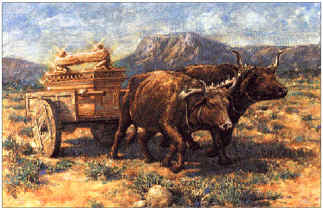


 Considering the Bible