As mentioned in the introduction, I have been been discussing the differences between Calvinism and Provisionalism with a fellow blogger. One particular response grabbed my attention and I am trying to understand his position, by referring to his proof texts and logic.
This is the second portion of his response (in red), along with the corresponding verses he referred to. I shall seek to comment on the verses and find his argument within the verses he has provided.
Original Comment
Scripture says God is sovereign in his decision to whom he will have mercy which is in accordance with Romans 9:16 and other scripture Romans 9:15,18 The natural man doesn’t come and can’t come 1 Corinthians 2:14 John 6:44 John 6:65 He doesn’t have the ability because he lacks spiritual discernment because he doesn’t have the spirit.
Romans 9:16 – So then it depends not on human will or exertion, but on God, who has mercy
This is the big one! The verse that seems to answer all questions when it comes to determinism, a lynchpin in the Calvinistic understanding of the sovereignty of God. When the topic of free will comes up in relation to soteriology, Romans 9 seems to be the passage used to defeat all arguments. I am not convinced this is so.
First A Plea
I realize that some may read this and will immediately discount my thoughts. That is expected. When I taught the “doctrines of grace” I too discounted all who challenged me. Romans 9-11 is considered the hotbed of Calvinism. I make absolutely no claim to resolve the debate of it’s interpretation, but only to supply an alternate perspective to the deterministic approach.
For those who refuse to consider any alternate teaching, they themselves have set themselves up to be the arbiters of truth, judging others as opposed to understanding another position and showing grace to others.
They may be completely convinced of their position, and of that, I salute their arrival. For myself, I previously lived a life of “superior” knowledge, looking down on others and their thoughts. (Romans 1:22) Out of that life attitude, I offended, judged, tore down, and condemned many that were walking a better Christian life than myself. (Galations 5:15)
I readily admit that it is difficult to consider a differing opinion, since it opens the reader up to admitting an error. Admitting error is often called repentance in the Body of Christ, and is to be celebrated.
It is important to remember that the Christian life is Christ, that Christianity is not principally a teaching (John 5:39) but a Person, a Person that has been raised from the dead. My second birth occurred due to my repentance of sin and faith in the One who had the right to be my Judge, and yet He sacrificed Himself for a lost sinner. This simple truth has set me free. He is full of grace to the ones who reject Him, revile Him and run from Him.
Back to Verse 16
Who is receiving the mercy? This, in my opinion, is the crux of the matter. Does this passage refer to individuals or nations, that is corporate entities?
This passage is dependent on the context and hinges on a phrase found in Exodus 33:19. Let me try to recount the context.
Exodus 32, Moses is on Mount Sinai, with the children of Israel below, beginning to grumble. During the time on the mount, the Lord informs Moses of the sin of Israel in worshipping the golden calf. The Lord tells Moses to leave Him alone in order that the children of Israel may be consumed.
Moses goes into intermediary mode, (forgoing the potential honor of his own nation from his loins), and reminds the Lord of His promises to the fathers. The Lord relents of His consuming judgement upon His nation, His very own people. Yet judgement came upon certain individuals – 3,000 died at the hand of the Levites.
Exodus 33 Moses receives a command to leave Sinai and head to the promised land. Moses needs assistance in this huge effort of leading the nation of Israel, His people to the promised land. He needs God’s presence with him on this assignment.
Moses was given the promise of God’s presence to go with him and to give him rest. Moses pushes, and makes his demand – If you do not go up with US, do not lead US up from here. He had been given the promise of God’s presence, but Moses sought the presence of God for the nation, the people of God.
God promises His presence for the nation, and then Moses asked to see His glory.
The Lord states
Exodus 33:19
And he said, “I will make all my goodness pass before you and will proclaim before you my name ‘The LORD.’ And I will be gracious to whom I will be gracious, and will show mercy on whom I will show mercy.
Let’s think about the context. Moses had found favor in the sight of the Lord. (Ex 33:17) The nation of Israel had definitely not found favor, but had rebelled and sinned against the One who delivered them.
It seems this phrase
“And I will be gracious to whom I will be gracious, and will show mercy on whom I will show mercy.”
is referring to the nation of Israel, and not an individual, since God’s relationship with Moses had been defined earlier in the passage.
Whoa Carl – that is such a tenuous statement. My Calvinistic teaching demands that the mercy shown in this context is on individuals, and not a corporate mercy. This cannot be the correct interpretation, since it conflicts with my theology!
No comment. Lets continue.
Malachi 1:2-3
“I have loved you,” says the LORD. But you say, “How have you loved us?” “Is not Esau Jacob’s brother?” declares the LORD. “Yet I have loved Jacob
but Esau I have hated. I have laid waste his hill country and left his heritage to jackals of the desert.”
I see the verses above defining the one who is loved as being the corporate entity of the nation of Israel, as opposed to a singular person. Although the passage states that “Esau” was hated, it is the nation of Edom that is referred to in the expression of the hatred. Esau was long gone and his fate had been sealed by this time. But the prophet speaks of a national disaster that befell the nation of Edom, when he defines the “hatred” the Lord has for Esau. Jacob, meanwhile was back in the land and still in existence by the time of Malachi. Surely the nation of Israel was loved by God.
Back to Romans 9:16. With this background and understanding, the mercy spoken of in Exodus 33 was being shown to a nation that had sinned greatly in front of the Lord. His people had rejected Him as He sought to offer His covenant to them.
Is there not a parallel with the condition Paul was in the midst of? The physical nation of Israel was predominantly rejecting the new covenant, just like they rejected the covenant at Sinai.
The very promises of God were being questioned, in the midst of the nation rejecting the opportunity. And Paul was answering these challenges by using verses specifically chosen that define the mercy of God on a corporate entity. The nation of Israel had many blessings as defined in 9:2- 3.
As I mentioned earlier, I am supplying an alternate framework to consider the Romans 9-11 passage, which makes sense to me. Since the name of this blog is “Considering the Bible” and not “I have all truth”, this is offered for your consideration, and not blind obedience!
I do hope you will continue with me as I seek to understand the verses he supplies and if the verses he supplied support his argument of fatalism/determinism which he speaks of.
As mentioned in the introduction, I have been been discussing the differences between Calvinism and Provisionalism with a fellow blogger. One particular response grabbed my attention and I am trying to understand his position, by referring to his proof texts and logic.
This is the first portion of his response (in red), along with the corresponding verses he referred to. I shall seek to comment on the verses and find his argument within the verses he has provided.
Original Comment
You are always using Human reasoning instead of scripture. God can change and has to change a person’s will to be saved. Ezekiel 36:26 John 3:3-8 Romans 3:10-12 Psalms 14:1-3 even though you think he can’t interfere with natural man’s will and someone will have to tell me how one person believes the Gospel the true gospel that is and another doesn’t. No freewill advocate can give me an answer. They ignore that question.
Psalm 14:1-3
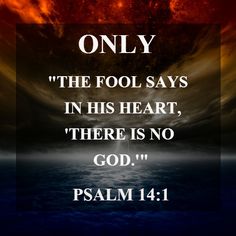
Psalm 14:1 – To the choirmaster. Of David. The fool says in his heart, “There is no God.” They are corrupt, they do abominable deeds; there is none who does good. Psalm 14:2 – The LORD looks down from heaven on the children of man, to see if there are any who understand, who seek after God. Psalm 14:3 – They have all turned aside; together they have become corrupt; there is none who does good, not even one.
This passage is attributed to David, very likely during the persecution of King Saul, or the rebellion of his son Absalom. It is a dark day for David, no matter what, and the psalm expresses his utter despair, and his expectation of the Lord’s deliverance.
It is interesting that David does not say “everyone born says in his heart, “There is no God….” Nope – David has a specific type of person in mind, a fool. This passage my friend has supplied, describes a portion of humanity from David’s perspective. As we considered in our previous post, the Apostle Paul applies this passage to all, (calling us all fools!) yet even the universality of sin does not support my friends contention that a man cannot respond to the grace of God.
Verse 2 speaks of “the children of men”. This moves the reader from considering the category of fools, to that of all humanity.
And yet we have a number of instances in the Word of those who are “devout”.
A good example of the ability of a lost person to respond to God is found in Acts 10, where Peter is told to visit with a dirty Roman centurion. But wait a minute Carl. This fella Cornelius, in verse 2, is called “a devout man who feared God with all his household, gave alms generously to the people and prayed continually to God.” He was obedient to the vision, (whereas Peter had to be shown his vision 3 times!)
What a terrific story, and upon reading it, it seems that Cornelius was seeking to hear and understand, and it was Peter that was a bit reluctant to obey. So backwards to what we should be like.
Nevertheless, Psalms 14 speaks of a person that is corrupt, does bad things, does not do good things, who turns aside, and has become corrupt. (By the way, if this fool has always been against God, what does it mean when he say he turned aside? That he has become corrupt? Could the one described have been seeking God, in some way previously, and has since “turned aside”, has “become corrupt”?)
This passage describes fools, (and the rest of us). It might not be comfortable to hear it, but hear it we must.
I do hope you will continue with me as I seek to understand the verses my friend supplies and if the verses he supplied support his argument of fatalism/determinism which he speaks of.
As mentioned in the introduction, I have been been discussing the differences between Calvinism and Provisionalism with a fellow blogger. One particular response grabbed my attention and I am trying to understand his position, by referring to his proof texts and logic.
This is the first portion of his response (in red), along with the corresponding verses he referred to. I shall seek to comment on the verses and find his argument within the verses he has provided.
Original Comment
You are always using Human reasoning instead of scripture. God can change and has to change a person’s will to be saved. Ezekiel 36:26 John 3:3-8 Romans 3:10-12 Psalms 14:1-3 even though you think he can’t interfere with natural man’s will and someone will have to tell me how one person believes the Gospel the true gospel that is and another doesn’t. No freewill advocate can give me an answer. They ignore that question.
Romans 3:10-12
The next passage my friend brings to the table to support his theology is Romans 3:10-12. Such a famous set of verses describing the fallen state of man, and the universality of sin in the human race.
Romans 3:10-12
as it is written: “None is righteous, no, not one; no one understands; no one seeks for God. All have turned aside; together they have become worthless; no one does good, not even one.”
In Romans 1 Paul is describing the Gentile world and their wretchedness in front of God, and in chapter 2, he continues with descriptions of sinfulness. By the time he gets to Romans 3:23, he has made his point. All have sinned, both Gentile and Jew.
Remember the problem that Paul was addressing in the letter to the Romans was the division between Jews and Gentiles within the body, how the Jews were acting self righteous and the Gentiles seemingly took too many liberalities. Division was rampant, and we all know how Paul felt about division!
Could the passage be chosen by Paul in order to level the playing field of the different parties reading it? As we say in Texas, all y’all are sinners. All y’all are in the same bucket!
It doesn’t seem to address the sinners abilities to repent, only that they are sinners through and through, and that they have no power to redeem themselves.
Let me try to explain my understanding this way.
If I am drowning and not able to swim, and going down for the third time, I am as good as dead. (Ephesians 2:5) Yet if a boat comes along and rescues me, I only need to stop my struggle and accept the rescue. In words that sound biblical, I need to repent of my own works and receive the grace of God through the Lord Jesus Christ.
Is there any glory in the rescue for the drowning person? I think not. Next time you see a rescue being reported of on the TV, notice who gets the glory.
My friend, we are all sinners, drowning in the cess pool of our own filth, our disobedience only growing with each day of rejection. There is a Savior that is seeking the lost and desiring to commune with the believer. He is the One who desires to live with us, or better put, for us to live with Him, for there is a difference!
I think I may have wandered from the topic, and would like to remind the reader that the emphasis of this passage is the universality of sin on a fallen world, and that it does not describe one who cannot react to the offer of a good gift given to them.
The next passage my friend refers to for consideration is Psalm 14:1. This is the very passage Paul quoted from in the previous portion. David’s context is different and it may be wise to consider the background upon which this passage was written.
I do hope you will continue with me as I seek to understand the verses he supplies and if the verses he supplied support his argument of fatalism/determinism which he speaks of.
As mentioned in the introduction, I have been been discussing the differences between Calvinism and Provisionalism with a fellow blogger. One particular response grabbed my attention and I am trying to understand his position, by referring to his proof texts and logic.
This is the first portion of his response (in red), along with the corresponding verses he referred to. I shall seek to comment on the verses and find his argument within the verses he has provided.
Original Comment
You are always using Human reasoning instead of scripture. God can change and has to change a person’s will to be saved. Ezekiel 36:26 John 3:3-8 Romans 3:10-12 Psalms 14:1-3 even though you think he can’t interfere with natural man’s will and someone will have to tell me how one person believes the Gospel the true gospel that is and another doesn’t. No freewill advocate can give me an answer. They ignore that question.
The next passage my friend provides for consideration is John 3:3-8
John 3:3-8
3 – Jesus answered him, “Truly, truly, I say to you, unless one is born again he cannot see the kingdom of God.” 4 – Nicodemus said to him, “How can a man be born when he is old? Can he enter a second time into his mother’s womb and be born?” 5 – Jesus answered, “Truly, truly, I say to you, unless one is born of water and the Spirit, he cannot enter the kingdom of God. 6 – That which is born of the flesh is flesh, and that which is born of the Spirit is spirit. 7 – Do not marvel that I said to you, ‘You must be born again.’ 8 – The wind blows where it wishes, and you hear its sound, but you do not know where it comes from or where it goes. So it is with everyone who is born of the Spirit.”
Awesome passage of the Lord speaking to one of His people, an Israelite – one who is a religious leader in Israel. One who is interested in this new Prophet. Yes he comes under cover of darkness, but Nicodemus comes to the Messiah, and queries Him.
He is joining into a discussion with Jesus, and this shows his desire to understand. Nowhere does the passage state that it is God’s moving in his life that is making him ask questions, and nowhere does it deny God’s actions in Nicodemus life. That is a moot point in this passage.
Note that Jesus states a prerequisite for entering the Kingdom of God, but doesn’t assign any responsibility (either to God or man) to perform the action (of being born again)
Verse 7 may give us a bit of a hint. You Nicodemus, you must be born again. Jesus didn’t state a fact that some would be born again. This statement is in the command mode. You MUST be born again.
It seems the responsibility is squarely laid upon Nicodemus. Again I want to be clear that the specific actions Nicodemus is to perform to become born again are not expressed in the passage my friend supplied. But alas, Jesus begins to give a hint regarding the prerequisite for being born again a few verses later.
John 3:12 If I have told you earthly things, and ye believe not, how shall ye believe, if I tell you of heavenly things?
Ok Nicodemus – you aren’t even believing earthly things.
Why bring up the topic of belief?
Why is Jesus addressing Nicodemus’ attitude toward His teachings?
A bit later in the passage, the following verse pops up
John 3:15 That whosoever believeth in him should not perish, but have eternal life.
Nicodemus has been told of the requirement of being born again. Then Jesus speaks of the responsibility of the one who must be born again.
If it is only “of God” that this requirement (of being born again) is being taught, then it follows that God is responsibile to give Nicodemus life in order for him to believe. Yet Jesus speaks of the necessity of faith.
Surely, if it is God that Nicodemus must wait on to receive life before he can believe, this conversation with Nicodemus seems a bit confusing.
I suppose the conversation should have ended with the following terse statement from the Lord.
Just go home Nicodemus – Sure you got questions, but you can’t understand the answers until My Father regenerates you. Then you will have faith, and be born again. That’s that!
Huh. That conversation doesn’t seem to occur in this passage. After reading this passage, I am not convinced my friends position is strengthened, (or even supported) by the passage.
I do hope you will continue with me as I seek to understand the verses he supplies and if the verses he supplied support his argument of fatalism/determinism which he speaks of.
Thanks again for coming to visit. I hope you found something of interest in this post and would appreciate a comment, to begin a discussion.
Romans 3:10-12
The next passage my friend brings to the table to support his theology is Romans 3:10-12. Such a famous set of verses describing the fallen state of man, and the universality of sin in the human race.
Romans 3:10-12
as it is written: “None is righteous, no, not one; no one understands; no one seeks for God. All have turned aside; together they have become worthless; no one does good, not even one.”
In Romans 1 Paul is describing the Gentile world and their wretchedness in front of God, and in chapter 2, he continues with descriptions of sinfulness. By the time he gets to Romans 3:23, he has made his point. All have sinned, both Gentile and Jew.
Remember the problem that Paul was addressing in the letter to the Romans was the division between Jews and Gentiles within the body, how the Jews were acting self righteous and the Gentiles seemingly took too many liberalities. Division was rampant, and we all know how Paul felt about division!
Could the passage be chosen by Paul in order to level the playing field of the different parties reading it? As we say in Texas, all y’all are sinners. All y’all are in the same bucket!
It doesn’t seem to address the sinners abilities to repent, only that they are sinners through and through, and that they have no power to redeem themselves or even a desire to do so.
Let me try to explain it this way. If I am drowning and not able to swim, and going down for the third time, I am as good as dead. (Ephesians 2:8) Yet if a boat comes along and rescues me, I only need to stop my struggle and accept the rescue. In words that sound biblical, I need to repent of my own works and receive the grace of God through the Lord Jesus Christ.
Is there any glory in the rescue for the drowning person? I think not. Next time you see a rescue being reported of on the TV, notice who gets the glory.
My friend, we are all sinners, drowning in the cess pool of our own filth, our disobedience only growing with each day of rejection. There is a Savior that is seeking the lost and desiring to commune with the believer. He is the One who desires to live with us, or better put, for us to live with Him, for there is a difference!
I think I may have wandered from the topic, and would like to remind the reader that the emphasis of this passage is the universality of sin on a fallen world, and that it does not describe one who cannot react to the offer of a good gift given to them.
The next passage my friend refers to for consideration is Psalm 14:1. This is the very passage Paul quoted from in the previous portion. David’s context is different and it may be wise to consider the background upon which this passage was written
I do hope you will continue with me as I seek to understand the verses he supplies and if the verses he supplied support his argument of fatalism/determinism which he speaks of.
Thanks again for coming to visit. I hope you found something of interest in this post and would appreciate a comment, to begin a discussion.
Psalm 14:1-3
Psalm 14:1 – To the choirmaster. Of David. The fool says in his heart, “There is no God.” They are corrupt, they do abominable deeds; there is none who does good. Psalm 14:2 – The LORD looks down from heaven on the children of man, to see if there are any who understand, who seek after God. Psalm 14:3 – They have all turned aside; together they have become corrupt; there is none who does good, not even one.
This passage is attributed to David, very likely during the persecution of King Saul, or the rebellion of his son Absolom. It is a dark day for David, no matter what and the psalm expresses his utter despair, and his expectation of the Lord’s deliverance.
It is interesting that David doen not say “everyone born says in his heart, “There is no God….” Nope – David has a specific type of person in mind, a fool. This passage my friend has supplied, describes a portion of humanity from Davids perspective. As we considered above, the Apostle Paul applies to all, yet even the universality of sin does not support my friends contention that a man cannot respond to the grace of God.
A good example of the ability of a lost person to respond to God is found in Acts 10, where Peter is told to visit with a dirty Roman centurion. But wait a minute Carl. This fella, in verse 2, is called “a devout man who feared God with all his household, gave alms generously to the people and prayed continually to God.” He was obedient to the vision, (whereas Peter had to be shown his vision 3 times!)
What a terrific story, and upon reading it, it seems that Cornelius was seeking to hear and understand, and it was Peter that was a bit reluctant to obey. So backwards to what we should be like.
Nevertheless, Psalms 14 speaks of a type of person that is corrupt, does bad things, does not do good things, who turns aside, and has become corrupt.
This passage describes a group of fools. Paul, in the passage above applies these very verses to his audience in order to place us all in the category of fools.
It might not be comfortable to hear it, but hear it we must.
I do hope you will continue with me as I seek to understand the verses he supplies and if the verses he supplied support his argument of fatalism/determinism which he speaks of.
Thanks again for coming to visit. I hope you found something of interest in this post and would appreciate a comment, to begin a discussion.
As mentioned in the introduction, I have been been discussing the differences between Calvinism and Provisionalism with a fellow blogger. One particular response grabbed my attention and I am trying to understand his position, by referring to his proof texts and logic.
This is the second portion of his response (in red), along with the corresponding verses he referred to. I shall seek to comment on the verses and find his argument within the verses he has provided.
Original Comment
Scripture says God is sovereign in his decision to whom he will have mercy which is in accordance with Romans 9:16 and other scripture Romans 9:15,18 The natural man doesn’t come and can’t come 1 Corinthians 2:14 John 6:44 John 6:65 He doesn’t have the ability because he lacks spiritual discernment because he doesn’t have the spirit.
Romans 9:16 – So then it depends not on human will or exertion, but on God, who has mercy
Romans 9:15 – For he says to Moses, “I will have mercy on whom I have mercy, and I will have compassion on whom I have compassion.”
Romans 9:18 – So then he has mercy on whomever he wills, and he hardens whomever he wills.
I do hope you will continue with me as I seek to understand the verses he supplies and if the verses he supplied support his argument of fatalism/determinism which he speaks of.
Thanks again for coming to visit. I hope you found something of interest in this post and would appreciate a comment, to begin a discussion.
1 Corinthians 2:14 – The natural person does not accept the things of the Spirit of God, for they are folly to him, and he is not able to understand them because they are spiritually discerned.
I do hope you will continue with me as I seek to understand the verses he supplies and if the verses he supplied support his argument of fatalism/determinism which he speaks of.
I do hope you will continue with me as I seek to understand the verses he supplies and if the verses he supplied support his argument of fatalism/determinism which he speaks of.
As mentioned in the introduction, I have been been discussing the differences between Calvinism and Provisionalism with a fellow blogger. One particular response grabbed my attention and I am trying to understand his position, by referring to his proof texts and logic.
This is the third portion of his response (in red), along with the corresponding verses he referred to. I shall seek to comment on the verses and find his argument within the verses he has provided.
Original Comment
God gave to the man Jesus the spirit without limit. God doesn’t give faith to everyone because He doesn’t want to according to Romans 9:16 John 1:12-13.
Romans 9:16 – So then it depends not on human will or exertion, but on God, who has mercy.
I do hope you will continue with me as I seek to understand the verses he supplies and if the verses he supplied support his argument of fatalism/determinism which he speaks of.
Thanks again for coming to visit. I hope you found something of interest in this post and would appreciate a comment, to begin a discussion.
John 1:12-13 – But to all who did receive him, who believed in his name, he gave the right to become children of God, who were born, not of blood nor of the will of the flesh nor of the will of man, but of God.
As mentioned in the introduction, I have been been discussing the differences between Calvinism and Provisionalism with a fellow blogger. One particular response grabbed my attention and I am trying to understand his position, by referring to his proof texts and logic.
This is the fourth portion of his response (in red), along with the corresponding verses he referred to. I shall seek to comment on the verses and find his argument within the verses he has provided.
Original Comment
He told the Pharisees you don’t believe because you aren’t my sheep John 10:26 He didn’t say you aren’t my sheep because you don’t believe That should kill the idea of free will on the spot. If you analyze the Garden of Eden account with Eve you will see the serpent was baiting Eve with free Will through the delusion of gaining the knowledge of good and evil which was a stone cold lie.
John 10:26 – but you do not believe because you are not among my sheep.
I do hope you will continue with me as I seek to understand the verses he supplies and if the verses he supplied support his argument of fatalism/determinism which he speaks of.
As mentioned in the introduction, I have been been discussing the differences between Calvinism and Provisionalism with a fellow blogger. One particular response grabbed my attention and I am trying to understand his position, by referring to his proof texts and logic.
This is the fifth portion of his response (in red), along with the corresponding verses he referred to. I shall seek to comment on the verses and find his argument within the verses he has provided.
Original Comment
Natural man can’t tell the difference between good and evil and Jesus said none are good except for God. They are responsible because God is Sovereign. He has the right to do with His creation as he sees fit His righteousness isn’t to be judged by fallen man’s sense of righteousness imputed from the Garden of Eden. Belief is the work of God John 6:29
John 6:29 – Jesus answered them, “This is the work of God, that you believe in him whom he has sent.”
I do hope you will continue with me as I seek to understand the verses he supplies and if the verses he supplied support his argument of fatalism/determinism which he speaks of.
As mentioned in the introduction, I have been been discussing the differences between Calvinism and Provisionalism with a fellow blogger. One particular response grabbed my attention and I am trying to understand his position, by referring to his proof texts and logic.
This is the sixth (and final) portion of his response (in red), along with the corresponding verses he referred to. I shall seek to comment on the verses and find his argument within the verses he has provided.
Original Comment
God is saving a people unconditionally Romans 9:11 according to election God promises to save a people and He can’t wait around for someone who has no desire or the ability to come. I will rely on scripture that he shows mercy unconditionally to whom he chooses.
Romans 9:11 – though they were not yet born and had done nothing either good or bad–in order that God’s purpose of election might continue, not because of works but because of him who calls–
I do hope you will continue with me as I seek to understand the verses he supplies and if the verses he supplied support his argument of fatalism/determinism which he speaks of.
I was driving home from helping my son install some ceiling fans, and as I was listening to Free Bird, it occurred to me that some within the Christian faith claim the Bible teaches “perseverance of the saints”. I know – an errant thought, but stick with me for a minute.
But first, let’s look at the verse that stirred my thinking during the middle of Free Bird, and then we can delve into the dark crevices of my thoughts.
1 John 2:19
They went out from us, but they were not of us; for if they had been of us, they would have continued with us. But they went out, that it might become plain that they all are not of us.
Perseverance of the saints is not a troubling teaching in my mind, but to be practical, we have to admit that it is a time dependent truth for each of us. Some believers will use this verse to claim that only true Christians remain faithful, and with that I have no argument. True believers continue to believe.
The time component is what sticks in my craw, when I hear that some believers that are living today, claim that they are in a contract with the God of the universe that is iron clad, and without conditions. That initial faith is their ticket to heaven. They will end up in heaven no matter what happens, no matter what they do, or no matter what occurs in their faith.
Let me try to explain it as I heard it in my head as I was conversing with myself on the way home – Don’t worry – I turned Free Bird off during my self conversation!! Carl – admit it – You were talking to yourself!
Carl – 1 John 2:19 teaches that true believers continue in the faith
Anti-Carl – Yes that is true, and those that left the faith were either never a believer, or that they abandoned the faith.
Carl – Oh I am sure the author intends the reader to see those who did not continue in the faith to have never been a believer
Anti-Carl – So you say, but lets get practical. Are you a believer?
Carl – Of course.
Anti-Carl – How do you know you will continue? Can you foresee the future?
Carl – Of course I cannot see into the future, but God will keep me. He has promised.
Anti-Carl – Many folks have claimed a promise from God and yet have walked away. What makes you better than them?
Carl – They were liars, even self deceived.
Anti-Carl – Again, the only assurance you have of eternal life is that you have faith at the point of death. Until that time, you cannot guarantee anyone of your continuance, since it is expressed in action (continuing with believers) as opposed to simply a feeling or a belief. It seems the security you boast in is highly time dependent and somewhat fragile until the end.
Carl – I refuse to hear you anymore!
Remember, dear reader, that the Lord’s promises are many times conditional on our heart response, our obedience, our listening and doing. Our faith is not to be based on head knowledge alone, but on a willing heart that seeks to follow Him.
Your thoughts?
Thanks again for coming to visit. I hope you found something of interest in this post and would appreciate a comment, to begin a discussion. If you know someone this blog may bless (or challenge), send them a link, so they may join us in our discussion
As mentioned in the introduction, I have been been discussing the differences between Calvinism and Provisionalism with a fellow blogger. One particular response grabbed my attention and I am trying to understand his position, by referring to his proof texts and logic.
This is the first portion of his response (in red), along with the corresponding verses he referred to. I shall seek to comment on the verses and find his argument within the verses he has provided.
Original Comment
You are always using Human reasoning instead of scripture. God can change and has to change a person’s will to be saved. Ezekiel 36:26 John 3:3-8 Romans 3:10-12 Psalms 14:1-3 even though you think he can’t interfere with natural man’s will and someone will have to tell me how one person believes the Gospel the true gospel that is and another doesn’t. No freewill advocate can give me an answer. They ignore that question.
I suppose the first issue to address is the reason for his comment above. I had asked a question regarding God’s will as my friend understands God’s will. If I understand him correctly, God has absolute control over every decision made by every human, and that God’s will can never be resisted.
So my original question was……
How do you explain the Lord’s frustration with Jerusalem as He entered the city before His passion? He was willing but the people of Israel were not willing.
“O Jerusalem, Jerusalem, the city that kills the prophets and stones those who are sent to it! How often would I have gathered your children together as a hen gathers her brood under her wings, and you were not willing! Matthew 23:37 ESV
Seems the people got their way.
Nevertheless, lets consider the first portion of my friends comment. His initial comment is followed by four Scripture references. I have supplied these passages below, and will attempt to understand his reason for providing to support his statement.
Ezekiel 36:26
Ezekiel 36:26 – And I will give you a new heart, and a new spirit I will put within you. And I will remove the heart of stone from your flesh and give you a heart of flesh.
What a great verse, speaking of the sinful nature and the darkness and hardness of the sinners heart. Ezekiel was specifically speaking to the sons of Israel, and of their restoration to the land. From verse 22 through verse 32, Ezekiel records the phrase “I will” 13 times referring to God’s intent with the children of Israel.
This passage speaks of God’s overarching care, protection and provision to His wayward, sinful people. Upon getting to verse 26, it is clear that the Lord Himself gives the new heart, gives the new spirit, removes the heart of stone, and gives a heart of flesh. There is no debate upon these gracious gifts of God to His people.
One item that is not addressed in this passage is the responsibility of the sinner. Of course, my friend assumes the sinner has no responsibility in receiving the new heart, but I don’t see Ezekiel expressly stating that. Nowhere does Ezekiel come out and state – You sinners are unable to respond to the grace of God. You are completely without any responsibility in God’s work with your nation. You have to be completely passive!! As a matter of fact, you couldn’t respond if you wanted to.
Shucks, I don’t see Ezekiel stating that!
Ezekiel continues with verse 32, telling of the reason for the gracious gifts of God toward His people in the future. These future promises were provided through the prophet Ezekiel, in order for the people to know of His future actions. Then Ezekiel caps off the message with the intended response that is expected.
It is not for your sake that I will act, declares the Lord God; let that be known to you. Be ashamed and confounded for your ways, O house of Israel.
The Lord will act – Be ashamed now. There is a response expected prior to the Lord’s acting out His promises. There is a responsibility on the part of the Israelites.
But that is not all, regarding the will of God that Ezekiel teaches us. Let us look at verse 37 of the same chapter.
“Thus says the Lord God: This also I will let the house of Israel ask me to do for them: to increase their people like a flock.
The Lord allows the people of Israel to ask of Him for a particular request. This seems odd if the Lord’s will is determined from time eternal, before creation. The entire issue of prayer is a difficult topic to understand if the Lord’s will has been locked down prior to creation. (Dang it is difficult to understand no matter what!)
It is obvious that Ezekiel emphasizes God’s will towards His people in this passage. There is no doubt. Yet with this emphasis, God seems to invite the will of men (in praying to God) to participate in the work of God. This is surely a mystery and yet He invites us.
For prayer does change things!
I do hope you will continue with me as I seek to understand the verses he supplies and if the verses he supplied support his argument of fatalism/determinism which he speaks of.
As this blog has proceeded through a multiple of topics, I have received numerous comments and non more interesting than from a fellow blogger that finds my responses to his comments lacking in Scriptural support.
The topic of concern is the sovereignty of God and the Calvinist debate. He has denied the moniker of “Calvinist” but as some have said – A rose by any other name is still a rose.
This seems to be a common thread in the discussions, since his understanding of key terms in the topic seems to carry a different definition than mine. He also tends to “drop” Bible verses after his claims, intending to prove his point. This is a common method of argument that I have used too often, that is of peppering the discussion with proof texts.
Lately the following comment from my friend was provided and in response I wrote back “Job 1:1”. Figgered I would proof text him – it was an attempt to be a bit funny, but alas, even as I posted the response, I realized I needed to do better. (And responding in the comment section is sooo difficult.) Hence this side bar of posts to a comment within this topic.
Below is the comment I will be responding to through a series of posts in the following weeks.
You are always using Human reasoning instead of scripture. God can change and has to change a person’s will to be saved. Ezekiel 36:26 John 3:3-8 Romans 3:10-12 Psalms 14:1-3 even though you think he can’t interfere with natural man’s will and someone will have to tell me how one person believes the Gospel the true gospel that is and another doesn’t. No freewill advocate can give me an answer. They ignore that question. Scripture says God is sovereign in his decision to whom he will have mercy which is in accordance with Romans 9:16 and other scripture Romans 9:15,18 The natural man doesn’t come and can’t come 1 Corinthians 2:14 John 6:44 John 6:65 He doesn’t have the ability because he lacks spiritual discernment because he doesn’t have the spirit. God gave to the man Jesus the spirit without limit. God doesn’t give faith to everyone because He doesn’t want to according to Romans 9:16 John 1:12-13. He told the Pharisees you don’t believe because you aren’t my sheep John 10:26 He didn’t say you aren’t my sheep because you don’t believe That should kill the idea of free will on the spot. If you analyze the Garden of Eden account with Eve you will see the serpent was baiting Eve with free Will through the delusion of gaining the knowledge of good and evil which was a stone cold lie. Natural man can’t tell the difference between good and evil and Jesus said none are good except for God. They are responsible because God is Sovereign. He has the right to do with His creation as he sees fit His righteousness isn’t to be judged by fallen man’s sense of righteousness imputed from the Garden of Eden. Belief is the work of God John 6:29 If Adam and Eve weren’t able to get it right, how can you put such faith in a fallen nature that loves darkness instead of light. God is saving a people unconditionally Romans 9:11 according to election God promises to save a people and He can’t wait around for someone who has no desire or the ability to come. I will rely on scripture that he shows mercy unconditionally to whom he chooses.
In each of the following posts, I will be addressing a set of verses he refers to within a portion of his comment. I will attempt to supply context to his comments when required, and look forward to a hearty discussion as we venture through his concerns.
I do hope you will join me as I seek to understand the verses he supplies and if the verses he supplied support his argument of fatalism/determinism which he speaks of.
As mentioned in the introduction, I have been been discussing the differences between Calvinism and Provisionalism with a fellow blogger. One particular response grabbed my attention and I am trying to understand his position, by referring to his proof texts and logic.
This is the third portion of his response (in red), along with the corresponding verses he referred to. I shall seek to comment on the verses and find his argument within the verses he has provided.
Original Comment
God gave to the man Jesus the spirit without limit. God doesn’t give faith to everyone because He doesn’t want to according to Romans 9:16 John 1:12-13.
Romans 9:16 – So then it depends not on human will or exertion, but on God, who has mercy.
I do hope you will continue with me as I seek to understand the verses he supplies and if the verses he supplied support his argument of fatalism/determinism which he speaks of.
Thanks again for coming to visit. I hope you found something of interest in this post and would appreciate a comment, to begin a discussion.
John 1:12-13 – But to all who did receive him, who believed in his name, he gave the right to become children of God, who were born, not of blood nor of the will of the flesh nor of the will of man, but of God.
As mentioned in the introduction, I have been been discussing the differences between Calvinism and Provisionalism with a fellow blogger. One particular response grabbed my attention and I am trying to understand his position, by referring to his proof texts and logic.
This is the fourth portion of his response (in red), along with the corresponding verses he referred to. I shall seek to comment on the verses and find his argument within the verses he has provided.
Original Comment
He told the Pharisees you don’t believe because you aren’t my sheep John 10:26 He didn’t say you aren’t my sheep because you don’t believe That should kill the idea of free will on the spot. If you analyze the Garden of Eden account with Eve you will see the serpent was baiting Eve with free Will through the delusion of gaining the knowledge of good and evil which was a stone cold lie.
John 10:26 – but you do not believe because you are not among my sheep.
I do hope you will continue with me as I seek to understand the verses he supplies and if the verses he supplied support his argument of fatalism/determinism which he speaks of.
As mentioned in the introduction, I have been been discussing the differences between Calvinism and Provisionalism with a fellow blogger. One particular response grabbed my attention and I am trying to understand his position, by referring to his proof texts and logic.
This is the fifth portion of his response (in red), along with the corresponding verses he referred to. I shall seek to comment on the verses and find his argument within the verses he has provided.
Original Comment
Natural man can’t tell the difference between good and evil and Jesus said none are good except for God. They are responsible because God is Sovereign. He has the right to do with His creation as he sees fit His righteousness isn’t to be judged by fallen man’s sense of righteousness imputed from the Garden of Eden. Belief is the work of God John 6:29
John 6:29 – Jesus answered them, “This is the work of God, that you believe in him whom he has sent.”
I do hope you will continue with me as I seek to understand the verses he supplies and if the verses he supplied support his argument of fatalism/determinism which he speaks of.
As mentioned in the introduction, I have been been discussing the differences between Calvinism and Provisionalism with a fellow blogger. One particular response grabbed my attention and I am trying to understand his position, by referring to his proof texts and logic.
This is the sixth (and final) portion of his response (in red), along with the corresponding verses he referred to. I shall seek to comment on the verses and find his argument within the verses he has provided.
Original Comment
God is saving a people unconditionally Romans 9:11 according to election God promises to save a people and He can’t wait around for someone who has no desire or the ability to come. I will rely on scripture that he shows mercy unconditionally to whom he chooses.
Romans 9:11 – though they were not yet born and had done nothing either good or bad–in order that God’s purpose of election might continue, not because of works but because of him who calls–
I do hope you will continue with me as I seek to understand the verses he supplies and if the verses he supplied support his argument of fatalism/determinism which he speaks of.
Most of my readers know I have 5 children. Occasionally, I would come back from a work related trip and bring them a gift.
It goes without saying that I would bring 5 gifts. (And a gift for my favorite wife, of course.)
Coming in the door, at least in the early days of the family, the kids would greet me and I would ask if they wanted a little surprise.
Of course, they all responded in the positive, and they would ask to reach in my pocket to get the gift. Fun times for them and me. (Wifey got her gift a bit later!)
As they got older, one or two of the older children would consider it childish to huddle around and ask for the gift, but I always bought 5 gifts to bring home. (And a gift for my favorite wifey – don’t forget her Carl!)
The gifts represented, in a very small way, my love for each child, (and my wifey!) When I got home I would ask all the children if they wanted a gift, even as they got older. And when I brought gifts home, it was for all the kids, even if I feared that one or two of them would ignore the offer.
Should I have saved my pennies when I figgered one or two of my kids might not have wanted a gift? If so, could I offer a gift to all my kids, or at least maintain that understanding within the family?
This is the very problem a Calvinist must address when he evangelizes. How can the Calvinist offer the gift of salvation to a lost person for whom Jesus did not die? For you see, a Calvinist believes in a limited atonement, or that Jesus died only for the elect, that specific group of humans that will believe.
As believers, we don’t know who the elect are, so Calvinists may seem duplicitous in providing an invitation of salvation to one for whom Christ did NOT die for.
The following 5 minute clip addresses this question and I found it helpful. I hope you do too. Take a few moments to consider the question with Dr. Flowers.
Thanks for joining me in this series on Calvinism.
Years back I came out of this system of thought. I am grateful for the blessings of a loving God that has expressed His love lavishly, beyond human comprehension.
This 5 minute teaching starts out with a somewhat surprising statement about Jesus being a bigot. I came close to going on to some other topic until Dr. Flowers brought it together
Dang but for the oxymoronistic tongue tying, paradoxical topic of proud humility.
Is it possible to be proud of your humilty?
If I humble myself under the mighty hand of God, is that something that will result in pride?
Gosh golly gee willikers – What type of question is that Carl. It must seem to consist of a irreconcilable difference, and yet there are some who may consider it to be possible.
Give the clip below 5 mins of your time, and then ask yourself the same question
As you may expect, I am providing another 5 minute video addressing concerns that Calvin may have had as he developed his theology.
Of course, he has some responses to these concerns, but at times I fear they are lacking.
One of the key character attributes of our heavenly Father, is the love of God. As a matter of fact, the Word states that God is love.
1 John 4:8 – But anyone who does not love does not know God, for God is love.
1 John 4:16 – We know how much God loves us, and we have put our trust in his love. God is love, and all who live in love live in God, and God lives in them.
These two statements, from the apostle John, seem to be a clear declaration of His character. With the added witness of the Son’s self-sacrificial act of obedience to the Father’s will, the love of God is a preeminent theme of the Word.
It has been a few weeks since my last post on Calvinism and I have noticed that posts questioning Calvinism are responded to more than any other topic I have addressed lately.
Why?
Why is this such an emotionally charged topic? There seems to be a visceral reaction to this topic, as if the very questioning of Calvinism is so heretical that all the guns have to come out! How sad that calm discussion, with each of us considering the others argument, is so rare. Good pertinent arguments that are directly related to the specific topic at hand are of so much more value.
Job 6:25
How forcible are right words! but what doth your arguing reprove?
But alas, an issue that seems to be prevalent in these discussions is the erecting of “straw men”, in order to fight against the “real enemy”. You know how it works. You believe the sky is blue. I am against that statement and argue it by stating the water isn’t the same blue. And the statement is correct – the water isn’t the same blue. But the original proposition was not addressed – just some “straw man” that was soundly refuted!
This video that is provided is a good example of erecting a “straw man” argument. It is a 4 minute video that is worth watching, whether you are a Calvinist or not.
It has been a few weeks since I visited this topic and I stumbled (not literally, don’t you know!) over the an interesting question that clarified my ignorance, lack of knowledge of Scripture, my pride and arrogance.
Of my struggle over my “low” view of God,
But God sovereignly and unchangeably decreed my ignorance, lack of Scripture knowledge, pride arrogance and seemingly low view of God.
Huh
Take a few minutes to consider the following question with me.
This passage, in relation to conditional security is apparent when we realize the apostle is writing to believers, as is obvious in the opening verses, where he rejoices that some (vs 4) are walking according to truth, (implying some of the children are not walking in truth). He goes on to speak of deceivers going out into the world, a separate group from the church it seems. (vs 7).
His warning to the believers are to watch, to hang on to the truth, do not lose what you have gained, but to win a full reward.
Then John writes vs 9, where he speaks of one who goes ahead of the true teaching, not abiding in the teaching that has both the Father and the Son.
2 John 1:9
9 Everyone who goes on ahead and does not abide in the teaching of Christ, does not have God. Whoever abides in the teaching has both the Father and the Son.
The deceivers were against Christ, speaking of Him as only a man, or only as God, not the God-man. (I understand two forms of Gnosticism were rising in the church at the time, either restricting the humanity of the Messiah, or the Deity of the Messiah.
That bit of information was a freeby, since the issue in this post is the responsibility of the believer to maintain the true teaching of the Word, in relation to the Son of God.
It seems John was giving the church a choice. You can abandon the teaching of Christ, and not retain God, or you can abide in the truth and have both the Father and the Son.
I can’t see how John would be addressing two different parties (lost and saved) in the same phrase, unless I was committed to a teaching that didn’t allow this consideration.
A few weeks back, I published the first of a series of posts offering 60 second video discussions on alternatives to the popular Calvinistic teaching in our churches these days.
The videos were provided by Dr. Leighton Flowers, and addressed a number of topics that related to Calvinism and it’s resultant effects on the believer.
Since then I have provided a few additional videos describing different aspects of a provisionalist perspective on the Scriptures.
When some of my brothers review the content of the videos, more often than not, Romans 9 is referred to as a slam dunk refutation of this teaching.
The following video supply’s a very good summary of Romans 9 and is offered to you for your consideration.
9 Have I not commanded you? Be strong and courageous. Do not be frightened, and do not be dismayed, for the LORD your God is with you wherever you go.”
Sunday school class was very good this weekend. We started in the book of Joshua and reviewed the portion of Scripture above. During our discussion, a lady made mention that verse 9 is a great promise that should give us courage. I honestly tried to be quiet but I just couldn’t. So I broke my silence – something that happens too often I fear!
Is not the command “Be strong and of good courage” first in the passage? Is not the last phrase – “for the LORD thy God is with thee whithersoever thou goest.” a result of obedience to the command to be strong and courageous? Is not the context of the entire passage an exhortation to be courageous? I suggested that if Joshua did not obey, God would not be with him. That this verse actually contains a conditional promise. I also reminded some that this is somewhat similar to Jeremiah’s situation in the first chapter of Jeremiah.
Jeremiah 1 :17
Thou therefore gird up thy loins, and arise, and speak unto them all that I command thee: be not dismayed at their faces, lest I confound thee before them.
Jeremiah was being warned – obey or be confounded (confused) in front of the enemy.
We chatted for a few minutes and one believer noticed that there was no “if” in Joshua 1:9, therefore it could not be conditional. I admitted that that was an argument for their position and was willing to consider it. A bit more chatting, but I became distracted by the passage again. I always assumed the verse said …. for the LORD thy God “WILL BLESS” thee whithersoever thou goest, – but it doesn’t strictly say that. Just that God would be with Joshua/Israel. I think that is possibly a different scenario.
Consider Joshua being afraid instead of being strong and courageous. God would not be with him. Not a comfortable situation!
I’m thinking the conditional/unconditional issue isn’t the central issue. God promised to be with Joshua, and the command was to be strong and courageous.
It has been months since I have touched this subject and have numerous verses to offer my dear readers to consider in relation to the topic at hand.
Of course, I am not putting forward that thought that we can loose our confidence by a single sin, or even a prolonged backsliding (to a point), but there seems to be a preponderance of verses in the Word that provides the possibility of the believer walking away from the faith, and that this action has eternal consequences.
The verse under consideration today is 2 Corinthians 1:24
2 Corinthians 1:24
24 Not that we lord it over your faith, but we work with you for your joy, for you stand firm in your faith.
Golly Carl, this very verse speak of our security in the Lord Jesus! Yes. That security is in the Lord Jesus, yet Paul does not say … “you stand firm in your Savior”, but you stand firm in your faith.
That faith which is yours.
My concern is for those who throw away their faith, their confidence in the Savior, the slow and imperceptible drifting away that is so common amongst the pulls and temptations of our modern life. (Consider Hebrews 2)
I will readily admit my fire is not burning hot as it was when I first believed, and with that I confess my weakness. Of course, I consider some of this diminishing of fire to be necessary in order for wisdom, understanding and patience to take hold of my life. That is an aspect of maturity and growth.
Yet I wonder…
The truth of the matter is that the lure of this materialistic life is a great danger and I fear that my faith may shrink at times.
My Savior is great and He is the One who rescues me, and yet I need to accept the responsibility of this relationship He has invited me into.
A few weeks back, I published the first of a series of posts offering 60 second video discussions on alternatives to the popular Calvinistic teaching in our churches these days.
The videos were provided by Dr. Leighton Flowers, and addressed a number of topics that related to Calvinism and it’s resultant effects on the believer.
Since providing these 60 second videos, I have found a somewhat longer video (5 whole minutes!) that provides another comparison of Calvinism vs Provisionalism.
Dr. Flower’s focus on the character of God in this videos is what catches my breathe. (The last minute is the best IMHO!) I do not deserve such a Savior! (Of course Carl!!!)
In our previous post, I tried to give some of my interactions and history with the Calvinistic thought process and teachings.
With this post, I would like to introduce you to the teacher I referred to earlier. He is a former Calvinist also, and has recanted, and has become a bit of a lightning rod for provisionism soteriology teaching.
Many of his videos are quite lengthy, and have kept my interest now for weeks. What I would like to do is offer his “60 Second Soteriology” clips to introduce you to Mr Leighton Flowers.
I do hope you will consider the teaching with an open mind.
A few weeks back, I published the first of a series of posts offering 60 second video discussions on alternatives to the popular Calvinistic teaching in our churches these days.
The videos were provided by Dr. Leighton Flowers, and addressed a number of topics that related to Calvinism and it’s resultant effects on the believer.
Since then, a brother has been in discussion with me and has sought to correct me of my errors. This is exactly my aim with this blog, to enter into discussions, consider other believers opinions and perspectives and by hopefully referring to the scriptures, come to a conclusion that is satisfactory.
My brother, has sought to correct me in the 4th of the 5 TULIP doctrines, which is the teaching of irresistible grace.
He has referred to John 6:44 in making his assertion and I spent the day yesterday considering the passage as I went about my chores.
Lets read the verse and dig a bit.
John 6:44
No one can come to me unless the Father who sent me draws him. And I will raise him up on the last day.
My friend has “drawn” my attention to the word “draws” in the above verse and claims that the Greek word is better translated drag, and should be written as “No one can come to me unless the Father who sent me drags him“.
As a Calvinist in my previous thinking, I too used this argument since there is some support for it. Let’s perform a quick study to consider the strength of his arguement.
The Greek word is ἕλκω, transliterated as helkō, and is found in the New Testament 8 times. Lets take a look at them
John 6:44
No one can come to me unless the Father who sent me draws him. And I will raise him up on the last day.
This, of course is our subject verse and we will come back to it in the near future.
John 18:10
Then Simon Peter, having a sword, drew it and struck the high priest’s servant and cut off his right ear. (The servant’s name was Malchus.)
Ok, he may have something with his assertion. The action of drawing the sword could be considered equal to dragging the sword (out of it’s scabbard). Peter drew/dragged the inanimate piece of metal from its resting place and was a tool for Peter to use against the haplus victim Malchus.
John 21:11
So Simon Peter went aboard and hauled the net ashore, full of large fish, 153 of them. And although there were so many, the net was not torn.
My oh my. This may also support his teaching the the word should be translated as dragged, since Peter hauled/dragged the fish ashore. The fish were caught in the net and Peter physically dragged the catch to the shore, all 153 of them.
I may have to reconsider my understanding of John 6:44, but lets consider the remaining verses prior to jumping to a conclusion
John 21:6
He said to them, “Cast the net on the right side of the boat, and you will find some.” So they cast it, and now they were not able to haul it in, because of the quantity of fish.
Now this is interesting. Even though the fish were caught and restricted from any freedom of escape by the use of the net, the disciples were not able to drag the fish into the boat. This seems to imply that the greek word helkō, (draw/drag) does not necessarily imply success in the dragging/drawing, but that other forces may impact the result.
Acts 16:19
But when her owners saw that their hope of gain was gone, they seized Paul and Silas and dragged them into the marketplace before the rulers.
The apostles were dragged into the marketplace. Obviously, Paul and Silas were taken by the hand and physically guided into an area of the market where they could discuss the ramifications of their teaching and consider options for the free dissemination of alternate thoughts. What? No, they were violently taken by force before the rulers. This time, the term helkō, can and rightly should be translated as dragged, physically dragged into a location the men had no desire to go
Acts 21:30
Then all the city was stirred up, and the people ran together. They seized Paul and dragged him out of the temple, and at once the gates were shut.
Again, the term helkō, describes a time when the apostle is dragged somewhere. Golly, he sure was physically “helped” by a lot of folks when he got to preaching!
James 2:6
But you have dishonored the poor man. Are not the rich the ones who oppress you, and the ones who drag you into court?
James uses helkō once in his epistle, speaking of how the rich dragged the poor in to the courts to oppress them and abuse them. Obviously, the poor came reluctantly, and had to be either physically dragged, or by legal threatening coerced into attending the court. Either way, it is a negative image.
So in conclusion, my brother may have a point in translating draw, in John 6:44 as “drag”, if Jesus is speaking a drawing
an inanimate object, such as a sword, as in John 18:10
something trapped, as in fish in a net, for the sake of consumption, per John 21:11
a man or men physically, as in Acts 16:19 or 21:30
a poor man to court physically or legally, as in James 2:6.
If we can transfer these intentions to John 6:44, we could conclude that the drawing is inescapable, but the implications trouble me. Something is nagging at my mind and I can’t seem to let it go.
To transfer the idea of physically dragging a man to judgement to be equal to dragging a soul to Jesus seems to be a stretch. But let’s assume for the sake of arguement, that we can rightly consider helkō to be always translated as drag whenever it appears in the New Testament.
Oh, by the way, I have found one additional verse, which gives me great joy due to this new truth we have recently discovered. Since helkō, must be translated as dragged throughout the New Testament, I can now rest in the glorious truth that all of creation will be saved and enter into heaven.
WHAT? What type of heresy have you fallen into now Carl?
Consider the final verse, where helkō, is also used
John 12:32
And I, when I am lifted up from the earth, will draw (drag?) all people to myself.”
Such awesome news.
Ok, so I tried to make a point! We can’t simply apply one of many definitions of a Greek word, applying it to every occurrence.
When I read John 6:44, I also think of Jeremiah 31:3
Jeremiah 31:3
The LORD hath appeared of old unto me, saying, Yea, I have loved thee with an everlasting love: therefore with lovingkindness have I drawn thee.
I like to think Jesus may have been thinking the same.
Is the drawing irresistible?
I think the New Testament speaks volumes on the way our evil hearts resist the love of God, to our shame.
Is His will irresistible?
Take a few moments to consider the many time the Lord spoke of His will being frustrated by the will of another?
Additional information for the curious
A synonym for draw was used occasionally in the New Testament, The Greek word is σύρω, with the transliteration being syrō . Vines has an interesting comment for your consideration
Drag:“to draw,” differs from suro, as “drawing” does from violent “dragging.” It is used of “drawing” a net, Jhn 21:6, 11 (cp. No. 1, in ver. 8); Trench remarks, “At vv. 6 and 11helko (or helkuo) is used; for there a drawing of the net to a certain point is intended; by the disciples to themselves in the ship, by Peter to himself upon the shore. But at ver. 8helko gives place to suro: for nothing is there intended but the dragging of the net, which had been fastened to the ship, after it through the water” (Syn., xxi).
This less violent significance, usually present in helko, but always absent from suro, is seen in the metaphorical use of helko, to signify “drawing” by inward power, by Divine impulse, Jhn 6:44; 12:32. So in the Sept., e.g., Sgs 1:4; Jer 31:3, “with lovingkindness have I drawn thee.” It is used of a more vigorous action, in Jhn 18:10, of “drawing” a sword; in Act 16:19; 21:30, of forcibly “drawing” men to or from a place; so in Jam 2:6, AV, “draw,” RV, “drag.”
In our previous post, I tried to give some of my interactions and history with the Calvinistic thought process and teachings.
With this post, I would like to introduce you to the teacher I referred to earlier. He is a former Calvinist also, and has recanted, and has become a bit of a lightning rod for provisionism soteriology teaching.
Many of his videos are quite lengthy, and have kept my interest now for weeks. What I would like to do is offer his “60 Second Soteriology” clips to introduce you to Mr Leighton Flowers.
I do hope you will consider the teaching with an open mind.
In our previous post, I tried to give some of my interactions and history with the Calvinistic thought process and teachings.
With this post, I would like to introduce you to the teacher I referred to earlier. He is a former Calvinist also, and has recanted, and has become a bit of a lightning rod for provisionism soteriology teaching.
Many of his videos are quite lengthy, and have kept my interest now for weeks. What I would like to do is offer his “60 Second Soteriology” clips to introduce you to Mr Leighton Flowers.
I do hope you will consider the teaching with an open mind.
A few weeks back, I published the first of a series of posts offering 60 second video discussions on alternatives to the popular Calvinistic teaching in our churches these days.
The videos were provided by Dr. Leighton Flowers, and addressed a number of topics that related to Calvinism and it’s resultant effects on the believer.
Since then I have had a number of discussions in the comment sections, and it has made me reconsider a general teaching of Calvinism.
You see, I was reminded recently of the Parable of the Good Samaritan, and how both the priest and the Levite passed by the man who had been beaten by robbers.
As Jesus was describing this story, it seems evident that the beaten man was a kinsman, a fellow Israelite. Jesus only called out the Samaritan as the “foreigner”, and this only accentuates the tension of the story.
Fellow, religious Israelites “looked on him, and passed by on the other side” They saw the beaten man but ignored him.
The dirty Samaritan did not simply look on him, but you know the story – He bound up his wounds, poured oil and wine on them, took him to an inn, paid for his care, and promised to return with further payment.
Now we all know the story, and how this is a challenge to believers to consider even “enemies:” as neighbors to be loved, even as thyself. (Note that Jesus stated self love as a fact, and not a goal!) This is a tantamount challenge, if you are honest with yourself, and yet Jesus lived this way, loving His enemies to the point of death, even death on the cross.
BUT
If I understand Calvinism, and the teaching of reprobation, it appears God is worse than the priest and the Levite. At least the priest and the Levite simply ignored the beaten man. According to standard Calvinistic teaching, based on my understanding, all the poor souls that are not elect are denied any help from God in regeneration, resulting in the damnation of their souls. This denial of help, of delivering the “beaten man” was decided in eternity past, when God decided who would be chosen for salvation, and who would be damned to eternal destruction, (to the praise of His glory?).
Yes, the teaching of Calvinism makes out the character of God to be worse than the priest and the Levite. Something about this just doesn’t make sense!
Of course, if the God described by Calvinism is true, I can feel pretty good about myself. You see, I am only as bad as the Levite in many ways. I certainly do not wish or plan for the destruction of any person. Kinda proud of my righteousness, (as I try to convince myself of this horrendous teaching!)
This isn’t the God I serve. He is full of mercy, and loving to a fault, spreading His grace to all who would listen and follow. He is good in the truest sense of the word, and in Him there is no darkness.
Be thankful for our Creator Savior God. He has supplied the wine and oil of healing for those of us who are beaten and abandoned. He is good.
In our previous post, I tried to give some of my interactions and history with the Calvinistic thought process and teachings.
With this post, I would like to introduce you to the teacher I referred to earlier. He is a former Calvinist also, and has recanted, and has become a bit of a lightning rod for provisionism soteriology teaching.
Many of his videos are quite lengthy, and have kept my interest now for weeks. What I would like to do is offer his “60 Second Soteriology” clips to introduce you to Mr Leighton Flowers.
I do hope you will consider the teaching with an open mind.