 A brother in the Lord asked if I would discuss dispensationalism and Zechariah 14 with a blogger who owns a bible prophecy website. I gladly accepted the inviation and will provide to the reader the discussion as it occurred.. I have changed the web site owners name to “Brother” for the sake of his privacy, and each of my responses are italicized and indented for clarity sake.
You can look at Colossians 2 in another way, why are you judging me for saying that the Feasts of the Lord are important? Are you not judging me in regard to the new moon, when you should not do so? I refuse to let you judge me, so there!
I think you are having fun with me here, and that is great, but in case you took offense….
Why would you refuse rebuke? As Christians, we should look for the Lord to be using His Word through other believers to mold and transform us into His image. I am sure you want that for your life and refusing the Word is not a wise position to be in.
As a matter of fact, we are to judge those within the church! 1 Corinthians 5:12 states that Christians are not to judge those outside the church, but those inside the church. (It seems we get that backwards very often!)
1 Corinthians 5:11-13
But now I have written unto you not to keep company, if any man that is called a brother be a fornicator, or covetous, or an idolator, or a railer, or a drunkard, or an extortioner; with such an one no not to eat. For what have I to do to judge them also that are without? do not ye judge them that are within? But them that are without God judgeth. Therefore put away from among yourselves that wicked person.
(BTW – I only brought up Col 2:16 to show that the feasts were of no importance. I really didn’t intend any judgment on your beliefs, but since you reacted so strongly, you might consider the passage again! )
And yes, they are shadows of things to come!
Check your verb tense in the verse you are referring to. I think you may be referring to one or both of the following texts
Heb 10:1
For the law having a shadow of good things to come, and not the very image of the things, can never with those sacrifices which they offered year by year continually make the comers thereunto perfect. (Heb. 10:1)
Col 2:16 – 17
Let no man therefore judge you in meat, or in drink, or in respect of an holyday, or of the new moon, or of the sabbath [days]: Which are a shadow of things to come; but the body [is] of Christ.
The previous verse are declaring the law (generally) (Heb 10:1) or the dietary regulations and religious observance of certain days (Col 2:16) as shadows of things to come. Consider that the law was given millennia prior to the cross, and at that time, were prophetic of the time of the Messiah.
If that is so, then the feasts were prophetic to the nation of Israel, beginning in the time of Moses.
The seven feasts are:
- Passover – Nisan 14-15
- Unleavened Bread – Nisan 15-22
- First Fruits – Nisan 16-17
- Pentecost – Sivan 6-7
- Trumpets – Tishri 1
- Atonement – Tishri 10
- Tabernacles – Tishri 15-22
The Passover feast is fulfilled in the crucifixion
1 Corinthians 5: 6-8
Your glorying is not good. Do you not know that a little leaven leavens the whole lump? Therefore purge out the old leaven, that you may be a new lump, since you truly are unleavened. For indeed Christ, our Passover, was sacrificed for us. Therefore let us keep the feast, not with old leaven, nor with the leaven of malice and wickedness, but with the unleavened bread of sincerity and truth
The Feast of unleavened bread seems to be implied in the above passage also, and is fulfilled as we live in sincerity and truth.
The Feast of the First Fruits seems to be implied as being fulfilled in many references to Christ being the firstfruits, or the early Christians as being “firstfruits”
Romans 8:23
And not only they, but ourselves also, which have the firstfruits of the Spirit, even we ourselves groan within ourselves, waiting for the adoption, to wit, the redemption of our body.
Romans 16:5
Likewise greet the church that is in their house. Salute my well-beloved Epaenetus, who is the firstfruits ·of Achaia unto Christ.
1 Corinthians 15:20
But now is Christ risen from the dead, and become the firstfruits of them that slept.
1 Corinthians 15:23
But every man in his own order: Christ the firstfruits; afterward they that are Christ’s at his coming.
1 Corinthians 16:15
I beseech you, brethren, (ye know the house of Stephanas, that it is the firstfruits of Achaia, and that they have addicted themselves to the ministry of the saints,)
James 1:18
Of his own will begat he us with the word of truth, that we should be a kind of firstfruits of his creatures.
Revelation 14:4
These are they which were not defiled with women; for they are virgins. These are they which follow the Lamb whithersoever he goeth. These were redeemed from among men, being the firstfruits unto God and to the Lamb.
(As an aside – it is interesting that those described in Revelation, which I think you would identify with trib saints, are firstfruits, not last fruits!)
The day of Pentecost is a completed prophecy (Acts 2)
I do not know of any other statements in the New Testament that directly links a feast to a fulfillment. Of course there are references to “trumpets” and any linking with the feast of trumpets is arbitrary to say the least since the scriptures do not specify any historical event. The same goes for the day of atonement and feast of tabernacles. (I would think the day of atonement might be associated with the crucifixion also, but that is merely guess work on my part. (and we do not want to guess!!!)
Please visit next time as we continue to discuss issues that arise between my dispensational friend and myself.
Thanks for visiting and as always, I love getting comments from those who read this blog.


Follow Considering the Bible on WordPress.com
Thanks again for coming to visit. I hope you found something of interest in this post and would appreciate a comment, to begin a discussion.




 As mentioned in my earlier post, I was in discussion with my Sunday School teacher and we verred into the topic of faith. This topic addresses the first Greek word in our table below
 In our last post concerning Peters effort to walk on water, we considered Peter’s orthopraxy, that is the way he lived out his faith (in a very specific instance), and one of the many harsh experiences he had to under go to become a man of God.
 Jesus was speaking of the leaven of the Pharisees and Sadduccess. He was teaching metaphorically, not literally. The disciples listened the the Lord literally, and missed the truth.
 Jesus came to create religion. Why is He knocking it?
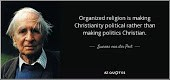 So, how does your Christian life relate to the turmoil of the political landscape in your land? Do you get caught up in the promises, the hopes that politicians freely provide. Do you see that political power is a positive influence in your nation?
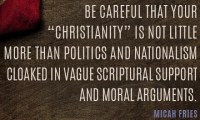 I am convinced that Christianity and political power cannot exist together. Religion and politics can exist, since they both seek to influence souls externally. Not so with Christianity. Christianity is completely different – The Spirit of God is internal, living and powerful, convincing and convicting each believer to follow God.
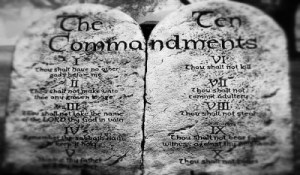 In my introduction to this series of blog posts, I drew attention to verses that supported my belief that the ten commandments were no longer applicable to the believer.
 The End. What does that imply, mean and communicate?

 One day, as I am strolling down the road, I see a $1 bill and a $100 bill. The wind is starting to pick up and I have to make a decision. Should I chase the $1 bill or the $100 bill? I have to make a judgement, a decision, and then follow through with it. In this instance, there is no moral element in the decision / judgement, (other than possible covetousness,) but would it not simply be foolish to abandon that poor lonely $100 bill!
 How did Jesus and the apostles interpret the Old Testament?


 My wife and I have had our disagreements, and I know that this is the sign of a healthy marriage. We have sometimes struggled understanding each others opinions, wants and needs.
 In this passage, the disciples are in a boat again, and it is in the middle of a storm, but it is Peter that “risks it all”
 This is rebellion.
 Note that upon sinking, Peter cried out to the Lord. Immediately Jesus rescued him. No longer did Peter walk on the water, looking to Jesus. Jesus physically held on to him, but spoke of his littleness of faith.
 How about you? The last “test” you were provided?
 One day, my car wouldn’t start and I exploded. Entering the house, I hurled my keys across the table, without realizing my 3 year old son was sitting at the end of it. Thankfully, the keys slid past him and dented the wall instead of my son. (God protects His fool again!)

 Strife is the work of an angry man. He isn’t happy with his life, and he finds satisfaction in spreading strife, or division among those he associates with. This type of man eventually becomes lonely, which only fuels the anger, that unmet expectation of love and kindness we all look for.





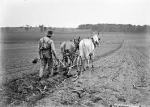 I have never been a farm boy, needing to plow straight furrows. So, this story is a Canadian’s way of relating to plowing a straight furrow in a field. To plow a straight furrow, a goal or destination needs to be focused on. Short sighted goals to the left or right will produce a crooked furrow.
 Considering the Bible