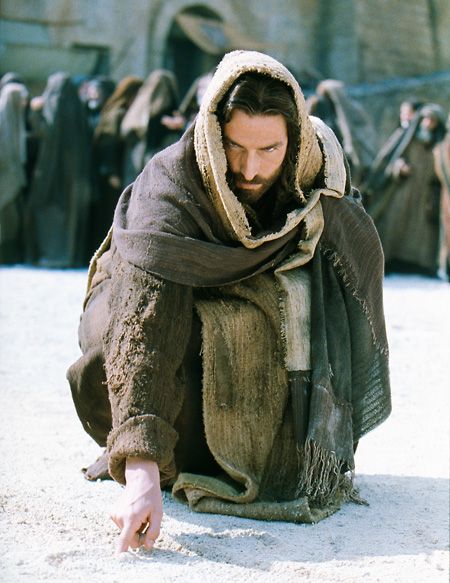

Jesus in the Old Testament is a series of posts that will offer my readers a chance to consider pictures or shadows of Jesus in the Old Testament. As mentioned in the introduction to this series, some may be obvious, some may be not so obvious, and some may simply be a facet of the Lord those reading may not have considered previously.
I hope as we venture through this series, we will see the Lord in many wonderful pictures throughout the Old Testament.
| SEEING JESUS IN |
| ABRAHAM |
| FRUITFUL |
| Genesis 17:6 I will make you exceedingly fruitful, and I will make you into nations, and kings shall come from you. |
| Hebrews 6:14 saying, “Surely I will bless you and multiply you.” |
Earlier on in Genesis, the Lord spoke to Abram of the many offspring He would produce through Abram. We reviewed this topic in Genesis 15:5 a couple of weeks ago. See Jesus in the Old Testament – Abraham – 13 if of interest.
Although this occurrence seems to be of a similar massage as before in Genesis 15, the message is slightly different, in that God comes to Abram speaking of fruitfulness. In the middle of this message of fruitfulness, God informed Abram of two things.
- Abram would now be Abraham.
- God was to establish a covenant with Abraham. A covenant of circumcision to be obeyed.
So my ears perk up – How does fruitfulness and circumcision relate to each other?
Let’s take a moment and consider some passages that may shed some light on the idea of circumcision, and see if it connects with fruitfulness.
When God initiated the command of circumcision, it was directedly related to the obedience of the believer to the Word of God. Notice two verses that directly speak of the covenant of circumcision and obedience linked together.
Genesis 17:9 And God said to Abraham, “As for you, you shall keep my covenant, you and your offspring after you throughout their generations.
Genesis 17:10 This is my covenant, which you shall keep, between me and you and your offspring after you: Every male among you shall be circumcised.
As mentioned in earlier post, Abram would have many offspring, speaking to the quantity of children he could claim as from his loins. But I wonder – Is there such a thing as an offspring that is not fruitful?
To be fruitful, as we find through the witness of the Word, speaks of obedience. Fruitfulness is the result of obedience. Many reading may know of believers, all in various states of fruitfulness. Some even may not be exhibiting any fruit in their lives, and yet they are offspring.
Where are you going with this Carl?
I am suggesting that there is a difference between the quantity of children and the quality of children. Consider Isaac – he had two sons (quantity), but one son was of a different quality, experienced a different fruitfulness, compared to the other.
In Genesis 15, Abram was addressing his lack of any children when speaking to God, that he only had a servant to pass down to. God said he would have many physical children.
In this passage, I would suggest that out of the many, many offspring of Abraham, some would be fruitful, obedient offspring.
Abraham, to be sure, was exceedingly fruitful. Joseph was exceedingly fruitful. Moses, Joshua, Samuel, David, the prophets, faithful priests. All fruitful.
Yet there was One who is the epic topic of this verse. He is the ever fruitful, ever blessed One who, through life eternal would continually produce fruit to God, even through us, if we listen and obey.
He is the Fruitful One
Thanks again for coming to visit. I hope you found something of interest in this post and would appreciate a comment, to begin a discussion. If you know someone this blog may bless (or challenge), send them a link, so they may join us in our discussion.


Come join us at Considering the Bible
 Considering the Bible
One response to “Jesus in the Old Testament – Abraham – 15”
Amen

LikeLiked by 1 person