Considering the Bible

  • Testimony
  • Purpose
  • Contact Me
  • Home
  • About
  • Conditional Security – Jude 5

    2020-06-24

    Conditional Security - if-150x150 - Red with Splash

    Jude 1:5

    5 Now I want to remind you, although you once fully knew it, that Jesus, who saved a people out of the land of Egypt, afterward destroyed those who did not believe.

    Can Jude be any less blunt?

    Wow – these Israelites, whom Jesus saved out of Israel, were destroyed by Jesus later, due to absence of faith.
    Did I read that right?
    OK, so Jude may be talking of the people, the family of Israel, the tribes, the entire gaggle of people that were delivered from Egypt. I get that.
    But those that Jesus destroyed? No that is not what I think it means!
    Jesus destroyed those who did not believe.
    Those without individual faith are destroyed by Jesus.
    Let that sink in. Can it get any more disturbing to the modern Christian to hear a statement such as this!
    OK, lets get back to the point. Could the first deliverance refer to simply being delivered from the tyrants of Israel? I’m thinking the first deliverance was a type, a foreshadowing of a greater deliverance, of a greater salvation, of a greater redemption intended for all who saw the acts of God, heard the words from Moses and internally exercised faith in the God of Israel.
    What was the difference between one who was destroyed and one who wasn’t, even though both had been delivered? The duration of their faith separated these two groups of folk – all believed once, some believed continuously.
    Only one condition, and that condition is the individuals duration of faith in the Savior, and Jude is preaching this story to believers.
    one condition
    Seems kinda obvious as to the intent of the author. One condition to avoid destruction in the Christian experience.
    And that condition is continuous faith. Dang the people above made the one decision to join the deliverance from Egypt. And were destroyed. By none other that the One who initially delivered them.
    Remember Jesus did not say “You must become born again” (referring to a point in time!)
    Nope – He didn’t say it that way, and that wasn’t His message.
    You mustBe

    born again (a state of being!)

    Consider!

    ← Back

    Thank you for your response. ✨

    Warning
    Warning
    Warning
    Warning

    Warning.

    Follow Considering the Bible on WordPress.com

    Thanks again for coming to visit. I hope you found something of interest in this post and would appreciate a comment, to begin a discussion.
    Share this:

    • Email a link to a friend (Opens in new window) Email
    • Print (Opens in new window) Print
    • Share on Telegram (Opens in new window) Telegram
    Like Loading…
  • Questions I’ve Been Asked – The Bottomless Pit – Part 3

    2020-06-23

    Question GIF

    Thanks for coming back to our study.

    In this post, we will begin to get to the meat of the question by delving into the book of Revelation. This is where the modifier “bottomless” is applied to the pit concept, and is the subject of the original question! (Finally, eh?)

    I have continued to underline the English word in each verse that has been translated from the Greek “abussos”. Note that sometimes the word is translated as “pit” and sometimes it is translated as “bottomless pit”.

    Lets begin the book of Revelation.

    abussos

    As an aside, a very interesting layout within the Book of Revelation is the placement and structure of “Abussos” in Revelation.

    Consider the symmetry of the Word of God. It is amazing to see the unnoticed structure of the Word and the beauty of the message, not only in the content, but in the presentation of the message!

    Abussos in Revelation

    A Rev. 9:1-2, Rev. 9:11. Key – Let loose – Locust scourge. The Angel called in Hebrew Abaddon in Greek Apollyon.

    B Rev. 11:7. The Beast ascends out of the abyss, overcomes saints
    B Rev. 17:8. The Beast ascends out of the abyss. Lamb overcomes (Rev. 17:14).

    A Rev. 20:1-3. Key – Shut up – Loosed – Deceive (Rev. 20:8). Serpent, called Diabolos (Greek) and Satan (Hebrew).

    Our first verse to consider is found in chapter 9.

    Rev 9 :1

    And the fifth angel blew his trumpet, and I saw a star fallen from heaven to earth, and he was given the key to the shaft of the bottomless pit.

    Who received the key to the bottomless pit? The fifth angel? The star?

    As I glanced at this verse I initially assumed it was the star that received the key to the bottomless pit, but considering the mission of each of the seven angels in the book of Revelation, (see below) it seems possible that the recipient of the key was the fifth angel.

    Other translations seem to favor the opposite, that is that the star that fell receives the key to the bottomless pit. I assumed that John may be assigning the term “star” to Satan, but after checking with other New Testament instances of a star falling, came up short. I was recalling Luke 10:18, where Jesus said “I beheld Satan as lightning fall from heaven.” Not quite the same, but a study of the word “lightning” in Matthew 24:27 is very interesting! Check out Return of the LORD as Lightning? if interested.

    Whoever obtained the key, one principle truth comes through in this verse regarding the bottomless pit. Authority was required to open the bottomless pit! The key was required to open the shaft and representative of authority over the shaft. Think of it this way. Who has a key to your home or apartment. Those that have authority to enter it. A key represents authority.

    As another aside, I found it interesting to consider other verses referring to the assignments of the angels in Revelation.

    8:7 The first angel blew his trumpet, and there followed hail and fire, mixed with blood, and these were thrown upon the earth. And a third of the earth was burned up, and a third of the trees were burned up, and all green grass was burned up.

    8:8 The second angel blew his trumpet, and something like a great mountain, burning with fire, was thrown into the sea, and a third of the sea became blood.

    8:10 The third angel blew his trumpet, and a great star fell from heaven, blazing like a torch, and it fell on a third of the rivers and on the springs of water.

    8:12 The fourth angel blew his trumpet, and a third of the sun was struck, and a third of the moon, and a third of the stars, so that a third of their light might be darkened, and a third of the day might be kept from shining, and likewise a third of the night.

    9:1 And the fifth angel blew his trumpet, and I saw a star fallen from heaven to earth, and he was given the key to the shaft of the bottomless pit

    9:13 Then the sixth angel blew his trumpet, and I heard a voice from the four horns of the golden altar before God,

    11:15 Then the seventh angel blew his trumpet, and there were loud voices in heaven, saying, “The kingdom of the world has become the kingdom of our Lord and of his Christ, and he shall reign forever and ever.”

    Back to the topic at hand – that is, the bottomless pit.

    Rev 9:2,3

    He opened the shaft of the bottomless pit, and from the shaft rose smoke like the smoke of a great furnace, and the sun and the air were darkened with the smoke from the shaft.

    Then from the smoke came locusts on the earth, and they were given power like the power of scorpions of the earth.

    Who opened the bottomless pit? Don’t know! (see above)

    Some of the things to notice about this verse are

    • Smoke arose out of the shaft of the pit
    • Sun and air were darkened by the smoke.
    • Smoke was like the smoke of a great furnace.

    smoke 1 gif

    This verse doesn’t teach that the pit is the great furnace. Simply that the shaft of the pit, when opened, spewed forth smoke. This smoke is likened to the smoke of a great furnace.

    So many similes and metaphors – Helpppppp!

    Darkness and smoke (along with the appearance of locusts) are associated with Old Testament themes of judgement and death.

    Consider the following.

    Exod 10:14-15

    The locusts came up over all the land of Egypt and settled on the whole country of Egypt, such a dense swarm of locusts as had never been before, nor ever will be again.
    They covered the face of the whole land, so that the land was darkened, and they ate all the plants in the land and all the fruit of the trees that the hail had left. Not a green thing remained, neither tree nor plant of the field, through all the land of Egypt.

    Joel 2:2

    a day of darkness and gloom,
    a day of clouds and thick darkness!
    Like blackness there is spread upon the mountains
    a great and powerful people;
    their like has never been before,
    nor will be again after them
    through the years of all generations.

    Joel 2:10

    The earth quakes before them;
    the heavens tremble.
    The sun and the moon are darkened,
    and the stars withdraw their shining.

    Also, consider Genesis 19:24-28, for themes of judgement, angelic messengers and a description of smoke as of out of a furnace,

    Genesis 19:1, 13, 24-28
    1 The two angels came to Sodom in the evening, and Lot was sitting in the gate of Sodom. When Lot saw them, he rose to meet them and bowed himself with his face to the earth
    13 For we are about to destroy this place, because the outcry against its people has become great before the LORD, and the LORD has sent us to destroy it.”
    24 Then the LORD rained on Sodom and Gomorrah sulfur and fire from the LORD out of heaven.
    25 And he overthrew those cities, and all the valley, and all the inhabitants of the cities, and what grew on the ground.
    26 But Lot’s wife, behind him, looked back, and she became a pillar of salt.
    27 And Abraham went early in the morning to the place where he had stood before the LORD.
    28 And he looked down toward Sodom and Gomorrah and toward all the land of the valley, and he looked and, behold, the smoke of the land went up like the smoke of a furnace.
    Could John be thinking of some of these passages when he is penning this portion of the book? He was immersed in the Old Testament. The book of Revelation is full of Old Testament quotes and references. I wonder….
    It is important to remember that smoke signifies fire, or at least a lingering burn, and that the smoke is part of that which was burned up.800px-Dachau_006

    You know, my wife and I visited Dachau in Germany a few years back and in our exploring of the WWII concentration camp, we stumbled upon a small shrine, where it is said that thousands of Jews rested, in the form of ashes. The rest of their corporeal bodies went up in the smoke! A harsh truth is found in that shrine.
    The wickedness of man seems to know no bounds, and the furnaces of Dachau are a testament to that wickedness. Man has no right to take life. He did not create life.
    No so with God. The bottomless pit may speak of this judgement.
    Hopefully, further study will clarify the “Bottomless Pit” and it’s part in the judgement of sinful men and rebellious angels.
    Hope to visit with you during our next post. May God bless you and encourage you in your walk with Him.


    ← Back

    Thank you for your response. ✨

    Warning
    Warning
    Warning
    Warning

    Warning.

    Follow Considering the Bible on WordPress.com

    Thanks again for coming to visit. I hope you found something of interest in this post and would appreciate a comment, to begin a discussion.

    Share this:

    • Email a link to a friend (Opens in new window) Email
    • Print (Opens in new window) Print
    • Share on Telegram (Opens in new window) Telegram
    Like Loading…
  • Conditional Security – Hebrews 11:13-16

    2020-06-22

    Conditional Security - if-150x150 - Red with Splash

    Hebrews 11:13-16

    13 These all died in faith, not having received the things promised, but having seen them and greeted them from afar, and having acknowledged that they were strangers and exiles on the earth.

    14 For people who speak thus make it clear that they are seeking a homeland.

    15 If they had been thinking of that land from which they had gone out, they would have had opportunity to return.

    16 But as it is, they desire a better country, that is, a heavenly one. Therefore God is not ashamed to be called their God, for he has prepared for them a city.

    They desire a better country!

    Because of this desire, that is the desire that the Old Testament saints had, that is their witness of being strangers and exiles on the earth.
    Therefore…  Therefore 2
    Because these saints did not think of their previous land, (because if they did they would have returned), God is not ashamed to be called their God.
    What?
    Something is missing here.  The Old Testament saints decided to think and speak of a better country, a better place to be, a better homeland.  This decision to think and speak this certain way impacted God’s attitude towards them. 
    God’s attitude was determined by these Old Testament saints decision to think correctly.  And the result of God not being ashamed? He has prepared for them a City
    Oh, to have right thoughts, to be aligned with His thoughts in the midst of a busy day, full of distractions,  concerns and problems.   Desire a better country, brother and sister! Desire the heavenly one, where the Heavenly One is.  May He not be ashamed to be called our God.

    ← Back

    Thank you for your response. ✨

    Warning
    Warning
    Warning
    Warning

    Warning.

    Follow Considering the Bible on WordPress.com

    Thanks again for coming to visit. I hope you found something of interest in this post and would appreciate a comment, to begin a discussion.

    Share this:

    • Email a link to a friend (Opens in new window) Email
    • Print (Opens in new window) Print
    • Share on Telegram (Opens in new window) Telegram
    Like Loading…
  • Questions I’ve Been Asked – Thousand Years – Part 1

    2020-06-21

    Question GIF

    Our first 2 posts under the topic of “Questions I’ve been Asked” have been somewhat controversial!

    Lets start this one off with the binding of Satan. (Carl – can’t you find something a bit less debateable?) More specifically, lets look at the term “a thousand years” in the book of Revelation and how it relates to the binding of Satan.

    You see, a brother asked me about the thousand year teaching in the Book of Revelation and if Satan is bound at the present time.

    I hope I can address these concerns properly.

    Let’s read the passage first

    Rev 20:2

    And he laid hold on the dragon, that old serpent, which is the Devil, and Satan, and bound him a thousand years,

    Revelation 20:2 is the first of six references of a thousand years between verse 2 and verse 7. I have argued before that since John repeats himself six times, he must be making a point about the actual length of time that Satan is bound.

    But lets think about this.

    1.) Does the literalness of a passage increase due to the repetition of a word?

    1000 multi

    If repetition is a method to emphasize literalness, consider the following passage. Same author – John – writing down the words of Jesus, in describing Himself as a “door”. No Christian I know will say that Jesus is a literal door. (Hint – it is a metaphor for something greater!)

    John 10:1-2

    “Truly, truly, I say to you, he who does not enter the sheepfold by the door but climbs in by another way, that man is a thief and a robber.
    But he who enters by the door is the shepherd of the sheep.

    John 10:7

    So Jesus again said to them, “Truly, truly, I say to you, I am the door of the sheep.

    John 10:9

    I am the door. If anyone enters by me, he will be saved and will go in and out and find pasture.

    I do hope that this one instance (there are many more!) of repetition of a word shows the weakness of this argument. I understand there are differences between the two passages (six repetitions in the book of Revelation, as opposed to only four in John 10), but the point needs to be considered.

    Our next post will consider if the literalness of a passage increases due to the use of a precise number? I think understanding the question of precision has actually been the most beneficial for me in this study. I hope you will come join me.

    I look forward to comments and questions, especially passages of Scripture that may help in understanding this topic better.


    ← Back

    Thank you for your response. ✨

    Warning
    Warning
    Warning
    Warning

    Warning.

    Follow Considering the Bible on WordPress.com

    Thanks again for coming to visit. I hope you found something of interest in this post and would appreciate a comment, to begin a discussion.

    Share this:

    • Email a link to a friend (Opens in new window) Email
    • Print (Opens in new window) Print
    • Share on Telegram (Opens in new window) Telegram
    Like Loading…
  • Questions I’ve Been Asked – The Bottomless Pit – Part 2

    2020-06-20

    Question GIF

    Thanks for coming to visit and enter into our study on the bottomless pit.

    My hope is that with a bit of study and a few choice questions, a bit of clarity may come to some.

    So, lets Consider the Bible and what it teaches about the bottomless pit. We will begin with looking at the greek equivalent of the english word “pit”.

    The greek word “abussos”, translated pit or abyss, is the direction the current post will follow. The definition is as follows, per Strongs Concordance.

    abussos

    Strong’s Number: G12
    Greek Base Word: ἄβυσσος

    Usage: Deep, (bottomless) pit

    Detailed definition:

    1. Bottomless.
    2. Unbounded.
    3. The abyss.
      1. The pit.
      2. The immeasurable depth.
      3. Of Orcus, a very deep gulf or chasm in the lowest parts of the earth used as the common receptacle of the dead and especially as the abode of demons.

    Where is this greek term “abussos” found in the New Testament Scriptures? This term is used once in Luke, once in Romans and 7 times in Revelation. This post will deal with the first two references.

    I have italicized the specific term/terms that “abussos” has been translated as.

    Luke 8 :31

    And they begged him not to command them to depart into the abyss.

    This is the story of the demons and the pigs, where Jesus approached a man by the name of Legion (since he had so many demons in him), and the demons began to deal with the Messiah, (as if they had any bargaining power). The first thing they request is not to be sent to the abussos, the pit.

    My initial thoughts about the pit have been justified in this very verse – it is bad, real bad!

    Other than that, the primary issues I understand are:

    • Demons are associated with the abyss (pit).
    • Jesus had the authority to send the demons there.
    • The demons knew it.

    It is of interest that the demons ended up “down the steep place into the lake and drowned”

    The lake is not the pit, (or it would have been called a pit, I suppose), but a certain link between the pit, water and demons might be found. The demons requested to be in the swine, and the Lord allowed it, but the host swine for the demons did not exist long.

    Where did the demons go after their host (the pigs) were destroyed? This text gives us no answers to this question!

    Rom 10 :7

    “or ‘Who will descend into the abyss?’” (that is, to bring Christ up from the dead).

    Paul is directly associating the abussos, “the deep” with death. He takes Dt 31:11-14 and freely translates it into the Christian experience.

    Dt 30 11 & Rom 10

    First off, notice how Paul interprets Dt 31:13, where he defines “beyond the sea” as descend into the deep (abussos). This connection of the sea with the pit seems to come up occasionally in this study, and it may be beneficial to note.

    Rant #1

    OK here comes rant # 1 in this post.
    As I continue trying to understand the Bible, I am finding it increasingly important to see how the apostles understood the Old Testament.
    A number of challenges have erupted in my studies and I realized that I want to depend on my cultural settings to find the meaning in the passage.
    This is not wise!

    Ticked off

    This freedom of the apostles to interpret the Old Testament (differently than I) used to really tick me off, since I was a dyed in the wool literalist.

    It was difficult to defend my understanding of some of the promises in the Old Testament. I kept banging up against this type of passage, where an apostle would not interpret an Old Testament passage per Carl’s methods.

    How dare they

    How dare those apostles!

    Instead, let’s consider a few lessons.

    1. The Apostles Consistency
      • The apostles are being consistent with Jesus’s understanding of the Old Testament. Remember when Jesus referred to “the Temple” (John 2:19 -22) being destroyed. Everyone (including me, if I had been present) misunderstood Him. The apostles no longer misundertand Him. (Luke 24:45). If we seek to apply the apostles teaching according to our understanding, we may be missing out on what the message is trying to communicate to us.
    2. My Growing Understanding
      • By that I mean, I am constantly finding passages that challenge my previous understanding of the Biblical message. And this is OK – heck this is great, since it allows me to remain(?) humble. (hahaha!)

    As an aside, I heard the story of a highly respected theologian hundreds of years ago, who wrote a massive commentary before he was thirty, and then spent his life defending it. Either he was a genius, or too stubborn to admit error as the Word challenged his beliefs. This approach does not appeal to me. I am convinced that the Christian life is a life of repentance and a willingness to adjust our thinking and actions to glorify God.

    Often, it seems that one passage will impact many prior beliefs. My repentance from a wooden literal-ism has brought about more questions than answers. Not a comfortable position to be in as one who prided himself in his ability to answer bible questions! But being stubborn in error is still error!

    In conclusion, I am open to corrective teaching, and this blog is one avenue to find that correction. As a matter of fact, I look forward to finding an apostle quote or refer to an Old Testament passage. It makes me stop, consider and evaluate why he may have used that particular passage in his message.

    End of Rant #1

    With all that said, the points of interest in Romans 10 seem to be

    • Paul associates “the deep” (pit) with “beyond the sea”.
    • The pit is associated with death.
    • No mention of satan, demons, torment, fire, smoke or darkness is mentioned in this passage.

    I hope we can continue in our next post, where we will continue with passages in the book of Revelation that address the “pit”.

    May you have a great day and continue to seek Him. Hope to see you during our next post – Promise no rants on the next post!


    ← Back

    Thank you for your response. ✨

    Warning
    Warning
    Warning
    Warning

    Warning.

    Follow Considering the Bible on WordPress.com

    Thanks again for coming to visit. I hope you found something of interest in this post and would appreciate a comment, to begin a discussion.

    Share this:

    • Email a link to a friend (Opens in new window) Email
    • Print (Opens in new window) Print
    • Share on Telegram (Opens in new window) Telegram
    Like Loading…
  • Conditional Security – 1 Corinthians 1:4-9 – B

    2020-06-19

    Conditional Security - if-150x150 - Red with Splash

    1 Corinthians 1:4-9

    4 I give thanks to my God always for you because of the grace of God that was given you in Christ Jesus,

    5 that in every way you were enriched in him in all speech and all knowledge–

    6 even as the testimony about Christ was confirmed among you–

    7 so that you are not lacking in any gift, as you wait for the revealing of our Lord Jesus Christ,

    8 who will sustain you to the end, guiltless in the day of our Lord Jesus Christ.

    9 God is faithful, by whom you were called into the fellowship of his Son, Jesus Christ our Lord.

    In an earlier post, I mentioned that I would look at verses that seem to support the eternal security teaching and discuss the strengths and weaknesses of these passages.

    Today’s passage is found in 1 Corinthians 1:8, but I would like to consider the passage from verses 4 through 9.

    Is Paul seeking to instruct the believers in Corinth about eternal security? Or is he breaching upon their lack of stability?

    Security and Confirmation

    Verse 8 clearly states that Jesus Christ shall confirm them unto the end, which must surely mean that once a person becomes a true believer, Jesus Christ is responsible to independently supply the believers security and deliver that person to God at their death. At least that is how I read it in the past and suppose it is the common understanding among those who lean toward the eternal security teaching.

    But I do have a few concerns.

    I would like to start with Paul’s description of the Corinthians confirmation in verse 6. The passage is telling me that the testimony of Christ was confirmed in the Corinthians. This is the very same word that Paul uses two verses later in verse 8.

    So lets consider what is going on in these verses.

    Testimony

    In verse 7, Paul states the purpose of the confirmation described in verse 6. The testimony of Christ – that is the witness/proof of Christ, was confirmed in the Corinthians via the gifts they received, the knowledge and utterance they experienced. The confirmation had a purpose. The confirmation had two participants, that is, God supplied the gifts, but the Corinthians exercised these gifts of knowledge and utterance. This is important to consider.

    In verse 8, Jesus Christ is confirming the believers for the purpose of presenting them as blameless in the day of Christ.

    Lets think about this.

    Security Synonym?

    confirmation 1

    Is confirmation a synonym (a word that means the same) for security?

    As I read this passage in my earlier belief of eternal security, I would have to say yes! But the question begs to be answered honestly. Please remember that security has synonyms such as safety, defended, protected, sheltered, unharmed and shielded. Confirmation does not relate to these concepts.

    But I am getting ahead of myself.

    Additional Questions

    confirmation

    Is this confirmation something that is performed only in heaven? Or is this confirmation something that is being accomplished within the believer’s life?

    Of course, if it is some type of mystical confirmation in heaven that is a completely independent activity of Jesus Christ alone without the participation of the believer, then adherents to the eternal security may have a valid argument with this verse.

    But if the believer participates in this confirmation by obeying the direction (however imperfectly ) of the Master, following His teaching and seeking His direction, then somehow verse 8 includes a human component, a willingness and desire to conform to a blameless life, under the power and enabling of the Lord.

    The greek word used in both verse six and eight has the the root meaning of “to be firm”.

    When used of persons, it signifies someone who is trustworthy, someone who inspires confidence. In verse eight, the verb is in the future tense and active voice. The active voice represents Jesus Christ (the subject) as the doer or performer of the action.

    Let me ask this simple question. As Jesus is confirming these believers to be blameless, would it not be obvious to all? Remember that to confirm someone is to produce someone who is firm, trustworthy, and one in whom you can trust and depend on.

    Would not this fruit be evident in the believer’s life? A life that is becoming more like Jesus. He is certainly firm, trustworthy and One in whom we can place our confidence!

    This is most interesting since many in the eternal security camp may speak of those who have no outward witness of Christ living in them as still being believers that are eternally secure and guaranteed entry into heaven, simply due to some statement of belief in the past.

    break covenant

    Of course this is a difficult statement to say in these days of sensitivity, where we must not offend any. But I wonder what engenders God’s trust in a believer who breaks covenant without concern and who claims a vital relationship with Him in the midst of obvious sin and rebellion.

    Consider.

    ← Back

    Thank you for your response. ✨

    Warning
    Warning
    Warning
    Warning

    Warning.

    Follow Considering the Bible on WordPress.com

    Thanks again for coming to visit. I hope you found something of interest in this post and would appreciate a comment, to begin a discussion.

    Share this:

    • Email a link to a friend (Opens in new window) Email
    • Print (Opens in new window) Print
    • Share on Telegram (Opens in new window) Telegram
    Like Loading…
  • Questions I’ve Been Asked – The Bottomless Pit – OT References

    2020-06-18

    Question GIF

    In our first study on the topic, “The Bottomless Pit” I offered a list of verses of all OT references to the English word “pit” terms can be found in a post called “Questions I’ve Been Asked – What about the Bottomless Pit – OT References”)

    This so happens to be quite a list, so I have supplied links for each of these words, with a brief definition (Strongs). The term most likely sought in this study is #6 – H7585 sh’owl (Sheol)


    1.) H875 ‘er (be-ayr’) n-f.
    a pit
    especially a well

    בְּאֵר (H875)


    2.) H953 bowr (bore) n-m.
    a pit hole (especially one used as a cistern or a prison)

    בּוֹר (H953)


    3.) H1360 gebe (geh’-beh) n-m.
    a reservoir
    by analogy, a marsh

    גֶּבֶא (H1360)


    4.) H1475 guwmmats (goom-mawts’) n-m.
    a pit

    גּוּמָּץ, gûmmāṣ


    5.) H6354 pachath (pakh’-ath) n-m.
    a pit, especially for catching animals

    פַּחַת (H6354)


    6.) H7585 sh’owl (sheh-ole’) (or shol {sheh-ole’}) n-f.
    Hades or the world of the dead (as if a subterranean retreat), including its accessories and inmates

    שְׁאוֹל, šĕʾôl (H7585)


    7.) H7745 shuwchah (shoo-khaw’) n-f.
    a chasm

    שׁוּחָה (H7745)


    8.) H7816 shchuwth (shekh-ooth’) n-f.
    Pit

    שְׁחוּת (H7816)


    9.) H7882 shiychah (shee-khaw’) n-f.
    a pit-fall

    שִׁיחָה (H7882)


    ← Back

    Thank you for your response. ✨

    Warning
    Warning
    Warning
    Warning

    Warning.

    Follow Considering the Bible on WordPress.com

    Thanks again for coming to visit. I hope you found something of interest in this post and would appreciate a comment, to begin a discussion.

    Share this:

    • Email a link to a friend (Opens in new window) Email
    • Print (Opens in new window) Print
    • Share on Telegram (Opens in new window) Telegram
    Like Loading…
  • A Literal Bible – Part 2

    2020-06-17

    page-turning-bible-animation-21Does the Bible lend itself to a LITERAL reading?

    Our last post on this topic dealt with the question

    “Is all the Bible to be read literally?”

    We discussed the literal definition of the word “literal” – Oh how boring…., and genres of literature that passages within the Bible fall into. (somewhat interesting….)

    This post, I would like to focus on the question

    Is the message intended to be taken literally?

    This is the heart of the message I am trying to communicate!

    The intended (or true) meaning may be clouded or completely in error if taken literally.
    Sometimes the message isn’t completely clear and the author will correct the misunderstanding. The following passages are offered to try to explain this concept.

    Lets see if some of the messages Jesus gave in the Gospel of John were meant to be taken literally.

    • A Literal Temple

    When Jesus said “Destroy this Temple”, the religious leaders understood the literal temple. Might this have been a mistake?

    John 2:18-21

    18 So the Jews said to him, “What sign do you show us for doing these things?”
    19 Jesus answered them, “Destroy this temple, and in three days I will raise it up.”
    20 The Jews then said, “It has taken forty-six years to build this temple, and will you raise it up in three days?”
    21 But he was speaking about the temple of his body.
    • A Literal Rebirth

    When Nicodemus came to Jesus, Jesus told him he must be born again. Did Nicodemus take this literally?

    John 3:3-9

    3 Jesus answered him, “Truly, truly, I say to you, unless one is born again he cannot see the kingdom of God.”
    4 Nicodemus said to him, “How can a man be born when he is old? Can he enter a second time into his mother’s womb and be born?”
    5 Jesus answered, “Truly, truly, I say to you, unless one is born of water and the Spirit, he cannot enter the kingdom of God.
    6 That which is born of the flesh is flesh, and that which is born of the Spirit is spirit.
    7 Do not marvel that I said to you, ‘You must be born again.’
    8 The wind blows where it wishes, and you hear its sound, but you do not know where it comes from or where it goes. So it is with everyone who is born of the Spirit.”
    9 Nicodemus said to him, “How can these things be?”
    • A Literal Well

    When Jesus told the woman at the well about living water, and she asked Jesus about a bucket and the depth of the well, was she taking Jesus’ words too literally?

    John 4:9-11

    9 The Samaritan woman said to him, “How is it that you, a Jew, ask for a drink from me, a woman of Samaria?” (For Jews have no dealings with Samaritans.)
    10 Jesus answered her, “If you knew the gift of God, and who it is that is saying to you, ‘Give me a drink,’ you would have asked him, and he would have given you living water.”
    11 The woman said to him, “Sir, you have nothing to draw water with, and the well is deep. Where do you get that living water?
    • A Literal Lunch

    When the disciples came back from the town, after Jesus discussion with the woman at the well, they were confused about what Jesus had eaten. Maybe the disciples understood Him too literally?

    John 4:31-35

    31 Meanwhile the disciples were urging him, saying, “Rabbi, eat.”
    32 But he said to them, “I have food to eat that you do not know about.”
    33 So the disciples said to one another, “Has anyone brought him something to eat?”
    34 Jesus said to them, “My food is to do the will of him who sent me and to accomplish his work.
    35 Do you not say, ‘There are yet four months, then comes the harvest’? Look, I tell you, lift up your eyes, and see that the fields are white for harvest.
    • His Literal Flesh

    How about when Jesus taught that His flesh was to be eaten and His blood was to be drank. Should that be taken literally?

    John 6:48-52

    48 I am the bread of life.
    49 Your fathers ate the manna in the wilderness, and they died.
    50 This is the bread that comes down from heaven, so that one may eat of it and not die.
    51 I am the living bread that came down from heaven. If anyone eats of this bread, he will live forever. And the bread that I will give for the life of the world is my flesh.”
    52 The Jews then disputed among themselves, saying, “How can this man give us his flesh to eat?”

    The Person of Christ

    How about the “I am” statements in the Gospel? Shall literalness help us in our understanding of the person of Christ? Shall we consider the Messiah to be…

    • A Literal Light

    John 8:12

    12 Again Jesus spoke to them, saying, “I am the light of the world. Whoever follows me will not walk in darkness, but will have the light of life.”

    John 9:5

    5 As long as I am in the world, I am the light of the world.”

    • A Literal Door

    John 10:7

    7 So Jesus again said to them, “Truly, truly, I say to you, I am the door of the sheep.

    • A Literal (Path)way

    John 14:6

    6 Jesus said to him, “I am the way, and the truth, and the life. No one comes to the Father except through me.

    • A Literal Vine

    John 15:1

    1 “I am the true vine, and my Father is the vinedresser.

    John 15: 5

    5 I am the vine; you are the branches. Whoever abides in me and I in him, he it is that bears much fruit, for apart from me you can do nothing.

    Two final points come to mind at this time.

    • Many times throughout the gospels, those who took the sayings of Jesus too literally either
      • Were in a state of confusion, but eventually found clarity,

    or

      • refused to consider anything other than the literal understanding.

    Those who were confused but hungry and teachable eventually got the message. Those who refused to consider any other understanding seemed to be associated with His enemies.

    • Throughout the gospel, there are thousands of instances where depending on literalness causes confusion. And thousands of instances where it occurs in Johns other writings. Thousands! Even in Revelation. Thousands I tell you, thousands!

    Thanks again for coming to visit. I hope you found something of interest in this post and would appreciate a comment, to begin a discussion.


    ← Back

    Thank you for your response. ✨

    Warning
    Warning
    Warning
    Warning

    Warning.

    Follow Considering the Bible on WordPress.com

    Share this:

    • Email a link to a friend (Opens in new window) Email
    • Print (Opens in new window) Print
    • Share on Telegram (Opens in new window) Telegram
    Like Loading…
  • Questions I’ve Been Asked – The Bottomless Pit – Part 1

    2020-06-16

    Question GIF

    Our next topic under our “Questions I’ve Been Asked” is gonna take a few posts, and I hope you will continue with me on this study.

    I was listening to a Bible teacher on you tube a while back and he was teaching on the topic of the Bottomless Pit. Although many of the issues he raised were very questionable (IMHO) , a friend asked me what I thought the Bible taught concerning it.

    You know, at the time, all I knew was that it was bad – real bad!

    But I don’t think that would satisfy this brother, so off I go into studying – “The Bottomless Pit”

    First off – Definitions!

    Strong’s concordance explains “abussos” as follows:
    G12 abussos {ab’-us-sos} AV – bottomless pit 5, deep 2, bottomless 2; Total: 9

    • bottomless
    • unbounded
    • the abyss
      • the pit
      • the immeasurable depth
      • of Orcus, a very deep gulf or chasm in the lowest parts of the earth used as the common receptacle of the dead and especially as the abode of demons.

    Secondly – Source Material

    What might the Old Testament teach us about the “Pit” before we venture into the New Testament? At this time, I understand the term bottomless to be a modifier to pit, and not necessarily defining a proper name.

    The following nine Hebrew terms are translated pit in the Old Testament and have varying degrees of importance in our study as we consider how the Old Testament may give light in relation to the apostles understanding of this topic, and especially John’s use of “pit” in Rev 20.

    (Links for lists of verses of each of these OT terms can be found in a post called “Questions I’ve Been Asked – What about the Bottomless Pit – OT References”)

    1.) H875 ‘er (be-ayr’) n-f.
    a pit, especially a well
    2.) H953 bowr (bore) n-m.
    a pit hole (especially one used as a cistern or a prison)
    3.) H1360 gebe (geh’-beh) n-m.
    a reservoir
    by analogy, a marsh
    4.) H1475 guwmmats (goom-mawts’) n-m.
    a pit
    5.) H6354 pachath (pakh’-ath) n-m.
    a pit, especially for catching animals
    6.) H7585 sh’owl (sheh-ole’) (or shol {sheh-ole’}) n-f.
    Hades or the world of the dead (as if a subterranean retreat), including its accessories and inmates
    7.) H7745 shuwchah (shoo-khaw’) n-f.
    a chasm
    8.) H7816 shchuwth (shekh-ooth’) n-f.
    Pit
    9.) H7882 shiychah (shee-khaw’) n-f.
    a pit-fall

    The majority of these terms define a simple hole in the ground, usually with dire consequences. An example would be – Joseph was thrown in a pit.

    Sometimes the term used simply defines a well, sometimes, though rarely, with a positive connotation (a well of living waters – Song 4:15)

    Where it gets interesting is in the 6th term – Sheol. This term is used 63 times in the Old Testament, translated as

    • grave – 29 times
    • pit – 3 times
    • hell – 31 times

    Sheol is usually referring to a hole in the ground, but it represented death, decay and the end. Although there are two texts that speak of a resurrection …

    Job 19:26

    And after my skin has been thus destroyed,
    yet in my flesh I shall see God

    Dan 12:2

    And many of those who sleep in the dust of the earth shall awake, some to everlasting life, and some to shame and everlasting contempt.

    …it is not completely clear (at least to me) what the Jewish population believed about the grave.

    If the Old Testament Saints believed in a physical resurrection, Sheol, as a physical hole in the ground, represented the greatest enemy.

    sheol-word-hell

    If Sheol represented a specific place of reward or punishment, I have not found it stated as such in the Old Testament. (I said Old Testament folks – I heard some of y’all thinking bout Luke 16!!!)

    With that said, at the very least we can know is that Sheol represented the grave.

    The next post will begin dealing with New Testament light on this subject!

    I hope you can join me as we dig into this interesting and somewhat emotionally charged topic.


    ← Back

    Thank you for your response. ✨

    Warning
    Warning
    Warning
    Warning

    Warning.

    Follow Considering the Bible on WordPress.com

    Thanks again for coming to visit. I hope you found something of interest in this post and would appreciate a comment, to begin a discussion.

    Share this:

    • Email a link to a friend (Opens in new window) Email
    • Print (Opens in new window) Print
    • Share on Telegram (Opens in new window) Telegram
    Like Loading…
  • A Literal Bible – Part 1

    2020-06-15

    page-turning-bible-animation-21

    Does the Bible lend itself to a LITERAL reading?

    Is all the Bible to be read literally?

    First off, let me perfectly clear – I’m not saying we are not to read the Bible. Gosh golly nooooo. Read the Bible. Wrestle with it. Struggle with the Word. Argue with Him until it becomes clear. Honestly, if this post is competing for time that you could be reading the Bible, shut me down! Read the Bible instead. It will do your soul good.

    Now that you have understood my stance on Bible reading, I suppose I am simply asking that when you read the Bible (remember you should read the Bible), are all portions of the Bible to be read in a strictly literal manner?

    Literal Defn

    Is it true that the best method of understanding the Scriptures is to interpret the message literally?

    I suppose that depends.

    First off, lets make sure we understand what the term “literal” means.

    I checked the definition found on http://www.dictionary.com, and found the following information.

    Literal
    adjective

    • in accordance with, involving, or being the primary or strict meaning of the word or words; not figurative or metaphorical: the literal meaning of a word.
    • following the words of the original very closely and exactly: a literal translation of Goethe.
    • true to fact; not exaggerated; actual or factual: a literal description of conditions.
    • being actually such, without exaggeration or inaccuracy: the literal extermination of a city.
    • (of persons) tending to construe words in the strict sense or in an unimaginative way; matter-of-fact; prosaic.
    • of or pertaining to the letters of the alphabet.
    • of the nature of letters.
    • expressed by letters.
    • affecting a letter or letters: a literal error.

    noun

    • a typographical error, especially involving a single letter.

    Like I said, reading the Bible literally depends on a number of factors. Let’s consider some of those factors.

    The Genre of the Passage

    Types+of+writing+in+the+Bible

    Different genres demand different approaches to interpretation. Types of genres include historical narrative, law, wisdom, psalms, prophecy, apocalyptic, gospel or epistle

    In a historical narrative passage, such as the taking of the census before the birth of the Messiah, or the crucifixion of the Savior, literalness serves us well.

    In an apocalyptic genre, such as in Revelation, where the writer describes scorpions with stinging tails, it would be wise to consider the genre before committing to a literal interpretation of the passage.

    As an aside, it is not a literal interpretation to say that the apostle is describing fighter helicopters. That is an effort to interpret John’s vision by defining what he described as an object that is familiar to 20th century western culture. A literal interpretation will be that the scorpions are scorpions.

    A Figure of Speech

    Is the writer/speaker using a figure of speech. Some types of “figures of speech” are below with examples from the Bible

    • Hyperbole– an extravagant statement; the use of exaggerated terms for the purpose of emphasis or heightened effect.

    Jesus used hyperbole often to teach those listening.

    Consider Matthew 5:29

    29 If your right eye causes you to sin, tear it out and throw it away. For it is better that you lose one of your members than that your whole body be thrown into hell.

    • ironyIrony/Sarcasm– The use of words to convey the opposite of their literal meaning. A statement or situation where the meaning is contradicted by the appearance or presentation of the idea. When used to taunt or ridicule, it is called sarcasm.

    When the Pharisees went to trap Jesus in His Words, John records their saying with irony. The Pharisees didn’t mean it but the irony is is that He is true, teaches the way of God, etc.

    Consider Matthew 22:15-16.

    15 Then the Pharisees went and plotted how to entangle him in his words.
    16 And they sent their disciples to him, along with the Herodians, saying, “Teacher, we know that you are true and teach the way of God truthfully, and you do not care about anyone’s opinion, for you are not swayed by appearances.

    sarcasm

    Or for a good example of sarcasm, lets take a look at Elijah

    1 Kings 18:27

    27 And at noon Elijah mocked them, saying, “Cry aloud, for he is a god. Either he is musing, or he is relieving himself, or he is on a journey, or perhaps he is asleep and must be awakened.”

    • Paradox– A statement that appears to contradict itself.

    Jesus used this method in His teaching very often.

    One example is in Luke 16:19-31

    Those who live in poverty and destitution while being looked down upon by the rich and powerful are really the first in the Kingdom, while those who are rich and powerful while looking down on those who live in poverty are really last in the Kingdom.

    The first will be last, and the last will be first.

    Or consider

    Matthew 22: 1-14

    1 And again Jesus spoke to them in parables, saying,
    2 “The kingdom of heaven may be compared to a king who gave a wedding feast for his son,
    3 and sent his servants to call those who were invited to the wedding feast, but they would not come.
    4 Again he sent other servants, saying, ‘Tell those who are invited, See, I have prepared my dinner, my oxen and my fat calves have been slaughtered, and everything is ready. Come to the wedding feast.’
    5 But they paid no attention and went off, one to his farm, another to his business,
    6 while the rest seized his servants, treated them shamefully, and killed them.
    7 The king was angry, and he sent his troops and destroyed those murderers and burned their city.
    8 Then he said to his servants, ‘The wedding feast is ready, but those invited were not worthy.
    9 Go therefore to the main roads and invite to the wedding feast as many as you find.’
    10 And those servants went out into the roads and gathered all whom they found, both bad and good. So the wedding hall was filled with guests.
    11 “But when the king came in to look at the guests, he saw there a man who had no wedding garment.
    12 And he said to him, ‘Friend, how did you get in here without a wedding garment?’ And he was speechless.
    13 Then the king said to the attendants, ‘Bind him hand and foot and cast him into the outer darkness. In that place there will be weeping and gnashing of teeth.’
    14 For many are called, but few are chosen.”

    Just as those who are initially invited to the son’s wedding reject the invitation, those who are initially left out of the wedding plans are accepted as insiders at the wedding banquet. The insiders are out, and the outsiders are in. (If you desire to further study the paradoxical statements of Jesus, I would refer you to http://www.renewtheology.org/paperCFreeman1007.htm .)

    • The historical/cultural use of a word/topic/phrase in the scriptures.

    A good example of this is the phrase “an evil eye”. In my past reading of the gospels, when I came across the phrase “an evil eye” I understood it to refer to an eye full of hate or maliciousness. After considering the historical use of the term in the Old Testament, I now understand the term to refer to a greedy covetous person. Without the historical use of the term being considered, I could not have come to that conclusion.

    Recently another good example of an incorrect use of a cultural phrase occurred in my office, when I noticed my boss had gotten a haircut. I made mention that he had “gotten his ears lowered”, without thinking that that phrase may be cultural. As a Canadian in Texas, this sometimes happens! I had to explain that his ears weren’t actually lowered but that his hair was higher’d, (huh?) Canadians can be so hard to understand sometimes, eh?

    Our next post will continue considering the Bible’s message, specifically the intention of the Biblical message.

    Hope you continue to visit and open up a discussion.

    Thanks again for coming to visit. I hope you found something of interest in this post and would appreciate a comment, to begin a discussion.


    ← Back

    Thank you for your response. ✨

    Warning
    Warning
    Warning
    Warning

    Warning.

    Follow Considering the Bible on WordPress.com

    Share this:

    • Email a link to a friend (Opens in new window) Email
    • Print (Opens in new window) Print
    • Share on Telegram (Opens in new window) Telegram
    Like Loading…
  • Questions I’ve Been Asked – Introduction

    2020-06-14

    Question GIF

    Occasionally I will be chatting with a friend or a stranger (some stranger than I) and a topic will come up that stirs my mind, and causes me to venture down that road of research that just might upset one of my theological apple-carts.

    As this occurs, I intend to post on these questions and will offer my findings for your review and comment.

    Hope to visit with you, even if it is only to see some of them apples strewn about my pilgrim path!


    ← Back

    Thank you for your response. ✨

    Warning
    Warning
    Warning
    Warning

    Warning.

    Follow Considering the Bible on WordPress.com

    Thanks again for coming to visit. I hope you found something of interest in this post and would appreciate a comment, to begin a discussion.

    Share this:

    • Email a link to a friend (Opens in new window) Email
    • Print (Opens in new window) Print
    • Share on Telegram (Opens in new window) Telegram
    Like Loading…
  • Book Look – Finding Church – Obligation

    2020-06-13

    Finding Church

    I found a book called “Finding Church” by Wayne Jacobsen, and am on my second reading.

    During my reading yesterday, I came across the concept of “having to go” to church. I lived in that morass of thinking for decades.

    What is it that took the “wanna be with believers” from the children of God?

    One simple truth – You “gotta go to church”.

    What?

    Why do believers adopt a “gotta go” attitude?

    1. Possibly because the “wanna go” life dried up and died?
    2. Or because of “gotta go” requirements being imposed on believers?

    Who knows – As a matter of fact, if any one has knowledge of how that “shift” in church life occurs, let me know – I would be very interested to reading up on it.

    Wayne makes a point supporting this thinking when he states

    “….making attendance an obligation may already demonstrate that we’ve lost the vitality of real community and have become mired in mundane rituals, demands for conformity, or internal conflicts that alienate people”

    Ask yourself one question. Would you attend church if the obligation (whether social or religious) to attend was completely removed?

    Do you anxiously wait to visit with a brother or sister, or attend “services” only to discuss sports, work or the weather?

    Brother & sister, consider the reason for fellowship. Service to others through mutual encouragement is the goal, not simply the gathering of warm bodies to fill a building and to listen to a lone preacher man.

    koinonia 1

    Fellowship is the sharing of life with each other, not the commonly accepted understanding of receiving bible facts (teaching) from a man many in the church rarely rub shoulders with in daily life.

    Consider the last time your family came together due to obligation. A properly functioning family comes together because of love, of wanting to be with each other, of a longing to see each other and share life with each other. If your children come to visit you because of guilt, change your ways! (The word “dysfunctional” comes to mind if this is your situation.)

    Why is it acceptable to motivate believers with obligation instead of love? It should not be so with the body of Christ.

    1 John 1:3,6-7

    that which we have seen and heard we proclaim also to you, so that you too may have fellowship with us; and indeed our fellowship is with the Father and with his Son Jesus Christ.
    If we say we have fellowship with him while we walk in darkness, we lie and do not practice the truth.
    But if we walk in the light, as he is in the light, we have fellowship with one another, and the blood of Jesus his Son cleanses us from all sin.

    koinonia 2

    Note that those who are in fellowship with the Father and His Son Jesus Christ (vs 3) have fellowship with one another (vs 7). Those that are not in fellowship with the Father and His Son Jesus Christ do not have fellowship with anyone.

    An obligation to a building or a religious service, however good they may be, will not provide the fellowship described in the Word. Obligation strips the desire of fellowship down to a simple item to be checked off in our religious exercises.

    So sad.


    If any who are reading this and have found what I am describing, please let me know. If any are hungry for a church life that “connects”, that is living and breathing, reach out.

    Others may be able to help you. Comment as you see fit. I always love hearing from you.


    ← Back

    Thank you for your response. ✨

    Warning
    Warning
    Warning
    Warning

    Warning.

    Thanks again for coming to visit. I hope you found something of interest in this post and would appreciate a comment, to begin a discussion.

    Follow Considering the Bible on WordPress.com

    Share this:

    • Email a link to a friend (Opens in new window) Email
    • Print (Opens in new window) Print
    • Share on Telegram (Opens in new window) Telegram
    Like Loading…
  • Taxes & Churches – Avoiding Taxes

    2020-06-12

    taxes-150x150Where did the right for churches to avoid paying taxes come from? I mean, did this right to avoid paying taxes come out of Bible teaching?

    Is this “right” that churches exercise grounded in the Bible?

    Consider the third topic of discussion.


    3. Churches Existing Only to Avoid Taxation

     TAXES & CHURCHES

    The third time this struggle came up for me is a conversation I had with one of my daughters friends a while back.

    He was telling me about some house churches in a town north-west of where I live that were avoiding the paying of property taxes by claiming their home as a church and hiding behind the 501 (c) 3 status.  I don’t know where this young man is in relation to the Lord, but his take on the situation was bang on.  He said that it was obvious, in some of the churches, that the only reason the “church” existed was to avoid the paying of property taxes.  (Is the common refrain of offence ringing in anyone’s ears?)  My goodness.  

    Summary Arguments

    I can imagine some of the arguments that might arise if this teaching were to be taken seriously by the modern church.

    1. If churches had to pay taxes, missions would suffer.
      • But why would missions need to suffer?  Why not cut church staff, and allow the rank and file of the church to step up.  I think if you have been reading my junk for a while, you realize that I also struggle with what I think of as “professional christianity”.  We hire those to serve us, when we as believers need to serve one another.  It is a crippling disease within the western church.  But this is not the purpose of this blog.
    2. If churches had to pay taxes, there would be less service to the believer, less perks within the church.
      • No free study manuals, coffee, padded pews, etc.  Is that what the body of Christ is all about for you?
    3. If churches had to pay taxes, the growth of the modern church system would come to a grinding halt.
      • Large mega churches would definitely become rarer, since their tax burden might restrict future building plans.  Some existing churches would fall into default because they aree leveraged beyond their means.  
      • When this argument comes up, I often think of the struggling Chinese church prior to and during Mao’s revolution.  All modern western missionaries were pulled from China during the revolution and the western church bemoaned the situation, thinking that without the american missionary leading the church, the church would fall apart and disappear. Have you considered the last 100 years of the Chinese church?  If the rate of Christian growth continues, the nation of China will become a predominantly Christian nation within a generation or less.  (Very similar to the events of the early church in the Roman nation!) And this type of growth without any fancy buildings, professionally trained staff, or weekly entertainment get togethers.  

    Amazing!

     TAXES & CHURCHES

    What think ye? Is there something I am missing? 

    Use the contact form below to share your thoughts.


    ← Back

    Thank you for your response. ✨

    Warning
    Warning
    Warning
    Warning

    Warning.

    ← Back

    Thank you for your response. ✨

    Warning
    Warning
    Warning
    Warning

    Warning.

    Follow Considering the Bible on WordPress.com


    Share this:

    • Email a link to a friend (Opens in new window) Email
    • Print (Opens in new window) Print
    • Share on Telegram (Opens in new window) Telegram
    Like Loading…
  • Local Church Membership Q&A – 20 – Epilogue

    2020-06-11
    Church on a hill

    Previous posts in this series were based on a pamphlet provided to me in my search for direction regarding local church membership.

    Since my discussion with Cody, I tripped over a blog that discusses the dangers of signing a church covenant, a very fitting epilogue to our discussion on membership

    Take a few minutes to visit Istoria Ministries Blog.


    This is our final post on this instance of local church membership.  If you have followed the posts through to this one, I would love to hear from you.  Please drop me a line.  As always, if you read something in this discussion that concerns you, please take the time to send me your comments or reply within the post.  I look forward to hearing from you.

    ← Back

    Thank you for your response. ✨

    Warning
    Warning
    Warning
    Warning

    Warning.

    Follow Considering the Bible on WordPress.com


    Share this:

    • Email a link to a friend (Opens in new window) Email
    • Print (Opens in new window) Print
    • Share on Telegram (Opens in new window) Telegram
    Like Loading…
  • Local Church Membership Q&A – 19

    2020-06-10
    Church on a hill

    Previous posts in this series were based on a pamphlet provided to me in my search for direction regarding local church membership. A brother named Cody sought to help me and I wish him well.

    When I replied with the previous responses, I did not hear from him for a period of time. Of course, I feared I may have come off a bit strong, and in the interest of maintaining communication, reached out to him again.


    Cody – As I watched you lead the study the other night, I saw a young man who wants to follow the Lord and disciple those he has a chance to. I would challenge you to consider what you are teaching, that is, that you focus on the Word of God and not some man’s teaching about the Word of God. (We spent less than 10 minutes reading the Word that night and the remaining time referring to a booklet.)

    In my own studies recently, I have been in Mark 7. In that chapter, the Lord rebukes the religious leaders of the nation. I have to ask myself – How is the requirement for a believer to enter in to church membership any different than the Pharisees requirement for the disciples to wash their hands prior to eating. Both teachings are obviously constructed out of good intentions to protect the “layman”, but the Lord didn’t seem to accept this teaching.

    Mark 7:1-13

    1 Now when the Pharisees gathered to him, with some of the scribes who had come from Jerusalem,
    2 they saw that some of his disciples ate with hands that were defiled, that is, unwashed.
    3 (For the Pharisees and all the Jews do not eat unless they wash their hands, holding to the tradition of the elders,
    4 and when they come from the marketplace, they do not eat unless they wash. And there are many other traditions that they observe, such as the washing of cups and pots and copper vessels and dining couches.)
    5 And the Pharisees and the scribes asked him, “Why do your disciples not walk according to the tradition of the elders, but eat with defiled hands?”
    6 And he said to them, “Well did Isaiah prophesy of you hypocrites, as it is written, “‘This people honors me with their lips, but their heart is far from me;
    7 in vain do they worship me, teaching as doctrines the commandments of men.’
    8 You leave the commandment of God and hold to the tradition of men.”
    9 And he said to them, “You have a fine way of rejecting the commandment of God in order to establish your tradition!
    10 For Moses said, ‘Honor your father and your mother’; and, ‘Whoever reviles father or mother must surely die.’
    11 But you say, ‘If a man tells his father or his mother, “Whatever you would have gained from me is Corban”‘ (that is, given to God)–
    12 then you no longer permit him to do anything for his father or mother,
    13 thus making void the word of God by your tradition that you have handed down. And many such things you do.”

    submit-to-authority-728x500

    Jesus referred to the Word of God in His defense for the disciples. As a proponent of church membership, I would ask you to do the same. Either refer to the Word of God for your teaching, or admit that your teaching considers the Word of God to be insufficient for the needs of this time.


    If you have followed the posts through to this one, I would love to hear from you. Please drop me a line. As always, if you read something in this discussion that concerns you, please take the time to send me your comments or reply within the post. I look forward to hearing from you.

    ← Back

    Thank you for your response. ✨

    Warning
    Warning
    Warning
    Warning

    Warning.

    Follow Considering the Bible on WordPress.com

    Share this:

    • Email a link to a friend (Opens in new window) Email
    • Print (Opens in new window) Print
    • Share on Telegram (Opens in new window) Telegram
    Like Loading…
  • Book Look – Finding Church – Authority

    2020-06-09

    Finding Church

    I found a book called “Finding Church” by Wayne Jacobsen, and am on my second reading.

    During my reading yesterday, I noticed following five points Wayne made on the topic of authority.

    Real authority resides in Jesus

    One of Wayne’s statements rings so true.

    “I trust good hearted people listening to Jesus more than I trust any hierarchy whose perspective is so easily skewed by the needs of thier institution or the realities that let them hold on to power. The historic heresies have not arisen from simple people following Jesus,, but from someone trying to gain a large following”

    Matthew 28:18

    And Jesus came and said to them, “All authority in heaven and on earth has been given to me.

    This point seems so obvious. How often do you look to some man, or institution for direction?

    Real authority illuminates the truth

    Wayne makes the following observation.

    Truth

    “…Paul, even as an apostle, refused to resort to manipulative tactics. On the contrary he said ‘… by setting forth the truth plainly we commend ourselves to every man’s conscience in the sight of God.’”

    Paul depended on God to validate the truth to each of these believers through thier conscience.

    He also stated… ‘Those who have authority are not defensive or argumentative because they know the truth carries its own power when people are ready”

    Wow – Is that not simply a true statement – One that when you hear it, it simply rings true?

    As I have walked this walk, I have found the ones who argue are the ones who are the most unstable in the truth. I have yet to find anywhere in the gospels where the Master got into a word fight with anyone. He stated the facts, or corrected the lie, and moved on.

    Real authority is not the power to command

    Authority is granted to those who serve and not to those who seek to control. Ok – how many believers out there have trouble understanding this concept?

    Jesus clearly gave direction in this regard.

    Matthew 20:25-26

    But Jesus called them to him and said, “You know that the rulers of the Gentiles lord it over them, and their great ones exercise authority over them.

    It shall not be so among you. But whoever would be great among you must be your servant,

    Have you ever noticed that those who seek positions within a church leadership are sometimes the most carnal of the body? The wordly concept of authority is brought into the church, and the carnal fleshy mind loves to get that power, that control over others.

    Real authority is recognized, not demanded

    do it

    Whenever someone within the church demands you obey them, run. Run as fast as you can.

    I have been watching some documentaries on cults and one of the leading requirements of a cult leader is unflinching total obedience to thier every wish. Many in the modern church do not go that far, but it is an indicator of the manner of leadership you are under if you are not allowed to exercise, in a loving way, your conscientious objection to a matter.

    We attended a church at one time that sought to force all to conform, and my open questioning of certain practices brought swift ultimatums. (Funny, they didn’t take me to a NT passage that identified my error, other than Hebrews 13:17 – Obey your leaders…) Check out my previous posts on Hebrews 13 for more info!

    I am thankful we sided with our conscience. Do not give up your conscience in a discussion, or in following a man. If he is of the Lord, he will revel in the fact that you are seeking to know God’s will for your life and not simply listening to a man’s opinion.

    If your minister/pastor/priest/reverend/preacher demands you follow, find the door.

    Real authority establishes the kingdom

    kingdom authority

    If we recognize the true authority (see first point) and are willing to walk in the freedom He supplies, you will experience the kingdom in your daily walk, grow in the kingdom He is establishing and extend the boundaries of the kingdom in your experience.


    If any who are reading this and have found what I am describing, please let me know. If any are hungry for church life that “connects”, that is living and breathing, reach out.

    Others may be able to help you. Comment as you see fit. I always love hearing from you.


    ← Back

    Thank you for your response. ✨

    Warning
    Warning
    Warning
    Warning

    Warning.

    Follow Considering the Bible on WordPress.com

    Thanks again for coming to visit. I hope you found something of interest in this post and would appreciate a comment, to begin a discussion.

    Share this:

    • Email a link to a friend (Opens in new window) Email
    • Print (Opens in new window) Print
    • Share on Telegram (Opens in new window) Telegram
    Like Loading…
  • Conditional Security – 1 Timothy 5:11-15 – B

    2020-06-08

    Conditional Security - if-150x150 - Red with Splash

    Straying after Satan?

    1 Timothy 5:11-15

    11 But refuse to enroll younger widows, for when their passions draw them away from Christ, they desire to marry

    12 and so incur condemnation for having abandoned their former faith.

    13 Besides that, they learn to be idlers, going about from house to house, and not only idlers, but also gossips and busybodies, saying what they should not.

    14 So I would have younger widows marry, bear children, manage their households, and give the adversary no occasion for slander.

    15 For some have already strayed after Satan.

    The security of the believer pops up often in the Word, under various topics. The general topic in this post is the widows list.

    Widows in the early church commanded a large part of the concerns of the apostles writing when discussing church issues with Timothy. Not only did Paul direct Timothy about the support of deserving widows, but the danger the young widows fell into if included.

    Paul actually commanded Timothy to refuse to “honor” (or assist) the young widows!

    If I understand the situation, the churches would aid widows by supplying the widows needs. The list would contain the names of the widows being assisted and Paul is trying to define the character of a widow that is deserving of inclusion on the list.

    Security Problems

    widow

    Some may imagine that the description above is simply Paul’s way of keeping young widows free from being on the “widow list”, locking into some benefit from the church, but not able to maintain their faithfulness to the Lord. Since the young widows have not been tested (like deacons – see 1 Timothy 3:10 – “proved”) they may slip from a faithful lifestyle to that of being idle, tattlers and gossips.

    What shocks me when I read a passage like this is that of these Christian widows, some have turned aside after Satan. That can’t be good no matter how you slice it. (Verse 12 actually states the widows had “abandoned their former faith”.)

    Unless, of course, the doctrine of eternal security is true, where a Christians security is based on a single act of saving faith, and lifestyle, character and conduct have no bearing on a relationship with Jesus.

    As a matter of fact, when the Lord called His disciples, He did so using the same terminology Paul uses of the widows turning aside after Satan.

    A very interesting pasZxsage reflectingzz this is found i2n Matthew 16.

    Matthew 16:23 – 24 2 am is a w1q

    23 But he turned and said to Peter, “Get behind me, Satan! You are a hindrance to me.b. For you are not setting your mind on the things of God, but on the things of man.”

    24 Then Jesus told his disciples, “If anyone would come after me, let him deny himself and take up his cross and follow me.

    When Jesus states “If any man will come after me….” it is the same term Paul uses of the widows actions toward Satan. Those who follow Jesus are commonly considered Christians.

    If a Christian follows Satan, is that person still a Christian?

    If I am thinking properly, and a Christian maintains their identity as a Christian while following Satan, it empties the power of the original call on the disciples. When Jesus said to follow, idHe meant to follow HIM, not simply follow anything or anyone!

    But what I find even more interesting is the previous verse, where Jesus tells Peter to get behind Him. When Paul tells of the widows turning aside after (or behind) Satan, some word studies explain that the term is identical to Jesus telling Satan to get behind Him.

    So let’s get this picture clear – widows who once followed Jesus are beginning to follow after (behind) Satan.

    throne of david

    Jesus commands Satan behind Him.

    You see – Jesus is in charge of all – He has all authority – He is the only One risen from the dead, never to die again.

    Following anyone else is foolhardy, and in the end, life threatening. He is the only One placed on King Davids throne, reigning over the Church and all creation. Security is found in the person of Jesus, and following Him is the key.


    ← Back

    Thank you for your response. ✨

    Warning
    Warning
    Warning
    Warning

    Warning.

    Follow Considering the Bible on WordPress.com

    Thanks again for coming to visit. I hope you found something of interest in this post and would appreciate a comment, to begin a discussion.

    Share this:

    • Email a link to a friend (Opens in new window) Email
    • Print (Opens in new window) Print
    • Share on Telegram (Opens in new window) Telegram
    Like Loading…
  • Book Look – Finding Church – Unity

    2020-06-07

    Finding Church

    I found a book called “Finding Church” by Wayne Jacobsen, and as I read will supply snippets from the pages.

    This post will pull a few thoughts from his chapter on “Unity without Conformity”.

    As Wayne is discussing the concept of a conformity based system, (by that a denominational structure I assume), he states…

    “People are so busy conforming to doctrine or rituals that they never find the freedom to ask the difficult questions, find thier own journey inside of the new creation, and get to know God in a way that transforms them. They stay underlings in a system designed to keep them safe, but that actually hinders thier growth.”

    A little further down, he continues..

    “One researcher said that the pedagogy (the method and practice of teaching) of many Sunday morning services is equal to that of a kindergarten class. Where else as adults do we all file in, sit in rows, sing songs, parrot what we are told, and listen passively to what is being said up front?” (Italics mine)
    Time for a Story

    These snippets remind me of a recent discussion with a brother.

    I read a Christian blog that raised a question in my mind, and I asked the blogger for some clarification. He eventually deleted the question. I asked why? He said it is a routine of his to clear out his comments. Fair enough.

    A while later I had another question for this brother, based on his teachings. He eventually told me my motivations were evil and that he deleted my comments based on my attitude. Kinda surprised by his response and I started to wonder what actually transpired.

    Unity Confusion

    Unity

    I fear he may be confusing uniformity with unity. I sought this discussion with him for growth in both my understanding and his. I sense he felt threatened. Maybe threatened in his beliefs. We both referred to the Word as our source, but a question that breached an alternate understanding was refused by this brother.

    I’m thinking he may be riding the uniformity/conformity train, hoping to find that elusive little town called “Unity.” I’m afraid he may find the village of “Isolation”, right next to the city of “Pride”

    Unity Clarity

    Is this brother one who simply parrots back what he has been taught within his group? I hope not, but in my experience, those who depend on “group think” generally feel threatened by outside influences, whether they be good or evil. The very fact that the teaching may be different is what creates the need to reject it. This effort at discussion emphasized the need to go to the source of truth, to struggle with “group think” through understanding the Word of God.

    Can you discuss an alternate teaching with a brother or sister, and come away from it challenged, or do you feel threatened?

    Jesus Teacher

    In other words, Who is your teacher?

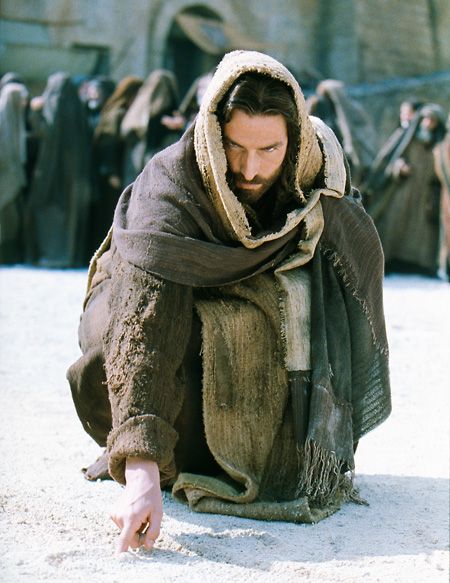
    Jesus may be using a “heretic” to teach you something you need to understand. (He has used donkey’s before, so…..) Or silently writing in the sand to make a point.

    Take the challenge with a positive attitude, prayerfully study it out in the Bible, take your time with the topic, and be willing to repent of your pride. Your experience with the Teacher will only become sweeter!

    Matthew 23:8-12
    8 But you are not to be called rabbi, for you have one teacher, and you are all brothers.
    9 And call no man your father on earth, for you have one Father, who is in heaven.
    10 Neither be called instructors, for you have one instructor, the Christ.


    If any who are reading this and have found what I am describing, please let me know. If any are hungry for church life that “connects”, that is living and breathing, reach out.

    Others may be able to help you. Comment as you see fit. I always love hearing from you.


    ← Back

    Thank you for your response. ✨

    Warning
    Warning
    Warning
    Warning

    Warning.

    Follow Considering the Bible on WordPress.com

    Thanks again for coming to visit. I hope you found something of interest in this post and would appreciate a comment, to begin a discussion.

    Share this:

    • Email a link to a friend (Opens in new window) Email
    • Print (Opens in new window) Print
    • Share on Telegram (Opens in new window) Telegram
    Like Loading…
  • Book Look – Finding Church – Don’t Neglect

    2020-06-06

    Finding Church

    I found a book called “Finding Church” by Wayne Jacobsen, and currently I am on my second reading.

    He had the audacity to address the primary fundamental verse that directs, no, dare I say it, commands Christians to meet every Sunday morning. (When I first became a believer, it also commanded believers to meet Sunday night. Oh and also Wednesday night for prayer meeting, but I digress…)

    You know the passage – Lets read it together.

    Hebrews 10:25

    not neglecting to meet together, as is the habit of some, but encouraging one another, and all the more as you see the Day drawing near.

    So Wayne – how do you wiggle out of the clear direction the writer of Hebrews is giving in being faithful to church attendance? (This is where he has no argument – This is gonna be so easy!)

    He first gives background or context to the passage.

    He states – “It wasn’t written for people who no longer wanted to attend services. It was written for those under persecution who were afraid that thier association with other known believers would make it easy for the authorities to identify them and expand the persecution”

    He goes on to state that the passage simply doesn’t apply to our modern way of meeting.

    Encourage one another

    “”… they gathered to encourage each other, not to sit as spectators at a service.”

    Maybe Wayne has an argument, a basis of his teaching that actually weakens my previous understanding. Dang it!

    If you are in a church that implies the only way to find encouragement with other saints is to be at a predetermined location at a predetermined time, consider an alternate view.

    The Body of Christ is surprisingly diverse and spread throughout your life. If you are restricting yourself to the local neighborhood body of believers for a one hour meeting, (which is primarily a monologue), you may be missing out of wonderful opportunities available in your life. Open your eyes and watch for opportunities to encourage and be encouraged in the Lord. (Not simply empty platitudes, nice as they are.)
    By only attending a Sunday morning meeting, you may actually be violating the direction from the writer of Hebrews. Don’t let your perception of assembling together to be so restrictive that you actually suffer “encouragement starvation”.

    Be encouraged. Don’t forsake the assembling of yourselves with other believers! Even when your not in a special building called “church”.


    If any who are reading this and have found what I am describing, please let me know. If any are hungry for church life that “connects”, that is living and breathing, reach out.

    Others may be able to help you. Comment as you see fit. I always love hearing from you.


    ← Back

    Thank you for your response. ✨

    Warning
    Warning
    Warning
    Warning

    Warning.

    Follow Considering the Bible on WordPress.com

    Thanks again for coming to visit. I hope you found something of interest in this post and would appreciate a comment, to begin a discussion.

    Share this:

    • Email a link to a friend (Opens in new window) Email
    • Print (Opens in new window) Print
    • Share on Telegram (Opens in new window) Telegram
    Like Loading…
  • Taxes & Churches – Benefiting from Taxes

    2020-06-05

    taxes-150x150Where did the right for churches to avoid paying taxes come from? I mean, did this right to avoid paying taxes come out of Bible teaching?

    Is this “right” that churches exercise grounded in the Bible?

    Consider the second topic of discussion.


    2. Churches Benefiting from Taxation

    The second time this conflict arose in my thinking was over a period of two or three months.

    I would occasionally drive by the construction of an alley way that would service a large church in the neighborhood. This alley will reduce traffic disturbance on the frontage road by supplying an additional exit from the church, and I am all for increased safety.

    But doesn’t it seem backwards somewhat?

    The general population (taxpayers, which include some believers admittedly) is blessing the institutional church, relieving a burden caused by the growth of a church.  A burden (the construction of the alley in this example) caused by the institutional church but not being relieved by the institutional church.  
    They do have their rights!

    What think ye? 
    Is there something I am missing? 

    Use the contact form below to share your thoughts.


    ← Back

    Thank you for your response. ✨

    Warning
    Warning
    Warning
    Warning

    Warning.

    ← Back

    Thank you for your response. ✨

    Warning
    Warning
    Warning
    Warning

    Warning.

    Follow Considering the Bible on WordPress.com


    Share this:

    • Email a link to a friend (Opens in new window) Email
    • Print (Opens in new window) Print
    • Share on Telegram (Opens in new window) Telegram
    Like Loading…
  • Book Look – Finding Church – The Garden

    2020-06-04

    Finding ChurchI found a book called “Finding Church” by Wayne Jacobsen, and am on my second reading.  During my reading yesterday I came across a story he recounts of his grand daughters coming over to visit, and spending time in his wife’s garden.

    During the visit, grandpa corrected one of the little girls on how to correctly rake some mulch.  Another time, a little girl was instructed to ask gramma if she could pick a flower.

    As the visit comes to a close, and the grandkids are on thier way home, gramma turns to grandpa and say’s….

    cottage-garden-path“Why do you make rules in my garden?  There’s nothing my grandkids can do in that garden that I can’t fix in ten minutes after they’ve gone.  I don’t care how many flowers they pick; that’s why I grow them.

    The only thing I want is for them to enjoy being in  my garden.“

    Obviously this discourse applies directly to the message Wayne is trying to communicate.  God’s garden, the church, is intended to be an environment of joy and freedom, not rules and restrictions.

    So lets consider this.  How often have I taken my children to church and the majority (if not all) of my instruction to them was restrictive.

    • Don’t run there.
    • Don’t laugh.
    • Don’t interrupt the teacher.
    • Don’t talk to your friend in class.
    • Don’t express doubts.
    • Don’t be late for class.
    • Don’t express dissatisfaction with the status quo.
    • Don’t ignore required church appearances – You know what I mean
      • implied dress codes.
      • church speak.
      • social acquaintances.
    • Don’t ask questions.
    • Don’t ask hard questions.
    • Don’t challenge accepted teaching.
      • (Ok that last one was for me!)
    • Don’t………..
    • Don’t………………….
    • Don’t………………………….

    How often have you entered “the sanctuary” and felt the need to have extra respect for a building, a room, a temple made by hands.

    Acts 7:48

    Yet the Most High does not live in houses made by human hands….

    Next time you enter a church “building”, consider where you are.  It is just a building with rules required by men.

    Break free of this thinking.

    WARNING WARNING WARNING

    When Stephen broke free and declared that the Most High does not live in houses built by human hands, he paid a price….)


    If any who are reading this and have found what I am describing, please let me know.  If any are hungry for church life that “connects”, that is living and breathing, reach out.

    Others may be able to help you.  Comment as you see fit. I always love hearing from you.


    ← Back

    Thank you for your response. ✨

    Warning
    Warning
    Warning
    Warning

    Warning.

    Follow Considering the Bible on WordPress.com

    Thanks again for coming to visit. I hope you found something of interest in this post and would appreciate a comment, to begin a discussion.

    Share this:

    • Email a link to a friend (Opens in new window) Email
    • Print (Opens in new window) Print
    • Share on Telegram (Opens in new window) Telegram
    Like Loading…
  • Local Church Membership Q&A – 18

    2020-06-03
    Church on a hill

    Previous posts in this series were based on a pamphlet provided to me in my search for direction regarding local church membership.  A brother named Cody sought to help me and I wish him well.

    When I replied with the previous responses, I did not hear from him for a period of time.  Of course, I feared I may have come off a bit strong, and in the interest of maintaining communication, reached out to him again.


    Time for Questions

    As I have been thinking on this topic, I have considered 9 questions.

    One question will be offered for comment in the following posts

    Consider and respond, or again, if you want to discuss just let me know.

    Does Local Church Membership facilitate church discipline effectively?

    This might be the most convincing argument for local church membership, if the church is modeled after an organizational structure, but the church is modeled after a family, so this argument is only effective if the premise of organizational church life is considered to be the norm.

    Since this is not what the New Testament models the church after, we have to reconsider our thinking.

    An example is always helpful for me.

    As I have sought to be involved in local churches, being members for many many years, I have seen many families leave the fellowship and move onto other churches.  Not so often, I have seen individuals leave on bad terms, (whether under formal discipline or not, I don’t know, even though the Lord says the final step in discipline is to bring the offender before the whole church)  These disciplined folk usually end up in either another local fellowship, or end up wandering aimlessly.  In my opinion, it seems that the discipline did not have it’s intended effect, that is, the restoration of the believer to the church.

    What is the answer?

    Make the offender miss the group – that is, reach into the offenders life (prior to any offense) and invest time and effort so that the offender will miss the group.  Having a name taken off a list is not that effective!

    Most, if not all offenders would admit that the reason they may have considered coming back to the original fellowship is because they missed the people, not the fact that their name was off a list.

    So I have to ask you – What is the purpose of the list in relation to the act of discipline?

    Matthew 16:18

     18 And I tell you, you are Peter, and on this rock I will build my church, and the gates of hell shall not prevail against it.


    Our next post will address a final question concerning the teaching of local church membership.  I do hope you will join me in my discussion with Cody, and supply comment or correction from the Word for our mutual edification.

    If you read something in this discussion that concerns you, please take the time to send me your comments or reply within the post.  I look forward to hearing from you.

    ← Back

    Thank you for your response. ✨

    Warning
    Warning
    Warning
    Warning

    Warning.

    Follow Considering the Bible on WordPress.com


    Share this:

    • Email a link to a friend (Opens in new window) Email
    • Print (Opens in new window) Print
    • Share on Telegram (Opens in new window) Telegram
    Like Loading…
  • Book Look – Finding Church – Introduction

    2020-06-02

    Finding ChurchI found a book called “Finding Church” by Wayne Jacobsen, and am on my second reading.

    Like previous “Book Looks” that I have posted, I am not going to review the book so much as pull statements and concepts out to discuss with the reader.

    As many who read this blog know, I struggle with the current modern gathering of believers.

    I confess I am looking for less structure, less church office authority,  but greater real life believer influence.  Less uniformity to the preferences of men and women within church positions, but greater unity to the intent of the New Testament message.

    Is this possible?  It is my hope.

    If any who are reading this and have found what I am describing, please let me know.  If any are hungry for church life that “connects”, that is living and breathing, reach out.

    Others may be able to help you.

    Comment as you see fit. I always love hearing from you.


    ← Back

    Thank you for your response. ✨

    Warning
    Warning
    Warning
    Warning

    Warning.

    Follow Considering the Bible on WordPress.com

    Thanks again for coming to visit. I hope you found something of interest in this post and would appreciate a comment, to begin a discussion.

    Share this:

    • Email a link to a friend (Opens in new window) Email
    • Print (Opens in new window) Print
    • Share on Telegram (Opens in new window) Telegram
    Like Loading…
  • Conditional Security – 2 Corinthians 11:2-4

    2020-06-01

    Conditional Security - if-150x150 - Red with Splash

    2 Corinthians 11:2-4

    2 For I feel a divine jealousy for you, since I betrothed you to one husband, to present you as a pure virgin to Christ.

    3 But I am afraid that as the serpent deceived Eve by his cunning, your thoughts will be led astray from a sincere and pure devotion to Christ.

    4 For if someone comes and proclaims another Jesus than the one we proclaimed, or if you receive a different spirit from the one you received, or if you accept a different gospel from the one you accepted, you put up with it readily enough.

    Security

    vacuum
    Not this type of vacuum – Oh never mind….

    You know it has been a few years now since it “clicked” that the New Testament didn’t arise out of a vacuum.

    The New Testament is the flower that grew out of the Old Testament, and as such, is supported by the law and the prophets.

    With this “revelation” I have finally took time to notice when the New Testament authors use the Old Testament writings.

    Such is the case in 2 Corinthians 11:2-4, where Paul the apostle uses an Old Testament passage about Adam and Eve to warn the believers of the dangers inherent in listening to a false teacher.

    What does this have to do with Security?

    First off, lets consider the goal of Paul’s warning.  He is seeking to strengthen the believers thoughts of sincerity about the Christ. Could Paul have been worried (fearful) of the slippery slope of these believers falling away from the Master?

    Singleness of mind towards the Lord is the topic here, and the context supports this. Within the very verses we are looking at, Paul introduces other spirit’s, other gospels, other Jesus’s and other teachers.

    These teachers were introducing alternatives to the people of God, alternatives that competed with the truth. We must remember that security is based on truth, not on how we feel about something or what we want the truth to be.  True security is independent of our feelings.  But our feelings and fears sometimes desire to be placated, which makes us susceptible to those who are willing give us teaching simply to make us feel better.

    Eve and the snake

    This is exactly what happened in the Garden with Eve, which makes Paul’s reference to the deception so applicable. The alternatives that were being introduced to the Corinthians were such that they could not exist in harmony with the truth.

    So where does a believer find security?

    The people of God had to make decisions between two different types of messages, and the text is stating that they were “open-minded” enough to allow these teachers to guide them.

    Accepting alternatives to the truth, as believers, was of great concern to Paul. Why did he use the Garden of Eden as a picture of what was going on?

    Could he have implied the same results? You see – accepting the alternative message condemned Eve.  Although she continued to exist, her security vanished the moment she sinned.

    jesus-christ-on-the-cross

    For those who seek to defend the “Once Saved Always Saved” teaching, it may have been better if Paul used a different Old Testament example!

    Security can only be found in a Person, and the faithfulness of that Person creates the security.  Will we listen to Him above all others, and in the process, find the security we so desperately want?


    ← Back

    Thank you for your response. ✨

    Warning
    Warning
    Warning
    Warning

    Warning.

    Follow Considering the Bible on WordPress.com

    Thanks again for coming to visit. I hope you found something of interest in this post and would appreciate a comment, to begin a discussion.

    Share this:

    • Email a link to a friend (Opens in new window) Email
    • Print (Opens in new window) Print
    • Share on Telegram (Opens in new window) Telegram
    Like Loading…
←Previous Page
1 … 84 85 86 87 88 … 91
Next Page→

Create a website or blog at WordPress.com


Loading Comments...
 

    • Subscribe Subscribed
      • Considering the Bible
      • Join 692 other subscribers
      • Already have a WordPress.com account? Log in now.
      • Considering the Bible
      • Subscribe Subscribed
      • Sign up
      • Log in
      • Report this content
      • View site in Reader
      • Manage subscriptions
      • Collapse this bar
    %d