

So Jesus said to the Jews who had believed him, “If you abide in my word, you are truly my disciples, and you will know the truth, and the truth will set you free.” Truly, truly, I say to you, if anyone keeps my word, he will never see death.” – John 8:31,32, 51 ESV
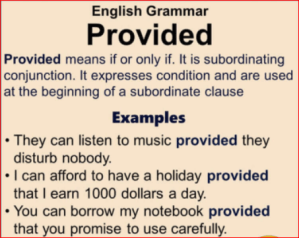
Many of the passages that I will be looking at during these posts are dependent on the “if” clause that introduces conditionality on the recipient. Therefore it may be interesting to review the greek for the term(s) translated “if” in the New Testament
The following information was found here and is helpful.
VII. CONDITIONAL SENTENCES
A. A CONDITIONAL SENTENCE is one that contains one or more conditional clauses. This grammatical structure aids interpretation because it provides the conditions, reasons or causes why the action of the main verb does or does not occur. There were four types of conditional sentences. They move from that which was assumed to be true from the author’s perspective or for his purpose to that which was only a wish.
B. The FIRST CLASS CONDITIONAL SENTENCE expressed action or being which was assumed to be true from the writer’s perspective or for his purposes even though it was expressed with an “if.” In several contexts it could be translated “since” (cf. Matt. 4:3; Rom. 8:31). However, this does not mean to imply that all FIRST CLASSES are true to reality. Often they were used to make a point in an argument or to highlight a fallacy (cf. Matt. 12:27).
C. The SECOND CLASS CONDITIONAL SENTENCE is often called “contrary to fact.” It states something that was untrue to reality to make a point. Examples:1. “If He were really a prophet, which He is not, He would know who and of what character the woman is who is clinging to Him, but He does not” (Luke 7:39).2. “If you really believed Moses, which you do not, you would believe me, which you do not” (John 5:46).3. “If I were still trying to be pleasing to men, which I am not, I would not be a slave of Christ at all, which I am” (Gal. 1:10).
D. The THIRD CLASS speaks of possible future action. It often assumes the probability of that action. It usually implies a contingency. The action of the main verb is contingent on the action in the “it” clause. Examples from I John: 1:6-10; 2:4,6,9,15,20,21,24,29; 3:21; 4:20; 5:14,16.
E. The FOURTH CLASS is the farthest removed from possibility. It is rare in the NT. As a matter of fact, there is no complete FOURTH CLASS CONDITIONAL SENTENCE in which both parts of the condition fit the definition. An example of a partial FOURTH CLASS is the opening clause in I Pet. 3:14. An example of a partial FOURTH CLASS in the concluding clause is Acts 8:31.
I am no greek freak, so I am very open to teaching and reproof if I make some statements that reveal my ignorance. With that said, it will be important to define which “IF” is used in John 8:31-32.
From my research, I have found that this particular instance of “IF” is the third class conditional, which, according to Daniel Wallace, (table below) makes “fulfillment uncertain, but still likely”, or in other words, according to Dr. Bob Utley, (text above),” implies a contingency. The action of the main verb is contingent on the action in the “if” clause”
Many of the “IFs” in John are in this class. It is so with the verse below also.
John 8:51 Verily, verily, I say unto you, If a man keep my saying, he shall never see death.
This is no small task to understand the message Jesus is trying to communicate. Obviously, He cannot be referring to physical death, since He kept His word and saw that type of death.
I have read that the verb “see” could be the key to this passage, since He may be referring to “beholding” or “intensively acknowledging” something (See below for Strongs definition) As one who follows Christ, that person will not behold death in the same way an unbeliever will, that is, he will have a fleeting experience with death, whereas the unbeliever will “live” the experience(?)
Whatever this verse is teaching me, one thing is certain. The promise is conditional!
G2334 θεωρέω theoreo (theh-o-reh’-o) v.
1. to be a spectator of, i.e. discern
{literally, figuratively (experience) or intensively (acknowledge)}
[from a derivative of G2300 (perhaps by addition of G3708)]
KJV: behold, consider, look on, perceive, see
Root(s): G2300, G3708
Compare: G3700, G1492

Thanks again for coming to visit. I hope you found something of interest in this post and would appreciate a comment, to begin a discussion. If you would like to receive daily posts from Considering the Bible, click on the “Follow” link below





 But John, you just taught of who had life and who didn’t and now you are addressing believers?
 I sought clarification, and eventually found out they considered Jesus to have the “Christ spirit” during His ministry years only, that is from the baptism up to but not including the crucifixion.
 I need humility to truly love a brother, and this humility comes from Him. If I am to love a brother, I need to exercise humility in our discussion, or in my gifting, directing the brother to Him. If my brother finds assistance in knowing Him, I am truly loving my brother. If I am seeking only to make another Carl – golly – that is just a waste of time!
 He came to take away sin, and if we abide in Him, we will not continue in sin.
 No matter.
 A broader understanding of the Word of God will allow for the mystery of the Word to become apart of your life. If you feel you fully understand the Word, repent of this arrogance. Remember that this ancient book is not a cartoon comic that we can pick up for 2 mins and understand. That is way too shallow!
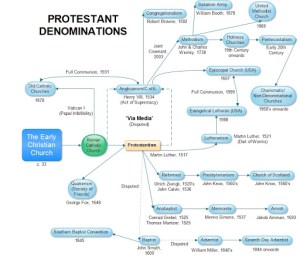
 Discussion with believers of other denominations and understanding of their faith systems within the Christian church may possibly break down some of the “us verses them” attitude in the Body of Christ. I am pretty sure Paul would applaud this. I need to add that this discussion, if it is to be fruitful, has to be based on the shared understanding that the Word is the authority, and not tradition, logic or emotional bias.
 Jesus even predicted Peter’s denial. The Word describes our lives as endless opportunities to deny Him. I am afraid denial is a current and dangerous condition for believers and non-believers.
 In our last post, I settled on the topic of church life through a computer monitor, and how this may be a trap. In the post, I challenged the reader to fulfill the “one another” commands, while attending a virtual church meeting that is becoming so acceptable in this society.

 These three “things” of the world make us seek independence from God (pride of life), drives us to satisfy sexual desires outside the confines of a loving marital relationship (lust of the flesh), and propels us to accumulate possessions, power or people (lust of the eyes).
 The World
 It just so happened (providentially don’t you know) that we were reading through the story of David and Saul, and how David would not retaliate on Saul. Vengeance is mine saith the Lord, was a phrase that kept coming up. Love your enemy.
