As many who have followed me for a bit, I have fallen into the Psalms, and I can’t get up! (As if I would want to.) The Psalms are a majestic collection of poetry, of heart felt human experiences that constantly challenge me in my own frail attempt to follow the true King. As many of the Psalms are written by David, my study on the Psalms has spurred me on to looking at the life of David, is the main contributor to this book, and to follow the victories and tragedies of the shepherd King of Israel.
Many times in the narrative, we will see the Lord Jesus, imperfectly, yet a reflection of His spirit in a man with weaknesses.
An Outcast becomes King
1 Samuel 16:11-13
11 Then Samuel said to Jesse, “Are all your sons here?” And he said, “There remains yet the youngest, but behold, he is keeping the sheep.” And Samuel said to Jesse, “Send and get him, for we will not sit down till he comes here.” 12 And he sent and brought him in. Now he was ruddy and had beautiful eyes and was handsome. And the LORD said, “Arise, anoint him, for this is he.” 13 Then Samuel took the horn of oil and anointed him in the midst of his brothers. And the Spirit of the LORD rushed upon David from that day forward. And Samuel rose up and went to Ramah.
It turns out that Jesse had a younger son, a son that may not have been considered full family.
It turns out that David’s mother is not identifiable in the Bible, but a Jewish legend speaks of his mother, calling her Nitzevet. A quick search on this name will provide my reader with the Jewish story. Nevertheless, David’s relationship within this family was complicated.
In Psalm 86:16, David speaks of his mother as a godly woman, a maidservant of God. He speaks of his alienation from his brothers in Psalm 69:8. It seems Jesse did not consider David to be worthy of the visit of the prophet, and his absence may be simply due to Jesse’s estimation of David as being little more a laborer instead of a son. This may be too harsh to attribute to Jesse’s character, but David’s exclusion from this sacrifice may reveal a complicated family situation.
Nevertheless, when David was summoned, and upon his arrival, everything breaks loose! The Lord commanded Samuel to rise and anoint him. This is the king! No more rejection, no more guessing, no more disappointment, no more secrecy.
…Samuel took the horn of oil and anointed him in the midst of his brothers. And the Spirit of the LORD rushed upon David from that day forward
All his brothers witnessed the anointing of their little brother! Talk about interpersonal conflicts within a family!
David, like Saul before him, experienced the Spirit of the Lord rush upon him. Notice one difference when comparing the two men, for with David, the added phrase “from that day forward” spoke of a resiliency in David’s kingdom, in his service to God and his faithfulness to his calling.
David was the new king, but to all appearances, Saul would wield power for years to come.
God has anointed and enthroned David’s son as King. Yet to all appearances, there is another king ruling. Where are you in relation to the true King, as opposed to a king that is simply depending on lies and deception, trying to maintain power through appearances?
Thanks again for coming to visit. I hope you found something of interest in this post and would appreciate a comment, to begin a discussion. If you know someone this blog may bless (or challenge), send them a link, so they may join us in our discussion.
My wife and I are reading through the Psalms in our evening reading and occasionally a nugget of the Psalms jumps out of the page. Don’t you love it when, after years of reading the “Old Book” passages become alive, reinforcing old teachings or simply warming your heart.
This is the book of Psalms, and it is rich.
I pray I can communicate a portion of the blessing we receive from this wonderful book.
Psalm 56:1-4
1 To the choirmaster: according to The Dove on Far-off Terebinths. A Miktam of David, when the Philistines seized him in Gath. Be gracious to me, O God, for man tramples on me; all day long an attacker oppresses me; 2 my enemies trample on me all day long, for many attack me proudly. 3 When I am afraid, I put my trust in you. 4 In God, whose word I praise, in God I trust; I shall not be afraid. What can flesh do to me?
Considering the background to this psalm in our last post, we saw that David was in flight mode, slipping into greater and greater deceit, first with his own people (the priest’s of Nob) and now with those who were his enemy. Let us remember that David is the one who killed the Philistine giant Goliath, and as he enters the city of Gath to seek asylum, he is in possession of Goliath’s sword. Surely he did not bring it in front of Achish, reminding him of his previous victory over the Philistines.
Nevertheless, as he writes, he is reaching out to God for grace.
He speaks of “man” oppressing him, trampling on him all day long. The term trampling does not only carry the meaning of a crushing, of a beating down, or a stepping on, but also of a “panting after”. This picture is of his enemies chasing after him, panting out their breath, seeking with all their strength to catch him. This is no passive effort on David’s enemies part, but in his mind, and in truth, his enemies are but a step behind him.
He needs God’s help, the God who he has come to know in the fields with his sheep, the God who he has sung songs to and has worshipped under the stars while all alone with his livestock.
3 When I am afraid, I put my trust in you.
Verse 3 is a favorite of mine, for I am one who may experience fear (rightly of wrongly) more than most. It seems to be my achilles heal, and this story of David on the run resonates with me. I can somewhat identify with him, for though my circumstances are no where as dire as they were for the future king, the allowance of fear controlling my actions is just as real. I am thankful that David is a real man, a man of weakness in the midst of his victories and that the Lord of heaven brought him though difficult times
The question in my mind is whether David considered his act of madness in front of Achish to be an act of faith, “helping” God with the circumstance he was in. Or was this statement a statement of a lesson learned, where David is writing of his future decisions to trust God when fear strikes.
This refrain of trust in the midst of fear comes up again later in the psalm and is the theme of this psalm, for in the midst of the circumstances David was in, his primary experience was of fear.
As fear sometimes grips our hearts, even in times of actual danger, do we learn from our actions in the midst of the fear?
Can we determine as David does, to trust God instead of succumbing to fear? Surely we have known God to be the One who rescues, and yet we are but frail men and women, susceptible to fear. Unless we act in faith, knowing our God is on our side.
May His name be lifted up in our lives, even as we trust him in our fears!
As many who have followed me for a bit, I have fallen into the Psalms, and I can’t get up! (As if I would want to.) The Psalms are a majestic collection of poetry, of heart felt human experiences that constantly challenge me in my own frail attempt to follow the true King. As many of the Psalms are written by David, my study on the Psalms has spurred me on to looking at the life of David, is the main contributor to this book, and to follow the victories and tragedies of the shepherd King of Israel.
Many times in the narrative, we will see the Lord Jesus, imperfectly, yet a reflection of His spirit in a man with weaknesses.
The Disappointment
6 When they came, he looked on Eliab and thought, “Surely the LORD’s anointed is before him.” 7 But the LORD said to Samuel, “Do not look on his appearance or on the height of his stature, because I have rejected him. For the LORD sees not as man sees: man looks on the outward appearance, but the LORD looks on the heart.” 8 Then Jesse called Abinadab and made him pass before Samuel. And he said, “Neither has the LORD chosen this one.” 9 Then Jesse made Shammah pass by. And he said, “Neither has the LORD chosen this one.” 10 And Jesse made seven of his sons pass before Samuel. And Samuel said to Jesse, “The LORD has not chosen these.”
Samuel needed the Lord, for his initial viewing of Jesse’s first son was impressive, but misleading. Eliab was handsome, tall, and seemed to have all the outward appearance of the next king of Israel. After all, Samuel did not have a lot of experience in anointing kings, for he had only anointed Saul previously, and he was handsome and tall. The qualifiers were present in Samuels eyes, but not with God.
Reject him!
One of my wife’s favorite phrases from the Old Testament is in this passage.
For the LORD sees not as man sees: man looks on the outward appearance, but the LORD looks on the heart.
What does this say to Samuel. Don’t judge a book by it’s cover. The appearance of a man can (and usually is?) quite deceptive. Even if the appearance and the character align, in that they are both beautiful, good and right, it is for the Lord to chose whom He may call. Appearance does not factor into the equation.
God looks on the heart.
What does this say about Eliab? Might it reflect specifically on Eliab, or is this simply a general truth for Samuel to understand. It turns out that Eliab was not the purest of souls! Consider 1 Samuel 17:28, where Eliab may expose his general heart condition
Now Eliab his eldest brother heard when he spoke to the men. And Eliab’s anger was kindled against David, and he said, “Why have you come down? And with whom have you left those few sheep in the wilderness? I know your presumption and the evil of your heart, for you have come down to see the battle.”
Eliab had been rejected, and his little brother had been chosen over him. Anger erupted and Eliab entered into the way of Cain, where the righteous deeds of another was the catalyst for him to enter into jealousy, and rage. We will consider this passage in the future, but for our purposes presently, the Lord saw something in Eliab that was not appropriate for the call to kingship.
It turns out that all of Jesse’s sons were rejected. All those who were present in the little town, those who were with Jesse, simply were not the future chosen king of Israel.
Disappointment and disillusionment must have hit Samuel for a moment. He risked his life to visit this town, and it looked like it was for nothing. Didn’t he request for Jesse to bring his sons? How could he have understood the Lord so poorly?
Are all your sons here Jesse? Is there one that you didn’t bring? Is there any hope that the future king is still a possibility?
Thanks again for coming to visit. I hope you found something of interest in this post and would appreciate a comment, to begin a discussion. If you know someone this blog may bless (or challenge), send them a link, so they may join us in our discussion.
My wife and I are reading through the Psalms in our evening reading and occasionally a nugget of the Psalms jumps out of the page. Don’t you love it when, after years of reading the “Old Book” passages become alive, reinforcing old teachings or simply warming your heart.
This is the book of Psalms, and it is rich.
I pray I can communicate a portion of the blessing we receive from this wonderful book.
Introduction to Psalm 56
This psalm deserves an introduction to it. The circumstances of David’s life at the time of his writing this psalm, is such that if known, provides a depth to the statements David’s provides us in this psalm.
To discuss the background, we need to visit 1 Samuel 21:10-15.
1 Samuel 21:10 And David rose and fled that day from Saul and went to Achish the king of Gath.
David is on the run from his father-in-law, the king of Israel, and we pick up in the story right after his visit with the priest’s of Nob, where he retrieved the sword of Goliath. Goliath the Philistine, that is.
Next on the route for David was a visit Achish, the Philistine king of Gath, where he sought sanctuary from Saul. This visit with Achish should not be confused with the time he came with his army, offering an alliance to the Philistine king. At that time, Achish provided the City of Ziklag to David as a base camp for his men.
No – David was alone in this visit. He was being chased by the king of Israel, and David was not in fight mode but flight mode.
1 Samuel 21:1 Then David came to Nob, to Ahimelech the priest. And Ahimelech came to meet David, trembling, and said to him, “Why are you alone, and no one with you?” 1 Samuel 21:2 And David said to Ahimelech the priest, “The king has charged me with a matter and said to me, ‘Let no one know anything of the matter about which I send you, and with which I have charged you.’ I have made an appointment with the young men for such and such a place.
When in flight mode, if you have ever suffered through the stress and confusion associated with that frenzied state of affairs, it is easy to justify a story or two to accomplish the goal of escape. We find David falling into this justification of deceit with his visit of the city of Nob and visiting the priest Ahimilech. He led the priest to believe he was on a secret mission for the king, when in reality he was running from the king. He informed the priest that he was meeting with his band of men at a predetermined place. This most likely was a stretch of the truth, as there is no mention of any men joining with David immediately after his escape from Saul.
David’s descent into deceit continues as he enters the city of Gath, and is brought before the king of Gath. I can only assume he wanted to find refuge from Saul in the neighboring city, hopefully laying low, drawing little to no attention to himself as he sought to formulate a plan for survival. Such was not the case, for as he approached Achish, the king of Gath, his reputation of being “the king of the land” preceded him.
1 Samuel 21:11 And the servants of Achish said to him, “Is not this David the king of the land?
What the servants of the King of Gath understood is difficult to know, and it may be immaterial to our current discussion, but to be considered the “king of the land” is quite a statement. His victories overshadowed Saul’s and these accomplishments dogged David’s life, causing the jealousy of Saul and now the tension with Achish.
Could it be that even Saul’s enemies knew that he was but a paper tiger, a king with no reputation worthy of his position, a king who who is being overshadowed by a young, unknown upstart named David. It was such a common saying in Israel that the neighboring enemy cities had heard the claims. Claims that David was ten times the man Saul was.
‘Saul has struck down his thousands, and David his ten thousands’?”
At the mention of this news to the king of Gath, fear took greater control of David, causing him to slip even further into deceit, changing his behavior.
1 Samuel 21:12 And David took these words to heart and was much afraid of Achish the king of Gath. 1 Samuel 21:13 So he changed his behavior before them and pretended to be insane in their hands and made marks on the doors of the gate and let his spittle run down his beard.
My friends, as we look into this Psalm in our next post, let us remember the situation David is in. Fear is controlling David to the point of acting insane, with spittle running down his beard. He is on the run from his own people. He has no-one with him, and apparently no where to hide. He is not the experienced strategist he is destined to, able to call on God to determine correct moves and decisions with confidence. He is entering a period of life that will consist of preparation for his kingship, through suffering and survival.
Fear tried to latch onto the greater David, for even in the garden, He asked for escape, for the cup of suffering to be taken from Him, but He did not succumb to the fear, He did not choose to take the path of flight, but stood against the massive fears running through his thoughts. He is the Greater David. the True King, rightfully so!
Though David is a great man of faith, this excerpt from his life is a reminder that we are but dust, and that the Creator is the One to look to for our safety and Security.
Hope to see you as we consider the text of the 56th psalm in our next post.
As many who have followed me for a bit, I have fallen into the Psalms, and I can’t get up! (As if I would want to.) The Psalms are a majestic collection of poetry, of heart felt human experiences that constantly challenge me in my own frail attempt to follow the true King. As many of the Psalms are written by David, my study on the Psalms has spurred me on to looking at the life of David, is the main contributor to this book, and to follow the victories and tragedies of the shepherd King of Israel.
Many times in the narrative, we will see the Lord Jesus, imperfectly, yet a reflection of His spirit in a man with weaknesses.
Samuels Obedience
4 Samuel did what the LORD commanded and came to Bethlehem. The elders of the city came to meet him trembling and said, “Do you come peaceably?” 5 And he said, “Peaceably; I have come to sacrifice to the LORD. Consecrate yourselves, and come with me to the sacrifice.” And he consecrated Jesse and his sons and invited them to the sacrifice.
In our last post, as we entered into David’s anointing, we found Samuel being thrust into a precarious situation, between obeying the Lord, and being safe in relation to King Saul. Samuel understood that anointing the new king of Israel may very well end up with his head on a chopping block. After expressing his concern to the Lord, we see the compassion of the Lord in adjusting His command to allow for an “alternative delivery” method. The Lord told Samuel to take a heifer for sacrifice to use as a cover for this uncommon trip. And it was an uncommon trip, for as we see in the opening verse this morning, the first thing out of the elders mouth was to see if Samuel was coming “peaceably”.
What gives there? Is this a question that informs us of the general nature of the prophet, or of the elders suspicion of problems associated with the visit. The text tells us the elders were trembling as the prophet met them. Something must be wrong! After all, Bethlehem was a small village. Of no real importance at the time.
As an aside, isn’t this typical of those who live under a law system, that a first response is that there is trouble, that some type of discipline or judgement is about to happen. Not that a blessing was about to drop on the village, that the little town would find out they produced one for the greatest kings that ever lived, or that they would eventually become the town where the eternal King would begin His earthly life. But I am getting ahead of myself!
Samuel quieted the concerns of the elders, and informed them they needed to prepare for the sacrifice he was to make in the town. Samuel also sought out Jesse, informed him of the need of his presence along with his sons, and consecrated them prior to this eventful meeting.
No information regarding the reason for the sacrifice was given, at least that the record tells us.
Jesse – you just need to bring your sons…
Thanks again for coming to visit. I hope you found something of interest in this post and would appreciate a comment, to begin a discussion. If you know someone this blog may bless (or challenge), send them a link, so they may join us in our discussion.
My wife and I are reading through the Psalms in our evening reading and occasionally a nugget of the Psalms jumps out of the page. Don’t you love it when, after years of reading the “Old Book” passages become alive, reinforcing old teachings or simply warming your heart.
This is the book of Psalms, and it is rich.
I pray I can communicate a portion of the blessing we receive from this wonderful book.
Psalm 55
20 – My companion stretched out his hand against his friends; he violated his covenant. 21 – His speech was smooth as butter, yet war was in his heart; his words were softer than oil, yet they were drawn swords. 22 – Cast your burden on the LORD, and he will sustain you; he will never permit the righteous to be moved. 23 – But you, O God, will cast them down into the pit of destruction; men of blood and treachery shall not live out half their days. But I will trust in you.
Let’s remember where David is at in his life for a moment. He is on the run from his son’s treachery, on the brink of “loosing” his kingdom. Yet, as he is in the quiet of the night, reflecting on the circumstances he finds himself in, thoughts must have whirled about in his head.
God – why is this happening? How could my own son, and a fellow companion, a close friend, perform such treachery? Who can I trust now?
Consider when God promised the kingdom to David, in 2 Samuel 7:11, He promised the following to the young king.
2 Samuel 7:11b-13
Moreover, the LORD declares to you that the LORD will make you a house. When your days are fulfilled and you lie down with your fathers, I will raise up your offspring after you, who shall come from your body, and I will establish his kingdom. He shall build a house for my name, and I will establish the throne of his kingdom forever.
Now he is on run from his greatest threat, one of the very offspring David may have expected to establish the Kingdom as God promised. Looking back on this promise, we believers have the luxury of knowing God was speaking of Jesus. The kingdom of God is established by Jesus, and He has built a “house” (dynasty) for the name of God. Yes we see this and rejoice in it.
David did not have this luxury. He is being chased down by his potential successor, and I imagine that when he is in his quiet moments, he is recounting this promise from God. A promise that speaks of his days being fulfilled and his lying down (passing away), ushering in his offspring, his very child, that will establish the Kingdom.
I don’t know about you, but if I was in his place, I could see this promise being fulfilled, even in my/David’s defeat. Absalom would “allow David’s death” and he would become sovereign. Are there arguments against this? Yes of course, but that is because we know the history.
I want us to reside in the moment with David, to try to get in his head. Late at night, David may have considered his understanding of the promise of God differently than previously, and given this possibility, this makes verse 22 all the more potent.
The “burden” David refers to is his “lot in life”, the situation he found himself in. He was in the midst of a time where the promise of God may be coming to fruition in a different manner than he originally expected.
There comes a time for every believer to accept their lot in life as from the hand of God. This does not allow us to simply lie down and become passive in our lives, for the Lord wants us to constantly test His will and seek to perform His pleasure. But admittedly, as the days go by, and our past decisions are set in stone, we may find ourselves is circumstances we did not expect.
David made some bad decisions. I too, have made some bad decisions. David would incur the consequences of these decisions, of which might be his current circumstance!. In all the confusion, conflicts and bewilderment, David gave sage advise in his last message in this psalm, to those of us in similar circumstances.
As many who have followed me for a bit, I have fallen into the Psalms, and I can’t get up! (As if I would want to.) The Psalms are a majestic collection of poetry, of heart felt human experiences that constantly challenge me in my own frail attempt to follow the true King. As many of the Psalms are written by David, my study on the Psalms has spurred me on to looking at the life of David, is the main contributor to this book, and to follow the victories and tragedies of the shepherd King of Israel.
Many times in the narrative, we will see the Lord Jesus, imperfectly, yet a reflection of His spirit in a man with weaknesses.
David Anointed King
Samuel has been notified that Saul is no longer the future for Israel. In God’s eyes, Saul is no longer king over Israel, due to rebellion. As we will see in our future posts, it will take a period of testing and struggle to get to the point where the people of Israel catch up to the truth of Saul’s true condition.
Israel is a nation that is divided, in that two kings are present. The visible King Saul, who is in appearance to the people, the king of Israel, and a young teenager, an “invisible” king who has the seed of greatness in Him and the call of God on him.
Isn’t this the condition we find ourselves in today. God has enthroned a King and there are those who still follow after a usurper king, a king that has been dethroned from all authority and power. Yet some still regard him as the one to follow.
1 Samuel 16:1-13 1 The LORD said to Samuel, “How long will you grieve over Saul, since I have rejected him from being king over Israel? Fill your horn with oil, and go. I will send you to Jesse the Bethlehemite, for I have provided for myself a king among his sons.” 2 And Samuel said, “How can I go? If Saul hears it, he will kill me.” And the LORD said, “Take a heifer with you and say, ‘I have come to sacrifice to the LORD.’ 3 And invite Jesse to the sacrifice, and I will show you what you shall do. And you shall anoint for me him whom I declare to you.”
In our portion of the Word this morning, we see Samuel being charged with the task of anointing a new king, even while Saul is still the reigning monarch, the man who knows his time is up, and that a competitor in on the sidelines, called by God to take his place! Given Saul’s history, and if we didn’t have the knowledge we have of his downfall, should we expect any type of peaceful handover of power? No – it seems obvious that this would end up being a life and death competition. One of these men would have to die.
And Samuel is in the midst of this struggle.
If I was Samuel, I may think this may be the perfect time to inform the nation that their idea of having a “king like all the nations” is a horrible idea (which it was), and that the true King will resume His rightful position in the nation (which He should). Yet in the wisdom of God, this request for an earthly king by the people would have to run it’s course, and it will be over 400 years until the nation enters captivity. The nation seemed to find success under David and Solomon for many decades but even during this time, cracks and failures seemed to spell the end for Israel’s period of having an earthly king like all the nations around them.
Samuel will need to visit Jesse, a Bethlehemite, a man with a son who will replace Saul. Surely this will be a man of statue, a fighting man, impressive as Saul was in physical prowess and bearing. But Samuel wasn’t granted any further information regarding Saul’s replacement, but he was provided a cover for the trip. The Lord considered Samuel’s concern and provided a reason to show up at Jesse’s town. Samuel knew that Saul would have spy’s following him, and informants willing to “rat” on him, in order to gain Saul’s approval. The relationship of prophet and king had soured and will never be restored.
A cover was provided, a reason was supplied to Samuel for this visit that would formally start the transition from the kingdom of Saul to some future.
Take a heifer for a sacrifice. As we will see in a future post, this was not a common occurrence for the prophet to bring a heifer to a town for a sacrifice, as the people questioned Samuel as he arrived. But for the purposes of anointing the new king in a secretive manner, this would suffice.
The new king would be anointed, with David’s family and the elders of Bethlehem present. Could we assume other inhabitants of the small village attended? Most likely, but the text doesn’t say. Nevertheless, the new king was anointed in the midst of a small group of people. Enough for just one of them to get back to Saul possibly.
Another King was anointed in the midst of a small group of people, and His reign has continued as foretold. The anointing of Jesus was with the true oil of the Spirit, during a baptism that connected Him with those who He would seek to destroy, with those would seek to destroy Him. He was and is the true King!
Former citizens of the old kingdom are still turning to Him. Have you realized He is the true King?
Thanks again for coming to visit. I hope you found something of interest in this post and would appreciate a comment, to begin a discussion. If you know someone this blog may bless (or challenge), send them a link, so they may join us in our discussion.
My wife and I are reading through the Psalms in our evening reading and occasionally a nugget of the Psalms jumps out of the page. Don’t you love it when, after years of reading the “Old Book” passages become alive, reinforcing old teachings or simply warming your heart.
This is the book of Psalms, and it is rich.
I pray I can communicate a portion of the blessing we receive from this wonderful book.
16 – But I call to God, and the LORD will save me. 17 – Evening and morning and at noon I utter my complaint and moan, and he hears my voice. 18 – He redeems my soul in safety from the battle that I wage, for many are arrayed against me. 19 – God will give ear and humble them, he who is enthroned from of old, Selah because they do not change and do not fear God.
In our last post we considered Davids thinking in his prayer for confusion of message in the planning of his son Absolom. David now speaks of his confidence in God’s deliverance in his life. He speaks of God’s delieverance, and yet immediatly speaks of his complaint and moaning in front of God contuinually.
What am I missing here. Are we not to leave our concerns before the Lord, trusting He will take care of our trials. Is not David’s continual returning to God with his complaints and moans an expression of faithlessness? How does my reader understand this apparent conflict in David’s prayer?
God will save David, that is he is confident of God’s deliverance, and yet David keeps begging, complaining, moaning and coming to God.
As I grow in my walk with the Lord, I am sensing this very tension in some areas of my own experience. Granted, David is experiencing this tension with greater clarity, but as I grow older, I also see where my confidence is focusing on God Himself and not the circumstances we are in. That is too easy for me to say, for my situation is no where near the condition David was in the midst of in this psalm. In all that, I am understanding the end of our faith is to love God, and to accept His will for our lives. Is David accepting God’s will when he is moaning day and night before the throne?
I would strongly suggest David was doing exactly that! How can we know the will of God if we do not test it, seek how our wills are to align with God’s will, push the limits to determine God’s direction. I would suggest that David knew that generally speaking, God would save him, deliver him from his foes in battle, and in the end, prove to be the God who saves!
In between, in the specific way this deliverance is provided, David is in prayer. And this is the great blessing our God has given us to not only change us but to change God.
WHAT? Carl – you cannot be suggesting that God will revise His plans and decisions based on the requests of His children! But my friend, the Word gives us this hope and privilege.
Although I could suggest a number of times where a believer’s prayer influences God’s actions, I would love to hear from my readers. Take a few moments to comment on your most recent answered prayer, and how the Lord redirecting an almost certain situation into one that included your plea.
As many who have followed me for a bit, I have fallen into the Psalms, and I can’t get up! (As if I would want to.) The Psalms are a majestic collection of poetry, of heart felt human experiences that constantly challenge me in my own frail attempt to follow the true King. As many of the Psalms are written by David, my study on the Psalms has spurred me on to looking at the life of David, is the main contributor to this book, and to follow the victories and tragedies of the shepherd King of Israel.
Many times in the narrative, we will see the Lord Jesus, imperfectly, yet a reflection of His spirit in a man with weaknesses.
Saul’s Repentance
1 Samuel 15
24 Saul said to Samuel, “I have sinned, for I have transgressed the commandment of the LORD and your words, because I feared the people and obeyed their voice. 25 Now therefore, please pardon my sin and return with me that I may bow before the LORD.” 26 And Samuel said to Saul, “I will not return with you. For you have rejected the word of the LORD, and the LORD has rejected you from being king over Israel.” 27 As Samuel turned to go away, Saul seized the skirt of his robe, and it tore. 28 And Samuel said to him, “The LORD has torn the kingdom of Israel from you this day and has given it to a neighbor of yours, who is better than you.
Saul, hearing of the his loss of his kingdom from God’s prophet, repents. Sort of.
He admits to sin before the Lord, though not specifically of any one act of sin, and even now may be trying to convince Samuel that it was the peoples fault for this act of rebellion.
His act of repentance/regret illustrates the motivation of the typical politician, that is to seek the favor of the people and not the Lord. How often have you heard of a politician changing his stance on a topic due to a change in the general consensus of the ones he governs? So typical. So unwise for a leader to be led by the people as opposed to the Lord.
This was the third time Saul had fallen into this trap of being a man pleaser, and his time of having the blessing of God on his Kingdom rule was closing up on him.
Saul was finished. Desperate to maintain some control over the situation, Saul turned to physical violence. Tearing the robe of Samuel was no accidental occurrence. Saul was desperate to keep Samuel near, and Samuel was done with Saul, wanting to leave a man he had anointed before God to be the king of Israel.
Two wills are pictured in this narrative, with a torn robe the outcome. This robe refers to a garment worn over the tunic, usually representing a man of rank or authority. In Samuel’s case, his robe identified him as the man of God, and Saul’s grasping and tearing of the robe was a desperate act of gaining Samuel’s attention. Saul was successful in gaining Samuels attention, but it only reinforced the message of rejection.
Your kingdom is torn from you Saul.
At this point in history Saul’s kingdom ceased to be, yet he still sat on a throne. The true king was in the background, and when Samuel informs Saul that the kingdom has been given to a neighbor that is better than him, I am sure David came to mind. If the thought was not fully formed in Saul’s mind at Samuels declaration, it would be very soon, for the people would speak of David as one better than Saul.
1 Samuel 18:7 -8 And the women sang to one another as they celebrated, “Saul has struck down his thousands, and David his ten thousands.” And Saul was very angry, and this saying displeased him. He said, “They have ascribed to David ten thousands, and to me they have ascribed thousands, and what more can he have but the kingdom?”
After all, Saul, being the one who listened to the people, must have immediately heard in the back of his mind their estimation of David’s skill and Samuel’s description of his competition for the throne. Of course, there was no actual competition for the throne, for when the Lord declares a judgement, it stands. No human manipulations, severe as they may be, will affect the outcome. Unless….
Unless we seek the Lord’s favor, humble ourselves before Him, and seek His mercy, admitting to the authority of God’s will over our own. In Hs mercy and wisdom, His tremendous grace towards us, He has previously relented from judgement upon a deserving people. In other instances the judgement has fallen. He is kind and good to those He loves, even in difficult trying times!
May His will be done.
Thanks again for coming to visit. I hope you found something of interest in this post and would appreciate a comment, to begin a discussion. If you know someone this blog may bless (or challenge), send them a link, so they may join us in our discussion.
My wife and I are reading through the Psalms in our evening reading and occasionally a nugget of the Psalms jumps out of the page. Don’t you love it when, after years of reading the “Old Book” passages become alive, reinforcing old teachings or simply warming your heart.
This is the book of Psalms, and it is rich.
I pray I can communicate a portion of the blessing we receive from this wonderful book.
12 – For it is not an enemy who taunts me– then I could bear it; it is not an adversary who deals insolently with me– then I could hide from him. 13 – But it is you, a man, my equal, my companion, my familiar friend. 14 – We used to take sweet counsel together; within God’s house we walked in the throng. 15 – Let death steal over them; let them go down to Sheol alive; for evil is in their dwelling place and in their heart.
In our last post we considered David’s prayer for confusion on the counsel to his son Absolom, in the beginning of the rebellion. David, if my understadning of this psalm is correct, addresses Ahithophel. Ahithophel, who was David’s equal, a familiar friend, a companion. David, in using the term companion, is describing Ahithophel as a friend who is gentle, one who is docile towards him. No violence, no treachery, no underhandedness. As David speaks of him as a “familiar friend”, he introduces the concept of knowledge, of understanding each other as friends. Ahithophel was not an aquaintence of David, but had a deep friendship with the king, appearing to be open and honest with each other.
The king speaks of the sweet counsel he shared with Ahithophel, even in the temple of God. While David was in the temple, Ahithophel was with him. David and Ahithophel shared times of being before God together, sharing a faith, and communing with God together. Who could David trust more? To whom would David share his greatest vulnerabilities? Who could hurt David the greatest?
It is obvious in this passage that to be a familiar friend, a companion, a man that has your trust, is to open yourself up to the greatest treachery. But to love and to be loved, this consideration cannot be considered. It will poison the relationship, so if there is a back stabbing, it will not only come as a stunning surprise, but the pain and shock associated with this turn will be deepest! So it is for David, and so is his reaction so understandable.
In our past we had some believers turn on us, believers we trusted, and that we thought were trustworthy. For the period when we experienced abandonment and rejection, shock carried the day. How could this happen? I will not detail it out for it is in the past and the Lord has provided healing for us, and hopefully for them. Nevertheless, to be betrayed by a friend is a very deep cut!
And David wanted blood! He is a warrior, a fighter, a man who enters battle intent on winning, dominating over the enemy, crushing those who oppose him.
Let death steal over them; let them go down to Sheol alive
For David to speak thus is to see his pain come out, to see his sense of justice come to the surface. In no uncertain way was David going to allow this to go unpunished, and he sought justice before the Lord, asking the Lord to let them enter Sheol alive! Whatever that specifically meant for the Old Testament believer is beyond me, but it can’t be good!
During our time of betrayal, when the shock lessened and I had some lucid thoughts, I must confess I had evil thoughts towards my friends who hurt us. The Lord moved us on, and a healiing eventually came, but I can somewhat identify with David’s heart.
There is One who did not seek death over His enemies, but entered into death for His enemies. He is altogether different than David in this regard, and exercised grace greater than any I entertained within my own life.
He is the One who did not seek justice over his enemies, but showered grace and mercy upto those who spit on Him, cursed Him, whipped Him, and nailed Him to a cross, eventually killing Him through a slow agonizing death. He is so much greater in His acts of love, grace and mercy, than we can imagine, little llone to compare with His weak and fragile creation.
He is the Lord, and He has experieinced the treachery of His creation, reacting to it in grace and love towards us. He is so different!
As many who have followed me for a bit, I have fallen into the Psalms, and I can’t get up! (As if I would want to.) The Psalms are a majestic collection of poetry, of heart felt human experiences that constantly challenge me in my own frail attempt to follow the true King. As many of the Psalms are written by David, my study on the Psalms has spurred me on to looking at the life of David, is the main contributor to this book, and to follow the victories and tragedies of the shepherd King of Israel.
Many times in the narrative, we will see the Lord Jesus, imperfectly, yet a reflection of His spirit in a man with weaknesses.
Saul’s Rejection
1 Samuel 15 20 And Saul said to Samuel, “I have obeyed the voice of the LORD. I have gone on the mission on which the LORD sent me. I have brought Agag the king of Amalek, and I have devoted the Amalekites to destruction. 21 But the people took of the spoil, sheep and oxen, the best of the things devoted to destruction, to sacrifice to the LORD your God in Gilgal.” 22 And Samuel said, “Has the LORD as great delight in burnt offerings and sacrifices, as in obeying the voice of the LORD? Behold, to obey is better than sacrifice, and to listen than the fat of rams. 23 For rebellion is as the sin of divination, and presumption is as iniquity and idolatry. Because you have rejected the word of the LORD, he has also rejected you from being king.”
Can anyone hear Adam in Saul’s voice? Saul did all the good stuff, and those “people” did the bad stuff. It is called blame shifting and Saul is adept in this artform of communication. Can you hear Saul boasting of his obedience, his uprightness, his stellar estimation of himself?
I have obeyed
I have gone on the mission
I have brought Agag
I have devoted
And of course, if he is going to elevate himself, someone has to take the fall, someone has to assume responsibility for an action that is not right.
But the people took….
Even as Saul brings this to Samuel’s attention, I am starting to think Saul may have realized he was in the wrong before God, and was seeking to deflect blame, to place it on the “people” You know how it goes – she gave me the apple!
We will consider his reason for throwing “the people” under the bus shortly, but for now, Saul was about to get an earful from the prophet of God. There was no getting away with the consequences of his decisions. Samuel would see to that!
But first, lets consider the passage as it speaks of two men and two ways of relating to God. Saul and Samuel. Sacrifice or obedience.
First off, take note that Saul’s sacrifice cost him nothing. He wasn’t sacrificing his personal property, or possessions. This which was to be sacrificed was someone else’s property. If anything, this act of “sacrifice” only elevated his estimation of himself in his own mind. Look how I go above and beyond the call of God. Saul takes the truth of the sacrificial system, warps it to his own desires, and tries to come off smelling like a rose.
Samuel, on the other hand, even though living under a sacrificial system, is speaking of the source motivation of any sacrifice. Samuel is not saying that sacrifice is wrong, for the Lord had commanded a sacrificial system through Moses. No – the sacrificial system was not the problem if understood in the light of God’s desire for His people. The sacrificial system was to be performed out of a heart seeking to obey the Lord, to seek to please Him and not I. To sacrifice included a personal cost!
Years later, another king, in a time of trial and seeking the Lord’s favor, came to the realization he needed to provide a sacrifice to the Lord. During that time of testing, this king was offered real estate and livestock as a gift from a subject, without any cost, with no strings attached. This king knew better!
2 Samuel 24:24
But the king said to Araunah, “No, but I will buy it from you for a price. I will not offer burnt offerings to the Lord my God that cost me nothing.” So David bought the threshing floor and the oxen for fifty shekels of silver.
Saul was short-circuiting the system to gain favor for himself. He sought to use religion to gain influence with God, and reputation with the people, even to impress God’s prophet. Saul was about to sacrifice that which cost him nothing, to please a God he didn’t love or trust. Saul was self deluded and Samuel could not have been clearer, but alas it was too late, for Saul’s kingdom was finished.
It was years before Saul actually was physically off the throne, but his kingship before God came to a crashing halt that day.
It occurs to me that another king had a kingdom come crashing to a halt one day, and yet he still has tremendous influence over many. Two millennial ago, a usurper king was stripped of his kingdom when the true King rose from the dead, giving the old king the boot and receiving authority over all to Himself. As with Saul, the enemy of our souls still seeks to influence his previous kingdom even though the True King is in the background.
David has been in the background for much of Saul’s story, being prepared for his time as King, going through suffering and trials to build him into the man Israel needs.
Hebrews 5:8 Although he was a son, he learned obedience through what he suffered.
The true King is sitting on His throne, and though it appears the old king still has authority, it is only through deception and distraction. The true King is on His throne and for that we can be thankful, praising His Name in front of that old serpent!
Thanks again for coming to visit. I hope you found something of interest in this post and would appreciate a comment, to begin a discussion. If you know someone this blog may bless (or challenge), send them a link, so they may join us in our discussion.
My wife and I are reading through the Psalms in our evening reading and occasionally a nugget of the Psalms jumps out of the page. Don’t you love it when, after years of reading the “Old Book” passages become alive, reinforcing old teachings or simply warming your heart.
This is the book of Psalms, and it is rich.
I pray I can communicate a portion of the blessing we receive from this wonderful book.
Psalm 55.03
9 – Destroy, O Lord, divide their tongues; for I see violence and strife in the city. 10 – Day and night they go around it on its walls, and iniquity and trouble are within it; 11 – ruin is in its midst; oppression and fraud do not depart from its marketplace.
As suggested in our first installment on this Psalm, I am of the opinion this psalm is cry out to God in relation to the rebellion of David’s son Absolom, and his trusted advisor, Ahithophel, Bathsheba’s grandfather. David understood that success for the rebels depended on good planning, and wisdom in the fight. David resorted to a two pronged approach. Seeking the Lord for his safety, and strategic use of available resources.
First off, this prayer is David’s cry for help to the Lord in a very specific way, as he seeks to defeat those who rose up against him. Secondly, to divide (or confuse) the message Absolom hears will bring the greatest oppotunity for David to survive this threat.
David’s strategic use of available resource becomes available when he flees the city of Jerusalem, at such a low point in his life. As he is ascending the Mount of Olives, weeping as he went, barefoot and with his head covered, he was informed that Ahithophel, his counsellor joined with his son Absolom in the rebellion. With Ahithophel, success (humanly speaking) was guaranteed for Absolom.
Yet in this lowest of low points for the king, a man comes to his service. Hushai the Achite arrived before the king with his coat torn and dirt on his head. He was in deep sorrow for the king and faithful in his friendship to David. As he presents himself to David in his sorrow, David – the warrior that he is – is not shy is seeing Hushai as a resource to defeat the rebellion. He surely is a bright star in David’s dark night.
Also note that Ahithophel and Hushai had history in David’s inner circle, and I assume they knew each other well. For Hushai to take on the espionage that David requests is very dangerous, for Ahithophel must surely know of Hushai’s prinicpal station in life as David’s friend.
1 Chronicles 27:33 Ahithophel was the king’s counselor, and Hushai the Archite was the king’s friend.
Having laid the background to my understanding of this time in David’s life, and having Hushai go into the enemy camp with the goal of frustrating Ahithophel’s wisdom for Absolom is genius. But it is only the plans of a man, of a king on the run. Hence the cry out to God in verse 9 of our psalm.
Destroy, O Lord, divide their tongues; for I see violence and strife in the city.
David saw the opportunity with Hushai, but realized the only success he truly had was in God providing the confusion needed for Absolom to make a critical mistake. Without Hushai, Ahithophel would have singular influence over Absolom. David may have seen this this as the critical point of success or failure in returning the the throne.
David’s prayer of confusion, of dividing thier tongues, of have two conflicting messages provided to Absolom, was only a plan, good as it was, but the execution and direction of Absolom’s decisions were dependent only on God. And David knew it!
Proverbs 21:1 The king’s heart is a stream of water in the hand of the LORD; he turns it wherever he will.
The Lord indeed turns the heart of a king (and serf) wherever He wills, and David, in his prayer, was not shy about seeking God’s favor in the current crisis. David used the offer of Hushai’s service to set up a situation that God could turn Absolom’s decision into foolishness.
I believe David’s specific cry for help had this background in his mind. He sent a spy into the midst of the enemy, and provided an alternate message to Ahithphels counsel. Now it was up to God to steer Absolom’s decision. For further reading, see 2 Samuel 17:1- 23 for Hushai’s success with Absolom. Note how Hushai catered to Absolom’s pride with his counsel!
Considering the situation, that is Hushai’s sudden turn from his friend David and Ahithophel’s suicide based on Absolom’s decision to follow Hushai’s counsel, for Absolom to continue with Hushai’s counsel seems most unwise for Absolom. Why did he continue with his decision? Do I hear that pride motivator Hushai introduced into the argument ringing in the air?
Proverbs 16:9 The heart of man plans his way, but the LORD establishes his steps.
God is good, and God can use even the pride of man to bring glory to his name. May his name be praised.
As many who have followed me for a bit, I have fallen into the Psalms, and I can’t get up! (As if I would want to.) The Psalms are a majestic collection of poetry, of heart felt human experiences that constantly challenge me in my own frail attempt to follow the true King. As many of the Psalms are written by David, my study on the Psalms has spurred me on to looking at the life of David, is the main contributor to this book, and to follow the victories and tragedies of the shepherd King of Israel.
Many times in the narrative, we will see the Lord Jesus, imperfectly, yet a reflection of His spirit in a man with weaknesses.
Todays passage is a very popular passage on the topic of obedience, found in the middle of Saul’s Judgement
1 Samuel
17 And Samuel said, “Though you are little in your own eyes, are you not the head of the tribes of Israel? The LORD anointed you king over Israel. 18 And the LORD sent you on a mission and said, ‘Go, devote to destruction the sinners, the Amalekites, and fight against them until they are consumed.’ 19 Why then did you not obey the voice of the LORD? Why did you pounce on the spoil and do what was evil in the sight of the LORD?”
Saul just came back from putting up a monument of himself and Samuel has the grace to say – “Though you are little in your own eyes”. But does he?
Some versions translate this phrase as a past tense action on Saul’s part, as in “Although you were once small in your own eyes” which makes some sense. Saul was small in his own eyes at one time, when he was out looking for the donkeys, or hiding in with the equipment. But those days are gone.
Saul was given the privilege and honor of being the first monarch in Israel, the first man to be given a throne. As we have mentioned earlier, his position was demanded by the people, and was provided by the Lord. But the power got hold of him. And we all know that power has a corrupting influence on the human condition.
So, let’s consider how power brought this man to this point in the story. What is the effect of power on a man or woman? One effect of power is a lack of understanding of how much power is actually granted to you. In this instance, Saul assumed he had more authority, more power than God by openly disobeying a clear command.
Try to understand Saul’s situation. Folks around Saul would succumb to his wishes, to his demands, sucking up to him to get his favor. He was the one to be pleased, to be honored. A whole nation would bend the knee to him. It was all about him!
This false image of power Saul lived in, giving him the allusion of being the center of the universe, also brought out the covetousness that resides in every human heart.
Notice Samuel’s question – Why did you pounce on the spoil… Samuel uses the verb pounce, not describing a military action, but could be translated as to “dart greedily”. Saul was exercising his “right” to take what he wanted. This is typical of those in power, for the expansion of wealth of those in power is common.
This action of not obeying the voice of the LORD was evil in the sight of the LORD. Saul’s self image of ultimate authority and of covetousness was something that could not be tolerated in the first king of Israel. In any king of Israel.
Except One!
The only King of Israel that will never be dethroned is the One who had all the power, all the authority and yet relinquished His position, suffered for us and became poor for our sakes. His every actions are so anti-typical of Saul, and provide believers another support in our understanding that His kingdom will never fall, His kingdom will never loose her King.
He will reign forever!
Thanks again for coming to visit. I hope you found something of interest in this post and would appreciate a comment, to begin a discussion. If you know someone this blog may bless (or challenge), send them a link, so they may join us in our discussion.
My wife and I are reading through the Psalms in our evening reading and occasionally a nugget of the Psalms jumps out of the page. Don’t you love it when, after years of reading the “Old Book” passages become alive, reinforcing old teachings or simply warming your heart.
This is the book of Psalms, and it is rich.
I pray I can communicate a portion of the blessing we receive from this wonderful book.
Psalm 55
4 – My heart is in anguish within me; the terrors of death have fallen upon me. 5 – Fear and trembling come upon me, and horror overwhelms me. 6 – And I say, “Oh, that I had wings like a dove! I would fly away and be at rest; 7 – yes, I would wander far away; I would lodge in the wilderness; Selah 8 – I would hurry to find a shelter from the raging wind and tempest.”
Oh my goodness, do I resonate with this passage.
How often have I been under some type of stress, and my first reaction is to flee. Run away. Some nights my stomach is in knots, fearing the day’s events. As I take my time in the morning on my walk, I often want to succumb to the temptation to simply walk away from the days events. Don’t get me wrong, for these events are not life and death situations as we know David is impacted by, but though the depth of my fears may be far less than David’s, the reality of wanting to escape is just as real.
At times, the only thing that pulls me back from the brink of escaping a pressure situation is that there is no advancing in the faith if the wind is always at your back. An old Scottish preacher, by the name of Alexander Maclaren, made a statement that rings true for all believers.
“So the psalmist’s wish was but a wish; and he, like the rest of us, had to stand to his post, or be tied to his stake, and let enemies and storms do their worst.”
Remember that David is facing near death on a daily basis within this psalm, and to make matters even worse, the threat is from a close friend. The wind in his face was tornado-like, and his daily experience was one of anguish, terrors of death, fear, trembling and horror.
Horror! This term is rarely used in the Old Testament, and David is admitting to being overwhelmed by this horror. What he was experiencing I cannot tell, and cannot relate to. Yet this passage smacks of the suffering the Messiah experienced on His way to the cross. He did not turn back, nor fly away on the wings of a dove, but fully embraced God’s will. And out of that obedience, He sent the Holy Spirit to comfort us in our times of anguish and fear.
As many who have followed me for a bit, I have fallen into the Psalms, and I can’t get up! (As if I would want to.) The Psalms are a majestic collection of poetry, of heart felt human experiences that constantly challenge me in my own frail attempt to follow the true King. As many of the Psalms are written by David, my study on the Psalms has spurred me on to looking at the life of David, is the main contributor to this book, and to follow the victories and tragedies of the shepherd King of Israel.
Many times in the narrative, we will see the Lord Jesus, imperfectly, yet a reflection of His spirit in a man with weaknesses.
Today’s post we will review Saul’s Justification.
1 Samuel
14 And Samuel said, “What then is this bleating of the sheep in my ears and the lowing of the oxen that I hear?” 15 Saul said, “They have brought them from the Amalekites, for the people spared the best of the sheep and of the oxen to sacrifice to the LORD your God, and the rest we have devoted to destruction.” 16 Then Samuel said to Saul, “Stop! I will tell you what the LORD said to me this night.” And he said to him, “Speak.”
Notice Adam in this verse anywhere? Blameshifting on steroids! THEY brought the sheep.. THE PEOPLE spared the best…. Regarding that which was in obedience to the command, Saul joined in on that activity – WE have devoted the rest to destruction.
Stop! Samuel had had it.
He knew Saul was going to loose the kingdom, and this was the trigger that set off the announcement. Samuel had just spent the night hearing from the LORD, and it wasn’t good news. The man that was to be the replacement for God in the nation of Israel has lost his position, is being kicked “out of the garden”. There are some minor similarities of Saul with Adam, but then again, there are some similarities of Saul with me!
Saul was brought short by Samuel, in the midst of his blameshifting and justification of his actions. So religious, wanting to sacrifice the best of someone else’s sheep and oxen! Quite a sacrifice! No matter, for this is the beginning of the end for Saul, and he falls hard!
Our next post will review the judgement that was to fall on this man named Saul.
Thanks again for coming to visit. I hope you found something of interest in this post and would appreciate a comment, to begin a discussion. If you know someone this blog may bless (or challenge), send them a link, so they may join us in our discussion.
As many who have followed me for a bit, I have fallen into the Psalms, and I can’t get up! (As if I would want to.) The Psalms are a majestic collection of poetry, of heart felt human experiences that constantly challenge me in my own frail attempt to follow the true King. As many of the Psalms are written by David, my study on the Psalms has spurred me on to looking at the life of David, is the main contributor to this book, and to follow the victories and tragedies of the shepherd King of Israel.
Many times in the narrative, we will see the Lord Jesus, imperfectly, yet a reflection of His spirit in a man with weaknesses.
Let’s consider Saul’s Monument
1 Samuel 15
12 And Samuel rose early to meet Saul in the morning. And it was told Samuel, “Saul came to Carmel, and behold, he set up a monument for himself and turned and passed on and went down to Gilgal.” 13 And Samuel came to Saul, and Saul said to him, “Blessed be you to the LORD. I have performed the commandment of the LORD.”
Saul was in great spirits! He had set up a monument for himself, and had performed the commandment of the LORD. What? Wait! What did that say? He set up a monument? For himself? Saul was riding high here, and this was a precursor to a great fall. Notice that King Saul blessed Samuel, as if he was some great spiritual giant, that could bless poor ol’ Samuel.
Hebrews 7:7 It is beyond dispute that the inferior is blessed by the superior.
Notice also the story told to Samuel about Saul’s actions. “Turned and passed on and went down to Gilgal” That seems unnecessarily wordy, unless of course the narrator is speaking of Saul’s victory parade, and how he made the most of it. Who knows, but it does seem a bit odd.
Nevertheless, this short passage describes a man who is in rebellion, about to loose his kingdom, boasting of how great he is, full of self confidence and strutting about.
I suspect he was feeling like we sometimes do when we are oblivious to the truth of the situation. There is tremendous wisdom in a continual attitude of humility, willing to hear others as opposed to our own voices.
James 4:10 Humble yourselves before the Lord, and he will exalt you.
We don’t have to wait to be humble. As a matter of fact, if we wait, it might not be our choice and the humbling may be far worse! Notice that it is a choice, or James wouldn’t have told us to “humble ourselves”. It is just not our nature to bend, and we have to understand that if we are going to have any victory.
Thanks again for coming to visit. I hope you found something of interest in this post and would appreciate a comment, to begin a discussion. If you know someone this blog may bless (or challenge), send them a link, so they may join us in our discussion.
My wife and I are reading through the Psalms in our evening reading and occasionally a nugget of the Psalms jumps out of the page. Don’t you love it when, after years of reading the “Old Book” passages become alive, reinforcing old teachings or simply warming your heart.
This is the book of Psalms, and it is rich.
I pray I can communicate a portion of the blessing we receive from this wonderful book.
Psalm 55.01
1 – To the choirmaster: with stringed instruments. A Maskil of David.
Give ear to my prayer, O God, and hide not yourself from my plea for mercy! 2 – Attend to me, and answer me; I am restless in my complaint and I moan, 3 – because of the noise of the enemy, because of the oppression of the wicked. For they drop trouble upon me, and in anger they bear a grudge against me.
The history of this psalm is unknown, but we can deduce a few items from the psalm to give us David’s situation. First off, it appears David is speaking primarily of a good friend who has turned on him, a betrayer, even called out as a covenant breaker!
Secondly, this is no idle threat, for David describes his condition including the “terrors of death”, and of horror overwhelming him.
David was in deep trouble, with his life on the line, not knowing how close he was to being destroyed. A constant stress, a continual pain and agony of mind and soul. A period of time when the Lord did not answer his prayers, for his repetition of seeking God to give ear, to not hide, and to attend to David, smacks of disappointment in previous efforts of prayer to God. The stress builds, and the heart is failing, and the LORD seems to be quiet.
Note that the basis of his prayer is depending on the mercy of God, that he realizes he has no other claim at this time. He is an experienced man of God, realizing his failings in front of God and depending on God’s mercy for his rescue. As the Lord had promised his kingdom to be forever, it was not promised to David that he would live a long and extended life and as such, David understood that his life could be cut short without any blemish on the Lord’s promises to him. Yet he calls on the mercy of God for deliverance in this time of terror.
What was the source of this terror you may ask? David gives us the reason in verse 3.
Noise of the enemy/Oppression of the wicked
As we have mentioned in earlier posts, the Old Testament prophets, when writing in poetry, would use a method of “rhyming” thoughts as opposed to our method of rhyming the last words in a couplet of phrases. In two verses, the author would say the same thing with a slight expansion or clarification of the previous phrase. I think this is happening here.
The oppression of the wicked is equivalent to the noise of the enemy. Threats, verbal attacks, intimidation causing a sense of imminent danger produced the stress residing in David’s heart. Words are powerful, and our words, whether intention or not, may cause tremendous stress in other’s lives. David’s enemies were certainly taking advantage of this type of warfare. Our enemy also does this!
An interesting connection, that will undoubtedly increase the readers understanding of David’s stress level is the two following phrases he uses in describing the type of stress he is undergoing. This is conjecture, but I find the connection interesting, and plausible.
When David speaks of the enemy “dropping trouble on him” this has a similar sound as when he was escaping from the City of David, from his own son Absalom’s treachery.
1 Samuel 15:14 And David said unto all his servants that were with him at Jerusalem, Arise, and let us flee; for else none of us shall escape from Absalom: make speed to depart, lest he overtake us quickly, and bring down evil upon us, and smite the city with the edge of the sword.
David continues with the description of the enemies motives, calling it a grudge. Both Absalom and his chief counsellor Ahithophel may be described in this manner.
We know the background to Absalom’s grudge, and his ability to hold a grudge for extended periods. When Amnon rapes his sister, he holds a grudge for two years before acting on it! But then his grudge comes to fruition (as unforgiven grudges always do) in his planning and executing the premeditated murder of his brother. Absalom’s next grudge is exercised when he spends 4 years after returning to Jerusalem, grooming the populace for his rebellion against the king. Grooming the populace to accept him in order to take the kingdom from his father. Right in the City of David, right under the nose of his father!
As for Ahithophel, David’s actions in having Uriah murdered in battle may be coming back to bite him. Consider Ahithophel’s relation to Bathsheba.
2 Samuel 23:34 – Eliphelet the son of Ahasbai of Maacah, Eliam the son of Ahithophel the Gilonite,
2 Samuel 11:3 – And David sent and inquired about the woman. And one said, “Is not this Bathsheba, the daughter of Eliam, the wife of Uriah the Hittite?”
Catch it? Bathsheba, it appears, was the granddaughter of Ahithophel. Consider the ramifications of that.
This psalm may be speaking of David’s condition in the potential loss of his kingdom, and if the kingdom was lost, surely his life was forfeit! At the hands of his son and/or his friend.
Treachery, mirroring the very treachery of an apostle who turned on the Messiah. David was spared from experiencing the results of the enemies threats, but for the Messiah, the threats were realized, for He was crucified, He was put to death by His enemies.
He experienced so much more than we can imagine, and His cause was to rescue us from those who hate us. We are to walk in the same manner as He did, loving His enemies and proving it through His sacrificial life and death.
But let it be known that our deliverance may not be as David’s deliverance, but nevertheless, we can and should trust Him in the times when the noise of the enemy is loudest.
As many who have followed me for a bit, I have fallen into the Psalms, and I can’t get up! (As if I would want to.) The Psalms are a majestic collection of poetry, of heart felt human experiences that constantly challenge me in my own frail attempt to follow the true King. As many of the Psalms are written by David, my study on the Psalms has spurred me on to looking at the life of David, is the main contributor to this book, and to follow the victories and tragedies of the shepherd King of Israel.
Many times in the narrative, we will see the Lord Jesus, imperfectly, yet a reflection of His spirit in a man with weaknesses.
Let’s consider God’s Regret.
1 Samuel 15 10 The word of the LORD came to Samuel: 11 “I regret that I have made Saul king, for he has turned back from following me and has not performed my commandments.” And Samuel was angry, and he cried to the LORD all night.
This is the beginning of the end for King Saul, yet he seemingly doesn’t get it. Before we get to Saul’s great downfall, his rejection of God from being king of Israel, we have to consider what is going on in the mind of the Lord.
The passage speaks of the Lord regretting having made Saul the king of Israel. How can the ever present, all know God come to a point in realizing a mistake, for the term regret often brings with it the sense of a bad decision, a wrong act that has come back to bite you. I regret having made some decisions in the past, and although I believe God is making even those decisions tools to shape me into what He wants, there is no denying that I still have some regret.
I have made some decisions within my family that has ripped my heart out, but was necessary at the time. The particulars are not important here, other than the decision was the right one, given the information I had. But it still ripped my heart out!
The problem is that God is perfect, all knowing, and all wise! How could He make a decision that He would regret? God’s command to Saul, through the prophet Samuel was complete and utter destruction of Amalek, and all the livestock of Amalek.
1 Samuel 15:3 Now go and strike Amalek and devote to destruction all that they have. Do not spare them, but kill both man and woman, child and infant, ox and sheep, camel and donkey.’”
As we find out a bit later in the text, Saul spared a few animals (for a good reason though).
Consider God, in providing Saul to the nation of Israel as her first human king, and then seeing this failure come to fruition. God knew it was coming (depending on how you see foreknowledge), but the experience of seeing Saul fail ripped God’s heart out.
The term regret in this verse, and in verses 15:29 and 15:35 is the Hebrew word נָחַם nâcham, and it has many nuances. Some understand this term to denote pity, or compassion, even to suffer grief. Granted some of the meanings of the term include the idea of being sorry, and even repenting, but within this verse I am of the opinion that God is expressing His emotional reaction to the failure Saul committed. His heart was ripped out even though He knew it was coming.
We all fail, but as the leader of the nation, in relation to this specific command, Saul failed. And God regretted, or expressed His sorrow over the situation, and the future judgement that would have to fall on Saul.
What specifically broke God’s heart, brought this regret into the emotional life of God?
Saul Turned Back
The term “turned back” may be thought of as to apostatize, or to turn away, or even to turn against. Saul’s turning back seemed to be a decision he made at some time in his past, and was the root of the regret that God was experiencing. When this apostacy came to full bloom may be conjected for years, but Saul had begun stepping into rebellion when he got ahead of himself and performed a sacrifice without the prophet being present.
1 Samuel 13:13 ESV – And Samuel said to Saul, “You have done foolishly. You have not kept the command of the LORD your God, with which he commanded you. For then the LORD would have established your kingdom over Israel forever.
Saul’s intentions may have been good, but as a friend once told me, “The road to hell is paved with good intentions”. Saul’s battles with the Philistines definitely started off on the wrong foot!
This rebellion, that of sparing some animals of the Amalekites, may have a been a show of mercy, or dedication to the sacrificial system, or even an exhibition of religious devotion, but God called for obedience.
Saul has not Performed
Saul did not perform. He didn’t rise to the occasion. He came up short.
Where the previous phrase may be describing the premature sacrificial offerings before the battles with the Philistines, it appears this phrase may be describing the very act of sparing the King of Amalek, along with the “finest” of his animals. Saul was provided pretty clear instructions, but for some reason, went above and beyond the call of duty and spared the King of Amalek. The very man he was told to destroy, his arch enemy! What is going on in your head Saul? I get the justification of keeping the animals alive in order to sacrifice. Hear me out now – I am not justifying Saul’s actions in rebelling against God’s command, just speaking as one who also tries to do good without God!
But allowing the enemy to survive? I don’t understand.
Until I realize I can justify anything if I want it bad enough. That is where the will needs to be impacted by the love of God. Christianity is not a religion of emotion, or a system of logic, but a relationship with the Living God that impacts our will, to the point we are to say “not my will”.
Not my will, but Thine
Thanks again for coming to visit. I hope you found something of interest in this post and would appreciate a comment, to begin a discussion. If you know someone this blog may bless (or challenge), send them a link, so they may join us in our discussion.
My wife and I are reading through the Psalms in our evening reading and occasionally a nugget of the Psalms jumps out of the page. Don’t you love it when, after years of reading the “Old Book” passages become alive, reinforcing old teachings or simply warming your heart.
This is the book of Psalms, and it is rich.
I pray I can communicate a portion of the blessing we receive from this wonderful book. Our last portion of Psalm 54 is David’s response to the rescue of God from the betrayal of the Ziphites.
Psalm 54
6 With a freewill offering I will sacrifice to you; I will give thanks to your name, O LORD, for it is good. 7 For he has delivered me from every trouble, and my eye has looked in triumph on my enemies.
A short review may be in order.
God has provided the nation of Israel a king, one who is in effect a replacement for God. This replacement has now become a rogue king, in rebellion against God disobeying direct commands from the prophet, and has been formally rejected by God as being the king. Ever the faithful one, Saul does not step down, but forges ahead, seeking to maintain his position in front of the people. A true politician, instead of finding his authority in God, seeking approval from the people.
Enter David, a youth obviously destined for the throne, being chased down by the rogue king, under persecution by his own father in law! Yes, Saul was David’s father in law when he married Saul’s daughter Michal! Death was David’s future if he was caught by Saul, for Saul’s intentions were made clear when he threw the javelin at him in his home, in front of Jonathon.
1 Samuel 20:33 But Saul hurled his spear at him (David) to strike him. So Jonathan knew that his father was determined to put David to death.
Beyond the hatred of a father in law, consider David’s clansmen, the Ziphites. Seemingly, David hid in the hills of the Ziphites land, due at least in part to a level of trust he had in his fellow clansmen of Judah. A man on the run doesn’t hide amongst his enemies – at least not yet! Out of this trust in his fellow Judahites, betrayal reared its ugly head, and his very clansmen give him up to a politician!
In summary, put yourself in David’s shoes (sandals?) Your father in law wants to kill you, The nation is under the rogue king, recognizing you as his greatest threat, and as the ultimate authority in the nation, has resources everywhere within the land of Israel. The citizens of Israel are seemingly following the current authority, at least passively. Brothers in your tribe actively inform this king, who is hunting you down, of your whereabouts, even going so far as telling king Saul they will give him up. Finally, your continual condition of being on the run, in hiding, away from your family, on the edge of death, must be taking a toll on you. Darkness and despair is an option for David at this point, and certainly a very real temptation for David to fall into at this time in his life.
As David writes this psalm, I want to think he is writing it as the pressure is on. Writing the psalm prior to the deliverance of God from the clutches of that king. If my assumption is correct, when David speaks next, his desire to offer a freewill offering is quite shocking.
Now a freewill offering is a offering of thanksgiving, an offering that is not required. It is simply an offering to God because of a thankful spirit, understanding the goodness of God and his provision and protection. Note also that his first reason for this freewill offering is the goodness of God’s name. Yes, David also speaks of the deliverance to be provided in the next verse, but the first thing on David’s mind is the name of God, the character of the God he worships. At this particular time of betrayal by the Ziphites – remember they tried twice to give up David to Saul, – God gave David respit from his enemy by pulling Saul away from the chase in order to fight against the Philistines.
So close to being caught by the enemy! I like the sentiment Spurgeon provides when he speaks of David’s life. “David lived a life of dangers and hair-breadth ‘scapes, yet was he always safe.”
Not so for the greater King, the Lord Jesus, for though He was persecuted by the politicians of His day, and was betrayed by His friend, as David was, He was overtaken by death. Yet the deliverance of God that was to be provided, was not protection from death, but the provision of life through death.
He was delivered from this enemy through the resurrection. God has truly delivered Jesus out of all trouble, and in this deliverance, secured provision and protection for those who follow after Him.
As many who have followed me for a bit, I have fallen into the Psalms, and I can’t get up! (As if I would want to.) The Psalms are a majestic collection of poetry, of heart felt human experiences that constantly challenge me in my own frail attempt to follow the true King. As many of the Psalms are written by David, my study on the Psalms has spurred me on to looking at the life of David, is the main contributor to this book, and to follow the victories and tragedies of the shepherd King of Israel.
Many times in the narrative, we will see the Lord Jesus, imperfectly, yet a reflection of His spirit in a man with weaknesses.
1 Samuel 10:20-24
20 Then Samuel brought all the tribes of Israel near, and the tribe of Benjamin was taken by lot. 21 He brought the tribe of Benjamin near by its clans, and the clan of the Matrites was taken by lot; and Saul the son of Kish was taken by lot. But when they sought him, he could not be found. 22 So they inquired again of the LORD, “Is there a man still to come?” and the LORD said, “Behold, he has hidden himself among the baggage.” 23 Then they ran and took him from there. And when he stood among the people, he was taller than any of the people from his shoulders upward. 24 And Samuel said to all the people, “Do you see him whom the LORD has chosen? There is none like him among all the people.” And all the people shouted, “Long live the king!”
In our last post, verses immediately prior to our text for the day, Samuel dressed down the nation of Israel for rejecting God as their king. Describing Israel’s attitude towards God in this rejection, Samuel described Israel’s attitude as disdain, or that the nation considered God loathsome. Samuel did not hold anything back during this time of national crisis!
After this dressing down of the nation, Samuel brought all the tribes together. Remember the nation has never had a king provided for them before, so the nation may not be sure why they were called together. Could judgement be falling on them due to their rejection of God? Could a punishment be forthcoming, ready to fall on a nation in rebellion against God?
No – Their king was to be revealed. Another instance of the grace of God in meeting the people of God where they were! Yet the Lord in His wisdom saw this coming in Deuteronomy 17.
Deuteronomy 17:14-15
“When you come to the land that the LORD your God is giving you, and you possess it and dwell in it and then say, ‘I will set a king over me, like all the nations that are around me, you may indeed set a king over you whom the LORD your God will choose. One from among your brothers you shall set as king over you. You may not put a foreigner over you, who is not your brother.
Judgement was not falling on the nation yet, though some of the future earthly kings caused much destruction to the nation, eventually bringing them into bondage and captivity. But that is for a later discussion. At this time, Samuel brought the people together to reveal to them their king.
After the process of determining the tribe and family the future king would come from, his name is announced to the nation. But the man was no where to be found! Not only absent, but hidden so effectively that the nation can not find their king. Can you imagine the internal conflict of those who sought prayer before God for direction in finding the king they chose instead of God. Consider the grace of God in providing a king to a rebellious people, and then having to direct the nation to this replacement king, a man who is hiding in the supplies. A man who is running from his calling.
But all of that doesn’t matter, for Saul looked good. He was not like any of those around him, handsome and tall! Saul was tall, and that may have been a redeeming characteristic of the new king, once the nation eventually found their leader. After all, many of the nations had tall kings, and many of the peoples surrounding Israel had tall leaders. I’m thinking of Goliath at this time, for he surely was tall and a leader. But how much does that count when we are speaking of leading a nation for God?
But the nation has finally received a king like all the nations!
Yet to have to search for their king must have hurt the national pride, the national image. Saul was not a man who was self assured, confident, even boisterous in his capabilities, willing and able to lead a nation as a king, full of courage! Golly, this fella didn’t have the courage to face his own people.
Consider the roller coaster ride of emotions for the nation during this time. The nation went from a fear of discipline, to anticipation of who the king would be, to disappointment of no king showing up, to embarrassment of having to ask the King they rejected to find the king who would be God’s replacement, and then finally attaining some type of acceptance based on the standards of the world.
What an day! And what a future to anticipate, not only in the near term, with a king like Saul, but for the national destiny! To put the future of the nation in the hands of a fallen man just seems so tenuous, so temporary!
Yes, I would like to remind my gentle reader that we are so like the nation of Israel, for we also seek to find approval of our wordly neighbors, to want to be like them, to live the lives they are living. We also need to recognize when we are reading the Word, it is most helpful to see ourselves in the villains place, and not the hero’s place. To identify with the hero may simply become a way of deceiving ourselves.
Humility demands we understand our weakness, our propensity of acting like the nation of Israel, of our leaning towards destruction and death. The nation of Israel is a history we should be familiar with in order to learn from.
Romans 15:4 For whatever was written in former days was written for our instruction, that through endurance and through the encouragement of the Scriptures we might have hope.
Our God is a merciful and gracious God, who though warning us of our rejection, will also bend down to reach us, to pick us up, and provide direction to us in finding our true King, Jesus the Christ, who is no longer hidden, no longer a mystery, but graciously revealed to His saints.
Colossians 1:26 the mystery hidden for ages and generations but now revealed to his saints.
Our King is not like the nations kings, and for that we should be eternally grateful!
Thanks again for coming to visit. I hope you found something of interest in this post and would appreciate a comment, to begin a discussion. If you know someone this blog may bless (or challenge), send them a link, so they may join us in our discussion.
My wife and I are reading through the Psalms in our evening reading and occasionally a nugget of the Psalms jumps out of the page. Don’t you love it when, after years of reading the “Old Book” passages become alive, reinforcing old teachings or simply warming your heart.
This is the book of Psalms, and it is rich.
I pray I can communicate a portion of the blessing we receive from this wonderful book.
Psalm 54
4 Behold, God is my helper; the Lord is the upholder of my life. 5 He will return the evil to my enemies; in your faithfulness put an end to them.
We discussed the Ziphites, and the type of character these clans men of David had in these men in our last post. In this current writing, we will consider how David understands God.
God our Helper
He begins with a description of God as his helper. This particular word provides the image of the helper surrounding the helpless one, of protecting the one in need. Our God is One who is a helper, One who protects those who fear Him. I can not help but think of Psalm 91:4 as a similar sentiment in this description of our God as our protector, helper.
Psalm 91
4 He will cover you with his pinions, and under his wings you will find refuge; his faithfulness is a shield and buckler.
As a mother eagle covers her helpless chicks, so our God covers his people with his love. Consider that the mighty eagle has far greater abilities (as does our God) than to simply provide a defensive cover for her chicks, but the protection described here is an act that gives security, a sense of safety, a nearness of strength and an experiential comfort for the chicks.
Also, this position of covering by the mother eagle is a stance of self sacrifice. Any intruder or attacker will have to go through the mother before they get to the helpless chicks!
God our Upholder
Not only is God David’s protector, but God is the upholder of his life. A term that is synonymous with upholding is sustainer. God is not simply protecting his children that have no other needs. He is not simply a protector, but He sustains us. We can claim nothing in us as independent of God, for He is the source of life. Not only is He the source of life, but the continual provider of life, for He is as a river of life providing a continual source of life for his children. He is not One who provides life to His child and then says “Good luck with that”, or “Hope everything turns out while I look the other way”. He sustains us, upholding our heart, soul and body for His pleasure.
Regarding verse 5, David declares, based on the faithfulness and righteousness of God, that evil will return on these foreigners, these men who claim to be of the nation of God. There is little said in the future passages of King David’s reign regarding the Ziphites. One passage recounts these treacherous, ruthless men trying a second time to betray David – yes they betray him a second time – (See 1 Samuel 26:1-4) but after that disgraceful act, Scripture seems silent on this family of the tribe of Judah.
History though, speaks of the land of the Ziphites becoming a royal estate/vineyard. The true King redeemed the land from these treacherous men, just as our King will redeem this earth from the clutches of betrayers, becoming a fruitful vineyard and a place for royalty, as it should be, for the King has the right to rule over His Kingdom!
As many who have followed me for a bit, I have fallen into the Psalms, and I can’t get up! (As if I would want to.) The Psalms are a majestic collection of poetry, of heart felt human experiences that constantly challenge me in my own frail attempt to follow the true King. As many of the Psalms are written by David, my study on the Psalms has spurred me on to looking at the life of David, is the main contributor to this book, and to follow the victories and tragedies of the shepherd King of Israel.
Many times in the narrative, we will see the Lord Jesus, imperfectly, yet a reflection of His spirit in a man with weaknesses.
In our last study, Samuel provided Saul the message that he was going to be king over the people of God, and that he was to reign over them and protect them from enemies. In this portion of Scripture, Samuel addresses the nation, informing them of how God see’s their decision, demanding a king to be like the rest of the nations.
1 Samuel 10:18,19
18 And he said to the people of Israel, “Thus says the LORD, the God of Israel, ‘I brought up Israel out of Egypt, and I delivered you from the hand of the Egyptians and from the hand of all the kingdoms that were oppressing you.’ 19 But today you have rejected your God, who saves you from all your calamities and your distresses, and you have said to him, ‘Set a king over us.’ Now therefore present yourselves before the LORD by your tribes and by your thousands.”
How does God understand the Israelis decision to demand a king? We have mentioned His understanding of this decision a number of times, but this passage makes it abundantly clear. The nation of Israel, the people of God, have rejected God from being their king.
Rejected! Wow. That is so harsh Samuel. Surely the people of God did not intend to hurt God’s feelings, or make it seem like He wasn’t good enough to be King. Surely this option of installing a human king was allowable, for the people of God had multiple judges before and currently a prophet had been leading them for decades by now. Installing a king – What difference does that make?
Well, when Samuel used the term “rejected”, he wasn’t candy coating the message. The Hebrew word is מָאַס mâʼaç, and is translated in numerous ways. Abhor, cast away, despise, disdain, become loathsome… I think you get my point.
By demanding a king, a human king that is, the people of God showed their disdain for God, considered God loathsome, and were casting God to the side. They knew of a better way, and rejected the very One who created them, redeemed them, rescued them and protected them.
Earlier I had asked why installing a king was such a big deal. Can anyone provide a guess? I have my opinion, (I always have my opinion!) but I would like to see if any of my readers have a better idea. Let me know in the comments.
The last phrase of this passage is where I would like to end for this post. Notice that Samuel tells the nation to present themselves before the LORD. The twelve tribes of Israel were to “take a stand” before the LORD, and in our next portion of this Scripture, we will discover how the king was chosen. Samuel knows who is going to be king, and Saul knows who is going to be king, but to have their king, the nation needs to present themselves before God, understanding they have rejected God.
We will look at the choosing next time, but consider how you would feel, if you were told that a decision you made amounted to rejecting God. Then told to present yourself before Him.
Uncomfortable much?
Thanks again for coming to visit. I hope you found something of interest in this post and would appreciate a comment, to begin a discussion. If you know someone this blog may bless (or challenge), send them a link, so they may join us in our discussion.
My wife and I are reading through the Psalms in our evening reading and occasionally a nugget of the Psalms jumps out of the page. Don’t you love it when, after years of reading the “Old Book” passages become alive, reinforcing old teachings or simply warming your heart.
This is the book of Psalms, and it is rich.
I pray I can communicate a portion of the blessing we receive from this wonderful book.
In our introduction to this psalm, we considered the Ziphites, those treacherous, man pleasing Israelites who sought to rat out David to king Saul. Since then, I have found that the Ziphites were a clan of one specific tribe of Israel. The tribe they belonged to was of the tribe of Judah, David’s own tribe!
This betrayal reminds me of the betrayal of Judas, in that David surely expected to have confidence in his own tribal family, and yet we find David once more reflecting the future greater King Jesus in his betrayal by a confidant. Truly the Ziphites are a picture of Judas, in that both were in close association with David/Jesus, and both the Ziphites/Judas used sensitive information for their own act of betrayal. They gave up their “friend” to a godless authority, who was a replacement for God in their lives.
But alas, I need to focus on the Psalm, for that is the purpose of our time together. Let’s consider David’s thoughts.
Psalm 54
1 To the choirmaster: with stringed instruments. A Maskil of David, when the Ziphites went and told Saul, “Is not David hiding among us?” O God, save me by your name, and vindicate me by your might. 2 O God, hear my prayer; give ear to the words of my mouth. 3 For strangers have risen against me; ruthless men seek my life; they do not set God before themselves. Selah
David calls out to God in prayer, seeking salvation from the treachery of his clansmen. From those who were his very family! How this must have added to the emotional pressure to drive David into despair! Yet, he seeks salvation by the name of God, which is in my mind, a fantastic turn of phrase for David to record.
Save me by your name.
I am currently enjoying, by the providence of God, a study in the Names of God as revealed in the Scriptures, and when the term “name of God” comes up, multiple characteristics of our Savior are brought to mind. David, in looking to God for his rescue in this betrayal, depends on the character of God, the God he has understood, the God he has experienced. A saving God, not only from a bear and lion when he was in the fields, but from a giant named Goliath. He experienced God as a saving God, and to that “type” of God he called out to. It was no theoretical deity he was calling out to!
He also looks for vindication by the might of God. Vindication is an interesting term, for when I think vindication, I think revenge. Earlier in the Psalms, David has requested vindication (See Psalms for Psome – Ps 43.01). Based on these earlier studies, I am not convinced David is simply looking for a one sided judgement against the Ziphites, for though he states “vindivcate me”, using the term vindicate is a request to judge, or to execute judgement. David is allowing God to make a judgement on who is the guilty party, and though David may have a clear conscience in the circumstance, yet he is allowing God to teach. He is not simply pointing a finger to the Ziphites and seeking God to condemn them, to pass some sentence on them. He is asking for God’s judgment on both parties!
Centuries later another man seeking God’s will, provides this humble attitude for our instruction, reminding us that God is the ultimate Judge, and that we all shall be judged by Him, and not by our own feelings, confidence or reasonings!
1 Corinthians 4
3 But with me it is a very small thing that I should be judged by you or by any human court. In fact, I do not even judge myself. 4 For I am not aware of anything against myself, but I am not thereby acquitted. It is the Lord who judges me.
But who were those whom David sought salvation from? How did David describe his fellow clansmen?
Strangers
Those Ziphites were strangers. David, how can you say that? They are men of Israel, even of your own clan of Judah! Yet even in this description, we are given a chance to remember that bloodlines mean nothing in the family of God. True, they came from the same father, from Israel’s fourth son Judah, many years ago, but that did not guarantee their standing before God. Numerous passages in the Old Testament contain this Hebrew word, and the word is translated sometimes as “foreigners” with some ominous implications. Two passages, from the prophet Isaiah, may provide this understanding.
Isaiah 1:4, 7
Ah, sinful nation, a people laden with iniquity, offspring of evildoers, children who deal corruptly! They have forsaken the LORD, they have despised the Holy One of Israel, they are utterly estranged.
Your country lies desolate; your cities are burned with fire; in your very presence foreigners devour your land; it is desolate, as overthrown by foreigners.
Note in the first verse, the very nation of Israel is called out a utterly estranged. They have become as foreigners the the very covenant of God they belonged to. Not three verse later, the same term describes the foreigners/strangers are those who devour the land. The Ziphites are described in the same manner as the Babylonians who destroyed the nation of Israel, taking them into captivity.
Ruthless
David continues to describe the Ziphites as ruthless men. These men had sensitive information for the king of Israel, and calling them ruthless describes their intent and actions. They we influential, and had the information to destroy the future king of Israel. As we often hear nowadays, “Information is power”! So true for the Ziphites and they used this information ruthlessly.
David’s last description in verse 3 simply states the source of this decision by the Ziphites to betray their own brother. They do not set God before themselves! Selah, or take a moment to consider this statement!
Those who seek favor from a God replacement must not be setting the True God before themselves. How could someone seek a man’s favor when they know God actively in their lives? David is giving us the source of the Ziphites core condition in this short phrase. They have decided (whether actively or passively) to not set God before their eyes!
Conversely, the believer will set God before their eyes in a purposeful, intentional way. Without this core action on the part of the believer, we will fall into justifying socially acceptable deeds, such as informing on an enemy of the state, or simply gossiping about a work mate, instead of understanding God’s ways and seeking to follow His will.
As believers, we need to know the will of God and be willing to reject the attraction of socially acceptable behavior. What think ye?Shall we not, as believers, seek to avoid looking like strangers to the covenant God has provided, and acting as ruthless men?
As many who have followed me for a bit, I have fallen into the Psalms, and I can’t get up! (As if I would want to.) The Psalms are a majestic collection of poetry, of heart felt human experiences that constantly challenge me in my own frail attempt to follow the true King. As many of the Psalms are written by David, my study on the Psalms has spurred me on to looking at the life of David, is the main contributor to this book, and to follow the victories and tragedies of the shepherd King of Israel.
Many times in the narrative, we will see the Lord Jesus, imperfectly, yet a reflection of His spirit in a man with weaknesses. Let’s continue with our look into the man who would become Israel’s first king, if only to consider the historical condition David enters into as he soon appears in our study.
1 Samuel 10:1
1 Then Samuel took a flask of oil and poured it on his head and kissed him and said, “Has not the LORD anointed you to be prince over his people Israel? And you shall reign over the people of the LORD and you will save them from the hand of their surrounding enemies. And this shall be the sign to you that the LORD has anointed you to be prince over his heritage.
In this passage we find Saul receiving his office as king and two mandates for the remainder of his life.
Saul was to be Prince over God’s people Israel
Saul went from being a donkey hunter to replacing God as the king of Israel. Heady stuff! To be a prince over God’s people.
Not only is Saul to be king over a nation, but it is a nation that has been miraculously created and rescued from dangers and threats since it was established, without the need of a king. Talk about filling a position that is not required, other than to satisfy the whim of a population that seeks to walk away from God. I don’t know about you, but I do not envy Saul being given this honor!
Three times Samuel refers to the LORD in this passage, using the tetragrammaton, the four letters that represent God’s self existent revelation of His person. Is Samuel possibly reminding Saul that God, who placed him on the throne, is not some territorial god that is “one among many”, but that He is the eternal self existent God that depends on no one and provides for all?
No matter what, Saul has his work cut out for him and Samuel provides two mandates from the Lord as to his mission in life as king of Israel.
Saul is to reign over the people of the LORD
As I said, Saul has his work cut out for him, replacing the Lord in reigning over the LORD’s people. Yes, it is true that theoretically he was not to be independent of God, but to find direction, strength, wisdom, understanding, patience, and all the other components required to reign over God’s people per God’s direction, from God and God only.
But what is it to “reign”?
Some of my brothers in the faith would say that to reign is to control, to influence each citizen of the kingdom in all their decisions and actions, requiring all to be compliant to the whims and wishes of the monarch. I suppose this may be the intent of leader who is insecure, or that is power hungry. Would you agree that both of these types of leaders do not represent God’s wishes in a leader?
Consider that if God chooses a man for a position, the security comes from God, and if for some reason God decides to move the man onto some other responsibility, that is simply a matter of obedience to the will of God.
If the leader is power hungry, and has exorbitant demands, continually increasing in his authority over the people he reigns, he becomes a dictator. Under a dictator, the people always suffer, for he is not there to serve the people, but to abuse his position and take what is not rightly his.
As King, Saul was to reign over the LORD’s people. Although not comparable in every way, there are some similarities to the leaders in the New Testament church. All of God’s leaders have some commonalities in their work for God. For those who may be interested, I considered what it meant for a New Testament leader to rule in the church in a blog years back. (Christian Accountability – Rule).
Let me know if a king over Israel could rule his people using the same method as described in Hebrews 13. I would suggest that the king of Israel was to primarily be a servant of the people, to direct the people into a society that honors God and promotes both internal and external peace for it’s citizens.
Saul is to save the people of the LORD from their enemies
As mentioned above, the second mandate given to Saul from the LORD was to save them from their enemies. This has been the LORD’s desire throughout Israel’s history and should not surprise us as a specific task. He is not tasked with developing a new social order, creating a different type of economy or producing a new style of worship to their God.
He is to protect them, save them from threats. Given the history of God’s method of protection prior to Saul’s arrival on the scene, we should not understand that this requires a multiplicity of horses and chariots, of increasing the size of the army, or of building defensive battlements, unless directed by God of course. But this hasn’t been the typical direction God has taken this nation!
Consider the unorthodox methods God has used to deliver the nation prior to Saul being installed as king.
Use a famine to direct a small family into a strange nation (Egypt).
Allowance of the people to become slaves for a great delivery to be performed.
Use a stutterer to confront the most powerful man on earth, demanding the slave be let go.
Ten plagues, with protection for the people of God for each plague.
Split the Red Sea to save the people and defeat the Egyptians.
Rain manna down from heaven to supply for the nation.
Parade around a town for a week until the walls fall down.
Send out a coward out to fight and defeat the Midianites, with only 300 farmers.
Need I go on?
To be the king of Israel, from a historic perspective, meant that conventional methods of protecting the nation were not typical. The nation of Israel was to be completely different, not only in their worship, but also in who they looked to for their safety. Saul is now under the microscope of every citizen of Israel, and he has only One hope.
That hope turns out to be the One he is replacing as the leader of the nation.
Yes I surely do not envy Saul’s position. It is a good thing that the LORD is not a power hungry dictator or an insecure monarch, but is the perfect and rightful King. He was ever ready to provide guidance to Saul for his success. God is also ever ready to provide for us as we seek His guidance and do as He directs. He has never stepped down from His throne, and we can be thankful it is a throne of grace, ever ready to provide help in time of need.
Hebrews 4:16
Let us then with confidence draw near to the throne of grace, that we may receive mercy and find grace to help in time of need.
Thanks again for coming to visit. I hope you found something of interest in this post and would appreciate a comment, to begin a discussion. If you know someone this blog may bless (or challenge), send them a link, so they may join us in our discussion.

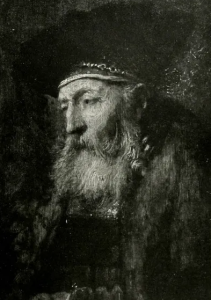


 Considering the Bible