Jesus in the Old Testament is a series of posts that will offer my readers a chance to consider pictures or shadows of Jesus in the Old Testament. As mentioned in the introduction to this series, some may be obvious, some may be not so obvious, and some may simply be a facet of the Lord those reading may not have considered previously.
I hope as we venture through this series, we will see the Lord in many wonderful pictures throughout the Old Testament.
SEEING JESUS IN
Cyrus
Equipped
Isaiah 45:5 I am the LORD, and there is no other, besides me there is no God; I equip you, though you do not know me,
NT
How could a relatively unknown character such as Cyrus carry so many similarities to the Lord.
As a brief reminder, Cyrus has been described in the Old Testament in the following ways
Anointed One
Chosen
Shepherd
Liberator by peace
Temple Builder
Undefeatable
Light for the Nations
Man of God’s Counsel
Loved by God
Free Salvation
Identified
This post will consider Cyrus as one especially equipped by God.
To be equipped by God is often associated with the weapons of warfare, with the tools to wage battle. This is a common refrain through the Old Testament.
Psalm 18:39 For you equipped me with strength for the battle; you made those who rise against me sink under me.
Cyrus was a leader of men who needed resources and the resources were supplied by a God he did not know. Victory after victory, Cyrus continued vanquishing the surrounding nations, having strength and might provided by God. His abilities to dominate over the nations were due to provided by the Lord, abilities that far exceeded the material goods that were required, but I imagine included the wisdom of strategy for each battle, the timing and execution of well laid out plans, the coordination of his generals in bringing a united front, and the manner he oversaw those he vanquished.
Few men have performed the accomplishments of Cyrus, and treated the vanquished in the way Cyrus did. He established a kingdom that was a world power. In the campaigns of defeating others and in the subsequent reigning over each people group, God equipped him with the tools, talents and endurance required for such a task.
Cyrus built a world power, equipped by God, only to have the power taken over by others. His was a glorious kingdom, elevating his name above many of his contemporaries, being equipped by the Lord Himself.
Jesus, in like manner was equipped by God to build a kingdom, though His equipping by God was for a battle that was much more demanding, with a much greater reach, and resulting in an eternal kingdom, a kingdom that could not be overtaken.
His equipping was that of the Spirit of God being displayed in mercy, laying His life down for others. This self sacrifice, this self denial and giving up is far beyond the equipping Cyrus received. For Jesus, it was the wisdom, trust and willingness to hear the Father’s voice and to obey to the very end.
He was equipped by God to provide, at the cost of His own life, a salvation that all can enter into.
Granted, it is somewhat difficult to understand the strength required to purposely be weak, to have the power of God, even the ability to call down of legions of angels, and yet have the inner strength of restraint to continue in His mission, even to be nailed to a cross.
Consider this strength!
We also are equipped by God to give, to provide for others at our own cost. The equipping by God is found in His Spirit, even as we walk with God in our daily decisions. This equipping by God will be evident in the fruit we produce through His Spirit.
Galatians 5:22-23, 25 But the fruit of the Spirit is love, joy, peace, patience, kindness, goodness, faithfulness, gentleness, self-control; against such things there is no law. If we live by the Spirit, let us also keep in step with the Spirit.
May His name be elevated above all worldly powers.
Jesus is King!
Thanks again for coming to visit. I hope you found something of interest in this post and would appreciate a comment, to begin a discussion. If you know someone this blog may bless (or challenge), send them a link, so they may join us in our discussion.
My hope is that this series will offer my readers a chance to consider the names, characteristics and descriptions of our God in the Word.
The remaining Names of God in this series might be considered descriptors, or characteristics of the Lord. We have reviewed the three primary Names of God, along with nineteen compound Names of God in our previous posts. As we venture through these descriptors of our God, I hope we will recognize all the many characteristics of our God that we tend to take for granted.
The Word is truly rich with descriptions of the Living God, and this effort of searching in the Word was quite illuminating. He truly is the ultimate subject of the Word, and His revelation of self-descriptions, or the accolades offered Him by His priests, prophets, kings apostles and faithful truly is a blessing.
May the Name of the Lord be praised, and by thinking on His name, may you have a blessed day.
255
GREAT POWER
Deuteronomy 9:29 For they are your people and your heritage, whom you brought out by your great power and by your outstretched arm.’
Israel had sinned. And sinned And sinned again.
Moses is recalling the times of failure for the nation of Israel. This time of remembrance for the nation is summed up as Moses calls the nation to remember in verse 7.
Deuteronomy 9:7 Remember and do not forget how you provoked the LORD your God to wrath in the wilderness. From the day you came out of the land of Egypt until you came to this place, you have been rebellious against the LORD.
Moses is blunt. He openly speaks of their failure, disobedience, rebellion, stubbornness and corruption. He reminds them of the judgement that was imminent from God and how God was willing to blot out their name from under heaven, completely destroying them in verse 14.
Deuteronomy 9:14 Let me alone, that I may destroy them and blot out their name from under heaven. And I will make of you a nation mightier and greater than they.’
They had no claim to the mercy of God in and of themselves. Death was their destiny if it hadn’t been for the exercise of His Great Power in bringing them out of Egypt. Not only were the Israelites drawn out from Egypt by the Great Power of God, their continued relationship with the God of Creation depended on the Great Power.
Moses reminded God of the Great Power He exercised in delivering His people and spoke of His commitment to the people, and of His commitment to the Fathers of the nation, sinners though they be also.
He also spoke of the hit the Lord would take if Israel were to “disappear”. All the nations would murmur and speak of how the Lord only sought to destroy the ones he delivered by His Great Power. Moses was reminding the Lord of His reputation before the nations. and that His treatment of the tiny nation of Israel would be seen far and wide by the nations.
Moses reminded the Lord that a job started was a job that needed completion. The difficulty of the task, the rebellion of the people He was leading, did not negate the need to complete the task. Faithfulness was the challenge Moses brought before the Lord, a faithfulness to the promise He made to the Fathers, and a faithfulness to His own reputation before the nations.
Did Israel deserve judgement? Yes. Would judgement occur in the future? Yes. Would the faithfulness of God to His people be abundantly evident before the nations? Yes.
Now we know as believers, the Great Power of God in delivering the nation of Israel is the Savior, the only One who has provided a physical salvation to a rebellious nation, but also a spiritual salvation to a rebellious sinful people, those who have heard the voice of the Great Power and followed after Him.
Have you heard the voice of the Great Power and decided to follow?
I would love to hear of your favorite name, characteristic or description of the Living God. Please leave me a comment, and I will include it in the list!
Thanks again for coming to visit. I hope you found something of interest in this post and would appreciate a comment, to begin a discussion. If you know someone this blog may bless (or challenge), send them a link, so they may join us in our discussion.
My hope is that this series will offer my readers a chance to consider the names, characteristics and descriptions of our God in the Word.
The remaining Names of God in this series might be considered descriptors, or characteristics of the Lord. We have reviewed the three primary Names of God, along with nineteen compound Names of God in our previous posts. As we venture through these descriptors of our God, I hope we will recognize all the many characteristics of our God that we tend to take for granted.
The Word is truly rich with descriptions of the Living God, and this effort of searching in the Word was quite illuminating. He truly is the ultimate subject of the Word, and His revelation of self-descriptions, or the accolades offered Him by His priests, prophets, kings apostles and faithful truly is a blessing.
May the Name of the Lord be praised, and by thinking on His name, may you have a blessed day.
254
GREAT PEACE
Psalm 119:165 Great peace have those who love your law; nothing can make them stumble.
It may not be obvious in first reviewing the provided verse for this mornings Name of God, but none can argue that this description applied to God is worthy of considering.
Great peace. When I first considered this verse years ago, I glibly passed over it.
I was in a hurry to get to the weightier matters of the Word, teachings found in Romans or Hebrews, meaty teachings that challenge my thinking, make me wonder, let me argue with the text and sometimes allow me to come to a conclusion. At least for a time.
Then I tripped over this verse again, and caught the relationship of Great Peace and loving the Law of God. Of course, as God is the Great Peace, He is obviously the ultimate lover of Gods Law, the absolutes of it, the righteousness found in the Law. He applies the Law in perfection in all His actions, to those who love Him and to those who despise Him. In all ways in in every instance, God loves His Law and the outworking of it in His actions.
But I must get back to the books of greater importance, such as Revelation, where the end time mysteries reside, where it appears secrets are revealed and time schedules are ready to be deciphered.
Suddenly, without aforethought or anticipation, I arrived at this verse one more time. I slowed down for just a moment, and considered the last phrase.
Nothing can make them stumble. What is going with that claim?
Of course, in relation to God, nothing makes Him stumble. He is perfection, and in the midst of His mission to rescue the lost and sinful, He is still without stain. Though He may have many traps and hazards thrown before Him, He is holy, He is complete and He is without stumbling! This is without debate!
But for the believer, there is an opportunity for a life that includes Great Peace, and a life without stumbling.
How does this work itself out?
To stumble is to experience a tripping hazard, a slippage of the foot, a stubbing of the toe in our spiritual experience. A fall into a sin may be considered a stumble. To hear something about myself that upsets me may be a stumble opportunity.
An example may help.
I was on a conference call with a group of my peers and our project manager. Admittedly, I was a few seconds late getting on the call, but when I did, my manager asked how I was.
I am fantabulous boss – Having a great day!
I tend to provide an exaggerated response at times, but I wanted to approach the conversation in a positive way. A few seconds later, I heard her mutter something under her breath. Something that lodged in my mind, and to be honest, it lodged deep in my mind and settled down, making itself quite comfy in there.
What she said is of no importance in this discussion, but the remark was my stumbling opportunity for the morning. My joy evaporated, my peace was torn, and the inner grumbling began. Thankfully I had the foresight to not mention this insignificant issue to my working peers, but it simply galled me.
Until I remembered the Word. How the Word provides the perspective I needed to interpret this remark, for the Word reminds me of the conditions we all live under. The disappointments, the stresses, the conflicts we all experience. The poor choices we all make, and the continual outflow of hurting and sinful hearts that we may be impacted by.
Until I remembered the Living Word, the Savior and how He took insult, injury, attack and hostility without stumbling. How he did not please Himself, but accepted the reproaches aimed at others.
Romans 15:3 For Christ did not please himself, but as it is written, “The reproaches of those who reproached you fell on me.”
Great Peace can be experienced by the believer as he follows the example of the Son of God.
What a great verse! Why did it take me decades to find it?
To follow after God, who is our Great Peace, should produce great peace in our lives. Turmoil, turbulence and tension do not belong in the believers heart and mind.
God, our Great Peace does!
I would love to hear of your favorite name, characteristic or description of the Living God. Please leave me a comment, and I will include it in the list!
Thanks again for coming to visit. I hope you found something of interest in this post and would appreciate a comment, to begin a discussion. If you know someone this blog may bless (or challenge), send them a link, so they may join us in our discussion.
Matthew 5:29 If your right eye causes you to sin, tear it out and throw it away. For it is better that you lose one of your members than that your whole body be thrown into hell. Matthew 5:30 And if your right hand causes you to sin, cut it off and throw it away. For it is better that you lose one of your members than that your whole body go into hell.
Now right off the top, I need to confess that this first verse, regarding my right eye, has a special place in my mind as being really yucky. You all may know my hatred of all things eyeball related, as mentioned in an earlier post. To think of gouging out an eyeball is exceptionally difficult to consider.
Nevertheless, the Lord is making a point about how the believer, one of His followers were to treat anything in our lives that causes us to sin.
It is good to remember that though many believers may live in a debauched and sinful society, a culture that is dripping in unrighteousness and rebellion against the principals and person of God, Jesus is not commanding us to clean up our environment in this passage. Granted, if we believers were to take this command with greater seriousness, some of our society would respond properly and in kind. But that is not the intent of the passage!
I would suggest He is speaking of our own impulses, our own inner desires and rebellion against God and His Savior. James addresses this same tendency, this desire to wander, to leave the One we love, this fallenness within our hearts when he writes in chapter one of his letter
James 1:14-15 But each person is tempted when he is lured and enticed by his own desire. Then desire when it has conceived gives birth to sin, and sin when it is fully grown brings forth death.
Jesus, in Matthew 5 provides two examples of the believers attitude, or better yet, what the believer’s attitude toward this inner desire should be. A ruthlessness, even to the most sensitive organ in the body, (the eye), and the most useful appendage in the body (the hand).
Sometimes the believer may argue it to be innocuous, or of no impact in putting up with a certain rebellion, a certain sin since the removal of this sin in our lives would touch a sensitive area in our lives. Or it may require the removal of a very useful situation, a condition that makes life easier, more “tolerable”.
Jesus is addressing hard things here. Difficult issues that the believer will face as he follows after the Lord. Some decisions to follow after Him will require the loss of sensitive relationships in our lives, such as leaving behind close friends who will only drag you back to sin. Jesus even warns us of the dangers to our faith within our own families.
Sensitive relationships, people that we have loved for many years, may need to be left behind. That portion of our heart, that easily (and willingly) succumbs to the ungodly charms of an old friend or loved one, is to be starved, cut out of our lives, and left behind.
He is brutal in this passage, describing how we are to be committed to His rule, in issues that are difficult to face, to admit weakness in and to find victory in rejecting their influence.
But there is more to this verse than an over the top requirement for discipleship. As He speaks to His followers, He brings up the topic of hell.
What? Followers and hell in the same sentence? What is that all about?
As many of you who may follow this blog, I am not convinced of any specific teaching regarding hell, but if there be one of the three mainstream teachings I find to be least obvious in the Word, it is the teaching of eternal conscious torment. Though there be a few verses that may seem to support it, does Jesus apply this potential destiny to the believer?
Whatever He is referring to, whether it be ECT or some other form of punishment/destiny, when He speaks of my “whole body being thrown into hell”, Jesus is talking to those who are attentive to His message, to His disciples,.
And how can that be?
Might it be a theoretical threat, in that Jesus is using this description of being thrown into hell to emphasize the importance of fleeing temptation, even that which resides within us?
Maybe, but since I wasn’t there to see Him wink or provide a slight grin during the talk, it might not be wise to assume this understanding to quickly.
Ok, so might it be a call to perfection, as He speaks of later in the same chapter of Matthew?
Matthew 5:48 You therefore must be perfect, as your heavenly Father is perfect.
More likely in my opinion, yet this very verse also is a double edged sword. You see, there are two options in my mind.
The call to be perfect is something that can be realized in the believers life, by walking in the Spirit and growing in grace and knowledge of the Lord Jesus. This perfection is sometimes considered maturity and support for this thinking can be found in both Philippians and Hebrews.
The call to perfection is an actual call to moral perfection, and if taken seriously will cause the believer to understand his complete and utter helplessness and hopelessness before the perfect Son of God and the Father of Light.
Now both options drive us to the Savior, which we should expect and be thankful for
Nevertheless, however you read these two topic verses in Matthew, of the call to gouge our eye and cut off our hand, it is a jarring call, with a severe punishment for the believer if he fails.
What think ye? I would love to hear your opinion of this difficult and challenging passage.
Thanks again for coming to visit. I hope you found something of interest in this post and would appreciate a comment, to begin a discussion. If you would like to receive daily posts from Considering the Bible, click on the “Follow” link below
Jesus in the Old Testament is a series of posts that will offer my readers a chance to consider pictures or shadows of Jesus in the Old Testament. As mentioned in the introduction to this series, some may be obvious, some may be not so obvious, and some may simply be a facet of the Lord those reading may not have considered previously.
I hope as we venture through this series, we will see the Lord in many wonderful pictures throughout the Old Testament.
SEEING JESUS IN
Cyrus
IDENTIFIED
Isaiah 45:4 For the sake of my servant Jacob, and Israel my chosen, I call you by your name, I name you, though you do not know me.
Matthew 3:17 ESV – and behold, a voice from heaven said, “This is my beloved Son, with whom I am well pleased.”
Cyrus is a much fuller topic than I had first imagined in relation to seeing Jesus in the Old Testament. I have mentioned previously that my assumption would be a couple of posts on Cyrus, and then move onto Daniel. Wow – will there be multitudes of images of Jesus in Daniel. Can’t wait!
But this tour through the life of Cyrus has been alarming, for as I entered this topic, I will freely confess I had never considered his life as a reflection of the Master. Yet here we are at another likeness to the Son.
Isaiah speaks of Cyrus’s identification to the people of Israel, even centuries previous to his appearance. He named him, spelling out his name for the people long before his birth, in order to provide guidance to His people, to give them information in order to know He is God, that He is the One who protects, guides and provides to His people in their need.
Cyrus was identified. Clearly marked out by the prophet, described even to his name!
More than Cyrus, Jesus was also clearly marked out by the prophet’s of old. Prophecy after prophecy, type after type, the Master was identified throughout the ages, so that those who saw His life, would know of His Person.
Although this series is on the typologies throughout the Old Testament, pointing those who want to see the Messiah in the history of the Book, multiple prophecies also were provided for the seeking soul. For those curious, I provided a series on this very topic, calling it “Old Testament Messianic Prophecies” and it turned out to be overwhelming. Over 350 prophecies were considered, pointing to the King and Savior, the Great High Priest.
My friend – the evidence is overwhelming. We have been clearly informed of who the Messiah is. He has been identified in multiple ways and through various methods.
The Jews were provided a name. Cyrus.
We have been flooded with ways to recognize the Messiah. Will you confess and agree? Will you follow?
Thanks again for coming to visit. I hope you found something of interest in this post and would appreciate a comment, to begin a discussion. If you know someone this blog may bless (or challenge), send them a link, so they may join us in our discussion.
My hope is that this series will offer my readers a chance to consider the names, characteristics and descriptions of our God in the Word.
The remaining Names of God in this series might be considered descriptors, or characteristics of the Lord. We have reviewed the three primary Names of God, along with nineteen compound Names of God in our previous posts. As we venture through these descriptors of our God, I hope we will recognize all the many characteristics of our God that we tend to take for granted.
The Word is truly rich with descriptions of the Living God, and this effort of searching in the Word was quite illuminating. He truly is the ultimate subject of the Word, and His revelation of self-descriptions, or the accolades offered Him by His priests, prophets, kings apostles and faithful truly is a blessing.
May the Name of the Lord be praised, and by thinking on His name, may you have a blessed day.
253
GREAT LIGHT
Matthew 4:16 the people dwelling in darkness have seen a great light, and for those dwelling in the region and shadow of death, on them a light has dawned.”
John had just been put in prison. Things were trending to be against this new movement in Jerusalem. Those in the spiritual center of the region were actively seeking to “protect” the people of Israel from heresy.
The time would come when the Messiah would enter the lion’s den in Jerusalem, but for now, upon the imprisonment of John, Jesus headed north, to an area that didn’t have any spiritual light, that was despised by the elite of Jerusalem. Yes He headed to Galilee of the Gentiles, an area that some have estimated inhabited close to three million souls, a fertile farmland region, with a thriving fishing industry. Formerly a part of Israel, with a pure Jewish population found, the region had been “overrun” with Gentiles, to the point that it was defined by their presence.
Galilee of the Gentiles.
This is the region the Lord headed for as John was imprisoned. A region that was in darkness, spiritually speaking, not only in the opinion of those elites in Jerusalem, but also in truth. No prophet had appeared in the region since the area fell to Assyria over 700 years before, and was considered by those who knew best in Jerusalem to be a spiritual write off. Jerusalem was to be the focus for the religious elite, for in it the temple resided, the place where the Light had once been in the Holy of Holies. Granted, the Shekinah glory had not been resident in the Temple for centuries, but the claim to fame was still being held onto by the elite. Those of Jerusalem guarded a tradition, a religion, a past light that had left centuries ago, but the tradition was fiercely guarded, defended against from all competitors.
Even when that Great Light was introduced to the elite, he was imprisoned by the elite.
No – those in the know would protect their truth, defend their light and fight against all who would bring heresy. Definitely a defensive stance!
Jesus, the Great Light was different.
He would go to them, for how could He not? Light is not defensive in it’s nature but outgoing, defeating darkness, proceeding forward. Yes, He saw the rejection of light by those who claimed the light, but then proceeded to take the light to those who had no claim of light, who did not assume a spiritual standing before God.
The region was Gentile! Oh my goodness, how could anyone think there was a spiritual component to the area, when it was overpopulated with Gentiles.
But Jesus, the Great Light was different!
Jesus, as He entered the region performed many miracles, taught many stories, and lived a charmed life amongst them. As the Great Light amongst a darkened people, these folk, even the Gentiles amongst them were exposed to truth, light and love as never before.
Sadly some in the region exercised their stubbornness and remained blind, even though the Great Light was in their presence. This condition is a relevant truth to consider, for if there is darkness, it may be due to a self inflicted, stubborn streak in the one in need of light. After all, when Jesus was closing out His ministry, He condemned some of the cities He had shone in,
Matthew 11:21 “Woe to you, Chorazin! Woe to you, Bethsaida! For if the mighty works done in you had been done in Tyre and Sidon, they would have repented long ago in sackcloth and ashes. Matthew 11:22 But I tell you, it will be more bearable on the day of judgment for Tyre and Sidon than for you. Matthew 11:23 And you, Capernaum, will you be exalted to heaven? You will be brought down to Hades. For if the mighty works done in you had been done in Sodom, it would have remained until this day. Matthew 11:24 But I tell you that it will be more tolerable on the day of judgment for the land of Sodom than for you.”
The Great Light shone in darkness and some who dwelled in darkness judged the darkness to be preferred.
Was it that they were not of the pure Jewish blood, those of Abraham’s lineage that they couldn’t recieve the light? I think not, for as we read of Jesus condemnation, Jesus compared those of Chorazain, Bethsaida and Capernaum with other Gentile cities.
As the Word constantly teaches, bloodlines, nationalities and religions are not the key to seeing light. The key to seeing light is a loss of blindness. And the first step to the loss of blindness is an admission of being blind.
The Great Light is still shining for all of us, and each of us may still retain a certain blindness to His glory. I readily admit my own blindness, my own desire to be in the land of darkness.
Lord help me as I dwell in my own darkness!
It is truly amazing that He not only is the Great Light, but that He came to those in darkness, even a self inflicted darkness, willing and able to provide sight to those who want to escape the darkness.
Each of us, whether we be Jew, Gentile (or even Canadian) have the privilege and responsibility to open our eyes to the Great Light. Once you do, it is a decision that will never be regretted, and that will cause you to keep coming back to that Light, for He is the One and Only Great Light!
I would love to hear of your favorite name, characteristic or description of the Living God. Please leave me a comment, and I will include it in the list!
Thanks again for coming to visit. I hope you found something of interest in this post and would appreciate a comment, to begin a discussion. If you know someone this blog may bless (or challenge), send them a link, so they may join us in our discussion.
My hope is that this series will offer my readers a chance to consider the names, characteristics and descriptions of our God in the Word.
The remaining Names of God in this series might be considered descriptors, or characteristics of the Lord. We have reviewed the three primary Names of God, along with nineteen compound Names of God in our previous posts. As we venture through these descriptors of our God, I hope we will recognize all the many characteristics of our God that we tend to take for granted.
The Word is truly rich with descriptions of the Living God, and this effort of searching in the Word was quite illuminating. He truly is the ultimate subject of the Word, and His revelation of self-descriptions, or the accolades offered Him by His priests, prophets, kings apostles and faithful truly is a blessing.
May the Name of the Lord be praised, and by thinking on His name, may you have a blessed day.
252
GREAT KING OVER ALL THE EARTH
Psalm 47:2 For the LORD, the Most High, is to be feared, a great king over all the earth.
The more I read the Psalms, the more I understand that those in touch with God in the Old Testament understood the global reach of the God they worshipped. They openly boasted of the non tribal nature of God, of His dominance over not only the inferior gods of the Philistines and Amorites, but that these gods of their neighbors had nothing in common with the God of Israel.
He is the Great King over all the earth, and in including all the earth, those old prophets included lands they knew of and beyond.
These men who wrote the Psalms would not be surprised millennia later, when the Lord Jesus claimed to have all authority, that He was King over all in heaven and on earth.
Matthew 28:18 And Jesus came and said to them, “All authority in heaven and on earth has been given to me.
I can’t imagine that Jesus’ claim of authority, extending even into heaven, and not only over all the earth, would cause a stumbling for these prophets of old. These prophets described the God they worshipped as a Great King over all the earth, and didn’t only dwell on Israel’s immense privilege as the chosen nation that would produce the Messiah.
As the Great King over all the earth, He is to be feared, as the Psalmist describes. But it is important to understand that this fear is not the self crippling fear that causes inactivity in the Kingdom, but the very opposite.
Believers, in understanding that our God is the Great King over all the earth, have available the boldness required to take on tasks, or missions, that are unattainable in our own strength, that are of a “foolish” goal in the eyes of the world. The fear of the Lord, best understood, is to drive us from inactivity and into a confident faith that will require a dependance on our King for strength and wisdom.
This Great King may call you to a task that is beyond your capabilities, beyond your strength and beyond your wisdom. Fear the Great King, with a confidence that the Great King will provide that which is necessary for the one who fears Him.
For He is the Great King over all the earth!
I would love to hear of your favorite name, characteristic or description of the Living God. Please leave me a comment, and I will include it in the list!
Thanks again for coming to visit. I hope you found something of interest in this post and would appreciate a comment, to begin a discussion. If you know someone this blog may bless (or challenge), send them a link, so they may join us in our discussion.
Matthew 13:24 He put another parable before them, saying, “The kingdom of heaven may be compared to a man who sowed good seed in his field, Matthew 13:25 but while his men were sleeping, his enemy came and sowed weeds among the wheat and went away. Matthew 13:26 So when the plants came up and bore grain, then the weeds appeared also. Matthew 13:27 And the servants of the master of the house came and said to him, ‘Master, did you not sow good seed in your field? How then does it have weeds?’ Matthew 13:28 He said to them, ‘An enemy has done this.’ So the servants said to him, ‘Then do you want us to go and gather them?’ Matthew 13:29 But he said, ‘No, lest in gathering the weeds you root up the wheat along with them. Matthew 13:30 Let both grow together until the harvest, and at harvest time I will tell the reapers, “Gather the weeds first and bind them in bundles to be burned, but gather the wheat into my barn.”‘”
It must have been a late night when I pulled this passage into the Conditional Security series, for at first glance, I found little that would direct a person (without bias) towards the conclusion of conditional security in this passage.
The passage spoke of the kingdom, specifically of the harvest time and how to bring to judgement those who were enemies within the Kingdom.
But after a slight glance at the parable, and especially the explanation given to the disciples, there may be hints as to the general teaching of conditional security found within.
First off, it is granted that the weeds grew along with the wheat, and that in the parable the weeds have always been weeds. By that I mean, they were sown as weeds, lived as weeds and were gathered as weeds. The parable, in it’s simplicity, seemed to keep these two types of field plants separate throughout the passage.
Yet the parable did speak of the early pulling of weeds and potentially of pulling wheat with the weeds, all of which was destined for the fire. But per the Master’s decision, and his care for the wheat, this was to be avoided by allowing the weeds and wheat to grow together in the field.
29 But he said, ‘No, lest in gathering the weeds you root up the wheat along with them.
No – the harvest was to be immediately preceded by the pulling of the weeds, for at fruition, the weeds showed their true colors. There would be no mistaking of the wheat as weeds.
A little later, the disciples asked for clarity.
Jesus provided clarity in identifying all the parties in the parable, including the sowers and the seed, and how the harvest would act out in the end.
Verse 41 gives me some pause in relation to the way judgement at the end is to be exercised. Let’s read it once more.
41 The Son of Man will send his angels, and they will gather out of his kingdom all causes of sin and all law-breakers,
Notice that in the Lord’s explanation of the parable, the weeds and wheat are not identified in relation to the source seed, (good seed, / weeds) but in the work or actions of those being gathered, (righteousness / sin and law-breakers).
Granted, nothing is specified in the Lord’s explanation that the original good seed, that is the wheat, in included in the that “causes of sin and all law-breakers”, but in the same breath, there is no specific claim that the wheat stayed wheat. Jesus changed the description of the plants from a source seed related identifier to a fruit related identifier. I find that somewhat interesting!
When I first became a follower of Jesus, I was told not to take a parable and make it walk on four legs. I think my brother was telling me that parables typically have a single point of teaching, and that we shouldn’t try to find justification for a teaching in the parables, but to let them speak for themselves in the main point.
I may be doing that very thing with this post. The teaching of conditional security is definitely not the main point of this parable, (dang – it might not be the tenth point of the parable) and if this was the only teaching in the Word that hinted at conditional security, I readily admit it would be heretical to suggest this teaching here.
Yet, throughout the Word, it seems there are subtle hints to the danger of slipping from wheat to weed.
What is your opinion of this parable, and it’s relation to the teaching of conditional security?
Thanks again for coming to visit. I hope you found something of interest in this post and would appreciate a comment, to begin a discussion. If you would like to receive daily posts from Considering the Bible, click on the “Follow” link below
My hope is that this series will offer my readers a chance to consider the names, characteristics and descriptions of our God in the Word.
The remaining Names of God in this series might be considered descriptors, or characteristics of the Lord. We have reviewed the three primary Names of God, along with nineteen compound Names of God in our previous posts. As we venture through these descriptors of our God, I hope we will recognize all the many characteristics of our God that we tend to take for granted.
The Word is truly rich with descriptions of the Living God, and this effort of searching in the Word was quite illuminating. He truly is the ultimate subject of the Word, and His revelation of self-descriptions, or the accolades offered Him by His priests, prophets, kings apostles and faithful truly is a blessing.
May the Name of the Lord be praised, and by thinking on His name, may you have a blessed day.
251
GREAT KING ABOVE ALL GODS
Psalm 95:3 For the LORD is a great God, and a great King above all gods.
We have considered the simple adjective “Great” in an earlier post, (Names of God – GREAT IS OUR LORD – 249) with it’s varied meanings that may be applied to the subject, our God.
In our post this morning, we find the psalmist describing our God a a great King above all gods. Now when I read that, I confess, the comparison seems to be that of an apple with an orange.
Let me explain.
The psalmist is declaring God as a King, and then comparing this King against all other gods.
Yes it may seem like I am splitting hairs here, but the message is that God is not simply One who is creator and sustainer, but that He is ruler as a King, One who is a Monarch over the believer.
He is not One who is far away, having brought this creation into being, and One who simply provides for His creation, out of a self imposed responsibility, but One who is actively ruling over the people, One who has authority in the Kingdom, One to whom His subjects bow to willingly and out of deep devotion.
Notice the Psalmist speaks of our God as a King above all gods. This speaks to the competition we find in our lives as to the gods we listen to. There truly are other gods, and the Psalmist openly confesses to this tension, this competition that those in the Kingdom must wrestle with.
For the Psalmist though, it is a cut and dry position, a declaration for him that though there are other gods, there are none as high and lofty, none that exercise such a loving and righteous sovereignty over His subjects as the King we worship.
He is God, and He is Great, and He is a Great King. All of these descriptions describe our Savior, and this truth offers no real confusion when we consider how He has stepped into humanity, taken our weakness, proved His love and given righteous guidance as found in His Word.
He is King, a Great King over all other authorities!
May we worship Him in truth today.
I would love to hear of your favorite name, characteristic or description of the Living God. Please leave me a comment, and I will include it in the list!
Thanks again for coming to visit. I hope you found something of interest in this post and would appreciate a comment, to begin a discussion. If you know someone this blog may bless (or challenge), send them a link, so they may join us in our discussion.
My hope is that this series will offer my readers a chance to consider the names, characteristics and descriptions of our God in the Word.
The remaining Names of God in this series might be considered descriptors, or characteristics of the Lord. We have reviewed the three primary Names of God, along with nineteen compound Names of God in our previous posts. As we venture through these descriptors of our God, I hope we will recognize all the many characteristics of our God that we tend to take for granted.
The Word is truly rich with descriptions of the Living God, and this effort of searching in the Word was quite illuminating. He truly is the ultimate subject of the Word, and His revelation of self-descriptions, or the accolades offered Him by His priests, prophets, kings apostles and faithful truly is a blessing.
May the Name of the Lord be praised, and by thinking on His name, may you have a blessed day.
250
GREAT KING
Malachi 1:14 Cursed be the cheat who has a male in his flock, and vows it, and yet sacrifices to the Lord what is blemished. For I am a great King, says the LORD of hosts, and my name will be feared among the nations.
There are a number of issues going on with this passage. As I read it, certain New Testament passages are erupting in my mind.
That Swindler
Who is this cheat, this swindler that Malachi is pointing his finger to?
Although I rarely am reminded of this fact, Malachi is communicating to a very specific group of Israeli people. He is speaking to the priests, those men called by God to represent the people before Him, to receive the offerings God has prescribed for the nation.
This passage begins in verse 16 with the Lord’s direct charge to the priests.
Malachi 1:6 “A son honors his father, and a servant his master. If then I am a father, where is my honor? And if I am a master, where is my fear? says the LORD of hosts to you, O priests, who despise my name. But you say, ‘How have we despised your name?’
Malachi goes so far as to claim the priest “snort” at the offerings, and claim it is a weariness. Malachi then speaks of this cheat, this swindler, this priest who vows a male sheep of his flock.
That Land Hold up now – Were priests and Levites provided land in the original covenant? I know there is no mention of land in this verse, but where did the priest keep his sheep? Something tells me the Levites were to have no inheritance, no portion of the land of Israel.
Deuteronomy 18:1-2 “The Levitical priests, all the tribe of Levi, shall have no portion or inheritance with Israel. They shall eat the LORD’s food offerings as their inheritance. They shall have no inheritance among their brothers; the LORD is their inheritance, as he promised them.
Granted, by the time of Malachi, the Levites and Priest’s may have established a reason to have land in order to “manage” the sheep for offerings, but is that not similar to the Lord’s message in Mark?
Mark 7:9 And he said to them, “You have a fine way of rejecting the commandment of God in order to establish your tradition! Mark 7:10 For Moses said, ‘Honor your father and your mother’; and, ‘Whoever reviles father or mother must surely die.’ Mark 7:11 But you say, ‘If a man tells his father or his mother, “Whatever you would have gained from me is Corban”‘ (that is, given to God)–
Somehow I think the priest’s conveniently set up a tradition of owning land, but of course, it was a burden they accepted in order to serve God.
That Vow
We have noted that the priest looks down on the offerings, even snorting at them, and then we find he makes a vow. A vow of providing a male of the flock.
An acceptable sacrifice before the Lord is a male of the flock, an unblemished offering before the Lord. Multiple verses in the book of Leviticus, the handbook for the priestly order, speak of offering up an unblemished male.
Is it fair to understand that when the priest vows to offer a male, he is referring to an unblemished male according to the handbook of the priests?
I think this is a safe assumption!
But let us consider the vow for a minute more for making that vow seems to be a problem in my mind. Was it not the priest’s responsibility to offer up the correct sacrifice, so what is going on with this vow? Was it necessary?
As the Lord reminded us in the Beatitudes, those who shout out their acts of righteousness have their reward.
Matthew 6:2 “Thus, when you give to the needy, sound no trumpet before you, as the hypocrites do in the synagogues and in the streets, that they may be praised by others. Truly, I say to you, they have received their reward. Matthew 6:5 “And when you pray, you must not be like the hypocrites. For they love to stand and pray in the synagogues and at the street corners, that they may be seen by others. Truly, I say to you, they have received their reward. Matthew 6:16 “And when you fast, do not look gloomy like the hypocrites, for they disfigure their faces that their fasting may be seen by others. Truly, I say to you, they have received their reward.
By making this vow, the priest may have been looking for his reward. But let’s think about that for a moment. What reward did a priest deserve? He was simply performing his religious duties. Do I want a pat on the back if I go to church? Do I look for a hooray if I give a missionary 50 bucks? Am I to expect accolades if I show mercy to one less fortunate?
Luke 17:9 Does he thank the servant because he did what was commanded? Luke 17:10 So you also, when you have done all that you were commanded, say, ‘We are unworthy servants; we have only done what was our duty.’”
Something is so wrong in this picture!
In Summary
We have a cheating priest, owning contraband land, and offering up left over, unwanted sheep to the Great King. How utterly amazing that the religious leaders of the chosen people had sunk so low.
Malachi was the last prophet to appear before John the Baptist introduces the Great King to Israel. Much of Malachi’s prophetic message decries the state of the priesthood of Israel. Over and over again Malachi represents the Great King as deserving of so much more respect, honor and devotion than He is receiving.
Is it not the same today? It is too easy to relate Malachi’s message to the ruling religious class of our modern church!
Prior to the crucifixion, Jesus spoke to one of the ruling religious class, and summarized Malachi’s message to the ruling religious class of his day.
Matthew 22:37 And he said to him, “You shall love the Lord your God with all your heart and with all your soul and with all your mind.
For the laymen in the Body, let us also fear that we are also of the same ilk, providing to the Great King far less than He deserves!
For He is the Great King, the Ruler over all.
May we recognize our own sin before the Lord, our own disregard of the Great King, and humbly ask Him for forgiveness and power to love Him with all our hearts, soul and mind.
I would love to hear of your favorite name, characteristic or description of the Living God. Please leave me a comment, and I will include it in the list!
Thanks again for coming to visit. I hope you found something of interest in this post and would appreciate a comment, to begin a discussion. If you know someone this blog may bless (or challenge), send them a link, so they may join us in our discussion.
Psalm 26:9 Do not sweep my soul away with sinners, nor my life with bloodthirsty men, Psalm 26:10 in whose hands are evil devices, and whose right hands are full of bribes.
Psalm 26 is a psalm of David, a man who followed after God through struggles, disappointments, persecutions and trials. Even as a young teenager, he knew the Lord and spent many hours communing with the God of Israel while with his sheep.
Considered a nobody by his father, for he was never considered when Samuel requested to see Jesse’s sons, he nevertheless honored his father and trusted the Lord throughout his life. Even during times of persecution, of which produced a psalm as we read this morning, he looked to the Lord and begged for understanding, for the Lord to vindicate him (vs 1), for the Lord to examine him (vs 2), and declared his innocence in comparison to those who sought his life (vs 4-7).
David makes the case for his integrity, and has an open heart for the Lord’s work in his life. The first 7 verses of this psalm are a fantastic example of the Christian life before the Lord. David was so New Testamental!
So it is somewhat shocking that David pleads God not to take away his soul with sinners in verse 9. On top of that plea, he continues with begging that the Lord not gather his life with bloodthirsty men.
What is going on here?
Might it be that he is simply requesting that he not die in the presence of sinners? Maybe.
In the ESV, which is the version I typically use, the term “sweep away” speaks of receiving, removing, collecting and gathering. It isn’t quite clear to me if David is begging to be saved from being gathered with sinners in their judgement/destiny or to be separated from them in the act of death. Or possibly to be separated from them in their sinful actions.
Too many questions, but the verse is admittedly surprising.
Immediately after this plea to God for His protection, David returns to his previous confidence.
Psalm 26:11 But as for me, I shall walk in my integrity; redeem me, and be gracious to me. Psalm 26:12 My foot stands on level ground; in the great assembly I will bless the LORD.
Maybe I shouldn’t have looked at this verse as I seem to be producing more questions than answers. Thankfully, I know there are readers that follow my blog, and I would reach out to them for suggestions on the passage above.
Until then, I will continue to consider the passage. And I may come back to it if the Lord gives me any clarity. Nevertheless, may the Lord bless you as you travel the pilgrim way today.
Thanks again for coming to visit. I hope you found something of interest in this post and would appreciate a comment, to begin a discussion. If you would like to receive daily posts from Considering the Bible, click on the “Follow” link below
Jesus in the Old Testament is a series of posts that will offer my readers a chance to consider pictures or shadows of Jesus in the Old Testament. As mentioned in the introduction to this series, some may be obvious, some may be not so obvious, and some may simply be a facet of the Lord those reading may not have considered previously.
I hope as we venture through this series, we will see the Lord in many wonderful pictures throughout the Old Testament.
SEEING JESUS IN
Cyrus
FREE SALVATION
Isaiah 45:13 I have stirred him up in righteousness, and I will make all his ways level; he shall build my city and set my exiles free, not for price or reward,” says the LORD of hosts.
1 Corinthians 2:12 Now we have received not the spirit of the world, but the Spirit who is from God, that we might understand the things freely given us by God.
We are in Isaiah once again, with the Lord Jesus clearly being seen through the eyes of a redeemed, freely purchased sinner.
Ok – I am getting ahead of myself, but when I see the setting free of exiles, and that freedom from exile is not for price of reward, that simply screams grace grace grace!
Can’t you sense the completely surprising freedom that is spoken of here? Imagine those who had lived under the Babylonian captivity all their lives, for by the time Cyrus came around, the Jews had lived in Babylon near to 70 years. Bondage in a strange land, amongst those of a strange tongue had been their lives, and though there had been prophecies of the captivity only lasting 70 years, the outworking of this freedom may not have been clearly communicated to those under the yoke of their captors.
Yes – the Jews had heard of the prophecies relating to the 70 years of captivity, from Jeremiah, and of that Daniel fellow. Details may have been a bit sketchy, and not much was understood about the one through whom this freedom would come. Maybe a powerful Jewish prophet like Moses would bring the people out of their Egypt. Or better yet, maybe a mighty Jewish king, like David could rally the downtrodden to escape from a world power such as Babylon.
No – not only was the freedom to come completely without cost, but was to be from a completely unexpected instrument in God’s hand.
A heathen king names Cyrus would provide a freedom from exile for the Jewish people, a freedom that would cost them nothing but a willing heart to follow after.
The cost for this freedom was expressed with two words, amplifying the freeness (is that a word?) of the freedom.
מְחִיר mᵉchîyr
This term is commonly referring to as a price or hire. For Cyrus, this was not a consideration in releasing the Jewish community.
As a contrast, when the Word refers to Antiochus Epiphanes, he made rulers, dividing the land for filthy lucre*.
Daniel 11:39 He shall deal with the strongest fortresses with the help of a foreign god. Those who acknowledge him he shall load with honor. He shall make them rulers over many and shall divide the land for a price.
שַׁחַד shachad
This term may refer to a bribe or a present, even in the bribing of kings
1 Kings 15:19 “Let there be a covenant between me and you, as there was between my father and your father. Behold, I am sending to you a present of silver and gold. Go, break your covenant with Baasha king of Israel, that he may withdraw from me.”
No bribing, or convincing with filthy lucre* was required for this freedom from exile to occur.
Cyrus was not provided any kickback, leverage, or influence – other than the character appreciation this act added to his stature – in the release of the Jews from his newly acquired kingdom. As a matter of fact, he added his influence to those who remained behind to fund those who ventured out!
Surely, with very little imagination, we can recognize a glimmer of the grace of the Lord Jesus in this heathen king, for Jesus surely rescued us from our captivity, giving us the water of life without price.
Revelation 22:17 The Spirit and the Bride say, “Come.” And let the one who hears say, “Come.” And let the one who is thirsty come; let the one who desires take the water of life without price.
May we remember the costly salvation we have been offered without price, and be a thankful people!
*BTW – for those younger than I – and I suspect most of my readers are, filthy lucre is an old phrase the KJV used for money, and it is just so appropriate at time to use the old term. As a curiosity, how many of my readers connected with the term prior to reading this footnote? Let me know.
Thanks again for coming to visit. I hope you found something of interest in this post and would appreciate a comment, to begin a discussion. If you know someone this blog may bless (or challenge), send them a link, so they may join us in our discussion.
My hope is that this series will offer my readers a chance to consider the names, characteristics and descriptions of our God in the Word.
The remaining Names of God in this series might be considered descriptors, or characteristics of the Lord. We have reviewed the three primary Names of God, along with nineteen compound Names of God in our previous posts. As we venture through these descriptors of our God, I hope we will recognize all the many characteristics of our God that we tend to take for granted.
The Word is truly rich with descriptions of the Living God, and this effort of searching in the Word was quite illuminating. He truly is the ultimate subject of the Word, and His revelation of self-descriptions, or the accolades offered Him by His priests, prophets, kings apostles and faithful truly is a blessing.
May the Name of the Lord be praised, and by thinking on His name, may you have a blessed day.
249
GREAT IS OUR LORD
Psalm 147:5 Great is our Lord, and abundant in power; his understanding is beyond measure.
As we consider the names of God, we see the same modifier describing different aspects or characteristics of our God. Such is the case for our current streak of Names.
Since we began in Post 245 – Great and Awesome Name, we have considered the modifier “Great” included in our descriptions. This should not surprise us, for our God is Great, but what does that mean?
Let’s consider some shades of meaning in relation to the term “Great”.
SIZE The first possible meaning might include the concept of size. You know – the fire was great, as in it was a large fire!
SIZE (in comparison) We sometimes call animals of the same genus “great” to differentiate them from others of like nature. An example might include the “Great Blue Heron”, or the “Great Grey Owl”. Great in this case relates to a comparison amongst the same type of animal
SIZE (numerically) How about the way great is used in relation to quantity? There was a great number of students waiting to go into class.
QUALITY Quality may be described when using great, as in – the cheese was great, better than I had ever tasted!
SUPERIORITY Great may be used in relation to character, to the noble and good life lived by a man or woman. She was a great servant of those in need.
SKILLFUL I have a friend that is adept, very skillful at learning languages. She is a great linguist!
CHIEF OR PRINCIPAL Great is sometimes used when describing the principal or main building on a site. I recently visited a ranch in Texas and had meetings in the “great” house.
ENTHUSIASTIC To be considered great in relation to enthusiasm would describe one who loves a certain topic or activity, and then be described as great. Something like – Frank was a great lover of hotdogs. (He wasn’t passive towards those dogs!)
There may be more shades of meaning I have missed, but to call our God Great may include some or all of these shades of meanings.
Which shade of meaning might you consider your favorite? Is there any shade of meaning that you might consider not applicable to God?
Let me know in the comments.
I would love to hear of your favorite name, characteristic or description of the Living God. Please leave me a comment, and I will include it in the list!
Thanks again for coming to visit. I hope you found something of interest in this post and would appreciate a comment, to begin a discussion. If you know someone this blog may bless (or challenge), send them a link, so they may join us in our discussion.
My hope is that this series will offer my readers a chance to consider the names, characteristics and descriptions of our God in the Word.
The remaining Names of God in this series might be considered descriptors, or characteristics of the Lord. We have reviewed the three primary Names of God, along with nineteen compound Names of God in our previous posts. As we venture through these descriptors of our God, I hope we will recognize all the many characteristics of our God that we tend to take for granted.
The Word is truly rich with descriptions of the Living God, and this effort of searching in the Word was quite illuminating. He truly is the ultimate subject of the Word, and His revelation of self-descriptions, or the accolades offered Him by His priests, prophets, kings apostles and faithful truly is a blessing.
May the Name of the Lord be praised, and by thinking on His name, may you have a blessed day.
248
GREAT HIGH PRIEST
Hebrews 4:14 Since then we have a great high priest who has passed through the heavens, Jesus, the Son of God, let us hold fast our confession.
Years ago, my son decided to read through the Old Testament, and as he was going through the Pentateuch, he made a comment I will never forget.
“Those priests were butchers!”
From a young man who had spent most of his life preparing food, as he had read the duties of the Priest, he interpreted it as equal to the task of a butcher. I had read the same passages many times and never came away with that impression.
My concept of the priest was flavored more from the ones who interacted with the Messiah in the New Testament. Businessmen, politicians and religious imposters. A dangerous mix for the people of God to be under!
Was the priest intended to be a butcher? Is that the message we should take away from our reading of the Old Testament? Or maybe, the priest was to be a manager of people, one who controlled and manipulated people and goods.
To be a priest entailed many tasks that I do not intend to venture into with this short post, but two items need to be considered as we think of our God as the Great High Priest.
The High Priest in the Old Testament was a prefigure of the Messiah in many ways. For the purpose of brevity and to relate to this post, consider the High Priest before a holy God and before a sinful people.
Before a Holy God
As the priest entered the presence of God, he “carried” the people on his heart. His approach before a holy God was for the people, as he carried a broken, sinful people on his heart, pleading before the Righteous and Holy God for a people who were not worthy, who had sinned and fallen short of the glory of God.
His “ministry” was of a broken heart for the people he represented.
Exodus 28:30 And in the breastpiece of judgment you shall put the Urim and the Thummim, and they shall be on Aaron’s heart, when he goes in before the LORD. Thus Aaron shall bear the judgment of the people of Israel on his heart before the LORD regularly.
Before Sinful People
His behavior before his people was likewise towards them. It was the prophet that did much of the rebuking, correcting and chastisement in the nation as they rebelled against God, though correction of the people was not out of the priest’s job description. When required, he chastised the people.
But for the faithful Israelite, who came before the priest with an offering, with a lamb, a goat or a pigeon, the priest was of the receiving nature. He was approachable, without rebuke to the one who sacrificed in the right spirit. Proper sacrifice was received gladly, with open arms.
For our time together this morning, consider both of these attributes in the Lord Jesus as our High Priest. Were not sinful broken people on the heart of the Messiah as He faced the judgement of sin in His body on the cross? Though He suffered such horrendous injustice in His service for His people, He has not turned to His people in anger due to this injustice. He is not holding some grudge, or demanding some retribution from His people. He is approachable, with open arms, receiving His people as they come with their own sacrifices of praise and love to Him.
The apostle encourages the people of God to draw near to our High Priest, a High Priest that is able to sympathize with our weakness, having experienced the power of temptation.
Hebrews 4:15 For we do not have a high priest who is unable to sympathize with our weaknesses, but one who in every respect has been tempted as we are, yet without sin. Hebrews 4:16 Let us then with confidence draw near to the throne of grace, that we may receive mercy and find grace to help in time of need.
Jesus is our true Great High Priest, and all other images in my mind of a butcher and a businessman vanish as I see His arms open up!
Let us then with confidence draw near to the throne of grace
I would love to hear of your favorite name, characteristic or description of the Living God. Please leave me a comment, and I will include it in the list!
Thanks again for coming to visit. I hope you found something of interest in this post and would appreciate a comment, to begin a discussion. If you know someone this blog may bless (or challenge), send them a link, so they may join us in our discussion.
2 Corinthians 12:21 I fear that when I come again my God may humble me before you, and I may have to mourn over many of those who sinned earlier and have not repented of the impurity, sexual immorality, and sensuality that they have practiced.
Paul is reaching out to his church in Corinth. As you may remember, Corinth was a church that Paul founded and had spent much time there, discipling the faithful, and exhorting them to continue in the faith. Paul spent 18 months with this church, much longer than most of his plants.
Acts 18:11 And he stayed a year and six months, teaching the word of God among them.
While there, he wasn’t acting in the evangelist mode as much as the Bible teacher, and the Corinthians had the blessing of being under Paul’s teaching for an extended period of time!
If he personally knew a people claiming Christ, it was in Corinth, but as he eventually moved on under the leading of God, he heard rumors, stories of the Corinthians acting like little children, bickering and fighting with one another. Acting unChristian.
The reports of this church’s activities included some sin that even the heathen don’t put up with. And yet he designated them as saints, believers.
1 Corinthians 1:2 To the church of God that is in Corinth, to those sanctified in Christ Jesus, called to be saints together with all those who in every place call upon the name of our Lord Jesus Christ, both their Lord and ours:
Paul goes so far as to speak of the Corinthians surety in the faith.
1 Corinthians 1:6 even as the testimony about Christ was confirmed among you–
But in our verse this morning, we find Paul speaking of mourning. A requirement of mourning over many of those he has declared to be saints.
Mourning is typically associated with death, with grief over the loss of a loved one. While there is hope, mourning is not the word I think of. For Paul to bring this word into the discussion may breach our topic of conditional security, for he has established these as saints, and is now fearing the mourning required at the death of a loved one.
May this mourning be associated with physical death? We know some in the church were judged because of their sin and were taken home early, as we read in 1 Corinthians 11.
1 Corinthians 11:30 That is why many of you are weak and ill, and some have died.
But when Paul speaks of physical death amongst the believers, it is in the context of judgment, without any reference to mourning, sorrow or grief. It is a matter of judgement.
For our verse here, I suggest Paul may be breaching a far greater death, not simply of a saint being judged and taken home early, though still a believer.
Might Paul be introducing the mourning required in the loss of a believer from the faith? Just a few verses later Paul is asking these folks to check themselves out. They need to examine themselves, test themselves, to see if they pass or fail.
2 Corinthians 13:5 Examine yourselves, to see whether you are in the faith. Test yourselves. Or do you not realize this about yourselves, that Jesus Christ is in you?–unless indeed you fail to meet the test!
Now some may be thinking Paul is writing this to a mixed audience, those who are of the faith and those who are simply watching from outside. Some may think that Paul has two audiences in mind, and this testing is for the self-deluded outsider, the professor and not the possessor of the Christian life. This may make sense, except for the fact I don’t recall him addressing any outsiders throughout this letter.
He continues to address believers, bringing to mind the responsibilities and lifestyle requirements of the believer, sometimes rebuking the believer, and speaking to those who have made claims of new life.
How do you understand his reference to mourning in relation to the saints he was about to visit?
Leave me a comment – I am curious of my readers opinions!
Thanks again for coming to visit. I hope you found something of interest in this post and would appreciate a comment, to begin a discussion. If you would like to receive daily posts from Considering the Bible, click on the “Follow” link below
Jesus in the Old Testament is a series of posts that will offer my readers a chance to consider pictures or shadows of Jesus in the Old Testament. As mentioned in the introduction to this series, some may be obvious, some may be not so obvious, and some may simply be a facet of the Lord those reading may not have considered previously.
I hope as we venture through this series, we will see the Lord in many wonderful pictures throughout the Old Testament.
SEEING JESUS IN
Cyrus
LOVED BY THE LORD
Isaiah 48:14 “Assemble, all of you, and listen! Who among them has declared these things? The LORD loves him; he shall perform his purpose on Babylon, and his arm shall be against the Chaldeans.
John 5:20 For the Father loves the Son and shows him all that he himself is doing. And greater works than these will he show him, so that you may marvel.
We are in Isaiah again, with a picture of the Messiah coming through loud and clear.
Isaiah is calling the people together for a message that has not been declared. Now a bit of background may be beneficial. Isaiah is decrying the peoples dependance on dumb idols, their idolatry is rampant, and many of the prophecies regarding Cyrus are provided for a generation of God’s nation many years in the future. No idols can do that! When Isaiah speaks of “Who among them”, he is referring to the dumb idols! No idols could predict a future deliverer of Israel centuries ahead of the time.
Not only will the prophecy regarding the release of the Jews from captivity be astounding, but the instrument of release for the Jews will defeat the Chaldeans and perform God’s purpose on the Babylonians.
And the Lord loves him. This instrument of devastation on the Babylonians is loved by the Lord. This instrument of release from the Babylonians, for the people of God is loved by God.
This instrument of devastation and deliverance is a heathen king, a man who God raises up over a century after this prophecy, and we know of this kings name as Cyrus.
In this series on Cyrus we have seen him as the deliverer, the freedom giver, the man who obeys God’s will and much more. But here in Isaiah, we see Isaiah revealing the heart of God towards a heathen king.
Some may think this declaration of love by the Lord is to be reserved only for the anti-type of Cyrus, that is the Lord Jesus, and there may be merit to that, since the Father loves the Son! Yet even if Isaiah provides a sort of limited love of God for Cyrus, it is an amazing declaration for the people of God to hear.
God’s servant, a stranger outside of their camp, outside of their nation is loved by God! Another description of Jesus from the Old Testament, this time describing the relationship of the Son with the Father, through a stranger to the people of God.
Thanks again for coming to visit. I hope you found something of interest in this post and would appreciate a comment, to begin a discussion. If you know someone this blog may bless (or challenge), send them a link, so they may join us in our discussion.
My hope is that this series will offer my readers a chance to consider the names, characteristics and descriptions of our God in the Word.
The remaining Names of God in this series might be considered descriptors, or characteristics of the Lord. We have reviewed the three primary Names of God, along with nineteen compound Names of God in our previous posts. As we venture through these descriptors of our God, I hope we will recognize all the many characteristics of our God that we tend to take for granted.
The Word is truly rich with descriptions of the Living God, and this effort of searching in the Word was quite illuminating. He truly is the ultimate subject of the Word, and His revelation of self-descriptions, or the accolades offered Him by His priests, prophets, kings apostles and faithful truly is a blessing.
May the Name of the Lord be praised, and by thinking on His name, may you have a blessed day.
247
GREAT GOD
Daniel 2:45 just as you saw that a stone was cut from a mountain by no human hand, and that it broke in pieces the iron, the bronze, the clay, the silver, and the gold. A great God has made known to the king what shall be after this. The dream is certain, and its interpretation sure.”
Daniel is beckoned before the Babylonian King Nebuchadnezzer, after the king experienced a startling dream. He had watched in his night visions as a massive structure was erected before him, made of various metals.
Now this is the first time Daniel is brought before the king, and the task was daunting. Not only interpret a dream, but determine the dream? Recount the contents of the dream the the king.
Very unexpected!
Daniel and his friends prayed, and in Daniels next appearance, he not only interpreted the dream according to truth, but also was able to provide the contents of the dream to the king.
Daniel spoke of “a great God” in his confession before the king, and as this most likely was the first time before the King, Daniel introduced the King of Kings to the king of Babylon in a somewhat generic way. Daniel would be before the king many times, and would have national/worldwide influence before this king. This initial introduction Daniel was somewhat restrained, for he only revealed the contents of a dream. After all, it was only a message to a king regarding his kingdom’s eventual fall.
An additional passage is found in the Old Testament regarding our Great God.
Nehemiah 8:6 And Ezra blessed the LORD, the great God, and all the people answered, “Amen, Amen,” lifting up their hands. And they bowed their heads and worshiped the LORD with their faces to the ground.
In this passage, we have another man of God describing our God as great. Ezra was addressing a community of faith, who were ready and willing to hear the Word of God.
The reaction of the people of God was amazing. As Ezra opened the book of the law, the people stood. As he read the book of the law, the people wept. Imagine that! Weeping in the congregation of God’s people, due to the reading of the Book of the Law.
Revival in the congregation was breaking out, for the Word reflected their failure, their sin and their disobedience, yet their hearts were open to the Lord.
One man revealed a dream. One man revived a nation. Both actions were attributed the our Great God.
Paul also speaks of our Great God, providing us clear indication of the identity of the One on the cross.
Titus 2:13 waiting for our blessed hope, the appearing of the glory of our great God and Savior Jesus Christ,
Take note that we have went from the indefinite article “a” in describing God with Daniel – (a Great God), through to the definite article “the” in Ezra’s declaration (the Great God) to Paul’s possessive description of God.
He is our Great God.
Lord Jesus – we look to You, our Great God for a time of revival as in Ezra’s day, a period of open hearts in front of the open Book.
Help us have open hearts to Your ways!
I would love to hear of your favorite name, characteristic or description of the Living God. Please leave me a comment, and I will include it in the list!
Thanks again for coming to visit. I hope you found something of interest in this post and would appreciate a comment, to begin a discussion. If you know someone this blog may bless (or challenge), send them a link, so they may join us in our discussion.
My hope is that this series will offer my readers a chance to consider the names, characteristics and descriptions of our God in the Word.
The remaining Names of God in this series might be considered descriptors, or characteristics of the Lord. We have reviewed the three primary Names of God, along with nineteen compound Names of God in our previous posts. As we venture through these descriptors of our God, I hope we will recognize all the many characteristics of our God that we tend to take for granted.
The Word is truly rich with descriptions of the Living God, and this effort of searching in the Word was quite illuminating. He truly is the ultimate subject of the Word, and His revelation of self-descriptions, or the accolades offered Him by His priests, prophets, kings apostles and faithful truly is a blessing.
May the Name of the Lord be praised, and by thinking on His name, may you have a blessed day.
246
GREAT AND AWESOME GOD
Daniel 9:4 I prayed to the LORD my God and made confession, saying, “O Lord, the great and awesome God, who keeps covenant and steadfast love with those who love him and keep his commandments,
Daniel was a righteous man.
Of all the men in the Old Testament, Daniel shines as a glowing example of a man committed to the God of Israel. To show the status of Daniel in the mind of God, Ezekiel lumps him in with Noah and Job as men of faith, men whose righteousness could not hold back the judgement on Israel.
Ezekiel 14:20 even if Noah, Daniel, and Job were in it, as I live, declares the Lord GOD, they would deliver neither son nor daughter. They would deliver but their own lives by their righteousness.
Daniel was a righteous man.
But we find Daniel starting to pray in this verse, and our verse this morning is the beginning of a prayer to God that dwells on confession, describing rebellion, sin, wickedness, transgression, disobedience, unfaithfulness, shame, iniquity, and the departing from the Lord by the nation now in captivity.
Daniel provides for us a prayer of confession unlike any in the Word, for he was in the midst of conditions directly resulting from centuries of sinful choices by the nation. He was righteous, but he also was carried away in the judgement, carried away to Babylon.
In this passage, Daniel is identifying with the rebellious nation, taking his place with the people who rejected the Lord. He is such a great picture of the Lord Jesus, in that though He was completely sinless, He came and identified with us!
And he begins his prayer by speaking of the Lord as the Great and Awesome God. In calling God this, Daniel continues by giving us further explanation as to why the Lord should be called by this name.
Our Great and Awesome God is faithful. Daniel speaks of God’s faithfulness to those who have rejected His covenant. To those who have departed from Him. To those who have rejected God.
Now, if you haven’t reacted to this “slip” in my earlier description of Daniels’s prayer, I want to draw your attention to my heresy. Daniel does not speak of our Great and Awesome God keeping covenant with sinners, but with those who keep the covenant, those who love God and keep (or obey) His commands.
Daniel, after describing the faithfulness of God the covenant keeping people, then goes on and describes the people of Israel, (including himself) as an undeserving, sinful and rebellious people. The covenant is for those who obey (Daniel comes to mind). No covenant is referred to here for those who reject God.
This is no small omission, for without the covenant, there is no “legal” responsibility on God’s part to act. God has a covenant with those who obey.
This is a big problem is God was only and always committed to the Sinai covenant, but even though the covenant is broken, smashed by those who promised to keep it, the Person of God has a heart, a love for the people that goes beyond the covenant.
The heart of God is a heart of mercy, of forgiveness, and exemplifies the GREAT AND AWESOME GOD we recognize in the Father and His Son Jesus Christ.
I would love to hear of your favorite name, characteristic or description of the Living God. Please leave me a comment, and I will include it in the list!
Thanks again for coming to visit. I hope you found something of interest in this post and would appreciate a comment, to begin a discussion. If you know someone this blog may bless (or challenge), send them a link, so they may join us in our discussion.
1 John 2:15 Do not love the world or the things in the world. If anyone loves the world, the love of the Father is not in him. 1 John 2:16 For all that is in the world–the desires of the flesh and the desires of the eyes and pride of life–is not from the Father but is from the world. 1 John 2:17 And the world is passing away along with its desires, but whoever does the will of God abides forever.
I used to spend hours every night delivering newspapers to over 400 homes in the city of London Ontario. Yes, I was an adult newspaper “boy” and it was a great job for a young married man to have. It provided sufficient funds to care for my young wife, provided ample time to spend with my beautiful wife, and I was readily available as we waited for our first born to enter the world, for I worked for less than four hours each morning! And in those nightly four hours, walking the streets of London, mindlessly following a path that rarely changed, I began a habit of Bible memorization that has been of tremendous benefit to my own spiritual life. To those reading, I encourage this discipline in your walk with the Master, for He often calls to mind a passage from my memory to provide guidance, encouragement and often correction!
All that to say that this mornings passage was one of the first passages I memorized as a multiple verse challenge.
Early in my faith, I understood that John wrote his epistle to believers in order to encourage them in the agreement they entered into upon initial faith in the Messiah. This agreement was a static, “set in stone” promise of a believers destiny based on an initial faith at a point in time in the past.
Nowadays, I am of the understanding that this salvation we are privileged to enter into is not dependent on a contract of sorts, but on a continuing living faith in the Son of God, Jesus Christ.
For those interested in my findings, I published a series of posts beginning with 1 John – Testing to Know – Introduction. In summary, I am of the opinion John was providing tests for the believer, as the believer seeks to follow the Lord, some tests to check his life against in order to know if he has the Son, which is to have eternal life.
My faith has shifted from depending on a night in February of 1981, when I initially confessed my sin and asked for His salvation. Now, the issue I need to address is my life reflecting the character of Jesus, growing, yet admittedly never attaining the perfection He calls us to. Again, it is not that any believer attains, but that all believers rely on the Son and not on an agreement. We are to trust in the Lord, not an agreement, or covenant, fantastic as it is!
The Lord is full of mercy and plenteous in forgiveness. This re-understanding of salvation magnifies the grace of God towards the one following the Master. Many times I have wandered and His faithful ministry in my life has pulled me back to Him over and over again. The great challenge for the believer is to continue to follow, to be faithful, to continue to believe, to continue to rely on the Savior, to do that which He commands in the midst of trials, temptations disappointments and victories.
As we follow, we slowly, and incrementally become more like Him, which is the point. We are called Christians, for the term actually means little Christs, and was given to us as a derogatory name given by the world to each follower of Christ.
So when we come to our topic verses, this revised understanding presents a challenge that is much more complex than I first thought.
Let me do a real quick study through the verses.
Love
John refers to love three times in verse 15. All three words are of the root word for agape. When referring to the believers relation to the world, the word agapáō a present active imperative, speaking of a continual, ongoing love for the world. This is the verbal form of “agape love”
When referring to the love of the Father, the word is revised to agápē , the same word only this time in the noun form.
It is somewhat surprising that John used the same word relating to both the world and God. After studying the term agape, I have come to understand it as the word that describes a sacrificial love that is bestowed on something or someone out of the character of the giver and not based on the recipient’s actions or efforts.
After a brief review, this use of agape for the world is quite appropriate, for the world certainly does not deserve our love, and if we bestow this sacrificial love onto the world, the sacrifice of our lives, time and talent is just that – sacrificed to a non – worthy recipient.
World
John uses this word bunches! Twenty three times in this short 5 chapters. The kicker is that the word “world” has a broad meaning, for even a cursory review of the passages in John reveal this. Consider.
“World” speaks of the inhabitants of His creation. People.
John 3:16 “For God so loved the world, that he gave his only Son, that whoever believes in him should not perish but have eternal life.
“World” speaks of the creation itself – matter space and time.
John 9:32 Never since the world began has it been heard that anyone opened the eyes of a man born blind.
“World” speaks of the mission field for those who are sent by Jesus.
John 17:18 As you sent me into the world, so I have sent them into the world.
“World” speaks of followers present with Jesus at the time, and as Jesus prepared for death, He was about to depart from them. It is a temporary location!
John 13:1 Now before the Feast of the Passover, when Jesus knew that his hour had come to depart out of this world to the Father, having loved his own who were in the world, he loved them to the end.
And of course our present verses in 1 John, which speak of something believers are not to love.
Now to think. Might John be speaking of people in our passage? No that makes no sense. When he speaks of the world, is he speaking of creation? This doesn’t fit the logic of the passage. Ok, might he be referring to the mission field in our passage? That is silly, for He has sent us out into it.
I think John 13:1 may bring the some clarity to the discussion, for it speaks of a temporary condition, and John goes on to speak of the believer living forever in verse 17.
All of that is good, and helpful (I hope) but is there something more, something a bit more concrete to this reference to the world in John’s thinking?
The term κόσμοςkósmos, translated as world, may also describe an ordered arrangement, an order or government, even a decoration or adornment, an aggregate of goods, pleasures, riches and goods that distract, that appeal, that seduce the believer from God.
In my mind, it speaks of any temptations presented to the believer to pull them away from the Christ, the Son of God. John goes on to describe all that is in the world – fleshly desires, visual desires and a life of pride, as being not from the Father, and by inference, is a competing force in the believers life.
Ok, all that to say the world is temporal, enticing and not of God. How does this relate to the series topic of conditional security? Let’s read John’s summary one more time.
1 John 2:17 And the world is passing away along with its desires, but whoever does the will of God abides forever.
Note John uses the word “but”. “But” is a term that speaks of exclusion or of difference. The world is passing away. The desires for / of the world is passing away. These are temporal.
The one doing the will of God lives forever, an statement of eternality. John relates this to obedience, but John is the apostle who continually speaks of faith in his writings.
Here he speaks of ποιέωpoiéō, doing. And for those interested in the tense of poiéō? It also is a present active verb, speaking on continuity, continuing, constancy.
My understanding of depending on a contract entered into with God in February of 1981 for my salvation has taken a hit with studies like this. Now no matter how some may consider my findings, the message of the Word is consistent.
Trust God today. Do what He commands today. Look to Jesus for guidance, strength, direction, knowledge, wisdom today.
Look to Jesus for life today!
Thanks again for coming to visit. I hope you found something of interest in this post and would appreciate a comment, to begin a discussion. If you would like to receive daily posts from Considering the Bible, click on the “Follow” link below
Jesus in the Old Testament is a series of posts that will offer my readers a chance to consider pictures or shadows of Jesus in the Old Testament. As mentioned in the introduction to this series, some may be obvious, some may be not so obvious, and some may simply be a facet of the Lord those reading may not have considered previously.
I hope as we venture through this series, we will see the Lord in many wonderful pictures throughout the Old Testament.
SEEING JESUS IN
Cyrus
Man of God’s Counsel
Isaiah 46:11 calling a bird of prey from the east, the man of my counsel from a far country. I have spoken, and I will bring it to pass; I have purposed, and I will do it.
NT Passage
Isaiah is in the middle of a passage that is comparing the idols of Babylon with the One True God. He is providing a prophecy of future events, so that when the prophecy is fulfilled in 150 years, the Jewish nation will have another example of the superiority of their God over any and all idols. The people that would see this prophecy come to reality would be the nation in captivity, a people under the thumb of Babylon, seeing the salvation of God coming from a Gentile king.
To understand the verse we are considering this morning, we need to include the previous verse.
Isaiah 46:10-11
declaring the end from the beginning and from ancient times things not yet done, saying, ‘My counsel shall stand, and I will accomplish all my purpose,’ calling a bird of prey from the east, the man of my counsel from a far country. I have spoken, and I will bring it to pass; I have purposed, and I will do it.
God has a purpose for the nation, and His purpose, or counsel, per verse 10 shall be accomplished. God will accomplish His will for the nation, and He becomes very specific in the manner He will do it!
His first declaration is that He will call a bird from the east. Now it is not uncommon throughout the Old Testament for a king to be referred to as a bird of prey, but for Cyrus this picture is very appropriate. Not only was Cyrus and his armies known for their swiftness of attack, the standard presented by the armies of Persia before military campaigns was also the golden eagle with outstretched wings, mounted on a long spear. Cyrus literally was depicted as a bird of fowl.
But for the term we refer to in our topic this morning, Cyrus was a man of God’s Counsel, a man who would execute God’s will.
Let us not think that God was in counsel with Cyrus, debating the will of God, even considering the manner of execution of His will with the king. No – Cyrus was not a man of God’s counsel in that manner.
God is describing a king who would be God’s instrument in executing His will, a man that would deliver a salvation to the people of God in the midst of their captivity under the Babylonians.
This passage is an amazing prophecy describing God’s will to be accomplished by a Gentile king for a captive people 150 years before it was to be realized. Once Cyrus released the Jews, protected and provided for them as some went back to Jerusalem and the Temple, presents a vivid shadow of the greater Cyrus, the Lord Jesus.
Was Jesus not a man of God’s counsel, and so much more? He was intimately involved in the plans and deliberations for the release, not only of the Jewish people, but for all mankind from the bondage and captivity of sin and death. He was also described for centuries before His arrival, with multiple prophecies describing our Savior, giving us a full and complete picture of the Messiah, so we might not only understand, but marvel at the way the prophecies combined into a multi faceted picture of the Suffering Servant / Reigning King.
He perfectly fulfilled the will of God, executing the Word of God even as it was communicated to Him moment by moment in His communion with the Father .
He is God’s Counsel for us, the Man who far exceeds the shadow provided for us in Cyrus!
Thanks again for coming to visit. I hope you found something of interest in this post and would appreciate a comment, to begin a discussion. If you know someone this blog may bless (or challenge), send them a link, so they may join us in our discussion.
My hope is that this series will offer my readers a chance to consider the names, characteristics and descriptions of our God in the Word.
The remaining Names of God in this series might be considered descriptors, or characteristics of the Lord. We have reviewed the three primary Names of God, along with nineteen compound Names of God in our previous posts. As we venture through these descriptors of our God, I hope we will recognize all the many characteristics of our God that we tend to take for granted.
The Word is truly rich with descriptions of the Living God, and this effort of searching in the Word was quite illuminating. He truly is the ultimate subject of the Word, and His revelation of self-descriptions, or the accolades offered Him by His priests, prophets, kings apostles and faithful truly is a blessing.
May the Name of the Lord be praised, and by thinking on His name, may you have a blessed day.
245
GREAT AND AWESOME NAME
Psalm 99:3 Let them praise your great and awesome name! Holy is he!
We find our verse this morning in a Psalm that highlights the holiness of God, and for a brief moment, before I opened the full psalm, I assumed the “them” in this verse, referred to the nation of Israel, for they were God’s people and they had been privileged to know of His holiness, His “otherness”, His separated status.
I rattle on about this for it was many years that I understood holiness to be principally referring to the sinlessness of God. Now, I do not want to imply that sinlessness is not included in the term “holy”. I just want to confess that I think it describes a much greater concept than simply a negative about God, that He has no sin.
He is without sin, sinless and apart from sin. But for God to be called holy is to describe God as being different, other than what we understand, righteous in a way we may not fully understand, unless we dwell on Jesus, and the manner in which He lived among us.
Jesus was holy, separated from sinners, as the apostle tells us, but we know He lived amongst the worst of sinners, the “dregs” of society, a friend of sinners.
Hebrews 7:26 ESV – For it was indeed fitting that we should have such a high priest, holy, innocent, unstained, separated from sinners, and exalted above the heavens.
The contrast between our understanding of holiness and how He lived out His holy life often astounds me.
I often think of sin as the Old Testament describes it. If I touch it, it defiles me, and my responsibility is to stay away from all contamination. Haggai describes my understanding in his second chapter
Haggai 2:12 ‘If someone carries holy meat in the fold of his garment and touches with his fold bread or stew or wine or oil or any kind of food, does it become holy?’” The priests answered and said, “No.” Haggai 2:13 Then Haggai said, “If someone who is unclean by contact with a dead body touches any of these, does it become unclean?” The priests answered and said, “It does become unclean.”
Non Transferable Holiness does not transfer to items. Any item that is holy is alone holy. Whatever it meant to be holy, to be separate, to be consecrated to the temple, or to the priest, or to God, alone was holy.
Isolated Holiness was to be protected by isolation. If a sinful person or item touched a holy item, it became unclean.
For many years, I understood that to be holy was to stay away from sin, and by inference, away from sinners, seeking to keep my life pure by isolation. Fat chance at success with this, for it produced a believer that was ineffective, lonely, self righteous and somewhat angry.
But then I started noticing that Jesus drank with sinners, went to parties, touched lepers and forgave adulterous women, raising them up by their unclean, sinful hand. How could He do that, and remain holy, separate from sinners, as Hebrew speaks?
As a follower, does this example of Jesus’ holy life amongst sinners allow me to go out drinking and partying? For some believers, this may be allowed, but due to my past, my running from God in my youth, my teenage alcoholism and previous drug habits, I knew I had to refrain from certain activities to avoid temptation. Eventually my thinking morphed and I thought my abstinence from those who partook was my holiness. How little I understood!
Everything turned upside down when Jesus arrived, for when a sinful person touched Him, power was transferred from Him to the sinful person. Forgiveness and healing, illumination and understanding flowed from Him. His was a life of non-isolation, of being in the midst of all who welcomed Him, and even amongst those who hated Him. He was simply put – unbelievable!
I realize I have focused on the holiness of God in this post, but so many thoughts were flooding my mind of how Great and Awesome Jesus, in His life amongst us, actually was. His holiness, His “otherness” is so foreign to my standard thinking of God that when I am caught in the conflict between my thinking and His message, I tend to blurt out the praise I have for Him, weak as it is.
May we praise the Great and Awesome name of Jesus, for He is Holy. He is so different from us and He calls us to a holy life, a different life than we are living. A life of change and growth, a life of holiness amongst the hurting and the sinful.
I would love to hear of your favorite name, characteristic or description of the Living God. Please leave me a comment, and I will include it in the list!
Thanks again for coming to visit. I hope you found something of interest in this post and would appreciate a comment, to begin a discussion. If you know someone this blog may bless (or challenge), send them a link, so they may join us in our discussion.
My hope is that this series will offer my readers a chance to consider the names, characteristics and descriptions of our God in the Word.
The remaining Names of God in this series might be considered descriptors, or characteristics of the Lord. We have reviewed the three primary Names of God, along with nineteen compound Names of God in our previous posts. As we venture through these descriptors of our God, I hope we will recognize all the many characteristics of our God that we tend to take for granted.
The Word is truly rich with descriptions of the Living God, and this effort of searching in the Word was quite illuminating. He truly is the ultimate subject of the Word, and His revelation of self-descriptions, or the accolades offered Him by His priests, prophets, kings apostles and faithful truly is a blessing.
May the Name of the Lord be praised, and by thinking on His name, may you have a blessed day.
244
GRACIOUS AND MERCIFUL
2 Chronicles 30:9 For if you return to the LORD, your brothers and your children will find compassion with their captors and return to this land. For the LORD your God is gracious and merciful and will not turn away his face from you, if you return to him.”
Our passage this morning is found in the middle of King Hezekiah’s preparation for the first Passover the nation would enter since Joshua. Shocking, for even King David did not celebrate the Passover.
Nevertheless, this Passover was marked by a number of special situations.
First off, King Hezekiah, in his desire to celebrate the Passover, allowed this celebration to be performed a month late. The Temple had just been cleansed and the priests were in need to be sanctified. The people of the north were invited and time was required for cleansing and travel to occur.
This was an allowance provided in the law found in Numbers 9:6-11.
Secondly, the temple had been closed by Hezekiah’s father, King Ahaz for 16 years. This about face by Hezekiah was a bold stance of faith for this young king, for he may have been as young as twenty-five years old as he ascended the throne of Judah.
Thirdly, Hezekiah invites the northern tribes. This is an astounding request, for the northern tribes had been conquered years before Hezekiah ascended the throne. To invite the northern tribes could have been interpreted by the reigning Assyrians as an effort to reconsolidate the nation of Israel as the original twelve tribes.
Definitely a risky move, but one that showed Hezekiah’s desire to celebrate the Passover properly!
And this is the context of our verse. Hezekiah is calling out to the northern tribes, pleading with them to return to the Lord, to celebrate the Passover and to recommit to the covenant they had abandoned. Though they had been overtaken by foreigners, a proof that they had abandoned the Lord according to Deuteronomy 28:25 passage, mercy and grace was available to them, for the Lord their God is a gracious and merciful God.
Did they return? A few did, but sadly, the majority of the northern tribes remained conquered.
It is interesting that the message spoke of both mercy and grace. Both terms are used exclusively of God, and are combined a few times in the Old Testament, revealing the character of our God as we know Him in the Lord Jesus.
He truly is gracious and merciful to His people and as we recognize His grace and mercy towards us, we will be drawn to honor Him in our lives, returning to Him as we wander, and seeking to celebrate His goodness in our lives.
He is our gracious and merciful God.
I would love to hear of your favorite name, characteristic or description of the Living God. Please leave me a comment, and I will include it in the list!
Thanks again for coming to visit. I hope you found something of interest in this post and would appreciate a comment, to begin a discussion. If you know someone this blog may bless (or challenge), send them a link, so they may join us in our discussion.
Luke 9:23, 26 And he said to all, “If anyone would come after me, let him deny himself and take up his cross daily and follow me. For whoever is ashamed of me and of my words, of him will the Son of Man be ashamed when he comes in his glory and the glory of the Father and of the holy angels.
Months back, we journeyed into a passage regarding Jesus’ denial of the believer before the Father in heaven. For a review for those interested, I am supplying a link for your convenience. Conditional Security – Matthew 10:32-33.
At first glance, our Luke 9 appears to be the parallel passage to Matthew 10 message from the Lord. Such is not the case, for the parallel is in Luke 12:8,9.
It is not exactly the same topic, for in the Matthew verses, Jesus is speaking of how He will respond before the Father based on our relation with Him. Verse 23 is a simple statement of qualification that precedes a passage that is somewhat similar to Matthew 10:32-33 and Luke 12:8,9
A quick table will provide a comparison.
Now before we proceed, it may be wise to consider some differences. In Matthew 10 and Luke 12, the warning is of denial before the Father. Might this occur even daily in our lives, that as we walk with Him and fall into a denial of some type, Jesus may also reflect this denial before the Father in heaven.
Before we go any further, I need to ask – Is all denial of eternal consequence? Of course not, for we simply need to consider Peter. Some denial is not permanent.
For the passage this morning, it appears to be specifically describing an experience of shame Jesus will go through when He appears in glory.
The first two passages resulted in a denial of our person before the Father. This morning’s passage centers on the shame Jesus will experience at His great revealing.
Shame we experience regarding the Word of God, either the written declaration we possess in our hands or of the Living Son of God, which resides with us in our bodies, may trigger a shame based emotion in Jesus at His coming.
In a believers life, periods of weakness, doubt and shame may occur. Is this a desirable situation? Of course not. Can God work in these periods of dryness, periods of pain and doubt, periods where we are confused, possibly questioning His Word, and pursuing wrong solutions? Of course He can, and thankfully He does.
Yet if we continue to lay the cross down, continue to seek our ways and not His, there is a danger of bringing shame on the Lord at His coming.
For those who may be experiencing difficult times, please be encouraged in that God is still there for you, that He is working in and around you for His glory and your benefit. The charge for us as we struggle in down times is that we do not abandon in the struggle the very strength of God found in His Word and in His Son. None of us wants Jesus to experience any shame on His day, but in our struggles we need to continue in depending on His Word and His Way. It is upside down from what the world teaches, and we desperately need to be reminded of His will and way we are to pursue daily.
Don’t lay down the cross! It is a daily choice that produces life in each of us, as we die to our old desires.
Thanks again for coming to visit. I hope you found something of interest in this post and would appreciate a comment, to begin a discussion. If you would like to receive daily posts from Considering the Bible, click on the “Follow” link below
Jesus in the Old Testament is a series of posts that will offer my readers a chance to consider pictures or shadows of Jesus in the Old Testament. As mentioned in the introduction to this series, some may be obvious, some may be not so obvious, and some may simply be a facet of the Lord those reading may not have considered previously.
I hope as we venture through this series, we will see the Lord in many wonderful pictures throughout the Old Testament.
SEEING JESUS IN
Cyrus
Loved of God
Isaiah 48:14 “Assemble, all of you, and listen! Who among them has declared these things? The LORD loves him; he shall perform his purpose on Babylon, and his arm shall be against the Chaldeans.
John 15:9 As the Father has loved me, so have I loved you. Abide in my love.
I had never considered the subject of this passage prior to considering the Cyrus the King of Media Persia. Who is the Lord referring to when He calls the nation of Israel to assemble and to listen. The context of the following verses speaks of this one as being against the Chaldeans, and that he will do His pleasure on Babylon. Though it is without a doubt God Himself that will bring about the downfall of Babylon, He has an instrument on the earth that will fulfill His will.
In this case, Isaiah speaks of Cyrus, 150 years in the future, who will march on Babylon, conquer Babylon, free the Israelites and provide safety and allowance for provisions to enable the reconstruction of the Temple.
Isaiah could simply describe Cyrus as a tool in the hand of God, a device of destruction on the Chaldeans, an instrument on earth to direct and use! After all is said and done, the Lord is over all, and he controls the heart of the king.
Proverbs 21:1 The king’s heart is a stream of water in the hand of the LORD; he turns it wherever he will.
Remember that Isaiah is referring to a king, a Gentile king, a king that will conquer nations, consolidating an empire.
But Isaiah speaks of the Lord loving him. Now I am not convinced this love refers to any response of the Lord to the actions of war that Cyrus lead, various idolatries he entered into, or of Cyrus’ moral perfections.
Isaiah simply states “The Lord loves him”.
In my mind, weak as it is, this speaks of the uncaused love of God toward each of us, it is a shadow of the universal love of God for all mankind. It is the love of God described for a man centuries prior to his being on earth.
Of course, it is easy to see this reference to the love of God for Cyrus as a shadow of the love of God for the Greater Cyrus, the Lord Jesus and of His fulfilling the will of God while He was on earth.
Jesus was loved of God, without hesitation and without disturbance, without any break in deep fellowship between the Father and the Son.
Except when the love of God was taken from Jesus in order for the love of God to be opened fully to us mere humans, fallen creatures that had no hope. The love of God has been proven to each of us by the cross and the resurrection. He went without the Father while on the cross so that we need never be without the love of God.
May we rest in that truth, and forever understand the extent of the love of God!
Thanks again for coming to visit. I hope you found something of interest in this post and would appreciate a comment, to begin a discussion. If you know someone this blog may bless (or challenge), send them a link, so they may join us in our discussion.




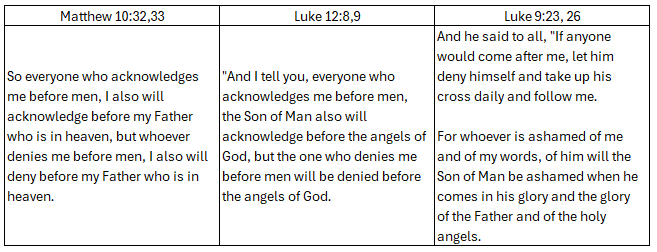
 Considering the Bible