Jesus in the Old Testament is a series of posts that will offer my readers a chance to consider pictures or shadows of Jesus in the Old Testament. As mentioned in the introduction to this series, some may be obvious, some may be not so obvious, and some may simply be a facet of the Lord those reading may not have considered previously.
I hope as we venture through this series, we will see the Lord in many wonderful pictures throughout the Old Testament.
SEEING JESUS IN
Cyrus
Trigger of Prophecy
Daniel 9:25 Know therefore and understand that from the going out of the word to restore and build Jerusalem to the coming of an anointed one, a prince, there shall be seven weeks. And for sixty-two weeks it shall be built again with squares and moat, but in a troubled time. Daniel 9:26 And after the sixty-two weeks, an anointed one shall be cut off and shall have nothing. And the people of the prince who is to come shall destroy the city and the sanctuary. Its end shall come with a flood, and to the end there shall be war. Desolations are decreed.
Luke 19:38 saying, “Blessed is the King who comes in the name of the Lord! Peace in heaven and glory in the highest!”
Cyrus made a decree, and that decree began the reestablishment of the nation of Israel in the promised land. It is as if the nation was reborn, and the hope of the Messiah could be realized again.
Cyrus issued a decree, and as we spoke of earlier, this decree to release the Jews from captivity and provide access to the homeland in order to rebuild the temple was miraculous! What type of king does this type of action for a defeated people?
He issued a decree, but it is very improbable that the decree of Cyrus is related the the word spoken of in Daniel 9:25. You see, all the previous passages we have spoken of in relation to the decrees of Cyrus have had to do with the rebuilding of the temple. Daniel speaks of a decree to rebuild the City. Let us not blur the Word!
Yes, some may consider a verse in Isaiah justify seeing Cyrus as the one providing the decree referred to in Daniel 9:25.
Isaiah 44:28 who says of Cyrus, ‘He is my shepherd, and he shall fulfill all my purpose’; saying of Jerusalem, ‘She shall be built,’ and of the temple, ‘Your foundation shall be laid.’”
But take note that the text speaks of God describing Cyrus as a shepherd, and then of God’s actions of Jerusalem and the temple being rebuilt. It is not specifically stating Cyrus would perform the actions of building Jerusalem or laying the foundation of the temple.
The Word does help define exactly Cyrus place in all of this process of reestablishing the nation of Israel, as Ezra describes the historical proclamation of Cyrus.
Ezra 1:1-2 In the first year of Cyrus king of Persia, that the word of the LORD by the mouth of Jeremiah might be fulfilled, the LORD stirred up the spirit of Cyrus king of Persia, so that he made a proclamation throughout all his kingdom and also put it in writing: “Thus says Cyrus king of Persia: The LORD, the God of heaven, has given me all the kingdoms of the earth, and he has charged me to build him a house at Jerusalem, which is in Judah.
After a careful reading, it should be obvious that Cyrus provided the decree for the temple, and that nothing is spoken by him regarding the rebuilding of the City of Jerusalem.
So Carl, you have just disproven the expected storyline of Cyrus being the one who would be the “Trigger of Prophecy”, that he would set in motion the specific decree that could calculate the coming of the Anointed One, the Prince.
Yes, Cyrus did not provide the decree to build the City, but he set in motion the inevitable process of Israel becoming a nation in the land again. Some other king – we will look at him in the future as a type of the Christ also – had the privilege start the clock for the countdown to our Saviors appearance, His passion and His glory.
For now, we are considering Cyrus, and as a type of the Christ, he has abundantly surprised me in all the ways he pointed us to the who are looking to find the Christ in the Old Testament.
Thanks again for coming to visit. I hope you found something of interest in this post and would appreciate a comment, to begin a discussion. If you know someone this blog may bless (or challenge), send them a link, so they may join us in our discussion.
My hope is that this series will offer my readers a chance to consider the names, characteristics and descriptions of our God in the Word.
The remaining Names of God in this series might be considered descriptors, or characteristics of the Lord. We have reviewed the three primary Names of God, along with nineteen compound Names of God in our previous posts. As we venture through these descriptors of our God, I hope we will recognize all the many characteristics of our God that we tend to take for granted.
The Word is truly rich with descriptions of the Living God, and this effort of searching in the Word was quite illuminating. He truly is the ultimate subject of the Word, and His revelation of self-descriptions, or the accolades offered Him by His priests, prophets, kings apostles and faithful truly is a blessing.
May the Name of the Lord be praised, and by thinking on His name, may you have a blessed day.
267
Greater than Solomon
Matthew 12:42 The queen of the South will rise up at the judgment with this generation and condemn it, for she came from the ends of the earth to hear the wisdom of Solomon, and behold, something greater than Solomon is here.
This general passage has been referred to earlier in our discussion of “Greater than Jonah”. In that comparison, we saw that Jesus referred to Jonah in relation the the effect of his preaching, and of the repentance Jonah experienced amongst the dirty sinful gentiles.
It seemed Jonah was much more successful with the dirty rotten stinking gentiles that Jesus was with the righteous, holy, blessed and perfect Jews He was addressing. Of course Jesus is much much greater, but refer to that posting for that discussion!
In our verse this morning, Jesus brings up Solomon. The wisest and richest king ever produced in the nation. A man revered by Jesus audience as the wisest of all, a man who drew people to him just to hear his judgements. Jesus focuses in on the story of the queen of the South coming to see Solomon.
A woman. A woman from a foreign nation. A dirty rotten stinking gentile again! But this example had her coming to Israel. She was not as the Ninevites, having a message delivered that they did not expect. This queen sought out an audience with the king.
And she is going to judge the generation of religious Jews for not paying attention to the One greater than Solomon.
Can you hear the mocking, the jeering and the laughter in the background?
How could this itinerant rebel rousing Rabbi consider His message greater than Solomon? Or more to the point, how could Jesus compare Himself as greater than Solomon? This must have seemed completely ludicrous in the eyes of the religious man in Israel!
And how dare Jesus suggest a foreigner, a dirty rotten stinking gentile, judge the righteous holy and perfect law-abiding Jew?
This was just too much!
But what if He was right? What if Jesus is Greater than Solomon?
How humbling this would be for the religious man?
If Jesus is greater than Solomon, and the religious man is not recognizing His greatness, a time will come when a great humbling will occur!
How deep is the complete blindness of the religious man?
If Jesus is greater than Solomon, and the religious man cannot see the truth of the Messiah, that Jesus provides all the proofs needed to know and see Him in His person, a time will come when this will be revealed!
How silent is the stone cold deafness of the religious man?
If Jesus is greater than Solomon, and the religious man cannot hear the words of God coming from the mouth of Jesus, he is showing he is not of the fold, that he is not one of the Shepherd’s sheep, a time will come when the Word will be clear!
My friend, Jesus is Greater than Solomon, having proved His identity by His life and death, and His resurrection.
Jesus is Greater than Solomon. Deal with it!
On a personal note, I am convinced that religion is one of the greatest barriers to knowing the Living God. Religion, in all it’s glory, is often a tool used deaden our sense of need before the only True God, providing a system of various laws and rules that we are to obey in order to satisfy some god, or provides the religious man enough information in order to inflate our estimation of ourselves.
I would love to hear of your favorite name, characteristic or description of the Living God. Please leave me a comment, and I will include it in the list!
Thanks again for coming to visit. I hope you found something of interest in this post and would appreciate a comment, to begin a discussion. If you know someone this blog may bless (or challenge), send them a link, so they may join us in our discussion.
My hope is that this series will offer my readers a chance to consider the names, characteristics and descriptions of our God in the Word.
The remaining Names of God in this series might be considered descriptors, or characteristics of the Lord. We have reviewed the three primary Names of God, along with nineteen compound Names of God in our previous posts. As we venture through these descriptors of our God, I hope we will recognize all the many characteristics of our God that we tend to take for granted.
The Word is truly rich with descriptions of the Living God, and this effort of searching in the Word was quite illuminating. He truly is the ultimate subject of the Word, and His revelation of self-descriptions, or the accolades offered Him by His priests, prophets, kings apostles and faithful truly is a blessing.
May the Name of the Lord be praised, and by thinking on His name, may you have a blessed day.
266
Greater than our Hearts
1 John 3:20 for whenever our heart condemns us, God is greater than our heart, and he knows everything.
John is providing multiple tests for the believer to recognize in his own life, to build his faith and establish his life before God. I had at one time thought the book consisted of one verse, and that verse being 1 John 5:13.
1 John 5:13 I write these things to you who believe in the name of the Son of God, that you may know that you have eternal life.
It’s almost funny how I would skip through John’s letter, stopping shortly in the first chapter to memorize the ninth verse, and then right to 5:13. It was my verse to depend on based on what I remembered happened so many years ago, when I bent my knee at that couch and prayed the sinners prayer.
Chapter 5, verse 13 was critical for my faith since at one point in my life I had believed. Yes, back on Feb 21st of 1981, at 7:30 I prayed to the Lord. It was my salvation, and John was telling me that because I believed, I may know I had eternal life.
But I skipped the body of his letter, hoping the prayer would be enough. Now before anyone starts thinking I am questioning whether I met the Lord that night, let those thoughts evaporate. He saved this ol fool’s life and put me on a new road, with a new heart and a new purpose.
Yet I depended on that night! It was if the night was what saved me in my thinking sometimes. I am not sure if anyone else has had these thoughts, or possibly some doubts of their initial introduction to the God of Eternity, but John wants to dispel those thoughts. He provides us a fool proof method of knowing of our destiny, of our relationship with the Savior and that knowledge is found in the way we live out our faith.
Nothing changes the past. Those times when I have obeyed the light He give (1 John 1), loved my brother (1 John 2), rejected the world’s enticements (1 John 2), refused anti-Christian teaching (1 John 2), sought a purity of life (1John 3), or found the world hates or reject me (1 John 3) – each of those times has given me a greater confidence in my relationship with the Risen Son. It is an experiential relationship with the Living God that provides the knowledge of our faith.
Yet we are dragging about a sinful rebel, one that simply wants to wander off from the God we love. Each of us have failed Him. Each of us are not worthy.
There are times when my history with the Lord wells up in my heart, when my memories flood in and show how lackluster my faith has been, of how I have been an inconsistent follower, a complainer, a charlatan of sorts, a hypocrite and a traitor.
My heart is a condemning heart. It is the nature of the beast! And John tells us that when our hearts condemn us, God is greater than our hearts, and He knows everything.
The epistle John is writing is for believers to know of their relationship with the Living God. John now refers to God knowing everything.
This is the only time John mentions “God knowing” in this epistle, and it is instructive to note he is addressing the believer who is self condemned, full of doubt and despair. Even in this state of condemnation, of our hearts refusing to acknowledge the leading of God in our lives, we can find reassurance in the Lord, remembering that He knows our souls, and that He is above all of our doubting self condemnation.
1 John 3:19-20 By this we shall know that we are of the truth and reassure our heart before him; for whenever our heart condemns us, God is greater than our heart, and he knows everything.
Our God is Greater than our heart, and for that we should continually be a thankful people. When the condemning heart starts telling dark stories – whether they be true or not, remember the goodness of God.
I would love to hear of your favorite name, characteristic or description of the Living God. Please leave me a comment, and I will include it in the list!
Thanks again for coming to visit. I hope you found something of interest in this post and would appreciate a comment, to begin a discussion. If you know someone this blog may bless (or challenge), send them a link, so they may join us in our discussion.
Revelation 14:9 And another angel, a third, followed them, saying with a loud voice, “If anyone worships the beast and its image and receives a mark on his forehead or on his hand, Revelation 14:10 he also will drink the wine of God’s wrath, poured full strength into the cup of his anger, and he will be tormented with fire and sulfur in the presence of the holy angels and in the presence of the Lamb. Revelation 14:11 And the smoke of their torment goes up forever and ever, and they have no rest, day or night, these worshipers of the beast and its image, and whoever receives the mark of its name.” Revelation 14:12 Here is a call for the endurance of the saints, those who keep the commandments of God and their faith in Jesus. Revelation 14:13 And I heard a voice from heaven saying, “Write this: Blessed are the dead who die in the Lord from now on.” “Blessed indeed,” says the Spirit, “that they may rest from their labors, for their deeds follow them!”
Revelation is a difficult book to understand. There – I said the obvious.
In my early years, I was of the mind that John had written the book of Revelation, his magnum opus of apocalyptic Scripture, for the saints in our modern times. I was so selfish, so self centered that I was convinced John must be speaking of the 21st century, and of the conditions believers would face over 2000 years after his death!
That is until I realized the incredible impact the Old Testament had on John as he wrote the Book of Revelation. Of all the New Testament books, none is so dense with allusions, references and quotations from the Old Testament as is this book we are reading this morning.
A case in point to consider.
John refers to a mark on the head or hand. Is John possibly thinking his readers may know the Old Testament well enough that this reference reminds them of an earlier time, a time that may have similar characteristics?
My first thought would be the mark God called for on the mantle of each Israelites home on the night of the first passover.
Exodus 12:7 “Then they shall take some of the blood and put it on the two doorposts and the lintel of the houses in which they eat it. Exodus 12:23 For the LORD will pass through to strike the Egyptians, and when he sees the blood on the lintel and on the two doorposts, the LORD will pass over the door and will not allow the destroyer to enter your houses to strike you.
The Israelites definitely understood the idea of marking, and that it was a representation of protection. But Ezekiel goes even further, and I think John may be reaching back to this prophet for his context!
Ezekiel 9:3 Now the glory of the God of Israel had gone up from the cherub on which it rested to the threshold of the house. And he called to the man clothed in linen, who had the writing case at his waist. Ezekiel 9:4 And the LORD said to him, “Pass through the city, through Jerusalem, and put a mark on the foreheads of the men who sigh and groan over all the abominations that are committed in it.” Ezekiel 9:5 And to the others he said in my hearing, “Pass through the city after him, and strike. Your eye shall not spare, and you shall show no pity.
After this man clothed in linen performed his task of identification, judgement fell! But note the very next verse, where those who were to show no pity were to begin the killing!
Ezekiel 9:6 Kill old men outright, young men and maidens, little children and women, but touch no one on whom is the mark. And begin at my sanctuary.” So they began with the elders who were before the house.
At God’s sanctuary! The killing was to begin at the very location where those who have the appearance of godliness congregate. And what was the mark identifying? The mark was on all those who mourned and groaned over the apostacy in the nation, over the abominations the Israelites performed, even in the sanctuary of God.
An incredible judgement of God occurred during Ezekiel’s time.
Is John using this message, and applying it to believers in relation to the taking of a mark, instead of simply accepting a mark of identification? After all, believers are already marked!
Revelation 22:4 They will see his face, and his name will be on their foreheads.
John clearly brings in hints of Ezekiel in this passage, and it may be instructive that Ezekiel’s judgement started in the sanctuary. In the very house of God!
In Ezekiel’s passage, the mark was provided for protection, for those who mourned the condition of the temple and the sanctuary, the religious state of the nation. In Revelation, this mark is accepted by those who chose allegiance against God and Jesus.
Ok – I can hear the question even now. Is it a physical mark we are to fear?
If it gets to that point where a believer is to make a decision of receiving a mark, (whatever that may be), I am afraid we may be too far gone.
You see, for as those in the Ezekiel passage are described, the mark identifies the type of person it is placed on, and it is not the result of a single decision of accepting a mark. As believers, our allegiance is to the Christ today, and though fundamentally this is not an external condition, it is also not simply the absence of a mark, or the absence of a laser imprint, or the absence of a chip inserted into a hand or on your forehead.
Our allegiance, that which “marks us” even today, should be seen in our good works which glorify our Father. These exterior “marks” are sourced from an internal faith buried deep in our minds and hearts. Our faith in the Risen One produces decisions of the mind (represented by the forehead in our passage) and actions in our lives (represented by the right hand in our passage) that reflects a living faith!
We already have His mark on us! We are marked as sons and daughters of the Most High God by the Messiah, and unless some other mark is more appealing, more satisfying, or more desirable in the eye of the beholder, we will not desire any other!
Yet the passage in Revelation does not simply state what I have described and walked away. John continues with a statement that should be accepted for what it is, a challenge that needs to be overcome in the faith.
Revelation 14:12 Here is a call for the endurance of the saints, those who keep the commandments of God and their faith in Jesus.
His call for endurance is not an idle statement, for their may be days ahead when the enemy makes threats, when the enemy seeks to feed our fears, when the enemy will challenge our resolve to follow the Crucified One.
Story Time
One such time for this family was a few years back, when the world was in the deep confusion of Covid, when all was falling apart and ignorance and misinformation was rampant. There were forces that sought to have control over this family, to take advantage of this condition of fear and confusion.
The threat I speak of for my wife and I was the loss of my career. We are fundamentally a one income family, and when I was challenged to take a jab, I humbly refused. Many temptations and justifications tumbled through my mind, with my boss seeking to help me change my mind. He truly meant well, and at the time, it seemed abundantly clear that the loss of my income would have an immediate impact on my family, causing the loss of home, health and happiness. (That was the pitch!)
Yet the very intensity of the threat was telling, and the continual effort to have everyone take it seemed out of order. As a family, we were convinced this was God’s will for us, stuck to our guns, and refused the jab.
We waited on the Lord.
Not one in our family lost our careers, although a few of us experienced the sickness. Dang I lost almost 30 lbs. to that sickness. (Don’t worry – I found it again!)
The Lord provided a minor test for this family during those days of confusion, and for that I am thankful. He provided us a history of standing up for bodily freedom, for not accepting any demand on our person that we are not convinced of, and of giving us the strength to wait on the mercy of the Lord.
There will be days ahead my friend, when additional challenges may fall onto our lives, impacting our families and loved ones. Take a message from the apostle John, for he knew the way of the believer.
Revelation 14:12 Here is a call for the endurance of the saints, those who keep the commandments of God and their faith in Jesus
Be the marked of the Messiah, for if you are not fully devoted to the One who died for you, you will accept another mark.
Without His life, you have no hope.
Thanks again for coming to visit. I hope you found something of interest in this post and would appreciate a comment, to begin a discussion. If you would like to receive daily posts from Considering the Bible, click on the “Follow” link below
Jesus in the Old Testament is a series of posts that will offer my readers a chance to consider pictures or shadows of Jesus in the Old Testament. As mentioned in the introduction to this series, some may be obvious, some may be not so obvious, and some may simply be a facet of the Lord those reading may not have considered previously.
I hope as we venture through this series, we will see the Lord in many wonderful pictures throughout the Old Testament.
SEEING JESUS IN
Cyrus
Jew and Gentile King
Isaiah 41:2 Who stirred up one from the east whom victory meets at every step? He gives up nations before him, so that he tramples kings underfoot; he makes them like dust with his sword, like driven stubble with his bow.
Isaiah 45:1 Thus says the LORD to his anointed, to Cyrus, whose right hand I have grasped, to subdue nations before him and to loose the belts of kings, to open doors before him that gates may not be closed:
Revelation 19:16 On his robe and on his thigh he has a name written, King of kings and Lord of lords.
Cyrus, it is well known was a Gentile, a king of Gentiles and one of the most feared and effective kings of the ancient world. He trampled over Babylon without loosing a battle, and dominating the surrounding cities. A key city in the Babylonian kingdom simply surrendered to Cyrus. No fight in them, for they knew who Cyrus was and that he was coming to get them!
How impressive was Cyrus? In order to take Babylon, he diverted a river. A river you may have heard of called the Euphrates! No small river may I say!
He was a king of kings in his day, and in his dominion over the Babylonian kingdom, he inherited a tiny nation that had been in captivity for 70 years. As he became king over Babylon, by default, he became the king over Israel, the Jewish people.
Although Jesus initially offered God’s kingdom to the Jewish people, we all know that the end goal was for all nations to know the true King, the King of Kings over both the Jewish and Gentile people groups, drawing them into the nation of God, the church.
Yes, Cyrus was a type of Christ in that he was sovereign over all nations, including those of Israel. Yet his kingship lasted at most only a few generations, and it was merely a kingdom of this earth, a physical kingdom destined for death.
Jesus kingdom is spiritual, includes all who seek Him and will never succumb to death or destruction. He is the True King of Kings over all.
Thanks again for coming to visit. I hope you found something of interest in this post and would appreciate a comment, to begin a discussion. If you know someone this blog may bless (or challenge), send them a link, so they may join us in our discussion.
My hope is that this series will offer my readers a chance to consider the names, characteristics and descriptions of our God in the Word.
The remaining Names of God in this series might be considered descriptors, or characteristics of the Lord. We have reviewed the three primary Names of God, along with nineteen compound Names of God in our previous posts. As we venture through these descriptors of our God, I hope we will recognize all the many characteristics of our God that we tend to take for granted.
The Word is truly rich with descriptions of the Living God, and this effort of searching in the Word was quite illuminating. He truly is the ultimate subject of the Word, and His revelation of self-descriptions, or the accolades offered Him by His priests, prophets, kings apostles and faithful truly is a blessing.
May the Name of the Lord be praised, and by thinking on His name, may you have a blessed day.
265
Greater than our Father Jacob
John 4:12 Are you greater than our father Jacob? He gave us the well and drank from it himself, as did his sons and his livestock.”
As mentioned in our previous post, as an introduction to the next few names that include the modifier “greater than”, I mentioned that comparing God to a historical figure is somewhat diminishing to the nature of God, but I argued that this very act of stooping to our needs is the type of God we serve. He is nowhere nearly just greater than those we will come across in this short series, for He is the Eternal Omnipotent, Omnipresent, Omniscient God. But God is also good, and humble, and loving, and reaches out to those He loves and dies for. Thank you Lord!
For this passage, Jesus is challenged by a sinful Samaritan lady, when she questions the Savior of being “greater than our father Jacob”?
How could this young itinerant, relatively unknown (at this time in His ministry) Jewish Rabbi be greater that the father of the Jewish nation? And why would this Samaritan woman challenge Jesus with that topic?
Well it turns out that this very well was commonly known as Jacob’s well.
John 4:6 Jacob’s well was there; so Jesus, wearied as he was from his journey, was sitting beside the well. It was about the sixth hour.
This well had been providing water to Jacob’s descendants for hundreds of years. Now I want to be careful, for there is nowhere in the Old Testament that I can find describing the digging of this specific well by Jacob, but tradition, and this Samaritan’s comments settle that issue in my mind.
For those interested in the possible Old Testament reference to Jacob’s purchase of the well, many scholars consider this land to be referred to in Genesis 38.
Genesis 33:18-19 And Jacob came safely to the city of Shechem, which is in the land of Canaan, on his way from Paddan-aram, and he camped before the city. And from the sons of Hamor, Shechem’s father, he bought for a hundred pieces of money the piece of land on which he had pitched his tent.
As mentioned, in the patriarch’s days, wells were the source of life. Jacob knew this, and bought the land this well was positioned on for his family and future posterity. Hundreds of years later, it continued to provide life to the surrounding people.
So in summary, Jacob was great since he was the one who provided a source of life for his posterity. The Samaritans considered Jacob to be their ancestral father through Joseph, and the provider of life through this well. No man was greater in the Samaritans opinion. Jacob was truly great!
Therefore, when this woman challenged Jesus in this comparison with Jacob, she chose the nuclear option with Jesus. Much to her surprise, her question blew up in her face – in a very unexpected way! She challenged this young Rabbi of His abilities to provide water, but then found out He could provide a far greater source of life, the Spirit of God, far exceeding the mere wet stuff she sought every day at the well.
She only had one hurdle to jump over. Sin. She had to face her sin.
Is that the only thing holding you back from finding life in the Savior. Take it from an awful sinner. Admit your weakness, your frailty, your rebellion, your sinfulness, and your hard heart. He knows of it. He simply wants you to know of it, to admit it, and to realize the well we currently draw water from is not the water we truly need.
Her admittance of sin to this young Rabbi provided the first open confession of who Jesus truly is. And that to a sinful Samaritan woman, not a righteous servant of God. Kinda speaks of God’s desire for the lost, no?
John 4:25-26 The woman said to him, “I know that Messiah is coming (he who is called Christ). When he comes, he will tell us all things.” Jesus said to her, “I who speak to you am he.”
Can you imagine her day, starting out by challenging some stranger at a well, and then becoming convinced He is really is greater that her father Jacob?
Greater than Jacob? By a long shot – for He is the Messiah!
I would love to hear of your favorite name, characteristic or description of the Living God. Please leave me a comment, and I will include it in the list!
Thanks again for coming to visit. I hope you found something of interest in this post and would appreciate a comment, to begin a discussion. If you know someone this blog may bless (or challenge), send them a link, so they may join us in our discussion.
My hope is that this series will offer my readers a chance to consider the names, characteristics and descriptions of our God in the Word.
The remaining Names of God in this series might be considered descriptors, or characteristics of the Lord. We have reviewed the three primary Names of God, along with nineteen compound Names of God in our previous posts. As we venture through these descriptors of our God, I hope we will recognize all the many characteristics of our God that we tend to take for granted.
The Word is truly rich with descriptions of the Living God, and this effort of searching in the Word was quite illuminating. He truly is the ultimate subject of the Word, and His revelation of self-descriptions, or the accolades offered Him by His priests, prophets, kings apostles and faithful truly is a blessing.
May the Name of the Lord be praised, and by thinking on His name, may you have a blessed day.
264
Greater than Jonah
Matthew 12:41 The men of Nineveh will rise up at the judgment with this generation and condemn it, for they repented at the preaching of Jonah, and behold, something greater than Jonah is here.
I confess. I am a numbers geek. I love numbers. I even have a favorite number. I work with numbers and the relationships they have with each other, with all of creation, with our relationships with each other, with how we understand/decipher complex ideas using scribbles on a page.
In my day to day work life, I compare answers using numerical formulas to determine a best solution. Sometimes the best solution is for the answer to be the least of the two results. As in the capital cost of laying timber ties when compared with steel or concrete. Remember – I am a civil (some would say – a polite) engineer specializing in rail terminal design.
Other times, when I calculate a return on an investment, I am looking for the greater number.
All of this to introduce the topic of “greater than”. For the next few passages in our list of names of God, we are introduced names that include this term. To be “greater than” is a term of comparison, and relates to that which is better, bigger, costlier, or simply greater.
When it comes to the names of God, it retains it’s comparative value in the description, but I beg to suggest it is a term that the authors use to bring God down to our level. By that I mean, I can compare someone to Jonah, or Solomon, or Abraham, but to try to grapple with understanding the Eternal Omnipotent, Omnipresent, Omniscient God – well that just isn’t happening in this ol’ fool’s head. Remember – I am a numbers guy – logical, practical and limited. Very limited.
And our God fully stoops to our level to describe Himself in terms we can somewhat understand, but I fear does not do Him justice! That is the God we serve, for He provides us teaching that may seem to minimize His greatness in order for us to comprehend Who we are trying to relate to.
For this passage, Jesus states that something greater than Jonah was present. Now when we hear the name Jonah, I think of a rebellious prophet that defied the call of God, emperiled a boatload of sailors, made a whale sick, and scared a city with his ghostly appearance. (He had been in the acid of a whale/fish’s belly for an extended time – He was a bleached out fella!)
Oh – and he was instrumental in bringing about the largest revival in Old Testament history, and that with a bunch of dirty, sinful, awful gentiles.
So when Jesus speaks of being greater than Jonah, what might His focus be? I recall He spoke of Jonah as a sign of the resurrection, but that is not this text. This text’s context is the repenting of the City of Ninevah, that bunch of dirty, sinful, awful gentiles. He spoke of Jonah as the one who produced the greatest repentance recorded in the Old Testament, and that was in the gentile world.
He spoke of Jonah as the one who called out
Jonah 3:4 … “Yet forty days, and Nineveh shall be overthrown!”
The people believed and repented.
If Jesus is greater than Jonah, and He is, then why didn’t those whom Jesus preached to repent? What is going on here?
As I read the Word, I see over and over again that Jesus had the world in mind. He was after the other sheep. He was looking for “all y’all” to join the family. He was also describing the incredibly hard heart of those who opposed Him at the time of His appearing. A highly religious people, who took offence at the One who came offering a direct connection to the Father.
It may seem poetic justice that 40 years after the preaching of Jesus, the city of Jerusalem was thrown down. 40 years for the religious folk to repent, get right with a loving and patient God and escape the trap of a dead religion. He didn’t supply only 40 days as Jonah had!
He is greater than Jonah, in His message, His patience, His desire for the lost, His effect on the nations. Jonah only impacted one nation, and if I understand when Nahum preached – about 100 years later – the revival of Jonah may have lasted only one generation.
Jesus revival is eternal, for His resurrection is an eternal resurrection, the life granted through this resurrection is an everlasting life, and His nation, His blood bought people, have continued on throughout the ages.
Matthew 16:18 … I will build my church, and the gates of hell shall not prevail against it.
Yes this is a slam dunk – He really is greater than Jonah in everyway!
I would love to hear of your favorite name, characteristic or description of the Living God. Please leave me a comment, and I will include it in the list!
Thanks again for coming to visit. I hope you found something of interest in this post and would appreciate a comment, to begin a discussion. If you know someone this blog may bless (or challenge), send them a link, so they may join us in our discussion.
James 3:14 But if you have bitter jealousy and selfish ambition in your hearts, do not boast and be false to the truth. James 3:15 This is not the wisdom that comes down from above, but is earthly, unspiritual, demonic. James 3:16 For where jealousy and selfish ambition exist, there will be disorder and every vile practice.
James hits hard!
It is an easy task to establish that James is speaking to believers. He continually speaks of his audience as brothers.
James 1:2 Count it all joy, my brothers….
James 1:19 Know this, my beloved brothers….
James 2:1 My brothers….
James 2:5 Listen, my beloved brothers….
James 2:14 What good is it, my brothers…
James 3:1 Not many of you should become teachers, my brothers….
So when we get to verses 14-16, it must be obvious that James continues with addressing the believer. The true believer.
Granted this may be James’s way of showing to each one in his audience the character of a true believer, and allowing them to self judge. But he may also be addressing those who have, in thier actions, show a change in their allegiance, boasting and being false to the truth.
Does it not make sense that to be “false to the truth” demands that the truth was known at some point in the life of the reader.
Is that a fair assumption?
If this assumption is correct, some who read James text may have in the past shown good conduct in works of wisdom, but now are entertaining bitter jealousy and selfish ambition. This passage hits hard for that man, that believer. Has he in some manner apostatized from the truth?
James continues with a description of the source of this wisdom that produces jealousy and selfish ambition, and calls it earthly, unspiritual, even demonic. And he describes what this wisdom produces as disorder and every vile practice! What an incredible statement to consider for those in the church who are accepting, even encouraging, jealousy as a “godly” motivation and selfish ambition as a “spiritual” pathway in the Christian life.
How did the church become so willing to promote jealousy and selfish ambition in believers? Self promotion (selfish ambition) and ministry comparison (a form of jealousy) is rampant in the modern church! Where did the family of God disappear to? We are brothers in the family of God, not competitors with each other.
Our God is a God who is
James 3:17 …first pure, then peaceable, gentle, open to reason, full of mercy and good fruits, impartial and sincere.
My apologies for that little rant, for the topic is to be our personal relationship with the Almighty God, and not a commentary on the idolatrous church we see evidence of in our modern culture! Nevertheless, for our own personal application, it is wise for each of us to check our actions. Are we producing disorder, confusion and instability. Or are we working vile (worthless) practices? If so, we are listening to the wrong wisdom!
Let us be as the Master, who is first pure, then peaceable, gentle, open to reason, full of mercy and good fruits, impartial and sincere.
James tells us that a jealous and self promoting man will not comply with this self abnegating life! He is listening to the wrong voice!
Thanks again for coming to visit. I hope you found something of interest in this post and would appreciate a comment, to begin a discussion. If you would like to receive daily posts from Considering the Bible, click on the “Follow” link below
My hope is that this series will offer my readers a chance to consider the names, characteristics and descriptions of our God in the Word.
The remaining Names of God in this series might be considered descriptors, or characteristics of the Lord. We have reviewed the three primary Names of God, along with nineteen compound Names of God in our previous posts. As we venture through these descriptors of our God, I hope we will recognize all the many characteristics of our God that we tend to take for granted.
The Word is truly rich with descriptions of the Living God, and this effort of searching in the Word was quite illuminating. He truly is the ultimate subject of the Word, and His revelation of self-descriptions, or the accolades offered Him by His priests, prophets, kings apostles and faithful truly is a blessing.
May the Name of the Lord be praised, and by thinking on His name, may you have a blessed day.
263
GREATER AND MORE PERFECT TENT
Hebrews 9:11 But when Christ appeared as a high priest of the good things that have come, then through the greater and more perfect tent (not made with hands, that is, not of this creation)
Hebrews is a book that speaks of better things, of greater things and in this verse of perfect things.
The authors intent throughout the book is to compare Jesus with all other distractions for the religious soul. He is better than Moses, Joshua, angels, the priesthood and the temple. Yes, even the temple of God, of which would soon be destroyed by the Romans when they lay siege to the city.
Can you not hear the author begging those to flee to the true temple, the temple that is eternal? But I am speaking of a temple, and am unsure if the temple was ever intended by God to be erected.
Men of God, with good and true intentions, erected a temple in the name of God in the City of David, but prior to the construction of the greatest religious structure known to mankind in those days, the Lord of all creation resided in a tent. He had provided instructions for a “tent”, that was highly mobile, temporary and full of teaching, even in the materials and methods of construction. But that discussion is for the series Jesus in the Old Testament.
I am looking forward to that topic, but for now let us consider the Greater and More Perfect Tent.
Even in this verse, the author is emphasizing that the Christ came “with” the Greater and More Perfect Tent” and directs me to the times the Lord’s body is spoken of as a tent, or a tabernacle.
Of course the first passage that comes to mind is where Jesus is described as “tabernacling” (dwelling) with us.
John 1:14 And the Word became flesh and dwelt among us, and we have seen his glory, glory as of the only Son from the Father, full of grace and truth.
To dwell, as used in this verse, speaks of living in a tent, a temporary situation. It is the same meaning as used in relation to the tabernacle described in the book of Exodus, where the glory of the Lord was dwelling in the midst of His people. Jesus, in His desire to be amongst us, took on our limited bodies, weaknesses, appetites and weariness in order to be amongst us.
The very thought of God dwelling in a tent was first expressed back in Exodus 25:8,9.
Exodus 25:8-9 And let them make me a sanctuary, that I may dwell in their midst. Exactly as I show you concerning the pattern of the tabernacle, and of all its furniture, so you shall make it.
The term sanctuary refers to a consecrated place, and in this description in Exodus, the consecrated place is a tent, a moveable temporary type of structure. A structure that could easily be relocated in order to remain with the people. He really wanted to be in the midst of the people!
First a tent that was able to be relocated. Then a body for the God man, in order to experience our lives and to provide an identity we could stand in, rejoice in and live in.
The Greater and More Perfect Tent is the Messiah, and by the indwelling of His Spirit, the mystical body of true believers throughout the world, for believers currently are the tent for the Spirit of God to dwell in for the sake of the world.
All because He is the Greater and More Perfect Tent. He is not only the sacrifice, but also the place in which we can meet with Him in unity with others.
I would love to hear of your favorite name, characteristic or description of the Living God. Please leave me a comment, and I will include it in the list!
Thanks again for coming to visit. I hope you found something of interest in this post and would appreciate a comment, to begin a discussion. If you know someone this blog may bless (or challenge), send them a link, so they may join us in our discussion.
To address this verse properly, I feel the need to focus on this passage directly in relation to this topic at hand.
Should we yank this verse out of context and consider the verse as a standalone message to be applied “willy nilly”? Maybe, if the Word speaks of this topic consistently, speaking of the priority of faithfulness in relationship to the Person of the New Covenant.
If we are to faithful in our Christian life, to refuse apostacy in our lives, in our decisions and in our actions, then this passage may be considered a key passage that warns against the absense of endurance. Endurance, or faithfulness is the key component of the Christian life, for we are saved by faith, walk be faith, fight for the faith and know the Lord through our faith.
Better yet, let’s consider the message Jesus was providing the original listeners, and by trying to understand His message, hopefully apply His message to our lives with confidence.
Chapter 24 starts with the disciples having questions. Questions about the temple, when the temple will be torn down, and some information about some sign of Jesus coming, (whatever that meant for them) and the end of the age, (whatever that meant for them).
Matthew 24:1 ESV – Jesus left the temple and was going away, when his disciples came to point out to him the buildings of the temple. Matthew 24:2 ESV – But he answered them, “You see all these, do you not? Truly, I say to you, there will not be left here one stone upon another that will not be thrown down.” Matthew 24:3 ESV – As he sat on the Mount of Olives, the disciples came to him privately, saying, “Tell us, when will these things be, and what will be the sign of your coming and of the end of the age?”
As you can tell, I want to confess ignorance on the exact questions the disciples had at the time, especially regarding the sign of Jesus coming, and what the end of the age was referring to.
But when it comes to the question “When will these things be?”, I am confident the disciples were questioning about the destruction of the temple. After all, it is the very topic Jesus brought up in verse 2.
Though the first question is regarding the temple, Jesus seems to address His coming first, and speaks of the deception in the future, by many coming on the scene and speaking as though they were the Messiah.
Jesus speaks of deception, wars, famines and earthquakes in various places occurring prior to His coming. The disciples will be delivered up to tribulation, exposed to deceptions, hated by the nations, and experience an apostacy prior to Jesus coming. The disciples listening in on Jesus message will experience all these difficult trials, whether it be persecution, discouragements, or deceptions. The time before the Messiah comes will be difficult for the believer. Whatever time that may be.
Could Jesus have been referring to 70 AD? I think there is a lot to be said for considering that time to relate to this teaching for the disciples.
Could it be some other time in the past that Jesus may be referring to? Maybe. There are passages in the book of Revelation that speaks of His coming to individual churches. Could that be the reference that makes sense?
Might the coming Jesus refers to still be in the future? Definitely. There is a teaching in the church that speaks of all prophecy having been accomplished, even the second coming of the Lord. I absolutely consider that to be of no value, full of error, and detrimental to the hope filled life of the Christian.
No matter the timing of His coming to separate the sheep from the goats, to take His church away, to raise the dead out of the grave – no matter when that may occur, each of us will have a very specific time that we will meet with Him, that we will come before Him.
We might not see the global return of the Messiah, (hopefully I am wrong!) but no matter His timing, our time is approaching. Until then we are to endure to the end. We are to remain faithful, and looking at the context of this verse, we are to remain faithful in the most dire of situations.
We are to endure! We are to be faithful to Him. To the very end!
It really shouldn’t be a surprising requirement. The Christian life is a life of faith! Let us be faithful!
May His name be honored in our lives!
Thanks again for coming to visit. I hope you found something of interest in this post and would appreciate a comment, to begin a discussion. If you would like to receive daily posts from Considering the Bible, click on the “Follow” link below
Jesus in the Old Testament is a series of posts that will offer my readers a chance to consider pictures or shadows of Jesus in the Old Testament. As mentioned in the introduction to this series, some may be obvious, some may be not so obvious, and some may simply be a facet of the Lord those reading may not have considered previously.
I hope as we venture through this series, we will see the Lord in many wonderful pictures throughout the Old Testament.
SEEING JESUS IN
Cyrus
Subdue Nations
Isaiah 45:1 Thus says the LORD to his anointed, to Cyrus, whose right hand I have grasped, to subdue nations before him and to loose the belts of kings, to open doors before him that gates may not be closed:
Romans 1:5 through whom we have received grace and apostleship to bring about the obedience of faith for the sake of his name among all the nations,
Back in post 6 of this series, (Jesus in the Old Testament – Cyrus – 06) I suggested that Cyrus was a type of Christ in that he was undefeatable. In our lesson this morning, I would like to suggest that Cyrus is a type of Christ in that he subdued nations.
Some may consider this a duplication of typology, but I beg to differ. To be undefeated speaks of battle, of war, of victory over an enemy.
To subdue nations is much more than simply finding victory on the battlefield. There have been many a war in which the victorious army could not contain or govern the vanquished nation.
In our passage this morning, we find that to subdue may be translated as “conquer,” “defeat,” or “overthrow” The term has the meaning of “to beat down”. Cyrus was given the authority to defeat the nation militarily (to be undefeated) and also to control a population. He was able to subdue the people, even as he won his victories over the armies of the people.
I do not know of how he performed this act of dominance over all the nations he defeated, but with regards to the Jewish people, he subdued the Jewish nation (what was left of it) by acting out the command of God for his people. He freed them, and provided protection, and gave direction to reconstruct the city and the temple.
Cyrus’ method of subduing, or as our verse teaches, of “beating down” a people was certainly not the common method of controlling a defeated population. To beat down a people
Cyrus is known as a progressive leader, providing freedom to people groups that was unheard of prior to his arrival in history. There have been archeological findings that indicate he forwarded the rights of individuals, of providing the first declaration of human rights, giving religious tolerance and humane governance. He truly was one who subdued in a manner unheard of previously.
And yet, Cyrus’ profound and progressive manner in dealing with people groups to establish a kingdom, and to maintain his position of leader over them is only a dim comparison to the Christ.
He is the One who subdues His people by dying to give us life, providing the freedom of choice to be His people. He “beat us down” with a relentless love, a continual beckoning to peace, and the drawing of our mind and heart to the truth.
Cyrus was a man who lived a different style of leadership. His subduing was unlike any before him. Jesus also exhibited a different style of leadership, unlike any religious leader that may appear to be in competition for the attention of lost souls. His leadership has been demonstrated in the resurrection, providing to any who seek the truth ample evidence of His Lordship.
As we follow Him, we find that His leadership over His people is primarily that of grace, of a merciful King who desires the benefit of His subjects, and in doing so, shows His glory and greatness!
He has subdued nations, is subduing nations and will subdue nations! He is the only True King!
Thanks again for coming to visit. I hope you found something of interest in this post and would appreciate a comment, to begin a discussion. If you know someone this blog may bless (or challenge), send them a link, so they may join us in our discussion.
My hope is that this series will offer my readers a chance to consider the names, characteristics and descriptions of our God in the Word.
The remaining Names of God in this series might be considered descriptors, or characteristics of the Lord. We have reviewed the three primary Names of God, along with nineteen compound Names of God in our previous posts. As we venture through these descriptors of our God, I hope we will recognize all the many characteristics of our God that we tend to take for granted.
The Word is truly rich with descriptions of the Living God, and this effort of searching in the Word was quite illuminating. He truly is the ultimate subject of the Word, and His revelation of self-descriptions, or the accolades offered Him by His priests, prophets, kings apostles and faithful truly is a blessing.
May the Name of the Lord be praised, and by thinking on His name, may you have a blessed day.
262
Great Mighty Awesome God
Nehemiah 9:32 “Now, therefore, our God, the great, the mighty, and the awesome God, who keeps covenant and steadfast love, let not all the hardship seem little to you that has come upon us, upon our kings, our princes, our priests, our prophets, our fathers, and all your people, since the time of the kings of Assyria until this day.
Can you see a progression in our names of God recently?
Two posts ago, we considered our “Great God”, and in our last post, we spent a few moments on the “Great and Mighty God”.
From previous studies, we understand that to be great is not a matter of comparison against something or someone. To be great is not necessarily the opposite of bad, or poor, or weak. Each of those terms have their compliment.
And with “mighty”, we understand this describes God’s abilities, and it goes without saying that in describing His abilities, His abilities are also without comparison. It is not as thought we could say God could perform this action but not that action. (Of course we know He is limited to within His own will, but again – that goes without saying!)
So when we come to the term “awesome”, what are we to understand?
Back in the nineties, awesome was a byword that everyone used for anything that was above average, kinda cool or somewhat likeable. It kind of degraded the English word awesome, at least in my mind.
The term awesome, when we find it in our verse here in Nehemiah, relates to fear. Yes, our modern culture pushes the idea of respect and reverence in relation to God, and of that, this word has some meaning. To be sure, we need a healthy dose of godly reverence towards our God in our modern way of thinking!
But the term also carries with it the element of bone jarring fear, of a fear that overrides all other emotions. This term “awesome” is the same term that describes our ancestor’s first emotion after falling.
Genesis 3:10 And he said, “I heard the sound of you in the garden, and I was afraid, because I was naked, and I hid myself.”
Adam was afraid.
This completely new emotion for God’s creative masterpiece must have been excruciating. The Lord had become One to fear, due to Adam’s actions. Let us remember that the Lord had not changed. We had. And we invited massive fear into our lives. To go from a state of innocent bliss with the eternal God, to the internal knowledge that the Creator God who walked with you in the cool of the garden is now offended – well that must have been such an incredible shift in reality!
Nevertheless, the fear described in the fall of man is of the same fear each of us have lived under if we honestly face our destiny. To be alone before the Great and Mighty God is to be in a fearful place, a place of utter aloneness and nakedness before Him.
Hebrews 10:31 It is a fearful thing to fall into the hands of the living God.
Hebrews 4:13 And no creature is hidden from his sight, but all are naked and exposed to the eyes of him to whom we must give account.
He is God and we are but His creation, a creation that is fallen and in rebellion, with nothing to offer Him, nothing to placate the Holy God we stand before. Let us not dull the sharp edge of truth, even in our desire to give us some sense of comfort, some sense of false security or safety. As we stand, we are not great. We are not mighty. And we are to fear.
As believers, we are compelled, even by the love of Christ, to consider the Lord in the all encompassing manner we are responsible to Him. In that meditation and in realizing we fail Him in so many ways, a dread or fearfulness should rise up in our consciousness. A sense of complete hopelessness in our soul, a fearful looking over our shoulder, realizing we fall so short.
We are a sinful people in such a desperate situation!
If not for our Savior.
If it wasn’t for the massive sacrifice of His unmatched life to provide a ransom for a people who spat on Him, rejecting His counsel, and taking part in the spirit that crucified Him.
If it wasn’t for Him, we would be without hope. Crippling fear with no hope would be our experience.
As believers, Jesus has provided the right to be considered children of God, having removed the crippling fear we deserve. He has opened the door to the throne room of God’s kingdom, and we have the right to enter by the blood of Christ.
At such a cost, should we not continue to carry a fear that is rightly associated with such a Great and Mighty God, even our Great and Mighty, Awesome God!
I would love to hear of your favorite name, characteristic or description of the Living God. Please leave me a comment, and I will include it in the list!
Thanks again for coming to visit. I hope you found something of interest in this post and would appreciate a comment, to begin a discussion. If you know someone this blog may bless (or challenge), send them a link, so they may join us in our discussion.
My hope is that this series will offer my readers a chance to consider the names, characteristics and descriptions of our God in the Word.
The remaining Names of God in this series might be considered descriptors, or characteristics of the Lord. We have reviewed the three primary Names of God, along with nineteen compound Names of God in our previous posts. As we venture through these descriptors of our God, I hope we will recognize all the many characteristics of our God that we tend to take for granted.
The Word is truly rich with descriptions of the Living God, and this effort of searching in the Word was quite illuminating. He truly is the ultimate subject of the Word, and His revelation of self-descriptions, or the accolades offered Him by His priests, prophets, kings apostles and faithful truly is a blessing.
May the Name of the Lord be praised, and by thinking on His name, may you have a blessed day.
261
Great and Mighty God
Jeremiah 32:18 You show steadfast love to thousands, but you repay the guilt of fathers to their children after them, O great and mighty God, whose name is the LORD of hosts,
Jeremiah is watching the complete decimation of his beloved nation, falling under the judgement of the hand of God. He is praying for understanding in this passage, even as the Babylonians are at the doorstep of the city of Jerusalem.
Jeremiah 32:24 Behold, the siege mounds have come up to the city to take it, and because of sword and famine and pestilence the city is given into the hands of the Chaldeans who are fighting against it. What you spoke has come to pass, and behold, you see it.
Jeremiah was living in circumstances that would provide abundant fuel for a critical, complaining spirit. Jeremiah was not of that spirit however, having lived a life of the prophet to the nations, and after calling the nation to repentance, experienced the beginning of the captivity of his people.
He is commonly known as the “weeping prophet”, and in many ways lived a life in similar circumstances as the Lord Jesus. Both men were prophets calling Israel back to the Lord, and both prophets saw the rejection of their message.
For all of this disappointment, discouragement and despair, Jeremiah had his eyes beyond the circumstances as he prayed for understanding.
The circumstances he lived in did not change who he worshipped, for as he prayed, he prayed, not to the God who was wringing his hands in desperation, or the god who had lost control, or even the god who was surprised by the situation, but by the Great and Mighty God, the God who is without comparison.
We worship the Great and Mighty God. Remember that He is on the Throne when things are crashing about in your life, when everything seems unstable and on the brink of disaster.
Jeremiah was in the midst of the greatest catastrophe in the life of his nation. And he prayed to the Great and Mighty God, the One who not only delivered the Israelites from Egypt, from Babylon and eventually from Rome, but was the flesh and blood Son of God who took our sin away.
In the grand scheme of all of God’s great and mighty works, we can delegate to a secondary level the building and falling of nations as Jeremiah was seeking answers to. The great and mighty work of our Great and Mighty God is the removal from the sinner of the guilt of sin, the power of sin, and eventually the sinner from the very presence of sin.
That is the great work of our Great and Mighty God, a God who bled and died to accomplish such a feat!
Praise God!
I would love to hear of your favorite name, characteristic or description of the Living God. Please leave me a comment, and I will include it in the list!
Thanks again for coming to visit. I hope you found something of interest in this post and would appreciate a comment, to begin a discussion. If you know someone this blog may bless (or challenge), send them a link, so they may join us in our discussion.
2 Samuel 12:10 Now therefore the sword shall never depart from your house, because you have despised me and have taken the wife of Uriah the Hittite to be your wife.’ 2 Samuel 12:11 Thus says the LORD, ‘Behold, I will raise up evil against you out of your own house. And I will take your wives before your eyes and give them to your neighbor, and he shall lie with your wives in the sight of this sun. 2 Samuel 12:12 For you did it secretly, but I will do this thing before all Israel and before the sun.’” 2 Samuel 12:13 David said to Nathan, “I have sinned against the LORD.” And Nathan said to David, “The LORD also has put away your sin; you shall not die. 2 Samuel 12:14 Nevertheless, because by this deed you have utterly scorned the LORD, the child who is born to you shall die.”
David fell hard.
He was at the pinnacle of success, and the chosen king of Israel. God had given him direction, protection, wisdom and victories over his enemies. He had attained to the throne and united the kingdom!
Over and over again, his life provided to all watching him the sun the witness of a man after God’s own heart. If any man in Israel was a walking talking believer in the God of Israel, David was the man!
Deception, lust, adultery and murder came fast for this king. It was no accidental occurrence of sin. He was the man who gave the orders to bring that woman to him, to send that husband into the battle, to ignore the Lord.
I suppose it is the way of sin isn’t it? To fall into sin, to chase after sin is to ignore the Lord in the daily battles and temptations we face. Some may say David should have been in the battle instead of at the palace, but he has fallen, and by the law, is to be condemned to death!
As we read passages that describe his time from his sin to his restoration, we see a man who had died inside, who was dried up, torn down and without comfort. Even as Nathan came to David in our passage this morning, he came to David with the message of death. Only upon David’s confession of sin was the sentence of death lifted, and that not by legal determination, but by grace, and mercy from the hand of the Lord.
David confessed. He received pardon, for the Lord put away his sin. Yet for the remaining days of David’s life, all under the sun would witness David’s sufferings under the temporal judgement of shaming the Lord in private.
So may I ask my reader – What condition before the Lord was David in prior to his confession? He was surely a man after the heart of God prior to the fall. He was surely a man after the heart of God after this period of rebellion.
But what condition was he in between the sin and the confession?
Thanks again for coming to visit. I hope you found something of interest in this post and would appreciate a comment, to begin a discussion. If you would like to receive daily posts from Considering the Bible, click on the “Follow” link below
Jesus in the Old Testament is a series of posts that will offer my readers a chance to consider pictures or shadows of Jesus in the Old Testament. As mentioned in the introduction to this series, some may be obvious, some may be not so obvious, and some may simply be a facet of the Lord those reading may not have considered previously.
I hope as we venture through this series, we will see the Lord in many wonderful pictures throughout the Old Testament.
SEEING JESUS IN
Cyrus
Rebuilder
Isaiah 44:28 who says of Cyrus, ‘He is my shepherd, and he shall fulfill all my purpose’; saying of Jerusalem, ‘She shall be built,’ and of the temple, ‘Your foundation shall be laid.’”
John 2:20 The Jews then said, “It has taken forty-six years to build this temple, and will you raise it up in three days?”
We have seen this verse before, back in our third installment in the Cyrus study, looking at him as a shepherd, Of course his call to shepherd the people of God was a dim reflection of the Great Shepherd we have in Jesus, but he pointed to the Master.
For this post, we shall consider the description of Cyrus as a rebuilder, a servant used by God to build, and in his rebuilding, again pointed to the Master.
Both Jerusalem and the temple were to be rebuilt under the guidance of Cyrus according to our passage this morning. And as we may have mentioned earlier, when Isaiah is prophesying of this man, he lines out Cyrus’ mission quite clearly.
Imagine for a moment that you are Cyrus, that as you are dominating the nations, overpowering whole people groups and conquering vast areas of the world, you become aware of this prophecy of Isaiah. It would be hard to ignore, since Isaiah named you out in this very verse!
And while you are on a rampage of conquering, you find out you are destined to build. And not only to build a small outpost for a historically passive people, but your mission is to free a rebellious people , provide them passage back to their holy ground and then give them the right to rebuild the temple that provided the Babylonians, (a mighty world power at the time), such resistance to conquering over 70 years prior!
No wonder Isaiah clearly identified him. Calling him out by name was so necessary, for any “run of the mill” conquering general could not imagine this to be his purpose in life!
He rebuilt the temple, and the city of Jerusalem. A massive undertaking, and his leadership provided the Jewish people the freedom, resources and conditions in which they could flourish.
He took on a massive project in the rebuilding of the Temple, but in comparison to his anti-type, Jesus the Savior, it is but a dim reflection of the scope of work accomplished. Yes, Cyrus provided the conditions to enable the rebuilding of a physical temple, but how far greater the task to raise a greater Temple in only three days. To raise a Temple that would house all the people of God? To raise a Temple that would become the source of strength for a people to love their enemies, to pray for those who persecute them and to give witness to the God who went through the grace to build the true temple of God, the Body of Christ.
Our Temple is not made with hands. Jesus is the very Temple of God we belong to. May we honor His name by living as He want His people to live.
Thanks again for coming to visit. I hope you found something of interest in this post and would appreciate a comment, to begin a discussion. If you know someone this blog may bless (or challenge), send them a link, so they may join us in our discussion.
My hope is that this series will offer my readers a chance to consider the names, characteristics and descriptions of our God in the Word.
The remaining Names of God in this series might be considered descriptors, or characteristics of the Lord. We have reviewed the three primary Names of God, along with nineteen compound Names of God in our previous posts. As we venture through these descriptors of our God, I hope we will recognize all the many characteristics of our God that we tend to take for granted.
The Word is truly rich with descriptions of the Living God, and this effort of searching in the Word was quite illuminating. He truly is the ultimate subject of the Word, and His revelation of self-descriptions, or the accolades offered Him by His priests, prophets, kings apostles and faithful truly is a blessing.
May the Name of the Lord be praised, and by thinking on His name, may you have a blessed day.
260
GREAT GOD
Ezra 5:8 Be it known to the king that we went to the province of Judah, to the house of the great God. It is being built with huge stones, and timber is laid in the walls. This work goes on diligently and prospers in their hands.
This passage needs some context.
Ezra was a priest of the Most High during the return of the Israelites to Jerusalem. As we may remember, Cyrus the Persian King gave orders to release the Jews from captivity, returning the vessels of the temple to the people of God, and enabled the return to Jerusalem to build the temple of God.
A tremendous act of salvation, and restoration on the part of our God.
At first the Israelites were diligent in the rebuilding of the temple, but as many projects go, a delay here or there and a distraction over there caused the temple to be put on hold. And where there is a vacuum of religious purpose, self directed activities rise tot he surface.
Such was the case with the Jews. There began to redirect their efforts and materials to the construction of their own homes. Years passed until a prophet started asking some questions. His name was Haggai, and he wanted to know why the building of the temple had ceased.
He stirred up the people, and they got back at the temple building, but in this delay, a new king sat on the throne on Persia by the name of Darius, and a new Persian governor over the region Jerusalem was located.
That governor was a fellow named Tattenai, and from what I can tell, he seemed to be a fair type of Governor. In his research of the situation in Jerusalem, he found that the Jews claimed they had royal Persian authority to reconstruct their temple. Surely Tattenai had heard of the rebellious nature of Israel, and the focal rallying point of the temple for this nation.
He had the option to put the reconstruction on hold until he found out more on the rights these Jews enjoyed, but he seemed to be impressed by his trip to Jerusalem. Not only did he allow the men of Israel to continue in their rebuilding of the temple as he provided his report to Darius, he spoke highly of the God they Jews were dedicated to.
He allowed them to rebuild though he still needed to find out if they were granted authority under the throne of Persia. This is impressive, and not only in his actions, but in his communication back to the throne, he spoke of the temple as the house of the great God.
Was he a convert to Judaism? Did he begin to follow after God? How impressed was he of the object of Israel’s faith? He certainly, for the sake of the report could have simply referred to the temple as the house of a god, but he didn’t. He wrote a letter of record to the king of Persia regarding the temple in a foreign land as the house of the Great God!
Amazing.
For us in our daily lives, let me ask my reader. Do we live such lives that give evidence to those watching us of the Greatness of our God?
Do we have a message of the Greatness of our God that will turn the heads of those who are watching? I dare say we do!
We all have Tattenais in our lives and by the grace of God we can give witness of our God, hopefully impressing on those we interact with of the Great God we love and serve.
I would love to hear of your favorite name, characteristic or description of the Living God. Please leave me a comment, and I will include it in the list!
Thanks again for coming to visit. I hope you found something of interest in this post and would appreciate a comment, to begin a discussion. If you know someone this blog may bless (or challenge), send them a link, so they may join us in our discussion.
My hope is that this series will offer my readers a chance to consider the names, characteristics and descriptions of our God in the Word.
The remaining Names of God in this series might be considered descriptors, or characteristics of the Lord. We have reviewed the three primary Names of God, along with nineteen compound Names of God in our previous posts. As we venture through these descriptors of our God, I hope we will recognize all the many characteristics of our God that we tend to take for granted.
The Word is truly rich with descriptions of the Living God, and this effort of searching in the Word was quite illuminating. He truly is the ultimate subject of the Word, and His revelation of self-descriptions, or the accolades offered Him by His priests, prophets, kings apostles and faithful truly is a blessing.
May the Name of the Lord be praised, and by thinking on His name, may you have a blessed day.
259
Great Shepherd
Hebrews 13:20 Now may the God of peace who brought again from the dead our Lord Jesus, the great shepherd of the sheep, by the blood of the eternal covenant
We considered Jesus as the Good Shepherd in post number 240. In that particular post, we found it convenient to consider the Good Shepard in relation to the bad shepherds so often described in the Word.
For our post this morning, to consider the Great Shepherd is not to consider Him in comparison to a bad shepherd. That is the task of calling Him the Good Shepherd.
For Him to be called the Great Shepherd is to isolate Him, to consider Him, not in relation to any inferior shepherd, but for who He is in his person and work.
He is the Great Shepherd, having been raised out of the grave. No one can claim the status of being the Great Shepherd other than the One who has accomplished two feats of salvation
1. He passed through death and out from the grave after three days.
No other religious leader, teacher or instructor has ever claimed to be able to perform this feat, yet we know our Messiah not only repeatedly prophesied of His own death and resurrection, He proved His deity by walking out of the tomb. He is a man of His Word!
2. He erupted out of the tomb through the blood of the everlasting covenant.
Now I am not sure if “everlasting covenant” is a synonym for the New Covenant, emphasizing its eternal longevity, continuing on into eternity. The “everlasting covenant” may speak of a covenant entered into prior to the fall of mankind, prior even to creation. Some think this term refers to a council within the Triune Godhead in eternity past, with all three members of the Godhead entering into to accomplish the salvation of rebel sinners, and to provide the greatest glory to the Person of God.
Either thought only lifts up the incredible work of the Lord in offering salvation to a people who were dead, blind and deaf.
He is the Great Shepherd, and as such, He provides us the promise of Life, since He has triumphed over death, and an ongoing covenant that will continue throughout out the ages.
He is the Great Shepherd!
I would love to hear of your favorite name, characteristic or description of the Living God. Please leave me a comment, and I will include it in the list!
Thanks again for coming to visit. I hope you found something of interest in this post and would appreciate a comment, to begin a discussion. If you know someone this blog may bless (or challenge), send them a link, so they may join us in our discussion.
Romans 11:22 Note then the kindness and the severity of God: severity toward those who have fallen, but God’s kindness to you, provided you continue in his kindness. Otherwise you too will be cut off.
Context is everything. And I think I understand the hotbed of Calvinism I enter into by looking at anything in Romans 9-11, but these passages are not to be held captive by a teaching I consider to be misguided.
As I mentioned at the start, context is everything, and we must remember that Paul is writing his magnum opus to a church that is comprised of both Jewish and Gentile converts.
The particular passage we are addressing this morning is discussing the remnant of Israel, a faithful within the nation that God maintained even during periods of complete apostacy within the nation of Israel.
Within the physical nation of Israel, there were a pocket of faithful folk that were right with God. They lived by faith, and did not rely on any bloodline or heritage. The rest of the nation of Israel, those who did not exercise faith in the Living God, but on bloodlines, rules, laws or traditions, were not of the family of God.
Romans 9:6 But it is not as though the word of God has failed. For not all who are descended from Israel belong to Israel,
Paul repeats this teaching over and over again within this portion of Scripture. The nation of Israel was made of a social order that sought righteousness through works, while a portion of the nation of Israel understood the grace, kindness and most importantly the Person of the Savior. Yes they didn’t have a name for the Messiah yet, but when He stepped on earth, those who had listened to the voice of God in years past, recognized it in Jesus, and proved themselves to be of the remnant.
Nevertheless, for our verse this morning, we must address Paul’s warning. It was not a warning to those who were not of the faithful, for they would not hear it. Those of the remnant, even those of the gentiles, would recognize this warning, for it was the voice of the Lord through His apostle.
Paul speaks of kindness and severity.
Severity
This severity, I believe, relates to God’s handling of the (physical) nation of Israel, those who were not of the remnant. God directed severity to those who belonged to the faith of Judaism, a system of teaching that was to direct the adherent to God but seemed to become a deterrent, an actual impediment. This faith produced a people who did not recognize the Messiah. A religion that actually condemned the Son of God to the cross.
What was the Lord to do with a people like this? They were to be cut off, removed from the rolls of the righteous.
It is somewhat coincidental that this concept comes up in this study, for I recently posted on the topic in Conditional Security – Psalm 69:27-28. In that psalm, David is speaking of those who were against his call to Kingship. His prayer spoke of those within the (physical) nation of Israel as being blotted out of the book of the living. I will not repeat what I wrote there, but it may provide some context to this message if interested.
Kindness
The kindness Paul speaks of, based on the context of this passage seems to be related to the grafting of the Gentiles into the faith, a faith that is rooted in the life of God. Yet even in this discussion of kindness, Paul acknowledges that branches were broken off because of unbelief.
Note the connection of kindness from God as a result of continuance in faith. Some of the nation of Israel, who had faith at some earlier time, fell into unbelief. They were broken off! Cut off. Blotted out of the book of the Living. Again refer to the link above for (hopefully) some clarity on this topic.
As Paul closes this discussion on the conditional security of both the Jewish and the Gentile in this passage, he directs the warning of being cut off to believers. Personally, I think it is specifically for the Gentile believer, but I am splitting hairs here, and dulling the point of the message.
God’s kindness is directed to us, provided we continue in his kindness. Otherwise we too will be cut off.
What is the Lord to do with a people that abandon Him?
My friend, look to the Lord for His direction in your life, tell Him of your commitment to His will and ways, and cling to the Savior, for He is our only hope!
Thanks again for coming to visit. I hope you found something of interest in this post and would appreciate a comment, to begin a discussion. If you would like to receive daily posts from Considering the Bible, click on the “Follow” link below
Jesus in the Old Testament is a series of posts that will offer my readers a chance to consider pictures or shadows of Jesus in the Old Testament. As mentioned in the introduction to this series, some may be obvious, some may be not so obvious, and some may simply be a facet of the Lord those reading may not have considered previously.
I hope as we venture through this series, we will see the Lord in many wonderful pictures throughout the Old Testament.
SEEING JESUS IN
Cyrus
Restorer
Ezra 1:7 Cyrus the king also brought out the vessels of the house of the LORD that Nebuchadnezzar had carried away from Jerusalem and placed in the house of his gods.
1 Peter 5:10 And after you have suffered a little while, the God of all grace, who has called you to his eternal glory in Christ, will himself restore, confirm, strengthen, and establish you.
When the Babylonians rose to power, the nation of Israel sensed a hopelessness. They knew as a nation that without the hand of God actively taking the enemy out as He had with the 185,000 Assyrians centuries before, it was just a matter of time before they were completely defeated.
That time came, about 600 years before the Lord walked on earth, when the Babylonians entered the city of Jerusalem by force, capturing all the population, ransacking the heart of the city, and pillaging the Temple, gutting the Temple of all the holy instruments. All the holy tools used for the worship of their God was taken, simply for the value of the metal. The significance of the tools, in that they were used in the worship of the Most High God was of no difference to the Babylonians. The holy was treated as the unholy, eventually used in parties or debauchery by the royalty of Babylon. That very act of using holy utensils for a party seems to be the trigger on the very night of Babylon’s fall.
Although the passage we refer to speaks of the restoration of the vessels of the Lord, it is a fitting picture of how the Lord Jesus also restores us.
Now when I first came across this term restore, I imagined it spoke of simply returning something back to usefulness, back to it’s original purpose. And surely that is the core of the meaning. Cyrus took the defiled vessels that had been used for common, ordinary use by a heathen nation, and returned these vessels to the proper custodians, those of the Jewish nation who had some recollection of their use and purpose.
Jesus also took a defiled people, returning to them a purpose and usefulness in glorifying God throughout their lives.
But I would argue that beyond the mere restoration of physical vessels as Cyrus had, Jesus not only restored a people who had a defiant will against His love, He lifted each of us to a restored purpose, a restored usefulness and a higher calling that we had prior to the fall. For prior to the fall, our first parents Adam and Eve were merely innocent before the Lord. After our Lord’s rescue, He has restored us to a higher place, giving us a standing of righteousness far greater than mere innocence.
It is for us to take that standing of righteousness and work it out in our lives to produce a practical righteousness, a righteousness that mimics our Savior’s life.
We are not simply physical vessels of gold and silver. We are a complex, broken people having been restored by the Great Restorer, Jesus Christ.
Everything Jesus does is so much more than those who show us the shadow of His Person.
May His name be praised today.
Thanks again for coming to visit. I hope you found something of interest in this post and would appreciate a comment, to begin a discussion. If you know someone this blog may bless (or challenge), send them a link, so they may join us in our discussion.
My hope is that this series will offer my readers a chance to consider the names, characteristics and descriptions of our God in the Word.
The remaining Names of God in this series might be considered descriptors, or characteristics of the Lord. We have reviewed the three primary Names of God, along with nineteen compound Names of God in our previous posts. As we venture through these descriptors of our God, I hope we will recognize all the many characteristics of our God that we tend to take for granted.
The Word is truly rich with descriptions of the Living God, and this effort of searching in the Word was quite illuminating. He truly is the ultimate subject of the Word, and His revelation of self-descriptions, or the accolades offered Him by His priests, prophets, kings apostles and faithful truly is a blessing.
May the Name of the Lord be praised, and by thinking on His name, may you have a blessed day.
258
GREAT SAVIOR
Titus 2:13 waiting for our blessed hope, the appearing of the glory of our great God and Savior Jesus Christ,
Ok I admit it – at first glance, the name “Great Savior” is not specifically found in this verse.
There is a rule in the Greek – that when a singular article (the) comes before two nouns (God & Savior), both nouns refer to the same subject, which is Jesus in our verse.
Now I am no Greek geek by any stretch of the imagination, but I can’t imagine any argument from any who know the Savior that He isn’t a Great Savior.
The grammar may make my point, but experience seals the fact to our hearts that Jesus is a Great Savior. In our last post on this topic, we reviewed God’s name as “Great Salvation”, finding that David used it in relation to the imagery of a battle. God is our Great Salvation, or a Great Tower to flee to.
Now, instead of the act of salvation being referred to as Great, let us focus in on the Person of our Great Savior. I am so tempted to describe the work of salvation He has accomplished for our lives, including the abolishing of death.
2 Timothy 1:10 … our Savior Christ Jesus, who abolished death and brought life and immortality to light through the gospel,
The abolishing of death! No that is for another time! But what an amazing accomplishment for those who knew nothin gbut death!
No, let us remember the One who is the Great Savior and in the remembering, consider the Person of the Christ. For He is a Great Savior, but unlike those who are great in this old world, our Great Savior is One who is humble, approachable, meek and gentle. But let us not hear that these characteristics define our Great Savior as weak, for when He speaks, He speaks with authority. He needs not raise His voice, for with authority – not volume – He makes His will known.
He is the Great Savior. Let us spend a moment considering how Great He is this morning!
I would love to hear of your favorite name, characteristic or description of the Living God. Please leave me a comment, and I will include it in the list!
Thanks again for coming to visit. I hope you found something of interest in this post and would appreciate a comment, to begin a discussion. If you know someone this blog may bless (or challenge), send them a link, so they may join us in our discussion.
Psalm 69:27 Add to them punishment upon punishment; may they have no acquittal from you. Psalm 69:28 Let them be blotted out of the book of the living; let them not be enrolled among the righteous.
Early on in my walk of faith, when I would come across a passage such as this, I would default to the position that those that David referred to were those Philistines, or those Ammonites. Someone who had no relationship, no covenant, no connection with the God of Israel.
I should have read the passage a bit slower.
For David is not saying – Do not allow these enemies to get right with you God – that is do not write their names into the book of the living, but David is asking that the names would be removed, blotted out of the book of the living.
In my research, I have found this likely refers to the records of the nation of Israel, those who formally belonged to the nation of Israel. As children were born to natural Israelites, or as a proselyte joined the faithful people of God, their names would be recorded in the temple. This recordation provided those in the books to enjoy all the privileges of the people of God.
To have a name blotted out of the book of the living, as David prays for, is to remove them from being a part of the nation, removed from the covenant Israel entered into with Almighty God. David was not praying that these enemies simply cease to live, but to lose the privilege of belonging to the covenant people of God.
Remember, as I mistakenly assumed early on, these enemies David is referring are not “those Philistines”, or “those Ammonites”, but Israelites, specifically under the leadership of Saul, the king of Israel.
So, if I hear your right Carl, this blotting out of names from the book of life applies to those who are in covenant with God?
Consider a fellow centuries before David, as he mentions the blotting out of names in relation to the nation. Israel had recently entered into covenant with God, sealed with blood.
Exodus 24:8 And Moses took the blood and threw it on the people and said, “Behold the blood of the covenant that the LORD has made with you in accordance with all these words.”
This fellow offered his own covenant relationship with the God of all Creation to be given up so that the nation could continue with God. (Very Christlike!)
Exodus 32:31 So Moses returned to the LORD and said, “Alas, this people has sinned a great sin. They have made for themselves gods of gold. Exodus 32:32 But now, if you will forgive their sin–but if not, please blot me out of your book that you have written.” Exodus 32:33 But the LORD said to Moses, “Whoever has sinned against me, I will blot out of my book.
Moses, along with all the nation of Israel were in covenant with God, and the blotting out of names in this context was directly connected to those of covenant.
Though there are many passages that discuss the topic of the book of life, with many of those passages found in the New Testament, this post was not intended to be exhaustive on the topic. This post is intended to be but a challenge to each of us to consider the tremendous benefit and privilege of belonging to the people of God. Let us not take it lightly, but walk in a way that is worthy of the King.
Thanks again for coming to visit. I hope you found something of interest in this post and would appreciate a comment, to begin a discussion. If you would like to receive daily posts from Considering the Bible, click on the “Follow” link below
My hope is that this series will offer my readers a chance to consider the names, characteristics and descriptions of our God in the Word.
The remaining Names of God in this series might be considered descriptors, or characteristics of the Lord. We have reviewed the three primary Names of God, along with nineteen compound Names of God in our previous posts. As we venture through these descriptors of our God, I hope we will recognize all the many characteristics of our God that we tend to take for granted.
The Word is truly rich with descriptions of the Living God, and this effort of searching in the Word was quite illuminating. He truly is the ultimate subject of the Word, and His revelation of self-descriptions, or the accolades offered Him by His priests, prophets, kings apostles and faithful truly is a blessing.
May the Name of the Lord be praised, and by thinking on His name, may you have a blessed day.
257
GREAT SALVATION
Psalm 18:50 Great salvation he brings to his king, and shows steadfast love to his anointed, to David and his offspring forever.
David, in the 18th Psalm, describes the saving power of God, having found safety and security in the Lord in the midst of being surrounded by enemies.
Psalm 18:1 A Psalm of David, the servant of the LORD, who addressed the words of this song to the LORD on the day when the LORD delivered him from the hand of all his enemies, and from the hand of Saul.
David speaks of the Lord using military terms throughout this Psalm, using terms such as fortress, refuge, shield and horn of salvation.
Psalm 18:2 The LORD is my rock and my fortress and my deliverer, my God, my rock, in whom I take refuge, my shield, and the horn of my salvation, my stronghold.
He gushes over speaking of the might of the Lord in his deliverance, for at the time when there seemed no hope, no salvation available for David, God provided salvation. The enemies were too many, and had all the advantage, but when God was introduced into the situation, the tables where flipped over!
He spends the Psalm describing his love for the Lord, his thankful heart and uses many metaphors in describing the Lord’s saving work in his life.
He describes God’s frontal attack on the enemies, even from heaven, speaking of lightning as being an offensive weapon in the arsenal of God for David’s sake
Psalm 18:14 And he sent out his arrows and scattered them; he flashed forth lightnings and routed them.
He speaks of saving him from drowning
Psalm 18:16 … he drew me out of many waters.
David can’t hold back from describing his God in the victory. He goes so far as to call God his Great Salvation, and though David was speaking of an instant in time, where he was saved physically from enemies, when he calls God his Great Salvation, he is touching a topic that expands exponentially as the plan of God develops in history.
For our verse this morning, let us consider our Great Salvation, and that this Name of God continues in the military imagery David uses through the Psalm. You see, in the repeated passage of Psalm 18 we find in 2 Samuel, we come across our Name of God again, but it has a translation note attached to it.
2 Samuel 22:51 Great salvation he brings to his king, and shows steadfast love to his anointed, to David and his offspring forever.”
The translators of the ESV note that the phrase “Great Salvation he brings” may be rendered as “He is a tower of salvation.”
This imagery is pertinent to our lives, no matter where we are in our walk with the King, for we too are in a battle, even a war. Not only are we waging battle within our souls to submit to our Great Salvation, but also fighting a war for those around us, to represent the Living Savior as the Only Salvation for All.
The Great Salvation truly is for, through and about the Lord, for in our battle for Him, we need to trust in Him, to bring honor through Him to all. Although from a somewhat different context, Paul said it much better when he wrote
Romans 11:36 For from him and through him and to him are all things. To him be glory forever. Amen.
Yes He is our Great Salvation. He is the only One who is our strong tower in our battles, for if we believers do not run to Him for our safety, for our Great Salvation, we will find we have no defense against the ravages of this life!
Hebrews 2 speaks this truth much clearer when the author writes.
Hebrews 2:3a how shall we escape if we neglect such a great salvation?
May we run to our Great Salvation daily!
I would love to hear of your favorite name, characteristic or description of the Living God. Please leave me a comment, and I will include it in the list!
Thanks again for coming to visit. I hope you found something of interest in this post and would appreciate a comment, to begin a discussion. If you know someone this blog may bless (or challenge), send them a link, so they may join us in our discussion.
My hope is that this series will offer my readers a chance to consider the names, characteristics and descriptions of our God in the Word.
The remaining Names of God in this series might be considered descriptors, or characteristics of the Lord. We have reviewed the three primary Names of God, along with nineteen compound Names of God in our previous posts. As we venture through these descriptors of our God, I hope we will recognize all the many characteristics of our God that we tend to take for granted.
The Word is truly rich with descriptions of the Living God, and this effort of searching in the Word was quite illuminating. He truly is the ultimate subject of the Word, and His revelation of self-descriptions, or the accolades offered Him by His priests, prophets, kings apostles and faithful truly is a blessing.
May the Name of the Lord be praised, and by thinking on His name, may you have a blessed day.
256
GREAT PRIEST
Hebrews 10:21 and since we have a great priest over the house of God,
For the New Testament believer, we have one Great Priest.
The book of Hebrews is full of descriptions of our Messiah as a priest, usually spoken of as a high priest, but in this one instance, throughout the Word of God, He is called a Great Priest.
Granted, Hebrews 4:14 modifies the Name of God we are considering this morning as our Great “High” Priest.
Hebrews 4:14Since then we have a great high priest who has passed through the heavens, Jesus, the Son of God, let us hold fast our confession.
But for this morning, let us consider our Great Priest, and seek to cull a truth out of the context we find it in.
Our first question to consider. Why did our author use this particular name for this verse in his discussion of the glories of Jesus as our priest.
I would remind my reader that the context of this passage is speaking of the new and living way Jesus has opened up for the believer, to find access through the curtain. It is interesting that the author likens the curtain to His flesh. The typology of the curtain being torn speaks of access to the very holy of Holies. As our Great Priest, Jesus has not only proven His freedom and right to enter the presence of God, but if we are found in Him, we actually enter the presence of God also.
As our Great Priest, He has authority over the house of God, the Temple of God, the Church, the Body of Christ. He is the One who is not only the Head of the Church, but also the Great Priest, the One who has not only become the eternal sacrifice, but willingly gave His own Body on the cross as the sacrifice.
He was the Priest offering His Body on the cross as the sacrifice.
This morning as I was taking my walk in my favorite parking garage, I looked to the morning sky, prior to any sunrise, and was impressed with the knowledge of all that I don’t know.
Yes, it should come as no surprise that we sinners are incredibly ignorant. Sure, I comfort myself in knowing I can add and subtract, communicate (if I take my time), and continue to learn about earthly things, but when I consider the skies, the vastness of space, the depth and quietness of the skies, the immensity of this creation, I confess I am but an ignorant sinner caught by the grace of God.
But more importantly, Jesus is the One who is all knowing, all powerful, all wise and eternal.
Consider that just in the topic of knowledge, He knows all secrets, facts, motivations and hidden thoughts. All those things that I don’t know, and they are many, He is in complete control of each fact and piece of knowledge. He has all knowledge and has all authority, even over the house of God.
And because He is the Great Priest, our author of Hebrews is telling me that Jesus was the One who performed the sacrifice. He had the knowledge of the coming sacrifice, and drove the circumstances of His surroundings and His own Body to the cross. Yes He was the sacrifice, but in this passage, I suggest the action of sacrifice is the emphasis.
And to what end my friend? That we (poor simple sinners, washed in the blood of the Lamb) may draw near with a true heart.
Hebrews 10:22 let us draw near with a true heart in full assurance of faith, with our hearts sprinkled clean from an evil conscience and our bodies washed with pure water.
He is the Living Way, the truth and the Way of Life.
As this verse describes Him as the Great Priest we are reminded He was not an unwilling victim, but the motivating will to make the eternal sacrifice to provide us entrance with Him before the throne.
May His Name, our Great Priest, be honored in our lives.
I would love to hear of your favorite name, characteristic or description of the Living God. Please leave me a comment, and I will include it in the list!
Thanks again for coming to visit. I hope you found something of interest in this post and would appreciate a comment, to begin a discussion. If you know someone this blog may bless (or challenge), send them a link, so they may join us in our discussion.
Matthew 3:8 Bear fruit in keeping with repentance. Matthew 3:9 And do not presume to say to yourselves, ‘We have Abraham as our father,’ for I tell you, God is able from these stones to raise up children for Abraham. Matthew 3:10 Even now the axe is laid to the root of the trees. Every tree therefore that does not bear good fruit is cut down and thrown into the fire.
John the Baptist was on fire. He was lighting up the desert with a message all of Israel was curious about. Some came out to see this rebel out of curiosity, some out of a severe hunger for authenticity, some to confess their sins to get right with God, some even thinking John was the coming Savior.
And there were some in Israel who came out to condemn him, to question his right to preach and baptize, to dissuade those who were listening to him. In this particular passage, John was confronting “many of the Pharisees and Sadducees coming to his baptism”
It is interesting that there is no record of these men speaking against John at this time. Open rejection would come from the leaders of Israel, but the text only speaks of their presence in the crowds. And of John’s judgement on these men.
The relationship these men had with God is the question for the topic of conditional security. We know after multiple teachings of both John and Jesus that these men needed repentance and to trust the Savior instead of their bloodlines and religion.
But at this time, both John and the Pharissees/Sadducees had the assumption of these leaders possessing salvation, an assumption that these men were in covenant with God. The crowds listening in must have taken a collective inhale when John hurled this claim at the religious “cream of the crop” in Israel.
Some may consider John’s message as a message to the nation, and not a message to the individual. I heartily agree, for the nation was on the edge of judgement, with the Savior at the door, ready to provide salvation. Rejection would not be an acceptable outcome for anyone!
Yet, John speaks in the personal.
You brood of vipers! Who warned you to flee from the wrath to come?
The term “you” is the second person singular in this verse. (It is not “y’all” or “all y’all” as we say in Texas to include more than a single person in the group!) John was addressing the individual. And he was speaking of a judgement that was imminent.
A judgement that was imminent due to bad fruit. Or possibly John intended to be understood as claiming they had no fruit. Either way, these men who understood they were right with God were not right with God.
Does this address the security of the New Testament believer? Not directly. There are many conditions that are different between them and us.
But there is one condition that is ever true for the people of God. We are to bear good fruit. A life that mimic s the Saviors, a life of giving, of self sacrifice, or holiness and love towards those who are our enemies.
As I am driving the highways of Texas, I often listen to the “Message” paraphrase Bible. I have settled in the early chapters of Matthew for that last few weeks. A theme becomes evident from the words of Jesus that echoes John’s message of good fruit required from the life of the believer. Jesus is letting us know that He expects good fruit.
5:13 Let me tell you why you are here. You’re here to be salt-seasoning that brings out the God-flavors of this earth. If you lose your saltiness, how will people taste godliness? You’ve lost your usefulness and will end up in the garbage.
5:20 Unless you do far better than the Pharisees in the matters of right living, you won’t know the first thing about entering the kingdom.
5:29 Let’s not pretend this is easier than it really is. If you want to live a morally pure life, here’s what you have to do: You have to blind your right eye the moment you catch it in a lustful leer. You have to choose to live one-eyed or else be dumped on a moral trash pile.
Faith in the Messiah includes repentance from a life of no fruit. John spoke to the religious folks of the day, waking them up to the basis of their trust. Trusting in bloodlines and religiosity offends the True God and His Messiah. He is looking for hearts that are malleable, able to take in truth without an argument, willing to be taught, and willing to obey.
For the Pharisees and Sudducees of John’s day, the axe was at the root of the tree. Nowhere did John describe the tree as dead. The tree was alive. The reason for the axe?
It was not producing good fruit. And judgement was about to fall.
Thanks again for coming to visit. I hope you found something of interest in this post and would appreciate a comment, to begin a discussion. If you would like to receive daily posts from Considering the Bible, click on the “Follow” link below
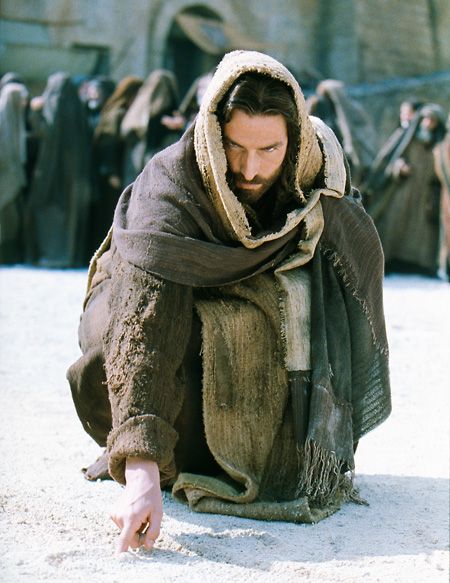



 Considering the Bible