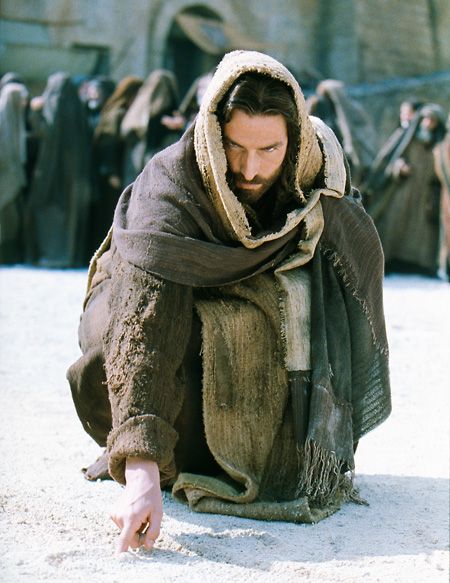
Hebrews 10:32 But recall the former days when, after you were enlightened, you endured a hard struggle with sufferings, Hebrews 10:33 sometimes being publicly exposed to reproach and affliction, and sometimes being partners with those so treated. Hebrews 10:34 For you had compassion on those in prison, and you joyfully accepted the plundering of your property, since you knew that you yourselves had a better possession and an abiding one. Hebrews 10:35 Therefore do not throw away your confidence, which has a great reward. Hebrews 10:36 For you have need of endurance, so that when you have done the will of God you may receive what is promised. Hebrews 10:37 For, “Yet a little while, and the coming one will come and will not delay; Hebrews 10:38 but my righteous one shall live by faith, and if he shrinks back, my soul has no pleasure in him.” Hebrews 10:39 For But we are not of those who shrink back and are destroyed, but of those who have faith and preserve their souls.
For our passage this morning, we find a portion of Scripture that provides tension for the reader as he reads through it.
At least it did for me. Let me try to explain.
As we enter this passage we find the author reminding the Hebrew believers of their commitment to the Messiah, and the suffering they originally entered into and endured for a time.
Then the key verse which addresses our subject matter of conditional security in this series.
Hebrews 10:35 Therefore do not throw away your confidence, which has a great reward.
It appears the apostle is counselling the believers to hang on, to not apostatize, to not throw away their confidence (the boldness of the faith). The apostle uses this term of confidence a number of times in this epistle, exhorting these believers to endure.
Hebrews 3:6 …..And we are his house, if indeed we hold fast our confidence and our boasting in our hope.
Hebrews 4:16 Let us then with confidence draw near to the throne of grace, that we may receive mercy and find grace to help in time of need.
Hebrews 10:19 Therefore, brothers, since we have confidence to enter the holy places by the blood of Jesus,
The apostle then proceeds to describe their need to endure, and of the righteous man’s walk is that of faith. To add to the argument of this post, we have the apostle stating the possibility of the righteous man shrinking back, causing no pleasure in the Lord.
Hebrews 10:38 but my righteous one shall live by faith, and if he shrinks back, my soul has no pleasure in him.”
Yet, at the end of the passage, we have a tension added to the message. Obviously the apostle speaks of all believers when he speaks – “we are not of those who shrink back and are destroyed”.
Hebrews 10:39 But we are not of those who shrink back and are destroyed, but of those who have faith and preserve their souls.
Surely the apostle speaks of the danger of the Hebrew believers letting go of their confidence, and then, in order to encourage them, (dulling the concern he just expressed), tells them that they are not those who shrink back.
Wait – what is going on? Is this apostle speaking out of both sides of his mouth?
The tension disappears if we consider the apostle referring to himself and his close companions as “we who do not shrink back”. Could the apostle be speaking this last verse as a proof of stability in the Christian life, of a certain standard that the Hebrews may be ignoring, or worse yet, abandoning? Might verse 39 be given as a witness of victory to those who are shrinking back.
I will leave my readers to consider their approach to this difficult chapter. We have dwelt in it for many posts, and there are many interpretations available. My hope is that your time in our study may have helped (or challenged) you in your walk with the Holy One.
May the Lord be honored in all our seeking of Him.
Thanks again for coming to visit. I hope you found something of interest in this post and would appreciate a comment, to begin a discussion. If you would like to receive daily posts from Considering the Bible, click on the “Follow” link below
I attend a fantastic Sunday School when I am in town and last week was no exception. The people there have a heart for the Lord, pray consistently for thier classmates, acquantenances, those in need and those they have never met.
Really enjoy speanding time with them!
It so happened that the passage we were scheduled to study was on the death of Samson. The class readily admitted this is a tragic story, and that the last few weeks in Judges had been difficult, since it reflects our lives so clearly. The failures and the pleading with the Lord when we fall is just too familiar. The cycle of freedom to bondage hits hard!
Our passage was in Judges 16, and of course we meet Delilah, with her tempting ways. Eventually Samson caved to Delilah’s crafty ways, and he revealed the truth of his strength, that he was a Nazirite to God all his life. He was chosen!
Judges 16:17 And he told her all his heart, and said to her, “A razor has never come upon my head, for I have been a Nazirite to God from my mother’s womb. If my head is shaved, then my strength will leave me, and I shall become weak and be like any other man.”
Prior to moving through the remaining passage, I asked the question regarding Samson’s status, or relationship with the Lord. It seemed to be the consencus of the class that Samson had a relationship with the Lord, though quite weak, and was somewhat refective of the nation as a whole.
Then we continued reading the passage.
Judges 16:20 And she said, “The Philistines are upon you, Samson!” And he awoke from his sleep and said, “I will go out as at other times and shake myself free.” But he did not know that the LORD had left him.
The verse contained a statement that left a bit of a pause for many in the class, as this class leans to the eternal security teaching. They are very gracious towards this ol’ fool, as they know I lean the other way. Like I said, they are a great (and patient) class to be in.
Nevertheless, when verse 20 was read, I couldn’t help but to make a point.
If Samson was in relation with the Lord, did he loose whatever that relationship entailed in this sin? Some mentioned that it was a difficult passage, that it was an Old Testament passage, and that it was Samson’s perception of the Lord leaving him, (but not actually leaving him).
I read the passage once more, and reiterated that the Lord leaving Samson was something Samson didn’t percieve, but that the verse provides the information as a fact.
At this point, I shut down and the conversation picked up, turning in a different direction, except for one fellow who asked me for further discussion. At this point I relented, for the point was made, and sometimes to repeat a point is to loose a point.
The class is a great class, and every believer I have ever met, struggles with certain passages within the Word. I certainly have struggled with many many passages, and the story of Samson has plenty of anomolies and conundrums, but for a minute in that class, there may have been an opportunity for some to consider what the Word says compared with what a formal doctrine teaches.
And for that I am thankfull, for the Word is to be the authority!
Thanks again for coming to visit. I hope you found something of interest in this post and would appreciate a comment, to begin a discussion. If you would like to receive daily posts from Considering the Bible, click on the “Follow” link below
26 For if we go on sinning deliberately after receiving the knowledge of the truth, there no longer remains a sacrifice for sins, Hebrews 10:27 but a fearful expectation of judgment, and a fury of fire that will consume the adversaries. Hebrews 10:28 Anyone who has set aside the law of Moses dies without mercy on the evidence of two or three witnesses. Hebrews 10:29 How much worse punishment, do you think, will be deserved by the one who has trampled underfoot the Son of God, and has profaned the blood of the covenant by which he was sanctified, and has outraged the Spirit of grace? Hebrews 10:30 For we know him who said, “Vengeance is mine; I will repay.” And again, “The Lord will judge his people.” Hebrews 10:31 It is a fearful thing to fall into the hands of the living God.
outraged the Spirit of grace
This last of three actions by the one who has committed the deliberate sin of verse 26 is outraging the Spirit of grace. Some translations speak of insulting, or disdaining the Spirit of grace. With this phrase, the apostle caps off his description of the deliberate sin he is warning us of.
During our discussion of this passage, I have asked myself whether the apostle is speaking of a one time action, a situation in a believers life that might comprise of one sin, one deliberate action that brings about such a terrible outcome. Something that is so heinous, that it would fit into the apostles description above.
My answer seems to be back in verse 26, where the apostle speaks of “deliberate sinning” as an ongoing process in the believers life, something that is a continual attitude/action bringing about the apostacy the apostle is warning us of.
The tense and voice of “sinning” in the Greek is present active, indicating, as the English translation teaches, the continual action of this deliberate sin.
So, my concerns about one sin being enough to take the believer out of the loving care of the Savior’s hands are not valid at all. It is a continual, creeping action/attitude that pulls us from the Lord. It is the same message the apostle has been warning us of since the second chapter.
Hebrews 2:1 Therefore we must pay much closer attention to what we have heard, lest we drift away from it.
A drifting. A slow, departure. Death by a thousand cuts, each cut at the time a seeming scratch, but the repeated scratches indicates a downward spiral.
Is this not the very condition we fight against each day, to follow Him in the little things, those things that come to mind but seem insignificant.
Luke 16:10 “One who is faithful in a very little is also faithful in much…
Therefore, consider those little things we are faced with each day. Speak with grace. Regard others as better than yourself. Honor your parents in thier wisdom. Have patience in trials. Accept reproach to protect others. Show hospitality. Live in harmony with one another.
Need I go on? Each of these actions or attitudes, along with many more, are the witness of the Spirit in our lives, guidance from the Lord that is outside of ourselves. We are naturally bent to avoid the life of self sacrifice, of discipleship, of following the One who gave instead of took.
We are “tookers”, not givers be nature!
So when we come to our last phrase, and the apostle speaks of outraging the Spirit of grace, might he be talking of this general, extended, continual rejection of the Lord in His guidance, of insulting the Spirit of grace by simply ignoring His voice?
Now some may think this to be an extreme position, to be somewhat far fetched. The issue many clamor for is the actual break with the Lord, the point of apostacy.
When does the believer become apostate? Is that important? Is it such that we would be comforted by knowing the specific details and characteristics of the point of departure in order to find some comfort in it?
Story Time
It was decades ago when my brother told me this story. It turns out that during the building of the United States Postal Service, the pony express were hiring men to deliver mail across the mountainous regions of this great land.
In interviews, the USPS would ask applicants of thier driving skills, and as such, one proud driver spoke of his skill to drive within inches of cliffs and precipices with a covered wagon, at speeds that ensured fast and efficient delivery. He spoke of his skills as legendary, and he left the interview sure that he had impressed his future employer.
As he closed the door leaving the interview, little did he know that his resume, and any hope of having a position with the USPS was thrown into the dust bin. For you see, the USPS was looking for surety of delivery, not how close the driver could get to danger and yet avoid it. They would be happy with thier drivers staying away from the edge, staying away from danger!
Is it not very much like us, as we seek to “have our cake and eat it too”? Let us not be of those who outrage the Spirit by ignoring Him, by considering His direction to be of no importance. We have today to hear from Him, even in the “little” things as mentioned above. If we hear and obey the “little” things, – those daily actions and attitudes described in the Word as the believers character, we can enjoy the Lord’s presence in our lives.
There will be no creeping up of any “fearful expectation of judgement” if we stay away from the edge, listening to His Spirit speak!
Thanks again for coming to visit. I hope you found something of interest in this post and would appreciate a comment, to begin a discussion. If you would like to receive daily posts from Considering the Bible, click on the “Follow” link below
26 For if we go on sinning deliberately after receiving the knowledge of the truth, there no longer remains a sacrifice for sins, Hebrews 10:27 but a fearful expectation of judgment, and a fury of fire that will consume the adversaries. Hebrews 10:28 Anyone who has set aside the law of Moses dies without mercy on the evidence of two or three witnesses. Hebrews 10:29 How much worse punishment, do you think, will be deserved by the one who has trampled underfoot the Son of God, and has profaned the blood of the covenant by which he was sanctified, and has outraged the Spirit of grace? Hebrews 10:30 For we know him who said, “Vengeance is mine; I will repay.” And again, “The Lord will judge his people.” Hebrews 10:31 It is a fearful thing to fall into the hands of the living God.
profaned the blood of the covenant by which he was sanctified,
Who is the subject of this phrase in the middle of this verse? This is the common question that seems to be the lynchpin of this passage. It all centers around the identification of who “he” that was sanctified is.
There are three possibilities to consider.
A Professor
The passage is describing the person who has joined the church out of curiosity, one who has not become a true believer but has joined the group externally through actions and rule keeping, not internally, by faith and love.
This identification hinges on other passages outside of the book of Hebrews, where a person is considered “sanctified” but is obviously a non-believer.
A popular example is in 2 Corinthians.
1 Corinthians 7:13-14 If any woman has a husband who is an unbeliever, and he consents to live with her, she should not divorce him. For the unbelieving husband is made holy (sanctified) because of his wife, and the unbelieving wife is made holy (sanctified) because of her husband. Otherwise your children would be unclean, but as it is, they are holy (sanctified).
This passage in 1 Corinthians raises a number of questions in my mind, but since we are in Hebrews this morning, I will leave this passage for my reader to consider on their own.
A Possessor
The passage is describing the person who has joined the body out of a repentance of sin, of acknowledging the person of Jesus as the expected Messiah, and is living as an organic member of the congregation.
I suppose identifying the one “sanctified” as a true believer finds support in the passage itself, with the author including himself in the audience, when he offers the phrase “If we sin willfully..”
Also, within the book of Hebrews, we find the author repeatedly referring to believers as sanctified.
Hebrews 2:11 For he who sanctifies and those who are sanctified all have one source. That is why he is not ashamed to call them brothers, Hebrews 10:10 And by that will we have been sanctified through the offering of the body of Jesus Christ once for all. Hebrews 10:14 For by a single offering he has perfected for all time those who are being sanctified. Hebrews 13:12 So Jesus also suffered outside the gate in order to sanctify the people through his own blood.
The Christ
Both of the previous identifications take the “he” as being a member (in some way) of the church. There is the possibility the One who was sanctified by the blood was the Christ Himself.
Consider the Messiah sanctified Himself for the purpose of our sanctification.
John 17:19 And for their sake I consecrate myself, that they also may be sanctified in truth.
It is also interesting that of these three phrases regarding willful sinning, this is the only one that has an additional description attached to the action of sin.
One who has trampled underfoot the Son of God,
One who has profaned the blood of the covenant
by which he was sanctified,
One who has outraged the Spirit of grace?
However my reader considers this passage, it does leave us with questions that may never be answered. It may be wise to hold to our understanding of this passage with velvet gloves, showing grace to those who understand differently.
Yet I cannot esccape the fact that it is one of five warning passages we find in the book. When we consider the book is focused on the believers estimation of the Christ, their faith in His work, and the continuance of their faith in Him, it is difficult to image the author directs his argument to those who are unbelievers.
For this post, let us focus on the action we are being warned about. To profane the blood of the covenant.
The word profane is the Greek word κοινός koinós, and is often translated as common, as something that belongs to all.
Acts 2:44 And all who believed were together and had all things in common. Acts 4:32 Now the full number of those who believed were of one heart and soul, and no one said that any of the things that belonged to him was his own, but they had everything in common.
Notice that κοινός koinós (common) is sometimes coupled with the idea of uncleanness, implying that to be common is not necessarily to be unclean.
Acts 10:14 But Peter said, “By no means, Lord; for I have never eaten anything that is common or unclean.” Acts 10:28 And he said to them, “You yourselves know how unlawful it is for a Jew to associate with or to visit anyone of another nation, but God has shown me that I should not call any person common or unclean. Acts 11:8 But I said, ‘By no means, Lord; for nothing common or unclean has ever entered my mouth.’
Ok, so to be profane is to imply ordinary, of no special ownership or use. It is something that is available to all, or in other words, associated with nothing that is outstanding, specific, or particular. Ok – so profane or common is “nothing special” in my vernacular.
What about holy? Usually profane and holy are considered opposites, and rightly so, but why? As a young believer, I automatically assumed holy meant sinless, and it certainly includes that concept, but there is more to the term. A principle definition of holy is to be separate. God is separate from sinners, separate from creation, separate from everything. He is holy, and because He is holy, He is different.
Now to drag He who is completely separate into the common is an afront to Him, is it not? To consider He who is apart from everything, apart from every created thing, as “one of the common, of no special category or class” is surely an insult of the highest degree.
He is not “nothing special”.
The Holy One entered a sinful world, resisting every temptation, was tortured for His identity, and finally shed His blood, blood that no other man shared in.
But let’s remember that the profanity in this verse is associated with the blood, the holy (separate) blood of the covenant.
My friend, how special is that blood, the blood that the Holy One shed. To consider it common is surely, without a doubt, an afront of the highest degree to the One who is Holy..
Thanks again for coming to visit. I hope you found something of interest in this post and would appreciate a comment, to begin a discussion. If you would like to receive daily posts from Considering the Bible, click on the “Follow” link below
26 For if we go on sinning deliberately after receiving the knowledge of the truth, there no longer remains a sacrifice for sins, Hebrews 10:27 but a fearful expectation of judgment, and a fury of fire that will consume the adversaries. Hebrews 10:28 Anyone who has set aside the law of Moses dies without mercy on the evidence of two or three witnesses. Hebrews 10:29 How much worse punishment, do you think, will be deserved by the one who has trampled underfoot the Son of God, and has profaned the blood of the covenant by which he was sanctified, and has outraged the Spirit of grace? Hebrews 10:30 For we know him who said, “Vengeance is mine; I will repay.” And again, “The Lord will judge his people.” Hebrews 10:31 It is a fearful thing to fall into the hands of the living God.
profaned the blood of the covenant by which he was sanctified,
Who is the subject of this passage? This is the common question that seems to be the lynchpin of this passage. It all centers around the identification of who “he” is
There are three possibilities to consider.
A Professor
The passage is describing the person who has joined the church out of curiosity, one who has not become a true believer but has joined the group externally through actions and rule keeping, not internally, by faith and love.
This identification hinges on other passages outside of the book of Hebrews, where a person is considered “sanctified” but is obviously a non-believer.
A popular example is in 2 Corinthians.
1 Corinthians 7:13-14 If any woman has a husband who is an unbeliever, and he consents to live with her, she should not divorce him. For the unbelieving husband is made holy (sanctified) because of his wife, and the unbelieving wife is made holy (sanctified) because of her husband. Otherwise your children would be unclean, but as it is, they are holy (sanctified).
This example raises a number of questions in my mind, but since we are in Hebrews this morning, I will leave this passage for my reader to consider on their own.
A Possessor
The passage is describing the person who has joined the body out of a repentance of sin, of acknowledging the person of Jesus as the expected Messiah, and is living as organic member of the congregation.
I suppose identifying the one “sanctified” as a true believer finds support in the passage itself, with the author including himself in the audience, when he offers the phrase “If we sin willfully..”
Also, within the book of Hebrews, we find the author repeatedly referring to believers as sanctified.
Hebrews 2:11 For he who sanctifies and those who are sanctified all have one source. That is why he is not ashamed to call them brothers, Hebrews 10:10 And by that will we have been sanctified through the offering of the body of Jesus Christ once for all. Hebrews 10:14 For by a single offering he has perfected for all time those who are being sanctified. Hebrews 13:12 So Jesus also suffered outside the gate in order to sanctify the people through his own blood.
The Christ
Both of the previous identifications take the “he” as being a member (in some way) of the church. There is the possibility the One who was sanctified by the blood was the Christ Himself.
Consider the Messiah sanctified Himself for the purpose of our sanctification.
John 17:19 And for their sake I consecrate myself, that they also may be sanctified in truth.
It is also interesting that of these three phrases we are looking at, this is the only one that has an additional description attached to the action.
One who has trampled underfoot the Son of God,
One who has profaned the blood of the covenant
by which he was sanctified,
One who has outraged the Spirit of grace?
However my reader considers this passage, it does leave us with questions that may never be answered. It may be wise to hold to our understanding of this passage with velvet gloves, showing grace to those who understand differently.
Yet I cannot excape the fact that it is one of five warning passages we find in the book. When we consider the book is focused on the believers estimation of the Christ, their faith in His work, and the continuance of their faith in Him, it is difficult to image the author directs his argument to those who are unbelivers.
It may be wise to reintroduce the first phrase of the authors writing for the Hebrews.
“If we sin willfully after we have received the knowledge of the truth”
Thanks again for coming to visit. I hope you found something of interest in this post and would appreciate a comment, to begin a discussion. If you would like to receive daily posts from Considering the Bible, click on the “Follow” link below
26 For if we go on sinning deliberately after receiving the knowledge of the truth, there no longer remains a sacrifice for sins, Hebrews 10:27 but a fearful expectation of judgment, and a fury of fire that will consume the adversaries. Hebrews 10:28 Anyone who has set aside the law of Moses dies without mercy on the evidence of two or three witnesses. Hebrews 10:29 How much worse punishment, do you think, will be deserved by the one who has trampled underfoot the Son of God, and has profaned the blood of the covenant by which he was sanctified, and has outraged the Spirit of grace? Hebrews 10:30 For we know him who said, “Vengeance is mine; I will repay.” And again, “The Lord will judge his people.” Hebrews 10:31 It is a fearful thing to fall into the hands of the living God.
Last we visited on this passage, I had provided some background to the passage and my current understanding that this passage was intended for those who had entered into following after the Messiah. The author himself, most assuredly a believer, includes himself in the warning.
For the next three posts on this passage, I hope to consider each of the phrases the author provides in expanding his understanding of “sinning willfully”.
A very serious condition that has dire consequences!
trampled underfoot the Son of God
To be trampled underfoot. It seems obvious the intended meaning, that the object being trampled underfoot is that which is spurned, treated with with rudeness, disrespect and neglect.
This term is used elsewhere in the New Testament and is helpful in considering the impact of our authors intent.
Matthew 5:13 You are the salt of the earth, but if salt has lost its taste, how shall its saltiness be restored? It is no longer good for anything except to be thrown out and trampled under people’s feet.
Jesus Himself used this term in His teaching, and this first verse provided indicates the worth associated with anything that is trampled underfoot. It is “good for nothing” other than to be thrown out and trampled under foot.
To be trampled underfoot is an expression of worth. Specifically, it is the estimated worth of an object in the minds of those considering it.
Matthew 7:6 Do not give dogs what is holy, and do not throw your pearls before pigs, lest they trample them underfoot and turn to attack you.
The true value and the estimated value of an object can be radically different amongst those considering it. In this verse, the true value of the object is precious, holy and likened to pearls. The estimated value is worthlessness in the way it is used, or distributed. The holy was distributed to the unholy.
And what was the reaction? The holy object was trampled underfoot by the unholy. The unholy also estimated the value to be of no value. But with the unholy, they not only trampled underfoot the holy, they turned on the one who did not estimate the object as holy, and protect it from abuse. They cast the holy to the unholy. And because of this error in estimating the value of the object, the unholy turned on them.
Consider this in relation to our passage in Hebrews.
The verse speaks of a judgement, even by the unholy, on the one who initially did not estimate the true value of a holy object.
Our author asks..
How much worse punishment, do you think, will be deserved by the one who has trampled underfoot the Son of God.
In our earlier verse, it was the unholy performing the judgement. In the passage of Hebrews, we face the Holy One in the punishment.
The trampling underfoot is a severe estimation of worthlessness of the object, and this estimation of worthlessness brings consequences.
But the object in our verse in not some precious commodity, or some costly truth, or a valuable piece of wisdom, but the very Person of the Christ. Not an object with holiness assigned to it, but the very Holy One, the Person who embodies and provides the standard of holiness.
He is the One who has given everything to rescue us. What a complete and utter failure to estimate the true worth of Him, which will take an eternity to understand.
May we trample underfoot every effort, thought or action in our lives that would diminish our estimation of Him who is Holy.
Thanks again for coming to visit. I hope you found something of interest in this post and would appreciate a comment, to begin a discussion. If you would like to receive daily posts from Considering the Bible, click on the “Follow” link below
26 For if we go on sinning deliberately after receiving the knowledge of the truth, there no longer remains a sacrifice for sins, Hebrews 10:27 but a fearful expectation of judgment, and a fury of fire that will consume the adversaries. Hebrews 10:28 Anyone who has set aside the law of Moses dies without mercy on the evidence of two or three witnesses. Hebrews 10:29 How much worse punishment, do you think, will be deserved by the one who has trampled underfoot the Son of God, and has profaned the blood of the covenant by which he was sanctified, and has outraged the Spirit of grace? Hebrews 10:30 For we know him who said, “Vengeance is mine; I will repay.” And again, “The Lord will judge his people.” Hebrews 10:31 It is a fearful thing to fall into the hands of the living God.
This is a fearsome passage, and must be considered with a spirit of grace and humility, for the message has been interpreted in many ways, defending a number of teachings within the Body of Christ.
The larger issue in this passage is the intended audience. Is this intended to address those who have yet to enter the salvation provided by the Messiah, but are simply looking in from the position of the Old Testament faith? Hebrew faithful who are still considering the claims of the Messiah?
In my current understanding of the Word, to be a faithful Hebrew was to be a follower of the Messiah when (or shortly after) first coming into contact with Him, for He provided varied, ample and timely evidence of His office and ministry of Messiah. The faithful Hebrew, (sometimes called the remnant throughout the Old Testament) looked for the Messiah, and to have Him displayed so prominently, with so many evidences, none the less than the resurrection from the dead, tells me that to remain outside of the community of faith was to show evidence of unfaithfulness as a Hebrew.
Isaiah 28:5 In that day the LORD of hosts will be a crown of glory, and a diadem of beauty, to the remnant of his people,
Therefore, I am of the opinion this passage is directed to the faithful Hebrew, the remnant of His people. The passage is for the one who has seen the evidence, believed the message and has followed after the Christ, abandoning the old system of relating to God through animal sacrifice and temple worship. And this passage supports this understanding. The author includes himself in this warning, as he begins this passage.
… if we go on sinning deliberately
First, the author speaks of sinning deliberately. This may be translated as sinning willfully, acting in opposition to the knowledge of the truth.
Now I don’t know about my reader, but I want to humbly confess that I have known the will of God in certain times of my life and yet failed to perform that known will. I have been weak, obstinate and without excuse.
Is the apostle addressing this condition, this state of belief in the saint? Possibly, but at the risk of seeming to justify my own weakness to maintain my citizenship in heaven, I am thankful the apostle defined the “willful sinning” in a following verse.
As we consider the following three phrases in verse 29, I think we will appreciate the clarification of the “willful sinning” referred to earlier.
Our next posts in this series will address each of these phrases. I am looking forward to finding out more about them and trying to communicate my findings to you.
Until them, may the Lord bless you and keep you, and make us a blessing to others!
Thanks again for coming to visit. I hope you found something of interest in this post and would appreciate a comment, to begin a discussion. If you would like to receive daily posts from Considering the Bible, click on the “Follow” link below
In my journey out of Calvinism, I discovered some you tube shorts from Dr Leighton, teacher at Soteriology 101.
As I may have spoken of earlier in my posts, I spent many years consumed with the Calvinistic teaching, only to break free because of men like Dr. Flowers, who offer alternative views that make more sense and glorify God, making Him purer, and more loving.
This particular short is a plea to the Calvinist to consider releasing some preconceived ideas, and to consider an alternate approach to understanding God. In my own journey, to allow considering an alternate approach to understanding God was a fearful thing, for I had been convinced that I was right.
Yet the truth does not need to be protected. If we truly want the truth, we should expect to be challenged occasionally by the Lord to repent, to revise and to reconsider.
A few days back I discovered some additional shorts from Dr Leighton, teacher at Soteriology 101.
As I may have spoken of earlier in my posts, I spent many years consumed with the Calvinistic teaching, only to break free because of men like Dr. Flowers, who offer alternative views that make more sense and glorify God, making Him purer, and more loving.
I do hope you will consider the teaching with an open mind.
19 Therefore, brothers, since we have confidence to enter the holy places by the blood of Jesus, 20 by the new and living way that he opened for us through the curtain, that is, through his flesh, 21 and since we have a great priest over the house of God, 22 let us draw near with a true heart in full assurance of faith, with our hearts sprinkled clean from an evil conscience and our bodies washed with pure water. 23 Let us hold fast the confession of our hope without wavering, for he who promised is faithful. 24 And let us consider how to stir up one another to love and good works, 25 not neglecting to meet together, as is the habit of some, but encouraging one another, and all the more as you see the Day drawing near.
The book of Hebrews has always been a challenge in my reading, as I am not a first century Hebrew, a saint who may pick up on nuances of truth the ancient saint might see.
But then again, those folk have passed long ago, and as long as we see Jesus in the book, I think we do well, for the book of Hebrews is brimming with statements, claims, truths and passages teaching of the superiority of the Christ over Old Testament saints, Old Testament covenants, Old Testament Temples, Old Testament rules, Old Testament promised lands, Old Testament Sabbaths…. Need I go on?
He is the culmination of all Old Testament teaching, the principal and only King over God’s Kingdom. There is no truth greater than we find in Jesus, and the outworking of His kingdom will only magnify Him more and more.
Our passage speaks of two results of His sacrificial offering on the cross, that He has provided for His people. Two results of His sacrifice are that we, an undeserving group are now able to enter before the Lord.
With confidence due to His blood
Through a new and living way due to His flesh
We have access before the Lord, the Holy and All-Powerful God of creation. This, at least in my life, has become such a “common” truth, I sometimes (most of the time) do not realize or appreciate the tremendous honor it is to have access before the throne of God.
Beyond that privilege, we have acquired through our faith in the Son, the Great Priest, One who rules over the house of God, One who represents us before the highest throne. He is not only the One who offered the greatest sacrifice, but became the sacrificial Lamb, and now stands before the Father, representing His brothers and sisters.
The apostle has laid it out once again in this book. God has performed His mighty work. He has lined out three blessings provided to us.
What are we to do?
He provides us three directions, each of them with the familiar “Let us”
Before we dive in to the three “let us”, I want to suggest this direction is given primarily for the church body to exercise as a body, and not as I often think of as direction primarily to individuals. Throughout these injunctions, the apostle continually address “us”, “we”, “our” and “one another” A definite injunction for body life.
So how does this apply for conditional security Carl? Good question my friend. As these injunctions, or commands are aiming for the outworking of faith in a body life, the claim may be made that any individual that is not partaking in Body Life (of some sort) is not exhibiting a grateful heart towards the One who has provided the previous blessings.
Let us consider the apostles three “Let us” commands.
Let us…
Draw near with a true heart in full assurance of faith, with our hearts sprinkled clean from an evil conscience and our bodies washed with pure water.
Draw Near.
This is the response we are to have in realizing the blessing He has provided. A response, but also a responsibility, the appropriate response of the heart, mind and body towards the Great Priest.
Hold fast the confession of our hope without wavering, for he who promised is faithful.
Hold Fast
This is the ongoing protection, and ownership of this blessing we have been granted. The term used translated as “hold fast” in this passage is defined within Strongs Dictionary as “to hold fast, keep secure, keep firm possession of” This speaks of responsibility on our part. We are to keep firm possession of this blessing!
Consider how to stir up one another to love and good works, not neglecting to meet together… but encouraging one another
Consider How.
To hold fast speaks of maintaining or keeping a position or possession. To consider how speaks of advancing the position, spurring others onto greater works of love. The apostle is not content to have these folk maintain. The march is to go forward!
Each of these “Let us” phrases speak of our responsibility before the Great Priest over the House of God who has provided us access to the Throne of God.
Let us hear His direction and respond accordingly!
Thanks again for coming to visit. I hope you found something of interest in this post and would appreciate a comment, to begin a discussion. If you would like to receive daily posts from Considering the Bible, click on the “Follow” link below
Galatians 5:19 Now the works of the flesh are evident: sexual immorality, impurity, sensuality, Galatians 5:20 idolatry, sorcery, enmity, strife, jealousy, fits of anger, rivalries, dissensions, divisions, Galatians 5:21 envy, drunkenness, orgies, and things like these. I warn you, as I warned you before, that those who do such things will not inherit the kingdom of God.
Paul has raked these folks over the coals.
From claiming they are listening to angels/teachers that are to be cursed (1:6-10), to retraining them in the fundamental teaching of justification by faith (2:15-21), to calling them foolish, and being bewitched (3:1), to describing the inability of the law to justify anyone (3:10-14), calling them slaves as opposed to their rightful status of sons (4:1-7) and decrying his heart for them in their errors (4:16-20), Paul was astounded at the condition of this church.
We have previously considered Galatians 5:4, where Paul comes right out and says they are severed from Christ. Severed! Attached at one time, and now severed!
Now we come to a passage that provides proof of the life these “believers” were exhibiting, with the fruit of the Spirit being evidence of the Spirit controlled life.
As an aside, to be Spirit filled, or led by the Spirit, or to walk by the Spirit is the equivalent of Spirit controlled! Any who claims to be Spirit filled and yet is not exhibit self control is suspect. Those who insult and abuse others in an effort to “show how spiritual” they are, are not impressing Paul, and should not impress us!
Paul begins to list a number of life characteristics that he describes as “the desires of the flesh”. The list is extensive and Paul indicates these “works of the flesh” are evident, easily recognized by those observing!
Works of the Flesh are evident!
sexual immorality
impurity
sensuality
idolatry
sorcery
enmity
strife
jealousy
fits of anger
rivalries
dissensions
divisions
envy
drunkenness
orgies
Paul provides such a list, so daunting and all encompassing. How many believers that may be reading are not susceptible to at least one of the vices above? To make matters worse, Paul opens up the list of problem vices with the general description of “things like these”
Oh my goodness! Is there no hope? If I fall into one of these vices, is it all over for me?
My friends, it is critical, at least in my thinking, that Paul is describing the outcome of two types of life. One of dependence on the Lord Jesus, of waiting and listening, learning from the One who is meek and lowly, One who is forgiving, good and patient.
The other life Paul is describing is the life that depends on the fulfillment of the law based on their own efforts. The Law is not (never was) the focus of the truly faithful, but a teacher, showing us how weak and disobedient we naturally are. To trust in that school teacher, and to refuse the One who the schoolteacher is pointing to is truly foolish.
Paul provides this list to give the believers in Galatia a check list, or a guide as to the root of their actions. Bad actions means a bad root! The next list, describing the fruit of the Spirit, not only describes only the highest of good characteristics in a person, but attributes the effort and work of producing the fruit to the Lord. They are not the works of our efforts, or the fruit of our labor. They are the natural out growth of our commitment to learning of the One who leads us.
Paul finishes this passage with a warning.
I warn you, as I warned you before, that those who do such things will not inherit the kingdom of God.
To reiterate, when Paul mentions “do” in this verse, he is describing a continual practicing of these horrible characteristics.
As believers, maturing in the faith, we all fall into periods of weakness or times when we struggle with some of these works of the flesh. To actively pursue these characteristics, or to ignore the warning signs these evidentiary works provide us is to find ourselves the subject of Paul’s warning. He warned them once. He warns them again in the passage. Hopefully the warning took and many in the Body of Christ repented of their dependence on the false teachers in their midst, and the Law for their salvation.
Trust in the Person of the Messiah, and refuse any teacher or spirit that pulls you back to a performance/law based life. Follow Him, and in the following, find joy, peace, love and the fulfillment of the law in your life.
Romans 8:3-4 For God has done what the law, weakened by the flesh, could not do. By sending his own Son in the likeness of sinful flesh and for sin, he condemned sin in the flesh, in order that the righteous requirement of the law might be fulfilled in us, who walk not according to the flesh but according to the Spirit.
To be Christian is great! May His name be praised for all His mighty works.
Thanks again for coming to visit. I hope you found something of interest in this post and would appreciate a comment, to begin a discussion. If you would like to receive daily posts from Considering the Bible, click on the “Follow” link below
14 Do not be unequally yoked with unbelievers. For what partnership has righteousness with lawlessness? Or what fellowship has light with darkness? 15 What accord has Christ with Belial? Or what portion does a believer share with an unbeliever? 16 What agreement has the temple of God with idols? For we are the temple of the living God; as God said, “I will make my dwelling among them and walk among them, and I will be their God, and they shall be my people. 17 Therefore go out from their midst, and be separate from them, says the Lord, and touch no unclean thing; then I will welcome you, 18 and I will be a father to you, and you shall be sons and daughters to me, says the Lord Almighty.”
Let’s remember that Paul birthed this church, ministered in this church longer than in many of the churches he was associated with. If Paul could claim to know those of his churches, the Corinthians would be the top of his list.
He is not writing to believers he had never met. No no no. These were people that he lived amongst, prayed over and struggled spiritually with. His first epistle was basically a letter of shock and correction, as to the issues that the Corinthians allowed in their midst.
Now, in this epistle, he is defending his apostleship from those in the Corinthian church that are defaming him, false apostles that are providing the fleshly Corinthians excuses to indulge in their wants.
Paul pleads with his people, and eventually pulls out the stopper. Get off the fence. The Corinthians can not partner with the enemy and consider themselves right with God. He calls believers the temple of the Living God, not only in this passage but twice in the previous letter.
His first reference to the temple of the Living God is referring to the congregational body as the temple of the Living God.
1 Corinthians 3:16 Do you not know that you are God’s temple and that God’s Spirit dwells in you?
His second reference is to the physical body of each believer, being the temple of the Living God.
1 Corinthians 6:19 Or do you not know that your body is a temple of the Holy Spirit within you, whom you have from God? You are not your own,
The Corinthians were taught of this privilege and in our verse this morning, Paul reminds the Corinthians of this truth, starts to ask some tough questions.
What partnership has righteousness with lawlessness?
What fellowship has light with darkness?
What accord has Christ with Belial?
What portion does a believer share with an unbeliever?
What agreement has the temple of God with idols?
Paul is really drawing a line in the sand, and I want to remind my reader of the context this passage is found after.
The previous verse speaks of Paul
2 Corinthians 6
11 We have spoken freely to you, Corinthians; our heart is wide open. 12 You are not restricted by us, but you are restricted in your own affections. 13 In return (I speak as to children) widen your hearts also.
The Corinthians need to make a decision. Paul is closing his plea to the believers regarding his apostleship, and to whom the believers are to listen to. He has opened his heart to them, speaking things of his suffering and his experiences that have been reluctantly provided for the believers to consider.
Now they need to decide. Righteousness or lawlessness. Light or darkness. Christ or Belial. Believer or unbeliever. Temple of the Living God or idols. They, and we, cannot have both.
Considering the context, it appears Paul is not mincing words. The false teachers are the enemy, and to bend the ear to them is to join with them, restricting their affections to the apostle Paul, and his message.
These believers, at least some if not many, having turned to the false apostles, whom Paul called angels of light earlier in the letter, are now on the outskirts of the church, with the invitation from God that if they repent, He will welcome them back.
These believers are being called to reject the false teachers, go out from amongst them, and return to the Living God. They were in a very precarious position before the Lord and Paul needed them to know of the danger!
For us this morning, one truth stands out! Let us not be drawn away from the truth of the apostolic teaching the Lord has provided us by listening to fancy pastors, showy personalities, humorous teachers, or lecherous men who make excuses for sin. These agents of the enemy will pull us away!
The written Word, with the enabling of the Spirit of God is sufficient for the believer to remain in the Temple of God. Teachers that seek to draw us away fron the Temple will attack the authority God gave His apostles, and the teaching they left us.
Is the Word and His presense sufficient for you?
Thanks again for coming to visit. I hope you found something of interest in this post and would appreciate a comment, to begin a discussion. If you would like to receive daily posts from Considering the Bible, click on the “Follow” link below
Matthew 13:38 The field is the world, and the good seed is the sons of the kingdom. The weeds are the sons of the evil one, Matthew 13:39 and the enemy who sowed them is the devil. The harvest is the end of the age, and the reapers are angels. Matthew 13:40 Just as the weeds are gathered and burned with fire, so will it be at the end of the age. Matthew 13:41 The Son of Man will send his angels, and they will gather out of his kingdom all causes of sin and all law-breakers, Matthew 13:42 and throw them into the fiery furnace. In that place there will be weeping and gnashing of teeth. Matthew 13:43 Then the righteous will shine like the sun in the kingdom of their Father. He who has ears, let him hear.
I sometimes fear, as my thoughts wander around in that hollow space above my neck, that some may read this series and understand each post as an effort to induce a fear of loss, or to communicate a risk in the walk of faith, or to produce an uncertainty in the heart of the believer. After all, to speak of the conditionality of our security in Christ it may be understood that our relationship implies some weakness in our God, some inability in our Father’s work, or some lack in His planning.
If this is your understanding, please be reassured the love of the Father, and the salvation of the Lord Jesus is as secure as the breath we breathe, stronger than the grave and greater than all our enemies.
The message to be understood is the challenge before us as weak, blind and beggarly people to continue to seek Him, to look to Him for our strength, to keep our eyes on Him, to trust Him and to rest in Him. He is all and everything we need, and to walk away from that is to put ourselves in dangerous territory. His mercy extends beyond our understanding, and His kindness continually reaches out to our hardened hearts. But we do have the option to jump from His care, to apostacize from His loving call, and to abandon all hope in running from the hound of heaven.
The passage we breach this morning is a tough one, a passage where some in “his kingdom” will be gathered out and thrown into the fiery furnace.
Matthew 13:41 The Son of Man will send his angels, and they will gather out of his kingdom all causes of sin and all law-breakers,
Jesus is speaking a parable in this instance, and I am of the opinion, as if that matters, that He is directly speaking of the theocratic kingdom of Israel as He presents this parable. Some in the kingdom (national Israel) will not be spared.
Although there are very many questions I would love to delve into regarding what “his kingdom” refers to, what the fiery furnace is speaking of, and a discussion on “weeping and gnashing of teeth”, I will refrain for later posts. (And after I have thought, prayed and studied much more!)
But for now, it is the general message that some in the kingdom will be removed that has alerted me and is why this passage is associated with the topic of conditional security in my mind.
There were some that the Lord may have been speaking to during this parable that were sure of their kingdom status, their belonging to rule of God, and yet the Lord has the nerve to say they will be yanked out, and tortured in fire!
Note that the passage refers to some in the kingdom as weeds, son’s of the evil one in verse 37. Yet in verse 41, the Lord simply refers to “all causes of sin and all law-breakers”. Now obviously the weeds are included in this judgement, but this last phrase possibly allows for more than just the weeds.
Possibility of more than just the weeds. Yes this is not explicitly stated, yet there is a possibility that those who feel safe may not be.
As I am thinking through this passage and all the implications, all the unknowns and all the questions rising in my mind, I cannot help but resort to one passage in Hebrews that provides a comfort, a place of security that each believer can rest in.
Hebrews 12:14 Strive for peace with everyone, and for the holiness without which no one will see the Lord.
Seek the Lord in your life. Hear His voice and strive to do His will. Run from any “cause of sin” in your life, from any law breaker that seeks to influence you.
Be the righteous that will shine like the sun in the kingdom of their Father, that will reflect the glory of the Lord in the daily grind of life, being kind as the Father is kind, being merciful as the Father is merciful, being patient as the Father is patient.
Jesus summed it up so well, for the life of the righteous is not a life of a false security, but of an active life of love towards our enemies, being kind to the ungrateful and and the evil!
Luke 6:35 But love your enemies, and do good, and lend, expecting nothing in return, and your reward will be great, and you will be sons of the Most High, for he is kind to the ungrateful and the evil.
The Message is a paraphrase I especially like to listen to, as it turns a phrase often and it catches something in my mind, like a spur under a saddle. Luke 6:35, 36 is such a passage in the Message.
35-36 “I tell you, love your enemies. Help and give without expecting a return. You’ll never—I promise—regret it. Live out this God-created identity the way our Father lives toward us, generously and graciously, even when we’re at our worst. Our Father is kind; you be kind.
Simple and direct. Our Father is kind. You be kind.
Replace “kind” with any characteristic you rejoice in, that our Father has expressed through the crucifixion of His Son, and be that.
Did I not mention this series was intended to be a challenge. This passage is a challenge that is beyond our strength, and as we look to Him, seek Him, striving for peace and holiness, you will shine in his kingdom!
Thanks again for coming to visit. I hope you found something of interest in this post and would appreciate a comment, to begin a discussion. If you would like to receive daily posts from Considering the Bible, click on the “Follow” link below
Matthew 12:33 “Either make the tree good and its fruit good, or make the tree bad and its fruit bad, for the tree is known by its fruit. Matthew 12:34 You brood of vipers! How can you speak good, when you are evil? For out of the abundance of the heart the mouth speaks. Matthew 12:35 The good person out of his good treasure brings forth good, and the evil person out of his evil treasure brings forth evil. Matthew 12:36 I tell you, on the day of judgment people will give account for every careless word they speak, Matthew 12:37 for by your words you will be justified, and by your words you will be condemned.”
Last post, we considered the unpardonable sin in relation to conditional security and I suggested the next portion of the passage may support my initial suggestions. So lets get back to this difficult passage.
Note the first word in verse 33! Either. A term providing a choice between two thoughts or concepts. When I see this word, I think of a decision to be made!
In relation to this passage, Jesus is calling out the Pharisees to make the tree good or make the tree bad. Might the Lord be referring to the Pharisees estimation of His power when speaking of these “trees” and it’s fruit being good or bad?
It is simple logic. Good fruit means a good tree. Bad fruit means a bad tree. The Pharisees have just witnessed an exorcism of a demon possessed man, a man who was blind and mute. Don’t miss the enormity of this miracle, and the resulting fruit! This demon possessed man, who was blind and mute, spoke and saw!
Matthew 12:22 Then a demon-oppressed man who was blind and mute was brought to him, and he healed him, so that the man spoke and saw.
But lets remember who the Lord is speaking to? The men He is telling to make a decision are the very ones who are claiming He is in league with the devil! Although an aside, to consider the Master maintaining a logical argument for the sake of these Pharisees in the middle of such a defaming claim is so appealing, so evident of truth, and of such a peaceful stance, it make Him all the more amazing.
Back to this “either” command of the Lord towards the Pharisees, (and any listening) in verse 33. He is laying out the logic that this good result of healing the demoniac (a good fruit) must be from a good source, (a good tree). The Pharisees logic of the power Jesus resorting to diabolical forces to perform this miracle forces the resulting healing into the bad fruit category, and that simply makes no sense.
Even as the Pharisees spread a slurring accusation against the Lord of mercy, He is still reaching out to them, proving His truth, His identity, His mission to them.
And yet He continues with the logic a tree being known by it’s fruit in relation to the Pharisees themselves, stating that their very illogical claim must be evil, since they are evil! He has publicly called the most visibly religious men amongst God’s God’s chosen people evil!
Ok Carl, all your argument follows the text (hopefully) but what has that to do with the topic of conditional security? I am glad you asked, for I want to return to the first word again.
Either. Jesus, after having been defamed by the most powerful men in Israel, places a challenge before them. It is not as though it is too late to revise their estimation of this Rabbi. Yes, they are of the chosen people, and yes they are under a covenant with God. Personal relationship with the most High has always been dependent on faith in God, and not performance of religion, but these men may have some flicker of faith still resident in them. They may, under all the religiosity of their life, have a dim, smoldering faith of some type that the Lord is reaching out to.
Make a decision based on logic, and understand Who is standing before them. Either call Jesus good or call Jesus bad, but their decision will either justify or condemn them.
Matthew 12:37 for by your words you will be justified, and by your words you will be condemned.”
Jesus is the Messiah, the full expression of the truth, evidenced by logic, by miracles, by the Spirit and by His message. Those who may have some faith in the Living God are dangerously close to condemning themselves by their illogical claims.
A dangerous position to be in, and yet the Lord reaches out to those who have openly and publicly expressed an obviously outrageous claim of His abilities. He is kind, and in His kindness, is very blunt with these men, seeking their repentance and acceptance of Him as the “Good Tree”!
I like to think some in the crowd took heart and rekindled their faith in the Living God of Israel and His Messiah, Jesus. I am hoping someone reading may also rekindle their faith in the Risen One. He has provided all the proof we need, in order to know who He is, the greatness of His love and His completed mission for lost, blind and mute sinners such as us!
Thanks again for coming to visit. I hope you found something of interest in this post and would appreciate a comment, to begin a discussion. If you would like to receive daily posts from Considering the Bible, click on the “Follow” link below
Matthew 12:31 Therefore I tell you, every sin and blasphemy will be forgiven people, but the blasphemy against the Spirit will not be forgiven. Matthew 12:32 And whoever speaks a word against the Son of Man will be forgiven, but whoever speaks against the Holy Spirit will not be forgiven, either in this age or in the age to come.
This is a difficult passage and to consider it under the topic of conditional security may at first be difficult to justify. Let me give you my thoughts on why this passage may be addressing this topic.
I am of the opinion that this particular passage is very specific to the time frame in which it was spoken. Consider the audience and the hingepoint of history we find it spoken in.
Jesus, The Messiah, the Gift of God to all mankind is again discussing God’s truth with those Pharisees. By the time we get to this morning’s interaction with the Pharisees, Jesus has dealt with them a number of times.
Interaction with the money changers – John 2:12-25
Interaction with Nicodemus (a Pharisee) – John 3:1-21
Interaction, rejection and attempt to murder Jesus in Nazareth – Luke 4:16-30
Interaction and rejection of Jesus claims of equality with God -John 5:16-47
Interaction on Sabbath importance – Matthew 12:1-8
Interaction concerning John the Baptist – Matthew 11:2-24
Interaction based on the Pharisees claiming His power is from the devil– Matthew 12:22-32
We are seeing from this brief list that things are getting very tense from the standpoint of the Pharisees. To pull out the non-logical argument that this Rabbi is depending on Satan to perform His life giving, healing ministry is a stretch by any account.
And Jesus does not mince words.
He openly confesses that every sin and blasphemy will be forgiven. Did you get that? Will be forgiven, not may be forgiven! He is telling these religious men that all sins will be forgiven. That must have tied their knickers in a knot!
He did place a caveat though as he addressed these men who would deny the obvious work of God through this Rabbi. If you will defame and lie against the work of the Spirit, the Holy Spirit in God’s Messiah, there is no hope for you. You see, He continues in his address to these men, declaring the sin of speaking against the Holy Spirit as being applicable in two ages. This age, or in the age to come.
I have often wondered what the “age to come” refers to, for it is not necessarily the next age, though it may be. I do not struggle when the Lord mentions “this age”. He is referring to the time in which he was living and breathing, talking to the men who opposed Him.
So here is how I understand this passage. Jesus is seeing the Pharisees becoming more and more desperate in denying His rightful place as Messiah, going to the incredible extreme of associating Him with Satan! As the people of God during the age of Moses, (prior to the resurrection and the wide spread explosive dispersion of the Spirit amongst the Gentiles) these Pharisee’s knew the truth of the Messiah, and understood that Jesus fit many, many of the required prophecies regarding the coming Savior.
As a matter of fact, there have been many studies revealing that the generation Jesus appeared in was the last generation a Messiah could appear to the people of Israel.
One specific prophecy that the Pharisees surely studied was that found in Daniel 9. A very detained and definite prophecy of the Messiah’s appearance within a certain time frame based on the captivity of the Jewish nation. Jesus was right on time. The Pharisees would not have it. He wasn’t working with them on their plans and objectives!
Nevertheless, the Pharisees knew Jesus was the Messiah, but out of envy and a refusal to submit to truth, refused Him and the witness of the Spirit!
Now as I mentioned earlier, these men were amongst the people of God, but at this point, it appears that all privilege assigned to the faithful Jew, though rejecting the message of the Spirit, would not receive forgiveness! In a word, privilege would be revoked from those who would not submit to truth!
Prior to this interaction, where did the Pharisees stand with God? Classed as of the Jewish nation, and as such, in the age of Moses, these men were in covenant with the God of Israel. Yet in this age, these men would be cast out, even as spoken of in numerous parables later in Jesus ministry!
Matthew 22:13 Then the king said to the attendants, ‘Bind him hand and foot and cast him into the outer darkness. In that place there will be weeping and gnashing of teeth.’
Matthew 25:30 And cast the worthless servant into the outer darkness. In that place there will be weeping and gnashing of teeth.’
In our next post, Jesus continues with His message to the Pharisees, speaking of fruit and trees, hopefully understanding the message we find in Matthew 12.
Let me know your thoughts.
Thanks again for coming to visit. I hope you found something of interest in this post and would appreciate a comment, to begin a discussion. If you would like to receive daily posts from Considering the Bible, click on the “Follow” link below
Philippians 2:14 Do all things without grumbling or disputing, Philippians 2:15 that you may be blameless and innocent, children of God without blemish in the midst of a crooked and twisted generation, among whom you shine as lights in the world, Philippians 2:16 holding fast to the word of life, so that in the day of Christ I may be proud that I did not run in vain or labor in vain.
In our last post on this passage, we discussed (with some tongue in cheek language) of a better motivator for the saint if we are eternally secure. We spoke of replacing “fear and trembling” with an alternate motivator, since being eternally secure removes any concern over the quality of our relationship with the Father. We spoke of a silly option Paul may have used to motivate the Philippians. He chose not to!
I may have been a bit crass. I hope it made at least one of my readers think about the text, and reconsider the possibility that Paul’s message may mean more than we currently understand.
Paul continues with the Philippians in our passage this morning, speaking of the characteristics of the believer, of refraining from grumbling and disputing, and of the believers life exhibiting a character that is blameless and innocent. We have previously addressed what it means to be blameless and innocent in this blog (See Philippian Bits – 2:15.01 & Philippian Bits – 2:15.02), so I will not repeat it here.
What I would like to consider is the last verse, where Paul speaks of his labor in the ministry. The topic of this last phrase is the effect of the Philippians obedience on the potential vanity of Paul’s ministry.
If the Philippians were not obedient, Paul’s ministry, at least in relation to the Philippians would be in vain. Now to say something is vain is difficult for our modern society since we are so immersed in it. So much of our society is a chasing after vanity, of emptiness, of smoke and mirrors. For you see, for something to be “vain” is stating that it is devoid of truth, empty, full of nothing. It is of no purpose, without fruit and of no lasting value.
To be vain is to be empty. Maybe our world will wake up some day to the vanity of living for themselves, but I fear not, for this is a vain, vain world we live in!
But Paul uses it in relation to the souls of the Philippians, of his work amongst them. Now remembering the thoughts in our last post on this passage, if the saved are eternally secure, that to be once save always saved is the way to understand the Word, why would Paul be concerned about the emptiness of his ministry, especially since the Philippians have exhibited a previous fruitfulness. Surely the Philippians were a saved people, exhibiting the fruits of the Spirit and worshipping in truth. Even a few verse earlier, Paul confessed to the reality of their identity in the Messiah.
All is well Paul, for they could not fall away, they could not apostatize! Have no concerns Paul. Your ministry work is also secure, for the past fruit of the Philippians has proven your work. The possibility of your work amongst the Philippians being in vain is impossible, for the souls you reached are destined for glory, no matter what they do. Oh they may loose some rewards, but they will be before the throne, and prove your effectiveness in converting lost souls.
My friends, I think I have been excessively sarcastic, even crass in these last two posts. Forgive me. But if there is truth amongst my words of harshness, and something is stirring in you, consider your standing before the Lord. Confession and repentance of sin before the Lord is never rebuffed by the One who has proven us His love.
Thanks again for coming to visit. I hope you found something of interest in this post and would appreciate a comment, to begin a discussion. If you would like to receive daily posts from Considering the Bible, click on the “Follow” link below
Philippians 2:12 Therefore, my beloved, as you have always obeyed, so now, not only as in my presence but much more in my absence, work out your own salvation with fear and trembling,
Sorting through my past posts on this topic and was quite surprised that I hadn’t dedicated a posting to the verse above. How could I have missed a passage that provides support for the conditional security such as this one?
Consider the verse, and try to understand the heart Paul had in writing it. He loved this church, likely more than any other church he had birthed. He sought the best for them, and even in this verse, he expresses confidence that the saints were obeying. Note that he does not say that he was confident that the saints were believing. No no no.
If Paul was to encourage a saint, he looked to the fruit of obedience for topic matter. Believing can be so “malleable”, but acts of faith, of service and of spiritual worship are forged in the indelible framework of time and can not be revised, edited or interpretated with alternate understandings. The works that are past are fixed in time and provide proof of what is important to the one being examined.
Paul had examined these saints while he was amongst them, and saw that their obedience was giving evidence of the faith they espoused.
Now he seeks their continued obedience, as he encourages them with the challenge to work out their salvation. With fear and trembling.
Now I can not tell you what was going on in the recesses of Paul’s mind at the time of this writing, but a guess would be that there was something to fear if these saints did not work out their salvation.
Philippians 2:13 for it is God who works in you, both to will and to work for his good pleasure.
Of course my Calvinistic brothers would refer to the very next verse to remind us that it is God who is working in the believer, and for that I am eternally thankful. God is a faithful God, a loving and caring God who seeks our best.
But the passage does not say that God forces His work into our lives, or that we have no choice in the matter. God is present, He is powerful, and He seeks our best, but as I and my Calvinist friends agree on, we are a sinful people – a people that tends to walk away, to ignore the whispers of God, to forget His promises and take the easy road to often.
God is working in our lives and as we obey we have many many blessings in our lives, most of which is the knowledge of the Living God being active and personal in our own soul. This is an incredible truth, and one which we should treasure.
So why did Paul mention fear and trembling? Let’s think about this for a moment.
If we are a people that are eternally secure, disobedience causes the loss of eternal rewards. I cannot number the times I used this reasoning in my former belief was that. I simply did not entertain the thought that disobedience would potentially strain or fracture a relationship with the Father and Son. No – that did not fit my thinking at that time, for I was committed to a salvation that was of a contractual nature, and not of the relational nature.
But let’s suppose I am incorrect in my current understanding, and salvation includes the teaching of eternal security. Once saved always saved! Let’s assume OSAS is true for a moment. If so, I suppose one way Paul might have motivated the saints in Philippi would be to instruct him to work out his salvation with self interest and a “godly” desire.
Paul could remind the believer of his rewards! Admittedly the loss of rewards would bring shame on the believer before the throne, but wouldn’t Paul’s message resonate with the faithful Philippian saint by appealing to the rewards as opposed to the fear and trembling of loosing that relationship with the Father. It is in the interest of the saint to gain more rewards!!
I know – that is crass, vulgar and not called for. But you get my point.
We are to work out our salvation with a fear and a trembling that is settled in our soul, a fear that our old nature may rear it’s ugly head and we pay attention to it. We are a people that are easily distracted by the the lusts of the flesh, the world and the pride of life!
1 John 2:16 For all that is in the world–the desires of the flesh and the desires of the eyes and pride of life–is not from the Father but is from the world.
We are a people who are to fear, even tremble at the thought of not pleasing the One who calls us to Him. Is this a debilitating fear, a trembling of heart that cripples us into inaction? If this is your continual experience, I dare say the fear and trembling you are experiencing is not of the Father. Yes – there may come times when the realization of how great He is knocks us down, floors us before Him. The prophets of old experienced this often. (See Psalms for Psome – Ps 36.00 for a discussion on men of old facing God and falling down!)
Yet they rose up and did mighty things. His is the invitation to a life of adventure, of listening to His will and walking in obedience.
Who cares about rewards when we can walk with the Almighty, and experience His loving care.
Thanks again for coming to visit. I hope you found something of interest in this post and would appreciate a comment, to begin a discussion. If you would like to receive daily posts from Considering the Bible, click on the “Follow” link below
Revelation 14:9 And another angel, a third, followed them, saying with a loud voice, “If anyone worships the beast and its image and receives a mark on his forehead or on his hand, Revelation 14:10 he also will drink the wine of God’s wrath, poured full strength into the cup of his anger, and he will be tormented with fire and sulfur in the presence of the holy angels and in the presence of the Lamb. Revelation 14:11 And the smoke of their torment goes up forever and ever, and they have no rest, day or night, these worshipers of the beast and its image, and whoever receives the mark of its name.” Revelation 14:12 Here is a call for the endurance of the saints, those who keep the commandments of God and their faith in Jesus. Revelation 14:13 And I heard a voice from heaven saying, “Write this: Blessed are the dead who die in the Lord from now on.” “Blessed indeed,” says the Spirit, “that they may rest from their labors, for their deeds follow them!”
Revelation is a difficult book to understand. There – I said the obvious.
In my early years, I was of the mind that John had written the book of Revelation, his magnum opus of apocalyptic Scripture, for the saints in our modern times. I was so selfish, so self centered that I was convinced John must be speaking of the 21st century, and of the conditions believers would face over 2000 years after his death!
That is until I realized the incredible impact the Old Testament had on John as he wrote the Book of Revelation. Of all the New Testament books, none is so dense with allusions, references and quotations from the Old Testament as is this book we are reading this morning.
A case in point to consider.
John refers to a mark on the head or hand. Is John possibly thinking his readers may know the Old Testament well enough that this reference reminds them of an earlier time, a time that may have similar characteristics?
My first thought would be the mark God called for on the mantle of each Israelites home on the night of the first passover.
Exodus 12:7 “Then they shall take some of the blood and put it on the two doorposts and the lintel of the houses in which they eat it. Exodus 12:23 For the LORD will pass through to strike the Egyptians, and when he sees the blood on the lintel and on the two doorposts, the LORD will pass over the door and will not allow the destroyer to enter your houses to strike you.
The Israelites definitely understood the idea of marking, and that it was a representation of protection. But Ezekiel goes even further, and I think John may be reaching back to this prophet for his context!
Ezekiel 9:3 Now the glory of the God of Israel had gone up from the cherub on which it rested to the threshold of the house. And he called to the man clothed in linen, who had the writing case at his waist. Ezekiel 9:4 And the LORD said to him, “Pass through the city, through Jerusalem, and put a mark on the foreheads of the men who sigh and groan over all the abominations that are committed in it.” Ezekiel 9:5 And to the others he said in my hearing, “Pass through the city after him, and strike. Your eye shall not spare, and you shall show no pity.
After this man clothed in linen performed his task of identification, judgement fell! But note the very next verse, where those who were to show no pity were to begin the killing!
Ezekiel 9:6 Kill old men outright, young men and maidens, little children and women, but touch no one on whom is the mark. And begin at my sanctuary.” So they began with the elders who were before the house.
At God’s sanctuary! The killing was to begin at the very location where those who have the appearance of godliness congregate. And what was the mark identifying? The mark was on all those who mourned and groaned over the apostacy in the nation, over the abominations the Israelites performed, even in the sanctuary of God.
An incredible judgement of God occurred during Ezekiel’s time.
Is John using this message, and applying it to believers in relation to the taking of a mark, instead of simply accepting a mark of identification? After all, believers are already marked!
Revelation 22:4 They will see his face, and his name will be on their foreheads.
John clearly brings in hints of Ezekiel in this passage, and it may be instructive that Ezekiel’s judgement started in the sanctuary. In the very house of God!
In Ezekiel’s passage, the mark was provided for protection, for those who mourned the condition of the temple and the sanctuary, the religious state of the nation. In Revelation, this mark is accepted by those who chose allegiance against God and Jesus.
Ok – I can hear the question even now. Is it a physical mark we are to fear?
If it gets to that point where a believer is to make a decision of receiving a mark, (whatever that may be), I am afraid we may be too far gone.
You see, for as those in the Ezekiel passage are described, the mark identifies the type of person it is placed on, and it is not the result of a single decision of accepting a mark. As believers, our allegiance is to the Christ today, and though fundamentally this is not an external condition, it is also not simply the absence of a mark, or the absence of a laser imprint, or the absence of a chip inserted into a hand or on your forehead.
Our allegiance, that which “marks us” even today, should be seen in our good works which glorify our Father. These exterior “marks” are sourced from an internal faith buried deep in our minds and hearts. Our faith in the Risen One produces decisions of the mind (represented by the forehead in our passage) and actions in our lives (represented by the right hand in our passage) that reflects a living faith!
We already have His mark on us! We are marked as sons and daughters of the Most High God by the Messiah, and unless some other mark is more appealing, more satisfying, or more desirable in the eye of the beholder, we will not desire any other!
Yet the passage in Revelation does not simply state what I have described and walked away. John continues with a statement that should be accepted for what it is, a challenge that needs to be overcome in the faith.
Revelation 14:12 Here is a call for the endurance of the saints, those who keep the commandments of God and their faith in Jesus.
His call for endurance is not an idle statement, for their may be days ahead when the enemy makes threats, when the enemy seeks to feed our fears, when the enemy will challenge our resolve to follow the Crucified One.
Story Time
One such time for this family was a few years back, when the world was in the deep confusion of Covid, when all was falling apart and ignorance and misinformation was rampant. There were forces that sought to have control over this family, to take advantage of this condition of fear and confusion.
The threat I speak of for my wife and I was the loss of my career. We are fundamentally a one income family, and when I was challenged to take a jab, I humbly refused. Many temptations and justifications tumbled through my mind, with my boss seeking to help me change my mind. He truly meant well, and at the time, it seemed abundantly clear that the loss of my income would have an immediate impact on my family, causing the loss of home, health and happiness. (That was the pitch!)
Yet the very intensity of the threat was telling, and the continual effort to have everyone take it seemed out of order. As a family, we were convinced this was God’s will for us, stuck to our guns, and refused the jab.
We waited on the Lord.
Not one in our family lost our careers, although a few of us experienced the sickness. Dang I lost almost 30 lbs. to that sickness. (Don’t worry – I found it again!)
The Lord provided a minor test for this family during those days of confusion, and for that I am thankful. He provided us a history of standing up for bodily freedom, for not accepting any demand on our person that we are not convinced of, and of giving us the strength to wait on the mercy of the Lord.
There will be days ahead my friend, when additional challenges may fall onto our lives, impacting our families and loved ones. Take a message from the apostle John, for he knew the way of the believer.
Revelation 14:12 Here is a call for the endurance of the saints, those who keep the commandments of God and their faith in Jesus
Be the marked of the Messiah, for if you are not fully devoted to the One who died for you, you will accept another mark.
Without His life, you have no hope.
Thanks again for coming to visit. I hope you found something of interest in this post and would appreciate a comment, to begin a discussion. If you would like to receive daily posts from Considering the Bible, click on the “Follow” link below
James 3:14 But if you have bitter jealousy and selfish ambition in your hearts, do not boast and be false to the truth. James 3:15 This is not the wisdom that comes down from above, but is earthly, unspiritual, demonic. James 3:16 For where jealousy and selfish ambition exist, there will be disorder and every vile practice.
James hits hard!
It is an easy task to establish that James is speaking to believers. He continually speaks of his audience as brothers.
James 1:2 Count it all joy, my brothers….
James 1:19 Know this, my beloved brothers….
James 2:1 My brothers….
James 2:5 Listen, my beloved brothers….
James 2:14 What good is it, my brothers…
James 3:1 Not many of you should become teachers, my brothers….
So when we get to verses 14-16, it must be obvious that James continues with addressing the believer. The true believer.
Granted this may be James’s way of showing to each one in his audience the character of a true believer, and allowing them to self judge. But he may also be addressing those who have, in thier actions, show a change in their allegiance, boasting and being false to the truth.
Does it not make sense that to be “false to the truth” demands that the truth was known at some point in the life of the reader.
Is that a fair assumption?
If this assumption is correct, some who read James text may have in the past shown good conduct in works of wisdom, but now are entertaining bitter jealousy and selfish ambition. This passage hits hard for that man, that believer. Has he in some manner apostatized from the truth?
James continues with a description of the source of this wisdom that produces jealousy and selfish ambition, and calls it earthly, unspiritual, even demonic. And he describes what this wisdom produces as disorder and every vile practice! What an incredible statement to consider for those in the church who are accepting, even encouraging, jealousy as a “godly” motivation and selfish ambition as a “spiritual” pathway in the Christian life.
How did the church become so willing to promote jealousy and selfish ambition in believers? Self promotion (selfish ambition) and ministry comparison (a form of jealousy) is rampant in the modern church! Where did the family of God disappear to? We are brothers in the family of God, not competitors with each other.
Our God is a God who is
James 3:17 …first pure, then peaceable, gentle, open to reason, full of mercy and good fruits, impartial and sincere.
My apologies for that little rant, for the topic is to be our personal relationship with the Almighty God, and not a commentary on the idolatrous church we see evidence of in our modern culture! Nevertheless, for our own personal application, it is wise for each of us to check our actions. Are we producing disorder, confusion and instability. Or are we working vile (worthless) practices? If so, we are listening to the wrong wisdom!
Let us be as the Master, who is first pure, then peaceable, gentle, open to reason, full of mercy and good fruits, impartial and sincere.
James tells us that a jealous and self promoting man will not comply with this self abnegating life! He is listening to the wrong voice!
Thanks again for coming to visit. I hope you found something of interest in this post and would appreciate a comment, to begin a discussion. If you would like to receive daily posts from Considering the Bible, click on the “Follow” link below
To address this verse properly, I feel the need to focus on this passage directly in relation to this topic at hand.
Should we yank this verse out of context and consider the verse as a standalone message to be applied “willy nilly”? Maybe, if the Word speaks of this topic consistently, speaking of the priority of faithfulness in relationship to the Person of the New Covenant.
If we are to faithful in our Christian life, to refuse apostacy in our lives, in our decisions and in our actions, then this passage may be considered a key passage that warns against the absense of endurance. Endurance, or faithfulness is the key component of the Christian life, for we are saved by faith, walk be faith, fight for the faith and know the Lord through our faith.
Better yet, let’s consider the message Jesus was providing the original listeners, and by trying to understand His message, hopefully apply His message to our lives with confidence.
Chapter 24 starts with the disciples having questions. Questions about the temple, when the temple will be torn down, and some information about some sign of Jesus coming, (whatever that meant for them) and the end of the age, (whatever that meant for them).
Matthew 24:1 ESV – Jesus left the temple and was going away, when his disciples came to point out to him the buildings of the temple. Matthew 24:2 ESV – But he answered them, “You see all these, do you not? Truly, I say to you, there will not be left here one stone upon another that will not be thrown down.” Matthew 24:3 ESV – As he sat on the Mount of Olives, the disciples came to him privately, saying, “Tell us, when will these things be, and what will be the sign of your coming and of the end of the age?”
As you can tell, I want to confess ignorance on the exact questions the disciples had at the time, especially regarding the sign of Jesus coming, and what the end of the age was referring to.
But when it comes to the question “When will these things be?”, I am confident the disciples were questioning about the destruction of the temple. After all, it is the very topic Jesus brought up in verse 2.
Though the first question is regarding the temple, Jesus seems to address His coming first, and speaks of the deception in the future, by many coming on the scene and speaking as though they were the Messiah.
Jesus speaks of deception, wars, famines and earthquakes in various places occurring prior to His coming. The disciples will be delivered up to tribulation, exposed to deceptions, hated by the nations, and experience an apostacy prior to Jesus coming. The disciples listening in on Jesus message will experience all these difficult trials, whether it be persecution, discouragements, or deceptions. The time before the Messiah comes will be difficult for the believer. Whatever time that may be.
Could Jesus have been referring to 70 AD? I think there is a lot to be said for considering that time to relate to this teaching for the disciples.
Could it be some other time in the past that Jesus may be referring to? Maybe. There are passages in the book of Revelation that speaks of His coming to individual churches. Could that be the reference that makes sense?
Might the coming Jesus refers to still be in the future? Definitely. There is a teaching in the church that speaks of all prophecy having been accomplished, even the second coming of the Lord. I absolutely consider that to be of no value, full of error, and detrimental to the hope filled life of the Christian.
No matter the timing of His coming to separate the sheep from the goats, to take His church away, to raise the dead out of the grave – no matter when that may occur, each of us will have a very specific time that we will meet with Him, that we will come before Him.
We might not see the global return of the Messiah, (hopefully I am wrong!) but no matter His timing, our time is approaching. Until then we are to endure to the end. We are to remain faithful, and looking at the context of this verse, we are to remain faithful in the most dire of situations.
We are to endure! We are to be faithful to Him. To the very end!
It really shouldn’t be a surprising requirement. The Christian life is a life of faith! Let us be faithful!
May His name be honored in our lives!
Thanks again for coming to visit. I hope you found something of interest in this post and would appreciate a comment, to begin a discussion. If you would like to receive daily posts from Considering the Bible, click on the “Follow” link below
2 Samuel 12:10 Now therefore the sword shall never depart from your house, because you have despised me and have taken the wife of Uriah the Hittite to be your wife.’ 2 Samuel 12:11 Thus says the LORD, ‘Behold, I will raise up evil against you out of your own house. And I will take your wives before your eyes and give them to your neighbor, and he shall lie with your wives in the sight of this sun. 2 Samuel 12:12 For you did it secretly, but I will do this thing before all Israel and before the sun.’” 2 Samuel 12:13 David said to Nathan, “I have sinned against the LORD.” And Nathan said to David, “The LORD also has put away your sin; you shall not die. 2 Samuel 12:14 Nevertheless, because by this deed you have utterly scorned the LORD, the child who is born to you shall die.”
David fell hard.
He was at the pinnacle of success, and the chosen king of Israel. God had given him direction, protection, wisdom and victories over his enemies. He had attained to the throne and united the kingdom!
Over and over again, his life provided to all watching him the sun the witness of a man after God’s own heart. If any man in Israel was a walking talking believer in the God of Israel, David was the man!
Deception, lust, adultery and murder came fast for this king. It was no accidental occurrence of sin. He was the man who gave the orders to bring that woman to him, to send that husband into the battle, to ignore the Lord.
I suppose it is the way of sin isn’t it? To fall into sin, to chase after sin is to ignore the Lord in the daily battles and temptations we face. Some may say David should have been in the battle instead of at the palace, but he has fallen, and by the law, is to be condemned to death!
As we read passages that describe his time from his sin to his restoration, we see a man who had died inside, who was dried up, torn down and without comfort. Even as Nathan came to David in our passage this morning, he came to David with the message of death. Only upon David’s confession of sin was the sentence of death lifted, and that not by legal determination, but by grace, and mercy from the hand of the Lord.
David confessed. He received pardon, for the Lord put away his sin. Yet for the remaining days of David’s life, all under the sun would witness David’s sufferings under the temporal judgement of shaming the Lord in private.
So may I ask my reader – What condition before the Lord was David in prior to his confession? He was surely a man after the heart of God prior to the fall. He was surely a man after the heart of God after this period of rebellion.
But what condition was he in between the sin and the confession?
Thanks again for coming to visit. I hope you found something of interest in this post and would appreciate a comment, to begin a discussion. If you would like to receive daily posts from Considering the Bible, click on the “Follow” link below
Romans 11:22 Note then the kindness and the severity of God: severity toward those who have fallen, but God’s kindness to you, provided you continue in his kindness. Otherwise you too will be cut off.
Context is everything. And I think I understand the hotbed of Calvinism I enter into by looking at anything in Romans 9-11, but these passages are not to be held captive by a teaching I consider to be misguided.
As I mentioned at the start, context is everything, and we must remember that Paul is writing his magnum opus to a church that is comprised of both Jewish and Gentile converts.
The particular passage we are addressing this morning is discussing the remnant of Israel, a faithful within the nation that God maintained even during periods of complete apostacy within the nation of Israel.
Within the physical nation of Israel, there were a pocket of faithful folk that were right with God. They lived by faith, and did not rely on any bloodline or heritage. The rest of the nation of Israel, those who did not exercise faith in the Living God, but on bloodlines, rules, laws or traditions, were not of the family of God.
Romans 9:6 But it is not as though the word of God has failed. For not all who are descended from Israel belong to Israel,
Paul repeats this teaching over and over again within this portion of Scripture. The nation of Israel was made of a social order that sought righteousness through works, while a portion of the nation of Israel understood the grace, kindness and most importantly the Person of the Savior. Yes they didn’t have a name for the Messiah yet, but when He stepped on earth, those who had listened to the voice of God in years past, recognized it in Jesus, and proved themselves to be of the remnant.
Nevertheless, for our verse this morning, we must address Paul’s warning. It was not a warning to those who were not of the faithful, for they would not hear it. Those of the remnant, even those of the gentiles, would recognize this warning, for it was the voice of the Lord through His apostle.
Paul speaks of kindness and severity.
Severity
This severity, I believe, relates to God’s handling of the (physical) nation of Israel, those who were not of the remnant. God directed severity to those who belonged to the faith of Judaism, a system of teaching that was to direct the adherent to God but seemed to become a deterrent, an actual impediment. This faith produced a people who did not recognize the Messiah. A religion that actually condemned the Son of God to the cross.
What was the Lord to do with a people like this? They were to be cut off, removed from the rolls of the righteous.
It is somewhat coincidental that this concept comes up in this study, for I recently posted on the topic in Conditional Security – Psalm 69:27-28. In that psalm, David is speaking of those who were against his call to Kingship. His prayer spoke of those within the (physical) nation of Israel as being blotted out of the book of the living. I will not repeat what I wrote there, but it may provide some context to this message if interested.
Kindness
The kindness Paul speaks of, based on the context of this passage seems to be related to the grafting of the Gentiles into the faith, a faith that is rooted in the life of God. Yet even in this discussion of kindness, Paul acknowledges that branches were broken off because of unbelief.
Note the connection of kindness from God as a result of continuance in faith. Some of the nation of Israel, who had faith at some earlier time, fell into unbelief. They were broken off! Cut off. Blotted out of the book of the Living. Again refer to the link above for (hopefully) some clarity on this topic.
As Paul closes this discussion on the conditional security of both the Jewish and the Gentile in this passage, he directs the warning of being cut off to believers. Personally, I think it is specifically for the Gentile believer, but I am splitting hairs here, and dulling the point of the message.
God’s kindness is directed to us, provided we continue in his kindness. Otherwise we too will be cut off.
What is the Lord to do with a people that abandon Him?
My friend, look to the Lord for His direction in your life, tell Him of your commitment to His will and ways, and cling to the Savior, for He is our only hope!
Thanks again for coming to visit. I hope you found something of interest in this post and would appreciate a comment, to begin a discussion. If you would like to receive daily posts from Considering the Bible, click on the “Follow” link below
Psalm 69:27 Add to them punishment upon punishment; may they have no acquittal from you. Psalm 69:28 Let them be blotted out of the book of the living; let them not be enrolled among the righteous.
Early on in my walk of faith, when I would come across a passage such as this, I would default to the position that those that David referred to were those Philistines, or those Ammonites. Someone who had no relationship, no covenant, no connection with the God of Israel.
I should have read the passage a bit slower.
For David is not saying – Do not allow these enemies to get right with you God – that is do not write their names into the book of the living, but David is asking that the names would be removed, blotted out of the book of the living.
In my research, I have found this likely refers to the records of the nation of Israel, those who formally belonged to the nation of Israel. As children were born to natural Israelites, or as a proselyte joined the faithful people of God, their names would be recorded in the temple. This recordation provided those in the books to enjoy all the privileges of the people of God.
To have a name blotted out of the book of the living, as David prays for, is to remove them from being a part of the nation, removed from the covenant Israel entered into with Almighty God. David was not praying that these enemies simply cease to live, but to lose the privilege of belonging to the covenant people of God.
Remember, as I mistakenly assumed early on, these enemies David is referring are not “those Philistines”, or “those Ammonites”, but Israelites, specifically under the leadership of Saul, the king of Israel.
So, if I hear your right Carl, this blotting out of names from the book of life applies to those who are in covenant with God?
Consider a fellow centuries before David, as he mentions the blotting out of names in relation to the nation. Israel had recently entered into covenant with God, sealed with blood.
Exodus 24:8 And Moses took the blood and threw it on the people and said, “Behold the blood of the covenant that the LORD has made with you in accordance with all these words.”
This fellow offered his own covenant relationship with the God of all Creation to be given up so that the nation could continue with God. (Very Christlike!)
Exodus 32:31 So Moses returned to the LORD and said, “Alas, this people has sinned a great sin. They have made for themselves gods of gold. Exodus 32:32 But now, if you will forgive their sin–but if not, please blot me out of your book that you have written.” Exodus 32:33 But the LORD said to Moses, “Whoever has sinned against me, I will blot out of my book.
Moses, along with all the nation of Israel were in covenant with God, and the blotting out of names in this context was directly connected to those of covenant.
Though there are many passages that discuss the topic of the book of life, with many of those passages found in the New Testament, this post was not intended to be exhaustive on the topic. This post is intended to be but a challenge to each of us to consider the tremendous benefit and privilege of belonging to the people of God. Let us not take it lightly, but walk in a way that is worthy of the King.
Thanks again for coming to visit. I hope you found something of interest in this post and would appreciate a comment, to begin a discussion. If you would like to receive daily posts from Considering the Bible, click on the “Follow” link below
Matthew 3:8 Bear fruit in keeping with repentance. Matthew 3:9 And do not presume to say to yourselves, ‘We have Abraham as our father,’ for I tell you, God is able from these stones to raise up children for Abraham. Matthew 3:10 Even now the axe is laid to the root of the trees. Every tree therefore that does not bear good fruit is cut down and thrown into the fire.
John the Baptist was on fire. He was lighting up the desert with a message all of Israel was curious about. Some came out to see this rebel out of curiosity, some out of a severe hunger for authenticity, some to confess their sins to get right with God, some even thinking John was the coming Savior.
And there were some in Israel who came out to condemn him, to question his right to preach and baptize, to dissuade those who were listening to him. In this particular passage, John was confronting “many of the Pharisees and Sadducees coming to his baptism”
It is interesting that there is no record of these men speaking against John at this time. Open rejection would come from the leaders of Israel, but the text only speaks of their presence in the crowds. And of John’s judgement on these men.
The relationship these men had with God is the question for the topic of conditional security. We know after multiple teachings of both John and Jesus that these men needed repentance and to trust the Savior instead of their bloodlines and religion.
But at this time, both John and the Pharissees/Sadducees had the assumption of these leaders possessing salvation, an assumption that these men were in covenant with God. The crowds listening in must have taken a collective inhale when John hurled this claim at the religious “cream of the crop” in Israel.
Some may consider John’s message as a message to the nation, and not a message to the individual. I heartily agree, for the nation was on the edge of judgement, with the Savior at the door, ready to provide salvation. Rejection would not be an acceptable outcome for anyone!
Yet, John speaks in the personal.
You brood of vipers! Who warned you to flee from the wrath to come?
The term “you” is the second person singular in this verse. (It is not “y’all” or “all y’all” as we say in Texas to include more than a single person in the group!) John was addressing the individual. And he was speaking of a judgement that was imminent.
A judgement that was imminent due to bad fruit. Or possibly John intended to be understood as claiming they had no fruit. Either way, these men who understood they were right with God were not right with God.
Does this address the security of the New Testament believer? Not directly. There are many conditions that are different between them and us.
But there is one condition that is ever true for the people of God. We are to bear good fruit. A life that mimic s the Saviors, a life of giving, of self sacrifice, or holiness and love towards those who are our enemies.
As I am driving the highways of Texas, I often listen to the “Message” paraphrase Bible. I have settled in the early chapters of Matthew for that last few weeks. A theme becomes evident from the words of Jesus that echoes John’s message of good fruit required from the life of the believer. Jesus is letting us know that He expects good fruit.
5:13 Let me tell you why you are here. You’re here to be salt-seasoning that brings out the God-flavors of this earth. If you lose your saltiness, how will people taste godliness? You’ve lost your usefulness and will end up in the garbage.
5:20 Unless you do far better than the Pharisees in the matters of right living, you won’t know the first thing about entering the kingdom.
5:29 Let’s not pretend this is easier than it really is. If you want to live a morally pure life, here’s what you have to do: You have to blind your right eye the moment you catch it in a lustful leer. You have to choose to live one-eyed or else be dumped on a moral trash pile.
Faith in the Messiah includes repentance from a life of no fruit. John spoke to the religious folks of the day, waking them up to the basis of their trust. Trusting in bloodlines and religiosity offends the True God and His Messiah. He is looking for hearts that are malleable, able to take in truth without an argument, willing to be taught, and willing to obey.
For the Pharisees and Sudducees of John’s day, the axe was at the root of the tree. Nowhere did John describe the tree as dead. The tree was alive. The reason for the axe?
It was not producing good fruit. And judgement was about to fall.
Thanks again for coming to visit. I hope you found something of interest in this post and would appreciate a comment, to begin a discussion. If you would like to receive daily posts from Considering the Bible, click on the “Follow” link below