My hope is that this series will offer my readers a chance to consider the names, characteristics and descriptions of our God in the Word.
The remaining Names of God in this series might be considered descriptors, or characteristics of the Lord. We have reviewed the three primary Names of God, along with nineteen compound Names of God in our previous posts. As we venture through these descriptors of our God, I hope we will recognize all the many characteristics of our God that we tend to take for granted.
The Word is truly rich with descriptions of the Living God, and this effort of searching in the Word was quite illuminating. He truly is the ultimate subject of the Word, and His revelation of self-descriptions, or the accolades offered Him by His priests, prophets, kings apostles and faithful truly is a blessing.
May the Name of the Lord be praised, and by thinking on His name, may you have a blessed day.
148
FIRSTBORN FROM THE DEAD
Colossians 1:18 And he is the head of the body, the church. He is the beginning, the firstborn from the dead, that in everything he might be preeminent.
We have discussed the concept of first born in relation to order of birth and the leadership of the position in previous posts, but for this post, I would suggest it is a key truth of the Word for all to grasp.
To be firstborn from the dead speaks of His resurrection, of His priority, and the final proof of His Messiahship, of the extent of the salvation provided, of the thoroughness of God’s plan.
The Lord Himself passed through the realm of the dead, and in His passing through the realm of the dead, was delivered from amongst the dead, received a new body that death could no longer touch, received the scepter of Kingship from the Father, and is the Only Authority recognized by God in all of creation.
Yes there are other authorities as mentioned in Romans 13 and Ephesians 6, but we know them from what the Word teaches, as “sub authorities” even instruments in the outworking of the Kings will.
To be the Firstborn was a privilege and carried responsibilities. To be the Firstborn from the dead brought about true eternal life and all authority was granted to the King, to rule His subjects in the manner He sees fit.
Thankfully, for those who follow Him, we know He is good and He is good all the time!
I would love to hear of your favorite name, characteristic or description of the Living God. Please leave me a comment, and I will include it in the list!
Thanks again for coming to visit. I hope you found something of interest in this post and would appreciate a comment, to begin a discussion. If you know someone this blog may bless (or challenge), send them a link, so they may join us in our discussion.
My hope is that this series will offer my readers a chance to consider the names, characteristics and descriptions of our God in the Word.
The remaining Names of God in this series might be considered descriptors, or characteristics of the Lord. We have reviewed the three primary Names of God, along with nineteen compound Names of God in our previous posts. As we venture through these descriptors of our God, I hope we will recognize all the many characteristics of our God that we tend to take for granted.
The Word is truly rich with descriptions of the Living God, and this effort of searching in the Word was quite illuminating. He truly is the ultimate subject of the Word, and His revelation of self-descriptions, or the accolades offered Him by His priests, prophets, kings apostles and faithful truly is a blessing.
May the Name of the Lord be praised, and by thinking on His name, may you have a blessed day.
147
FIRSTBORN AMONG MANY BROTHERS
Romans 8:29 For those whom he foreknew he also predestined to be conformed to the image of his Son, in order that he might be the firstborn among many brothers.
As discussed in our previous post, to be firstborn implied, or emphatically stated a number of truths that were taught in the Old Testament, and can be seen in the Lord Jesus in His fulfillment.
One concept that I did not list, nor did I find called out in the Old Testament, was the relation of the firstborn with siblings. Don’t get me wrong – the firstborn was just that. the first born child of many.
In the New Testament, Paul makes a point of describing the siblings of the firstborn and the destiny of those who follow Him as brothers. Jesus is the Firstborn of course, but the purpose of his existence, at least in this passage, was for the expansion of the family, and the character of those in the family.
The Firstborn among many brothers. As we read through the Word, we come across quantitative words, such as “much”, “more” and “many”, to describe amounts of a topic. To consider “many brothers” a description of a worldwide expansion of the family of faith in the crucified One seems to be an incredible understatement.
An incredible understatement of truth, in my opinion, that seems consistent with the tenor of Scripture, for the Word doesn’t seem to try to communicate to impress, but to inform. Whether the “many” in this verse refers to thousands, as was true in the days of Paul, or the current tens of billions, (considering those who have sent before,) it makes no matter to the message.
He is the Firstborn of Many Brothers, and the end quantity is yet to be fathomed! May His name be praised for His great ability to lead such a massive family!
I would love to hear of your favorite name, characteristic or description of the Living God. Please leave me a comment, and I will include it in the list!
Thanks again for coming to visit. I hope you found something of interest in this post and would appreciate a comment, to begin a discussion. If you know someone this blog may bless (or challenge), send them a link, so they may join us in our discussion.
My wife and I are reading through the Psalms in our evening reading and occasionally a nugget of the Psalms jumps out of the page. Don’t you love it when, after years of reading the “Old Book” passages become alive, reinforcing old teachings or simply warming your heart.
This is the book of Psalms, and it is rich.
I pray I can communicate a portion of the blessing we receive from this wonderful book.
Psalm 68:11-14
11 The Lord gives the word; the women who announce the news are a great host: 12 “The kings of the armies–they flee, they flee!” The women at home divide the spoil– 13 though you men lie among the sheepfolds– the wings of a dove covered with silver, its pinions with shimmering gold. 14 When the Almighty scatters kings there, let snow fall on Zalmon.
This Psalm continues the theme of the Lord as the conquering One, leading His people through to victory. He gives the word to advance with plans of victory and upon the victory, we find women announcing the good news.
From a patriarchal society as Israel was, this may have been surprising to hear, yet there are numerous examples of this very thing occurring in the Old Testament.
Miriam
Exodus 15:20-21
Then Miriam the prophetess, the sister of Aaron, took a tambourine in her hand, and all the women went out after her with tambourines and dancing. And Miriam sang to them: “Sing to the LORD, for he has triumphed gloriously; the horse and his rider he has thrown into the sea.”
Deborah
Judges 5:1-2
Then sang Deborah and Barak the son of Abinoam on that day: “That the leaders took the lead in Israel, that the people offered themselves willingly, bless the LORD!
Multiple Women
1 Samuel 18:6-7
As they were coming home, when David returned from striking down the Philistine, the women came out of all the cities of Israel, singing and dancing, to meet King Saul, with tambourines, with songs of joy, and with musical instruments. And the women sang to one another as they celebrated, “Saul has struck down his thousands, and David his ten thousands.”
To make things worse, verse 13 intimates that the men of the nation were not in the midst of the battle, that they may have been asleep in the sheepfolds, lying down, not interacting in the battle.
For this passage, it seems typical roles are upended, or at least denied, and the one constant is that God is still leading in victory. The Lord, in the battle, scatters kings, and the psalmist refers to snow falling on Zalmon. There is one instance in the book of Judges that speaks of Zalmon that may provide some context for this passage
Judges 9:48-49
And Abimelech went up to Mount Zalmon, he and all the people who were with him. And Abimelech took an axe in his hand and cut down a bundle of brushwood and took it up and laid it on his shoulder. And he said to the men who were with him, “What you have seen me do, hurry and do as I have done.” So every one of the people cut down his bundle and following Abimelech put it against the stronghold, and they set the stronghold on fire over them, so that all the people of the Tower of Shechem also died, about 1,000 men and women.
It is known that the snow falls on Mount Zalmon, and it covers the mount for a period of time each year. The fact that the Lord scattering kings is associated with the snow of Zalmon may be referring to the mount being covered completely, as the Lord completely gains victory over the Kings.
One possible thought, and it is mine alone, so please take it with a grain of salt, but as Abimelech torched the tower, with over 1,000 perishing, the result of the fire would produce ash. The ash of his enemies. Gruesome thought, yet the ash would disperse and cover the vicinity, appearing as a snow fall.
This would definitely bring to the ancient reader a word picture of the utter judgement of God on His enemies.
Let me know your thoughts on this difficult passage. Or better yet, share a time when the Lord caused victory in your life, especially through non-conventional means.
By the way, regarding women announcing good news, was it not the penultimate good news of the resurrection that a few women, lost in their mourning for their Master, was granted the privilege to share with all the world?
He is risen, and even the first heralds, be they women were not expected!
My hope is that this series will offer my readers a chance to consider the names, characteristics and descriptions of our God in the Word.
The remaining Names of God in this series might be considered descriptors, or characteristics of the Lord. We have reviewed the three primary Names of God, along with nineteen compound Names of God in our previous posts. As we venture through these descriptors of our God, I hope we will recognize all the many characteristics of our God that we tend to take for granted.
The Word is truly rich with descriptions of the Living God, and this effort of searching in the Word was quite illuminating. He truly is the ultimate subject of the Word, and His revelation of self-descriptions, or the accolades offered Him by His priests, prophets, kings apostles and faithful truly is a blessing.
May the Name of the Lord be praised, and by thinking on His name, may you have a blessed day.
145
FIRSTBORN
Hebrews 1:6 And again, when he brings the firstborn into the world, he says, “Let all God’s angels worship him.”
We start another mini series with our Names of God series, focusing in on the term Firstborn.
To be firstborn in ancient Israel was to be of an elevated status. To be firstborn was to be associated with
There may be even more associations of the “first born” with special status, privilege or responsibility through the Word, but the previous list is sufficient for the topic.
Kindly notice that the list is providing only a foundation for our understanding of Firstborn, for it makes reference only to the topic in the Old Testament.
Our first reference to this term is found in Luke 2:7
Luke 2:7 And she gave birth to her firstborn son and wrapped him in swaddling cloths and laid him in a manger, because there was no place for them in the inn.
Our Firstborn was born in poverty, fulfilled each of the typologies above, and has become even greater than the Old Testament sought to teach us.
He is the Messiah, the One who is God’s FirstBorn.
In the following posts on looking at the term Firstborn, the Word will provide us detailed and specific ways our understanding of Firstborn will be expanded.
Hope you can join me.
I would love to hear of your favorite name, characteristic or description of the Living God. Please leave me a comment, and I will include it in the list!
Thanks again for coming to visit. I hope you found something of interest in this post and would appreciate a comment, to begin a discussion. If you know someone this blog may bless (or challenge), send them a link, so they may join us in our discussion.
My hope is that this series will offer my readers a chance to consider the names, characteristics and descriptions of our God in the Word.
The remaining Names of God in this series might be considered descriptors, or characteristics of the Lord. We have reviewed the three primary Names of God, along with nineteen compound Names of God in our previous posts. As we venture through these descriptors of our God, I hope we will recognize all the many characteristics of our God that we tend to take for granted.
The Word is truly rich with descriptions of the Living God, and this effort of searching in the Word was quite illuminating. He truly is the ultimate subject of the Word, and His revelation of self-descriptions, or the accolades offered Him by His priests, prophets, kings apostles and faithful truly is a blessing.
May the Name of the Lord be praised, and by thinking on His name, may you have a blessed day.
144
FIRST AND THE LAST
Isaiah 41:4 Who has performed and done this, calling the generations from the beginning? I, the LORD, the first, and with the last; I am he.
Is this a statement of chronology? My question speaks of a timeline. Is the name of God in this verse speaking of God’s actions in relation to the generations from the beginning?
There are similar names of God, we have considered, such as Alpha & Omega, that may seem to refer to the same idea as in this verse, but I would suggest for your consideration, the similarities are on the surface only.
Both speak of limits, but as mentioned in Names of God – ALPHA AND OMEGA – 26, the emphasis on Alpha and Omega is regarding His message. It is complete message, and extends the full gamut of necessary information for His creation.
In our verse above, it is not the message that is referred to as much as the person of God with His people. He has performed what was needed, no matter the time frame, ever since the beginning of relating to His generations from of old.
He was with the beginning of the generations, and He states He is with the last generation. The duration of time spoken of is in relation to the people He is working with. But let us not forget, His existence is not dependent on our existence. (As a matter of fact it is quite the opposite!)
He is the eternal One, the Only Being before us and the Only Being after us. Our verse speaks of His constant care for us as a people, from the start through to the end. His faithfulness is a great constant for us, and is a great comfort for His people of every day and time.
I would love to hear of your favorite name, characteristic or description of the Living God. Please leave me a comment, and I will include it in the list!
Thanks again for coming to visit. I hope you found something of interest in this post and would appreciate a comment, to begin a discussion. If you know someone this blog may bless (or challenge), send them a link, so they may join us in our discussion.
My wife and I are reading through the Psalms in our evening reading and occasionally a nugget of the Psalms jumps out of the page. Don’t you love it when, after years of reading the “Old Book” passages become alive, reinforcing old teachings or simply warming your heart.
This is the book of Psalms, and it is rich.
I pray I can communicate a portion of the blessing we receive from this wonderful book.
Psalm 68:7 O God, when you went out before your people, when you marched through the wilderness, Selah Psalm 68:8 the earth quaked, the heavens poured down rain, before God, the One of Sinai, before God, the God of Israel. Psalm 68:9 Rain in abundance, O God, you shed abroad; you restored your inheritance as it languished; Psalm 68:10 your flock found a dwelling in it; in your goodness, O God, you provided for the needy.
In our earlier verses, David speaks of God riding through the desert. In this short passage, God is marching through the wilderness. The Old Testament uses a Hebrew word translated as march when referring to the ark coming from Obed-edom’s house toward the City of David. See verse 13, translated as steps below.
2 Samuel 6:12 And it was told King David, “The LORD has blessed the household of Obed-edom and all that belongs to him, because of the ark of God.” So David went and brought up the ark of God from the house of Obed-edom to the city of David with rejoicing. 2 Samuel 6:13 ESV – And when those who bore the ark of the LORD had gone six steps, he sacrificed an ox and a fattened animal.
Of course, David is speaking of the original marching through the desert as after the Red Sea crossing, but I found that the approach into Jerusalem may be connected with this passage through the marching reference. Interesting?
Back to the verses for this morning. These verses identify the blessing and goodness of God with rain. We saw earlier the reference of a parched land as the result of rebellion, and in this set of verses, we see the alternate response of God on a national level.
I do want to remember that this portion speaks of God going out before His people. David began this psalm, referring to God rising up as He did in the days of Moses. Each time the camp broke to begin their journey to the promised land Moses speak of God rising up, to lead His people. David is continuing this call for action, for the ark is on the move. David describes this movement with terms like quaking, marching and a resultant rain that drenched the inheritance of Israel, implying the previous times were times of languishing.
God is a God of restoration, for though the land languished, God restored. He provided a dwelling for the people and safety for the vulnerable.
My hope is that this series will offer my readers a chance to consider the names, characteristics and descriptions of our God in the Word.
The remaining Names of God in this series might be considered descriptors, or characteristics of the Lord. We have reviewed the three primary Names of God, along with nineteen compound Names of God in our previous posts. As we venture through these descriptors of our God, I hope we will recognize all the many characteristics of our God that we tend to take for granted.
The Word is truly rich with descriptions of the Living God, and this effort of searching in the Word was quite illuminating. He truly is the ultimate subject of the Word, and His revelation of self-descriptions, or the accolades offered Him by His priests, prophets, kings apostles and faithful truly is a blessing.
May the Name of the Lord be praised, and by thinking on His name, may you have a blessed day.
143
FATHER’S SON
2 John 1:3 Grace, mercy, and peace will be with us, from God the Father and from Jesus Christ the Father’s Son, in truth and love.
What might this name be telling us. First off, I considered this to be an obvious truth, a statement that simply retells a fact that every one would agree to. A son has a father. Every son has had a father. I first thought it was a description that spoke an obvious truth, and that offered no additional information.
But I fear I am wrong, for to say a Father’s Son does not simply provide a definition of an obvious truth, but implies much more.
To call Jesus Christ the Father’s Son provides the believer much to understand, for a Son’s is defined by the Father’s character. Though the Son is a distinct person in the trinity, to call Jesus the Father’s Son speaks volumes, for the Father’s character is mirrored in the Son.
When you think of God Almighty, do you see Jesus? When you think of God the Omnipotent One, do you see Jesus? When you think of God the Eternal One, do you see Jesus? When you think of God the Creator, do you see Jesus? When you think of God the King, do you see Jesus? When you think of God the Holy One, do you see Jesus?
Every description of God the Father may be understood as of the Son, for Jesus is the Father’s Son
I would love to hear of your favorite name, characteristic or description of the Living God. Please leave me a comment, and I will include it in the list!
Thanks again for coming to visit. I hope you found something of interest in this post and would appreciate a comment, to begin a discussion. If you know someone this blog may bless (or challenge), send them a link, so they may join us in our discussion.
We were in Sunday School class yesterday and looking at the passage in Exodus where Moses and the Israelites were being chased by Pharoah’s best charioteers. Things were looking pretty dire for this young nation, possibly a nation that may only exist for a few weeks! Not only was the previous master coming to get his slaves, Moses had guided them right into the middle of the shores of the Red Sea.
This has got to be a mistake! How could you Moses? Can’t you read a map, or don’t you know what you are doing? Moses – this is the worst! Can you hear those Israelites talking bout their graves even as we read this passage in Exodus
Exodus 14:11 They said to Moses, “Is it because there are no graves in Egypt that you have taken us away to die in the wilderness? What have you done to us in bringing us out of Egypt? Exodus 14:12 Is not this what we said to you in Egypt: ‘Leave us alone that we may serve the Egyptians’? For it would have been better for us to serve the Egyptians than to die in the wilderness.”
These folk were not remembering what God, through Moses, had accomplished a few weeks ago. I’m fairly certain they never really captured the idea of God working in their midst! They were so smart, reminding Moses of just leaving well enough alone. It was obvious to all that this decision of Moses was foolish. You are so wrong in your leadership and decision making skills!
Finally Moses addressed the people. Now remember, there may have been upwards of 2 million people being led by Moses at this time, and Moses was not a public speaker – at least in the past he claimed to be!
Nevertheless, he was between a rock and a hard place. (Actually an army and a sea, but you get my point.) Everything the camp of Israel had said had a hint of truth in it, and the deliverance Moses had promised seemed to be very short-lived. It was only a matter of time before the Israelites would be taken back to Israel, if any survived!
Yet, Moses spoke some mighty famous words at this critical time.
Exodus 14:13 And Moses said to the people, “Fear not, stand firm, and see the salvation of the LORD, which he will work for you today. For the Egyptians whom you see today, you shall never see again. Exodus 14:14 The LORD will fight for you, and you have only to be silent.”
Moses told the Israelites to stand firm. Some translations speak of standing still (KJV, NLT) , or standing by (LSB, NASB). It seems Moses was telling the people to stop moving. What a necessary direction when we are under pressure or not able to think, but simply reacting to a situation.
Fear not, stand firm, see the salvation of the Lord. A very common refrain through the Word, where the people of God are directed to stand firm.
2 Chronicles 20:17 You will not need to fight in this battle. Stand firm, hold your position, and see the salvation of the LORD …”
Isaiah 46:8 “Remember this and stand firm…
Daniel 11:32 He shall seduce with flattery those who violate the covenant, but the people who know their God shall stand firm and take action.
1 Corinthians 16:13 Be watchful, stand firm in the faith, act like men, be strong.
Galatians 5:1 For freedom Christ has set us free; stand firm therefore, and do not submit again to a yoke of slavery.
Ephesians 6:13 Therefore take up the whole armor of God, that you may be able to withstand in the evil day, and having done all, to stand firm.
Philippians 4:1 Therefore, my brothers, whom I love and long for, my joy and crown, stand firm thus in the Lord, my beloved.
2 Thessalonians 2:15 So then, brothers, stand firm …
1 Peter 5:12 By Silvanus, a faithful brother as I regard him, I have written briefly to you, exhorting and declaring that this is the true grace of God. Stand firm in it.
What I am about to suggest is that though Moses made this claim of God, that is to stand firm, it may not have captured everything God wanted the Israelites to know. Moses spoke for God in his direction to the people of Israel, a truth that is often repeated for the saints through the ages, and yet in the very next verse, God directs Moses to get those Israelites to go forward.
Exodus 14:15 The LORD said to Moses, “Why do you cry to me? Tell the people of Israel to go forward. Exodus 14:16 Lift up your staff, and stretch out your hand over the sea and divide it, that the people of Israel may go through the sea on dry ground.
Was Moses incorrect in his direction to the Israelites? Did he represent God incorrectly? Yes and no.
Yes, in that it seems God corrected Moses right after this direction was given to the Israelites. The Lord did question Moses regarding his directing the Israelites to stand by! As a side bar, is it not good to see the Lord’s mercy in that He spoke to Moses only in correcting him. He protects his prophets and priests, teaching them as they grow.
Did Moses represent God incorrectly? Not exactly, for though our (and the Israelites) impression of Moses command to stand firm seems to imply inactivity, God did not necessarily change the command, but gave additional direction for Moses and direction for the nation to move forward. There was a time of “standing by”, but in relation to physically standing by, it was relatively short lived.
Notice that in Exodus 14:15-16 speaks of the nation going forward, and going through.
Exodus 14:15 …..Tell the people of Israel to go forward. Exodus 14:16 …..that the people of Israel may go through the sea on dry ground.
This concept is echoed as a few of the verses above.
Daniel 11:32 He shall seduce with flattery those who violate the covenant, but the people who know their God shall stand firm and take action.
The passage spoke to me of a misconception I had, as I think of the commands of God referring to standing firm.
To stand firm is not a call to stand still, but to go forward in faith, standing firm in my heart and mind as my legs move this old body to it’s next assignment.
Thanks again for coming to visit. I hope you found something of interest in this post and would appreciate a comment, to begin a discussion. If you know someone this blog may bless (or challenge), send them a link, so they may join us in our discussion
My hope is that this series will offer my readers a chance to consider the names, characteristics and descriptions of our God in the Word.
The remaining Names of God in this series might be considered descriptors, or characteristics of the Lord. We have reviewed the three primary Names of God, along with nineteen compound Names of God in our previous posts. As we venture through these descriptors of our God, I hope we will recognize all the many characteristics of our God that we tend to take for granted.
The Word is truly rich with descriptions of the Living God, and this effort of searching in the Word was quite illuminating. He truly is the ultimate subject of the Word, and His revelation of self-descriptions, or the accolades offered Him by His priests, prophets, kings apostles and faithful truly is a blessing.
May the Name of the Lord be praised, and by thinking on His name, may you have a blessed day.
142
FATHER OF GLORY
Ephesians 1:17 that the God of our Lord Jesus Christ, the Father of glory, may give you the Spirit of wisdom and of revelation in the knowledge of him,
In our Names of God series, we sometimes come across a mini series where a common name for God, such as Father in our current series, is modified with various nouns or adjectives.
Our name this morning is the Father of Glory. Paul refers to our Father as the Father of Glory, as God is the source of glory, that all glory emanates from Him, and that there is no glory apart from God the Father.
But what is glory?
First thing that comes to my mind is bright shining light, a blinding flash that no one can gaze at. Is that the intent of Paul when He calls God the Father of Glory?
Maybe. He speaks God as dwelling in unapproachable light in 1 Timothy
1 Timothy 6:15 ….he who is the blessed and only Sovereign, the King of kings and Lord of lords, who alone has immortality, who dwells in unapproachable light, whom no one has ever seen or can see. To him be honor and eternal dominion. Amen.
Yet I want to understand what glory is, especially if it is not a direct synonym for light.
Glory is a translation of the Greek word δόξα dóxa, and principally has the root meaning of opinion, or estimate.
I heard many moon ago a preacher tell me that the original meaning of the word dóxa, was weight. He explained that for a man to be “dóxa” meant he was heavy (fat). Back so long ago, only the rich and powerful were able to gain “weight”, that is to be heavy or fat. The association of weight and authority was established, but of course “dóxa” morphed as words do, coming to speak of authority, and finally settling on reputation, opinion and estimate.
Often when we think of high reputation or opinion we think of a man’s glory, of the reputation he has, of what others consider of his person. His peers may speak highly of him, their estimate of his person may be of honor and praise.
Translate that to the One who is above all others, even above our own imagination or thoughts. Even His acts toward us is beyond our imagination and understanding, how much more He Himself!
There was a time when I couldn’t shake the idea of God being heavy, but after a time I correctly transferred the thought of glory as describing reputation. For God to be glorious though, we should not consider His glory to be relative to any standard other than His own. His glory is magisterial, as the ultimate King on the throne of the entire universe. No-one is to be considered to be equal, no could be.
His glory, or reputation is not to be shared with any other, with any of creation, but only His own person. His glory cannot be estimated, but it can be declared. But let us remember that His glory, in this particular verse, is associated with His Son, and His willingness to provide those who love the Son a spirit of wisdom, and a knowledge of Himself.
May the glory of the Father of glory be declared today.
I would love to hear of your favorite name, characteristic or description of the Living God. Please leave me a comment, and I will include it in the list!
Thanks again for coming to visit. I hope you found something of interest in this post and would appreciate a comment, to begin a discussion. If you know someone this blog may bless (or challenge), send them a link, so they may join us in our discussion.
My wife and I are reading through the Psalms in our evening reading and occasionally a nugget of the Psalms jumps out of the page. Don’t you love it when, after years of reading the “Old Book” passages become alive, reinforcing old teachings or simply warming your heart.
This is the book of Psalms, and it is rich.
I pray I can communicate a portion of the blessing we receive from this wonderful book.
Psalm 68:4 Sing to God, sing praises to his name; lift up a song to him who rides through the deserts; his name is the LORD; exult before him! Psalm 68:5 Father of the fatherless and protector of widows is God in his holy habitation. Psalm 68:6 God settles the solitary in a home; he leads out the prisoners to prosperity, but the rebellious dwell in a parched land.
As mentioned in my earlier post this psalm is likely a response to the ark coming into Jerusalem, a description of David when the Lord of glory come to reside in the City of David. The first three verses spoke of two reactions when God arises, when He makes moves. Either the wicked scatter of the righteous exult, even jump for joy.
David continues with the righteous, and how they are reacting to the ark of the covenant arriving from the deserts. Might David be referring to the 40 years, where God was leading the rebellious nation, that first generation that fell in the wilderness? Even as those who refused to listen to God fell, the nation continued, leading to the desired land God had planned for the nation. Even during apparent failure, God led the people, accomplishing His will. God will accomplish His will! When He arises, nations are established.
Yet, though He established the nation of Israel, leading her through the deserts, He does not forget those who are forgotten by everyone else.
David continues the thought of God’s arising in relation to orphans and widows. I have recently wrote on this verse in the Names of God series for your reference. See Names of God – FATHER OF THE FATHERLESS – 141.
God is the same God yesterday, today and forever, and these last two verses in our passage today refer to orphans and widows. Back in the time of David, God was associated with caring for widows and orphans. Nowadays, the apostle James command for believers to care for widows and orphans rings through the church.
James 1:27 Religion that is pure and undefiled before God the Father is this: to visit orphans and widows in their affliction, and to keep oneself unstained from the world.
Is David being repeated here by James? It is very interesting that in David’s very same verse, God is spoken of as being in His holy habitation.
David is speaking of God arising in this psalm, of widows and orphans being taken care of, and of the holiness of God. James provides these same three characteristics of pure religion but as of the duty of believers.
David continues in this psalm speaking of God reversing the condition of those in the nation. First, He speaks of the solitary, possibly referring to the orphan or widow, being in a home, amongst others and protected. Those who had fallen into crime of some sort, possibly due to circumstances beyond their control, now find themselves led into prosperity. Those who were in the midst of trials, that were without support or experiencing some restrictions in their lives were provided for.
In a consistent manner, the rebellious were also provided for in relation to their condition, receiving a parched land. Let it be known, that the rebellious David speaks of here are amongst the widows, the fatherless, and the prisoner. While those who are helpless find relief, those who are of rebellion live in a parched land.
How may that be? Though there be blessing for those who are helpless, for the widow, orphan and prisoner, the rebellious experience dryness, a parched land, for they see not the grace of God, the mercy of the Holy One.
This is a difficult truth, for those who rebel against the God of Israel, against the God who rises up, see no joy, experience no hope and can not experience any blessing, having rejected it wholesale by rejecting God Himself. In a very real way, they create their own parched land!
How sad to give up the fount of living waters to resort to broken cisterns that hold no water! Jeremiah speaks of this same outcome for those who forsake God, rebelling against Him.
My hope is that this series will offer my readers a chance to consider the names, characteristics and descriptions of our God in the Word.
The remaining Names of God in this series might be considered descriptors, or characteristics of the Lord. We have reviewed the three primary Names of God, along with nineteen compound Names of God in our previous posts. As we venture through these descriptors of our God, I hope we will recognize all the many characteristics of our God that we tend to take for granted.
The Word is truly rich with descriptions of the Living God, and this effort of searching in the Word was quite illuminating. He truly is the ultimate subject of the Word, and His revelation of self-descriptions, or the accolades offered Him by His priests, prophets, kings apostles and faithful truly is a blessing.
May the Name of the Lord be praised, and by thinking on His name, may you have a blessed day.
141
FATHER OF THE FATHERLESS
Psalm 68:5 Father of the fatherless and protector of widows is God in his holy habitation.
When an child is abandoned by a father, he has no leader, no support, no strong voice to listen to, no example to look to. For both the son and the daughter, to be abandoned by a father leaves life long damage, a sense of not belonging, of living without purpose, for a child needs to seek favor, especially of his or her father.
Single parent mothers seek to fill this void, and many make valiant efforts, but a child abandoned by his or her father will never recover fully from this abandonment.
As the verse speaks of widows, the psalmist may be referring to the death of the head of a household. A tragedy in any estimation. Yet the claim of fatherlessness may also imply a chosen abandonment, a decision of the father/husband to leave a family behind. How terrible for the child.
The good news though is that a faithless man in a child’s life may be replaced by a faithful God. As a matter of fact, this weakness, this pain and mental suffering may be used by the Lord to guide them into a relationship with a greater Father, a kinder Father, a loving Father.
As those who read this blog may know, I lost my father to a train accident when I was very young. Bitterness, alienation, a lack of strong guidance and direction resulted in my falling into a deep hole of depression and rebellion. When a young lady directed me to the Father above, I could not resist, for the longing to have someone give guidance, to forgive me of my hatred, anger and sin, to love me despite how broken I was, – it was too much to resist.
He is the Father to the fatherless, and such a good one.
I would love to hear of your favorite name, characteristic or description of the Living God. Please leave me a comment, and I will include it in the list!
Thanks again for coming to visit. I hope you found something of interest in this post and would appreciate a comment, to begin a discussion. If you know someone this blog may bless (or challenge), send them a link, so they may join us in our discussion.
Jesus in the Old Testament is a series of posts that will offer my readers a chance to consider pictures or shadows of Jesus in the Old Testament. As mentioned in the introduction to this series, some may be obvious, some may be not so obvious, and some may simply be a facet of the Lord those reading may not have considered previously.
I hope as we venture through this series, we will see the Lord in many wonderful pictures throughout the Old Testament.
SEEING JESUS IN
AHASUERUS
SAVIOR OF THE JEWS
Esther 8:1 On that day King Ahasuerus gave to Queen Esther the house of Haman, the enemy of the Jews. And Mordecai came before the king, for Esther had told what he was to her.
Acts 13:23 ESV – Of this man’s offspring God has brought to Israel a Savior, Jesus, as he promised.
It is an amazing fact, that though God is in the background in the book of Esther, His fingerprints are all over it. To think that a Persian king, with a rebellious wife would save a tiny nation from a powerful and favored statesman by a stiff necked man and his orphaned cousin is a bit ludicrous, but such is the wisdom of God.
At no time in the narrative is it obvious that Ahasuerus was called to provide protection for the Jews, or that the king was destined to become a protector of God’s people. The danger the Jewish nation faced was far greater, more powerful and for most of the book, hidden from those who would be impacted by Haman’s plans.
Though Ahasuerus became a savior for the Jewish nation, the similarity with Jesus somewhat ends there. Yes, the king of Persia saved the nation, but it appears it was due to manipulation by Queen Esther, and her cousin Mordecai, and not a focused intent by the king to do justice!
Nowhere can we find any place in the gospels that Jesus was manipulated, nor did He become a Savior for the Jewish people out of ignorance. He understood of the dangers of the situation the Jewish people were under, and He had a solution that only He could provide.
Ahasuerus eventually hung Haman, the enemy of the Jews, on a stake, a precursor the the cross. Haman, the enemy of the Jews, died for his own sins. Amazingly, the King provided rights to the Jewish people to fend off any resistance from the Persian populace.
Esther 8:11 …the king allowed the Jews who were in every city to gather and defend their lives, to destroy, to kill, and to annihilate any armed force ….
The king allowed the Jews to defend themselves against his own people, his own Persian populace!
Jesus eventually hung on a cross as the greatest friend the Jewish people could have hoped for. Though they saw Jesus as an enemy, He died for their sins, and out of this unjust suffering, provided the right to become the sons of God, able to stand against any resistance of the true enemy of their souls.
Ephesians 6:13 Therefore take up the whole armor of God, that you may be able to withstand in the evil day, and having done all, to stand firm.
Yes, Jesus is the Savior of the Jews but of course His salvific effects spread far and wide, even to our lives beyond the border of Israel. He is the Savior of the Jews, but He is also the Savior of the world.
John 4:42 They said to the woman, “It is no longer because of what you said that we believe, for we have heard for ourselves, and we know that this is indeed the Savior of the world.”
Trust Him.
He is the King of Kings, over and above any Persian monarch that may have been manipulated to be a deliverer. He is so much more!
Thanks again for coming to visit. I hope you found something of interest in this post and would appreciate a comment, to begin a discussion. If you know someone this blog may bless (or challenge), send them a link, so they may join us in our discussion.
My hope is that this series will offer my readers a chance to consider the names, characteristics and descriptions of our God in the Word.
The remaining Names of God in this series might be considered descriptors, or characteristics of the Lord. We have reviewed the three primary Names of God, along with nineteen compound Names of God in our previous posts. As we venture through these descriptors of our God, I hope we will recognize all the many characteristics of our God that we tend to take for granted.
The Word is truly rich with descriptions of the Living God, and this effort of searching in the Word was quite illuminating. He truly is the ultimate subject of the Word, and His revelation of self-descriptions, or the accolades offered Him by His priests, prophets, kings apostles and faithful truly is a blessing.
May the Name of the Lord be praised, and by thinking on His name, may you have a blessed day.
140
FATHER OF OUR LORD JESUS CHRIST
Romans 15:6 that together you may with one voice glorify the God and Father of our Lord Jesus Christ.
I have five children. I speak specifically to the fathers out there that may read this post.
As you have watched your children grow, become independent, take on challenges and mimic your character (to a point) I ask you to recall your heart experience as your child grew. I have seen my children take on challenges that quite literally scare me, that challenge my trust, that bring fear to my heart, fear that they may not succeed, that they may be hurt, or that I might loose them.
As fathers we have connections with each child that is unique, that no one can enter into other that the two of us. Shared experiences, memories, decisions and outcomes all are specific to my self and my child. No one else can understand the connection, nor should they try.
Some experiences are full of joy, full of triumph, full of surprise. Some are full of pain, and suffering and loss. Each experience is solely mine and my child to own. Each experience, as I remember them, even the difficult times, brings a smile to my face, for I know my children, and their hearts through these experiences.
Translate that to the Father of the Lord Jesus Christ.
I often think of our Father in heaven as somewhat passive, somewhat out of the picture as we read of the Lord Jesus’ experience on this earth, of His frustrations with the disciples, of His patience with the Jewish religious leadership, of His willing submission to those He created, of His prayers in the garden, of His humiliation and suffering, of His being nailed to the cross and His eventual death.
We must remember two things in my mind. The Father was with Him in all these trials. In every decision, the Father was where the buck stopped, He was responsible for the trials Jesus went through to complete our salvation. He and His Son experienced times we are not able to comprehend, we will never understand, and that are solely the Father’s and the Son’s.
I understand I am translating a human experience into the Divine, and with that I admit many of the parallels may be weak, inconsistent or somewhat incorrect. Yet as the Lord Jesus taught us from the simplest of our own experiences in His parables, applying our earthly familiarity to heavenly truths, I offer this thought for my reader to consider.
The Father of our Lord Jesus Christ was with Jesus in each of His trials and victories, and finally as the Son rose from the grave, the Father alone understood the full impact and repercussions of this mighty act.
His smile must have been massive!
I would love to hear of your favorite name, characteristic or description of the Living God. Please leave me a comment, and I will include it in the list!
Thanks again for coming to visit. I hope you found something of interest in this post and would appreciate a comment, to begin a discussion. If you know someone this blog may bless (or challenge), send them a link, so they may join us in our discussion.
My wife and I are reading through the Psalms in our evening reading and occasionally a nugget of the Psalms jumps out of the page. Don’t you love it when, after years of reading the “Old Book” passages become alive, reinforcing old teachings or simply warming your heart.
This is the book of Psalms, and it is rich.
I pray I can communicate a portion of the blessing we receive from this wonderful book.
Psalm 68:1-3
1 To the choirmaster. A Psalm of David. A Song. God shall arise, his enemies shall be scattered; and those who hate him shall flee before him! 2 As smoke is driven away, so you shall drive them away; as wax melts before fire, so the wicked shall perish before God! 3 But the righteous shall be glad; they shall exult before God; they shall be jubilant with joy!
I must admit to my readers that, though I have read through the Word many times this psalm is not familiar to me. I am coming to this psalm, almost as one who has never read it, never considered what it’s message is. It is somewhat like a buried treasure for me to find. Let’s consider Psalm 68 together.
As I am researching the reason for the writing of this psalm by David, I find that most historians place this writing of the psalm with the entrance of the ark coming into Jerusalem. The specific passage where the ark is prepared and brought into the City of David is 2 Samuel 6
Right out of the block, David reaches back in history, when Moses and the fledgling nation were travelling through the Sinai. Moses spoke of the Lord rising when the ark was to be moved to the next resting place, as the nation journeys to the promised land.
Numbers 10:35 And whenever the ark set out, Moses said, “Arise, O LORD, and let your enemies be scattered, and let those who hate you flee before you.”
David is taking this passage and continuing the advancement of the ark in history, and in the nation of Israel. The Ark will reside in the sanctuary and the procession of the ark will be addressed later in this psalm. At this time and in the first three verses, David opens with the passage out of Numbers, speaking of God’s advancement, and of God’s enemies scattering, and fleeing from Him.
David, ever the poet, brings the mind picture of smoke and wax before the reader
Smoke
Typically, smoke refers to the gaseous products of materials being burnt, including the presence of very tiny particles of carbon or such. It may include a fume or vapor that is lighter than air, hotter than the surrounding atmosphere, as is obvious by its rising in the air. But note that as smoke rises in the air, the air is still. Any motion in the atmosphere is immediately felt by the smoke, and is helpless against the motion. The smoke offers no resistance to any slight wind, has no strength to oppose any minor breath of a breeze. Smoke is without any strength.
David refers to smoke as a picture of the strength of God’s enemies, the strength of those who hate God. He likens the strength of smoke as to their ability to withstand in God’s presence.
It is interesting that David speaks only of God rising as an action, not of His advancement against the enemies. It is simply that He is lifted up. The enemies have no strength. They flee as smoke in the wind.
Wax
Wax before fire.
David continues with the picture of wax being too close to a fire. As wind speaks to the smoke, so heat (or fire) speaks to the wax. And yet during the time of David, wax was plentiful in one application. Candles. As a candle is used for the production of light, the wax is consumed by the fire. It not only cannot stand in the presence of fire, it is actually consumed by the fire. Whatever you may think consumption implies in this verse, I will leave to the reader. The wicked will perish as the candle is consumed.
Not so with the righteous. Where as the wicked flee as smoke in a breeze and are consumed as wax before a fire, the righteous exult before God.
Is there a greater difference that can be expressed? No running away, no escaping, no terror and fright. Gladness, exultation and joy. As David speaks of exultation, he uses a word that speaks of one jumping for joy, of entering into a triumph or victory.
How very different two types of souls are when God rises up. Avoidance or sheer joy. Running away or gladness.
David is bringing in the Ark into Jerusalem and is recounting to us what this represents, who is coming into town! He is the One who rises up. His description is beautiful, poetic, but somewhat less than the reality we know of.
For when we think of the One rising up, we see Jesus, the One who was lifted up (onto a cross), rose up from the grave, and rises up in our hearts and lives as we seek Him.
My hope is that this series will offer my readers a chance to consider the names, characteristics and descriptions of our God in the Word.
The remaining Names of God in this series might be considered descriptors, or characteristics of the Lord. We have reviewed the three primary Names of God, along with nineteen compound Names of God in our previous posts. As we venture through these descriptors of our God, I hope we will recognize all the many characteristics of our God that we tend to take for granted.
The Word is truly rich with descriptions of the Living God, and this effort of searching in the Word was quite illuminating. He truly is the ultimate subject of the Word, and His revelation of self-descriptions, or the accolades offered Him by His priests, prophets, kings apostles and faithful truly is a blessing.
May the Name of the Lord be praised, and by thinking on His name, may you have a blessed day.
139
FATHER OF SPIRITS
Hebrews 12:9 Besides this, we have had earthly fathers who disciplined us and we respected them. Shall we not much more be subject to the Father of spirits and live?
Our next five names of God will include the term “Father”. It seems appropriate that our first verse refers to earthly fathers as a comparison, and brings to mind my own earthly father.
He was a man I remember faintly, for he was taken from us when I was very young. I do have a few faint memories of him, and of my interactions with him. He was the authority in my home, the father figure that was larger than life, that would work long days to provide for the family. In my mind, he was perfect.
One summer day, when I was home from school, my momma found I had done something wrong and told me to “wait till your father get’s home”.
I spent the rest of that day, holed up in my bedroom, worrying about what my father was going to do to me, how he would deal with me. Hours and hours of waiting, until later that night, when he got home, and as he sat in his lazy boy chair with his feet in the air, he called me to his presence.
I told him of my error, and understood I had done bad. He looked at me and said, “Don’t do it again”.
That was it. I spent what seemed like forever in my mind waiting for the hammer to fall, but when I was in front of him, he showed mercy.
This was a microcosm of what I would later start to understand of the mercy of God.
Did he understand the trial, the self cleansing, the regret I had been through. Highly doubtful – he was probably just tired and dealt with me quickly so he could have a few minutes of rest.
Did he require justice to be enacted to provide forgiveness to me? No – his decision was based most likely on the long day he had and the insignificance of the error in his mind.
My story has many inaccuracies of forgiveness that the Father of Spirits provides, but I tell it to speak of the respect I had for my father. The very mention of his name when it came to correction in the home was enough to make a 6 year old boy quiver in his boots!
He was taken from me shortly after this experience, but my thoughts of my earthly father circle around the idea of respect and of mercy.
The apostle is writing with the very same concern, but to be translated to the Greater Father, the Father of Spirits, the One who is over all of creation. He does not tire, nor consider our actions insignificant. He is ever watching over us as a loving Father.
Should we not be subject to Him? He is worthy, and the benefit of life will be granted to us in our subjection to Him!
He is good, and He is good all the time!
I would love to hear of your favorite name, characteristic or description of the Living God. Please leave me a comment, and I will include it in the list!
Thanks again for coming to visit. I hope you found something of interest in this post and would appreciate a comment, to begin a discussion. If you know someone this blog may bless (or challenge), send them a link, so they may join us in our discussion.
Jesus in the Old Testament is a series of posts that will offer my readers a chance to consider pictures or shadows of Jesus in the Old Testament. As mentioned in the introduction to this series, some may be obvious, some may be not so obvious, and some may simply be a facet of the Lord those reading may not have considered previously.
I hope as we venture through this series, we will see the Lord in many wonderful pictures throughout the Old Testament.
SEEING JESUS IN
AHASUERUS
OBEDIENT WIFE
Esther 2:17 the king loved Esther more than all the women, and she won grace and favor in his sight more than all the virgins, so that he set the royal crown on her head and made her queen instead of Vashti.
Matthew 21:43 Therefore I tell you, the kingdom of God will be taken away from you and given to a people producing its fruits.
As we learned in our previous post, Ahasuerus put away his rebellious wife Vashti. Her rebellion was dealt with swiftly and in front of all the kingdom. Vashti was provided no opportunities to humble herself, ask forgiveness or submit. It was over for her!
The wife of Jehovah was dealt with differently. In the gentle and caring fashion of the Father, Israel was provided many offers to return to their marriage with God.
Hosea 14:1 Return, O Israel, to the LORD your God, for you have stumbled because of your iniquity.
Yet she was not to be convinced. Though provided opportunities to repent, she did not.
Ahasuerus would spend months looking for his new wife, a wife that would exhibit humility and honor his name. When he found Esther, she won grace and favor from the King. His love was showered on her and the king found the bride of his hopes.
For Israel, the time came for the Messiah. As he appeared, the last offer of return was given to the nation. Jesus the Son was sent, and though the nation rejected the servants (prophets), surely they would listen to the Son.
Sad to say the nation rejected their Savior, but in the wisdom of God, He provided a way for all those who were of the physical nation to join the spiritual nation of Israel, otherwise known as the church. A church that is powered by the Spirit of God to enable those who follow after the King to be an obedient people, an obedient wife the the King.
1 Peter 2:9 ESV – But you are a chosen race, a royal priesthood, a holy nation, a people for his own possession, that you may proclaim the excellencies of him who called you out of darkness into his marvelous light.
Even in the darkest of times, when it appears all is lost and that any privilege granted by being in the nation was to be ripped away, the Lord Himself provides the opportunity and the power to be the obedient wife.
Oh, the depth of the riches and wisdom and knowledge of God! How unsearchable are his judgments and how inscrutable his ways!
Ahasuerus found his obedient wife. Jesus has found His obedient wife.
Let us follow after our blessed Master, submit to His will and seek to obey in every request and command He issues to us.
May His name be lifted up in our lives!
Thanks again for coming to visit. I hope you found something of interest in this post and would appreciate a comment, to begin a discussion. If you know someone this blog may bless (or challenge), send them a link, so they may join us in our discussion.
My hope is that this series will offer my readers a chance to consider the names, characteristics and descriptions of our God in the Word.
The remaining Names of God in this series might be considered descriptors, or characteristics of the Lord. We have reviewed the three primary Names of God, along with nineteen compound Names of God in our previous posts. As we venture through these descriptors of our God, I hope we will recognize all the many characteristics of our God that we tend to take for granted.
The Word is truly rich with descriptions of the Living God, and this effort of searching in the Word was quite illuminating. He truly is the ultimate subject of the Word, and His revelation of self-descriptions, or the accolades offered Him by His priests, prophets, kings apostles and faithful truly is a blessing.
May the Name of the Lord be praised, and by thinking on His name, may you have a blessed day.
138
FAITHFULNESS
Isaiah 11:5 Righteousness shall be the belt of his waist, and faithfulness the belt of his loins.
In this passage the emphasis is on consistency. Of the proven acts of God that indicate the outworking of the nature of God, of His faithful nature.
It is one thing to know someone who is completely faithful in his core being, in his nature, it is another thing to experience the on going and consistent outworking of that nature upon your own experience.
This continual trustworthiness of God in day to day promise keeping is what is being addressed in this passage.
For His faithfulness to be described as the belt of His loins speaks of the items that protects His honor, that upholds the respect due to Him. Both righteousness and faithfulness are compared to as a belt, and therefore there is a strong link with these two characteristics of God’s nature.
He works out His will faithfully, in righteousness. All of His nature is in harmony within His being as He works out His will. He is not in inner turmoil over His decisions, nor does He reconsider His will, outside of His own nature.
As I try to explain my thoughts, I ask my reader to consider how I understand the righteousness of God. I would be remiss to imply that God is merely a robot complying with His nature, for though He is in harmony regarding His will, He is suffering from the fallout. A broken heart, a crucified Son, a rejecting creation, and all the unnecessary self inflicted pain His people experience.
No, but His belt is faithfulness. God is Faithfulness.
God is faithful to the New Covenant and to His Son, His faithfulness overflowing to those who have willingly joined into the covenant.
For He is Faithfulness.
I would love to hear of your favorite name, characteristic or description of the Living God. Please leave me a comment, and I will include it in the list!
Thanks again for coming to visit. I hope you found something of interest in this post and would appreciate a comment, to begin a discussion. If you know someone this blog may bless (or challenge), send them a link, so they may join us in our discussion.
My wife and I are reading through the Psalms in our evening reading and occasionally a nugget of the Psalms jumps out of the page. Don’t you love it when, after years of reading the “Old Book” passages become alive, reinforcing old teachings or simply warming your heart.
This is the book of Psalms, and it is rich.
I pray I can communicate a portion of the blessing we receive from this wonderful book.
Psalm 67:6-7
6 The earth has yielded its increase; God, our God, shall bless us. 7 God shall bless us; let all the ends of the earth fear him!
The psalmist comes to the end of his ruminations on the praiseworthiness of our God, and with these last two verses, he speaks of the abundance creation provides for His people. Our God is a God who blesses His people.
As the uncaused Cause, as the One who was from before any of all creation, it is simply logical that He is the source of all blessing. Yet as the psalmist writes, He speaks of riches, abundance and produce from the earth. He reiterates that God is the source, but the psalmist ensures the reader of the type of provider God is. God is not One who supplies “just enough”, acting as a miser or a skinflint, reluctant in providing His creation the supplies they need. He provides increase!
Whether directly by the hand of God or indirectly through His creation, God is the source of blessing. All past experience of the blessing of God into the saints life, as described by the psalmist previously is the basis for his declaration that God shall bless us.
He repeats it twice in case I didn’t notice.
God shall bless us
God shall bless us.
Our God is the One who provides abundantly, and as it is evident to all the lands the blessing God has for His people, the result will be that the ends of the earth will fear Him.
My hope is that this series will offer my readers a chance to consider the names, characteristics and descriptions of our God in the Word.
The remaining Names of God in this series might be considered descriptors, or characteristics of the Lord. We have reviewed the three primary Names of God, along with nineteen compound Names of God in our previous posts. As we venture through these descriptors of our God, I hope we will recognize all the many characteristics of our God that we tend to take for granted.
The Word is truly rich with descriptions of the Living God, and this effort of searching in the Word was quite illuminating. He truly is the ultimate subject of the Word, and His revelation of self-descriptions, or the accolades offered Him by His priests, prophets, kings apostles and faithful truly is a blessing.
May the Name of the Lord be praised, and by thinking on His name, may you have a blessed day.
137
FAITHFUL GOD
Deuteronomy 7:9 Know therefore that the LORD your God is God, the faithful God who keeps covenant and steadfast love with those who love him and keep his commandments, to a thousand generations,
It is appropriate that our last name of God would end with this name. He is our Faithful God.
Moses is speaking to the Israelites, just prior to entering the promised land, and he describes our Faithful God in two way, depending on our actions.
Verse 9 speaks of our Faithful God keeping “covenant and steadfast love with those who love him and keep his commandments”
First off, note the duration of His faithfulness. To a thousand generations! Is Moses speaking of the faithfulness of God extending past the life of the one who loved Him and kept his commandments”? What does that mean? Could I claim this as a promise for my own life? Have I loved God properly and kept His commandments? Sadly no, and if you will be honest with yourself, you may be saying the same. Yet this verse, this promise remains for us to understand. Is there one out there, somewhere, who has loved God and kept His commandments?
Funny you should ask, for there is One who has perfectly loved God, and singlehandedly, in the midst of much resistance, temptation, contradiction and suffering, obeyed God’s commandments perfectly, fully and without hesitation. He chased after the will of God to His own death!
Our Faithful God has kept this promise, for the promise of keeping covenant and steadfast love with the One who loves God, has been realized in the Suffering Messiah. Because of His faithfulness to God’s commandments, He is in the midst of seeing a thousand generations, or in other words all of creation, being brought into a steadfast love and covenant based on the Messiah’s love of God and His faithful keeping of God’s will.
He is our Faithful God, but as mentioned previously, Moses also describes our God’s faithfulness in relation to those who hate Him.
Verse 10 speaks of our Faithful God repaying “to their face those who hate him, by destroying them. He will not be slack with one who hates him. He will repay him to his face”
God’s faithfulness is expressed in retribution, punishment and destruction, in strict faithfulness to each who hates Him. They will be destroyed. They will be repaid to His face! What a horrible truth Moses was teaching the Israelites, but truth cannot be varnished over simply because it is difficult or unpalatable.
Whatever this destruction encompasses, it is not to be sought after. Love the Lord, and enter into the “thousand generations” that are of the Lord’s family. Enjoy the goodness of God and His faithfulness to those who follow after Jesus.
I would love to hear of your favorite name, characteristic or description of the Living God. Please leave me a comment, and I will include it in the list!
Thanks again for coming to visit. I hope you found something of interest in this post and would appreciate a comment, to begin a discussion. If you know someone this blog may bless (or challenge), send them a link, so they may join us in our discussion.
Jesus in the Old Testament is a series of posts that will offer my readers a chance to consider pictures or shadows of Jesus in the Old Testament. As mentioned in the introduction to this series, some may be obvious, some may be not so obvious, and some may simply be a facet of the Lord those reading may not have considered previously.
I hope as we venture through this series, we will see the Lord in many wonderful pictures throughout the Old Testament.
SEEING JESUS IN
AHASUERUS
REBELLIOUS WIFE
Esther 1:12 But Queen Vashti refused to come at the king’s command delivered by the eunuchs. At this the king became enraged, and his anger burned within him. Esther 1:15 “According to the law, what is to be done to Queen Vashti, because she has not performed the command of King Ahasuerus delivered by the eunuchs?” Esther 1:19 If it please the king, let a royal order go out … that Vashti is never again to come before King Ahasuerus. And let the king give her royal position to another who is better than she.
Matthew 21:43 Therefore I tell you, the kingdom of God will be taken away from you and given to a people producing its fruits.
Ahasuerus, as king of Persia, demanded a wife that would respect him, honor him and obey him. A powerful king with a disrespectful wife was only going to damage the kingdom, and not lift up the name of Ahasuerus.
Though it appears this act of rebellion on the part of Vashti may have been the first rejection of the king’s authority, it was to be dealt with swiftly and without mercy. Ahasuerus was going to deal with her properly and quickly.
God also had a wife that disobeyed, and that was eventually put away after many warnings. Jeremiah 3:8 and Hosea 2:4-5 depicts the divorce of the nation of Israel from Jehovah God. Though restored after the captivity, Jesus warned the nation of the loss of the kingdom in our passage in Matthew.
Both Ahasuerus and God dealt with a rebellious wife, one instantly, and One with great patience and mercy.
Though both God and Ahasuerus were married to rebellious wives, and both put their rebellious wives away, the character of God shines so brighter than this mere Persian King. According to Ahasuerus, Vashti would never see the King again! (See Esther 1:19) No forgiveness, nor any hope of restoration would be offered to Vashti.
In our passage in Matthew, Jesus speaks of the loss of the kingdom. But notice that this loss of kingdom was not a done deal for those who sought out the true King. Even in this tense moment of truth being delivered to the Jewish leadership, Jesus made it clear that there is a solution.
Matthew 21:44 And the one who falls on this stone will be broken to pieces; and when it falls on anyone, it will crush him.”
Per Jesus, as He addressed those who would eventually hang Him from a cross, He spoke of restoration, for a rebellious wife can be restored through humility and brokenness.
Consider the goodness of God in His patience, His mercy and His longing for His people, that after centuries of disobedience, He provided a Savior, a Stone to fall before, to be brought back to the Father.
He is such a different King! So good to know our King!
May the name of Jesus be lifted up today in our lives, by listening humbly and doing as we are led!
Thanks again for coming to visit. I hope you found something of interest in this post and would appreciate a comment, to begin a discussion. If you know someone this blog may bless (or challenge), send them a link, so they may join us in our discussion.
My hope is that this series will offer my readers a chance to consider the names, characteristics and descriptions of our God in the Word.
The remaining Names of God in this series might be considered descriptors, or characteristics of the Lord. We have reviewed the three primary Names of God, along with nineteen compound Names of God in our previous posts. As we venture through these descriptors of our God, I hope we will recognize all the many characteristics of our God that we tend to take for granted.
The Word is truly rich with descriptions of the Living God, and this effort of searching in the Word was quite illuminating. He truly is the ultimate subject of the Word, and His revelation of self-descriptions, or the accolades offered Him by His priests, prophets, kings apostles and faithful truly is a blessing.
May the Name of the Lord be praised, and by thinking on His name, may you have a blessed day.
136
FAITHFUL WITNESS
Revelation 1:5 and from Jesus Christ the faithful witness, the firstborn of the dead, and the ruler of kings on earth. To him who loves us and has freed us from our sins by his blood
Jesus Christ the Faithful Witness.
We are in the middle of a series of names that speaks to the faithfulness of God. The predominant form of descriptor is Faithful, as we see here, and as spoken of in a past post (Names of God – FAITHFUL – 129).
To be faithful speaks of God’s nature, not what He does, but who He is. His faithfulness, in our description of God is in regard to the Witness He provides. To be a witness is to be a spectator of some occurrence that needs to be remembered, or recounted for others. A recounting of something that has happened, is actual and reflects reality. A true historical occurrence.
Let’s consider a short passage in the Old Testament that gives us contrast to the Faithful Witness. There are bountiful examples of false witnesses, but the following passage seems fitting for our time together today.
First, a bit of context – Ahab wanted Naboth’s vineyard. Worthless men were found to bring a charge against an innocent man. Death ensues. Let’s read the short passage and consider what we read.
1 Kings 21:13 And the two worthless men came in and sat opposite him. And the worthless men brought a charge against Naboth in the presence of the people, saying, “Naboth cursed God and the king.” So they took him outside the city and stoned him to death with stones.
Two men were found, in order to comply with the sham of “religion keeping” the king wanted to portray. The story was brought that Naboth did bad. Nothing specific, for that would open up the story to questions, or contradictions. Just a blanket statement that Naboth did bad.
Ahab got what he wanted. A useful story to justify killing Naboth, without carrying the guilt of committing murder. Two worthless men were used to cover the King’s sin. And his vineyard was added to his real estate holdings!
These two men, these false witnesses, became a fulcrum for a treacherous King used to kill an innocent man. A man who loved God and resisted a corrupt political power to honor God. Naboth is a great picture of the Lord Jesus Christ, and we will address him in our series on Jesus in the Old Testament, but for now, consider the differences between these two worthless men and our Faithful Witness
The faithless witnesses received some payment for the false witness. Being a Faithful Witness cost the Lord His life
The faithless witnesses were used to bring death on a innocent man Being a Faithful witness brought life to dead men.
The faithless witnesses were used by a selfish, greedy man Being a Faithful Witness delivers men from selfishness and greed.
The faithless witnesses are never heard of again. They are not even referred to by name. Being a Faithfull Witness has elevated the name of the Lord to it’s highest status. No name is higher than the name of the Lord.
The faithless witnesses thought they had gained in their deception some status or recognition with the king or queen. Being a Faithfull Witness has elevated Jesus to the highest recognition, with Him being crowned King of Kings and Lord of Lords.
He is our Faithful Witness, the One whose words we can trust, who experienced the crime first hand, (as He was the victim) and has been raised again to tell of (give witness) the victory.
May we tell the story to those we come in contact with, the truth of His resurrection, of the Faithful Witness who delivers us.
He is our Faithful Witness.
I would love to hear of your favorite name, characteristic or description of the Living God. Please leave me a comment, and I will include it in the list!
Thanks again for coming to visit. I hope you found something of interest in this post and would appreciate a comment, to begin a discussion. If you know someone this blog may bless (or challenge), send them a link, so they may join us in our discussion.
My wife and I are reading through the Psalms in our evening reading and occasionally a nugget of the Psalms jumps out of the page. Don’t you love it when, after years of reading the “Old Book” passages become alive, reinforcing old teachings or simply warming your heart.
This is the book of Psalms, and it is rich.
I pray I can communicate a portion of the blessing we receive from this wonderful book.
Psalm 67:4-5
4 Let the nations be glad and sing for joy, for you judge the peoples with equity and guide the nations upon earth. Selah 5 Let the peoples praise you, O God; let all the peoples praise you!
Can you hear the Psalmist? If only the nations understood the judgement and guidance the Lord provides. The psalmist rightly speaks of the nations being glad and singing for joy if they understood His judgement and guidance!
But, alas, the nations are blinded, and the people are deceived. Out of this deception comes misunderstanding, confusion and bickering. No joy, but jealousy of His power. No gladness, but grievances of His ways. No praise but only put downs and complaints of His Person!
Now I do not want to forget that this deception is accepted by a fallen people, a people who seek to find fault with God, who want to turn away from God and to follow their own way. But these are two different topics. The truth of God’s judgements and guidance, as compared to our ability/desire to accept this truth. I do not think the Psalmist is communicating the ability/desire of the nations/peoples, but simply that if they understood, the outcome would be praise, joy and gladness!
Before we follow God (and if we are honest with ourselves after we commit to Him), we are a people that tends to look the other way, to avoid the truth, to seek our own ways. We have an old man’s heart that surely likes to say no to God and His truth.
The psalmist is speaking of the judgement and guidance of God, and not necessarily how it is accepted by those of us below. It is as if the psalmist moans that the peoples/nations would open their eyes to the truth, to see how righteous and good God is in His judgements, in His guidance of the nations. Patience and mercy exude from the Father in all His ways, and a correct understanding of God’s judgements and guidance, to those who correctly understand it, perceive it, receive it and take it in, will produce a response of gladness, praise, and joy, even singing.
A correct understanding of God’s judgements and guidance will produce a response of gladness, praise and joy, even singing.
On a personal note, it must be understood that even in church, as I try to sing, my voice is such that it perturbs me. I can’t image the poor folks who may hear me! An exercise of mercy towards me for them!
I mess up, muddle through and am off tune, out of tune and without any talent. Yet as I grow into the Lord, and understand His holiness towards us, His mercy and patience, His many gifts of blessing to us, I find I cannot help but sing, even to the detriment of those around me.
Occasionally a tear will fall down my cheek, simply because He loves me, and somehow, in song, that reality hits me harder than during the day to day grind we all experience. And yet He loves us each and every day, whether we feel it or not. It is a truth we can settle into, lean upon and run to in times of trial.
He loves the nations. He loves people. He loves me, and for the life of me I don’t understand why – but He does and it simply pulls me in!
If only the deceptions could be pulled away from our minds, and if only our souls would seek the truth. May God have mercy on us, and reveal the Son of God in all His grace, in His resurrection, and in His patience to us, a people that are very slow to learn.
Praise Him for His judgements and guidance toward each of us each day. May we seek to understand Him and His ways more everyday!
My hope is that this series will offer my readers a chance to consider the names, characteristics and descriptions of our God in the Word.
The remaining Names of God in this series might be considered descriptors, or characteristics of the Lord. We have reviewed the three primary Names of God, along with nineteen compound Names of God in our previous posts. As we venture through these descriptors of our God, I hope we will recognize all the many characteristics of our God that we tend to take for granted.
The Word is truly rich with descriptions of the Living God, and this effort of searching in the Word was quite illuminating. He truly is the ultimate subject of the Word, and His revelation of self-descriptions, or the accolades offered Him by His priests, prophets, kings apostles and faithful truly is a blessing.
May the Name of the Lord be praised, and by thinking on His name, may you have a blessed day.
135
FAITHFUL PRIEST
1 Samuel 2:35 And I will raise up for myself a faithful priest, who shall do according to what is in my heart and in my mind. And I will build him a sure house, and he shall go in and out before my anointed forever.
In our last post, looking at Hebrews 2:17, we saw that God is called our Faithful High Priest. He is described as One who became like us in every way.
In this passage, we see the book of Samuel teaching us of God as a faithful priest.
The writer is speaking of how this priest, this faithful priest, will do according to all that is in the heart of God. In our last post, the emphasis was on our Faithful High Priest becoming like us in every respect.
In this passage, the immediate fulfillment seems to be seen in Samuel, the prophet that brings in the kingdom of Saul. The verse emphasizes the heart of the priest to be that of God’s heart, of faithfulness to the character, nature and person of God.
There is no denying that Samuel was a stellar prophet, yet the passage speaks of a faithful priest, and there is little evidence that Samuel was considered to be a priest. His stated office was that of prophet.
No – this passage speaks of our Faithful Priest in the Lord Jesus, in that He followed after God’s way not only in His actions, but by His heart and mind! He is the eternally anointed Faithful Priest of God.
With both these verses we see the Faithful Priest both parties need, for the Priest is essentially a mediator between two parties that have differences.
He is God’s Faithful Priest!
I would love to hear of your favorite name, characteristic or description of the Living God. Please leave me a comment, and I will include it in the list!
Thanks again for coming to visit. I hope you found something of interest in this post and would appreciate a comment, to begin a discussion. If you know someone this blog may bless (or challenge), send them a link, so they may join us in our discussion.
Jesus in the Old Testament is a series of posts that will offer my readers a chance to consider pictures or shadows of Jesus in the Old Testament. As mentioned in the introduction to this series, some may be obvious, some may be not so obvious, and some may simply be a facet of the Lord those reading may not have considered previously.
I hope as we venture through this series, we will see the Lord in many wonderful pictures throughout the Old Testament.
SEEING JESUS IN
ABIATHAR
SURVIVOR
1 Samuel 22:20 But one of the sons of Ahimelech the son of Ahitub, named Abiathar, escaped and fled after David.
Matthew 2:16 Then Herod, when he saw that he had been tricked by the wise men, became furious, and he sent and killed all the male children in Bethlehem and in all that region who were two years old or under, according to the time that he had ascertained from the wise men.
A bit of context for this man named Abiathar.
In the days of David, very early in David’s wilderness years, Saul had one of his spies inform him of David’s whereabouts in the city of Nob. Now, Nob was a city of priests, and though David did stop by to get supplies and a weapon, he moved on to the Philistine nation to continue getting away from what was becoming a very dangerous situation.
By now, Saul had not fully exposed himself as one who would pursue David to the end, but his manic behavior was becoming more evident and David realized the threat. As he escaped from Saul’s court, he stopped off at Nob, requesting assistance from Ahimelech the priest.
As mentioned, a spy informed Saul, and Saul ventured down to Nob to find David. Without David’s presence available, Saul determined Ahimelech was actively working against him, by providing David assistance. Off with his head, and kill the whole city of Nob. All the rest of the priests, the wives, families, all the livestock.
Even though David was not in the city, the city suffered terribly. Saul knew he had lost David, but his frustration and fear of loosing the kingdom drove him to this incredible massacre.
Yet he missed one person. One sole solitary priest escaped the wrath of a crazy, power hungry, fearful man that wielded his power against innocent people.
This massacre foreshadowed another massacre by a crazy, power hungry fearful man named of Herod. Jesus, as with Abiathar, escaped the clutches of a madman intent on killing to protect his kingdom.
Abiathar escaped to the future King David, and though Abiathar was a faithful man to David, his last days are marked with a wrong choice in following Adonijah. Eventually Abiathar was deposed from his priestly duties and narrowly escaped death at the hands of Solomon. (1 Kings 2:26-27)
Thankfully, we are not to follow Abiathar, but the One who will never make a wrong choice, who, though He escaped the threat of Herod, submitted Himself to the power of the Roman government and Jewish hierarchy, in order to provide us a not only a faithful High Priest, but the wisest of Kings to follow after.
He is good and He is good all the time!
Thanks again for coming to visit. I hope you found something of interest in this post and would appreciate a comment, to begin a discussion. If you know someone this blog may bless (or challenge), send them a link, so they may join us in our discussion.
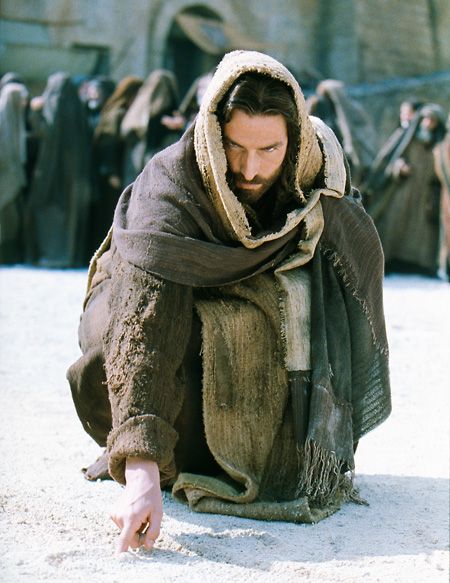






 Considering the Bible