As mentioned in our first post (Outside the Camp – A), I had just finished a study in Matthew 8, of Jesus cleansing a leper (See Signs and Mighty Works of Jesus) and was in discussion with my favorite wifey. We considered the following two verses and started comparing lepers with believers.
Therefore let us go to him outside the camp and bear the reproach he endured. – Hebrews 13:13
He shall remain unclean as long as he has the disease. He is unclean. He shall live alone. His dwelling shall be outside the camp. – Leviticus 13:46
This post will continue with our thoughts and hopefully provide an opportunity for my readers to discuss additional parallels you may see between lepers and the New Testament believer.
Both communities consist of people who live under a death sentence.
The leper understood the disease would kill him and lived with this truth everyday, as their nerve endings quit working, organs began to shut down and their vision began to slip away.
The New Testament believer is also to understand his day to day experience of living under a death sentence, of carrying a cross and dying daily while in the Christian community. Our experiential feelings of love and belonging to this old world is to die as we grow closer to the One who delivered us.
Both communities have no one else they can trust in.
Both communities, as they experience separation from the greater society, naturally learn to trust in their own community and hopefully in the God who protects and guides them. For the typical modern church adherent, this need for trust within the community is fostered through relationships beyond the Sunday morning entertainment hour. Both communities, in reality have only One they can trust in for their lives.
Both communities experience suffering.
The leper would experience the suffering of exclusion and rejection, of the constant reminder of being out of the camp, away from family and friends. Much of the pain the leper would experience would not be associated with the physical realm, since they could not feel any pain as the nerves died. The suffering would be emotional and spiritual, since it appeared that their disease separated them from the God of the universe.
The New Testament believer also experiences suffering, but in our situation, the suffering may also include physical pain, along with the mental, emotional and spiritual suffering referred to above.
Both communities need to to be thankful for pain
The lack of pain for the leper sometimes caused greater damage to their body, as the leper would inadvertently allow further damage to their body by not recognizing the pain. A case in point is the common occurrence of a leper picking up a hot item, burning their skin and allowing this damage to continue.
The pain we normally experience is actually a gift, in that it guards us from unnecessary damage. The church is to be thankful for the pain of association with the Lord, as the early apostles gave witness. Sad to say, this avoidance of pain is actually encouraged in the modern church, under the teaching that we are to have our best lives now, that we as “children of the King” should only have blessing and good things in our lives. Pain and suffering is to be rejected by simply claiming healing or relief. Some of this teaching actually recommends we command God to remove pain.
Our thoughts on this connection between a leper and a believer are incomplete at best. As you read through this series on lepers and believers, and thoughts came to mind, please comment below. If you know someone this post may bless, send them a link so they may join us also.
Thanks again for coming to visit. If you would like to receive daily posts from Considering the Bible, click on the “Follow” link below
I recently finished a study in Matthew 8, of Jesus cleansing a leper (See Signs and Mighty Works of Jesus), and was chatting with my favorite wife during our Saturday morning tea time, rocking in our rocking chairs, and enjoying each other’s company.
We chatted about what I had found during my study. Lepers were considered rejects and outcasts, and were required to live “outside the camp”. As soon as that term was mentioned, I thought of Hebrews, where the apostle (or his representative) wrote.
Therefore let us go to him outside the camp and bear the reproach he endured. – Hebrews 13:13
As I studied the previously mentioned miracle, I recalled one other time this phrase occurred. It was in Leviticus 13, where Moses defined the lepers banishment from the camp. The leper was to be quarantined from those in the camp, and were forced to be “outside of the camp”
He shall remain unclean as long as he has the disease. He is unclean. He shall live alone. His dwelling shall be outside the camp. – Leviticus 13:46
Am I correct in thinking the author of Hebrews is actually equating Jesus with those who were outside of the camp, and exhorting believers to join Him outside the camp. He writes of the reproach the Lord Jesus endured, being outside the camp. To bear reproach is to experience disapproval, criticism and/or disappointment. The religious body of the nation of Israel surely poured reproach on the Lord Jesus in their dogged criticism of His teaching and His character. This reproach intensified until the ultimate rejection by the religious elite , resulting in the execution of God, the cruel crucifixion of Israel’s King.
As I have learned through my four decades of learning of the Word and the Author of life, “religion kills”. Only in the Lord Jesus do we find the source of life and His life is found through going to him, outside the camp.
This seed thought got us to thinking. Is not the church called out to be different (holy) and incur the reproach of the world? In what other ways does this description of a lepers’ colony help us understand the parallel existence of the New Testament church?
Let’s consider.
Both communities are rejected by the society they are associated with.
This parallel is somewhat obvious. Numbers 5:1-4 actually commands those in the camp to send lepers away, for they defile the camp.
In our New Testament experience, the tables flip somewhat, and “the camp”, defined in the Old Testament as being where God dwells (the nation of Israel), now is the very camp that has been rejected. To follow God, believers are to go to Him outside the camp, bearing His reproach. This is the very argument Hebrews brings to those first century believers associated with Judaism.
Both communities seek to be accepted by the society they are associated with.
As a comparison to the previous point, the leper most assuredly desired to be a part of the camp, to be accepted by the society he had been rejected by.
Sadly, it appears that during the church age, (if my understanding of church history is accurate), the established church has also sought acceptance of the world. This desire to be accepted seems evident in a couple ways in my understanding. Firstly, the established church sought acceptance by forcing morals upon the society, as in the medieval times, mixing spiritual authority with political force. Another way the church has sough to be accepted by society is to beg, or at least to mimic the society, in order to be accepted.
I am thankful that the church has had a remnant of believers walk away from the camp in order to maintain their allegiance to the One waiting for us outside the camp.
Both communities are small when compared to the society they are associated with.
Although highly contagious, the leper colony was to be isolated from the general populace and therefore be relatively small in relation to the camp. The infection could not spread if isolated.
So it is with the church, as it is a counter culture that has few that find it, that follow after Him and that openly confess Jesus as Lord.
It is challenging if we follow this metaphor of an infection a bit further and consider Christianity as an infectious disease that spreads rapidly if allowed.
Both communities are considered useless to the society they are associated with.
The leper colony was considered of no importance to the greater society, much like our modern society regards the church. Much of the disregard for the leper colony was due to their physical disfigurement and the ever present fear of infection. This disease resulted in a life of poverty, isolation and rejection. The greater society would not consider the leper colony of any importance.
Is not the church also considered a relic, a cast off that is not to be listened to. How often have you recently heard of the world’s desire to leave the church to history, forging a new society full of promise. The church is a “leper” in the world’s eyes. I suggest we embrace this attitude of the world towards us, in that we truly are a rejected people, and forgo any desire to join with them. Let us speak out as a conscience to a society that has no conscience, as ones who know the truth.
We may be considered useless to the world, but that isn’t our calling.
In closing, does it offend you that to be a believer is likened to a leper? Is there a social stigma with Christianity that is unacceptable to you, or that causes you a discomfort? Our life in Christ includes our dying to this old world and rejecting its opinion of the Master.
Our thoughts on the leper/believer connection will continue in our next post. As you read through this post, and thoughts came to mind, please comment below. If you know someone this post may bless, send them a link so they may join us also.
Thanks again for coming to visit. If you would like to receive daily posts from Considering the Bible, click on the “Follow” link below
Let’s get to work and jump into this verse immediately. I am looking forward to a mental exercise, a good work out, trying to understand Paul’s command to the believers in Thessalonian 2,000 years ago and to us today.
Let’s hope we can provide something of benefit to those dear readers who spend a few moments with me.
So then, brothers, stand firm and hold to the traditions that you were taught by us, either by our spoken word or by our letter. – 2 Thessalonians 2:15
Traditions, we learn from this short passage are taught. Taught by communication, that is through talking or reading/writing. Traditions are not instinctual, or merely a result of some internal thought process. Traditions are handed down, and this is actually one of the defining actions that produces a tradition.
Paul doesn’t directly speak of specific traditions he had handed down to this church in this passage. He does bring up the topic in 3:6. A definite link with 2:5! Ok Paul, thanks for the clarification, but this creates a bit of a confusion. When was the last time you thought of a tradition within the Christian church as a “willingness to work”.
Now we command you, brothers, in the name of our Lord Jesus Christ, that you keep away from any brother who is walking in idleness and not in accord with the tradition that you received from us.
Idleness is against the tradition Paul provided to this church, and a good work ethic, if I am reading this passage correctly, is a Christian tradition/practice. This tradition is seemingly so sensitive to wrong influence, that Paul commands those with a work ethic to keep away from idle brothers. This is truly shocking to my mind, since I don’t usually consider idleness as a reason to avoid a brother.
But let us think on this for a moment. Does not the Word teach us to “not covet”? Idleness produces a spirit of covetousness, for an idle man is usually in need. Now I need to be careful to note that the command does not refer to those who cannot work, but to those who will not work. To those who are incapacitated, truly without the ability to perform some type of task to add to the community, the believer is to come along side and provide encouragement, financial assistance and support. To the one who refuses to work though able, Paul commands – STAY AWAY!
This is not, for the believer, a requirement to determine another persons motivations, intentions or desires, but his or her abilities. A man or woman who wants to produce, though incapacitated in some form, may find many hurdles to be productive, but may produce and find purpose. A man or woman who is able and makes excuses – Paul commands – STAY AWAY.
For even when we were with you, we would give you this command: If anyone is not willing to work, let him not eat.
2 Thessalonians 3:6, 10
But Paul – that is so unloving, so uncompassionate, that is, to let a brother or sister to go hungry. How heartless! Are you actually commanding believers to allow others to go hungry? Are believers to refuse to feed an idle brother?
In my opinion (careful dear reader – this is opinion!) to provide funds or gifts for those who will not work is foolish, since the limited funds we have in order to help truly needful souls is being misdirected. The idle able person receiving the funds could be a positive influence in the community, but is allowed to remain useless. No one wants to be useless, unless they are content with simply being a leach.
My wife and I speak of this compassion as “enabling” a sinful life. We have become somewhat “heartless”, in some peoples thinking, but have found folks that were idle (relatively) to become solid workers, building a work ethic that is positive financially, emotionally and physically.
What brings a person to a level of idleness? For the Thessalonians, it was a misunderstanding of the coming of the Lord. Some thought that since He may appear in a few weeks or months, working at a “9 to 5” was foolish. Why work when you can literally just wait? Bad theology creates wrong living!
What can bring a person out of this condition? Man shall not live by bread alone, but dag nab it, he certainly needs bread to live! Without bread, the motivation to work overcomes the desire to be idle, and the brother may become a positive influence for the community.
My friends, if you see a brother being idle, consider Paul’s command. Others may provide for the idle man or woman, enabling their life of ease and causing unnecessary suffering for those who truly have a need. To the extent you have in exercising your decisions, do not encourage a life of idleness.
It is not traditional!
Thanks for joining me in this short series on traditions. Much more may be spoken of on this topic but hopefully the few thoughts shared have produced some trigger to further read the Word and figger it out. A little work in the word would not cause any complaint from the Father, for He loves one who digs and seeks the truth. But it will require some work, and we know now that work is NOT a dirty word when it comes to the will of God!
Thanks again for coming to visit. I hope you found something of interest in this post and would appreciate a comment, to begin a discussion. If you would like to receive daily posts from Considering the Bible, click on the “Follow” link below
Earlier on in my blogging efforts, I posted a short note on the following verse, and linked an essay I found that challenged me on the meaning of “elemental”.
If interested, see Elements – Stoicheia. For this post, we will address the topic of human tradition.
Let’s read the passage and consider.
See to it that no one takes you captive by philosophy and empty deceit, according to human tradition, according to the elemental spirits of the world, and not according to Christ.
Colossians 2:8
Paul is giving a command (See to it…) in this verse, that a believer is to not be taken captive. This is a warning to believers that we have the capacity to fall victim to falsehoods and lies. He is providing the method of captivity, when He speaks of “according to human tradition”. This captivity Paul refers to depends on human tradition, is in conformity with human tradition.
So, what might we glean from this framing of a real danger Paul is warning us of? Is there a certain method or process that human tradition provides that will give us ample warning that we are slipping into dangerous territory? Maybe.
First off, let’s consider how traditions are handed down? This is the second aspect discussed in our opening post on this topic, that is, the faithfulness of the followers in continuing a tradition. Our first aspect was, as you may remember, the authority establishing the tradition, and of course, when Paul speaks of human traditions, he may be hinting at the source of authority of the tradition as being human. This definitely may be his intent, and is to be considered.
But my take on this verse is considering the method used when these practices are handed down. When Paul brings in the terms philosophy and deceit, I again lean to the opinion that this is describing a method of handing down a practice or tradition to the next generation. This method of handing down a practice to the next generation may include twisting of the tradition that was originally of the Lord, until it slowly becomes a tradition rooted in human authority.
But I digress again. The method, I suppose is my concern in this verse. The method! According to human tradition. Two items for you to consider, and remember my friend, as I sometimes suggest in this blog, we are dealing with my thoughts and extra-biblical research and not necessarily anything directly from the Scripture, so beware!
Slight Revisions to the Original Tradition/Practice
These slight revisions are often a result of using a thesis/antithesis argument, which inevitably produces a result, called the synthesis, which holds strictly to neither position, but finds a middle ground. This is an acceptable, convenient, and logic based way to move from the original intent, to a watered down message. Without a commitment to the authority of the Scripture, human logic allows for this movement, and therefore a sliding away from the original intent of the command. As the tradition veers from the original intent, there is no way to return to the original command using this philosophy. There always has to be a consideration of the opposing view, which humanly speaking is opposing to the Scripture.
A formal logic of this philosophy follows
A thesis is a proposition
In this case, the original intent of the tradition/practice given by God. Let’s remember Exodus 20 where the original intent is to honor your parents.
The antithesis is simply the negation of the thesis, a reaction to the proposition
Let’s consider Matthew 15, where the giving of money to God through the temple is a tradition negating the command to honor a father or mother.
The synthesis solves the conflict between the thesis and antithesis by reconciling their common truths, and forming a new proposition – a new basis for the tradition.
The synthesis might be an allowance of both, giving a nod to the original intent of the Word, but not condemning the alternative option. It seems Jesus did not accept this as an alternative option.
A Dependence on Historical Precedent
Once this drift from the truth occurs, human tradition uses the historical precedent of this practice to support the practice. How often have you heard the saying – But we have always done it this way, to justify a certain action or practice. When you think of it, this argument completely ignores the importance of the original authority the practice is hopefully based on.
This post highlights, hopefully our dire need to always go back to the original commands from the Giver of truth. Logic and time may not provide us a basis upon which to depend on for traditions we exercise in our lives.
Let me finish this wordy post with a challenging passage from the Word.
For God alone, O my soul, wait in silence, for my hope is from him. He only is my rock and my salvation, my fortress; I shall not be shaken. On God rests my salvation and my glory; my mighty rock, my refuge is God. – Psalm 62:5-7
God alone is our source authority, He is our rock, our salvation, our fortress, our glory and refuge. He is the only One we can truly trust. Don’t argue against His word, trying to justify an alternate thinking. Be quiet and wait for Him.
Thanks again for coming to visit. I hope you found something of interest in this post and would appreciate a comment, to begin a discussion. If you would like to receive daily posts from Considering the Bible, click on the “Follow” link below
For you have heard of my former life in Judaism, how I persecuted the church of God violently and tried to destroy it. And I was advancing in Judaism beyond many of my own age among my people, so extremely zealous was I for the traditions of my fathers. – Gal 1:13-14
Paul speaks of his history, of his past desire to practice the traditions of the religion of Judaism. Of the persecution of the church of God as a result of his former life in Judaism. He was zealous. He was advancing in the traditions, seemingly due to his persecuting the church of God, trying to destroy it.
Two issues erupt in my thinking with this passage, in relation to traditions.
First, the traditions were bad! Very bad! The fruit of these traditions produced a murderous man, intent on destroying the work of God. This is an additional text in the New Testament that speaks to the negativity of traditions, religious traditions that were running amok.
In the New Testament, Jesus speaks of “wisdom being justified by all her children”. No matter the appearance or method of the delivering agent (whether it be by Moses, Jesus or John the Baptist), the fruit of a teaching is how it is worked out in those who hear it, the children of the wisdom. The appearance can be ridiculed, mocked and condemned. The children of the wisdom will justify the wisdom being taught and received.
For John the Baptist has come eating no bread and drinking no wine, and you say, ‘He has a demon.’ The Son of Man has come eating and drinking, and you say, ‘Look at him! A glutton and a drunkard, a friend of tax collectors and sinners!’ Yet wisdom is justified by all her children.” – Luke 7:33-35
In this regard, Paul’s desire to kill others is the fruit of a tradition that completely removed the intent of the commandments. For you see, the original intent of the Word of God was to save lives not kill. How can a man honor God by dishonoring his command not to kill?
God want’s us to honor our parents. How can I honor my parents if I become a murderous man?
God wants us to not covet. How can I love God if my motivation is to kill in order to maintain my own religion, covet my own faith?
No my friends, this tradition produced a fruit that was poisonous. Let us consider the wisdom we are consuming, in order to reflect our lives as being of the Lord, and not of some tradition that is of another intent!
Secondly, these traditions, many many moons back, were based on the Word of God. Now the iterations to take the holy commandments of God and to turn them into a belief that encourages persecution of the very followers of God, is an exercise in manipulation far beyond my understanding.
It took centuries to slip into a tradition that became a prevailing faith, and we have certainly experienced centuries of tradition within the life of the church. Over 2,000 years of manipulation by teachers and enemies within the church. This is the reason we need to refer to the Word and not depend on what a man says, even a well intentioned and or highly trained man may teach. Will we always be right if we turn to the Scriptures as our primary source. Absolutely not, for we are a weak, biased and selfish people, but we may find we are approaching a closer walk with the Master, a closer understanding of the intent of God in providing traditions for our lives.
Suffice it to say, let us depart from the “traditions of our fathers” and seek to follow the One who is worthy, who provided instruction in His Word. As Paul states just a verse later, God was pleased to reveal His Son in him. Traditions needed to be set aside in this revealing, traditions that were against God’s word and will.
Can you think of any traditions that may be causing you to loose out on God’s will?
Thanks again for coming to visit. I hope you found something of interest in this post and would appreciate a comment, to begin a discussion. If you would like to receive daily posts from Considering the Bible, click on the “Follow” link below
In our last post on Traditions, we suggested that the apostle Paul referred to “traditions” in the beginning of the 11th chapter of 1 Corinthians, and to the
Now I commend you because you remember me in everything and maintain the traditions even as I delivered them to you. – 1 Corinthians 11:2
Fifteen verses later, the apostle writes
But in the following instructions I do not commend you, because when you come together it is not for the better but for the worse. – 1Co 11:17 ESV
Paul commended the church for “maintaining the traditions”, yet needed to correct the Corinthians in the understanding of the head covering practice (tradition), and with regards to the Lord’s supper, he does not commend them (I do not commend you).
So Paul, when you say the church is maintaining the traditions in verse 2, I am beginning to wonder if you are referring to other traditions beyond the two you speak of in this chapter. Both the head coverings and the Lord Supper is requiring correction.
Is “to maintain” a polite way of saying the Christian church is keeping all the traditions alive with some correction needed in two of them? Is Paul speaking with grace towards this church, seeking to find something good to speak of prior to correcting them?
Nevertheless, we enter into the second tradition that many churches classify as an ordinance. The Lord’s Supper will be the subject of this post.
But in the following instructions I do not commend you, because when you come together it is not for the better but for the worse. For, in the first place, when you come together as a church, I hear that there are divisions among you. And I believe it in part, for there must be factions among you in order that those who are genuine among you may be recognized. When you come together, it is not the Lord’s supper that you eat. For in eating, each one goes ahead with his own meal. One goes hungry, another gets drunk. What! Do you not have houses to eat and drink in? Or do you despise the church of God and humiliate those who have nothing? What shall I say to you? Shall I commend you in this? No, I will not. – 1 Corinthians 11:17-22 ESV
Divisions in the church. Paul’s first concerns in dealing with the Lord’s Supper is unity in the Body. Paul does not address what may be a fevered discussion in you church, whether you have wine of grape juice, leavened or unleavened bread, one cup or many cups, once a week or quarterly, beginning of the service or end of the service. The arguments go on ad nauseum, and prove the very point of the apostle. He called this church immature, and detailed numerous problems throughout this letter, exposing their childishness.
Of course this immaturity is what causes divisions, and Paul understands this better than most, but again, he is looking for something amongst the mess to speak well of. Check out verse 19, where the factions in the church actually expose the mature members, the genuine followers.
there must be factions among you in order that those who are genuine among you may be recognized
He finds some glimmer of reality in this debauched church, but immediately corrects the body, staing the divisions they live in expose the churches intentions, for in their actions they expose what they want, what they are looking to enjoy during the Lord’s Supper. Satisfying their gluttony. Serving their self. I have wondered in the past that the ones who are genuine, who are recognized, are the same group who Paul later on speaks of going hungry, and are humiliated during the Lord’s supper in having nothing.
Might this teaching of division have more to do with class structure as opposed to a doctrinal difference?
But in the following instructions I do not commend you, because when you come together it is not for the better but for the worse. For I received from the Lord what I also delivered to you, that the Lord Jesus on the night when he was betrayed took bread, and when he had given thanks, he broke it, and said, “This is my body, which is for you. Do this in remembrance of me.” In the same way also he took the cup, after supper, saying, “This cup is the new covenant in my blood. Do this, as often as you drink it, in remembrance of me.” For as often as you eat this bread and drink the cup, you proclaim the Lord’s death until he comes. – 1 Corinthians 11:23-26 ESV
Paul gives a history lesson, providing what the apostles must have supplied him, as the Lord established this tradition amongst His followers. So many things to consider in this passage, but I need to focus on the tradition topic within the church for this blog. Notice this practice/tradition/ordinance is to be practiced until He comes. No mention of scheduled rules or cycles to practice this tradition. This eating and drinking had a purpose, that is to proclaim the Lord’s death. The eating and drinking was not to provide an opportunity to gorge my appetite.
In every church I have ever attended, the opportunity to gorge my appetite has been completely removed. Usually a portion of a cracker and a few drops of grape juice are provided in a structured environment, controlled by sober men with deliberate actions in front of the group. This is not what I seem to read in this passage. It seems the Corinthians, in exercising this tradition, were coming together for what appears to be more like a pot luck with the body, as opposed to a structured ceremony.
Could this tradition be more about sharing of our goods, of providing a meal, of breaking bread with those we have fellowship with and recognizing the Lord’s death as opposed to a ceremony?
But in the following instructions I do not commend you, because when you come together it is not for the better but for the worse. Whoever, therefore, eats the bread or drinks the cup of the Lord in an unworthy manner will be guilty concerning the body and blood of the Lord. Let a person examine himself, then, and so eat of the bread and drink of the cup. For anyone who eats and drinks without discerning the body eats and drinks judgment on himself. That is why many of you are weak and ill, and some have died. But if we judged ourselves truly, we would not be judged. But when we are judged by the Lord, we are disciplined so that we may not be condemned along with the world. So then, my brothers, when you come together to eat, wait for one another– if anyone is hungry, let him eat at home–so that when you come together it will not be for judgment. About the other things I will give directions when I come. – 1 Corinthians 11:27-34
When the Corinthians came together to remember the Lord’s death, was it with an attitude of self serving gluttony, or with a proper reflection of the self giving sacrifice of the Lord in His death?
Jesus gave. We consume.
When Paul speaks verse 29, I am torn as to whether he speaks of the Lord’s body (Jesus physical body in the heavens) or the Lord’s body (Jesus mystical body, the church)
For anyone who eats and drinks without discerning the body eats and drinks judgment on himself.
But Carl – read the passage. Paul speaks of “the body”. Not necessarily the Lord’s body, i.e. as some may have thought of earlier, thinking Paul is speaking of the Lord’s physical body in the heavens, the body that was broken and torn for our salvation.
I sense that Paul’s primary concern in this tradition is the unity of the group, unity of the body of believers. The body he speaks of is the church itself.
Love the body, in practical ways. Be harsh on yourself in your self judgement, and gracious to those who also trust in the living God. Wait for your brother. Satisfy your cravings in private in order to serve your brother in public. Don’t bring judgement to the church.
Give – don’t consume.
Thanks again for coming to visit. I hope you found something of interest in this post and would appreciate a comment, to begin a discussion. If you would like to receive daily posts from Considering the Bible, click on the “Follow” link below
In our last two passages in Matthew and Mark, we looked at the corruption of a tradition by the elders. A tradition based on the fifth commandment, relating to honoring your parents. Jesus brought us back to the original authority, and put the religious leaders in their place.
Prior to Jesus rebuke, many may have considered the ongoing tradition of the elders as being an acceptable method of worshipping God. Jesus laid that idea to rest. This leads my suspicious mind to consider whether some of our current practices are actually creating traditions that may be avoiding teaching of the Apostles for the church.
Hopefully we will gain some understanding from the remaining passages that speak of traditions provided to the church.
Now I commend you because you remember me in everything and maintain the traditions even as I delivered them to you. – 1 Corinthians 11:2
Ok, so this passage from Paul, the apostle to the Gentiles, is commending the Corinthian church that they are maintaining the traditions he had delivered unto the church. A promising start in this study. Interesting that Paul provided a tradition (or multiple traditions) that he expected them to follow. But our question has to be – What were these traditions?
Immediately after this verse, Paul delves into the controversial head covering teaching, which speaks of authority, headship and honor. Fifteen verses later, he speaks of instructions (traditions?) that he does not commend the church for, that is, in their keeping of the Lord’s Supper. At the turn of the page, in the beginning of the next chapter, Paul makes a topical shift to spiritual gifts. Therefore, I would suggest Paul refers to two traditions in chapter 11.
Head Covering
If you have been following this blog, you may remember a post supplied on May 21st, where I provided a link for some teaching on 1 Corinthians 11:13-15. (See Let Me Tell You a Story – Head Coverings). In that post I spoke of my own struggle with this topic of head covering and found some answers in the link provided. Nevertheless, the intent of this post is to consider the tradition Paul handed down to the Corinthian church, what it was, was it cultural and are we to follow this tradition even today.
After the last two posts, where Jesus corrected the religious teachers and brought them back to the original authority, I am fearful of finding some excuse or reason to avoid this teaching. I suppose my concern is that I don’t quite understand this teaching.
Is it a tradition that emphasizes headship and honor, using a culturally accepted practice (long hair on a woman) to indicate submission and honor to her head? Or is it a tradition that is non-cultural, that is every lady in all of the churches worldwide, needs to have a covering in order to honor her head, her husband.
In two verses prior to 1 Corinthians 11:5, where a covering of the wife’s head is referred to, note that the submission of Christ to God is not described “visually”, i.e. with or without a covering on His head.
But I want you to understand that the head of every man is Christ, the head of a wife is her husband, and the head of Christ is God. – 1 Corinthians 11:3
but every wife who prays or prophesies with her head uncovered dishonors her head, since it is the same as if her head were shaven. – 1 Corinthians 11:5
As I mentioned in the linked post above, my family and I attended a brethren chapel for years where this passage was referred to in order to justify coverings on ladies heads while in worship. As a baptist entering into this environment, I had many questions, and struggled with it for quite a while. One fine believer told me that the entire passage made sense when he read the last phrase in the tenth verse.
That is why a wife ought to have a symbol of authority on her head, because of the angels. – 1 Corinthians 11:10
His logic seemed irrefutable. The angels would have no concern for cultural practices, so this practice, that of covering a wife’s head in honor of her husband must be universal and not simply cultural.
This argument was convincing and nearly tipped me into accepting this as God’s intent, until I did a bit of digging and found that “angels” could be translated as messengers and may be simply referring to a company of men attending the church service.
In this passage, headship and authority is the principal theme, and my understanding is that the covering/veil used by the Corinthians was their culturally acceptable manner of displaying who was head and who wasn’t head. A definite order of responsibility (not of worth) is addressed in this passage.
This tradition, of headship, and of displaying the headship within the church has become derelict with our modern Christian lives. The modern church rebels against any hint of a man being the head, and of the woman honoring the husband. A full front attack on manhood has been active for decades, and the church, except for a small minority, has faithfully followed this tempting teaching.
It is a rare family that exercises this tradition, and that has a family order of a male head, with a submissive wife and obedient children. This, I believe is the intent of this tradition Paul speaks of within the church, and it’s natural outflow into all of the believers life.
Now before you claim I am some misogynistic woman hater, please slow down. I love women. I personally have hung out with a lovely person who is a woman for over forty years. She is truly my help meet and my best friend. I would be lost without her. Beyond my biased feelings toward this lady I know, I have also found that that some of the most spiritual people I have met happen to be women.
You see, sometimes folk get confused when dealing with this topic. They think the spirituality of a person is dependent on outward position or visibility. But this is not so! A quiet woman may have more influence with God than some flamboyant “in your face” preacher. Remember we are dealing with the Kingdom of God, a Kingdom that, in the world’s eyes, is completely upside down.
I seem to remember a passage in the word which speaks of the beauty of a gentle and quiet spirit.
but let your adorning be the hidden person of the heart with the imperishable beauty of a gentle and quiet spirit, which in God’s sight is very precious. – 1 Peter 3:4
Consider your family order. If you are a man in the family, love your wife, cherish her, team with her, talk with her (not at her!) and give yourself for her. Lead her into godly decisions and encourage her.
If you are a lady who seeks to honor God, honor your husband. Give him the freedom to make mistakes, support him when you “know” he is wrong. Discuss the issues with him, and trust God in your husbands discussions. (Yelling “I told you so” is not a godly action!) Don’t emasculate him! He desperately needs your support! And, by the way, the Lord is looking for a gentle and quiet (not a forceful and argumentative) spirit in supporting your mate.
As an aside, and for your reference, I am supplying a few verses of Paul’s teaching regarding headship. It may be of some use in helping you understand the apostles teaching, and in defending the order of headship (authority and accountability) within a church, and a family.
Head of every woman is man
But I want you to understand that the head of every man is Christ, the head of a wife is her husband, and the head of Christ is God. – 1 Corinthians 11:3
Woman is the glory of man
For a man ought not to cover his head, since he is the image and glory of God, but woman is the glory of man. – 1 Corinthians 11:7
Woman was created from the man
For man was not made from woman, but woman from man. – 1 Corinthians 11:8
Woman was created for the man
Neither was man created for woman, but woman for man. – 1 Corinthians 11:9
As mentioned in the beginning of this post, I believe the apostle addresses two traditions for the church in this chapter, and since I am a bit long in the tooth with this post, will defer to the next one to discuss the Lord’s Supper as a tradition
Thanks again for coming to visit. I hope you found something of interest in this post and would appreciate a comment, to begin a discussion. If you would like to receive daily posts from Considering the Bible, click on the “Follow” link below
In our last post we looked at Matthew 15:1-9 and shared a personal story that brought the concept of conflicting authority to the fore front. As we mentioned, traditions have two core components, that of an authority establishing the practice, and followers faithfully following the practice, of handing the practice down to the next generation.
Now when the Pharisees gathered to him, with some of the scribes who had come from Jerusalem, they saw that some of his disciples ate with hands that were defiled, that is, unwashed. (For the Pharisees and all the Jews do not eat unless they wash their hands properly, holding to the tradition of the elders, and when they come from the marketplace, they do not eat unless they wash. And there are many other traditions that they observe, such as the washing of cups and pots and copper vessels and dining couches.) And the Pharisees and the scribes asked him, “Why do your disciples not walk according to the tradition of the elders, but eat with defiled hands?” And he said to them, “Well did Isaiah prophesy of you hypocrites, as it is written, “‘This people honors me with their lips, but their heart is far from me; in vain do they worship me, teaching as doctrines the commandments of men.’ You leave the commandment of God and hold to the tradition of men.” And he said to them, “You have a fine way of rejecting the commandment of God in order to establish your tradition! For Moses said, ‘Honor your father and your mother’; and, ‘Whoever reviles father or mother must surely die.’ 11 But you say, ‘If a man tells his father or his mother, “Whatever you would have gained from me is Corban”’ (that is, given to God) — 12 then you no longer permit him to do anything for his father or mother, 13 thus making void the word of God by your tradition that you have handed down. And many such things you do.”- Mark 7:1-13 ESV
Mark spends a bit of time explaining the traditions of the elders, since his audience is Greek, and not Jewish as Matthew’s. The two quotes of Exodus Jesus uses are identical, and Mark also directs our attention to Jesus recitation of Isaiah 29:13
And the Lord said: “Because this people draw near with their mouth and honor me with their lips, while their hearts are far from me, and their fear of me is a commandment taught by men, – Isaiah 29:13 ESV
Traditions are based on two foundations, that of an authority and of consistency. Authority was addressed under Matthew 15, where as this passage, this passage actually speaks of both, especially the last phrase.
Their fear of me is a commandment taught by men
Whatever fear the masses had of God was based on the elders teaching, of the elders slight twist on the command, that muddied the water and nullified God’s intent. The elders claimed the authority, rejecting the command of God, and the tradition was replaced with vain worship. Empty worship. No one was practicing the original tradition, and it had effectively been replaced by the error of well-meaning(?) elders.
The last phrase of this passage has intrigued me, not necessarily as a summary statement, but that I hear a bit of sarcasm in Jesus voice.
You have a fine way….
Is Jesus speaking with a bit of sarcasm in His voice? He is the Master Teacher, and effectively uses multiple manners of teaching. Is He commending them in their sin? As if saying … You have expertly performed the duties of nullifying the commandment of God in order to gain for yourselves. You are practiced and skilled teachers, you are very good at rejecting the commandment of God!
Can you imagine an itinerant preacher silencing the religious professionals in such a way? He is so awesome.
Mark continues with his recitation of the discourse and it seems to be harsher, as if he is not pulling any punches. Notice that while Matthew speaks of “not needing to honor his father”, Mark has it as “you no longer permit him to do anything for his father or mother”
Both Matthew and Mark give us Jesus teaching on traditions, at least a teaching on the corruption of a tradition that was established by God, but had been hi-jacked by others.
It is instructive that this passage, along the the Matthew recounting, speaks of the dangers of simply following religious traditions without going to the foundation, the original authority and intent of that authority. Religious professionals provide revisions and refinements to the original command in order to assist us, and in turn, actually assist us in turning away from God. (As if we need any help in turning away!)
Take some time during your busy day today, to ask the Lord to expose an area of your religious life, just one area or teaching that may be distracting you from following God’s commands. As mentioned in the previous post, one area of authority conflict opened my eyes to many other areas, and has revolutionized my understanding of faith, love and walking properly before God.
Please join me in our next post where we begin to look at traditions that have been established for the church. I am looking forward to learning with you.
May God bless you and keep you in the love of Jesus and the fellowship of His Spirit.
Thanks again for coming to visit. I hope you found something of interest in this post and would appreciate a comment, to begin a discussion. If you would like to receive daily posts from Considering the Bible, click on the “Follow” link below
In our introductory post, we spoke of our families traditional Christmas celebrations in order to establish an understanding of what a tradition is, and to offer my understanding of a traditions flexibility. Some of my readers may have read of our historical changes during the traditional gift giving in our home as an unwillingness to maintain a tradition, to create a tradition that would be longstanding and annually honored. This may be true.
But we all must agree that traditions start at a point in time, and are handed down to the next generation, and so on until they become “traditional”. Think of the many nations in this world and each nation having distinct traditions. Every tradition is started by an authority, possibly based on a historical happening.
For some practice to become a tradition, it must originate from an authority, who establishes the practice as worthy of repeating, and by a group of followers who consistently exercise that practice through a period of time. Within the Bible, the authority usually is God of course (there are exceptions), and the repeating of the practice is dependent on the faithful.
Traditions, based on the instruction of an authority and if practiced accurately, are worthy of maintaining. Traditions based on the instruction of an authority but not practiced accurately, are worthy or rejecting, and to return to practicing per the original intent of the instruction. Unless of course the authority repeals the practice.
Given this basis of understanding a “tradition”, lets consider Matthew 15:1-9, where Jesus is questioned by the Pharisees and scribes concerning His disciples breaking of a tradition.
Then Pharisees and scribes came to Jesus from Jerusalem and said, “Why do your disciples break the tradition of the elders? For they do not wash their hands when they eat.” He answered them, “And why do you break the commandment of God for the sake of your tradition? For God commanded, ‘Honor your father and your mother,’ and, ‘Whoever reviles father or mother must surely die.’ But you say, ‘If anyone tells his father or his mother, “What you would have gained from me is given to God,” he need not honor his father.’ So for the sake of your tradition you have made void the word of God. You hypocrites! Well did Isaiah prophesy of you, when he said: “‘This people honors me with their lips, but their heart is far from me; in vain do they worship me, teaching as doctrines the commandments of men.’” – Mat 15:1-9 ESV
First off, let’s establish the authority of the tradition. In this passage, the Pharisees tell us the authority over this tradition of washing hands is that of the elders. The religious leaders readily admit the source of authority is mankind and not God.
Jesus cuts to the heart of the matter by returning to the ultimate authority, and also informs us of the conflict that human authority creates when introduced to assist in obeying the commandments of the true Authority. Jesus asks one tough question, centered on the authority giving the command.
Why do you break the commandment of God for the sake of your tradition?
The Pharisees are whining about clean hands. Jesus goes for the jugular, and focuses on the fifth commandment of God, (without the resultant blessing if obeyed.)
Exodus 20:12 “Honor your father and your mother, that your days may be long in the land that the LORD your God is giving you.
No blessing is included in the passage Jesus quotes, yet Exodus provides the promise of long days in the land. No promise, but He does include Exodus 21:17, defining the judgement if the commandment is broken.
Exodus 21:17 Whoever reviles father or mother must surely die.
Jesus then describes the elders efforts to “clarify the commandment” for the masses, but masterfully brings to the Pharisees (and any who may listen) the effect of modifying Gods commandments with a human tradition.
If the believer sought to honor their parents with a gift, the elders allowed that believer an exception, in order to receive the funds themselves. I am of the opinion that Jesus is actually quoting the elders instructions in the 6th verse, where the allowance to disobey is clearly offered.
he need not honor his father.’ So for the sake of your tradition you have made void the word of God. – Mat 15:6 ESV
Are clean hands an issue in your life? Is outward appearance a priority for you? Do you watch for insignificant rule breaking of others? In your rule keeping, do you dishonor God?
A quick story that brought this passage to life for my wife and I.
We were attending a church years ago, when a close friend and his family were seeking to enter into missionary work. I informed the leadership of our desire to divert our giving’s to this family. This was acceptable to the leadership, although they did ask for a period of time to be defined, so that the funds would begin returning to their coffers. This I gladly provided and we rejoiced in giving to this family on their way to Indonesia with the gospel.
Not long after this, my father-in-law passed away, leaving my mother-in-law a widow. Things became desperate for this sweet woman and we needed/wanted to help. This did not go over well with the church leadership, with their counsel being that we should give above and beyond the tithe to the church in order to help mom. But the tithe was to take a priority.
Eventually, after prayer one morning I landed on the passage above, and it became crystal clear as to what we were to do. Honor our parent.
Eventually this decision became a point of tension with the religious leadership. This authority conflict between the Word and the religious leaders counsel led me to study the teaching of tithing in the church, and a believers responsibility in giving. Eventually, the religious leadership asked us to leave.
Friends – religious organizations have many ways of twisting a believers obligation that negate a commandment of God. Traditions are one way these obligations are nullified. Though many traditions are established with good intentions, it seems it is inevitable that the tradition is followed without thinking, and sometimes becomes a stumbling stones for the believer.
Traditions of men, or in other words, religious requirements to “please God”, beyond the Word either become a conflict and needs to be rejected, or a repetition of the commandment in a different context.
It is safe to consider the Word only as our final authority, since the One who saved us lived and died under it’s authority and provided the church the full orbed teaching of grace and truth for us to understand.
Our next post will consider the same incident with the Pharisees, but from Mark’s perspective. Hope you can join me.
Thanks again for coming to visit. I hope you found something of interest in this post and would appreciate a comment, to begin a discussion. If you would like to receive daily posts from Considering the Bible, click on the “Follow” link below
Traditions give us a sense of community, of belonging and expectations, a certain rhythm in life.
Consider the tradition of opening gifts on Christmas day. This tradition in our home has went through a number of iterations, which to be honest, argues against the “expectations” concept above. But nevertheless, as our children grew, we introduced different methods of celebrating the Christmas gift opening event.
First it was a conventional delegated gift giver at the base of the tree, picking gifts for each child and waiting as we all watched them receive it and express their gratitude. Soon, the tradition became more of a game, with my wife and I staying up Christmas night and hiding all the gifts, writing out a list of riddles for each gift and which child the gift was meant for. This extended the celebration, and we found that the chillun actually worked together for the hunting. In my opinion, it was a hit with the kids. (Mom and dad were a bit tired, but hey – memories were made!)
Lately, we have considered the materialism of Christmas, and as the children matured into adults, considered the intent of the gifts in the celebration. We tended to pull away from material gifting, and moved over to creating memories for us as a family.
Suffice it to say, traditions such our gift giving at Christmas (fluid as it was), birthday parties, wedding customs and even sports events have been woven into our lives.
This short series on traditions will consider what the Word provides as guidance in the believers life. We will follow the primary Greek word “paradosis” the New Testament writers used that we understand as “tradition”. Below, find the proverbial Vines Expository definition of the term we will be looking into during our time together. Sure hope to see you at our next post as we dive into Matthew 15.
Thanks again for coming to visit. I hope you found something of interest in this post and would appreciate a comment, to begin a discussion. If you would like to receive daily posts from Considering the Bible, click on the “Follow” link below
In oversimplified terms, universal reconciliation speaks of the eventual redemption of every soul ever created through the work of the Messiah and His sacrifice on the cross. This teaching does not remove the existence of hell, or the suffering associated with it, but it does challenge it’s never ending duration, and the purpose of the flames.
This series of posts, on the book “Heaven’s Doors” will be my last on the topic of universal reconciliation (not universalism). I am thankful to my Calvinist friend for directing me to this “heresy”. The teaching of universal reconciliation has more Scriptural support than I imagined and is worth considering if you are of an open mind and willing to consider alternate views to expand your understanding of the Word.
Of course if you are convinced you are completely right, without error, and doctrinally pure, this topic would be a waste of your time. Please move on!
This post will address Judas
For the Son of Man goes as it is written of him, but woe to that man by whom the Son of Man is betrayed! It would have been better for that man if he had not been born.” – Mark 14:21
So many questions about Judas. Was he a believer that apostatized or simply a professor that fooled everyone. Again, some of these questions are for another post, and I will restrict myself to Mr. Sarris verse reference for the sake of brevity.
To have an existence that is worse than nonexistence! Wow. That has got to be terrible.
A number of times in the Scripture, cursing one’s birth is recorded. Think of Jeremiah
Cursed be the day on which I was born! The day when my mother bore me, let it not be blessed! – Jer 20:14
Or Job
“Let the day perish on which I was born, and the night that said, ‘A man is conceived.’ – Job 3:3
You may remember others, but the point is that this is not uncommon for the Word to record this attitude. Jesus actually referred to the attitude towards Judas as being of woe, as in “woe to that man”.
Woe. What an uncommon word. When was the last time you heard this word in a conversation?
Turns out, this word (ouai) is a primary exclamation of grief.
Sorrow. Grief. Deep heartache. Sadness. Distress. Jesus was referring to sorrow, not anger. He was speaking of the pain of the decision Judas was making and of the resultant deep heartache from this action of betrayal.
So we could read it as “sorrow to this man”. But what man is experiencing the sorrow? I have always associated Judas with the sorrow, the woe.
Mr Sarris brings to our attention that Jesus, in these verses, is speaking of two people, The Son of Man and Judas. Consider the Mark 14:21 with the pronouns identified.
For the Son of Man goes as it is written of him, but woe to that man (Judas) by whom the Son of Man is betrayed! It would have been better for that man (the Son of Man) if he (Judas) had not been born.” – Mark 14:21
Jesus, in this understanding of the verse, is speaking of the grief He would experience concerning Judas, his disciple who was to betray Him.
A Rambling
One other finding that may be of interest to the reader. The last phrase in the verse is translated in the ESV as…
It would have been better for that man if he had not been born.
As I look through the various translations, a number of the literal translations prefer to use “good” as opposed to better.
… good were it to him if that man had not been born.’ – Mar 14:21 YLT
… good were it for that man if he had never been born. – Mar 14:21 KJV
… [It would have been] good for that man if he had not been born.” – Mar 14:21 NASB20
… good were it for that man if he had not been born. – Mar 14:21 ASV
As an aside, there is a difference between better (which is a comparative term) and good (which is a qualitative term) So what Carl – this ain’t English class, eh? I know I know – I am not an English major and never have been, but these things sometimes tickle my mind and make think. Ok so here is what I am thinking.
“Good” for Jesus if Judas had not been born is simply a statement of negation on Judas’ life. – No life for Judas, no existence. Jesus would not have had the sorrow of his close friends betrayal
“Better” for Jesus if Judas had not been born is a comparison with something that is worse. This by implication speaks of suffering, regret, pain on top of the betrayal of his disciple.
This rambling is brought to you by a fuzzy headed writer that is offering a concept to be discussed.
Another Rambling
You know, (one more rambling coming – ) when the Lord walked amongst us, the established God ordained religion of Judaism rejected His message of inclusion, of accepting sinners and tax collectors, even non-Jews into the family of God. It was heresy, and beyond accepted religious thinking. And yet out of this “heresy”, a multinational family of saints has erupted and the expansion of the Body of Christ / the Kingdom of God is greater than any first century religious Jew may have ever expected.
Are we moderns possibly of the same ilk in our understanding of God’s wonderful mercy as the first century Jewish religion?
The body of the post is also available for discussion of course, and I would appreciate your thoughts. As this is the last post on this book, I would like to thank all who have travelled with me in this somewhat surprising book of Mr. Sarris. I thoroughly enjoyed the book and the challenges it provided my thinking. I can not say I am a convinced Universal Reconciliation adherent, but I have definitely seen reasons why some understand the Scripture to provide this hope to God’s creation.
Something to consider – Ramblings done – Thanks for reading.
In oversimplified terms, universal reconciliation speaks of the eventual redemption of every soul ever created through the work of the Messiah and His sacrifice on the cross. This teaching does not remove the existence of hell, or the suffering associated with it, but it does challenge it’s never ending duration, and the purpose of the flames.
This series of posts, on the book “Heaven’s Doors” will be my last on the topic of universal reconciliation (not universalism). I am thankful to my Calvinist friend for directing me to this “heresy”. The teaching of universal reconciliation has more Scriptural support than I imagined and is worth considering if you are of an open mind and willing to consider alternate views to expand your understanding of the Word.
Of course if you are convinced you are completely right, without error, and doctrinally pure, this topic would be a waste of your time. Please move on!
This post will address The Book of Life
And if anyone’s name was not found written in the book of life, he was thrown into the lake of fire. – Revelation 20:15
But nothing unclean will ever enter it, nor anyone who does what is detestable or false, but only those who are written in the Lamb’s book of life. – Revelation 21:27
The Book of Life is spoken of in the New Testament in many areas and in many ways, but I would like to restrict myself to the passages Mr. Sarris refers to in his book. After all, we are discussing the book “Heaven’s Doors”, and the topics he brings up.
If the Lake of Fire is a temporary condition, albeit a potentially extremely long period, how can we understand the fact that if a name isn’t found in the Book of Life, they will never enter the New Jerusalem. Revelation 21:9-27 describe the beauty, glory and inhabitants of the New Jerusalem , and the passage ends with verse 27, where we find out that entrance or access to the city will be through inclusion in the Lambs Book of Life. If you name isn’t in it, no access! In the Lake of Fire you shall go!
This seems to be a slam dunk for restriction from the Heavenly City. The Lake of Fire may have a time element to it (see previous posts) but there doesn’t seem to be a time element to the restriction to the city. This must surely be the set of verses that completely negates the teaching of Universal Reconciliation.
By the way, when Abram comes to the entrance to the New Jerusalem, does the Lamb’s Book of Life record his name as Abram, or Abraham? How about Saul? Or Simon, renamed Peter?
Early on in the book of Revelation, a promise is given to the church of Pergamum.
He who has an ear, let him hear what the Spirit says to the churches. To the one who conquers I will give some of the hidden manna, and I will give him a white stone, with a new name written on the stone that no one knows except the one who receives it.’ – Rev 2:17
The Lambs Book of Life has names in it. A limited number of names. These names represent created ones.
Will you become a new creation, and receive a new name, that is waiting for you in the Lamb’s Book of Life?
Therefore, if anyone is in Christ, he is a new creation. The old has passed away; behold, the new has come. – 2Co 5:17
15 For neither circumcision counts for anything, nor uncircumcision, but a new creation. – Gal 6:15
Trust in the Lord Jesus, receive His love and mercy, His salvation from sin and death, by way of His cruel death and resurrection from the dead.
For he says, “In a favorable time I listened to you, and in a day of salvation I have helped you.” Behold, now is the favorable time; behold, now is the day of salvation. – 2Co 6:2 ESV
Become a new creation now, even as you read this short post. Trust in His provision, His grace. Admit your sin before Him, agree that you have been rebellious against His will, and ask for forgiveness, for life and the power to follow after Him. He is good.
In oversimplified terms, universal reconciliation speaks of the eventual redemption of every soul ever created through the work of the Messiah and His sacrifice on the cross. This teaching does not remove the existence of hell, or the suffering associated with it, but it does challenge it’s never ending duration, and the purpose of the flames.
This series of posts, on the book “Heaven’s Doors” will be my last on the topic of universal reconciliation (not universalism). I am thankful to my Calvinist friend for directing me to this “heresy”. The teaching of universal reconciliation has more Scriptural support than I imagined and is worth considering if you are of an open mind and willing to consider alternate views to expand your understanding of the Word.
Of course if you are convinced you are completely right, without error, and doctrinally pure, this topic would be a waste of your time. Please move on!
This post will continue to address The Lake of Fire
The Purpose of the Lake of Fire.
Ok, so the possibility of the duration of the Lake of Fire has been discussed. Lets take a quick look at the purpose of the lake of fire and see if we can get instruction from the passage
First off, the verses under consideration
and the devil who had deceived them was thrown into the lake of fire and sulfur where the beast and the false prophet were, and they will be tormented day and night forever and ever. – Revelation 20:10
But as for the cowardly, the faithless, the detestable, as for murderers, the sexually immoral, sorcerers, idolaters, and all liars, their portion will be in the lake that burns with fire and sulfur, which is the second death.” – Revelation 21:8
According to Revelation 21:8, who is in the Lake of Fire. Read the list again. And what is their “portion”?
Part (Noun, a Portion; Verb, to Give or Divide, Partake): denotes (a) “a part, portion,” of the whole, e.g., Jhn 13:8; Rev 20:6; 22:19; hence, “a lot” or “destiny,” e.g., Rev 21:8; in Mat 24:51; Luk 12:46, “portion;”
This portion, is a part of a whole. A whole what? Is John speaking of the age? Their portion of the age is to suffer? Their portion of the suffering is the age? I’m asking questions, and I am not gonna build an entire thought on this definition, but some of this may supplement the thoughts provided in the previous post on the duration of the age.
On to the description of the Lake of Fire.
Jesus used the same two terms defining the judgement on Sodom and Gomorrah in Luke 17:29
but on the day when Lot went out from Sodom, fire and sulfur rained from heaven and destroyed them all – Luke 17:29
This is the only other instance I can find the terms “fire and sulfur” combined and this judgement on Sodom and Gomorrah is also described by both Moses and Jude.
Moses writes of Abrahams experience.
Then the LORD rained on Sodom and Gomorrah sulfur and fire from the LORD out of heaven. – Genesis 19:24
And he looked down toward Sodom and Gomorrah and toward all the land of the valley, and he looked and, behold, the smoke of the land went up like the smoke of a furnace. – Genesis 19:28
Moses recites to the the Israelites the history of the doomed cities.
the whole land burned out with brimstone and salt, nothing sown and nothing growing, where no plant can sprout, an overthrow like that of Sodom and Gomorrah, Admah, and Zeboiim, which the LORD overthrew in his anger and wrath– – Deuteronomy 29:23
Jude speaks of that terrible judgement in verse 7 of his epistle
just as Sodom and Gomorrah and the surrounding cities, which likewise indulged in sexual immorality and pursued unnatural desire, serve as an example by undergoing a punishment of eternal fire. – Jude 1:7
A few items to glean from the above verses
Sulfur and fire rained down on Sodom & Gomorrah.
Abraham looked back and saw the smoke rising. Smoke is evidence of a fire, but may not include the fire.
Moses speaks of the result of the land burned out with brimstone (sulfur) and salt, the utter wastefulness of the land
Jude speaks of the punishment of eternal fire.
If hope you noticed what I missed for years. Jude speaks of eternal fire, and yet Moses implies the fire was over, only smoke arising from the ashes, and the result was a wasteland, not a continual fire. So what gives? How can Jude speak of the fire as being eternal?
He isn’t! Two things are going on here, as best as I can tell.
First, the term eternal in Jude is the same term (aiōnios) we tripped over in our last post. This term is often translated as “age” and may not be referring to a never ending condition. This may be helpful, but to describe the fire of Sodom as age long still doesn’t help me with Moses statement of Abraham looking back and seeing smoke (and not fire)
Secondly, the term term (aiōnios) is modifying the punishment, not the fire. The punishment was eternal, or better stated, the punishment was age-long.
Ok, I think we slipped into the duration description again but I’m sure you will forgive me.
Back to the Purpose of the Lake of Fire. Two terms will be addressed for your consideration.
Pain (Noun and Verb):primarily signifies “to rub on the touchstone, to put to the test” (from basanos, “a touchstone,” a dark stone used in testing metals); hence, “to examine by torture,” and, in general, “to distress;” in Rev 12:2, “in pain,” RV (AV, “pained”), in connection with parturition. See TORMENT. (In the Sept., 1Sa 5:3.).
The original meaning of torment was the “action of an inspector who sought to test the quality of gold and silver coins” Heaven’s Doors, George Sarris, page 183. It is interesting that the purpose of the torture is testing, not punishment. Not retribution but testing. There is a difference!
Sulfur
Mr. Sarris referred to a web site describing the purposes of sulfur which I found somewhat interesting, with the following except
Sulphur was used by pagan priests 2,000 years before the birth of Christ. Pre-Roman civilizations used burned brimstone as a medicine and used “bricks” of sulphur as fumigants, bleaching agents, and incense in religious rites. Pliny (23-27 A.D.) Reported that sulphur was a “most singular kind of earth and an agent of great power on other substances,” and had “medicinal [sic] virtues” (Cunningham 1935:17). The Romans used sulphur or fumes from its combustion as an insecticide and to purify a sick room and cleanse its air of evil (Cunningham 1935). The same uses were reported by Homer in the Odyssey in 1000 B.C.
In summary, it appears the ancient reader, whom John was writing to, may have understood the Lake of Fire somewhat differently that us moderns do.
The duration of the Lake of Fire may be age-long and not “eternal” as in our current way of thinking
The purpose of the Lake of Fire on the one suffering may be of
testing
purifying
a medicinal quality
a cleansing agent.
At the very least, some of these findings have provided much to consider in my musings and have been offered to my reader to consider.
If you have comments, please supply below. Thanks for reading and hope to see you again next time.
In oversimplified terms, universal reconciliation speaks of the eventual redemption of every soul ever created through the work of the Messiah and His sacrifice on the cross. This teaching does not remove the existence of hell, or the suffering associated with it, but it does challenge it’s never ending duration, and the purpose of the flames.
This series of posts, on the book “Heaven’s Doors” will be my last on the topic of universal reconciliation (not universalism). I am thankful to my Calvinist friend for directing me to this “heresy”. The teaching of universal reconciliation has more Scriptural support than I imagined and is worth considering if you are of an open mind and willing to consider alternate views to expand your understanding of the Word.
Of course if you are convinced you are completely right, without error, and doctrinally pure, this topic would be a waste of your time. Please move on!
This post will address The Lake of Fire
and the devil who had deceived them was thrown into the lake of fire and sulfur where the beast and the false prophet were, and they will be tormented day and night forever and ever. – Revelation 20:10
But as for the cowardly, the faithless, the detestable, as for murderers, the sexually immoral, sorcerers, idolaters, and all liars, their portion will be in the lake that burns with fire and sulfur, which is the second death.” – Revelation 21:8
Much needs to be said on the last few chapters of Revelation in regard to the topic of Universal Reconciliation, but for this post, we will be addressing two questions regarding the Lake of Fire.
The Duration – Is it forever and ever? (Carl – the text says it is. Why even ask? Are you gonna twist the Scripture again?)
The Purpose – Is it for retribution of past sins? Is it to punish for temporal sin committed in this life?
Let’s consider a few items that Mr. Sarris brought out to discuss in his book.
The Duration of the Lake of Fire
Revelation 20:10 speaks of the Lake of Fire and the duration of the torment of the beast and the false prophet. (Similar descriptions of the torment inflicted upon those who accept the mark of the best may be found in Revelation 14:10 and 14:11.)
Torment day and night, forever and ever. How utterly horrible. No matter how you view this, the experience of torment, in any sane persons mind, is to be avoided at all costs! No matter what we may find in our study, any torment, any destruction, any suffering must be avoided at all costs! Do not continue in your rebellion against the loving Savior, who took the suffering, abandonment and death, in order that you may have joy in knowing the true God and His Son Jesus Christ.
Note that the term “forever and ever” is the same term we have dealt with earlier in the post Book Look – Heaven’s Doors – Unpardonable Sin Within this post I would like to consider forever and ever. The term John uses is aiōn. (we seem to keep running into this term, don’t we!)
Strongs definition
αἰώνaiṓn, ahee-ohn’; from the same as G104; properly, an age; by extension, perpetuity (also past); by implication, the world; specially (Jewish) a Messianic period (present or future):—age, course, eternal, (for) ever(-more), (n-)ever, (beginning of the , while the) world (began, without end). Compare G5550.
Find a few verses below to assist in our understanding of this term.
Jesus defined the time He was living in as an age, but used the same term (aiōn) we find in Revelation.
And Jesus said to them, “The sons of this age (aiōn) marry and are given in marriage, – Luke 20:34
Should we consider the time Jesus was in, as an eternal never ending period of time?
“The sons of this forever and ever period of time?
I suppose it depends how we understand this word.
So it will be at the end of the age (aiōn). The angels will come out and separate the evil from the righteous – Matthew 13:49 teaching them to observe all that I have commanded you. And behold, I am with you always, to the end of the age (aiōn).” – Matthew 28:20
First thing to notice that this word allows for the time to be defined with an end. That is definitely not fitting in with my understanding of everlasting or eternal. Also, why wouldn’t this term be translated as the end of “forever and ever” if that is the only correct understanding of aiōn.
Let’s move on
who will not receive a hundredfold now in this time, houses and brothers and sisters and mothers and children and lands, with persecutions, and in the age to come eternal life. – Mark 10:30 who will not receive many times more in this time, and in the age to come eternal life.” – Luke 18:30
Jesus describes an age to come. What? Another forever and ever? Now I am confused! What in tarnation is going on? Hang on, it gets worse, especially if you are trying to hang on to the idea that aiōn is strictly defining an eternal everlasting state!
far above all rule and authority and power and dominion, and above every name that is named, not only in this age but also in the one to come. – Ephesians 1:21 ESV
Paul speaks of one “forever and ever” following another “forever and ever”, or that a “forever and ever” was yet to come, from his standpoint. So he is referring to one coming “forever and ever” after the one he is in. Got it!
so that in the coming ages he might show the immeasurable riches of his grace in kindness toward us in Christ Jesus. – Ephesians 2:7
Come on Paul. Now there are coming ages, that is more than one age coming after the one you are writing in? This is bonkers! How can I reconcile this with the concept of eternal or everlasting that is embedded in my thoughts?
But to the point, does this teaching allow for the possibility that the “forever and ever” we find in Revelation 20:10 may have an end to it, may be prior to an age after it and may mess my thinking up more that it already has?
I’ll tell you right now, that my thinking about eternity and everlasting is perty messed up right now! But that is alright! Remember the Word is not a cartoon or comic that we simply read for a few seconds and walk away from. It is a message we need to understand and have our minds adjusted to in order to see the Lord and His ways a bit clearer every day.
I have grown a bit long in the tooth with this post and will continue with the Purpose of the Lake of Fire in the next installment. I hope you can join me then.
As always, if you have a comment or question, please take advantage of the comment box below. I look forward to your ideas and thoughts! Thanks for reading and hope to see you again next time.
In oversimplified terms, universal reconciliation speaks of the eventual redemption of every soul ever created through the work of the Messiah and His sacrifice on the cross. This teaching does not remove the existence of hell, or the suffering associated with it, but it does challenge it’s never ending duration, and the purpose of the flames.
This series of posts, on the book “Heaven’s Doors” will be my last on the topic of universal reconciliation (not universalism). I am thankful to my Calvinist friend for directing me to this “heresy”. The teaching of universal reconciliation has more Scriptural support than I imagined and is worth considering if you are of an open mind and willing to consider alternate views to expand your understanding of the Word.
Of course if you are convinced you are completely right, without error, and doctrinally pure, this topic would be a waste of your time. Please move on!
This post will address No Repentance
For it is impossible, in the case of those who have once been enlightened, who have tasted the heavenly gift, and have shared in the Holy Spirit, and have tasted the goodness of the word of God and the powers of the age to come, and then have fallen away, to restore them again to repentance, since they are crucifying once again the Son of God to their own harm and holding him up to contempt. – Hebrews 6:4-6
This is a tuff one. No matter where you stand in your theology, this passage gives you some heartache. And I am thankful for a passage that ruffles a systematic theology, that upsets a logical progression of thought that we could trust, (instead of God Himself).
I understand that no matter what is presented in this post (little lone every one of my posts), there will be minor (or major) disagreement.
I struggled with this concept for years, until I realized Jesus chose a tax collector and a zealot to follow him. Enemies with completely different world views, that came out of a life that pitted them against each other. Surely some of this difference impacted their impressions and understanding of the gospel.
Another example is James and Paul. Both godly men, with tremendous influence, and seemingly varied viewpoints on fleshing out the gospel for the saints they watched over.
Whoever wrote Hebrews, had a different viewpoint on the gospel that, say, Paul. Same gospel, same Jesus, same core message, yet the presentation was different.
Understanding this, let us consider Hebrews 6. Prior to the writer speaking of the impossibility of repentance in this passage, he writes the following passage.
About this we have much to say, and it is hard to explain, since you have become dull of hearing. For though by this time you ought to be teachers, you need someone to teach you again the basic principles of the oracles of God. You need milk, not solid food, for everyone who lives on milk is unskilled in the word of righteousness, since he is a child. But solid food is for the mature, for those who have their powers of discernment trained by constant practice to distinguish good from evil. – Hebrews 5:11-14
The audience is a bunch of immature, believers that are unskilled in the word of righteousness. He has been addressing this condition throughout the book, but just before he gets to our passage under consideration, he speaks of his limitations of sharing truth based on the audiences maturity level.
They can’t handle the truth! It is impossible for them to handle the truth, to understand and accept the message he wants to present them.
Ok, now that we have set the stage, lets turn the page and consider the authors message in Hebrews 6.
Many may try to say that the one who is being described in chapter 6:4-6 is one who is not yet a believer. So close to trusting, but had turned away and become hardened against the gospel. I personally can not see that for a number of reasons but the primary one is that the author speaks of the one “tasting the heavenly gift”.
Just a few short chapters earlier, the author speaks of Christ “tasting death”. This “tasting” is not a simply a “touch to the tongue”, but a complete experience of the object spoken of. Jesus completely tasted death. This one in Hebrews 6 completely tasted the heavenly gift.
No – me thinks this one in Hebrews is a true disciple.
But the author says it is impossible…. to restore them. Mr. Sarris make note on two points
Impossible
In Matthew 19:25 – 26, we read
When the disciples heard this, they were greatly astonished, saying, “Who then can be saved?” But Jesus looked at them and said, “With man this is impossible, but with God all things are possible.”
The disciples were stumped on the truth they were hearing. Who can be saved? This is beyond our understanding, it is unbelievable, over our heads!
Jesus redirected their focus onto God, and claimed it was impossible for men, but not with God. The same Greek word is used here as in Hebrews, and is addressing the same general thought of impossibility to perform a work of salvation.
Note Strong’s definition for impossible
ἀδύνατοςadýnatos, ad-oo’-nat-os; from G1 (as a negative particle) and G1415; unable, i.e. weak (literally or figuratively); passively, impossible:—could not do, impossible, impotent, not possible, weak.
The term is relative to the subject. By that I mean, if a challenge is provided to a weak man, the challenge may be “impossible” for the weak man, but the same challenge is of no difficulty for a strong man.
Thought of another way, if my dear brother Blair takes me to a gym, and presents a set of dumb bells with 80 lbs. on it, it is impossible for me to lift it – I am a weak man! But Blair he can lift it be simply thinking about it – He is super massive strong!
Who is doing the restoring?
We may need to consider this same truth for this passage in Hebrews, where those spoken to are described as weak, immature believers. Any repentance granted must surely come from God, and it is impossible for these children in the faith to even join in with the work of restoration.
Might the author be simply putting the believers in their place. A wee bit of shame to challenge them on to maturity?
What think you?
Is the passage defining a completely static situation, in which there is no hope of repentance no matter who is involved or when it may occur?
Is it an impossible situation, or just something these believers have no skill in joining in with God on the work?
As Jesus mentioned in Matthew 19, the impossibility may not effect God’s ability, simply man’s ability.
In oversimplified terms, universal reconciliation speaks of the eventual redemption of every soul ever created through the work of the Messiah and His sacrifice on the cross. This teaching does not remove the existence of hell, or the suffering associated with it, but it does challenge it’s never ending duration, and the purpose of the flames.
This series of posts, on the book “Heaven’s Doors” will be my last on the topic of universal reconciliation (not universalism). I am thankful to my Calvinist friend for directing me to this “heresy”. The teaching of universal reconciliation has more Scriptural support than I imagined and is worth considering if you are of an open mind and willing to consider alternate views to expand your understanding of the Word.
Of course if you are convinced you are completely right, without error, and doctrinally pure, this topic would be a waste of your time. Please move on!
This post will address Anathema
I am astonished that you are so quickly deserting him who called you in the grace of Christ and are turning to a different gospel not that there is another one, but there are some who trouble you and want to distort the gospel of Christ. But even if we or an angel from heaven should preach to you a gospel contrary to the one we preached to you, let him be accursed. As we have said before, so now I say again: If anyone is preaching to you a gospel contrary to the one you received, let him be accursed. – Galatians 1:6-9
Wow. False preachers and teachers are doomed to hell. That is the message I understood as I listened to various “non-false” preachers and teachers through the years. But I always came away from these messages full of fear, fear that, even as a believer, I might say something or do something that would constitute false teaching!
A little background to the passage under consideration. Paul won the galations to Christ on his first missionary journey and had suffered terribly on the trip. He had a heart for these believers and wanted only the best for them. But after hearing of their defection from Christ, he was livid! Livid with the gullible galations, and piping hot with the false teachers!
These teachers were adding to the work of Christ for the believer, distracting them from His loving kindness by getting them to focus on themselves. They had come in after Paul’s work in the area, and completely ravaged his message of the gospel of grace through Christ. Adding Jewish requirements to the freedom they had found in Christ, burdening them with sabbath laws, food restrictions, bodily appearances (if your a man – know what I mean?)
For freedom Christ has set us free; stand firm therefore, and do not submit again to a yoke of slavery. – Galatians 5:1
So when he declares that any who preach a false gospel be under anathema, that surely means continual, conscious terror in torments and sulfer, suffering under the wrath of God in the Lake of Fire. Surely it means that!
Lets look at the term to justify this teaching, (or to get some clarity!)
The term translated as “accursed” is the Greek term anathema. According to this except from Vines Expository Dictionary, the general meaning of the word is “the disfavor of Jehovah”. The following verses include this term in the New Testament
They went to the chief priests and elders and said, “We have strictly bound ourselves by an oath (anathema) to taste no food till we have killed Paul. – Acts 23:14
These assassin wannabe’s were dead serious in taking Paul out of the equation for the sake of the Jewish religion. They cursed themselves with a curse, calling down God’s disfavor upon their own heads if they did not kill Paul. You know, if they only had listened to Paul, they would have realized they needed not to call God’s disfavor down upon themselves, since they already were condemned, under the wrath of God, until they came to know the very Person they were persecuting!
For I could wish that I myself were accursed (anathema) and cut off from Christ for the sake of my brothers, my kinsmen according to the flesh. – Romans 9:3
This verse causes some concern for those who may be committed to the once saved always saved camp, if the term accursed actually means to be sent to hell, to suffer continually in flames and torment. This is Paul’s wish, that he go to hell in order for the sake of his Jewish brethren. But Paul – you are a Christian – you cannot go to hell. But that is the conclusion if anathema actually should be understood to equal hell fire and torment.
But if we look at the term as meaning “to be under Jehovah’s disfavor”, this allows for much room to understand the condition Paul is speaking of here. For Paul to be under God’s disfavor may be a condition he would experience on the earth, prior to his death, while journeying or preaching. We simply do not know the specific scope of Paul’s meaning when he uses this term, other than it is very negative and a claim to the extent of Paul’s love for the Jews.
Therefore I want you to understand that no one speaking in the Spirit of God ever says “Jesus is accursed!” (anathema) and no one can say “Jesus is Lord” except in the Holy Spirit. – 1 Corinthians 12:3
The Spirit will never lead anyone to say that Jesus is “under Jehovah’s disfavor”. How could that be, since He pleased the Father in all things, and was obedient to death, even the death of the cross.
But even if we or an angel from heaven should preach to you a gospel contrary to the one we preached to you, let him be accursed. (anathema) As we have said before, so now I say again: If anyone is preaching to you a gospel contrary to the one you received, let him be accursed. (anathema) Galatians 1:8-9
Back to our original verses under consideration. Can you see that Paul is enraged at the destruction that the church has suffered under these false preachers and teachers. He calls upon them Jehovah’s disfavor, handing them over to God, in order for Him (and not the apostle) to teach them truth, to discipline them, to correct them and if all else fails to destroy them, (physical death?)
To be accursed is a terrible frightful condition to be placed under. Let not the reader take this lightly, or to consider that to be under the disfavor of Jehovah is a minor inconvenience. To be under Jehovah’s disfavor, in my mind, may be likened to being under God’s wrath, as we all have been in our past, (or even the present, if you know not the Lord!)
Both of these conditions require, no – demand that the soul flee to the Savior, for He is the only One who has satisfied the Father. He is completely in union with and in the favor of the One True God.
Seek the Son, and trust Him.
May the Lord of Glory bless you as you seek His favor.
In oversimplified terms, universal reconciliation speaks of the eventual redemption of every soul ever created through the work of the Messiah and His sacrifice on the cross. This teaching does not remove the existence of hell, or the suffering associated with it, but it does challenge it’s never ending duration, and the purpose of the flames.
This series of posts, on the book “Heaven’s Doors” will be my last on the topic of universal reconciliation (not universalism). I am thankful to my Calvinist friend for directing me to this “heresy”. The teaching of universal reconciliation has more Scriptural support than I imagined and is worth considering if you are of an open mind and willing to consider alternate views to expand your understanding of the Word.
Of course if you are convinced you are completely right, without error, and doctrinally pure, this topic would be a waste of your time. Please move on!
This post will address Pharaoh’s Hardened Heart
For the Scripture says to Pharaoh, “For this very purpose I have raised you up, that I might show my power in you, and that my name might be proclaimed in all the earth.” – Romans 9:17
What purpose? Why was Pharaoh raised up? In order to show His power in the King of Egypt, and that God’s name would be exalted in all the earth.
And I will harden Pharaoh’s heart, and he will pursue them, and I will get glory over Pharaoh and all his host, and the Egyptians shall know that I am the LORD.” And they did so. – Exodus 14:4 ESV
God states His purpose in Exodus 14:14, stating He will get glory over Pharaoh and all his host. What is this glory that God is referring to? Is it that Pharaoh and his entire host of Egypt burns in hell? I suppose, if you are looking for this passage to say that, you might find it, but I am not recognizing anything in the verse regarding an afterlife experience. Yup – I just not seeing where this passage would require Pharaoh to be eternally condemned to conscious torment in hell for ever.
Let me suggest an alternative view for my readers to consider. Per Mr. Sarris’ notes, Pharaoh was hardened in order to allow God to exhibit all the plagues, in order that all might see the varied powers of the King of all Kings.
Then the LORD said to Moses, “Go in to Pharaoh, for I have hardened his heart and the heart of his servants, that I may show these signs of mine among them, – Exodus 10:1
God hardened Pharaohs heart in order to show signs and wonders to the Egyptians. The Egyptians had a multitude of gods and each plague exhibited God’s dominance over the Egyptians gods. He was declaring His power to the Egyptians, and to fully display His power, God hardened Pharaoh’s heart in order to create the conditions for the plagues. Early on, in Exodus 5:2, Pharoah stated
…“Who is the LORD, that I should obey his voice and let Israel go? I do not know the LORD, and moreover, I will not let Israel go.”
The issue is “knowing the Lord”. That is the intent of the plagues, and the plagues were completed due to the hardening of Pharaoh’s heart. In reality, both the children of Israel and the Egyptians needed to “know the Lord”. The plagues provided an opportunity for the deliverance of God’s people, and for the spreading of the glory of God to all peoples.
But may I ask – Is Pharaoh condemned to hell forever because of the hardening of his heart? The scriptures are clear that Pharaoh’s heart was hardened (by both Pharaoh and the Lord), and the implication is two fold.
Pharaoh remained in the hardened condition continually.
He is going to burn in hell forever.
It seems there may be some assumptions with the first implication. I have not found any place in the Scripture that clearly states the Pharaoh remained in hardness. Of course this argument is one of silence, but consider.
And I will harden the hearts of the Egyptians so that they shall go in after them, and I will get glory over Pharaoh and all his host, his chariots, and his horsemen. And the Egyptians shall know that I am the LORD, when I have gotten glory over Pharaoh, his chariots, and his horsemen.” – Exodus 14:17-18 ESV
Does not the Scripture state that the Egyptians shall know that I am the LORD. Could Pharaoh be considered an Egyptian? Might he have recognized the power and glory of the Lord, since this was God’s purpose, and we know that all things that God purposes is accomplished in His good time.
At the very least, the passage in Romans does not define Pharaoh’s afterlife or the extent of any suffering that he may experience.
Hardening
But, let’s think about this hardening. What does that mean?
You may find it curious that Moses used this same term “harden” for another character during his life. He was a young man, a servant to Moses, by the name of Joshua.
Moses commanded Joshua to…
Be strong (same word as “harden” when referring to Pharaoh) and courageous, for you shall cause this people to inherit the land that I swore to their fathers to give them. Only be strong (same word as “harden” when referring to Pharaoh) and very courageous, being careful to do according to all the law that Moses my servant commanded you. Do not turn from it to the right hand or to the left, that you may have good success wherever you go. – Joshua 1:6-7
Of course I am not implying that Moses was telling Joshua to have a hardened heart towards the Master, but to be resolute, have a backbone, stand up to resistance, and to be firm.
God made Pharaoh resolute in refusing to release the Children of Israel, in order to show His glory to the nations. The length of the hardening of Pharaohs heart is not given to us, and to state that Pharaoh has no chance at redemption by the hand of the Messiah seems to be a stretch too far!
In conclusion, I would like to provide a quote from Mr. Sarris’ book
“God made Pharaohs heart firm so he would not buckle under the immense pressure that would come on him when God’s power was being demonstrated”
What are your thoughts? Do you consider Pharaoh unredeemable? Is there scripture that clearly states Pharaohs after life condition?
It is true that Pharaoh’s heart was hardened by his own decisions and by the Lord. Might the Lord also have the power to soften Pharaohs heart, by the exhibition of His power and glory? You be the judge.
Thanks for reading along with my post and if you have a comment, please provide below.
In oversimplified terms, universal reconciliation speaks of the eventual redemption of every soul ever created through the work of the Messiah and His sacrifice on the cross. This teaching does not remove the existence of hell, or the suffering associated with it, but it does challenge it’s never ending duration, and the purpose of the flames.
This series of posts, on the book “Heaven’s Doors” will be my last on the topic of universal reconciliation (not universalism). I am thankful to my Calvinist friend for directing me to this “heresy”. The teaching of universal reconciliation has more Scriptural support than I imagined and is worth considering if you are of an open mind and willing to consider alternate views to expand your understanding of the Word.
Of course if you are convinced you are completely right, without error, and doctrinally pure, this topic would be a waste of your time. Please move on!
This post will address Jacob I Loved, Esau I Hated
As it is written, “Jacob I loved, but Esau I hated.” – Romans 9:13
This passage is one of a few that I have addressed under a series I called “Calvin’s Concerns“. It turns out the series has spawned off a number of posts on Romans 9. If this is of interest, please search within this blog for “Romans 9” to compile the posts available for your consideration.
For the sake of this post, I would like to consider how this verse has been interpreted to understand that Esau is condemned to hell for all eternity. Is this a proper understanding of this passage? I would say no, and Mr. Sarris’ book repeated much of my understanding of this passage.
Paul, in discussing Jacob and Esau, speaks to the choice of God in who to serve Him as the family through whom the Messiah would come. Eternal destiny seems to be imported into this passage by those who are fatalistic and follow after a philosophy that takes away all our responsibility of following after Him, of claiming to believe in Him as our Savior.
During a discussion with a Calvinist, I asked if I am to hate my mother and father. Of course he knew where I was going to take him in the New Testament.
“If anyone comes to me and does not hate his own father and mother and wife and children and brothers and sisters, yes, and even his own life, he cannot be my disciple. – Luke 14:26
If God hates Esau in the common understanding of “hate” (i.e. to have an intense hostility towards someone), how is it that we are not to understand this call to discipleship in the same manner? Is Jesus telling us to have an intense hostility towards our parents? This creates confusion and contradiction in the Word and we know that this just ain’t so!
So, let us compare Scripture with Scripture and see if we can find a bit of clarity for Romans 9:13. You see when I read a passage such as Luke 14:26 and consider the overarching message of the Word in relation to our parents, it seems that the command to hate our parents is to be understood as defining priorities.
Consider the following passages that define our obligation to our parents if we are to please God.
We are to honor our parents.
“Honor your father and your mother, that your days may be long in the land that the LORD your God is giving you. – Exodus 20:12
“Honor your father and mother” (this is the first commandment with a promise), – Ephesians 6:2
We are to obey our parents as children.
Children, obey your parents in everything, for this pleases the Lord. – Colossians 3:20
How can we satisfy these injunctions for the believer, in relation to Luke 14:26? I believe it is in understanding that the term “hate” is a relative term, a term that defines a priority. That is, in relation to the Lord, parents are to be considered the next level of the love commitment for the believer.
This is the same sense we are to understand Romans 9. God’s “hatred” of Esau is relative to His love for Jacob, in the arena of service for the kingdom. To state otherwise causes confusion and conflict.
As we find in Romans 9, the choice of Jacob to be the family bringing the Savior to the world was a tremendous privilege to have bestowed upon them by God. Esau was not granted this privilege, but this does not require that Esau is doomed to eternal torment and suffering.
Service, not salvation is the topic here folks!
The “salvation” interpretation of Romans 9 that some believers preach and teach is possibly revealing more of their desires for the lost than that of the Master’s desires. As a former Calvinist, it disturbs me that I had such a low view of our Heavenly Father, that I viewed Him as One with mixed emotions and desires for His creation.
Why do we sometimes struggle with the good news being really good? Is the possibility of hell not being permanent a difficult concept to accept?
Is not the alternative as difficult to accept?
For myself, I have spent the majority of my Christian life believing in the horrors of an eternal suffering for all that are without Christ. My understanding that the Bible teaches of the eternal never ending conscious suffering and torment of the lost to be without relief is becoming the difficult concept to accept.
Of course, I would appreciate your thoughts and comments.
In oversimplified terms, universal reconciliation speaks of the eventual redemption of every soul ever created through the work of the Messiah and His sacrifice on the cross. This teaching does not remove the existence of hell, or the suffering associated with it, but it does challenge it’s never ending duration, and the purpose of the flames.
This series of posts, on the book “Heaven’s Doors” will be my last on the topic of universal reconciliation (not universalism). I am thankful to my Calvinist friend for directing me to this “heresy”. The teaching of universal reconciliation has more Scriptural support than I imagined and is worth considering if you are of an open mind and willing to consider alternate views to expand your understanding of the Word.
Of course if you are convinced you are completely right, without error, and doctrinally pure, this topic would be a waste of your time. Please move on!
This post will address The Narrow Door
Our initial verse to consider is Luke 13:23-24
And someone said to him, “Lord, will those who are saved be few?” And he said to them, “Strive to enter through the narrow door. For many, I tell you, will seek to enter and will not be able. – Luke 13:23-24 ESV
Notice the question being asked. Does you understand the question as “Lord will those who are saved during the church age be few?” Or maybe, you might read it, understanding the question such as “Lord, will those who are saved in the future be few?”
My point is that the disciple who asked Jesus this question may have been considering the smallness of the current following that Jesus had. Let’s not put words in the disciples mouth, making him say something we assume.
Note the graphic below, with the Greek parsing provided to assist in making the point that the question was regarding their current condition, their present situation
“Enter by the narrow gate. For the gate is wide and the way is easy that leads to destruction, and those who enter by it are many. For the gate is narrow and the way is hard that leads to life, and those who find it are few. Matthew 7:13-14 ESV
In our last post, we dealt with the term “perish” and concluded that perish does not define endless suffering in hell, but describes a wasted life, a life of ruin.
Although this passage from the Sermon on the Mount is not expressly answering the question above in Luke 13, it does speak to the “fewness” of those that find life.
The destruction experienced by the many, spoken of in this verse is similar to perishing. The Greek word is ἀπώλεια (apōleia), and has the Strongs number of G684, with the following definition
ἀπώλεια apṓleia, ap-o’-li-a; from a presumed derivative of G622; ruin or loss (physical, spiritual or eternal):—damnable(-nation), destruction, die, perdition, X perish, pernicious ways, waste.
If you have not had the chance to read the previous post on Perishing ( a different but similar Greek word) , I would recommend you spend a few minutes venturing over to it. Book Look – Heaven’s Doors – Perishing.
Again, it appears Jesus is speaking of His kingdom being experienced in the here and now, and that my assumptions is that the passage is speaking of my eternal fate. This may not be the focused intent of the verse. And yet destruction at the end of my physical life cannot be entirely discounted, for if my life is wasted, ruined by my choices, I will experience sorrow and regret, suffering and pain.
This is a sad truth, and one that needs to be considered as we seek to know the true God and His Son Jesus Christ. This destruction, this waste or ruin of a life, of becoming useless is a terrible waste, and yet the Lord is the Redeemer of those who realize their state, repent and believe in the Son, and follow after Him.
A few years ago, my wife and I experienced a sadness, a realization of waste that burdened us very much. In our sorrows, I was reading in the book of Joel, and fell on a verse that greatly encouraged me at that time.
I will restore to you the years that the swarming locust has eaten, the hopper, the destroyer, and the cutter, my great army, which I sent among you. – Joel 2:25
The Israelites had just experienced a great loss, in that swarms of locusts had ravaged their land, stripping the fields of their produce and future crops.
The Lord speaks to their condition and promises them that He will restore (or pay back) the years that the locusts have taken from them.
To those who are currently taking the wide road to destruction, there will come a time of suffering, of regret and of pain. There is no denying this, and yet in the midst of this destruction (in this life or the next) God’s mercy may be available.
If this is the intent of the Biblical message, this should encourage you to reach out to Him now, for He is a merciful and kind God, One who given His All (in the sacrifice of His Son) and can provide you a life worth living in the here and now, a life that is not useless or that has been wasted.
Trust in the Messiah. You will not regret knowing Him, for He is kind and loving, patient and yet persistent in bringing each believer to a better life, a life more like His!
In oversimplified terms, universal reconciliation speaks of the eventual redemption of every soul ever created through the work of the Messiah and His sacrifice on the cross. This teaching does not remove the existence of hell, or the suffering associated with it, but it does challenge it’s never ending duration, and the purpose of the flames.
This series of posts, on the book “Heaven’s Doors” will be my last on the topic of universal reconciliation (not universalism). I am thankful to my Calvinist friend for directing me to this “heresy”. The teaching of universal reconciliation has more Scriptural support than I imagined and is worth considering if you are of an open mind and willing to consider alternate views to expand your understanding of the Word.
Of course if you are convinced you are completely right, without error, and doctrinally pure, this topic would be a waste of your time. Please move on!
This post will address Perishing
“For God so loved the world, that he gave his only Son, that whoever believes in him should not perish but have eternal life. – John 3:16
It’s funny how the Lord pre-teaches a believer something only to teach him the same thing and then have to teach him in the future again. Please understand this is referring to John Doe – not me. No no no!
I have went through multiple understandings of this great verse, and each time I am challenged, and it only opens the Word up to greater blessing and wonder.
One of those times that challenged my thinking was March 15th, 2020, when I studied the term “perish” in the New Testament, to find out what in tarnation is being described by saying something perishes. Does it refer to eternally suffering in flames as I assume in John 3:16?
For those who have limited time, let me summarize my findings.
For something to perish is for it to experience a lostness, or of destruction. Of death, or to be rendered useless. To be abolished, or to end in ruin.
Although I have provided a list of verses in the post mentioned above, let me supply one or two in order for my reader to consider.
Luke 15 :32
It was meet that we should make merry, and be glad: for this thy brother was dead, and is alive again; and was dead, and is found.
In this verse, Luke is recounting the parable of the prodigal son. and the father refers to the son as dead. This is the same Greek word as used in John 3:16, translated as perish.
How about one more verse to consider?
Luke 21 :18 But there shall not an hair of your head perish.
All the time I have read the Bible, it has never occurred to me to apply the idea of endless suffering I associate with “perishing” into this verse. It seems foolish at this point to consider one hair on my head experiencing unending suffering.
So what is the message of John 3:16?
John 3:16 speaks of the great love of the Father in providing His only Son to whomever chooses to believe in Him. The result? The one who believes in Him will experience everlasting life and not be rendered useless. The believing one will not experience a life wasted, ruined by sin and thrown away to satisfy the call of self.
The Father has provided the Son for our salvation from a life of waste and ruin.
Consider your present condition. Believe in the Son that you might experience life today! Trust His way of life, a life that is counter cultural to this present evil world. A life that is energized by the Spirit and guided by the Word.
In oversimplified terms, universal reconciliation speaks of the eventual redemption of every soul ever created through the work of the Messiah and His sacrifice on the cross. This teaching does not remove the existence of hell, or the suffering associated with it, but it does challenge it’s never ending duration, and the purpose of the flames.
This series of posts, on the book “Heaven’s Doors” will be my last on the topic of universal reconciliation (not universalism). I am thankful to my Calvinist friend for directing me to this “heresy”. The teaching of universal reconciliation has more Scriptural support than I imagined and is worth considering if you are of an open mind and willing to consider alternate views to expand your understanding of the Word.
Of course if you are convinced you are completely right, without error, and doctrinally pure, this topic would be a waste of your time. Please move on!
This post will address – Forfeiting Your Soul
For whoever would save his life will lose it, but whoever loses his life for my sake and the gospel’s will save it. For what does it profit a man to gain the whole world and forfeit his soul? For what can a man give in return for his soul? – Mark 8:35-37
I’m confused. I have chatted with my wife a number of times on the difference between soul, spirit and body, and if we are a three part creation or a two part creation, that is if the soul and spirit are the same entity. It is not something that keeps me up at night, but this verse we are looking at has made me consider my priorities on a number of occasions.
Since I have read Mr. Sarris’ book, and even prior to understanding his teaching, I understood life and soul to be two different entities. You know, my life is that which I experience on earth, between birth and death, whereas my soul is understood to go on after death.
Although I am beginning to see a few cracks in this thinking, was Jesus making a difference in these verses above. Notice that the first verse refers to “life”, with verses 36 & 37 referring to a man’s “soul”. Did Jesus intend to use two different words in these three verses?
Lets take a closer look at what the Master said with the following interlinear tool (using Blue Letter Bible – I like it!)
I have circled the term “life” along with the associated Greek word used in the Gospels of Jesus’ speech. Of course, we should have expected consistency in translation and we have it within this verse. Psychē, Strong’s number G5590 is translated as “life” both times. Very good.
Mark 8:35
Ok, let us move onto the next verse, Mark 8:36. I have likewise circled the same Greek word in the following two verses for your convenience.
Mark 8:36
Okay, so the Lord continues his warning in verse 36, but what is going on? Why has the same Greek word, psychē, Strong’s number G5590, been translated as “soul”?
That must be a glitch! (A bit bothersome, no?)
Lets take a look at the next verse!
Mark 8:37
Again, the Greek word is translated as “soul”, instead of “life”. I don’t get it! Why the difference? The audience in Jesus’ day didn’t hear a different word, (and therefore didn’t come away with a possibly different thought.)
So what is it that Jesus was teaching? Was he addressing our destiny in heaven or hell, or something else?
One explanation is that Jesus was speaking of our earthly existence, our lives, that period of time between birth and death. He was bringing the gospel of the kingdom to earth, for His followers to enter into, in this life. When I hear the term soul, I automatically think of the afterlife, but I am not sure Jesus was referring to the afterlife in this passage.
How many people do you know that have sold their lives to gain the world, to gain possessions, prestige, power? They have sacrificed everything in this life that was of any quality. Things that are of infinite worth, such is their integrity, their honesty, their relationships, the love of God and the love of others.
Maybe Jesus was speaking of this life, of a quality of life, of an abundant life in the here and now, and not of eternal torment in hell, of loosing all hope and of gnashing of teeth, of burning forever.
Maybe we have understood something a bit incorrectly.
In oversimplified terms, universal reconciliation speaks of the eventual redemption of every soul ever created through the work of the Messiah and His sacrifice on the cross. This teaching does not remove the existence of hell, or the suffering associated with it, but it does challenge it’s never ending duration, and the purpose of the flames.
This series of posts, on the book “Heaven’s Doors” will be my last on the topic of universal reconciliation (not universalism). I am thankful to my Calvinist friend for directing me to this “heresy”. The teaching of universal reconciliation has more Scriptural support than I imagined and is worth considering if you are of an open mind and willing to consider alternate views to expand your understanding of the Word.
Of course if you are convinced you are completely right, without error, and doctrinally pure, this topic would be a waste of your time. Please move on!
This post will address The Unpardonable Sin
“Truly, I say to you, all sins will be forgiven the children of man, and whatever blasphemies they utter, but whoever blasphemes against the Holy Spirit never has forgiveness, but is guilty of an eternal sin” for they were saying, “He has an unclean spirit.” – Mark 3:28-30 ESV
How can an unpardonable sin be pardoned? This is directly from the lips of the Savior and couldn’t be clearer, at least when you do not compare Scripture with Scripture.
Heck, lets see if there are other Scriptures that might shed light on this passage,
Therefore I tell you, every sin and blasphemy will be forgiven people, but the blasphemy against the Spirit will not be forgiven. And whoever speaks a word against the Son of Man will be forgiven, but whoever speaks against the Holy Spirit will not be forgiven, either in this age or in the age to come. – Matthew 12:31-32 ESV
There are a number of items to discuss in the first passage in Mark that have been addressed in an earlier post called A Study of Eternal/Everlasting. I was seriously challenged by taking the word translated as eternal or everlasting, and questioning if the translation was as accurate as I had hoped.
I supplied a table in that post, providing things that were described as eternal, with Scripture passages provided, which showed (at least to me) that eternal is not what I thought.
One example – the Old Covenant, in Isaiah 24:5 is described as “the everlasting covenant”, and yet Hebrews 8:13 claims the Old Covenant is becoming obsolete, ready to vanish away.
The earth lies defiled under its inhabitants; for they have transgressed the laws, violated the statutes, broken the everlasting covenant. – Isaiah 24:5 ESV
In speaking of a new covenant, he makes the first one obsolete. And what is becoming obsolete and growing old is ready to vanish away. – Hebrews 8:13 ESV
There are many instances where the Bible terms translated as eternal or everlasting should better be translated as “ages”. Many translation attempt to do this and yet continue in some passages with the word “eternal”.
You will kindly notice that in the Markan passage, the term is translated as an “eternal sin”, and yet Matthew’s gospel clarifies the duration to two different “ages”, that is the current age Jesus was speaking in (i.e. the Old Covenant) and a future age, and age to come (from Jesus’s perspective – possibly the church age.)
This limits the unpardonability (is that a word?) of the particular sin Jesus is referring to, and allows for forgiveness in a future age, if God should so have mercy on His creation.
As a matter of fact, Paul informs us
.. that in the coming ages he might show the immeasurable riches of his grace in kindness toward us in Christ Jesus. – Ephesians 2:7 ESV
Paul was speaking of the coming ages. Even if he was considering the church age to be an age that was still coming from his standpoint, the passage speaks of multiple ages.
Might God have an opportunity to forgive the unforgivable sin even beyond “the age to come”? Might God desire to forgive sin in a future age, even after a period of suffering and shame, of rejection and refusal? Might God allow an opportunity for rebels to believe in the One who was tortured and sacrificed for our sins?
I am hopeful, and as I study and consider the mercies He has stretched out to me, I am beginning to see God inn a different light, as a very surprising God, One that goes beyond my understanding and comprehension. He is good, and I praise Him for His many mercies and love.
What think you, my gentle reader? Do you have a thought you would like to share? Use the comment box below to begin a discussion.
During the last few months, I have been in conversation with a Calvinist through the comment pages on this blog. I had hoped we could maintain a certain grace towards one another, hoping to learn from each other, but alas, he seems to consider me an enemy, a false prophet, a lying teacher and blind to the gospel.
He has accused me of everything from not knowing God (which I readily admit I know Him not well enough!) to being blind and following Satan’s lies. A specific teaching he accused me of was that of being a universalist, which at the time I had not studied.
Since then, I have read a couple of short books on the topic of universal reconciliation (not universalism!) which have piqued my interest. (See Jesus Undefeated – a 10 part series, and The Inescapable Love of God, a single post.)
In oversimplified terms, universal reconciliation speaks of the eventual redemption of every soul ever created through the work of the Messiah and His sacrifice on the cross. This teaching does not remove the existence of hell, or the suffering associated with it, but it does speak to it’s never ending duration, and the purpose of the flames.
This series of posts, on the book mentioned above will be my last on the topic of universal reconciliation (not universalism). I am thankful to my Calvinist friend for directing me to this “heresy”. The teaching of universal reconciliation has more Scriptural support than I imagined and is worth considering if you are of an open mind and willing to consider alternate views to expand your understanding of the Word.
Of course if you are convinced you are completely right, without error, and doctrinally pure, this topic would be a waste of your time.
With that being said, let’s consider a few of George Sarris’ discussion points, particularly concerning common questions that arise when he teaches this topic to believers.
Some of the questions believers have asked him and that he addresses in the book include
How can an unpardonable sin be pardoned?
Isn’t forfeiting your soul forever?
If you perish, how can there be eternal life?
Universal reconciliation implies a wide door, not a narrow door
Jacob I loved, Esau I hated – Someone has to be punished!
Pharaoh’s hardened heart – Will he not burn?
Eternal condemnation for preaching a false gospel
Impossibility of repentance for some
The Lake of Fire – Why have the lake if it is empty of sinners?
The Book of Life – Some names are not in it?
Judas’ existence – Better to not be born?
The following posts will provide some of the highlights of Mr. Sarris’ responses, with a few comments from myself. I have found most of his discussion worth considering, with one of them to be quite illuminating. I will leave it to you, dear reader, to let me know which one (or ones) illuminate your understanding. Or simply challenge a previous assumption!
With that said, look for the next post in this series. These posts will appear each week on Tuesdays. Hope to see you then!
As many who follow this blog may know, I have recently stumbled (providentially?) over a web page called Soteriology 101, fueled by the passionate Dr. Leighton Flowers. I have supplied a number of 60 second videos, under “Calvin’s Concern” blog posts, and have found his teaching to be challenging and refreshing.
As I was listening to Dr. Flowers, I decided to purchase his book and received it in the mail recently. As I mentioned in my first post about this book, I would be adding addtional comments, and lo and behold here I am again.
In a subsequent chapter, when Dr. Flowers is approaching the 9th chapter of Romans, which is the “hotbed of Calvinism”, he drew my attention to the following verses that express the heart of the Apostle
Romans 9:1-3
I am speaking the truth in Christ—I am not lying; my conscience bears me witness in the Holy Spirit—
that I have great sorrow and unceasing anguish in my heart.
For I could wish that I myself were accursed and cut off from Christ for the sake of my brothers, my kinsmen according to the flesh.
So lets get this right.
The apostle Paul expresses his love for those who are not believers, supposedly reprobates by the teaching of an average Calvinist, and would sacrifice his own salvation for those that are not able to be saved. These he prays for are very likely the reprobate, those that have been determined to be damned for all eternity by the determinant counsel of God before all of creation.
I don’t get it. How could the servant love greater than the Master? Paul has greater love than Jesus? Something is so wrong with the way I understand the Word. I suppose I need to reconsider key Bible passages in order to have the higher knowledge of Calvinism claim my spirit.
I suppose 1 John 4:8 should be rewritten as
1 John 4:8
Anyone who does not act holy and righteous does not know God, because God is holy and righteous, (P.S. Paul is love).
My apologies to John, and to our Father in heaven, for such a suggestion.
If any who are reading this and have found Him as I am describing, please let me know. If you do not know of the Savior as the loving God of all creation, please reach out to a believer you may know. Or reach out to myself. I would be honored to assist if I am able.
Comment as you see fit. I always love hearing from you.





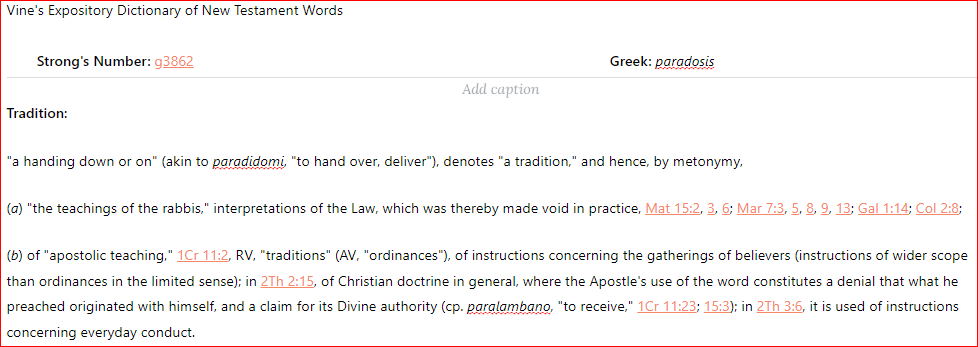














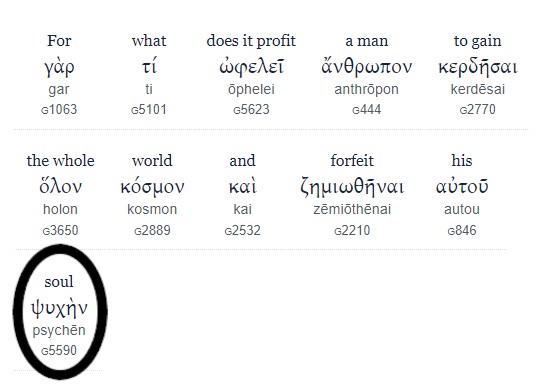
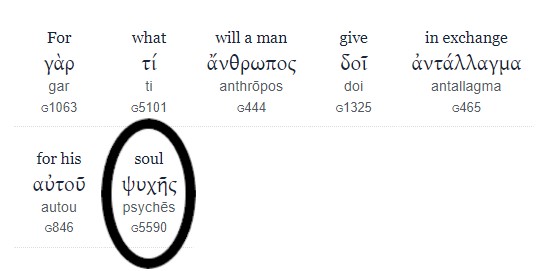





 Considering the Bible