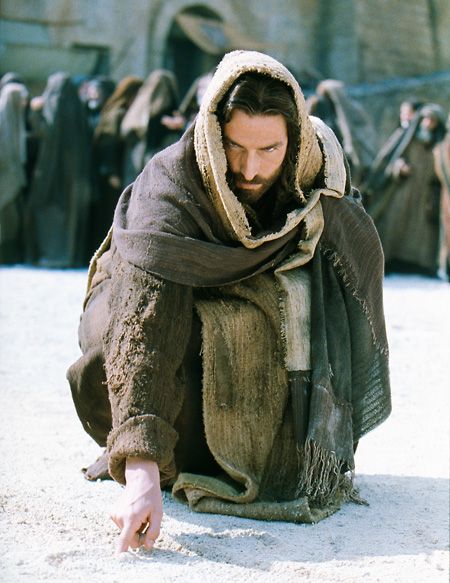
6 Now these things took place as examples for us, that we might not desire evil as they did. 7 Do not be idolaters as some of them were; as it is written, “The people sat down to eat and drink and rose up to play.” 8 We must not indulge in sexual immorality as some of them did, and twenty-three thousand fell in a single day. 9 We must not put Christ to the test, as some of them did and were destroyed by serpents, 10 nor grumble, as some of them did and were destroyed by the Destroyer. 11 Now these things happened to them as an example, but they were written down for our instruction, on whom the end of the ages has come. 12 Therefore let anyone who thinks that he stands take heed lest he fall. 13 No temptation has overtaken you that is not common to man. God is faithful, and he will not let you be tempted beyond your ability, but with the temptation he will also provide the way of escape, that you may be able to endure it.
In our last passage we noted that all that were of the nation of Israel had experienced the salvation of God through the escape out of Egypt, and travels through the wilderness, yet most failed to please God, and were overthrown in the wilderness. Two men of the original people who left Egypt actually made it to the promised land, along with the children born in the wilderness.
In this passage Paul continues to describe the failings of the nation of Israel, specifically idolatry, sexual immorality and grumbling.
Those three actions are brought forward to the first century church as failings of the nascent church in the wilderness. They were overthrown, scattered in the wilderness, as Paul describes in the previous passage, and in this set of verses, he continues to teach of the end result of these three sins. Notice that Paul shifts to describing the end result of these three specific sins as destruction.
Idolatry
Paul refers to Exodus 32 when he writes.
Exodus 32:6 And they rose up early the next day and offered burnt offerings and brought peace offerings. And the people sat down to eat and drink and rose up to play.
Check out the context. Moses was on the mountain, receiving the law of God, while Aaron was at the base camp, being manipulated by the people. They demanded gods to worship, and Aaron provided. The result was the old worship of Egypt with the name of God tacked on.
Get the import of this. The people assigned the idol to the god who rescued them out of Israel, and Aaron made a formal announcement – “Tomorrow shall be a feast to the Lord”.
The people wanted it. The leader wanted it. What could go wrong? Given they had the smell of Egyptian idol worship lingering in the camp, they did what came naturally – they ate and drank, then rose up to play.
The eating and drinking describes a sacrificial offering to the idol, of which the idolaters would consume. This feast also speaks of the complete loss of self control in eating, for many students of the word understand this to be a gluttonous feast in front of this idol.
Was it not just a few verses earlier, in chapter 9, that Paul spoke of the importance of self control in the winning of the reward? The link between self control and victory is again shown to us, though through the failure of the people of Israel.
Sexual Immorality
Out of this idolatrous feasting, what little self control left for the people was jettisoned in favor of sexual immorality. Once the dam broke, the flood waters of licentiousness drowned the people. Destruction came into the camp, with twenty three thousand falling in ONE DAY.
Grumbling
Grumbling. When I first realized this sin was grouped with idolatry and sexual sin, it was a bit of a surprise. After all, grumbling seems like a minor sin, a sort of acceptable sin, something “everybody does”.
Consider. To grumble is to murmur, to say anything against something, or someone, in a low tone. Could this have been the beginning of this entire debacle, this release of self constraint, that allowed a people to seek what they wanted instead of what God wanted. To begin to grumble eats away at a thankful heart, allows a rebellious spirit, opens up a spirit of judgement against an authority. It provides a medium to grow a discontented, argumentative and hateful people. To grumble against an authority allows for a law to be created, another way to live, a create a law unto themselves, for the grumbler surely knows better.
My friends, grumbling is a serious sin, and after considering grumbling in light of the first two sins Paul describes, I have a better understanding why these three sins are grouped together. Paul refers to the destruction of some in relation to grumbling. Grumbling is an acid that will eat you up, and tear you down.
Thankfully, we have the promise that temptations such as grumbling can be overtaken by the believer. The way of escape you ask? The way of escape is a humble spirit of reliance on the God we serve, a willingness to accept His leading and not to challenge His wisdom. The way of escape is to be led, or controlled by the Spirit of God, and to endure hard times by His strength and grace. It is not to “get up and play” but to abide in the self control God has provided through a reliance on Him. After all, the fruit of the Spirit is love, joy, peace, patience, kindness, goodness, faithfulness, gentleness, self-control.
My friends – we are to have a humility of spirit before the Lord, a submissive heart, for we cannot think we have ever arrived, that we know better or that we ever could have thought of a better way.
… let anyone who thinks that he stands take heed lest he fall.
Take heed my friends.
Thanks again for coming to visit. I hope you found something of interest in this post and would appreciate a comment, to begin a discussion. If you would like to receive daily posts from Considering the Bible, click on the “Follow” link below
Let’s continue with our passage in 1 Corinthians, remembering Paul has just written of self control for the believer. In our passage today, Paul brings up the history of Israel in the wilderness for us to consider.
Not a great example of victory!
1 Corinthians 10:1-5
1 For I do not want you to be unaware, brothers, that our fathers were all under the cloud, and all passed through the sea, 2 and all were baptized into Moses in the cloud and in the sea, 3 and all ate the same spiritual food, 4 and all drank the same spiritual drink. For they drank from the spiritual Rock that followed them, and the Rock was Christ. 5 Nevertheless, with most of them God was not pleased, for they were overthrown in the wilderness.
Paul just spoke of his own danger of being disqualified due to a lack of self control. We saw in our last passage, that he also warns the believers that disqualification was a very real danger to the “rank and file” believer. (See Conditional Security – 2 Corinthians 13:5-9).
In the very next passage, in chapter 10, Paul emphasizes this very truth by reaching back into the history of Israel, of their deliverance from Egypt and guidance into the promised land.
In this passage I would like to draw your attention to the qualifiers in the passage. When I speak of qualifiers in this passage, I am thinking of qualifiers of quantity, or a description of the amount of subject being described. The two that are obvious for our study are…
ALL
“All” typically speaks of the totality of the subject matter, a 100% factor, implying in this instance entirely everyone in the group.
I know there is a faction within the Body that considers “all” to not be describing “all” but a subset of “all”, as in “all” the chosen, or “all” the predestined. Don’t you just love quote marks! It is as if those who are not in the all, may never be in the all, and are not to be considered of the all.
Alright – A bit of a rant on my part. Your forgiveness is requested. I will leave that discussion for another time, but in this instance, when Paul speaks of all, he is referring to all the Israelites, the entire nation. It seems obvious.
all under the cloud
all passed through the sea
all were baptized into Moses in the cloud and in the sea
all ate the same spiritual food
all drank the same spiritual drink.
For they (all) drank from the spiritual Rock that followed them, and the Rock was Christ.
(italicized added for completeness of thought)
The entire nation is represented as having went through each of the above actions. To go through these actions was to establish those that would become the nation of Israel. It is also of benefit to note that though some of these actions were experienced, or entered into by the tribes of Israel in one day, some actions, such as eating and drinking of the spiritual food and drink, occurred much later in their experience. Paul may be referring to a continual action in the last two actions.
MOST
Most is our second qualifier of quantity. Unlike “all”, most speaks of a majority, or of the greatest in quantity, but falls short of including all.
As Paul uses this term, it is shocking that he refers to most as having failed to please God.
An instance that comes to mind is the sending out of the twelve spies. Ten of the spies did not please God! That is an 83% rate of failure in pleasing God.
Another instance that occurs to me is the provision of quails due to the grumbling of the people, and the resultant death of many with a very great plague
Numbers 11:33 While the meat was yet between their teeth, before it was consumed, the anger of the LORD was kindled against the people, and the LORD struck down the people with a very great plague.
One more instance will suffice. Consider Israel and the serpents.
Numbers 21:5-6 And the people spoke against God and against Moses, “Why have you brought us up out of Egypt to die in the wilderness? For there is no food and no water, and we loathe this worthless food.” Then the LORD sent fiery serpents among the people, and they bit the people, so that many people of Israel died.
As an aside, the people spoke of God’s manna as “worthless food”. How thankless, how insulting to God, the supplier and sustainer of the people, to reject the bread of life. Yet this is the history Paul brings to mind.
When Paul speaks of most that were in the wilderness, he speaks of all but two. The only two who made it through from Egypt to the promised land was Joshua and Caleb. Two men who left Egypt that did not fail to please God. The remaining fathers who saw the mighty works of God lay strewn in the desert. Paul says they were overthrown in the wilderness. This is the very same term Moses uses in Number 14:13
Numbers 14:16 ‘It is because the LORD was not able to bring this people into the land that he swore to give to them that he haskilled them (overthrown them) in the wilderness.’
How incredible to consider this warning. The Lord was not able, because the people would not submit, and were doomed to the wilderness.
Earlier I mentioned a percentage of 83%. Let us not consider the percentage of those who ultimately failed to please God in the wilderness, for it is truly a sad tale! Yet Paul speaks of it as a reminder of the challenge before us.
If there is something going on in that you are struggling with in the Lord’s will, take heart and understand the Lord is seeking the best for you. But let this warning be understood.
Rebellion against Him and refusal of His will will not go well for any of us! Submit to Him and seek to please Him. Humble yourself and admit your error before Him. Consider the Bread of Life as worthy and not worthless.
After the Lord spoke of the overthrow of the people, He reminded those listening.
Numbers 14:18 ‘The LORD is slow to anger and abounding in steadfast love, forgiving iniquity and transgression, but he will by no means clear the guilty, visiting the iniquity of the fathers on the children, to the third and the fourth generation.’
He is good. Trust Him. Seek to please him is all the ways you know of.
Thanks again for coming to visit. I hope you found something of interest in this post and would appreciate a comment, to begin a discussion. If you would like to receive daily posts from Considering the Bible, click on the “Follow” link below
24 Do you not know that in a race all the runners run, but only one receives the prize? So run that you may obtain it. 25 Every athlete exercises self-control in all things. They do it to receive a perishable wreath, but we an imperishable. 26 So I do not run aimlessly; I do not box as one beating the air. 27 But I discipline my body and keep it under control, lest after preaching to others I myself should be disqualified.
I am somewhat surprised that in our trek through passages that address the conditional security of the believer, we are just now considering 2 Corinthians 9 & 10. It may be that as a lengthy passage I felt overwhelmed in approaching it, or that it hits a few sensitive spots that need to be addressed in my own walk with the Lord. What ever the issue, let us not be fearful of the truth.
Paul begins this passage with a picture of an athlete, a runner whose goal is to run and win a race. The connecting theme between the runner and the believer is the exercise of self control in all things. He is looking to provoke the believers into exercising self control for the sake of obtaining a prize.
Yet this passage has somewhat bothered me, in that it conjures up in my mind a competitive spirit between believers. Is Paul seeking to pit believer against believer in this passage. Only one can win! Run (against your brother) to win.
But I don’t think Paul intends to communicate that believers are running against each other, but that they all need to exercise self control, as those of the world do. The world competes for a leaf that fades, and in the midst of that effort, may employ methods that are less than of the highest morals in order to get an edge.
Not so with Paul’s audience. Paul is comparing their goals with our goals – not of beating our competition – i.e. other believers, but of attaining to a reward, an eternal reward. The act of self control is similar in both competitors fields, but for the believer, the motivation is for an eternal goal, an eternal crown.
As it is with those who seek a leafy crown, some believers fall away, some are taken out of commission (go home seemingly early), and some are disqualified. And in this passage Paul is considering the threat of disqualification for himself!
Disqualified
It is the term that I couldn’t explain away when I was a young believer, so I often skipped over the verse, or connected the passage with rewards – which made some sense since Paul speaks of rewards just a verse earlier. Yet to be disqualified may mean more than simply the loss of rewards.
Disqualified is the translation of the Greek term ἀδόκιμος adókimos, and has the sense of being unapproved, rejected, worthless, a castaway, a reprobate. Harsh words.
I ask my reader to consider that if an athlete is rejected from the games, being considered not worthy of entering future competition (worthless to the judges), any rewards he may think are coming to him will also be lost. His loss is not only the rewards, but also his reputation, his name, his career, his livelihood, his very life focus that he had committed to for years.
Disqualification is a brutal set back, a judgement that one may never recover from. Remember, Paul is speaking of his own disqualification in this passage. Yes the great apostle Paul did no consider himself beyond this possibility.
Later on, he speaks of disqualification regarding those in the Corinthian church, using the very same word. (See Conditional Security – 2 Corinthians 13:5-9) There didn’t seem to be any believer that were immune to this danger! Every believer, from the apostle Paul to the young girl who served the saints a drink of water. All believers were in this potential danger of being disqualified!
However you see this passage, whether it be of service or of salvation, it is a dire warning to us all to heed the word of the Lord in keeping his ways, his commandments, his principles.
Breaking His law of love may bring about disqualification. No believer wants that, and certainly the Lord seeks to avoid this judgement on a believer. May we never give reason for this to be an issue before our Redeemer.
May we all seek Him, and His ways in our lives, for His glory and our benefit!
Thanks again for coming to visit. I hope you found something of interest in this post and would appreciate a comment, to begin a discussion. If you would like to receive daily posts from Considering the Bible, click on the “Follow” link below

21 Then Peter came up and said to him, “Lord, how often will my brother sin against me, and I forgive him? As many as seven times?” 22 Jesus said to him, “I do not say to you seven times, but seventy-seven times. 23 “Therefore the kingdom of heaven may be compared to a king who wished to settle accounts with his servants. 24 When he began to settle, one was brought to him who owed him ten thousand talents. 25 And since he could not pay, his master ordered him to be sold, with his wife and children and all that he had, and payment to be made. 26 So the servant fell on his knees, imploring him, ‘Have patience with me, and I will pay you everything.’ 27 And out of pity for him, the master of that servant released him and forgave him the debt. 28 But when that same servant went out, he found one of his fellow servants who owed him a hundred denarii, and seizing him, he began to choke him, saying, ‘Pay what you owe.’ 29 So his fellow servant fell down and pleaded with him, ‘Have patience with me, and I will pay you.’ 30 He refused and went and put him in prison until he should pay the debt. 31 When his fellow servants saw what had taken place, they were greatly distressed, and they went and reported to their master all that had taken place. 32 Then his master summoned him and said to him, ‘You wicked servant! I forgave you all that debt because you pleaded with me. 33 And should not you have had mercy on your fellow servant, as I had mercy on you?’ 34 And in anger his master delivered him to the jailers, until he should pay all his debt. 35 So also my heavenly Father will do to every one of you, if you do not forgive your brother from your heart.”
It’s all a matter of degree. How often do I have to forgive? Do I really need to do it again? I forgave him three times already and he isn’t learning his lesson. Why keep forgiving him?
Let me submit to my gentle reader that that is the wrong way to look at the Christian life. Or at least the wrong mental stance when it comes to hearing His word for us.
We are not to consider our Christian lives as a grudging obedience of a number of commands. A life of laws pushing us around. The principles God provides us sometimes feel risky in obeying them, can take us out of our comfort zone, can actually be unfair! But we need to realize that His ways are given to us for our own good.
Let’s take a look at this parable and consider it’s implications. I have looked at this parable in a previous post that may be of interest to my reader. Find it at Parable Surprises – Unmerciful Servant
We have three subjects in this parable, with the unmerciful servant being the man to watch. He has a freaking huge debt with the King, and the King, rightly so, requires payment. A payment he can’t provide. He begs for time to pay it all back – which sounds good, but this debt was beyond that cure! Time wasn’t going to solve this problem!
So the King had two options. Sell the servant, his wife, his children and all that he had!
Or forgive him of all debt. Release the servant, and his entire family, of his debt obligation. Free him of his responsibility to the King, and allow him to continue living with his family, and to continue with his possessions.
Grasp this action, this ridiculously gracious and undeserved action this servant received. This was not per the legal code of the day, for the servant was responsible by law for the repayment. This servant was granted his life back, and the lives of his family!
But this act of grace, of forgiveness, of unbounded mercy did not translate into this servants life. There was something wrong with this servant! Something terribly wrong! For as soon as he could, he started calling in debts from those who were his equal, his fellow servants. And for paltry amounts, the sort of amount that is petty in comparison.
The parable also implies the servant was quick to find this debtor, and when confronted him, actually began to choke him, demanding payment. Now of course, he had every right to demand payment by law, but give me a break – what is wrong with this fellow?
The surprise in all of this parable is the King’s reaction. Yes he had freely provided forgiveness to the servant, but upon hearing of the flagrant disregard to responding this this act of grace, called the servant back to his throne.
‘You wicked servant! I forgave you all that debt because you pleaded with me. And should not you have had mercy on your fellow servant, as I had mercy on you?’
Remember this is the king speaking. His grace, mercy and forgiveness is being rescinded based on the servants actions!
And in anger his master delivered him to the jailers, until he should pay all his debt.
This passage shook my core when I first quit ignoring it’s principle message. We, as believers, who know of the unfathomable forgiveness granted to us in the cross of Christ, should want to forgive everyone, should have had a life experience that draws us to forgiving others.
For believers to hold resentment, refuse to forgive, to nurse a grudge or maintain hateful attitudes towards our own brothers and sisters should alarm our souls to the danger we are living in.
At the very least, holding back forgiveness may simply reveal a lack of understanding the grace provided us. An unforgiving heart and it’s resulting actions, based on this passage should warn us that our forgiveness may be rescinded some day.
For those who have never experienced the forgiveness of God, you may not think forgiveness is a blessing to the forgiver. Please understand to forgive another is a blessing that we enter into, finding freedom to live the life God intended for us.
God is good, and He rejoices to forgive.
Luke 15:7 … I tell you, there will be more joy in heaven over one sinner who repents ….
If we are believers, and have the life of God in our lives, we will experience the same joy.
Thanks again for coming to visit. I hope you found something of interest in this post and would appreciate a comment, to begin a discussion. If you would like to receive daily posts from Considering the Bible, click on the “Follow” link below
1 “Then the kingdom of heaven will be like ten virgins who took their lamps and went to meet the bridegroom. 2 Five of them were foolish, and five were wise. 3 For when the foolish took their lamps, they took no oil with them, 4 but the wise took flasks of oil with their lamps. 5 As the bridegroom was delayed, they all became drowsy and slept. 6 But at midnight there was a cry, ‘Here is the bridegroom! Come out to meet him.’ 7 Then all those virgins rose and trimmed their lamps. 8 And the foolish said to the wise, ‘Give us some of your oil, for our lamps are going out.’ 9 But the wise answered, saying, ‘Since there will not be enough for us and for you, go rather to the dealers and buy for yourselves.’ 10 And while they were going to buy, the bridegroom came, and those who were ready went in with him to the marriage feast, and the door was shut. 11 Afterward the other virgins came also, saying, ‘Lord, lord, open to us.’ 12 But he answered, ‘Truly, I say to you, I do not know you.’ 13 Watch therefore, for you know neither the day nor the hour.
First off, let’s assume the kingdom of heaven is the kingdom of God. There is a teaching in the church that would differentiate the two. Since Matthew was teaching to a Jewish audience in his gospel, he respected their sensibilities and referred to the kingdom as “of heaven” and not as “of God”, where a strict Jew may find unnecessary offence. (There would be plenty of necessary offence as the Jew read his gospel!)
Find the following comparison of passages, speaking of the same story, yet using different terms associated with kingdom, that may help illuminate those who struggle with this.
Kingdom of Heaven – Kingdom of God Matthew 11:11-12 – Luke 7:28 Matthew 13:11 – Mark 4:11 Matthew 13:11 – Luke 8:10 Matthew 13:24 – Mark 4:26 Matthew 13:31 – Mark 4:30 Matthew 13:31 – Luke 13:18 Matthew 13:33 – Luke 13:20 Matthew 18:3 – Mark 10:14 Matthew 18:3 – Luke 18:16 Matthew 22:2 – Luke 13:29
Oh, but you say, this message was for those who would experience the physical, re-establishment of Israel as the Messiah’s nation to rule over. Kingdom speech, whether using “of God” or “of the kingdom” referred to the nation of Israel realizing the promises of God in the Old Testament, of becoming the nation that would have as it’s King He who would subdue the world, every nation bring subservient to the King and His nation.
This was a manner of thought I lived in for a period of my Christian life, and thought the body of Christ was a distinctly different group under God, as if God had two families. I shied away from passages when an apostle referred to the Body of Christ as the Kingdom, or simply overlooked the implication. Yet the apostles did not mind referring to the church as the Kingdom.
Starting in Acts, and searching for kingdom references until Revelation, we have 31 passages. Granted there are a couple in Revelation that refers to the kingdom of this world, but suffice to say, the early church had no problem with the church being referred to as a kingdom.
With all my previous arguments for not considering this passage in Matthew for my own standing before God, but as only for an ancient people, let us try to understand the principle message and the application for us today.
In the culture of the day, a wedding took the form of three stages. The first being the engagement, in which two fathers would make an agreement concerning their children. The next stage was a betrothal, where the children, now of marrying age, would make a formal mutual promise to each other. The last stage, the actual marriage ceremony, would occur approx. twelve months after the betrothal. Not necessarily exactly twelve months, as the custom allowed for the bridegroom to come unexpectantly. Jesus picks up this cultural norm to apply to His coming to get His bride, the church.
And as the bridegroom would arrive, as he travelled to the brides home, the virgins of the wedding party would meet him and return to the place of marriage with the bridegroom. It seems in this parable, the ten virgins had been given a possible time of the bridegrooms appearance, and headed to the meeting place to wait. And as we know from the parable, five of these virgins knew the bridegroom was coming that night. Or were they were just lazy? Certainly they were foolish!
At the risk of boring my reader with my past beliefs, the very teaching I followed, that allowed me to disregard a passage as this for my own life, produced this same condition in my heart. I would never say it out load, but I knew Jesus was coming back soon, and I planned accordingly. Short term plans, just getting by, ignoring long term problems that might arise from my short term thinking. Sound familiar?
Jesus is coming back, and He may be coming back before you are done reading this post. But He may be coming back in 10,000 years. My planning, as it was for these virgins, must be for the worst case scenario, where the bridegroom may “be delayed”.
Another application of this passage is that we are not to rely on others for that with which we are responsible. I can’t rely on my wife’s faith to be credited to my life. I can’t assume my child’s faith will somehow bring me into good standing with God. I need my own oil, and I need my own oil now. Assuming I have enough oil to make it may be fatal. And for the foolish virgins, it turned out to be fatal, for the very purpose of their life at the time was to be at the marriage feast.
They were refused! They were refused because they were not ready for an extended period of waiting.
Have you been waiting for years for the Lord’s return? Possibly decades? Personally, I have been granted the privilege of knowing the Lord for 43 years now, and have went through many times of discouragement, disappointment and disillusionment. As I look back, He has always been there for me, showing grace, forgiveness and guidance. In those years, He has provided encouragement as I look to Him, as I seek Him out, as I consider (and sometimes reject) popular teaching if the Bible teaches differently.
He will be coming back on His schedule, whether it be today or in the year 2924. No one knows, but we have the blessing of knowing Him today, preparing for His return as we look to Him, as we ask for His guidance, blessing and strength.
God is good, and we need to be prepared daily for a long term faithful walk with Him. Short term thinking may cause you discouragement, disappointment and disillusionment that will war against your soul.
God is good, and we can trust Him, for He is good, all the time, even until 2925. (And beyond)
Thanks again for coming to visit. I hope you found something of interest in this post and would appreciate a comment, to begin a discussion. If you would like to receive daily posts from Considering the Bible, click on the “Follow” link below
5 She who is truly a widow, left all alone, has set her hope on God and continues in supplications and prayers night and day,
6 but she who is self-indulgent is dead even while she lives.
7 Command these things as well, so that they may be without reproach.
8 But if anyone does not provide for his relatives, and especially for members of his household, he has denied the faith and is worse than an unbeliever.
This particular passage impacted me years back in relation to the purchase of insurance. Yes I know – What are you talking about Carl.
Story Time
When my favorite and I were first married, we entered into a training that forced us to live by faith in the USA. As Canucks, we could not work, and had to focus solely on the gifts of the Lord through His people. So many ways He provided, and we were almost always on the edge, yet never without!
After the training, we entered civilian life – (is that the right term?) and began to minister in a very small foreign church, while I did language learning, and worked to put food on the table for my wee precious family. Those were difficult days, and yet the Lord was always there, taking care of us, talking to us, disciplining us – (too many times if I am honest with you) – but as before, we were living on the edge. Living by faith. Hand to mouth.
Until I read this little passage, and considered how I was not able to provide for my family if my wife became a widow. Yes, I think this passage is speaking in the context of widowhood, and to the men who may not be providing for their wives future.
I had two choices.
I could go gold mining and strike it rich, or set 20 bucks aside each month to give my wife an insurance policy – just in case! Please don’t understand that I am saying this is the only way to obey this passage, but I found it to be the solution before God in our case.
Thankfully, she hasn’t needed it as I am still kicking, but I am glad the passage brought me up short, for though she didn’t complain about the life we lived, I know this small act gave her some comfort.
Now, I realize this particular set of verses may not address the state of the one who does not provide for his relatives, (for I was a believer at the time) but in my understanding, it does speak of a believers actions as worse than an unbeliever.
Does this speak of a loss of life with the Lord, of an intentional act of the will to turn my back on the Lord and walk away for good? Good question! I can’t answer that, for the believer is always in a state of growth (at least he should be), may not have considered this situation for his family, or is concentrating on other areas of obedience. Each situation is for the Lord to judge.
But I think it does address the importance in the faith of the believer’s love for his family. If he doesn’t provide, it is equal to denying the faith, even becoming worse than an unbeliever! Such harsh words!
The question for my reader is. Does the believer appear to be an infidel (an unbeliever) – a terrible witness – or might the “believer” actually have become an infidel (denying the faith) in reality by abandoning the needs of the family, turning his back on those who need him?
It is a tough verse, and the definition of providing for “his relatives” may be difficult to nail down. I leave it with my reader to consider what Paul may actually be saying to his people.
Thanks again for coming to visit. I hope you found something of interest in this post and would appreciate a comment, to begin a discussion. If you would like to receive daily posts from Considering the Bible, click on the “Follow” link below
24 And the Lord’s servant must not be quarrelsome but kind to everyone, able to teach, patiently enduring evil,
25 correcting his opponents with gentleness. God may perhaps grant them repentance leading to a knowledge of the truth,
26 and they may come to their senses and escape from the snare of the devil, after being captured by him to do his will.
In our last post we spoke of experiential knowledge, a knowledge of the Lord that goes beyond the head and into the heart. Timothy was charged with a type of teaching – a method of teaching that was characterized by gentleness, kindness, patience and was without quarrelling. The reason for this non-combative style of teaching? To allow God to perform the work of changing hearts, and to allow the opponent to choose based on truth and not intimidation.
First, Paul is speaking of the opponents being led to the knowledge of truth. Let’s consider Paul’s second intent for this manner of teaching.
Come to thier senses
In our last post we spoke of Timothy’s targeted audience in his teaching, and came to the understanding that he was to teach everyone, even his opponents. His mission was to those in the church and out of the church, and for both groups, his approach of gentleness patience and kindness was to be exhibited.
Paul’s second goal of this passage, that he was laying out for Timothy, was that his teaching was to wake the opponents up, help them “come to their senses”
Again, we must not limit Timothy’s audience to only those outside of the church, for there have been many times, as a believer, I have had to come to my senses, come to a new understanding, repent of my previous thinking and see things in a different light.
To “come to your senses” is a translation of a word that speaks of returning to soberness, of recovering your self from a delusion or a mistake.
At the risk of sounding repetitive, there is nothing from the text that implies or teaches that Paul is only speaking of those outside of the church. Believers can fall into error. Believers can wander off the path. Believers can trip and stumble. As a matter of fact, believers not only can but do tend to walk away. We are very good at walking the wrong path!
How often have you known someone who has walked away from the Lord, and after a period of wandering, returned? Of a person who struggled with a certain truth, and then, for some unknown reason and at a unexpected time, come to realize a different perspective, a different focus or goal for life, a different emphasis or direction for his/her life?
Paul is seeking Timothy to reach out to those who are of a different opinion, of a different thinking and to offer a cogent and practical message reflecting truth, which the opponent will recognize in both the message and the teacher himself.
escape from the snare of the devil
Ok, this is the portion of 2 Timothy that has brought this passage into the topic of Conditional Security. What is the snare of the devil, and what exactly does it mean if it is being applied to the believer?
Paul uses this exact phrase in 1 Timothy 3:6-7, where he is speaking of the qualification of overseers.
1 Timothy 3:6-7
He must not be a recent convert, or he may become puffed up with conceit and fall into the condemnation of the devil.
Moreover, he must be well thought of by outsiders, so that he may not fall into disgrace, into a snare of the devil.
We see that the snare of the devil is applied directly to a believer, a leader-servant within the body in this verse. Also, by the previous verse, we see that condemnation is associated with this believer. Horrible things to consider!
So let us consider what a snare is. Of course, in my mind, when speaking of a snare, I think of a trap, especially a rope noose that slings the victim into the air once it is sprung. The element of surprise is necessary, for no victim would knowingly set the trap to be caught. The trap must offer something tantalizing, something worth seeking and yet only provides disappointment, suffering, loss, and possibly death.
The snare, in this instance, is referred to by Paul to speak of that which the believer may escape from. It is not a done deal, a fait accompli!
This is good news, and our only escape is through the truth of the gospel, whether we be saints or sinners! We are offered release from the snare of the devil, from condemnation and loss. After being led to acknowledging (head knowledge) and knowing (heart knowledge) the truth, we may come to our senses, wake up in the very same way as the prodigal son, and return to the Father to do His will.
May we seek this in our lives and honor His name!
Thanks again for coming to visit. I hope you found something of interest in this post and would appreciate a comment, to begin a discussion. If you would like to receive daily posts from Considering the Bible, click on the “Follow” link below
24 And the Lord’s servant must not be quarrelsome but kind to everyone, able to teach, patiently enduring evil,
25 correcting his opponents with gentleness. God may perhaps grant them repentance leading to a knowledge of the truth,
26 and they may come to their senses and escape from the snare of the devil, after being captured by him to do his will.
Second Timothy 2:24 is one of my favorite verses when it comes to godly instruction, how I am to respond to those around me, the exhortation to patience, and the exercise of gentleness. Massive challenges for myself, but for the intent of this post, let us focus on Paul’s reason for giving Timothy this direction.
Three intended results of teaching with kindness, patience and gentleness are provided as follows.
A knowledge of the Truth
Paul is teaching Timothy on his approach to everyone in verse 24 and focuses somewhat on Timothy’s opponents in verse 25. If we are to accept the common understanding of pastoral life, we may think this manner of teaching is intended only for those in the church. After all, the pastor is the main teacher in the church and it may be assumed Paul is speaking to those primarily in the body Timothy is shepherding.
I am of the opinion that the practice of the pastor in the first century was more akin to the tentmaker ministry we sometimes come across. A man who is ministering amongst a body, but is working to support himself and his family without any obligations placed on the believers. If so, then we have a man who has opportunity to teach everyone (as verse 24 states) and not only those within the church body.
With all that said, Paul is addressing Timothy regarding those who need correction. Surely this means for all those who come in contact with the pastor, inside and outside of the body.
Is Paul including those within the body of Christ, those who claim Christ as their Lord, as opponents? Did Paul have the concept in his mind that a church body never has any friction, and faction, any disputes within it? Surely not.
So, when Paul speaks to Timothy of correcting his opponents with gentleness, I do not understand this as strictly intended for those outside of the body of Christ. How often do we see in the New Testament believers exhorted to repent, to change their mind on certain attitudes, ideas or issues in their lives. If you are willing to consider it, the Word is full of the message of repentance directed to believers. Over and over again the believer is challenged to change, to admit error, to be humble enough to listen and not argue.
And what is Paul asking Timothy to guide those in and out of the church towards? Might it be to accept a knowledge of the truth. Paul does not get super specific, and require Timothy to convince all in the body of dispensationalism, or Calvinism, or infant baptism. That may be an overextension of this command.
The term “knowledge” is interesting. Paul uses epígnōsis, the knowledge that speaks of full discernment or acknowledgement. I wrote once of a time in my past where I understood two different types of knowledge one can acquire. Factual and experiential. (Refer to Inherit the Kingdom? Who knew?)
Paul uses the term that is associated with experience, (not simply the acquisition of factual knowledge) and he places a prefix on it to expand it to full experiential knowledge. When I come to this message, I understand it to imply orthopraxy, or the right belief with the right practice. Timothy was not being told to simply argue his opponent into agreement, but to pull them into a lifestyle associated with the truth.
So Paul is directing Timothy to correct with gentleness those opponents within and without the church, into correct thinking and living.
Let us remember that Paul was not one who wore rose colored glasses, thinking the church was all kumbaya. He knew of opponents within the church, and he was preparing Timothy on how to best deal with them.
In our next post we will dig a little further into this set of verses and try to understand Paul’s thoughts, especially regarding that “snare of the devil” statement
Until then, remember we are to know the Lord, not only in a factual (head knowledge) way, but also in an experiential (heart knowledge) way, to trust Him and see His working in our lives on a daily basis.
May His Name be honored in our lives, and may we walk with Him in truthfulness.
Thanks again for coming to visit. I hope you found something of interest in this post and would appreciate a comment, to begin a discussion. If you would like to receive daily posts from Considering the Bible, click on the “Follow” link below
Let’s remind ourselves of the verses we have been exploring before we dive into our second look at it.
1 Timothy 4:1-3
Now the Spirit expressly says that in later times some will depart from the faith by devoting themselves to deceitful spirits and teachings of demons, 2 through the insincerity of liars whose consciences are seared, 3 who forbid marriage and require abstinence from foods that God created to be received with thanksgiving by those who believe and know the truth.
In our last post on this passage, we discussed the concept of departing, and that it was not simply describing the one act of apostacy, or better yet, the verse didn’t simply use the term “apostacy” in the passage. In this post, we will look at the message of devotion, of believers devoting themselves to something other than the gospel and the Savior Lord.
Devoting themselves
Devoting. προσέχω proséchō
Paul continues in this verse describing those who are departing as devoting themselves to deceitful spirits and teachings of demons. By using the word proséchō, Paul uses a word that is typically translated as that which holds the mind, to pay attention to, to adhere to. It is often translated as beware, pay attention to, and devote. A few examples may be helpful.
The Lord spoke this word many times in His ministry, warning His followers of false prophets (Matthew 7:15), the teaching of the Sadducees and Pharisees (Matthew 16:6), our own religious pride (Matthew 6:1), and of men (Matthew 10:17).
Luke used it also in the book of Acts, where it interestingly describes paying attention to magicians claiming God’s power.
Acts 8:10-11
They all paid attention to him, from the least to the greatest, saying, “This man is the power of God that is called Great.” And they paid attention to him because for a long time he had amazed them with his magic.
When we get to Paul’s writing, especially the pastoral epistles, he speaks of devotion to myths and genealogies (1 Timothy 1:4), deceitful spirits and teachings of demons, commands of people who turn away from the truth (Titus 1:14), and wine (1Timothy 3:8).
With this summary of the word proséchō provided, might it be understood that this word is used in relation to outside influences? From being a warning of dangerous lifestyles or teaching, to defining what we are attracted to that is dangerous, this term in many contexts is associated with that which “pulls us away”.
To be pulled away means you have a starting point from which you are pulled away from, further helping us understand this verse as a warning to true believers.
To depart and devote is Paul’s concern in this verse. For believers to depart from the faith and to devote (pay attention) to deceitful spirits and teachings of demons must have been heartbreaking for Paul to describe.
This same term proséchō is not used exclusively in describing a pulling away from the faith, but is also used to direct believers to pay attention to truth.
Hebrews 2:1 Therefore we must pay much closer attention to what we have heard, lest we drift away from it.
Drifting away is a very real consequence for us who do not pay attention to what we have heard and know. Do not let it slip!
Finally, Peter provides us a fitting verse to end this scary passage describing the path of believers who are departing and devoting themselves to wrong teachings.
2 Peter 1:19 And we have the prophetic word more fully confirmed, to which you will do well to pay attention as to a lamp shining in a dark place, until the day dawns and the morning star rises in your hearts,
Thanks again for coming to visit. I hope you found something of interest in this post and would appreciate a comment, to begin a discussion. If you would like to receive daily posts from Considering the Bible, click on the “Follow” link below
Now the Spirit expressly says that in later times some will depart from the faith by devoting themselves to deceitful spirits and teachings of demons, 2 through the insincerity of liars whose consciences are seared, 3 who forbid marriage and require abstinence from foods that God created to be received with thanksgiving by those who believe and know the truth.
In my travels through the Word, as I come across passages that I have provided my reader to consider in relation to conditional security of the believer, there have been some passages that seemed to support the Once Saved Only Saved (OSAS) teaching. Decades ago, these were the passages I would refer to when I met a “heretic” (such as I have become), positing the position of possible apostacy of true believers. One of my standby’s when defeating the heretic was John 10:28-29. I have sought to explain my thinking in this verse in an earlier post. See Conditional Security – John 10:28-29. There were a number of passages I used to refer to in order to support the OSAS position.
One of the passages I would invariably be faced with in the discussion is the passage we will consider today. I can tell you right now, I remember this passage causing me trouble when it was brought up, and I would typically avoid or deflect the seeming obvious message it carried. (I am quite adept at avoiding that which I did not want to face!)
Two actions are described in the first verse. Departing and Devoting. And of course the subject of the sentence is critical for our correct understanding. Who will depart? Who will devote?
The first item of concern is the subject of departing. It seems obvious that Paul is describing true believers doing the departing since he claims it is an express statement from the Spirit. The Spirit is making a specific statement about this departing and devoting. Paul is instructing Timothy, a man who was a leader in the church, a man who was responsible for oversight of a church body, who needed direction for difficult, unforeseen occurrences in the church. Might apostacy be one of these circumstances that Timothy needed express instruction on? Would there be any reason for instruction to be provided to Timothy for those outside of the church? For those outside of the church, what would they be departing from?
Too many questions erupt if we do not understand that this passage is describing true believers. With that established, let us continue considering departing and devoting
Depart from the faith
To depart. ἀφίστημι aphístēmi.
The Greek word Paul used is not as I first expected. I assumed he would have used ποστασία apostasía for this verse, if he is truly describing a falling away from the faith, a defection of faith. You see, I expected this verse to be describing apostacy, a falling away. Maybe not exactly. Paul, in this verse is describing something a bit different, yet I fear the end result is the same.
Paul, by the express message of the Spirit, used aphístēmi in this verse, describing some departure. Our word in this verse speaks of removal, withdrawal, or a drawing away, and this makes sense as we remember that those drawn away are devoting themselves to something. In my initial understanding of this concept, I think Paul may have used this word because he is highlighting outside influences having the desired effect on believers. May it be more than simply be falling away, or rejecting/ignoring the gospel as in apostacy? Might those under consideration in this verse be lured away, drawn away from the gospel, in order to chase something other than the gospel?
Paul says that “some will depart from the faith”. To depart implies leaving a location or position and to seek an alternate goal or end. It also implies the possession of the initial position, that of being in the faith. How can this be? How can those who know the Lord ever walk away, depart, leave Him?
How is it that I have this dangerous heart in me?
In our next post, let’s explore that topic. I hope we can meet again and consider the Bible for the message it has for us.
Thanks again for coming to visit. I hope you found something of interest in this post and would appreciate a comment, to begin a discussion. If you would like to receive daily posts from Considering the Bible, click on the “Follow” link below
15 For if your brother is grieved by what you eat, you are no longer walking in love. By what you eat, do not destroy the one for whom Christ died. 16 So do not let what you regard as good be spoken of as evil. 17 For the kingdom of God is not a matter of eating and drinking but of righteousness and peace and joy in the Holy Spirit. 18 Whoever thus serves Christ is acceptable to God and approved by men. 19 So then let us pursue what makes for peace and for mutual upbuilding. 20 Do not, for the sake of food, destroy the work of God. Everything is indeed clean, but it is wrong for anyone to make another stumble by what he eats. 21 It is good not to eat meat or drink wine or do anything that causes your brother to stumble. 22 The faith that you have, keep between yourself and God. Blessed is the one who has no reason to pass judgment on himself for what he approves. 23 But whoever has doubts is condemned if he eats, because the eating is not from faith. For whatever does not proceed from faith is sin.
Two verses arrest my reading of this passage when considering conditional security. Both of these verses employ the English word destroy. Lets take a look at these verses for a few minutes.
15 For if your brother is grieved …By what you eat, do not destroy the one for whom Christ died.
“Destroy” in verse 15, is the Greek word ἀπόλλυμιapóllymi. I have provided a survey of this word through the New Testament in an earlier post (See Perishing in Eternal Torment). In that post I tried to correct my then current understanding of perishing, as this is one of the ways apóllymi is translated.
Paul is speaking in verse 15 of our walk of love towards those for whom Christ died. The general context is that of mature believers behavior for the sake of the immature, those who may still require foundational stability in their walk with the Master.
Is Paul describing a hypothetical situation where a mature believer impacts a young convert by his actions (fueled by a mature understanding of the gospel and it’s impacts on our lives!), and the result would be that the young convert would walk away from Christ? That in the young believers decision to walk away, (based on the behavior of the mature believer), this young believer would be destroyed? Is this what Paul is saying?
Let us move on to the second verse we find “destroy” in this passage.
20 Do not, for the sake of food, destroy the work of God. Everything is indeed clean, but it is wrong for anyone to make another stumble by what he eats.
In verse 15, we find the one destroyed as “one for whom Christ died”. Here Paul associated this destruction with the work of God. Different? Possibly. I tend to think Paul is referring to a singular believer and his response due to the mature believers behavior that is questionable in the young converts life.
Nevertheless, this “destroy” is a different word than in verse 15. In verse 20, Paul uses the Greek word “καταλύωkatalýō“. This term is translated as destroy (obviously) but also has the meaning of to subvert or overthrow, to render vain or to deprive of success.
What are we to make of this difference? Whatever the finer points of the different words, it is obvious to me that as a mature believer I need to consider my behavior when near younger believers.
For a younger believer to be influenced by my allowed actions, to a point of destruction, is a perilous situation for not only the younger believer, but also for myself. When the outcome of my allowed behavior is translated by others to their harm, I am not walking in love.
For the immature believer to be grieved (v15) or to stumble (v 20) by my actions, (though they may be perfectly allowed before God), is a restriction that I should thoughtfully and willingly take on as a light burden. We should remember that the Lord continues to take on our misunderstandings, errors and confusion in order to grow us.
As Paul so aptly states in verse 16
.. do not let what you regard as good be spoken of as evil.
Let’s be a bit more like the Master today, and consider those who need a model of service and not be a master of my own circumstances only.
Thanks again for coming to visit. I hope you found something of interest in this post and would appreciate a comment, to begin a discussion. If you would like to receive daily posts from Considering the Bible, click on the “Follow” link below
14 “And to the angel of the church in Laodicea write: ‘The words of the Amen, the faithful and true witness, the beginning of God’s creation. 15 “‘I know your works: you are neither cold nor hot. Would that you were either cold or hot! 16 So, because you are lukewarm, and neither hot nor cold, I will spit you out of my mouth. 17 For you say, I am rich, I have prospered, and I need nothing, not realizing that you are wretched, pitiable, poor, blind, and naked. 18 I counsel you to buy from me gold refined by fire, so that you may be rich, and white garments so that you may clothe yourself and the shame of your nakedness may not be seen, and salve to anoint your eyes, so that you may see. 19 Those whom I love, I reprove and discipline, so be zealous and repent. 20 Behold, I stand at the door and knock. If anyone hears my voice and opens the door, I will come in to him and eat with him, and he with me. 21 The one who conquers, I will grant him to sit with me on my throne, as I also conquered and sat down with my Father on his throne. 22 He who has an ear, let him hear what the Spirit says to the churches.’”
What a famous verse when we read verse 20. How often have I used this verse in evangelism efforts. When I first became a believer, my boss actually drew me a beautiful picture of Jesus standing at the door, with this verse being written in the lower left hand corner. It was quite impressive.
At at the time, I understood I was standing on the same side of the door as Jesus was.
But the passage has this church on the other side of the door. The entire church, for He describes them as poor, blind and pitiable. Wow – that is harsh! Yet they consider themselves to have arrived, that they need nothing, especially anything from the One who saved them. And still the picture of Him standing at a closed door, waiting, inviting the church to bring Him in.
This passage, in my mind speaks of the tremendous patience our God has towards those who claim to follow Him. Even after the church has walked away from Him, He still considers them His church, His body. This invitation Jesus gives those in this poor, pitiable and wretched church is a sign of His continual reaching out to those who are walking independently of Him.
How unbalanced is this relationship with Him. He is reaching out, speaking the truth and opening His arms to those who consider Him less than He really is. Who turn away from Him, and have no time for Him.
I have a difficult time not associating the life I live, the church I attend, the environment I exist in, as being described by the Lord in this passage. We as a society (and I as an individual) are rich – (which is not a sin of itself), and (seemingly) have need of nothing! This is a desperate condition!
It is safe to consider the fact that we are in treacherous times, even as we allow ourselves to fall into dangerous situations. Granted, being inundated with the message of the world, with the promise of riches that provide much more than our daily bread, and with opportunities to find worldly success, we are tempted like few generations before us.
Yet He stands there, on the other side, requesting a time of fellowship, a time of being together.
If we provide that time to fellowship with Him, that time to focus on Him and His love towards us, His grace bestowed on us, His strength available to us, His wisdom to guide us, His patience to suffer us and His faithfulness in spite of our sin, we can become overcomers, conquerors, and in doing so, have not only a blessed life amongst those we love, but the privilege of sitting on the throne with Him.
Did you get that? To sit with Him on His throne.
I can’t explain that, but I can certainly marvel in that, for those who have ignored their Savior still have an opportunity to rise to great privilege.
Therefore, be a conqueror, with His strength and fellowship overcome the pride of self sufficiency, humble yourself to admit your utter weakness and seek Him in all your ways.
Have I ever told you? God is good and He is good all the time!
Thanks again for coming to visit. I hope you found something of interest in this post and would appreciate a comment, to begin a discussion. If you would like to receive daily posts from Considering the Bible, click on the “Follow” link below
We are finishing our time in Philippians, considering Philippians 3:7-20 in relation to Conditional Security. There are some very difficult verses within this passage and I make no claim to have come to settled conclusions on any of them.
With this thought, and with some trepidation, I would like to offer my thoughts, and an opportunity for my readers to comment, correct or condemn my simple ruminations.
Let us continue with Philippians 3:17-20 and take a minute to read through this short passage.
Philippians 3
17 Brothers, join in imitating me, and keep your eyes on those who walk according to the example you have in us. 18 For many, of whom I have often told you and now tell you even with tears, walk as enemies of the cross of Christ. 19 Their end is destruction, their god is their belly, and they glory in their shame, with minds set on earthly things. 20 But our citizenship is in heaven, and from it we await a Savior, the Lord Jesus Christ,
Who is Paul talking about when he refers to some group “walking as the enemies of the cross of Christ”?
A couple of things to note.
Paul is writing to a church, and he has just encouraged the church to keep an eye on, and mimic those who walk as he does. Just a few verses before, he mentioned the mature, and those who do not think in a mature manner.
Might he be defining a distinct group within the church again, this time as enemies of Christ. No no – he didn’t say enemies of Christ, he said enemies of the cross of Christ.
There may be no difference, yet he refers to the cross of Christ, a symbol of death and self denial, not the person of the Christ, and then describes the enemies destiny, their idolatry, their shame and their mind set.
Their mind set!
At this point, it is apparent (in my mind) that the Christian has two possible goals, that of the upward call of God, or the lower call of earthly things.
Paul provides a sober description of those who have a different mind set.
Their end is destruction, their god is their belly, and they glory in their shame, with minds set on earthly things.
Where is your mind set?
There are two destinies Paul provides. Earthly or heavenly. It is a choice we can make daily as we set our minds aright.
May your mind be on the Christ!
Thanks again for coming to visit. I hope you found something of interest in this post and would appreciate a comment, to begin a discussion. If you would like to receive daily posts from Considering the Bible, click on the “Follow” link below
We are continuing in Philippians, considering Philippians 3:7-21 in relation to Conditional Security. There are some very difficult verses within this passage and I make no claim to have come to settled conclusions on any of them.
With this thought, and with trepidation, I would like to offer my thoughts and an opportunity for my readers to comment, correct or condemn my simple thoughts.
Let us continue with Philippians 3:12-16. Paul begins the passage using a banker metaphor, as if there were a ledger on his desk and is describing his transactions of what he owned for what he wanted.
Let’s take a minute to read through this short passage with that in mind.
Philippians 3
12 Not that I have already obtained this or am already perfect, but I press on to make it my own, because Christ Jesus has made me his own. 13 Brothers, I do not consider that I have made it my own. But one thing I do: forgetting what lies behind and straining forward to what lies ahead, 14 I press on toward the goal for the prize of the upward call of God in Christ Jesus. 15 Let those of us who are mature think this way, and if in anything you think otherwise, God will reveal that also to you. 16 Only let us hold true to what we have attained.
The great apostle Paul speaking of not attaining. The question that rises in my mind is – What are you seeking to attain here Paul? What is the topic here?
The term in Greek is λαμβάνωlambánō, and it helps me understand Paul’s message, for when I see this word I also understand it indicates “to take to oneself, to appropriate to one’s self” as Strong’s dictionary provides. What Paul is speaking of is that which he is not simply knowing intellectually, but is living out in his life.
That which he is chasing is the Christ and that which he is appropriating to himself is the call of God. He freely admits that he has not appropriated it fully into his life, that he has a way to go, that his failures and disappointments in the past, though real, are simply that – in the past.
As mentioned in the last post, this posture Paul takes is the healthy posture of realizing that though his intent is to be fully committed, he has found he has not attained, nor is he perfect. He is not already perfect. Perfect. Who might think this very thing? If Paul couldn’t think it, could any of us? Yet to be perfect in Paul’s mind not not to be flawless, or without any error or problem. The term perfect is found twice in this short passage. In verse 12, Paul is admitting he is not perfect. τελειόωteleióō, in verse 12, speaks of being brought to the end of a goal, to bring to a close or fulfillment. Paul admits he has a way to go.
And yet, he speaks in verse 15 as being perfect. τέλειοςtéleios is translated as perfect in 3:15 and is referring to Paul and other Christians as being “perfect”. To be perfect, at least in this passage might be understood to be mature, or brought to it’s purpose.
So let’s recap.
Paul hasn’t arrived to the point where he is satisfied. Note that the only time he speaks of some relative point of maturity is that when he speaks of himself with others. There is a relative arrival for Paul in relation to those in the church who are also chasing after God.
But verse 15 opens the door to the mixed nature of the church. There are those in the church who are mature, and there are those who are not. Those who do not think like Paul, he seeks that they will enter into maturity with him at some point, that God would reveal his point of view to them. The point of view that he has not arrived! That the mature Christian has not arrived!
This mixture within the church brings about a general topic of a spectrum within the body, of those who are hard pressed to know Him and those who might not care less. Of course this brings to the table the presumption that a Christian can grow cold, can fall back, can for a time, turn from following. I think most would admit to this teaching within the Word. My concern is this lapse of following would provide a temptation to quit, to say “no more” to the Savior and to walk away, not to return.
In our next passage, I think Paul may be hinting that the believers in Philippi are witness to this catastrophe of apostacy in their ranks. Till then, may the Lord be very real to you in your day to day lives.
Thanks again for coming to visit. I hope you found something of interest in this post and would appreciate a comment, to begin a discussion. If you would like to receive daily posts from Considering the Bible, click on the “Follow” link below
We are about to embark on a lengthy passage in Philippians, considering Philippians 3:7-21 in relation to Conditional Security. There are some very difficult verses within this passage and I make no claim to have come to settled conclusions on any of them. With a passage that speaks of gaining Christ through giving something up, to the great apostle Paul “not attaining”, the passage is fraught with opportunities to cause division, confusion or even heresy.
With this thought, and with trepidation, I would like to offer my thoughts and an opportunity for my readers to comment, correct or condemn my simple thoughts.
Let us begin with Philippians 3:7-11. Paul begins the passage using a banker metaphor, as if there were a ledger on his desk and is describing his transactions of what he owned for what he wanted.
Let’s take a minute to read through this short passage with that in mind.
Philippians 3
7 But whatever gain I had, I counted as loss for the sake of Christ. 8 Indeed, I count everything as loss because of the surpassing worth of knowing Christ Jesus my Lord. For his sake I have suffered the loss of all things and count them as rubbish, in order that I may gain Christ 9 and be found in him, not having a righteousness of my own that comes from the law, but that which comes through faith in Christ, the righteousness from God that depends on faith— 10 that I may know him and the power of his resurrection, and may share his sufferings, becoming like him in his death, 11 that by any means possible I may attain the resurrection from the dead.
It seems Paul has been at the ledger table for many years, for as we see in verse 7, he refers to the original meeting with Jesus in Damascus, in his face to face with the Savior and his estimation of all his religious efforts and confidence in relation to this One who confronts him. Yes – Paul counted (in the past) all things loss, and then in our very next verse, speaks of his present suffering and loss of all things, counting (present tense) them as rubbish. As an aside, the term rubbish is more colorful than a simple bag of garbage as the term rubbish may imply. The term is σκύβαλονskýbalon, and refers to refuse, such as the excrement of animals, offscouring, rubbish, dregs, anything that is worthless or detestable.
Is there a progression in Paul’s balance sheets? At the beginning, his part of the “trade” was simply “a loss”. This term is a simple description of damage or loss. Not too graphic.
Later he speaks of his part of the trade as excrement, dung, feces. I don’t know about you but I’m seeing a progression here, an estimation of Paul’s part of the trade as being worse than originally estimated.
Does this not exhibit a progression of relationship, in that Paul continues to estimate his “part of the trade” with with the Savior, that he is, less than his first judgement of value to the Master.
Paul was chasing after the Christ, and as he chased, he had to face his own sinfulness. This is not an enjoyable experience, finding that in all his efforts, he became (in his estimation) less and less of value to Him. In summary, I think it is safe to assume that Paul, as he sought Christ, found that in his estimation of his part of the “trade” to become less and less appealing.
Have you found this to be true?
As you have ventured into the Christian life, have you found that sin erupts when least expected, hardness of heart is ever with you, and a disappointment in your faithfulness is somewhat continual? This is a common experience for the one who is seeking after the Lord, for light exposes shadows and darkness. It is difficult to face the truth of our own existence before Him.
Two take aways on this conclusion
As I try to walk this life with the Savior, I find I am easily tripped, often distracted, sometimes discouraged, redirected by lies or simply without the heart to continue. This is a very dangerous place to reside, and I fear there are some who simply give up in a personal dedication to the One who calls us. This condition can easily slip, I would imagine, into not just ignoring the Lord, but eventually rejecting Him.
Although overly simplistic, I fear those who ignore Him, ignore the very heart of the gospel. Distracted or deceived, those who ignore Him have forgotten one simple truth.
He still loves me, even though I see my part of the transaction as less and less valuable in the offering. Yes He still loves me, and that is what will draw us forward through the disappointments and discouragements.
He still loves you.
Thanks again for coming to visit. I hope you found something of interest in this post and would appreciate a comment, to begin a discussion. If you would like to receive daily posts from Considering the Bible, click on the “Follow” link below
11 Let a woman learn quietly with all submissiveness. 12 I do not permit a woman to teach or to exercise authority over a man; rather, she is to remain quiet. 13 For Adam was formed first, then Eve; 14 and Adam was not deceived, but the woman was deceived and became a transgressor. 15 Yet she will be saved through childbearing–if they continue in faith and love and holiness, with self-control.
In our last post on this passage I asked if those reading think of this passage as a tough passage? I assumed everyone would agree.
I mentioned that for the purpose of the last post, I wanted to delve into the conditional security topic this particular passage speaks to and that I would not address the difficult phrase of “saved through childbearing” in the previous post
This is a new post and I would like to offer a few thoughts and maybe a possible solution to this difficult passage.
The phrase that sticks in my throat every time I read it is “she will be saved through childbearing”. How to understand this phrase spins my head in loops, for it seems to say that only mothers have the opportunity for salvation, but this is obviously incorrect, for the apostles themselves were believers and not one of them had given birth.
Of course Paul may be speaking only to women in this passage – check the context – but that still knocks out all women who have never given birth. How does that jive?
In my reading about this passage I found that the Greek word for childbearing has the definite article associated with it. That is, it may be referring to “the child” borne into this world. Could Paul be referring to a specific child, the God – man Jesus, that though born through a fallen woman, may provide salvation to not only specific women, but off to all women no matter their condition.
One additional aspect of this phrase that seemed to help me swallow some of this passage is that some translations translate the term saved, as preserved, and may refer to not only to specific women, but also to the preservation of the dignity and character womankind began with.
Hopefully I have not caused any deeper confusion, but in my looking at this passage last week, I found myself digging, and wanted to provide some of my preliminary thoughts.
Your thoughts (preliminary or other) are always welcomed.
Thanks again for coming to visit. I hope you found something of interest in this post and would appreciate a comment, to begin a discussion. If you would like to receive daily posts from Considering the Bible, click on the “Follow” link below
11 Let a woman learn quietly with all submissiveness. 12 I do not permit a woman to teach or to exercise authority over a man; rather, she is to remain quiet. 13 For Adam was formed first, then Eve; 14 and Adam was not deceived, but the woman was deceived and became a transgressor. 15 Yet she will be saved through childbearing–if they continue in faith and love and holiness, with self-control.
Is this a tough passage? Everyone says YES!
This is a difficult passage that creates more questions than answers. My intent isn’t to solve the mystery of what it means to be “saved through childbearing”, but to bring the last clause into focus.
This is an example of the topic of salvation being contingent upon continuance, by our perseverance, persistence and determination to practice our faith, love and holiness, with self control. This begs the question of our source of strength for only through our connection with the Savior, can we continue through His strength. Yet we are to follow, look to Him, seek His help, pray for His strength, ask for His wisdom and in every way we know, lean on Him for our every need.
Yet as I walk through these passages that speak of conditional security, I can see where this topic may foster an attitude of superiority, of a pride in persevering, of thinking haughty inner thoughts due to continuing in a religious life, of comparing your “living” faith with others who may be struggling.
My brothers and sisters, this is antithetical to true Christian life and exhibits a self reliance, a leaning on the strength of your own will. This pride of perseverance is the very sour air that turns so many away from the faith, and rightly so.
We desperately need to admit our weakness, our poverty, our neediness, our inabilities. Not only to ourselves, which is the first (and hardest?) step, but also to our family, our friends, our fellow workers, and dare I say it – even our enemies.
But alas, this requires great wisdom, and a true humility, where we don’t necessarily think lowly of ourselves, but that we don’t think of our selves at all. – What a blessing to be in that state!
Truly, to walk with the Lord is impossible without Him. It is just too deep, too broad, too high and too wide, for our feeble minds and weak hearts to fathom.
May we seek Him, and in the seeking find the strength He provides to humbly admit our weaknesses.
Thanks again for coming to visit. I hope you found something of interest in this post and would appreciate a comment, to begin a discussion. If you would like to receive daily posts from Considering the Bible, click on the “Follow” link below
7 The one who conquers will have this heritage, and I will be his God and he will be my son.
8 But as for the cowardly, the faithless, the detestable, as for murderers, the sexually immoral, sorcerers, idolaters, and all liars, their portion will be in the lake that burns with fire and sulfur, which is the second death.”
John is coming to a close in the book of Revelation and enters into his description of the new heaven and the new earth. As he describes this new creation, and especially the provision of the water of life to those who conquer, he veers off and starts talking of some who do not conquer. The ones who are cowards, faithless, detestable, murderers, sexually immoral, sorcerers, idolaters and all liars will enter the second death.
But John – you are sending this book to the seven churches. Are you not concerned that some of the believers might see themselves in these descriptions. These are believers that will read this message and they may not realize you intend this for unbelievers.
That is the rub in this passage. Those in the church who may read this, if they are not hardened beyond repentance, will see this as a warning and return to the truth. John is actually evangelizing the saved, and is not providing a warning for those in the church to use when they are talking to the lost.
As a matter of fact, it occurs to me that many times when the apostles spoke to the lost, their emphasis was the risen Lord, and not the destination of those who may believe. In other words, it is rare when an apostle uses hell to “scare them into heaven”. If my reader has a portion of Scripture that I have missed, please provide, but the apostles emphasis was His resurrection and not our destination.
Nevertheless, this passage speaks of the believer who has apostatized, who has decided to walk away from the Savior, who has hardened their heart and stopped their ears, rejecting the leading of the Father.
The new heaven and the new earth is for those believers who have continued with the Savior through thick and thin, who have followed and kept the faith, not merely as a doctrine, but as a practice in their lives.
My friend – our lives are to be lives of repentance and faith, of realizing we are weak and that we need His strength, of understanding that we naturally fall, tend to wander and close our eyes to the light.
He is good. May we seek to follow, and by His strength and mercy, conquer.
Thanks again for coming to visit. I hope you found something of interest in this post and would appreciate a comment, to begin a discussion. If you would like to receive daily posts from Considering the Bible, click on the “Follow” link below
Revelation 2:18-26 18 “And to the angel of the church in Thyatira write: ‘The words of the Son of God, who has eyes like a flame of fire, and whose feet are like burnished bronze. 19 “‘I know your works, your love and faith and service and patient endurance, and that your latter works exceed the first. 20 But I have this against you, that you tolerate that woman Jezebel, who calls herself a prophetess and is teaching and seducing my servants to practice sexual immorality and to eat food sacrificed to idols. 21 I gave her time to repent, but she refuses to repent of her sexual immorality. 22 Behold, I will throw her onto a sickbed, and those who commit adultery with her I will throw into great tribulation, unless they repent of her works, 23 and I will strike her children dead. And all the churches will know that I am he who searches mind and heart, and I will give to each of you according to your works. 24 But to the rest of you in Thyatira, who do not hold this teaching, who have not learned what some call the deep things of Satan, to you I say, I do not lay on you any other burden. 25 Only hold fast what you have until I come. 26 The one who conquers and who keeps my works until the end, to him I will give authority over the nations,
This is a difficult passage! My first question is …
Who is the subject of this rebuke?
I am going to add my understanding to the verses on this passage below, to try to make sense of the intended audience, and then from that exercise, make some conclusions. Hopefully it brings some clarity and not confusion!
20 But I have this against you (Thyatirian Church Body), that you (Thyatirian Church Body) tolerate that woman Jezebel, who calls herself a prophetess and is teaching and seducing my servants (Thyatirian Church Individuals) to practice sexual immorality and to eat food sacrificed to idols. 21 I gave her (Jezebel) time to repent, but she (Jezebel) refuses to repent of her sexual immorality. 22 Behold, I will throw her (Jezebel) onto a sickbed, and those (Thyratirian Church Individuals) who commit adultery with her I will throw into great tribulation, unless they (Thyatirian Church Indiviuals) repent of her works, 23 and I will strike her children (Jezebel’s followers) dead. And all the churches will know that I am he who searches mind and heart, and I will give to each of you (Thyatirian Church Individuals) according to your works. 24 But to the rest of you in Thyatira (Thyatirian Church Individuals), who do not hold this teaching, who have not learned what some call the deep things of Satan, to you I say, I do not lay on you any other burden. 25 Only hold fast what you have until I come.
As I have went through this passage trying to identify who Jesus is specifically calling out to, my issue becomes two fold. Is he speaking to the body of believers, or to individuals within the body?
Body
Is he talking to the church as a body alone, and as the church body, speaking of their survival as a witness in the city of Thyatira?
This approach is the way I approached the passage in my days when I clung to the OSAS (Once Saved Always Saved) teaching. I referred to verse 22 as a passage that spoke of a Great Tribulation coming upon the church in the end days, and was able to save my OSAS thinking, delegating those who follow this Jezebel to a small group within a church – not believers – in the last few years prior to eternity.
As you may know, this is not my thinking now, for why would the Lord speak to the first century church in Thyatira of a small group of people 2,000 years in the future?
Individuals
Or is he talking to the church, addressing individuals within the church, informing them that as they follow Jezebel, they are not following Him?
This makes more sense, though it is scarier for the individual if you are following the prophetess Jezebel. Those in verse 22 are responsible to repent of Jezebels works, responsible to change their thinking, their faith and their allegiance to this prophetess.
Note that verse 23 speaks of Jezebel’s children. May I suggest that those, in the church, who have fully given over to her teaching, are now classified as Jezebel’s children.
The very next verse, Jesus continues with .. But to the rest of you in Thyatira, (helping me understand that the audience is still the church in Thyatira) … this verse connects these children of Jezebel as a some part of the church of Thyatira. And the judgement upon these children is final!
Jesus will strike these children dead.
I find it interesting to say the least that a few translations refer to this death as a plague or pestilence.
‘And I will kill her children with plague, NASB
‘And I will kill her children with pestilence, LSB
‘I will strike her followers with a deadly disease, NET
‘And I will kill her children (followers) with pestilence [thoroughly annihilating them], AMP
No matter how you understand this last phrase, it surely is not associated with those who are actively seeking and following after the Savior.
If you are listening to any teacher that advocates any other god than the True God, a teacher that is alluring you away from Jesus and towards a spiritually adulterous faith, advocating sexual immorality in the believers life, and providing “grace” to eat foods sacrificed to idols – telling me of Jezebel’s advocating participation in idol worship, this is dangerous.
No matter how you understand this passage, whether you are simply loosing out on rewards (OSAS thinking) or walking towards death, take the Lord’s warning seriously, test your teacher’s doctrine and way of life, compare those you follow with the Word of God.
If those you follow are not of the Word, immediately run as far as you can from them. Cling to the Word and trust in the Savior only.
Thanks again for coming to visit. I hope you found something of interest in this post and would appreciate a comment, to begin a discussion. If you would like to receive daily posts from Considering the Bible, click on the “Follow” link below
11 Now the parable is this: The seed is the word of God.
12 The ones along the path are those who have heard; then the devil comes and takes away the word from their hearts, so that they may not believe and be saved.
13 And the ones on the rock are those who, when they hear the word, receive it with joy. But these have no root; they believe for a while, and in time of testing fall away.
14 And as for what fell among the thorns, they are those who hear, but as they go on their way they are choked by the cares and riches and pleasures of life, and their fruit does not mature.
15 As for that in the good soil, they are those who, hearing the word, hold it fast in an honest and good heart, and bear fruit with patience.
We all know this parable, or at least I think we do. I know that when I come to this passage, I tend to feel a bit sheepish toward it in that I am not a world evangelist, or the leader of a million person church.
But let us be sure that we all have levels of faith, and this passage speaks of life, (not faith) and the fruit that is the evidence of life.
It seems obvious that verse twelve speaks of the one who hears but is not impacted by the Word, one who is the victim of the devil’s thievery. No salvation for this one.
This situation seems obvious.
It also seems obvious that verse fifteen speaks of the fully mature believer, holding fast to the message, and refusing to let go, exercising a good and honest heart, which over an extended period of time develops mature fruit, which is the evidence of new life.
That seems obvious.
When we get to verses 13 and 14, the obviousness of the condition of the one being described becomes a little less obvious.
Let’s consider verse 14, for Jesus speaks of a life being choked, and that any fruit from this life does not come to maturity. He mentions fruit with this group and I understand that to indicate there is life resident in this group. A stunted life to be sure, a life that is less than hoped for, that may be a disappointment to the gardener, but a life none the less.
I know I have approached this passage with the verses out of order but it is verse 13 that is of interest to me and serves my purposes with this topic. Verse 13 actually speaks of one receiving the message with joy. Of course the debate over what it means to receive has caused much discussion, as to whether life had been received or simply a message, but this isn’t the main point I would draw your attention to in this passage.
The main point is the reference to a falling away that Jesus speaks of. I naturally assumed the Greek word would be related to, or would be the basis of our term “apostacy”, but I was wrong.
The Greek word used here when Jesus says “falling away” is ἀφίστημι aphístēmi, and it has multiple descriptions associated with it. Luke seemed to like this term, for he used it more than any other writer in the New Testament.
It speaks of deserting, withdrawing, leaving, shunning, fleeing, removing…. One shade of meaning coming out of this term is to “actively instigate to revolt”.
This is so interesting to me, for it helps me understand that conditional security isn’t a teaching that should be applied to one who has had a lapse in faith, or is struggling with faith – (which in my opinion is the essence of faith), but it speaks of a settled, active refusal to follow after, to reject that which was once precious as being refuse, that which is to be abandoned.
Note that this condition is not related to the victim of the devil (vs 12), or those who are distracted by cares and pleasures (vs 14) and it goes without saying that it does not apply to the victorious believer in vs 15.
This decision is made by those that “believe for a while” and then refuse, reject and run away.
My friends, stay active in your faith, for times of testing will come and may provide you opportunity to reject the Savior. Cling to Him at your every opportunity, so that when hard times come, it will only be “natural” to seek His aid.
Does this message not seem to be the obvious intent of the Word? Is that not an obvious benefit to us and an obvious blessing to others?
Obviously!
Thanks again for coming to visit. I hope you found something of interest in this post and would appreciate a comment, to begin a discussion. If you would like to receive daily posts from Considering the Bible, click on the “Follow” link below
12 “And to the angel of the church in Pergamum write: ‘The words of him who has the sharp two-edged sword. 13 “‘I know where you dwell, where Satan’s throne is. Yet you hold fast my name, and you did not deny my faith even in the days of Antipas my faithful witness, who was killed among you, where Satan dwells. 14 But I have a few things against you: you have some there who hold the teaching of Balaam, who taught Balak to put a stumbling block before the sons of Israel, so that they might eat food sacrificed to idols and practice sexual immorality. 15 So also you have some who hold the teaching of the Nicolaitans. 16 Therefore repent. If not, I will come to you soon and war against them with the sword of my mouth. 17 He who has an ear, let him hear what the Spirit says to the churches. To the one who conquers I will give some of the hidden manna, and I will give him a white stone, with a new name written on the stone that no one knows except the one who receives it.’
It all depends on “them”. Who are the “them” in verse 16.
I will come to you soon and war against them with the sword of my mouth.
I can see that this passage may refer to them as being teachers not in the Body of Christ, but allowed by the Body of Christ to hear their teaching. Teaching that provided justification for sin, and of the Nicolaitans. The Nicolaitans teaching is unclear in my mind, and at this time, I do not think I should explore this specific topic. Sufficient for the topic at hand is that the church of Pergamum was allowing heretical teachers into their fellowship.
Who is the “them”?
So when the Lord speaks in verse 16, stating that He will “war against them”, a couple of questions rise up.
Believers?
Are these teachers believers? Have they wandered from the truth, and need to be retaught with the Sword of the Lord, which often speaks of the truth of the Scriptures. After all, in the introductory verse to this church, Jesus describes Himself as the One who has the sharp two edged sword.
Revelation 2:12 ESV – “And to the angel of the church in Pergamum write: ‘The words of him who has the sharp two-edged sword.
Previously, in the book of Revelation, Jesus is described as the One from whom a sharp two-edged sword came out of His mouth, representing His words.
Revelation 1:16 ESV – In his right hand he held seven stars, from his mouth came a sharp two-edged sword, and his face was like the sun shining in full strength.
Finally, we all recognize the passage in Hebrews where the Scriptures are associated with a two edged sword.
Hebrews 4:12 ESV – For the word of God is living and active, sharper than any two-edged sword, piercing to the division of soul and of spirit, of joints and of marrow, and discerning the thoughts and intentions of the heart.
If they are believers, they stand in a precarious position, and hopefully the truth of the Scriptures will bring them back into the narrow way. We know the Scriptures have that power and with the help of the Spirit, we know that those who have taught error can repent and return to the faith.
Unbelievers?
If these “them” are unbelievers, it is uncommon to use the “sword” image as a weapon against unbelievers.
If these teachers entered into the fellowship without bending the knee to the Lord, the fault may lie at the doorstep of the church itself, for accepting those who know not the Lord. This is pure conjecture on my part, without any judgement from myself as I have often been deceived by those who say they are believers but have taught error!
Nevertheless, if these “them”, upon whom the Sword of Jesus mouth will be weilded, are unbelievers, will come upon them if the church does not repent.
The command is for the church to repent.
If the church does not perform corrective action upon these false teachers, thereby instructing the false teachers of their error, Jesus will come to the church.
To the church of Pergamum, which harbors false teachers, accepting them in a spirit of inclusion and diversity(?).
As you can tell, this passage is not clear in my mind as to the recipients of the judgement, and it’s intended result. No matter though, for the picture presented is not a desirable situation and as the church, we need to be vigilant in who we accept as teachers for our sometimes “itchy” ears.
If, as you read this post, you have suggestions to assist in understanding the message, I would appreciate your thoughts in the comments below.
Thanks again for joining me in this series.
Thanks again for coming to visit. I hope you found something of interest in this post and would appreciate a comment, to begin a discussion. If you would like to receive daily posts from Considering the Bible, click on the “Follow” link below
1 “I am the true vine, and my Father is the vinedresser.
2 Every branch in me that does not bear fruit he takes away, and every branch that does bear fruit he prunes, that it may bear more fruit.
3 Already you are clean because of the word that I have spoken to you.
4 Abide in me, and I in you. As the branch cannot bear fruit by itself, unless it abides in the vine, neither can you, unless you abide in me.
5 I am the vine; you are the branches. Whoever abides in me and I in him, he it is that bears much fruit, for apart from me you can do nothing.
6 If anyone does not abide in me he is thrown away like a branch and withers; and the branches are gathered, thrown into the fire, and burned.
When we last got together on John 15, we were discussing verse 2 and 3, and the relationship of pruning and cleansing. We saw the two types of branches, and the actions taking on them based on their fruitfulness. Of course we considered what Jesus meant for the non-fruit bearing believer when He used the term “take away”, and couldn’t come to a conclusion as to His meaning given the verse we were looking at. Did it mean to raise up, as in raising the branch our of the dirt , or did it mean removal of the branch form the vine?
Hopefully the next few verses will assist in our understanding.
Verse 4 is a defining verse in this passage, for Jesus identifies who the branches are. It may have been assumed previously, but now there is no doubt. The branches are disciples.
Their responsibility? Abide in Jesus. This is a command that is to be obeyed, and out of this obedience, a fruitfulness occurs. Don’t get this backward though. Working at being fruitful is not the intent of this passage. Jesus isn’t saying that we should force fruitfulness out of our lives, as if that were possible. No. He says to abide in Him.
To Abide
The Greek term is menō. Synonyms for this word include remain, dwell, continue, tarry and endure.
For the disciple to continue having the life of God course through his (spiritual) veins, he has to remain in Christ. His responsibility is to stay put, to continue with Christ and not to “not abide”.
Yet in this passage Jesus brings to the disciples thoughts what are the consequences if anyone does not abide in Jesus….
This is the picture of the one who started as a branch, but decided to move on to something “better”. This disciple did not abide, he did not stay in Christ.
What is the reaction of the Father? As a Master Vinedresser, He tends the vineyard, finding unconnected branches, possibly with green leaves and fruit hanging from it, and throws the unconnected branch away. The unconnected branch may have the appearance of life, but since it is not connected to the life giving source of the True Vine, it is only a matter of time before the leaves turn brown, and the branch dries out.
The one who chooses not to abide in the True Vine is thrown away, eventually to be gathered together with other unconnected branches, to be thrown in fire.
Now that is some harsh teaching!
When Jesus brings the picture of burning and fire into the monologue, might Jesus be referring to hell as we modern believers understand it? A fire of eternal torment? This particular passage does not address this topic fully of course, and other Bible passages may provide alternate understandings of fire in a believers existence.
Might the fire refer to a fire of consumption? That is a fire that consumes whatever is thrown into it?
Another possible understanding is that the fire is a fire of purification, intending to burn off waste in order to cleanse.
Whatever the fire means in this passage cannot be something to look forward to. And it surely is not the intended end of a believer.
John 15 is very comforting to believers of all stripes, and I used to love reading it, skipping over the “difficult” parts, but it may be wise to tackle those very parts, in order to truly enjoy the comforting parts.
What are your thoughts on this passage? Have you a comment to offer on this passage and the provided teaching? I would love to hear anything you may say, especially from those who may disagree.
Nevertheless, may the Lord give you peace and strength to stay put in Christ, to abide in Him. He is the True Vine!
Thanks again for coming to visit. I hope you found something of interest in this post and would appreciate a comment, to begin a discussion. If you would like to receive daily posts from Considering the Bible, click on the “Follow” link below
1 “I am the true vine, and my Father is the vinedresser.
2 Every branch in me that does not bear fruit he takes away, and every branch that does bear fruit he prunes, that it may bear more fruit.
3 Already you are clean because of the word that I have spoken to you.
4 Abide in me, and I in you. As the branch cannot bear fruit by itself, unless it abides in the vine, neither can you, unless you abide in me.
5 I am the vine; you are the branches. Whoever abides in me and I in him, he it is that bears much fruit, for apart from me you can do nothing.
6 If anyone does not abide in me he is thrown away like a branch and withers; and the branches are gathered, thrown into the fire, and burned.
Looking over my list of future Bible passages that speak to our topic of conditional security, I have come across the very passage that was one of the big ones that made me reconsider OSAS (Once Saved Always Saved) may not be without debate.
John 15, along with a passage in Colossians and a smattering of verses in Hebrews and Revelation all were instrumental in turning my eyes to this topic. After having worked through over 100 passages or verses in the Word in relation to conditional security, I was amazed that I had never addressed this particular passage.
Let’s consider the audience. Jesus is speaking to 12 men, men who have been following him for close to 3 years. Men who have committed to Him their lives, as much as they knew how to. Little did they understand the future revelations that would come to them, but at this time, these men showed every evidence of being true and faithful to Jesus.
Well – maybe one may show some lack of faithfulness in the near future, but that is an unknown to the group as we find them in this passage.
This passage centers around the picture of a vine, and the upkeep of the vine by the Father. Jesus begins by likening Himself to the vine, yet He qualifies the type of vine He speaks of. He describes Himself as the True Vine. This must surely have raised the eyebrows of the disciples, for they knew from their childhood teachings, that Israel was the vine of God. For Jesus to describe Himself as the true vine had some serious implications.
Israel the nation was not the true vine. This truth may have been predominant in the apostles minds. The second implication may have been that Israel the nation was simply a symbol of a reality. Now, this symbiology of Jesus being the reality of a shadow in the Old Testament would be fleshed out in future experiences with the disciples, but this is a typical teaching from the Lord while He walked with us on earth. Jesus is the True Vine, the True Shepherd, the True Temple, the True Israel. He is the fulfillment of all of the Old Testament pictures provided.
Let’s take a moment to gain some knowledge of how Israel was described as a vine in the Old Testament. God had brought the people of Abraham, Jacob and Joseph out of Egypt and planted them in the land as a vine in a vineyard. He prepared the land for the vine to grow and eventually it filled the land.
Psalm 80:8-9
8 You brought a vine out of Egypt; you drove out the nations and planted it. 9 You cleared the ground for it; it took deep root and filled the land.
Sadly, even under the care of the Master Vinedresser, after hundreds of years of testing and failure, Israel had proven that they, the vine, had turned wild, producing wild grapes instead of cultivated, fruit.
Isaiah 5:1-2
1 Let me sing for my beloved my love song concerning his vineyard: My beloved had a vineyard on a very fertile hill.
2 He dug it and cleared it of stones, and planted it with choice vines; he built a watchtower in the midst of it, and hewed out a wine vat in it; and he looked for it to yield grapes, but it yielded wild grapes.
Further into Israel’s history, God spoke of Israel as a choice vine, a vine of good stock, yet it had become degenerate.
Jeremiah 2:21
21 Yet I planted you a choice vine, wholly of pure seed. How then have you turned degenerate and become a wild vine?
Surely there was a Vine that would not fail, that was of pure seed and that would be fruitful. Jesus is claiming this calling, and by that claim, knocked the nation of Israel out of contention for this title. But let us not forget the history of the image of the vine in the Old Testament, for Jesus is using this knowledge base when teaching His men at this time.
With Jesus establishing Himself as the True Vine, He continues with this image, describing the Father as the vinedresser. This should not be shocking to the disciples, for the Old Testament speaks of God as the One who planted the vine, cultivated it and watched over it.
Jesus then takes the picture of the vine and extrapolates the image to include branches, and begins to speak of two types of fruit. This is where is gets very interesting.
Fruit Bearing
Let’s consider the fruit bearing branch first. With this type of branch, He prunes it. To prune the branch is to kathairō. It speaks of cleansing, and when used in relation to vines, speaks of clipping useless shoots off the branch.
What I find interesting is that Jesus speaks of the disciples as already pruned, for the term for “clean” in our very next verse is katharos. Can you see a similarity of this word to the Greek word used previously?
The disciples had been pruned (cleaned) because of His teaching that He provided earlier. A pruning action had been performed on the disciples, through His teaching, that had born fruit in the disciples lives.
A question for my reader. How would you describe the fruit that was produced? What is it in the disciples lives that exhibited a fruitfulness?
Non Fruit Bearing
For those branches that are non fruit bearing, the Father will “take away”. Now it would be easy to associate this “taking away” with judgement, loss of life and condemnation, but after a bit of review, I found that this term can refer to two actions.
The first action would refer to moving something from it’s place, to take away, to remove, or to carry off. The translators use of “take away” fits this description.
A secondary interpretation of this Greek term is to lift up, to elevate or to raise upwards. As the vinedresser, the picture is that of God lifting up branches from the dirt of the field, in order to give them opportunity to thrive. This is appealing to consider yet for the sake of our discussion, it would be wise to consider both meanings as we venture through Jesus’ teaching.
With that, I will let my reader ruminate on the two different meaning of “take away” in this passage and we shall close, for this post has become a bit longer than I expected. Let’s get together again to finish up this passage. Until then, may the Lord bless you and make you a fruitful believer.
Thanks again for coming to visit. I hope you found something of interest in this post and would appreciate a comment, to begin a discussion. If you would like to receive daily posts from Considering the Bible, click on the “Follow” link below
5 Examine yourselves, to see whether you are in the faith. Test yourselves. Or do you not realize this about yourselves, that Jesus Christ is in you?–unless indeed you fail to meet the test! 6 I hope you will find out that we have not failed the test. 7 But we pray to God that you may not do wrong–not that we may appear to have met the test, but that you may do what is right, though we may seem to have failed. 8 For we cannot do anything against the truth, but only for the truth. 9 For we are glad when we are weak and you are strong. Your restoration is what we pray for.
Who is Paul writing to? Believers or professors? If professors, he is certainly giving them much encouragement in thier status with God by calling them out as saints (1:1), brothers (1:8), having the seal (1:22) and the Spirit (1:22). Yes, for Paul to consider those he addresses as brothers in chapter 1 as professors in chapter 13 causes me a discontinuity that I cannot find justification for.
Given that Paul is addressing his brothers in chapter 13, let us consider what Paul is about to say. Ok, so let us ead it one more time.
Examine yourselves, to see if you go to church enough, tithe enough, read the bible enough, or pray enough.
That is not the message at all. The question is – Are you “in” the faith or “out” of the faith. That is the challenge!
This is one of the rare instances where two words for testing used by the Greeks is used in the same verse. Kinda interesting!
The first word (Examine) is peirazō, πειράζω to test (objectively). As we say at the office – It is what it is! No intentions, emotions or subjective rational during this testing. A fact is a fact!
The second word (Test) is dokimazō, δοκιμάζω, to test if genuine, also to approve, or deem worthy after testing. This word, when I come across it in the New Testament, always brings to mind the intent that the testing is for the sake of approval, the test is given hoping that the test is passed.
For both of these words to be used, I imagine, is Paul’s way of saying the truth is harsh, relentless, unforgiving (as to the conclusions arrived by seeking it) and possibly shocking. Yet in the midst of exhorting the Corinthians to face the facts, he also has the heart of a pastor, seeking for good results, for success after the time of self testing for the believers.
Yet the topic of this blog is the possibility of these believers having fallen away, left their Savior, walked away. Unless this is a very real possibility, the test seems to be an exercise of futility, and possibly may cause more damage than intended.
Let’s say that after some self examination, I find I am out of the faith, but are still being encouraged by outside forces that “things will be alright”, “there is nothing to worry about”, and reminded that “50 yrs ago you said a prayer”. The test becomes fruitless. There is no reason to repent from your current situation.
Let’s say instead I understand that the security I have is conditional, and that I may have slipped away. This testing could save my life, bringing me back under the Lord and in the church.
These are not light teachings, and we cannot judge Paul’s intent of message based on my simple logic, but let us be careful with blanket encouragement of those who may be undergoing a self examination with bad results.
Encourage them “in the Lord”, and not with empty platitudes or distant prayers. The focus is always the Lord, our relationship with Him.
Do you know Him? As a “Christian”, do you know Him?
Paul would pray for the believers restoration. Is there a restoration for you?
Thanks again for coming to visit. I hope you found something of interest in this post and would appreciate a comment, to begin a discussion. If you would like to receive daily posts from Considering the Bible, click on the “Follow” link below