In the mid nineties, I had a little red Buick and a big ol’ bass box in the trunk, and would listen to “Christian Rock”, cranked to 11.
(What did you say? Huh? Can you say that again, I didn’t hear you….)
I have gotten away from that genre for many reasons, the least of which may be a loss of hearing, but some songs have stuck with me over the decades.
The artist’s I listened to sought to reflect Scriptural teaching for the most part. They ranged from “preaching” pop culture religion to significant theological teaching. As I listened to the lyrics, I found some to be quite challenging.
To be honest, I listened because I could justify the rock beat with “sanctified lyrics”.
Occassionaly I will post a song, supply the lyrics and make a comment or two. If you decide to listen to the tune, turn the speaker down unless you are already deaf. Some of the songs tend to have a certain “volume” about them!
This post will consider the song.
Walking Evil – by X-Sinner
Lyric were as follows
You don’t know me; I’m not what you see, Call me satan, invader of your dreams, All your nightmares are my creation, my specialty, Going to get you, can’t resist, you are my slave.
You’re full of lies, (you’re full of lies) You think you’re so wise, You’re walking evil, that’s your disguise.
Broken promise; why keep it just for you? Shameless master – I control what you do, Got your future in the palm of my hand, You can’t change it, you don’t even understand.
You’re full of lies, (you’re full of lies) You think you’re so wise, You’re walking evil, that’s your disguise.
Whoa, Walking evil.
Sacred servants sacrifice in the dark of night, Helpless children scream in fear, to my delight, Soul destruction, blinding eyes with godly power, Fooling mankind, making dull the light of truth.
You’re full of lies, (you’re full of lies) You think you’re so wise, You’re walking evil, that’s your disguise.
Walking evil, Walking evil, (evil) You don’t run my life.
These guys sound very much like AC/DC. Take a listen!
Let me know what you think of the lyrics, and of the tunes!
Thanks again for coming to visit. I hope you found something of interest in this post and would appreciate a comment, to begin a discussion. If you know someone this blog may bless (or challenge), send them a link, so they may join us in our discussion
My hope is that this series will offer my readers a chance to consider the names, characteristics and descriptions of our God in the Word.
The remaining Names of God in this series might be considered descriptors, or characteristics of the Lord. We have reviewed the three primary Names of God, along with nineteen compound Names of God in our previous posts. As we venture through these descriptors of our God, I hope we will recognize all the many characteristics of our God that we tend to take for granted.
The Word is truly rich with descriptions of the Living God, and this effort of searching in the Word was quite illuminating. He truly is the ultimate subject of the Word, and His revelation of self-descriptions, or the accolades offered Him by His priests, prophets, kings apostles and faithful truly is a blessing.
May the Name of the Lord be praised, and by thinking on His name, may you have a blessed day.
179
God my Rock
Psalm 42:9 I say to God, my rock: “Why have you forgotten me? Why do I go mourning because of the oppression of the enemy?”
The psalmist is all alone. At least that is his experience, if not his reality. He is mourning, with an enemy actively attacking him, causing him trials and taking away any semblance of peace in his life.
He is not is a whining attitude, complaining about God, as if folr some reason God is at fault. No no no. During the first few verses of this psalm, he speaks of his desire to know God.
Psalm 42:2 My soul thirsts for God, for the living God. When shall I come and appear before God?
He also speaks of the faithfulness of God.
Psalm 42:8 By day the LORD commands his steadfast love, and at night his song is with me, a prayer to the God of my life.
By the time we arrive at verse 9, we may think he is claiming God has forgotten him. How can he say that when just the verse prior, he speaks of God commanding His steadfast love towards him?
It is a familiar place for the believer to admit, even confess the greatness of God, of His faithfulness and constancy, of His continual care for the saint. Yet there is the admission that some of the trial the believer may be going through is directly from the One who cares.
Consider verse 7, where he speaks of God’s waterfalls, God’s breakers and God’s waves going over him.
Psalm 42:7 Deep calls to deep at the roar of your waterfalls; all your breakers and your waves have gone over me.
This saint is confessing what seems to be conflicting truths! On top of these two truths, that of God’s faithfulness, and the God has provided a trial for the saint, we find he reminds himself of the truth that God is His protection.
God is his rock. Now when he speaks of God as his rock, he is not referring to a stone that could be picked up, a trinket of rock that may be thought of as a souvenir.
When he speaks of God the rock, he is speaking of a massive rocky outcrop, a craggy place providing areas of protection for the saint. The term also describes a lofty, high location, defined by cliffs with deep depressions. One passage speaks of the rock as a place where judgement was unleashed on the enemies of Israel.
2 Chronicles 25:12 The men of Judah captured another 10,000 alive and took them to the top of a rock and threw them down from the top of the rock, and they were all dashed to pieces.
For the majority of passages in the Old Testament, this term “rock” often describes a stronghold, a place of refuge, a place of security and perspective. Perspective, for the rock provides a different viewpoint, a place that is not on the level ground of our existence, but elevated, above our trials and temptations, a place where we may understand God’s perspective on a matter.
Is this not the Psalmist’s witness, even as he corrects his own soul?
Psalm 42:5 Why are you cast down, O my soul, and why are you in turmoil within me? Hope in God; for I shall again praise him, my salvation
Psalm 42:11 Why are you cast down, O my soul, and why are you in turmoil within me? Hope in God; for I shall again praise him, my salvation and my God.
Yes, our saint is in inner turmoil, with external forces buffeting him and internal conflicts raging. But when he resorts to the Rock, he gains a perspective, he gains a security, as a stronghold can afford one in a battle. He resorts to God his Rock, and finds a safe place, providing clarity for his situation.
God is our Rock.
Flee to Him if you are embattled and confused.
I would love to hear of your favorite name, characteristic or description of the Living God. Please leave me a comment, and I will include it in the list!
Thanks again for coming to visit. I hope you found something of interest in this post and would appreciate a comment, to begin a discussion. If you know someone this blog may bless (or challenge), send them a link, so they may join us in our discussion.
My hope is that this series will offer my readers a chance to consider the names, characteristics and descriptions of our God in the Word.
The remaining Names of God in this series might be considered descriptors, or characteristics of the Lord. We have reviewed the three primary Names of God, along with nineteen compound Names of God in our previous posts. As we venture through these descriptors of our God, I hope we will recognize all the many characteristics of our God that we tend to take for granted.
The Word is truly rich with descriptions of the Living God, and this effort of searching in the Word was quite illuminating. He truly is the ultimate subject of the Word, and His revelation of self-descriptions, or the accolades offered Him by His priests, prophets, kings apostles and faithful truly is a blessing.
May the Name of the Lord be praised, and by thinking on His name, may you have a blessed day.
178
GOD MOST HIGH
Genesis 14:19 And he blessed him and said, “Blessed be Abram by God Most High, Possessor of heaven and earth;
This name of God has been addressed once previously, but the passage considered translated the as “the Most High God”, and it was addressed very early in our study, at the 6th posting. The post may be found at Names of God – EL ELYON (THE MOST HIGH GOD) – 6.
Although this is the same name in the Hebrew, the translators have decided to rearrange the terms, and given me an opportunity to consider the name God Most High.
The passage finds us with Abram after his victory over the kings in the Valley of Siddim. After the battle of the nine kings, where Chedorlaomer, and three of his allies crushed five smaller kings, he looted the area, picking up a certain fellow named Lot. This was definitely not an acceptable condition for Abram, so with 318 trained servants, he ran a night mission and rescued his nephew Lot.
Abraham actually didn’t simply sneak into the camp and steal Lot away under cover of darkness, but the passage speaks of Abraham pursuing the 4 kings as far as Dan, defeating them.
Get that? An old shepherd with 318 servants, trained though they be, attacked a coalition force of 4 armies, successful armies that were on their victory march back to their home country. Not only did Abraham have the hutzpah to attack, he found victory over this marauding force, rescuing Lot, recovering Lot’s possessions, along with the women and people of Sodom.
A fantastic story of a man rescuing his nephew, a nephew that took the best area to settle in, that seemed to have a selfish streak, and that is remembered only in relation to his uncle.
A tremendous foreshadowing of Another who left everything behind to save a selfish man!
After this testing and restoration of the family, a mysterious man shows up by the name of Melchizedek. I personally believe this was the Lord Jesus in a pre incarnate visit with His saint.
Upon this meeting, Abraham was in the presence of the Master, with Melchizedek blessing Abraham. Note the blessing carefully.
“Blessed be Abram by God Most High”
Ok, let’s think about this. Who was blessing Abram?
Melchizedek?
Melchizedek spoke the words, and therefore the blessing was by Melchizedek
God Most High?
Yet Melchizedek stated the blessing on Abram was by God Most High.
Seems to be obvious to me that Melchizedek, as God Most High was blessing Abram.
Jesus is God Most High!
I would love to hear of your favorite name, characteristic or description of the Living God. Please leave me a comment, and I will include it in the list!
Thanks again for coming to visit. I hope you found something of interest in this post and would appreciate a comment, to begin a discussion. If you know someone this blog may bless (or challenge), send them a link, so they may join us in our discussion.
But I say to you that everyone who is angry with his brother will be liable to judgment; whoever insults his brother will be liable to the council; and whoever says, ‘You fool!’ will be liable to the hell of fire.
The beatitudes. The longest sermon the Lord provided for His people. Yes, it may be a compilation of Jesus teachings, given over a period of days, but that does not detract the sheer power of the message delivered.
Our verse, Matthew 5:22 is found in a portion of the sermon addressing anger. The question being addressed is – How is a believer to understand anger in his life?
There are some well meaning believers that consider this passage to be applicable to the future, to the saints who will exist in some future kingdom. As such, this passage supposedly does not apply to the church age believer. I know of these teachings because I was drawn to them, believed this slant and taught others of it. It is an outgrowth of a dispensational thought process and it was a comfortable way of thinking.
A comfortable way of thinking since this passage is a very challenging portion of Scripture if we allow it to be applicable to the current age. After many years of hanging on to a teaching that I currently reject, that strips the Word of much instruction for the modern believer, and causes much confusion, I began to consider that this passage Jesus gave His followers while He was on earth were for His followers while He was on earth.
Nevertheless, Jesus is instructing those who want to know of His teaching, what He expects of those who follow Him, and occasionally provides the results of not obeying His Word.
Such is the case in this passage. He builds in intensity of judgement, based on three acts escalating acts of anger.
Angry with his brother = liable to judgement
Insults his brother = liable to the council
Calls his brother fool = liable to the hell of fire (Gehenna)
His teaching is a correction of the Pharisees, in that they allowed anger to be resident in the faithful adherent, teaching that physical murder is where sin is found. Anger seemed to be allowed, but not under the Lordship of Christ.
A bit of a sidebar. Note that the Lord speaks of anger in relation to a brother. This is critical, for we know that the overarching message to the follower of Christ is to love the brethren, to care for them, to carry their burdens if called upon.
Yet there is a place for anger in the believers life. I fear I may be going down a bit of a rabbit trail mentioning this, but I do want to make clear that Jesus is addressing interpersonal relationships within the body of people we eventually call the church. There are situations where anger is called for, but this post is not addressing that topic. Maybe another day!
Let us move on to the reason for considering this passage. What is the outcome of anger being resident in the believers life, the one who is following the Savior?
It is not good!
According to Jesus, being angry with a brother is equal in judgement to that of physical murder! The first mention of anger Jesus addresses is equal to the sin of murder, and the worst judgement the Pharisees spoke of. Both murder and anger with a brother are described as being “liable to judgement”.
Jesus continues His teaching that a believers act of insulting a brother would result in being liable to the council. I don’t understand this to be yanked in front of the Sanhedrin, other than Jesus saying it to provide context. This judgement may be before a council that had not been convened as yet, or that was convened, but without physical location. It may be the very council of God, setting judgement for the believer in his life.
Matthew 12:36 I tell you, on the day of judgment people will give account for every careless word they speak,
A careless word certainly would include insulting a brother! To give account speaks of our defense, but we know we have no real defense before the holy and righteous God, sitting on the throne. Our only defense is the Lamb of God, slain for our sins. Yet we must remember that our actions have consequences, even as we live in the abundant forgiveness of the Lord.
For the last phrase, Jesus mentions Gehenna fire. As you know if you have been following Considering the Bible, I am not convinced this reference is to what is commonly thought of as hell, or the lake of fire. For those who may be interested in my current thoughts, I would direct you to Perishing in Eternal Torment. I readily admit that I am unsure of the exact fate of the lost, other than it will not (at least immediately) be with the Living Savior.
No matter, for as the Lord speaks of Gehenna, He communicates clearly that any believer who degrades a brother, calling him a fool, is liable for the fires of gehenna.
Ok, we should make every effort to understand what the people Jesus was teaching would associate with when He uses this word. Did they have, as a general teaching in their culture and religion, a concept of Dante’s inferno, with pitchforks, darkness, fire, demons, eternal suffering and torture already in their consciences? Was that a common thought in the first century?
I would suggest that Jesus’ audience more likely associated the term Gehenna with a garbage dump on the east side of the City of Jerusalem. A waste pit, the repository of the garbage generated by the city, constantly being consumed by the fires that were continually burning.
A very vivid picture for Jesus to refer to.
As a believer, if we are angry with our brother, we are liable (destined?) for the waste pit. A stark message from the Savior, that anger has no place in the believer’s life, and that if anger is resident in the believers life, it escalates and consumes the believer until he has wasted his life, destined for a waste pit.
Would Jesus’ audience have understood the Savior as such? Should we?
Thanks again for coming to visit. I hope you found something of interest in this post and would appreciate a comment, to begin a discussion. If you would like to receive daily posts from Considering the Bible, click on the “Follow” link below
As many who have followed me for a bit, I have fallen into the Psalms, and I can’t get up! (As if I would want to.) The Psalms are a majestic collection of poetry, of heart felt human experiences that constantly challenge me in my own frail attempt to follow the true King. As many of the Psalms are written by David, my study on the Psalms has spurred me on to looking at the life of David, is the main contributor to this book, and to follow the victories and tragedies of the shepherd King of Israel.
Many times in the narrative, we will see the Lord Jesus, imperfectly, yet a reflection of His spirit in a man with weaknesses.
1 Samuel 27:
10 When Achish asked, “Where have you made a raid today?” David would say, “Against the Negeb of Judah,” or, “Against the Negeb of the Jerahmeelites,” or, “Against the Negeb of the Kenites.” 11 And David would leave neither man nor woman alive to bring news to Gath, thinking, “lest they should tell about us and say, ‘So David has done.’” Such was his custom all the while he lived in the country of the Philistines. 12 And Achish trusted David, thinking, “He has made himself an utter stench to his people Israel; therefore he shall always be my servant.”
In our last post, we found that David may have slipped into a bit of senseless murdering and thieving, a bit of abuse and treachery on a people to the south of the land of Philistia.
There may have been a justified reason David unleashed such seemingly harsh, murderous treatment on those of the Geshurites, the Girzites, and the Amalekites. There may have been motivation that could be found in the Word of God. David may have been basing his actions on God’s written commands. (Come on Carl – that is too much!) For those not following this series, consider Life of David – 21.03.
I naturally want to see David as an image of the Christ, a man who did all things right and was never struggling with his fallen nature. The previous passage may be describing such a case, that he was a man struggling, or it may be he was acting according to known revelation of God’s will. That is for the reader to consider.
Our passage this time may not provide us that luxury of affording the future King of Israel, the man after God’s heart, the warrior for Yahweh, a pass in regards to following the will of God.
In this passage, David simply deceives the one who was protecting him. Although he actually went into the regions south of Ziklag, killing all and taking booty, he tells Achish, the king of Gath that he had actually killed those of his own nation.
Note that twice this passage speaks of David killing every man and woman.
1 Samuel 27:9 And David would strike the land and would leave neither man nor woman alive…
1 Samuel 27:11 And David would leave neither man nor woman alive to bring news to Gath….
Now in verse 11, we find that David had an ulterior motive for killing every soul in every encampment, town and village he visited. He was ruthless to save his own skin. He would not allow anyone to possibly speak to Achish about his actions.
1 Samuel 27:11 And David would leave neither man nor woman alive to bring news to Gath, thinking, “lest they should tell about us and say, ‘So David has done.’”
He may have been performing the will of God in annihilating the “inhabitants of the land from of old” (vs 8), but it seems he may have also had alternate motives. Mixed motives that seemed to allow him to openly deceive the king he asked refuge from. Deception of the king who provided him and his army an entire city to settle in.
Somehow, I can’t seem to find a good light for David to stand in with this passage. He is looking bad – really bad in this tale. A murderous warrior, completely decimating towns and villages, deceiving his protector, and waiting for his competition to keel over and die.
Some say that the believers life is to be stellar, without blame, and without fault. Surely this is the call of God for each believer, the goal of each believer’s life without exception. Yet we see in David a life that has some very dark spots. At times like this, we see failure, shame and sin in a hero of the Old Testament.
We must remember that David was a sinner, and in this passage he gives ample proof of that state of being. But we also must remember that David was a saint, for he eventually got right, lived properly before God under the known will of God, and died a man who sought the Lord.
For us today we must not let a life of sin keep us from the Father of Jesus. We all need to face our sinful heart we live with, confess this before the Lord, and ask for strength to resist our evil desires.
But before I close, I would like to stress that our motivation is critical though. We can not simply resist. We can not resist those evil desires without the Lord’s strength and Word. We are completely without strength in resisting our own dark heart. The emphasis of our lives is that we are to actively seek the Lord, begging for His mercy and strength, wholly relying on His ability to protect us in the midst of our trial.
After all, it is all about Him, and not us.
Thanks again for coming to visit. I hope you found something of interest in this post and would appreciate a comment, to begin a discussion. If you know someone this blog may bless (or challenge), send them a link, so they may join us in our discussion.
My hope is that this series will offer my readers a chance to consider the names, characteristics and descriptions of our God in the Word.
The remaining Names of God in this series might be considered descriptors, or characteristics of the Lord. We have reviewed the three primary Names of God, along with nineteen compound Names of God in our previous posts. As we venture through these descriptors of our God, I hope we will recognize all the many characteristics of our God that we tend to take for granted.
The Word is truly rich with descriptions of the Living God, and this effort of searching in the Word was quite illuminating. He truly is the ultimate subject of the Word, and His revelation of self-descriptions, or the accolades offered Him by His priests, prophets, kings apostles and faithful truly is a blessing.
May the Name of the Lord be praised, and by thinking on His name, may you have a blessed day.
177
GOD MANIFEST IN THE FLESH
1 Timothy 3:16 Great indeed, we confess, is the mystery of godliness: He was manifested in the flesh, vindicated by the Spirit, seen by angels, proclaimed among the nations, believed on in the world, taken up in glory.
I have a friend down south who stated this passage was his very favorite verse of the entire Bible.
The entire Bible.
That is some claim, and he certainly used it in many contexts, but his favorite context was when we were evangelizing on the streets, in the winter, while the temps were -20 to -30 degrees, on Tuesday nights.
No-one left their warm homes during the winter, especially on a Tuesday night (for some unknown reason), and we were occasionally asked in as a gesture of kindness. Sometimes the invite was due to curiosity, for we clearly represented ourselves immediately as Christian believers sharing the gospel of Christ.
Prior to knocking, we would always decide which of us would speak, and which of us would pray, and as this one night I will speak of progressed, my brother took this verse and shared a mystery with a young family.
He spoke of God being in the flesh. He really labored on this phrase, for he sought to make Jesus understood for who He is, and not some generic, run of the mill Rabbi, or teacher, or prophet. He labored in making the point that Jesus was not simply a good man, but that He was God in the flesh.
Now if you spend just a moment considering this phrase, hopefully you will come to the same conclusion Paul suggested as he began this verse..
This truth, that Jesus was (and is) God in the flesh is a great mystery. How could God be “in the flesh”?
Sometimes in the New Testament, to be “in the flesh” is synonymous with living in the sinful nature, or to be fleshly, earthy and natural. Surely this is not the message Paul is giving out, for he speaks of the Messiah as being vindicated by the Spirit, that He was the worthy Lamb of God.
So what is Paul getting at? What is so mysterious?
The mystery, at least in this verse, is that Paul is speaking of how God saves sinners, that is, God saves sinners through the Christ, that God’s Messiah was not just a very good man, but that He was God in the flesh, in a human body.
That really is a mind blowing truth.
Now, for context, a mystery for those of the first century, referred to something that had been hidden, that had not been understood, or even considered, but that was now a known truth.
So let me try to summarize.
God’s method of saving lost souls is through His taking on of human flesh, with all the limitations, pains, weakness, fears, pressures and trials of the human experience.
God’s method of saving lost souls is through Jesus, accepting the condition of humanity forever, and dying to bring us to God.
Jesus is God manifest in the flesh!
That night, a friendly family who invited us in for some warmth, were given a mystery, a message revealed that is truly magnificent, and after 30 years, still rings in my ears.
He is God manifest in the flesh!
I would love to hear of your favorite name, characteristic or description of the Living God. Please leave me a comment, and I will include it in the list!
Thanks again for coming to visit. I hope you found something of interest in this post and would appreciate a comment, to begin a discussion. If you know someone this blog may bless (or challenge), send them a link, so they may join us in our discussion.
My hope is that this series will offer my readers a chance to consider the names, characteristics and descriptions of our God in the Word.
The remaining Names of God in this series might be considered descriptors, or characteristics of the Lord. We have reviewed the three primary Names of God, along with nineteen compound Names of God in our previous posts. As we venture through these descriptors of our God, I hope we will recognize all the many characteristics of our God that we tend to take for granted.
The Word is truly rich with descriptions of the Living God, and this effort of searching in the Word was quite illuminating. He truly is the ultimate subject of the Word, and His revelation of self-descriptions, or the accolades offered Him by His priests, prophets, kings apostles and faithful truly is a blessing.
May the Name of the Lord be praised, and by thinking on His name, may you have a blessed day.
176
GOD AT HAND
Jeremiah 23:23 “Am I a God at hand, declares the LORD, and not a God far away?
I used to go to a church where the general attitude was that the sanctuary was a bit holier than the hallway leading up to it. I bought into that for years, mostly out of well meaning peer pressure.
I can hear myself telling my kids that they need to be quiet, not run around, or chase their friends in the sanctuary. Of course this was appropriate during the church service, but even when I went in that area after church, or before prayer meeting, I naturally spoke softer, tried to sin less, and generally figgered God was watching, even in the room.
My adjusting of my actions due to being in the sanctuary is something similar to what Jeremiah is speaking of with the Jewish folk of his time. Many of the prophets, those lying prophets, who were contemporary to Jeremiah, spoke of God being more influential in the Temple, that the Temple was the center of God’s influence and the farther from the Temple, the farther from God. Convenient for these prophets if they could control where the influence might be found! And maybe set up shop, or a little knickknack stand. But I digress!
Jeremiah needed to fix this thinking!
Jeremiah agrees with the teaching of God being at hand, but he expands the idea to describe a God who is afar off, a God who is not restricted to a temple, or a sanctuary.
As a God at hand, those of us in the New Testament church realize even this description has been expanded, redefined and deepened. For God is not only a God at hand, who is with us in our trials and tribulations, in our joys and victories, but for us modern believers, He is a God who is within us, always ministering to our concerns, our hopes, our needs, and our fears.
He is a God at Hand, and for that we are thankful, and yet He is so much more. Thank you Jesus!
I would love to hear of your favorite name, characteristic or description of the Living God. Please leave me a comment, and I will include it in the list!
Thanks again for coming to visit. I hope you found something of interest in this post and would appreciate a comment, to begin a discussion. If you know someone this blog may bless (or challenge), send them a link, so they may join us in our discussion.
Proverbs 21:16 One who wanders from the way of good sense will rest in the assembly of the dead.
As we read the proverbs, we have to remember that they describe general truths of life. A good example may be found in Proverbs 22:6
Train up a child in the way he should go; even when he is old he will not depart from it.
Many parents, when their child seems to wander from the faith, run to this verse and find some comfort. Two thoughts give me pause though.
Proverbs 22:6 does not speak of faith but of lifestyle. Yes I know those two things can be synonymous, but not necessarily so. The second thing to notice is that Solomon does not instruct us with what we want him to say, such as my mashed up verse 6.
Train up a child in the way he should go; and though he departs from the faith for a season, never going to church, or even praying, I promise he will return to the very denomination he left when he gets older.
See the difference? Solomon speaks of the child never departing. We think he is telling us the child will return.
My point is that the proverbs should be read carefully, and we should not try to extract an absolute truth from a proverb. They are general truths. Solomon speaks of the child not departing if he/she has been trained properly, but we all know godly families who have a son or daughter who has rebelled and walked away.
The proverbs provide general truths.
Now, back to our topic verse, and to consider what Solomon is trying to generally tell us. I think there are two items worthy to consider in this verse.
1. – TO WANDER
First off, consider that the one spoken of here is “wandering from the way of good sense”, or “strays from common sense” (NLT).
The Hebrew verb תָּעָה tâʻâh, is typically translated “wander” in this verse. The one passage I found above, translating it as “stray” is rare. To wander or to stray, speaks of an undisciplined life, a life that may not have a goal in sight, or that the life goal has been lost, ignored, or even forgotten.
When the topic of wandering comes to mind, I always think of my days trapping beaver and muskrat with Reynald in northern Canada. He definitely had a goal as we trudged through that field to the beaver dam, but I seemed to wander! If interested, check out Let Me Tell You a Story – Plowing
To wander implies no goal, or a forgotten goal. Might Peter be speaking to the same topic?
2 Peter 1:9 For whoever lacks these qualities is so nearsighted that he is blind, having forgotten that he was cleansed from his former sins.
2 – TO WANDER FROM
Yes I know my first point included wandering, but let me explain.
This soul who is wandering in Solomon’s mind is wandering from something. Solomon is not stating that this soul is one who is currently in the assembly of the dead, but that he has his origin in the “way of good sense”. He wanders, not from a neutral position, or even from within an immoral, sinful position, but from the way of good sense.
Does this verse speak directly of the absolute truth of the conditional security for the Christian believer? No. I don’t think so. It is a general truth. A truth that may apply to one who wanders.
As we have looked at passages in the Conditional Security series, it has become evident (at least to me) that walking away from God is a common thread in the Word, that there is danger in sliding away, and that we need to pay attention, not wander, from the Savior and His will for our lives.
Paul warns the early church of an apostacy from sound teaching, and this counsel is appropriate for us in the modern church.
2 Timothy 4:3 For the time is coming when people will not endure sound teaching, but having itching ears they will accumulate for themselves teachers to suit their own passions, 2 Timothy 4:4 and will turn away from listening to the truth and wander off into myths.
Teachers in the church are not immune to this wandering, sometimes swerving from the truth and into vanities.
1 Timothy 1:6 Certain persons, by swerving from these, have wandered away into vain discussion, 1 Timothy 1:7 desiring to be teachers of the law, without understanding either what they are saying or the things about which they make confident assertions.
Finally, though speaking specifically of widows, the truth is still presented, that after some wandering from, there is the next step of straying after.
1 Timothy 5:15 For some have already strayed after Satan.
My friend, there is only One Savior and He is the way, the good path. Let us not be the one who “wanders from the way of good sense”.
Thanks again for coming to visit. I hope you found something of interest in this post and would appreciate a comment, to begin a discussion. If you would like to receive daily posts from Considering the Bible, click on the “Follow” link below
As many who have followed me for a bit, I have fallen into the Psalms, and I can’t get up! (As if I would want to.) The Psalms are a majestic collection of poetry, of heart felt human experiences that constantly challenge me in my own frail attempt to follow the true King. As many of the Psalms are written by David, my study on the Psalms has spurred me on to looking at the life of David, is the main contributor to this book, and to follow the victories and tragedies of the shepherd King of Israel.
Many times in the narrative, we will see the Lord Jesus, imperfectly, yet a reflection of His spirit in a man with weaknesses.
1 Samuel 27:
8 Now David and his men went up and made raids against the Geshurites, the Girzites, and the Amalekites, for these were the inhabitants of the land from of old, as far as Shur, to the land of Egypt. 9 And David would strike the land and would leave neither man nor woman alive, but would take away the sheep, the oxen, the donkeys, the camels, and the garments, and come back to Achish.
First thing to consider is who in tarnation are the Geshurites, the Girzites, and the Amalekites. Let’s consider their regions first.
As you can see, these three areas seem to be easy pickings for David, since he can make a day trip into one of these areas, do some slaughtering, indiscriminate killing of men, women and children, and then head back to the comfort of his home in Ziklag. No that is incorrect. It wasn’t indiscriminate killing. It was the entire population of any town that fell under David’s eye.
Forget about the location – that seems so unimportant when we read of the slaughter David took part in. What is going on with this man after God’s own heart?
Is there something I am missing in this scenario?
As David was being pursued by Saul, he wrote of his thirst for God in Psalm 63.
Psalm 63:1 A Psalm of David, when he was in the wilderness of Judah. O God, you are my God; earnestly I seek you; my soul thirsts for you; my flesh faints for you, as in a dry and weary land where there is no water.
Next thing we read, he has escaped Saul’s clutches, moves to Philistine, and appears to become a senseless cut throat murderer, thieving things and killing everyone?
As my wife says – Make that make sense!
Could there be some justification in David’s actions? Let’s head back into the Pentateuch, the book of Deuteronomy, and consider the first couple of verses of chapter 7.
Deuteronomy 7:1 “When the LORD your God brings you into the land that you are entering to take possession of it, and clears away many nations before you, the Hittites, the Girgashites, the Amorites, the Canaanites, the Perizzites, the Hivites, and the Jebusites, seven nations more numerous and mightier than you, Deuteronomy 7:2 and when the LORD your God gives them over to you, and you defeat them, then you must devote them to complete destruction. You shall make no covenant with them and show no mercy to them.
To “devote them to complete destruction” is synonymous to eradicate, eliminate, devote, destroy utterly, completely destroy, dedicate for destruction, exterminate. There is no easy, or palatable way of saying this. God was telling the Israelites to completely remove from the land those who were living there by death!
The Lord did not shy away from this command, but once more directed the Israelites to a mission of complete annihilation of those in the land.
Deuteronomy 20:16 ESV – But in the cities of these peoples that the LORD your God is giving you for an inheritance, you shall save alive nothing that breathes, Deuteronomy 20:17 ESV – but you shall devote them to complete destruction, the Hittites and the Amorites, the Canaanites and the Perizzites, the Hivites and the Jebusites, as the LORD your God has commanded,
The author of 1 Samuel speaks of these people as inhabitants of the land from of old.
8 Now David and his men went up and made raids against the Geshurites, the Girzites, and the Amalekites, for these were the inhabitants of the land from of old, as far as Shur, to the land of Egypt.
Might this phrase be added by the author as a nod to the old mission, where Israel was to take out these inhabitants?
Now we all know that the mission had not been completed, that though Joshua completed taking all the promised land, (Check out Joshua 11:23), this did not mean that the command of God in Deuteronomy 7 and 20 had been accomplished. Joshua conquered the people of the land. They were not to remain alive. Some survived.
So along comes David, and he is in a hard place. He is a warrior, not a farmer or a business man, and warriors go to war, fight in battles, lead men to victory. Sitting in Ziklag may not have been a favorable situation for David. But what if he though he could work a favorable outcome for his future kingdom right under the nose of his enemy. Was he not destined to take Israel that next step in obedience to God, completing God’s command? Maybe his motivation was zealousness for the Lord, that he sought to honor God by devoting some of the people in the regions south of him. After all, what is a warrior to do?
What thinkest the reader? Is this a potential motivation for David? Could we see this as simply the working out of an opportunity David saw to work out the command of God in Deuternomony?
Or had David simply become a cut throat rebel, killing and stealing to satisfy his need of action? Had he simply turned into a mercenary, a vicious one at that, killing every living soul in whatever town he entered?
What ever my reader may suppose, when we get to our next passage, where King Achish starts asking about the spoils he is bringing back, David slips from being a man of truth to a man who slips into deception. This slipping for David eventually leads to a situation that requires the salvation of the Lord, for no other than God can help this poor man.
I don’t know about you, but this passage is difficult to comprehend, no matter how you look at it.
However we see this portion of the Word, it is best to remember that every saint – even David – has periods where they are placed in hard spots, difficult circumstances that require very difficult decisions to be made. For David, I can not tell in this passage if his motivations were for the glory of God, or for his own self gratification and escape.
I am very glad that we have One Judge, One Master, who knows our weakness, who knows our struggles, who ministers to us in the midst of seeming failure.
He is God, and He takes care of saints, though they may act like a sinner occasionally.
Thanks again for coming to visit. I hope you found something of interest in this post and would appreciate a comment, to begin a discussion. If you know someone this blog may bless (or challenge), send them a link, so they may join us in our discussion.
My hope is that this series will offer my readers a chance to consider the names, characteristics and descriptions of our God in the Word.
The remaining Names of God in this series might be considered descriptors, or characteristics of the Lord. We have reviewed the three primary Names of God, along with nineteen compound Names of God in our previous posts. As we venture through these descriptors of our God, I hope we will recognize all the many characteristics of our God that we tend to take for granted.
The Word is truly rich with descriptions of the Living God, and this effort of searching in the Word was quite illuminating. He truly is the ultimate subject of the Word, and His revelation of self-descriptions, or the accolades offered Him by His priests, prophets, kings apostles and faithful truly is a blessing.
May the Name of the Lord be praised, and by thinking on His name, may you have a blessed day.
175
GOD ALMIGHTY
Genesis 35:11 And God said to him, “I am God Almighty: be fruitful and multiply. A nation and a company of nations shall come from you, and kings shall come from your own body.
Granted this name of God is essentially the same Hebrew word construction, but with the English equivalent name being reordered, I simply couldn’t resist considering it one more time.
In our passage this morning, God appears to Jacob, renaming him Israel, and speaking to this newly named saint that he was to be fruitful, that he was to multiply his seed throughout the land. Not only was Israel to have abundant offspring, this offspring would become a nation, with other nations splitting off from the core. To top it off, kings would be produced through Israel’s family.
Let’s remember that Jacob was a shepherd, a man who worked with his hands, and schemed with his mind. Was he not a man of the fields, using a stone for a pillow, and watching over his sheep?
He was a man who had done some nasty things to those closest to him, and had lost contact with his family due to his selfish decisions. Had he not been on the run from a brother who had committed to killing him?
Now the Lord shows up and tells him he is of royal lineage, that his family will become a nation. Of course, as he grew up under his father Isaac, he must have heard of the promises given to Abraham, and he had been personally visited by God. This word from God should not have surprised him. God is faithful, but Jacob had not been a stellar fella!
Nevertheless, God was present and He identified as God Almighty. Not as the God who had great ability, or that He was stronger than most, but that He was almighty. He had all might, and His resources could not be depleted.
Consider that when you sense you have asked for too much from God, or that you are too much of a burden on God, or that your situation is too difficult to solve for God.
Jacob, by this time had advanced in years, had raised a family, had renewed his relationship with his only brother, and was about to visit his father Isaac for the last time. The command to be fruitful was given to the patriarch Israel as a reminder to continue to grow, to advance, to increase in size and impact upon the world. He would be the father of a nation that would be led, and rescued by God, and that would produce the Savior.
He is God Almighty, and for one elderly man who had stumbled through life with dubious decisions and poor lifestyle choices, God was still on the throne and able to perform great and mighty, dare I say Almighty things.
For He is God Almighty.
I would love to hear of your favorite name, characteristic or description of the Living God. Please leave me a comment, and I will include it in the list!
Thanks again for coming to visit. I hope you found something of interest in this post and would appreciate a comment, to begin a discussion. If you know someone this blog may bless (or challenge), send them a link, so they may join us in our discussion.
My hope is that this series will offer my readers a chance to consider the names, characteristics and descriptions of our God in the Word.
The remaining Names of God in this series might be considered descriptors, or characteristics of the Lord. We have reviewed the three primary Names of God, along with nineteen compound Names of God in our previous posts. As we venture through these descriptors of our God, I hope we will recognize all the many characteristics of our God that we tend to take for granted.
The Word is truly rich with descriptions of the Living God, and this effort of searching in the Word was quite illuminating. He truly is the ultimate subject of the Word, and His revelation of self-descriptions, or the accolades offered Him by His priests, prophets, kings apostles and faithful truly is a blessing.
May the Name of the Lord be praised, and by thinking on His name, may you have a blessed day.
174
GLORY OF THEIR STRENGTH
Psalm 89:17 For you are the glory of their strength; by your favor our horn is exalted.
Let us consider this phrase, this name of God and what it is communicating, at least to this ol’ believer.
The psalmist is speaking of the saints strength, and that this strength they have is due to the might of God in their lives. In all the saint’s life, all is due to God, the very breath we breath and the ability to trust Him. all is due to the Living God.
But this phrase is not speaking primarily of the strength of the people, the sustaining might provided to the saint to walk properly though crippled. That is a truth that is known to the psalmist, for he is drenched in this truth.
No, for the psalmist goes further, speaking of the glory, the beauty and the honor of this strength granted to the saint. The strength provided to the saint is not brute force, nor a violent dangerous, and hurtful strength, not a careless and uncontrolled strength, but a strength that is exhibited in a glorious life, a life that is adorned with a beauty and splendor.
The strength of the Lord in the saint’s life is that which exudes love, joy, peace, patience, kindness, goodness, faithfulness, gentleness and self-control. It is a life that is full, gracious, forgiving and bountiful with thanksgiving.
The glory of the saint’s strength is Jesus.
I would love to hear of your favorite name, characteristic or description of the Living God. Please leave me a comment, and I will include it in the list!
Thanks again for coming to visit. I hope you found something of interest in this post and would appreciate a comment, to begin a discussion. If you know someone this blog may bless (or challenge), send them a link, so they may join us in our discussion.
Ezekiel 33:12 “And you, son of man, say to your people, The righteousness of the righteous shall not deliver him when he transgresses, and as for the wickedness of the wicked, he shall not fall by it when he turns from his wickedness, and the righteous shall not be able to live by his righteousness when he sins. Ezekiel 33:13 Though I say to the righteous that he shall surely live, yet if he trusts in his righteousness and does injustice, none of his righteous deeds shall be remembered, but in his injustice that he has done he shall die. Ezekiel 33:14 Again, though I say to the wicked, ‘You shall surely die,’ yet if he turns from his sin and does what is just and right, Ezekiel 33:15 if the wicked restores the pledge, gives back what he has taken by robbery, and walks in the statutes of life, not doing injustice, he shall surely live; he shall not die.
Last week we spent a short time in Ezekiel 18:24, where Ezekiel is addressing the people of God during the captivity regarding personal responsibility. A difficult teaching for ever since the fall, us humans have been very apt to shift the blame of our own decisions onto someone else.
Consider our original parents.
Adam blames God for the actions he took in eating the fruit of the tree.
Genesis 3:12 The man said, “The woman whom you gave to be with me, she gave me fruit of the tree, and I ate.”
Eve blamed the serpent for her decision.
Genesis 3:13 Then the LORD God said to the woman, “What is this that you have done?” The woman said, “The serpent deceived me, and I ate.”
It is a favored method of avoiding our responsibility, and as I have recognized in my own life, an automatic response, a response that I need no training in, nor any guidance in. It is a natural response, a common response, a routine response, yet it draws us away from a faithful life before God.
For the people of Ezekiel’s day, in this passage, it may seem to have a similar truth as in chapter 18. A good man slips into sin. A sinner repents and turns to God.
I am not so sure that it is as simple as that.
Consider a verse immediately prior to our passage.
Ezekiel 33:10 “And you, son of man, say to the house of Israel, Thus have you said: ‘Surely our transgressions and our sins are upon us, and we rot away because of them. How then can we live?’
Can you hear the fatalism, the determinism that the children of Israel is expressing to the Lord? There is no hope to do right Lord because of the sin laid on us. It is hopeless, and our condition will not allow us to live a righteous life.
God turns back and tells them He has no pleasure in the death of the wicked. Think about that. If He could provide an out for the wicked, would He not do that. He has no pleasure in the death of the wicked! But the problem lies in the attitude of the people in saying they are helpless, that their condition is their fate. Is there a hint that they may be blaming God for the state they are in? In my mind, this sounds very similar to those who claim that they were not chosen by God, and therefore are not able to trust in God.
Nevertheless, Ezekiel provides two situations.
Sinner turns
One known as a sinner, who is characterized by his sin, that has history of rebellion, and a past of disobedience, one who is under the judgement of God and has no hope, if he turns from his sin, restores that which he unjustly took, and walks properly before the Lord – He shall live.
His active obedience to the known will of God will provide life to him. He shall not die. He shall live
For a sinner in Ezekiel’s day to turn toward from God was to have the debt of his many years of wrong living thrown away.
Saint Turns
One known as a saint, who is characterized by his obedience, that has a history of doing right, and a past of righteousness, one who is under the blessing of God and has great hope, if he turns from his God, trusts in his righteousness and walks away from the Lord – He shall die.
His active disobedience to the known will of God will provide death to him. He shall not live. He shall die.
For a saint in Ezekiel’s day to turn away from God was to throw the benefit of his many years of right living away.
Past performance does not dictate current conditions!
Notice that Ezekiel is very strong in defining the responsible party in each of these situations. God reacts to the life decisions of each of Ezekiel’s audience.
If they hate God – that is they turn from Him – forget about their history – God lets them and they die. (Sounds somewhat like the truth of Romans 1!)
If they love God – that is they turn to Him – forget about their history – God accepts them and they live. (Sounds somewhat like the truth of Romans 3!)
In his message to saint or sinner, Ezekiel is trying to wake up the nation to a fatalistic belief, slapping them in the face with personal responsibility, and not allowing them to blame shift their condition onto anyone else, especially on to God.
You know, when I read a passage like this, I can hear my pretty wife talking, saying that what is past is past, and all we can do is look to the future. look to do the right thing today, and to throw the past in the back seat of life.
I like that girl. She speaks a good life lesson, for our past is sometimes an anchor we simply cannot bear! We have been given the blessing of one more day, and we have opportunity to do right and to love God.
Simple!
Thanks again for coming to visit. I hope you found something of interest in this post and would appreciate a comment, to begin a discussion. If you would like to receive daily posts from Considering the Bible, click on the “Follow” link below
As many who have followed me for a bit, I have fallen into the Psalms, and I can’t get up! (As if I would want to.) The Psalms are a majestic collection of poetry, of heart felt human experiences that constantly challenge me in my own frail attempt to follow the true King. As many of the Psalms are written by David, my study on the Psalms has spurred me on to looking at the life of David, is the main contributor to this book, and to follow the victories and tragedies of the shepherd King of Israel.
Many times in the narrative, we will see the Lord Jesus, imperfectly, yet a reflection of His spirit in a man with weaknesses.
5 Then David said to Achish, “If I have found favor in your eyes, let a place be given me in one of the country towns, that I may dwell there. For why should your servant dwell in the royal city with you?” 6 So that day Achish gave him Ziklag. Therefore Ziklag has belonged to the kings of Judah to this day. 7 And the number of the days that David lived in the country of the Philistines was a year and four months.
Although Ziklag is mentioned earlier in the Word, it is first mentioned here in relation to David’s life. The city was first granted to the tribe of Judah in the days of Joshua, but then assigned to the tribe of Simeon at a later date.
Archeologists and historians have not identified the location of Ziklag specifically, with two or three places being discussed amongst those looking. Generally, the city is thought to be in the south of the land granted to Israel, but at the time of our passage, was under the authority of a Philistine king.
In our last post, David and his mighty men approached Achish for assistance in avoiding Saul. The time they resided with King Achish in the royal city of Gath is not revealed, but once word got out that Saul had called off the hunt for David, David sought to find an alternate place of operations.
In approaching Achish, David represented himself as a capable military leader, with his men in order and his own reputation spreading amongst the people of the area. No longer is Achish seeing a lone, mad man with spittle running down his beard, but a capable and confident man leading a rebellion against Saul, the king of Israel.
1 Samuel 21:13 So he (David) changed his behavior before them and pretended to be insane in their hands and made marks on the doors of the gate and let his spittle run down his beard.
Word must have spread that David was in line for the throne, and that his past endeavors showed evidence of success after success. Achish may have understood the hand of God on David more so than Saul, and in seeing this favor, found it politically advantageous to house David’s people for a time, eventually providing an entire town for David and his men. Of course Achish probably did not understand that David would eventually become a major player in the geo-political world in a few short years. And that David would actually become a “secret” thorn in Achish’s side during his time in Ziklag.
As for Ziklag, this was a most fortunate decision by Achish, for David became a savior for this town also. Ziklag would enter into the story of David in the future, and become a non disputed part of Israel from this time forward.
During the last period of David’s hiding from Saul, God provided a foreign king to offer to David a city that rightly belonged to the nation of Israel. David would use this city as a base of operations for the next sixteen months, providing him a base for operations in the south of Israel, against his national enemies, while living in the land of an enemy, a Philistine king.
Does that not sound familiar? Are we not residing in a land hostile to the good news, hostile to the King we follow? As we live in the midst of a culture and society that has rejected Jesus, God continues to protect and guide His people. In the midst of our pilgrimage, we have the protection of God, even when the circumstances are unexpected, and our associations surprising.
Thanks again for coming to visit. I hope you found something of interest in this post and would appreciate a comment, to begin a discussion. If you know someone this blog may bless (or challenge), send them a link, so they may join us in our discussion.
Jesus in the Old Testament is a series of posts that will offer my readers a chance to consider pictures or shadows of Jesus in the Old Testament. As mentioned in the introduction to this series, some may be obvious, some may be not so obvious, and some may simply be a facet of the Lord those reading may not have considered previously.
I hope as we venture through this series, we will see the Lord in many wonderful pictures throughout the Old Testament.
SEEING JESUS IN
ABIATHAR
REJECTION
1 Kings 2:27 ESV – So Solomon expelled Abiathar from being priest to the LORD, thus fulfilling the word of the LORD that he had spoken concerning the house of Eli in Shiloh.
Matthew 21:42 Jesus said to them, “Have you never read in the Scriptures: “‘The stone that the builders rejected has become the cornerstone; this was the Lord’s doing, and it is marvelous in our eyes’?
I would like to return to Abiathar for one more post, for though he reflected Jesus as a survivor, (Jesus in the Old Testament – Abiathar – 01) he also reflects the Lord’s experience as one rejected.
Remember that Abiathar was a priest that had narrowly escaped the wrath of a crazy king, but in his latter days, he made a decision that was not in his own favor. In the last days of David’s reign, Abiathar decided to break away from his king to follow Adonijah. The rebel son who sought to become King Solomon’s enemy. The son of David who saw his brother Absalom succumb to the hand of God in protecting the reign of David, also tried to wrest the kingdom away.
David’s reign and dynasty was to be extended through Solomon, but Adonijah saw opportunity, and Abiathar got caught up in the possibility of a King Adonijah
All of this history speaks of Abiathar’s mistakes, his ungratefulness, his treachery to the reign of God through David, yet he was rejected by the king, rightfully so, but rejected!
A priest rejected by a king. How shameful!
Jesus, as a priest above and beyond the mere earthly honor of Abiathar, performed no self serving lining up with an earthly political flashpoint, but served God only in His faithful life. He is nothing like Abiathar in this priest’s efforts to gain office through treachery, yet they both suffered rejection, shame and dishonor.
Only how much greater shame the Son of God experienced, for though Abiathar deserved the shame, Jesus only deserves honor, glory and splendor. For His name to be associated with shame, rejection and dishonor only reflects on us, a people who truly do not understand the greatness of the Son!
Honor and accept His ways, for He is beyond our imagination in the goodness He will guide us into.
Thanks again for coming to visit. I hope you found something of interest in this post and would appreciate a comment, to begin a discussion. If you know someone this blog may bless (or challenge), send them a link, so they may join us in our discussion.
My hope is that this series will offer my readers a chance to consider the names, characteristics and descriptions of our God in the Word.
The remaining Names of God in this series might be considered descriptors, or characteristics of the Lord. We have reviewed the three primary Names of God, along with nineteen compound Names of God in our previous posts. As we venture through these descriptors of our God, I hope we will recognize all the many characteristics of our God that we tend to take for granted.
The Word is truly rich with descriptions of the Living God, and this effort of searching in the Word was quite illuminating. He truly is the ultimate subject of the Word, and His revelation of self-descriptions, or the accolades offered Him by His priests, prophets, kings apostles and faithful truly is a blessing.
May the Name of the Lord be praised, and by thinking on His name, may you have a blessed day.
173
GLORY TO YOUR PEOPLE ISRAEL
Luke 2:32 a light for revelation to the Gentiles, and for glory to your people Israel.”
In a post in this series, the Name of God we considered was “Glory of Israel”, and Samuel was addressing King Saul, trying to get through his head that he wasn’t the glory of Israel, he wasn’t the strength or supreme eminence of Israel, and that his throne was not perpetual – As a matter of fact, his kingdom had been taken from him.
Flash forward over 1,000 years into the future from the rejection of the earthly reign of King Saul to the birth of a young peasant girl’s first born.
Mary and Joseph arrive at the temple, with the child being 40 days old for his presentation before the God of Israel when Simeon first laid eyes on this baby. Now it seems God had somehow communicated to Simeon that he would see the salvation of the “Lord’s Christ”. This is no small event that Simeon had been privileged to enter into. The focus of all the prophets, seers, priests and faithful of Israel and beyond had waited for this day, the day when the Savior would be revealed to the world.
Did Simeon have preconceptions? Was he informed by God that he would recognize the Messiah in the form of a baby? Might he have thought that the Messiah would be a man of power that would rise up in the nation, with God providing verification to him at the right time? Even anointed as David was, though somewhat in obscurity until the right time?
All conjecture, but for myself, to think that Simeon would make such a statement over a baby as he did, after waiting to see the “Lord’s Christ”, the Anointed of God, is remarkable.
Jesus spoke no words. He provided no message. He had performed no miracles. He was a helpless baby, dependent upon his parents, held close to his mothers heart. Mary had treasured up many things, pondering truths revealed to her in her heart. Joseph had been spoken to, and now Simeon comes out of the woodwork, speaking of the person of this baby.
Even at His birth, those of the nascent church recognized truth without any argument, without any “evidence” required. They heard the voice of God and knew this baby was the One.
He was, and is, the glory offered to the nation of Israel. Even as the nation of Israel was in the throws of it’s deepest idolatry and legalism, God’s greatest gift was provided to the nation, and not only the nation, but to the world. And one more voice, the voice of an elderly man, was added to the list of witnesses that spoke of salvation from God in the form of a baby.
To those who have yet to trust Him, His person, His words, and His works, glory has also been offered. To those who know not God, glory is offered.
Yet note that Simeon spoke of glory being offered to “your” people Israel. Simeon spoke of glory being offered to Israel, the people of God. They had no idea of the explosive, blinding glory they would experience as His life was lived before them.
Beyond His life, His resurrection only multiplied and magnified the glory they experienced during His life amongst them. Glory upon glory to a people who rejected Him, and yet were offered greater glory than they could have ever imagined!
He truly is good, and He is truly good all the time!
I would love to hear of your favorite name, characteristic or description of the Living God. Please leave me a comment, and I will include it in the list!
Thanks again for coming to visit. I hope you found something of interest in this post and would appreciate a comment, to begin a discussion. If you know someone this blog may bless (or challenge), send them a link, so they may join us in our discussion.
My hope is that this series will offer my readers a chance to consider the names, characteristics and descriptions of our God in the Word.
The remaining Names of God in this series might be considered descriptors, or characteristics of the Lord. We have reviewed the three primary Names of God, along with nineteen compound Names of God in our previous posts. As we venture through these descriptors of our God, I hope we will recognize all the many characteristics of our God that we tend to take for granted.
The Word is truly rich with descriptions of the Living God, and this effort of searching in the Word was quite illuminating. He truly is the ultimate subject of the Word, and His revelation of self-descriptions, or the accolades offered Him by His priests, prophets, kings apostles and faithful truly is a blessing.
May the Name of the Lord be praised, and by thinking on His name, may you have a blessed day.
172
Glory of Israel
1 Samuel 15:29 And also the Glory of Israel will not lie or have regret, for he is not a man, that he should have regret.
Samuel, the great prophet of God, the king maker of Israel is facing Saul, Israel’s first king. Samuel is not a happy camper, for Saul has ignored the Word of the Lord by not completely destroying the enemy of Israel. Saul has decided to be religious instead of righteous, for instead of obeying, he sacrifices animals that cost him nothing, in an effort to appease the God who had given him everything.
Nothing good is coming from this decision of Saul’s. Samuel lets him know that the kingdom will be taken from him, that the Lord has rejected him as king over Israel.
Samuel had to tell the man he anointed as king over Israel that his time of authority over Israel, and under God was over. Not only has Saul lost the kingdom, God had already found a replacement.
This has to be a mistake. Saul was desperate and sought to find a solution, yet Samuel makes the statement we are considering this morning declaring God’s unchanging will in this matter.
This is the only time this name of God shows up in the Word, and the term “Glory” in this verse is the term נֶצַח netsach. Of the many Hebrew words that are translated as glory in the Word, this particular word is inclined to the meaning of strength, or eminence, even perpetuity.
An interesting word to remind Saul that he is not the strength or eminence of Israel, and that his reign is not perpetual.
God is the perpetual strength of His people. He is the eminent One, the King of all. He is the Glory of Israel!
I would love to hear of your favorite name, characteristic or description of the Living God. Please leave me a comment, and I will include it in the list!
Thanks again for coming to visit. I hope you found something of interest in this post and would appreciate a comment, to begin a discussion. If you know someone this blog may bless (or challenge), send them a link, so they may join us in our discussion.
Ezekiel 18:24 But when a righteous person turns away from his righteousness and does injustice and does the same abominations that the wicked person does, shall he live? None of the righteous deeds that he has done shall be remembered; for the treachery of which he is guilty and the sin he has committed, for them he shall die.
When reading Ezekiel in my former thoughts, I would conveniently skip over chapter 18, and 33.
For this post, let’s not skip the message Ezekiel delivered to the nation of Israel in chapter 18. It is a difficult passage, and will sting as it did I when I eventually allowed it to get through to my contractual heart!
I say contractual heart, for as I have mentioned of my previous thoughts on this topic of eternal security, I considered my initial faith to be the signing of a contract with the Lord that was unassailable, that the contract could not be deemed null and void, that all decisions and heart thoughts I entered into and acted upon had no bearing on my relationship with the Living God.
I had a contract!
Since those days of old, I have come to a considered opinion, an opinion some near and dear friends consider a wrong position, but that as I read the Word, seems to be the consistent witness of the Word.
One of the many passages that cracked open the possibility of my error in thinking was the passage we are looking at today.
Ezekiel is in the middle of a generation of Israeli’s that are under the judgment of God, with deportation and captivity from the land being experienced by the nation. Of course, as we know of human nature, we should expect complaints and blame-shifting by those who are in trials. This generation does not disapoint.
Those with Ezekiel in Babylon are speaking a proverb about sour grapes, and that their circumstances aren’t fair, that their fathers sinned and they are being punished for their father’s sin.
Ezekiel provides the nation a lesson on personal responsibility.
Ezekiel 18:4 Behold, all souls are mine; the soul of the father as well as the soul of the son is mine: the soul who sins shall die.
He goes through a recounting of a man and his son’s life choices.
Ezekiel 18:5-9 Speaks of a faithful man and that he shall live.
Ezekiel 18:9 walks in my statutes, and keeps my rules by acting faithfully–he is righteous; he shall surely live, declares the Lord GOD.
This faithful man’s son decides to sin. Ezekiel 18:10 – 13
Ezekiel 18:13 ….shall he then live? He shall not live. He has done all these abominations; he shall surely die; his blood shall be upon himself.
This violent man fathers a son, and walks the faithful life.
Ezekiel 18:17 withholds his hand from iniquity, takes no interest or profit, obeys my rules, and walks in my statutes; he shall not die for his father’s iniquity; he shall surely live.
So Ezekiel lays it out before the people of Israel, that each generation has a choice to walk properly, and will be judged on their own lives. Life and death is dependent on their life time decisions.
Faithful = life
Sinful = death
The summary of the story – the soul who sins shall die
Ezekiel 18:20 The soul who sins shall die. The son shall not suffer for the iniquity of the father, nor the father suffer for the iniquity of the son. The righteousness of the righteous shall be upon himself, and the wickedness of the wicked shall be upon himself.
Verse 24 fleshes this truth out, for Ezekiel speaks of the righteous man who turns away from righteousness, in his treachery he shall die. His past righteousness shall not be remembered!
Ezekiel 18:24 But when a righteous person turns away from his righteousness and does injustice and does the same abominations that the wicked person does, shall he live? None of the righteous deeds that he has done shall be remembered; for the treachery of which he is guilty and the sin he has committed, for them he shall die.
In explaining this truth to the people of God, Ezekiel asks a rhetorical question.
If a righteous person turns away, shall he live?
Of course the people of God argued against this teaching, even saying that the Lord is not just in His ways.
Incredible how history repeats itself, and that those who struggle with this general teaching will claim that God is unjust.
No matter your opinion on this topic, Ezekiel’s words are as pertinent to us as to the men and women during the captivity. The people who know God are to have a new spirit and a new heart. Our ways are to reflect the faith we espouse – continuously.
Ezekiel 18:30-32 “Therefore I will judge you, O house of Israel, every one according to his ways, declares the Lord GOD. Repent and turn from all your transgressions, lest iniquity be your ruin. Cast away from you all the transgressions that you have committed, and make yourselves a new heart and a new spirit! Why will you die, O house of Israel? For I have no pleasure in the death of anyone, declares the Lord GOD; so turn, and live.”
My friend, seek God and do as He directs. Be faithful unto God in all that you know, and His Spirit will be with you.
Thanks again for coming to visit. I hope you found something of interest in this post and would appreciate a comment, to begin a discussion. If you would like to receive daily posts from Considering the Bible, click on the “Follow” link below
As many who have followed me for a bit, I have fallen into the Psalms, and I can’t get up! (As if I would want to.) The Psalms are a majestic collection of poetry, of heart felt human experiences that constantly challenge me in my own frail attempt to follow the true King. As many of the Psalms are written by David, my study on the Psalms has spurred me on to looking at the life of David, is the main contributor to this book, and to follow the victories and tragedies of the shepherd King of Israel.
Many times in the narrative, we will see the Lord Jesus, imperfectly, yet a reflection of His spirit in a man with weaknesses.
1 Samuel 27:1-12 1 Then David said in his heart, “Now I shall perish one day by the hand of Saul. There is nothing better for me than that I should escape to the land of the Philistines. Then Saul will despair of seeking me any longer within the borders of Israel, and I shall escape out of his hand.” 2 So David arose and went over, he and the six hundred men who were with him, to Achish the son of Maoch, king of Gath. 3 And David lived with Achish at Gath, he and his men, every man with his household, and David with his two wives, Ahinoam of Jezreel, and Abigail of Carmel, Nabal’s widow. 4 And when it was told Saul that David had fled to Gath, he no longer sought him.
In our last post, we watched as the existing king of Israel and the future king of Israel faced off after some very embarrassing circumstances for Saul and Abner, along with some very good logic provided by David, the future king.
During the discourse, Saul confessed his sin towards David, and invited him home. (How sweet!)
David, on the other hand provided an argument to Saul of the current situation that was unanswerable, much like the Son of David often provided to those who sought His life!
During this speech of David, and in the middle of one of his claims, he mentioned that if men had stirred up Saul to persecute David, the end result, which was horrendous to David, would be that
1 Samuel 26:19 ….they have driven me out this day that I should have no share in the heritage of the LORD, saying, ‘Go, serve other gods.’
The men who had stirred up Saul was intending to drive David from the God he loved, from the temple where he sought the Lord, and into a land that was foreign and without the God of Israel.
In our passage today, we find that David refused the kind offer of Saul to return to Israel, and it’s general populace, (along with being within Saul’s grasp at any moment), but that he left the nation completely, knowing Saul was not to be trusted at all, that his words were to be rejected.
So we find David resorting to Achish, king of Gath, in the land of the Philistines.
Now if you have a good memory, this isn’t the first time David has went to Achish. Early on in David’s fleeing from Saul, David showed up at Achish’s doorstep, seeking some refuge of a type. For a brief reminder consider reading 1 Samuel 21:10-15, or Life of David – 12.01 and 12.02
This time, David flees Israel to enter the land of Dagon, the fish god, bringing his 600 men, with their families into pagan territory.
This strategy of David is not uncommon for those who follow the Lord, disappearing for a time to allow their enemies to be taken care of.
Did not the parents of Jesus go into pagan territory to keep the future King of Israel, and Savior of the world safe from a wicked king in Israel? David removed himself from Saul’s grasp, and in doing so, would never interact with him again.
What turmoil David must have endured, for we know that he literally cut himself off from his family, for he had lost his wife Michal to Saul’s instability, he lost access to his best friend Jonathon, all of the relationships he has forged while fighting for Israel under Saul’s kingship were done, other than those he was now traipsing into foreign land. Certainly a time of David’s life that offered him the temptation to despair.
On top of all his turmoil, he would no longer enter the temple, no longer be where the Lord resided, and to be before Him. He would be amongst weak, foreign, lifeless god’s who mocked the True God and His followers.
David’s strategy worked, for we see in the 4th verse, Saul no longer sought David, since he had fled to Gath.
Could we conclude that when David claimed the men that forced him to the land of other gods, that in reality, those men, or that man was to be cursed for doing so?
Let’s reread 1 Samuel 26:19
1 Samuel 26:19 Now therefore let my lord the king hear the words of his servant…. if it is men, may they be cursed before the LORD, for they have driven me out this day that I should have no share in the heritage of the LORD, saying, ‘Go, serve other gods.’
David was delivering Saul his own curse, in that Saul was the reason David fled his nation, and had entered Philistia, a land that was rife with other gods.
Saul intent may have been to corrupt David, but we know that he came out of Philistia stronger and more passionate for the will of God than when he entered. We shall see David enter struggle after struggle, disappointment topped with despair, but he came out of the land of the Philistines ready to reign and to bring glory days to the nation.
What man planned for evil, God used for good. Does that sound familiar? Very much so, for God orchestrates our lives through the good and the bad, to bring about His will.
The best example of this is of course the Lord Jesus, for He entered the worst possible condition, that is the taking of His life, the violent removal from the land of the living, to only arise to greater glory, greater authority and greater power.
He did not stay in the land of the dead, but arose to provide entrance into the land of the living for all His followers.
May we give thanks to our Son of David, no matter our own situation. If it be difficult, look to Him, for He is orchestrating the good even as we follow Him.
Thanks again for coming to visit. I hope you found something of interest in this post and would appreciate a comment, to begin a discussion. If you know someone this blog may bless (or challenge), send them a link, so they may join us in our discussion.
My hope is that this series will offer my readers a chance to consider the names, characteristics and descriptions of our God in the Word.
The remaining Names of God in this series might be considered descriptors, or characteristics of the Lord. We have reviewed the three primary Names of God, along with nineteen compound Names of God in our previous posts. As we venture through these descriptors of our God, I hope we will recognize all the many characteristics of our God that we tend to take for granted.
The Word is truly rich with descriptions of the Living God, and this effort of searching in the Word was quite illuminating. He truly is the ultimate subject of the Word, and His revelation of self-descriptions, or the accolades offered Him by His priests, prophets, kings apostles and faithful truly is a blessing.
May the Name of the Lord be praised, and by thinking on His name, may you have a blessed day.
171
GLORY OF THE NATIONS
Isaiah 66:12 For thus says the LORD: “Behold, I will extend peace to her like a river, and the glory of the nations like an overflowing stream; and you shall nurse, you shall be carried upon her hip, and bounced upon her knees.
To determine the glory of the nations may take many forms. It may be the fantastic roadway systems developed for the safe travel of the nations population. Remember I am a highway engineer so trust me – the highways are incredible – but enough of that.
Other characteristics that might be considered a glory of a nation may be the massive buildings built, the wealth generated for it’s people, the stable social order established, the religious fervor of the people, the integrity of the political process, the righteous laws established, the fair and equitable enforcement of those laws, the societies attitude towards life, both in the womb and next to the grave, the freedom of the citizen to express their thoughts freely. We could go on and on in how some may describe the glory of a nation.
Each of these are valid characteristics for a nation to be judged by in our world.
Note that in Isaiah, as he is describing Jerusalem, representing the new Israel, he speaks of the Glory of the Nations being extended over Israel like an overflowing stream.
Incredible. Thinking in earthly terms, the message may be understood that all the valuable characteristics, possessions and attributes of the greatest nations will impact Israel like an overflowing stream, that Israel will be inundated by the greatness and glory of each of the gentile nations characteristics! She will be elevated to her greatest position. How wonderful!
Yet let us consider an alternate view, a view that may honor God from a different point of view.
Two millennium ago, an itinerant Rabbi taught of God, of the love and care the Father had to those who would repent and follow. The following He attained became threatening to the powers that were, and eventually, all fell away. Yet after His murder and resurrection and within the next 40 years, the new, true Israel flooded the populace of the existing Israel with a new life, with a new understanding of God and His saving nature, and the Glory of the Nations, the One who is the Savior of the world inundated the physical nation of Israel.
The true Israel exploded in life, and while the political/national/religious life of the established Israel faded and eventually ceased to exist, the true Israel continued to grow exponentially, covering all the known world.
The Glory of the Nations is Jesus, and as the resurrected One, He has led the overflowing stream of life and righteousness not only over the people of Israel, but over all the nations.
The nations of the world, including Israel today, have one true Glory in God’s eye.
His name is Jesus!
I would love to hear of your favorite name, characteristic or description of the Living God. Please leave me a comment, and I will include it in the list!
Thanks again for coming to visit. I hope you found something of interest in this post and would appreciate a comment, to begin a discussion. If you know someone this blog may bless (or challenge), send them a link, so they may join us in our discussion.
My hope is that this series will offer my readers a chance to consider the names, characteristics and descriptions of our God in the Word.
The remaining Names of God in this series might be considered descriptors, or characteristics of the Lord. We have reviewed the three primary Names of God, along with nineteen compound Names of God in our previous posts. As we venture through these descriptors of our God, I hope we will recognize all the many characteristics of our God that we tend to take for granted.
The Word is truly rich with descriptions of the Living God, and this effort of searching in the Word was quite illuminating. He truly is the ultimate subject of the Word, and His revelation of self-descriptions, or the accolades offered Him by His priests, prophets, kings apostles and faithful truly is a blessing.
May the Name of the Lord be praised, and by thinking on His name, may you have a blessed day.
170
GLORIOUS NAME
Nehemiah 9:5 Then the Levites, Jeshua, Kadmiel, Bani, Hashabneiah, Sherebiah, Hodiah, Shebaniah, and Pethahiah, said, “Stand up and bless the LORD your God from everlasting to everlasting. Blessed be your glorious name, which is exalted above all blessing and praise.
We spoke of the term Glorious in our previous post, and of my surprise of the original way this Hebrew term began to describe glory.
For this post let us consider that the very name of God is glorious, not that we call God Glorious, as though people call me Carl, but that His name is glorious.
So, what is a name at it’s core?
A general name is to define a person place or thing as someone, something different than an other. A general name is simply a designation of convenience to identify someone or something.
For a personal name, (for God is personal), the name may describe or identify an individual in his or her most intimate manner, in an effort or manner to designate that person from all others by way of a personal relationship.
When I am in a crowd, and I hear my personal name “Carl”, one head turns to the direction the voice came from. My personal name is used by those I work with, those I have the honor of being friends with, those who relate to me in business matters and the such.
Now, from my personal name to my familial name, there is a filtering of those who apply. When I hear one calling me Dad, (or Daddy), there are few that this applies to, and when I hear it, I come a running.
Then there is the name that I respond to because of who speaks it. When the love of my life says my name, whether it be Carl, Sweetie, Hon or other, I recognize it and respond. She is the only one who may say any of my names and I respond singularly to her because of who she is.
All this rambling about names is my weak effort to describe the reality of relationships in how we relate to one an other.
For God, in the context of this passage, the name that is glorious is “LORD”. For a quick review of LORD, see Names of God – JEHOVAH (LORD) – 2.
He is the One who depends on no-one, is self existent, all powerful, all knowing and never changing. The name “LORD” is glorious in and of itself, for it describes the indescribable.
How my reader would like to consider His glorious name (general, personal, familial, spousal )in his or her life is dependent on their relation with the Savior Jesus, for He revealed the name of God in it’s fullest sense, and provided us the avenue of knowledge to know the LORD.
How glorious is His name to you?
I would love to hear of your favorite name, characteristic or description of the Living God. Please leave me a comment, and I will include it in the list!
Thanks again for coming to visit. I hope you found something of interest in this post and would appreciate a comment, to begin a discussion. If you know someone this blog may bless (or challenge), send them a link, so they may join us in our discussion.
Revelation 22:14 Blessed are those who wash their robes, so that they may have the right to the tree of life and that they may enter the city by the gates. Revelation 22:15 Outside are the dogs and sorcerers and the sexually immoral and murderers and idolaters, and everyone who loves and practices falsehood.
Consider the first verse. Why are the subjects of the verse blessed? What is the result of this blessing?
When I first read this passage, I automatically though John was simply stating a past fact – that those who had washed their robes – they would have the right to the tree of life. I washed my robes in 1981 – I’m good. Let’s move on!
Yet as I started looking at the passage, I started to consider that the verb was in the present tense. That is to say, it is a continual action. Now I am not a greek scholar, nor even a student of the language. I rely heavily on those who went before, and I am fully open to any for correction. With that said, I will provide what I have found regarding this verb.
As I have found, the verb πλύνω plýnō, – wash in our verse – describes a plunging, or of a flow, a laundering of sorts. The parsing, as shown in the graphic speaks of the possibilty of the verb to be a past action. If this is the correct understanding of this passage, it would definitely support my previous thought.
But in reviewing numerous english translations, non of the translations available translate it as “Blessed are those who have washed…”
Some are so bold to interpret this first phase as
Blessed are those who do His commandments… NKJV
Happy are those doing His commands… YLT
Blessed are they that do his commandments… WEB
I fear that my original understanding, though somewhat comforting, did not provide me the surety of my condition. Surety of my right to the tree of Life, our Savior, is to be found in following Him, washing our robes as they get soiled from our living on this earth.
Got clean robes?
Thanks again for coming to visit. I hope you found something of interest in this post and would appreciate a comment, to begin a discussion. If you would like to receive daily posts from Considering the Bible, click on the “Follow” link below
As many who have followed me for a bit, I have fallen into the Psalms, and I can’t get up! (As if I would want to.) The Psalms are a majestic collection of poetry, of heart felt human experiences that constantly challenge me in my own frail attempt to follow the true King. As many of the Psalms are written by David, my study on the Psalms has spurred me on to looking at the life of David, is the main contributor to this book, and to follow the victories and tragedies of the shepherd King of Israel.
Many times in the narrative, we will see the Lord Jesus, imperfectly, yet a reflection of His spirit in a man with weaknesses.
1 Samuel 26:21-25
21 Then Saul said, “I have sinned. Return, my son David, for I will no more do you harm, because my life was precious in your eyes this day. Behold, I have acted foolishly, and have made a great mistake.” 22 And David answered and said, “Here is the spear, O king! Let one of the young men come over and take it. 23 The LORD rewards every man for his righteousness and his faithfulness, for the LORD gave you into my hand today, and I would not put out my hand against the LORD’s anointed. 24 Behold, as your life was precious this day in my sight, so may my life be precious in the sight of the LORD, and may he deliver me out of all tribulation.” 25 Then Saul said to David, “Blessed be you, my son David! You will do many things and will succeed in them.” So David went his way, and Saul returned to his place.
Here we go again.
Saul confesses his error before David, somewhat in similar fashion as he did in 1 Samuel 24:16-21. There are differences though. Other than an admittance that he had sinned, and the invitation for David, his son to return to the family, Saul only speaks of his living the life of a fool. How utterly sad.
Then Saul tries a different tack. He invites David back into the fold. This is very revealing, for I imagine (and that is all this is – my imagination) that Saul is thinking – if I can’t capture this threat to the throne, maybe I can convince him to come back, that my invitation will be sufficient to entice him into my surroundings.
Saul may be sincere, but I fear not. Is it not true that once a man’s word is broken, which Saul has proven on capable of on numerous occasions, only a foolish man would trust enticing words from him.
Proverbs 25:19 Trusting in a treacherous man in time of trouble is like a bad tooth or a foot that slips.
Yes Saul is untrustworthy, and may be sensing his own failures.
This turns out to be Saul’s last interaction with the future king of Israel. A future king that sought to have his kingdom built on allowing God to place him on the throne, and not through acts of violence or treachery.
David understood the truth of the Lord’s faithfulness, of how the Lord reward’s us out of our decisions in life. Living a life of self centered desire, walking over others to get ahead, and focusing on my own wants will lead to a life God cannot bless. With that said, it must be reiterated that in all things God is abundantly gracious to us in our circumstances, no matter our decisions, yet it is for us to act properly for the blessings to be released in greater ways.
David said he would not put out his hand against Saul, and that Saul’s life was precious in his sight.
Is not David expressing God’s own thoughts towards His enemies, and expressing the very actions of the Son of God as he proved God’s thoughts. He did consider our lives precious, and not only kept death from falling on us, but took the death we deserved. He is of course the Son of David, and in His life, He exhibited decisions David made here with added grace and added mercy, culminating in His own sacrifice.
Consider verse 24 in relation to God honoring David’s life due to David honoring Saul’s life. David looked to God for salvation from tribulation, and protection.
1 Samuel 26:24 Behold, as your life was precious this day in my sight, so may my life be precious in the sight of the LORD, and may he deliver me out of all tribulation.”
Alas, not so with the Son of God, at least in regards to His earthly life. He went through death, even as He saved others, even to save others.
The truth is still the truth, for as we read in verse 23
1 Samuel 26:23 The LORD rewards every man for his righteousness and his faithfulness…
Jesus has been rewarded for a sinless life and a sacrificial death, by way of being raised from the dead, and being lifted to the highest position. He is the King, and as Saul spoke the last words to David, may the same be considered for our Savior.
1 Samuel 26:25 ESV – Then Saul said to David, “Blessed be you, my son David! You will do many things and will succeed in them.”
Jesus succeeded in all His actions, and is the Most Blessed!
Thanks again for coming to visit. I hope you found something of interest in this post and would appreciate a comment, to begin a discussion. If you know someone this blog may bless (or challenge), send them a link, so they may join us in our discussion.
My hope is that this series will offer my readers a chance to consider the names, characteristics and descriptions of our God in the Word.
The remaining Names of God in this series might be considered descriptors, or characteristics of the Lord. We have reviewed the three primary Names of God, along with nineteen compound Names of God in our previous posts. As we venture through these descriptors of our God, I hope we will recognize all the many characteristics of our God that we tend to take for granted.
The Word is truly rich with descriptions of the Living God, and this effort of searching in the Word was quite illuminating. He truly is the ultimate subject of the Word, and His revelation of self-descriptions, or the accolades offered Him by His priests, prophets, kings apostles and faithful truly is a blessing.
May the Name of the Lord be praised, and by thinking on His name, may you have a blessed day.
169
GLORIOUS SPLENDOUR OF YOUR MAJESTY
Psalm 145:5 On the glorious splendor of your majesty, and on your wondrous works, I will meditate.
To meditate is to dwell, to settle the mind on a subject or topic and reside on that topic. To consider the topic, to review the topic, to ask questions and to accept the message, to understand how the topic impacts your life or to realize how little you know of the topic.
Or name of God in this post is the double description of the King.
Let’s try to dig into this name of God and find a thought to carry into our day to dwell on, as the psalmist dis in his day.
MAJESTY
Majesty speaks of authority and dignity, of royalty, nobility and elegance. To be majestic was to imply that the majestic one was higher, better, greater, stronger than those he reigned over. To be majestic did not allow for a democratic choosing of a leader, but of the right to rule due to bloodlines, to lineage, to the identity of the one ruling.
This was the picture provided in the Old Testament of the earthly kings, that the dynasties had the right to reign. God actually strengthened this thought by promising the eternal reign of David’s Son on the throne. David’s Son, who was faithful to God would reign eternally. Not only through a bloodline, but by actually being higher, better, greater and stronger than those He reigned over.
He is the only One deserving of Majesty as He sits on the Throne of the Kingdom of God, and over all of creation He is the King.
Yet this name includes two superlatives that are attached to majesty.
GLORIOUS
When I first found that this Hebrew word spoke originally of weight, I lost my bearing. Yet I dug a bit and found that during the establishment of this word meaning, a majority of those in authority also ate well, thereby associating weight (glory) with awe, magnificence, wonder or astonishment.
To be glorious implied a “weight” of being, an otherness from the ordinary, different than those around them, separate and of greater (implied) value.
Of course, as this term is brought into the discussion of God, this implied meaning becomes absolute, for He is different, sinless, without weakness, ignorance or foolishness. He is completely and without argument other than us, and yet He has bonded with our lives in the Son.
He has taken on our flesh (Hebrews 2:14) , that He may die to bring us to God.
SPLENDOUR
Splendor describes beauty, carrying the idea of beauty associated with glory, majesty and honor. All three of the terms we are looking at in this passage have much overlap, as though the psalmist could not find the words to completely describe the object of our worship.
The combination of splendor and majesty is common in the Old Testament, with both the Hebrew words being found in 8 different verses of the Old Testament.
But as mentioned above, the psalmist can’t hold back from his description of our God in this passage. The combination of these three terms are found only twice in Old Testament verses, with the second verse being
Psalm 21:5 His glory is great through your salvation; splendor and majesty you bestow on him.
Although the words are found in Psalm 21:5, the combination of these three terms in relation to the name of God may only be found in our verse today.
As you meditate on the name of God today, consider our Savior, for He is the GLORIOUS SPLENDOUR OF MAJESTY.
I would love to hear of your favorite name, characteristic or description of the Living God. Please leave me a comment, and I will include it in the list!
Thanks again for coming to visit. I hope you found something of interest in this post and would appreciate a comment, to begin a discussion. If you know someone this blog may bless (or challenge), send them a link, so they may join us in our discussion.
My hope is that this series will offer my readers a chance to consider the names, characteristics and descriptions of our God in the Word.
The remaining Names of God in this series might be considered descriptors, or characteristics of the Lord. We have reviewed the three primary Names of God, along with nineteen compound Names of God in our previous posts. As we venture through these descriptors of our God, I hope we will recognize all the many characteristics of our God that we tend to take for granted.
The Word is truly rich with descriptions of the Living God, and this effort of searching in the Word was quite illuminating. He truly is the ultimate subject of the Word, and His revelation of self-descriptions, or the accolades offered Him by His priests, prophets, kings apostles and faithful truly is a blessing.
May the Name of the Lord be praised, and by thinking on His name, may you have a blessed day.
168
GLORIOUS ARM
Isaiah 63:12 who caused his glorious arm to go at the right hand of Moses, who divided the waters before them to make for himself an everlasting name,
As New Testament believers, we have the privilege of understanding the Old Testament from the standpoint of being in Christ. The entire Old Testament open up for us as we have found the key of understanding, the Person who is the focus of all that happened in the former days.
I previously pictured verses like our topic passage, exhibiting a massive, literal and muscled arm that Isaiah describes in this verse. I am way too literal at times but I fear that we sometimes interpret the Old Testament as 21st century believers and not as the ancient Hebrew recipients.
So how would an ancient Hebrew believer, contemporary to Isaiah understand this passage? How would the Old Testament Hebrew understand Isaiah’s use of “glorious arm?”
Throughout the passage, Isaiah is speaking of the Lord’s mercy to the nation, and uses word pictures, even metaphors of strength to describe God’s saving work for the nation.
I understand the Hebrew prophets to write in a poetic form, and to make use of figures or images that provide dual meanings for those reading the message. The prophets of old would also use a form of poetry called parallelism. This form of poetry would be developed by repeating the same message as the previous line, but with greater force, or with a richer picture to wedge itself in hearer’s mind.
When Isaiah started the portion of Scripture for our verse, He mentioned the Holy Spirit (twice) and of course God the Father was the subject of the deliverance of the people of God. When the deliverance was attributed to God’s Glorious Arm, it seems obvious to my understanding that Jesus is the subject.
He is the One who executed the deliverance, who completed the work, who was the One who accomplished the feat of rescue, who fulfilled the work planned. To further identify the Glorious Arm in this passage, the Savior is referred to in verse 8, and the Angel of His Presence in verse 9.
Consider the One who compared Himself as meek and lowly, as the Glorious Arm, the One who is able, and has performed the work of our salvation.
He is the Glorious Arm.
I would love to hear of your favorite name, characteristic or description of the Living God. Please leave me a comment, and I will include it in the list!
Thanks again for coming to visit. I hope you found something of interest in this post and would appreciate a comment, to begin a discussion. If you know someone this blog may bless (or challenge), send them a link, so they may join us in our discussion.




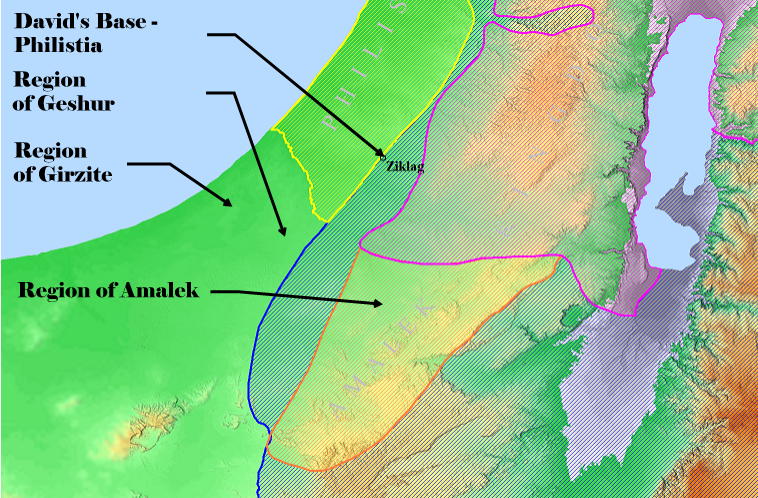
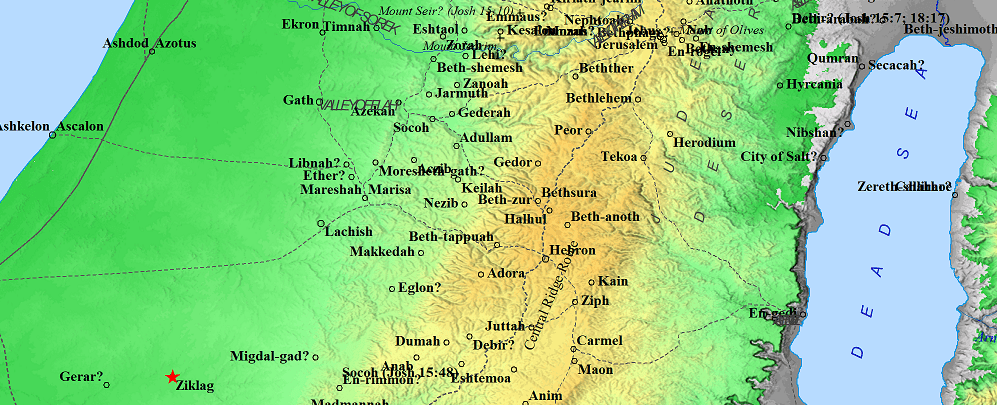


 Considering the Bible