My hope is that this series will offer my readers a chance to consider the names, characteristics and descriptions of our God in the Word.
The remaining Names of God in this series might be considered descriptors, or characteristics of the Lord. We have reviewed the three primary Names of God, along with nineteen compound Names of God in our previous posts. As we venture through these descriptors of our God, I hope we will recognize all the many characteristics of our God that we tend to take for granted.
The Word is truly rich with descriptions of the Living God, and this effort of searching in the Word was quite illuminating. He truly is the ultimate subject of the Word, and His revelation of self-descriptions, or the accolades offered Him by His priests, prophets, kings apostles and faithful truly is a blessing.
May the Name of the Lord be praised, and by thinking on His name, may you have a blessed day.
HE WHO STRUCK DOWN GREAT KINGS
Psalm 136:17 to him who struck down great kings, for his steadfast love endures forever;
We are in a psalm this morning that has the constant refrain of “for His steadfast love endures forever”. The psalmist begins with statements of praise toward the Lord, the God of God’s and the Lord of Lords, and transitions to the mighty acts of creation for 6 verses, each act of creation displaying His steadfast love.
Starting in verse nine, the psalmist focuses his description of the steadfast love of God to the nation of Israel, and how He brought the family of Abraham out of slavery and through the Red Sea.
All the previous statements regarding God’s works may be considered positive and generally a blessing. That is until verse 15, where the psalmist speaks of “shaking off”, or overthrowing the Pharoah of Egypt. The psalmist them continues speaking of those who had to be “dealt with” in order to establish and protect His new nation.
Dealing with a nation in our verse speaks of striking down great kings. Remember that when a king is struck down, the people he ruled over fall into turmoil. Sometimes the turmoil is minor, and sometimes it is a major upheaval in the nations life. Consider Egypt. Their history after the exodus was impacted greatly. For those kings that were not compliant with God’s will, they also fell and the people associated with the king suffered.
How can the psalmist claim that God’s steadfast love endures forever, when the action includes secondary impacts that are detrimental to those around the nation?
Two thoughts come to mind.
Those who opposed God and His will suffered due to their refusal to join into the work of God. Many times in the history of Israel we find a foreigner being accepted into the nation of Israel, avoiding judgement and falling under the covenantal blessing of God. Rahab is an example.
Though the psalmist is focusing on the nation of Israel, and how God has acted in the formation and continuation of the nation of Israel, the psalmist takes an interesting turn as the passage closes. The last few verses do not use the term “Israel”, but describes those who…
were of a low estate,
were helpless (rescued from foes)
receive food from Him (gives food to all flesh)
The psalmist spends time narrowing down on the acts of God specifically for the nation of Israel, but finishes with God’s general “steadfast love” for all.
Our selfish “my kingdom” reactions to the will of God may place us on the hurting side of life, but the steadfast love of God endures forever.
HE WHO STRUCK DOWN GREAT KINGS is still on the move throughout the earth, conquering each man’s will, taking out those who oppose His will, and offering forgiveness through manifold and multiple opportunities for those who will be of a low estate, willing to admit their helplessness and receive the good news of a God who STRUCK DOWN GREAT KINGS, even our greatest enemy, death and destruction.
Let us remember the priorities of our God. He is a long term Planner and intermediate impacts along the way (that are surely difficult for our sensitivities), should not consume our perspective.
He is One whose steadfast love endures forever!
I would love to hear of your favorite name, characteristic or description of the Living God. Please leave me a comment, and I will include it in the list!
Thanks again for coming to visit. I hope you found something of interest in this post and would appreciate a comment, to begin a discussion. If you know someone this blog may bless (or challenge), send them a link, so they may join us in our discussion.
26 For if we go on sinning deliberately after receiving the knowledge of the truth, there no longer remains a sacrifice for sins, Hebrews 10:27 but a fearful expectation of judgment, and a fury of fire that will consume the adversaries. Hebrews 10:28 Anyone who has set aside the law of Moses dies without mercy on the evidence of two or three witnesses. Hebrews 10:29 How much worse punishment, do you think, will be deserved by the one who has trampled underfoot the Son of God, and has profaned the blood of the covenant by which he was sanctified, and has outraged the Spirit of grace? Hebrews 10:30 For we know him who said, “Vengeance is mine; I will repay.” And again, “The Lord will judge his people.” Hebrews 10:31 It is a fearful thing to fall into the hands of the living God.
profaned the blood of the covenant by which he was sanctified,
Who is the subject of this passage? This is the common question that seems to be the lynchpin of this passage. It all centers around the identification of who “he” is
There are three possibilities to consider.
A Professor
The passage is describing the person who has joined the church out of curiosity, one who has not become a true believer but has joined the group externally through actions and rule keeping, not internally, by faith and love.
This identification hinges on other passages outside of the book of Hebrews, where a person is considered “sanctified” but is obviously a non-believer.
A popular example is in 2 Corinthians.
1 Corinthians 7:13-14 If any woman has a husband who is an unbeliever, and he consents to live with her, she should not divorce him. For the unbelieving husband is made holy (sanctified) because of his wife, and the unbelieving wife is made holy (sanctified) because of her husband. Otherwise your children would be unclean, but as it is, they are holy (sanctified).
This example raises a number of questions in my mind, but since we are in Hebrews this morning, I will leave this passage for my reader to consider on their own.
A Possessor
The passage is describing the person who has joined the body out of a repentance of sin, of acknowledging the person of Jesus as the expected Messiah, and is living as organic member of the congregation.
I suppose identifying the one “sanctified” as a true believer finds support in the passage itself, with the author including himself in the audience, when he offers the phrase “If we sin willfully..”
Also, within the book of Hebrews, we find the author repeatedly referring to believers as sanctified.
Hebrews 2:11 For he who sanctifies and those who are sanctified all have one source. That is why he is not ashamed to call them brothers, Hebrews 10:10 And by that will we have been sanctified through the offering of the body of Jesus Christ once for all. Hebrews 10:14 For by a single offering he has perfected for all time those who are being sanctified. Hebrews 13:12 So Jesus also suffered outside the gate in order to sanctify the people through his own blood.
The Christ
Both of the previous identifications take the “he” as being a member (in some way) of the church. There is the possibility the One who was sanctified by the blood was the Christ Himself.
Consider the Messiah sanctified Himself for the purpose of our sanctification.
John 17:19 And for their sake I consecrate myself, that they also may be sanctified in truth.
It is also interesting that of these three phrases we are looking at, this is the only one that has an additional description attached to the action.
One who has trampled underfoot the Son of God,
One who has profaned the blood of the covenant
by which he was sanctified,
One who has outraged the Spirit of grace?
However my reader considers this passage, it does leave us with questions that may never be answered. It may be wise to hold to our understanding of this passage with velvet gloves, showing grace to those who understand differently.
Yet I cannot excape the fact that it is one of five warning passages we find in the book. When we consider the book is focused on the believers estimation of the Christ, their faith in His work, and the continuance of their faith in Him, it is difficult to image the author directs his argument to those who are unbelivers.
It may be wise to reintroduce the first phrase of the authors writing for the Hebrews.
“If we sin willfully after we have received the knowledge of the truth”
Thanks again for coming to visit. I hope you found something of interest in this post and would appreciate a comment, to begin a discussion. If you would like to receive daily posts from Considering the Bible, click on the “Follow” link below
As many who have followed me for a bit, I have fallen into the Psalms, and I can’t get up! (As if I would want to.) The Psalms are a majestic collection of poetry, of heart felt human experiences that constantly challenge me in my own frail attempt to follow the true King. As many of the Psalms are written by David, my study on the Psalms has spurred me on to looking at the life of David, is the main contributor to this book, and to follow the victories and tragedies of the shepherd King of Israel.
Many times in the narrative, we will see the Lord Jesus, imperfectly, yet a reflection of His spirit in a man with weaknesses.
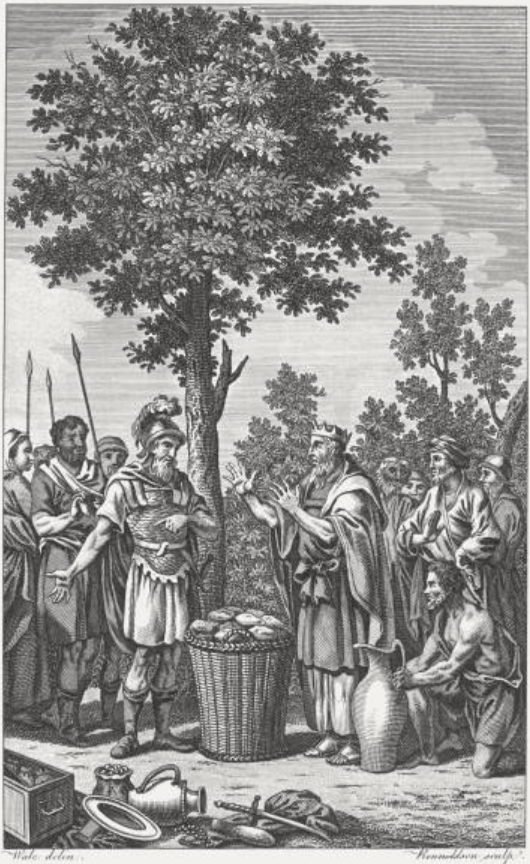
3 David also defeated Hadadezer the son of Rehob, king of Zobah, as he went to restore his power at the river Euphrates. 4 And David took from him 1,700 horsemen, and 20,000 foot soldiers. And David hamstrung all the chariot horses but left enough for 100 chariots. 5 And when the Syrians of Damascus came to help Hadadezer king of Zobah, David struck down 22,000 men of the Syrians. 6 Then David put garrisons in Aram of Damascus, and the Syrians became servants to David and brought tribute. And the LORD gave victory to David wherever he went. 7 And David took the shields of gold that were carried by the servants of Hadadezer and brought them to Jerusalem. 8 And from Betah and from Berothai, cities of Hadadezer, King David took very much bronze.
Hadadezer was shooting to expand his reign, to increase his territory. One problem was that this territory was next to king David, and David had the same goals.
Our passage speaks of a defeat that was consequential for the people of Hadadezer, and the king suffered a serious blow to his army. TI have found no information on the total size of his army, but to have 1,700 horsemen, and 20,000 foot soldiers taken from him is likely a serious blow to Hadadezer.
But Hadadezer was not a quitter. After the defeat and humiliation David provided him, he attained the services of one of David’s other enemies, the Syrians. This alliance did not bode well for Hadadezer nor the Syrians, for David again routed the enemy, striking down 22,000
Strategically, David established outposts in the region to maintain control of the area. Also, those who came to Hadadezer became vassal states of Israel, with Hadaezer also providing “gifts” for the conquering king.
Did I mention that Hadadezer was not a quitter? We will find his name pop up in chapter 10, where he joins with the Ammonites in a coalition to defeat David.
2 Samuel 10:8 And the Ammonites came out and drew up in battle array at the entrance of the gate, and the Syrians of Zobah and of Rehob and the men of Tob and Maacah were by themselves in the open country.
Unfortunately for Hadadezer, David also was not a quitter, and as David expanded his kingdom, Hadadezer, and all who joined him in his efforts to hold back David, became victims to the unrelenting success of this king of Israel. Unrelenting, for there was no stopping David in his pursuit of expansion.
6 …. And the LORD gave victory to David wherever he went.
There are those who will succeed no matter what is thrown at them. Certain men or women that seemingly cannot be stopped in their pursuits. Some are unstoppable simply due to their selfish desires, fueled by an unconquerable will power, and the allowance of God. Some are led by God into victories for a temporal purpose, to provide safety and success for their people and to display a picture of a future event in the providence of God.
But there is One who has been chosen to be the Ultimate King, One who was completely successful in establishing His Kingdom, is unstoppable in expanding His ecclesia, and offers all His citizens the perfection of safety and success .
His battles were not fought as any other king, and His victories were not anticipated by the powerful. His methods of conquering those who fought against Him were completely unconventional. He had no supporting armies in His strategies, other than the guidance of His Father, and the strength given Him by the Spirit.
His name is Jesus and He is the unstoppable, unrelenting King of all of creation, head of the church!
Colossians 1:15-18 He is the image of the invisible God, the firstborn of all creation. For by him all things were created, in heaven and on earth, visible and invisible, whether thrones or dominions or rulers or authorities–all things were created through him and for him. And he is before all things, and in him all things hold together. And he is the head of the body, the church. He is the beginning, the firstborn from the dead, that in everything he might be preeminent.
Thanks again for coming to visit. I hope you found something of interest in this post and would appreciate a comment, to begin a discussion. If you know someone this blog may bless (or challenge), send them a link, so they may join us in our discussion.
In the mid nineties, I had a little red Buick and a big ol’ bass box in the trunk, and would listen to “Christian Rock”, cranked to 11.
(What did you say? Huh? Can you say that again, I didn’t hear you….)
I have gotten away from that genre for many reasons, the least of which may be a loss of hearing, but some songs have stuck with me over the decades.
The artist’s I listened to sought to reflect Scriptural teaching for the most part. They ranged from “preaching” pop culture religion to significant theological teaching. As I listened to the lyrics, I found some to be quite challenging.
To be honest, I listened because I could justify the rock beat with “sanctified lyrics”.
Occassionaly I will post a song, supply the lyrics and make a comment or two. If you decide to listen to the tune, turn the speaker down unless you are already deaf. Some of the songs tend to have a certain “volume” about them!
This post will consider the song
Flying – by Grammatrain
Last night I dreamt a strange, peculiar dream A child slept underneath a great bird’s wing Laid on the ground where warmth was found Until he woke and crawled away on hands and knees
Flying in my dream Flying in my dream
A snake told stories to the child untrue The child bent down and felt its poison tooth Started to die, the bird did fly Swallowed the snake to save the child, and then he died
Flying in my dream Flying in my dream
The dead bird laid, for three whole days Then spread its wings and flew away
I woke up early while the sun still slept This strange dream circulating in my head Stared at the ceiling, pondered its meaning The dream would not leave me although I left my bed
Flying in my dream Flying in my dream
The dead bird laid, for three whole days Then spread its wings and flew away
In my dream In my dream My dream
Take a listen!
Let me know what you think of the lyrics, and of the tunes!
Thanks again for coming to visit. I hope you found something of interest in this post and would appreciate a comment, to begin a discussion. If you know someone this blog may bless (or challenge), send them a link, so they may join us in our discussion
My hope is that this series will offer my readers a chance to consider the names, characteristics and descriptions of our God in the Word.
The remaining Names of God in this series might be considered descriptors, or characteristics of the Lord. We have reviewed the three primary Names of God, along with nineteen compound Names of God in our previous posts. As we venture through these descriptors of our God, I hope we will recognize all the many characteristics of our God that we tend to take for granted.
The Word is truly rich with descriptions of the Living God, and this effort of searching in the Word was quite illuminating. He truly is the ultimate subject of the Word, and His revelation of self-descriptions, or the accolades offered Him by His priests, prophets, kings apostles and faithful truly is a blessing.
May the Name of the Lord be praised, and by thinking on His name, may you have a blessed day.
HE WHO STRETCHES OUT THE HEAVENS
Isaiah 40:22 It is he who sits above the circle of the earth, and its inhabitants are like grasshoppers; who stretches out the heavens like a curtain, and spreads them like a tent to dwell in;
As a refresher, Isaiah is speaking to the people of God as he compares their God with the idols they have chased after. In this passage, and specifically with this name. Isaiah provides a picture of One who stretches out the heavens.
Though the ancients didn’t have telescopes, radar satellites, or rockets into space, they did spend time under the stars. The life of the ancient Hebrew was not a life of ignorance regarding the heavens, for they spent much more time under the stars than the average modern. We may talk of light years, and galaxies beyond any distance we can comprehend, but the ancients, dare I say, comprehended the skies even as we do. With our eyes. And our minds, as much as possible.
Ask yourself – what is a light year? What impact is that on your life? Dare I say that one night under the stars, will communicate the vastness of the heavens better than a number that cannot be comprehended.
As some may know, I am an early bird, waking in the morning before 5 always, and sometimes before that. If it isn’t a work day, and I have the opportunity, I will venture outside to get in my hammock, and simply star gaze with the naked eye. The longer I stare, the greater the mystery of the heavens, the beauty of the stars, and the littleness of me. Stargazing is a very humbling experience!
How could Isaiah explain this other than to speak of the act of stretching out the heavens as a merely human activity, as if the wife was stretching the curtain over the window. A seemingly effortless task, and that is the point. Isaiah is describing a God who is not worn out by this impossible to imagine task, but completes it as if it was the simply pull of a curtain.
One additional item occurs to me. Isaiah mentioned our God stretches out the heavens, as if it was a current action on behalf of the Lord. Did he understand the idea of an expanding universe? Is this another incidence that the prophet spoke a truth that he may not have even understood in his day? The Scriptures are wild, and to find these nuggets of truth buried in the Word is truly a blessing to consider.
Let us be thankful to HE WHO STRETCHES OUT THE HEAVENS, for His mighty creative work, and the sacrificial blood He spilt for our lives. He is an incredible God that we will never be able to fully understand, or come close fathoming His incredible love for us.
I would love to hear of your favorite name, characteristic or description of the Living God. Please leave me a comment, and I will include it in the list!
Thanks again for coming to visit. I hope you found something of interest in this post and would appreciate a comment, to begin a discussion. If you know someone this blog may bless (or challenge), send them a link, so they may join us in our discussion.
26 For if we go on sinning deliberately after receiving the knowledge of the truth, there no longer remains a sacrifice for sins, Hebrews 10:27 but a fearful expectation of judgment, and a fury of fire that will consume the adversaries. Hebrews 10:28 Anyone who has set aside the law of Moses dies without mercy on the evidence of two or three witnesses. Hebrews 10:29 How much worse punishment, do you think, will be deserved by the one who has trampled underfoot the Son of God, and has profaned the blood of the covenant by which he was sanctified, and has outraged the Spirit of grace? Hebrews 10:30 For we know him who said, “Vengeance is mine; I will repay.” And again, “The Lord will judge his people.” Hebrews 10:31 It is a fearful thing to fall into the hands of the living God.
Last we visited on this passage, I had provided some background to the passage and my current understanding that this passage was intended for those who had entered into following after the Messiah. The author himself, most assuredly a believer, includes himself in the warning.
For the next three posts on this passage, I hope to consider each of the phrases the author provides in expanding his understanding of “sinning willfully”.
A very serious condition that has dire consequences!
trampled underfoot the Son of God
To be trampled underfoot. It seems obvious the intended meaning, that the object being trampled underfoot is that which is spurned, treated with with rudeness, disrespect and neglect.
This term is used elsewhere in the New Testament and is helpful in considering the impact of our authors intent.
Matthew 5:13 You are the salt of the earth, but if salt has lost its taste, how shall its saltiness be restored? It is no longer good for anything except to be thrown out and trampled under people’s feet.
Jesus Himself used this term in His teaching, and this first verse provided indicates the worth associated with anything that is trampled underfoot. It is “good for nothing” other than to be thrown out and trampled under foot.
To be trampled underfoot is an expression of worth. Specifically, it is the estimated worth of an object in the minds of those considering it.
Matthew 7:6 Do not give dogs what is holy, and do not throw your pearls before pigs, lest they trample them underfoot and turn to attack you.
The true value and the estimated value of an object can be radically different amongst those considering it. In this verse, the true value of the object is precious, holy and likened to pearls. The estimated value is worthlessness in the way it is used, or distributed. The holy was distributed to the unholy.
And what was the reaction? The holy object was trampled underfoot by the unholy. The unholy also estimated the value to be of no value. But with the unholy, they not only trampled underfoot the holy, they turned on the one who did not estimate the object as holy, and protect it from abuse. They cast the holy to the unholy. And because of this error in estimating the value of the object, the unholy turned on them.
Consider this in relation to our passage in Hebrews.
The verse speaks of a judgement, even by the unholy, on the one who initially did not estimate the true value of a holy object.
Our author asks..
How much worse punishment, do you think, will be deserved by the one who has trampled underfoot the Son of God.
In our earlier verse, it was the unholy performing the judgement. In the passage of Hebrews, we face the Holy One in the punishment.
The trampling underfoot is a severe estimation of worthlessness of the object, and this estimation of worthlessness brings consequences.
But the object in our verse in not some precious commodity, or some costly truth, or a valuable piece of wisdom, but the very Person of the Christ. Not an object with holiness assigned to it, but the very Holy One, the Person who embodies and provides the standard of holiness.
He is the One who has given everything to rescue us. What a complete and utter failure to estimate the true worth of Him, which will take an eternity to understand.
May we trample underfoot every effort, thought or action in our lives that would diminish our estimation of Him who is Holy.
Thanks again for coming to visit. I hope you found something of interest in this post and would appreciate a comment, to begin a discussion. If you would like to receive daily posts from Considering the Bible, click on the “Follow” link below
Psalm 34:6 This poor man cried, and the LORD heard him and saved him out of all his troubles.
As many who follow may know, I have had the privilege to know the Lord for over 40 years. During those decades, He has proved Himself to be a faithful, kind and loving Savior. And as I have learned to lean on Jesus, He has shown Himself to be a merciful Savior, never wavering, even in some very dark times.
This topical series will try to provide a snapshot of an ol’ fools prayers, the weakness and selfishness of his prayers, and the ever increasing goodness of God in His responses the those prayers.
I hope my witness to the goodness and faithfulness of God will be an encouragement to those reading, and will spur us all on to a deeper, more consistent time of being in the Lord’s presence.
Please visit with me as I tell the story of a faithful God and His care for an ol’ fool. Though David considered himself a poor man, I freely admit, I am just an “ol’ fool” looking to the Lord.
Praise Alone
Three in the morning, on a quiet street in London Ontario. Not a vehicle on the streets, and I was out doing my newspaper deliveries, waiting for my firstborn to enter the world.
It was a great job for a young married man, who was in transition, not knowing where to go or what to do for God. I had been in school for a degree program in the Architectural discipline when I met my future wife, and subsequently the Savior Jesus Christ.
Everything turned upside down, or should I say everything turned itself right side up. Leaving my degree program, I found myself walking the streets delivering over 400 newspapers every night of the week, spending my time memorizing the Word and being quiet.
Looking back on those days, they were great, and I am thankful the Lord placed me in that position. The work only required a couple-three hours each night, and I could spend the remainder of the day with my wife, establishing our family. I had read in the book of Deuteronomy of the importance of that first year with the wife. I can attest to the blessing!
Deuteronomy 24:5 “When a man is newly married, he shall not go out with the army or be liable for any other public duty. He shall be free at home one year to be happy with his wife whom he has taken.
But I am getting sidetracked to the purpose of this post, for that night in London at 3:00 am, as I walked about those lonely streets carrying 80 pounds of papers, I began to thank God for His working in our lives, for His direction, for His salvation. Then it slipped from being simply thankful for what He has done for us, and for me specifically, to praising Him for who He is.
This shift in prayer was not a part of some scheduled required exercise as a disciple, but one of the purest times of praise to the God above that I had ever entered into as a young believer. I don’t recall asking for anything, asking for anyone, asking asking asking. My prayer of praise slipped from thankfulness for things in my life, my experience, my needs being fulfilled, my my my, into simply considering who our God is, and His amazing character, His spotless life, His complete abandonment for His people, His entering into a life of poverty and trial, His fight to get on the cross and to provide a totally selfless sacrifice for those who loved and hated Him.
That night was a foretaste of being before the throne someday. Nothing ’bout me, all ’bout Him.
As it should be!
Thanks for joining and Considering The Bible with me. Your thoughts are always welcome, and I look forward to hearing of the faithfulness of God in your lives.
As believers, we are called by God to follow after Jesus in all our actions and attitudes. How we relate to money in included in our following after Him.
As mentioned in my introduction to this series, my family and I have been impacted a number of times in our church attendance by what appears to be the pull of money on church leadership. During our Christian pilgrimage, a number of churches, through thier leadership, have made decisions that directly impacted our status within the body of believers.
Some of these instances provided us reason to dig into the Word, to find correction in our own personal relationship to money, to try to understand the wisdom of a church leader’s decision, and in the end to apply God’s will for our own finances.
Little did we know the tremendously corrosive power the love of money has over our own hearts, and by extrapolation, the church as a whole. This should not surprise the believer for Paul provided a harsh truth on this topic.
1 Timothy 6:10 For the love of money is a root of all kinds of evils. It is through this craving that some have wandered away from the faith and pierced themselves with many pangs.
Alternately, the writer of Hebrews also provided no better command, (and for some believer’s no harder command) than found in Hebrews 13.
Hebrews 13:5 Keep your life free from love of money, and be content with what you have, for he has said, “I will never leave you nor forsake you.”
Many of our experiences have included the topic of tithing in the church. Personally, our denominational background considers tithing to be Biblically mandated on the New Testament believer. I understand many denominations consider tithing to be an important commmittment of the believers relationship to the church body.
Let’s take a look at this topic, and consider each passage that contains a reference to tithing.
This post will consider Leviticus 27:30-32
30 “Every tithe of the land, whether of the seed of the land or of the fruit of the trees, is the LORD’s; it is holy to the LORD. 31 If a man wishes to redeem some of his tithe, he shall add a fifth to it. 32 And every tithe of herds and flocks, every tenth animal of all that pass under the herdsman’s staff, shall be holy to the LORD.
A lot of water has passed under the bridge between our last instance of tithing and this particular reference. To be fair, there are some believers that may include Jacob in his reference to giving 10 percent as an example of tithing prior to the giving of the law.
Genesis 28:22 and this stone, which I have set up for a pillar, shall be God’s house. And of all that you give me I will give a full tenth to you.”
I have left the passage out, for it was a promise from a negotiator, a business man seeking an edge. The Word does not indicate he followed through. Jacob made a vow, but it rings of an effort to give if he gets.
I love how he vows a full tenth. That is cute! Pass on that example.
It is somewhat amazing that a cardinal teaching such as tithing in the modern church finds so little support prior to the law being given, the sacrifices established, the priesthood being ordained and the nation being established in the land of promise. Of course one instance of a clear command is sufficient for the believer to heed unto, yet so far, that command has not been evident.
Let’s see how we fare with this passage in Leviticus.
It has been over 400 years since the prior incident with Abram, when he conquered a victorious army to bring back his nephew, and meeting up with the King of Salem. Mighty momentous times for Abram, and an offering of 10% of his plunder may be considered a perfectly acceptable offering to the God who provided the victory. (PS I think Melchizedek was Jesus!)
400 years have passed, with the establishment of the nation of Israel, based on the covenant “cut” on Mount Sinai between God and His nation. At this time, tithing becomes a teaching that attains to the status of a command.
Under this covenant, which included animal sacrifice, the existence of the tabernacle and the ordination of a priestly class, (many of which could own no land), God’s people were commanded to tithe.
As an aside, I recently asked myself about the way of life for the ancient Israelite, especially in regards to the taxation he suffered under. Back at my computer, and try as I might, I can’t seem to find the term tax or taxation in the Old Testament, nor the concept of taxation until we get to the kings of Israel.
God warned them that a king would exact a “taxation” and that it would be burdensome. He counselled them to not ask for a king. But they did, and they acquired a tax burden like they had never experienced.
So if there was no taxation prior to the era of the kings, how did the priests support themselves. They had no land, and their major skill was butchery, the slaying of animals. Thankfully they could consume some of the offering, and some of the fruits and seeds were available for them. So was the tithe established to support the priests of Israel in their work for the people before God? Is that a fair assumption?
Seed or Fruit
Verse 30 speaks of tithing the seed or fruit of the land. But it is interesting that God does not make a command, but states “every tithe of the land” implying that any tithe given should be given in this manner. Or might it be better to consider that the phrase does not say “every piece of land” is to be tithed of it’s seed or fruit. Is there a difference? I will let my reader consider.
But consider being directed by this passage at harvest season. What if the land produced both seed bearing plants and fruit bearing trees. Seeds and fruit. Now how is the Hebrew to tithe that? Base it on the square acreage, the percent of land covered by the trees as opposed to the plants, then prorate the 10% tithe based on the coverage of the trees as compared to the plants on the land? And what if the trees produced much but the plants withered? Too many arguments to muddy the water!
In all of this the motivation to tithe is the kicker. The tithe, (however the details were worked out) was holy unto the Lord. This seemingly minor phrase is the hinge point for the obedient Hebrew.
If the tithe is the Lord’s and it is holy, no faithful Hebrew will seek to find excuses or reasons as this author did above. He would gladly provide his tithe, and provide enough to safely satisfy the intent of the command, and not argue with the law as I did previously. (Am I not the worst?)
To tithe of the seed and the fruit is to tithe of the future goods the farmer needs to continue in his life. It is an expression of obedience, and an expression of his faith in a God who provides.
As the risk of appearing as a hard nosed literalist, it is good to recognize that the tithe consisted of seed and fruit. It was not the assined value of the seed or fruit converted into a denarius or shekel. The faithful Hebrew was to bring food stuffs to the tabernacle, and later by extension to the temple. Food stuffs. That minor fact might be important later on.
Redemption
Now this one was unexpected when I first read it. When a faithful Jew provided his tithe, the Lord gives the option to recover it. A bit of a price to add to it, being a 20% markup, and it would be certainly a strange occurrence to redeem a basket of fruit or a sack of seeds. But the next verse may give a clue as to the reason this particular practice was allowed.
Herd or Flock
The faithful Jew was to provide the best of his herd and flock. This is the message of the Old Testament, and we often consider the spotless lamb as the typical perfect sacrifice for the Hebrew to bring for one of the required sacrifices.
For tithing, it is a different. This tithe was indescriminate. If a herdsman were to tithe, the method of choosing the tithed animal was to let the herd pass under a staff. The tenth animal was to be the tithe. Pure chance. The best or the worst animal, if it passed as the tenth animal under the staff was to be chosen.
Consider a man with nine sheep. No tithe required. Ten sheep? One is to be offered as the tithe, a true 10%. Nineteen sheep. The herdsman provides one of his nineteen sheep, or 5.2% of his herd. The rate of tithing was varying, and not a simple 10% portion of the flock. That is until the herdsman approaches massive flocks. At that point, the tithe approaches an exact 10%.
But consider the herdsman that loves a specific sheep. Let me offer a case in point.
My wife and I have a couple goats and one of them (Sir Poopsalot!) is her favorite. If we had eleven goats, and we were under this covenant, and as our herd passed under the staff, and Sir Poopsalot was chosen, my wife would gladly pay the 20% extra to redeem that stubborn, entertaining, silly goat.
This command, or maybe I might better describe it as an allowance, exhibits the mercy of God in the law. He considers our frailties, our emotions and connections we have in our lives, provides allowances to minimize unnecessary hurt as the believer obeys.
I can’t help but close this short study on the tithe command of the old covenant with the consistency of the Messiah’s mercy as He spoke of His yoke.
Matthew 11:30 For my yoke is easy, and my burden is light.
This is the same God who provided an allowance in the regulated tithing, that has also expressed His severe mercy in the giving of His life for all.
He has rescued us from the old covenant and provided us life in Him. Could it get any better than that? He is so good!
My hope is that this series will offer my readers a chance to consider the names, characteristics and descriptions of our God in the Word.
The remaining Names of God in this series might be considered descriptors, or characteristics of the Lord. We have reviewed the three primary Names of God, along with nineteen compound Names of God in our previous posts. As we venture through these descriptors of our God, I hope we will recognize all the many characteristics of our God that we tend to take for granted.
The Word is truly rich with descriptions of the Living God, and this effort of searching in the Word was quite illuminating. He truly is the ultimate subject of the Word, and His revelation of self-descriptions, or the accolades offered Him by His priests, prophets, kings apostles and faithful truly is a blessing.
May the Name of the Lord be praised, and by thinking on His name, may you have a blessed day.
HE WHO STIRS UP THE SEA
Jeremiah 31:35 Thus says the LORD, who gives the sun for light by day and the fixed order of the moon and the stars for light by night, who stirs up the sea so that its waves roar– the LORD of hosts is his name:
It seems like forever since I published on this general set of verses back in 2020. I was addressing the outworking of Jeremiah’s prophecy of the continual existence of Israel despite the obvious destruction and decimation of the nation in AD 70.
If this seeming unfulfilled promise of God to national Israel disturbs you, or fuels your unbelief in the God of the Bible, it may be to your benefit to consider what took me 20 years to figure out. The post should only take a few minutes to read, and hopefully my explanations make some sense for those who want to understand. Anyway, venture over to Nation or Church – Jeremiah 31:35-37 if I have piqued your interest.
For our verse this morning, we want to focus in on how the Lord is called the One WHO STIRS UP THE SEA. Is this phrase simply a description of the tumult on the seas during vicious storms, how the winds and rains pummel the sea and make it a monstrous enemy for those on the sea? Is Jeremiah communicating to the saints of old the mighty power of God as demonstrated on the seas?
Yes, I want to say that is the message, and yet as I have learned in the past, the words chosen in this verse may pack more than simply a picture of the mighty power of nature.
There is a pattern in the Old Testament that represents the people of God as the “land” and the nations being the sea. A stable people as compared to a restless people. A people with foundation as compared to a people who have no support.
A few verses to review to make this point. First, let’s consider Isaiah. He speaks of the abundance of the sea as compared to the wealth of the nations. A very common Hebrew parallellism!
Isaiah 60:5 …the abundance of the sea shall be turned to you, the wealth of the nations shall come to you.
Isaiah also likens the wicked to the foaming sea, with the mire and dirt being thrown on the shore.
Isaiah 57:20 But the wicked are like the tossing sea; for it cannot be quiet, and its waters toss up mire and dirt.
Again, whne Isaiah likened the wicked, or the nations to a tumultuous sea, bringing it’s filth to the land, is it not picturesque of the influence of the nations on the people of God?
Even with this very short study, we can see the connection of the nations with the sea. Might we extend that thought in our phrase we are considering? (Hang on folks, for this gets knotty!) Is the picture of the Lord stirring up the nations an accurate picture? Might we see that the Lord is active in the tumult of the world for His will to be accomplished? This is difficult stuff, but consider.
Like Jeremiah, Isaiah also describes our God as HE WHO STIRS UP THE SEA.
Isaiah 51:15 I am the LORD your God, who stirs up the sea so that its waves roar– the LORD of hosts is his name.
Consider the image and the impact of his name, for we certainly see much tumult in the world today. Thankfully, we know that as the people of God, we have a refuge in Jesus, a place where confusion is absent, where peace of heart and a quiet mind can rule the life of the saint and reside in the family of God.
1 Corinthians 14:33 For God is not a God of confusion but of peace. As in all the churches of the saints,
No matter how you see this verse in relation to the nations, let us thank God for the Savior Jesus, who is the ONE WHO STIRS UP THE SEA.
I would love to hear of your favorite name, characteristic or description of the Living God. Please leave me a comment, and I will include it in the list!
Thanks again for coming to visit. I hope you found something of interest in this post and would appreciate a comment, to begin a discussion. If you know someone this blog may bless (or challenge), send them a link, so they may join us in our discussion.
26 For if we go on sinning deliberately after receiving the knowledge of the truth, there no longer remains a sacrifice for sins, Hebrews 10:27 but a fearful expectation of judgment, and a fury of fire that will consume the adversaries. Hebrews 10:28 Anyone who has set aside the law of Moses dies without mercy on the evidence of two or three witnesses. Hebrews 10:29 How much worse punishment, do you think, will be deserved by the one who has trampled underfoot the Son of God, and has profaned the blood of the covenant by which he was sanctified, and has outraged the Spirit of grace? Hebrews 10:30 For we know him who said, “Vengeance is mine; I will repay.” And again, “The Lord will judge his people.” Hebrews 10:31 It is a fearful thing to fall into the hands of the living God.
This is a fearsome passage, and must be considered with a spirit of grace and humility, for the message has been interpreted in many ways, defending a number of teachings within the Body of Christ.
The larger issue in this passage is the intended audience. Is this intended to address those who have yet to enter the salvation provided by the Messiah, but are simply looking in from the position of the Old Testament faith? Hebrew faithful who are still considering the claims of the Messiah?
In my current understanding of the Word, to be a faithful Hebrew was to be a follower of the Messiah when (or shortly after) first coming into contact with Him, for He provided varied, ample and timely evidence of His office and ministry of Messiah. The faithful Hebrew, (sometimes called the remnant throughout the Old Testament) looked for the Messiah, and to have Him displayed so prominently, with so many evidences, none the less than the resurrection from the dead, tells me that to remain outside of the community of faith was to show evidence of unfaithfulness as a Hebrew.
Isaiah 28:5 In that day the LORD of hosts will be a crown of glory, and a diadem of beauty, to the remnant of his people,
Therefore, I am of the opinion this passage is directed to the faithful Hebrew, the remnant of His people. The passage is for the one who has seen the evidence, believed the message and has followed after the Christ, abandoning the old system of relating to God through animal sacrifice and temple worship. And this passage supports this understanding. The author includes himself in this warning, as he begins this passage.
… if we go on sinning deliberately
First, the author speaks of sinning deliberately. This may be translated as sinning willfully, acting in opposition to the knowledge of the truth.
Now I don’t know about my reader, but I want to humbly confess that I have known the will of God in certain times of my life and yet failed to perform that known will. I have been weak, obstinate and without excuse.
Is the apostle addressing this condition, this state of belief in the saint? Possibly, but at the risk of seeming to justify my own weakness to maintain my citizenship in heaven, I am thankful the apostle defined the “willful sinning” in a following verse.
As we consider the following three phrases in verse 29, I think we will appreciate the clarification of the “willful sinning” referred to earlier.
Our next posts in this series will address each of these phrases. I am looking forward to finding out more about them and trying to communicate my findings to you.
Until them, may the Lord bless you and keep you, and make us a blessing to others!
Thanks again for coming to visit. I hope you found something of interest in this post and would appreciate a comment, to begin a discussion. If you would like to receive daily posts from Considering the Bible, click on the “Follow” link below
As many who have followed me for a bit, I have fallen into the Psalms, and I can’t get up! (As if I would want to.) The Psalms are a majestic collection of poetry, of heart felt human experiences that constantly challenge me in my own frail attempt to follow the true King. As many of the Psalms are written by David, my study on the Psalms has spurred me on to looking at the life of David, is the main contributor to this book, and to follow the victories and tragedies of the shepherd King of Israel.
Many times in the narrative, we will see the Lord Jesus, imperfectly, yet a reflection of His spirit in a man with weaknesses.
2 Samuel 8:2 And he defeated Moab and he measured them with a line, making them lie down on the ground. Two lines he measured to be put to death, and one full line to be spared. And the Moabites became servants to David and brought tribute.
In our previous verse, David made an offensive strike against the Philistines, changing the course of the nation. The Philistines were a thorn in the side of Israel since day one, and David put them in thier place.
This mornings verse addresses the nation of Moab, a nation that descends from Abraham, through the union on Lot and one of his daughters.
Moab also fought with Israel during the reign of Saul. But for David to continue fighting the Moabites is difficult to understand, for David had connections with these people.
His grandmother, Ruth was a Moabitess, and though she converted to the faith, her roots were of the nation of Moab. David had a family connection with the nation of Moab.
Matthew 1:5,6…Boaz the father of Obed by Ruth, and Obed the father of Jesse, and Jesse the father of David the king…
Not only did David have a Moabite in his lineage, the nation harbored Davids parents during the persecution of Saul.
1 Samuel 22:3,4 ESV – And David went from there to Mizpeh of Moab. And he said to the king of Moab, “Please let my father and my mother stay with you, till I know what God will do for me.” And he left them with the king of Moab…
So for David to attack Moab as decisively as he does seems overdone in my mind. Of course my mind is infected with human reasoning and a logic that wants to overrule the will of God, so I need to consider reasons that David turned on the relation that existing between him and the Moabites.
First, it is well known that David was a man after God’s own heart and that he was zealous for the God of Israel. Moab did not adhere to this same dedication. As a matter of fact, the daughters of Moab were instrumental in bring Baal worship into the Lord’s people.
Numbers 25:1-3 While Israel lived in Shittim, the people began to whore with the daughters of Moab. These invited the people to the sacrifices of their gods, and the people ate and bowed down to their gods. So Israel yoked himself to Baal of Peor. And the anger of the LORD was kindled against Israel.
David was placed on the throne of Israel by God and David’s zeal to cleanse the nation of idol worship was a natural outgrowth of his committment to God. Moab’s influence must be diminished.
Centuries after David, God issued commands to destroy Moab through the prophets Jeremiah, Isaiah and Amos. but during the time of David, no specific command had been issued. David may have seen the idolatry of Moab, which included the worship of Chemosh, as reason enough to subdue the people of Moab. His zeal to cleanse the nation and spread the news of the One True God was second to none.
There may have been one additional motivator for David. Centuries prior to David’s rise to power, a prophet of God rose and prophecied of Moab’s destruction. This prophet’s name is Balaam, and the King of Moab, seeing the threat of Israel entering the land, hired Balaam to curse the people of God. Though Balaam turned out to be a “hired gun” for the king of Moab, Balaam did provide very explicit prophecies of the nation of Israel.
One of Balaam’s prophecies included the fate of Moab, which must have shocked his employer. Nevertheless, this prophecy speaks of a king rising out of Jacob, crushing the forehead of Moab.
Numbers 24:17 I see him, but not now; I behold him, but not near: a star shall come out of Jacob, and a scepter shall rise out of Israel; it shall crush the forehead of Moab and break down all the sons of Sheth.
David fit the bill. He came on the scene over four centuries after Balaam, rose out of Jacob and was granted the scepter over Israel by the Lord. David may have accepted this prophecy as pertaining to hiself, and sought to perform the Lord’s will. It may explain David’s harsh treatment of the Moabite soldiers, killing two thirds of the army, but not quite.
The prohecy speaks of crushing the forehead. Does the implication of this phrase include the subjugation of a nation, or the obliteration of the nation.
One other passage in the Old Testament also speaks of the bruising of the serpents head.
Genesis 3:15 I will put enmity between you and the woman, and between your offspring and her offspring; he shall bruise your head, and you shall bruise his heel.”
Genesis speaks of the Messiah bruising the head of the serpent. If Balaam’s prophecy links a similar treatment of the Moabites as we find Jesus in crushing the serpents head on the cross, we might conjecture that David reduced the influence of Moab on Israel while allowing them to exist as a slave of the nation.
How my reader understands the current existence (and usefulness) of the enemy in relation to the New Testament saint may provide an opportunity to consider how David, in decimating the army but allowing Moab to exist may mimic our current situation.
In all of this, let’s remember the Son of David is the One who perfectly fulfilled both Balaam’s and Moses’ prophecy of crushing the enemies head.
Jesus is the King and His crushing of the head of the serpent has provided salvation for all. All god’s who sought influence over the creation have been publicly reduced to mere puppets under the hand of the Messiah, for His resurrection has proven His superiority over all.
Thanks again for coming to visit. I hope you found something of interest in this post and would appreciate a comment, to begin a discussion. If you know someone this blog may bless (or challenge), send them a link, so they may join us in our discussion.
My hope is that this series will offer my readers a chance to consider the names, characteristics and descriptions of our God in the Word.
The remaining Names of God in this series might be considered descriptors, or characteristics of the Lord. We have reviewed the three primary Names of God, along with nineteen compound Names of God in our previous posts. As we venture through these descriptors of our God, I hope we will recognize all the many characteristics of our God that we tend to take for granted.
The Word is truly rich with descriptions of the Living God, and this effort of searching in the Word was quite illuminating. He truly is the ultimate subject of the Word, and His revelation of self-descriptions, or the accolades offered Him by His priests, prophets, kings apostles and faithful truly is a blessing.
May the Name of the Lord be praised, and by thinking on His name, may you have a blessed day.
HE WHO SITS IN THE HEAVENS
Psalm 2:4 He who sits in the heavens laughs; the Lord holds them in derision.
I always liked this verse, but probably for the wrong reason. Hopefully it isn’t with evil intent, imagining our God in heaven, rubbing his hands together, laughing out loud because he knows the traps He has set for the “dirty sinners’ out there. Of course, I do not include myself amongst the intended victims. Maybe something wrong there! Yes there is something wrong when this old fellow thinks others deserve judgement but he is exempt from the fate.
This passage is dealing with the kings of the earth, those earthly rulers who seek to usurp control from the rightful King. In this context, the Lord on His throne and from that perspective, is reflecting the utter futility of the efforts of mere men, though they feel they rule over others.
When our passage speaks of the Lord holding them in derision, it speaks of a mockery of the situation. He is not concerned over any effort of man to dethrone Him. He is the Lord!
Yet the leaders of this world are drunk on power. They seek more and more authority over God’s creation, and in the process, reveal their mismanagement, and selfish motivations. Any desire of man to replace God as the King over any of creation is fraught with unassailable obstacles, most of which is the man’s own evil heart and wicked imaginations. Nothing good and meaningful can rise out of the self serving motivation of man.
Consider – even the King of Kings was a sacrificially serving man, One who sought out others, seeking their good as opposed to His will. Only the One who followed after God with all His life is worthy to lead, the One who showed His leadership by serving, His love by dying and His authority by rising up from the grave.
Yes, God mocks, laughing in derision those who oppose Him. Not in the manner I imagined, but in the futility of the effort. Mere man a king to replace Jesus.
He has risen and is the ONE WHO SITS IN THE HEAVENS.
I would love to hear of your favorite name, characteristic or description of the Living God. Please leave me a comment, and I will include it in the list!
Thanks again for coming to visit. I hope you found something of interest in this post and would appreciate a comment, to begin a discussion. If you know someone this blog may bless (or challenge), send them a link, so they may join us in our discussion.
As believers, we are called by God to follow after Jesus in all our actions and attitudes. How we relate to money in included in our following after Him.
As mentioned in my introduction to this series, my family and I have been impacted a number of times in our church attendance by what appears to be the pull of money on church leadership. During our Christian pilgrimage, a number of churches, through thier leadership, have made decisions that directly impacted our status within the body of believers.
Some of these instances provided us reason to dig into the Word, to find correction in our own personal relationship to money, to try to understand the wisdom of a church leader’s decision, and in the end to apply God’s will for our own finances.
Little did we know the tremendously corrosive power the love of money has over our own hearts, and by extrapolation, the church as a whole. This should not surprise the believer for Paul provided a harsh truth on this topic.
1 Timothy 6:10 For the love of money is a root of all kinds of evils. It is through this craving that some have wandered away from the faith and pierced themselves with many pangs.
Alternately, the writer of Hebrews also provided no better command, (and for some believer’s no harder command) than found in Hebrews 13.
Hebrews 13:5 Keep your life free from love of money, and be content with what you have, for he has said, “I will never leave you nor forsake you.”
Many of our experiences have included the topic of tithing in the church. Personally, our denominational background considers tithing to be Biblically mandated on the New Testament believer. I understand many denominations consider tithing to be an important commmittment of the believers relationship to the church body.
Let’s take a look at this topic, and consider each passage that contains a reference to tithing.
This post will consider Genesis 14:20
and blessed be God Most High, who has delivered your enemies into your hand!” And Abram gave him a tenth of everything.
What a great verse to begin our study. It surely teaches us that tithing is not simply a teaching that is mandated by the Law of Moses, but was practiced by Abram the father of our faith. As such, we are following in the steps of Abram in giving a tenth (a tithe).
Note that Abram, a non-Jew. gave him (Melchizedek) a tithe of everything. This example of Abram surely teaches us a practice that applies to all who have faith.
But let us consider a bit of the context of this verse.
Genesis 14 is the recounting of Abram rescuing Lot from the kings of the region. The region was ruled by nine kings, and as power structures are defined, four of these kings, led by the king of Elam, waged war on the remaining five kings. After the battle, in securing the possessions of the victor, the armies swept though the area of Sodom and Gomorrah, picking up Abram’s nephew Lot.
Abram would have none of this. He gathered his army of 318 men to chase after this victorious army in order to retrieve Lot. Surely Abram was outnumbered, outskilled and unfamiliar with the task of defeating experienced soldiers. Yet he defeated the army, retrieved his nephew and returned home. Abram did not intend to simply steal Lots away from the army under cover of darkness, but he led his men in a defeat of an experienced and recently successful army.
He was motivated to retrieve his nephew and his family. In this endeavor, he brought back “all the possessions”
Genesis 14:16 Then he brought back all the possessions, and also brought back his kinsman Lot with his possessions, and the women and the people.
Genesis 14:21 And the king of Sodom said to Abram, “Give me the persons, but take the goods for yourself.”
It seems that based on the King of Sodoms request, that Abram rescued the vanquished people also, and not merely his nephew.
After the victory and return to camp, Abram was visited by two kings. The king of Sodom and the king of Salem.
King of Sodom
It is good to consider the King of Sodom’s request in light of our topic. Seemingly the king of Sodom was so grateful for Abram’s rescue of his people, he offered Abram all the goods that were retrieved in the battle. He only wanted his people back.
Abram refused, for he spoke of his dedication to God, and that since God is the possessor of heaven and earth, it is to be God that provides Abram’s wealth. Abram would not take any funds or possessions from this king in order to clearly maintain his faith in the God who possesses everything! Quite a stellar faith! When freely offered possessions for a service to others, Abram refused.
King of Salem
During this meeting, the king of Salem, Melchizedek, brought out bread and wine. Melchizedk blessed Abram in the name of God Most High, the possessor or heaven and earth. Melchizedek claimed that it was this God who delivered Abrams’s enemies into his hand.
Note the difference between these two kings. Sodom offered Abram possessions, possibly as an act of payment for his mercenary efforts. Abram reacts by rejecting this offer, not wanting to be associated with the offering of the king of Sodom.
When it comes to Melchizedek, he provides Abram a truth claim (not possessions) that Abram embraces. In embracing this truth, Abram reacts by giving Melchizedek a tithe, or a tenth of everything.
Now, an issue rises in my mind. What in tarnation is “everything” that Abram tithes of referring to. All of Abrams possessions? Did Abram have an accounting of his net worth performed and then provide a check to the King of Salem? I jest of course, but when the passage refers to Abram giving a tenth, it is good to consider what the tenth is related to. I would suggest the context demands the “everything” refers to the spoils of the battle.
A few more observations I feel are pertinent.
Although Abram gave a tenth, which suggests this was a common percentage to offer to a god in his culture (which speaks loudly to Abrams understanding who Melchizedek is), the text does not indicate this was an ongoing practice.
In summary, in this passage, I find the description of a man who is committed to the Most High God who possesses all heaven and earth. He provided what most likely was a cultural offering back to the King of Salem, whom I understand to be the Lord Jesus. Abram’s gift implies the same identification of the King as the God who provides.
This passage does not provide a prescription for any tithing practice for modern day believers after the cross. It is good to remember that descriptions of the saints lives does not translate into prescriptions of activities for the Christian.
But if there are saints who seek to emulate Abram in this practice, I would suggest they consider the other descriptive activities we find in the passage also occur. Therefore, based on this passage alone, if a believer conquers an army, rescues a blood relative, rescues a people group of another king, acquires the bounty of a battle, and is approached by at least one King, the saint will be able to also mimic Abram in providing a tithe.
Again I jest, for under our covenant, we may meet the King at any time, and our offering is not simply a tithe of some spoils of battle, but of our heart, mind and soul.
By the way, if you are headed out to conquer an army this week, you can call your accountant and tell him you don’t need a full audit of your possessions. Whatever spoil you take in your victory will be easily calculated!
Thanks for joining and Considering The Bible with me. Your thoughts are always welcome, and I look forward to hearing of the faithfulness of God in your lives.
My hope is that this series will offer my readers a chance to consider the names, characteristics and descriptions of our God in the Word.
The remaining Names of God in this series might be considered descriptors, or characteristics of the Lord. We have reviewed the three primary Names of God, along with nineteen compound Names of God in our previous posts. As we venture through these descriptors of our God, I hope we will recognize all the many characteristics of our God that we tend to take for granted.
The Word is truly rich with descriptions of the Living God, and this effort of searching in the Word was quite illuminating. He truly is the ultimate subject of the Word, and His revelation of self-descriptions, or the accolades offered Him by His priests, prophets, kings apostles and faithful truly is a blessing.
May the Name of the Lord be praised, and by thinking on His name, may you have a blessed day.
HE WHO SITS ABOVE THE CIRCLE OF THE EARTH
Isaiah 40:22 It is he who sits above the circle of the earth, and its inhabitants are like grasshoppers.
Isaiah is in the process of comparing the God of Israel with idols, by way of questioning his people.
Isaiah 40:21 Do you not know? Do you not hear? Has it not been told you from the beginning? Have you not understood from the foundations of the earth?
Questions are a great way to stimulate a discussion. Jesus often asked questions. Questions are a fantastic teaching tool!
Don’t you think so?
As a question is provided, a recipient naturally builds a defence in thier mind. Once a question has been understood, hopefully a discussion can occur, an argument can be entered into, and minds can be changed. And when I say minds can be changed, I am referring to the Biblical concept of repentance! This obviously is the intent of Isaiah and he is brutal!
One question would be sufficient for Isaiah to deliver to the saints, considering the topic of the discussion. One well placed question about the God of Israel should “stop thier mouths”.
Romans 3:19 Now we know that whatever the law says it speaks to those who are under the law, so that every mouth may be stopped, and the whole world may be held accountable to God.
Of course, when Isaiah “machine guns” multiple questions to God’s people, the recipients will not only be speechless, but dumbfounded. That is, if they are honest with themselves, with Isaiah and with the God they are related to.
Four questions were blasted to the saints regarding the difference of thier God compared with idols.
Do you not know?
Of all the people of the earth, these folks knew God was unlike idols!
Do you not hear?
Of all the people of the earth, these folks heard God speak, unlike an idol!
Has it not been told you from the beginning?
Of all the people of the earth, these folks had been introduced to God at the beginning of their formation as a nation! Idols were to be rejected by this people from the very beginning.
Have you not understood from the foundations of the earth?
Of all the people of the earth, these folks understood God hated idols.
Yet they worshipped idols.
Isaiah then begins to describe – once more for this people who knew and understood thier God – of the God they had walked away from.
Thier God is the One who is over, or above the circle of the earth.
He is over creation, not a part of it.
Whether the word “circle” can be describing the earth as a sphere or simply the horizon each man sees, the point is clear. The God they had abandoned, the God they were being called back to, the God who was leading, guiding, disciplining and teaching is not of this creation, but above.
And when Isaiah says above, though the immediate message is that God is in the heavens, above the creation in relation to distance, I want to consider it is more applicable that Isaiah is referring to God as being over the circle of the earth in relation to His authority over all.
God is in authority over all of His creation. He is in charge, unlike the idols that are merely stone and wood, made of the creation God created.
Yes, our God is more than any idol, much more! He is on His throne, and not only reigns by the authority of His creative acts, but more so through His defeat of death. Though the creation was plummetted into death by our decision, He has rescued it by defeating death itself. Death itself has died, and He rules!
Yes – Jesus is better! He is the One WHO SITS ABOVE THE CIRCLE OF THE EARTH
I would love to hear of your favorite name, characteristic or description of the Living God. Please leave me a comment, and I will include it in the list!
Thanks again for coming to visit. I hope you found something of interest in this post and would appreciate a comment, to begin a discussion. If you know someone this blog may bless (or challenge), send them a link, so they may join us in our discussion.
Thanks for joining and Considering The Bible with me. Your thoughts are always welcome, and I look forward to hearing of the faithfulness of God in your lives.
In the mid nineties, I had a little red Buick and a big ol’ bass box in the trunk, and would listen to “Christian Rock”, cranked to 11.
(What did you say? Huh? Can you say that again, I didn’t hear you….)
I have gotten away from that genre for many reasons, the least of which may be a loss of hearing, but some songs have stuck with me over the decades.
The artist’s I listened to sought to reflect Scriptural teaching for the most part. They ranged from “preaching” pop culture religion to significant theological teaching. As I listened to the lyrics, I found some to be quite challenging.
To be honest, I listened because I could justify the rock beat with “sanctified lyrics”.
Occassionaly I will post a song, supply the lyrics and make a comment or two. If you decide to listen to the tune, turn the speaker down unless you are already deaf. Some of the songs tend to have a certain “volume” about them!
This post will consider the song
Gimme – by Alice Cooper
As you might be noticing, I come back to Alice often in this series. He is such a surpise and has had such a consistent witness for the Lord for decades now.
I know all your desires Your heart is so full of pain Is there something I can provide? When you feel like life’s passed you by I’m on your side
Gimme this, gimme that Gimme this, gimme that Gimme this, gimme that Gimme this, gimme that Gimme this, gimme that Gimme this, gimme that Gimme this, gimme that Gimme this, gimme that
Please don’t ask me my name Does it matter? I’m just here for you Trust me, just let yourself go And that’s all you need to know
I’m on your side Sincerely I’m your only friend Yes I’m on your side Sincerely
Don’t you wish you had it all? Don’t you deserve to have it all? Kneel down and tell me what you need Fame and money all for you, I can make your every dream come true
Gimme this, gimme that Gimme this, gimme that Gimme this, gimme that Gimme this, gimme that Gimme this, gimme that Gimme this, gimme that Gimme this, gimme that Gimme this, gimme that
Tell me who’s more important than you? You’re the apple of my ancient eyes How could the world be so cruel? I’ll make you my own precious jewel
I’m on your side Sincerely I’m the only one that cares Yes I’m on your side Sincerely
Don’t you wish you had it all? Don’t you deserve to have it all? Kneel down and tell me what you need Fame and money all for you I can make your every dream come true
There is one thing I mean, everything has a price I really hate to repeat myself, but nothing’s free
Yes I’m on your side Sincerely I’m the only one that cares Oh, I’m on your side Sincerely
Don’t you wish you had it all? Don’t you deserve to have it all? Kneel down and tell me what you need Don’t you wish you had it all? Don’t you deserve to have it all? Don’t you wish you had it all? Don’t you deserve to have it all? Kneel down and tell me what you need Fame and money all for you I can make your every dream come true
Gimme this, gimme that Gimme this, gimme that Gimme this, gimme that Gimme this, gimme that Gimme this, gimme that Gimme this, gimme that Gimme this, gimme that Gimme this, gimme that Gimme this, gimme that Gimme this, gimme that
The song screams give me everything, fame money, status! Anything to avoid the hole in our heart that can be satisfied and completely filled (to overbrimming) by the person of Jesus.
How much stuff do you want? Someone may give it to you.
Take a listen!
Let me know what you think of the lyrics, and of the tunes!
Thanks again for coming to visit. I hope you found something of interest in this post and would appreciate a comment, to begin a discussion. If you know someone this blog may bless (or challenge), send them a link, so they may join us in our discussion
My hope is that this series will offer my readers a chance to consider the names, characteristics and descriptions of our God in the Word.
The remaining Names of God in this series might be considered descriptors, or characteristics of the Lord. We have reviewed the three primary Names of God, along with nineteen compound Names of God in our previous posts. As we venture through these descriptors of our God, I hope we will recognize all the many characteristics of our God that we tend to take for granted.
The Word is truly rich with descriptions of the Living God, and this effort of searching in the Word was quite illuminating. He truly is the ultimate subject of the Word, and His revelation of self-descriptions, or the accolades offered Him by His priests, prophets, kings apostles and faithful truly is a blessing.
May the Name of the Lord be praised, and by thinking on His name, may you have a blessed day.
HE WHO SEARCHES MIND AND HEART
Revelation 2:23 and I will strike her children dead. And all the churches will know that I am he who searches mind and heart, and I will give to each of you according to your works.
We touched on this verse in the previous post, observing a consistency of teaching in the Word about God giving according to our works based on His searching of the mind and heart.
This general teaching of a man’s works flowing from his heart and mind is a truth all honest people give mental assent to. It is a different matter when it comes to the heart accepting it when specific instances occur in a persons life.
What do I mean?
In the theoretical world, and due to our mind craving justice, we have no qualms with works recieving appropriate judgement. Good works naturally should recieve a good reward. Bad works naturally should recieve a bad reward. This truth makes sense logically.
In the practical world, and in specific cases, our hearts and emotional sensitivities get in the way of seeing this truth worked out in our experience.
Our culture, a reflection of a societies heart, increasingly seeks to protect the wrong doer, and to punish the righteous one. There are many instances in the news where it seems justice is upside down, where the acceptance of wrong is considered right.
Isaiah spoke of the tendency of a people to call evil good and good evil.
Isaiah 5:20 Woe to those who call evil good and good evil, who put darkness for light and light for darkness, who put bitter for sweet and sweet for bitter!
Even at the judgement of the Lord, during His humiliation in front of His accuser’s, the crowd sought the guilty and condemend the Righteous One.
Luke 23:18 But they all cried out together, “Away with this man, and release to us Barabbas”–
So it is natural, even expected that when we come to a harsh truth such as in the Lord’s message to the church at Thyatira in Revelation 2, that we tend to shy away from such stark statements.
Statements such as…
Revelation 2:22 ….I will throw her onto a sickbed
Revelation 2:22 ….those who commit adultery with her I will throw into great tribulation,
Revelation 2:23 …I will strike her children dead
We tend to admit in our minds that evil works demand justice, but then we see the reference to children being struck dead. That is a heart wrencher!
But wait. What is it to be a child of “that woman Jezebel”? What is it that this woman, and any association with her, causes such a seemingly harsh judgement of the Lord Jesus?
A few verses back provides some guidance.
Revelation 2:20 But I have this against you, that you tolerate that woman Jezebel, who calls herself a prophetess and is teaching and seducing my servants to practice sexual immorality and to eat food sacrificed to idols.
The church is tolerating Jezebel. This is the rebuke to the believers. Could it be a rebuke to a specific leader in the church? Maybe, for some of the ancient transcripts speak of “your woman Jezebel”, possibly referring to a leaders wife or his close associate.
As for Jezebel herself, she claims she is a prophetess, assigning God’s authority to herself. Incredible hutzpah for one to claim the authority of God as a prophetess, but seemingly an easy thing for some to assume, even in our day!
As a self styled prophetess, she influences the saints, and possibly her husband, an elder in the church, to enjoin into sexual immorality and eating food sacrificed to idols. Immorality and idolatry? Where have we seen this attack on the faithful before? She not only teaches the mind, but seduces the heart of the saints into both of these sins for the church.
It is noteworthy to understand that both of these sins were closely associated with the trade guilds of the city this church resided in. Somewhat similar to a union nowadays, but this guild would require participation in these activities to continue finding work, and therefore make a living.
To bring this post back to our original verse, it is important to note that Jesus has a problem with the church tolerating this teaching. Bad teaching is to be rejected from the body.
But judgement was falling on Jezebel, and her children. Those children most assuredly were adherents to this sinful teaching, following this self styled sinning woman. Those within the church had to repent, or judgement would fall on them.
As an aside, if those within the church community were true believers, how does my reader understand the Lord’s reference of the Lord striking her children dead? I have addressed this topic in a past post for those who many be curious – Conditional Security – Revelation 2:18-26
One of the outcomes of this judgement is that the church would know that God is the One WHO SEARCHES MIND AND HEART. He knows what is going on in the depths of our person. Those thoughts and emotions, if allowed to fester and grow, will produce works of a similar nature, and though He is ever patient, He is not One that will allow corruption in the body forever.
Galations 6:7 Do not be deceived: God is not mocked, for whatever one sows, that will he also reap.
He is the ONE WHO SEARCHES MIND AND HEART. For those seeking the Lord’s will, this is a comfort, and as mentioned in our previous post, we have the mind of the Spirit, which produces the right thoughts. A blessing we surely do not deserve!
For those following after anyone else, be it a false religion, a false prophetess, or a corrupt teacher, beware. He is seaching your heart and mind even as we draw our next breath.
I would love to hear of your favorite name, characteristic or description of the Living God. Please leave me a comment, and I will include it in the list!
Thanks again for coming to visit. I hope you found something of interest in this post and would appreciate a comment, to begin a discussion. If you know someone this blog may bless (or challenge), send them a link, so they may join us in our discussion.
My hope is that this series will offer my readers a chance to consider the names, characteristics and descriptions of our God in the Word.
The remaining Names of God in this series might be considered descriptors, or characteristics of the Lord. We have reviewed the three primary Names of God, along with nineteen compound Names of God in our previous posts. As we venture through these descriptors of our God, I hope we will recognize all the many characteristics of our God that we tend to take for granted.
The Word is truly rich with descriptions of the Living God, and this effort of searching in the Word was quite illuminating. He truly is the ultimate subject of the Word, and His revelation of self-descriptions, or the accolades offered Him by His priests, prophets, kings apostles and faithful truly is a blessing.
May the Name of the Lord be praised, and by thinking on His name, may you have a blessed day.
HE WHO SEARCHES HEARTS
Romans 8:27 And he who searches hearts knows what is the mind of the Spirit, because the Spirit intercedes for the saints according to the will of God.
To search implies there is an examination, an effort to find something, to investigate, even to hunt. To search is that something is being sought, that in the search there is a hunter and the hunted.
We see this image in the the Old Testament when Jeremiah reminds the saints in his 17th chapter
Vs 10 -“I the LORD search the heart and test the mind, to give every man according to his ways, according to the fruit of his deeds.”
The Lord is looking, searching the heart of man. Pursuing after the motives, hidden though they may be from the man himself, exposing the intents of our hearts, if we are honest with Him.
But note the difference in the two passages. In the Old Testament, there was a sense of exposure and justice, that with the exposure of the heart, equal and appropriate rewards would be granted out.
Now it depends on your stance regarding the heart of man in how you see the “rewards” being granted out by the Lord in this searching, but I would suggest the context is definitely of sin, death and judgement being meted out, for the very previous verse speaks of the deceitfulness of our hearts, and of the utter frustration of the man in understanding his own heart.
Jeremiah 17:9 The heart is deceitful above all things, and desperately sick; who can understand it?
So with Jeremiah, the context speaks of God searching out the heart of man, primarily for the exposure of this deceit, and the just recompence of his deeds, which is sourced out of his heart!
This teaching is not of the Old Testament only, for we find this very thought coming from the lips of Jesus in Revelation 2:23
Revelation 2:23 and I will strike her children dead. And all the churches will know that I am he who searches mind and heart, and I will give to each of you according to your works.
The churches will know that the Lord, in striking Jezebel’s children dead, is He who searches the heart. In this verse, the Lord is revealing the at the death of the (spiritual) children of Jezebel, and the tribulation/sickbed that Jezebel in thrown into, will provide ample evidence of Jesus searching hearts and rewarding according to each ones works.
Now that we have established the searching of hearts resulting in just rewards, lets come back to our beginning verse in Romans 8.
Romans 8:27 And he who searches hearts knows what is the mind of the Spirit…
No recompense is mentioned in this verse. Notice that we have the heart and mind mentioned in this verse, much like the previous verses, but it is the saints heart and the Spirit’s mind that is discussed. No just recompence due to evil hearts, and wicked minds, but as the remainder of the verse indicates,
…the Spirit intercedes for the saints according to the will of God.
Intercession occurs by the Spirit. Prayer and pleading for the saint.
Paul knew his Old Testament, and how the heart and mind were revealed by God in His searches, and the resultant “rewards” provided. Even in the church age, when those who rebel as Jezebel, this truth remains.
But Paul is speaking of life in the Spirit, of the grace filled, sacrificial love of God ruling in the saint’s life. Consider the difference, for the gospel of the Messiah provides His people the Spirit, and in the giving, provides support and encouragement we do not deserve.
There is a very real cause and effect in our practical lives, and bad decisions cause bad consequences. Yet for the Spirit led believer, there is a very real truth that God does not “give every man according to his ways, according to the fruit of his deeds.”
We are a most blessed people, having been offered “the forgiveness of our trespasses according to the riches of his grace, which he lavished upon us.
Yes, we are a most blessed people!
I would love to hear of your favorite name, characteristic or description of the Living God. Please leave me a comment, and I will include it in the list!
Thanks again for coming to visit. I hope you found something of interest in this post and would appreciate a comment, to begin a discussion. If you know someone this blog may bless (or challenge), send them a link, so they may join us in our discussion.
It was years ago in a tiny little brethren church that my wife and I, along with our five chillun, experienced a somewhat disturbing act.
Let me try to paint a picture of what seems so vivid in my memory.
The church was bustling with activity, with the standard chairs lined up for the formal church service on a bright sunny Sunday morning. My wifey and I, along with our youngun’s were sitting in the middle of the back row, somewhat quiet prior to the service beginning, when one of the elders of the church approached me.
Carl, can you move your family over to the left side of the sanctuary? We have a doctor and his wife that we want to provide these seats for. I was somewhat taken aback by this request. Of course we complied and as we left our seats, we noticed the doctor and his wife come into the sanctuary, with just the tiniest bit of fanfare. It turns out that this couple was considering joining the church, and as a successful doctor, he would definitely be a valuable member of the congregation.
It was the decision by this elder that left a sour taste in my mouth. I’m convinced the doctor and his wife did not know what was going on. It seemed obvious this decision of the elder was based on either a desire to attract men of status to join the church, or men of means to join the church. I simply did not have the nerve to ask this particular elder of his motivations. I think that was a mistake, but I buried my feelings and questions and soldiered on.
That particular instance was the first time my wife and I were impacted with how powerful money can influence a church body, and it’s leadership.
Little did we understand this power!
Since then, we have wrestled with how money influences a church congregation and it’s leadership. Some of these rastling matches have provided us clarity as to God’s wishes for the New Testament believer, some have caused heartache and disappointment, and some have challenged us to a rethinking of how to steward what the Lord provides.
During the last few decades of of these rastling matches, many things have changed in our minds in relation to money and the church, and this series will seek to provide some of my findings, and hopefully find Biblical correction if I appear to be falling off the rails.
Initially this series will look into the topic of tithing, for that is the initial topic that challenged us.
As for the elder I mentioned earlier, I’m afraid his efforts were for nought, for the doctor and his wife did not return. We did, and we stayed in the church until we moved away.
For this young Christian couple, things shifted in our minds that day, and as we experienced future money issues in the church we served in, we found we were touching a topic that seemed to be “perty dang” critical for some believers!
Thanks for joining and Considering The Bible with me. Your thoughts are always welcome, and I look forward to hearing of the faithfulness of God in your lives.
Psalm 34:6 This poor man cried, and the LORD heard him and saved him out of all his troubles.
As many who follow may know, I have had the privilege to know the Lord for over 40 years. During those decades, He has proved Himself to be a faithful, kind and loving Savior. And as I have learned to lean on Jesus, He has shown Himself to be a merciful Savior, never wavering, even in some very dark times.
This topical series will try to provide a snapshot of an ol’ fools prayers, the weakness and selfishness of his prayers, and the ever increasing goodness of God in His responses the those prayers.
I hope my witness to the goodness and faithfulness of God will be an encouragement to those reading, and will spur us all on to a deeper, more consistent time of being in the Lord’s presence.
Please visit with me as I tell the story of a faithful God and His care for an ol’ fool. Though David considered himself a poor man, I freely admit, I am just an “ol’ fool” looking to the Lord.
87
I’m a numbers guy. Numbers are a big part of my life. As an engineer, numbers help me make decisions that will benefit others. My favorite number is 73. A surprising number with many properties make it stand out amongst it’s kin. Properties that I will not bore you with.
When it comes to answered prayer, 87 became my favorite number decades ago. This post will try to tell the story of how God impressed my wife and I with 87.
My sweetiepie and I had just moved into the United States. We were seeking to serve the Lord on a mission field, and the two year training period in Michigan forced us to live by faith. As Canadians, we could not legally work in the US, and the purpose of the training was to prepare us for difficult missionary work. Prior to leaving Canada, we were blessed to have one couple offer assistance in our training. Other than that support, we were fully dependent on the Lord for tuition, rent, food, and travel needs.
Oh, and a key player in this prayer is our firstborn son. He was born in early December, and we were in Michigan for the first of January.
The initial “honeymoon” phase of moving in and beginning the training was wonderful. We met many wonderful saints. One couple took us under their wings in so many ways. I don’t know if we ever thanked Dave and Marsha properly. (If you stumble on this post, let it be known we are thankful, even these decades later, for your love and care.)
As we settled into the training, both my wife and I determined not to speak of our needs to any one, but to the Lord only.
Matthew 6:6 But when you pray, go into your room and shut the door and pray to your Father who is in secret. And your Father who sees in secret will reward you.
Even in our early walk with the Lord, we had seen saints who spoke of their need at every opportunity. It seemed they were trusting their skill at manipulating the emotional strings of others and not in the Lord. That surely was unfair, but we wanted to avoid that appearance.
Some suppers were popcorn, or spaghetti. One lunch was a watermelon. All the students had access to the Mission barrel and we sometimes found food stuffs there. One common source of sustenance was canned LaChoy. It showed up often, and when available, we consumed LaChoy. Funny how we haven’t purchased any since!
Now, as I mentioned, we had a small one, and my wife was breastfeeding this young one. As we entered a somewhat “restricted diet”, it became apparent to my wifey that Joshua was needing some supplementation. He was a voracious consumer, and his momma realized this problem early on.
One night, as she fed our son, she quietly reached out to the Father and asked for some additional milk for Josh. What she exactly prayed, only her and the Father know. But the next morning, after classes was finished, she retrieved Josh from the nursery as I went down to the mailbox.
The mail box was where we received support, and it had been a while since any “blessing” had been received. As I pulled a lone envelope from our box, it seemed somewhat clunky, and when I got back to the apartment, opened it up and found 87 cents. Paula’s eyes brightened, and asked if I could go to the commissary to buy a little carton of milk for Josh.
Now I ask my reader. How much do you think milk cost in 1983? At this particular store, at this particular time, for this particular need, the milk I was able to purchase cost us 87 cents. No one knew of our need and provided funds. No one knew of our need and adjusted the price at the commissary to fit the funds we received. No one knew of the amount of money we needed for that particular need.
Except for One. He knew, and He provided. Let that sink in!
It was a few days later that I was chatting with the financial office of the school, and I asked him about the 87 cents. It turns out that a previous gift we had received in Canadian funds had been exchanged at an improper rate. 87 cents was the result.
Our God is good, even to the answering of a young mother’s quiet prayer in the middle of the night for her child.
Thanks for joining and Considering The Bible with me. Your thoughts are always welcome, and I look forward to hearing of the faithfulness of God in your lives.
My hope is that this series will offer my readers a chance to consider the names, characteristics and descriptions of our God in the Word.
The remaining Names of God in this series might be considered descriptors, or characteristics of the Lord. We have reviewed the three primary Names of God, along with nineteen compound Names of God in our previous posts. As we venture through these descriptors of our God, I hope we will recognize all the many characteristics of our God that we tend to take for granted.
The Word is truly rich with descriptions of the Living God, and this effort of searching in the Word was quite illuminating. He truly is the ultimate subject of the Word, and His revelation of self-descriptions, or the accolades offered Him by His priests, prophets, kings apostles and faithful truly is a blessing.
May the Name of the Lord be praised, and by thinking on His name, may you have a blessed day.
HE WHO SANCTIFIES
Hebrews 2:11 For he who sanctifies and those who are sanctified all have one source. That is why he is not ashamed to call them brothers,
The apostle, (or his representative) is writing to the Hebrews, describing the salvation provided by Jesus, and that Jesus is far superior to every past blessing and experience of the faithful. In every instance of comparison, Jesus far outshines any claim to fame the faithful Hebrew might make.
There is simply no comparison! Jesus is better! Better than anything or anyone associated with the prior covenant.
Our passage highlights the act of sanctification, and the first consideration is to note that it is God who sanctifies. It is not that God tries to sanctify, or that He wants to sanctify, or that it is His pleasure to sanctify, but the He Himself sanctifies.
But what does that mean?
Well…
In the book of Hebrews there are two truths regarding sanctification, and to review these truths it is necessary to consider Hebrews 10
Hebrews 10:10-14
10 And by that will we have been sanctified through the offering of the body of Jesus Christ once for all. 11 And every priest stands daily at his service, offering repeatedly the same sacrifices, which can never take away sins. 12But when Christ had offered for all time a single sacrifice for sins, he sat down at the right hand of God, 13 waiting from that time until his enemies should be made a footstool for his feet. 14 For by a single offering he has perfected for all time those who are being sanctified.
Notice in verse 10, that belivers are sanctified by the body of Jesus Christ once for all. The sanctification of the believer is complete, and completely dependent on the Lord Jesus, His past act on the cross, and according to the covenant He has provided.
It is done!
But wait. In just a few short verses, the apostle brings to us a process of being sanctified, for we must notice that he states that “by a single offering he has perfected for all time those who are being sanctified”
The eternal perfecting of the believer, is for those who are currently being sanctified.
Hold up now. Are we sanctified once and for all or are we in process of being sanctified?
You see now why I was hesitant earlier to define what is going on in the book of Hebrews. When we see a portion of Scripture that seems to contradict itself, we must consider that a mark of inspiration, a sort of proof that truth may have two faces. Let me try to explain, at least the way I understand it .
For the believer, the blood and body of Christ on the cross was the defining moment of sanctification for the believer. In the mind and heart of God the Father, the saint was one with the Savior, fully accepted, fully set apart and fully committed to the will of the Father.
But the apostle goes further, helping the believer understand that ths sanctification is to be experienced, pursued, chased after, desired and clung to. Our positional sanctification, which is such a precious truth, such a lofty possession of the believer, such a blessing only found in Jesus, is to be experieinced in our daily lives.
It is not enough to only be sanctified in the heavens, but to be sanctified in the earth, where we get dirty, where we stumble and toss about. Sanctification in the war we live in is the battle for the believer today. To know we are fully sanctified before the Father due to the body of Christ is the magnet that keeps pulling us to Him. The draw of the Son on the believer is never ending, a ceaseless effort of the Holy One to make us holy, to be sancitified before Him.
To be before Him, we must be holy.
Hebrews 12:14 Strive for peace with everyone, and for the holiness without which no one will see the Lord.
For this we must be thankful that HE WHO SANCTIFIES is He who has sanctified us by His own death.
It is an astounding salvation, and I just need to say it one more time.
Jesus is better!
I would love to hear of your favorite name, characteristic or description of the Living God. Please leave me a comment, and I will include it in the list!
Thanks again for coming to visit. I hope you found something of interest in this post and would appreciate a comment, to begin a discussion. If you know someone this blog may bless (or challenge), send them a link, so they may join us in our discussion.
My hope is that this series will offer my readers a chance to consider the names, characteristics and descriptions of our God in the Word.
The remaining Names of God in this series might be considered descriptors, or characteristics of the Lord. We have reviewed the three primary Names of God, along with nineteen compound Names of God in our previous posts. As we venture through these descriptors of our God, I hope we will recognize all the many characteristics of our God that we tend to take for granted.
The Word is truly rich with descriptions of the Living God, and this effort of searching in the Word was quite illuminating. He truly is the ultimate subject of the Word, and His revelation of self-descriptions, or the accolades offered Him by His priests, prophets, kings apostles and faithful truly is a blessing.
May the Name of the Lord be praised, and by thinking on His name, may you have a blessed day.
HE WHO REMEMBERED US IN OUR LOW ESTATE
Psalm 136:23 It is he who remembered us in our low estate, for his steadfast love endures forever;
In our psalm this morning, if we were to read the entire 136th Psalm, we would find the psalmist referring to the Lord’s mercy and steadfast love in the past for His people.
Over and over again the psalmist recounted the many acts of the God of Israel for His people. From creation through the deliverance of the exodus, along with battles fought to gain and maintain their time on the promised land, the Lord had proven His steadfast love to the nation in the past.
Our verse this morning speaks of the current time, of the times the psalmist lived in. It was no longer recounting days of old that the Lord proved His love, but the very time the psalmist lived in, the present situation.
And the psalmist claims the Lord remembered.
Now of course the psalmist is not merely referring to the fact that the Lord, who is all knowing, has a set of facts about His people before His eyes. The psalmist isn’t speaking of the Lord’s ability to recall He has a people. Does that even make sense, knowing the God we serve?
When the Old Testament speaks of the Lord remembering, it is not merely that God recalls his people. God never “recalls” a fact or a situation. He is all knowing. When the Old Testament speaks of God remembering, it is telling us that God is acting for His people, delivering them from a trial, or even refraining from a justified discipline. Examples are many.
Noah is a good example.
Genesis 8:1 But God remembered Noah and all the beasts and all the livestock that were with him in the ark. And God made a wind blow over the earth, and the waters subsided.
God remembered Noah and acted. Another example was Rachel, and her childbearing.
Genesis 30:22 Then God remembered Rachel, and God listened to her and opened her womb.
God remembered Rachel and acted. An example of God remembering not, (or not acting) may be found in Jeremiah.
Jeremiah 34C… For I will forgive their iniquity, and I will remember their sin no more.”
God’s act of remembering in this instance, or should I say His active non-remembrance, entailed the death of His Son, the torture and crucifixion of His Only begotten.
Even in His promise to not remember, God acted.
So for our passage this morning, the psalmist speaks of the Lord remembering His people. For us today, we need the Lord to act on our behalf, to bring to life the Body of Christ that is dormant, quiet and self satisfied.
The psalmist speaks to us today, for if we are to see God “remember” us, it will be due to our lowly state, a time of humility, of lowliness.
A people of God that is proud, self sufficient and haughty will not see God remember them, acting on their behalf.
Yes it is likely the psalmist was speaking of an inflicted lowliness for God’s people, a difficult time for the people of God due to outer forces being unleashed on them. They had been humbled, and in the humbling, God acted.
The humbling of the people of God continues to be the playbook of the Lord, that those who are humbled are ready for grace, they are open to God “remembering” them. It is a consistent truth we would do well in remembering!
James 4:6 But he gives more grace. Therefore it says, “God opposes the proud but gives grace to the humble.”
The psalmist may have spoke of an inflicted humbling, yet for us today, we have the command to humble ourselves.
James 4:10 Humble yourselves before the Lord, and he will exalt you.
1 Peter 5:6 Humble yourselves, therefore, under the mighty hand of God so that at the proper time he may exalt you,
In both of the verses above, the humbling comes with an exaltation, with the Lord remembering and acting on behalf of the humble.
Our God hasn’t changed. He is the God Who remembers us in our lowly state. May we experience the exaltation, understanding it is through humility and seeking the low estate!
I would love to hear of your favorite name, characteristic or description of the Living God. Please leave me a comment, and I will include it in the list!
Thanks again for coming to visit. I hope you found something of interest in this post and would appreciate a comment, to begin a discussion. If you know someone this blog may bless (or challenge), send them a link, so they may join us in our discussion.
Psalm 34:6 This poor man cried, and the LORD heard him and saved him out of all his troubles.
As many who follow may know, I have had the privilege to know the Lord for over 40 years. During those decades, He has proved Himself to be a faithful, kind and loving Savior. And as I have learned to lean on Jesus, He has shown Himself to be a merciful Savior, never wavering, even in some very dark times.
This topical series will try to provide a snapshot of an ol’ fools prayers, the weakness and selfishness of his prayers, and the ever increasing goodness of God in His responses the those prayers.
I hope my witness to the goodness and faithfulness of God will be an encouragement to those reading, and will spur us all on to a deeper, more consistent time of being in the Lord’s presence.
Please visit with me as I tell the story of a faithful God and His care for an ol’ fool. Though David considered himself a poor man, I freely admit, I am just an “ol’ fool” looking to the Lord.
North or South
Many who have followed this blog realize I am a transplanted Canadian, settled deep in the heart of Texas. All my siblings remain in the Great White North, and at times I think they don’t quite understand our desire, determination and delight in living in the Lone Star state. But this isn’t about Texas! This post is about the timing and kindness, and the evident direction provided by the Father above for a drifting saint.
We had been in Texas for over a decade when I began to wonder if we were to remain. You see, the economy had soured and though we had attained a green card, allowing me to work anywhere in the states, career opportunities for yours’s truly were few and far between. The rare interview that I did gain, I found I was woefully unprepared for. My previous skill set was not matching the employment opportunities in the region, and my times of unemployment were extending into months. Things were become strained.
During a scouring of employment sites, I tripped over an opportunity in Canada, in the province of Alberta. In my desperation to provide for my loved ones, (and understanding that Alberta is basically a Texas wannabe culture), I reached out and provided my resume.
And then I was convicted.
Carl – you have fought to stay in Texas, and now you are loosing patience? Can you not trust God, and lean on Him? Thoughts swirled in my mind, swinging my attentions from a need to provide to a need to trust. If you have been in a similar situation, I am sure you can relate.
But I was convicted. I knew that even if the position in Canada was promising, and the position in Canada was perfect, the position in Canada would be a wrong move! Or at least I hoped it would be a wrong move. (I wanted to stay in Texas!)
It felt like I was between a rock and a hard place. But what am I going to do. I have to provide. I have to support my family. No matter what I did, I felt I would be disappointing God. Stay here and not provide. Move back to Canada and give up on the direction we had received.
So, as you may have expected, because the subject of the blog is prayer, I began to ask for direction. Specific direction. If I needed to go to Canada, I could work there and have my family follow after I was established in the position. If I was to stay in Texas, I needed to have that direction provided also.
I just wanted to have direction from the Lord.
In the background of all my worrying, a little woman started throwing out my resume to firms in the area that were not associated with the headhunters I was leaning on. It has been over a decade ago, but if I recall, I think she simply scoured the area for engineering firms and sent my resume off in a shotgun approach. This little woman sent my resume off to a particular firm in the city just days prior my prayer. And lo and behold, a day after my prayer, an email popped up in my inbox asking me to come for an interview.
The timing of the Lord in His answers to prayer is such a blessing. How is it that in the midst of all that was going on, I had a Father who was actively orchestrating a situation even before my will was bent to His.
I was at that firm for close to seven years, met many good folks, learned much, and never looked back.
God is good, even to those who are slipping in their trust!
Thanks for joining and Considering The Bible with me. Your thoughts are always welcome, and I look forward to hearing of the faithfulness of God in your lives.
My hope is that this series will offer my readers a chance to consider the names, characteristics and descriptions of our God in the Word.
The remaining Names of God in this series might be considered descriptors, or characteristics of the Lord. We have reviewed the three primary Names of God, along with nineteen compound Names of God in our previous posts. As we venture through these descriptors of our God, I hope we will recognize all the many characteristics of our God that we tend to take for granted.
The Word is truly rich with descriptions of the Living God, and this effort of searching in the Word was quite illuminating. He truly is the ultimate subject of the Word, and His revelation of self-descriptions, or the accolades offered Him by His priests, prophets, kings apostles and faithful truly is a blessing.
May the Name of the Lord be praised, and by thinking on His name, may you have a blessed day.
289
HE WHO RAISED CHRIST JESUS
Romans 8:11 If the Spirit of him who raised Jesus from the dead dwells in you, he who raised Christ Jesus from the dead will also give life to your mortal bodies through his Spirit who dwells in you.
Notice how clear Paul is in his description of the God who gives us life. He brings to the believer’s attention a number of clarifications that may be worthy of considering.
First, Paul speaks of the God who raised Christ Jesus as Spirit. His emphasis is on the person of God, not any moral codes, regulations, rules, bylaws or religion that we may be associated with. It is the Spirit of God, the Spirit of Jesus, dwelling in each of us that Paul speaks of.
Which brings to our attention a second point to consider, that is the dwelling of the Spirit of God in the believer. Some may refer to this as the indwelling, and is an emphasis of the apostle Paul in this passage. His first reference to “dwelling” is in 7:17, where he speaks of sin dwelling in the body.
Romans 7:17 So now it is no longer I who do it, but sin that dwells within me.
For the remainder of chapter 7, he speaks repeatedly of sin dwelling in the body, but shifts gears in chapter 8.
Now in chapter 8, we are not considering death and sin in the body, dwelling and destroying, but the Spirit of God dwelling and enlivening the body.
Paul had laid a framework in our minds regarding the concept of dwelling in the previous chapter, helping us identify a parallel condition. Sin dwelled in our bodies. Dwelled throughout our lives, deeply in our innermost being, permanently in our actions and thoughts (seemingly), and without any respite or rest from it’s ravages.
It is that type of dwelling that we carry over into the next chapter, yet all the negative aspects of this dwelling will be turned on it’s head. It is not death dealing sin that dwells in our body as believers, but life giving Spirit permeating our lives.
Easy to say Paul, for you surely are using flowery words to build up your teaching. Au contraire, mon ami, Paul is not one to make a claim and then hope for the best. Paul is linking the life giving Spirit in our lives with the Life giving Spirit that RAISED JESUS from death. He refers to the most astounding, historically proven, evidentiary phenomenon ever witnessed on earth. The raising of the Son of God from a cruel torturous death.
Story Time
We had our grandsons out on the farm this weekend and as I was reading the Word to them as a bedtime story, I so happened to be in John 11, with the story of Lazarus.
As I provided more and more expression to the story of Jesus amongst those crying at the death of His friend, I ended the story as Lazarus came out of the grave, and then closed the Bible. I looked at my oldest grandson, and emphasized that no one has done this before. A man was dead and Jesus simply said to come forth. And he did!
His eyes expanded a wee bit, and though he has not experienced death in his young life, his expression reinforced the wonder of this miracle.
Yet as I considered the Messiah’s resurrection, I was reminded again that it is unlike Lazarus in many ways. Lazarus was raised to die again. It was as if he was resuscitated from death. Now I do not want to make light of the miracle of Lazarus, but in comparison to the raising of Jesus from the dead, it was a mere shadow of the reality.
Jesus was raised from the dead, never to die again. Never. Death has been killed, dying by the hand of God as the Messiah was called forth from the tomb!
This is the God we serve.
HE WHO RAISED CHRIST JESUS is the Spirit that resides in us, dwelling in our lives and providing guidance, compassion, strength and love.
He is good!
I would love to hear of your favorite name, characteristic or description of the Living God. Please leave me a comment, and I will include it in the list!
Thanks again for coming to visit. I hope you found something of interest in this post and would appreciate a comment, to begin a discussion. If you know someone this blog may bless (or challenge), send them a link, so they may join us in our discussion.