
 Quite a while back we were enjoying a Bible study in our home, and a good brother came up with a teaching that I had never considered.
In a nut shell, he stated that the Kingdom of God and the Kingdom of Heaven were two different kingdoms. Initially I considered this to be hair splitting, and not worth chasing, but he was adamant about the difference, stating that the message had to be understood with this difference.
Okay, since I welcome a topic to discuss, and to consider what the Bible is trying to teach me, I resolved to look into it for my brothers sake. – Spenser – if you are out there, give me a call – it has been too lang since we spoke and I miss you brother.
For the next few posts, I will provide verses where the Master, in teaching of the Kingdom, sometimes uses God and sometimes uses Heaven as the modifier (in the same teaching).
Let’s continue with our third (and final) post to see if we can find any obvious differences.
Teaching of the Kingdom – 7
Matthew 13:33
He told them another parable. “The kingdom of heaven is like leaven that a woman took and hid in three measures of flour, till it was all leavened.”
Luke 13:20, 21
And again he said, “To what shall I compare the kingdom of God?
It is like leaven that a woman took and hid in three measures of flour, until it was all leavened.”
Same measurement of flour, same person doing the mixing ( a woman!) and the same reference to leaven. Wait – what?
Did you see what I just wrote. Leaven is used in relation to the growth of the kingdom! No that can’t be!
Time for a Rant (It’s been a while, eh?)
When I was a little bitty baby believer, I was taught that leaven represented sin in a person’s life. The verses below were used to justify this teaching.
1 Corinthians 5:6-8
Your boasting is not good. Do you not know that a little leaven leavens the whole lump?
Cleanse out the old leaven that you may be a new lump, as you really are unleavened. For Christ, our Passover lamb, has been sacrificed.
Let us therefore celebrate the festival, not with the old leaven, the leaven of malice and evil, but with the unleavened bread of sincerity and truth.
Leaven, is used to represent boasting in verse 6. In verse 8, the leaven is equated with malice and evil. One characteristic of leaven is that it permeates any lump of dough (it doesn’t discriminate), and once it is introduced, it permeates the entire lump of dough.
The leaven isn’t related to any moral characteristic except contextually, but the purpose of using the leaven metaphor is to describe its ability to permeate any dough and all the dough.
What leaven has been introduced into your life? Remember, any lump of dough, no matter how poor or rich, how righteous or vile, when the leaven enters, it will perform the work it was sent to do.
May the leaven be right!
End of rant – But now I have no other discussion to offer for the topic of this post in relation tho the set of verses supplied.
But, let’s wait and see before we make up our minds
Teaching of the Kingdom – 8
Matthew 18:3
and said, “Truly, I say to you, unless you turn and become like children, you will never enter the kingdom of heaven.
Mark 10:14
But when Jesus saw it, he was indignant and said to them, “Let the children come to me; do not hinder them, for to such belongs the kingdom of God.
Luke 18:16
But Jesus called them to him, saying, “Let the children come to me, and do not hinder them, for to such belongs the kingdom of God.
Okay – maybe here there is something. Regarding the kingdom of heaven, if the conditions aren’t met (that is to become like a child), one cannot enter it. Not so with the kingdom of God. The Kingdom of God belongs to those who are like children.
Is this a difference?
Matthew’s verse is describing a restriction to the kingdom. Mark and Luke describe those to whom the Kingdom belongs.
Matthew speaks of a restriction.
Mark and Luke speak of a permission.
This may be the two sides of the same coin.
Let’s wait and see before we make up our minds
Teaching of the Kingdom – 9
Matthew 22:2
“The kingdom of heaven may be compared to a king who gave a wedding feast for his son,
Luke 13:29
And people will come from east and west, and from north and south, and recline at table in the kingdom of God.
Dang – I’m not seeing anything of difference in these verse either. Golly Spenser, I wish you were here to guide me in seeing the differences, and to help me to see. I suppose I have lived my Christian life so far without knowing the difference, and if the difference is critical, I ask that the Father in heaven would open my understanding.
But for the time being, I think I will no longer wait and see before we make up our minds – No – I think they are the same kingdom!
Epilogue
The kingdom of Heaven is spoken of 32 times in the New Testament. Thirty two times Matthew uses this term. No other author uses this term.
Might Matthew have been using “heaven” instead of “God” to placate the sensitivities of the Jewish audience he was writing to?
That may be, but a quick search let me know that is a short sighted solution.
Matthew uses the term “Kingdom of God” five times in his gospel to the Jews.
Matthew 6:33
But seek first the kingdom of God and his righteousness, and all these things will be added to you.
Matthew 12:28
But if it is by the Spirit of God that I cast out demons, then the kingdom of God has come upon you.
Matthew 19:24
Again I tell you, it is easier for a camel to go through the eye of a needle than for a rich person to enter the kingdom of God.”
Matthew 21:31
Which of the two did the will of his father?” They said, “The first.” Jesus said to them, “Truly, I say to you, the tax collectors and the prostitutes go into the kingdom of God before you.
Matthew 21:43
Therefore I tell you, the kingdom of God will be taken away from you and given to a people producing its fruits.


Follow Considering the Bible on WordPress.com
Thanks again for coming to visit. I hope you found something of interest in this post and would appreciate a comment, to begin a discussion.
 How did Jesus and the apostles interpret the Old Testament?
 Mark 4:11
 He put another parable before them, saying, “The kingdom of heaven may be compared to a man who sowed good seed in his field,
 It is like a grain of
  A
A Teaching of the Kingdom – 2
 As mentioned in my earlier post, I was in discussion with my Sunday School teacher and we verred into the topic of faith. This topic addresses the first Greek word in our table below
 I used to read the KJV religiously, and in that translation, the term “unbeliever” was translated “infidel”. This always bothered me since it is such a loaded term.
 As mentioned in a previous post, I was sent to studying the New Testament by a dear brother years back to understand the believers relationship to the Ten Commandments.
 Is each commandment included in Jesus or the Apostles teaching?
 Consider the phrase “for one’s life does not consist in the abundance of his possessions”. There is nothing worse than laying cheap guilt on believers, so I want to be careful to not condemn believers simply because they have a nice car or house.
 A while back a brudder asked me about the ark and all the animals that Noah had to “fit” in the ark.
 How did Jesus and the apostles interpret the Old Testament?
 f George Sodini kept a blog.
 allowing for sinful actions to be justified within the believers life? I think so, and this story seems to indicate this very thing.
 A
A
 As mentioned in my earlier post, I was in discussion with my Sunday School teacher and we verred into the topic of faith. This topic addresses the first Greek word in our table below
 This verse states that it takes faith to limit God. What?
 Is each commandment included in Jesus or the Apostles teaching?
 Do not lie to one another.
 The new self, whether it is referring to the Spirit of God, or a renewed/resurrected spirit within the believer is beyond me. That is for those fellas that get paid to think God’s thoughts. For me, I’m simply thankful that He has supplied life, encouragement, strength, direction and the ability to tell the truth.
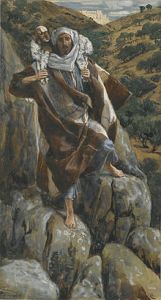
 Good Shepherds Rule the Flock?









 Considering the Bible