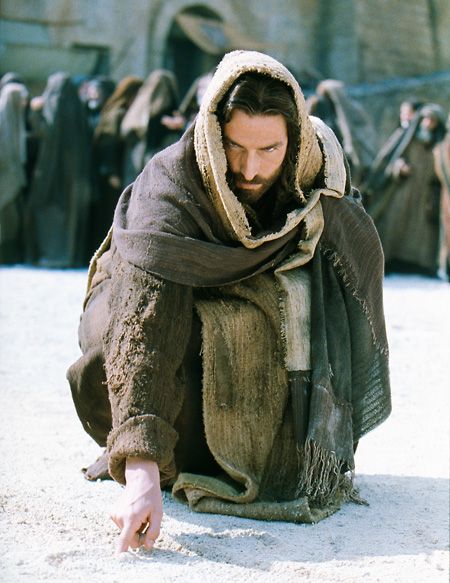
 As mentioned in my earlier post, I was in discussion with my Sunday School teacher and we verred into the topic of faith. This topic addresses the first Greek word in our table below
Faith
He had told me there are a number of Greek words in the New Testament that are translated “faith” in our English Bible, and I let him know I thought otherwise.
So I came home and did a quick study, using Blue Letter Bible web site. The following table gives a summary of the New Testament Greek words used when describing our English word “faith”.
| Strongs # | Greek | Transliterated | English Equivalent |
|---|---|---|---|
| New Testament (Greek) for “faith” | |||
| G571 | ἄπιστος | apistos | that believe not, unbelieving, faithless, unbeliever, infidel, thing incredible, which believe not |
| G1680 | ἐλπίς | elpis | hope, faith |
| G3640 | ὀλιγόπιστος | oligopistos | of little faith |
| G4102 | πίστις | pistis | faith, assurance, believe, belief, them that believe, fidelity |
| G4103 | πιστός | pistos | faithful, believe, believing, true, faithfully, believer, sure not tr |
| G6066 | ὀλιγοπιστία | oligopistia | littleness of faith |

Strong’s Number G3640 matches the Greek ὀλιγόπιστος (oligopistos), which occurs 5 times in 5 verses in the Greek concordance.
We will look at three of the four instances that Jesus (and only Jesus) used this Greek word in the following post.
Matthew 14:28-31
And Peter answered him, “Lord, if it is you, command me to come to you on the water.”He said, “Come.” So Peter got out of the boat and walked on the water and came to Jesus.But when he saw the wind, he was afraid, and beginning to sink he cried out, “Lord, save me.”Jesus immediately reached out his hand and took hold of him, saying to him, “O you of little faith, why did you doubt?”
In our last post, Jesus rebuked the disciples for littleness of faith. They were poverty stricken of faith. I noted that they had been given much teaching, personal interaction and many miracles to base thier faith on. In this passage, the disciples had spent an additional few weeks (possibly more) since the previous rebuke, and received additional teaching and miraculous experiences
 In this passage, the disciples are in a boat again, and it is in the middle of a storm, but it is Peter that “risks it all”
You gotta give it to Peter for his willingness to step out. He saw the example of Jesus on the water, realized that as a disciple, he was to mimic the Master. He verified the identity of the Master (Lord if it is you…) and asked for the empowerment (command me to come…). Both of these prayers are commendable. As believers, we are to verify the voice we are following, since there are many out there seeking our attention. Secondly, we need to have the command of God to base our actions upon. Both Peter did!
He jumped out of the boat and kept his eyes on Jesus. Is this foolhardy? Yes! The lake was deep, full of danger, and cloaked in darkness. When the surrounding exterior conditions became Peters focus, he began to sink into them.
How common for me to start out with my eyes on the Lord, anticipating no resistance or failure since He is so kind and good. When I start to fall, slip or go under, my first response is to consider Him to have failed me.
 This is rebellion.
I need to hear the Lord’s rebuke, the status of my faith. Reality checks are critical if we are to walk in truth. My commitment to obey requires accountability and Jesus is faithful in supplying this, if we will listen. If we listen.
Peter listened. Did he experience shame, loss of stature among the brethren, increased doubts? Maybe.
Did he eventually become a man of God? Definitely.
 Note that upon sinking, Peter cried out to the Lord. Immediately Jesus rescued him. No longer did Peter walk on the water, looking to Jesus. Jesus physically held on to him, but spoke of his littleness of faith.
In the midst of this obedience, Peter saw the tumult of his surroundings and doubted. Peter doubted and did not pass this test. But he stayed in the “game” and the Lord continued to challenge him, working with him in Israel for decades after, establishing the mother church and leading many to know Him.
 How about you? The last “test” you were provided?
How did you do?
- Did you verify who was leading you?
- Did you request power to get through it
- Did you keep your eyes off your circumstances and on the Lord?


Follow Considering the Bible on WordPress.com
Thanks again for coming to visit. I hope you found something of interest in this post and would appreciate a comment, to begin a discussion.
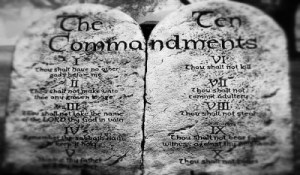 In my introduction to this series of blog posts, I drew attention to verses that supported my belief that the ten commandments were no longer applicable to the believer.
 How did Jesus and the apostles interpret the Old Testament?
 One day, my car wouldn’t start and I exploded. Entering the house, I hurled my keys across the table, without realizing my 3 year old son was sitting at the end of it. Thankfully, the keys slid past him and dented the wall instead of my son. (God protects His fool again!)

 Strife is the work of an angry man. He isn’t happy with his life, and he finds satisfaction in spreading strife, or division among those he associates with. This type of man eventually becomes lonely, which only fuels the anger, that unmet expectation of love and kindness we all look for.
 A
A





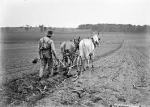 I have never been a farm boy, needing to plow straight furrows. So, this story is a Canadian’s way of relating to plowing a straight furrow in a field. To plow a straight furrow, a goal or destination needs to be focused on. Short sighted goals to the left or right will produce a crooked furrow.

 Worry over Grub and Garb
 We find Jesus talking to His disciples, speaking of the toil (growing exhausted) and spinning of a simple lily compared with the splendor of Solomon, (Israels wealthiest King).
 My greatest downfall in my walk with the Father is worry. A mind numbing, paralyzing worry. I have so little faith.
 My perspective is completely upside down. Oh – I can justify my worry, calling it careful planning, walking in wisdom, careful stewardship. How shallow and of no impact.
 In my introduction to this series of blog posts, I drew attention to verses that supported my belief that the ten commandments were no longer applicable to the believer.
 Paul is addressing a church that is having some struggles with false teachers, teachers that are trying to “delude them with plausible arguments (v4). He is seeking to get these believers to keep their eye on Christ. Christ is the source and end of all of life. Paul states that “in Him dwells all the fullness of the Godhead bodily” Paul elevates Christ in order to reveal the error of those “plausible arguments”.
 Strive to enter that rest, (in the Sabbath), in the Lord Jesus and you will have found the reason for the type!
 A while back, we were enjoying a time of Bible study in our home, after enjoying some supper together with our friends. It was a very relaxed time and I think we were discussing Mark’s gospel.
 How did Jesus and the apostles interpret the Old Testament?
 A
A But my hope, unlike any other believer, is a result of the working of the Lord Jesus personally in my life, bringing endurance and character into my life. My experience with the Master is unlike any other believer, and this is the beauty of the body of Christ. But that is a topic for later.
 What is the difference between faith and hope in this verse? If I understand it, faith is associated with a person, with the Person of Jesus Christ in the Scriptures. Hope is built on that faith, but it is associated with future happenings and experiences.
 Boldness is the direct result of hope, of a specific hope that we can find in the resurrection of the Messiah. Wonder if Paul is going to refer the the resurrection in this passage??
 Paul – you must stop connecting hope with the resurrection. It seems to be a habit of yours!
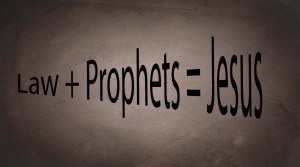 This is awesome! If I’m understanding this correctly, Jesus was not here to destroy the law and the prophets, but to bring them to fruition, to the full effect, to bring about the reason the law was granted.
 Considering the Bible