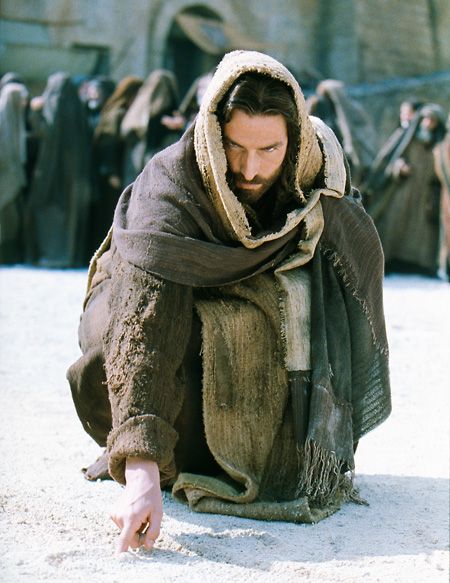

Colossians 1:15 He is the image of the invisible God, the firstborn of all creation.
The Word often uses physical realities to describe spiritual truths, and this evident in phrases such as “Lamb of God” or “Bread of Life” when describing the Messiah. Any one versesd in the Old Testament will understand the association of the Messiah with the Lamb of God designation, not only from Genesis 22, but the millions of lambs sacrificed in the Temple service to God for the covering of sin. Another example is the Bread of Life, again hearkening back to the journey through the wilderness for the children of Israel, and the manna that came down to give them sustenance for the day. The Messiah is the sustenance believers need and using the metaphor of “Bread of Life is a fantastic way to communicate this truth.
But when I come to Colossians 1:15, I am not following the same thinking. It just didn’t make sense for me, and, as a paradox is wont to do, it took me outside of my usual way of thinking.
OK – So the issue is the phrase “image of the invisible God” How can we as earthbound believers understand this? The truth of God’s invisibility is not the issue for the Word constantly speaks of His invisibility. A couple of verses will suffice to support this thinking.
John 3:18 No man has seen God at any time; the only begotten God, who is in the bosom of the Father, He has explained Him.
1 Timothy 1:17 Now to the King eternal, immortal, invisible, the only God, be honor and glory forever and ever. Amen
So what is your problem Carl? Paul refers to an image! What is an image if it isn’t visible? What makes this an even greater challenge for my little literal head is that the Greek word translated as image is εἰκών eikṓn, sometimes may be describing a physical person, such as a man, in 1 Corinthians 11:7
1 Corinthians 11:7 For a man ought not to cover his head, since he is the image and glory of God, but woman is the glory of man.
Why is that an issue Carl, for Paul is describing a physical man in Colossians 1:15, when He is writing of the Lord Jesus.
I suppose my issue, my confusion, is that I want to be literal in my understanding of “image”, that what I see is what is there! I admit that at times in my thinking, I was literally wooden in my understanding of this verse, thinking that the physicality of Jesus, His body, the way it appeared to the human eye during His time on earth, communicated the image of the invisible God. The term “image” was one I took literally and I did not allow for any other way to look at it.
Story Time
When my family and I were visiting with my brother a few years ago, after being apart for over two decades, something occurred that makes this verse a bit less paradoxical! We were all enjoying getting together, and many of my family took interest in my oldest son Josh, for he was in a rock band, had made some cross country tours and put out a couple albums by then. He was in his twenties, slim as a rail with dreadlocks and the whole look! Meanwhile, overweight Carl is sitting in a chair, with his super short hair and super conservative look.
And the funniest thing happened. My brother came up to me and said that Joshua is just like me!
Now as I have described, it is obvious that we do not appear to be alike, and he is the more handsome of the two of us. Yet in that moment, I think a little light went on, and this verse became a bit clearer. Joshua, as an image bearer of myself, since he is my son, expresses that image in his personality, his manner of expression, his character, his emotional reaction to items, etc….
He doesn’t look like me (and for that I think we are both thankful!), but he looks just like me!
So in all my wrestling over this paradox, these concepts and ideas, I am starting to see I should not consider “image” to be a literal physical object, but that it may simply represent non tangible items that can be seen. This has been a difficult subject to try to explain, (if I explained it at all) and if any of my readers have a discussion point to bring up, it would be much appreciated. Thanks for reading!
Thanks again for coming to visit. I hope you found something of interest in this post and would appreciate a comment, to begin a discussion. If you know someone this blog may bless (or challenge), send them a link, so they may join us in our discussion
Come join us at Considering the Bible


 Considering the Bible
One response to “Paradoxical Passages – Colossians 1:15”
[…] Paradoxical Passages – Colossians 1:15 […]
LikeLike