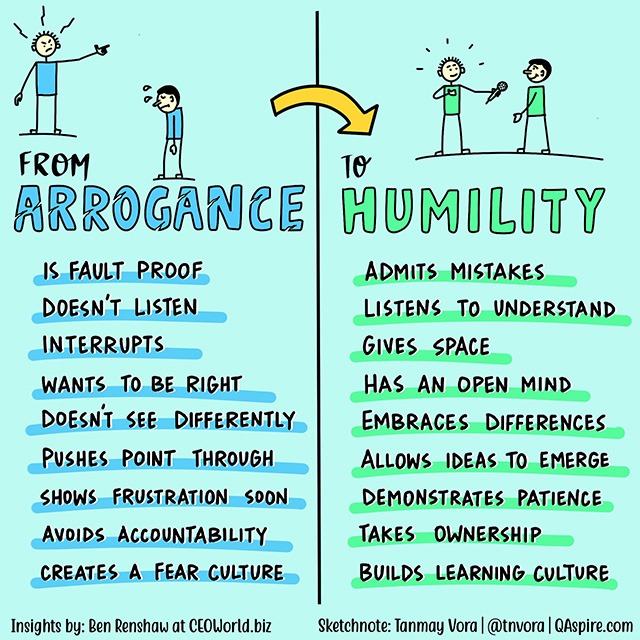

Thoughts on the topic of pride from the book of wisdom
The book of Proverbs has much to say about the topic of pride. Let’s dive into the wisdom of Proverbs for a few moments.
Let’s read a verse and consider the message.
Proverbs 8:13 ESV – The fear of the LORD is hatred of evil. Pride and arrogance and the way of evil and perverted speech I hate.
In the first post on pride in this series of Proverbs, I spoke of the characteristic of the fool despising wisdom and instruction from Proverbs 1:7. I went on to speak of the need of humility for both the giver and the receiver of instruction.
In this post, knowing the convoluted way of justifying sin in my mind, I may use Proverbs 8:13 to be justification to reject any counsel provided, by classifying it as evil. After all, personal rebuke can be a painful experience to receive, and surely God loves me enough to keep me from experiencing any pain! (Did you hear my sarcasm?)
Let us be open to people, to those who may care deeply, and even to those we suspect may not have the best motivations for our benefit.
Pride, arrogance and the way of bad speech may be hated by the believer – nay in this verse it is described as to be hated, but it is no reason for use to reject considering the message being delivered.
An evil man, full of pride and arrogance may still deliver truth to the saint. To reject that would bring me into an attitude of pride myself.
Consider Matthew 23:1-3 for an example of accepting truth though delivered by an evil man.
Then Jesus said to the crowds and to his disciples, “The scribes and the Pharisees sit on Moses’ seat, so do and observe whatever they tell you, but not the works they do. For they preach, but do not practice.
We are instructed to hate evil, and as believer, the very nature of God will provide us this distaste, this abhorrence of evil. Yet in the midst of this hatred of evil, it does not provide us an opportunity to reject sayings that may be uncomfortable. Let not the resident pride that swells in our heart keep us from accepting a difficult truth that may come from the lips of an evil person.
For if we reject truth that may be delivered by a proud arrogant person, the very act of rejection may be exposing to us that we have joined him in his “pride and arrogance and the way of evil and perverted speech” which my very nature as a believer, is to hate.
Follow after the One who described Himself as meek and lowly of heart, even as you gently receive counsel from your brother.
Thoughts on the topic of pride from the book of wisdom
The book of Proverbs has much to say about the topic of pride. Let’s dive into the wisdom of Proverbs for a few moments.
Let’s read a verse and consider the message.
Proverbs 1:7
The fear of the LORD is the beginning of knowledge; fools despise wisdom and instruction.
As a young man, I was headstrong and determined to do the right thing, to be the Christian that does it right. I poured myself into study, thinking that knowledge was the path to holiness, that without knowledge of the will of God, there was no sanctification, no pleasing of the Father.
Naturally, I am a student at heart, and this desire was conveniently matching my inclinations. So during my first few years as a husband and eventually the father of a youngin, I dove into an environment that catered to this inclination.
Until John. John is a brother that had the strength to address my failing as a father and husband, due to what I called my “necessary” study time. Nevertheless, John confronted me and for that I am thankful, but what I would like to settle on in this post is the option provided in our verse of despising wisdom and instruction.
I will not reveal my reaction to John’s instruction, but it does recall to mind a few times where I provided a bit of instruction, given with humility to others and yet has been rejected. As I recall a number of these times, it turns out that the one receiving the knowledge generally reacts emotionally, claiming I don’t think of them as good Christians, or that I think I am better than them.
Red herrings!
The attack, or rejection of the comment is the result of pride, and is a rejection of possible good counsel!
If the counsel is provided in the right spirit, this reaction is from a heart of pride. Dang, even if the counsel is given by a poor or wrong spirit, the receiver, if he or she is living in a humble and contrite spirt, will naturally consider the instruction.
Have you had a friend, or even a foe, speak to you about a failing, a point of weakness, or just a general rebuke, and you have been offended? Pride!
As my wife sometimes says, Get over yourself!
A fool is one who despises wisdom and instruction. Proverbs does not describe the fool as one who simply rejects wisdom and instruction. No no no. Despise it! Hate it.
Counsel is not considered or given a time for judgement, to discern any truth to it, no matter the sting associated with it. No – the counsel is despised immediately, for pride of life will not allow truth to impact the self.
This attitude provides walls within families, and amongst friends, coworkers and acquaintances. I can not force this attitude of humility and gentleness of heart upon any in my world.
The only success I have had with others when I sense I need to talk to them is to approach them, after prayer, and with a humble humble heart, address the situation with a loving and gentle heart myself. My own understanding of my weakness, sin and general rebellion of truth is critical for the sake of others, for their acceptance of my counsel, whether my counsel is true or not.
The book of Galatians speaks of this attitude in interrelational restoration with much greater clarity than I can, so I will leave my gentle reader with a final bit of counsel.
Galatians 5:25-6:1 If we live by the Spirit, let us also keep in step with the Spirit. Let us not become conceited, provoking one another, envying one another. Brothers, if anyone is caught in any transgression, you who are spiritual should restore him in a spirit of gentleness. Keep watch on yourself, lest you too be tempted.
If someone comes to you with a counsel, be wise and consider it, even if it stings. Ask the father to give strength to accept it after your understand the counsel, for it is wise to ask the brother questions of the counsel in order to understand his concern.
If you are called upon to provide counsel, get right with God before you do. Seek humility, seek gentleness, seek a heart that is soft to the brother’s condition, for we all are struggling with sin.
Follow after the One who described Himself as meek and lowly of heart, even as you discuss counsel with your brother.
And Jesus answered them, “Truly, I say to you, if you have faith and do not doubt, you will not only do what has been done to the fig tree, but even if you say to this mountain, ‘Be taken up and thrown into the sea,’ it will happen.
Jesus mentioned mountains being moved in two passages in Matthew. The one above and once when He healed a demoniac in Matthew 17. I would like to consider the verse in Matthew 21 in this post.
Bumper stickers and posters are emblazoned with this sentiment, some even including the reference to the sea. Yet was Jesus providing this teaching to His students to encourage them in their prayers regarding really hard things? Let’s think about this.
Jesus had entered Jerusalem on the colt of a donkey, being praised by the city of Jerusalem. After entering the Temple, Jesus cleansed the Temple, rebuking the leaders of the Temple. His rebuke, of describing the leaders as those who had made the Temple a place where robbers felt safe (from God?) is rife with religious tension. He begins to heal the blind and lame in the temple, and defends the praise offered from those who received Him to the chief priests and Pharisees.
After a full day of activities, Jesus resorts to the little town of Bethany for the night. In the morning, as He and his disciples were on the way back to Jerusalem, Jesus curses a fig tree, with it withering up, even as the disciples watched.
Matthew 21:19 And seeing a fig tree by the wayside, he went to it and found nothing on it but only leaves. And he said to it, “May no fruit ever come from you again!” And the fig tree withered at once.
The disciples were shocked! Immediately they asked the Lord – “How did the fig tree wither at once?”
Upon this question we have our passage for the day. It is initiated because of the death of a fig tree, a very, very uncommon circumstance in the ministry of the Lord.
Can anyone remember why the fig tree was cursed? It only had leaves, no fruit. It looked alive but produced nothing of benefit for man. Jesus made permanent the condition of the fig tree, and it withered immediately.
Jesus, as He and his men are heading back into Jerusalem, is giving His disciples a picture of the fate of Jerusalem, for it too also has the appearance of life, but produces no fruit, nothing of benefit for man.
Numerous times Jesus referred to Jerusalem/Israel as a fig tree. Consider Matthew 24:32-35, where Jesus links the present generation in Jerusalem with a fig tree putting forth it’s leaves.
In the Old Testament, Israel is compared to a fig tree.
Hosea 9:10 Like grapes in the wilderness, I found Israel. Like the first fruit on the fig tree in its first season, I saw your fathers. But they came to Baal-peor and consecrated themselves to the thing of shame, and became detestable like the thing they loved.
Ok, but why didn’t Jesus continue with the fig tree metaphor if He was going to speak of Jerusalem? What is this mention of mountains have to do with this withered fig tree?
Mountains also are a metaphor used in the Old Testament to refer to a political power.
Isaiah 66:20 And they shall bring …. to my holy mountain Jerusalem…
Daniel 9:16 “… let your anger and your wrath turn away from your city Jerusalem, your holy hill….
Holy hill in this translation is the same Hebrew word used in other passages and translated as mountain.
Psalm 2:6 As for me, I have set my King on Zion, my holy hill.”
Ok, so we have briefly established the metaphors of a fig tree and a mountain as referring to the same object, that is the city of Jerusalem. Although there may be an implied difference between fig tree and mountain when referring to Israel that may be interesting to pursue, I will leave that study for another time. Suffice it to say, that as Jesus was heading back to Jerusalem, with the city within sight of the disciples, He cursed a fig tree and made reference to its upcoming death.
The type of death this fig tree / mountain was to experience was to be “thrown in the sea”. Let us not be shackled to a literal interpretation at this point, for the reference to the sea is also illuminating if we allow the Old Testament to speak to us
Ezekiel 26:3 therefore thus says the Lord GOD: Behold, I am against you, O Tyre, and will bring up many nations against you, as the sea brings up its waves.
Many nations = sea bringing it’s waves
Psalm 144:7 Stretch out your hand from on high; rescue me and deliver me from the many waters, from the hand of foreigners,
Isaiah 60:5 ….because the abundance of the sea shall be turned to you, the wealth of the nations shall come to you.
So let’s recap. Jesus cleanses the temple, defends the praise offered to Him to the temple leaders, and as He is heading back into Jerusalem the next day, prophecies of Jerusalem’s demise through a miracle. This death of Jerusalem would occur in one generation, 40 years later, when the Romans would come and disperse what remained of the nation of Israel into the nations surrounding them.
70 AD was the fulfillment of this saying of Jesus before the disciples, and in their ministry, their prayers for the success of the church brought about the end of the nation of Israel.
As a matter of fact, Jesus, in the message of a dead fig and a wet mountain, was informing the disciples of their call to bring about world change – the end of Israel as a theocracy, a nation that was to deliver God’s message to the nations.
That mission was now to be performed by the church.
We sometimes see Matthew 21:21 as a call to persevere in prayer through a difficult time, and by application this verse speaks to our needs.
But we often sanitize the sayings of Jesus so much, we forget the radical message He sometimes provided. This passage certainly provides a challenge to the disciples, a world changing challenge.
Governments topple due to prayer. History tells us that Israel fell to the Romans. The church marched on!
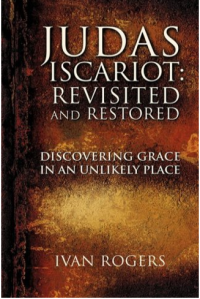
I found a book called “Judas Iscariot: Revisited and Restored” by Ivan Roger, and though I have read it once before, this time the authors points seem to be sinking in a bit more.
The general theme of the book is that much of the popular understanding of Judas, and his relationship within Christianity, is colored by theological presuppositions and general bias against Judas.
In our previous discussion, we considered the Greek word translated as “woe” within the gospel of Matthew, along with a grammar lesson on pronouns, and who they belonged to.
In this post we will consider John 13:27, where the Lord commands Judas to quickly do what he needs to do. Let’s take a moment to read the verse.
John 13:27 ESV – Then after he had taken the morsel, Satan entered into him. Jesus said to him, “What you are going to do, do quickly.”
Our author makes the point of Jesus statement as being a command to Judas, to go do it quickly. The word “do” is a Greek word that means “to ordain, to appoint or to deal”. It does not have any implication of rejection, as if Jesus was “kicking him out of the upper room”, as it sometimes is communicated to me by well meaning friends. No, per the language, it appears Jesus is actually commissioning Judas to perform his task. A task of “delivering the sacrificial lamb” to the priest. The author’s detailing of this deliverance is worth the purchase of the book and I shall not expand on it here.
Note also two additional items to consider.
Warning?
Jesus gave Peter advance notice of his impending failure and denial. When other disciples were in the midst of failing a particular task, the Lord corrected them. In this instance, Jesus commissioned or encouraged(?) Judas to perform his assignment. No discouragement, no warning, no statement from Jesus that would restrict Judas from his endeavor. Judas was told to do it quickly!
Woe?
As soon as Judas left the room, Jesus spoke the following.
John 13:31 When he had gone out, Jesus said, “Now is the Son of Man glorified, and God is glorified in him.
Jesus understood Judas’ mission. If I was in the room, knowing the same, I would expect “Woe is me” from the Master. But after Judas left the room, setting in motion the deliverance of the lamb to the high priest, Jesus spoke of glorification, both of Himself and of God. Glorification, in this context is speaking of the crucifixion, and the wheels had begun to turn. Judas set the stage for the priests to begin the process.
And God is glorified!
So help me in understanding from this passage where Judas is standing in relation to Jesus. Is he the enemy? Is he Satan? What think ye? Leave me a comment below.
I look forward to your return for our next posting on this book at Considering the Bible, and if you have found my ruminations to be a blessing (or a challenge), invite your friends to join us.
I found a book called “Judas Iscariot: Revisited and Restored” by Ivan Roger, and though I have read it once before, this time the authors points seem to be sinking in a bit more.
The general theme of the book is that much of the popular understanding of Judas, and his relationship within Christianity, is colored by theological presuppositions and general bias against Judas.
In our previous discussion, we considered the Greek word translated as “betray” within the gospel of Matthew, and offered the possibility that it could be translated as deliver, as opposed to betray.
In this post we will consider Matthew 26:24, where the Lord speaks of “woe” on the one who will deliver Him to the high priest. Let’s take a moment to read the verse.
Mat 26:24 ESV – The Son of Man goes as it is written of him, but woe to that man by whom the Son of Man is betrayed! It would have been better for that man if he had not been born.”
The author of the book provides two questions to consider. Does the term woe carry with it a sense of responsibility? And secondly, what is the message “…would have been better for that man if he had not been born.”?
Woe
As Jesus comes to the end of His ministry, He begins to pronounce His woes on those who will enter into judgement. The Pharisees, the Scribes, Judas, pregnant women and young mothers. What? Pregnant women and young mothers? Entering into judgement? Am I assuming something I shouldn’t?
Mat 24:19 ESV – And alas for women who are pregnant and for those who are nursing infants in those days!
The word “woe” (or “alas” as translated in this verse) is a translation of οὐαί ouaí and is a primary exclamation of grief. I have always introduced the idea of judgement with this word, but that is an additional concept Carl brings into the verse, especially when I hear it about those dang Pharisees! (Don’t forget your pharisaical tendencies Carl!)
The term strictly carries with it the idea of grief, and not necessarily that of responsibility. The Lord expresses His grief, even when it comes to those opposing Him. Jesus, in pronouncing woe on those who would be instrumental in His crucifixion, was expressing grief over their future. And He was pronouncing grief over the future of Judas, but is He pronouncing an eternal judgement of hellfire and condemnation on Judas? I have to admit that I find it difficult to see this interpretation as a clear teaching from this verse. His heart is breaking over the suffering His disciple was going to experience in the future. Like those pregnant women and young mothers. But Carl, the next phrase is where we get the judgement and condemnation poured out on Judas! So let us consider the phrase “better for that man if he had not been born”.
Better for that man if he had not been born.”
The author associates “that man” with Judas, which I also have as I read through this passage. He refers to Judas as a representative man, a man that stands in the place of all humanity in being a traitor to the Messiah, and that each of us deserves judgement. I get this, yet it didn’t seem to make a difference for me in my understanding of Jesus statement.
A few years ago, I was looking at this verse and stumbled over an alternate translation that associates “that man” with Jesus. Hold up now before you think I have flipped my lid. Consider a literal translation, such as Youngs Literal Translation.
Matthew 26:24 YLT – the Son of Man doth indeed go, as it hath been written concerning him, but wo to that man through whom the Son of Man is delivered up! good it were for him if that man had not been born.’
Did you catch the difference in who “that man” is?
…good it were for him (Judas) if that man (Jesus) had not been born. That is a completely different message!
Consider all that is going on in this portion of the verse.
First off, it speaks of life, and not simply existence. There is a difference. It is not that “that man” was never conceived, but that he had not been born. A still born baby existed, but never lived outside of the womb. I am not sure if this fine point makes a difference, or if this is simply a Hebrew prophets way of describing no existence better than having existed, even for a short duration. Yet even with that, to assign the hell fires of eternal condemnation to Judas based on this turn of phrase, seems like we just can’t wait to get Judas into hell. We sure like to hate him!
Secondly, the turn of phrase, that of “better to not have been born”, may not be referring to Judas if I am understanding the literal translations. No matter, based on both my preconceived ideas of “woe” and identifying who should have not been born, this verse is not so clear as I thought regarding Judas’ destiny of eternal torment.
What think ye? Leave me a comment below
In my next posting, we will consider the command Jesus gave to Judas at the last supper. Somewhat of a challenge to our (my) thinking, to say the least.
I look forward to your return for our next posting on this book at Considering the Bible, and if you have found my ruminations to be a blessing (or a challenge), invite your friends to join us.
I found a book called “Judas Iscariot: Revisited and Restored” by Ivan Roger, and thought I have read it once before, this time the authors points seem to be sinking in a bit more.
The general theme of the book is that much of the popular understanding of Judas, and his relationship within Christianity, is colored by theological presuppositions and general bias against Judas.
In our introductory post on this book, I mentioned some presuppositions that color our understanding of Judas. With this post, I would like to consider the description of Judas as the betrayer.
In each of the listings of the apostles, Judas is always the last named, and is usually described as the one who betrayed Jesus.
Betrayal. Such a loaded term! But is this a required translation of the Greek? The word translated as betrayal, in the gospel of Matthew is from the Greek word παραδίδωμι paradídōmi (Strong’s G3860).
A number of the verses that have G3860 in them follows, with the translation of the term underlined for the readers convenience
Mat 26:15 and said, “What will you give me if I deliver him over to you?” And they paid him thirty pieces of silver. Mat 26:16 And from that moment he sought an opportunity to betray him. Mat 26:21 And as they were eating, he said, “Truly, I say to you, one of you will betray me.” Mat 26:23 He answered, “He who has dipped his hand in the dish with me will betray me. Mat 26:24 The Son of Man goes as it is written of him, but woe to that man by whom the Son of Man is betrayed! It would have been better for that man if he had not been born.” Mat 26:25 Judas, who would betray him, answered, “Is it I, Rabbi?” He said to him, “You have said so.” Mat 26:45 Then he came to the disciples and said to them, “Sleep and take your rest later on. See, the hour is at hand, and the Son of Man is betrayed into the hands of sinners. Mat 26:46 Rise, let us be going; see, my betrayer is at hand.” Mat 26:48 Now the betrayer had given them a sign, saying, “The one I will kiss is the man; seize him.” Mat 27:2 And they bound him and led him away and delivered him over to Pilate the governor. Mat 27:3 Then when Judas, his betrayer, saw that Jesus was condemned, he changed his mind and brought back the thirty pieces of silver to the chief priests and the elders, Mat 27:4 ESV – saying, “I have sinned by betraying innocent blood.” They said, “What is that to us? See to it yourself.” Mat 27:18 ESV – For he knew that it was out of envy that they had delivered him up. Mat 27:26 ESV – Then he released for them Barabbas, and having scourged Jesus, delivered him to be crucified.
Notice that throughout the previous verses the Greek word paradídōmi has been translated as betray or deliver. Are these the same concepts in the original intent of the author?
Let’s take for example Matthew 27:26 and replace deliver with betray.
Matthew 27:26 Then he released for them Barabbas, and having scourged Jesus, betrayed him to be crucified.
Does that make sense? Might the translators be taking a liberty that is not necessarily justified? The same might be said of Matthew 27:2.
Mat 27:2 And they bound him and led him away and betrayed him over to Pilate the governor.
Yet, if the term paradídōmi is consistently translated as “delivered”, the verses above continue to make sense, and open up an allowable scenario for Judas to perform a task that is not so emotionally charged as with the word betray, and in my opinion reinforces the Kingship of Jesus. For you see, this understanding may elevate His complete control over a situation that was at all appearance completely out of His control. Even at the time of seeming defeat, God was orchestrating a deliverance of mankind that no one saw coming, and had a depth of old covenant teaching in it I had never realized.
For Judas to be a “deliverer” has old covenant implications that I found quite astounding, and is expanded in the book. For those who have an open mind, I would suggest picking up a copy. I am confident you may read it more than once.
In my next installment, we will consider another of the presuppositions the author brings to the table, (the woe of Matthew 26:24). I hope you get a chance to visit and let me know your thoughts.
I found a book called “Judas Iscariot: Revisited and Restored” by Ivan Roger, and though I have read it once before, this time the authors points seem to be sinking in a bit more.
The general theme of the book is that much of the popular understanding of Judas, and his relationship within Christianity, is colored by theological presuppositions and general bias against him.
It is a difficult book to take seriously at first, for my opinion of Judas has been established via cultural and religious teaching from the very first time I heard of this wicked evil betrayer. As the author notes, within the western world, no-one names his child Judas due to the association of evil the name carries with it. He is the ultimate betrayer, a toxic man of shear evil.
Somewhere in Dante’s Inferno, the writer describes Judas’ place in the lowest bowels of hell, being feasted on by Satan himself for all eternity! Surely there is no place for Judas amongst the redeemed! Such is my opinion, and to be honest, I do not know why I purchased this book. But I did, and I am thankful for the challenge it has put in front of me
As I venture through this book, I will occasionally bring to the reader some interesting points to consider. For those who have an open mind to consider alternate Christian views on this most hated of the apostles, I would suggest picking up a copy. I am confident you may read it more than once.
In my next installment, we will consider one of the presuppositions the author brings to the table, and helped me begin to consider an alternate view of and for Judas.
Decades ago, when I was just a youngin’ in the Lord, I was befriended by a mature believer. Golly, it was so long ago, I forgot his name, and yet his witness has stuck with me.
He was a safety shoe salesman, hocking his wares from construction site to construction site in a large panel van. He covered an immense geographical region, and was often on the highway. As we got to know each other, he would find me occasionally reading my little New Testament, and would speak of his experiences with God.
One passion Frank had (let’s call him Frank), one passion he had was to speak in tongues. Now remember, I was very young in the Lord, and primed for any teaching. I had little to no discernment and found I gave men much freedom in their influence over me. (In other words, I didn’t test the teaching like I am instructed to!). I was entranced by his witness, listened to his stories and enjoyed his friendship very much.
Frank would drop by and tell me glowing stories of the Lord personally teaching him mysteries that were modern day messages directly from God, directed for him, and all he could reach. He was so charismatic (I mean that in both his personality and theology), it was hard to not be swept away with the excitement.
Until he spoke of a time he was driving down the 401 (North America’s busiest freeway), between Windsor and London Ontario, and he was “slain in the Spirit”. Wow! What does that mean Frank?
He described the rapturous utterances he spoke, of his shaking uncontrollably, and of his visions. His visions, that required his eyes to be closed. While on the busiest highway in North America. While travelling 100 km/hr. In a large panel van!
Golly. Something just don’t sound right!
He spoke of the Spirit guiding him into all truth and of the mysteries the Spirit was revealing in the last days, of the Spirit working through the gift of tongues to bring about revival and renewal, of the Spirit Spirit Spirit.
Enter George.
I have spoke of this fine believer in an earlier post. (See Story Time – Christian Accountability – Obey) During one of my visits with George, he spoke of a “shy” member of the Trinity, a member of the trinity that seeks to be in the background. What heresy am I hearing now? Golly, what is a young believer to do with so many influences?
George wasn’t in the habit of telling me magnificent stories of personal revelations, of visions and utterances. He simply sat down with me, and opened up the Word to the following passages.
“But when the Helper comes, whom I will send to you from the Father, the Spirit of truth, who proceeds from the Father, he will bear witness about me. – John 15:26
13 When the Spirit of truth comes, he will guide you into all the truth, for he will not speak on his own authority, but whatever he hears he will speak, and he will declare to you the things that are to come. 14 He will glorify me, for he will take what is mine and declare it to you. John 16:13-14
George looked at me, and spoke of the witness of the Spirit to be of Jesus, not of the Spirit. Whoa – coming from my time with Frank, it only made sense that the Spirit would speak of itself – how could we as believers not admit the message, visions and utterances were not from the Spirit? Why, that is simply logical, reasonable and popular!
But George challenged me with the written Word, and not with his feelings or his personal testimony in this area of faith.
Did Jesus want us to focus on the Spirit of truth? Is His message to His followers to focus on the Spirit, or to judge the source of the message by the content of the message. In other words, if it bears witness to the Savior, and glorifies Him, it is from the Spirit. The Spirit is the “shy” person in the Trinity, seeking to show off Jesus, and not Himself.
Golly, even though the Spirit has the authority of the Godhead, Jesus reveals that He (the Spirit) will not speak of His own authority. During this age of the Body of Christ, the Spirit mimics Jesus’ self humiliation while He was on the earth, and steps back from any attention grabbing, in order for all the glory to go to the Risen Savior.
My friend – consider your focus, who you are looking to. Looking for the gifts of the Spirit is misdirected, has caused trouble in the church before and will cause divisions in the Body today. It is abundantly clear in the written Word, that the Savior is the Lord, and that as we look to Him (and no other) that we will understand His will and know the truth.
But be warned. To walk as He walked includes a humility and servanthood that is not popular amongst many in the church, many who are supposedly providing glorious messages that God personally provides to them. Those who provide messages directly from God actually become the focus of the message, and the Lord is simply a means to an end for these messengers. I am convinced that the mystical messages are at least a distraction for the believer, for any mystical message that speaks the same as the Bible is unnecessary, and any message that speaks differently than the Word should be rejected.
His message has been given to us. Crack a Bible and read it. Keep your eyes on Him. And let the Spirit do what He desires, and not what you want!
Thoughts on the topic of thoughts from the book of wisdom
The book of Proverbs has much to say about the topic of our thoughts. Let’s continue considering the wisdom of Proverbs regarding our thoughts.
In our last post in the book of proverbs, we considered the thoughts of the wicked, being an abomination to the Lord, compared to the words of the pure being pleasant.
In this proverb, we are comparing a false “front” with a “hesitant” thought process.
Let’s read the verse and consider the message.
Proverbs 21:29
A wicked man puts on a bold face, but the upright gives thought to his ways.
I referred to a false front in my introduction, since in my mind, a wicked man has no true basis for any confidence, other that a fleeting, appearance of confidence. This is a bold face, not a bold heart, not a life of confidence, but a bold face! An appearance of confidence. Make no mistake. Much of the confidence we experience amongst our peers is a manufactured confidence, a “confidence” that is based out of a fear of failure, or of desperation, or of competition with others.
As a young believer, I would exude a confidence to provide encouragement to others, and yet this often produced a separation amongst the believers. I may have shared this story before, but it is so applicable to this passage and was a great teaching lesson for my spirit
We were in a church, leading two home Bible studies and teaching a Sunday School Adult class, when my bold face fell away. It was a Tuesday night, and I was pontificating over some doctrinal item I thought all of Christianity depended on, when one of my sons came into the room and expressed a concern I would have rather kept secret.
Quickly I herded my son to his room, assured him I would discuss the issue with him after the folks leave for the night, and then returned to the study.
But something had changed.
I was no longer Saint Carl, teacher of many, knower of Bible, blah blah blah. I had become a sinner, saved by grace, just the same as the rest of the group. That few minutes of reality that my son brought to the group exposed a truth to the group that was life giving. (It is a good thing I wasn’t teaching on how to be a good and loving papa!) I had been carrying a false front, a bold face, that had slipped somewhat that night, and it was the best thing to happen for the group, and for me.
That night helped me to begin to understand that Bible knowledge is not the “be all and end all” of a teaching ministry, but that sharing a life of painful honesty is critical in the Christian life. A bold face, a proud look, a high faluting manner only separates believers and causes walls to be erected.
Since then, I have found that, though Bible truth is important for our knowledge, carrying it in pride can actually be detrimental to the ministry. People won’t relate to you, and a feeling of “us vs them” starts to develop. They may begin to think that a teacher has a different level of spirituality than they, that their secret weaknesses or sins need to be hidden in order to look good, to be accepted by the teacher, who is hiding a few secrets also. What a rat race, a game of hide and seek, a time of fear and self protection.
My dear readers, as you go about your day today, drop your proud face, your false front, and be real with just one person, with one believer that you are seeking to encourage. Show that your need of Christ is real, that your needs are real, and that as a believer, you struggle with life everyday.
But with this admonition in verse 29, note that Solomon also gives additional wisdom, that the upright gives thought to his ways. This truth provides guidance after understanding the danger of the proud face, the false front.
A person who gives thought is not a reactionary person, but one who considers his response with wisdom and understanding of the situation he finds himself in. He not only considers his response to a situation with wisdom and understanding, but also looks at his own ways, the ways of his past, that he may learn from them.
I will readily admit that my past is littered with this proud face I spoke of above. For some reason, I fall into this image of myself far too often, hurt someone I love and then have to repent of my attitude and ask for forgiveness. As I look into my past, I have found two benefits of giving thought to my ways.
With every instance of pride welling up in my heart, I have also experienced a subsequent shaming, a death to the pride I nurtured, that is painful, yet necessary. This is the life of the believer, a life of repentance and returning to God and the Body of Christ.
With the benefit of remembering my history, I have found that the times of pride (hopefully) have become shorter, and the repentance somewhat less grievious. Don’t get me wrong – true repentance is a poison pill for the pride of the heart. True repentance is a direct attack on the pride of the heart!
Consider your ways. Give thought to your ways.
Look to your past and be honest with yourself. Have you built walls and set up barricades to true relationship by assuming a superiority over others? Have you humbled yourself before God and others in order to prioritize relationship over self fulfillment?
Drop the false face, be honest with someone (to the point of trust you have in the person). Build a bridge to another person through a humble spirit and an open heart.
Thoughts on the topic of thoughts from the book of wisdom
The book of Proverbs has much to say about the topic of our thoughts. Let’s continue considering the wisdom of Proverbs.
Proverbs 15:26
The thoughts of the wicked are an abomination to the LORD, but gracious words are pure.
This passage gives a link between our thoughts and our words and is a proverb that describes opposing truths. I would like to provide a few additional translations of this verse to get a wee bit of clarity.
Proverbs 15:26 (NKJV) The thoughts of the wicked are an abomination to the LORD, But the words of the pure are pleasant.
Proverbs 15:26 (RSV) The thoughts of the wicked are an abomination to the LORD, But the words of the pure are pleasant.
Proverbs 15:26 (WEB) The thoughts of the wicked are an abomination to the LORD: but the words of the pure are pleasant words.
I love spreadsheets, and this verse begs a table to compare the “root” of our actions with the “fruit” of our thoughts. Confused?
What I want to try to show is that this verse has a cause and effect action. This principle is clearly taught in the New Testament, in that fruit is the result of the type of root (tree)!
Matthew 12:33 “Either make the tree good and its fruit good, or make the tree bad and its fruit bad, for the tree is known by its fruit.
“Root”
“Fruit”
Wicked thoughts
Abomination to the Lord
Words of the pure
Pleasant
Two roots are being referred to in this verse. Let’s consider both.
Thoughts of the Wicked
Wicked thoughts (or more pointedly – the thoughts of the wicked) produce disgust to the Lord, a feeling of abhorrence within the Godhead. These thoughts are disgusting to the Lord, an abomination, a vile thing. It is not wicked words that are being described here, but the very thoughts of the wicked. Of course, as the wicked thinks, so will he speak. But Solomon is focusing on thoughts here.
Let’s remember that God is a living “person”. Please do not misunderstand – I am not trying to take away from the truth that He is the one and only living God, but we sometimes think of Him as so lofty and high (rightly so) that we sometimes forget that He experiences anger, sorrow, disappointment, joy, abhorrence ….
I need to intentionally remember this!
Words of the Pure
Words of the pure are pleasant to Him, and by extension to all that hear them. Of course, our verse strictly states that the words of the pure are pleasant words, yet if we follow the initial thought of the verse, there is an association of the Lord’s response with this last clause.
According to Matthew 12:33, we know that speaking pure words comes from a pure heart. And because our topic of this post is our thoughts, lets remember Paul’s admonition in Philippians 4:8.
Philippians 4:8
Finally, brothers, whatever is true, whatever is honorable, whatever is just, whatever is pure, whatever is lovely, whatever is commendable, if there is any excellence, if there is anything worthy of praise, think about these things.
As believers, we are told not only how to think, but what to think. Notice that in this list of thought “objects” is the “positive” aspect for each category. (Truth as opposed to lies, honor as opposed to shame…) If we are to seek pure words in our communication, (in order to bring pleasantness to the Lord and all around us) then we need to train our thinking per the instructions provided by the apostle.
Think about it! To provide the Lord pleasantness is surely a calling we should join into each day.
Thoughts on the topic of thoughts from the book of wisdom
The book of Proverbs has much to say about the topic of our thoughts. Let’s continue considering Proverbs wisdom on our thoughts.
Proverbs 14:15
The simple believes everything, but the prudent gives thought to his steps.
My momma used to say “ignorance is bliss”. It has stuck with me, along with bunches of sayings she would recite. She was a wonderful mother, but with this saying, I’m not sure she spoke the truth. (Thinking back, she would say this often to me specifically – starting to wonder if she was implying something!)
Anyhow, the Word tells us of the gullibility of the simple. They believe everything they are told, that they hear, that they come across. It implies that the simple understand the world to be their servant, that the messages provided by everyone within their life circle are positive, right and beneficial for their lives. This passage implies that critical thinking, a solid knowledge base, and a commitment to truth is of no importance to the simple.
To be “simple”, in the book of proverbs speaks of inexperience, gullibility and a lack of judgement. It is usually associated with youth, but this proverb also provides a solution to this destructive lifestyle.
Give thought to your steps!
I may be extending this passage out further than is obvious, but hear me out. My wife and I have been “planners” for the last 25 years of our married life. It started when we considered moving into the USA from the GWN. We sat down and made a 5 year plan, set intermediate goals to accomplish this target and worked to these ends.
One of our first plans included attaining citizenship in the USA. In our simplicity, we judged a five year span of effort would be sufficient to meet this goal (legally!) Golly, I don’t know if any of my readers have ploughed through dealing with the bureaucracy such as we faced, especially after 911, but without that goal we would have surely given up.
My point is that, to give thought to your steps, in my opinion, speaks of where we are going, of planning our path in the will of God and to work with an understanding of the world around us. I say “the world around us” since wifey and I planned this prior to 911, and with the knowledge we had at the time, the five year goal was still aggressive. After 911, it appeared impossible. It became apparent during one summer, that we would loose all that we worked for. Our house, our freedom to stay in the US, our church fellowship and my career. (I actually am one of a very few men that has ever been let go by a government agency – fired by a state government!)
In all that, the Lord led the way through all the fears and dangers, all the disappointments and changes, and looking back, has instilled in this family a tenacity that may not have grown without the trial.
To reiterate, this particular effort taught us to be critical thinkers also, since believing what others told us led us down wrong roads, conflicted with other messages and was simply foolish.
Always question the message being heard and filter it through the truth God has provided us through the Word of God and His Spirit. Even the Word of God needs to the compared with the Word of God and to simply believe a passage without “arguing with it” seems to be unwise in my eyes now.
As you may know, I am an engineer in my occupation, and I tend to question everything. But to question God’s Word, not in its truthfulness, but in seeking to understand it’s intended message has been a key issue for me for the last 15 years or so.
Many of my previous beliefs have undergone serious development, and some of them have had to be repented of. This is a very uncomfortable experience. Changing my thinking on any aspect of my faith changes multiple aspects of my daily life. Thankfully, as an added benefit, the general tenor of my thought life has greatly improved.
Don’t be simple. Don’t simply believe the Bible. The message is deep, complex and wonderful. Who can know the mind of the Lord? The further you dig the more wondrous Jesus becomes.
Don’t be afraid to reverently ask questions of the text, to ask God for understanding, to challenge your own thoughts in subjection to the Word of God. The prophets did. The apostles did.
Should we not seek to understand the message instead of simply “believing everything” you hear?
Thoughts on the topic of thoughts from the book of wisdom
Somehow I fear this introduction may be a bit confusing, but if y’all think on it long enough I think all y’all may come up with the correct thought I am trying to get y’all to think about.
Ya think?
Thoughts, Ya ever think of thoughts? I know – that is a strange question and one that may be self defeating. This may take me down a rabbit hole that I will regret.
So instead of getting all messed up with pondering of an ol’ man, lets consider a few verses of the good book, and see if they bring any clarity to our lives.
It turns out that the book of Proverbs has much to say about the topic of thoughts.
4:26 Ponder the path of your feet;
then all your ways will be sure
We are to consider, ponder, reflect, think on our lives. The word ponder has the meaning of “to weigh out, to balance, or to make level or smooth”.
“Ponder” is a verb – we are instructed to ponder our lives, our history. To consider our past as a teaching guide for our future.
In your Christian walk, have you been a Proverbs 6 believer? You know – the type of person that does not reflect the kindness and love of God?
Proverbs 6:16-19
There are six things that the LORD hates, seven that are an abomination to him: haughty eyes, a lying tongue, and hands that shed innocent blood, a heart that devises wicked plans, feet that make haste to run to evil, a false witness who breathes out lies, and one who sows discord among brothers.
Or have you sacrificed your own desires for the sake of others? Have you considered peace with your brother to be more important than a pet teaching, or do you refuse to listen to others? Have you sought peace with your Christian brother, the one who seems to think differently than you? Or do you seek ways to find fault, an error seeker, a self justifier?
Golly, even to love your enemy is to be a goal for the believer. Have you sought peace with your co-worker who recently hung up on you when you were chatting with him? (a bit too specific there Carl – Maybe you got some work to do there!)
Be honest, for self deception is the greatest enemy in this exercise. To what benefit is waxing over our faults? To what advantage is the ignoring of our history,
I often boast of my stability in the Christian walk I live (at least in my thoughts!) and yet this boasting is a self deception. We need to reflect on our lives, consider our walk with God, failings and all.
Painful? Most likely! Growth and maturity, or in the words of the proverb “surety of our way” does not come out of leisure and comfort!
This is a fairly heavy post and will end here. I am sure I will return to this topic a bit later, since the book of Proverbs has much to say on our thoughts.
Thoughts on the topic of humility from the book of wisdom.
In the midst of the daily grind, when all the voices are yelling at you about asserting yourself and taking control and being confident, the message sometimes becomes garbled. To be confident is definitely not an attribute that is to be rejected, but that the confidence needs to be in the right place.
God is our strength, and as the day starts, I look to Him for strength. I have a certain area I like to walk prior to going into the office, that is my place to ask for help during the day.
You see, I have begun a new chapter in my career, and to be honest, it scares the heck out of me. New responsibilities, new relationships, new levels of ignorance (on my part) that seem to overwhelm me.
Why am I speaking thus?
I am speaking this way, since 83.4% of my struggles are in relation to my pride in the work place. I fear failure, to the point of paralysis, and because of that my thoughts are clouded and my interactions with others are not as fruitful as possible.
Then along comes the book of Proverbs, with multitudinous volumes of instruction on proper living. The instruction that has helped me most in the past few months is the instruction on humility, and I have found that my confidence is rising as I admit my weakness, my ignorance and my inability to God first, but also to those around me .
Check out a few verses with me.
Humility
3:7 Be not wise in thine own eyes: fear the LORD, and depart from evil.
What is pride if it doesn’t include the self wisdom we dabble in, the ability we have to figger things out. Don’t be self wise, but fear the Lord, and in that fearing, you and I will naturally pull away from evil
3:34 Surely he scorneth the scorners: but he giveth grace unto the lowly.
Oh to find grace in the eyes of the Lord, to experience grace on a daily occurrence. If you are currently not experiencing grace in your life, if life is difficult and seems to contain sandpaper pillows, consider the pride factor in your life. Grace is the environment a lowly person inhabits. A lowly person seeks not to require their own way, or to argue just for the sake of winning. No no no. A lowly person will state truth, stand on the truth, but arguing over the truth doesn’t seem to be in the lowly persons toolbox of life skills.
Quick question. When do we find Jesus arguing with His disciples or the Sanhedrin or the Pharisees or the ….. He stated truth, laid it out, made His claim and left it for all to receive or reject.
11:2 When pride cometh, then cometh shame: but with the lowly is wisdom.
How ofter has wisdom come up in the past few posts. It seems to be a common refrain in my thought, that is my severe lack of wisdom in my daily life. Carl – consider attitudes of pride in your life, for where pride cometh…..
A few more verses for your reading pleasure. Consider the wisdom and grace of a humble life. So many benefits and such a proper position to be in when we consider our Maker. Would you not agree?
16:19 Better it is to be of an humble spirit with the lowly, than to divide the spoil with the proud.
18:12 Before destruction the heart of man is haughty, and before honour is humility.
20:6 Most men will proclaim every one his own goodness: but a faithful man who can find?
22:4 By humility and the fear of the LORD are riches, and honour, and life.
25:27 It is not good to eat much honey: so for men to search their own glory is not glory.
27:2 Let another man praise thee, and not thine own mouth; a stranger, and not thine own lips.
29:23 A man’s pride shall bring him low: but honour shall uphold the humble in spirit.
Thoughts on the topic of speech from the book of wisdom
Is it appropriate that, on a post dealing with the wisdom pertaining to speech, that I have multiple posts? Seems I may misunderstand the admonitions provided in this first post – that “many words” accompany sin!
Nevertheless, this is one of the topics that the book of Proverbs speaks much on (pun intended!) and that although this post will deal with the wisdom of quietness, there is so much more guidance from Solomon and his co-authors that I couldn’t resist multiple posts.
So to reduce the introduction to this topic on long-windedness, let us start
Speech
Proverbs 10:19
In the multitude of words there wanteth not sin: but he that refraineth his lips is wise. KJV
When words are many, transgression is not lacking, but whoever restrains his lips is prudent. ESV
This is my favorite all time Proverb when dealing with speech. Whether it is my first memory verse in proverbs, the pithy KJV flow of the verse, or the simple message that appeals to me is hard to decide. No matter – I like / hate this verse!
There doesn’t seem to be any qualifier to the quality of the words; it is simply a statement that covers every situation I find myself in . Too many words are an invitation to sin.
It is interesting that the term “multitude” in the Hebrew can be translated as greatness, and this may reflect a proud mouth, a mouth that spews boasting. This is not definite of course, and no other translation uses this connotation, so I am stretching the meaning a bit much.
But let me ask you a question.
When was the last time you met a man (or woman) that spoke many words, and that didn’t, in those words, speak words of greatness, great and swelling words of pride?
Might there be a link?
Proverbs 13:3
He that keepeth his mouth keepeth his life: but he that openeth wide his lips shall have destruction.
Proverbs 13:3 speaks on the same problem, but defines the end game. So often in the Word, the long game is defined, the end result, that without careful consideration on life would be missed. By this I mean, how often have you had verbal diarrhea and not once considered the result of your spouting?
This verse speaks of two results.
A man with restraint maintains his life. A man with out restraint shall have destruction. Notice that the proverb does not say he shall receive destruction. Some of the translations I reviewed speak of destruction occurring, as in above, and some speak of the destruction coming to the one speaking. No matter. This is a splitting of hairs in my opinion, for what believer wants to be a vehicle for destruction? Destruction of family, friends, possessions, possibilities…
Even the destruction of enemies. What? Remember that destruction, for the believer is off limits.
Matthew 5:44
But I say to you, love your enemies, bless those who curse you, do good to those who hate you, and pray for those who spitefully use you and persecute you
Out last proverb for this post is.
Proverbs 17:28
Even a fool, when he holdeth his peace, is counted wise: and he that shutteth his lips is esteemed a man of understanding.
Solomon is speaking the same thing twice here. He is speaking of a fella that for some reason is quiest, and the perception is that he is a man of wisdom and understanding. Of course, this is an “accidental” result, since Solomon doesn’t state that he IS wise, simply that he is thought of as wise.
I will take it! My wisdom quota is sub par, and if I can gain the appearance of wisdom, simply be “shutting my mouth”, so be it.
But Carl, should not we be concerned about reality as opposed to simply the appearance. Totally agreed. It is so far better to own wisdom, than to appear to have it and fail in the pinch. (Nothing worse than clouds with no rain!)
Proverbs 17:27 He that hath knowledge spareth his words: and a man of understanding is of an excellent spirit.
Having knowledge and appearing wise are two different things. In this culture of appearance, it might be good to remind each other that substance is preferred!
I will close with 4 verses from the New Testament Proverbs, otherwise known as the Book of James for your consideration
Jas 1:26
If anyone among you thinks he is religious, and does not bridle his tongue but deceives his own heart, this one’s religion is useless.
James 3:5
Even so the tongue is a little member and boasts great things. See how great a forest a little fire kindles!
James 3:6
And the tongue is a fire, a world of iniquity. The tongue is so set among our members that it defiles the whole body, and sets on fire the course of nature; and it is set on fire by hell.
James 3:8
But no man can tame the tongue. It is an unruly evil, full of deadly poison.
Thoughts on the topic of mercy/steadfast love from the book of wisdom.
Mercy – I’ve always thought of mercy as that attitude which doesn’t punish when punishment is deserved.
An example might be best.
As a young boy I did something that I deserved a whoopin for, and when my dad got home, he asked me what I did, and what I deserved.
He looked down on me and said – Don’t do it again.
I deserved a whoopin. I didn’t get the whoopin. I experienced mercy, by the definition I have supplied above. I am not convinced this is the best way to look at the topic of mercy. A quick look at Strong’s shows that this term has multiple shades of meaning, such as
kindness
goodness
lovingkindness
favour
covenental love.
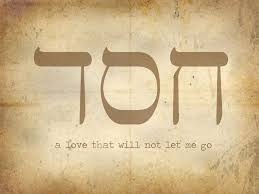
The ESV translates this Hebrew word (חֶסֶדcheçed) as steadfast love in a few of our verses below.
3:3
Let not steadfast love and faithfulness forsake you;bind them around your neck;write them on the tablet of your heart.
Steadfast love and faithfulness are described as a necklace on the neck. A piece of jewelry that is worn to be seen. It is awesome that both terms are used together. How could steadfast love be described that with the term faithfulness. To be steadfast is unmovable, faithful, never giving up.
In the New Testament, there are a number of Greek words that are used to describe love. One definition of the famous agape love goes something like this.
Agape love is the love that is not reciprocal. It loves because it loves. It is a love born out of character, and not conditions. It has a raging stiffness to its approach of seeking the best of the one loved, at it’s own expense.
Steadfast love may be the equivalent.
We are not only to wear these characteristic in our life, but to bury them in our heart, so that the inner man is expressed by the outer man.
Note that we have three responsibilities.
Not let them forsake you
Funny how steadfast love could forsake one. This is one reason I feel the love described here is not quite the level of apage. I might be wrong, but nevertheless, we have a responsibility to make an environment that is hospitable to both steadfast love and faithfulness
Bind them on
Wear these in your outer expression. A quiet christian, without words and works of love and faithfulness is disobeying this precept
Write them in
Bury steadfast love and faithfulness into your thought and heart life. It is to be a basis of the inner life, which ensures hypocrisy in the believers life will be minimized.
14:22
Do they not go astray who devise evil?
Those who devise good meet steadfast love and faithfulness.
In my life, I have experienced much loving kindness.
An example of this loving kindness? I just spent ’bout four hours chatting with my daughter, just sitting and kidding around. She sat with me to chit chat. That, I consider to be a great mercy upon my life.
Do I seek this mercy in my life to increase as I become an even older fart?
Of course!
Therefore, I need to devise good for others. Devise – what a wonderful term to link with good deeds!
A simple plan that any ol’ fool can follow, if he is committed to experiencing steadfast love and faithfulness in his life.
As an aside, notice that steadfast love is linked up with faithfulness again. If that happens again, I’m going to think there is a relationship we need to consider.
16:6
By steadfast love and faithfulness iniquity is atoned for,
and by the fear of the LORD one turns away from evil.
OK, I did not see this coming when I chose these three verses originally. Heck, the couplet of steadfast love and faithfulness pops up again.
So what of it?
We have discussed the steadfast love above. The Hebrew term for faithfulness is the term אֶמֶתʼemeth, with English synonyms of stability, certainty, truth, trustworthiness and of course faithfulness.
When I first come across this term, I wanted to attribute the steadfast love to God and the faithfulness as a requirement of man. I can’t see that! The faithfulness of man is not stable, certain, truthful, trustworthy. Man’s faithfulness hobbles along with spurts and grunts, seeking to please God and finding success in resting in His faithfulness only.
Both of these terms rightly belong to the God of heaven. He alone is the One who naturally exercises steadfast love and faithfulness. It is His nature.
By His characteristics of steadfast love and faithfulness, iniquity is atoned for. The cross is throughout the Word!
Be thankful for our God who is alive again, who provides the life sustaining steadfast love and faithfulness that is our hope.
He is good.
Drop me a line if you would like to discuss the goodness of God or have a testimony of His work in your life.
Thoughts on the topic of inheritance from the book of wisdom
All y’all that have received an inheritance, raise your hands. I’m speaking of a physical inheritance, money, cash, coin, moolah.
Come on – I see you out there Blair.
It is a blessing to give (which I haven’t had the privilege to do yet, since I’m a still kicking) and a blessing to receive. An inheritance that is!
My wife and I have used an inheritance to invest and have found we didn’t miss the fun too much.
On the other hand, one of our siblings burned through it within a few months.
Did they have fun – you bet.
Did we enjoy their company. Yes we did, but not for the reasons you may think.
The funds gave her the ability to visit us, and we really enjoyed her company. At times we experienced sadness during her visit, seeing the opportunity the funds could supply being thrown away, for the sake of the here and now. But we kept that to ourselves after one initial chat, and the lack of interest seen in the discussion.
An inheritance, in my mind is somewhat like found money. No work involved in procuring it, and no responsibility to any human in the way it is spent.
One other way to look at an inheritance is to not look at it.
Do not consider it to be of any use for your day to day lives. Use it to bless others, to invest for future endeavors, or simply spread the wealth with abandon.
Spending it immediately and on frivolous items seems to be a foolish effort, yet I have experienced the pull of the buck to “just have some fun”.
Golly – to just buy a brand new car – but my existing car is working just fine! Funds departing from our possession to simply have a new car smell? Kinda not smart in my mind.
How bout a boat? Nope – that has never been a temptation!!
13:22
A good man leaves an inheritance to his children’s children,
but the sinner’s wealth is laid up for the righteous.
One item wifey and I decided to do with an inheritance was to purchase a second home and use it as a rental property.
Eventually, if we manage it properly, this house may become some of my children’s wealth, that may be passed on to my children’s children.
Kinda cool if it works out.
19:14
House and wealth are inherited from fathers,
but a prudent wife is from the LORD.
Priorities
Ever notice that the Christian life is a battle of keeping good priorities? My oh my. If the house thing works out for my kids and thier kids, and yet they have poor spouses, what good is the inheritance.
20:21
An inheritance gained hastily in the beginning
will not be blessed in the end.
During an inheritance process, time can seem to drag. Months may turn into years, and this may be a useful tool to examine your heart. At the mention of a delay, does the anger and anxious spirit rise up?
Remember that the inheritance is found money, and that if you need it to survive, you may need to consider your life choices and how you fell into such a tenuous position.
If it isn’t a survival issue, but just a simple covetousness that resides in your ol heart, that is a much bigger problem.
This delay in receiving the bucks (and the resultant covetousness) may be a bigger gift that da bucks.
Thoughts on the topic of wives from the book of wisdom.
I have to tell you that in all the ways that God has blessed my life, my wife is one of the greatest. I have mentioned her quiet and gentle demeanor in previous posts.
It is such a blessing to know she is there for me when I have a difficult day. No matter how my day goes, my wife will be there to take care of me in so may ways.
12:4
An excellent wife is the crown of her husband,
but she who brings shame is like rottenness in his bones
She is an excellent wife and truly is the crown in my life. The term “excellent” in this verse has a connotation of power, ability, strength & force. In my life, my wife has been the quiet unassuming strength in the family. In all my bluster, energy, pipe dreams and discouragements, she has been an anchor for the family. She has become a lady that honors me with her actions words and attitudes. She has, by extension, provided a crown in my life by her faithful and steady commitment to this ol fool.
18:22He who finds a wife finds a good thing
and obtains favor from the LORD.
This verse also describes the blessed condition I walk in daily. But this verse also has some baggage that I want to share with y’all.
Years back, my wife and I were doing missionary work in the north of Quebec, and of course, went through arduous hours of learning the local tongue. (Has anyone tried to learn the french language in thier 30’s out of a book – Good luck!!!)
We eventually met a lady that helped us with learning the language. You know, I cant remember the French Bible version we were learning from, but the word “good thing” in th e verse below, was translated as “cadeaux”, which is the french term for “gift” Makes sense right?
When I repeated it back, I said “gateaux” Our friend started laughing, and when she settled, informed me that I had married a “rich, one layer cake filled with layers of cream or fruit”
It wasn’t all that untrue. She is my sweetiepie! And she is a favor that God has provided me.
19:13
A foolish son is ruin to his father,
and a wife’s quarreling is a continual dripping of rain.
My wife and I have had our disagreements, and I know that this is the sign of a healthy marriage. We have sometimes struggled understanding each others opinions, wants and needs.

Initially I sought to complete each “discussion” within a set time, realizing I couldn’t go to bed angry. This methodology sometimes worked, but I quickly realized that once the opinions are expressed, it is best to let the thoughts simmer in our minds until a unspecified time when some of the heat has died down and the light is a wee bit brighter.
So it is with my wife. 90% of the time, we came to a resolution quickly, but early on in our marriage, I found great wisdom in letting her “figger it out” on her own.
Endless quarreling was not a practice she would enter into unless I egged her on – to my shame. No – she needed to be quiet and consider her thoughts, what was important, and what she needed more information on. Then she and I could discuss and find resolution. (And gosh golly – sometimes we came to agreement!)
19:14
House and wealth are inherited from fathers,
but a prudent wife is from the LORD.
When we got hitched, we were so poor. How poor were you Carl?
Well let me tell you. We ate popcorn for supper, bunches of LaChoy canned food – (It was given to us!) and plenty of spaghetti. To this day, I can’t think of eating LaChoy, but it kept us alive and kicking so I’m thankful for the gift we were given.
During this time, my wife became a coupon girl. She eventually rose to the status of “Coupon Queen” amongst her friends, and though some of them may have meant it in a derogatory manner, my wife did all she could to keep the wolf from the door. To this day, although not as poor, she still is on the constant hunt for deals, sales, bargains and savings. She is prudent with the funds I supply her, and it has translated to other areas of our lives. I may chat with you on that topic in another post, since this one is getting a bit wordy!!
5:15-19
Drink water from your own cistern,
flowing water from your own well.
Should your springs be scat
streams of water in the streets?
Let them be for yourself alone,
and not for strangers with you.
Let your fountain be blessed,
and rejoice in the wife of your youth,
a lovely deer, a graceful doe.
Let her breasts fill you at all times with delight;
be intoxicated always in her love.
This last set of verses has always piqued my interest, since many of you know that I was an alcoholic.
Understand my piquedness? (Don’t think that is a word – but I wanna use it, so try to understand)
Drop me a line if you would like to discuss how the proverbs are so practical, how they are such a mirror to life or if you just want to chat.
Thoughts on the topic of anger from the book of wisdom.
Anger – it makes me so mad!
I struggle with what my wife calls “simmering anger” I’m sure you know what I mean. Something will tick me off, but I won’t admit it as a problem, will not deal with it, and simply “bury it”
Next thing you know, something else ticks me off. But it isn’t a big issue, so I just ignore it, try to forget about it.
Soon, one more thing ticks me off. (Seems like I git ticked off a bunch, eh?) About this time, I’m starting to feel a bit stressed, but not willing to admit the source of the stress. The latest issue easily looses focus in my mind, because I don’t want to face the issue, even though it may be completely insignificant.
At last, the straw that broke the camels back arrives in some minor irritant in my life, and I let it all out. Simmer simmer simmer BOIL – EXPLODE!
One day, my car wouldn’t start and I exploded. Entering the house, I hurled my keys across the table, without realizing my 3 year old son was sitting at the end of it. Thankfully, the keys slid past him and dented the wall instead of my son. (God protects His fool again!)

Anger – such a monster, but why? I heard a fella once teach that anger is the result of unmet expectations.
You get that? If that premise is true, we fuel our own anger problem. Of course some anger is beneficial, even required, but that righteous anger is not considered in this post. This post simply deals with selfish, me centered, gimme gimme anger!
An example
I am the type of fella that likes to schedule his day, setting aside a couple hours for this, and a couple hours for that. If the “this” gets in the way of the “that”, I git ticked off. But I created the schedule, assigned the time for both “this” and “that”, and yet, I simmer.
Another example.
I expect, (without communicating my expectations), that certain tasks need to be completed within a certain time. Not done? A bit more simmering in the belly.
One more example.
Got a buddy who doesn’t call me when I hope he will. Blow my stack!
Let’s take a few minutes to consider what the Scriptures teach regarding a wrathful, angry man.
Activities of an angry man
15:18
A hot-tempered man stirs up strife,
but he who is slow to anger quiets contention.
29:22
A man of wrath stirs up strife,
and one given to anger causes much transgression.
Strife is the work of an angry man. He isn’t happy with his life, and he finds satisfaction in spreading strife, or division among those he associates with. This type of man eventually becomes lonely, which only fuels the anger, that unmet expectation of love and kindness we all look for.
This unmet expectation of love results in greater anger, and further loneliness and abandonment. The greater the wrath, the greater the suffering. It is a vicious spiral of destruction that only the angry man can stop. Friends and family will suffer when they seek to rescue him, without success.
19:19
A man of great wrath will pay the penalty,
for if you deliver him, you will only have to do it again.
A fools wrath is heavy, a burden to himself and to those around him. A dead weight, a heaviness and a ballast to the good life.
27:3
A stone is heavy, and sand is weighty,
but a fool’s provocation is heavier than both.
Let’s consider the alternative
One of my wife’s favorite verse is Proverbs 15:1, and she has plenty of practice using this wisdom with her stubborn ol hubby
15:1
A soft answer turns away wrath,
but a harsh word stirs up anger.
She has often provided a soft answer to speak to me of bigger things Her quietness of spirit is deafening at times!
15:18 A hot-tempered man stirs up strife,
but he who is slow to anger quiets contention.
If you are an angry man inside, the only one who can help you is YOU. Do not blame God for this condition, for if you claim the Christ as Lord, He has provided the Spirit of God, and one of the fruits of the Spirit is Self-Control. Anger does not have ultimate power over a believer.
Consider this final proverb, and the wisdom it communicates
Proverbs 16:32
Whoever is slow to anger is better than the mighty,
and he who rules his spirit than he who takes a city.
Rule your own spirit, and find victory greater than world domination.
Thanks for joining me at Considering the Bible. I hope you find encouragement in these blog posts. If you do, I would be honored if you shared the post with a friend.
Thanks again, and have a wonderful day in the Lord.
Thoughts on the topic of gossip from the book It reminds me of a story I heard many years of wisdom
Gossip
Did you hear what I heard about…. What a trap to fall into – the curiosity that gives us the drive to learn and grow, becomes the fuel to find out dirt on our brother or sister. Eventually the little tidbit of information on a brother or sister becomes a monster, ending in the inevitable character assassination of a man who could not defend himself. It reminds me of a story I heard many years back. A story of a man convicted of gossiping went to his priest to ask for forgiveness and penance. The father instructed him to take a pillow of feathers to all he had gossiped with and place one feather on each of his friends doorsteps. After doing so, he returned to inform the father he had done his penance. The father told him to retrieve the feathers. Impossible he said. Gossip is such a “light” sin, and yet it spreads with such freedom. Take a few minutes to consider what the Proverbs have to say about this commonly ignored, and even less discussed sin that destroys peoples lives.
Proverbs 11:13 Whoever goes about slandering reveals secrets, but he who is trustworthy in spirit keeps a thing covered.
Proverbs 17:9
Whoever covers an offense seeks love,
but he who repeats a matter separates close friends.
Did you get that? Keep certain things covered!
My mamma used to say that we shouldn’t air the neighbors dirty laundry. Of course, at the age of 5, I was confused about why she would even think about their laundry, but now I get it.
…Love covers a multitude of sins…
I wanna be careful here.
I don’t think this is referring to simply ignoring the sins of others. To love a brother or sister is to forgive them, (if the sin is against you), or to discuss the sin with a brother or sister (if it is against someone else).
To discuss a sin with someone other than with the wrongdoer is gossip, slander and character defamation. Don’t do it.
Easy for you to say Carl!
Yes it is easy for me to say, and I fully admit the gossip bug is a powerful influence if I walk in the wrong spirit!
Proverbs 25:23
The north wind brings forth rain,
and a backbiting tongue, angry looks.
I am thinking the north wind, in the Israeli mind, always brought rain from the north. A backbiting tongue will also bring angry looks (eventually).
How often have you found out of a gossip actively telling stories (true or false) about you or a loved one? My initial response is always with anger when I see the culprit.
Is it natural? Of course.
Is it right? Of course not, since as a Christian, we need to exercise forgiveness. Notice that the term I use is “exercise”.
Does it sometimes hurt? To my self pride – sure.
Does it make me weary? Sometimes, since it seems so unfair, if I get my eyes off the Master.
Can I forgive quickly? How are those forgiveness muscles doing Carl?
Remember the old saying – If you don’t use ’em (you know – your forgiveness muscles!) you may loose ’em.
That would be a shame!
Thanks for dropping by.
Drop a line if you get a chance, and have a good day in the Lord.
Thoughts on the topic of alcohol from the book of wisdom
As many who follow this blog may know, I was a teenage alcoholic and drug user, rescued from a life of drunkenness and waste by the loving sacrifice and grace of the Lord Jesus.
When I became a believer, the addiction/habit/sin fell from me since I had hope and a greater goal in life. When I eventually started reading Proverbs, the verses below made so much sense.
I was a passionate teetotaler, judging all that imbibed. The Bible clearly stated, as I read certain passages, that drinking was sin. It is for me.
In my journeys, there have been gracious believers that have been patient with this ol fool, seeking to instruct me in the finer points of Christian living.
When I drink, I abuse the drink. Some believers drink to the glory of God – no abuse of the bottle, but thankful for the blessing. I can’t understand it, but I also can’t take away the freedom of another believer in an area that is not necessarily sin for them.
With all that said, find a few verses below from the book of wisdom.
Proverbs 20:1
Wine makes you mean, beer makes you quarrelsome— a staggering drunk is not much fun.
This verse became my linchpin of belief and a club to hammer those who could control their alcohol consumption.
Proverbs 23:19-21
Oh listen, dear child—become wise; point your life in the right direction. Don’t drink too much wine and get drunk; don’t eat too much food and get fat. Drunks and gluttons will end up on skid row, in a stupor and dressed in rags.
I glossed over this verse early on in my journey, not reading the “too much” qualifier. My logic was – Why drink at all if the drunkenness is possible? How much is too much? I assumed all had the same weakness I had.
So myopic!
Proverbs 23:29-35
Who are the people who are always crying the blues? Who do you know who reeks of self-pity? Who keeps getting beat up for no reason at all? Whose eyes are bleary and bloodshot? It’s those who spend the night with a bottle, for whom drinking is serious business. Don’t judge wine by its label, or its bouquet, or its full-bodied flavor. Judge it rather by the hangover it leaves you with— the splitting headache, the queasy stomach. Do you really prefer seeing double, with your speech all slurred, Reeling and seasick, drunk as a sailor? “They hit me,” you’ll say, “but it didn’t hurt; they beat on me, but I didn’t feel a thing. When I’m sober enough to manage it, bring me another drink!”
Eventually I came to Proverbs 23 – Wow did this guy know the effects of drinking too much, and the lure of returning to the bottle. So many nights (and days) in my lost state I experienced this contradiction of life.
Whining about my life but returning to the source of my sorry existence. Thank the Lord for His saving of this poor fool.
Proverbs 31:4-7
“Leaders can’t afford to make fools of themselves, gulping wine and swilling beer, Lest, hung over, they don’t know right from wrong, and the people who depend on them are hurt. Use wine and beer only as sedatives, to kill the pain and dull the ache Of the terminally ill, for whom life is a living death.
Another verse I glossed over when reading as it refers to excess of consumption, and the abuse of the bottle.
Summary
I was delivered from the enslavement from alcohol and drug abuse when I bent the knee in repentance and belief in the Messiah. I am thankful for His mercy in my life. I have found other battles in my life that are overwhelming at times
Both this verse and the passage in Proverbs 23 speak of self control. The lack of self control in drink or food leads to multiple life problems.
These verses describe the lack of self control in the areas of food and drink. What other areas of my life exhibit the lack of self control. Self pity, anger, fear? And yet the believer has a capacity in the Lord, a strength available for self control, that is, the fruit of the Spirit.
Some believers may have to struggle with self control issues with food and drink their entire life.
Thoughts on the topic of children from the book of wisdom
My wife and I have 5 beautiful children, whom we love and cherish. Each of them are out of the house now, but not out of our heart.
We understand better now than ever the wisdom the following passages supply to parents, and my regret is in not paying better attention to the details of the precepts supplied below.
Oh – we sought to obey the following verses, but I have to admit, that discipline was administered sometimes without the child’s best interest considered.
Proverbs 13:24
Whoever spares the rod hates his son,
but he who loves him is diligent to discipline him.
Proverbs 19:18
Discipline your son, for there is hope;
do not set your heart on putting him to death.
All those parents out there who have sometimes disciplined thier child without seeking thier child’s benefit, but only a release of frustration, please raise your hand. I admit my weakness in this.
And yet the Lord has been very kind to this family.
When reading a passage such as above, keep in mind the one below.
Colossians 3:21
Fathers, do not provoke your children, lest they become discouraged.
A very wise lady, who was raising a teenager on her own, being abandoned by her husband, once told me a great secret on raising kids, specifically teens.
Are you ready? Talk to them and with them. That’s it! If you can maintain communication with your child from the preteen years through the teenage years, the battle is half done.
Sometimes when a teenager is fearing the discipline, it creates a wall that blocks discussions.
Do teenagers need discipline? Yes. I am not advocating a free for all.
What I am advocating is communication. Talk. Chatting. Chewing the fat. About the weather, drugs, the price of rice in China, or why the sky is blue. If your child knows he or she can talk to you, the chances are better (not guaranteed) that they will weather the storm of the teenage years.
Proverbs 22:6
Train up a child in the way he should go: and when he is old, he will not depart from it.
Notice that the verse does not say – Train up a child in the life you dream of. (Ahem – every child is not a sports superstar!)
Nor does it say, Train up a child in the way you are living. In other words, passive training. Kids are sponges, and they will soak up the bad habits the parents exhibit easier than the few good habits practiced.
Train up a child in the way he should go. The only way a parent will know that is through understanding the Word & Will of God and prayer. Oh and one more thing. The parent needs to understand the child. Which means back to the talking, chatting, discussing, chewing the fat – oh never mind – I think you get the idea.
Proverbs 22:15
Foolishness is bound in the heart of a child; but the rod of correction shall drive it far from him.
Proverbs 29:15
The rod and reproof give wisdom,
but a child left to himself brings shame to his mother.
These passages do not quantify the amount of the rod of correction. Each child is different and a wise parent will know that. Correction should be done as much as possible, privately, since shaming of the child is not necessarily to his or her benefit. Of course if the child has done something against a sibling, the discipline may need to be observed, but the wise parent will understand each of the children’s character to best decide how to accomplish that.
Finally, when raising children, seek to make thier paths easy. The world will chew them up and spit them out on a daily basis. As a parent, follow after God, and walk in integrity.
Your children will be blessed.
Proverbs 20:7
The righteous who walks in his integrity—
blessed are his children after him!
Thoughts on the topic of religion from the book of wisdom
Religion
I have been listening to the book of Proverbs (The Message translation!) on my commute to work lately and it’s been real good. I listen to one chapter a morning, usually 3-4 times over, if the commute lasts that long.
Occasionally, as I am listening to the Proverbs, some thoughts may come to mind and I will post. At times, the verses jump out at me, and the following two verses certainly did that.
To think that the Bible says such about “religion” is kinda shocking. Both for the fella who has never considered the Book, and for those who may have lived by it for years.
Both may be shocked to consider that proper living is more important to God the Father than religious activities.
Say it ain’t so Carl!!!
Proverbs 21:3 is pretty dang clear
Proverbs 21:3
Clean living before God and justice with our neighbors mean far more to God than religious performance.
Do I hear Micah 6:7-8 echoing in the background? Check it out. (A little self study never hurt anyone!)
Proverbs 21:27
Religious performance by the wicked stinks;
it’s even worse when they use it to get ahead.
How twisted, when you think of the original intent of the sacrificial system that Solomon was likely referring to in this passage. Sacrifice was to give up something, not to get something!
How often have you attended a church meeting and out of nowhere, a brother will approach you about some business opportunity, or try to sell you something, like life insurance.
Never took a liking to that, even when I thought of the building as somewhat holier than other buildings. Now to bring up business opportunities in place of fellowship in the Son seems to grind me all types of wrong.
Nevertheless, I hope you have a great day and enjoy the time you have with your loved ones. Hope to visit with you soon!