I can’t tell you how often I am driving to work and as I am pulling into my parking spot, a passage I am listening to takes on a slightly different perspective, provides a different meaning. As you may know, I grew up in the church upon my salvation at the old age of 21, and delved into studying the old King James Version This passage this time was found in the book of James, chapter 2.
James 2:12 (KJV) So speak ye, and so do, as they that shall be judged by the law of liberty. 13 For he shall have judgment without mercy, that hath shewed no mercy; and mercy rejoiceth against judgment.
This passage spoke to me of end time judgement, of the great white throne, of the end of life. The believer was to be judged by the law of liberty, and that judgment was to be without mercy to those who showed no mercy. The last phrase just seemed to be tacked on. I was never quite sure of the intent or reason it was just hanging onto the last of the verse. Don’t get me wrong – I thought it bode some type of good news for the one being judged, but it just didn’t click!
Fast forward 30 years and I begin to read the ESV, along with other translations.
James 2:12 (ESV) So speak and so act as those who are to be judged under the law of liberty. 13 For judgment is without mercy to one who has shown no mercy. Mercy triumphs over judgment.
This verse seemed to clear up that hanging portion, where James speaks of mercy triumphing over judgement, and it continued to offer great hope, though the judgement spoke of was without mercy!
Enter the paraphrase version of the Message, and this morning as I parked my jalopy, this passage was brand new, and I understand it differently.
James 2:12 (MSG) Talk and act like a person expecting to be judged by the Rule that sets us free. 2:13 For if you refuse to act kindly, you can hardly expect to be treated kindly. Kind mercy wins over harsh judgment every time.
As the previous versions spoke of judgement, and the law of liberty, I envisioned end of life judgements as I spoke of above. Yet this passage is in the middle of a portion of Scripture that describes a “respect of persons” problem in my life, that is my estimation of a person’s worth based on his or her appearance. Check the chapter out for a quick review.
James then enters into this talk of judgement. Judgement based on a rule that sets us free. Might this rule of freedom, this law of liberty, be that which frees us to be kind, loving joyful, faithful, gentle, and the such?
Might James be addressing how we relate to those less fortunate, and that by refusing to act kindly to the less fortunate, we should expect the same. We should expect to be treated unkindly. Isn’t it true that this is standard operating procedure for this world, to make judgements that result in unkind actions towards the poor?
And that last phrase?
A believers kind mercy will win in the end, though judgement by others may be inevitable, it is not the final word. Kind mercy has greater impact on others than exercising judging attitudes.
James message? Be kind to those less fortunate. It is our calling! This passage is for today, and not for end of life judgements. James is teaching in real world, present time life situations.
I tell you, it blew me away, for the rest of my walk that morning was consumed with how blunt I had been in my understanding of the Word and it’s message to me.
Thanks again for coming to visit. I hope you found something of interest in this post and would appreciate a comment, to begin a discussion. If you know someone this blog may bless (or challenge), send them a link, so they may join us in our discussion
It may have been a week ago when I wrote on Forgiveness and Justice, and since then, I have come across a passage in Romans that has brought an alternate idea to my mind, a concept that provides an alternate reaction to injustice other that through forgiveness
Romans 12:16 Live in harmony with one another. Do not be haughty, but associate with the lowly. Never be wise in your own sight. Romans 12:17 Repay no one evil for evil, but give thought to do what is honorable in the sight of all. Romans 12:18 If possible, so far as it depends on you, live peaceably with all. Romans 12:19 Beloved, never avenge yourselves, but leave it to the wrath of God, for it is written, “Vengeance is mine, I will repay, says the Lord.” Romans 12:20 To the contrary, “if your enemy is hungry, feed him; if he is thirsty, give him something to drink; for by so doing you will heap burning coals on his head.” Romans 12:21 Do not be overcome by evil, but overcome evil with good.
And what might that idea be Carl?
Revenge.
Is not revenge a form of justice, and we know God loves justice. Is revenge not a way of creating a fair and equitable resolution to the injustice we all suffer?
But I am getting ahead of myself. What is revenge?
The Greek word is ἐκδικέω ekdikéō, from which we get the translation “avenge” in our verse. A few years ago, I penned a blog series about a Christian’s relationship to judging (Judge Judge Judge), I recorded a short study on dikē. I think the root word may be recognized in our word for revenge.
With that connection, I submit to my reader that revenge has the component of judgement. Not judgement as in condemnation, although it may include it, but the judgement is the determination that a certain action was unjust.
Two items to consider.
Emotion & Knowledge (of circumstance)
A judge is to be impassionate about the determination of any righteousness being broken. Not only is the judge to be impartial, and without emotional connections to the plaintiff or the defendant, but he is to have knowledge of all the circumstances of the occurrence being judged.
How inadequate we are in both these arenas of ability, when we seek to make a judgement on the actions of another, to determine if injustice has be inflicted on us
Knowledge of the Law
The second item to consider when we seek to make judgement, beyond the emotional bias and the lack of knowledge of the circumstances from both parties perspective, is the intimate knowledge of the law, or standard by which we are to make judgement.
Of course I have intimate knowledge of the law I want to use, the law of Carl, the law that is malleable and forever favoring my weaknesses, while harshly falling on my inflictor of pain!
That law is deceptive, and full of hypocrisies. It may appear fair to myself, but it is not a standard that anyone else accepts.
The law by which all judgement is to be determined is of course the law of God, the standard which we are too often incapable to discern when we are hurt or treated poorly.
It is in these times when we have been, in our opinion or in truth, treated unfairly that we need to pull back and not make judgement on the circumstances.
Our word in Romans actually is translated as “take revenge”, as in it is our prerogative to make a judgement and determine the punishment based on the judgement. Our judgement of the injustice! Our decision on the severity of the punishment!
Paul suggests we do not take revenge. Take it cool, try not to make any judgement in order to determine a punishment, and then to inflict it on someone, even though they may not even understand my actions. Seems fair!
Golly. That is not what Paul is saying. Let us read it once more, though it is a difficult word!
Romans 12:19 Beloved, never avenge yourselves, but leave it to the wrath of God, for it is written, “Vengeance is mine, I will repay, says the Lord.”
Never. Never avenge yourselves. As we have ventured through this short review, it has been important to remember that it is in the heart and mind, that revenge begins. I quickly can make a decision or judgement that what I experience is “unfair” or “unjust”. As a matter of fact, my decision making skills in this regard are instantaneous
Even if the action is not a perceived injustice, but in actual fact a unjust action against me, inflicted on me with evil intent, Paul tells us to never take revenge
We ain’t got the knowledge, and we ain’t got the impartiality to make a just judgement. And we certainly don’t know the law as intimately as the true Judge, the law that is the standard for judgement to be determined and justice to be accomplished
With Paul, I theoretically echo his admonition to each of us.
Romans 12:19 – 21 c…it is written, “Vengeance is mine, I will repay, says the Lord.” To the contrary, “if your enemy is hungry, feed him; if he is thirsty, give him something to drink; for by so doing you will heap burning coals on his head.” Do not be overcome by evil, but overcome evil with good.
May this teaching Paul provides become less theoretical and increase in practical application in our lives.
When your spouse says something that may offend you, don’t make an internal judgement and decide on how to get back at her. Either talk with him/her about it, or simply forgive them.
When your boss, who is extremely busy, cannot answer an important question you need answered, realize the situation make an informed decision based on your current knowledge and do your best. And don’t harbor unjust thoughts towards him or her.
When a church friend or official looks like they are not “walking properly”, make an effort to openly discuss with them the appearance of impropriety. Sitting back and stewing about it, or spreading gossip is not the type of action that is pleasing to the Lord.
When I started this post, I said there was an option on how to deal with injustice other than through forgiveness. For the lost, this is the only alternative. For the believer this is not an available option, though it is too often exercised.
Relating to believers, I was wrong in my earlier statement! Revenge and the believer are not to be in the same room!
Let the Lord, the One who has intimate knowledge of the true law, has the capability to be impartial between two parties, and knows all the circumstances of the infraction; let Him be the judge and the One who passes the sentence.
He is the Only One who will do it correctly.
Thanks again for coming to visit. I hope you found something of interest in this post and would appreciate a comment, to begin a discussion. If you know someone this blog may bless (or challenge), send them a link, so they may join us in our discussion
2 Chronicles 6:28 “If there is famine in the land, if there is pestilence or blight or mildew or locust or caterpillar, if their enemies besiege them in the land at their gates, whatever plague, whatever sickness there is, 2 Chronicles 6:29 whatever prayer, whatever plea is made by any man or by all your people Israel, each knowing his own affliction and his own sorrow and stretching out his hands toward this house, 2 Chronicles 6:30 then hear from heaven your dwelling place and forgive and render to each whose heart you know, according to all his ways, for you, you only, know the hearts of the children of mankind, 2 Chronicles 6:31 that they may fear you and walk in your ways all the days that they live in the land that you gave to our fathers.
We were in church on Sunday and was listening to the preacher teach on prayer, and as he was reading through the above passage, verse 30 caught my ear.
The passage begins with Solomon asking God to forgive those who are suffering under a famine, a pestilence, a blight, or mildew or locust or caterpillar, even if their enemies besiege them at the gates – whatever the plague many be, Solomon asks God to hear their prayer from heaven, and to forgive them.
During his reading, I was tracking with the preacher, but then he read out the following
and render to each whose heart you know, according to all his ways
Forgiveness and justice? If we are forgiven, why does Solomon suddenly revert to associating what the Israelite gets with what he does, with the way he walks and lives his life?
Something seemed off in my mind, and as usual, when misunderstanding a passage of Scripture, what was off was my mind, my way of thinking!
You see, during his reading I had brought into my thinking that forgiveness removed the past, removed history from my life, removed my past actions and wrongdoings, with all the impacts and damage that come as a result of walking in sin.
Forgiveness removes guilt, and restores relationship. Forgiveness does not change the past. Forgiveness can change the future, but the past is cast in stone!
So often we think that forgiveness is the cure all for a life of sin, that we can run with the devil and get right with God at the end, with all our destructive ways somehow becoming rainbows and lollipops. Our rebellion will leave scars on our lives and the lives we touch, but thankfully, with the forgiveness provided by the Lord, we have hope that under His leadership, our ways will produce opportunity for blessings to flow from our lives.
As we follow Him, and understand how blessed He is, and how often and deeply He blesses us, we are to follow in the same, and provide blessing to others.
For Solomon, I can imagine him telling us that the blessings God renders to each of our hearts is according to all of our ways. Rebellion produces bitterness, anger, resentment, confusion, hatred, and such.
But be careful, for this is not simply a tit for tat type of message, for our hearts have to be changed in order to produce the ways God is pleased with. Our hearts have to be forgiven, in order for us to truly forgive others, to reach out to those we may have hurt and find ways to bless them.
Forgiveness and justice are related, but not the way I originally thought in my broken mind. Justice occurs to every single person on this earth. It may be delayed, or seem out of place at times, but justice is an unavoidable reality for each of us. Forgiveness provides us the strength to accept the just results of a life poorly lived, the wisdom to resolve those acts of sin against others in the past (if possible), and the power to be different, to be a blessing instead of a selfish &#!!!*%. His death provided us the opportunity for forgiveness of our sins, and His resurrection provides us this power to live a life of blessing others.
Galatians 6:7 Do not be deceived: God is not mocked, for whatever one sows, that will he also reap. Galatians 6:8 For the one who sows to his own flesh will from the flesh reap corruption, but the one who sows to the Spirit will from the Spirit reap eternal life. Galatians 6:9 And let us not grow weary of doing good, for in due season we will reap, if we do not give up.
My friend – Get right with God as early as possible, so that you may experience the opportunity of being a blessing to others and as a side benefit, allow the God of justice to render to your life the blessings He wants to shower on you. But as we who know the Lord, He is One who does hoard blessings to Himself but is gracious, giving and loving. As we share, we will find out that God renders blessings to those whose ways are a blessing.
Be a blessing to someone today. Go out of your way to help someone, to surprise them with a kind word or action. And be blessed by blessing them.
Thanks again for coming to visit. I hope you found something of interest in this post and would appreciate a comment, to begin a discussion. If you know someone this blog may bless (or challenge), send them a link, so they may join us in our discussion
We were in Sunday School class yesterday and looking at the passage in Exodus where Moses and the Israelites were being chased by Pharoah’s best charioteers. Things were looking pretty dire for this young nation, possibly a nation that may only exist for a few weeks! Not only was the previous master coming to get his slaves, Moses had guided them right into the middle of the shores of the Red Sea.
This has got to be a mistake! How could you Moses? Can’t you read a map, or don’t you know what you are doing? Moses – this is the worst! Can you hear those Israelites talking bout their graves even as we read this passage in Exodus
Exodus 14:11 They said to Moses, “Is it because there are no graves in Egypt that you have taken us away to die in the wilderness? What have you done to us in bringing us out of Egypt? Exodus 14:12 Is not this what we said to you in Egypt: ‘Leave us alone that we may serve the Egyptians’? For it would have been better for us to serve the Egyptians than to die in the wilderness.”
These folk were not remembering what God, through Moses, had accomplished a few weeks ago. I’m fairly certain they never really captured the idea of God working in their midst! They were so smart, reminding Moses of just leaving well enough alone. It was obvious to all that this decision of Moses was foolish. You are so wrong in your leadership and decision making skills!
Finally Moses addressed the people. Now remember, there may have been upwards of 2 million people being led by Moses at this time, and Moses was not a public speaker – at least in the past he claimed to be!
Nevertheless, he was between a rock and a hard place. (Actually an army and a sea, but you get my point.) Everything the camp of Israel had said had a hint of truth in it, and the deliverance Moses had promised seemed to be very short-lived. It was only a matter of time before the Israelites would be taken back to Israel, if any survived!
Yet, Moses spoke some mighty famous words at this critical time.
Exodus 14:13 And Moses said to the people, “Fear not, stand firm, and see the salvation of the LORD, which he will work for you today. For the Egyptians whom you see today, you shall never see again. Exodus 14:14 The LORD will fight for you, and you have only to be silent.”
Moses told the Israelites to stand firm. Some translations speak of standing still (KJV, NLT) , or standing by (LSB, NASB). It seems Moses was telling the people to stop moving. What a necessary direction when we are under pressure or not able to think, but simply reacting to a situation.
Fear not, stand firm, see the salvation of the Lord. A very common refrain through the Word, where the people of God are directed to stand firm.
2 Chronicles 20:17 You will not need to fight in this battle. Stand firm, hold your position, and see the salvation of the LORD …”
Isaiah 46:8 “Remember this and stand firm…
Daniel 11:32 He shall seduce with flattery those who violate the covenant, but the people who know their God shall stand firm and take action.
1 Corinthians 16:13 Be watchful, stand firm in the faith, act like men, be strong.
Galatians 5:1 For freedom Christ has set us free; stand firm therefore, and do not submit again to a yoke of slavery.
Ephesians 6:13 Therefore take up the whole armor of God, that you may be able to withstand in the evil day, and having done all, to stand firm.
Philippians 4:1 Therefore, my brothers, whom I love and long for, my joy and crown, stand firm thus in the Lord, my beloved.
2 Thessalonians 2:15 So then, brothers, stand firm …
1 Peter 5:12 By Silvanus, a faithful brother as I regard him, I have written briefly to you, exhorting and declaring that this is the true grace of God. Stand firm in it.
What I am about to suggest is that though Moses made this claim of God, that is to stand firm, it may not have captured everything God wanted the Israelites to know. Moses spoke for God in his direction to the people of Israel, a truth that is often repeated for the saints through the ages, and yet in the very next verse, God directs Moses to get those Israelites to go forward.
Exodus 14:15 The LORD said to Moses, “Why do you cry to me? Tell the people of Israel to go forward. Exodus 14:16 Lift up your staff, and stretch out your hand over the sea and divide it, that the people of Israel may go through the sea on dry ground.
Was Moses incorrect in his direction to the Israelites? Did he represent God incorrectly? Yes and no.
Yes, in that it seems God corrected Moses right after this direction was given to the Israelites. The Lord did question Moses regarding his directing the Israelites to stand by! As a side bar, is it not good to see the Lord’s mercy in that He spoke to Moses only in correcting him. He protects his prophets and priests, teaching them as they grow.
Did Moses represent God incorrectly? Not exactly, for though our (and the Israelites) impression of Moses command to stand firm seems to imply inactivity, God did not necessarily change the command, but gave additional direction for Moses and direction for the nation to move forward. There was a time of “standing by”, but in relation to physically standing by, it was relatively short lived.
Notice that in Exodus 14:15-16 speaks of the nation going forward, and going through.
Exodus 14:15 …..Tell the people of Israel to go forward. Exodus 14:16 …..that the people of Israel may go through the sea on dry ground.
This concept is echoed as a few of the verses above.
Daniel 11:32 He shall seduce with flattery those who violate the covenant, but the people who know their God shall stand firm and take action.
The passage spoke to me of a misconception I had, as I think of the commands of God referring to standing firm.
To stand firm is not a call to stand still, but to go forward in faith, standing firm in my heart and mind as my legs move this old body to it’s next assignment.
Thanks again for coming to visit. I hope you found something of interest in this post and would appreciate a comment, to begin a discussion. If you know someone this blog may bless (or challenge), send them a link, so they may join us in our discussion
I have been trained as an engineer and in my career, I have been led to project management as a career path. I have been blessed to work for a great boss – Yes that is you Jimmy – and meet some fantastic folks that have helped me is so many ways become a better leader.
For those reading who may not be in the same industry as I, to be a project manager is to be ruled by scope of work, budgets and schedules! Those I have the privilege of working with need to provide deliverables within a specified time – a deadline or milestone – that has been agreed upon by both the client and ourselves.
Why do I bring this up? Because work life overflows into personal life and I find I see life as “tasks” that need to be completed (on time of course) and not as a people related opportunity to increase closeness of relationship.
Let me tell you why this is a concern for me.
For the last year, my wife and I have been building our retirement home on the weekends, a little spot in the woods, where we can eventually have a place to raise a few chickens, have a couple gardens, and to watch the birds as we have our morning coffee. I cannot tell you of the times I have set self imposed schedules in my mind and then drove those I love a bit too hard, or experienced an internal attitude battle, simply to get a self imposed goal completed.
Just recently, my son came to visit us from Canada and helped us erect our four exterior walls on our first floor. A lot of work for two old fogies and a middle aged fella! But in the midst of the work, I struggled with loosing a peace, loosing my focus on the fact I had two of the most important people in the world with me, and I was looking to meet schedules.
They understand this ol’ fart and my foibles, and the way we worked together after I got my head on straight was an experience I am very thankful for.
Now please understand. Production, schedules, planning and budgets are important. Projects can’t be completed successfully and properly without them. But they are to be tools used to progress projects, and we are not to let them be controlling monsters over our lives.
We are to be led of the Spirit, and sometimes His schedule is different than mine. In this case, the minor changes the Lord required not only straightened me out, but provided a much more enjoyable time with my loved ones.
And for that I am thankful.
2 Thessalonians 3:16
Now the Lord of peace himself give you peace at all times in all ways. The Lord be with you all.
P.S. – We actually got more accomplished than I had scheduled! Yippee!
Thanks again for coming to visit. I hope you found something of interest in this post and would appreciate a comment, to begin a discussion. If you know someone this blog may bless (or challenge), send them a link, so they may join us in our discussion
I remember driving into work, turning through the parking garage, just prior to finding my parking spot when I heard John 11:40 over my car speaker.
John 11:40 Jesus said to her, “Did I not tell you that if you believed you would see the glory of God?”
As soon as I heard it, I thought – What if you didn’t believe? Was it not just a few verses earlier that the Word spoke of the Jews who were with her?
John 11:33 ESV – When Jesus saw her weeping, and the Jews who had come with her also weeping, he was deeply moved in his spirit and greatly troubled.
What about the Jews who had come with Martha ? They saw Lazarus come out of the tomb. Did they see the glory of God? What did those who did not believe see?
John made sure I understood the reason Jesus performed this miracle in front of Mary, Martha and the Jews who had come to the tomb with Jesus and the disciples.
John 11:42 ESV – I knew that you always hear me, but I said this on account of the people standing around, that they may believe that you sent me.”
His intent was for those who were present to believe that God the Father had sent Jesus. He was (and is) seeking others. The raising of Lazarus produced believers. They saw the resuscitation of Lazarus, and believed.
John 11:45 Many of the Jews therefore, who had come with Mary and had seen what he did, believed in him,
Yet the question remains. What did those who did not believe and were present see, when Lazarus came out of that tomb? John did not keep me hanging in mystery about my question.
John 11:46 but some of them went to the Pharisees and told them what Jesus had done.
They saw opportunity. A chance to find favor with religious leaders. They may have been plants, moles in the crowd that the Pharisees planted, but that is just my wild imagination running away with my thoughts.
What is clear is that those who were mourning the death of Lazarus moments previously, were now on the doorstep of the Pharisees, ratting on Jesus. This information was the final straw, and John informs us that the plot to kill Jesus was formalized.
Isn’t this the nature of faith shown in this simple question? To believe is to see glory of God. To not believe is to see opportunity for self, even though a miracle is obvious to all. The character of faith is to look away from self and to look to God. The character of non-faith, or unbelief is to look away from God and to look for self.
Note that the works produced from this act of unbelief was death. The Jews information of Lazarus to the Pharisees provided the last straw, the final motivation to plan the death of Jesus. The die was cast for the final Glory of God to be sacrificed in full view of the world, and to be raised up to never die again, and to provide a free and full salvation for all who would believe.
Thanks again for coming to visit. I hope you found something of interest in this post and would appreciate a comment, to begin a discussion. If you know someone this blog may bless (or challenge), send them a link, so they may join us in our discussion
A few weeks back, I wrote a post on the topic of Female Leaders in the church environment. The topic was sparked in my mind by having visited a number of churches in the recent past, and being taught/preached to by a female leader within some of these churches. You may want to refer to my previous thoughts – See Let Me Tell You a Story – Female Leaders.
This past weekend, my wife and I were out of the city and ended up in a tiny town, with a small community church near by. We were a bit early for service, and decided to go in to meet some of the believers.
What a friendly group! Granted, the congregation was very small, but they were so very friendly! It was a bit unbalancing. Don’t get me wrong – it was a blessing to be around folks that were accepting, willing to enter into a conversation with strangers, just to chat. A real blessing!
We were there a half hour before a layman mentioned a Pastor, and that he was an older gentleman, with a heart condition. Eventually, we met him, and he appeared to be a fine believer, seeking to honor the Lord, yet he appeared very weak, almost fragile.
Not a few minutes later, his wife appeared and started to introduce herself. One of the first things discussed was that though her husband was the executive pastor, she was the preaching pastor.
My wife and I looked at each other, considering our past visits with lady preachers, and the coincidence of it all. Coincidence? Or is it that there are more women leaders in the church than we imagined? Nevertheless, I am not intending to rehash my thoughts on the previous post. My readers do not need to have that repeated over again!
No – as we were sitting there, and especially as the service came to a close, I could not help but think of the passage in Jeremiah, where his servant Baruch is rebuked. Let’s read it and I will try to explain my thoughts.
Jeremiah 45:1-5
1 The word that Jeremiah the prophet spoke to Baruch the son of Neriah, when he wrote these words in a book at the dictation of Jeremiah, in the fourth year of Jehoiakim the son of Josiah, king of Judah: 2 “Thus says the LORD, the God of Israel, to you, O Baruch: 3 You said, ‘Woe is me! For the LORD has added sorrow to my pain. I am weary with my groaning, and I find no rest.’ 4 Thus shall you say to him, Thus says the LORD: Behold, what I have built I am breaking down, and what I have planted I am plucking up–that is, the whole land. 5 And do you seek great things for yourself? Seek them not, for behold, I am bringing disaster upon all flesh, declares the LORD. But I will give you your life as a prize of war in all places to which you may go.”
With Baruch, he was a servant to the weeping prophet, in the days when God was tearing down the nation, plucking up the vine He planted centuries ago. Baruch had suffered with Jeremiah, being a servant to God in the midst of a very depressing, forlorn time in Israel’s history. Babylon was on the march, and Israel was about to be consumed, destroyed and carted off to a foreign land.
Notice that in verse 2, Baruch had been speaking of his grief, and the added sorrow, that he was fainting and found no rest. He was exhausted. It is interesting that in Baruch’s complaint, He refers to himself 5 times in the short verse.
You said, ‘Woe is me! For the LORD has added sorrow to my pain. I am weary with my groaning, and I find no rest.’
A bit later, the Lord speaks of Baruch’s seeking of great things. Might Baruch have thought his life would turn out to be filled with glory, fame, reputation and possibly riches? No idea what exactly Baruch was dreaming of, but the Lord exposed his hopes, and rebuked him in them. He reminded Baruch of his circumstances and that time would only get worse. Get prepared Baruch for more disappointment. Quit looking for status, reputation riches position etc…. God is tearing things down!
And do you seek great things for yourself? Seek them not..
Baruch’s brother had attained to high ranking status under Zedekiah! An officer of high rank (Jeremiah 51:59). Yet Baruch was aligned with Jeremiah, a man of God. A prophet that was bringing a message of doom and captivity. For Baruch, he would not attain to “great things”, for he knew the future of the nation, and that it was doomed. Thinking of attaining great things, dwelling on these dreams of grandeur only wore him out, wearing on his spirit, bringing greater disappointment. God was essentially telling Baruch to live in the real world!
She did not preach on this passage, and it is not for me to repeat her message at this time, though portions of her message was much different than I originally expected. No, it was the appearance of superiority that seemed to exude from her that got me to thinking of the passage above.
I walked away from that meeting, after listening to this lady preaching, thinking she is dreaming of great things for herself, and, in a way, I surely hope her dreams are met in the will of God. Yet the message and the delivery she provided, when compared with her surroundings, brought about a conflict in my mind. Was she seeking great things for herself? Great things that would lift her to positions of power, to areas of influence, to exercising great gifts and mighty powers?
In reality, she was in a real fine little church, with very friendly congregants, and a humble godly man for a husband that had served the Lord for decades. Yet her heart seemed to be seeking for greater things, things of glory and status. Of course, I may be completely wrong, for we can not judge intent or motivations, but the brief time we were there led me to this conclusion.
What to make of this experience?
Be content in the situation God has placed you in. Be thankful for His many blessings. Live in the real world, the situations you have been placed in, the circumstances that surround you, and honor God.
This teaching is so prevalent in the Word, Although Paul’s topic in the New Testament is regarding marriage for believers, the summary statement he provides is applicable for us tonight.
1 Corinthians 7:24 So, brothers, in whatever condition each was called, there let him remain with God.
Do not seek great things for yourself! Seek Him and let Him take you where He wants you.
Thanks again for coming to visit. I hope you found something of interest in this post and would appreciate a comment, to begin a discussion. If you know someone this blog may bless (or challenge), send them a link, so they may join us in our discussion
9-When he opened the fifth seal, I saw under the altar the souls of those who had been slain for the word of God and for the witness they had borne. 10- They cried out with a loud voice, “O Sovereign Lord, holy and true, how long before you will judge and avenge our blood on those who dwell on the earth?”
I am not in the book of Revelation very much but recently found myself in the 6th chapter, considering the above verses. What a horrible situation we find described here.
Those who stood up for the Word of God had been slain. Take that in for a moment. The injustice, the hatred, the total rejection of God in the killing of His messengers. Yet it is curious, if that is the correct way of speaking, that the souls were under the altar.
Would not the souls, being those of the righteous, be with the Lord? This was an assumption that I usually make, backed up with a verse such as
2 Corinthians 5:8 Yes, we are of good courage, and we would rather be away from the body and at home with the Lord.
Yet we find the souls of the righteous under the altar, crying out for justice on those who dwell on the earth, on those who poured out their blood. But wait – we have a picture of a sacrifice in the souls of the righteous, with the blood, and an altar being spoken of. And we have those who are to be judged, presumably for the death of the saints.
Could this picture imply who the saints were persecuted by, and that should receive justice from God? John speaks of those who “dwell on the earth”, yet the picture presented seems to allow the persecutors, those who committed the murders of the saints, to be of a religious persuasion, spilling blood at an altar.
How is it that to be understood? We are constantly associating religion with God, yet there are numerous instances within the Word where we find the saint is persecuted primarily by those who are the most religious!
Surely, as an example we do not have to go far, for the most religious people on earth spent years finding a way to kill Him, and eventually they succeeded. His blood was shed on an altar of His own choice, and His experience with the religious has much to teach us.
That is why it is so important for us to recognize the spirit of God being expressed in the character of the believer, having been described by the apostles of the Lord.
May I offer a few verses that describe the saint, as opposed to the religious amongst us.
Galatians 5:22-23 But the fruit of the Spirit is love, joy, peace, patience, kindness, goodness, faithfulness, gentleness, self-control; against such things there is no law.
Matthew 11:29 Take my yoke upon you, and learn from me, for I am gentle and lowly in heart, and you will find rest for your souls.
2 Timothy 2:24 And the Lord’s servant must not be quarrelsome but kind to everyone, able to teach, patiently enduring evil,
I could bury this post in verses that speak of humility, patience, endurance, love, joy, sacrifice, and gentleness but I think my point is clear.
The religious amongst us may not be our ally, but actually, without knowing, distract, delude, deceive, disappoint and destroy the believer. This truth should spark us to realize we need the Lord in relating with those who are both openly against us, and those who may seem to be with us. The Word has given us guidance in finding discernment of those surrounding us, and direction in how to related to them.
Both brother and enemy is to experience love from the believer, yet the believer is to discern and understand those we are amongst.
A bit of a ramble, but this short passage stirred something in me, and reminded me that to be religious is not necessarily the path God wants me to be on.
He wants us to follow Jesus, and He was one of the most irreligious, and yet most righteous, Man who ever walked the earth!
May we be a bit more like Him today, and a bit less religious!
Thanks again for coming to visit. I hope you found something of interest in this post and would appreciate a comment, to begin a discussion. If you know someone this blog may bless (or challenge), send them a link, so they may join us in our discussion
The last few weeks I have had the opportunity to visit two different churches in other communities outside of our local area. It just so happens that in both of these churches, a female has taken the position of Lead, or Executive, or Head Pastor.
Before I make any comments, the message provided by both of these lady ministers had truth in it, referred to the Word, contained an element of passion and I found some encouragement in the message.
But prior to each female taking to the pulpit, both ladies introduced her husband. Now I cannot believe both lady ministers introduce their husbands each week to the congregation, so it was a curious coincidence, and it caused me to consider the husbands situation during her lecture/preaching.
We have a believer, a man who is to lead his family, sitting under his wife as she takes the lead, declaring her leadership over the church, speaking of her wisdom in guiding the flock and telling everyone she has been called to this ministry. I couldn’t help thinking – how does the husband process this environment each week?
During the last church meeting I attended, the lady minister actually felt she needed to remind the congregation of Debra and Barak, speaking of how men refuse to step up and take the lead. This I heartily agree is a problem! She certainly mentioned a hot topic, of how she is “forced” to lead because of inactivity of the men in the Body! And again, she is declaring this complaint to her own flock of men, even her husband – how does the husband process this environment each week?!
You see, I think women leaders (such as Debra/Barak) in the Old Testament, or even the New Testament are examples that have been allowed by God.
Never mind the verses that you may have expected me to trot out on this subject, that relate to the topic of female leadership within the church body, and that deserves a fuller treatment than I intend to provide in this short post. Verses such as 1 Tim 2:11-15 & 1 Cor 14:34-35,1 Timothy 5:2, 9-10, 1 Timothy 3:1-7, Titus 1:5-9.
This post is simply asking a question. How does the husband process this environment each week? How does a believing man handle the apparent conflict inside when his wife, whom he is to lead, places him amongst those she leads?
At my current stage in the Christian life and my current understanding of the Word, I would personally have inner conflict and turmoil if my wife were to assume a position of leadership over me. Thankfully my wife is a lovely, quiet lady who loves the Lord, seeks to serve her family, and sacrifices her wants and desires for those she meets.
What does my reader think?
Leave a comment, and let me know if this topic may be a subject we should talk about.
Thanks again for coming to visit. I hope you found something of interest in this post and would appreciate a comment, to begin a discussion. If you know someone this blog may bless (or challenge), send them a link, so they may join us in our discussion
If you have raced with men on foot, and they have wearied you, how will you compete with horses? And if in a safe land you are so trusting, what will you do in the thicket of the Jordan?
Years back I was called upon to provide a eulogy for my father in law at his funeral.
As you may know if you have read my testimony, my father passed when I was a young boy, thereby growing up without a strong father figure in my life. When I met my wifey, I naturally sought her father’s approval, not only to best my chances at snagging his pretty daughter, but also since he was a man willing to take on this mess of a fella, a young man who needed some guidance from one who had went before.
So as I entered into my wife’s family, I found my attachment to Pop became stronger and stronger, seeking him out every time we visited, looking for chances to have coffee with him, or maybe go on a call with him. Pop was a man who serviced furnaces in a small town north of Toronto, and his winters were busy!
Nevertheless, as I grew closer to him, I found I thought of him as a father, and not just a man who provided me a wonderful wife. So, when he passed, I was struck. And as was obvious to all, many in the family saw my connection with Pop and asked me to share a story or two of his impact on my life at his funeral.
To my shame, I could not control my emotions. I stood there, crying like a little boy, uncontrolled and of no use to those Pop left behind, of no benefit to his memory. They all knew I loved him, but my tears didn’t add anything to his memory for their sakes.
I hadn’t thought of this incident until recently, when I again was in a position where my emotions may steal away an opportunity to be of use to the Lord and to one of His.
A dear lady, who has been experiencing great pain due to witnessing her husband suffer the onslaught of cancer for over 4 years, has now been informed there is nothing the medical profession can do to provide hope. As I watch this young lady live her life, I am amazed at her faith, at her resiliency, at her willingness to be faithful and suffer pain for the one she loves. I have known her for many years, and as I consider her many trials, I stand back and am thankful for knowing her.
It was only a night or so back when I had the opportunity to pray with her, and when we held hands to pray, the emotion welled up in my heart and I fell apart.
At this point of weakness, I thought of Pops, and of the verse I began this post with. Though the Lord can hear our heartbreak, this young lady needed to hear more than an old man weeping.
You know, when things are good, it is easy to keep up, to say the right things, to be the one who appears to be in control. It is when things are tough, when we are competing against things greater than us, that we need to stand up and be counted, to control our lives in order to be a blessing to those about us, to forget about ourselves.
I think back on Pops, and realize I was consumed in my own grief, and my own memories and my own thoughts. It was about me at that time. Me me me.
My goodness, may the Lord rescue me from my self absorbed life and help me run with the horses when the times come.
Thanks again for coming to visit. I hope you found something of interest in this post and would appreciate a comment, to begin a discussion. If you know someone this blog may bless (or challenge), send them a link, so they may join us in our discussion
Many on the news and internet are speaking of very difficult times coming for those of us in the western hemisphere. Those in the east have been experiencing difficult times for decades, and we need to remember them in our prayers. Whether it be the Uyghurs in China or believers in North Korea, there have been difficult times for many that we in the west simply can not imagine.
Difficult times are not a recent development for believers, or have not been experienced by believers before. Difficult times are what this post is about. A specific difficult time, in the days of Jeremiah.
With all that said, I want to recount last Sunday during worship service, where the church was led through the great hymn – Great is thy Faithfulness. As we sang this hymn, it occurred to me that this truth was taken from Jeremiah’s pen, when he wrote it in the saddest book of the Bible.
Lamentations 3
22 The steadfast love of the LORD never ceases; his mercies never come to an end; 23 they are new every morning; great is your faithfulness.
Lamentations is a book describing the horrors of a war with the Babylonians, and the eventual conquering of the nation of Israel. The Babylonians defeated the nation of Israel, destroyed the city of David, desecrated the temple, and was deporting all those Israeli’s that had not yet been murdered.
Get a grip on that my friend. Jeremiah saw the temple go down and the people of God decimated, with the land becoming barren, and in the end, he was hated by those few that remained.
And yet he declared
The steadfast love of the LORD never ceases; his mercies never come to an end.
In Jeremiah’s eyes there must have been nothing but discouragement, disappointment, and despair. Yes – he had been promised the nation would rise up again, but that would be seven decades later.
Yet Jeremiah wrote.
his mercies never come to an end; they are new every morning;
The nation had been corrupt, the priesthood had been compromised and was worse than the neighboring heathen. The people sinned and blamed everyone else for the nations condition. No one was following the Lord, but only following their own desires and wants. There was no earthly help for the nation, for the people who made up the nation were sick, nearing death and had refused any spiritual help.
And yet Jeremiah penned the great passage
they (God’s mercies) are new every morning; great is your faithfulness.
In the midst of trials, difficult times and possible future devastation in our lives, let us practice this discipline of Jeremiah, recognizing the mercies of God in our lives, and realizing His faithfulness to us.
He truly is good, and He is good all the time!
Thanks again for coming to visit. I hope you found something of interest in this post and would appreciate a comment, to begin a discussion. If you know someone this blog may bless (or challenge), send them a link, so they may join us in our discussion
Leave it to a Civil Engineer to title a blog about gravel properties, but please don’t leave me yet. I bring this topic up because it has reminded me of the gospel, and of love. Now I guess you are thinking I’m nuts. That’s alright – I get that sometimes.
The background to my story is the filling of some potholes I was working on this afternoon on my driveway. We picked up a material that is called road base and it has little stones in it, medium stones in it, and some larger stones. A little bit of sand and a touch of clay, and abra cadabra, – fill for a pothole.
As I was shoveling the material out of the truck, my wife would level it out with a rake, and as she was leveling, she asked me why we didn’t use sand for the holes since we have so much available on site. I had to reach back to my schooling, but I described sand as a uniformly graded material very much like marbles, and any effort to pile marbles usually results in the marbles rolling away from each other. Hence the footprint in the sand syndrome!
The material we picked up was a non-uniformly graded base material with interlocking structures. The differing sizes find their place amongst the other stones, and the result is that after a bit of packing, the stones fill up the voids, allowing for greater bearing capacity for the road bed.
After all my rambling on about stones, I eventually looked up and saw that my wife was sincerely looking to understand something that was a part of my life. Please understand that my wife is an awesome lady, a sensitive loving person that cares for sick puppies, loves her garden, finds enjoyment in cleaning her home, and loves to dress up to go out. She is, in my opinion, the perfect example of a Christian lady, but then I may be a bit biased!
In all of this, she entered into my world of logic and analysis, of design and structure, of numbers and schedules to try to understand the fundamentals of gravel.
Who cares about gravel?
That’s the point. Gravel is about as interesting as watching paint dry, even for an engineer, but she was sincerely involved in the conversation, trying to understand it for the sake of understanding. Maybe to try to understand me a bit better.
You know, there is another who has taken an interest in our world. He has come down to talk of farmers and pearls, fish and tax collectors, kings and beggars, prostitutes and lepers. He often asked questions to bring people into conversations.
As He is God Almighty, it is not as if He needed any knowledge, or direction or input, but He involved Himself with a motley gang of unknown men, and expressed His love to them in all the interactions He entered into. And I am sure that each interaction left a mark on the disciple or friend, and His attention to their lives became an anchor for their memory of Him.
I wonder if He chatted with one of them about non-uniformly graded base with interlocking granular structures? I think He would have made it very interesting!
Thanks again for coming to visit. I hope you found something of interest in this post and would appreciate a comment, to begin a discussion. If you know someone this blog may bless (or challenge), send them a link, so they may join us in our discussion
Through him we have also obtained access by faith into this grace in which we stand, and we rejoice in hope of the glory of God. Not only that, but we rejoice in our sufferings, knowing that suffering produces endurance, and endurance produces character, and character produces hope, and hope does not put us to shame, because God’s love has been poured into our hearts through the Holy Spirit who has been given to us.
I was listening to a podcast recently – forgive me if I don’t recall the name of the presenter, but as I was listening, he told a story of a scientist who drowned rats for science sake. Yes – rats! I told my wifey ’bout this and she was all in – She hates the vermin and would like to see them all perish.
Nevertheless, this scientist spent copious amounts of time studying rats and their responses to being in a tub filled with water. Two types of rats were studied. First, a dozen or so of the domesticated rat, the type that experienced interaction with humans. These rats, once they were placed in a tub they could not escape from, were initially docile, floating about for a short period of time. Eventually, within a minute or so, they began to swim about in the tub, looking for a way of escape. A few drowned fairly quickly, (do I hear my wife cheering?) but a majority of these domesticated rats swam valiantly for days, finally drowning from exhaustion.
What did the scientist learn? At this point nothing to speak of other than the hope of the domesticated rat was quite amazing.
The second stage was to use wild rats, rats that had to continually fight the elements, swim through rivers and fast rushing streams, fighting off all enemies. First thought as I listened was that these rats would survive much longer than the “soft” domesticated rats, but such was not the case. After a few minutes of discovering their predicament, all the wild rats simply rolled over and died.
Did you expect that outcome? Do you have any idea why this unexpected outcome occurred? Let’s push on to the next stage in this scientists study. This next stage may hold a key to this mystery.
The scientist tried the same experiment with a twist. Using domesticated rats again, the scientist placed a number of the rats in the same tub, and proceeded to let them fight for their lives. At the point of drowning and succumbing to death, the scientist pulled each rat out of the water, dried the rat off, resuscitated the rat and provided care to a level state of life.
Once the rats had been stabilized, the scientist placed them in the same tub.
What might you expect from these rats. The scientist discovered these rats would fight for far longer than the previous struggle, and the only difference was that the rats had HOPE, hope of being rescued from a death experience.
HOPE.
Without it we are just waiting for our death. With it we can experience far greater perseverance than previously thought possible. Of course we are greater than rats, yet at times we may sense we are only treading water, waiting for the inevitable. We are just keeping our nose above the waves, second by second, minute by minute. But for us as believers, there is hope of rescue, for we have experienced that first “plucking out of danger”, as the rats were plucked from the water and resuscitated. We have a new life and a living hope, granted to us by our Savior. He provides that hope, and from that hope, we can exercise a tenacity to hang on in the darkest of situations.
If you are suffering through a difficult time, hang on. He is our Hope, our Saving God, and He has impeccable timing.
Thanks again for coming to visit. I hope you found something of interest in this post and would appreciate a comment, to begin a discussion. If you know someone this blog may bless (or challenge), send them a link, so they may join us in our discussion
I’ll admit it. As a young believer, I grew up in the Lord in a Baptist church and when we spoke of fellowship, we all knew what it meant! Pot providence. (Christians don’t dare believe in luck, therefore pot providence.) A typical gathering in the basement of the old church with Miss Betty’s best rhubarb pie, fried chicken and of course casseroles of exceeding abundance and variety. Looking back, I am shocked at the number of varieties of casseroles that would show up.
Yes – Baptist fellowship was, for a large part of my young church going life, centered around food. Of course, we all know that fellowship is to be centered around the Lord Jesus, but sometimes the breaking of bread, that is munching on casseroles, fried chicken, multiple pies and cakes, hamburgers, hotdogs, french fries, green beans, – must I go on?) actually enables a bonding that the Lord desires with His people. The logic, I think, was that having a meal with another believer is a means to an end, and that is of sharing with others what we have, taking time to be with others around the table. Jesus broke bread with His disciples and during these times, He spoke some of His deepest and richest teachings, sharing His heart with His disciples.
Yes, fellowship still is a food thing for me, and I want to let you know that if a brother invites you to a meal, be thankful. I know – that is so obvious, but my story for this post involves a group of believers that attended our home Bible study years ago. We had about 4 or 5 families coming pretty regular, enjoying a couple hours chatting about life and reading the Word.
After a few months, my wifey wanted to host a meal with the group on a Sunday after church, just to let our hair down a bit with everyone. Thought it was a great idea, and since we usually got together around 3 on a Sunday afternoon, we asked all if a couple hours early would be good this one time. All agreed, and my wife started planning.
Barbecue, tater salad, pies, french fries, salads, and a couple casseroles, if I remember correctly. She really done it up good, and I was anticipating a real good feast with folks around the table. Except, that isn’t what happened. Most of the families that came enjoyed the taste of the food, but two of the families refrained from eating. The stood off in the distance, sat on the couch, and waited for the remainder of the group to finish.
I need to let you know that the two families belonged to a denomination that I wasn’t familiar with, yet in their studies, they seemed very earnest, very passionate. One topic seemed to get stuck in their throat as we had been getting together, but that is something that we all understood and realized they had their convictions. No problem.
Yet when they declined to break bread with us, that became an incident that was telling of a general attitude of those committed to this church. We were not worthy to share a meal with.
How hurtful for the young church after the resurrection, to be split in factions due to religion! How that burned in Paul’s heart, and I somewhat understand. It has been decades since this incident, but Sweetie and I came away from it hurt, shocked and somewhat disbelieving it even happened. In the end I think we have come to understand that doctrine is not the be all and end all. For you see the Word states that without love, we are nothing. A judgmental attitude towards those who claim the name of Jesus, though in a different denomination, is a damaging, destroying attitude that simply brings death to a body of believers.
Galatians 5:14, 15 For the whole law is fulfilled in one word: “You shall love your neighbor as yourself.” But if you bite and devour one another, watch out that you are not consumed by one another.
When a brother offers you something, be grateful, share in it, and bring the love of God into it. It is the best way for both giver and receiver to maximize the blessings available!
As an aside, it seems coincidental that Paul brings into the passage above the concept of biting and devouring. Could he be referring to the same problem in the Galatian church? No matter – I just know that I am gonna sign off get myself a burger – this talk of food has got me hunnery!
Remember – God is good, and His children are to mimic Him.
Thanks again for coming to visit. I hope you found something of interest in this post and would appreciate a comment, to begin a discussion. If you know someone this blog may bless (or challenge), send them a link, so they may join us in our discussion
Driving home on a Saturday, after picking up a 2 x 8 pressure treated board for my fence job, I end up behind a little red Pontiac. Nothing of anything that stood out, except for a bumper sticker.
First thing I think, since I have been studying in the gospels lately, is that verse speaks of the truly anointed One, Jesus Christ. He is the Messiah, the fullest and only completely true expression of the term “Anointed” found in this verse.
As a matter of fact, the verse is found twice in the Scriptures.
1 Chronicles 16:22 saying, “Touch not my anointed ones, do my prophets no harm!”
Psalm 105:15 saying, “Touch not my anointed ones, do my prophets no harm!”
And yet when I research the verse a wee bit, and look at other translations, the term “anointed one” is sometimes translated in the plural. A little further research takes me to the context of the verse in 1 Chronicles. The passage is speaking of the protection God provided to Abraham and his immediate family.
They were few in number, of little account and sojourners in the land God promised to them, yet it was only a promise. No wars had been fought, no victories by bloodshed and sword. This promise was given to a man and his immediate family, while in the midst of a land they didn’t originate from, amongst people they were not related to.
Can we as believers in this age claim this promise? Is there anything in the New Testament that might help me see that this promise extends to all believers, or at least to those who claim a calling of God on their lives for ministry?
As many of you may know, I am a Canadian by birth, but we emigrated to Texas in the late 90’s, to a small town in the Panhandle. We were a family that were in a somewhat strange land (when compared with Canada) and amongst those to whom we were not related to or had any background with.
At one point, I remember some teenagers driving by our home, yelling for us to “go back where we came from”. Teenagers! So much energy, and so much desire! No matter, we stayed amongst the townsfolk, found some friends and tried to live the Christian life.
I’m telling the story only to try to understand the situation Abraham found himself in. Amongst strangers, he was vulnerable to the slightest rumor floating through the tribes nearby. Jealous tribal leaders , or power hungry men may see Abraham as one to be taken out, to be dominated over. He truly was a sojourner in a strange land, without any visible support.
How precious it must have been for Abraham to know of the Lord’s protection, of God rebuking kings in his favor. (see Genesis 12:17) How often he must have recalled this promise, and placed his trust in the One who said it, Who gave His word.
And yet the Anointed One was touched. He was not only touched, but whipped, scourged and crucified. This promise was not one that He referred to, for He knew His mission, and it wasn’t to be protected, but to rescue, to save others, to be the One who would be touched (by death) in order that others might escape.
Let’s give Him thanks for His focused love today, for His constant care over His body, for protecting those who were vulnerable, and for providing an example for us to follow.
So one last question for my gentle reader – Do we need the promise given to Abraham, or should we rely on the One who gave it? My friends, there is a difference!
Thanks again for coming to visit. I hope you found something of interest in this post and would appreciate a comment, to begin a discussion. If you know someone this blog may bless (or challenge), send them a link, so they may join us in our discussion
Sunday school was very good, very challenging for me this week. By the way, as a personal application, if you don’t belong to a small group to study the Word and love each other, I’m telling you that you are missing out on God’s work in your life.
Back to my topic of the Sunday School class, and the topic we were discussing.
You see, we were discussing the court systems Jesus went through prior to His glorification. We landed on a verse that opened up to me after chatting with the class about Jewish leadership performing capital punishment on their own authority.
What did you say Carl? Again, you are greatly mistaken Carl for the Bible speaks of the Jewish leadership not able to execute, that is to perform capital punishment. Read it again Carl!
John 18:31 Pilate said to them, “Take him yourselves and judge him by your own law.” The Jews said to him, “It is not lawful for us to put anyone to death.”
And yet the Jewish population intended to stone Jesus early in His ministry.
Luke 4:29 ESV – 29 And they rose up and drove him out of the town and brought him to the brow of the hill on which their town was built, so that they could throw him down the cliff.
How about when the adulterous woman brought to the Messiah. The Jews mentioned stoning the woman in response to her sin. Granted this was a set up to trap Jesus, but Jesus didn’t respond with the illegality of the sentence, but a personal moral application to each of the judges! (Brilliant!)
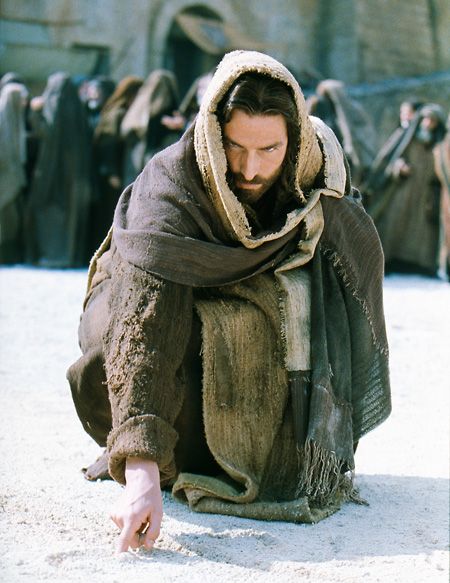
John 8:5-7 ESV – 5 Now in the Law, Moses commanded us to stone such women. So what do you say?” 6 This they said to test him, that they might have some charge to bring against him. Jesus bent down and wrote with his finger on the ground. 7 And as they continued to ask him, he stood up and said to them, “Let him who is without sin among you be the first to throw a stone at her.”
If death was what the Jews wanted, they had proven intent in the previous occurrences, but just a few short months after Jesus crucifixion, Stephen was stoned.
Acts 7:57-59 ESV – 57 But they cried out with a loud voice and stopped their ears and rushed together at him. 58 Then they cast him out of the city and stoned him. And the witnesses laid down their garments at the feet of a young man named Saul. 59 And as they were stoning Stephen, he called out, “Lord Jesus, receive my spirit.”
Stoning seemed to be allowed by the Roman authorities.
Yet the very next verse speaks of a wrinkle in the narrative, a fine point that I didn’t catch at first.
John 18:32 This was to fulfill the word that Jesus had spoken to show by what kind of death he was going to die.
You see, it wasn’t that the Jews couldn’t execute, but that they couldn’t crucify. It was the kind of death that Jesus was appointed to experience, to fulfill the prophecies of His passion. Psalm 22 (and other passages) would not be fulfilled if the Messiah was executed by stoning.
No, it had to be crucifixion, and that meant this process of condemnation had to pass through the Roman court system. His condemnation by the Jewish nation was not enough, for He is the Savior of the world and not only the Jews.
Jesus was in control of this fiasco in the courts, and every statement He made throughout both the Jewish and Roman “courts” was to gain the cross, to die for the world, to die for you and I.
Jesus is in control of this fiasco we live in today. Do you believe that?
Thanks again for coming to visit. I hope you found something of interest in this post and would appreciate a comment, to begin a discussion. If you know someone this blog may bless (or challenge), send them a link, so they may join us in our discussion
As some may know, I walk in the morning prior to going into the office. During my walk, I try to pray, and ask the Lord for strength for the day, for each of my children, that they would understand the goodness of God, for my wife and her continued blessing to others (primarily thinking selfishly here somewhat), and for friends, siblings and those who come to mind.
Of course during this time, I confess my weakness, my failings, my sin before God and my regrets. Sometimes this becomes a focus of my time alone with Him and it becomes “all about me”. Don’t get me wrong in this, for I recognize that in our fellowship with the Lord, we must address, agree with and confess our failings, weakness and sin before Him, just to reside in truth with Him.
Yet at times I find I dwell on my own experience, my own condition, my own trials. During these times, I also tend to sense something pushing me, something that is motivating me to dwell on my sin, in some way to make up for my failings. A selfishness, even in my confession of being selfish, a sort of penitence to appease my conscience? I can’t say and I refuse to dwell on my dwelling on my failures. (See a rabbit hole starting to open up?)
This is a deadly trap in my opinion, for it can become a downward cycle for the believer. True repentance is absolutely required when sin is in the life. But repentance is a result of godly grief, and the godly grief is not an end of itself. Note that Paul, in speaking to the Corinthians, does not focus on a believer experiencing grief (or sorrow), but that the godly sorrow produces a repentance. Once repentance occurs, the grief is assumedly gone.
2 Corinthians 7:9-10
As it is, I rejoice, not because you were grieved, but because you were grieved into repenting. For you felt a godly grief, so that you suffered no loss through us. For godly grief produces a repentance that leads to salvation without regret, whereas worldly grief produces death.
So in all of my dwelling in confession and contrition, I first off need to realize that the grief is merely a vehicle taking me to a solution, an opportunity to confess sin (or to reject the false guilt!) and repent (change my mind). Upon repentance, I may experience (or I am to receive by faith) the active forgiveness the Lord provides based on His faithfulness and justice!
In all of this discussion, I have somewhat veered from the purpose of the post, for I was intending to ask my reader, as I have recently asked myself during my prayers and confessions.
What motivates me to follow Him? Why?
This question needs to be reviewed in the believers life occasionally and during my walk that one morning it seemed to be crystalized in the following thought.
Am I following Him to stay out of hell, (pushed by fear), or am I following Him to know Him, (pulled by love)?
I confess my Christian life has been primarily fueled by a fear of hell. My testimony is available to read for any who may want to understand my background. The details of hell are not the issue, for as many may know, there are multiple ways to understand hell as described in the Bible, all of which is horrible! But that is not the issue in this post. The issue is what motivates a believer to follow after Him?
Is fear a proper motivator for the mature Christian life? Let me ask a bit better question, for there is a place for the believer to walk in the “fear of the Lord”. I suppose the better, or more focused question would be – Is fear of our destiny a proper motivator for a mature Christian life?
Some corollary questions that rise from this thinking might be suggested as follows
Does fear produce the fruits of the Spirit?
Is a walk of fear described by Paul in his writings as the normal expectation for the believer?
Will fear perfect the believer?
This last question hits the mark for my thinking on the subject, and as “luck” would have it, is directly discussed by the apostle the Lord loved, when he wrote his first letter.
1 John 4:16-18
16 So we have come to know and to believe the love that God has for us. God is love, and whoever abides in love abides in God, and God abides in him.
17 By this is love perfected with us, so that we may have confidence for the day of judgment, because as he is so also are we in this world.
18 There is no fear in love, but perfect love casts out fear. For fear has to do with punishment, and whoever fears has not been perfected in love.
John begins this portion with two actions on the part of the believer – that is to know and the believe God’s love for us.
To Know
To know is to understand, perceive, to get acquainted with. This is the knowledge of experience, and not of a cold calculated factual head knowledge. This is the same “know” that is used as a Jewish idiom for sexual intercourse. Very experiential. Very relationship based. This knowledge also has the implication of a time element, for experiential knowledge demands time to be developed.
To Believe
To believe is synonymous with commitment. To believe God’s love is to be committed to it, to place confidence in that love, and this is a (hopefully) ongoing result of experientially knowing the love of God in your life, whether it be through blessing or suffering, for the love of God is not limited by either.
Through this experiential knowledge and commitment, through an abiding in love and of love abiding in us, we may find love being perfected in us.
Now what does “perfected” mean or imply? To be perfect in our modern thinking implies something that is absolutely without blemish, error or stain. Irreproachable, impeccable, flawless and indefectible.
Is this John’s message for us? It seems the Greek word John uses has the meaning of “finished” or that which is wanting nothing for completeness. I find it surprising that this term is used to describe some believers within the most morally corrupt church in the New Testament.
1 Corinthians 2:6 Yet among the mature we do impart wisdom, although it is not a wisdom of this age or of the rulers of this age, who are doomed to pass away.
The mature (same Gk word as perfect in 1 John) referred to in this verse are still in need of wisdom, which Paul is describing in this passage. This maturity/perfection described here is a relative perfection. Much to be gained yet.
1 Corinthians 14:20 Brothers, do not be children in your thinking. Be infants in evil, but in your thinking be mature.
Paul speaks to the same church, and tells them not to think like children, but like mature adults.
This term also speaks of integrity and virtue. Consider Hebrews 5:14, where the apostle refers to the mature/perfect as having their powers of discernment trained by continual practice.
14 But solid food is for the mature, for those who have their powers of discernment trained by constant practice to distinguish good from evil.
These believers completeness is in the midst of training, or a period of growth if I understand the passage.
As John speaks of love being perfected in us, I am beginning to see that this is describing the continuing growth process of the believer, leaving behind the self absorbed life and fear driven motivation that typifies someone I know.
I realize this “Let Me Tell You a Story” post has slipped into a bit of a study, but that morning in the garage was one more time when the Lord showed me an aspect of mercy in relating to Him. My focus is not to be on me me me, but to be on Him. As I relate to Him and His absolute perfection in love, holiness and righteousness, the love that resides in my life (due to Him) will be relatively perfected, or matured as He continues to work for His will in and with me.
If you have read this and experience the same understanding, please let me know. If you understand an alternative perspective to this glorious verse, please inform. Your experience may be a blessing to those who read and will be an encouragement to myself.
Thanks again for coming by and sharing in the experience of a pilgrim with the Lord.
Thanks again for coming to visit. I hope you found something of interest in this post and would appreciate a comment, to begin a discussion. If you know someone this blog may bless (or challenge), send them a link, so they may join us in our discussion
Recently I penned a short post – ECT & Passage 1 – Matthew 5:43-44, 48, in relation to eternal torment. In the post, I asked if a believer may find some condition or circumstance to wreak vengeance on a neighbor. A bit of a foolish question, but bear with me.
Currently, I have superb neighbors, but such was not the case in our past. This story will present to you a neighbor we lived beside years back, and of the mercies (and humor) of the Lord in teaching His children.
I’m going to tell you of a past neighbor, whom I shall call “Frank”, (in order to protect the guilty).
He was a kind fellow at the start, and would refer to my little daughter as a “widdle wabbit”. He kept to himself for the most part, and was without work, being on a disability pension.
I think the descent into madness began when I dug a hole on our property to install a cloths line for my favorite wife. Being in Canada, this hole had to be a minimum of 4 feet deep, to miss the frost line, and the effort was more than I first imagined. After a period of time digging and temporarily placing the excavated material between the hole and the park land to the south. I went in to have supper, letting my wifey know I would set the pole after work on Monday.
Turns out I didn’t get a chance to set the pole, since Monday afternoon I received a call from wifey to come home immediately – the police were in the back yard. Police? On arriving home, I met my wife, two police officers and Frank in the back yard. Frank had filled in the hole with the dirt I had piled to the side, and then called the police to have me charged with trespassing or something silly. Mind you, the pile of dirt was near the public land to the south of our property, but for the life of me, I have no idea why he did this.
In the interest of brevity, what follows is only a few of the highlights of Frank’s acts against our family over the course of three years. He claimed my wife had threatened him and drug her through the court system for a number of months. Please understand, my wife is 5′ 4″ and 110 lbs, dripping wet, while Frank was a 6′ 2″, 240 lb man. He tried multiple methods of intimidating my wife through the courts, though lying about our children, through writing foul letters to our neighbors and signing my name to the letter, through sitting in front of our home with his headlights shining into our bedroom, having the federal police (RCMP) come to our door to question us. You get the idea?
One action that Frank took, though not the most serious, typified his mind set. We had a 4′ hurricane fence between our properties, and he strung barbed wire along the top. He added barbed wire to the little 4′ fir trees on the public land behind his house.
Mind you, we had 5 youngins by this time, and my three oldest boys loved playing in the back yard. What was wrong with this fellow?
During our time in the courts, my wife and I “happened” to be reading the story of David and Saul, and how David would not hurt his king. Out of this reading, we were encouraged greatly to exercise no revenge upon Frank, but to pray for him and to ask the Lord for safety from him.
Don’t misunderstand. We did not consider him to be a chosen king (like Saul), or that he deserved any mercy from anyone. Not at all. What we began to see was our responsibility before God to let God be God and for us to do as He directs His children to do.
A passage that we referred to often through this period is found in Romans 12:17-21.
Repay no one evil for evil, but give thought to do what is honorable in the sight of all. If possible, so far as it depends on you, live peaceably with all. Beloved, never avenge yourselves, but leave it to the wrath of God, for it is written, “Vengeance is mine, I will repay, says the Lord.” To the contrary, “if your enemy is hungry, feed him; if he is thirsty, give him something to drink; for by so doing you will heap burning coals on his head.” Do not be overcome by evil, but overcome evil with good.
Many in the neighborhood told us stories after our ordeal, of Frank threatening young children prior to our moving into the neighborhood. It was a difficult time to say the least. At one point, Frank actually phoned into a radio show to complain of the “foreigners” that lived beside him. He ranted about how we should have stayed in our nation of origin, how we were lazy, destructive and of no use. (Both my wife and I have a minimum of five generations in the land of the Great White North.)
Looking back, it is hard to believe of some of this man’s actions toward us. Truly amazing. But as I started this posting, I mentioned the Lord’s humor in all of this trial.
It turns out that after graduating university with my degree – oh yes, this ordeal was going on while I was back in school, spending 60 – 70 hours a week in my studies, that Frank suddenly put his home up for sale. The rumor had it that he wanted to move to a “childless” neighborhood to the north. I am convinced that God had been working behind the scenes and that Frank simply could not find a better solution for his poor troubled soul. Nevertheless, his home sold within a few months, and he eventually moved, but not before seeing our home on the market also.
You see, after receiving my degree, we found employment in the state of Texas. My wife and I had looked to move south for years and an opportunity came up that allowed us to make the jump to a land of sun and heat!
Frank had lost his position of intimidator within the neighborhood, and the story goes that the neighborhood he moved into actually became a young family centric neighborhood. Oodles of little children!
We saw the hand of the Lord many times during this trial, protecting our family, giving us opportunity to speak of the mercy of the Lord, and experiencing a bit of the humor of the Lord. You got to admit, for Frank to sell his house just before us must have been a great frustration to him.
But, the Lord is on His throne. He is watching over His children. He cares and provides, even to the weakest of His followers.
For us, we are to look to the direction He has provided through His word. His witness while He walked on this earth speaks loudly, if we want to hear it. He exercised massive mercy toward those who lied about Him, made outrageous claims against Him, drug Him through the courts, physically beat Him and eventually murdered Him. All the while seeking forgiveness for His very tormentors.
Consider the high calling we have in Jesus. He is our example.
But I say to you, Love your enemies and pray for those who persecute you
Thanks again for coming to visit. I hope you found something of interest in this post and would appreciate a comment, to begin a discussion. If you know someone this blog may bless (or challenge), send them a link, so they may join us in our discussion
My favorite and I celebrated our 41st anniversary, heading off to a quiet little cabin, secretly hoping it would rain and force us to stay in, read a good book, and have a tea together.
This type of get away has become increasingly popular for us, and for this particular getaway, we chose a cabin in a tiny town, 15 minutes northeast of Fredericksburg Texas. The cabin appealed to us in that the owner claimed the deer were plentiful in the area. A little (natural) wildlife for my wifey and I is very appealing.
Nevertheless, we stayed for a couple nights, and each morning, I would get up before sunrise and head out to the porch with a coffee and my Bible, and simply experience the quietness of nature. In the quietness of the morning, I could hear the crickets chirping in the distance and a faint “ticking” noise that I didn’t recognize. Obviously it must be the deer, but I would be patient and not turn on the porch light, for fear of scaring them off. I later found out that the noise I heard is the dropping of leaves onto the ground. Yes it was that quiet!
Sitting on the porch in the quiet, allowed my thoughts to slow down, my vision to open up and the skies to speak.
And my mind thought of Psalm 19.
The heavens declare the glory of God, and the sky above proclaims his handiwork. Day to day pours out speech, and night to night reveals knowledge. There is no speech, nor are there words, whose voice is not heard. Their voice goes out through all the earth, and their words to the end of the world. In them he has set a tent for the sun, – Psalm 19:1-4
In the dark, surrounded by stillness, the voice of the heavens shout. Sitting in the quietness, the Lord allowed me to view my first falling star, and with the moon behind some clouds, each star pierced the sky. To try to imagine the distances to the stars always comes far short of reality, and the immenseness of the sky enthralls me. The sky alone speaks of the vastness of our creator, and to sit quietly under His creation brought about a sense of awe and worship I rarely experience. I recently visited Montana, and experienced a similar time with the Lord. See Let Me Tell You a Story – Montana
As the early morning allowed the sun to rise, I found myself able to view a doe in the yard, picking up some of the dry corn the owner spreads for them. To see these graceful animals so close was a blessing and reminded me of Psalm 42, where the psalmist speaks of a deer panting for water. (See Psalms for Psome – Ps 42 – A)
As a deer pants for flowing streams, so pants my soul for you, O God. – Psalm 42:1
Granted, the deer we viewed were searching for food instead of water, but my thoughts were drawn to the goodness of God in supplying both food and water to His creation. Whether it be through an owner of a cabin or the natural growth the deer depends on, God supplies.
Later that weekend, as my wifey and I were around a firepit, we watched as a dozen or so deer wandered within our view, with four of them antlered bucks. As we sat quietly, we enjoyed a bit of nature up close, for the deer were confident enough to be within 20 – 30 feet of the porch.
It was a wonderful time, and although it didn’t rain, forcing us inside to read a book, we found the Lord’s choice for our weekend to be the better option.
And a bonus add on to the weekend, internet was spotty at best – such a blessing!
Thanks again for coming to visit. I hope you found something of interest in this post and would appreciate a comment, to begin a discussion. If you would like to receive daily posts from Considering the Bible, click on the “Follow” link below
If you have been following my ramblings for the past few months, you may remember that I spend some time in a parking lot, walking to the top and back down, praying for my family and friends, or memorizing a verse that I am trying to master. During my walks, as many of you may remember, I tend to wander in my thinking, ending up in a place in my mind I hadn’t intended. This post is the result of such wandering.
For some unknown reason, I began to consider the concept of courage, and the many commands in the Word of believers told to “fear not”. I have found that the Word actually speaks the words “do not fear” (or some similar phrase) over 100 times. Some of these verses are directed to individuals in specific historic circumstances, but the example provided can be very instructive. Other passages, especially in the gospels or epistles can be applied directly to us as believers. This is incredible, and reveals to me that fear is a huge issue that God often addresses with in His people.
As an aside, it is important to understand that if you are in a dangerous situation, fear is a healthy emotion, and is not to be rejected. Fear in an unsafe condition actually may save your life.
No, this post is about a non-defined, non justified fear that has no basis in truth, paralyzing (or controlling) us without any clear danger defined. Out of this condition of fear, God has a solution. Don’t be afraid. Be courageous.
It seems incredibly obvious to me now that fear is a decision to live in. Now don’t get me wrong, that when I am in the midst of fear, when the panic hits and the terror strikes, making a simple decision to be courageous, and reject fear is not my first consideration. I usually fall into the fear trap, get wrapped up in it’s tentacles and tremble. Usually, I actually feed the fear monster, by thinking of or listening to fear mongering. This is very easy to do in this society of social networking. Bad news sells!
But Good News heals. Only after I spend some quiet with the Lord, do I regain my sense of control over this emotion.
Let’s consider the emotion of anger. In the past I have grown in my rejection of unjustified anger. How is it that fear is any different in the way the Word addresses a solution for believers. The Word tells us to not be angry.
But now you must put them all away: anger, wrath, malice, slander, and obscene talk from your mouth. – Col 3:8 ESV
It seems to be a straight forward command. A decision that one can make to humbly admit our weakness and depend on Him. And yet, in the midst of the sexual immorality, impurity, sensuality, idolatry, sorcery, enmity, strife, jealousy, fits of anger, rivalries, dissensions, divisions, envy, drunkenness, orgies, there appears to be no escape, no other way. (Consider Gal 5:19-21 for this list of sins)
A walking with the Lord rescues us from these debilitating choices, these temptations that are overpowering for the one who is seemingly alone!
But let us return to the topic at hand.
When I finally recover from an “attack of the fearries”, I usually think of the time I went back to college in my mid 30’s, when I once again fell into fear. Paralyzed by fear if my memory serves me right.
I was a latecomer in the class, starting the semester a week late, one of the older students, with the peer clicks firmly established and the pecking order obvious. I don’t recall any reason fear crept up my spine and nestled in my mind, but it settled in for a long stay. For weeks, I was quiet, not looking at anyone, or entering into any conversations with other students. It seemed hopeless.
The fear that had controlled my actions for weeks was literally shattered while I was in the hallway next to my soils class, and I read the following Scripture.
“Behold, God is my salvation; I will trust, and will not be afraid; for the LORD GOD is my strength and my song, and he has become my salvation.” – Isa 12:2
All I could hear was that my fear was revealing my lack of faith. There were two attitudes the prophet spoke of. Either trust or be afraid. Trust resulted in not being afraid. I will trust, and not be afraid. This was a seminal moment for me and I have often thought of this time in future periods or fear.
Is there a time in your life when you could state you exercised faith and experienced fear at the same time. The Bible tells us that fear is something we can reject through trust in the Living God.
Can it be that believers want it to be more complicated? Let me know of your experiences with fear and how the Lord has provided deliverance for His child.
Thanks again for coming to visit. I hope you found something of interest in this post and would appreciate a comment, to begin a discussion. If you would like to receive daily posts from Considering the Bible, click on the “Follow” link below
My favorite and I flew to Montana a few weeks back to spend some time with our eldest son and his lovely family. While we were there, we camped out at a KOA camp, sat by the fire at night, ate hotdogs and burgers off the grill and played a bunch of rummy.
I was able to teach my grandson the game and he took to it, to the point he wanted to play and play and play. He won a few times, which only fueled his confidence, but that is another story.
This story is about my son and I trying our hand at fly fishing.
We purchased the rods, flies, licenses and even some boots to wade into the river with. Our first day out was a Monday, and we had no cell service – which was glorious in it’s own way. Our trek took us upstream to a sand bar on the Boulder River, where we could get some practice in our casting skills, which admittedly were pre-beginner status.
A bit of testing and trying, and pretty soon I felt like I knew what I was doing. Note that it is a feeling – I didn’t know what I was doing, but as my momma used to say “Ignorance is bliss”. We fished for a few hours, pulled our flies out of the trees, untangled our line numerous time and generally appeared completely out of our realm.
By 2 pm, we were ready to head home, realizing the fish were not gonna cooperate. Dang fish!
The point of this story is not to describe the frustration with our efforts, or to whine about our lack of success, or to complain about the heat of the day.
No, there was absolutely no reason to be negative. I was in the middle of some of the pertiest nature I had ever experienced.
As I was trekking away from the Boulder River, looking back at the clear blue pristine river, the bright green hillside, with a rustic brown escarpment, up against a crystal clear sky, that just for a moment, a fleeting moment, I was flooded with praise to the One who created such beauty and grandeur. (I would describe my reaction with greater detail, but I fear I would be giving up my man-card.)
Of course, as a city dweller, I never experience this in the concrete jungle. Grey concrete structures and steel pan bridges do not ignite the inner wonder of God’s creation I experienced that afternoon. For many, if I were to paste a photo of this area, would simply bypass it, thinking it was a “dime a dozen” view, nothing to get excited about, and well it may be.
But that afternoon, under the sun and with God, I experienced something that will not escape my memory for many many years. It was indescribable, and I will quit trying to do the impossible.
My point is – Get out of the city and experience nature as soon as you have opportunity. Thankfully, God is with us always and everywhere, that is the gospel truth. Yet, it may be that out in a wide open field, with a cold bubbling river beside you, (and uncooperative fish teasing you) you may get a new perspective that will light you up!
God is good.
Thanks again for coming to visit. I hope you found something of interest in this post and would appreciate a comment, to begin a discussion. If you would like to receive daily posts from Considering the Bible, click on the “Follow” link below
My wife and I got up at 3:30 a.m. (in the morning!) to head to Billings Montana for a long awaited vacation. We were quite excited to see our son and his family during our camping trip. It was going to be great.
But alas, life interrupted our plans! Arriving at the airport at 5 am, we hit a giant, colossal, insurmountable hurdle. For some reason, the flight was booked and no seats were available for us. We used a third party provider to set up the flight, and the night before, received verification that the flight would be departing as scheduled.
The flight was fully booked! What a catastrophe! A complete meltdown of all that was important in life!
We were told the flight had no seats available, even though the documents said they had been reserved! I couldn’t help thinking of the Seinfeld bit about reservations!
Of course, I didn’t have the foresight to use some of those classic lines he used at the car rental desk, since I was more disappointed in not seeing my son, daughter in law and my widdle grandbabies that afternoon. But alas, my wife and I resolved the problem and flew out the following day
My point isn’t to compare my experience with Seinfeld, although I find some of it to be similar with the clip. No, the issue that came to mind was that this was more of a “first world” problem, and that it shouldn’t shake me, irritate me, or cause me to fall into a frustrated ball of nerves.
I suppose as we walk this life, it is easy to accept minor inconveniences as major disruptions in our lives. Kinda like calling a paper cut a life threating open wound. Call it what you want, but in all honesty, it is only a paper cut. And complaining about a paper cut (or even a life threatening open wound), seems to be at odds with Paul’s admonition to think on positive things. Let’s take a minute to consider that passage.
Finally, brothers, whatever is true, whatever is honorable, whatever is just, whatever is pure, whatever is lovely, whatever is commendable, if there is any excellence, if there is anything worthy of praise, think about these things. Philippians 4:8
Notice there is nothing in the verse speaking of thinking on disappointments such as cancelled airplanes, reservation losses or ticketing issues. Although it is true that these things occurred, they do not fall under the “lovely” or “commendable” descriptors. Considering that, I’m thinking Paul is defining an attitude that includes all the descriptors for us to settle our minds upon.
Maybe a much bigger challenge than what I first considered.
What think ye?
Thanks again for coming to visit. I hope you found something of interest in this post and would appreciate a comment, to begin a discussion. If you would like to receive daily posts from Considering the Bible, click on the “Follow” link below
I was chatting with my daughter concerning her “helpful child”, and that she can never meet her efficiency expectations she likes to maintain in her life since the child wants to help, wants to be involved.
What a problem to have eh? I think I understand her desire for efficiency, since she acquired this “slave driving” attitude from one of her parents. (She got it from her mother I tell you, it was her mother!!!)
Suffice it to say, after chatting with her, I found myself wandering through some old thoughts, and considered my frustration when the little two year old asks to help bring in a small luggage from the car, or to help set the table, or try to clean the counter. The child loves to be involved!
But this brought to mind on how to solve this tension I am experiencing when with the child. My expectations need to be aligned with reality. Once I accept this, and understand the importance of his involvement not only in the present but also in the future, I have learned to slow down internally, encourage his willingness to help and drop the “get it done now” attitude. (I tell you, efficiency can be a monster!!)
And then the concept of expectations was twisted to a different subject, and that is how the Word addresses this concept. Granted this will NOT be an exhaustive review, so don’t expect it, but a couple verses did come to mind that I would like to share with you.
Luke 21:26 men fainting from fear and the expectation of the things which are coming upon the world; for the powers of the heavens will be shaken.
Men fainting from fear and expectations of things coming upon the world. These poor souls are whipped into a frenzy of fear, and are expecting bad things, really bad things. Expectations can produce physical responses in your body, for these men were fainting from it. As a youngster, I actually suffered from a bleeding ulcer due to expecting dire happenings in my young life! What an existence!
As a believer, during my time in an alternate end times theology, I spent years focusing on a possible evil that may happen, reacting to a sniff of potential danger here or a hint of some serious catastrophe about to surely fall upon me and my family. I was unstable, making decisions based on hearsay or a possible interpretation, without considering alternate possibilities.
To be honest, I am a naturally fearful fella, but this theology fed that fear to the point where I didn’t see the Lord on the throne, in control and reigning over all things. By golly, at times I feared He was struggling to maintain control, whereas if I’m reading the Word correctly, He isn’t even breaking a sweat!
Where are your expectations as a believer? Are you expecting a victory or a defeat?
Luke 6:35 But love your enemies, and do good, and lend, expecting nothing in return; and your reward will be great, and you will be sons of the Most High; for He Himself is kind to ungrateful and evil men.
When I do good to my enemy, (not if Carl, but when) it is a common refrain in my thinking that they will completely repent, turn around and give me a big ol’ hug, provide me with accolades of greatness – you get my point.
But the Lord said not to expect anything! Expect nothing in return. Get your head in the game Carl, for the purpose of loving my enemy is to be like Jesus, not to get applause, or a cake on the doorstep from that neighbor I helped a few days back! (Did I tell him I liked pineapple upside down cake?)
Anyways, this verse impacted me years ago in my relation to friends and their request for financial help. Of course the verse speaks of enemies, but very few enemies ask me for financial help.
If a friend asks for help, my wife and I discuss, and if agreed upon, will provide the funds. In our accounting, the funds are gone forever. No payment plan is initiated on our part, referred to or considered when chatting with our friend. He or she is a friend, not a commodity or investment! Often they will initiate the discussion, which we tend to shy away from.
On a completely different topic, we are currently without access to any funds.
A couple thoughts on expectations for your consideration.
By the way, I have an expectation that some may comment on this two year old and his dragging a suitcase in from a car. If so, use the comment box below.
It truly was a sight to behold!
Thanks again for coming to visit. I hope you found something of interest in this post and would appreciate a comment, to begin a discussion. If you would like to receive daily posts from Considering the Bible, click on the “Follow” link below
Let me tell you a story about a man who told me a story.
Norman and his wife came to our home Bible study for years, and I always looked forward to his company. I still remember him with the long glowing white beard and the jovial smile, and his quiet bearing. Not that he was quiet, but he did have a soft voice.
He wasn’t quiet, at least for me, since he told a story of his family that twisted my head on right and helped me find healing with my children.
We were in the midst of a study, I think in the book of Matthew, and the topic of forgiveness came up. Most in the study were making comments, and I was trying to stir the pot by asking difficult questions, to get people thinking, when Norman cut to the heart.
He spoke of an only daughter, the one child whom he had not seen for years. He spoke of her breaking relationship with him and his desire to repair the connection. Someone asked of the wrong that he had done, and he spoke of a clear conscience towards his daughter. The young lady had imagined Norman had wronged her and dwelled on it until it became a weeping sore in her thoughts. A poisonous pill that killed a relationship.
Many were stumped of this unfixable state of affairs and promised we would pray. Some of us actually confessed we had similar struggles with our children, that we had differences of opinion and attitudes toward the children that barred a close relationship due to some of their decisions.
Norman challenged us to forgive them of their actions as this is the primary duty of the child of God, and many were brought to face about our dereliction of love toward our own loved ones. It bothered me that I had been carrying attitudes and feelings that were sinful towards my children.
But Norman didn’t stop there. He told us of his trying to connect with his daughter and of asking forgiveness from her. But Norman – You said you had a clear conscience towards her. Surely you meant after you asked her for forgiveness, correct? “No”, said Norman, “I had a clear conscience prior to asking for forgiveness.”
Always the anal one, I shot back – “How could you ask for forgiveness if you have not sinned against her? That is not just!”
Love does not keep count of wrongdoings Carl. If my daughter thinks I have done her wrong, I will accept that, and ask her for forgiveness. A relationship with her is more important than my pride or my understanding of justice!
That blew my mind. My children may have something against me (either perceived or in reality) that I need to clear the air of. I needed to ask for forgiveness, not only exercise forgiveness toward them.
As I met with my children, especially my sons, I admitted my failings and asked for forgiveness. This was one of the major turning points in my mind as to a great healing in our family.
If you have a barrier between you and a loved one – Go seek them out, sit them down and confess your wrongdoings against them, ask for forgiveness and wait.
Do not demand anything from them, do not bring up any defense for your previous actions, do not play a blame game in attributing some of the fault on them. Take responsibly for your wrongdoings (real or perceived), humbly ask for forgiveness and wait. God loves to be in the forgiveness business and He will be in the middle of it!
If this seems foreign to you, you may need to go the the Father and do the same.
Do not demand anything from God, do not bring up any defense for your previous actions, do not play a blame game in attributing some of the fault to God. Take responsibly for your wrongdoings, humbly ask for forgiveness from the Father in heaven. Begin to know the Father through His Son, who provided the forgiveness that you will be granted.
This simple honest action will change your life. And follow the One who forgave.
For He is good!
Thanks again for coming to visit. I hope you found something of interest in this post and would appreciate a comment, to begin a discussion. If you would like to receive daily posts from Considering the Bible, click on the “Follow” link below