
My hope is that this series will offer my readers a chance to consider the names, characteristics and descriptions of our God in the Word.
The remaining Names of God in this series might be considered descriptors, or characteristics of the Lord. We have reviewed the three primary Names of God, along with nineteen compound Names of God in our previous posts. As we venture through these descriptors of our God, I hope we will recognize all the many characteristics of our God that we tend to take for granted.
The Word is truly rich with descriptions of the Living God, and this effort of searching in the Word was quite illuminating. He truly is the ultimate subject of the Word, and His revelation of self-descriptions, or the accolades offered Him by His priests, prophets, kings apostles and faithful truly is a blessing.
May the Name of the Lord be praised, and by thinking on His name, may you have a blessed day.
210
GOD AND FATHER OF ALL
Ephesians 4:6 one God and Father of all, who is over all and through all and in all.
Though our name in this post is found in Ephesians 4:6, it is important to include the context of the passage at this time.
Ephesians 4:3-6 3 eager to maintain the unity of the Spirit in the bond of peace. 4There is one body and one Spirit–just as you were called to the one hope that belongs to your call– 5 one Lord, one faith, one baptism, 6 one God and Father of all, who is over all and through all and in all.
Paul is eager to maintain the unity of the Spirit. Much could be said about the fact that Paul stated for the church to “maintain unity” as opposed exhorting the church to “work towards unity”
This unity within the church is a gift given the church by God. Paul provides the basis of this truth of unity by describing the oneness of, not only the unity within the Godhead, but also of the unity extending into the church due to the nature of those in union with the Savior.
There are some who may see our name we are considering in this post and claim that God is the Father of all of creation, of every living soul on earth. That is a true statement, if we understand a Father as one who is the source of life, the one who provides, guides and sustains those who He has created. This understanding of fatherhood in relation to every living soul on earth has to include the fact that those who He has given life to, that He provides for, that He guides and sustains, are those who have turned their back to Him.
Those who have turned their back, or better said, are maintaining a heart of rebellion against Him, He cares for, He loves and seeks.
Is that the Father Paul is describing? Maybe.
I suspect Paul is speaking of a Father that is relating to His children because they have turned to Him, repented of their rebellion, and entered into a communion with the Father.
Two different Fathers, and yet our God finds Himself in both positions, with two different peoples, one in rebellion and one in faith, and obedience.
He seeks one people. He seeks that all people would be in the second group, the relating group, the faithful group.
As we walk about our day today, let us consider those who may be of the first group, in rebellion and not knowing the Living God, the relating God, the sacrificing God.
Inviting them to know the Father would be Christlike.
Inviting them to know the Father would not only show us to be in union with the Spirit, for that is the Father’s heart, but also provide that soul to become one with us.
God is the GOD AND FATHER OF ALL.
Do all know of the Father as we know of the Father?
I would love to hear of your favorite name, characteristic or description of the Living God. Please leave me a comment, and I will include it in the list!
Thanks again for coming to visit. I hope you found something of interest in this post and would appreciate a comment, to begin a discussion. If you know someone this blog may bless (or challenge), send them a link, so they may join us in our discussion.
My hope is that this series will offer my readers a chance to consider the names, characteristics and descriptions of our God in the Word.
The remaining Names of God in this series might be considered descriptors, or characteristics of the Lord. We have reviewed the three primary Names of God, along with nineteen compound Names of God in our previous posts. As we venture through these descriptors of our God, I hope we will recognize all the many characteristics of our God that we tend to take for granted.
The Word is truly rich with descriptions of the Living God, and this effort of searching in the Word was quite illuminating. He truly is the ultimate subject of the Word, and His revelation of self-descriptions, or the accolades offered Him by His priests, prophets, kings apostles and faithful truly is a blessing.
May the Name of the Lord be praised, and by thinking on His name, may you have a blessed day.
209
GOD WHO WORKS WONDERS
Psalm 77:14 You are the God who works wonders; you have made known your might among the peoples.
The psalmist in this passage is in the middle of speaking of the greatness of God, and one of his statements to describe God as being great is that He works wonders!
He is not simply a God who sits on His throne and give orders, demanding compliance and expecting submission. The God this psalmist knows is a God who works, performs, does and accomplishes wonders. He is not an idle King that waits for those to serve Him, that is dependent on His servants for His needs. No, this psalmist’s God is active and involved in His Kingdom, working wonders.
It is interesting, at least in my mind, that according to my research, the term “wonders”, is associated with things that are hard to understand, things that are extraordinary!
I can’t help but consider the time Moses described God as a God who does wonders. Moses specifically is referring to the redemption of the nation, the plagues, the Passover seder, the leading of the nation by fire and smoke. and the splitting of the Red Sea, along with the collapse of of the Sea upon their enemies!
Exodus 15:11“Who is like you, O LORD, among the gods? Who is like you, majestic in holiness, awesome in glorious deeds, doing wonders?
Was God active? Yes He was “over the top” active in the birthing of His people out of Egypt. He had a “job” to do, and He accomplished it!
But consider – the Psalmist, in our passage, does not use the past tense for the activity of God he is describing. The Psalmist speaks of God as an active God in our midst, working out His will in many diverse and mysterious ways.
At least for me, I tend to be blind to His many orchestrations of people/leaders/nations to further His will, but with a verse such as this, I am reminded that God is at work, even today.
Consider how God is at work in your life, even today, for He is a God who works wonders!
I would love to hear of your favorite name, characteristic or description of the Living God. Please leave me a comment, and I will include it in the list!
Thanks again for coming to visit. I hope you found something of interest in this post and would appreciate a comment, to begin a discussion. If you know someone this blog may bless (or challenge), send them a link, so they may join us in our discussion.
As many who have followed me for a bit, I have fallen into the Psalms, and I can’t get up! (As if I would want to.) The Psalms are a majestic collection of poetry, of heart felt human experiences that constantly challenge me in my own frail attempt to follow the true King. As many of the Psalms are written by David, my study on the Psalms has spurred me on to looking at the life of David, is the main contributor to this book, and to follow the victories and tragedies of the shepherd King of Israel.
Many times in the narrative, we will see the Lord Jesus, imperfectly, yet a reflection of His spirit in a man with weaknesses.
For this post, we will not see David, but it will focus of his father-in-law, his king, and his arch enemy describes a turning point in David’s life, and his future as the king.
Lets consider the outfall of Saul’s death.
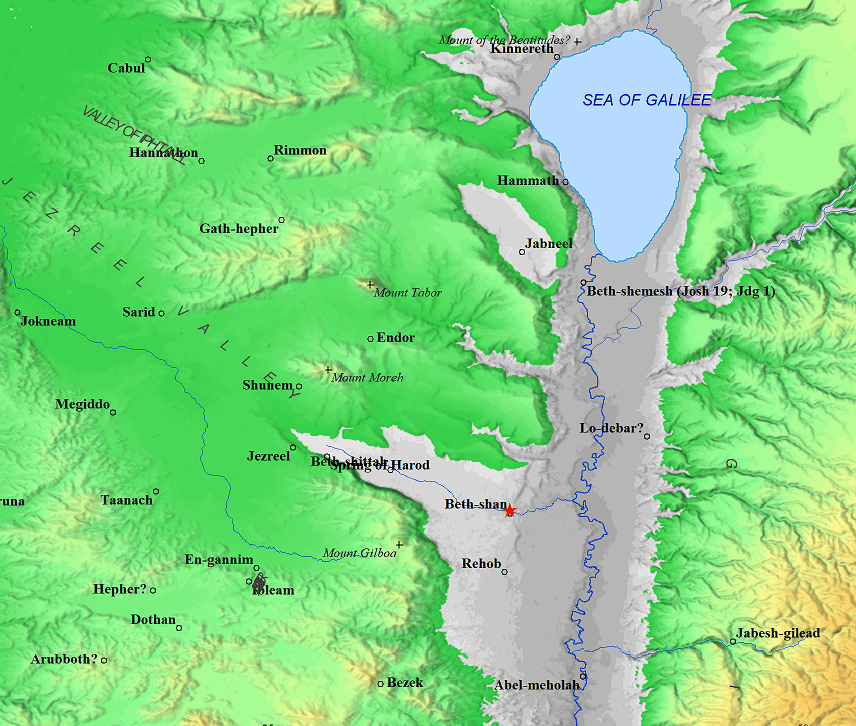
1 Samuel 31:8 The next day, when the Philistines came to strip the slain, they found Saul and his three sons fallen on Mount Gilboa. 1 Samuel 31:9 So they cut off his head and stripped off his armor and sent messengers throughout the land of the Philistines, to carry the good news to the house of their idols and to the people. 1 Samuel 31:10 They put his armor in the temple of Ashtaroth, and they fastened his body to the wall of Beth-shan. 1 Samuel 31:11 But when the inhabitants of Jabesh-gilead heard what the Philistines had done to Saul, 1 Samuel 31:12 all the valiant men arose and went all night and took the body of Saul and the bodies of his sons from the wall of Beth-shan, and they came to Jabesh and burned them there. 1 Samuel 31:13 And they took their bones and buried them under the tamarisk tree in Jabesh and fasted seven days.
The Philistines won the battle, and on the very next day, they came back to the battle ground, after all the Israelites had run away, to strip off the fallen. Spoils of war!
This is a common act of the victorious, for the winning soldiers would often come back to pick the dead clean. Now of course, this act of recovering goods from dead soldiers sometimes brought our the worst in the soldiers. There were some who could not resist humiliating King Saul, along with the entire nation of Israel, in the decapitation of the defeated king, and the exhibition of his headless corpse on the wall at Beth-shan. Why at Beth Shan? It was deep in the defeated regions of Israel, where the Philistines could shame the king and his people. Perfect psychological warfare, even after the killing was over!
For a body to be hung on the city walls was a great shame, an insult to those of his family. This act of defilement was more than a show of victory over the nation, it was an exhibition of gloating by the Philistines, and heaped disgrace on the royal family, and nation of Israel.
Early on in King Saul’s reign, the town of Jabesh Gilead was the sighting of Saul’s first challenge in defending his people. An Ammonite army descended on Jabesh, placed the town under siege, and then forced the citizen’s of Jabesh into an agreement prior to attacking. The Ammonites would kill them by sword, or have their right eyes gouged out. What a choice!
But for some reason, the Ammonites allowed them to reach out for help, giving them seven days to bring reinforcements. Were they hoping to find more success by defeating greater numbers of Israelites? Or simply heaping additional shame on this town when no-one came?
But the newly crowned King Saul did come, and he was large and in charge. He rallied an army, though through threatening, and marched onto Jabesh. With his army, he defeated the Ammonites fully, and it became a fantastic victory for this newly ascended king.
The people of Jabesh did not forget, and they made efforts to retrieve the kings body. For reasons unknown, the people of Jabesh burned the body of King Saul. This was not common practice in the days of Israel. Possibly they burned the bodies due to the extent of dismemberment, or the deterioration from the daily heat. Personally, I think the Jabesh people sought to give Saul peace from being dug up again and put on display, continuing the shameful treatment of their first king.
Either way, the people of Jabesh, those valiant men, provided King Saul relief from the shame of defeat, the shame of exposure and the shame of defilement. They honored their king, their rescuing hero in a way only they could.
This was a very sad day for the nation, for their first king had been conquered. Depending on your point of view, he had been conquered much earlier than his physical death, but nevertheless, he had been conquered, and the valiant men of Jabesh Gilead went into enemy territory to retrieve what was left of their king.
Thanks again for coming to visit. I hope you found something of interest in this post and would appreciate a comment, to begin a discussion. If you know someone this blog may bless (or challenge), send them a link, so they may join us in our discussion.
My hope is that this series will offer my readers a chance to consider the names, characteristics and descriptions of our God in the Word.
The remaining Names of God in this series might be considered descriptors, or characteristics of the Lord. We have reviewed the three primary Names of God, along with nineteen compound Names of God in our previous posts. As we venture through these descriptors of our God, I hope we will recognize all the many characteristics of our God that we tend to take for granted.
The Word is truly rich with descriptions of the Living God, and this effort of searching in the Word was quite illuminating. He truly is the ultimate subject of the Word, and His revelation of self-descriptions, or the accolades offered Him by His priests, prophets, kings apostles and faithful truly is a blessing.
May the Name of the Lord be praised, and by thinking on His name, may you have a blessed day.
208
GOD WHO SEES
Genesis 16:13 So she called the name of the LORD who spoke to her, “You are a God of seeing,” for she said, “Truly here I have seen him who looks after me.”
Two people are seeing in this verse! But I am getting ahead of myself. Let’s think about who is speaking, and why this person is speaking this way.
This lady’s name is Hagar, an Egyptian servant of Sarai, Abrams wife. Hagar, an Egyptian slave that Sarai gave to Abram to lie with, to be a surrogate mother for Sarai.
Hagar had been Sarai’s slave for a number of years, and had witnessed the faith of both Abram and Sarai. She was a lady that had possibly been yanked from her home, poverty stricken slave stock, and now travelling with a group where the leader had heard from a “new” God.
Her mistress gave her to her husband for procreation.
Her mistress wanted a child by hook or crook, even though the word was out that this “new” God was going to provide a child for Sarai. But her mistress couldn’t wait, and Hagar eventually conceived Abram’s child, whom Sarai could take for her own.
But during the pregnancy, her mistress seemed to be kinda touchy. A bit too sensitive? It turns out that in the course of this experience, Hagar may have looked on Sarai “with contempt”. Was Hagar continually and in an ever increasing way, looking down on Sarai? Was she boasting over Sarai, walking through the camp, shaming Sarai, and speaking of how great she was? I don’t see that in the text.
The text states that Sarai complained to Abram thus.
….May the wrong done to me be on you! I gave my servant to your embrace, and when she saw that she had conceived, she looked on me with contempt.
Hagar may have been contempible towards Sarai, but might Sarai have been a bit sensitive to the success of Hagar in providing the child she wanted? Might Sarai be experiencing a bit of jealousy, envy, frustration, and even fear in her reactions to the success of this venture to provide her a child?
I will let the reader consider, but in every relationship conflict, there are two sides to the story. Nevertheless, Sarai couldn’t handle this, and went to Abram. Abram gave Sarai the right to “do what you want”.
It isn’t until chapter 21 that Sarah kicks her out, sending her away. At this time, Sarai simply deals harshly. She afflicts Hagar, the mother of her son.
It is a sad commentary on where envy will take a person. Envy is the emotion that rises up in each of us as we look at someone or some situation, and want what they have. Sarai wanted to have a child. Hagar was having Abram’s child. Sarai may have experienced some contempt from Hagar, but I suggest that whatever wrong Hagar may have done, this envy resident in Sarai multiplied the offence, and fed Sarai’s boiling heart to the point she afflicted Hagar, to the point where Hagar left the encampment, fleeing from Sarai.
Remember, we are in the middle of a desert during this conflict. Hagar left security, safety(?) and sustenance for the barren desert. The affliction must have been severe!
So given that Hagar is running from a woman who is associated with the Living God, and is afflicting her in some severe manner, it is amazing that at the appearance of the angel of the Lord, she simply answered His questions, and did as He said!
I can imagine some may think Hagar would have some questions for God. That Hagar may want to demand some answers, as our moderns sometimes say. How dare that believer Sarai treat me so roughly. How dare that believer Abram abdicate his leadership over me? How dare all these bad things happen to me through believers.
But for Hagar, an Egyptian slave that was treated unfairly by a Hebrew “believer”, she simply answers the Lord’s questions!
Oh – and she names God!
She named Him the “God Who Sees”, the God who saw Hagar, who looked after her. Hagar had finally saw the God who saw her, who protected her, who looked out for her.
A great lesson from this passage is that when we see the Lord, truly see the protective hand of God in our lives, conflicts with those on earth become secondary. God told Hagar to go back to Sarai, to go back to the affliction even to submit to Sarai.
In the midst of envy and contempt, God can interrupt the conflict, and give confidence to the one who knows God is watching to go back to a bad situation. For now she knows who is looking out for her, watching over her!
It is wonderful to know that our God is the God Who Sees!
I would love to hear of your favorite name, characteristic or description of the Living God. Please leave me a comment, and I will include it in the list!
Thanks again for coming to visit. I hope you found something of interest in this post and would appreciate a comment, to begin a discussion. If you know someone this blog may bless (or challenge), send them a link, so they may join us in our discussion.
My hope is that this series will offer my readers a chance to consider the names, characteristics and descriptions of our God in the Word.
The remaining Names of God in this series might be considered descriptors, or characteristics of the Lord. We have reviewed the three primary Names of God, along with nineteen compound Names of God in our previous posts. As we venture through these descriptors of our God, I hope we will recognize all the many characteristics of our God that we tend to take for granted.
The Word is truly rich with descriptions of the Living God, and this effort of searching in the Word was quite illuminating. He truly is the ultimate subject of the Word, and His revelation of self-descriptions, or the accolades offered Him by His priests, prophets, kings apostles and faithful truly is a blessing.
May the Name of the Lord be praised, and by thinking on His name, may you have a blessed day.
207
GOD WHO JUDGES ON EARTH
Psalm 58:11 Mankind will say, “Surely there is a reward for the righteous; surely there is a God who judges on earth.”
Two sureties are expressed in this verse.
1. There is a reward for the righteous 2. There is a God who judges on earth
It is the second surety that appeals to me in this post. It is “God who judges on earth”.
I don’t recall ever dwelling on this phrase before, and my intent is not to dull the truth that a judgment day is coming, and that the judge will be God Almighty for every soul on this old globe.
Yet, in my nitpicky way of looking at a passage, I don’t see the psalmist stating there is a God who judges the earth, or there is a God who judges those on the earth. Of course, since I am not a Hebrew scholar, or even close to understanding the nuances of this ancient language, or the structure of the message, I ask those reading to understand my limitations, and my possible error.
Yet I can’t help but think of this passage describing God as judging on earth. What does that mean?
Some translations are somewhat different for the translation reads of God judging in the earth.
…God who judges in the earth NKJV …God who judges in the earth NET …God judging in the earth YLT …God that judgeth in the earth ASV
…God who judges justly here on earth NLT …God who judges on earth CST …God who judges on the earth NASB …God who judges on earth LSB …God who judges on earth RSV …God who is judge on the earth BBE …God who judges on the earth AMP
All of that is provided to support the general truth of God judging, with the added information that the locale of the judgement will be on, or in the earth. For some reason, I have had the opinion that judgement would occur in the heavens. And that may be the truth, for this verse may not be contradictory, but complementary to that truth, or be speaking of a different type of judgement.
But as I said, this verse directs me to a day a long time ago, over two millennium ago, when God did judge on the earth, in a small back water nation, on a hill called Calvary, with judgment poured upon the One who walked this earth, spoke righteousness and loved to the very death.
Our God is the GOD WHO JUDGES ON EARTH, and the most fierce some judgement is that which His own Son experienced on earth, for all men to see.
I would love to hear of your favorite name, characteristic or description of the Living God. Please leave me a comment, and I will include it in the list!
Thanks again for coming to visit. I hope you found something of interest in this post and would appreciate a comment, to begin a discussion. If you know someone this blog may bless (or challenge), send them a link, so they may join us in our discussion.
As many who have followed me for a bit, I have fallen into the Psalms, and I can’t get up! (As if I would want to.) The Psalms are a majestic collection of poetry, of heart felt human experiences that constantly challenge me in my own frail attempt to follow the true King. As many of the Psalms are written by David, my study on the Psalms has spurred me on to looking at the life of David, is the main contributor to this book, and to follow the victories and tragedies of the shepherd King of Israel.
Many times in the narrative, we will see the Lord Jesus, imperfectly, yet a reflection of His spirit in a man with weaknesses.
For our next couple of posts, we will not see David directly, but will consider his father-in-law, his king, and his arch enemy. The following recounting of Saul’s last days describes a turning point in David’s life, and his future as the king.
Lets consider Saul’s last day.
1 Samuel 31:1 Now the Philistines were fighting against Israel, and the men of Israel fled before the Philistines and fell slain on Mount Gilboa. 1 Samuel 31:2 And the Philistines overtook Saul and his sons, and the Philistines struck down Jonathan and Abinadab and Malchi-shua, the sons of Saul. 1 Samuel 31:3 The battle pressed hard against Saul, and the archers found him, and he was badly wounded by the archers. 1 Samuel 31:4 Then Saul said to his armor-bearer, “Draw your sword, and thrust me through with it, lest these uncircumcised come and thrust me through, and mistreat me.” But his armor-bearer would not, for he feared greatly. Therefore Saul took his own sword and fell upon it. 1 Samuel 31:5 And when his armor-bearer saw that Saul was dead, he also fell upon his sword and died with him. 1 Samuel 31:6 Thus Saul died, and his three sons, and his armor-bearer, and all his men, on the same day together. 1 Samuel 31:7 And when the men of Israel who were on the other side of the valley and those beyond the Jordan saw that the men of Israel had fled and that Saul and his sons were dead, they abandoned their cities and fled. And the Philistines came and lived in them.
We have the death of Saul in this passage, along with the complete collapse of the Israeli army.
First, let’s consider the general situation prior to thinking about Saul. His army, as noted previously was far outnumbered and his reaction when he realized the size of the Philistine encampment was that of utter fear.
1 Samuel 28:4 The Philistines assembled and came and encamped at Shunem. And Saul gathered all Israel, and they encamped at Gilboa.
In this fear, Saul ventured off to a medium, who only reinforced every fear he had and informed Saul of his death the next day. That day came quickly, and the Philistines were brutal, in that the Philistines entered into the base camp of Israeli army at Gilboa, decimating their forces and killing Saul’s three sons. Although Abinadab and Malchi-shua were possible hires to the throne, it would have been Jonathon that would most likely have reigned in Saul’s place in the event of Saul’s passing.
This possibility would have caused a testing of the friendship between David and Jonathon, for who should reign if Jonathon would ascend to the throne. Not only a testing their freindship, but a testing of the very covenant Jonathon made with David.
1 Samuel 20:16 And Jonathan made a covenant with the house of David, saying, “May the LORD take vengeance on David’s enemies.”
Would he abide by his word of being faithful to David? Could Jonathon justify his ascension in light of this curse? Might he seek the throne as David’s “friend”, and thus avert the very curse he uttered?
My friends, I want to think the best of Jonathon, yet we all know that power can corrupt. Even if there was such a situation that Jonathon could reign without incurring this curse, the nation would not be blessed, for God had determined David to reign.
In a very harsh way, Jonathon’s death was necessary, and in his death, he found honor in staying beside his king, defending his nation and fighting for God till the very end.
This potential competitor for the throne fell to one of Saul’s other son’s, but we will consider the wisdom of God’s plan in allowing that in future installments. For now, a complicated situation has been removed from David’s future.
Let us not forget that this solution brought great pain to David. Some of the Lord’s best plans allow for great pain in our lives. Jonathon and David were the closest of allies and the best of friends, exhibiting a loyalty that continued beyond Jonathon’s life. Yet Jonathon passed on the battlefield.
Saul also passed on the battlefield. But let me ask my reader – Did he die due to the battle? He was certainly wounded by the archers of the Philistines, but the fatal blow did not come from the Philistines. Saul sought his own armor bearer to kill him, in order to avoid the humiliation of capture and mistreatment by the Philistines.
Now consider the armor bearer’s conundrum. He was to protect the king, as this honor was not passed to one lightly, for it was a great responsibility, and carried with it great status. Not only was Saul asking this armor bearer to sacrifice the very person he lived to protect, but also to bring shame upon his own name and family, in killing the very anointed king of Israel.
Saul was fully consumed with his own needs at this time, and I get it, that he is on the very precipice of his grave, looking down into the pit. What else was the king to do? He had lost all honor and status, his kingdom was being run over and he knew he was to die that day. His only choice was how he would fall in battle, and he would not wait for God’s will in even that!
As we know, the armor bearer refused, and Saul fell on his own sword, capping off the self destructive behavior of a man seeking his own will throughout his life.
How sad. A day of tremendous loss for the nation. They lost much of the western territory to the enemy. They lost their army on the hills of Mount Gilboa. They lost their king. They lost the best hope of a successor king in Jonathon’s death. They lost cities to the Philistines due to abandonment. They lost national reputation in the sight of their neighboring countries.
What a terrible defeat. Israel was in tatters. But the shame of the defeat was to be worse as we will find in the next portion of the Word.
For now, let us be thankful for the opportunity to give up our own self will for the Lord’s will, to accept pain and sorrow as it comes from the hand of the Lord, and know that in everything that occurs in our lives, the Lord is in control, the Lord is a merciful God, and that God is good.
Yes, cling to the fact that God is good, even when things might seem very bad. He is on the throne, and He will never be removed from it, for His reign is is forever and ever.
Hebrews 1:8 But of the Son he says, “Your throne, O God, is forever and ever, the scepter of uprightness is the scepter of your kingdom.
Thanks again for coming to visit. I hope you found something of interest in this post and would appreciate a comment, to begin a discussion. If you know someone this blog may bless (or challenge), send them a link, so they may join us in our discussion.
My hope is that this series will offer my readers a chance to consider the names, characteristics and descriptions of our God in the Word.
The remaining Names of God in this series might be considered descriptors, or characteristics of the Lord. We have reviewed the three primary Names of God, along with nineteen compound Names of God in our previous posts. As we venture through these descriptors of our God, I hope we will recognize all the many characteristics of our God that we tend to take for granted.
The Word is truly rich with descriptions of the Living God, and this effort of searching in the Word was quite illuminating. He truly is the ultimate subject of the Word, and His revelation of self-descriptions, or the accolades offered Him by His priests, prophets, kings apostles and faithful truly is a blessing.
May the Name of the Lord be praised, and by thinking on His name, may you have a blessed day.
206
GOD WHO HAS MERCY
Romans 9:16 So then it depends not on human will or exertion, but on God, who has mercy.
Warning warning warning!
We are in a passage that is full of controversy, that fuels a theology that, in my opinion, locks a person away into a fatalistic future, either elevating them to a special status, or condemning them to a hopeless destiny.
This controversy is not to be considered in this post. (But Carl – you just did!)
Let both sides of the discussion put down their arguments, their opinions – yes – even the opinion expressed above is to be put down, to be put aside in the attempt to think of our merciful God.
Again, to be clear, our name here speaks of God owning a characteristic. He has mercy.
But Carl – He is the King, the rightful ruler who has no competition, no equal. He is all powerful, and is able to do whatever His will allows. He is the Judge of all of creation, and in this position, has no one to effectively attack His decisions. No one could mount an effective argument over what ever He decides.
We all agree that He is above and beyond all our reach, that we have no defense against His decisions, that we are without any argument in His acting out of His will.
Paul – why are you bringing up this mercy thing? Not that God knows of mercy, or that He may exercise mercy, or that He thinks mercy is good, but that He has mercy.
Mercy is of God’s character. In relation to judgement, God makes judgements. He determines justice. Out of the perfections of His character, God makes determinations. These decisions are based on His character, but are not of the unchangeable character of our God. Let us not forget that mercy is an integral part of the perfections of His character.
Consider.
God is love. 1 John 4:8 God has mercy (our verse today) God is true. John 3:33 God is faithful 1 Corinthians 1:9 God is light 1 John 1:5 God is righteous Daniel 9:14 God is just Deuteronomy 32:4 God is a consuming fire Hebrews 12:29
My friend, I cannot find in the Bible a like description of God’s character being that of condemnation. Granted Psalm 50:6 contains the phrase “God is judge”, yet I am not convinced this speaks of a condemning heart. Simply that He makes determinations or judgements! God is described as just, or righteous, and for that we can be thankful. He seeks not to judge, in the manner of condemning.
It isn’t in His heart, yet because God is righteous, and we rebel, judgement (condemnation) proceeds from the throne based on His character, as a result of our rejection.
But judgement (condemnation) is a just reaction to our rebellion, not the core of His nature!
Do you see God as being primarily a condemning judge, One who actually seeks to condemn, that His very nature is to reject that which is not pure?
Consider Jesus, for in Him, we have witnessed the heart of God, the nature of God, the character of God. He took condemnation so we may find God, so we may find mercy.
Our God has mercy. Seek Him while He may be found, for He is a merciful God!
I would love to hear of your favorite name, characteristic or description of the Living God. Please leave me a comment, and I will include it in the list!
Thanks again for coming to visit. I hope you found something of interest in this post and would appreciate a comment, to begin a discussion. If you know someone this blog may bless (or challenge), send them a link, so they may join us in our discussion.
My hope is that this series will offer my readers a chance to consider the names, characteristics and descriptions of our God in the Word.
The remaining Names of God in this series might be considered descriptors, or characteristics of the Lord. We have reviewed the three primary Names of God, along with nineteen compound Names of God in our previous posts. As we venture through these descriptors of our God, I hope we will recognize all the many characteristics of our God that we tend to take for granted.
The Word is truly rich with descriptions of the Living God, and this effort of searching in the Word was quite illuminating. He truly is the ultimate subject of the Word, and His revelation of self-descriptions, or the accolades offered Him by His priests, prophets, kings apostles and faithful truly is a blessing.
May the Name of the Lord be praised, and by thinking on His name, may you have a blessed day.
205
GOD WHO HAS BEEN MY SHEPHERD
Genesis 48:15 And he blessed Joseph and said, “The God before whom my fathers Abraham and Isaac walked, the God who has been my shepherd all my life long to this day,
Let’s remember who is speaking in this verse.
It is that rapscallion Israel, the one who lied and cheated through out his life, causing strife and turmoil in the family, breaking his mother’s heart in having to run for his life, tearing apart his connection with his brother, creating division within his own family by favoring Rachel, deceiving his father, conning his Uncle Laban, and unwilling to let Benjamin go to Egypt to acquire food for those of his family.
Israel has the nerve to speak of God as being his Shepherd all his life. Yet this should not surprise us, for we know of the mercies of the Lord, of his gracious leadings, and of how he bends down to us, reaching out to us in our state of sin and pulling us out of misery.
But there is one thing to note in Israel’s statement regarding God as his Shepherd. He doesn’t declare himself as a particularly good sheep, or of any type of sheep.
No this statement doesn’t take into account the goodness of the sheep, but only the faithfulness of the Shepherd, the Shepherd who is faithful to His sheep.
God who has been my Shepherd.
To think that Israel considered God and not himself at his final moments on earth speaks volumes, for he had come to a place where he recognized the goodness of God in spite of his own actions, and that was worth focusing on!
It is wise to focus on the God who has been our Shepherd!
I would love to hear of your favorite name, characteristic or description of the Living God. Please leave me a comment, and I will include it in the list!
Thanks again for coming to visit. I hope you found something of interest in this post and would appreciate a comment, to begin a discussion. If you know someone this blog may bless (or challenge), send them a link, so they may join us in our discussion.
As many who have followed me for a bit, I have fallen into the Psalms, and I can’t get up! (As if I would want to.) The Psalms are a majestic collection of poetry, of heart felt human experiences that constantly challenge me in my own frail attempt to follow the true King. As many of the Psalms are written by David, my study on the Psalms has spurred me on to looking at the life of David, is the main contributor to this book, and to follow the victories and tragedies of the shepherd King of Israel.
Many times in the narrative, we will see the Lord Jesus, imperfectly, yet a reflection of His spirit in a man with weaknesses.
1 Samuel 30:26-31
26 When David came to Ziklag, he sent part of the spoil to his friends, the elders of Judah, saying, “Here is a present for you from the spoil of the enemies of the LORD.” 27 It was for those in Bethel, in Ramoth of the Negeb, in Jattir, 28 in Aroer, in Siphmoth, in Eshtemoa, 29 in Racal, in the cities of the Jerahmeelites, in the cities of the Kenites, 30 in Hormah, in Bor-ashan, in Athach, 31 in Hebron, for all the places where David and his men had roamed.
In our last post, we see David healing a very real split amongst his men. Those vocal “wicked and worthless” men of David were on the edge of dividing David’s men, diminishing greatly the unity and camaraderie developed through all the strain and struggle they had experienced together.
David wisely reacted to the threat within his army!
In our post here, we find David doing the exact same thing, that of healing relations, but in this passage he is seeking to heal relations with his nation. Surely they thought of him as a traitor, for had he not “abandoned” them as he lived and pillaged in Philistia? Surely this sentiment is at least part of David’s motivation for distributing spoils to the elders of Judah.
Now before I go on, there is an assumption that I think we need to make in this short passage.
This assumption is that the spoil sent to his friends, those of the elders of Judah was of the Amalekites and not of the recovered spoils of his men.
If the cities of Judah were to receive of the spoils of his men, this would have only aggravated relations between David and his men. I can hear the rumors flying throughout the ranks that he was seeking to buy others favor at the expense of his own army! We know this is a common action of some in power, even in todays political world, but I believe David is in the healing business in this passage.
This decision to send to the elders of Judah also effectively addresses the greed of those wicked and worthless men among his soldiers.
Can you imagine those wicked and worthless men returning from their victory, just “licking their chops”, thinking they could gain from not only their brothers at the Brook Besor, but all the spoils of the Amalekites. This was to be a great bounty for those wicked and worthless men. Wow, so much stuff!
David is in this action, providing the soldiers an opportunity to consider their future. This action laid the groundwork for the long term goals of the future king of Israel. They who had been faithful throughout all of David’s trials, temptations and threats, are on the cusp of becoming the future king of Israel’s core fighting men, as the ascension of David to the throne is on the horizon!
As David ascends, the soldiers will benefit in their association with the king. The spoils are a distraction, a short term gain with a long term loss for these soldiers!
David was the rightful king from the day of his anointing. Though estranged from his people, David had a small group of Israeli men who had developed into a rag tag fighting force that stuck with him. Through trial and trouble, these men had developed into David’s men, saw God work miracles and followed David’s leadership into numerous battles they humanly shouldn’t have won, little lone survived.
Jesus also is the rightful King, and though His fighting force is but a fraction of the population of his potential Kingdom, those of us who have followed Him while He has been defamed and ridiculed by the world, need to look long term also.
David was about to become king, at least of Judah, but he is on his way to find the recognition he richly deserved by the people he was intended to reign over. The soldiers needed to see this future and not be driven by the immediate acquistion of booty and spoils.
Jesus will be recognized by all as the King soon. As those who have followed Jesus before His revelation to the world, we also need to look long term.
My friend, if you are beginning to fall into the wicked and worthless mindset, seeking good for yourself, even at the expense of your brothers things, repent and think long term!
More importantly, think of Him who lived His life as an example for us, to think of others and not ourselves only. He is coming, and our hearts are to be for Him and not of others possessions.
Thanks again for coming to visit. I hope you found something of interest in this post and would appreciate a comment, to begin a discussion. If you know someone this blog may bless (or challenge), send them a link, so they may join us in our discussion.
My hope is that this series will offer my readers a chance to consider the names, characteristics and descriptions of our God in the Word.
The remaining Names of God in this series might be considered descriptors, or characteristics of the Lord. We have reviewed the three primary Names of God, along with nineteen compound Names of God in our previous posts. As we venture through these descriptors of our God, I hope we will recognize all the many characteristics of our God that we tend to take for granted.
The Word is truly rich with descriptions of the Living God, and this effort of searching in the Word was quite illuminating. He truly is the ultimate subject of the Word, and His revelation of self-descriptions, or the accolades offered Him by His priests, prophets, kings apostles and faithful truly is a blessing.
May the Name of the Lord be praised, and by thinking on His name, may you have a blessed day.
204
GOD WHO GIVES GENEROUSLY TO ALL
James 1:5 If any of you lacks wisdom, let him ask God, who gives generously to all without reproach, and it will be given him.
Specifically, James is referring to God’s lavish giving of wisdom in this passage.
But let it be known by all who read this, I want to give witness that God gives generously to all in more than just the acquisition of wisdom.
He has been providing for my family in so many ways and at unexpected times that I simply want to say thank you to Jesus for His many mercies, for His continual faithfulness, for His overarching reach down into our lives even today, and for His continued work in us in the future.
Yes His is faithful, and His faithfulness has convinced me that He will continue to grant mercies and grace to this family, a family that may not recognize it, that are somewhat erratic and worrisome, that get too easily distracted from His person. We are not what He deserves! And conversely, He is so much more than we deserve.
May we honor Him more today than we did yesterday.
As mentioned initially, before I couldn’t resist in praising Him for His grace to us, James is speaking of saints who need. Saints who, in this instance need wisdom. James is speaking of one characteristic of the saint that is a required tool in our lives, yet if we are honest with ourselves, we are much needier than simply lacking wisdom.
We are such needy folks, and we sometimes do not want to admit this, for it strikes at our pride. And pride is the very problem for the believer! Pride keeps us cold, hard and unreachable! But James returns to this message of abundance available for the saint, (a spiritual abundance, not the adulterated message of physical abundance), but that which truly satisfies the soul.
James 4:6 But he gives more grace. Therefore it says, “God opposes the proud but gives grace to the humble.”
James spoke of our God as One who gives generously to all. There is no restriction on God’s part, for my imagination see’s Him “just itching to give” to those who will set their pride down, and lift their heart and voice to Him and ask.
He is the God who gives generously.
May we not only recognize this in our God, but also find ways to reflect a generous life to others! And that is a skill that requires much wisdom!
But we know who provides! Thankyou Jesus for your life!
I would love to hear of your favorite name, characteristic or description of the Living God. Please leave me a comment, and I will include it in the list!
Thanks again for coming to visit. I hope you found something of interest in this post and would appreciate a comment, to begin a discussion. If you know someone this blog may bless (or challenge), send them a link, so they may join us in our discussion.
My hope is that this series will offer my readers a chance to consider the names, characteristics and descriptions of our God in the Word.
The remaining Names of God in this series might be considered descriptors, or characteristics of the Lord. We have reviewed the three primary Names of God, along with nineteen compound Names of God in our previous posts. As we venture through these descriptors of our God, I hope we will recognize all the many characteristics of our God that we tend to take for granted.
The Word is truly rich with descriptions of the Living God, and this effort of searching in the Word was quite illuminating. He truly is the ultimate subject of the Word, and His revelation of self-descriptions, or the accolades offered Him by His priests, prophets, kings apostles and faithful truly is a blessing.
May the Name of the Lord be praised, and by thinking on His name, may you have a blessed day.
203
GOD WHO FULFILLS HIS PURPOSE FOR ME
Psalm 57:2 I cry out to God Most High, to God who fulfills his purpose for me.
Purpose.
What is it to have purpose?
An end goal to strive for? A reason for a process to be performed? An intention of an effort to be expended?
We all need purpose, but this verse isn’t directly addressing our purpose. Note that David is crying out to God who fulfills His purpose.
For David, he wasn’t questioning of or considering his (David’s) purpose in life, though it certainly might be related to the purpose of God. As we can agree, a believer naturally seeks to have the same purpose as God, to embrace the same will and to aim for the same goal.
And what is that purpose or goal? As Jesus answered Pilate, His purpose was to bear witness of the truth.
John 18:37 …… For this purpose I was born and for this purpose I have come into the world–to bear witness to the truth. ….
He spoke of God’s Kingdom coming, of God’s will being done.
Matthew 6:10 Your kingdom come, your will be done, on earth as it is in heaven.
David, in Psalm 57 is referring to God’s purpose and not David’s purpose (strictly speaking), and yet this purpose of God is to be completed in David. This interaction of God’s purpose being fulfilled in David is a truth that David leans on, that he depends on and finds great comfort in.
It is that God is, at the time of writing, fulfilling His purpose in David during trying times. Yes David speaks this way during difficult times, and to remember that is so comforting. For you see, Psalm 57 is a psalm of David as he flees from Saul, the most powerful man in the nation, and his arch enemy. David is on the run, and at times he is but a hairbreadth from being caught by the king.
David knew of God’s ultimate purpose in his life, that he had been anointed to be God’s king over Israel, but the circumstances were yelling something else. By all appearances, Saul would be successful in catching David. The circumstances appeared that he may not make it another day. His enemies were surrounding him, his soul was in the midst of lions, and he was lying down amid fiery beasts! (vs 4)
Is it not reasonable that in the midst of trying times, the saint should look to the purpose of God in our lives, and not our own circumstances, our own condition or situation.
God is the God who fulfills His purpose in the saint. This truth is a great comfort for the saint as we meditate on it.
He has an end goal for us! He has a reason for our lives to be lived. He has an intention for the efforts we expend.
It is good to know that our God is the God who fulfills His purpose!
I would love to hear of your favorite name, characteristic or description of the Living God. Please leave me a comment, and I will include it in the list!
Thanks again for coming to visit. I hope you found something of interest in this post and would appreciate a comment, to begin a discussion. If you know someone this blog may bless (or challenge), send them a link, so they may join us in our discussion.
As many who have followed me for a bit, I have fallen into the Psalms, and I can’t get up! (As if I would want to.) The Psalms are a majestic collection of poetry, of heart felt human experiences that constantly challenge me in my own frail attempt to follow the true King. As many of the Psalms are written by David, my study on the Psalms has spurred me on to looking at the life of David, is the main contributor to this book, and to follow the victories and tragedies of the shepherd King of Israel.
Many times in the narrative, we will see the Lord Jesus, imperfectly, yet a reflection of His spirit in a man with weaknesses.
1 Samuel 30:21-25
30:21 Then David came to the two hundred men who had been too exhausted to follow David, and who had been left at the brook Besor. And they went out to meet David and to meet the people who were with him. And when David came near to the people he greeted them. 30:22 Then all the wicked and worthless fellows among the men who had gone with David said, “Because they did not go with us, we will not give them any of the spoil that we have recovered, except that each man may lead away his wife and children, and depart.” 30:23 But David said, “You shall not do so, my brothers, with what the LORD has given us. He has preserved us and given into our hand the band that came against us. 30:25 And he made it a statute and a rule for Israel from that day forward to this day.
This passage delves into a popular passage that many missionaries use to speak of believers not moving on into foreign fields, staying behind on the home front and not continuing on in global evangelism. I have heard a few messages on this topic, but I don’t recall being taught of the extent of exhaustion these soldiers may have experienced.
Let’s try to understand the setting.
We have two groups being referred to in this passage. Our topic group are those “lazy good for nothings” that stayed behind at the brook, with the second group, those “wicked and worthless fellows” claiming they should not receive any of the spoils from the victory.
Those Lazy Good for Nothings
The text states that those soldiers of David that were exhausted stayed at the Brook Besor. After the battle to retrieve the wives, children and livestock, the army reunited with these exhausted remaining at the Brook Besor. Given that this battle took a full day per 1 Samuel 30:17, and that some additional travel to the battlefield was required, we can assume those at the Brook Besor may have had two days of recuperation available.
1 Samuel 30:17 And David struck them down from twilight until the evening of the next day,
In my mind, I imagined these soldiers laying by the beach, with umbrella’s shading them from the harsh sun, being attended to by beach waiters bringing them drinks and snacks. Now this is surely ludicrous, for I am implying that they claimed exhaustion to avoid responsibility. I think I may be thinking like that other group, those wicked and worthless fellows.
Now before we come down hard on these “lazy good for nothings” as the wicked and worthless fellows in verse 22 seem to do, let us consider these soldier’s claim.
The army had been in Philistia, prepping for war with Israel, when they were told to stand down. David led them back to their base, back to Ziklag where they found it burnt and smoldering. Could some of these “lazy good for nothings” have been impacted by the raid on Ziklag? Might they have lost family and possessions? Even the wicked and worthless admit these “lazy good for nothings” had lost wives and children.
Let me ask of these “lazy good for nothings”, regarding their past fighting with David. Had this “excuse” been used before? Was there a portion of David’s men that typically tired earlier than the rest? If so, why were they still with David and his men?
But the biggest indicator that something non-typical was occurring in this story is the strangeness of soldiers not seeking revenge for this kidnapping and destruction of their homes. When was the last time a man, a soldier at that, would not seek to rescue his family. These “lazy good for nothings” had lost family and possessions, and because they wanted a nap, they stayed behind? That does not ring right.
Those wicked and worthless fellows
I also came away from many messages, thinking those who rescued the wives were the heroes, spotless in their allegiance to God and David. They gave what was required to take down the Amalekites, and proved victorious.
And for many in that group, they fought bravely, successfully and experienced the salvation of God. But those few vocal soldiers coming back from the battle, they tried to take advantage of a situation. They spoke out against those exhausted soldiers – I refuse to call them “lazy good for nothings” after considering the situation – those wicked and worthless fellows tried to split the group and get more of the spoils.
Wicked and worthless? These are winning soldiers, who have suffered the long march, fought for David, and returned with the victory. Is it fair to call them wicked and worthless? For those few that were vocal, I think it is very fair to consider them wicked and worthless.
Consider
First off, they sought to create an “us vs them”. How many armies can be successful divided against itself? This effort was divisive and against the will of God.
Secondly, they sought their brothers livestock. This would definitely leave a lasting social and economic impact between this fledgling group of Israeli’s who were to become the greatest army in the region under God. There would be a group within the army that would be left destitute of all livestock. Thankfully the wicked and worthless were going to provide the women and children back to their husbands/fathers. Mighty kind of them!
Thirdly, this request/demand exposes a dark side in some of David’s men, a dark side that seems to be ruled by greed, and not God. Now I am not so naive to think these men were praying three times a day as David may have, but the greed of these vocal soldiers comes into clear view in this passage.
Those vocal soldiers are aptly described as wicked and worthless, and David sees through this logic, for it did have a sense of logic upon it, and instructed his army in a manner that would continue to solidify their team/group dynamic.
In all of this story, When I heard the preaching based on this story as an appeal to go forth into the very ends of the earth, it rocked my world. It appealed to my wicked and worthless side, for the implication was that to be a missionary, a foreign missionary at that, was to be able to acquire others possessions since they didn’t work the harvest fields. I realize somewhat better now that the only reason to enter into service for the Master is strictly and only out of a love for Him.
Self interest and a desire to acquire booty, though it be “spiritual”, is not a holy motivation, could not maintain a faithful service and would only cause heartache and pain in the end. My wife and I sought to enter the mission field at one point, and was refused the honor to serve. When I read this passage, I think the roadblocks we faced may have been placed in front of us due to my impure motivation to serve Him.
In this vein of thought, I often hear Jeremiah’s advise to Baruch in the 45th chapter of Jeremiah, where he admonishes
Jeremiah 45:5 ….do you seek great things for yourself? Seek them not….
Jeremiah and Baruch were undergoing massive upheaval in their lives and this admonition to Baruch involved many issues not directly related to my life, but the admonition is sound.
Seeking the spoils, whether those spoils be possessions that rightly belong to your brother in arms, as these wicked and worthless fellows were seeking, or the desire for self elevation as Baruch may have been desiring, is never the proper way to behave in the Body of Christ.
May we find peace in our desires to serve the Risen Lord, whether in prosperity or poverty, whether in fame or obscurity.
Thanks again for coming to visit. I hope you found something of interest in this post and would appreciate a comment, to begin a discussion. If you know someone this blog may bless (or challenge), send them a link, so they may join us in our discussion.
My hope is that this series will offer my readers a chance to consider the names, characteristics and descriptions of our God in the Word.
The remaining Names of God in this series might be considered descriptors, or characteristics of the Lord. We have reviewed the three primary Names of God, along with nineteen compound Names of God in our previous posts. As we venture through these descriptors of our God, I hope we will recognize all the many characteristics of our God that we tend to take for granted.
The Word is truly rich with descriptions of the Living God, and this effort of searching in the Word was quite illuminating. He truly is the ultimate subject of the Word, and His revelation of self-descriptions, or the accolades offered Him by His priests, prophets, kings apostles and faithful truly is a blessing.
May the Name of the Lord be praised, and by thinking on His name, may you have a blessed day.
202
God Who Comforts the Downcast
2 Corinthians 7:6 But God, who comforts the downcast, comforted us by the coming of Titus,
I sometimes have a hard time relating Paul’s experience with my own. After all, for him to speak of being downcast, after considering his experience as an apostle of Christ. Consider his recent battles in verse 5.
7:5 …our bodies had no rest, ….afflicted at every turn—fighting without and fear within.
A bit later in the letter, he speaks of the many trials he had suffered up to that point. Consider his experience as found in 2 Corinthians 11:24 -28
Five times forty lashes less one Three times beaten with rods. Once stoned Three times shipwrecked A night and a day adrift at sea On frequent journeys Dangers from rivers from robbers from my own people from Gentiles in the city in the wilderness at sea from false brothers in toil and hardship through many sleepless nights in hunger and thirst often without food in cold and exposure
After all the description of his life experiences above, he tacked on the one that always seems to be the greatest stress for this man of God
…the daily pressure of my anxiety for all the churches.
So when Paul speaks of being downcast, that is of being humbled or depressed in status or position, he is speaking a language I don’t quite understand. His life experience has taken him to internal and external struggles and battles few can imagine. I can’t!
Paul has been taken from a life of the elite Pharisees, suffered as described above, and become a pariah to his own people. The shame and humiliation he experienced in his ministry was a constant and severe (if I may say so) experience he endured to provide us the gospel truths we sometimes flippantly regard.
Yet as he was downcast, He was also comforted. The comfort he experienced was also in such a different league than I can imagine.
But as I go through this thought process, and take you along, I may be doing a great disservice to the God we worship, and the teaching this apostle provided us.
As Paul spoke of his ministry in 1 Corinthians 4, he wrote
12 and we labor, working with our own hands. When reviled, we bless; when persecuted, we endure; 13 when slandered, we entreat. We have become, and are still, like the scum of the world, the refuse of all things. 14 I do not write these things to make you ashamed, but to admonish you as my beloved children.
Paul did not speak of his ministry in order to shame his people. He is speaking of the various paths each believer has been granted to walk, and that as believers we are not to compare our walk with God with others. This principal of not comparing with one another is somewhat a theme in Paul’s writing to the Corinthians, and I think in the early part of this post, I was slipping into comparing Paul’s experience with mine,(and maybe yours?)
Let us not compare, but consider that the God who comforts the downcast is not only Paul’s God, but as we may experience a humbling, a lowering of position for God’s will, He is also our God who comforts us.
Let’s rejoice in that as periods of humbling come from the hand of God, his hand is covered with a silk glove, a hand that is guided by a comforting heart, comforting His people in the midst of difficulties and trials
He is our God who Comforts the Downcast! May we praise Him in the midst of our trials!
I would love to hear of your favorite name, characteristic or description of the Living God. Please leave me a comment, and I will include it in the list!
Thanks again for coming to visit. I hope you found something of interest in this post and would appreciate a comment, to begin a discussion. If you know someone this blog may bless (or challenge), send them a link, so they may join us in our discussion.
As many who have followed me for a bit, I have fallen into the Psalms, and I can’t get up! (As if I would want to.) The Psalms are a majestic collection of poetry, of heart felt human experiences that constantly challenge me in my own frail attempt to follow the true King. As many of the Psalms are written by David, my study on the Psalms has spurred me on to looking at the life of David, is the main contributor to this book, and to follow the victories and tragedies of the shepherd King of Israel.
Many times in the narrative, we will see the Lord Jesus, imperfectly, yet a reflection of His spirit in a man with weaknesses.
1 Samuel 30:16-20
1 Samuel 30:16 And when he had taken him down, behold, they were spread abroad over all the land, eating and drinking and dancing, because of all the great spoil they had taken from the land of the Philistines and from the land of Judah. 1 Samuel 30:17 And David struck them down from twilight until the evening of the next day, and not a man of them escaped, except four hundred young men, who mounted camels and fled. 1 Samuel 30:18 David recovered all that the Amalekites had taken, and David rescued his two wives. 1 Samuel 30:19 Nothing was missing, whether small or great, sons or daughters, spoil or anything that had been taken. David brought back all. 1 Samuel 30:20 David also captured all the flocks and herds, and the people drove the livestock before him, and said, “This is David’s spoil.”
In our last post on David, we found him taking the time to show mercy to a rejected Egyptian. Turns out this Egyptian, this stranger was a slave of the very army that had ravaged Ziklag and taken all of David’s men’s wives, children and livestock. David also lost his two wives!
David showed mercy to this unknown person, exemplifying the character of God residing in him, and of his return to the God of Israel.
In this passage, this Egyptian slave turned out to be the real deal, the one who led David and his men right to the camp of the Amalekites. How coincidental!
Now as a quick reminder, the Amalekites were a real thorn in the side of Israel, for they were the nation group that God had instructed Saul to completely annihilate, and yet Saul hadn’t. Saul eventually succumbed to great suffering due to his treatment of the Amalekites, for he did not obey God in the destruction of this nation when he was commanded to.
Now, David was on the edge of the Amalekite camp, knowing God’s desire for this nation, and of his own motivation to rescue his people. The passage speaks of David striking those in the camp down.
He literally slaughtered them!
David knew what he was doing, for he had practice in the wholesale slaughter of a people in an area. Prior to David’s return to the Lord, he had a practice of decimating small populations. Under King Achish, David would enter a land area, and kill all he encountered to get the spoil of the area and to keep his actions secret!
1 Samuel 27:9 ESV – And David would strike the land and would leave neither man nor woman alive, but would take away the sheep, the oxen, the donkeys, the camels, and the garments, and come back to Achish.
Imagine the fervor David had in striking the Amalekites, for they were sworn enemies of Israel, and had kidnapped his loved ones. What he learned in the south of Philistia, he practiced with passion in this instance! He took them on for a full day, fighting through the night, and the following day, after having marched from Philistia to Ziklag and then chasing the Amalekites. Where did this endurance come from?
Four hundred Amalekites fled, but the mission was successful, for the wives and children were rescued with all the livestock. An amazing feat for a man who just a chapter previous was on the edge of mutiny by his men!
It is truly an amazing story and a great tale to reflect on. David took a skill set he developed as he was away from God, the ability to effectively slaughter a people group, and when he returned to God, was able to use this skill set under the hand of God.
For years, David had been trained under the harsh mercy of God, even in his rebellion, and became an tried and true leader, one who was able to do the bidding of the Master. He was now on the precipice of leading the nation of Israel into world domination under the Headship of God!
As we follow God, we may consider some of the skill sets we have acquired to be of no use to the God we serve. Let this thought be banished from our thinking, for our God is not One who only has His servants in sanctuaries, but also in service throughout the nations, as doctors, wives, accountants, bakers and factory workers. He is able to take what we may consider worldly skills and use those skills for those both inside and outside the church.
He is so much bigger than we let on!
Thanks again for coming to visit. I hope you found something of interest in this post and would appreciate a comment, to begin a discussion. If you know someone this blog may bless (or challenge), send them a link, so they may join us in our discussion.
My hope is that this series will offer my readers a chance to consider the names, characteristics and descriptions of our God in the Word.
The remaining Names of God in this series might be considered descriptors, or characteristics of the Lord. We have reviewed the three primary Names of God, along with nineteen compound Names of God in our previous posts. As we venture through these descriptors of our God, I hope we will recognize all the many characteristics of our God that we tend to take for granted.
The Word is truly rich with descriptions of the Living God, and this effort of searching in the Word was quite illuminating. He truly is the ultimate subject of the Word, and His revelation of self-descriptions, or the accolades offered Him by His priests, prophets, kings apostles and faithful truly is a blessing.
May the Name of the Lord be praised, and by thinking on His name, may you have a blessed day.
201
GOD WHO ANSWERS BY FIRE
1 Kings 18:24 And you call upon the name of your god, and I will call upon the name of the LORD, and the God who answers by fire, he is God.” And all the people answered, “It is well spoken.”
We know the story. Elijah takes on the prophets of Baal, and Asherah, a total of 950 prophets that are lined up against him. Image the intimidation, the shear volume of enemy, and yet Elijah stood.
You know, it is an easy thing to say that with God, we are a majority, but when push comes to shove, to live that out in front of a hostile government (Ahab really hated Elijah) and a hateful religious society is truly an amazing feat!
Elijah stood alone, without any support from those in Israel. His perception of the nation at this time was that he was the only one faithful to God. The Lord instructs him later, but God allowed Elijah to live in his perceptions of being alone at this time.
And what type of test was offered by Elijah? A test that puts each prophets life to be dependent on the response of the Gods they trusted in. And beyond that, the fate of the national religious life hung in the balance, depending on the outcome of a miracle.
You know, Elijah could have claimed the inherent truth of the message from God, or of the past miracles performed by God, reminding the nation of God’s guidance and protection over the centuries. But he didn’t at this time. No, it appears Elijah read his crowd, understood the situation, figgered this was a “do or die” situation. Years had passed where he preached and warned, but to no avail.
No it was show time! By that I mean, the people had to have a very real, very personal experience of God. But this experience was not to be like that of Moses, who was able to talk to God face to face, nor like Samuel, where God whispered his name, calling him into the ministry of prophet as a young boy.
The people were going to face fire!
He is the God who answers by fire, and as I read this passage, and think of Elijah’s situation, facing a culture drowning in lies and idolatry, it seems this response speaks to the peoples condition more than simply defining the true God. The miracle certainly defined the true God, but it also communicated a message that was with fire, a message tinged with judgement and anger.
And a message crouched in a miracle. A miracle for an idolatrous people. Centuries later, the Master also faced an idolatrous culture, who fought against God, and referred to signs in relation to their “faith”.
Matthew 12:39 But he answered them, “An evil and adulterous generation seeks for a sign, but no sign will be given to it except the sign of the prophet Jonah.
Matthew 16:4 An evil and adulterous generation seeks for a sign, but no sign will be given to it except the sign of Jonah.” So he left them and departed.
A sign was provided for that generation, in that the sacrifice on the altar, before their very eyes was consumed (as it were by God), and by a far greater miracle, was raised from the dead.
For both cultures, fire came down on the sacrifice. Though Elijah saturated his sacrifice, dowsing it with water, the fire consumed it all to communicate the “above and beyond” character of God.
He was more than what the people may have expected.
For the Savior, the sign was the resurrection. Though completely sinless and worthy of honor and esteem, Jesus suffered the worst of punishments, in all areas of His life, as the fire of God came down to consume Him into the realms of death.
Elijah’s sacrifice was completely consumed to produce change in a nation for the short term, for they fell into idolatry again. The Messiah’s sacrifice produces life upon life as we look to Him for our daily needs.
He is much more than what we could have expected.
He is the God who answers by fire.
May we bless Him and thank Him always for His never ending care for us!
I would love to hear of your favorite name, characteristic or description of the Living God. Please leave me a comment, and I will include it in the list!
Thanks again for coming to visit. I hope you found something of interest in this post and would appreciate a comment, to begin a discussion. If you know someone this blog may bless (or challenge), send them a link, so they may join us in our discussion.
My hope is that this series will offer my readers a chance to consider the names, characteristics and descriptions of our God in the Word.
The remaining Names of God in this series might be considered descriptors, or characteristics of the Lord. We have reviewed the three primary Names of God, along with nineteen compound Names of God in our previous posts. As we venture through these descriptors of our God, I hope we will recognize all the many characteristics of our God that we tend to take for granted.
The Word is truly rich with descriptions of the Living God, and this effort of searching in the Word was quite illuminating. He truly is the ultimate subject of the Word, and His revelation of self-descriptions, or the accolades offered Him by His priests, prophets, kings apostles and faithful truly is a blessing.
May the Name of the Lord be praised, and by thinking on His name, may you have a blessed day.
200
GOD THE FATHER
John 6:27 Do not work for the food that perishes, but for the food that endures to eternal life, which the Son of Man will give to you. For on him God the Father has set his seal.
For on Him God the Father has set His seal.
What is it that Jesus is trying to tell us in this brief statement, as He speaks of God as “God the Father”.
First off, He is not speaking of God His Father, though it be very true, but of God the Father, leaving the ownership of God’s Fatherhood to those who truly want it.
Next, note that we are in the middle of a passage that speaks of Jesus being the Bread of Life. Eventually the Messiah will experience large scale rejection by the crowds due to His teaching in this passage. In this passage, He is answering questions with teaching that cuts to the heart, and in the middle of this teaching, provides encouragement to those who “hang on” to His words.
One way He encourages those listening to remain with Him, is when He speaks of the sealing of His ministry by God the Father. Whether this sealing is understood by the many miracles Jesus provides or the voice from the heavens during His baptism, declaring Jesus to be “God’s beloved Son”, it is of key importance to note that God has provided the church verifiable evidence of the Messiah’s identity.
For the folks during this message, it may have been the miracles, or as I suggest, the baptism of the Messiah.
But Carl, that was for them. What about us?
We have such a more sure proof of sealing, to know that Jesus is the Christ, that He is the Messiah promised from of old, for He is the only One who has left His grave!
He is the Risen Messiah,
Remember Paul’s statement in Romans 1:4, where he describes Jesus as …declared to be the Son of God in power according to the Spirit of holiness by his resurrection from the dead, Jesus Christ our Lord, ‘
God the Father is the One who not only sent but sealed our Messiah, giving us verifiable evidence for our faith to rest in. This is good news for the weary soul!
A final reminder.
Though God spoke of Jesus as “His Son”, Jesus spoke of God, in this instance, as God the Father. He did not speak of God as His Father, somehow implying God was His and His alone. God the Father is for all who seek Him and hang on during those times when things get tough, when times are hard and things are confusing, as it must have been for the disciples in this message.
Hang on, for God the Father has sealed His Son!
I would love to hear of your favorite name, characteristic or description of the Living God. Please leave me a comment, and I will include it in the list!
Thanks again for coming to visit. I hope you found something of interest in this post and would appreciate a comment, to begin a discussion. If you know someone this blog may bless (or challenge), send them a link, so they may join us in our discussion.
As many who have followed me for a bit, I have fallen into the Psalms, and I can’t get up! (As if I would want to.) The Psalms are a majestic collection of poetry, of heart felt human experiences that constantly challenge me in my own frail attempt to follow the true King. As many of the Psalms are written by David, my study on the Psalms has spurred me on to looking at the life of David, is the main contributor to this book, and to follow the victories and tragedies of the shepherd King of Israel.
Many times in the narrative, we will see the Lord Jesus, imperfectly, yet a reflection of His spirit in a man with weaknesses.
1 Samuel 30:11-15
11 They found an Egyptian in the open country and brought him to David. And they gave him bread and he ate. They gave him water to drink, 12 and they gave him a piece of a cake of figs and two clusters of raisins. And when he had eaten, his spirit revived, for he had not eaten bread or drunk water for three days and three nights. 13 And David said to him, “To whom do you belong? And where are you from?” He said, “I am a young man of Egypt, servant to an Amalekite, and my master left me behind because I fell sick three days ago. 14 We had made a raid against the Negeb of the Cherethites and against that which belongs to Judah and against the Negeb of Caleb, and we burned Ziklag with fire.” 15 And David said to him, “Will you take me down to this band?” And he said, “Swear to me by God that you will not kill me or deliver me into the hands of my master, and I will take you down to this band.”
David, on a rescue mission to retrieve (hopefully) the wives and children of his soldiers, and his own loved ones, stops to feed a stranger.
Now get the picture in your head of David and his four hundred men marching on a mission of reclaiming their loved ones. Focused, broken hearted and yet hopeful, David and his army were on mission from God. A mission on which God specifically promised they would overtake those who took their loved ones.
8 And David inquired of the LORD, “Shall I pursue after this band? Shall I overtake them?” He answered him, “Pursue, for you shall surely overtake and shall surely rescue.”
So what is the effect of this promise? Were they full of anxious activity, moving about without concern of others, finding every advantage in gaining on the enemy? Were they considering the promise of God as being contingent on marching “double time”, getting to the enemies camp without delay?
It seems not.
Of course I imagine if there were no “distractions”, I am sure David and his men would continue on the hunt for those they were after, but at one point, they found a stranger, an Egyptian. They stopped their pursuit for the sake of a single poor man, dying in the way.
They could have dropped off a portion of sustenance to the man and continued on their march, but David and his men stopped and showed kindness to this stranger.
They gave him bread.
They gave him water
They gave him figs
They gave him raisins
It seems that this act of kindness and generosity was not dependent on retrieving information from the starved man, since he had not informed the group of his identity, or of his past until after the food had been provided.
Yes, it seems David had come back to the Lord and was walking in the steps of kindness and generosity, simply out of obedience to his God.
And out of this obedience, God provided information that strengthened David and his army. God provided to David a treasure trove of information that would eventually enable him to find the Amalekites straightway, even to their very camp, having been given information from this stranger.
Two great lessons can be found in this passage.
a Loss of Anxiety
God’s promise, if received and accepted by the believer, does not produce anxiety but a confidence in seeing it come about. Yes, we are involved in cooperating with the Lord in working out the plan He has, but He is the One who provides, guides and gives us the freedom to show mercy to others in the midst of a mission.
the time for mercy
Let us not forget that in the midst of the big picture, in the midst of large projects or missions, we as believers are never to consider showing mercy as an act of rebellion to God.
Galatians 5:22-23 But the fruit of the Spirit is love, joy, peace, patience, kindness, goodness, faithfulness, gentleness, self-control; against such things there is no law.
To take time to show mercy in the midst of an important project, possibly a time sensitive project, or even a mission provided by God Himself, will not find God’s displeasure.
He seems to find joy in the midst of us providing mercy to others.
Thanks again for coming to visit. I hope you found something of interest in this post and would appreciate a comment, to begin a discussion. If you know someone this blog may bless (or challenge), send them a link, so they may join us in our discussion.
My hope is that this series will offer my readers a chance to consider the names, characteristics and descriptions of our God in the Word.
The remaining Names of God in this series might be considered descriptors, or characteristics of the Lord. We have reviewed the three primary Names of God, along with nineteen compound Names of God in our previous posts. As we venture through these descriptors of our God, I hope we will recognize all the many characteristics of our God that we tend to take for granted.
The Word is truly rich with descriptions of the Living God, and this effort of searching in the Word was quite illuminating. He truly is the ultimate subject of the Word, and His revelation of self-descriptions, or the accolades offered Him by His priests, prophets, kings apostles and faithful truly is a blessing.
May the Name of the Lord be praised, and by thinking on His name, may you have a blessed day.
199
GOD THE LORD
Joshua 22:22 “The Mighty One, God, the LORD! The Mighty One, God, the LORD! He knows; and let Israel itself know! If it was in rebellion or in breach of faith against the LORD, do not spare us today
A little context for this verse may be helpful.
Moses has passed, and Joshua is in charge, bringing the Israelites into the promised land. In an earlier decision between Moses and the Ruebenites, the Gadites and half the tribe of Manasseh, these tribes were able to claim the land to the east of the Jordan as thier portion of the promised land, but were to assist in the domination of the land for the other tribes. At the completion of the battles and the possession of the land of Canaan by the Israelites, Joshua allowed them to return to thier portion across the river.
This separation from the main nation by a geographical marker, such as a river, brought about a concern related to national and religious unity of this new country.
It also provided an opportunity to build an altar, a really big altar.
Joshua 22:10 And when they came to the region of the Jordan that is in the land of Canaan, the people of Reuben and the people of Gad and the half-tribe of Manasseh built there an altar by the Jordan, an altar of imposing size.
Right away, it appears this nation is splintering, breaking apart in the most fundamental way, for this altar would develop it’s own commitments, thinking, devotions and divisions.
Yes divisions, for the remaining tribes saw this and gathered together to make war against them.
Joshua 22:12 And when the people of Israel heard of it, the whole assembly of the people of Israel gathered at Shiloh to make war against them.
Did I mentioned the breach of faith that the remining tribes considered this altar to represent? Yes this was a dangerous situation between brothers, bring to remembrance the days of Peor. Idolatry was rebuked harshly by the Lord in those days, and many had died!
AS we venture through this passage, we find this altar was not an altar of burnt offering or of sacrifice, but an altar of witness. Remember this river concern I mentioned earlier? The 2 1/2 tribes on the east of the river understood that the river separated them from the rest and they didn’t want this to occur. They sought a way to minimize the impact of the river, and with this desire to maintain unity, they built an altar of witness.
In the midst of this retelling of their times, the 2 1/2 tribes set up an altar and gave verbal ascent to the God they wanted to continue following. In this plea before their brothers, they called on the name of God the Lord twice, in order to maintain unity amongst their brothers, in spite of geographical distances and obstacles, seeking to reduce divisions amongst the next generation.
Should we not consider those across “the river” those who, along with us, claim the name of God the Lord? Geographical barriers or obstacles are not meant to provide an opportunity for division, but the chance to reinforce our unity in the Living God, that is God the Lord.
I would love to hear of your favorite name, characteristic or description of the Living God. Please leave me a comment, and I will include it in the list!
Thanks again for coming to visit. I hope you found something of interest in this post and would appreciate a comment, to begin a discussion. If you know someone this blog may bless (or challenge), send them a link, so they may join us in our discussion.
My hope is that this series will offer my readers a chance to consider the names, characteristics and descriptions of our God in the Word.
The remaining Names of God in this series might be considered descriptors, or characteristics of the Lord. We have reviewed the three primary Names of God, along with nineteen compound Names of God in our previous posts. As we venture through these descriptors of our God, I hope we will recognize all the many characteristics of our God that we tend to take for granted.
The Word is truly rich with descriptions of the Living God, and this effort of searching in the Word was quite illuminating. He truly is the ultimate subject of the Word, and His revelation of self-descriptions, or the accolades offered Him by His priests, prophets, kings apostles and faithful truly is a blessing.
May the Name of the Lord be praised, and by thinking on His name, may you have a blessed day.
198
GOD OUR SAVIOR
1 Timothy 2:3 This is good, and it is pleasing in the sight of God our Savior,
This verse needs context.
1 Timothy 2:1-4
1 First of all, then, I urge that supplications, prayers, intercessions, and thanksgivings be made for all people, 2 for kings and all who are in high positions, that we may lead a peaceful and quiet life, godly and dignified in every way. 3 This is good, and it is pleasing in the sight of God our Savior, 4 who desires all people to be saved and to come to the knowledge of the truth.
When Paul refers to God our Savior in this passage, some teach that it is expressed in the midst of a discussion on public prayer. After all, Timothy is a leader in the church, and Paul seems to be directing him regarding the priority (first of all) of reaching out to God on behalf of those in civil leadership and high positions during a church service.
In my mind this is not a debatable issue, and as we come together to worship God our Savior, it is appropriate to pray for those who have governmental authority of their people.
Yet this instruction is for the general Christian populace also and not only to a Christian leader in a congregation. By that I mean, that believers may and should pray for their leaders even if they do not experience this exhortation in a formal setting in a church service.
But consider the larger context for a moment. Paul is speaking of God our Savior. It is assumed, and for good reason, the people Paul is thinking of when he speaks of “our” Savior is the Christians in the Body. God is their Savior.
No debate about that at all. He is the Savior of the saved.
But consider that the passage speaks of governmental authorities, of a peaceful life for the believer, and then Paul described God’s desire for all to be saved, and to come to the knowledge of the truth. In the flow of the context this seems a bit unexpected, other than Paul wants to communicate something other than my assumption.
Ok, so God desires all to be saved. God desires all to come to the knowledge of the truth.
Could God our Savior be Paul’s way of describing our God who not only is the God of the saved at the time of writing, but that in some mysterious manner, in some future condition or situation, God would become God the Savior of all?
Oh for this to be the case. That all of creation would be reconciled to the Living God and to each other!
As I have mentioned in previous posts, this teaching of Universal Reconciliation has more Biblical support than I first considered. Of course I considered this teaching to be heresy previously, hopeful dreams of those not schooled in the Bible, so I never dug into the topic until the last few years of my study.
If some of my readers have an interest in some of the Bible passages considered in this vein of topic, Considering the Bible has a number of posts that my be referred to, specifically the series “Book Look – Jesus Undefeated”, a ten part series of posts, or “Book Look – Heavens Doors”, a thirteen part series of posts on this topic.
Nevertheless, barring all controversy, God is our Savior and for that we can be thankful. He did not “farm out the task” of saving our souls to any third party contractor or assign the task to some heavenly being, but HE himself took on the task.
He is God our Savior! May we be the people of God who reflect His desires!
I would love to hear of your favorite name, characteristic or description of the Living God. Please leave me a comment, and I will include it in the list!
Thanks again for coming to visit. I hope you found something of interest in this post and would appreciate a comment, to begin a discussion. If you know someone this blog may bless (or challenge), send them a link, so they may join us in our discussion.
As many who have followed me for a bit, I have fallen into the Psalms, and I can’t get up! (As if I would want to.) The Psalms are a majestic collection of poetry, of heart felt human experiences that constantly challenge me in my own frail attempt to follow the true King. As many of the Psalms are written by David, my study on the Psalms has spurred me on to looking at the life of David, is the main contributor to this book, and to follow the victories and tragedies of the shepherd King of Israel.
Many times in the narrative, we will see the Lord Jesus, imperfectly, yet a reflection of His spirit in a man with weaknesses.
1 Samuel 30:7-10
7 And David said to Abiathar the priest, the son of Ahimelech, “Bring me the ephod.” So Abiathar brought the ephod to David. 8 And David inquired of the LORD, “Shall I pursue after this band? Shall I overtake them?” He answered him, “Pursue, for you shall surely overtake and shall surely rescue.” 9 So David set out, and the six hundred men who were with him, and they came to the brook Besor, where those who were left behind stayed. 10 But David pursued, he and four hundred men. Two hundred stayed behind, who were too exhausted to cross the brook Besor.
Let’s consider the last time our record of David’s life spoke of him calling on the Lord. I am simply thinking of the record we have in 1 Samuel.
Let’s see now.
The last time we see David asking God for guidance was in 1 Samuel 23. He was centered on God during this period of his life, constantly seeking God’s guidance. Forgive me for presenting almost the entire chapter, but it is good to see David’s utter reliance on God at this early time in his flight from Saul, and his rescue of Keilah from the Philistines. Consider.
1 Now they told David, “Behold, the Philistines are fighting against Keilah and are robbing the threshing floors.” 2 Therefore David inquiredof the LORD, “Shall I go and attack these Philistines?” And the LORD said to David, “Go and attack the Philistines and save Keilah.” 3 But David’s men said to him, “Behold, we are afraid here in Judah; how much more then if we go to Keilah against the armies of the Philistines?”
But that isn’t enough. He needs God again.
4 Then David inquiredof the LORD again. And the LORD answered him, “Arise, go down to Keilah, for I will give the Philistines into your hand.” 5 And David and his men went to Keilah and fought with the Philistines and brought away their livestock and struck them with a great blow. So David saved the inhabitants of Keilah.
Now he needs help because of Saul, his very own father in law and the king of Israel. Oh Lord – is Saul coming? Do I need to prepare?
9 David knew that Saul was plotting harm against him. And he said to Abiathar the priest, “Bring the ephod here.” 10 Then David said, “O LORD, the God of Israel, your servant has surely heard that Saul seeks to come to Keilah, to destroy the city on my account. 11 Will the men of Keilah surrender me into his hand? Will Saul come down, as your servant has heard? O LORD, the God of Israel, please tell your servant.” And the LORD said, “He will come down.”
Ok, David has rescued Keilah, finds out that Saul is on the hunt and now needs to know where the Keilahites stand? Will they surrender David to Saul?
12 Then David said, “Will the men of Keilah surrender me and my men into the hand of Saul?” And the LORD said, “They will surrender you.” 13 Then David and his men, who were about six hundred, arose and departed from Keilah, and they went wherever they could go. When Saul was told that David had escaped from Keilah, he gave up the expedition. 14 And David remained in the strongholds in the wilderness, in the hill country of the wilderness of Ziph. And Saul sought him every day, but God did not give him into his hand.
What a flurry of prayer, seeking God in many matters, and so many answers, and note that some answers included more information than was originally requested for.
The Lord is good to His people.
Then nothing. After 1 Samuel 23, nothing until todays passage. I have not found any verses or passages that speak of David praying or inquiring of the Lord after this time.
Now of course I do not want to make a point out of a vacuum, but might it be that after “David strengthened himself in the Lord”, that strengthening was in actuality his returning to a position of weakness, of admitting his need for the Lord. Could it be that to be strengthened in the Lord was his returning to a dependance on the Lord, of seeking guidance from the Lord.
Ok – Big picture here, and some conjecture on my part, but might it be that in strengthening himself in the Lord, David found the ultimate strength through humility, weakness, confession and admission of sin?
We may think the expression “strengthening himself in the Lord” as describing a man who was already a strong, vibrant leader, and simply adding to his strength by reaching out to God.
We may think that. We may think that but we may simply be thinking wrongly. Can we not hear the apostle Paul screaming over the din, that to be strong is to be weak.
2 Corinthians 12:10 For the sake of Christ, then, I am content with weaknesses, insults, hardships, persecutions, and calamities. For when I am weak, then I am strong.
To be strengthened in the Lord is to be weakened in self. As mentioned in an earlier post, David is now ready to be king, and in that readiness, he seeks God for guidance. Let’s reread the passage in today’s post, watching David find his strength.
1 Samuel 30:8 And David inquired of the LORD, “Shall I pursue after this band? Shall I overtake them?” He answered him, “Pursue, for you shall surely overtake and shall surely rescue.” 1 Samuel 30:9 So David set out, and the six hundred men who were with him, and they came to the brook Besor, where those who were left behind stayed.
David set out in obedience, after he inquired!
As an aside, it seems this was the start of a more consistent seeking of the Lord’s guidance by David. Consider the following passages, that we will address in the coming posts as they occur.
2 Samuel 2:1 After thisDavid inquiredof the LORD, “Shall I go up into any of the cities of Judah?” And the LORD said to him, “Go up.” David said, “To which shall I go up?” And he said, “To Hebron.” 2 Samuel 2:2 So David went up there, and his two wives also, Ahinoam of Jezreel and Abigail the widow of Nabal of Carmel.
2 Samuel 5:17 When the Philistines heard that David had been anointed king over Israel, all the Philistines went up to search for David. But David heard of it and went down to the stronghold. 2 Samuel 5:18 Now the Philistines had come and spread out in the Valley of Rephaim. 2 Samuel 5:19 And David inquired of the LORD, “Shall I go up against the Philistines? Will you give them into my hand?” And the LORD said to David, “Go up, for I will certainly give the Philistines into your hand.”
2 Samuel 5:22 And the Philistines came up yet again and spread out in the Valley of Rephaim. 2 Samuel 5:23 And when David inquired of the LORD, he said, “You shall not go up; go around to their rear, and come against them opposite the balsam trees. 2 Samuel 5:24 ESV – And when you hear the sound of marching in the tops of the balsam trees, then rouse yourself, for then the LORD has gone out before you to strike down the army of the Philistines.” 2 Samuel 5:25 ESV – And David did as the LORD commanded him, and struck down the Philistines from Geba to Gezer.
2 Samuel 21:1 ESV – Now there was a famine in the days of David for three years, year after year. And David sought the face of the LORD. And the LORD said, “There is bloodguilt on Saul and on his house, because he put the Gibeonites to death.
David, the man after God’s own heart was back. And was he going to get things done! Things were going to change, and it was through his willingness to seek the Lord, to ask of the Lord, to admit he didn’t have all the answers, to confess he was in the way, and that God needed to direct him.
My friend, if you are in the middle of a drought, a period when the Lord seems far away, a period where you find relying on yourself to be sufficient, take heart in the experience of David.
David was a mercenary, a lying thief that killed men women and children to keep his secrets from others. I imagine him to be in heaviness of thought, justifying his actions and struggling at night with his conscience. He was in bad shape!
Yet he found strength by an admission of weakness and sin. He found the Lord to be a faithful and loving God, a God who accepts sinners, a God who is ready to lead when we get out of the way.
David found his God, and remembered that He is a really awesome God. A God who answers sinners in their contrition and confession.
May we find strength in Him.
Thanks again for coming to visit. I hope you found something of interest in this post and would appreciate a comment, to begin a discussion. If you know someone this blog may bless (or challenge), send them a link, so they may join us in our discussion.
My hope is that this series will offer my readers a chance to consider the names, characteristics and descriptions of our God in the Word.
The remaining Names of God in this series might be considered descriptors, or characteristics of the Lord. We have reviewed the three primary Names of God, along with nineteen compound Names of God in our previous posts. As we venture through these descriptors of our God, I hope we will recognize all the many characteristics of our God that we tend to take for granted.
The Word is truly rich with descriptions of the Living God, and this effort of searching in the Word was quite illuminating. He truly is the ultimate subject of the Word, and His revelation of self-descriptions, or the accolades offered Him by His priests, prophets, kings apostles and faithful truly is a blessing.
May the Name of the Lord be praised, and by thinking on His name, may you have a blessed day.
197
GOD ON HIGH
Micah 6:6 “With what shall I come before the LORD, and bow myself before God on high? Shall I come before him with burnt offerings, with calves a year old?
Micah is asking the question of the Israelites? What does God want from us? How can we appease God to avoid His wrath?
Chapter 6 starts out with a complaint from the Lord, an indictment of the Lord, against His people, contending with Israel.
Micah 6:2 Hear, you mountains, the indictment of the LORD, and you enduring foundations of the earth, for the LORD has an indictment against his people, and he will contend with Israel.
The Israeli’s are a thankless people, and many scholars think this passage relates to Balak’s discussion with Balaam. You remember Balak, that king of Moab, as described in verse 5. It seems verse 6-7 is recorded by Micah as Balak’s introductory request to Balaam.
To think that Micah is using a heathen king’s question as a response to the Lord’s indictment against Israel is a bit surprising, but the topic of today’s verse is that he referred to God as God on High.
Get that?
The heathen king Balak referred to God as God on High. Now Micah is using this discussion, this question from a heathen God to instruct the people of God, a people who had forgotten God and were thankless to God.
Of course Balak’s request extended to and absurb logic, for he suggested the need for the sacrifice of human flesh to satisfy God on High. How utterly disgusting for those of us who have come to know of our God, and of His saving grace, His holy standards, and His ultimate sacrifice for each of our lives.
How could this God we know accept a disgusting sacrifice as child sacrifice, yet Balak, understanding God as an ultimate God, a God very lofty and on High, logically may require the ultimate, most costly sacrifice.
Logic can take a person to dangerous places!
This is not the God of the Bible, for our God does not require the death of any, for the Word declares He finds no pleasure in the death of the wicked. How much more does He seek safety for the innocent, and for those seeking His face. No – He seeks to save, to restore, to enrich and to guide.
The only death He has required is the death of His Son for the sake of His enemies. How can we understand such a God, a God who sacrifices for His subjects, dies for His creation, suffers for His people. And we forget Him in our actions and attitudes.
In conclusion, what “sacrifice” are we to give to the God on High? Balaam, as I understand, responded accordingly to Balak’s extreme, somewhat logical question in Micah 6:8.
He has told you, O man, what is good; and what does the LORD require of you but to do justice, and to love kindness, and to walk humbly with your God?
When the believer understands the God we worship is the God on High, the lofty, supreme God, and that His desire is that we humbly walk with Him, this truth is life changing.
Has it changed your life?
The God on High requires something from you. Consider.
I would love to hear of your favorite name, characteristic or description of the Living God. Please leave me a comment, and I will include it in the list!
Thanks again for coming to visit. I hope you found something of interest in this post and would appreciate a comment, to begin a discussion. If you know someone this blog may bless (or challenge), send them a link, so they may join us in our discussion.
My hope is that this series will offer my readers a chance to consider the names, characteristics and descriptions of our God in the Word.
The remaining Names of God in this series might be considered descriptors, or characteristics of the Lord. We have reviewed the three primary Names of God, along with nineteen compound Names of God in our previous posts. As we venture through these descriptors of our God, I hope we will recognize all the many characteristics of our God that we tend to take for granted.
The Word is truly rich with descriptions of the Living God, and this effort of searching in the Word was quite illuminating. He truly is the ultimate subject of the Word, and His revelation of self-descriptions, or the accolades offered Him by His priests, prophets, kings apostles and faithful truly is a blessing.
May the Name of the Lord be praised, and by thinking on His name, may you have a blessed day.
196
GOD OF OUR FATHERS
Acts 3:13 The God of Abraham, the God of Isaac, and the God of Jacob, the God of our fathers, glorified his servant Jesus, whom you delivered over and denied in the presence of Pilate, when he had decided to release him.
In our most recent posts, we have considered each of the previous names in the verse above on an individual basis, each time relating to one of the patriarchal fathers.
In our post this morning, we find Peter grouping the three names of God associated with the patriarchs of Israel, a common grouping together, and defining this group of names as the God of our Fathers.
This is Peter’s second sermon, and it is the result of the miracle of a healing cripple at the Beautiful Gate of the temple. The people saw him walking, the cripple man that is, and were filled with wonder and amazement.
Peter takes advantage of the situation and starts to teach. He speaks to “men of Israel”, as verse 12 tells us, and proceeds to speak of how they delivered Jesus to the government, denied Jesus in front of Pilate, (though Pilate he sought a way to release Him), and how they killed the Author of Life.
Acts 3:15 and you killed the Author of Life, whom God raised from the dead. To this we are witnesses.
They killed Him.
Peter pulls no punches. And to make things worse, (if that is possible), he speaks of how God, the God of their Fathers, regarded this One they killed. The God of their Fathers glorified his Servant Jesus.
They killed Him.
Of course, Peter is referring to the resurrection, for that act alone is the pinnacle of God’s opinion of who Jesus is. But before this declaration of God’s attitude of Jesus, the God of their Fathers spoke audibly to witnesses of His Servant. It is not as though the Men of Israel had not been given witness of God’s opinion of Jesus.
They killed Him.
Not only had God, the God of their Fathers provided verbal witness of His pleasure in Jesus, the many miracles He performed amongst the Men of Israel spoke of His union with the God of their Fathers.
They killed Him.
Jesus gave witness of His union with the God of their Fathers in His teaching, explaining over and over again of how He was One with God, the God of their Fathers, of how He was the chosen One, the Messiah, and of parables providing truths that gave ample witness of the truth of His Person.
They killed Him.
These Men of Israel surely had watched the city in an uproar during the triumphal entry, been part of the whipped up crowd calling for His death, witnessed the crucifixion and then heard rumors of an empty grave. Rumors that could easily have been verified, and that was spreading through the city like wildfire.
These Men of Israel had Fathers who knew this God, patriarchs that knew of the God they spoke of, of the God who was being worshipped even now by Abraham, Isaac and Jacob, but these Men of Israel did not know God.
They killed Him.
But the God of their Fathers would not give up, and provided opportunity for these Men of Israel to know the God of their Fathers, the God who is the God of the Living and not of the dead. Peter was reminding them that He is the God of resurrection, for when the reference to God as the God of Abraham, the God of Isaac and the God of Jacob is used, it is always associated with resurrection.
Jesus was raised from the dead and was seen by many. His resurrection is the proof of His Messiahship, proof of His saving power, and proof that He is the God of their Fathers.
God provided this witness of the Servant of God, the God of their Fathers, raised up from death, to the Men of Israel who killed Him.
Acts 3:26 God, having raised up his servant, sent him to you first, to bless you by turning every one of you from your wickedness.”
The Men of Israel could know the God of their Fathers. Even though they took part in such a heinous crime, the God of their Fathers was providing them an opportunity to know the God of their Fathers.
To those reading, who come from a family where faith was evident, from parents or grandparents that walked with the Living God, it is incumbent in your own life to know the God who raised up Jesus.
To depend on being related to those who came before you, who knew the Living God themselves, can turn out to be very very dangerous!
Each person on their own has to face God for the sins they have committed and for the sinful stance they take against God. The faith of other people is of no help.
Acts 3:19 Repent therefore, and turn back, that your sins may be blotted out.
Jesus is the One, the God of their Fathers, the God of our Fathers, the forgiving God, who forgave those who killed Him, who is reaching out even now to you.
Do not depend on other peoples faith. He needs to the the God of our hearts and lives today.
I would love to hear of your favorite name, characteristic or description of the Living God. Please leave me a comment, and I will include it in the list!
Thanks again for coming to visit. I hope you found something of interest in this post and would appreciate a comment, to begin a discussion. If you know someone this blog may bless (or challenge), send them a link, so they may join us in our discussion.
As many who have followed me for a bit, I have fallen into the Psalms, and I can’t get up! (As if I would want to.) The Psalms are a majestic collection of poetry, of heart felt human experiences that constantly challenge me in my own frail attempt to follow the true King. As many of the Psalms are written by David, my study on the Psalms has spurred me on to looking at the life of David, is the main contributor to this book, and to follow the victories and tragedies of the shepherd King of Israel.
Many times in the narrative, we will see the Lord Jesus, imperfectly, yet a reflection of His spirit in a man with weaknesses.
1 Samuel 30:1-6 1 Now when David and his men came to Ziklag on the third day, the Amalekites had made a raid against the Negeb and against Ziklag. They had overcome Ziklag and burned it with fire 2 and taken captive the women and all who were in it, both small and great. They killed no one, but carried them off and went their way. 3 And when David and his men came to the city, they found it burned with fire, and their wives and sons and daughters taken captive. 4 Then David and the people who were with him raised their voices and wept until they had no more strength to weep. 5 David’s two wives also had been taken captive, Ahinoam of Jezreel and Abigail the widow of Nabal of Carmel. 6 And David was greatly distressed, for the people spoke of stoning him, because all the people were bitter in soul, each for his sons and daughters. But David strengthened himself in the LORD his God.
Let’s remember the situation, the recent history coming up to this raid on Ziklag, David’s city in southern Philistia.
David left Israel, running from King Saul who was hunting him down. He approached Achish, a king of the Philistines and somehow found favor in the kings sight. Eventually Achish gave the town of Ziklag to David and his men to settle in, and as they settled, David and his men began the raids of the southern towns.
Now as we know from recent reading, David did not play gentle with these towns he raided. Killed everyone in sight, so that no one would know of his activities. For Achish, David spoke of raiding the towns of Israel, which surely pleased Achish. Anything to weaken those Israeli’s!
Yet David was raiding, thieving and killing everyone in the southern towns he invaded, towns that were south of Philistia, but not Israeli.
The activities were brutal, relentless, and covered over with the silence of the victims.
Through the Amalekites, the nation that was to be destroyed by the Israeli’s back in Saul’s reign, David suffered the loss of his city, his family and his outpost.
But note the severe mercy of the Lord in verse 2.
(the Amalekites) had overcome Ziklag and burned it with fire 2 and taken captive the women and all who were in it, both small and great. They killed no one, but carried them off and went their way.
Though David also raided towns to the south, when the Amalekites attacked his city, they provided mercy to that city by NOT killing one soul. David killed every soul. For David to enter your town meant certain death. He could not allow his lies to be exposed. He was as an angel of death if he visited your city!
The Amalekites, though the sworn enemy of God, acted more righteously than the future king of Israel. David killed women and children. The Amalekites simply took them all away.
The world is upside down!
Not only had David lost his family, but due to David’s decision to take his army to the Philistine’s area, all of Ziklag was defenseless, and his entire army lost all their loved ones.
The town was lost, families were ripped apart, the army had just travelled 3 long days to get home, only to be shocked with the destruction of their homes, their city and their families. At this time, no one knew of the condition of their families, it is not as though the Amalekites left a note behind telling them all is well with the women and little ones! For all the men of David knew, the families were suffering a fate worse than death, even to the point of death! Not knowing surely was the worst situation to be in.
David was on the very edge! He was facing a mutiny, a rising up of those who had resorted to him, who had suffered much by following him, and had been faithful to him though associated with the enemy of the state.
But now it was time for a stoning! The time of weeping was over, the time for anger was rising up!
Imagine the state of David. He knows he has been out of favor with God, that he has many enemies, and that he is walking a tightrope in relation to the king of the Philistines. Saul is never going to give up, and he has just lost his family, and all of his soldiers families.
Now he was going to die! By the hand of his own! All the promises were to be snuffed out, by the lifting of a stone over his life. And why go on? He has done enough damage, so much has gone wrong.
But he strengthened himself in the Lord!
At his lowest point in life, after all the running and hiding, after joining the enemy of Israel, and then being rejected by them, after seeing his town burnt to the ground. after having his family taken from him, after his own sought to end his life, he had One resource, One person he could turn to.
But he strengthened himself in the Lord!
I had previously noticed this verse a few times, as I read the Old Testament in the past, but never considered the absolute utter lowness of David’s condition at the time of this strengthening. He had lost it all, and was again at the edge of the grave, looking down and waiting for the hammer to fall.
But he strengthened himself in the Lord!
He was strong in himself before, but the humbling actions of the Lord in a believer’s life can be a severe mercy. David was full of himself, the crafty man who could deceive kings, who could lead men, who could destroy whole towns. But the end had come. In the middle of a burned out town, without any of his loved ones and amongst a furious crowd, he was now at his lowpoint.
But he strengthened himself in the Lord!
Why would the Lord consider such a wretch?
He had become of no use, a man who had turned his back on the law of God, who led others to do likewise, and had placed his family in danger.
Why would the Lord consider such a wretch?
Because David was finally at a point where God would become his all in all, where David’s self strength had been worn out, drained, and seen for what it is.
David was ready to become King!
Thanks again for coming to visit. I hope you found something of interest in this post and would appreciate a comment, to begin a discussion. If you know someone this blog may bless (or challenge), send them a link, so they may join us in our discussion.
My hope is that this series will offer my readers a chance to consider the names, characteristics and descriptions of our God in the Word.
The remaining Names of God in this series might be considered descriptors, or characteristics of the Lord. We have reviewed the three primary Names of God, along with nineteen compound Names of God in our previous posts. As we venture through these descriptors of our God, I hope we will recognize all the many characteristics of our God that we tend to take for granted.
The Word is truly rich with descriptions of the Living God, and this effort of searching in the Word was quite illuminating. He truly is the ultimate subject of the Word, and His revelation of self-descriptions, or the accolades offered Him by His priests, prophets, kings apostles and faithful truly is a blessing.
May the Name of the Lord be praised, and by thinking on His name, may you have a blessed day.
195
GOD OF JACOB
2 Samuel 23:1 Now these are the last words of David: The oracle of David, the son of Jesse, the oracle of the man who was raised on high, the anointed of the God of Jacob, the sweet psalmist of Israel:
David is on his last legs. He is about to take his last breath. At the end of life, it is well known that as a man looks back on his life, he doesn’t waste words or speak of frivolities, of nonsense and of things of no importance.
David describes himself in four ways.
The son of Jesse The man raised on high The anointed of the God of Jacob The sweet psalmist of Israel.
It is the third description that catches me this morning. To associate his anointing with the God of Jacob.
Jacob, the liar and cheat. A man willing to sacrifice family to get ahead. A man who would stop at nothing to take what didn’t belong to him, that would break relationship with his older brother, tearing him away from his parents. He had his eye on the goal and let nothing stop him.
Morally reprehensible.
Jacob, a man who was self willed, never backing down, even as he wrestled with God. In some ways, he was the perfect antithesis of the True Follower of God, The Son of God, by living by the “Not your will but mine” life!
And yet David associates God with Jacob. Granted, this is not the first time God is associated with such a terrible man, but for David, who is the great king of Israel, a prophet of God, and such a clear type of Christ, to refer to himself as the anointed of the God of Jacob, surely implies David’s own sense of wickedness in his own heart.
David identifies with the God of Jacob, the God who accepts “less than perfect” men. As I have read the Word for the last 40 some odd years, I have regarded the general story of David, and of his “Bathsheba” incident as the great sin, the affront against God that David entered into.
Yet as we are going through the life of David in our Wednesday series, we are currently considering David’s backsliding years before the Bathsheba event.
It is simply a terrible condition that David entered into. To be committed to the “arch enemy” of Israel, even willing to go into battle with the Philistines against his own people, just seems so wrong.
Beyond being disloyal to his people, he became a cut throat rebel, killing and stealing, turning into a vicious mercenary, killing every living soul in towns he raided. (See Life of David – 21.03 for more information).
Yes David could relate to Jacob. David was a fallen man, that actually pursued his fallen nature, even to depths that Jacob may have shied away from.
David clung to the God of Jacob, as well we must, for He is a God who redeems the “less than perfect”, who bends down to pick up, who reaches out to help.
Be thankful, my friend, for God has rescued Jacob, and God has rescued David.
And God can rescue us, as we also admit our poverty, our “less than perfect” status before a holy and righteous God!
Less than perfect? Such an understatement!
But the God of Jacob is the God we worship!
I would love to hear of your favorite name, characteristic or description of the Living God. Please leave me a comment, and I will include it in the list!
Thanks again for coming to visit. I hope you found something of interest in this post and would appreciate a comment, to begin a discussion. If you know someone this blog may bless (or challenge), send them a link, so they may join us in our discussion.