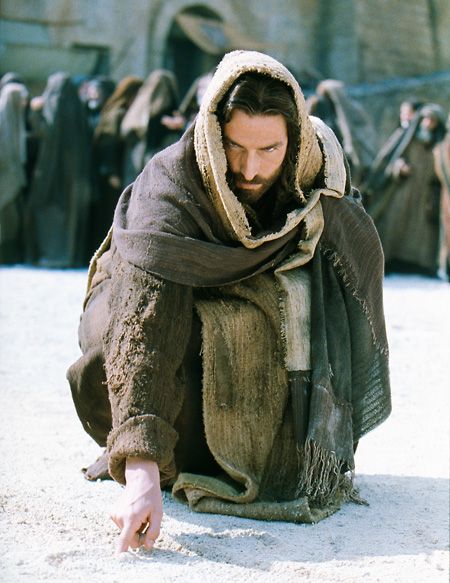
Jesus in the Old Testament is a series of posts that will offer my readers a chance to consider pictures or shadows of Jesus in the Old Testament. As mentioned in the introduction to this series, some may be obvious, some may be not so obvious, and some may simply be a facet of the Lord those reading may not have considered previously.
I hope as we venture through this series, we will see the Lord in many wonderful pictures throughout the Old Testament.
SEEING JESUS IN
ADAM
HIS DESTINY
Genesis 3 24 He drove out the man…
John 12 32 And I, when I am lifted up from the earth, will draw all people to myself.”
Consider.
One was driven from his place of honor and dignity, restricted from being able to return. The second Adam, instead of being driven from the presence of God, came to draw all men to the Father.
One was acted upon, in that he had no choice but to leave. The second Adam acted to provide access to the presence of God. He had choice and used it to our benefit.
Thanks again for coming to visit. I hope you found something of interest in this post and would appreciate a comment, to begin a discussion. If you know someone this blog may bless (or challenge), send them a link, so they may join us in our discussion.
My hope is that this series will offer my readers a chance to consider the names, characteristics and descriptions of our God in the Word.
Our next set of names (#4 through #22) are considered His compound names, which typically uses His primary name and attaches a specific descriptor to it. These are the names that originally got me chasing this topic, and now it has developed into a much bigger study than the original intent, but I digress, for I have already mentioned this!
The Word is truly rich with descriptions of the Living God, and this effort of searching in the Word was quite illuminating. He truly is the ultimate subject of the Word, and His revelation of self-descriptions, or the accolades offered Him by His priests, prophets, kings apostles and faithful truly was a blessing.
May the Name of the Lord be praised, and by thinking on His name, may you have a blessed day.
14
JEHOVAH NISSI (THE LORD MY BANNER)
Exodus 17:15 And Moses built an altar and called the name of it, The LORD Is My Banner,
This name of God comes out of a bloody war with the Amalekites, a nomadic tribe, with the men of Israel led by a young man named Joshua. It is actually the first time we come across this young man, who is destined to bring the Israelites into the promised land.
Joshua was the physical arm of God in the fight, but the source of power and authority over the Amalekites is to be recognized in the actions of Moses on the hill. Joshua, as he was fighting would see Moses pleading with God for victory. Even in the act of prayer for victory, we find that Moses needed assistance from Aaron and Hur, in holding up his arms in prayer, so that Joshua would recognize the continual effort of prayer being performed.
Eventually, Joshua gained the victory over the Amalekites by the sword.
The victory was to be recorded in a book, in front of Joshua, declaring that the Amalekites would be destroyed from under heaven. The last verse of chapter 17 insinuates the war with the Amalekites would continue through multiple generations. In addition to the written declaration of continual victory over the Amalekites, witnessed by Joshua after his first military campaign, Moses built an altar. This altar is called Jehovah-nisssi.
As I have been under various teaching through my pilgrimage on this ol’ planet, teachers have described this banner as a long cloth like flag, used as a commemorative display in the marching of the troops. As I have done a bit of study, it seems there was no physical banner or flag referred to here, but that the altar is commemorated, or named after the Lord, and the character of the Lord that is emphasized at this altar is that He is the standard or rallying point the Israelites were to recognize in their battles.
The Lord is the rallying point that the armies of the Lord were to look to. A tremendous lesson for a young, impressionable man named Joshua as he prepares (unknowingly) for battles with the Canaanites in the promised land.
Look to the Lord! He is the rallying point for His people in the midst of war!
I would love to hear of your favorite name, characteristic or description of the Living God. Please leave me a comment, and I will include it in the list!
Thanks again for coming to visit. I hope you found something of interest in this post and would appreciate a comment, to begin a discussion. If you know someone this blog may bless (or challenge), send them a link, so they may join us in our discussion.
My hope is that this series will offer my readers a chance to consider the names, characteristics and descriptions of our God in the Word.
Our next set of names (#4 through #22) are considered His compound names, which typically uses His primary name and attaches a specific descriptor to it. These are the names that originally got me chasing this topic, and now it has developed into a much bigger study than the original intent, but I digress, for I have already mentioned this!
The Word is truly rich with descriptions of the Living God, and this effort of searching in the Word was quite illuminating. He truly is the ultimate subject of the Word, and His revelation of self-descriptions, or the accolades offered Him by His priests, prophets, kings apostles and faithful truly was a blessing.
May the Name of the Lord be praised, and by thinking on His name, may you have a blessed day.
13
JEHOVAH MEKODDISHKEM (THE LORD WHO SANCTIFIES YOU)
Leviticus 22:32 And you shall not profane my holy name, that I may be sanctified among the people of Israel. I am the LORD who sanctifies you,
To be sanctified.
This is the Lord’s work in our lives and it is His character that motivates this work in our lives, His nature to sanctify us, to make us holy and set apart.
When I first became a believer, I carried with me the thought that to be holy meant to be sinless. Now of course our Holy God is sinless, but I as a believer understand I am not. The longer I walk with the Lord, the more I am sure of my sinnin’ tendencies!
Yet He sanctifies his church, of which yours truly is in. How can that be?
A good friend and brother in the Lord once described sanctification with the following anecdote.
As a youngin, he and his brother would work to make a few pennies during the week and wait with baited breath until the ice cream truck would pull into the neighborhood. Each week, the two boys would have their pennies in their sweaty little hands, but this one particular afternoon, my friends brother had lost his coins.
Around the corner came the truck and my friend got himself a nice fresh ice cream cone, but in the back of his eye, he noticed his brother yearning for it, and maybe coming to get it.
What did he do?
He sanctified that ol’ ice cream cone. He licked every part of that ice cream, and if I know him at all, he probably licked the cone two or three times. There was no chance his big brudder was gonna eat any of that sweet frozen treat.
He sanctified that treat. He made it his own. He set it apart from everyone else, especially his brudder!
Of course this story leaves much to be desired in deep theological renumerations, but hey – it has stuck with me and when I think of our God in this way, I am reminded that He is the God Who sanctifies His people
And in that sanctification, He draws us into a life of peace and holiness, a life of love and sacrifice, a life that is a natural response of someone who is so “licked”!
Praise His name for His kindness and continual working in our lives. He is so good!
I would love to hear of your favorite name, characteristic or description of the Living God. Please leave me a comment, and I will include it in the list!
Thanks again for coming to visit. I hope you found something of interest in this post and would appreciate a comment, to begin a discussion. If you know someone this blog may bless (or challenge), send them a link, so they may join us in our discussion.
As many who have followed me for a bit, I have fallen into the Psalms, and I can’t get up! (As if I would want to.) The Psalms are a majestic collection of poetry, of heart felt human experiences that constantly challenge me in my own frail attempt to follow the true King. As many of the Psalms are written by David, my study on the Psalms has spurred me on to looking at the life of David, is the main contributor to this book, and to follow the victories and tragedies of the shepherd King of Israel.
Many times in the narrative, we will see the Lord Jesus, imperfectly, yet a reflection of His spirit in a man with weaknesses. Let’s continue with our look into the man who would become Israel’s first king, if only to consider the historical condition David enters into as he soon appears in our study.
1 Samuel 10:1
1 Then Samuel took a flask of oil and poured it on his head and kissed him and said, “Has not the LORD anointed you to be prince over his people Israel? And you shall reign over the people of the LORD and you will save them from the hand of their surrounding enemies. And this shall be the sign to you that the LORD has anointed you to be prince over his heritage.
In this passage we find Saul receiving his office as king and two mandates for the remainder of his life.
Saul was to be Prince over God’s people Israel
Saul went from being a donkey hunter to replacing God as the king of Israel. Heady stuff! To be a prince over God’s people.
Not only is Saul to be king over a nation, but it is a nation that has been miraculously created and rescued from dangers and threats since it was established, without the need of a king. Talk about filling a position that is not required, other than to satisfy the whim of a population that seeks to walk away from God. I don’t know about you, but I do not envy Saul being given this honor!
Three times Samuel refers to the LORD in this passage, using the tetragrammaton, the four letters that represent God’s self existent revelation of His person. Is Samuel possibly reminding Saul that God, who placed him on the throne, is not some territorial god that is “one among many”, but that He is the eternal self existent God that depends on no one and provides for all?
No matter what, Saul has his work cut out for him and Samuel provides two mandates from the Lord as to his mission in life as king of Israel.
Saul is to reign over the people of the LORD
As I said, Saul has his work cut out for him, replacing the Lord in reigning over the LORD’s people. Yes, it is true that theoretically he was not to be independent of God, but to find direction, strength, wisdom, understanding, patience, and all the other components required to reign over God’s people per God’s direction, from God and God only.
But what is it to “reign”?
Some of my brothers in the faith would say that to reign is to control, to influence each citizen of the kingdom in all their decisions and actions, requiring all to be compliant to the whims and wishes of the monarch. I suppose this may be the intent of leader who is insecure, or that is power hungry. Would you agree that both of these types of leaders do not represent God’s wishes in a leader?
Consider that if God chooses a man for a position, the security comes from God, and if for some reason God decides to move the man onto some other responsibility, that is simply a matter of obedience to the will of God.
If the leader is power hungry, and has exorbitant demands, continually increasing in his authority over the people he reigns, he becomes a dictator. Under a dictator, the people always suffer, for he is not there to serve the people, but to abuse his position and take what is not rightly his.
As King, Saul was to reign over the LORD’s people. Although not comparable in every way, there are some similarities to the leaders in the New Testament church. All of God’s leaders have some commonalities in their work for God. For those who may be interested, I considered what it meant for a New Testament leader to rule in the church in a blog years back. (Christian Accountability – Rule).
Let me know if a king over Israel could rule his people using the same method as described in Hebrews 13. I would suggest that the king of Israel was to primarily be a servant of the people, to direct the people into a society that honors God and promotes both internal and external peace for it’s citizens.
Saul is to save the people of the LORD from their enemies
As mentioned above, the second mandate given to Saul from the LORD was to save them from their enemies. This has been the LORD’s desire throughout Israel’s history and should not surprise us as a specific task. He is not tasked with developing a new social order, creating a different type of economy or producing a new style of worship to their God.
He is to protect them, save them from threats. Given the history of God’s method of protection prior to Saul’s arrival on the scene, we should not understand that this requires a multiplicity of horses and chariots, of increasing the size of the army, or of building defensive battlements, unless directed by God of course. But this hasn’t been the typical direction God has taken this nation!
Consider the unorthodox methods God has used to deliver the nation prior to Saul being installed as king.
Use a famine to direct a small family into a strange nation (Egypt).
Allowance of the people to become slaves for a great delivery to be performed.
Use a stutterer to confront the most powerful man on earth, demanding the slave be let go.
Ten plagues, with protection for the people of God for each plague.
Split the Red Sea to save the people and defeat the Egyptians.
Rain manna down from heaven to supply for the nation.
Parade around a town for a week until the walls fall down.
Send out a coward out to fight and defeat the Midianites, with only 300 farmers.
Need I go on?
To be the king of Israel, from a historic perspective, meant that conventional methods of protecting the nation were not typical. The nation of Israel was to be completely different, not only in their worship, but also in who they looked to for their safety. Saul is now under the microscope of every citizen of Israel, and he has only One hope.
That hope turns out to be the One he is replacing as the leader of the nation.
Yes I surely do not envy Saul’s position. It is a good thing that the LORD is not a power hungry dictator or an insecure monarch, but is the perfect and rightful King. He was ever ready to provide guidance to Saul for his success. God is also ever ready to provide for us as we seek His guidance and do as He directs. He has never stepped down from His throne, and we can be thankful it is a throne of grace, ever ready to provide help in time of need.
Hebrews 4:16
Let us then with confidence draw near to the throne of grace, that we may receive mercy and find grace to help in time of need.
Thanks again for coming to visit. I hope you found something of interest in this post and would appreciate a comment, to begin a discussion. If you know someone this blog may bless (or challenge), send them a link, so they may join us in our discussion.
Jesus in the Old Testament is a series of posts that will offer my readers a chance to consider pictures or shadows of Jesus in the Old Testament. As mentioned in the introduction to this series, some may be obvious, some may be not so obvious, and some may simply be a facet of the Lord those reading may not have considered previously.
I hope as we venture through this series, we will see the Lord in many wonderful pictures throughout the Old Testament.
SEEING JESUS IN
ADAM
CREATED
Genesis 2 7 then the LORD God formed the man of dust from the ground and breathed into his nostrils the breath of life, and the man became a living creature.”
1 Corinthians 15 45 Thus it is written, “The first man Adam became a living being”; the last Adam became a life-giving spirit.
In our last post, we considered the fact that both Adam and Jesus were created, or that they “became”. At a point in time in history, both men, Adam and Jesus came into existence.
Adam became. Jesus became.
In this post, I would like to consider that the similarities for these men ends at that point. Adam became a living being. He was a recipient of life. To be alive was not of any meritorious effort on his part. He simply became a living being.
Jesus, in his humanity, became a life giving spirit. Consider the difference for a moment. The one who received life lost it all. The One who provides life, voluntarily gave His life up to provide for the betrayer! How unequal! How unfair! How gracious is He! So much to meditate on, and a fantastic thought to carry through the day!
Thanks again for coming to visit. I hope you found something of interest in this post and would appreciate a comment, to begin a discussion. If you know someone this blog may bless (or challenge), send them a link, so they may join us in our discussion.
My hope is that this series will offer my readers a chance to consider the names, characteristics and descriptions of our God in the Word.
Our next set of names (#4 through #22) are considered His compound names, which typically uses His primary name and attaches a specific descriptor to it. These are the names that originally got me chasing this topic, and now it has developed into a much bigger study than the original intent, but I digress, for I have already mentioned this!
The Word is truly rich with descriptions of the Living God, and this effort of searching in the Word was quite illuminating. He truly is the ultimate subject of the Word, and His revelation of self-descriptions, or the accolades offered Him by His priests, prophets, kings apostles and faithful truly was a blessing.
May the Name of the Lord be praised, and by thinking on His name, may you have a blessed day.
12
JEHOVAH JIREH (THE LORD WILL PROVIDE)
Genesis 22:14 So Abraham called the name of that place, “The LORD will provide”; as it is said to this day, “On the mount of the LORD it shall be provided.”
What a God we have!
Most of my readers will recognize the background to this famous verse, where Abraham is provided a sacrifice to replace Isaac, his son of promise. Such a wonderful picture of a replacement for our sakes, and a picture of the Father, not only providing a sacrifice for our sakes, but actually becoming that sacrifice, in the person of Jesus Christ.
This self sacrifice that God rescued Abraham from He took upon Himself. He provided the Lamb of God for the sacrifice that was required!
And in the midst of this self sacrifice, He has provided a life line to His creation, being able to provide for us in very specific ways that we can now realize come the the very hand of God. These reminders of His care for us come at just the opportune time, and if in prayer for these specific needs, provide great encouragement to the saint.
As a personal story, my wife and I were living in the USA many years ago, without the ability to work, being in a school for training. We had one child, less than a year old and our food supplies were dwindling at the time. Due to that, our little boy was not receiving the sustenance he needed from his mother and she prayed that night, without my knowledge, that God would provide food for little Josh.
The next day as I was picking up my mail, I noticed an envelope with some coin in it. A very unusual occurrence! As I was pondering what was going on, the finance manager for the school walked by and noticed my puzzlement. He was a super friendly guy and let me know that there had been a currency exchange error with the last gift from our friends in Canada. It was a bit of change in our favor.
If I recall it was $0.87. Ever the complainer, I grumbled that there wasn’t more to help us in our need, but nevertheless I headed home to see my little family. Upon arriving I told wifey of the “cash fall” we just fell into, and she asked me to go to the school snack stand to pick up some milk for little Josh.
Can you guess how much that milk cost for our little boy? I think you know!
Our God is the God who provides in more ways than we recognize, but in those times when He gets specific, it creates an encouragement to trust in His loving care.
I would love to hear of your favorite name, characteristic or description of the Living God. Please leave me a comment, and I will include it in the list!
Thanks again for coming to visit. I hope you found something of interest in this post and would appreciate a comment, to begin a discussion. If you know someone this blog may bless (or challenge), send them a link, so they may join us in our discussion.
My hope is that this series will offer my readers a chance to consider the names, characteristics and descriptions of our God in the Word.
Our next set of names (#4 through #22) are considered His compound names, which typically uses His primary name and attaches a specific descriptor to it. These are the names that originally got me chasing this topic, and now it has developed into a much bigger study than the original intent, but I digress, for I have already mentioned this!
The Word is truly rich with descriptions of the Living God, and this effort of searching in the Word was quite illuminating. He truly is the ultimate subject of the Word, and His revelation of self-descriptions, or the accolades offered Him by His priests, prophets, kings apostles and faithful truly was a blessing.
May the Name of the Lord be praised, and by thinking on His name, may you have a blessed day.
11
JEHOVAH EL GEMUWAL (LORD GOD OF RECOMPENSE)
Jeremiah 51:56 for a destroyer has come upon her, upon Babylon; her warriors are taken; their bows are broken in pieces, for the LORD is a God of recompense; he will surely repay.
A bit of background will help in considering this verse
Jeremiah had prophesied the destruction of Jerusalem by the nation of Babylon, and at this time in his ministry, the nation had realized the truth of his message. They had been conquered, and much suffering had been experienced by the people of Israel. In their sufferings, doubts and questions kept rising to the surface for those undergoing this terrible time. One of these questions may have been…
How could a righteous God allow the continuance of this marauding nation to so brutally abuse His people?
In this verse Jeremiah delivers an answer to the people of God in His very name. Remember, a name of someone, in the Word, typifies their character, their essence or identity as to who they really are.
God is a God of recompense!
Jeremiah speaks of a destroyer coming upon Babylon, and that she will experience the very capture and defeat she brought upon Israel. She is not invincible, though we often think of world powers this way. Babylon was on her way out and she would be be shamed and defeated because God is a God of recompense.
When I first found this name, I associated recompense with vengeance, and there is some overlap.
Consider
Deuteronomy 32:35 – Vengeance is mine, and recompense, for the time when their foot shall slip; for the day of their calamity is at hand, and their doom comes swiftly.’
And yet, the term for recompense has an additional component of reward that provides another angle I hadn’t considered.
Isaiah 35:4 Say to those who have an anxious heart, “Be strong; fear not! Behold, your God will come with vengeance, with the recompense of God. He will come and save you.”
Notice that Isaiah speaks of vengeance and recompense and associates it with “coming and saving His people”.
My association of recompense with personal judgement against myself may be bad thinking, for the recompense is for those who reject the Living God, who walk away from Him, who refuse to trust Him. For those who cling to the hope of God, as Isaiah promises,
… He will come and save you
Understanding His recompense depends on where you stand in relation to His presence and person.
He is a God of Recompense and because of that believers may rest in the truth that in the end, His purposes will be accomplished and those who love Him will be saved through trusting His heart of love, as seen in the One who hung on the cross for you and I.
Jesus is the God of Recompense and for that I thank Him and praise His name.
I would love to hear of your favorite name, characteristic or description of the Living God. Please leave me a comment, and I will include it in the list!
Thanks again for coming to visit. I hope you found something of interest in this post and would appreciate a comment, to begin a discussion. If you know someone this blog may bless (or challenge), send them a link, so they may join us in our discussion.
As many who have followed me for a bit, I have fallen into the Psalms, and I can’t get up! (As if I would want to.) The Psalms are a majestic collection of poetry, of heart felt human experiences that constantly challenge me in my own frail attempt to follow the true King. As many of the Psalms are written by David, my study on the Psalms has spurred me on to looking at the life of David, is the main contributor to this book, and to follow the victories and tragedies of the shepherd King of Israel.
Many times in the narrative, we will see the Lord Jesus, imperfectly, yet a reflection of His spirit in a man with weaknesses.
1 Samuel 9:15-16
15 Now the day before Saul came, the LORD had revealed to Samuel: 16 “Tomorrow about this time I will send to you a man from the land of Benjamin, and you shall anoint him to be prince over my people Israel. He shall save my people from the hand of the Philistines. For I have seen my people, because their cry has come to me.”
We last left Saul and his assistant having met with some women coming out of the city, and receiving instructions as to how to find the seer Samuel.
This short passage provides instructions to the other participant in that meeting, as the Lord prepares Samuel for a fateful time with the future king of Israel. Remember, this is the man that will take over the leadership of the nation of Israel, and not only that, but a new office is being created here, that is the office of a king, effectively overshadowing, at least in Samuels thinking, that of his office of prophet.
You have to wonder what is going on in the prophets mind prior to this meeting. Earlier we have considered that the demand for a king by the nation of Israel amounted to the rejection of God as their king, (1 Samuel 8:7) and this surely affected Samuel, as God’s representative! Yet God, in the midst of His rejection by the nation, sought to protect His prophet from thinking it was the nation rejecting him.
What may be of greater interest in my thinking is – What is going on in the Lord’s mind at this time?
Let’s consider what is happening. The Lord provides Samuel direction on when he will meet the future king, where the king is from, and the method of placing Saul in the office of king. All of this is for Samuels benefit.
If I were to guess God’s next message to Samuel, is that judgement will fall on the nation of Israel due to their rejection of God. Fire and brimstone, plagues, poverty, death, destruction, pestilence, starvation. But that is only my guess. After all, this is a rejection of the One who not only created Israel, but rescued the fledgling nation from the grip of Egypt, provided a land of milk and honey to them, and protected them as they fought their battles.
But take note of the Lord’s (not my) thoughts.
For I have seen my people, because their cry has come to me.
What? What type of God do we worship? In the midst of the nation’s rebellion, God sees their suffering and responds out of mercy to a traitorous people. He actually will use the people’s sinful choice of a king for their own benefit, and rescue them from the Philistines!
Don’t get me wrong – judgement will come, for even back during Moses time, this rejection was foretold.
Deuteronomy 28:36-37 “The LORD will bring you and your king whom you set over you to a nation that neither you nor your fathers have known. And there you shall serve other gods of wood and stone. And you shall become a horror, a proverb, and a byword among all the peoples where the LORD will lead you away.
This future judgement based on their rejection of God’s ways, including the demand for a king, would also exhibit the patience and longsuffering of the Lord, for it would be centuries of God’s pleading with the nation before they were led away, experiencing the prophecy of Moses.
God’s reaction in this passage speaks volumes of the God I know so little of. He is gracious in the most extreme way, in the midst of a betrayal by the nation, He provides a salvation for them.
Is it any surprise, when we consider the grace of the Father with Israel over 3,000 years ago, that His ultimate saving action would only magnify this exhibition of His mercy and grace? On the cross, He provided a far greater salvation to those who hated Him and sought to destroy Him?
Let’s face the facts. He is good and He is good all the time! Take time today to thank Him for His many mercies!
Thanks again for coming to visit. I hope you found something of interest in this post and would appreciate a comment, to begin a discussion. If you know someone this blog may bless (or challenge), send them a link, so they may join us in our discussion.
Jesus in the Old Testament is a series of posts that will offer my readers a chance to consider pictures or shadows of Jesus in the Old Testament. As mentioned in the introduction to this series, some may be obvious, some may be not so obvious, and some may simply be a facet of the Lord those reading may not have considered previously.
I hope as we venture through this series, we will see the Lord in many wonderful pictures throughout the Old Testament.
SEEING JESUS IN
ADAM
CREATED
Genesis 2 7 then the LORD God formed the man of dust from the ground and breathed into his nostrils the breath of life, and the man became a living creature.”
1 Corinthians 15 45 Thus it is written, “The first man Adam became a living being”; the last Adam became a life-giving spirit.
Adam became. Jesus became.
Though both of these men are alike in one manner, in that they both “became”, (were brought into existence at a point in time), the similarities end at that point. We shall consider the differences in our next post, but for this particular post I would like to settle on the thought that both these men “became”. The man Adam, and the man Jesus, both became flesh at a point in time, and lived in a flesh and bone body on the face of this earth, both experiencing the temptations and trials of life in a damaged creation.
Both were “created”, and though both would walk entirely different paths in relation to God, they are the two men in this creation who have influenced this world the greatest.
Thanks again for coming to visit. I hope you found something of interest in this post and would appreciate a comment, to begin a discussion. If you know someone this blog may bless (or challenge), send them a link, so they may join us in our discussion.
My hope is that this series will offer my readers a chance to consider the names, characteristics and descriptions of our God in the Word.
Our next set of names (#4 through #22) are considered His compound names, which typically uses His primary name and attaches a specific descriptor to it. These are the names that originally got me chasing this topic, and now it has developed into a much bigger study than the original intent, but I digress, for I have already mentioned this!
The Word is truly rich with descriptions of the Living God, and this effort of searching in the Word was quite illuminating. He truly is the ultimate subject of the Word, and His revelation of self-descriptions, or the accolades offered Him by His priests, prophets, kings apostles and faithful truly was a blessing.
May the Name of the Lord be praised, and by thinking on His name, may you have a blessed day.
10
JEHOVAH ELOHIM (LORD GOD)
Genesis 2:4 These are the generations of the heavens and the earth when they were created, in the day that the LORD God made the earth and the heavens.
Two primary names of God combined together.
We have considered both of these primary names earlier in our thoughts. Elohim and Jehovah (Jahweh)
In combining these two primary names, we have a personal God, as revealed to Moses, yet the strong God of the creation of all things.
Remember that El speaks of power, might, even authority, and when Moses combines the personal name of Jehovah with Elohim, he introduces a tension for the believer to live in.
Is He the almighty, supreme Elohim that is unapproachable, intimidating, beyond our understanding and above all of our thoughts and understanding?
Yes He is!
Is He the eternal, self existent Jehovah (Yahweh) that reveals Himself to men, making the move to open relationship with a broken world, eventually becoming the self sacrificing Messiah willing to die a cruel death for our sakes?
Yes He is!
Brothers – How can we reconcile in our understanding this spectrum of our God? It is too wonderful and beyond comprehension! And yet the Lord promises the believer peace in their understanding, (even if there is tension), a peace that surpasses all understanding.
Philippians 4:7 And the peace of God, which surpasses all understanding, will guard your hearts and your minds in Christ Jesus.
I would love to hear of your favorite name, characteristic or description of the Living God. Please leave me a comment, and I will include it in the list!
Thanks again for coming to visit. I hope you found something of interest in this post and would appreciate a comment, to begin a discussion. If you know someone this blog may bless (or challenge), send them a link, so they may join us in our discussion.
My hope is that this series will offer my readers a chance to consider the names, characteristics and descriptions of our God in the Word.
Our next set of names (#4 through #22) are considered His compound names, which typically uses His primary name and attaches a specific descriptor to it. These are the names that originally got me chasing this topic, and now it has developed into a much bigger study than the original intent, but I digress, for I have already mentioned this!
The Word is truly rich with descriptions of the Living God, and this effort of searching in the Word was quite illuminating. He truly is the ultimate subject of the Word, and His revelation of self-descriptions, or the accolades offered Him by His priests, prophets, kings apostles and faithful truly was a blessing.
May the Name of the Lord be praised, and by thinking on His name, may you have a blessed day.
9
EL ROI (GOD OF SEEING)
Genesis 16:13 So she called the name of the LORD who spoke to her, “You are a God of seeing,” for she said, “Truly here I have seen him who looks after me.”
Knowing what we know of the LORD (Jehovah / Jahweh), it seems obvious that He is an all-seeing God. But for a proud woman (Hagar), rejected by her mistress (Sarai), and given up by her husband (Abraham), this verse speaks of the revelation of God who she had heard of from Abraham.
Abraham had taught his household the fear of the Lord, and in this teaching, Hagar must have experienced some influence in her life. Hearing of a God that Abraham knew was one thing. Having this God visit you at your deepest point of sorrow and rejection is another.
What we know of Hagar is that the God who revealed Himself was One that had seen her plight. Few women in this time had been delivered a message from God, and this Angel of the Lord provided her guidance that may not have been too enjoyable.
Sarai had dealt harshly with her, so harshly that Hagar sought refuge out of the camp, away from the community she had been associated with for many years. Yes she had found a spring, and it may have been her hope to find a rescuer at the spring, but the Angel came to visit her before she found an option to choose from.
The stranger brought new that was bad and good.
The bad news was that she had to go back to her mistress, the one who death harshly with her, and was required to submit to her. It seems that the status of being Abraham’s wife went to Hagar’s head, and verse 4 speaks of her looking down on Sarai with contempt. This child she conceived was her opportunity to elevate herself in the tribe, being the only wife able to provide for Abraham a seed. Such an important opportunity provided her a status she had never known, and didn’t quite handle properly.
A continual humbling may be ahead for Hagar, a reminder that she was a second class wife, (at least in Sarai’s eyes), and difficult relationships between the two continued for many years.
The good news was that a young child would be born, that he would be called Ishmael, and that he would be the father of many. The nation of the Ishmaelites grew from this seed, and have been a thorn in Israel’s side for much of her history.
Hagar called the God of Abraham the God of seeing, for He not only saw her affliction at the present, but also her past and future, of her child’s future, and of the leader he would become over his kinsmen.
She saw the One who sees! In her deepest affliction, (brought on by her own contempt and pride), her eyes were ready to see the One who Abraham had spoken of. And she returned to the camp, with a humbled spirit and a willing attitude to do as instructed, for she experientially knew of the God who sees, instead of simply hearing the story of Abrahams God
God is a mysterious One, who uses affliction to open our eyes, and suffering to release the wax from our ears. He is a good God that does not seek to waste any pain we experience in this life, but is willing to take our loss and provide greater good than we can imagine.
Although not directly associated with our name of God for this post, when I think of loss in the believers life, and God’s gracious provision, I usually think of Joel 2:25
Joel 2:25 I will restore to you the years that the swarming locust has eaten, the hopper, the destroyer, and the cutter, my great army, which I sent among you.
God is good and He is the God who sees, not only our good intentions (few as they may be) but also our weakness, pain, rejection, abandonment and loneliness. He sees us, and for this we must be thankful, for He watches over us, working His good will in the midst of this messy life!
I would love to hear of your favorite name, characteristic or description of the Living God. Please leave me a comment, and I will include it in the list!
Thanks again for coming to visit. I hope you found something of interest in this post and would appreciate a comment, to begin a discussion. If you know someone this blog may bless (or challenge), send them a link, so they may join us in our discussion.
As many who have followed me for a bit, I have fallen into the Psalms, and I can’t get up! (As if I would want to.) The Psalms are a majestic collection of poetry, of heart felt human experiences that constantly challenge me in my own frail attempt to follow the true King. As many of the Psalms are written by David, my study on the Psalms has spurred me on to looking at the life of David, is the main contributor to this book, and to follow the victories and tragedies of the shepherd King of Israel.
Many times in the narrative, we will see the Lord Jesus, imperfectly, yet a reflection of His spirit in a man with weaknesses.
Today Saul meets Samuel, and things start to change for this man.
1 Samuel 9:11-14
11 As they went up the hill to the city, they met young women coming out to draw water and said to them, “Is the seer here?” 12 They answered, “He is; behold, he is just ahead of you. Hurry. He has come just now to the city, because the people have a sacrifice today on the high place. 13 As soon as you enter the city you will find him, before he goes up to the high place to eat. For the people will not eat till he comes, since he must bless the sacrifice; afterward those who are invited will eat. Now go up, for you will meet him immediately.” 14 So they went up to the city. As they were entering the city, they saw Samuel coming out toward them on his way up to the high place.
Saul and his servant are so close now. By chance, as they were climbing up the hill to the city, they met some young women, and asked about the prophet. Sure – he is here, because the people have a sacrifice today on the high place
Sacrifice on the high place? What is going on there? We must remember that Jerusalem and the temple were not the center of worship at this time, but the tabernacle. By the time of Samuel’s call into the ministry as a young child, the tabernacle may have been replaced with a permanent structure in Shiloh, since it was referred to as the temple of the Lord
1 Samuel 1:9 After they had eaten and drunk in Shiloh, Hannah rose. Now Eli the priest was sitting on the seat beside the doorpost of the temple of the Lord.
1 Samuel 3:3 The lamp of God had not yet gone out, and Samuel was lying down in the temple of the Lord, where the ark of God was.
Ok, so the temple was available for worship, yet we find the prophet going to a small city for a sacrifice. On a high place no less. The prophets condemned this behavior multiple times in later years, as we see in 1 & 2 Kings.
1 Kings 3:3 Now Solomon loved the Lord, walking in the statutes of his father David, except he sacrificed and burned incense on the high places.
2 Kings 17:11 and there they burned incense on all the high places as the nations did which the Lord had carried away to exile before them; and they did evil things provoking the Lord.
So, some may think of this as an inconsistency in the message of the Bible, that one prophet sacrifices on a high place and other prophets condemn that action. But consider the expanding knowledge God provides, revealing greater and deeper truth as His people grow. What yesterday was not revealed and “allowed” at a later time is revealed and restricted. It is a common theme through the Word, and best described in a passage by another man called Saul at one time.
Romans 3:25 whom God put forward as a propitiation by his blood, to be received by faith. This was to show God’s righteousness, because in his divine forbearance he had passed over former sins. 26It was to show his righteousness at the present time, so that he might be just and the justifier of the one who has faith in Jesus.
So, let’s get back to our original passage in 1 Samuel. We see Saul and his servant climbing the hill, and as soon as they enter the city, Samuel appears, heading toward them, on his way to the sacrifice. Saul’s meeting the prophet was that quick. No hunting through the city, no delay or avoidance by the prophet, even though it is a mission that is based on the nations rejection of God.
Samuel comes out to them, obedient to God’s command, as we will see in our next passage. He obeys what I would consider to be a very discouraging task, that is to meet the man who will replace God, and by association his prophet, by the nation of Israel. To do that which is displeasing in order to please the One sending him is part of the believer’s life.
Is there something that is ahead for you that is displeasing to you, yet you know it needs to be dealt with? Unless it is time dependent, that is, it is something that cannot be done until a specific time, take care of it today.
One of my favorite verses on this topic is Proverbs 22:13
The sluggard says, “There is a lion outside; I will be killed in the streets!”
Today is a good day to do what you need to do.
Thanks again for coming to visit. I hope you found something of interest in this post and would appreciate a comment, to begin a discussion. If you know someone this blog may bless (or challenge), send them a link, so they may join us in our discussion.
My hope is that this series will offer my readers a chance to consider the names, characteristics and descriptions of our God in the Word.
Our next set of names (#4 through #22) are considered His compound names, which typically uses His primary name and attaches a specific descriptor to it. These are the names that originally got me chasing this topic, and now it has developed into a much bigger study than the original intent, but I digress, for I have already mentioned this!
The Word is truly rich with descriptions of the Living God, and this effort of searching in the Word was quite illuminating. He truly is the ultimate subject of the Word, and His revelation of self-descriptions, or the accolades offered Him by His priests, prophets, kings apostles and faithful truly was a blessing.
May the Name of the Lord be praised, and by thinking on His name, may you have a blessed day.
8
EL GIBBOR (MIGHTY GOD)
Jeremiah 32:18 You show steadfast love to thousands, but you repay the guilt of fathers to their children after them, O great and mighty God, whose name is the LORD of hosts,
Out of the many names I have found in my research for this series, this particular name is one I have not considered in the past. To see the name “El Gibbor” strikes an unfamiliarity to my thinking. Yet I have often read of the mighty God.
In my research this term is often associated with action or reputation. When speaking of men, the term refers to a champion, a warrior, even a tyrant in some instances. Each of these descriptions speak of one who is not only strong, but uses his strength in battle to win wars.
God is a God of war, and as soon as I say that, most may think of blood, death, destruction and horror on a battle field. I would like to suggest that the Lord Jesus has described our warfare in different terms.
Death to self, and life for others. Loving our enemy. Seeking to be peacemakers, (not just peacekeepers!)
He is the Mighty God, who entered into battle for our souls, voluntarily suffering for others. To submit to this suffering in order to obey His Father and win our souls exhibits great strength of will and power of love.
He is El Gibbor, the Mighty God, mighty in His nature and in His doings, showing steadfast love to thousands upon thousands of His enemies, rescuing them through subjection to suffering.
The strength of our God is not to be lightly considered.
Let us thank Him for Him mighty love that broke through our doubts and fears!
I would love to hear of your favorite name, characteristic or description of the Living God. Please leave me a comment, and I will include it in the list!
Thanks again for coming to visit. I hope you found something of interest in this post and would appreciate a comment, to begin a discussion. If you know someone this blog may bless (or challenge), send them a link, so they may join us in our discussion.
My hope is that this series will offer my readers a chance to consider the names, characteristics and descriptions of our God in the Word.
Our next set of names (#4 through #22) are considered His compound names, which typically uses His primary name and attaches a specific descriptor to it. These are the names that originally got me chasing this topic, and now it has developed into a much bigger study than the original intent, but I digress, for I have already mentioned this!
The Word is truly rich with descriptions of the Living God, and this effort of searching in the Word was quite illuminating. He truly is the ultimate subject of the Word, and His revelation of self-descriptions, or the accolades offered Him by His priests, prophets, kings apostles and faithful truly was a blessing.
May the Name of the Lord be praised, and by thinking on His name, may you have a blessed day.
7
EL OLAM (THE EVERLASTING GOD)
Genesis 21:33 Abraham planted a tamarisk tree in Beersheba and called there on the name of the LORD, the Everlasting God.
Isaiah 40:28 Have you not known? Have you not heard? The LORD is the everlasting God, the Creator of the ends of the earth. He does not faint or grow weary; his understanding is unsearchable.
This name also uses the primary name El in conjunction with Olam, which, as translated speaks of God’s eternality, or His self existence, without beginning and without end.
As Isaiah speaks to the people of God, he asks rhetorical questions to those who have been under the tutelage of the law. Have you not known? Have you not heard?
My goodness, during the days of Isaiah, if any of creation knows of the God of Abraham, and the God of Moses, it must be the nation of Israel, for they have received the written word, describing the God they are in covenant with, the God who has no beginning and has no end.
It is so easy to condemn those in the past as having dropped the ball when it comes to understanding who God truly is, but I will confess that much of my day is sometimes consumed with the here and now and not the inevitable future where God resides.
I understand I can change nothing about the past, other than to seek forgiveness from those whom I may have hurt, but while in the present, after considering the eternality of God, I can change my future.
Let us reflect on the everlasting nature of our Living God, that He will ever be with us, will never “not be” and has provided His Son, separated from Him for a time, so we may continually abide with the everlasting One.
I would love to hear of your favorite name, characteristic or description of the Living God. Please leave me a comment, and I will include it in the list!
Thanks again for coming to visit. I hope you found something of interest in this post and would appreciate a comment, to begin a discussion. If you know someone this blog may bless (or challenge), send them a link, so they may join us in our discussion.
As many who have followed me for a bit, I have fallen into the Psalms, and I can’t get up! (As if I would want to.) The Psalms are a majestic collection of poetry, of heart felt human experiences that constantly challenge me in my own frail attempt to follow the true King. As many of the Psalms are written by David, my study on the Psalms has spurred me on to looking at the life of David, is the main contributor to this book, and to follow the victories and tragedies of the shepherd King of Israel.
Many times in the narrative, we will see the Lord Jesus, imperfectly, yet a reflection of His spirit in a man with weaknesses.
Saul is hunting some donkeys. Let’s see what we can glean from this passage.
1 Samuel 9:5-10
5 When they came to the land of Zuph, Saul said to his servant who was with him, “Come, let us go back, lest my father cease to care about the donkeys and become anxious about us.” 6 But he said to him, “Behold, there is a man of God in this city, and he is a man who is held in honor; all that he says comes true. So now let us go there. Perhaps he can tell us the way we should go.” 7 Then Saul said to his servant, “But if we go, what can we bring the man? For the bread in our sacks is gone, and there is no present to bring to the man of God. What do we have?” 8 The servant answered Saul again, “Here, I have with me a quarter of a shekel of silver, and I will give it to the man of God to tell us our way.” 9 (Formerly in Israel, when a man went to inquire of God, he said, “Come, let us go to the seer,” for today’s “prophet” was formerly called a seer.) 10 And Saul said to his servant, “Well said; come, let us go.” So they went to the city where the man of God was.
In our last post, I suggested that Saul and his assistant had been sent on a hunt for his families donkeys, and that it may have been quite an extensive journey. With the start of verse 5, we are introduced to the land of Zuph, where most think it was just to the north of the land of the Benjaminite’s. When Saul and his servant entered this area, Saul had had enough of the search and wanted to turn around. No food and gone so long! Yet so close to the prize, though he knew it not.
Nevertheless, his servant spoke of a prophet that might help in completing the task, and after all of Saul’s reasons not to go, he relented.
Notice that the servant was the motivator to take Saul the last few yards to the finish line. How important to have those around us that provide encouragement to pursue the end game, to be the voice that pushes us to the last few steps we need to take. It seemed Saul had a good reason for turning back, since his father may being worrying that they had been so long. But a nameless servant with a good argument and a quarter won the day, and the nation of Israel was never the same!
Be an encourager for someone today. Someone may be getting ready to turn back, to give up, to throw in the towel, and your kind words and offer of help may make all the difference.
1 Thessalonians 5:11 Therefore encourage one another and build one another up, just as you are doing.
Thanks again for coming to visit. I hope you found something of interest in this post and would appreciate a comment, to begin a discussion. If you know someone this blog may bless (or challenge), send them a link, so they may join us in our discussion.
Jesus in the Old Testament is a series of posts that will offer my readers a chance to consider pictures or shadows of Jesus in the Old Testament. As mentioned in the introduction to this series, some may be obvious, some may be not so obvious, and some may simply be a facet of the Lord those reading may not have considered previously.
I hope as we venture through this series, we will see the Lord in many wonderful pictures throughout the Old Testament.
SEEING JESUS IN
ADAM
LORD OF CREATION
Genesis 1 28 And God blessed them. And God said to them, “Be fruitful and multiply and fill the earth and subdue it, and have dominion over the fish of the sea and over the birds of the heavens and over every living thing that moves on the earth.”
Colossians 1 15 He is the image of the invisible God, the firstborn of all creation. 16 For by him all things were created, in heaven and on earth, visible and invisible, whether thrones or dominions or rulers or authorities–all things were created through him and for him.
Adam was provided the right to have dominion over all of creation. He was the master or lord over the creation provided to him from God.
Jesus is the Lord of lords, and as such is seen in Adam in the early pages of the Old Testament. He is the One who has dominion over all dominions, thrones, rulers and authorities!
Thanks again for coming to visit. I hope you found something of interest in this post and would appreciate a comment, to begin a discussion. If you know someone this blog may bless (or challenge), send them a link, so they may join us in our discussion.
My hope is that this series will offer my readers a chance to consider the names, characteristics and descriptions of our God in the Word.
Our next set of names (#4 through #22) are considered His compound names, which typically uses His primary name and attaches a specific descriptor to it. These are the names that originally got me chasing this topic, and now it has developed into a much bigger study than the original intent, but I digress, for I have already mentioned this!
The Word is truly rich with descriptions of the Living God, and this effort of searching in the Word was quite illuminating. He truly is the ultimate subject of the Word, and His revelation of self-descriptions, or the accolades offered Him by His priests, prophets, kings apostles and faithful truly was a blessing.
May the Name of the Lord be praised, and by thinking on His name, may you have a blessed day.
6
EL ELYON (THE MOST HIGH GOD)
Psalm 78:35 They remembered that God was their rock, the Most High God their redeemer.
This name of God speaks of His loftiness, His elevated status over all of creation. As the creator of all, He is above all of creation by the fact He is outside of the creation, eternal and everlasting. The term also is used in comparison to false idols and gods, in that they can not compete with the Most High.
The term speaks of one elevated, lofty or supreme. There is no other like the Most High God.
It may be that the Canaanites referred to their local gods as el (god), but for the Israeli’s as they understood the truths that had been delivered to them through the revelation of God, would refer to the true God as the most High God, in comparison with the idols in the land.
Our God is King of Kings and Lord of Lords and is the Most High God, reigning over all other gods, high above all other beings. He is the only One worthy of this name, and we are privileged to know Him through His death on the cross.
And this is eternal life, that they know you, the only true God, and Jesus Christ whom you have sent.
I would love to hear of your favorite name, characteristic or description of the Living God. Please leave me a comment, and I will include it in the list!
Thanks again for coming to visit. I hope you found something of interest in this post and would appreciate a comment, to begin a discussion. If you know someone this blog may bless (or challenge), send them a link, so they may join us in our discussion.
My hope is that this series will offer my readers a chance to consider the names, characteristics and descriptions of our God in the Word.
Our next set of names (#4 through #22) are considered His compound names, which typically uses His primary name and attaches a specific descriptor to it. These are the names that originally got me chasing this topic, and now it has developed into a much bigger study than the original intent, but I digress, for I have already mentioned this!
The Word is truly rich with descriptions of the Living God, and this effort of searching in the Word was quite illuminating. He truly is the ultimate subject of the Word, and His revelation of self-descriptions, or the accolades offered Him by His priests, prophets, kings apostles and faithful truly was a blessing.
May the Name of the Lord be praised, and by thinking on His name, may you have a blessed day.
5
EL SHADDAI (ALMIGHTY GOD)
Genesis 17:1 When Abram was ninety-nine years old the LORD appeared to Abram and said to him, “I am God Almighty; walk before me, and be blameless,
We have considered Elohim in post #1 of this series, and I would like to consider the secondary term in this compound name, for I have discovered an aspect of “Shaddai” that I had never understood before.
The Hebrew transliteration of the term for Shaddai is šaday, and as I was “rootin’ about”, I clicked on the root word etymology of this term. Blue Letter Bible took me to H7703 – šāḏaḏ.
To be a root word means that all derivatives of the root finds some truth in the root word. Shaddai, as we are considering today, is rooted in the šāḏaḏ.
This is where I became somewhat shocked at what I found, for until this finding, I had always assumed Shaddai was simply referring to God (El) as being powerful, most powerful, all powerful or almighty. And I have no doubt of this fantastic truth.
When we explore the root word šāḏaḏ, it refers to one who spoils, wastes, assaults or deals violently. The term describes the apparent outcome of the power. An example of šāḏaḏ found in the Word, in relation to God’s power being exercised is Jeremiah 25:36
A voice–the cry of the shepherds, and the wail of the lords of the flock! For the LORD is laying waste šāḏaḏ their pasture.
Now before anyone starts calling me a heretic, I am not claiming that the blessed God, who is the Almighty, has evil intent or uses His great abilities simply for destruction! There is no way I believe that. Yet His power may bring about violent happenings, as Jeremiah notes in the verse above, and that which when the shepherds witnessed, brought about crying and wailing. For we must remember that the same God who is described as Almighty, is also described as all knowing, and full of wisdom. He exercises His power in perfect righteousness, without staining His character, though we often struggle with that!
We all will admit we want things to always be peachy keen and for every day to be full of sunshine. We know this is a pipe dream. Bad things happen, and yet our God is the Almighty. Though some of His acts may bring about destruction (from our point of view) faith rises above that and recognizes the God of the Bible as the One hanging on the cross, bearing the suffering we deserved, accepting the shame resulting from our sinful decisions.
He is the Almighty, yet He voluntarily hung on that instrument of death, “powerless” to free himself but for one reason. The power of love, greater than all His suffering and shame, shone forth on that ol’ rugged cross, when the Almighty became weak for our sake.
He is the Almighty God (El Shaddai), mighty in power and love to His creation. Praise His name today!
I would love to hear of your favorite name, characteristic or description of the Living God. Please leave me a comment, and I will include it in the list!
Thanks again for coming to visit. I hope you found something of interest in this post and would appreciate a comment, to begin a discussion. If you know someone this blog may bless (or challenge), send them a link, so they may join us in our discussion.
As many who have followed me for a bit, I have fallen into the Psalms, and I can’t get up! (As if I would want to.) The Psalms are a majestic collection of poetry, of heart felt human experiences that constantly challenge me in my own frail attempt to follow the true King. As many of the Psalms are written by David, my study on the Psalms has spurred me on to looking at the life of David, is the main contributor to this book, and to follow the victories and tragedies of the shepherd King of Israel.
Many times in the narrative, we will see the Lord Jesus, imperfectly, yet a reflection of His spirit in a man with weaknesses.
A short review of Saul’s call to be King!
1 Samuel 9:3-4
3 Now the donkeys of Kish, Saul’s father, were lost. So Kish said to Saul his son, “Take one of the young men with you, and arise, go and look for the donkeys.” 4 And he passed through the hill country of Ephraim and passed through the land of Shalishah, but they did not find them. And they passed through the land of Shaalim, but they were not there. Then they passed through the land of Benjamin, but did not find them.
Saul was on a journey. A journey to destiny! Little did he know of the life changing meeting he would have with a prophet of God while searching for his father’s livestock.
I suppose the first thing I am curious about is the route he took in looking for his animals – through the hill country of Ephraim, through Shalishah, though Shaalim, and through the land of Benjamin.
Best I can tell, the map to the right provides demarcation of the Hill Country, and lands of Benjamin and Ephraim. This journey may have been as much as 100 miles round trip, traveling through hilly country, looking for donkeys.
Donkeys!
When I think of Old Testament Israel, I think sheep, not donkeys, yet these animals were common in the land, even used to transport royalty in the very near future. And Saul, with an assistant was out looking for a heard of donkey’s upon assignment from his father Kish.
Let’s think about this. A prominent, wealthy family looses a herd of donkeys. Does this speak of bad livestock management practices? We need to give Kish and his family the benefit of the doubt as this occurrence was used of God to direct Saul to a fateful meeting with Samuel. To be anointed the first King of Israel, continuing the rejection of God as their King!
What are you talking about Carl – Israel’s rejection of God? You see, Saul was out searching for lost donkeys, spending a considerable amount of time and effort chasing after them. It turns out he never did find them. But he was led to a prophet that had been told of Israel’s rejection of God, of God giving the nation He created, saved and established what they wanted. And what did they want? A replacement leader. Someone instead of God. We will see this as a consistent truth as we venture through the Old Testament, but it is good to understand how this impacts not only Samuel’s life, but more importantly God’s interpretation of Israel’s desires.
1 Samuel 8:7 And the LORD said to Samuel, “Obey the voice of the people in all that they say to you, for they have not rejected you, but they have rejected me from being king over them.
Sobering thoughts on the desires of a nation, when it simply wants to be like the nations around it.
Thanks again for coming to visit. I hope you found something of interest in this post and would appreciate a comment, to begin a discussion. If you know someone this blog may bless (or challenge), send them a link, so they may join us in our discussion.
Jesus in the Old Testament is a series of posts that will offer my readers a chance to consider pictures or shadows of Jesus in the Old Testament. As mentioned in the introduction to this series, some may be obvious, some may be not so obvious, and some may simply be a facet of the Lord those reading may not have considered previously.
I hope as we venture through this series, we will see the Lord in many wonderful pictures throughout the Old Testament.
SEEING JESUS IN
ADAM
HIS WIFE
Genesis 2 22 And the rib that the LORD God had taken from the man he made into a woman and brought her to the man. 23 Then the man said, “This at last is bone of my bones and flesh of my flesh; she shall be called Woman, because she was taken out of Man.”
Revelation 19 7 Let us rejoice and exult and give him the glory, for the marriage of the Lamb has come, and his Bride has made herself ready;
Revelation 21 2 And I saw the holy city, new Jerusalem, coming down out of heaven from God, prepared as a bride adorned for her husband.
In placing Adam into a deep sleep, God took from Adam a rib to make his wife. Adam received a wife out of the experience of death, out of His very body.
How so much more did the Lord create a wife for the Son out of the death He experienced?
Thanks again for coming to visit. I hope you found something of interest in this post and would appreciate a comment, to begin a discussion. If you know someone this blog may bless (or challenge), send them a link, so they may join us in our discussion.
My hope is that this series will offer my readers a chance to consider the names, characteristics and descriptions of our God in the Word.
Our next set of names (#4 through #22) are considered Hs compound names, which typically use His primary name and attach a specific descriptor to it. These are the names that originally got me chasing this topic, and now it has developed into a much bigger study than the original intent, but I digress, for I have already mentioned this!
The Word is truly rich with descriptions of the Living God, and this effort of searching in the Word was quite illuminating. He truly is the ultimate subject of the Word, and His revelation of self-descriptions, or the accolades offered Him by His priests, prophets, kings apostles and faithful truly was a blessing.
May the Name of the Lord be praised, and by thinking on His name, may you have a blessed day.
4
ADONAI JEHOVAH (LORD GOD)
Genesis 15:2 ESV – But Abram said, “O Lord GOD, what will you give me, for I continue childless, and the heir of my house is Eliezer of Damascus?”
Our first compound name is the combination of two primary names. As an aside, I am thankful that when Jehovah (or Jahweh) is found in the text, the translators provide a clue and capitalize all letters in the English translation. Such is the case in this instance.
He is the Lord (Adonai), One who has authority and power, in the ultimate sense, and GOD (Jehovah), the self existent One, dependent on no one.
In our text, Abraham has been provided a promise by God, but it hadn’t been realized yet. He had been promised a son but had remained childless, and time was running out! Yet in addressing God, Abraham combined two of His personal primary names to emphasize his trust in the Living One.
Abraham had used both these names in addressing the Father before, but not in the same manner as here. In this passage he combined them into one name, specifically emphasizing the power and independence of the Lord. In God’s independent power, He was able to provide “results” based only on His own good will and the requests of those who had his ear.
Abraham had entered into this understanding, and was speaking to God freely, concerning His promise of an heir. He is listening today.
Do you have a sense of his independence and power, that He is free (beholding to no one) and able (powerful) to perform that which is within His will for those who have His ear?
I would love to hear of your favorite name, characteristic or description of the Living God. Please leave me a comment, and I will include it in the list!
Thanks again for coming to visit. I hope you found something of interest in this post and would appreciate a comment, to begin a discussion. If you know someone this blog may bless (or challenge), send them a link, so they may join us in our discussion.
My hope is that this series will offer my readers a chance to consider the names, characteristics and descriptions of our God in the Word.
Our first three names are considered His primary names!
The Word is truly rich with descriptions of the Living God, and this effort of searching in the Word was quite illuminating. He truly is the ultimate subject of the Word, and His revelation of self-descriptions, or the accolades offered Him by His priests, prophets, kings apostles and faithful truly was a blessing.
May the Name of the Lord be praised, and by thinking on His name, may you have a blessed day.
3
ADONAI (LORD)
Deut. 6:4 Hear, O Israel: The LORD our God, the LORD is one.
In our last post, we spoke of the Tetragrammaton, in other word the 4 letters that we understand represents the name Jehovah, or Jahweh.
In this post we are going to consider the Hebrew word Adonai, as the third and last primary name of our God. Adonai is the Hebrew word for Lord, referring to someone who has power and authority.
As discussed in our first post, Adonai is also used to refer to earthly rulers frequently in the Word, but of course not in the absolute sense as when referring the our God. The Creator and Sustainer of all things is by His very nature the Lord (Adonai) and Master (Adonai) of all things.
We may fight this truth, deny this truth, ignore this truth, but until we submit to this truth, we will never find peace. And the truth of His lordship is not dependent on our opinion of this claim He makes. He is Lord whether we like it or not.
My advice you ask? Submit to the truth, as far as you understand it, that Jesus is Lord (Adonai) and that you want to be a disciple, a learner of what that means in every area of your life.
Peace will find you when you submit. And it is a glorious peace, for you see, He is Lord and He is good, all the time!
I would love to hear of your favorite name, characteristic or description of the Living God. Please leave me a comment, and I will include it in the list!
Thanks again for coming to visit. I hope you found something of interest in this post and would appreciate a comment, to begin a discussion. If you know someone this blog may bless (or challenge), send them a link, so they may join us in our discussion.
As many who have followed me for a bit, I have fallen into the Psalms, and I can’t get up! (As if I would want to.) The Psalms are a majestic collection of poetry, of heart felt human experiences that constantly challenge me in my own frail attempt to follow the true King. As many of the Psalms are written by David, my study on the Psalms has spurred me on to looking at the life of David, is the main contributor to this book, and to follow the victories and tragedies of the shepherd King of Israel.
Many times in the narrative, we will see the Lord Jesus, imperfectly, yet a reflection of His spirit in a man with weaknesses.
Thanks again for coming to visit. I hope you found something of interest in this post and would appreciate a comment, to begin a discussion. If you know someone this blog may bless (or challenge), send them a link, so they may join us in our discussion.
Jesus in the Old Testament is a series of posts that will offer my readers a chance to consider pictures or shadows of Jesus in the Old Testament. As mentioned in the introduction to this series, some may be obvious, some may be not so obvious, and some may simply be a facet of the Lord those reading may not have considered previously.
I hope as we venture through this series, we will see the Lord in many wonderful pictures throughout the Old Testament.
SEEING JESUS IN
ADAM
DEEP SLEEP
Genesis 2 21 So the LORD God caused a deep sleep to fall upon the man, and while he slept took one of his ribs and closed up its place with flesh.
Matthew 27 50 And Jesus cried out again with a loud voice and yielded up his spirit.
Adam’s “deep sleep” speaks of the Messiah’s death, of a death that was purposed for the creation of a partner, a new life out of the death.
Thanks again for coming to visit. I hope you found something of interest in this post and would appreciate a comment, to begin a discussion. If you know someone this blog may bless (or challenge), send them a link, so they may join us in our discussion.