Jesus in the Old Testament is a series of posts that will offer my readers a chance to consider pictures or shadows of Jesus in the Old Testament. As mentioned in the introduction to this series, some may be obvious, some may be not so obvious, and some may simply be a facet of the Lord those reading may not have considered previously.
I hope as we venture through this series, we will see the Lord in many wonderful pictures throughout the Old Testament.
SEEING JESUS IN
Aaron
Day of Consecration
Exodus 29:4 You shall bring Aaron and his sons to the entrance of the tent of meeting and wash them with water.
Luke 3:21-22 21 Now when all the people were baptized, and when Jesus also had been baptized and was praying, the heavens were opened, 22 and the Holy Spirit descended on him in bodily form, like a dove; and a voice came from heaven, “You are my beloved Son; with you I am well pleased.”
To enter into God’s presence, Moses was to wash the priest in front of the tent, prior to their entering. Before their ministry before the Lord would start, the priest had to be cleansed.
Now as we know, much of the Old Testament included pictures and themes would be shadows representing the Lord Jesus when He appeared on the earth. I am confident that my readers can see the parallel of how this worked out 2000 years ago in the Lord’s life.
Of course the cleansing was personally unnecessary for the Lord in that He was clean before the Father prior to entering into ministry. His baptism was the public outworking of this Old Testament image for those who were present and for us who read the Word.
Prior to His formal entrance into ministry before His Father, the Lord Jesus associated Himself with us, and with this image of the first priests, undergoing the outward expression of cleansing before the Father.
After this cleansing, Jesus was to embark on a most remarkable ministry as the ultimate High Priest in the presence of the Father, even to the point of offering Himself as the ultimate sacrifice.
He is the Consecrated One and has been formally introduced to His creation as the Priest to be before the Holy One, bring One acceptable sacrifice – Himself – before the throne of God.
He is the Consecrated One.
Thanks again for coming to visit. I hope you found something of interest in this post and would appreciate a comment, to begin a discussion. If you know someone this blog may bless (or challenge), send them a link, so they may join us in our discussion.
My hope is that this series will offer my readers a chance to consider the names, characteristics and descriptions of our God in the Word.
The remaining Names of God in this series might be considered descriptors, or characteristics of the Lord. We have reviewed the three primary Names of God, along with nineteen compound Names of God in our previous posts. As we venture through these descriptors of our God, I hope we will recognize all the many characteristics of our God that we tend to take for granted.
The Word is truly rich with descriptions of the Living God, and this effort of searching in the Word was quite illuminating. He truly is the ultimate subject of the Word, and His revelation of self-descriptions, or the accolades offered Him by His priests, prophets, kings apostles and faithful truly is a blessing.
May the Name of the Lord be praised, and by thinking on His name, may you have a blessed day.
46
BANNER OF ISRAEL
Psalm 60:4 You have set up a banner for those who fear you, that they may flee to it from the bow. Selah
The background to this psalm is the victory over Edom in the wars described in 2 Samuel 8:3-14. It seems that while Israel was fighting to the north and east, they were flanked by three nations (Edom, Philistia and Moab) to the south, coming in from the rear, with Israel suffering serious losses and falling into confusion.
David speaks of a banner being lifted up, for those who fear God – the true Israel – to rally about.
When under fire all around, those who fear God will realize the banner has been lifted up for us also.
The Banner of Israel was lifted up to defeat the enemy, and to show the way for battle.
The Banner of Israel is our rallying point, for when we are overwhelmed, we need to return to the simple message of the One who hung on the cross, for all to see.
The Banner of Israel is naturally the focus of those who fear God, and as we focus on Him, we come to find strength in Him and encouragement from fellow soldiers to continue the battle.
Look to the Banner of Israel as you live your day for Him.
I would love to hear of your favorite name, characteristic or description of the Living God. Please leave me a comment, and I will include it in the list!
Thanks again for coming to visit. I hope you found something of interest in this post and would appreciate a comment, to begin a discussion. If you know someone this blog may bless (or challenge), send them a link, so they may join us in our discussion.
My hope is that this series will offer my readers a chance to consider the names, characteristics and descriptions of our God in the Word.
The remaining Names of God in this series might be considered descriptors, or characteristics of the Lord. We have reviewed the three primary Names of God, along with nineteen compound Names of God in our previous posts. As we venture through these descriptors of our God, I hope we will recognize all the many characteristics of our God that we tend to take for granted.
The Word is truly rich with descriptions of the Living God, and this effort of searching in the Word was quite illuminating. He truly is the ultimate subject of the Word, and His revelation of self-descriptions, or the accolades offered Him by His priests, prophets, kings apostles and faithful truly is a blessing.
May the Name of the Lord be praised, and by thinking on His name, may you have a blessed day.
45
BALM OF GILEAD
Jeremiah 8:22 Is there no balm in Gilead? Is there no physician there? Why then has the health of the daughter of my people not been restored?
What in tarnation is balm? And is there something special about Gilead?
The background to the question Jeremiah asks is the utter upcoming destruction of the nation of Israel. The nation created by God, and sustained by God through many trials and terrors is now on edge of captivity. God’s mercies through the ages have been many, and they have been rescued by the Father many many times.
Yet Jeremiah fears the worst, for he is calling out to the nation to seek out the balm of Gilead, a medicinal oil that was well known for it’s healing properties in the nation of Israel.
Of course Jeremiah was not referring to the literal balm (or oil) of Gilead, for he is speaking of the sickness within the nation of Israel. This sickness, which would bring about the captivity of Israel, was not simply skin deep, but a matter of the heart. The literal balm of Gilead was known to treat surface cuts, heal burns, and relieve pain by soothing the hurt areas on the body. Jeremiah is somewhat sarcastic in this verse, referring to the balm as if that would be the minimum effort for healing on the part of the nation. Yet as we know, no literal balm of Gilead could have healed the nation, but our Balm of Gilead, our Great Physician is able to heal, and He is the One Jeremiah is pointing to in our verse.
A little later in Jeremiahs ministry in chapter 46:11, he calls on the nation to retrieve this balm from Gilead.
Go up to Gilead, and take balm, O virgin daughter of Egypt! In vain you have used many medicines; there is no healing for you.
In our day and age, the balm of gilead may be purchased online. Whether it is the actual balm referred to in our verse, I will leave that to my gentle reader. No matter, for we all need to seek out our Balm of Gilead, the Great Physician, the One who heals hearts and not simply relieves pain on a surface.
I would love to hear of your favorite name, characteristic or description of the Living God. Please leave me a comment, and I will include it in the list!
Thanks again for coming to visit. I hope you found something of interest in this post and would appreciate a comment, to begin a discussion. If you know someone this blog may bless (or challenge), send them a link, so they may join us in our discussion.
As many who have followed me for a bit, I have fallen into the Psalms, and I can’t get up! (As if I would want to.) The Psalms are a majestic collection of poetry, of heart felt human experiences that constantly challenge me in my own frail attempt to follow the true King. As many of the Psalms are written by David, my study on the Psalms has spurred me on to looking at the life of David, is the main contributor to this book, and to follow the victories and tragedies of the shepherd King of Israel.
Many times in the narrative, we will see the Lord Jesus, imperfectly, yet a reflection of His spirit in a man with weaknesses.
The passage before us is the set up for the famous chapter telling the story of a young shepherd taking out a giant of an enemy! Even the most unread Christian has heard of the story. It is very familiar to many, but as we venture through, I believe we will see some details and truths that will be a blessing and challenge for us to consider.
In our last post on this upcoming victory of David over the giant, we considered the nation attacking them and the location of the battlefield. The Philistine army was encamped within the boundaries of Israel, choosing the location to their advantage, waiting for Israel to show up.
Until we get to the internal concerns of the Israeli armed forces, lets take a minute to consider the problem they were facing.
Goliath.
1 Samuel 17:4-7 4 And there came out from the camp of the Philistines a champion named Goliath of Gath, whose height was six cubits and a span. 5 He had a helmet of bronze on his head, and he was armed with a coat of mail, and the weight of the coat was five thousand shekels of bronze. 6 And he had bronze armor on his legs, and a javelin of bronze slung between his shoulders. 7 The shaft of his spear was like a weaver’s beam, and his spear’s head weighed six hundred shekels of iron. And his shield-bearer went before him.
It turns out that Goliath, although the most famous of giants, was not the only giant to be roaming the area. There appeared to be multiple giants in the region, a descendant of Rapha. During David’s reign, many of the giants fell, and there may be a lesson in that for us.
One victory spurs on additional victories. One bold move by a young shepherd emboldened other warriors to take on giants. I can hear the apostle Paul speaking of this same concept in Philippians
Philippians 1:14 And most of the brothers, having become confident in the Lord by my imprisonment, are much more bold to speak the word without fear.
There is some debate as to whether Goliath was a Philistine, or hired as a mercenary to fight for them.
His appearance, and his boasting brought about fear and trembling, working the very effect the Philistines were seeking to have.
Consider that Goliath was over 9 feet tall. For the sake of getting a feel for the scale of this man’s height, I would refer you to Robert Wadlow. In the past, I have visited Ripley’s Museum and seen a statue of Robert Wadlow, the tallest man in recorded history. His height reached 8′ 11″.
To be dwarfed by a giant like Wadlow had an impact on me, yet his bearing was that of a thin man, a man that was not of the warrior bearing as Goliath. To see Goliath, a warrior decked out in all the defensive armor as Goliath must have intimidated everyone. Surely this was Goliath’s greatest psychological power over his combatants.
And yet Goliath did not simply depend only on his natural stature, but also on his weapons of warfare, both offensive and defensive.
His defensive protection included a helmet of bronze to protect his head. As we know from the account of the battle, it didn’t help him against David’s stone. He also wore a bronze coat of mail, or body armor weighing over 120 pounds. His final protective equipment was that of armor on his legs. He was suited out for every conventional protection, taking no chances in any battle!
His offensive weapons included a javelin and a spear. It appears the javelin may also be understood to be the sword that David turned on Goliath, chopping his head off! The spear alone is described as massive, with a head equivalent to 16 pounds.
On top of all of this protection, Goliath had an armor bearer, holding a shield before him. This guy was intimidating and protected.
Goliath left nothing to chance! He was larger, stronger, more experienced, more confident, over protected and trained in wielding the sword and spear. For those who heard of his challenge, it must have seemed to be a suicide mission.
Everything was playing out for Goliaths goals. He knew he had the advantage, and everyone around him knew he had the advantage. He had every physical advantage, had the upper hand in psychological warfare, and came against a nation that wasn’t able to equal his challenge.
It was a slam dunk for Goliath. Even if King Saul came out to battle, Goliath still had the advantage. Remember that of all the men of Israel, Saul was the tallest, and as the King, he should have led the country into the fight Goliath demanded!
The only slip Goliath made was to defy the Living God. Up until then, everything was going Goliath’s way.
But a young inexperienced teenager heard the slur against his God, and in his inexperience, in his blind faith, in his trusting self sacrifice, he stepped up.
And Goliath fell down.
But I am getting ahead of myself. Our next passage will look at the slurs that Goliath spread, the defiance that became his downfall.
Oh how the mighty have fallen!
Thanks again for coming to visit. I hope you found something of interest in this post and would appreciate a comment, to begin a discussion. If you know someone this blog may bless (or challenge), send them a link, so they may join us in our discussion.
My hope is that this series will offer my readers a chance to consider the names, characteristics and descriptions of our God in the Word.
The remaining Names of God in this series might be considered descriptors, or characteristics of the Lord. We have reviewed the three primary Names of God, along with nineteen compound Names of God in our previous posts. As we venture through these descriptors of our God, I hope we will recognize all the many characteristics of our God that we tend to take for granted.
The Word is truly rich with descriptions of the Living God, and this effort of searching in the Word was quite illuminating. He truly is the ultimate subject of the Word, and His revelation of self-descriptions, or the accolades offered Him by His priests, prophets, kings apostles and faithful truly is a blessing.
May the Name of the Lord be praised, and by thinking on His name, may you have a blessed day.
44
AWESOME GOD
Nehemiah 1:5 And I said, “O LORD God of heaven, the great and awesome God who keeps covenant and steadfast love with those who love him and keep his commandments,
In our society these days, to hear the term “awesome” brings to mind something that is amazing, that tickles the mind, that entertains or provides a momentary thrill. Sometimes it simply refers to that which is simply eye candy, something that our senses consume but has no lasting beneficial effect.
The term used to carry the meaning of terror, or fear. It would never be associated with light matters such as the taste of a doughnut or the sound of a country song, the appearance of a special effect in a movie or TV show.
For Nehemiah to describe God as an awesome God would illicit thoughts of dread, of reverence in the most holy sense. Nehemiah was not placing our God in the same category as a hamburger, or a new car, something we may consider as awesome today.
A majority of times, this term translated as awesome in our verse is translated as either fear or to be afraid.
To terrify.
A sense of fear that constricts the stomach, weakens the knees, troubles the mind, produces a cold clammy sweat, and encompasses the entire attention of the “victim”. A mind consumed with one source of fear, without any worthy distractions able to wrest it from that source of fear.
This “Awesome” God is the God who Nehemiah describes as the One who keeps covenant and steadfast love with those who love him and keep his commandments.
Steadfast love from the very source of fear inducing numbness. How can we ever understand our God? But alas – it isn’t for us to understand our God – but to simply love Him and keep His commandments.
Selah
I would love to hear of your favorite name, characteristic or description of the Living God. Please leave me a comment, and I will include it in the list!
Thanks again for coming to visit. I hope you found something of interest in this post and would appreciate a comment, to begin a discussion. If you know someone this blog may bless (or challenge), send them a link, so they may join us in our discussion.
My hope is that this series will offer my readers a chance to consider the names, characteristics and descriptions of our God in the Word.
The remaining Names of God in this series might be considered descriptors, or characteristics of the Lord. We have reviewed the three primary Names of God, along with nineteen compound Names of God in our previous posts. As we venture through these descriptors of our God, I hope we will recognize all the many characteristics of our God that we tend to take for granted.
The Word is truly rich with descriptions of the Living God, and this effort of searching in the Word was quite illuminating. He truly is the ultimate subject of the Word, and His revelation of self-descriptions, or the accolades offered Him by His priests, prophets, kings apostles and faithful truly is a blessing.
May the Name of the Lord be praised, and by thinking on His name, may you have a blessed day.
43
AUTHOR OF LIFE
Acts 3:15 and you killed the Author of life, whom God raised from the dead. To this we are witnesses.
The Spirit has fallen on the church, and Peter has preached his first sermon with thousands coming to faith. In chapter 3, Peter takes part in the healing of a crippled man, similar to the good works Jesus had performed as He walked amongst them. This miracle continues the wake up call to the people of Israel, grabbing their attention in the very heart of their religious life at the temple.
Peter had their attention, and he had an opportunity to preach, and preach he did.
Can you imagine Peter’s opportunity here to threaten or coerce those who did not believe in the previous sermon. But let us not consider Peter’s motivation to be such, for although he spoke harsh truth, his message was cushioned with an admission of ignorance on the part of those hearing.
As I mentioned, Peter spoke harsh words to those who were present, revealing the contradiction of actions they were committed to just a few months back when they killed the Author of Life. Some translations speak of the Lord’s name as Prince of Life and there may be justification for this, yet to hear Peter describe Jesus as the Author of Life rings true for me.
He had just described the audiences earlier desire to have one who ended life, a murderer, to be released, and now Peter describes Jesus as the One who is the Author of Life, speaking of Him as the originator of Life, the One who created life. As if He created life only to be denied life by those He “authored”.
The Greek term for author (ἀρχηγός archēgós) in this verse speaks of One who goes ahead, is a chief leader, One who leads by example.
In all this contradiction, the Author of Life can’t help but to continue to offer life to those who are ignorant, to those who seek death and reject life.
He is the Author of Life, no matter what we think or do. He is seeking you and will not give up, for He not only has life to share, but is the very Author of Life.
I would love to hear of your favorite name, characteristic or description of the Living God. Please leave me a comment, and I will include it in the list!
Thanks again for coming to visit. I hope you found something of interest in this post and would appreciate a comment, to begin a discussion. If you know someone this blog may bless (or challenge), send them a link, so they may join us in our discussion.
As many who have followed me for a bit, I have fallen into the Psalms, and I can’t get up! (As if I would want to.) The Psalms are a majestic collection of poetry, of heart felt human experiences that constantly challenge me in my own frail attempt to follow the true King. As many of the Psalms are written by David, my study on the Psalms has spurred me on to looking at the life of David, is the main contributor to this book, and to follow the victories and tragedies of the shepherd King of Israel.
Many times in the narrative, we will see the Lord Jesus, imperfectly, yet a reflection of His spirit in a man with weaknesses.
The passage before us is the set up for the famous chapter telling the story of a young shepherd taking out a giant of an enemy! Even the most unread Christian has heard of the story. It is very familiar to many, but as we venture through, I believe we will see some details and truths that will be a blessing and challenge for us to consider.
Our first three verses speaks to us of the Philistine nation and the location chosen for this fateful clash of nations.
1 Samuel 17:1-3 1 Now the Philistines gathered their armies for battle. And they were gathered at Socoh, which belongs to Judah, and encamped between Socoh and Azekah, in Ephes-dammim. 2 And Saul and the men of Israel were gathered, and encamped in the Valley of Elah, and drew up in line of battle against the Philistines. 3 And the Philistines stood on the mountain on the one side, and Israel stood on the mountain on the other side, with a valley between them.
It appears the Philistines were confident in approaching Israel, for they had already ventured into the tribe of Judah’s land, had set up camp at Ephes-dammim near Socoh, and waited for the nation of Israel to appear. They were truly the thorn in Israel’s side during and prior to Saul’s monarchy.
If you recall, they were the nation that took the Ark of the Covenant from the nation, suffered debilitating disease in various of their cities and eventually sent it back the Israel.
In thier next battle with the nation of Israel, they met with Israel at Mizpeh, and as the battle was raging, the Lord “thundered with a mighty sound against the Philistines” confusing the enemy and securing a victory for Israel.
Now both of these instances had provided the Philistines proof of a miraculous intervention of the Israeli God, yet we we see them taking on the nation again.
From their first appearance in Judges, with battles over the cities of Gaza, Ashkelon and Ekron, through Shamgar’s killing of 600 Philistines, Samson’s suicidal domination over the nation, and now into Samuel’s and Saul’s time, they were a confident lot of a nation.
Tenacious.
Determined.
I would suggest their determination is best summed up in 1 Samuel 4:7-9
7 the Philistines were afraid, for they said, “A god has come into the camp.” And they said, “Woe to us! For nothing like this has happened before. 8 Woe to us! Who can deliver us from the power of these mighty gods? These are the gods who struck the Egyptians with every sort of plague in the wilderness. 9 Take courage, and be men, O Philistines, lest you become slaves to the Hebrews as they have been to you; be men and fight.”
The Philistines were determined, yet in the face of all the miraculous victories, this determination may be also considered stubbornness. A blind stubbornness that refuses to consider their history with Israel. Wisdom for them may have not been their strong suit.
Nevertheless, here they are, knocking on Israel’s door, picking a fight, using a giant as their secret weapon. This approach has to work, right?
The Philistines chose the location of the battle field, having encamped on the slopes north of the stream cutting through the valley of Elah, in between Azekah and Socoh.
This epic battle took place at Ephes-dammim, so called for the battles waged here. Ephes-dammim actually means “boundary of bloods” and is also referred to as Pas-dammin elsewhere in the Scriptures. The area consisted of a flat valley with two hills running east west along the stream.
Valley east of Azekah. The Philistines would have been encamped on the left, with Israel on the right
As mentioned above, the valley was cut with a stream running through it, though the modern pictures above do not show it. Might this be the stream that David resorted to for his stones? In the very sight of the Philistines?
But who was paying attention to a young teenage Israelite when the Philistines had such might and power by the name of Goliath. Surely the Philistines were confident in their chances against the little nation of Israel, with such a mighty giant on their side.
But we know where their confidence lies, don’t we? (Hint – Not in the Living God!)
Thanks again for coming to visit. I hope you found something of interest in this post and would appreciate a comment, to begin a discussion. If you know someone this blog may bless (or challenge), send them a link, so they may join us in our discussion.
Jesus in the Old Testament is a series of posts that will offer my readers a chance to consider pictures or shadows of Jesus in the Old Testament. As mentioned in the introduction to this series, some may be obvious, some may be not so obvious, and some may simply be a facet of the Lord those reading may not have considered previously.
I hope as we venture through this series, we will see the Lord in many wonderful pictures throughout the Old Testament.
SEEING JESUS IN
Aaron
Anointed with Water & Oil
Exodus 29:4, 7 You shall bring Aaron and his sons to the entrance of the tent of meeting and wash them with water. You shall take the anointing oil and pour it on his head and anoint him.
Acts 4:26 The kings of the earth set themselves, and the rulers were gathered together, against the Lord and against his Anointed–
Acts 10:38 how God anointed Jesus of Nazareth with the Holy Spirit and with power. He went about doing good and healing all who were oppressed by the devil, for God was with him.
Aaron (and his sons) were to be washed with the water prior to taking on their priestly robes and the office God called him to. This was one of the actions to be performed on Aaron in their consecration to the Lord. A washing with water, not simply to take the dust off from the day of milling about the camp, but to represent the cleanliness required for the minister if they were to be accepted before God.
A time of dressing the priest, with robes, breastplates, turbans and the ephod prior to the second “anointing”, this time with oil. The oil was to be applied to the head, and we don’t know exactly how much oil was applied. I often think of the oil as coming from a small vessel, possibly only a few ounces, but that is conjecture at best.
One reference in the Psalms speaks of the oil being applied to Aaron’s head and it running down the beard. The Psalmist likens this to unity amongst brethren, but we will leave that discussion for a later time
Psalm 133:2 It is like the precious oil on the head, running down on the beard, on the beard of Aaron, running down on the collar of his robes!
No matter, for the picture of Aaron receiving the water and the oil typifies our Greater Aaron, who took a baptism to identify with His people, and was immediately anointed by the Father with the Holy Spirit, for the ministry He would enter into for the souls of men and women.
His consecration with water was not required to cleanse Him of any filthiness, but to associate with those He came to save. The oil from heaven, the Spirit of God lighting on the Son of Man, signified the power He would minister in, providing proofs of His amazing claims.
He is the Greater Aaron and truly a High Priest, beyond our imagination!
Thanks again for coming to visit. I hope you found something of interest in this post and would appreciate a comment, to begin a discussion. If you know someone this blog may bless (or challenge), send them a link, so they may join us in our discussion.
My hope is that this series will offer my readers a chance to consider the names, characteristics and descriptions of our God in the Word.
The remaining Names of God in this series might be considered descriptors, or characteristics of the Lord. We have reviewed the three primary Names of God, along with nineteen compound Names of God in our previous posts. As we venture through these descriptors of our God, I hope we will recognize all the many characteristics of our God that we tend to take for granted.
The Word is truly rich with descriptions of the Living God, and this effort of searching in the Word was quite illuminating. He truly is the ultimate subject of the Word, and His revelation of self-descriptions, or the accolades offered Him by His priests, prophets, kings apostles and faithful truly is a blessing.
May the Name of the Lord be praised, and by thinking on His name, may you have a blessed day.
42
ARM OF THE LORD
Isaiah 51:9 Awake, awake, put on strength, O arm of the LORD; awake, as in days of old, the generations of long ago. Was it not you who cut Rahab in pieces, who pierced the dragon?
In our last post on the Names of God, we considered “Arm of Redemption”, with the psalmist referring back to the deliverance of the nation from Israel
In our current verse, Isaiah cries out to the Arm of the Lord, and in his cry, refers back to the days of old, and the generations long ago, who experienced that same deliverance from Egypt.
Instead of the psalmist referring to the capability of the arm, Isaiah speaks to who the Arm is. It is no angelic arm, though God has angels that are more than capable to cut down entire armies, such as the Assyrian army in the days of Hezekiah. This Arm is OF the Lord. and Isaiah is the only one in the Old Testament who uses this phrase.
The only other place in Isaiah that this name comes up is in the most famous of his chapters, describing our Messiah.
Isaiah 53:1 Who has believed what he has heard from us? And to whom has the arm of the LORD been revealed?
Isaiah’s question as to whom the Arm of the Lord has been revealed is answered for us today, for all believers have had the revelation of the Messiah, and may I suggest, the Arm of the Lord has been revealed to all who know the story of the resurrection.
True, believing the message brings tremendous benefits – nay – it brings life and light. Those who have heard the message of the resurrection and rejected it – to them the Arm of the Lord has also been revealed, and it is to their harm and destruction that they reject.
But He has been revealed
It is a question for us all, for the Arm of the Lord in Isaiah’s mind and his message is the Messiah, and He has been revealed.
I would love to hear of your favorite name, characteristic or description of the Living God. Please leave me a comment, and I will include it in the list!
Thanks again for coming to visit. I hope you found something of interest in this post and would appreciate a comment, to begin a discussion. If you know someone this blog may bless (or challenge), send them a link, so they may join us in our discussion.
My hope is that this series will offer my readers a chance to consider the names, characteristics and descriptions of our God in the Word.
The remaining Names of God in this series might be considered descriptors, or characteristics of the Lord. We have reviewed the three primary Names of God, along with nineteen compound Names of God in our previous posts. As we venture through these descriptors of our God, I hope we will recognize all the many characteristics of our God that we tend to take for granted.
The Word is truly rich with descriptions of the Living God, and this effort of searching in the Word was quite illuminating. He truly is the ultimate subject of the Word, and His revelation of self-descriptions, or the accolades offered Him by His priests, prophets, kings apostles and faithful truly is a blessing.
May the Name of the Lord be praised, and by thinking on His name, may you have a blessed day.
41
ARM OF REDEMPTION
Psalm 77:15 You with your arm redeemed your people, the children of Jacob and Joseph. Selah
The psalmist is speaking of the deliverance of the nation of Israel from the Egyptian bondage they suffered under for four centuries.
It was not simply God who performed a few miracles to deliver them from the furnace of Egypt, but it was God with His arm.
Seems like a strange description of how the people of Israel were delivered, and I would like to suggest a few possible understandings of this passage.
First off, I made the assumption that the arm referred to the Messiah, and that it was a connection of the Messiah with God in the deliverance of Israel. This may be valid.
My second consideration was that the arm represented strength and as such, it was the strength of God that provided Israel deliverance from Egypt. This may be valid, but I would like to suggest one additional perspective.
Could the Psalmist be describing the deliverance as something that God performed without even breaking a sweat. Hear me out my friend, for it is only the arm of God that is referred to. Could the psalmist be saying something like – You only needed to flex your arm in providing deliverance for the nation.
Did God stand up to deliver Israel? Did He put his back into the effort? I speak as a fool in describing these actions as if God had a back, or even an arm, but as the Psalmist gets specific, it tends to make me ask some silly questions.
Nevertheless, when it comes to the strength, or the power of God, the deliverance of Israel, mighty as it was, is dwarfed when compared with the deliverance supplied through the Messiah, His sacrificial death, resurrection, and ascension.
I would love to hear of your favorite name, characteristic or description of the Living God. Please leave me a comment, and I will include it in the list!
Thanks again for coming to visit. I hope you found something of interest in this post and would appreciate a comment, to begin a discussion. If you know someone this blog may bless (or challenge), send them a link, so they may join us in our discussion.
As many who have followed me for a bit, I have fallen into the Psalms, and I can’t get up! (As if I would want to.) The Psalms are a majestic collection of poetry, of heart felt human experiences that constantly challenge me in my own frail attempt to follow the true King. As many of the Psalms are written by David, my study on the Psalms has spurred me on to looking at the life of David, is the main contributor to this book, and to follow the victories and tragedies of the shepherd King of Israel.
Many times in the narrative, we will see the Lord Jesus, imperfectly, yet a reflection of His spirit in a man with weaknesses.
Our current portion of Scripture speaks of David, the newly anointed King of Israel, being chosen by Saul’s servants as the One to serve the deposed King. How curious that of all within Saul’s kingdom, David is chosen to be a blessing to Saul. Let’s continue with the passage begun last week
1 Samuel 16:20-23, 17:5
20 And Jesse took a donkey laden with bread and a skin of wine and a young goat and sent them by David his son to Saul. 21 And David came to Saul and entered his service. And Saul loved him greatly, and he became his armor bearer. 22 And Saul sent to Jesse, saying, “Let David remain in my service, for he has found favor in my sight.” 23 And whenever the harmful spirit from God was upon Saul, David took the lyre and played it with his hand. So Saul was refreshed and was well, and the harmful spirit departed from him. 15 but David went back and forth from Saul to feed his father’s sheep at Bethlehem.
In our last post we began to see the circumstances that Saul fell into in order to provide David the conditions required to prove himself as a warrior and future king, in the very king’s court that he will someday assume. Incredible, but Saul invites the very person into his circle that will become his successor!
As a short review, Saul, in order to provide some relief from a troubling spirit from the Lord, sent his servants to Jesse requesting the service of his son David. Consider Jesse, fresh from coming off experiencing his son being anointed the next king of Israel, and then the current king has his men show up on his doorstep! Talk about suspicious coincidences!
Surely this must be bad! Very bad news for the son of Jesse! No wonder Jesse sent a donkey laden with gifts, along with the son he may never see again. How this must have confused Jesse, not to mention David himself. He had just received a promise form God about his destiny, and now he is entering the very lions mouth!
Nevertheless, David entered Saul’s service , and he served Saul to the point where Saul gained great affection for him, to the point of loving him, and appointing him to be his armor bearer. David was pulled into the inner circle quickly, with Saul seeking to keep him, that Jesse would allow him to remain.
Saul could have kept David, for he was king and had the authority to take as he pleased, but his actions speak of the respect he had for David at this time, and the desire to keep him in his service willingly. This is a redeeming trait in Saul’s life at this time, though it may have been somewhat selfish in order to satisfy his own needs. Whatever motivated Saul, David was becoming the one that Saul depended on in areas of mental health and general service.
Yet note that our last verse speaks of David splitting his time between his father and his king. David did not use this opportunity granted him of being called to a higher position to ignore his previous duties. He did not forget his father’s sheep. He was a shepherd at heart and though he would become a man of war, and a powerful king, his heart is exposed in this little verse. When he could pull away from formal duties for the king, he would seek out the welfare of his father’s sheep.
There is another Shepherd, that in His many duties, is still seeking out His sheep, for that is where His heart is. He is a Savior that is not constrained by time limitations as David was, but our Savior is constantly tending to His Father’s sheep.
He is the True Shepherd, the Greater David, a Kind and Loving King who has bled and died for us. May His name be praised for all that He is and for all that He does!
Thanks again for coming to visit. I hope you found something of interest in this post and would appreciate a comment, to begin a discussion. If you know someone this blog may bless (or challenge), send them a link, so they may join us in our discussion.
Jesus in the Old Testament is a series of posts that will offer my readers a chance to consider pictures or shadows of Jesus in the Old Testament. As mentioned in the introduction to this series, some may be obvious, some may be not so obvious, and some may simply be a facet of the Lord those reading may not have considered previously.
I hope as we venture through this series, we will see the Lord in many wonderful pictures throughout the Old Testament.
SEEING JESUS IN
Aaron
High Priest
Exodus 40:13 13 and put on Aaron the holy garments. And you shall anoint him and consecrate him, that he may serve me as priest.
Hebrews 4:14-15 14 Since then we have a great high priest who has passed through the heavens, Jesus, the Son of God, let us hold fast our confession. 15 For we do not have a high priest who is unable to sympathize with our weaknesses, but one who in every respect has been tempted as we are, yet without sin.
Although Aaron is never specifically called the high priest, he is the one chosen by God after the fiasco of the rebellion of Korah. His confirmation of the office of priest was provided through the budding of Levi’s staff, as opposed to any other tribes staff. Aaron was the first confirmed priest to minister before the Lord for the nation of Israel.
As we all know, Aaron experienced a number of faux pas events in his life. The golden calf comes to mind, along with his teaming up with his sister Miriam, in their complaining of Moses and his wife, and of their importance. Did Aaron and Miriam not speak as if they were equal with Moses? Surely God has spoken through Aaron and Miriam also! Pride and competition in ministry. How vulgar as we think of it, and yet we all, if we have served in any manner of ministry, have experienced the very same attitude.
Yet there is One who has not entered into this pride, though as we read He has been tempted as we have been. As we consider Him, He is the One through whom we hear the Word of God clearest, for He is the spoken Word walking amongst us, living as a simple rabbi, teaching and ministering to others. He could rightly speak of His greatness in comparison with others, and many times He did, yet without sin. Without any attitude of competition, or pride or one upmanship. Truly amazing that He exercised humility as He informed others of His true identity as the Messiah. The temptation to speak out of pride must have be immense!
He spoke the truth in humility and in the message gave us the opportunity to either agree or dismiss. He is the High Priest of our confession, having experienced the worst and come through it with honor and perfection. May His life be an example for us to follow, and that humility would be a mark of His people.
Thanks again for coming to visit. I hope you found something of interest in this post and would appreciate a comment, to begin a discussion. If you know someone this blog may bless (or challenge), send them a link, so they may join us in our discussion.
My hope is that this series will offer my readers a chance to consider the names, characteristics and descriptions of our God in the Word.
The remaining Names of God in this series might be considered descriptors, or characteristics of the Lord. We have reviewed the three primary Names of God, along with nineteen compound Names of God in our previous posts. As we venture through these descriptors of our God, I hope we will recognize all the many characteristics of our God that we tend to take for granted.
The Word is truly rich with descriptions of the Living God, and this effort of searching in the Word was quite illuminating. He truly is the ultimate subject of the Word, and His revelation of self-descriptions, or the accolades offered Him by His priests, prophets, kings apostles and faithful truly is a blessing.
May the Name of the Lord be praised, and by thinking on His name, may you have a blessed day.
40
AQUAINTED WITH GRIEF
Isaiah 53:3 He was despised and rejected by men, a man of sorrows and acquainted with grief; and as one from whom men hide their faces he was despised, and we esteemed him not.
As I contemplated this verse, giving some thought to the experience of grief, and the willingness of our Savior to accept this lot in His life, I found myself being pulled to the absolute unfairness of it all.
He is only good and righteous, full of joy and is the author of peace. At no time, prior to creation, was grief or sorrow a portion of His. Only at the fall was grief possibly entered into by the Godhead.
Then, as creation continued to course down the path to destruction, I imagine grief continued to be present in some way within the Godhead. I say imagined, for I am thinking as a parent, and translating my experience to the Godhead.
How unfair, how unjust for grief to be resident within the Godhead, and yet Isaiah is drawing us to the Messiah, focusing our thoughts on the human Jesus, the Savior who would live His life acquainted with grief.
To be acquainted with something is to know that experience, to enter into the experience and to understand, not theoretically but practically, actually sensing the grief. Jesus entered into grief, and this picture we have of the Messiah is supported many times in the Gospels.
What is surprising is that the word “grief” spoken of by Isaiah refers to sickness or afflictions within the body, and not only an emotional condition. Surely the grief we often think of within this verse was a very real experience of the Master, but Isaiah may be trying to draw our attention to one of the reasons for this sorrow.
Is Isaiah speaking of a sickness within the Master’s body, an ailment that He experienced? No where in the gospels can I recall where this is mentioned. His acquaintance with grief (sickness) is with the sickness of others, the pain and suffering others lived in while He was with us. The very next verse speaks of His bearing our griefs (sickness), and surely Isaiah is speaking of the spiritual sickness of those He rubbed shoulders with.
Some may suggest he is speaking of physical sickness here, yet in my understanding, this has always cheapened the cross, that His suffering was for some temporal benefit, for physical relief of pain. Don’t get me wrong, for our God is a merciful God who very often provides physical relief of us in our pain. For that we should be very thankful, but I do not see that as the emphasis of this name we are considering.
He has bore our sins, and became acquainted with our spiritual sickness in His ministry, On the cross He bore that spiritual sickness, experiencing the result of our sin in front of the Father.
He was surely acquainted with grief! How unfair! How unjust!
How like our Savior to take on the repercussions of our sin!
May His name be praised as we think on His life!
I would love to hear of your favorite name, characteristic or description of the Living God. Please leave me a comment, and I will include it in the list!
Thanks again for coming to visit. I hope you found something of interest in this post and would appreciate a comment, to begin a discussion. If you know someone this blog may bless (or challenge), send them a link, so they may join us in our discussion.
My hope is that this series will offer my readers a chance to consider the names, characteristics and descriptions of our God in the Word.
The remaining Names of God in this series might be considered descriptors, or characteristics of the Lord. We have reviewed the three primary Names of God, along with nineteen compound Names of God in our previous posts. As we venture through these descriptors of our God, I hope we will recognize all the many characteristics of our God that we tend to take for granted.
The Word is truly rich with descriptions of the Living God, and this effort of searching in the Word was quite illuminating. He truly is the ultimate subject of the Word, and His revelation of self-descriptions, or the accolades offered Him by His priests, prophets, kings apostles and faithful truly is a blessing.
May the Name of the Lord be praised, and by thinking on His name, may you have a blessed day.
39
APPOINTED JUDGE
Acts 10:42 And he commanded us to preach to the people and to testify that he is the one appointed by God to be judge of the living and the dead.
Our last post we saw that Jesus is the appointed heir of all things, and we are now presented with Jesus as the One named the appointed Judge of the living and the dead.
Yet this appointed position, if I understand correctly, is the position the Son of God shared with the Father in His preincarnate state. Was He not the One who spoke to the people of Israel previous to Bethlehem? Was He not actively involved in determining the actions of the Godhead in bringing judgements upon the nation as they fell into sin over and over again.
I would suggest that the Son of God, from creation to the cradle has been judge.
The difference in this passage, where Peter preaches to the Gentiles of the good news, is that the Gentiles did not clearly understand the truth of the eternal God as judge. An even greater mystery now being declared by Peter was that the eternal God has now taken flesh, and through His death and resurrection, has been provided the sole responsibility of performing judgement upon both the living and the dead.
No longer do we have to wonder about the character of our Judge, for He is the One who was crucified for us, who not only was buried, but was raised again to take on the judgement of the world.
The term appointed also describes the limits, or boundaries of the “office” He has attained to. He is the judge of both the living and the dead.
It is one thing to judge a situation theoretically, but we can not claim this is the manner in which Jesus judges the living and the dead, for He has entered our life condition, and passed through the experience of death.
Peter was declaring to the Gentiles the single Judge they would have to come before, and that this lone Judge was One who had experienced both life and death. Judgement for both the living and the dead must be entered into, and while we are alive and breathing, we have the opportunity to come before the Judge to seek His mercy, experience His correction and find understanding and direction for our lives.
He is our appointed Judge, and we should thank the Lord every day for such a compassionate and loving Savior. We have come before the Judge of all and the Mediator of the New Covenant.
Listen to Him.
Hebrews 12:22-25a But you have come to Mount Zion and to the city of the living God, the heavenly Jerusalem, and to innumerable angels in festal gathering, and to the assembly of the firstborn who are enrolled in heaven, and to God, the judge of all, and to the spirits of the righteous made perfect, and to Jesus, the mediator of a new covenant, and to the sprinkled blood that speaks a better word than the blood of Abel. See that you do not refuse him who is speaking.
Listen to Him. He is the appointed Judge.
I would love to hear of your favorite name, characteristic or description of the Living God. Please leave me a comment, and I will include it in the list!
Thanks again for coming to visit. I hope you found something of interest in this post and would appreciate a comment, to begin a discussion. If you know someone this blog may bless (or challenge), send them a link, so they may join us in our discussion.
As many who have followed me for a bit, I have fallen into the Psalms, and I can’t get up! (As if I would want to.) The Psalms are a majestic collection of poetry, of heart felt human experiences that constantly challenge me in my own frail attempt to follow the true King. As many of the Psalms are written by David, my study on the Psalms has spurred me on to looking at the life of David, is the main contributor to this book, and to follow the victories and tragedies of the shepherd King of Israel.
Many times in the narrative, we will see the Lord Jesus, imperfectly, yet a reflection of His spirit in a man with weaknesses.
Our next portion of Scripture speaks of David, the newly anointed King of Israel, being chosen by Saul’s servants as the One to serve the deposed King. How curious that of all within Saul’s kingdom, David is chosen to be a blessing to Saul.
But before I go any further, let us read the passage.
1 Samuel 16:14-19 14 Now the Spirit of the LORD departed from Saul, and a harmful spirit from the LORD tormented him. 15 And Saul’s servants said to him, “Behold now, a harmful spirit from God is tormenting you. 16 Let our lord now command your servants who are before you to seek out a man who is skillful in playing the lyre, and when the harmful spirit from God is upon you, he will play it, and you will be well.” 17 So Saul said to his servants, “Provide for me a man who can play well and bring him to me.” 18 One of the young men answered, “Behold, I have seen a son of Jesse the Bethlehemite, who is skillful in playing, a man of valor, a man of war, prudent in speech, and a man of good presence, and the LORD is with him.” 19 Therefore Saul sent messengers to Jesse and said, “Send me David your son, who is with the sheep.”
Notice that right off in this passage, the Lord had informed Saul of his loss of authority. Yes Samuel had pronounced the loss of Saul’s kingdom due to his rebellion, but at the beginning of this passage we are informed that Saul had the inner witness of the Spirit of God departing from him. And as the Spirit departed, we find a harmful spirit from the Lord tormenting him. The passage speaks three times of this harmful spirit coming from the Lord! The term actually speaks of a spirit that produces an ecstatic state of frenzy and violence, per BDB Lexicon.
As a side bar, is this not instructive to the common man, that a life of increasing frenzy and violence indicates a loss of connection with the Holy One. He is our peace and we, if wise, would do well to seek the True David, to provide contentment and peace in our lives.
But let us continue in considering the troubling spirit from the Lord. It is puzzling to say the least, yet as we will all confess, He is sovereign and mysterious in the working out of His will. Not only are those spirits who are compliant and subject to His authority available for His service , but also all spirits who have rebelled and bring trouble to our souls. He has a purpose that is beyond my comprehension, and in these situations, we must be willing to simply trust Him that He has a higher purpose, a reason to bring about this condition.
In this historical instance, an obvious reason for the troubling spirit upon Saul is to bring the newly anointed king into the royal environment, to provide training for the young shepherd boy, to give him experience as a soldier and to become a confidant of the king, and to finally prove himself as the more worthy one in the eyes of the nation.
But again, I am getting ahead of myself. Our passage speaks of the “circumstances” that God provided Saul into in order to have David brought into the royal circle by the choice of the deposed king. No one could say that David was forced upon Saul – no – he was invited, requested and desired in order to serve Saul, to provide relief to his soul, and eventually to supply deliverance from the enemies of the nation.
The “harmful” spirit from the Lord initiated a desire by Saul’s servants to find relief for their master, and in this back and forth with Saul, David’s name was brought forward. A young man had heard of him. This shepherd boy had quite the resume. His skill set, along with his character and abilities were truly impressive.
Skillful in playing
A man of valor
A man of war
Prudent in speech
A man of good presence
The Lord is with him
David was a young man that had excellent qualities and he was being spoken of through out the nation. Even as a shepherd boy, out with his father’s sheep, the news of his abilities were being voiced abroad to others. It is of interest that, even as he was a young man, David had the reputation of one who was prudent in speech. The six descriptions of his life by this young man i Saul’s service deserve consideration, but I would life to focus on the prudent in speech for just a moment.
To be prudent communicates intelligence, a discerning mind, (which is different than “mere” intelligence) and one who understands situations clearly. David was prudent in speech, which requires the formulation of correct understanding in his thoughts prior to his communicating to others. He had a discerning mind, and with that, the boldness to speak it at the right time and in the right manner. Surely the Lord was with Him, for at an early age (many think he was still a teenager at this time) David was head and shoulders, metaphorically speaking, over of his contemporaries.
The new king would stand above his competition, but not based on physical appearance, but based on that which pleased God.
Our King also is head and shoulders above all others, prudent of speech. His words are full of grace and truth towards us and we are only right to seek Him out.
Thanks again for coming to visit. I hope you found something of interest in this post and would appreciate a comment, to begin a discussion. If you know someone this blog may bless (or challenge), send them a link, so they may join us in our discussion.
Jesus in the Old Testament is a series of posts that will offer my readers a chance to consider pictures or shadows of Jesus in the Old Testament. As mentioned in the introduction to this series, some may be obvious, some may be not so obvious, and some may simply be a facet of the Lord those reading may not have considered previously.
I hope as we venture through this series, we will see the Lord in many wonderful pictures throughout the Old Testament.
SEEING JESUS IN
ABEL
Reason of Death
Genesis 4:4-5 4 and Abel also brought of the firstborn of his flock and of their fat portions. And the LORD had regard for Abel and his offering, 5 but for Cain and his offering he had no regard. So Cain was very angry, and his face fell.
1 John 3:12 We should not be like Cain, who was of the evil one and murdered his brother. And why did he murder him? Because his own deeds were evil and his brother’s righteous.
Cain killed Abel out of anger.
It is good to remember that anger has a source, it is not a condition occurring out of a vacuum. The New Testament gives us the reason for anger in Cain’s life.
Darkness wants to snuff out light. Evil has to rid itself of goodness. Even in the rejection of God, of accepting evil as a standard operating procedure for life, the conscience, until hardened to sin, witnesses to the wrongfulness of sin. We have all been there, when we slip away and try to ignore the voice calling us back. The voice seems relentless, constantly beckoning the sinner to return. Yet some may seek to dull the voice, reject the call, ignore the love, and this will result in performing acts inline with rejecting good. The only type of life those who reject the voice is a life of performing non righteous deeds. Evil deeds. Two options only. Neutrality does not exist in this case.
As we venture into darkness the light becomes dimmer, and we seek to snuff it our entirely, to not experience the tension of truth in relation to experience. The constant calling back has two potential reactions from the soul. Repentance or Rage.
Cain chose the rage because he had a history of evil actions. He rejected the witness of his brother and decided to live differently, to perform deeds that were non righteous, or as described in our verse, evil.
Thousands of years pass, and the condition remains, where those who reject God are those who practice evil. Abel’s witness is replaced with the witness of the Son of Man. Instead of a flickering candle providing light to a darkened man’s life, the true light, an absolute explosion of light, appears on the scene, where those who will experience it have the same choice. Only for some, the history of performing evil deeds has been set, having become a comfort to those who practice evil.
Those who practiced evil have no choice but to rage, for if they refused to repent, they would default to rage. We know some repented. We know some raged.
The death of Christ was in the eternal plan of God, in order to secure a salvation we could enter into. Don’t reject, for the only option remaining results in destruction and death, and the path is littered with regrets.
Don’t reject and then regret!
Thanks again for coming to visit. I hope you found something of interest in this post and would appreciate a comment, to begin a discussion. If you know someone this blog may bless (or challenge), send them a link, so they may join us in our discussion.
My hope is that this series will offer my readers a chance to consider the names, characteristics and descriptions of our God in the Word.
The remaining Names of God in this series might be considered descriptors, or characteristics of the Lord. We have reviewed the three primary Names of God, along with nineteen compound Names of God in our previous posts. As we venture through these descriptors of our God, I hope we will recognize all the many characteristics of our God that we tend to take for granted.
The Word is truly rich with descriptions of the Living God, and this effort of searching in the Word was quite illuminating. He truly is the ultimate subject of the Word, and His revelation of self-descriptions, or the accolades offered Him by His priests, prophets, kings apostles and faithful truly is a blessing.
May the Name of the Lord be praised, and by thinking on His name, may you have a blessed day.
38
APPOINTED HEIR
Hebrews 1:2 but in these last days he has spoken to us by his Son, whom he appointed the heir of all things, through whom also he created the world.
To be the appointed heir of all things speaks of the Master’s sacrificial humbling from His rightful throne to that of joining a people that He created. Prior to creation of all things, He was equal within the Godhead, self existent, and all powerful, all knowing and eternal.
Let’s begin by considering that to become an heir is to introduce two concepts. First, that of receiving a lot or portion by the right of sonship, but also the concept of death.
Prior to His self humbling act of becoming a man, and then further humiliation to the shame and suffering of the cross, He existed in the glories of heaven, in perfect harmony with the Father. His status and position could not be better, or higher. Was He not the Son prior to His taking on human flesh and bone? Did He not have all authority and wisdom, knowledge and strength? He, along with the Godhead knew of His identity! There was no question!
But to become an heir introduces, as I mentioned before, the idea of a death. Let us remember that Jesus death, in the apostles teachings, was required in order to become heir of all things. As the apostles and prophets have taught in in other portions of the Word, it was His resurrection that finally identified Jesus as the Son to all of humanity. See Psalm 2:7, Acts 13:33, Hebrews 1:5, 5:5. So many other’s have claimed to be the Messiah, but God the Father gave us proof of Jesus’s claim through the resurrection.
He is the appointed heir of all things. Appointed in the witness of His creation!
The man Christ Jesus became the heir of all things through His resurrection, requiring His suffering and death. The man Christ Jesus is the appointed heir due to His self subjugation and suffering under the hands of men, and the Father raising Him up to be the Lord of all.
His suffering and death was required in order for Him to be resurrected, and through His resurrection, to provide us the life God has given all to provide! He is Heir (or owner) of all things, and as believers, we have the privilege of knowing Him.
I would love to hear of your favorite name, characteristic or description of the Living God. Please leave me a comment, and I will include it in the list!
Thanks again for coming to visit. I hope you found something of interest in this post and would appreciate a comment, to begin a discussion. If you know someone this blog may bless (or challenge), send them a link, so they may join us in our discussion.
My hope is that this series will offer my readers a chance to consider the names, characteristics and descriptions of our God in the Word.
The remaining Names of God in this series might be considered descriptors, or characteristics of the Lord. We have reviewed the three primary Names of God, along with nineteen compound Names of God in our previous posts. As we venture through these descriptors of our God, I hope we will recognize the many characteristics of our God that we tend to take for granted.
The Word is truly rich with descriptions of the Living God, and this effort of searching in the Word was quite illuminating. He truly is the ultimate subject of the Word, and His revelation of self-descriptions, or the accolades offered Him by His priests, prophets, kings apostles and faithful truly is a blessing.
May the Name of the Lord be praised, and by thinking on His name, may you have a blessed day.
37
APPLE TREE
Song of Songs 2:3 [She] As an apple tree among the trees of the forest, so is my beloved among the young men. With great delight I sat in his shadow, and his fruit was sweet to my taste.
Years ago I heard of a preacher who, in the midst of a blistering heatwave, and without the modern convenience of air conditioning, delivered his sermon by simply approaching the pulpit, pulling out a ripe orange, and taking his time, began to peel it.
The congregation was melting in the heat, but this didn’t seem to bother the preacher, for when he had finished peeling the orange, and breaking it apart, he simply took the first segment and slowly consumed it.
Now I don’t know about you, but a cold juicy orange – well there is nothing better! As the preacher finished his first segment, and looked out to his congregation, he simply told them that the fruit was thirst quenching, cooling and delicious.
After a second segment of enjoying the cool juicy orange, he opened the Bible, turned to a passage and read out loud.
O taste and see that the Lord is good.
To taste the goodness of the Lord is an individual experience, one that cannot be communicated exactly, but in the tasting, in the experience of sensing the Lord, others can see that it is a desirable, enjoyable and delightful experience.
As it is with our verse above. The Song of Songs is a love poem speaking of the love between a king and a field girl, or between the Lord and His humble ones. To sit in His shadow, and to actually taste the Lord is a privilege for those who love Him and seek Him.
To some He is one tree among many trees, one teacher among many, one religious leader amongst so many others, and that is to the loss of those who consider him such. To sit in His shadow, (and not in the shadow of others) is to find the blessing He seeks to provide us, to supply to us, to bless us with and to delight us in.
He is the One who provides the fruit of the Spirit, in that when we are in His shadow, under His influence, we will experience the sweetness of the fruit.
He is our Apple Tree.
I would love to hear of your favorite name, characteristic or description of the Living God. Please leave me a comment, and I will include it in the list!
Thanks again for coming to visit. I hope you found something of interest in this post and would appreciate a comment, to begin a discussion. If you know someone this blog may bless (or challenge), send them a link, so they may join us in our discussion.
As many who have followed me for a bit, I have fallen into the Psalms, and I can’t get up! (As if I would want to.) The Psalms are a majestic collection of poetry, of heart felt human experiences that constantly challenge me in my own frail attempt to follow the true King. As many of the Psalms are written by David, my study on the Psalms has spurred me on to looking at the life of David, is the main contributor to this book, and to follow the victories and tragedies of the shepherd King of Israel.
Many times in the narrative, we will see the Lord Jesus, imperfectly, yet a reflection of His spirit in a man with weaknesses.
An Outcast becomes King
1 Samuel 16:11-13
11 Then Samuel said to Jesse, “Are all your sons here?” And he said, “There remains yet the youngest, but behold, he is keeping the sheep.” And Samuel said to Jesse, “Send and get him, for we will not sit down till he comes here.” 12 And he sent and brought him in. Now he was ruddy and had beautiful eyes and was handsome. And the LORD said, “Arise, anoint him, for this is he.” 13 Then Samuel took the horn of oil and anointed him in the midst of his brothers. And the Spirit of the LORD rushed upon David from that day forward. And Samuel rose up and went to Ramah.
It turns out that Jesse had a younger son, a son that may not have been considered full family.
It turns out that David’s mother is not identifiable in the Bible, but a Jewish legend speaks of his mother, calling her Nitzevet. A quick search on this name will provide my reader with the Jewish story. Nevertheless, David’s relationship within this family was complicated.
In Psalm 86:16, David speaks of his mother as a godly woman, a maidservant of God. He speaks of his alienation from his brothers in Psalm 69:8. It seems Jesse did not consider David to be worthy of the visit of the prophet, and his absence may be simply due to Jesse’s estimation of David as being little more a laborer instead of a son. This may be too harsh to attribute to Jesse’s character, but David’s exclusion from this sacrifice may reveal a complicated family situation.
Nevertheless, when David was summoned, and upon his arrival, everything breaks loose! The Lord commanded Samuel to rise and anoint him. This is the king! No more rejection, no more guessing, no more disappointment, no more secrecy.
…Samuel took the horn of oil and anointed him in the midst of his brothers. And the Spirit of the LORD rushed upon David from that day forward
All his brothers witnessed the anointing of their little brother! Talk about interpersonal conflicts within a family!
David, like Saul before him, experienced the Spirit of the Lord rush upon him. Notice one difference when comparing the two men, for with David, the added phrase “from that day forward” spoke of a resiliency in David’s kingdom, in his service to God and his faithfulness to his calling.
David was the new king, but to all appearances, Saul would wield power for years to come.
God has anointed and enthroned David’s son as King. Yet to all appearances, there is another king ruling. Where are you in relation to the true King, as opposed to a king that is simply depending on lies and deception, trying to maintain power through appearances?
Thanks again for coming to visit. I hope you found something of interest in this post and would appreciate a comment, to begin a discussion. If you know someone this blog may bless (or challenge), send them a link, so they may join us in our discussion.
Jesus in the Old Testament is a series of posts that will offer my readers a chance to consider pictures or shadows of Jesus in the Old Testament. As mentioned in the introduction to this series, some may be obvious, some may be not so obvious, and some may simply be a facet of the Lord those reading may not have considered previously.
I hope as we venture through this series, we will see the Lord in many wonderful pictures throughout the Old Testament.
SEEING JESUS IN
ABEL
Witness of Blood
Genesis 4:10-11 10 And the LORD said, “What have you done? The voice of your brother’s blood is crying to me from the ground. 11 And now you are cursed from the ground, which has opened its mouth to receive your brother’s blood from your hand.
Hebrews 12:24 and to Jesus, the mediator of a new covenant, and to the sprinkled blood that speaks a better word than the blood of Abel.
Immediately after planning and carrying out the murder of his brother Abel, Cain is questioned by none other that the Creator.
The Lord speaks of Abel’s blood crying out to Him. At first, that seems to be a strange way of addressing the first murder in history. Why didn’t the Lord simply say – “I saw you kill your brother” Short and sweet, no argument, just a telling of the truth.
Let’s consider the question the Lord has. First off, let’s consider that the Lord gave the first murderer in history a chance to explain the situation. The Lord asked – “What have you done?” This alone is worthy of thinking of, and of the type of character the Lord has. But I digress
The content of the question refers to the witness of the blood of Abel, and that the Lord was hearing this witness of Abel’s blood.
Hopefully we can all agree that the blood of Christ also is a witness of His death, of His body being tortured, of His suffering and death on the cross. For a short period of time, Jesus blood also cried out from the ground, but upon hearing of the blood of His Son, the Father raised Him up out of the grave, never to experience death again. His blood speaks of a better message, not of blood crying out to God from the ground, but of the Lord’s blood crying out to those who need to hear the message of forgiveness, of grace and mercy being extended to those who so desperately need to hear it.
Abel’s blood crying out to God resulted in judgement on Cain, of being rejected, cursed from the ground. Although later in the law, God would reveal that justice in this instance resulted in death of the perpetrator. Instead of justice and the death sentence carried out swiftly and decisively, Cain experienced rejection, being condemned to a life of running and wandering on the earth.
Abel’s blood spoke of rejection for Cain, Jesus blood speaks of acceptance for us. Have you heard the witness of His blood?
Thanks again for coming to visit. I hope you found something of interest in this post and would appreciate a comment, to begin a discussion. If you know someone this blog may bless (or challenge), send them a link, so they may join us in our discussion.
My hope is that this series will offer my readers a chance to consider the names, characteristics and descriptions of our God in the Word.
The remaining Names of God in this series might be considered descriptors, or characteristics of the Lord. We have reviewed the three primary Names of God, along with nineteen compound Names of God in our previous posts. As we venture through these descriptors of our God, I hope we will recognize all the many characteristics of our God that we tend to take for granted.
The Word is truly rich with descriptions of the Living God, and this effort of searching in the Word was quite illuminating. He truly is the ultimate subject of the Word, and His revelation of self-descriptions, or the accolades offered Him by His priests, prophets, kings apostles and faithful truly is a blessing.
May the Name of the Lord be praised, and by thinking on His name, may you have a blessed day.
36
APOSTLE
Hebrews 3:1 Therefore, holy brothers, you who share in a heavenly calling, consider Jesus, the apostle and high priest of our confession,
When I first read Hebrews, many many years ago, I was somewhat shocked to hear of Jesus as an apostle. Men were apostles, He is the the Lord.
But as I read the Word and tried to grasp the message, I found that He loves to identify with His people. He loved to be called the Son of Man, and there are many other names we will come across that at first blush may seem to degrade the crucified One.
That is until I began to understand the humility of the Son of God, the exercise of “coming down” to our level, to be with us in our experience on this rock. He willingly stepped down to be with us, and not only to be with us, but to suffer under us.
For Him to be considered the apostle of our confession, whether you may consider it demeaning or profound, is a statement speaking of His mission of being sent to us. Sent from God the Father. Sent to those who reject Him. Sent through a process that would bind Him to a body for eternity.
He was sent to us, not only carrying a message of redemption, love, forgiveness and righteousness, as His apostles did for Him, but He was not just the message sent to lost sinners, but the subject of the message, the topic of the message, the focus of the message.
Sent to us, leaving behind His glories, and taking up a life of poverty.
As we all may know, an apostle is a “Sent One”, and as such Jesus is the epitomy of One sent, for He “travelled” the farthest, abandoned the greatest position, stepped down the deepest and delivered Himself, and not simply a message of good news for all men.
May His name be praised as our Apostle!
I would love to hear of your favorite name, characteristic or description of the Living God. Please leave me a comment, and I will include it in the list!
Thanks again for coming to visit. I hope you found something of interest in this post and would appreciate a comment, to begin a discussion. If you know someone this blog may bless (or challenge), send them a link, so they may join us in our discussion.
My hope is that this series will offer my readers a chance to consider the names, characteristics and descriptions of our God in the Word.
The remaining Names of God in this series might be considered descriptors, or characteristics of the Lord. We have reviewed the three primary Names of God, along with nineteen compound Names of God in our previous posts. At this point in our study, we will begin with “A God Merciful and Gracious”, the twenty-third Name of God on my list. As we venture through these descriptors of our God, I hope we will recognize all the many characteristics of our God that we tend to take for granted.
The Word is truly rich with descriptions of the Living God, and this effort of searching in the Word was quite illuminating. He truly is the ultimate subject of the Word, and His revelation of self-descriptions, or the accolades offered Him by His priests, prophets, kings apostles and faithful truly is a blessing.
May the Name of the Lord be praised, and by thinking on His name, may you have a blessed day.
35
ANOTHER PRIEST
Heb 7:15-16 This becomes even more evident when another priest arises in the likeness of Melchizedek, who has become a priest, not on the basis of a legal requirement concerning bodily descent, but by the power of an indestructible life.
Our last description, by those rejecting the call of God on their lives spoke of another King, a King that was a rightful king, a different type of King, ruling over not only His own specific Kingdom (sometimes called the church) but also claimed authority over all of creation, over all other kings.
He is “another” King, One who was not of the same nature, form, class, or kind. He is different than what He was being compared to.
The author of Hebrews uses the very same term here, speaking of another priest, a different Priest. Our Priest did not come from the Aaronic physical lineage. No no no. This is not the Priest we have come to know.
Our Priest has been appointed High Priest, not through a blood line, but by shedding blood and being raised from the grave, as stated in Hebrews 5:5.
Hebrews 5:5 So also Christ did not exalt himself to be made a high priest, but was appointed by him who said to him, “You are my Son, today I have begotten you”;
No other priest was able to lay claim to this fact, and the path Jesus took to be appointed to this office was by being the sacrifice along with the One bringing the sacrifice. He is different, and as the Book of Hebrews clearly teaches in every comparison of Jesus with the Jewish culture, He is Better!
How much better is this High Priest who lays His life down in order to represent us before the Father, to plead for us before the Father and to provide a new life for us to enter into.
Thankyou for being a different kind of Priest, a High Priest who is not of the same ilk that got us nowhere, but that you have experienced our existence (Heb 4:15), provided an eternal sacrifice (Heb 9:25), and provided us all things necessary for living properly before our God.
Praise your Name in all our doings this day
I would love to hear of your favorite name, characteristic or description of the Living God. Please leave me a comment, and I will include it in the list!
Thanks again for coming to visit. I hope you found something of interest in this post and would appreciate a comment, to begin a discussion. If you know someone this blog may bless (or challenge), send them a link, so they may join us in our discussion.
As many who have followed me for a bit, I have fallen into the Psalms, and I can’t get up! (As if I would want to.) The Psalms are a majestic collection of poetry, of heart felt human experiences that constantly challenge me in my own frail attempt to follow the true King. As many of the Psalms are written by David, my study on the Psalms has spurred me on to looking at the life of David, is the main contributor to this book, and to follow the victories and tragedies of the shepherd King of Israel.
Many times in the narrative, we will see the Lord Jesus, imperfectly, yet a reflection of His spirit in a man with weaknesses.
The Disappointment
6 When they came, he looked on Eliab and thought, “Surely the LORD’s anointed is before him.” 7 But the LORD said to Samuel, “Do not look on his appearance or on the height of his stature, because I have rejected him. For the LORD sees not as man sees: man looks on the outward appearance, but the LORD looks on the heart.” 8 Then Jesse called Abinadab and made him pass before Samuel. And he said, “Neither has the LORD chosen this one.” 9 Then Jesse made Shammah pass by. And he said, “Neither has the LORD chosen this one.” 10 And Jesse made seven of his sons pass before Samuel. And Samuel said to Jesse, “The LORD has not chosen these.”
Samuel needed the Lord, for his initial viewing of Jesse’s first son was impressive, but misleading. Eliab was handsome, tall, and seemed to have all the outward appearance of the next king of Israel. After all, Samuel did not have a lot of experience in anointing kings, for he had only anointed Saul previously, and he was handsome and tall. The qualifiers were present in Samuels eyes, but not with God.
Reject him!
One of my wife’s favorite phrases from the Old Testament is in this passage.
For the LORD sees not as man sees: man looks on the outward appearance, but the LORD looks on the heart.
What does this say to Samuel. Don’t judge a book by it’s cover. The appearance of a man can (and usually is?) quite deceptive. Even if the appearance and the character align, in that they are both beautiful, good and right, it is for the Lord to chose whom He may call. Appearance does not factor into the equation.
God looks on the heart.
What does this say about Eliab? Might it reflect specifically on Eliab, or is this simply a general truth for Samuel to understand. It turns out that Eliab was not the purest of souls! Consider 1 Samuel 17:28, where Eliab may expose his general heart condition
Now Eliab his eldest brother heard when he spoke to the men. And Eliab’s anger was kindled against David, and he said, “Why have you come down? And with whom have you left those few sheep in the wilderness? I know your presumption and the evil of your heart, for you have come down to see the battle.”
Eliab had been rejected, and his little brother had been chosen over him. Anger erupted and Eliab entered into the way of Cain, where the righteous deeds of another was the catalyst for him to enter into jealousy, and rage. We will consider this passage in the future, but for our purposes presently, the Lord saw something in Eliab that was not appropriate for the call to kingship.
It turns out that all of Jesse’s sons were rejected. All those who were present in the little town, those who were with Jesse, simply were not the future chosen king of Israel.
Disappointment and disillusionment must have hit Samuel for a moment. He risked his life to visit this town, and it looked like it was for nothing. Didn’t he request for Jesse to bring his sons? How could he have understood the Lord so poorly?
Are all your sons here Jesse? Is there one that you didn’t bring? Is there any hope that the future king is still a possibility?
Thanks again for coming to visit. I hope you found something of interest in this post and would appreciate a comment, to begin a discussion. If you know someone this blog may bless (or challenge), send them a link, so they may join us in our discussion.
Jesus in the Old Testament is a series of posts that will offer my readers a chance to consider pictures or shadows of Jesus in the Old Testament. As mentioned in the introduction to this series, some may be obvious, some may be not so obvious, and some may simply be a facet of the Lord those reading may not have considered previously.
I hope as we venture through this series, we will see the Lord in many wonderful pictures throughout the Old Testament.
SEEING JESUS IN
ABEL
Bloody Death
Genesis 4:8 Cain spoke to Abel his brother. And when they were in the field, Cain rose up against his brother Abel and killed him.
Hebrews 12:24 and to Jesus, the mediator of a new covenant, and to the sprinkled blood that speaks a better word than the blood of Abel.
No where in the Word is the death of Abel described as being bloody, other than a reference to the blood of Abel in Hebrews. To think of Cain killing Abel, with the associated blood on his hands, brings a bit of a clearer picture somewhat to my thinking. And to extrapolate a bit further, as killings that are associated with emotional motivations such as rage or anger, the victim is usually struck multiple times, with the perpetrator somewhat loosing his control. I could imagine quite a large amount of blood was shed in the killing of Abel.
But to speak of the quantity of blood that was shed is not strictly the topic I want to draw your attention to, but that the mention of blood as being an indicator of a type of death.
A rage filled hatred that results in a bloody death.
Abel experienced it – at least for the first strike. Jesus experienced it for forty lashes, and for hours on the cruel cross. Both men shed blood in their death, but Jesus’ blood was shed, not simply as a result of a jealous rage, but to forgive those who commit such crimes.
For those who hung Him on the cross, for Cain, for me, for you. He shed His blood to cover our sins. May we praise His name today.
Thanks again for coming to visit. I hope you found something of interest in this post and would appreciate a comment, to begin a discussion. If you know someone this blog may bless (or challenge), send them a link, so they may join us in our discussion.
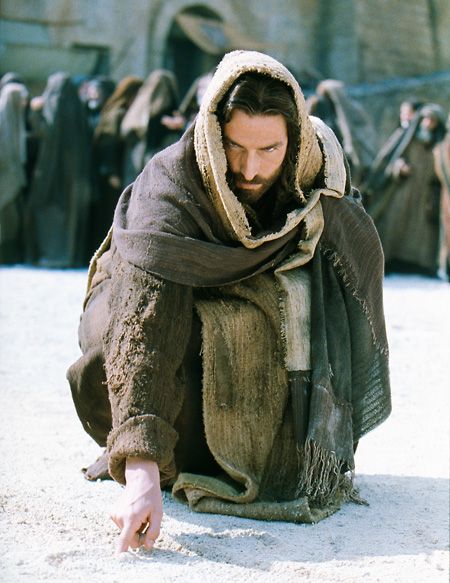




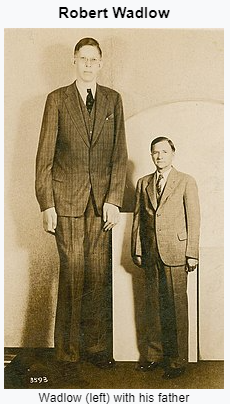

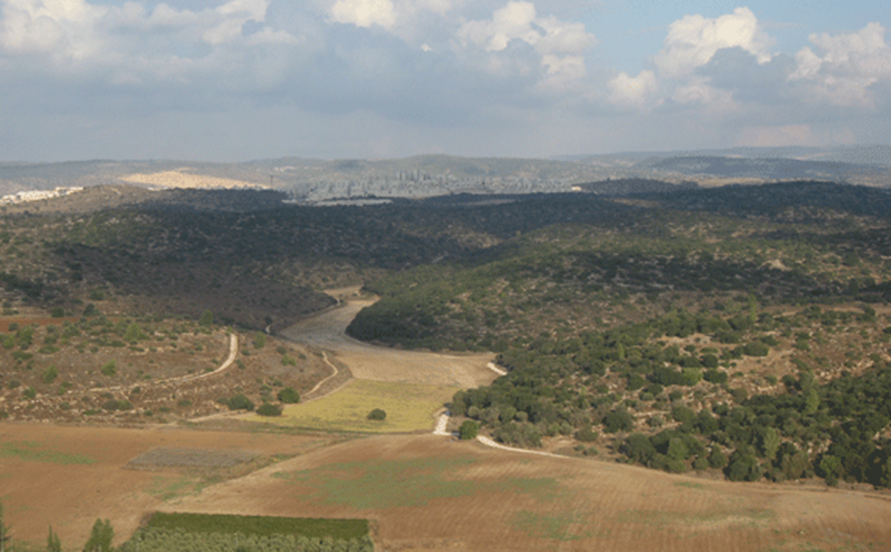
 Considering the Bible