My hope is that this series will offer my readers a chance to consider the names, characteristics and descriptions of our God in the Word.
The remaining Names of God in this series might be considered descriptors, or characteristics of the Lord. We have reviewed the three primary Names of God, along with nineteen compound Names of God in our previous posts. As we venture through these descriptors of our God, I hope we will recognize all the many characteristics of our God that we tend to take for granted.
The Word is truly rich with descriptions of the Living God, and this effort of searching in the Word was quite illuminating. He truly is the ultimate subject of the Word, and His revelation of self-descriptions, or the accolades offered Him by His priests, prophets, kings apostles and faithful truly is a blessing.
May the Name of the Lord be praised, and by thinking on His name, may you have a blessed day.
93
CREATOR OF THE HEAVENS
Isaiah 42:5 Thus says God, the LORD, who created the heavens and stretched them out, who spread out the earth and what comes from it, who gives breath to the people on it and spirit to those who walk in it:
This name of God is our last name for us to consider that includes the concept of creation. Earlier we have considered “Creator”, “Creator of Israel” and “Creator of the ends of the earth”.
With this name, we find we are hearkening back to the first concept, that of creating out of nothing. He is the Creator of the heavens, that which was described in the very first verse of Genesis.
The heavens. What most modern believers may think of as space, with all the galaxies, planets and stars flung into it. For the ancient Hebrews, their concept of the heavens may have been that of the firmament, the sky with the clouds. How they considered the sun and stars relative to the sky is an unknown for myself.
Nevertheless, God created all that is above us, an expanse that neither the Hebrew nor we can understand. It is not only physically above us, but it is greater than our imaginations, unfathomable in our understanding.
Yet He created it, a reflection of His eternality, His all mighty power, His unknowable wisdom and His abundant “over the top” provision for His people.
He is the Creator of the heavens, and they speak of His glory.
O LORD, our Lord, how majestic is your name in all the earth! You have set your glory above the heavens.
I would love to hear of your favorite name, characteristic or description of the Living God. Please leave me a comment, and I will include it in the list!
Thanks again for coming to visit. I hope you found something of interest in this post and would appreciate a comment, to begin a discussion. If you know someone this blog may bless (or challenge), send them a link, so they may join us in our discussion.
My hope is that this series will offer my readers a chance to consider the names, characteristics and descriptions of our God in the Word.
The remaining Names of God in this series might be considered descriptors, or characteristics of the Lord. We have reviewed the three primary Names of God, along with nineteen compound Names of God in our previous posts. As we venture through these descriptors of our God, I hope we will recognize all the many characteristics of our God that we tend to take for granted.
The Word is truly rich with descriptions of the Living God, and this effort of searching in the Word was quite illuminating. He truly is the ultimate subject of the Word, and His revelation of self-descriptions, or the accolades offered Him by His priests, prophets, kings apostles and faithful truly is a blessing.
May the Name of the Lord be praised, and by thinking on His name, may you have a blessed day.
91
CREATOR OF ISRAEL
Isaiah 43:15 I am the LORD, your Holy One, the Creator of Israel, your King.”
In our last post, we considered God as Creator. He who created out of nothing, or as the ancients used to say “ex nihilo”. Our passage this morning speaks of God as Creator, using the same Hebrew word as in Gen 1:1, but in a different sense.
God created Israel, the nation now in captivity in Babylon. He is reminding the people who have been dragged off into captivity that He is their Creator. The nation would not exist with His active work in the world.
Consider the patient work performed in the creation of the nation. The calling of Abraham, Isaac and Jacob, the expansion of this dysfunctional family, the rescue of Israel from Egypt though the plagues, the exodus through the Sinai of a thankless people, the giving of the law, the invasion and domination of the land of Canaan, the provisions of judges to provide leadership, the rejection of His authority in demanding a king, the calling and equipping of prophets to warn the nation, and finally, at this point in their history, the humbling of the nation by a cruel Babylon.
God created Israel through many processes and was calling on them to recall their past, in that He is their Creator.
Only a few lines later, Isaiah draws their attention the the current activities of God, in that He is doing a new thing. His creative powers, in that of the nation of Israel in not finished. Babylon will not have the final word. God is actively working and doing a new thing in the history of Israel.
He will make a road in the wilderness (v 19), a path back to the land they have been carried away from. Their story wasn’t over yet, and if truth be told, the Way they would be provided would be greater than all their hopes and wishes.
I would love to hear of your favorite name, characteristic or description of the Living God. Please leave me a comment, and I will include it in the list!
Thanks again for coming to visit. I hope you found something of interest in this post and would appreciate a comment, to begin a discussion. If you know someone this blog may bless (or challenge), send them a link, so they may join us in our discussion.
As many who have followed me for a bit, I have fallen into the Psalms, and I can’t get up! (As if I would want to.) The Psalms are a majestic collection of poetry, of heart felt human experiences that constantly challenge me in my own frail attempt to follow the true King. As many of the Psalms are written by David, my study on the Psalms has spurred me on to looking at the life of David, is the main contributor to this book, and to follow the victories and tragedies of the shepherd King of Israel.
Many times in the narrative, we will see the Lord Jesus, imperfectly, yet a reflection of His spirit in a man with weaknesses.
In chapter 19, we see King Saul working out his previous decision, that Saul would be “David’s enemy continually” (18:29b). Let’s see how that works out for the King.
1 Samuel 19:11-17
11 Saul sent messengers to David’s house to watch him, that he might kill him in the morning. But Michal, David’s wife, told him, “If you do not escape with your life tonight, tomorrow you will be killed.” 12 So Michal let David down through the window, and he fled away and escaped. 13 Michal took an image and laid it on the bed and put a pillow of goats’ hair at its head and covered it with the clothes. 14 And when Saul sent messengers to take David, she said, “He is sick.” 15 Then Saul sent the messengers to see David, saying, “Bring him up to me in the bed, that I may kill him.” 16 And when the messengers came in, behold, the image was in the bed, with the pillow of goats’ hair at its head. 17 Saul said to Michal, “Why have you deceived me thus and let my enemy go, so that he has escaped?” And Michal answered Saul, “He said to me, ‘Let me go. Why should I kill you?’”
The last passage Saul’s son Jonathon stuck his neck out for David. Now his daughter is lying to her father for David’s sake. Or was she?
As we read this passage and compare Jonathon’s statements with Michal’s statements, it seems she didn’t have the spiritual legs that Jonathon stood on. Notice that when Saul finally confronts her, she claims David threatened to kill her, and that she reluctantly let him go.
Give me a break! She want ed him to run, stating that he would be dean if he stuck around till morning. And after three trips of Saul’s messengers to David’s house, Michal had to face the king.
Sure father – I am still on your side. He threatened me, how could I keep him for you.
Remember back in verse 4, where Jonathon spoke well of David, spoke of David’s service for the king, and calling David “innocent blood”. This trait of loyalty and truth speaking didn’t seem to carry through the entire family. Michal seemed to be one who was concerned of her own skin, and if a little lie here and there would help, she was good for it!
One item that seemed insignificant on my first reading, but actually may bear on the passage more than I first considered, is the reference to Michal using a tᵊrāp̄îm, the Hebrew term for idol. Specifically, it seems this idol was used as a household shrine.
What was that doing in David’s house? How large was this idol? Michal used the idol to mimic the size of an adult!
So Michal had placed this idol in a bed, in an effort to deceive her father’s messengers, and then when she was found out, blamed David and his threatening ways.
Something just doesn’t ring true with this lady! Whose side is she on? I suppose the idol deception may have been an effort to give David time to run, but when her father finally shows up, she throws David under the bus, claiming she tried to keep him for Saul, (so why the delay and deception with the idol) and then saying he threatened her with death, but never alerted her father the king, with this threat against her life.
Like I said – Michal seems to have some commitment to David, but it surely is not a deep and strong, self sacrificing love for him. If I were to guess, Michal is a woman of the situation. A woman who will tailor her story to suit the situation, to save her skin.
Although she noticed the messengers on the first night as they watched David’s house, she did alert David to the danger, Michal didn’t follow through as I imagine Jonathon might, defending his friend.
Somewhat of a compromised character in my mind. Might this character weakness reflect her commitment to the God of Israel? Was it not Paul who spoke the truth, that who we worship is who we are transformed into?
18 And we all, with unveiled face, beholding the glory of the Lord, are being transformed into the same image from one degree of glory to another.
Let us worship the true God and not another!
Thanks again for coming to visit. I hope you found something of interest in this post and would appreciate a comment, to begin a discussion. If you know someone this blog may bless (or challenge), send them a link, so they may join us in our discussion.
Jesus in the Old Testament is a series of posts that will offer my readers a chance to consider pictures or shadows of Jesus in the Old Testament. As mentioned in the introduction to this series, some may be obvious, some may be not so obvious, and some may simply be a facet of the Lord those reading may not have considered previously.
I hope as we venture through this series, we will see the Lord in many wonderful pictures throughout the Old Testament.
SEEING JESUS IN
Abraham
Altar Builder
Genesis 12:7 So he built there an altar to the LORD, who had appeared to him. Genesis 12:8 And there he built an altar to the LORD Genesis 13:18 there he built an altar to the LORD. Genesis 22:9 Abraham built the altar there and laid the wood in order and bound Isaac his son and laid him on the altar, on top of the wood.
Hebrews 8:3 For every high priest is appointed to offer gifts and sacrifices; thus it is necessary for this priest also to have something to offer.
Early on in the Word, any place could be an altar, and Abraham in his travels built many altars. I often think of altars as places of quietness, calmness and peace. For those in the Old Testament, this might not be such an accurate picture, for the word altar, in the Old Testament can literally be translated as “a place of slaughter”.
I may have mentioned this in a previous blog, but my son took it upon himself to read through the Bible in a month, and in the reading, as he got through Leviticus, he made the following statement. Dang – those priest’s in the temple were more like butchers than religious priests today!
Sharp boy, that son of mine! He saw that the altar was a place of slaughter, blood and death. The slaughter of any animal has got to be a violent, possibly noisy endeavor, not to mention the gushing of blood, the experience of a life ending and the impact on the conscious of the one sacrificing.
The New Testament is no different, for it also refers to a place of slaughter. I am not convinced that the Altar was any less bloody during times of sacrifice, or that the practice was “sanitized” much from early times. To sacrifice an animal would be the forcing of one’s will upon a helpless victim, an animal with no choice.
Consider Jesus, who was not only the sacrifice, but the High Priest of the New Covenant. He officiated over His own sacrifice, and was the One who orchestrated the time, place and extent of His sacrifice.
He is the ultimate altar builder, and as such has eliminated the blood letting for His worshippers. There is no altar for the believer, no place to sacrifice an animal to appease God. This is an ultimate insult to consider this as being an acceptable approach to God. Our altar is Him, and our approach to the altar is to be in a state of humility, teachableness and with a thankful spirit.
Abraham was a shadow, but Jesus is the reality. Look to the Only Sacrifice offered up for your life!
Thanks again for coming to visit. I hope you found something of interest in this post and would appreciate a comment, to begin a discussion. If you know someone this blog may bless (or challenge), send them a link, so they may join us in our discussion.
My hope is that this series will offer my readers a chance to consider the names, characteristics and descriptions of our God in the Word.
The remaining Names of God in this series might be considered descriptors, or characteristics of the Lord. We have reviewed the three primary Names of God, along with nineteen compound Names of God in our previous posts. As we venture through these descriptors of our God, I hope we will recognize all the many characteristics of our God that we tend to take for granted.
The Word is truly rich with descriptions of the Living God, and this effort of searching in the Word was quite illuminating. He truly is the ultimate subject of the Word, and His revelation of self-descriptions, or the accolades offered Him by His priests, prophets, kings apostles and faithful truly is a blessing.
May the Name of the Lord be praised, and by thinking on His name, may you have a blessed day.
90
CREATOR
Romans 1:25 because they exchanged the truth about God for a lie and worshiped and served the creature rather than the Creator, who is blessed forever! Amen.
When we think of creating a piece of art, making a machine, or writing a poem, we think we are creating something, that may have never been in existence before. Well – that may be true in some instances, but we should stop short of thinking we are creating in the same manner as God created.
We “create” out of a plethora of materials.
If we are making a piece of art, whether a painting, sculpture or a book, then all the material and subjects we broach in the art is found in the originally created world. We are merely recreating, or rearranging already existing thoughts feelings and ideas.
Similarly with the making of a machine. Whether that machine is a tractor, or a computer, the original machine is made from ideas and truths available to the one searching specific processes or methods already established and ready to be found in the originally created world.
In the writing of a poem or story, we are taking truths or observations and communicating these truths or observations in a hopefully unique way.
But in all these human creations, we can not claim that we are creating in the same way as God created the world we live in. For when we speak of God creating, He creates out of nothing.
He did not have any one previous to him to provide guidance in creation, or methods of creating, or materials to create out of. He did not have any materials to manipulate in order to create something new. He had nothing to work with, and by a simple spoken word, emptiness, what many call space, was created.
Space was created. Time was created. Material was created.
In the beginning (time), God created the heavens (space) and the earth (materials).
We have been made, created in the image of God, and yet though we are broken, we do mimic God in our creative efforts. But there are limitations to our mimicking, for He has provided us not only the materials and time to create from, but the space to perform all our necessary work.
He has established all things. We are simply trying to understand His creation, and in a small way create systems or things that may be of benefit for those around us.
There is a massive difference between our creating and His creating, and due to that huge distinction, He is truly the only actual Creator.
May His name be praised.
I would love to hear of your favorite name, characteristic or description of the Living God. Please leave me a comment, and I will include it in the list!
Thanks again for coming to visit. I hope you found something of interest in this post and would appreciate a comment, to begin a discussion. If you know someone this blog may bless (or challenge), send them a link, so they may join us in our discussion.
My hope is that this series will offer my readers a chance to consider the names, characteristics and descriptions of our God in the Word.
The remaining Names of God in this series might be considered descriptors, or characteristics of the Lord. We have reviewed the three primary Names of God, along with nineteen compound Names of God in our previous posts. As we venture through these descriptors of our God, I hope we will recognize all the many characteristics of our God that we tend to take for granted.
The Word is truly rich with descriptions of the Living God, and this effort of searching in the Word was quite illuminating. He truly is the ultimate subject of the Word, and His revelation of self-descriptions, or the accolades offered Him by His priests, prophets, kings apostles and faithful truly is a blessing.
May the Name of the Lord be praised, and by thinking on His name, may you have a blessed day.
89
COVER OF YOUR PRESENCE
Psalm 31:20 In the cover of your presence you hide them from the plots of men; you store them in your shelter from the strife of tongues.
Decades ago, when I was courting my wife, we ended up in a little donut shop in my neighborhood, all alone with just the cashier behind the counter. It was a quiet area, and we were enjoying each others company (and a donut of course!) when it multiple groups of people entered the restaurant. Two young men, a couple on a date, some fellas from the bowling alley, three teenagers. It just seemed that the store was inundated with customers for no apparent reason.
After the crowds entered and we had finished our donut, we got up to leave and as we walked away, we both described a feeling of “apartness” or of being separate from “the masses”. It was a very identifiable experience that we both shared in, and though I am surely not implying those who entered the shop were of any malicious intent towards us, I think the experience is a parallel to David’s description of the Lord’s covering.
Other translations speak of “shelter of your presence” (NLT) or the “secret place of Your presence” (NKJV), even the “protection of Your presence” (CSB).
Make no mistake about our little experience. I am not claiming we were under any attack from anyone, but only that the experience of being separate, of experiencing being apart from others is my intent.
David speaks of this covering, of this protection as being God’s presence, which is a most audacious thing to say, for David must surely understand the presence of God is only in the Temple. Just as the believer may understand the presence of God may only be found in a church building.
David also brings this description to our attention due to the fact that he is under attack by the plots of men, and is the recipient of the strife of tongues. David was under attack, and yet he knew of God’s protection, of God’s active work in hiding him in plain sight.
It is a truly mysterious and glorious God that we serve. May we understand His many ways of working in our lives and be a thankful people.
I would love to hear of your favorite name, characteristic or description of the Living God. Please leave me a comment, and I will include it in the list!
Thanks again for coming to visit. I hope you found something of interest in this post and would appreciate a comment, to begin a discussion. If you know someone this blog may bless (or challenge), send them a link, so they may join us in our discussion.
As many who have followed me for a bit, I have fallen into the Psalms, and I can’t get up! (As if I would want to.) The Psalms are a majestic collection of poetry, of heart felt human experiences that constantly challenge me in my own frail attempt to follow the true King. As many of the Psalms are written by David, my study on the Psalms has spurred me on to looking at the life of David, is the main contributor to this book, and to follow the victories and tragedies of the shepherd King of Israel.
Many times in the narrative, we will see the Lord Jesus, imperfectly, yet a reflection of His spirit in a man with weaknesses.
In chapter 19, we see King Saul working out his previous decision, that Saul would be “David’s enemy continually” (18:29b). Let’s see how that works out for the King.
1 Samuel 19:8-10
8 And there was war again. And David went out and fought with the Philistines and struck them with a great blow, so that they fled before him. 9 Then a harmful spirit from the LORD came upon Saul, as he sat in his house with his spear in his hand. And David was playing the lyre. 10 And Saul sought to pin David to the wall with the spear, but he eluded Saul, so that he struck the spear into the wall. And David fled and escaped that night.
At the end of our previous portion of Scripture, the very last phrase of verse 7, the author tells us
… Jonathan brought David to Saul, and he was in his presence as before.
Jonathon went out on a limb in front of his father, the king of Israel, to secure David back into the royal circle.
We dwelt last time on the gentle boldness of Jonathon in his approach to his father, and seemingly found success in providing a safe environment for David to return too.
Yet, in all the history we have seen with Saul and David so far, the fact that David would return into an environment with king Saul is quite remarkable. The king had reneged on promises, lied to him, shamed him with marrying off his betrothed on the day of the wedding, and on top of all that, had made numerous attempts to kill the young man.
What does that say about David and Jonathon’s friendship? The bond between these two men was anchored in a trust. How David must have trusted Jonathon, in that he came back into this unstable and potentially deadly environment.
Our passage speaks of another relationship also. Jonathon and Saul. Father and son. King and crown prince. User and used.
Saul used his son’s bond with David to pull him back into the inner circle, and for a period, there seemed to be a détente, a co-existence between the failed king and the young one destined for greatness. Of course Saul took advantage of David’s skill in warfare, for it seemed that Saul was regularity at war, so David’s presence was most likely spotty when it came to being in the kings presence.
But time dragged on, David continued to grow in abilities and victories, and Saul brooded. In the midst of victories for his nation, Saul could not rejoice in the national growth and prosperity the victories promised. No – Saul was under the influence of a harmful spirit, a spirit from the Lord.
The term “harmful” may be translated as bad, or evil, wicked, disagreeable, even malignant. This spirit from the Lord was not of the Lord. In the midst of this spiritual influence, Saul lost all resistance, forgetting his words to Jonathon, and attacked David with a spear. Now, whether he threw the spear at David, or ran at David to pin him to the wall, it doesn’t seem to be clear. What is clear is that Saul was not to be trusted, Jonathon lost face, and David was on the run, away from the the palace for 20 years, returning as the rightful King. But now, David was on the run, a fugitive until Saul passes from this earth.
Although this passage speaks volumes about the actions of a man in power doing insane acts (and the possible reason in the background for these insane acts), it also speaks of trust, and the willingness to forgive.
Trust between friends.
Jonathon and David remained close to the very end, and Jonathon’s trust in his father’s words did not seem to tarnish the bond these men had. It seems David understood the concept of love covering a multitude of sins, and knew that forgiveness is required attitude if relationships are to continue. I suppose that is the more important lesson for myself tonight as I write this, that to have relationship is to be willing to forgive for the sake of the other.
Relationship cannot exist without forgiveness!
Trust between father and son.
Jonathon and Saul were father and son, nothing could erase that bond, and yet each time a promise was broken, each time a word was taken back, the thread of experiential relationship between the two of them became thinner and weaker. It seems that though Saul was king, he was “relating” only to a harmful spirit.
In closing, let me ask – Have you a grudge against a friend this day? Go to him and ask for forgiveness. It will do your heart good!
Mark 11:25 And whenever you stand praying, forgive, if you have anything against anyone, so that your Father also who is in heaven may forgive you your trespasses.”
How about if a brother has something against you, even without cause?
Matthew 5:23-24 So if you are offering your gift at the altar and there remember that your brother has something against you, leave your gift there before the altar and go. First be reconciled to your brother, and then come and offer your gift.
Relationship will be strengthened when your brother sees you care enough to ask for forgiveness without prompting!
Thanks again for coming to visit. I hope you found something of interest in this post and would appreciate a comment, to begin a discussion. If you know someone this blog may bless (or challenge), send them a link, so they may join us in our discussion.
Jesus in the Old Testament is a series of posts that will offer my readers a chance to consider pictures or shadows of Jesus in the Old Testament. As mentioned in the introduction to this series, some may be obvious, some may be not so obvious, and some may simply be a facet of the Lord those reading may not have considered previously.
I hope as we venture through this series, we will see the Lord in many wonderful pictures throughout the Old Testament.
SEEING JESUS IN
Abraham
Offspring Benefits
Genesis 12:7 Then the LORD appeared to Abram and said, “To your offspring I will give this land.” So he built there an altar to the LORD, who had appeared to him.
Hebrews 10:34 For you had compassion on those in prison, and you joyfully accepted the plundering of your property, since you knew that you yourselves had a better possession and an abiding one.
Abraham as an 75 year old old man left his home, his land and his family, based on the message God provided him, that is a command to leave his home, family and country, in order to make him a great nation, give him a great name, and make him a blessing to all.
In the initial promise, it may safely be assumed that Abraham would have children, but the initial communication from the Lord did not specifically define any land that they would possess. Yes, the Lord told him that He should go to the land He would show him, but not until Abraham had committed, leaving family and friends behind, did the Lord mention the land as a possession of his offspring.
Abraham was on the move without a specific promise of a land as a benefit for his offspring, as a possession for his seed. Not until they came into the land of Canaan, did the Lord provide the promise of the land for his children.
He had the promise of a benefit for his children. Turns out it took centuries for the promise to be fulfilled, but a promise is not dependent on time, for a promise given 2,000 years is as valid as a promise given yesterday. For the promise is dependent on the promise maker, and our promise maker is faithful.
As Abraham, Jesus was provided promises of benefit for His offspring, a possession that is an abiding possession, based in the One who led the way. It is not a piece of real estate, but a real peace with God, and of God, a state of love and joy that far exceeds any benefit Abraham’s offspring was promised.
God the Father made promises to our “Abraham”, and by His faithful acts, and through the faithfulness of God, our possession is secure, and is waiting for us to enter into, to enjoy and to walk in.
May we find greater and greater joy in realizing the faithfulness of our God and His many mercies
Thanks again for coming to visit. I hope you found something of interest in this post and would appreciate a comment, to begin a discussion. If you know someone this blog may bless (or challenge), send them a link, so they may join us in our discussion.
My hope is that this series will offer my readers a chance to consider the names, characteristics and descriptions of our God in the Word.
The remaining Names of God in this series might be considered descriptors, or characteristics of the Lord. We have reviewed the three primary Names of God, along with nineteen compound Names of God in our previous posts. As we venture through these descriptors of our God, I hope we will recognize all the many characteristics of our God that we tend to take for granted.
The Word is truly rich with descriptions of the Living God, and this effort of searching in the Word was quite illuminating. He truly is the ultimate subject of the Word, and His revelation of self-descriptions, or the accolades offered Him by His priests, prophets, kings apostles and faithful truly is a blessing.
May the Name of the Lord be praised, and by thinking on His name, may you have a blessed day.
88
COVENANT FOR THE PEOPLE
Isaiah 42:6 “I am the LORD; I have called you in righteousness; I will take you by the hand and keep you; I will give you as a covenant for the people, a light for the nations,
Many times, in our self centered viewing of the Word, we do not see the Lord Jesus when God speaks of His Servant, as we see in this passage. Many may think this passage is referring to the nation of Israel, and reconfirming their mission to the gentiles, their calling.
The message was relevant for the nation at the time, for they were going into difficult times and needed to be reassured of their status before God. This is surely a blessing that Isaiah provides for the nation, yet if we consider the Christ centered message of the Word, it is obvious that the Lord is referring to Jesus in this passage.
Other passages refer to Him as a light to the nations, and as a Righteous Branch, or a Righteous Servant, but this post is going to consider Him as “a covenant for the people”.
To be a covenant is to be a pledge, or an alliance, even a treaty. Jesus has been given us as a treaty, a peace offering, a unilateral pledge of peace, if we will simply understand and trust Him.
I would like to emphasize that the Lord gave Jesus as a peace treaty, not as a negotiation or as a threatening offering, but that He gave Jesus. A gift.
Secondly, who did the Lord give Jesus, the covenant, the treaty to? The people. The people, in this verse are not active, but are the recipients of the peace treaty.
A gift to the people. A treaty, or an alliance offered to the people, without stipulation or caveat.
This verse is a clear expression of grace toward the people, toward those who were in covenant (the Jewish nation) and to those outside of the covenant – the Gentile nations. You may want to restrict “the people” in this verse to only those under the Mosaic covenant, and you have the freedom to do so, but as we enter the New Testament, we know that the covenant is for “the people”, for those who have blood in their veins and breath in their lungs.
And with this breath, we can praise the Lord for His tremendous Gift of Grace in Jesus!
Let everything that has breath praise the LORD!
I would love to hear of your favorite name, characteristic or description of the Living God. Please leave me a comment, and I will include it in the list!
Thanks again for coming to visit. I hope you found something of interest in this post and would appreciate a comment, to begin a discussion. If you know someone this blog may bless (or challenge), send them a link, so they may join us in our discussion.
My hope is that this series will offer my readers a chance to consider the names, characteristics and descriptions of our God in the Word.
The remaining Names of God in this series might be considered descriptors, or characteristics of the Lord. We have reviewed the three primary Names of God, along with nineteen compound Names of God in our previous posts. As we venture through these descriptors of our God, I hope we will recognize all the many characteristics of our God that we tend to take for granted.
The Word is truly rich with descriptions of the Living God, and this effort of searching in the Word was quite illuminating. He truly is the ultimate subject of the Word, and His revelation of self-descriptions, or the accolades offered Him by His priests, prophets, kings apostles and faithful truly is a blessing.
May the Name of the Lord be praised, and by thinking on His name, may you have a blessed day.
87
CORNERSTONE
Matthew 21:42 Jesus said to them, “Have you never read in the Scriptures: “‘The stone that the builders rejected has become the cornerstone; this was the Lord’s doing, and it is marvelous in our eyes’?
Jesus is referring to Psalm 118:22 when He speaks of the cornerstone being rejected by the builders.
This is a stinging prophecy Jesus is applying to the first century Jewish leadership. Although He speaks of Psalm 118, He also could have brought Isaiah 28:16 to the attention of the leadership.
Isaiah 28:16 therefore thus says the Lord GOD, “Behold, I am the one who has laid as a foundation in Zion, a stone, a tested stone, a precious cornerstone, of a sure foundation: ‘Whoever believes will not be in haste.’
Of course this passage doesn’t speak of rejection. May I suggest, this is the emphasis of Jesus using Psalm 118 when addressing those who were seeking His death.
Not only was it their responsibility not recognizing the Messiah, and that in rejecting the chief cornerstone, they rejected the very stone the building relies on, but Jesus also declares the Lord is in the midst of this.
God will use the wrath of man, the rejection of these leaders, to do a marvelous thing, a supernatural salvation, in front of their very eyes.
He is the cornerstone, the key to the church, the first of all stones to be laid, the sure foundation and the only One to provide the salvation promised.
As Psalm 118:24, the very next verse in the Great Hallel, states
This is the day that the LORD has made; let us rejoice and be glad in it.
The day the Lord takes the rejected stone, and makes Him the cornerstone – this is the day that we are to rejoice in.
The day of salvation, of His work on the cross and His resurrection from the dead.
The Lord’s doing is truly marvelous! Let us rejoice and be glad in it!
I would love to hear of your favorite name, characteristic or description of the Living God. Please leave me a comment, and I will include it in the list!
Thanks again for coming to visit. I hope you found something of interest in this post and would appreciate a comment, to begin a discussion. If you know someone this blog may bless (or challenge), send them a link, so they may join us in our discussion.
As many who have followed me for a bit, I have fallen into the Psalms, and I can’t get up! (As if I would want to.) The Psalms are a majestic collection of poetry, of heart felt human experiences that constantly challenge me in my own frail attempt to follow the true King. As many of the Psalms are written by David, my study on the Psalms has spurred me on to looking at the life of David, is the main contributor to this book, and to follow the victories and tragedies of the shepherd King of Israel.
Many times in the narrative, we will see the Lord Jesus, imperfectly, yet a reflection of His spirit in a man with weaknesses.
In chapter 19, we see King Saul working out his previous decision, that Saul would be “David’s enemy continually” (18:29b). Let’s see how that works out for the King.
1 Samuel 19:1-7 1 And Saul spoke to Jonathan his son and to all his servants, that they should kill David. But Jonathan, Saul’s son, delighted much in David. 2 And Jonathan told David, “Saul my father seeks to kill you. Therefore be on your guard in the morning. Stay in a secret place and hide yourself. 3 And I will go out and stand beside my father in the field where you are, and I will speak to my father about you. And if I learn anything I will tell you.” 4 And Jonathan spoke well of David to Saul his father and said to him, “Let not the king sin against his servant David, because he has not sinned against you, and because his deeds have brought good to you. 5 For he took his life in his hand and he struck down the Philistine, and the LORD worked a great salvation for all Israel. You saw it, and rejoiced. Why then will you sin against innocent blood by killing David without cause?” 6 And Saul listened to the voice of Jonathan. Saul swore, “As the LORD lives, he shall not be put to death.” 7 And Jonathan called David, and Jonathan reported to him all these things. And Jonathan brought David to Saul, and he was in his presence as before.
It is somewhat incredible that the crown prince would fight to have David come back in his inner circle. We must remember that David seemed to be destined for the throne, at least in the eyes of the populace. They loved him. Couldn’t say enough about him!
Saul saw the writing on the wall, especially since Samuel had told him that his time on the throne was over.
Yet Jonathon did not hold onto his opportunity for a regal life, but gave up his standing in order for David to ascend. Whether Jonathon understood all the machinations that were working in the background or not, he sought the best for his friend, even to the point of entering a dangerous area with his father.
It was common knowledge that Saul had it in for David. Everyone in the royal circle knew it. By the time Saul had left the scene, he had sought to kill David, by his own hand, by supreme command, or by using those around him, like a daughter, to trap him, a total of 12 times. Twelve times my friend!
Check out the list of verses below, to get a handle on the frustration Saul must have felt and the protection God provided. Truly amazing!
1 Sam. 18:11
1 Sam. 18:17
1 Sam. 18:21
1 Sam. 19:1
1 Sam. 19:10
1 Sam. 19:11
1 Sam. 19:15
1 Sam. 19:20
1 Sam. 19:21
1 Sam. 19:22
1 Sam. 23:15
1 Sam. 26:2
By the time we get to this instance, where Saul is sending out his servants to kill David, Saul’s intent and heart towards David is clearly revealed. Jonathon must surely have recognized this, and confronts his father with the argument that he is sinning by seeking David’s life.
How bold for a young man to approach his father, the king of Israel no less, a man who has proven himself to be somewhat unbalanced, and to claim the king is in sin!
And yet the tenor of Jonathon’s approach seems to be tempered with Saul’s potential sins, with Jonathon not claiming a superior, judging attitude, but with a respect that surely must have made it easier for the king to accept. He didn’t shy away from the potential sin his father was going to commit, but logically argued that David had only done good for the kingdom, and that he risked his life for Saul.
No matter how Saul was to react, and we know he relented at this time, Jonathon proved himself to be a true ally to his friend David. He risked his standing with his father, and given Saul’s previous outbursts, opened himself up to anything from a tongue lashing to a physical confrontation.
Let’s remember that, not long before, Saul would have sacrificed Jonathon due to him eating some honey? How fragile a relationship they must have experienced. In the midst of a fragile relationship, Jonathon exercised a calmness, might I describe it as gentleness, and a fearless boldness defending his friend and confronting his father, that should impress us.
Jonathon was truly an image of the Savior in this instance. May we also carry a bold gentleness for those we need to confront.
Thanks again for coming to visit. I hope you found something of interest in this post and would appreciate a comment, to begin a discussion. If you know someone this blog may bless (or challenge), send them a link, so they may join us in our discussion.
Jesus in the Old Testament is a series of posts that will offer my readers a chance to consider pictures or shadows of Jesus in the Old Testament. As mentioned in the introduction to this series, some may be obvious, some may be not so obvious, and some may simply be a facet of the Lord those reading may not have considered previously.
I hope as we venture through this series, we will see the Lord in many wonderful pictures throughout the Old Testament.
SEEING JESUS IN
Abraham
Foreigner
Genesis 23:4 “I am a sojourner and foreigner among you; give me property among you for a burying place, that I may bury my dead out of my sight.”
John 1:11 He came to his own, and his own people did not receive him.
In our last post on Abraham we considered his accepted status as a a sojourner, or a tempory inhabitant of the land.
In this post lest us consider Abraham as a foreigner. One who is not like those he lives amongst. Someone who is different than the general public, than the masses.
This surely was Abrahams condition, being a monotheist in a land of polytheism, a stranger wandering about. It may have seemed to those he rubbed shoulders with that he may be running from something, or trying to hide from something. Being a foreigner, brings a suspicious eye from the populace.
He was so different!
This also is so true of our Savior, for though he arrived amongst those of His own, He was looked upon with suspicious eyes, seeing that He was different, so different that the average Israelite. As he revealed who He was for those who would accept it, His differences, when compared with the common Joe only increased!
Both Abraham and Jesus were foreigners amongst their neighbors, but how much more for Jesus!
Upon arriving on this globe, Jesus also lived a life of a temporary inhabitant, though He possessed all things, and would eclipse all authorities and powers through His ministry and sacrifice.
He has established a new nation. Don’t be a foreigner!
Thanks again for coming to visit. I hope you found something of interest in this post and would appreciate a comment, to begin a discussion. If you know someone this blog may bless (or challenge), send them a link, so they may join us in our discussion.
My hope is that this series will offer my readers a chance to consider the names, characteristics and descriptions of our God in the Word.
The remaining Names of God in this series might be considered descriptors, or characteristics of the Lord. We have reviewed the three primary Names of God, along with nineteen compound Names of God in our previous posts. As we venture through these descriptors of our God, I hope we will recognize all the many characteristics of our God that we tend to take for granted.
The Word is truly rich with descriptions of the Living God, and this effort of searching in the Word was quite illuminating. He truly is the ultimate subject of the Word, and His revelation of self-descriptions, or the accolades offered Him by His priests, prophets, kings apostles and faithful truly is a blessing.
May the Name of the Lord be praised, and by thinking on His name, may you have a blessed day.
86
CONSUMING FIRE
Deuteronomy 4:24 For the LORD your God is a consuming fire, a jealous God.
A consuming fire. Moses wrote this by inspiration in relation to the topic of idolatry in the life of the faithful Israelite. Moses recounts to the faithful, in verse 15, that the nation “saw no form” when God spoke to them at Horeb.
There was no reason to resort to idolatry, for they had no form to duplicate. Of course they had the influence of their national neighbors, and of course a darkened heart that would expose itself as they sought to obey the law. These times of idolatry were inevitable without the faith that God was looking for.
Out of an idolatrous life, God would appear to be the consuming fire Moses warns them of.
The author of Hebrews resorts to this phrase, describing our God in relation to our refusing to hear Him who speaks (Hebrews 12:25).
In both of these verses, for the faithful Israelite and for the faithful believer, God is described as a consuming fire. Once in relation to idolatry, and once in relation to refusing to hear Him. Might I suggest that idolatry, evil as it is in many forms, has one effect on the believer. A decision to elevate one authority over another.
In this context, when a believer falls into idolatry, he is considering that which he worships (the idol) to be more authoritative than God Himself.
This is a logical thought toward idolatry.
The fuller and more powerful thought regarding idolatry comes down to one thing.
Who ya gonna love?
Who will you choose to love? In the culture I live in, 21st century America, there are multitudes of idols seeking my attention. I would hope my reader would agree that this culture is no friend to the sole worship of our God.
It is a battle of the mind to decide to worship Him. This is the warfare we sometimes do not recognize being in the midst of. Let us remember that our allegiance, our loyalty, our attention and our devotion is to be directed to the Lord Himself.
It is also important to recognize this does not demand we generate a warm fuzzy feeling all the time, for even when we are not “feeling it”, to express our love and gratitude to Him, and to act in obedience to Him because we want to no matter the feelings – that my friend is a very real expression of rejecting idolatry.
Therefore let us be grateful for receiving a kingdom that cannot be shaken, and thus let us offer to God acceptable worship, with reverence and awe, for our God is a consuming fire.
I would love to hear of your favorite name, characteristic or description of the Living God. Please leave me a comment, and I will include it in the list!
Thanks again for coming to visit. I hope you found something of interest in this post and would appreciate a comment, to begin a discussion. If you know someone this blog may bless (or challenge), send them a link, so they may join us in our discussion.
My hope is that this series will offer my readers a chance to consider the names, characteristics and descriptions of our God in the Word.
The remaining Names of God in this series might be considered descriptors, or characteristics of the Lord. We have reviewed the three primary Names of God, along with nineteen compound Names of God in our previous posts. As we venture through these descriptors of our God, I hope we will recognize all the many characteristics of our God that we tend to take for granted.
The Word is truly rich with descriptions of the Living God, and this effort of searching in the Word was quite illuminating. He truly is the ultimate subject of the Word, and His revelation of self-descriptions, or the accolades offered Him by His priests, prophets, kings apostles and faithful truly is a blessing.
May the Name of the Lord be praised, and by thinking on His name, may you have a blessed day.
85
CONSOLATION OF ISRAEL
Luke 2:25 Now there was a man in Jerusalem, whose name was Simeon, and this man was righteous and devout, waiting for the consolation of Israel, and the Holy Spirit was upon him.
The Consolation of Israel.
Consider Simeon. He was a righteous and devout man, and my assumption has always been that he was a priest, but when I read the passage above there is no indication he was of the priestly line.
He was, I suppose, a simple man who followed the Lord, and was given an opportunity to see his salvation, to hold his salvation, and to speak of his salvation’s mission to the nation of Israel and the gentiles.
But let us not forget that the Gentiles Simeon spoke of included the very people who were oppressing the people of Israel. Simeon’s waiting for Jesus, the Consolation of Israel, was in the midst of living under oppression. And yet Simeon had the foresight to describe Jesus, the Consolation of Israel, as the One would be a light of revelation to the oppressors, those gentiles that dominated the people of God.
Even before Jesus could speak, His life was described by Simeon as the One who would provide for His enemies a light for the Gentiles.
I can’t help but think that Simeon had recently, by the providence of God, read from the scroll of Isaiah, where the Lord speaks of the Servant of the Lord, our Messiah.
Isaiah 49:6 he says: “It is too light a thing that you should be my servant to raise up the tribes of Jacob and to bring back the preserved of Israel; I will make you as a light for the nations, that my salvation may reach to the end of the earth.”
Simeon saw the writing on the wall, and though the physical nation of Israel was under oppression, a new nation would erupt due to the light extending to the nations, and that salvation would reach the ends of the earth.
For God had much bigger dreams for His creation than many had considered, and for that we should be eternally grateful.
We have a Consolation that provides light to those who oppress, to those who are enemies. Are we mimicking the Great Consolation?
I would love to hear of your favorite name, characteristic or description of the Living God. Please leave me a comment, and I will include it in the list!
Thanks again for coming to visit. I hope you found something of interest in this post and would appreciate a comment, to begin a discussion. If you know someone this blog may bless (or challenge), send them a link, so they may join us in our discussion.
As many who have followed me for a bit, I have fallen into the Psalms, and I can’t get up! (As if I would want to.) The Psalms are a majestic collection of poetry, of heart felt human experiences that constantly challenge me in my own frail attempt to follow the true King. As many of the Psalms are written by David, my study on the Psalms has spurred me on to looking at the life of David, is the main contributor to this book, and to follow the victories and tragedies of the shepherd King of Israel.
Many times in the narrative, we will see the Lord Jesus, imperfectly, yet a reflection of His spirit in a man with weaknesses.
1 Samuel 18:30
30 Then the commanders of the Philistines came out to battle, and as often as they came out David had more success than all the servants of Saul, so that his name was highly esteemed.
Let’s remember what has just occurred in the life of David. A madman named king Saul demanded 100 foreskins of the Philistines to secure the hand of the royal princess Michal, that would bring David into the royal family through marriage.
What kind of dowry is that? This is the legacy of the princess Michal, that her worth in front of her father was that of the death of 100 Philistines, and then the mutilation of those men, shaming them in their death.
Out of this exercise of death and mutilation, David exceeds the request and brings 200 foreskins back to king Saul, doubling the request. (Michal must have felt such sensitive love towards her future husband!).
Yet out of this exercise of senseless death, the unintended(?) consequence would be the raising up of the Philistine army, responding to such a flagrant display of shaming, mutilation and death. So here come the battles with the enemy, all because of a madman’s desire to take David out of the picture.
Yet this must have pleased Saul, at least initially, since each battle with any enemy, offered the opportunity for David to breathe his last. One stray arrow, one swipe of a sword, and Saul’s troubles would all vanish, or so he thought. How foolish!
As the battles wore on, David’s reputation grew and Saul’s frustration intensified.
Young’s Literal Translation actually translates the last clause of this verse as
…his name is very precious.
Other translations speak of David’s renown, or his increasing notoriety, of his fame increasing, and his name being held in high esteem, but this may not be limited to only the nation of Israel, over whom he would eventually rule. I imagine even his enemies, the Philistines recognized his military prowess.
Granted, the Philistines surely did not consider his name precious, for he continued to win battle after battle against them. But for the nation of Israel, who have only king Saul to compare with as king material, David must have seemed like a ray of hope in a dark dark time.
With all this attention being focused on David, Saul must have been having fits. Not only was the king experiencing envy over David’s success, verse 29 of this chapter spoke of Saul’s fear increasing. He was even more afraid of David.
What is the result? Saul became David’s enemy continually. No let up, no reprieve, no allowance. Saul was set on destroying David.
Does that remind you of One, who is Precious in our sight, and yet had enemies committed to His destruction, without cause and without reason. He seeks our best and yet there are those who rail against Him. When they rail, remember, they are captive to the spirit of Saul, helpless in their rage and fear.
Let us be more like the Greater David, seeking their best in spite of their fear and envy. Maybe even love our enemies – What a novel idea!
Thanks again for coming to visit. I hope you found something of interest in this post and would appreciate a comment, to begin a discussion. If you know someone this blog may bless (or challenge), send them a link, so they may join us in our discussion.
Jesus in the Old Testament is a series of posts that will offer my readers a chance to consider pictures or shadows of Jesus in the Old Testament. As mentioned in the introduction to this series, some may be obvious, some may be not so obvious, and some may simply be a facet of the Lord those reading may not have considered previously.
I hope as we venture through this series, we will see the Lord in many wonderful pictures throughout the Old Testament.
SEEING JESUS IN
Abraham
Sojourner
Genesis 23:4 “I am a sojourner and foreigner among you; give me property among you for a burying place, that I may bury my dead out of my sight.”
Matthew 8:20 And Jesus said to him, “Foxes have holes, and birds of the air have nests, but the Son of Man has nowhere to lay his head.”
When Abraham was called out of his native land, he immediately became a sojourner, a temporary inhabitant. As he ventured through the land that would eventually provide his inhabitants nationhood, Abraham considered himself, even at the end of his travels, to be a “newcomer” in the area, one who did not exercise any rights over the land as yet. The promises were sure, but Abraham lived as having no rights.
Upon arriving on this globe, Jesus also lived a life of a temporary inhabitant, though He possessed all things, and would eclipse all authorities and powers through His ministry and sacrifice.
He was a temporary inhabitant, but now the Eternal King! May His name be praised!
Thanks again for coming to visit. I hope you found something of interest in this post and would appreciate a comment, to begin a discussion. If you know someone this blog may bless (or challenge), send them a link, so they may join us in our discussion.
My hope is that this series will offer my readers a chance to consider the names, characteristics and descriptions of our God in the Word.
The remaining Names of God in this series might be considered descriptors, or characteristics of the Lord. We have reviewed the three primary Names of God, along with nineteen compound Names of God in our previous posts. As we venture through these descriptors of our God, I hope we will recognize all the many characteristics of our God that we tend to take for granted.
The Word is truly rich with descriptions of the Living God, and this effort of searching in the Word was quite illuminating. He truly is the ultimate subject of the Word, and His revelation of self-descriptions, or the accolades offered Him by His priests, prophets, kings apostles and faithful truly is a blessing.
May the Name of the Lord be praised, and by thinking on His name, may you have a blessed day.
84
COMMANDER OF THE ARMY OF THE LORD
Joshua 5:14 And he said, “No; but I am the commander of the army of the LORD. Now I have come.” And Joshua fell on his face to the earth and worshiped and said to him, “What does my lord say to his servant?”
Moses assistant became a great leader, leading the infant nation into many battles, finding victory after victory, until he had secured the extent of the national boundaries for the fledgling country. A truly amazing man, but in our verse here, we find one of Joshua’s greatest character reveals.
He was a mighty general, a terror to those who opposed him, because of his relation to the True Commander of the army of the Lord. Joshua had approached this unknown man, and immediately took to determine his stance before the nation of Israel.
Are you for us, or for our adversaries?
The theophany’s answer was amazing. He did not answer Joshua’s direct question, but described Himself as the Commander of the Lord’s army. He would not align Himself simply with either the nation of Israel or their adversaries.
Yes – Israel was the chosen nation to enter the promised land, and yes, God’s will would be to provide success to the armies of the Israelites as they conquered the land.
But here in this verse, the Lord describes Himself, not as the commander of the armies of the nation of Israel, or of any other nation, be they friend or foe, but of the otherworldly forces He led. He is not some national god that is competing with some other national god, warring and fighting to gain prominence.
He is the True God, over all and will not be relegated to a lower position, simply standing by to support the goals of a portion of His creation, against another portion of His creation. How ludicrous to think that of Him.
This concept, that the Lord is above our national interests, and that it up to us to decide to follow Him, and not for Him to align with our current desires, is repeated over and over again throughout the Old and New Testament.
The first time this idea became very clear to me was in Exodus 23:20-22. See The Lord’s Enemy for some additional thoughts on this topic
No matter, when we come to the Lord, we are to consider His will, and not how He is to conform to our wishes or goals. Joshua immediately took the correction, and we would be wise to follow his example.
After all, centuries later, we can hear the Master telling a woman at the well, that He is not a Messiah of the Jews only but of the entire world. She also sought to claim God as her national god, or at least questioned the truth, and Jesus would have nothing of it. He clearly described salvation as not being only for the nation of Israel, but for all who worship Him in spirit and truth.
He is the Commander of the Lord’s Army!
I would love to hear of your favorite name, characteristic or description of the Living God. Please leave me a comment, and I will include it in the list!
Thanks again for coming to visit. I hope you found something of interest in this post and would appreciate a comment, to begin a discussion. If you know someone this blog may bless (or challenge), send them a link, so they may join us in our discussion.
My hope is that this series will offer my readers a chance to consider the names, characteristics and descriptions of our God in the Word.
The remaining Names of God in this series might be considered descriptors, or characteristics of the Lord. We have reviewed the three primary Names of God, along with nineteen compound Names of God in our previous posts. As we venture through these descriptors of our God, I hope we will recognize all the many characteristics of our God that we tend to take for granted.
The Word is truly rich with descriptions of the Living God, and this effort of searching in the Word was quite illuminating. He truly is the ultimate subject of the Word, and His revelation of self-descriptions, or the accolades offered Him by His priests, prophets, kings apostles and faithful truly is a blessing.
May the Name of the Lord be praised, and by thinking on His name, may you have a blessed day.
83
CLUSTER OF HENNA BLOSSOMS
Song of Songs 1:14 My beloved is to me a cluster of henna blossoms in the vineyards of Engedi.
In the Song of Songs, Solomon writes of the passion between a farm girl and the mighty King of Israel. Often the love between the two is described in words of beauty and grace, speaking of their unrelenting desire for each other.
In this verse, the farm girl is describing her love as a “cluster of henna blossoms”. At first glance, I thought this may describe a beautiful flower, a flower that provided a scent that was irresistible, a flower that was favored above all other flowers.
All of that may be true, but when I did a bit of research I found the Hebrew word translated as henna blossoms is כֹּפֶרkôpher, ko’-fer, and is primarily describing a cover, and by extension describes a redemption price, a ransom, even a sum of money.
Early in the Old Testament, this term was used to describe the pitch that covered the ark.
Genesis 6:14 Make yourself an ark of gopher wood. Make rooms in the ark, and cover it inside and out with pitch.
In our verse today, the farm girl refers to the King as her redemption, the ransom she needs for her life, her protection from danger and as a covering to keep her safe.
So much more than simply a favored flower, but the very protection only the King could provide her, for she speaks of the Kings redemption as for her, that is .. to me He is a cluster of henna blossoms.
This is her estimation of her lover. All the world might think something else of the King, but she knew He was her hope and life.
She represents the ones who have trusted the Messiah for their hope and life. May we constantly be of the same desire as this lowly farm girl.
I would love to hear of your favorite name, characteristic or description of the Living God. Please leave me a comment, and I will include it in the list!
Thanks again for coming to visit. I hope you found something of interest in this post and would appreciate a comment, to begin a discussion. If you know someone this blog may bless (or challenge), send them a link, so they may join us in our discussion.
As many who have followed me for a bit, I have fallen into the Psalms, and I can’t get up! (As if I would want to.) The Psalms are a majestic collection of poetry, of heart felt human experiences that constantly challenge me in my own frail attempt to follow the true King. As many of the Psalms are written by David, my study on the Psalms has spurred me on to looking at the life of David, is the main contributor to this book, and to follow the victories and tragedies of the shepherd King of Israel.
Many times in the narrative, we will see the Lord Jesus, imperfectly, yet a reflection of His spirit in a man with weaknesses.
1 Samuel 18:20-29
20 Now Saul’s daughter Michal loved David. And they told Saul, and the thing pleased him. 21 Saul thought, “Let me give her to him, that she may be a snare for him and that the hand of the Philistines may be against him.” Therefore Saul said to David a second time, “You shall now be my son-in-law.” 22 And Saul commanded his servants, “Speak to David in private and say, ‘Behold, the king has delight in you, and all his servants love you. Now then become the king’s son-in-law.” 23 And Saul’s servants spoke those words in the ears of David. And David said, “Does it seem to you a little thing to become the king’s son-in-law, since I am a poor man and have no reputation?” 24 And the servants of Saul told him, “Thus and so did David speak.” 25 Then Saul said, “Thus shall you say to David, ‘The king desires no bride-price except a hundred foreskins of the Philistines, that he may be avenged of the king’s enemies.’” Now Saul thought to make David fall by the hand of the Philistines. 26 And when his servants told David these words, it pleased David well to be the king’s son-in-law. Before the time had expired, 27 David arose and went, along with his men, and killed two hundred of the Philistines. And David brought their foreskins, which were given in full number to the king, that he might become the king’s son-in-law. And Saul gave him his daughter Michal for a wife. 28 But when Saul saw and knew that the LORD was with David, and that Michal, Saul’s daughter, loved him, 29 Saul was even more afraid of David. So Saul was David’s enemy continually.
Ok, so last we met, we saw King Saul invite David into his royal family via marriage to his elder daughter. Of course, David was to be granted this priviledge due to his taking on Goliath and defeating him, but Saul forgot about the gift’s he promised and negotiated another agreement with David for the hand of Merab, his elder daughter.
But lo and behold, on (or very near) the day of the wedding, Good ol’ King Saul took this benefit away from David, bringing shame upon his name and confusion to his heart. How could David understand what was going on? The king was surely mad, and by that I mean both mad (angry) and mad (insane).
With our passage this morning, we are going to experience a bit of deja vu, in that Saul and his henchmen take advantage of his daughters feelings to put David in the path of certain death.
Saul’s daughter Michal was in love with David, and with every bit of news that crosses the kings desk, Saul seeks the good of his daughter. No that is incorrect!! He seeks how he may take advantage of a situation for his own advancement, and this time is no different.
Let’s offer David another opportunity to join the royal family, and in the offer, provide a situation that may eliminate Saul’s greatest threat. The previous offer, for Merab, was to fight the Lord’s battles for Saul. Saul wanted to have control, provide direction to David, get in the mix, interfere and potentially direct David into dangerous situations, raising the likelihood of death in battle.
What is truly amazing is that David retains his humility through this emotional roller coaster ride, again referring to himself as not worthy of entering the royal family. He considered himself a “poor man” having “no reputation”.
What was David thinking when the king’s servants spoke of Saul’s love for David, and of all his servants loving him? The king had just recently thrown two spears at David, and shamed him in front of the nation by reneging on the marriage to Merab?
Whatever David thought, the offer was provided to him. The price of Micah’s hand for marriage? One hundred foreskins of the Philistines.
This was an attainable, specific, measurable goal for David, so he set out to complete his side of the bargain and “force” king Saul’s hand in providing Micah as his bride. And to make a point, good old David, when asked to walk a mile, walked two miles. He brought back two hundred foreskins, which meant two hundred Philistines had met their maker.
Saul got what he said he wanted, yet his frustration level must have been boiling over. Of course the Phillistines weren’t the problem! The Philistines were the solution, but they did not come to Saul’s request, and in loosing two hundred soldiers, only elevated David in stature, causing Saul greater fear of his dominance.
And now, he had two of his children committed to the enemy. It was bad enough for Saul when Jonathon had shown allegiance to David, but now it appeared that his daughter was also seeing the benefit of being associated with a believer in the Lord, a man who was led of the Spirit, and of a humble heart.
So it is with the kingdom, for as we exercise a humbleness, and desire to love our enemies, even after two spear throws, and a show of disgrace, the kingdom will expand, one by one.
Or the enemy will only slip into greater darkness, with more bile rising in his throat, and a commitment to fighting the believer! So it was with Saul, and he continually set himself as David’s enemy, even as his father-in-law.
Truly, this passage speaks of the division of family due to deeper allegiances that are offered, deeper even that blood. Micah made the wise choice, as did her brother Jonathon. They followed David.
Centuries later, Jesus, the Greater David, described this realignment of family in the following words.
Matthew 12:48-50
But he replied to the man who told him, “Who is my mother, and who are my brothers?” And stretching out his hand toward his disciples, he said, “Here are my mother and my brothers! For whoever does the will of my Father in heaven is my brother and sister and mother.”
Who is your sister? Who is your brother? It all depends on who your Father is!
Thanks again for coming to visit. I hope you found something of interest in this post and would appreciate a comment, to begin a discussion. If you know someone this blog may bless (or challenge), send them a link, so they may join us in our discussion.
My hope is that this series will offer my readers a chance to consider the names, characteristics and descriptions of our God in the Word.
The remaining Names of God in this series might be considered descriptors, or characteristics of the Lord. We have reviewed the three primary Names of God, along with nineteen compound Names of God in our previous posts. As we venture through these descriptors of our God, I hope we will recognize all the many characteristics of our God that we tend to take for granted.
The Word is truly rich with descriptions of the Living God, and this effort of searching in the Word was quite illuminating. He truly is the ultimate subject of the Word, and His revelation of self-descriptions, or the accolades offered Him by His priests, prophets, kings apostles and faithful truly is a blessing.
May the Name of the Lord be praised, and by thinking on His name, may you have a blessed day.
82
CLOUD OF THE LORD
Exodus 40:38 For the cloud of the LORD was on the tabernacle by day, and fire was in it by night, in the sight of all the house of Israel throughout all their journeys.
What blessings can we find in our current name we are looking at today? What truths may we take from this verse that will elevate and honor the name of the Lord?
This verse associates a cloud with the Lord, which was very common in the Old Testament, not only during the exodus and wanderings, but also during the days of Solomon’s temple.
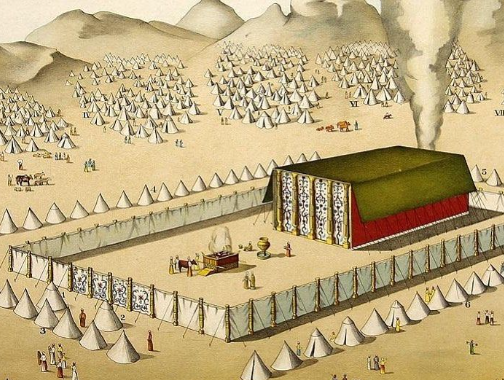
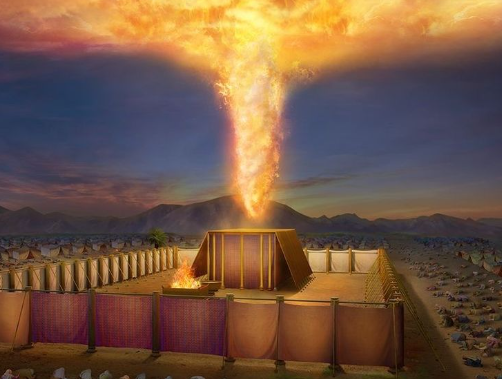
For our verse today, we read that during the day, the cloud of the Lord was on the tabernacle. In many depictions, the cloud appears to be a large, expanding pillar of smoke over the tabernacle, specifically over the holy of holies. Similarly, the fire is depicted as being in the same general configuration.
This may be true but I would like to offer my reader an alternative depiction of the cloud. You see, this particular text says the cloud of the Lord was on the tabernacle, and the fire was in the tabernacle at night.
In my imagination, which sometimes runs amok, I imagine the cloud was actually enveloping the tabernacle, actually covering the tabernacle. One of the effects of this situation may be the hiding of the tabernacle from view.
Why might I suggest that? Often in the Word, clouds are used to veil something. A passage depicting that action may be found in Exodus 24:15-16
Then Moses went up on the mountain, and the cloud covered the mountain.
The glory of the LORD dwelt on Mount Sinai, and the cloud covered it six days. And on the seventh day he called to Moses out of the midst of the cloud.
Later, when the tabernacle had been constructed, we find that a few verses prior to our verse, the cloud covered the tent of meeting, and that Moses was not able to enter the tent of meeting.
Exodus 40:34-35
Then the cloud covered the tent of meeting, and the glory of the LORD filled the tabernacle. And Moses was not able to enter the tent of meeting because the cloud settled on it, and the glory of the LORD filled the tabernacle.
Yes, there are descriptions of the cloud being a pillar when the Israelites are being led to a destination, but when the camp had settled in an area, it seems the cloud took on a different “form”, that the cloud covered the tabernacle.
This understanding brings a different perspective for myself, for instead of the cloud simply designating the location of the presence of God, the cloud may actually be revealing the holiness and righteousness of God.
Let me explain.
In Psalm 97, the psalmist speaks of a cloud and thick darkness in the context of how unapproachable God is.
Psalm 97:2 Clouds and thick darkness are all around him; righteousness and justice are the foundation of his throne.
Later in the Psalms, the psalmist speaks of a cloud covering the tabernacle, and fire providing light in the night.
Psalm 105:39 He spread a cloud for a covering, and fire to give light by night.
This passage recounts our verse above, and provides two subsequent verses where God provided answers to prayer, or should I say demands of the people. The Lord provides for them according to their desires.
Psalm 105:40-41 They asked, and he brought quail, and gave them bread from heaven in abundance. He opened the rock, and water gushed out; it flowed through the desert like a river.
In my understanding, the Cloud of the Lord speaks of His righteousness, His holiness and His justice, even in the midst of His very presence with His people. In the presence of a people who would not conform to His will, and yet He stayed with them, caring and exhibiting His gracious love and mercy to them.
We truly do not deserve our merciful God, and we would do well to remember His “otherness”, how He is not like us, but so much more.
As Paul stated in one of His letters to Timothy, God
…alone has immortality, who dwells in unapproachable light, whom no one has ever seen or can see. To him be honor and eternal dominion. Amen.
I would love to hear of your favorite name, characteristic or description of the Living God. Please leave me a comment, and I will include it in the list!
Thanks again for coming to visit. I hope you found something of interest in this post and would appreciate a comment, to begin a discussion. If you know someone this blog may bless (or challenge), send them a link, so they may join us in our discussion.
My hope is that this series will offer my readers a chance to consider the names, characteristics and descriptions of our God in the Word.
The remaining Names of God in this series might be considered descriptors, or characteristics of the Lord. We have reviewed the three primary Names of God, along with nineteen compound Names of God in our previous posts. As we venture through these descriptors of our God, I hope we will recognize all the many characteristics of our God that we tend to take for granted.
The Word is truly rich with descriptions of the Living God, and this effort of searching in the Word was quite illuminating. He truly is the ultimate subject of the Word, and His revelation of self-descriptions, or the accolades offered Him by His priests, prophets, kings apostles and faithful truly is a blessing.
May the Name of the Lord be praised, and by thinking on His name, may you have a blessed day.
81
CHRIST JESUS OUR LORD
Romans 8:39 nor height nor depth, nor anything else in all creation, will be able to separate us from the love of God in Christ Jesus our Lord.
This is our last description of God, referring primarily to the Christ, His Anointed One, in our list of Names of God. Later on, we shall come across the name “Christ” in additional descriptions of our God, but we will wait until they occur for discussion on them.
For our current consideration, we have “Christ Jesus the Lord”.
This name combines the human name of the Christ, along with the reference of the Lord, designating Jesus as the Master.
We spoke of the use of “Lord” combined with Christ in our last post, and with this post we have the added clarification of who the Christ is.
Jesus, the lowly preacher from Bethlehem, associated with Nazareth, and considered a troublemaker and false prophet, even the illegitimate son of Mary – He it is that is the Christ.
He was not the typical teacher. Many would listen and walk away befuddled, or challenged by the message like they had not been challenged before. Even when describing Him amongst His peers, those who were rabbi’s and teachers of the law, He did not fit into any conventional party line.
As a matter of fact, His teaching often offended those steeped in the laws and teachings of the ancients, and caused many times of heated questions being thrown at Him by his fellow rabbis.
But that is just the point. They were not fellow rabbis, for He was (and is) Christ Jesus, the Anointed One, the One chosen of God to provide grace and truth to those most in need. They were not His peers, but His students, yet they knew it not, and would not submit to the Christ, since God’s choice was Jesus.
But Jesus was not their choice!
Yet the truth stands and God’s choice, His Anointed is Jesus. The Master. The teacher and instructor for those who will recognize Him.
Christ Jesus the Lord.
I would love to hear of your favorite name, characteristic or description of the Living God. Please leave me a comment, and I will include it in the list!
Thanks again for coming to visit. I hope you found something of interest in this post and would appreciate a comment, to begin a discussion. If you know someone this blog may bless (or challenge), send them a link, so they may join us in our discussion.
As many who have followed me for a bit, I have fallen into the Psalms, and I can’t get up! (As if I would want to.) The Psalms are a majestic collection of poetry, of heart felt human experiences that constantly challenge me in my own frail attempt to follow the true King. As many of the Psalms are written by David, my study on the Psalms has spurred me on to looking at the life of David, is the main contributor to this book, and to follow the victories and tragedies of the shepherd King of Israel.
Many times in the narrative, we will see the Lord Jesus, imperfectly, yet a reflection of His spirit in a man with weaknesses.
1 Samuel 18:17-19 17 Then Saul said to David, “Here is my elder daughter Merab. I will give her to you for a wife. Only be valiant for me and fight the LORD’s battles.” For Saul thought, “Let not my hand be against him, but let the hand of the Philistines be against him.” 18 And David said to Saul, “Who am I, and who are my relatives, my father’s clan in Israel, that I should be son-in-law to the king? 19 But at the time when Merab, Saul’s daughter, should have been given to David, she was given to Adriel the Meholathite for a wife.
Ok Saul, you promised your daughter to any man who would take on the Philistine giant, a chapter back, in verse 25. Riches and tax free status for the family, along with the hand of the kings daugther, actually becoming of the royal family. Haughty rewards for knocking ol Goliath down.
1 Samuel 17
25 And the men of Israel said, “Have you seen this man who has come up? Surely he has come up to defy Israel. And the king will enrich the man who kills him with great riches and will give him his daughter and make his father’s house free in Israel.”
It is a good thing David didn’t depend on the word of the King to motivate him to take Goliath out. This reward of a kings daughter (and the other rewards) obviously had not been granted to David as yet, and as it turns out, this promise from the Israeli King was quickly be forgotten. An unfaithful party always wants to renegotiate!
Now to get the kings daughter – forget the riches and tax free status – David had to perform more tasks, life endangering tasks, tasks that would seemingly accomplish Saul’s not too secret desire for David’s demise. Saul offered his eldest daughter Merab, IF David would fight the LORD’s battles for Saul. Notice that little phrase that Saul inserted into this agreement David was offered.
Only be valiant for me and fight the LORD’s battles.
What is this all about. Of course David was on the team, and had shown himself to be sold out to God in his life, in battles that he would be called upon to fight, and service to his king. Is Saul seeking to hide his intentions, or rather reestablish his authority over David, and by doing so, hoping to control his actions, maybe directing David to more dangerous areas of battle.
Was he seeking to increase his influence over David, through obligations that this marriage would create? Was Merab in love with David or a tool for Saul? We may never know!
What a dastardly fiend this Saul is turning out to be! Let’s be clear. This is not Saul coming good on a promise he gave David earlier. This is an alternative offer for him, that brought with the hand of the king’s daughter, added responsibilities to the king. A new agreement! What a loving family David is offered to join!
Notice David’s attitude, in that he exhibited a humble spirit in the face of his enemy, in the face of a man who had reneged on an earlier promise! Who am I, and what is my life or my father’s family in Israel…?
David was in a great place in this circumstance, having not been self elevated by the honors he had been granted. He was a humble servant.
In David’s humility, it appears the agreement for marriage was completed, and the plans for David and Merab’s wedding were progressing quite nicely. Expectations were established, and the nation most surely have heard the rumors, that a lowly shepherd boy, turning into a valiant warrior, was now entering into betrothal with the kings daughter, and soon to be a part of the royal family!
If it wasn’t for a settled humility that David lived in, this may have become a most heady time in his life.
Up until the wedding day that is. I can imagine Saul playing this game up until the very day of the wedding, keeping David in an elevated place of distinction before the entire nation.
Comes the wedding day, and Merab is no where to be found. Or is it that David is restricted from the wedding? And who is this Adriel the Meholathite? Where did he come from? His name will show up later in the story of David, but we shall be patient until then for any further information on this fellow.
Saul had successfully pulled the rug out from under David, and the shame that cascaded down on David must have been excruciating. How could he show his face amongst those who he led and fought with, and how could he explain the circumstances, the actions of this mad man who was king of Israel, and who was to be honored by all.
David was placed in a very difficult position by the king, and yet his commitment to God gave him the strength to keep his focus on higher things.
David’s depth of character shines bright in these passages.
He truly was a man after God’s heart, and provides such a great shadow of the True, Greater David, the One who would take our shame and disappointment!
Let us remember His faithfulness, his commitment, and His surety of promise to us. Let us be thankful the reneging spirit of Saul is not the Spirit of the Lord!
For He is faithful, and He is good.
Thanks again for coming to visit. I hope you found something of interest in this post and would appreciate a comment, to begin a discussion. If you know someone this blog may bless (or challenge), send them a link, so they may join us in our discussion.
Jesus in the Old Testament is a series of posts that will offer my readers a chance to consider pictures or shadows of Jesus in the Old Testament. As mentioned in the introduction to this series, some may be obvious, some may be not so obvious, and some may simply be a facet of the Lord those reading may not have considered previously.
I hope as we venture through this series, we will see the Lord in many wonderful pictures throughout the Old Testament.
SEEING JESUS IN
Absalom
Suspended between heaven and earth
2 Samuel 18:9 And Absalom happened to meet the servants of David. Absalom was riding on his mule, and the mule went under the thick branches of a great oak, and his head caught fast in the oak, and he was suspended between heaven and earth, while the mule that was under him went on.
John 8:28 So Jesus said to them, “When you have lifted up the Son of Man, then you will know that I am he, and that I do nothing on my own authority, but speak just as the Father taught me.
Back in the fourth installment of the Absalom series, we discussed how Absalom was hung on a tree, being a shadow of the Messiah.
This post will focus on the spatial location of the men as they hung on a tree. To be specific, both men hung between heaven and earth. The significance for Absalom hanging between heaven and earth seems to be somewhat strange. Why would the author bring this phrase into the story line? That is an unknown in my mind, other than for the author to show Absalom’s utter helplessness, that he had no where to find support from, or that he belonged neither on earth or in heaven. Pure conjecture on my part regarding Absalom.
Regarding Jesus, the image of Him suspended between heaven and earth is much more obvious to me. The only support He had was the nails through His body, and His determination to complete His mission while on earth. He was (and is) the perfect God man, representing both earth and heaven. He was (and is) the only One who bridged the gap between heaven and earth for us while on He hung on the bloody cross.
He sacrificed Himself for the likes of Absalom and myself. He is so good and He is calling out to you, even today.
Consider Him, hanging between heaven and earth in order for you to know the true God and His Son Jesus Christ.
May His name be praised today.
Thanks again for coming to visit. I hope you found something of interest in this post and would appreciate a comment, to begin a discussion. If you know someone this blog may bless (or challenge), send them a link, so they may join us in our discussion.
My hope is that this series will offer my readers a chance to consider the names, characteristics and descriptions of our God in the Word.
The remaining Names of God in this series might be considered descriptors, or characteristics of the Lord. We have reviewed the three primary Names of God, along with nineteen compound Names of God in our previous posts. As we venture through these descriptors of our God, I hope we will recognize all the many characteristics of our God that we tend to take for granted.
The Word is truly rich with descriptions of the Living God, and this effort of searching in the Word was quite illuminating. He truly is the ultimate subject of the Word, and His revelation of self-descriptions, or the accolades offered Him by His priests, prophets, kings apostles and faithful truly is a blessing.
May the Name of the Lord be praised, and by thinking on His name, may you have a blessed day.
80
CHRIST THE LORD
Luke 2:11 For unto you is born this day in the city of David a Savior, who is Christ the Lord.
Here we have the Christ being defined as the Lord.
At first glance we may assume Luke is combining Christ with the primary name of God as LORD, as in Genesis 2:4, using the Tetragrammatron JHVH.
Not so.
If I had been in Luke’s shoes, I would have emphasized the connection of this young baby with the eternal One, the Creator of heaven and earth, the omniscient One who is all powerful.
But we can be thankful that I was not in Luke’s shoes at the time, writing this passage of truth. I would not have done this passage justice.
No.
Luke brings to our ears the message that Christ is the Master. To say that may seem redundant, for as the Jewish nation was awaiting their Anointed King to arrive, it should have been obvious to all that He would be the Leader, the Master, the One who would be obeyed.
That is the expectation of the masses. The Christ was the One who would be the Master, the One to follow after and to go behind as He conquers those who were oppressing the nation, and that they would eventually become the nation above all other nation. What heady expectations!
Yet Luke provided this description of the lowly baby, for He would turn out to be completely beyond the expectation of the crowd, as He would be the Servant of prostitutes, the Teacher of the tax collector, and the self sacrificial Lamb of God.
To understand the Christ as being a servant, a teacher and a martyr, Luke wisely reiterated the Christ as the Master, for without that description no one would understand, no one would bend the knee to such a “disappointment” of their expectations.
He was a totally different type of Master than expected!
As you have walked with the Anointed One, have you morphed in you understanding of who He is as a Master? Do you understand His way of life, his method of conquering His enemies through service, sacrifice and selfless love?
I would love to hear of your favorite name, characteristic or description of the Living God. Please leave me a comment, and I will include it in the list!
Thanks again for coming to visit. I hope you found something of interest in this post and would appreciate a comment, to begin a discussion. If you know someone this blog may bless (or challenge), send them a link, so they may join us in our discussion.