My hope is that this series will offer my readers a chance to consider the names, characteristics and descriptions of our God in the Word.
The remaining Names of God in this series might be considered descriptors, or characteristics of the Lord. We have reviewed the three primary Names of God, along with nineteen compound Names of God in our previous posts. As we venture through these descriptors of our God, I hope we will recognize all the many characteristics of our God that we tend to take for granted.
The Word is truly rich with descriptions of the Living God, and this effort of searching in the Word was quite illuminating. He truly is the ultimate subject of the Word, and His revelation of self-descriptions, or the accolades offered Him by His priests, prophets, kings apostles and faithful truly is a blessing.
May the Name of the Lord be praised, and by thinking on His name, may you have a blessed day.
174
GLORY OF THEIR STRENGTH
Psalm 89:17 For you are the glory of their strength; by your favor our horn is exalted.
Let us consider this phrase, this name of God and what it is communicating, at least to this ol’ believer.
The psalmist is speaking of the saints strength, and that this strength they have is due to the might of God in their lives. In all the saint’s life, all is due to God, the very breath we breath and the ability to trust Him. all is due to the Living God.
But this phrase is not speaking primarily of the strength of the people, the sustaining might provided to the saint to walk properly though crippled. That is a truth that is known to the psalmist, for he is drenched in this truth.
No, for the psalmist goes further, speaking of the glory, the beauty and the honor of this strength granted to the saint. The strength provided to the saint is not brute force, nor a violent dangerous, and hurtful strength, not a careless and uncontrolled strength, but a strength that is exhibited in a glorious life, a life that is adorned with a beauty and splendor.
The strength of the Lord in the saint’s life is that which exudes love, joy, peace, patience, kindness, goodness, faithfulness, gentleness and self-control. It is a life that is full, gracious, forgiving and bountiful with thanksgiving.
The glory of the saint’s strength is Jesus.
I would love to hear of your favorite name, characteristic or description of the Living God. Please leave me a comment, and I will include it in the list!
Thanks again for coming to visit. I hope you found something of interest in this post and would appreciate a comment, to begin a discussion. If you know someone this blog may bless (or challenge), send them a link, so they may join us in our discussion.
Jesus in the Old Testament is a series of posts that will offer my readers a chance to consider pictures or shadows of Jesus in the Old Testament. As mentioned in the introduction to this series, some may be obvious, some may be not so obvious, and some may simply be a facet of the Lord those reading may not have considered previously.
I hope as we venture through this series, we will see the Lord in many wonderful pictures throughout the Old Testament.
SEEING JESUS IN
ABIATHAR
REJECTION
1 Kings 2:27 ESV – So Solomon expelled Abiathar from being priest to the LORD, thus fulfilling the word of the LORD that he had spoken concerning the house of Eli in Shiloh.
Matthew 21:42 Jesus said to them, “Have you never read in the Scriptures: “‘The stone that the builders rejected has become the cornerstone; this was the Lord’s doing, and it is marvelous in our eyes’?
I would like to return to Abiathar for one more post, for though he reflected Jesus as a survivor, (Jesus in the Old Testament – Abiathar – 01) he also reflects the Lord’s experience as one rejected.
Remember that Abiathar was a priest that had narrowly escaped the wrath of a crazy king, but in his latter days, he made a decision that was not in his own favor. In the last days of David’s reign, Abiathar decided to break away from his king to follow Adonijah. The rebel son who sought to become King Solomon’s enemy. The son of David who saw his brother Absalom succumb to the hand of God in protecting the reign of David, also tried to wrest the kingdom away.
David’s reign and dynasty was to be extended through Solomon, but Adonijah saw opportunity, and Abiathar got caught up in the possibility of a King Adonijah
All of this history speaks of Abiathar’s mistakes, his ungratefulness, his treachery to the reign of God through David, yet he was rejected by the king, rightfully so, but rejected!
A priest rejected by a king. How shameful!
Jesus, as a priest above and beyond the mere earthly honor of Abiathar, performed no self serving lining up with an earthly political flashpoint, but served God only in His faithful life. He is nothing like Abiathar in this priest’s efforts to gain office through treachery, yet they both suffered rejection, shame and dishonor.
Only how much greater shame the Son of God experienced, for though Abiathar deserved the shame, Jesus only deserves honor, glory and splendor. For His name to be associated with shame, rejection and dishonor only reflects on us, a people who truly do not understand the greatness of the Son!
Honor and accept His ways, for He is beyond our imagination in the goodness He will guide us into.
Thanks again for coming to visit. I hope you found something of interest in this post and would appreciate a comment, to begin a discussion. If you know someone this blog may bless (or challenge), send them a link, so they may join us in our discussion.
My hope is that this series will offer my readers a chance to consider the names, characteristics and descriptions of our God in the Word.
The remaining Names of God in this series might be considered descriptors, or characteristics of the Lord. We have reviewed the three primary Names of God, along with nineteen compound Names of God in our previous posts. As we venture through these descriptors of our God, I hope we will recognize all the many characteristics of our God that we tend to take for granted.
The Word is truly rich with descriptions of the Living God, and this effort of searching in the Word was quite illuminating. He truly is the ultimate subject of the Word, and His revelation of self-descriptions, or the accolades offered Him by His priests, prophets, kings apostles and faithful truly is a blessing.
May the Name of the Lord be praised, and by thinking on His name, may you have a blessed day.
173
GLORY TO YOUR PEOPLE ISRAEL
Luke 2:32 a light for revelation to the Gentiles, and for glory to your people Israel.”
In a post in this series, the Name of God we considered was “Glory of Israel”, and Samuel was addressing King Saul, trying to get through his head that he wasn’t the glory of Israel, he wasn’t the strength or supreme eminence of Israel, and that his throne was not perpetual – As a matter of fact, his kingdom had been taken from him.
Flash forward over 1,000 years into the future from the rejection of the earthly reign of King Saul to the birth of a young peasant girl’s first born.
Mary and Joseph arrive at the temple, with the child being 40 days old for his presentation before the God of Israel when Simeon first laid eyes on this baby. Now it seems God had somehow communicated to Simeon that he would see the salvation of the “Lord’s Christ”. This is no small event that Simeon had been privileged to enter into. The focus of all the prophets, seers, priests and faithful of Israel and beyond had waited for this day, the day when the Savior would be revealed to the world.
Did Simeon have preconceptions? Was he informed by God that he would recognize the Messiah in the form of a baby? Might he have thought that the Messiah would be a man of power that would rise up in the nation, with God providing verification to him at the right time? Even anointed as David was, though somewhat in obscurity until the right time?
All conjecture, but for myself, to think that Simeon would make such a statement over a baby as he did, after waiting to see the “Lord’s Christ”, the Anointed of God, is remarkable.
Jesus spoke no words. He provided no message. He had performed no miracles. He was a helpless baby, dependent upon his parents, held close to his mothers heart. Mary had treasured up many things, pondering truths revealed to her in her heart. Joseph had been spoken to, and now Simeon comes out of the woodwork, speaking of the person of this baby.
Even at His birth, those of the nascent church recognized truth without any argument, without any “evidence” required. They heard the voice of God and knew this baby was the One.
He was, and is, the glory offered to the nation of Israel. Even as the nation of Israel was in the throws of it’s deepest idolatry and legalism, God’s greatest gift was provided to the nation, and not only the nation, but to the world. And one more voice, the voice of an elderly man, was added to the list of witnesses that spoke of salvation from God in the form of a baby.
To those who have yet to trust Him, His person, His words, and His works, glory has also been offered. To those who know not God, glory is offered.
Yet note that Simeon spoke of glory being offered to “your” people Israel. Simeon spoke of glory being offered to Israel, the people of God. They had no idea of the explosive, blinding glory they would experience as His life was lived before them.
Beyond His life, His resurrection only multiplied and magnified the glory they experienced during His life amongst them. Glory upon glory to a people who rejected Him, and yet were offered greater glory than they could have ever imagined!
He truly is good, and He is truly good all the time!
I would love to hear of your favorite name, characteristic or description of the Living God. Please leave me a comment, and I will include it in the list!
Thanks again for coming to visit. I hope you found something of interest in this post and would appreciate a comment, to begin a discussion. If you know someone this blog may bless (or challenge), send them a link, so they may join us in our discussion.
My hope is that this series will offer my readers a chance to consider the names, characteristics and descriptions of our God in the Word.
The remaining Names of God in this series might be considered descriptors, or characteristics of the Lord. We have reviewed the three primary Names of God, along with nineteen compound Names of God in our previous posts. As we venture through these descriptors of our God, I hope we will recognize all the many characteristics of our God that we tend to take for granted.
The Word is truly rich with descriptions of the Living God, and this effort of searching in the Word was quite illuminating. He truly is the ultimate subject of the Word, and His revelation of self-descriptions, or the accolades offered Him by His priests, prophets, kings apostles and faithful truly is a blessing.
May the Name of the Lord be praised, and by thinking on His name, may you have a blessed day.
172
Glory of Israel
1 Samuel 15:29 And also the Glory of Israel will not lie or have regret, for he is not a man, that he should have regret.
Samuel, the great prophet of God, the king maker of Israel is facing Saul, Israel’s first king. Samuel is not a happy camper, for Saul has ignored the Word of the Lord by not completely destroying the enemy of Israel. Saul has decided to be religious instead of righteous, for instead of obeying, he sacrifices animals that cost him nothing, in an effort to appease the God who had given him everything.
Nothing good is coming from this decision of Saul’s. Samuel lets him know that the kingdom will be taken from him, that the Lord has rejected him as king over Israel.
Samuel had to tell the man he anointed as king over Israel that his time of authority over Israel, and under God was over. Not only has Saul lost the kingdom, God had already found a replacement.
This has to be a mistake. Saul was desperate and sought to find a solution, yet Samuel makes the statement we are considering this morning declaring God’s unchanging will in this matter.
This is the only time this name of God shows up in the Word, and the term “Glory” in this verse is the term נֶצַח netsach. Of the many Hebrew words that are translated as glory in the Word, this particular word is inclined to the meaning of strength, or eminence, even perpetuity.
An interesting word to remind Saul that he is not the strength or eminence of Israel, and that his reign is not perpetual.
God is the perpetual strength of His people. He is the eminent One, the King of all. He is the Glory of Israel!
I would love to hear of your favorite name, characteristic or description of the Living God. Please leave me a comment, and I will include it in the list!
Thanks again for coming to visit. I hope you found something of interest in this post and would appreciate a comment, to begin a discussion. If you know someone this blog may bless (or challenge), send them a link, so they may join us in our discussion.
My hope is that this series will offer my readers a chance to consider the names, characteristics and descriptions of our God in the Word.
The remaining Names of God in this series might be considered descriptors, or characteristics of the Lord. We have reviewed the three primary Names of God, along with nineteen compound Names of God in our previous posts. As we venture through these descriptors of our God, I hope we will recognize all the many characteristics of our God that we tend to take for granted.
The Word is truly rich with descriptions of the Living God, and this effort of searching in the Word was quite illuminating. He truly is the ultimate subject of the Word, and His revelation of self-descriptions, or the accolades offered Him by His priests, prophets, kings apostles and faithful truly is a blessing.
May the Name of the Lord be praised, and by thinking on His name, may you have a blessed day.
171
GLORY OF THE NATIONS
Isaiah 66:12 For thus says the LORD: “Behold, I will extend peace to her like a river, and the glory of the nations like an overflowing stream; and you shall nurse, you shall be carried upon her hip, and bounced upon her knees.
To determine the glory of the nations may take many forms. It may be the fantastic roadway systems developed for the safe travel of the nations population. Remember I am a highway engineer so trust me – the highways are incredible – but enough of that.
Other characteristics that might be considered a glory of a nation may be the massive buildings built, the wealth generated for it’s people, the stable social order established, the religious fervor of the people, the integrity of the political process, the righteous laws established, the fair and equitable enforcement of those laws, the societies attitude towards life, both in the womb and next to the grave, the freedom of the citizen to express their thoughts freely. We could go on and on in how some may describe the glory of a nation.
Each of these are valid characteristics for a nation to be judged by in our world.
Note that in Isaiah, as he is describing Jerusalem, representing the new Israel, he speaks of the Glory of the Nations being extended over Israel like an overflowing stream.
Incredible. Thinking in earthly terms, the message may be understood that all the valuable characteristics, possessions and attributes of the greatest nations will impact Israel like an overflowing stream, that Israel will be inundated by the greatness and glory of each of the gentile nations characteristics! She will be elevated to her greatest position. How wonderful!
Yet let us consider an alternate view, a view that may honor God from a different point of view.
Two millennium ago, an itinerant Rabbi taught of God, of the love and care the Father had to those who would repent and follow. The following He attained became threatening to the powers that were, and eventually, all fell away. Yet after His murder and resurrection and within the next 40 years, the new, true Israel flooded the populace of the existing Israel with a new life, with a new understanding of God and His saving nature, and the Glory of the Nations, the One who is the Savior of the world inundated the physical nation of Israel.
The true Israel exploded in life, and while the political/national/religious life of the established Israel faded and eventually ceased to exist, the true Israel continued to grow exponentially, covering all the known world.
The Glory of the Nations is Jesus, and as the resurrected One, He has led the overflowing stream of life and righteousness not only over the people of Israel, but over all the nations.
The nations of the world, including Israel today, have one true Glory in God’s eye.
His name is Jesus!
I would love to hear of your favorite name, characteristic or description of the Living God. Please leave me a comment, and I will include it in the list!
Thanks again for coming to visit. I hope you found something of interest in this post and would appreciate a comment, to begin a discussion. If you know someone this blog may bless (or challenge), send them a link, so they may join us in our discussion.
My hope is that this series will offer my readers a chance to consider the names, characteristics and descriptions of our God in the Word.
The remaining Names of God in this series might be considered descriptors, or characteristics of the Lord. We have reviewed the three primary Names of God, along with nineteen compound Names of God in our previous posts. As we venture through these descriptors of our God, I hope we will recognize all the many characteristics of our God that we tend to take for granted.
The Word is truly rich with descriptions of the Living God, and this effort of searching in the Word was quite illuminating. He truly is the ultimate subject of the Word, and His revelation of self-descriptions, or the accolades offered Him by His priests, prophets, kings apostles and faithful truly is a blessing.
May the Name of the Lord be praised, and by thinking on His name, may you have a blessed day.
170
GLORIOUS NAME
Nehemiah 9:5 Then the Levites, Jeshua, Kadmiel, Bani, Hashabneiah, Sherebiah, Hodiah, Shebaniah, and Pethahiah, said, “Stand up and bless the LORD your God from everlasting to everlasting. Blessed be your glorious name, which is exalted above all blessing and praise.
We spoke of the term Glorious in our previous post, and of my surprise of the original way this Hebrew term began to describe glory.
For this post let us consider that the very name of God is glorious, not that we call God Glorious, as though people call me Carl, but that His name is glorious.
So, what is a name at it’s core?
A general name is to define a person place or thing as someone, something different than an other. A general name is simply a designation of convenience to identify someone or something.
For a personal name, (for God is personal), the name may describe or identify an individual in his or her most intimate manner, in an effort or manner to designate that person from all others by way of a personal relationship.
When I am in a crowd, and I hear my personal name “Carl”, one head turns to the direction the voice came from. My personal name is used by those I work with, those I have the honor of being friends with, those who relate to me in business matters and the such.
Now, from my personal name to my familial name, there is a filtering of those who apply. When I hear one calling me Dad, (or Daddy), there are few that this applies to, and when I hear it, I come a running.
Then there is the name that I respond to because of who speaks it. When the love of my life says my name, whether it be Carl, Sweetie, Hon or other, I recognize it and respond. She is the only one who may say any of my names and I respond singularly to her because of who she is.
All this rambling about names is my weak effort to describe the reality of relationships in how we relate to one an other.
For God, in the context of this passage, the name that is glorious is “LORD”. For a quick review of LORD, see Names of God – JEHOVAH (LORD) – 2.
He is the One who depends on no-one, is self existent, all powerful, all knowing and never changing. The name “LORD” is glorious in and of itself, for it describes the indescribable.
How my reader would like to consider His glorious name (general, personal, familial, spousal )in his or her life is dependent on their relation with the Savior Jesus, for He revealed the name of God in it’s fullest sense, and provided us the avenue of knowledge to know the LORD.
How glorious is His name to you?
I would love to hear of your favorite name, characteristic or description of the Living God. Please leave me a comment, and I will include it in the list!
Thanks again for coming to visit. I hope you found something of interest in this post and would appreciate a comment, to begin a discussion. If you know someone this blog may bless (or challenge), send them a link, so they may join us in our discussion.
My hope is that this series will offer my readers a chance to consider the names, characteristics and descriptions of our God in the Word.
The remaining Names of God in this series might be considered descriptors, or characteristics of the Lord. We have reviewed the three primary Names of God, along with nineteen compound Names of God in our previous posts. As we venture through these descriptors of our God, I hope we will recognize all the many characteristics of our God that we tend to take for granted.
The Word is truly rich with descriptions of the Living God, and this effort of searching in the Word was quite illuminating. He truly is the ultimate subject of the Word, and His revelation of self-descriptions, or the accolades offered Him by His priests, prophets, kings apostles and faithful truly is a blessing.
May the Name of the Lord be praised, and by thinking on His name, may you have a blessed day.
169
GLORIOUS SPLENDOUR OF YOUR MAJESTY
Psalm 145:5 On the glorious splendor of your majesty, and on your wondrous works, I will meditate.
To meditate is to dwell, to settle the mind on a subject or topic and reside on that topic. To consider the topic, to review the topic, to ask questions and to accept the message, to understand how the topic impacts your life or to realize how little you know of the topic.
Or name of God in this post is the double description of the King.
Let’s try to dig into this name of God and find a thought to carry into our day to dwell on, as the psalmist dis in his day.
MAJESTY
Majesty speaks of authority and dignity, of royalty, nobility and elegance. To be majestic was to imply that the majestic one was higher, better, greater, stronger than those he reigned over. To be majestic did not allow for a democratic choosing of a leader, but of the right to rule due to bloodlines, to lineage, to the identity of the one ruling.
This was the picture provided in the Old Testament of the earthly kings, that the dynasties had the right to reign. God actually strengthened this thought by promising the eternal reign of David’s Son on the throne. David’s Son, who was faithful to God would reign eternally. Not only through a bloodline, but by actually being higher, better, greater and stronger than those He reigned over.
He is the only One deserving of Majesty as He sits on the Throne of the Kingdom of God, and over all of creation He is the King.
Yet this name includes two superlatives that are attached to majesty.
GLORIOUS
When I first found that this Hebrew word spoke originally of weight, I lost my bearing. Yet I dug a bit and found that during the establishment of this word meaning, a majority of those in authority also ate well, thereby associating weight (glory) with awe, magnificence, wonder or astonishment.
To be glorious implied a “weight” of being, an otherness from the ordinary, different than those around them, separate and of greater (implied) value.
Of course, as this term is brought into the discussion of God, this implied meaning becomes absolute, for He is different, sinless, without weakness, ignorance or foolishness. He is completely and without argument other than us, and yet He has bonded with our lives in the Son.
He has taken on our flesh (Hebrews 2:14) , that He may die to bring us to God.
SPLENDOUR
Splendor describes beauty, carrying the idea of beauty associated with glory, majesty and honor. All three of the terms we are looking at in this passage have much overlap, as though the psalmist could not find the words to completely describe the object of our worship.
The combination of splendor and majesty is common in the Old Testament, with both the Hebrew words being found in 8 different verses of the Old Testament.
But as mentioned above, the psalmist can’t hold back from his description of our God in this passage. The combination of these three terms are found only twice in Old Testament verses, with the second verse being
Psalm 21:5 His glory is great through your salvation; splendor and majesty you bestow on him.
Although the words are found in Psalm 21:5, the combination of these three terms in relation to the name of God may only be found in our verse today.
As you meditate on the name of God today, consider our Savior, for He is the GLORIOUS SPLENDOUR OF MAJESTY.
I would love to hear of your favorite name, characteristic or description of the Living God. Please leave me a comment, and I will include it in the list!
Thanks again for coming to visit. I hope you found something of interest in this post and would appreciate a comment, to begin a discussion. If you know someone this blog may bless (or challenge), send them a link, so they may join us in our discussion.
My hope is that this series will offer my readers a chance to consider the names, characteristics and descriptions of our God in the Word.
The remaining Names of God in this series might be considered descriptors, or characteristics of the Lord. We have reviewed the three primary Names of God, along with nineteen compound Names of God in our previous posts. As we venture through these descriptors of our God, I hope we will recognize all the many characteristics of our God that we tend to take for granted.
The Word is truly rich with descriptions of the Living God, and this effort of searching in the Word was quite illuminating. He truly is the ultimate subject of the Word, and His revelation of self-descriptions, or the accolades offered Him by His priests, prophets, kings apostles and faithful truly is a blessing.
May the Name of the Lord be praised, and by thinking on His name, may you have a blessed day.
168
GLORIOUS ARM
Isaiah 63:12 who caused his glorious arm to go at the right hand of Moses, who divided the waters before them to make for himself an everlasting name,
As New Testament believers, we have the privilege of understanding the Old Testament from the standpoint of being in Christ. The entire Old Testament open up for us as we have found the key of understanding, the Person who is the focus of all that happened in the former days.
I previously pictured verses like our topic passage, exhibiting a massive, literal and muscled arm that Isaiah describes in this verse. I am way too literal at times but I fear that we sometimes interpret the Old Testament as 21st century believers and not as the ancient Hebrew recipients.
So how would an ancient Hebrew believer, contemporary to Isaiah understand this passage? How would the Old Testament Hebrew understand Isaiah’s use of “glorious arm?”
Throughout the passage, Isaiah is speaking of the Lord’s mercy to the nation, and uses word pictures, even metaphors of strength to describe God’s saving work for the nation.
I understand the Hebrew prophets to write in a poetic form, and to make use of figures or images that provide dual meanings for those reading the message. The prophets of old would also use a form of poetry called parallelism. This form of poetry would be developed by repeating the same message as the previous line, but with greater force, or with a richer picture to wedge itself in hearer’s mind.
When Isaiah started the portion of Scripture for our verse, He mentioned the Holy Spirit (twice) and of course God the Father was the subject of the deliverance of the people of God. When the deliverance was attributed to God’s Glorious Arm, it seems obvious to my understanding that Jesus is the subject.
He is the One who executed the deliverance, who completed the work, who was the One who accomplished the feat of rescue, who fulfilled the work planned. To further identify the Glorious Arm in this passage, the Savior is referred to in verse 8, and the Angel of His Presence in verse 9.
Consider the One who compared Himself as meek and lowly, as the Glorious Arm, the One who is able, and has performed the work of our salvation.
He is the Glorious Arm.
I would love to hear of your favorite name, characteristic or description of the Living God. Please leave me a comment, and I will include it in the list!
Thanks again for coming to visit. I hope you found something of interest in this post and would appreciate a comment, to begin a discussion. If you know someone this blog may bless (or challenge), send them a link, so they may join us in our discussion.
Jesus in the Old Testament is a series of posts that will offer my readers a chance to consider pictures or shadows of Jesus in the Old Testament. As mentioned in the introduction to this series, some may be obvious, some may be not so obvious, and some may simply be a facet of the Lord those reading may not have considered previously.
I hope as we venture through this series, we will see the Lord in many wonderful pictures throughout the Old Testament.
SEEING JESUS IN
Amos
Knowledge of God’s Secrets
Amos 3:7 “For the Lord GOD does nothing without revealing his secret to his servants the prophets.
Ephesians 3:5 which was not made known to the sons of men in other generations as it has now been revealed to his holy apostles and prophets by the Spirit.
There is an element of Christianity that claims God almost requires their permission to act, that they are the creators of their own prosperity. One of the verses that this group rely on is our passage above, wresting it out of context and using it for their own benefit. The leadership of this group claim privilege beyond any saint or prophet of old. God is looking to warn His people of the judgement coming, and with this intent, Amos speaks of God revealing this secret to his prophets. Nothing more than that for Amos.
Ephesians 3:5 speaks to this limitation of the Old Testament saints and prophets. For the New Testament era, Paul does provide teaching regarding the knowledge revealed to His apostles and prophets. This greater revelation though is of the mystery of Christ, but Paul defines this mystery. This mystery is of the combining of the Gentiles and Jews into the Body of Christ.
For us who have readily accepted this truth, to call it a mystery seems to be dated since it is such an established truth. Yet even in the era we live in, God has not revealed everything to His people. The Word has provided revelation beyond anything we deserve, yet there are many things God is still holding close to the chest from us.
We are to be thankful for His revealing of the One who can and does share in the knowledge of God’s secrets. for He is worthy, and rightly to be considered the One who is the Knowledge of God’s Secrets.
Thanks again for coming to visit. I hope you found something of interest in this post and would appreciate a comment, to begin a discussion. If you know someone this blog may bless (or challenge), send them a link, so they may join us in our discussion.
My hope is that this series will offer my readers a chance to consider the names, characteristics and descriptions of our God in the Word.
The remaining Names of God in this series might be considered descriptors, or characteristics of the Lord. We have reviewed the three primary Names of God, along with nineteen compound Names of God in our previous posts. As we venture through these descriptors of our God, I hope we will recognize all the many characteristics of our God that we tend to take for granted.
The Word is truly rich with descriptions of the Living God, and this effort of searching in the Word was quite illuminating. He truly is the ultimate subject of the Word, and His revelation of self-descriptions, or the accolades offered Him by His priests, prophets, kings apostles and faithful truly is a blessing.
May the Name of the Lord be praised, and by thinking on His name, may you have a blessed day.
167
GLADNESS OF YOUR NATION
Psalm 106:4-5 Remember me, O LORD, when you show favor to your people; help me when you save them that I may look upon the prosperity of your chosen ones, that I may rejoice in the gladness of your nation, that I may glory with your inheritance.
Psalm 106 is a psalm in which the author recounts the many instances of Israel’s rebellion. In verse 6 and continuing for 40 verses, the psalmist speaks of Israel’s failure. Psalm 105 speaks of God’s mercy and mighty acts for 40 verses, and this chapter speaks of the many times Israel has forgotten God wandering into sin.
Psalm 106 is a psalm that speaks of the nation’s weakness and tendency to wander. The psalmist knows his content and cry of admission, but before he recounts the failed history of the nation, and his own life, he begins with verse 4 &5. He cries out to God in verse 4 for national help, for a national salvation and for favor to be shown to His people.
The psalmist cries this out for three reasons in verse 5. He is asking for the favor of the Lord that he (the psalmist) may…
1. look upon the prosperity of your chosen ones, 2. rejoice in the gladness of your nation, 3. glory with your inheritance.
He knows that though God has been offended by their rebellion, the only hope they have is the mercy of God. Once granted by God, the psalmist will take part in experiencing the prosperity, gladness and glory of the nation, of the people of God.
Hundreds of years after the psalmist passes, God provides this mercy in the person of the Lord Jesus. He is the personification of all of God’s mercy towards Israel, in the midst of their sinful behavior, and as believers today, we know that in His coming and dying for the nation, He is, for those who will see, the very Gladness of Your Nation.
He is the Gladness of His Nation, the church spread throughout the earth!
I would love to hear of your favorite name, characteristic or description of the Living God. Please leave me a comment, and I will include it in the list!
Thanks again for coming to visit. I hope you found something of interest in this post and would appreciate a comment, to begin a discussion. If you know someone this blog may bless (or challenge), send them a link, so they may join us in our discussion.
My hope is that this series will offer my readers a chance to consider the names, characteristics and descriptions of our God in the Word.
The remaining Names of God in this series might be considered descriptors, or characteristics of the Lord. We have reviewed the three primary Names of God, along with nineteen compound Names of God in our previous posts. As we venture through these descriptors of our God, I hope we will recognize all the many characteristics of our God that we tend to take for granted.
The Word is truly rich with descriptions of the Living God, and this effort of searching in the Word was quite illuminating. He truly is the ultimate subject of the Word, and His revelation of self-descriptions, or the accolades offered Him by His priests, prophets, kings apostles and faithful truly is a blessing.
May the Name of the Lord be praised, and by thinking on His name, may you have a blessed day.
166
GIFT OF GOD
John 4:10 Jesus answered her, “If you knew the gift of God, and who it is that is saying to you, ‘Give me a drink,’ you would have asked him, and he would have given you living water.”
Can Jesus raise a curious mind? Can He bring interest to the forefront. Does He not draw people out of their self involved little world to see bigger pictures?
The Samaritan woman is one of my favorite characters in the early chapters of John, only for the sake of Jesus choosing her to openly confess His Messiahship. Dang – He hadn’t even told the disciple as yet, though they openly expressed their suspicions.
A question for my reader. Is Jesus asking her one question or two? Is it the same question?
Is it equal in intent to say that the gift of God is He that is asking for water? Is He equating in this verse that He is the gift of God? I realize He uses the word “and”, expressing commonly the addition of a thought.
But might He be a Hebrew prophet (and much more) and follow in the tradition of speaking one truth, and then clarifying that truth with another statement. It is very common in the proverbs, and in the prophets.
I had a chance to discuss this form of communicating in a post a few years back called Did Jesus go to Hell? When you arrive to that post, do a quick search for poetry and the paragraph will pop up.
Nevertheless, as we know from passages later in John, and throughout the New Testament, and Old, Jesus is the gift of God to undeserving saints and sinners.
This woman was simply the first to hear it from His own lips. What a fantastic story of her redemption and release from bondage.
I would love to hear of your favorite name, characteristic or description of the Living God. Please leave me a comment, and I will include it in the list!
Thanks again for coming to visit. I hope you found something of interest in this post and would appreciate a comment, to begin a discussion. If you know someone this blog may bless (or challenge), send them a link, so they may join us in our discussion.
Jesus in the Old Testament is a series of posts that will offer my readers a chance to consider pictures or shadows of Jesus in the Old Testament. As mentioned in the introduction to this series, some may be obvious, some may be not so obvious, and some may simply be a facet of the Lord those reading may not have considered previously.
I hope as we venture through this series, we will see the Lord in many wonderful pictures throughout the Old Testament.
SEEING JESUS IN
Amos
Tradesman
Amos 7:14 Then Amos answered and said to Amaziah, “I was no prophet, nor a prophet’s son, but I was a herdsman and a dresser of sycamore figs.
Mark 6:3 Is not this the carpenter, the son of Mary and brother of James and Joses and Judas and Simon? And are not his sisters here with us?” And they took offense at him.
Amos had no qualifications for the position of prophet, at least in the eyes of the ruling class. His message to Jeroboam, the king of the Northern Kingdom had been relayed to king Jeroboam by Amaziah the priest of Bethel. See Amos 7:10-13. The message contained harsh judgment on the king and that the northern kingdom would be taken away captive.
Amaziah, the priest then took the position of protecting the apostate king, and warned Amos off to Judah, the Southern Kingdom. Go cause trouble to the south, for that is where you come from. Don’t bother us in the north!
Amos response? I’m a nobody Amaziah. A simple herdsman, and a picker of fruit. A farmer, not professional priest with all the adornment and pomp. A simple man, who has been called by God to head north, to provide a warning to this nation, to supply a Word of the LORD to the people who have walked away from Him. I am no danger to you! How dangerous can a farmer be? I am here to provide a message of deliverance from doom!
How like the Master, who until He took on His ministry of warning and providing the Word of the LORD to His generation, was a simple carpenter, a builder of “things”, a man who worked with His hands.
He acquired no institutional learning other than the mandatory training of all Jewish boys. He learned of the Torah, the Law and Jewish history from His family, and some formal schooling where He may have learned the three “R’s”, that is reading writing and ‘rithmetic.
Other than that, Jesus was untrained (thankfully) of any institutional process. His training came from time with the Father. Copious focused times with the Father, receiving His mission, not unlike Amos, to provide warning and the Word to a nation in trouble.
Amos and Jesus were untrained tradesmen, who heard the call of God and did not let some man made requirement for earthly education stop them from fulfilling their God given ministry.
Are you a highly trained professional Christian? Be thankful for your training, for God can use it, but understand from the example of Amos and Jesus, the crucial training for ministry is directly from the Lord.
Are you a tradesman, possibly a layman in the church? Be thankful for such an example as we see in Amos and our Lord. Be careful in dwelling only under the LORD’s direction. For we also need to understand from the example of Amos and Jesus, the crucial training for ministry is directly from the Lord.
Thanks again for coming to visit. I hope you found something of interest in this post and would appreciate a comment, to begin a discussion. If you know someone this blog may bless (or challenge), send them a link, so they may join us in our discussion.
My hope is that this series will offer my readers a chance to consider the names, characteristics and descriptions of our God in the Word.
The remaining Names of God in this series might be considered descriptors, or characteristics of the Lord. We have reviewed the three primary Names of God, along with nineteen compound Names of God in our previous posts. As we venture through these descriptors of our God, I hope we will recognize all the many characteristics of our God that we tend to take for granted.
The Word is truly rich with descriptions of the Living God, and this effort of searching in the Word was quite illuminating. He truly is the ultimate subject of the Word, and His revelation of self-descriptions, or the accolades offered Him by His priests, prophets, kings apostles and faithful truly is a blessing.
May the Name of the Lord be praised, and by thinking on His name, may you have a blessed day.
165
GENTILES HOPE
Romans 15:12 And again Isaiah says, “The root of Jesse will come, even he who arises to rule the Gentiles; in him will the Gentiles hope.”
I have developed a listing of names to pull from as I write this series and last night as I glanced at the next name to consider, I saw our topic – Gentiles Hope. For some reason I was thinking of the mystery made known to the Gentiles, found in Colossians.
Doh.
Maybe it was that the term “Gentiles” may be a mysterious word to some of my readers. To be a gentile is to be a non-Jew. I’m a Gentile – at least I was. (Biblically, there are three types of folk on earth. Consider 1 Corinthians 10:31 )
You may be a gentile. If so, and we had been born over 2,000 years ago, we had no direct link to God Almighty unless we submitted to the Jewish faith. Some Gentiles knew nothing of the Jewish faith, being so distanced from the land of promise. (Somewhat like today, with so many lost unknowing of the Christ and His church). So to be a Gentile was to be a non-Jew. And Jesus is the Hope of the Gentile.
Paul, as the Apostle to the Gentiles, begins a portion of Romans 15 developing the Old Testament promise of God bringing in the Gentiles into a living relationship with Him.
Let’s get the flow of Paul’s message in the previous verses.
8 For I tell you that Christ became a servant to the circumcised to show God’s truthfulness, in order to confirm the promises given to the patriarchs,
9 and in order that the Gentiles might glorify God for his mercy. As it is written, “Therefore I will praise you among the Gentiles, and sing to your name.“
10 And again it is said, “Rejoice, O Gentiles, with his people.”
11 And again, “Praise the Lord, all you Gentiles, and let all the peoples extol him.”
12 And again Isaiah says, “The root of Jesse will come, even he who arises to rule the Gentiles; in him will the Gentiles hope.”
Our name this morning is the capstone verse of Paul’s argument, after tripping off many Old Testament verses that speak of Jesus being the answer to God’s promise given to the patriarchs regarding the Gentiles.
Hold up. The Gentiles were always in God’s plan, even within the promise to the patriarchs?
Let’s go way back in time to Genesis, and see what Paul is speaking of.
When God chose Abraham, the promise of the Gentiles Hope was provided.
Genesis 12:3 I will bless those who bless you, and him who dishonors you I will curse, and in you all the families of the earth shall be blessed.”
That promise refers to the Gentiles, even before they were separated from the Jewish nation. All of the families of the earth!
Consider also, that God narrowed down to One Man the Gentiles Hope, that through the verses above, God doesn’t mention that the Gentiles will have hope in a religion, or a system of approaches to God, or a law, or even a specific lifestyle. The Hope of the Gentiles is a Man, and that Hope has been realized for many Gentiles.
Thank you Jesus for providing not only the Hope of the Gentiles, prior to your arrival, but Hope for the Gentiles even as we have come to know You.
From one Gentile to my fellow Gentiles. Hope in Jesus, for He is your only hope of eternal life!
I would love to hear of your favorite name, characteristic or description of the Living God. Please leave me a comment, and I will include it in the list!
Thanks again for coming to visit. I hope you found something of interest in this post and would appreciate a comment, to begin a discussion. If you know someone this blog may bless (or challenge), send them a link, so they may join us in our discussion.
My hope is that this series will offer my readers a chance to consider the names, characteristics and descriptions of our God in the Word.
The remaining Names of God in this series might be considered descriptors, or characteristics of the Lord. We have reviewed the three primary Names of God, along with nineteen compound Names of God in our previous posts. As we venture through these descriptors of our God, I hope we will recognize all the many characteristics of our God that we tend to take for granted.
The Word is truly rich with descriptions of the Living God, and this effort of searching in the Word was quite illuminating. He truly is the ultimate subject of the Word, and His revelation of self-descriptions, or the accolades offered Him by His priests, prophets, kings apostles and faithful truly is a blessing.
May the Name of the Lord be praised, and by thinking on His name, may you have a blessed day.
164
FULLNESS OF GOD
Colossians 1:19 For in him all the fullness of God was pleased to dwell
God dwelling with man. He has sought many ways to dwell with man.
Creation comes to mind. God provided an idyllic environment (‘cept for one tree) that would provide both man and woman opportunity to be with Him, to know Him and to love Him.
Man rejected the offer of dwelling with God.
Oh but then there was the opportunity to obey, or to be in tune with that fragile conscience, and to seek God through prayer. During the time of Seth, people began to call on God. Promising for a time, yet in the background the general population was deteriorating. Did you know that at Seth’s death, Noah’s birth was only 14 years later? That is incredible, and speaks of the seeming downgrading of the population, to the point that full scale judgement was to fall during Noah’s time.
So it seems that man rejected the offer of dwelling with God again.
Ok, so with Noah a new arrangement, a new start, a realization that rejecting God and His presence ends in catastrophe. And yet by the time God was about to call out a nation for His own name, only one man was found that seemed intent to know God.
What is going on? I though we were generally good people?
So mankind rejects the offer of dwelling with God again.
That man I just mentioned, Abraham, well he wanted to follow God, and He is considered the Father of our faith, rightly so. He was groundbreaking in his relationship with God, and God found someone that sought Him
But as we all know, he lived in a time when most around him rejected God, knew nothing of God and they mocked Abraham as he seeking God.
So mankind rejected the opportunity to find dwelling with God. Again.
From Abraham, a family began, a dysfunctional family (like mine) made up of men and women that wandered and rejected God for the most part. As the family grew into tribes, a young man was rescued from the reeds in order to provide another opportunity for God to dwell with man. Eventually God rescued the tribes through this man, delivered them to a new land and provided them a tabernacle. The tabernacle housed the very presence of God. This was truly a huge step on God’s part to take, and the privilege the Israelites were granted was beyond any nation on earth.
Yet we know that the nation rejected the dwelling of God, rejected all the counsel, became apostate, was taken into captivity, rescued and brought back to the land. Mercy upon mercy, yet the nation became hardened, trying to create a sense of dwelling with God, all the while rejecting Him.
So mankind rejected the opportunity to find dwelling with God, even upon privilege and the exhibition of tremendous mercy. Rejection again.
A baby born to a young girl. A highly unlikely solution to the problem, for He had no training, no status, no riches or obvious advantage. Yet this little child actually was the dwelling of God. And let me make this a bit clearer. It pleased God to dwell in this child, even as He grew into a young man.
Man generally rejected the opportunity to dwell with God, and yet God was continually reaching out to man in so many ways. It wasn’t simple indifference on the part of so many, but outright rejection of the opportunity to experience the dwelling of God.
Granted, there were saints in the Old Testament that experienced God dwelling with them, being with them, training, teaching, comforting, guiding, feeding them. Yes there were many great men through the ages.
But I can find nowhere in the Word a statement describing any saint as experiencing all the fullness of God. Not only that, but that God was pleased to dwell fully in the man.
Oh the Spirit may have been with David and Isaiah, Moses and Jeremiah in mighty ways, empowering them to do mighty acts for God. Yet at times it seems the Spirit was willing to pull back, to leave for a period of time. Even David was fearful of the Spirit leaving him.
Nothing like that with Jesus though.
God was completely comfortable in the body of the Lord, residing in Him. Jesus – God and human. Consider what it means when Paul states that it pleased God to dwell completely and without reservation, fully in the flesh and blood body of the man Jesus. No reluctance, no hesitancy, no struggle. To dwell completely and fully. Not a portion of the Spirit, but without any doubts or uncertainty.
It has been the intent and desire of God since creation to dwell with man. That Man is Jesus, and He is the only One who has experienced this. Only as we seek Jesus, do we have opportunity to experience God’s dwelling, for God’s dwelling may only be found in Jesus.
Are you pleased to dwell with Jesus?
I would love to hear of your favorite name, characteristic or description of the Living God. Please leave me a comment, and I will include it in the list!
Thanks again for coming to visit. I hope you found something of interest in this post and would appreciate a comment, to begin a discussion. If you know someone this blog may bless (or challenge), send them a link, so they may join us in our discussion.
My hope is that this series will offer my readers a chance to consider the names, characteristics and descriptions of our God in the Word.
The remaining Names of God in this series might be considered descriptors, or characteristics of the Lord. We have reviewed the three primary Names of God, along with nineteen compound Names of God in our previous posts. As we venture through these descriptors of our God, I hope we will recognize all the many characteristics of our God that we tend to take for granted.
The Word is truly rich with descriptions of the Living God, and this effort of searching in the Word was quite illuminating. He truly is the ultimate subject of the Word, and His revelation of self-descriptions, or the accolades offered Him by His priests, prophets, kings apostles and faithful truly is a blessing.
May the Name of the Lord be praised, and by thinking on His name, may you have a blessed day.
163
FULL OF GRACE AND TRUTH
John 1:14 And the Word became flesh and dwelt among us, and we have seen his glory, glory as of the only Son from the Father, full of grace and truth.
Jesus is full of grace and truth.
To be full is to be complete, lacking in nothing, thoroughly permeated, filled to the brim, perfect.
He is spoken of as being full of the Holy Spirit.
Luke 4:1 And Jesus, full of the Holy Spirit, returned from the Jordan and was led by the Spirit in the wilderness.
To be full implies there is no room for anything else in the vessel. In our verse, John speaks of Jesus as being full of two characteristics, and by stating this, he may be thinking of an Old Testament passage that refers to the same two characteristics that God described Himself as being.
Exodus 34:6 The LORD passed before him and proclaimed, “The LORD, the LORD, a God merciful and gracious, slow to anger, and abounding in steadfast love and faithfulness,
Steadfast Love. חֶסֶד cheçed. Kindness, favor, mercy. As God passed by Moses, one of the descriptions he heard was of the kindness and mercy of God.
Faithfulness. אֶמֶת ʼemeth. Faithfulness, firmness, truth. The second descriptor of our God that Moses heard, that John recounts to us of Jesus is that of reliability, sureness, faithfulness and truth, that which confirms to reality! He must conform to reality, for He is the source of all reality, and as the fruit so is the tree!
So as John was describing the Prophet from Nazareth to his readers, He continued linking Jesus with the eternal, calling Him out as the Lord of Lords, the God of gods. Linking Him with the God Moses wrote of, abounding in grace and truth, unable to fit anything else into His nature. Abounding, full of grace and truth.
In all of Jesus actions, the base motivator is grace and truth. Combined, for without truth, the actions have no lasting stability, and without grace, the actions become harsh, hard and without life.
No, He is a God who loves, acting out of a gracious, truth based nature! He is Full of Grace and Truth. He proved it while walking amongst us, and if you know Him, He continues to prove it to us daily in our lives for His glory.
Thank you Jesus!
I would love to hear of your favorite name, characteristic or description of the Living God. Please leave me a comment, and I will include it in the list!
Thanks again for coming to visit. I hope you found something of interest in this post and would appreciate a comment, to begin a discussion. If you know someone this blog may bless (or challenge), send them a link, so they may join us in our discussion.
My hope is that this series will offer my readers a chance to consider the names, characteristics and descriptions of our God in the Word.
The remaining Names of God in this series might be considered descriptors, or characteristics of the Lord. We have reviewed the three primary Names of God, along with nineteen compound Names of God in our previous posts. As we venture through these descriptors of our God, I hope we will recognize all the many characteristics of our God that we tend to take for granted.
The Word is truly rich with descriptions of the Living God, and this effort of searching in the Word was quite illuminating. He truly is the ultimate subject of the Word, and His revelation of self-descriptions, or the accolades offered Him by His priests, prophets, kings apostles and faithful truly is a blessing.
May the Name of the Lord be praised, and by thinking on His name, may you have a blessed day.
162
FRUIT OF YOUR WOMB
Luke 1:42 and she exclaimed with a loud cry, “Blessed are you among women, and blessed is the fruit of your womb!
What is it to be “Fruit”.
A simple question, no? Fruit is that which comes from something, a positive (usually) effect of some originating source.
Consider an apple. No an orange – Let’s consider an orange – I like oranges better! Where do oranges come from? An orange tree of course. The orange is the “fruit” or product, or natural result of the orange tree.
This is the general definition of fruit, but of course in this instance we are speaking of a ladies womb.
For the creation of life within a womb, when fertilization occurs, the baby is fully potential, having a genetic code that is complete, and the tiny cells immediately and rapidly divide and multiply for 9 months within the womb. At some determined time, the aggregated cells (I call it a baby!) are ready to be physically separate from the mother, although still completely dependent on her. This child will mimic the mother, or father in many ways, carrying characteristics that cannot be denied. Strengths and weaknesses, sinful tendencies and selfish leanings.
As we all know, the fruit is the product of the source, right?
The womb is a small, but expandable, completely dark, warm environment that is protected by the mother. The womb is a place where miracles happen, life erupts and grows, a newly created soul is created.
A created soul, a spark of life created, right?
Except for one singular time. One solitary time, an exception is made regarding the creation of a soul.
I would offer to my reader that in this case, the soul was not created. He – Jesus – has been from everlasting to everlasting and is no created soul. He is the giver of life to each and every person on earth.
He resided in a safe warm environment, the womb of Mary, the source of life for each of her other children. Under the care of Mary, He was protected, growing as everyone of us did in the womb, increasing in physical size, yet with a self that had been severely limited (by His own choice) in order to be the Servant Messiah, the Son of Man, and Son of God. For a time on earth, He was safe and secure from those who would hunt Him down. Protected for a period of time, only to be born to die, to face an inevitable crucifixion.
The incarnation, on it’s own, is an incredible truth, that when meditated upon, and should foster a spirit of humility within each of us.
So many questions arise in my mind, that cannot be answered, and that may never be answered, but let us be content to consider one thing. He is the Fruit of the Womb, the perfect Fruit, the eternal Fruit of Mary’s womb.
He entered this world though the womb of a needy servant, growing into the Man that would be crucified for our sins.
I would love to hear of your favorite name, characteristic or description of the Living God. Please leave me a comment, and I will include it in the list!
Thanks again for coming to visit. I hope you found something of interest in this post and would appreciate a comment, to begin a discussion. If you know someone this blog may bless (or challenge), send them a link, so they may join us in our discussion.
Jesus in the Old Testament is a series of posts that will offer my readers a chance to consider pictures or shadows of Jesus in the Old Testament. As mentioned in the introduction to this series, some may be obvious, some may be not so obvious, and some may simply be a facet of the Lord those reading may not have considered previously.
I hope as we venture through this series, we will see the Lord in many wonderful pictures throughout the Old Testament.
SEEING JESUS IN
Amos
Booth of David
Amos 9:11 “In that day I will raise up the booth of David that is fallen and repair its breaches, and raise up its ruins and rebuild it as in the days of old,
John 1:14 And the Word became flesh and dwelt among us, and we have seen his glory, glory as of the only Son from the Father, full of grace and truth.
Amos is preaching to the Northern Kingdom, and bringing judgement as a message. The Northern Kingdom was about to fall to the Assyrians, and in the midst of this message, Amos provided hope, a message that spoke of the future kingdom of God, and the tabernacle of David.
The ESV uses the term “booth” to translate the Hebrew סֻכָּה sook-kaw’, and it is typically describing a temporary shelter. Amos is not speaking of the temple built by Solomon, but of a tabernacle.
Consider – Is Amos bringing to the Northern Kingdoms attention the old days, when the ark of the covenant would reside in a collapsible tent, constructed under the care of Moses, with the glory of God manifesting as a pillar of fire or a vertical cloud over it.
For this passage in Amos, the tabernacle (or the booth) of David had fallen. Note that he refers to the tabernacle of David, but I assumed (wrongly) that the tabernacle was associated with Moses in this verse. I need to read the Scriptures for what it says!
Yes, the original tabernacle was built and managed by Moses. The tabernacle of David is something far different.
1 Chronicles 15:1 David built houses for himself in the city of David. And he prepared a place for the ark of God and pitched a tent for it.
David, even while the original tabernacle (associated with Moses) stood, took the ark of the covenant from the Holy of Holies, brought it to Mount Zion, pitched a tent, and began a completely new order of worship.
1 Chronicles 16:37 So David left Asaph and his brothers there before the ark of the covenant of the LORD to minister regularly before the ark as each day required, 1 Chronicles 16:38 and also Obed-edom and his sixty-eight brothers, while Obed-edom, the son of Jeduthun, and Hosah were to be gatekeepers. 1 Chronicles 16:39 And he left Zadok the priest and his brothers the priests before the tabernacle of the LORD in the high place that was at Gibeon
Notice that Zadok the priest was in Gibeon, while Asaph and his brothers were to minister before the ark of the covenant, the very heart of the original tabernacle. (Somehow, if I had been Zadok, I think I would have felt ripped off!)
There is so much more to speak of, but Amos is speaking of a tent/tabernacle/booth containing only the ark of the covenant, in Jerusalem, with direct access to the ark for worship.
When James speaks of the tabernacle of David in Acts, there is much more to the word picture than I first imagined. The tabernacle of David represented direct access to the ark, representing God Himself. The tabernacle of David was a simpler, much more humble tent than the original tabernacle. The tabernacle of David was approached by many in Jerusalem, and singing was a large component of the worship.
During the reign of David, the tabernacle of David was a beautiful picture of Jesus, being the approachable Messiah, humble in appearance, available for worship, and lastly, a temporary structure, for the day would come that the tabernacle of the body of Jesus would be tore down!
Thankfully, God raised Jesus from the dead, and from the empty grave, the Messiah restored the tabernacle of David, which we humbly call the church nowadays.
The tabernacle of David, the body of Christ, is open for the remnant of mankind, and for all the gentiles called by the name of the Lord. May the increase of the David’s tabernacle be great, and may we remember that like David’s tabernacle of old, the New Testament tabernacle of David is to be approachable, humble and realize it’s own temporary status on earth.
Thanks again for coming to visit. I hope you found something of interest in this post and would appreciate a comment, to begin a discussion. If you know someone this blog may bless (or challenge), send them a link, so they may join us in our discussion.
My hope is that this series will offer my readers a chance to consider the names, characteristics and descriptions of our God in the Word.
The remaining Names of God in this series might be considered descriptors, or characteristics of the Lord. We have reviewed the three primary Names of God, along with nineteen compound Names of God in our previous posts. As we venture through these descriptors of our God, I hope we will recognize all the many characteristics of our God that we tend to take for granted.
The Word is truly rich with descriptions of the Living God, and this effort of searching in the Word was quite illuminating. He truly is the ultimate subject of the Word, and His revelation of self-descriptions, or the accolades offered Him by His priests, prophets, kings apostles and faithful truly is a blessing.
May the Name of the Lord be praised, and by thinking on His name, may you have a blessed day.
161
FRIEND OF TAX COLLECTORS AND SINNERS
Matthew 11:19 The Son of Man came eating and drinking, and they say, ‘Look at him! A glutton and a drunkard, a friend of tax collectors and sinners!’ Yet wisdom is justified by her deeds.”
Our last post dealt with God considering Himself as a Friend of Abraham. We spoke of how rare it was for someone to be called a Friend of God in the Old Testament , and that only Moses was somewhat considered the same as Abraham in this select club, that is of being a friend of God.
To be a friend of God in the Old Testament seemed to be linked with trustworthiness, in that both Abraham and Moses were faithful to the call of God on their lives.
As mentioned in the previous post, all that went loosey goosey in the New Testament, for as Jesus rubbed shoulders with those in the nation, He presented Himself as a Friendly One, to the point that the religious leaders of Israel tried to use it against Him.
They noticed that He liked to be around “low life’s”, the “dregs of society” and “losers”. Little did they know that it is those very people who do not have some self imposed understanding of who the Messiah is that actually creates barriers to seeing the truth.
Jesus was called a friend of tax collectors and sinners! Little did the enemies of Jesus understand that to openly be friendly with “sinners” would blow up the church! Flocks of “losers” would rush to be accepted by a God who would exhibit friendliness with then.
The Pharisees had it all wrong. Their pride and obstinance blinded them to the greatest power to influence someone else. Although the Lord’s enemies described Him as a friend of tax collectors and sinners, this didn’t go far enough. As he strode amongst the “unwashed” He cared for them, healing them, listening and teaching a radical love of God, of a simple repentance and faith in God (and not in man)!
Yes, Jesus was a friend of tax collectors and sinners, but it goes far deeper than that. His death of the cruel cross proved that He was a friend of “tax takers and sinless religious judges” – those who hated Him, those who mocked Him and spread slander about Him.
Yes a friend of tax collectors and sinners. But so much more!
I would love to hear of your favorite name, characteristic or description of the Living God. Please leave me a comment, and I will include it in the list!
Thanks again for coming to visit. I hope you found something of interest in this post and would appreciate a comment, to begin a discussion. If you know someone this blog may bless (or challenge), send them a link, so they may join us in our discussion.
My hope is that this series will offer my readers a chance to consider the names, characteristics and descriptions of our God in the Word.
The remaining Names of God in this series might be considered descriptors, or characteristics of the Lord. We have reviewed the three primary Names of God, along with nineteen compound Names of God in our previous posts. As we venture through these descriptors of our God, I hope we will recognize all the many characteristics of our God that we tend to take for granted.
The Word is truly rich with descriptions of the Living God, and this effort of searching in the Word was quite illuminating. He truly is the ultimate subject of the Word, and His revelation of self-descriptions, or the accolades offered Him by His priests, prophets, kings apostles and faithful truly is a blessing.
May the Name of the Lord be praised, and by thinking on His name, may you have a blessed day.
160
FRIEND OF ABRAHAM
Isaiah 41:8 But you, Israel, my servant, Jacob, whom I have chosen, the offspring of Abraham, my friend;
Abraham was a friend of God. No – sorry, but that is wrong – I have my tenses mixed up!
Consider that the prophet Isaiah is speaking of Abraham as being God’s friend, present tense. Isaiah, hundreds of years after Abraham, is declaring, as so many of the prophets do, that those who have fallen asleep are not without companionship, and that companionship is God Himself.
Abraham is the only person in the Word declared to be a friend of God. Well, sort of. Moses was described as one to whom God would speak to as a friend.
Exodus 33:11 Thus the LORD used to speak to Moses face to face, as a man speaks to his friend.
These two men are the only two men in the Old Testament that are called a friend of God. Amazing.
Consider what it means to be a friend. It must be understood that to be, or to have a friend, two people are involved. Also, I cannot state that I am a friend to someone who hates me. At least I can’t in all honesty call my enemy a friend unless I am seeking to turn them to my friend.
A friend is someone who seeks my best and will avoid inflicting pain on me. A friend is someone I can trust, and that should be able to trust me.
Was it not such with both Abraham and Moses. God requested actions from them, and they sought to comply, and out of a Master/servant relationship, friendship grew. God could, in a sense trust Abraham. He could sort of trust Moses.
But things get all loosey goosey when God comes down to earth. He is not calling anyone friend based on whether He can trust them. Granted, He does speak to His apostles as friends, having experienced a Servant Master relationship with them for a period of time. I think there was an element of trust between Him and His men.
John 15:15 No longer do I call you servants, for the servant does not know what his master is doing; but I have called you friends, for all that I have heard from my Father I have made known to you.
This relationship of friendship though, seems to be dependent on information provided to them, and not specifically their trustworthiness, as it was with Abraham and Moses.
Things in relation to being a friend of God are morphing a little bit here. But consider Jesus next statement, when His betrayer approaches Him with armed guards.
Matthew 26:50 Jesus said to him (Judas), “Friend, do what you came to do.” Then they came up and laid hands on Jesus and seized him.
Jesus knew what was about to happen, and yet He called the man who would become the poster boy of betrayal a friend. This is simply astounding, that He extended friendship to a man who was stabbing Him in the back.
Jesus is the Friend of God, the true Friend of God, in that He has shown by His actions the attitude God has toward those who love God, those who are learning of God, and to those who despise God.
For God, there has only been One who is completely trustworthy, only One who knows all from the Father, and the only One who has exhibited God’s love to the worst of sinners.
Abraham and Moses were called friends of God, only in that they reflected the true Friend of God, Jesus the Messiah.
I would love to hear of your favorite name, characteristic or description of the Living God. Please leave me a comment, and I will include it in the list!
Thanks again for coming to visit. I hope you found something of interest in this post and would appreciate a comment, to begin a discussion. If you know someone this blog may bless (or challenge), send them a link, so they may join us in our discussion.
Jesus in the Old Testament is a series of posts that will offer my readers a chance to consider pictures or shadows of Jesus in the Old Testament. As mentioned in the introduction to this series, some may be obvious, some may be not so obvious, and some may simply be a facet of the Lord those reading may not have considered previously.
I hope as we venture through this series, we will see the Lord in many wonderful pictures throughout the Old Testament.
SEEING JESUS IN
Amos
Lion
Amos 3:4 Does a lion roar in the forest, when he has no prey? Does a young lion cry out from his den, if he has taken nothing? Amos 3:8 The lion has roared; who will not fear? The Lord GOD has spoken; who can but prophesy?”
Revelation 10:3 and called out with a loud voice, like a lion roaring. When he called out, the seven thunders sounded.
Amos is a prophet in the Northern Kingdom and the Northern Kingdom is about to vanish, disappear from the face of the earth (as a nation).
Amos begins this passage defining the exact intent of his message. God is against the people of the Northern Kingdom.
Amos 3:1 Hear this word that the LORD has spoken against you, O people of Israel, against the whole family that I brought up out of the land of Egypt
The Northern Kingdom, as long as it has existed, had been completely sold out to idolatry, and judgement was about to fall. In this judgement, the Lord is likened to a lion, roaring in the forest.
Lions are also considered to be at the top of the food chain, the rulers of the savannah, the king of the cats. It would not be an exaggeration to consider a lion’s roar as a deafening, frightful noise. A lion’s roar is so intense, that it can be heard as much as five miles away, and has been measured to over 110 decibels. The lion will belt out such a frightening roar in order to protect their pride, (that is their family not their ego!).
The flip side of this is that the roar is bellowed out to scare of intruders to their territory. Yet interestingly, a lion does not roar prior to the taking of prey. This makes sense for an animal that depends on stealth to capture prey.
Yet for Amos, the lion was an apt picture of the Lord at that time in the Northern Kingdoms history. Hosea, a contemporary of Amos, though somewhat later than Amos, preached to the Northern Kingdom, and refers to the Lord as a lion also.
Hosea 13:8 I will fall upon them like a bear robbed of her cubs; I will tear open their breast, and there I will devour them like a lion, as a wild beast would rip them open.
But notice one thing different between the two. For Amos, who was prior to Hosea, the message was of a roar of the lion. For Hosea, the lion is decribed as devouring the victim, in this case, the Northern Kingdom.
But Carl, what might that difference signify? What’s the point of noticing this?
The roar of the lion is not sent out prior to the hunt, prior to taking prey. The roar of the lion is to intimidate, to declare of territory they own, to communicate to those in the forest that there is danger. There is potential death, and the ones in the lions territory need to understand the threat.
Of course, looking in hind sight, we know the Northern Kingdom was devoured by the Assyrians. Yet at the time of Amos preaching, couched in the message of the roar of a lion, there may have been one last effort to reach the Northern Kingdom, to bring them back to the covenant.
Amos was providing a warning to the Northern Kingdom. A warning intended to produce godly fear in the nation.
Amos 3:8 The lion has roared; who will not fear? The Lord GOD has spoken; who can but prophesy?”
Amos directly connects the lion’s roar to God speaking, definitely directing Amos prophecy to the Northern Kingdom. For Amos’s immediate audience, it wasn’t too late for the Northern Kingdom, as it would be by the time Hosea was preaching. The roar may be described as a severe mercy, seeking to get the nation to turn around. Yet without the intended result. So sad.
Although some debate the identification of the mighty angel in Revelation 10, I am of the opinion that it is no other than the Risen Christ. Consider how He is described, and compare that with the earlier descriptions in the first chapter. Nevertheless, the Lion roaring in Revelation 10:3 speaks of another warning, of a coming judgement.
That this judgement hasn’t fallen yet speaks of His patience and love towards His people, towards those who are in His territory, and that need to hear His message.
The Lord is the Lion of the Tribe of Judah, and in His roar is a message for all to heed.
Thanks again for coming to visit. I hope you found something of interest in this post and would appreciate a comment, to begin a discussion. If you know someone this blog may bless (or challenge), send them a link, so they may join us in our discussion.
My hope is that this series will offer my readers a chance to consider the names, characteristics and descriptions of our God in the Word.
The remaining Names of God in this series might be considered descriptors, or characteristics of the Lord. We have reviewed the three primary Names of God, along with nineteen compound Names of God in our previous posts. As we venture through these descriptors of our God, I hope we will recognize all the many characteristics of our God that we tend to take for granted.
The Word is truly rich with descriptions of the Living God, and this effort of searching in the Word was quite illuminating. He truly is the ultimate subject of the Word, and His revelation of self-descriptions, or the accolades offered Him by His priests, prophets, kings apostles and faithful truly is a blessing.
May the Name of the Lord be praised, and by thinking on His name, may you have a blessed day.
159
FRIEND
Proverbs 18:24 A man of many companions may come to ruin, but there is a friend who sticks closer than a brother.
Recently, in our series “What the Bible Probably Didn’t Mean, I considered this verse, explaining how my thoughts on the intent of this verse had changed as I understood the verse’s message. I was challenged in the concept of the first phrase of “many companions.
For this post, I would like to consider the friend referred to in the second phrase, the friend who sticks closer than a brother.
The term “friend” in this verse is the Hebrew word אָהַב ʼâhab, and in the Old Testament, it is translated as friend 12 times. But of the 208 times it is found in the Word, the preponderance of translation choice falls upon the idea of love.
The relationship is different from that of a companion, an associate, who may be somewhat of a fair weather friend, one who is in your life for their own benefit. Solomon is contrasting this friend with a companion, and to emphasize the “friendliness” or love of this friend, he goes above and beyond and says this friend is closer than a brother!
This friend has a love that is greater than that of a brother. This passage depends on our own understanding of friends and brothers, and how we relate to them. Some may be estranged from their brothers and sisters at this time in their lives. (If so, and there is any action the believer can take to reconcile, be at it!)
But Solomon is describing a person who loves greater than a brother, who is ever faithful. If there is a soul out there reading this post, and is experiencing a perfect relationship with their physical brother, the passage still elevates God’s love beyond that.
He is a Friend that sticks closer than a brother. His love is greater than the best love available on earth!
I would love to hear of your favorite name, characteristic or description of the Living God. Please leave me a comment, and I will include it in the list!
Thanks again for coming to visit. I hope you found something of interest in this post and would appreciate a comment, to begin a discussion. If you know someone this blog may bless (or challenge), send them a link, so they may join us in our discussion.
My hope is that this series will offer my readers a chance to consider the names, characteristics and descriptions of our God in the Word.
The remaining Names of God in this series might be considered descriptors, or characteristics of the Lord. We have reviewed the three primary Names of God, along with nineteen compound Names of God in our previous posts. As we venture through these descriptors of our God, I hope we will recognize all the many characteristics of our God that we tend to take for granted.
The Word is truly rich with descriptions of the Living God, and this effort of searching in the Word was quite illuminating. He truly is the ultimate subject of the Word, and His revelation of self-descriptions, or the accolades offered Him by His priests, prophets, kings apostles and faithful truly is a blessing.
May the Name of the Lord be praised, and by thinking on His name, may you have a blessed day.
158
FREE GIFT
Romans 5:15 But the free gift is not like the trespass. For if many died through one man’s trespass, much more have the grace of God and the free gift by the grace of that one man Jesus Christ abounded for many.
Paul is describing the salvation provided by Jesus as a free gift, and as believers we understand that there is no way we could pay our way out of the rebellion that is in our heart and that we have practiced in our lives. The only option we had before a holy and righteous God was that of a free gift of salvation to be provided.
In this passage he is contrasting two men and their actions, along with the consequences of those actions.
The first is Adam, and the trespass of Adam, along with the resulting fall of all of mankind. He represented both you and I in that action, and as the child of Adam, we have that same rebellion of heart.
But some would decry – That is not fair. Why should I suffer due to the actions of another, so long ago. We ”know” we could have done so much better than Adam, and complain (at least internally) that we got the short end of the stick in this deal.
What might the Old Testament saint have thought? The mud and mire they were sinking in as they carried the burden of rebellion due to someone else. Might it have seemed unfair for some? A source of complaint against God? Surely it was.
In the midst of this seeming unfairness, God had established a legal system that would provide consequences for all from the heads of their families. As Adam did wrong, all following in Adam’s lineage would suffer, owning the rebellious heart along with the judgement of death to be passed on each.
But this system of consequences being passed onto family members is a two edged sword. Yes, Adam provided a “free gift” of death for his lineage, but this also provided an opportunity for God to start a new lineage, a lineage that could receive a different free gift, a more extensive free gift.
It occurs to me that even in those systems and processes that God has ordained, that seem to be to our detriment, those same processes and systems may be turned around by the Lord Himself and provide greater blessing than we can imagine.
But that still may provide us opportunity to complain about His ways and His will. It is for us to be thankful in all things.
Paul’s message is much deeper than the scratching I have feebly entered into, but the fact that Jesus has created a new lineage for the many who are experiencing death by Adam is an amazing statement.
Death for the many due to Adam. Life for the many due to Jesus.
May we who are of the many praise the name of Jesus for His ever expanding grace to the most undeserving of people
I would love to hear of your favorite name, characteristic or description of the Living God. Please leave me a comment, and I will include it in the list!
Thanks again for coming to visit. I hope you found something of interest in this post and would appreciate a comment, to begin a discussion. If you know someone this blog may bless (or challenge), send them a link, so they may join us in our discussion.
Jesus in the Old Testament is a series of posts that will offer my readers a chance to consider pictures or shadows of Jesus in the Old Testament. As mentioned in the introduction to this series, some may be obvious, some may be not so obvious, and some may simply be a facet of the Lord those reading may not have considered previously.
I hope as we venture through this series, we will see the Lord in many wonderful pictures throughout the Old Testament.
SEEING JESUS IN
Amos
Plumb Line
Amos 7:7-8 This is what he showed me: behold, the Lord was standing beside a wall built with a plumb line, with a plumb line in his hand. And the LORD said to me, “Amos, what do you see?” And I said, “A plumb line.” Then the Lord said, “Behold, I am setting a plumb line in the midst of my people Israel; I will never again pass by them;
Romans 3:23-26 for all have sinned and fall short of the glory of God, and are justified by his grace as a gift, through the redemption that is in Christ Jesus, whom God put forward as a propitiation by his blood, to be received by faith. This was to show God’s righteousness, because in his divine forbearance he had passed over former sins. It was to show his righteousness at the present time, so that he might be just and the justifier of the one who has faith in Jesus.
What in tarnation is a plumb line?
One dictionary defines it as a piece of string with a weight attached to one end, used either to test if something vertical, such as a wall, is exactly straight, or to find the depth of water.
For Amos, the first portion of the definition applies for us. The plumb line would check for straightness, but more specifically to test for vertical trueness. The plumb line does not cause the crookedness, nor nor can it be blamed if poor workmanship is to be blamed.
The plumb line is used to show that the wall is not vertical. The plumb line is used to show whether the wall was constructed properly and remains. It is an impartial judge.
In this instance, Amos saw that the plumb line was not giving the nation good news. When the nation was compared with the plumb line, crookedness became evident.
Now specifically, the vision was as depicted, yet I can’t help to see that the outworking of the vision may have been the application of the law of God against the people of God. When the law of God is brought forward to to judge whether the people of God were upright and straight, the law is strict, harsh and impartial.
Yes, the people were continually under the law, with expectations of living under the law. Failure in both the northern kingdom, which Amos is addressing, and the southern kingdom was common, with the mercy of God being extended over and over again.
This mercy was not available for the norther kingdom this time. When the plumb line was consulted, the verdict was given. The Lord said,
vs 9 I will never again pass by them
For the northern kingdom, judgement had been given, with no mercy available. Not one chapter later, this judgement is reiterated, stating
Amos 8:2 And he said, “Amos, what do you see?” And I said, “A basket of summer fruit.” Then the LORD said to me, “The end has come upon my people Israel; I will never again pass by them.
God will never again pass by them. Interesting terminology. Pass by them. Hmmmm
Exodus 12:12 For I will pass through the land of Egypt that night, and I will strike all the firstborn in the land of Egypt, both man and beast; and on all the gods of Egypt I will execute judgments: I am the LORD.
The Israelites were witness to a deliverance that crippled their masters in Egypt, and the night of the passover, that effected their freedom, Moses wrote of the Lord passing through the land of Egypt, executing judgement.
For Israel, the Lord had “passed by”, had provided mercy to the nation in their sin. This was to stop, and judgement was to be executed. He is the Lord. The nation was dispersed, with many put to death by the Assyrians. The nation never recovered.
When we look to the Law of God, the standard is the person of God. It reflects His holiness, and by doing so, reveals all unholiness and unrighteousness. No wonder it is maligned, despised and ignored by the masses. It judges! It condemns!
In the days of the theocracy of Israel, mercy was provided, and it seemed the law of God was not applied evenly, even seemingly making the law of God of no effect. For the Law of God to be executed consistently, continually and with legal force, none under the Law would survive.
Yet the nation of Israel, at least the southern nation, though sinful, continued to be protected, carried through a captivity and returned to the land to bring forth the Law of God in human form, the Messiah.
He truly was a plumb line for the nation to experience. He lived the Law of God perfectly, and because of that was condemned by sinners, and experienced the outworking of the Law of God,
His death completed many actions for the salvation we so richly enjoy, but for our post today, we can be reminded that His death also showed that the law of God was satisfied, even though it appeared to be applied unevenly, and that any mercy shown to the people of God previously was to be satisfied at the cross. All sin was dealt with at the cross, past present and future, and though Jesus acted as a plumb line in the land during His sojourn, He also provided the satisfaction of justice the plumb line revealed was necessary.
He is the plumb line, He that is the perfect representation of the Law of God, showing us how far we have fallen, and thankfully, showing us how far He will go to redeem us.
Thank you Jesus for being the standard, and satisfying the standard set. You are truly everything we could hope for!
Thanks again for coming to visit. I hope you found something of interest in this post and would appreciate a comment, to begin a discussion. If you know someone this blog may bless (or challenge), send them a link, so they may join us in our discussion.
My hope is that this series will offer my readers a chance to consider the names, characteristics and descriptions of our God in the Word.
The remaining Names of God in this series might be considered descriptors, or characteristics of the Lord. We have reviewed the three primary Names of God, along with nineteen compound Names of God in our previous posts. As we venture through these descriptors of our God, I hope we will recognize all the many characteristics of our God that we tend to take for granted.
The Word is truly rich with descriptions of the Living God, and this effort of searching in the Word was quite illuminating. He truly is the ultimate subject of the Word, and His revelation of self-descriptions, or the accolades offered Him by His priests, prophets, kings apostles and faithful truly is a blessing.
May the Name of the Lord be praised, and by thinking on His name, may you have a blessed day.
157
FOUNTAIN OF LIVING WATERS
Jeremiah 2:13 for my people have committed two evils: they have forsaken me, the fountain of living waters, and hewed out cisterns for themselves, broken cisterns that can hold no water
In our last post, we considered Zechariah 13:1, in which God calls the Messiah a fountain, a fountain whose purpose was to supply cleansing for an individual upon repentance. Zechariah made much of the individual responding to the piercing of the Messiah.
He gave us a beautiful picture of the sinner coming to the Lord, realizing the cost Jesus paid to provide a cleansing from sin and responding in repentance, finding the cleansing so desperately needed.
It is coincidental that Zechariah’s verse came before Jeremiah’s in our study, for it seems that it reflects the general order of salvation for all, even for us millennia later. As Zechariah may be describing the initial act of getting right with God, that initial repentance, resulting in justification before a holy God, Jeremiah may be describing the life after the initial cleansing. All of this supposition is simply my thoughts, the thoughts of a fellow that has been taught a certain salvation process.
Could Zechariah’s passage be applied to a believer as he continues on his walk with God, seeking to keep his life clean, resorting to that fountain of cleansing as we follows the Lord (1 John 1:9) Of course. Might Jeremiah’s description of a fountain of living water be the reality of first salvation? Of course!
But consider Jeremiah’s message. His verse is of a people who walked away from their God, they had known God and departed from Him. Jeremiah is crying over their departure, of the apostacy of the people of God. He described their former blessing, that of God as the living water. Jeremiah is emphasizing the nature of the water when he describes it as a fountain, and as living. Both these descriptions speak of movement, of life, of energy.
We have addressed the thought behind God being described as a fountain in our previous post, but Jeremiah goes on to describe this bubbling, spring of water as living. To be described as living has the same general message as a fountain, that is that God is alive, fresh, and full of energy, providing life and renewal, even of revival.
It seems Jeremiah can’t describe God as the source of life enough, he can’t emphasize the life provided from God enough. Movement and energy, life and renewal is his message, and that it can only be found in God.
Yet those who are of the people of God sought to make their own god, a lifeless and death dealing source that could not hold “dead water”, for a cistern holds non-moving dead water. No, the people of God could not even build a working cistern, for their “cistern”, their god they trusted in, was dry as a bone, lifeless and broken.
An illusion of hope for the thirsty soul, a distraction and a trap, for the thirsty soul might never consider an alternative, a much better and lively source of water. That broken cistern may become a weight about that thirsty souls neck, requiring much work to constantly maintain and repair that cistern, the hauling of water to it, the disappointment of it’s inadequacies in providing any hope.
Such is the condition Jeremiah found himself in.
Are you servicing a broken cistern? There is an alternative, and He is full of life, abundant in energy and is not only a cleansing fountain, but the provider of His own life for you.
The apostle John speaks of living water in two discourses of the Lord. The first is with the Samaritan woman, and speaks of life provided by the Son.
John 4:10 Jesus answered her, “If you knew the gift of God, and who it is that is saying to you, ‘Give me a drink,’ you would have asked him, and he would have given you living water.”
Even greater, John picks up on this concepts chapters later, and describes the one who has believed in Jesus, who has taken the water offered to the Samaritan women, as a source for others, a continual source for others.
John 7:38 Whoever believes in me, as the Scripture has said, ‘Out of his heart will flow rivers of living water.’”
Living water doesn’t stay put. He is constantly moving, providing life and energy to the saint and to those who interact with the saint.
Consider the source and type of water you rely on. Is it active, alive and full of energy? Is the water fresh, and life producing? For if your water is stale, bitter and sparse, you may be building a broken cistern. He is waiting for your return. Full of life and ready to cleanse.
I would love to hear of your favorite name, characteristic or description of the Living God. Please leave me a comment, and I will include it in the list!
Thanks again for coming to visit. I hope you found something of interest in this post and would appreciate a comment, to begin a discussion. If you know someone this blog may bless (or challenge), send them a link, so they may join us in our discussion.




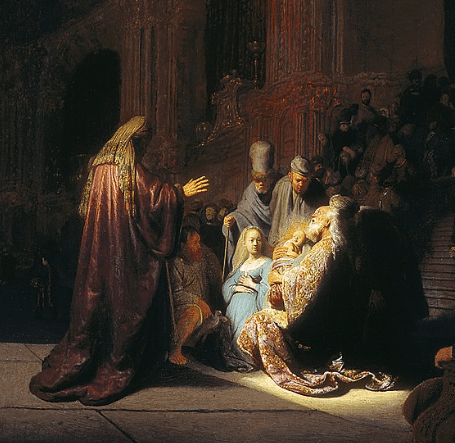
 Considering the Bible