7 He who has an ear, let him hear what the Spirit says to the churches. To the one who conquers I will grant to eat of the tree of life, which is in the paradise of God.’
Here again I confused life with rewards. You see, I used to read it as – To the one who conquers, the right to receive rewards is granted. That is the way I read it when I was ensconced in the “once saved always saved” OSAS teaching. I couldn’t read it for what it seems to be saying, that is those who “conquer” (whatever that may mean) will have access to the tree of life.
Now here comes my assumption. Granted, I don’t want to sound like a 3 year old in Sunday school class, where every question is answered by “Jesus”, but the Word is centered on Him, and all prophecy, narrative, laws and poetry of the good book points to Him. If that is a safe general assumption, would it be too far a stretch to consider the tree of life to be the Master Himself, that in the symbolism of the book of Revelation, the tree of life is Jesus. Remember now, He Himself has witnessed that He is a door, bread, light and life. He did not shy away from describing Himself in various ways.
If this “assumption” is correct, that is that Jesus is the tree of life in the paradise of God, we are granted access to Him through conquering. Where am I going wrong here?
So, this is the stumper, for John is writing to a church, the church of Ephesus, and Jesus is speaking of the churches lost love. In this regard, might the conquering (for this church) be the repentance Jesus spoke of, the return to the first love, that realization of a believer getting distracted, of a forsaken love. Of a believer in desperate need of running back to the One who died for us.
Ok, here is my desire. I want my faith to be a simple faith, a faith where I am in connection with Him, where I can actually understand His will for me and I am granted the courage and boldness to follow, simply out of love for Him. A faith where I understand the Spirit’s message, with the Word of God echoing in my mind, and the character of our great Savior always before me.
You know, in these conditional security posts, I sometimes come away thinking of the negative, the “if” in it all. Yet His love is draws me and you and will continue to draw us through the trials and troubles, the doubts and struggles, the fear and pain. We need to keep our eye on Him, for He is good, He wants us home, and He has suffered for us, experiencing the trials and temptations of this old planet, and succumbing to the terrors of the cross in the Father’s will and for our good.
Looking away from Him, and to any other so called savior is the temptation we must resist. We are called to continue in a faith in the Savior, the One we need to follow.
The same apostle wrote
1 John 5:4 For everyone who has been born of God overcomes the world. And this is the victory that has overcome the world—our faith.
We can honestly say that John was consistent, for he spoke of the victory, (or the conquering?) as being our faith.
So when you hear someone tell you to keep the faith, remember that it is your faith that will conquer the enemies of our lives, for our faith in the Savior is our life, and will give us the victory, and allow us to eat from the tree of life.
For faith grants us to be in fellowship with the Savior.
Thanks again for coming to visit. I hope you found something of interest in this post and would appreciate a comment, to begin a discussion. If you would like to receive daily posts from Considering the Bible, click on the “Follow” link below
Do not be deceived: God is not mocked, for whatever one sows, that will he also reap. For the one who sows to his own flesh will from the flesh reap corruption, but the one who sows to the Spirit will from the Spirit reap eternal life. And let us not grow weary of doing good, for in due season we will reap, if we do not give up. – Gal 6:7-9 ESV
As one who spent most of his life in the Lord under the teaching of once saved always saved (OSAS), when I quickly review the passage above, I automatically think of the theme of rewards in the afterlife. It is a common teaching and given the background of the teaching I was receiving, made sense in many ways. After all, my teachers spoke confidently of the New Testament teaching the OSAS doctrine, sometimes providing a proof text to back up their claim. The few verses that do not fit the OSAS teaching must surely have a simple explanation. “Loss of rewards” is the slot this passage fell into. This response satisfied my curiosity for many years.
But as I read the passage, I want to be careful of not inserting words into the text that are not written down. We all do it, at least unintentionally I am sure, but we so often gloss over the text due to our familiarity, that the text isn’t allowed to communicate it’s actual message.
As an example, I often read verse 8 in the following manner.
For the one who sows to his own flesh will from the flesh reap corruptionloss of rewards, but the one who sows to the Spirit will from the Spirit reap rewards in the afterlifeeternal life.
Can you identify with my assumptions of the authors intent? If OSAS is the teaching of the New Testament, we must interpret the passage in a manner such as I have described. We cannot allow the verse to inform us that a continual sowing to the Spirit will result in eternal life, if we are eternally secure at the point of conversion. That just doesn’t fit the overall teaching of the New Testament!
Or does it?
As many also may know who have followed this blog, I have attempted to provide passages that bring the OSAS doctrine into question. If of interest to my reader, search Considering the Bible for “Conditional Security”. The number of posts dealing with this topic have increased greater than I had originally expected, and I still have additional passages waiting to be written and published.
When I began to have my initial doubts on OSAS, it was due to the Hebrews passages that are so often depended on. The I tripped over a passage in 1 Peter. Eventually I stumbled onto a passage in Colossians that caused quite a stir in my thinking, and as I brought the question up in a meeting, I received a reaction from a brother that mirrored my attitude regarding any challenge to the OSAS teaching. Conditional Security – Colossians 1:21-23. Since then, I have reconsidered my attitude regarding a commitment to OSAS, and found a growing number of passages that to varying degrees refute the teaching.
Maybe – just maybe – the New Testament does not provide the general overall (non-specific) OSAS teaching that my former teachers depended on.
My rose colored glasses are slipping off, and as the passages pile up that bring OSAS into question, I will also reconsider passages that OSAS depends on, in order to reconsider their meaning. One of the favorite passages I referred to in my OSAS days was John 10:28-30. That passage surprised me in my study, and allowed for a perspective I hadn’t allowed previously. Conditional Security – John 10:28-29
I suppose I have somewhat drifted from the intent of this study in Galatians to more of a general discussion on the topic of OSAS. For that I do not apologize, since I often hear the claim that general Bible teaching supports OSAS, and that a verse that may indicate otherwise requires to be “brought into line”. Let us seek to carefully reconsider “general” teachings that seem to conflict with specific Bible verses. This is a massive undertaking, and we need His grace to be open to these challenges, even if it is to simply admit blind spots we may have in our thinking.
May God provide us all wisdom and understanding as we seek to grow in our knowledge of Him and His message to us.
For we all know that He is good, and that He is good all the time.
Thanks again for coming to visit. I hope you found something of interest in this post and would appreciate a comment, to begin a discussion. If you would like to receive daily posts from Considering the Bible, click on the “Follow” link below
11 And they have conquered him by the blood of the Lamb and by the word of their testimony, for they loved not their lives even unto death.
Who was the book of Revelation written to? The unsaved? Jewish proselytes? Roman soldiers? We all know who the recipients of this final book of the Bible was written to. John makes it clear in the very first verse.
Rev 1:1
The revelation of Jesus Christ, which God gave him to show to his servants the things that must soon take place. He made it known by sending his angel to his servant John,
The message was for those who had entered into life, who had trusted in the Messiah, and who were undergoing trials, like all believers. (To be a believer is to undergo trials.)
Although some may consider the following discussion on Rev 12:11 to be based out of a vacuum, I would request your consideration of my thoughts.
The believers in the verse above were described as conquering him – the accuser of the brethren – through the blood of the lamb and by the word of their testimony. This conquering is a common theme in Revelation, and we will see it come up in our studies on conditional security in the Book of Revelation quite often. Nevertheless, for Revelation 12:11, John defines these saints as overcoming the accuser through two actions – the death of Christ (the blood of the lamb) and the word of their testimony. (As a matter of fact, their martyrdom is a third action described in the passage, but the martyrdom is a result of the first two actions and doesn’t relate to the point of todays post.)
This is an amazing claim of John, since he is the apostle who often stated the only requirement for salvation was to believe. (Check the gospel of John and few if any time does he link belief with repentance, works etc.)
The act of faith is not to be ignored or glossed over in this verse, for the object of the saint’s faith is the One who shed His blood, yet John couples that faith with the act of the saint giving testimony, of providing witness of the faith they claimed to own.
Although it may be conjecture on my part, I fear the witness we give in the modern church is somewhat acceptable to the culture we exist in. It is, at the least somewhat palatable for the culture to accept our message of “inviting Jesus into their heart”, of “doing good and going to church”, of being a “nice” Christian that doesn’t rock the boat.
Believe me, I am one who falls into this very thinking far too often, but those in John’s day were speaking of Christ, not as a King, but THE King, a Ruler over the most powerful, jealous and vengeful government the world had ever seen. The message was a dangerous message, and by preaching this message of a loving yet ruling King calling followers out of the nations, the saint would place his life on the line. Out of that commitment to the King, the saint would overcome the accuser. The saint would be strengthened in his security before His God, and confirm his own standing before his Savior.
What thinkest thou? Is the security we so desperately seek a security that is frivolous or costly at times?
What would it mean for a believer to not overcome?
Thanks again for coming to visit. I hope you found something of interest in this post and would appreciate a comment, to begin a discussion. If you would like to receive daily posts from Considering the Bible, click on the “Follow” link below
They will make war on the Lamb, and the Lamb will conquer them, for he is Lord of lords and King of kings, and those with him are called and chosen and faithful.”
Those with Him are described as chosen and faithful.
First off, it is ludicrous that “they” will make war with the Lamb. “They” can’t kill Him again, for He has an indestructible life. “They” are fighting against a Lamb – How crazy is that! A Lamb that has shed His blood for those very ones who are fighting against Him.
Yet, we are all like that are we not? When was the last time you were completely compliant, obedient to His every word and way? He will conquer His enemies, through means and methods He has established, though a sacrificial love that makes the conquering complete, effective and thorough!
It is also good to remember that He is the Lamb (and we are not) and that the Lamb will conquer. All action is described as being His!
The chosen and faithful are simply with Him. Yet those with Him are called faithful. Those with Him are not described as those who had faith, or those who once believed, or that raised their hand at a church service once.
Those with Him during His conquering are faithful. The term faithful is an adjective. For a quick reminder on what an adjective is, I refer you a definition below.
Adjectives describe or modify—that is, they limit or restrict the meaning of—nouns and pronouns.
The noun being described are “the called”, correct? They are described as faithful. To describe someone as faithful, there needs to be evidence!
Let me try to explain it in simple terms so I can understand it. (Yes – I sometimes get lost in my own thoughts!)
I don’t see a red car and declare – “That blue car sure is nice!” The evidence tells me it is a red car, even if my favorite color is blue! If I stand out in the rain, I don’t shout – “The day is sunny and bright” The adjective I naturally use describes the evidence, not my wishes.
Those that were called, that were with Him are described as faithful. The evidence of a faithful life must have been obvious, for the one who was overseeing this writing.
May we as believers, in our faltering and frail faith, exercise a life that will provide evidence of faithfulness. Proof that others may see and naturally describe us as faithful. To achieve this result, we must not look to them to see if they are noticing, but look to Him, to His conquering victories, even to the conquering our our own wills.
For He is good and He is good all the time
Thanks again for coming to visit. I hope you found something of interest in this post and would appreciate a comment, to begin a discussion. If you would like to receive daily posts from Considering the Bible, click on the “Follow” link below
so that Christ may dwell in your hearts through faith–that you, being rooted and grounded in love, – Ephesians 3:17
May may may. I had an engineering professor once teach the class that “may” will become a critical word as we enter into report writing in our careers. He was so right!
When I say “may” what do you understand?
A dictionary on the web, for the word may, “may” help. (Underlining added)
may
auxiliary verb, present singular 1st person may, 2nd may or (Archaic) may·est or mayst, 3rd may; present plural may; past might.
(used to express possibility): It may rain.
(used to express opportunity or permission): You may enter.
(used to express contingency, especially in clauses indicating condition, concession, purpose, result, etc.): I may be wrong but I think you would be wise to go. Times may change but human nature stays the same.
(used to express wish or prayer): May you live to an old age.
I find it interesting that the apostle, as he speaks to the church of Christ in Ephesus, that he speaks of the indwelling of Christ being possible, an opportunity presented, if we understand the term “may” correctly, In other words, does Paul intend to inform the believers something I am not reading? Is Pauls message to the believers in Ephesus to be understood as follows?
… that Christ actually and without debate dwells in your hearts through faith–that you, being rooted and grounded in love, are saved due to one decision in the past- Ephesians 3:17
A short post for your consideration. God is good, and His love for us is steadfast, eternal and deep. We have much to be thankful for and His love properly understood should motivate us to delve deeper into a relationship with the lover of our souls.
Be blessed today and remember His goodness, faithfulness and deep love He has expressed at Calvary for us. He is good!
Thanks again for coming to visit. I hope you found something of interest in this post and would appreciate a comment, to begin a discussion. If you would like to receive daily posts from Considering the Bible, click on the “Follow” link below
Our last set of verses we will consider in the book of Jude.
Verse 12 is the original portion I was going to provide for the sake of our topic, but as I looked through the passage, I just couldn’t resist including the passage from verse 4 on.
So let’s take a few moments, and listen to Jude as if we were hanging out 2,000 years ago in a brothers home, getting ready to worship Him.
Jude 1:11 Woe to them! For they walked in the way of Cain and abandoned themselves for the sake of gain to Balaam’s error and perished in Korah’s rebellion. Jude 1:12 These are hidden reefs at your love feasts, as they feast with you without fear, shepherds feeding themselves; waterless clouds, swept along by winds; fruitless trees in late autumn, twice dead, uprooted; Jude wild waves of the sea, casting up the foam of their own shame; wandering stars, for whom the gloom of utter darkness has been reserved forever.
Jude brings forward three Old Testament characters to describe these ungodly people, along with the predominant characteristics associated with these three.
Cain
Walking in the way of Cain. Let us remember that Cain was the first natural born human on earth and the natural inclination of this firstborn was to bring a sacrifice of his own choice to the Lord. He was religious. He is the father of religion, and in that religion, the works of envy, hatred and jealousy erupt. We see this to be a consistent attribute of religion, even to the ministry of the Lord Himself.
The work of religion is to frustrate the grace of God, and as the religious Jews sought to crucify the Savior, they brought the very act that began with Cain to its natural end.
Religion not only kills, it is also deadly, for it deceives the religious adherent, and seeks to destroy truth to support it’s own lies.
Cain killed Abel freely, since there was no social restrictions at the time, and this allowed for the the very nature of the religious to be seen clearly. Nowadays, we cover it up with niceties, with pleasant sayings and polite nods, but given the right circumstances, religion erupts into all forms of hatred, envy, works of violence and jealousy.
These certain men that had crept into the body, whether they were believers at one time or not, have woe coming upon them. But the descriptions of these ungodly men continues.
Balaam
Abandoned themselves for the sake of gain. As many who may have followed my blog, you may recall that I have a distinct concern for the professional Christian. Many who are professional Christians have serious hearts seeking the God who delivered them, but the office of the professional Christian attracts many who care not for the Lord but only seek after the gain they may receive by speaking great swelling words.
Although this description again does not help us with our topic, it is instructive to understand Jude’s position for the sake of the health of the church. Those who abandon truth to seek gain are not our allies. They are certain men who are condemned to perish.
Korah
Jude’s last character is Korah, the one who led a rebellion against Moses, God’s appointed leader.
Who do you identify in your life as God’s leader? For we need to know who our leader is in order to take the correct side, that we may determine who is walking as Korah did in the camp.
But let us be clear. There is one leader that pleases God in each of our experiences, and He is the One who sacrificed Himself for our sake. Any person who seeks to take His place as an authority in a Christian’s life is following in the rebellion of Korah.
Each of these character’s Jude provides gives the believer, upon reflection, good direction as to those who may be of danger within a congregation. It is for the believer to reflect on these characteristics and to first of all, check our own condition before the Lord. These certain men above are warnings for the church, and we ignore them to our detriment. But within these descriptions, there does not seem to be any clear teaching regarding our topic of conditional security.
Until our next verse. And I will admit that my understanding of Jude’s phrasing in this verse lends itself to various interpretations, so I try not to go beyond the limits he allows with his statements.
Jude 1:12 These are hidden reefs at your love feasts, as they feast with you without fear, shepherds feeding themselves; waterless clouds, swept along by winds; fruitless trees in late autumn, twice dead, uprooted;
The phrase I will bring to your attention is “shepherds feeding themselves”. Why does this perk my ears up? I suppose those who attain to a status of shepherd would have shown life at one time in their witness. Now granted, I may be inserting my understanding into this phrase, but consider.
As a body starts to meet, opportunities to minister are various and abundant, and for a believer to exercise the gifts given to him or her, amongst a small, close knit group of believers, allows for a very personal examination of the believers way of life. Passion for the Lord, a commitment to others, a desire to see God’s will expanded in the area all signal to the life of God in a person. These who exercise this type of passion commonly “float” to the top in the body, and become shepherds of others. And in doing so, open themselves to temptations that may be destructive, as we saw above.
Paul took up this subject when he warned Timothy that young men should not to take on leadership roles too early, for fear the converts fall into condemnation of the devil. (We will address this verse under the Conditional Security topic in a separate post!)
1 Timothy 3:6 He must not be a recent convert, or he may become puffed up with conceit and fall into the condemnation of the devil.
Although Jude does not directly address our current topic in every verse we have reviewed, many times he provides teaching that does not refute the teaching. During my time in the OSAS camp, I found that this passage was great for condemning every teacher that I didn’t like, or that didn’t carry water for my denomination, but I fear there is more to this passage than a simple us / them mentality. Jude is warning us of serious dangers that are lurking in the camp, and we need to be diligent in assessing our own hearts, judging our own actions, and being open to the leading of the Spirit in relation to the attitude, lifestyle and submission of those who seek to lead us in the way of God.
The Lord taught us of these men, and I will finish with His words.
John 10:10 The thief comes only to steal and kill and destroy. I came that they may have life and have it abundantly.
The thieves are abundant! God is good! The difference makes all the difference!
Thanks again for coming to visit. I hope you found something of interest in this post and would appreciate a comment, to begin a discussion. If you would like to receive daily posts from Considering the Bible, click on the “Follow” link below
Half way through our set of verses in the epistle of Jude and so much to consider. I have not spent a concentrated time in the book of Jude for many years and find his writing to be challenging.
Good stuff to review and consider! Let us continue with the next three verses.
Jude 1:8 Yet in like manner these people also, relying on their dreams, defile the flesh, reject authority, and blaspheme the glorious ones. Jude 1:9 But when the archangel Michael, contending with the devil, was disputing about the body of Moses, he did not presume to pronounce a blasphemous judgment, but said, “The Lord rebuke you.” Jude 1:10 But these people blaspheme all that they do not understand, and they are destroyed by all that they, like unreasoning animals, understand instinctively.
Jude again refers back to the ungodly people in verse 4, comparing the cities of Sodom with them, speaking of their defilement of flesh. Is he referring to the sexual immorality those of Sodom entered into?
Note that the basis of this defilement is their reliance on some dreams they were experiencing, which brings up a salient point. Is it wise to depend on subjective dreams or visions in finding the will of God? This verse definitely does not paint that thinking in a good light, and when we consider the objective Word that has be provided for our reference, along with the Spirit of God to give aid in understanding the message, dreams seem to be a very poor choice to rely upon.
We have the Lord we can rely on, trust in and believe, and seeking dreams for guidance is not wise. Excuse the sidebar, but for believers to abandon the Word and prayer for the sake of dreams is very much like turning my back on a flowing fountain to find relief in a broken cistern. But that is our inclination, and as such we need to be rescued from.
But back to our topic of conditional security.
This set of verse speaks of two parties. Micheal, one of the highest angels in God’s creation, did not abandon his position, but rebuked the devil correctly through the Lord, not assuming any authority of his own. Micheal did not reject authority!
This ungodly people described by Jude have no respect, no understanding of the position they consider themselves in. Jude speaks of these ungodly people as having no understanding. It seems obvious that this particular portion of Jude does not directly address our current topic, other than stating that if the ungodly were believers at one time, they have fallen far, and are in danger of destruction by their choice.
Our last portion of the passage we are dealing with will find ourselves reading Jude’s description of ungodly people. Some of his terms may shed some light on this discussion.
Hope you can join me as we finish this portion next time!
Thanks again for coming to visit. I hope you found something of interest in this post and would appreciate a comment, to begin a discussion. If you would like to receive daily posts from Considering the Bible, click on the “Follow” link below
Let’s continue with our time in Jude, by reading our next two verses.
Jude 1:6 And the angels who did not stay within their own position of authority, but left their proper dwelling, he has kept in eternal chains under gloomy darkness until the judgment of the great day– Jude 1:7 just as Sodom and Gomorrah and the surrounding cities, which likewise indulged in sexual immorality and pursued unnatural desire, serve as an example by undergoing a punishment of eternal fire.
Our first verse speaks of angels not staying within their position of authority. They had been given a position of authority, and by their own volition decided to abandon a position they had always had.
Jude describes their action with two verbs.
Not Stay
This term may also be translated as did not keep. When I see this term, I automatically think of “guarding” something. It is the term tēreō (τηρέω) and is used in many ways, of which include the manner Herod restrained Peter when he placed him in jail. He “guarded” the jail, in order to restrict Peter from escaping. It is also used multiple times of how Jesus has “kept” His disciples, guarding them from destruction in John 17:12.
John 17:12 ESV – While I was with them, I kept them in your name, which you have given me. I have guarded them, and not one of them has been lost except the son of destruction, that the Scripture might be fulfilled.
Sometimes this term refers to “keeping” or “guarding” the commands of Christ given to believers. An example such as
John 14:21 ESV – Whoever has my commandments and keeps them, he it is who loves me. And he who loves me will be loved by my Father, and I will love him and manifest myself to him.”
Jude uses this term four times in his short book, the first verse of his epistle speaking of the believers being kept for (or by) Jesus.
Jude 1:1 Jude, a servant of Jesus Christ and brother of James, To those who are called, beloved in God the Father and kept for Jesus Christ:
The last verse of his epistle places responsibility on the believer, keeping ourselves in the love of God.
Jude 1:21 ESV – keep yourselves in the love of God, waiting for the mercy of our Lord Jesus Christ that leads to eternal life.
With that short review, we see that these angels did not keep (or guard) their position, they did not value their privilege. This speaks to their estimation of grace they had received from the Lord, in His granting them a position of authority. They did not value the grace that was bestowed upon them.
Left
This term is apoleipō (ἀπολείπω), and is used only 6 times in the New Testament. It speaks to something being left behind, of something that is abandoned. Paul uses the term in 2 Tim 4:13 when he refers to a cloak, and some books and parchments he left with Carpus in Troas.
2 Timothy 4:13 When you come, bring the cloak that I left with Carpus at Troas, also the books, and above all the parchments.
The author of Hebrews speaks of a rest in Hebrews 4:8 that has been left behind for believers.
Hebrews 4:8 For if Joshua had given them rest, God would not have spoken of another day later on.
The author of Hebrews also uses it in the negative sense when he speaks in Hebrews 10:26, referring to the great sacrifice our Lord provided.
Hebrews 10:26 ESV – For if we go on sinning deliberately after receiving the knowledge of the truth, there no longer remains a sacrifice for sins,
No other sacrifice is available, no other option other than the one sacrifice provided through the Lamb of God. There is nothing left behind that is available for the one seeking to know God. All other options are abandoned and to be jettisoned from our thinking as of any merit!
So the angels left, abandoned and forsook their first estate. Why is Jude using this example of a created being actively abandoning a position of grace to enter into judgement?
A warning? Of course, but is this example an “apples to apples” comparison with a believer’s potential experience? Is he being somewhat hyperbolic, frivolous or extending a threat in using this warning when applied to believers who many teach are eternally secure?
I mentioned the angels actively abandoning a position of grace above. As you may remember, I use Blue Letter Bible as my default study tool and for good reason, since it is very intuitive and provides the tools that assist me in my writing. One of those tools is Greek parsing, which identifies properties within each verb of the text.
Looking at the verb “left” in our verse, the following parsing comes up.
Note the description of the voice as being active. For a verse to have the active voice, this signifies the subject as the doer of the action. In this verse, the angels abandoned their estate. They were not acted upon, as if they were kicked out of their estate, but the angels performed this action of abandonment.
As a matter of fact, this voice is also used when Jude speaks of the angels not “keeping” their first estate above. Both actions, that of not keeping, and that of abandoning, were actions the angels executed.
How does Jude expect us to interpret this, for if we are eternally secure, this example of the angels abandoning their first estate seems to not quite be applicable. Is Jude bringing this example up simply to warn of judgement for the lost? Possibly, yet it seems he labors the concept of the angels having a good thing and walking away, with the resultant judgement coming to get them!
Jude continues with using Sodom and Gomorrah as a similar example of indulging in sexual immorality. Is Jude referring to the angels here, for there is no mention of the specific sin they chased after in their abandonment of their grace. I think not, but Jude does refer to the ungodly people in verse 4 as changing the grace of God into sensuality. I think Jude is reaching back to verse 4 when he brings up the topic of the cities of Sodom and Gomorrah. The judgement the cities of Sodom underwent is an example of that which these ungodly people within the body will experience.
As an aside, it is interesting that the removal of all believers from Sodom and Gomorrah is spoken of often in the Word, and that all true believers (although few) were rescued from the judgment that fell on the region. But I don’t see where this verse addresses our topic of a believers security.
In conclusion, the example Jude uses of the angels leaving their estate brings our current topic of conditional security to the forefront, and is provided for my reader to consider. No matter where my gentle reader may land on this topic, it is only right to remember that our God is a covenant keeping God and that in every instance where we may think He has abandoned us, we are mistaken! He is actively keeping us, guarding us from destruction.
As believers, we need to seek His will, conform to His nature, and look to be like Him. In the discipline of seeking Him, of understanding His grace to us and appreciating His constant care for us, we will be careful in not estimating His love for us as less than it is, chasing after some alternative as the angels above did. And coming into destruction.
He is good all the time!
Thanks again for coming to visit. I hope you found something of interest in this post and would appreciate a comment, to begin a discussion. If you would like to receive daily posts from Considering the Bible, click on the “Follow” link below
This passage will require multiple posts, but to introduce the passage, it is good to review the complete section and get an overall impression of the message Jude intended his hearers to hear. Take a few seconds to slowly read through this passage as if you had just received it from the apostle and your local body of believers were hearing it for the first time.
Jude 1:4 For certain people have crept in unnoticed who long ago were designated for this condemnation, ungodly people, who pervert the grace of our God into sensuality and deny our only Master and Lord, Jesus Christ. Jude 1:5 Now I want to remind you, although you once fully knew it, that Jesus, who saved a people out of the land of Egypt, afterward destroyed those who did not believe. Jude 1:6 And the angels who did not stay within their own position of authority, but left their proper dwelling, he has kept in eternal chains under gloomy darkness until the judgment of the great day– Jude 1:7 just as Sodom and Gomorrah and the surrounding cities, which likewise indulged in sexual immorality and pursued unnatural desire, serve as an example by undergoing a punishment of eternal fire. Jude 1:8 Yet in like manner these people also, relying on their dreams, defile the flesh, reject authority, and blaspheme the glorious ones. Jude 1:9 But when the archangel Michael, contending with the devil, was disputing about the body of Moses, he did not presume to pronounce a blasphemous judgment, but said, “The Lord rebuke you.” Jude 1:10 But these people blaspheme all that they do not understand, and they are destroyed by all that they, like unreasoning animals, understand instinctively. Jude 1:11 Woe to them! For they walked in the way of Cain and abandoned themselves for the sake of gain to Balaam’s error and perished in Korah’s rebellion. Jude 1:12 These are hidden reefs at your love feasts, as they feast with you without fear, shepherds feeding themselves; waterless clouds, swept along by winds; fruitless trees in late autumn, twice dead, uprooted; Jude 1:13 wild waves of the sea, casting up the foam of their own shame; wandering stars, for whom the gloom of utter darkness has been reserved forever.
My intent in this passage is to try to define if Jude is communicating to the body of believers something that has become corrupted, something that has fallen away from an original condition. Has a certain group within the body fallen away from their original standing, or has the body simply been deceived by false teachers?
Some who read may be of the persuasion that condition security is blasphemy, and I understand that thinking, for as many know, I lived in that camp for decades. To even consider this teaching, if you are of this understanding is commendable for it shows a teachable spirit, and an openness to the Word of God.
With that said, it is important for each of you to exercise discernment (and not simply an angry argumentative spirit!) when considering this (and any passages) within this topic.
Let’s consider the first two verses with this post.
Jude 1:4-5
4 For certain people have crept in unnoticed who long ago were designated for this condemnation, ungodly people, who pervert the grace of our God into sensuality and deny our only Master and Lord, Jesus Christ. 5 Now I want to remind you, although you once fully knew it, that Jesus, who saved a people out of the land of Egypt, afterward destroyed those who did not believe.
I would like to consider the two actions taken by the ungodly people in verse 4. To pervert and to deny.
To pervert is to change, transfer, exchange or to change sides. Now of course the action of exchanging is being done on the grace of God, and it cannot be said, as far as I understand, the change described by Jude is directly described as on the people, that is from godly to ungodly. That does not make any sense, so I will not attempt to make that link. The exchange is grace into sensuality! That seems abundantly clear.
Yet is Jude speaking of people who have known the grace of God in their life and turned it into an excuse to simply live by their sensual nature? Or is he referring to people who have taken the factual truth of the grace of God and simply exchanged the truth of the grace of God it into an opportunity to tickle their audiences ears, to gain a following and to reap some type of selfish benefit? This is a question the verse actually does not addresses directly, but the fact that they “crept in” may speak of these ungodly people as never having the life we share.
Again, the term “deny” may be considered in the same manner, where the denial is a not so much as an inner truth that these ungodly people decide to act upon, but a teaching that these folk, who may have never known the life of the Spirit decide to propagate.
Yet the passage speaks of denying our Master, not the message, or the teaching, or the truth of the identity of the Lord, but Jesus Himself. Again, did they know Him and deny Him, or did they continue in their denial of true belief as they entered into this congregation?
How did they fool (having “crept” in) this group of believers?
One more verse to consider.
5 Now I want to remind you, although you once fully knew it, that Jesus, who saved a people out of the land of Egypt, afterward destroyed those who did not believe.
Jesus saved a people, yet destroyed those who did not believe. Wow, there is a lot to unpack with this phrase.
My initial thinking is Jesus saved a people (multiple individuals who exercised faith in the God Moses taught) yet prior to entering the promised land, fell away into apostacy, sinned against God and became rebellious. fighting against the leadership of Moses and the Lord who rescued them. Of these who did not believe, yet exercised belief initially, Jesus destroyed them. A clear reference to the conditional security teaching topic referred to in this series.
Yet, might Jude be saying something different? Might he be speaking of “a people group” eventually known as the Israelites, who was rescued out of Egypt, and in the wilderness certain people within the group, proved by their actions to be unbelievers all along. In other words, out of the group that was rescued, certain individuals were destroyed due to their lack of personal faith.
Even as I say that, I fear I may be inserting words into the text that may not be intended. I expect my reader to take into consideration this freedom I am taking and judge rightly.
Is Jude referring to individuals who exercised faith on the night of the Passover and then fell away, only to be destroyed? Or is he speaking of the group as a whole whom Jesus rescued, out of which certain individuals showed their true colors and were judged accordingly.
What think ye? Let me know if the comment section if you see a particular phrase that helps you understand this passage clearly.
One thing that is clear to me at this point is that Jesus is a rescuing Savior and a keeping Savior. Jude refers to Him as such in the opening verse, and this is His nature to save and to keep. Will we cooperate with our Savior, seek Him and desire to follow, imperfectly as we are, with all our foibles and faults? He is the Lord of all, and He is able to keep us, He is of the nature to keep us and has died to deliver us from our doom.
Is that important to you, or is the tremendous act of grace that He has performed on our behalf something that is easily ignored in your life? Consider
Thanks again for coming to visit. I hope you found something of interest in this post and would appreciate a comment, to begin a discussion. If you would like to receive daily posts from Considering the Bible, click on the “Follow” link below
Romans 8:12-14 12 So then, brothers, we are debtors, not to the flesh, to live according to the flesh. 13 For if you live according to the flesh you will die, but if by the Spirit you put to death the deeds of the body, you will live. 14 For all who are led by the Spirit of God are sons of God.
I am sure my readers will agree with me that the 8th chapter of Romans is speaking to believers, those who are on the path of following Jesus, seeking to obey Him. There is some that may think Paul was referring to himself as an unbeliever in the previous chapter, but I know of no argument that claims Paul is not speaking to (and of) true believers in this chapter. As a matter of fact, this passage begins with
“So then, brothers, we…”
Paul even includes himself in this group he is addressing in this passage.
In this passage he speaks of our obligations and uses a financial image to make his point. He is coming back to a similar financial concept he used in Romans 6, where he spoke of “wages” of sin. In this passage, he brings in the financial thought of being a debtor, one who is obliged to pay something to another party.
In Paul’s mind (I think) he is drawing for us a picture of obligation to align our thinking towards who we are to serve. If I am obliged to pay someone something, due to a debt incurred, my efforts will result in paying the one I am in debt to.
Think of a mortgage. I receive the right to live in a house and say it is mine, but every month I go to work in order to have funds to make a payment to my bank. My bank receives the fruit of my labor throughout each month of working simply because of this agreed upon debt. I am a debtor to the bank. The bank is the master in this situation, for I am obliged to pay the bank an agreed upon sum of funds to maintain my living conditions. My end of the bargain is the eventual owning of the building I call home. I will eventually own the home. Eventually.
Let’s return to the passage we started with. Paul is speaking to believers, to brothers, defining who we are in debt to, who we owe our service to, who we are obliged to pay with our lives.
Prior to our salvation, we were debtors to the flesh, to the old nature that drove us away from the True God. Our end of the bargain with the flesh was that we were provided wages, and the wages of this sinful bent away from God was death, or separation from God. A definitely bad “mortgage” situation!
In delivering a sinner from this dreadful condition of slavery to the flesh and of receiving a payment of death, the Spirit of God has given life to our mortal bodies. (Romans 8:11) Out of this amazing gift of life, obligations are now “up for grabs”, for it appears the believer has a choice.
Remain in the old life, obligingly paying the flesh service (without requiring to!) or to live to the Spirit, putting to death the deeds of the body. This seems so obvious and such a slam dunk for the believer to understand and to obey. But let me ask you.
What are the deeds of the body? What is the result living by the Spirit, in that the deeds of the body are put to death? How can I kill the deeds of the flesh?
A few years ago, I heard a teacher refer to Galatians as Paul’s practice book for his magnum opus letter of Romans. (Some practice book!) But there may be something to this thinking, since large swaths of Romans seems to have seed thoughts in the book of Galatians. One passage I would refer you to is in Galatians 5, where Paul speaks of walking in the Spirit, with the result being the believer not fulfilling the lust of the flesh. Echoes of Romans 8?
Let’s take a moment to consider Paul’s list of the works of the flesh he provides us in Galatians 5:19- 21.
Now the works of the flesh are evident: sexual immorality, impurity, sensuality, idolatry, sorcery, enmity, strife, jealousy, fits of anger, rivalries, dissensions, divisions, envy, drunkenness, orgies, and things like these. I warn you, as I warned you before, that those who do such things will not inherit the kingdom of God.
Now before we go any further, please do not fall into the trap I fell into by seeking to set up rules that would restrict these activities. Doing this breeds pride, which blooms into strife, dissensions envy and the such. Sure I wasn’t drunk, but I dang well made sure made everyone knew of my religious achievements! And how much better I was than them! Wow.
Such foolishness, for Paul is not telling us to restrict our activities from some list in order to attain some status, for he doesn’t even give us a full list that we can check off. At the end of the passage, he adds to the list of specific works of the flesh “things like these”. How can I check off a non specific work – so frustrating! But that may be the point!
Both in Romans and in Galatians, the focus is on following Someone, not on some set of rules or self determination that will keep us from obeying these dastardly former debtors called the deeds of the flesh. For if we walk by the Spirit, these works of the flesh will not be evident in our lives. The fruit produced in our lives will be of the Master’s character.
But the fruit of the Spirit is love, joy, peace, patience, kindness, goodness, faithfulness, gentleness, self-control; against such things there is no law.
Notice that we are not even to follow after the fruits of the Spirit, but the Spirit Himself, and in doing so, the fruits will be evident in our lives. With all this said, let’s return to our original passage in Romans 8, and the key phrase that drives this particular post. Notice that Paul speaks of the believer dying.
Read Romans 8:13 one more time.
For if you live according to the flesh you will die, but if by the Spirit you put to death the deeds of the body, you will live.
How are you doing so far in your pilgrimage? In your walk with the Lord, has the fruit of the Spirit become evident in your life?
Please understand that continual fruit produced in our lives is an extended life long goal, and that recurring temptations (and the falling into these temptations) may produce setbacks, but is not to be the overall trajectory of the believers life. Following the Master, since He is so different than own nature, suggests periods of confusion, disappointment, struggle and failure in our own lives, as we learn of His ways.
My friends, an honest evaluation is encouraged for those who claim to be believers in the Messiah. He has given us great encouragement that by following Him, He provides fruit in our lives for others to see.
Can we be open to an honest assessment of our walk with the Lord? Golly, the judgement of a non-believer may be beneficial for our learning. If we hear from family, close friends or acquaintances that we are a judging, hateful or divisive person, we should consider their words! A discerning spirit is required, but sometimes the harshest statements I have heard have been the most beneficial for my spiritual life.
One thing I want to make clear though is that I am definitely not advocating a self judgement here, a navel gazing exercise that produces no good result. A bit further into this passage, Paul speaks of the Spirit bearing witness with our spirit. This is an additional witness the Lord provides, but out of our current passage, and with the reference to fleshy deeds being indicative of the believer living according to the flesh, I would like to encourage the reader to understand how others interpret our lives in relation to deeds of the flesh / fruit of the Spirit.
Seek out an honest friend, or a mature believer, one that you know speaks the truth. Do not seek out a “nice” person! Not much good hearing nice things about yourself, for if you are like me, nice things are always being said in my head about wonderful me!
Also, better if this person has a history with you for an extended period of time. Ask difficult questions, for this is the time to check.
Living according to the flesh will pay out in death and the clock is ticking!
Thanks again for coming to visit. I hope you found something of interest in this post and would appreciate a comment, to begin a discussion. If you would like to receive daily posts from Considering the Bible, click on the “Follow” link below
No one who denies the Son has the Father. Whoever confesses the Son has the Father also. Let what you heard from the beginning abide in you. If what you heard from the beginning abides in you, then you too will abide in the Son and in the Father. And this is the promise that he made to us–eternal life. I write these things to you about those who are trying to deceive you. But the anointing that you received from him abides in you, and you have no need that anyone should teach you. But as his anointing teaches you about everything, and is true, and is no lie–just as it has taught you, abide in him. And now, little children, abide in him, so that when he appears we may have confidence and not shrink from him in shame at his coming. If you know that he is righteous, you may be sure that everyone who practices righteousness has been born of him. – 1 John 2:15-29 ESV
Although this entire passage is very excellent, verse 24 is where I would like to draw your attention. John is placing the responsibility of abiding in doctrinal truth squarely on the disciples shoulders.
What? Carl – are you saying we have to maintain doctrinal purity to keep our salvation? Be careful before you jump into too many assumptions. The doctrinal purity being referred to here is in one subject, that is the person of Jesus being the Christ.
North American Christians have classified biblical teaching into a multiplicity of compartments, splitting hairs over issues that are of no eternal significance. John is dealing with the person of the Christ in this passage, – not how many angels fit on the head of a pin.
As disciples, we are responsible to follow the One who delivered us. We should desire and seek to please the right Person. This Person is described in the apostolic teaching we have been given in the New Testament.
Do you seek to understand who He is? Are you constantly referring back to the Biblical record for answers, and to compare the Scriptures against any and all teachers?
John is addressing the gnostic error that teaches that Jesus isn’t the Christ. But Carl – everyone knows that Jesus’ last name is Christ – no worries!
I think there is a bit more to it than that!
Thanks again for coming to visit. I hope you found something of interest in this post and would appreciate a comment, to begin a discussion. If you would like to receive daily posts from Considering the Bible, click on the “Follow” link below
For this my son was dead, and is alive again; he was lost, and is found.’ And they began to celebrate.
How often have I told myself about the parables, that they aren’t intended to build doctrine from, for they were intended as a life lesson for the audience, usually intended for a specific topic for a specific audience.
I admit the parable of the prodigal was intended to rebuke the Pharisees in their rejection of sinners and tax collectors coming into the kingdom. (The love of the Father in seeking and receiving His rebellious son is the set up for the end of the parable!) The punch of the parable is the last few verses of the parable, where Jesus addresses the older brother, and the jealous anger toward sinners and tax collectors coming into the kingdom that the older brother (Pharisees) exhibited.
But verse 24, couched in the middle of the parable provides some support for the conditional security teaching if we read of this rebel as a son of the Father. He, as a son, rebels against the Fathers love, and leaves his home. As we know the story, he eventually realizes his mistake and comes back looking for work. Little did he know (or remember) the immense love of His Father.
In talking with the older brother, the Father described His son as dead and yet he lives again. The son left his Father, literally walking away from his Father, breaking relationship with his Father and acting as if the Father no longer existed. Remember dear reader, he originally asked for his share of the inheritance, revealing his desire to see his own Father dead. The son’s rejection seemed absolute, and yet we need to deal with his initial and continued description as a son by Jesus and the Father in the parable.
It is noteworthy to recall that the son initiated this action, and that in all of the telling of this parable, the Father is seen as the One who sought wholeness and relationship within His family. The Father is never described as One initiating, encouraging or supporting any attitude of broken relationship within His family. It was the son’s decision only, and as the Father watched the son walk away, I am sure the heart broke and the tears flowed!
Remember, as I mentioned at the beginning of the post, this secondary understanding of the parable is only a possibility. If in my studies I had not found other scriptural support for this teaching, I am sure I would not mention (or even notice) this topic in reviewing this passage.
What do you think? Is there any support for the teaching of conditional security within the parable of the prodigal son. Let me know in the comments.
Be blessed.
Thanks again for coming to visit. I hope you found something of interest in this post and would appreciate a comment, to begin a discussion. If you would like to receive daily posts from Considering the Bible, click on the “Follow” link below
“When the unclean spirit has gone out of a person, it passes through waterless places seeking rest, and finding none it says, ‘I will return to my house from which I came.’ And when it comes, it finds the house swept and put in order. Then it goes and brings seven other spirits more evil than itself, and they enter and dwell there. And the last state of that person is worse than the first.”
Security
Many of the parables taught by the Lord address the issue of the security of the believer. It is also important to remember that the parables are given to make a specific point.
I remember as a young believer, being told not to make a parable “walk on all four legs” I am not sure what that means now that I think about it, but the message I got back then was to find one primary message from each parable. Some parables are obvious. Some (possibly due to my obtuseness) are not that obvious.
This one seems obvious. Notice in the passage that the house had been cleaned and garnished, but no occupant was mentioned. Jesus tells this parable immediately upon casting out a demon from a mute man. He is cleaning up the house of Israel, and has just released a demon from one of it’s citizens. Jesus then responds to the evil generation of the house of Israel (See Matthew 12:45) in warning them of their future condition. He will continue to address this “evil generation” many times in the gospels, warning them of their future and final state.
The Lord had just cast out a mute demon from a man and immediately “some of them” (See Luke 11:15) continued with their claim of the Lord being empowered by Satan. Jesus had provided ample evidence to the nation of His identity, yet they turned to a lie. Instead of embracing the God of deliverance, this evil generation condemned a guiltless man, crucified their God, and became a house that was open for demons.
For the previous three years, Jesus had been cleaning the nation (the house of Israel), in this particular instance, rescuing a victim of demon possession, while the leaders condemned the Deliverer. With the final rejection of God in the flesh, the nation should only expect those of the evil horde to return and possess the man (also called the house in this passage, ie. the nation of Israel) with many more than before.
Security and Obedience
Some may say that the nation of Israel had promises from God that made this scenario impossible to occur. Promises directly from God that guaranteed a bright and glorious future for the physical nation of Israel. After all, Israel was the recipient of the promises of God. Surely God’s promises could be counted on for security. To find a discussion on this topic I refer you to an earlier set of five posts for your consideration. The series starts with Promises to Israel – An Introduction
This passages lends itself to the truth of conditional security, generally teaching that, although many promises were granted to the nation of Israel, their continued stubborn refusal to submit to the Master left them open to “alternate influences” and a final destiny that was warned of often in the Old Testament and many times by the Master while walking amongst them.
Thanks again for coming to visit. I hope you found something of interest in this post and would appreciate a comment, to begin a discussion. If you would like to receive daily posts from Considering the Bible, click on the “Follow” link below
For anyone who eats and drinks without discerning the body eats and drinks judgment on himself. That is why many of you are weak and ill, and some have died. But if we judged ourselves truly, we would not be judged. But when we are judged by the Lord, we are disciplined so that we may not be condemned along with the world. – 1 Corinthians 11:29-32
Come on Paul, condemned with the world?
We can never be condemned with the world! Believers are rescued from this present evil world (Galations 1:4) and Jesus promised that we have overcome the world.
I personally believe there are no contradictions in our God breathed Bible. So how dare Paul break my security bubble by saying that if we are not disciplined, there is the risk of being condemned along with the world.
Note he says along with the world – with, by association, companionship, resemblance, possession, instrumentality, addition, etc.
I thought when we first got saved, condemnation along with the world was forever removed from our lives. And yet Paul brings this topic up to believers in Corinth.
As some who follow, I have written posts regarding the difference between judging and condemning, and found that judging may have a positive connotation to it. Think of when you win a formal debate, or a foot race. The audience judges you the winner!
The word Paul uses in this verse is condemn, and is not used in any sense of a positive judgement as described above. Check out the list below for all the times this word “condemn” is used, and consider the context of our verse in consideration today, as it relates to believers.
Can believers be condemned with the world? Take note of the multiple times Paul refers to judgement by ourselves or the Lord, previous to his using the “c” word.
New Testament verses containing the Greek word katakrinō, translated as condemn.
Matthew 12:41, 42 The men of Nineveh will rise up at the judgment with this generation and condemn it, for they repented at the preaching of Jonah, and behold, something greater than Jonah is here. The queen of the South will rise up at the judgment with this generation and condemn it, for she came from the ends of the earth to hear the wisdom of Solomon, and behold, something greater than Solomon is here.
Matthew 20:18 “See, we are going up to Jerusalem. And the Son of Man will be delivered over to the chief priests and scribes, and they will condemn him to death
Matthew 27:3 Then when Judas, his betrayer, saw that Jesus was condemned, he changed his mind and brought back the thirty pieces of silver to the chief priests and the elders,
Mark 10:33 saying, “See, we are going up to Jerusalem, and the Son of Man will be delivered over to the chief priests and the scribes, and they will condemn him to death and deliver him over to the Gentiles.
Mark 14:64 You have heard his blasphemy. What is your decision?” And they all condemned him as deserving death.
Mark 16:16 Whoever believes and is baptized will be saved, but whoever does not believe will be condemned.
Luke 11:31 The queen of the South will rise up at the judgment with the men of this generation and condemn them, for she came from the ends of the earth to hear the wisdom of Solomon, and behold, something greater than Solomon is here.
Luke 11:32 The men of Nineveh will rise up at the judgment with this generation and condemn it, for they repented at the preaching of Jonah, and behold, something greater than Jonah is here.
John 8:10 Jesus stood up and said to her, “Woman, where are they? Has no one condemned you?”
John 8:11 She said, “No one, Lord.” And Jesus said, “Neither do I condemn you; go, and from now on sin no more.”
Romans 2:1 Therefore you have no excuse, O man, every one of you who judges. For in passing judgment on another you condemn yourself, because you, the judge, practice the very same things.
Romans 8:3 For God has done what the law, weakened by the flesh, could not do. By sending his own Son in the likeness of sinful flesh and for sin, he condemned sin in the flesh,
Romans 8:34 Who is to condemn? Christ Jesus is the one who died–more than that, who was raised–who is at the right hand of God, who indeed is interceding for us.
Romans 14:23 But whoever has doubts is condemned if he eats, because the eating is not from faith. For whatever does not proceed from faith is sin.
1 Corinthians 11:32 But when we are judged by the Lord, we are disciplined so that we may not be condemned along with the world.
Hebrews 11:7 By faith Noah, being warned by God concerning events as yet unseen, in reverent fear constructed an ark for the saving of his household. By this he condemned the world and became an heir of the righteousness that comes by faith.
2 Peter 2:6 if by turning the cities of Sodom and Gomorrah to ashes he condemned them to extinction, making them an example of what is going to happen to the ungodly;
Thanks again for coming to visit. I hope you found something of interest in this post and would appreciate a comment, to begin a discussion. If you would like to receive daily posts from Considering the Bible, click on the “Follow” link below
For this very reason, make every effort to supplement your faith with virtue, and virtue with knowledge, and knowledge with self-control, and self-control with steadfastness, and steadfastness with godliness, and godliness with brotherly affection, and brotherly affection with love. For if these qualities are yours and are increasing, they keep you from being ineffective or unfruitful in the knowledge of our Lord Jesus Christ. For whoever lacks these qualities is so nearsighted that he is blind, having forgotten that he was cleansed from his former sins. Therefore, brothers, be all the more diligent to confirm your calling and election, for if you practice these qualities you will never fall. For in this way there will be richly provided for you an entrance into the eternal kingdom of our Lord and Savior Jesus Christ. – 2 Peter 1:5-11 ESV
If these things (that is – faith, virtue, knowledge, self-control, steadfastness, godliness, brotherly affection and finally love) abound, Peter tells his audience they will not be unfruitful.
He that lacks these things (that is – faith, virtue, knowledge, self-control, steadfastness, godliness, brotherly affection and finally love), Peter goes on to tell the lost that they are so nearsighted, they are blind. Nope – Can’t say that -. I can’t make that audience shift here. Peter is continuing to speak to believers, when he defines them as blind and forgetful.
Seeing this comparison, Peter then states that if we give diligence to “make our calling and election sure” we will have an entrance ministered unto us abundantly.
Ok, so here is the problem – “…. confirm your calling and election” (See below for gk definition of “confirm”)
If we pursue the many steps that Peter speaks of, then my election is confirmed. Consider some of the questions implications, my friend.
What if we spend our entire life seeking these characteristics and then in the last five years, throw it all away. Will my election be confirmed?
Who is it that knows of this surety? Is it a matter of confidence for God or myself? It must be a matter of confidence for myself if I practice these characteristics.
Remember this is dealing with confirmation of our salvation, not the purchasing or final deliverance of our souls. That is the grace of our Lord completing that. Our diligence in working on these characteristics provides us confirmation of our entrance into the eternal kingdom.
Is anyone else thinking of Ezekiel 18:24? 1 Peter and Ezekiel deal with somewhat different topics. This passage is not dealing directly with conditional security of the believer (as Ezekiel 18) but it does address a believer’s own understanding of his security with the Lord. What I mean is that the perception of the saint and the reality of the situation may be surprising when found out.
So lets review –
If I practice these traits in my life I will have confidence in my salvation.
If I don’t practice these traits in my life, I loose confidence in my salvation.
But some might say that even without this confidence (due to my diligence in supplementing my salvation), I can still be confident of my salvation.
Am I missing something?
Word study on “Confirm” from Vines Expository Dictionary
G949 βέβαιος [ A-2,Adjective,G949, bebaios ] “firm, steadfast,” is used of (a) God’s promise to Abraham, Romans 4:16; (b) the believer’s hope, Hebrews 6:19, “steadfast;” (c) the hope of spiritual leaders regarding the welfare of converts, 2 Corinthians 1:7, “steadfast;” (d) the glorying of the hope, Hebrews 3:6, “firm;” (e) the beginning of our confidence, Hebrews 3:14, RV, “firm” (AV, “steadfast”); (f) the Law given at Sinai, Hebrews 2:2, “steadfast;” (g) the testament (or covenant) fulfilled after a death, Hebrews 9:17, “of force;” (h) the calling and election of believers, 2 Peter 1:10, to be made “sure” by the fulfillment of the injunctions in 2 Peter 1:5-7; (i) the word of prophecy, “made more sure,” 2 Peter 1:19, RV, AV, “a more sure (word of prophecy);” what is meant is not a comparison between the prophecies of the OT and NT, but that the former have been confirmed in the person of Christ (2 Peter 1:16-18). See FIRM.
Thanks again for coming to visit. I hope you found something of interest in this post and would appreciate a comment, to begin a discussion. If you would like to receive daily posts from Considering the Bible, click on the “Follow” link below
And this is love, that we walk according to his commandments; this is the commandment, just as you have heard from the beginning, so that you should walk in it. For many deceivers have gone out into the world, those who do not confess the coming of Jesus Christ in the flesh. Such a one is the deceiver and the antichrist. Watch yourselves, so that you may not lose what we have worked for, but may win a full reward. Everyone who goes on ahead and does not abide in the teaching of Christ, does not have God. Whoever abides in the teaching has both the Father and the Son.
This passage starts out as many passages in John’s epistles start out, describing love and how love is defined through obeying the commandments – no – let’s be clear – through obeying His commandments. We must remember that in John’s mind, when the term “commandments” comes up, He is referring to the words of Jesus, the full revelation of God’s will, and not simply to Moses commandments from Sinai.
As we have noted in earlier posts, Jesus reinterpreted the Mosaic code to provide His followers the fully orbed character of God reflected in His commandments, through examples He gave us and teachings He has supplied us. A good example of Jesus reinterpretation of the Mosaic commands may be found when He taught His understanding of God’s commandments in contrast to some of the laws in the decalogue.
You have heard that it was said…But I say to you
This is a radical teaching that must have shocked the religious Jew, but I am starting down a rabbit trail, for this is not the principle reason for this post.
We just need to understand that when John speaks of commands, he is referring to what Jesus taught, as opposed to referring back to Moses. This connection in John’s mind, linking “commandment” and “love” is further supported by checking out the verse prior to our passage, and John 13:34.
John, in verse 7 then introduces some deceivers he wants to warn his loved ones of. The one characteristic John uses to describe a deceiver is that they
do not confess the coming of Jesus in the flesh
Is the Christ a partaker of flesh? Did He walk the earth as a man, fully God and die a death for all? This teaching of His humanity, is a watershed teaching that John is directing his people to hold on to. The issue for John is the believers faith in the correct Messiah, One who walked the earth fully human, and fully God.
Quite a while back, I provided a series of posts on 1 John, and addressed this topic. For those who may want to check it out, see 1 John – Testing to Know – Test 11
John is speaking of those who are teaching of Jesus as not God in the flesh. John describes them as deceivers and the antichrist. (What? The antichrist during John’s lifetime? – Something to discuss in a different post!)
Let’s focus on the next verse. John says
Watch yourselves so that you may not lose what wehave worked for, but may win a full reward.
Notice the pronoun change in this verse. John speaks of the believers loosing what the apostles have worked for. The believers were provided a gift, presumably the teaching of Jesus coming in the flesh, that has been delivered to the saints. Per John’s discussion so far, deceivers are out and about, drawing believers away from a central teaching of Christianity.
As an OSAS (One Saved, Always Saved) believer previously, I always found refuge in the last phrase of verse 8, in that he was concerned the believers
…may win a full reward.
Taken alone, this verse might lend itself to a believer maintaining his salvation, but loosing his reward in glory, yet the next verse gives me some pause.
Everyone who goes on ahead and does not abide in the teaching of Christ, does not have God. Whoever abides in the teaching has both the Father and the Son.
How do I dance away from the implications John is communicating in this verse. A number of items to draw your attention to.
John is speaking to believers. When he writes of anyone who
does not abide in the teaching of Christ
he speaks of believers, for only believers abide in the teaching of Christ. He then makes a direct connection with those who do not abide as not having God. John does not speak of the rewards of God, but of God Himself. He then clarifies this warning further by defining who has both the Father and the Son as those who abide in the teaching of
the coming of Jesus Christ in the flesh
As believers, we must abide, remain, dwell, continue in the core teachings of the Word. This is a foundational teaching, a teaching that defines one as a believer. Many claim to be Christian nowadays. Claiming to be a believer, yet refusing to confess that Jesus Christ came in the flesh. How can that be? John says it cannot be.
God the Son was (and is) a man that walked the earth from conception through the crucifixion, resurrection and ascension, currently sitting in heaven, praying for His people. Do not listen to those who may take verses out of context, or speak from some logical basis, or simply deny (or avoid) the teaching John provided us.
We must cling to the written Word, and walk in the truth of Jesus Christ, loving one another if we are not to join the deceivers and antichrists. The apostles provided a New Testament record so that we may walk properly. As we abide in the truth of Jesus’ humanity, we shall not loose the full reward of knowing God and His Son Jesus Christ.
Be blessed today in the truth of Jesus Christ, and of His immense sacrifice for us, even in the taking on of flesh for the sake of those who despised and rejected Him.
He is good, all the time!
Thanks again for coming to visit. I hope you found something of interest in this post and would appreciate a comment, to begin a discussion. If you would like to receive daily posts from Considering the Bible, click on the “Follow” link below
16 If anyone sees his brother committing a sin not leading to death, he shall ask, and God will give him life–to those who commit sins that do not lead to death. There is sin that leads to death; I do not say that one should pray for that.
All wrongdoing is sin, but there is sin that does not lead to death.
In our last post, as we were looking at this passage, we admitted to five questions that came to mind. We tried to deal with the first two of the five in our first post. Let’s tackle our last three questions.
What is sin not leading to death?
What is the specific sin that leads to death?
Why are we told not to pray?
Ok – So let’s dive in, but as a quick review, let’s summarize our earlier findings.
“Does this verse refer to believers?”
Yes
What is meant when the apostle speaks of death?
Separation
Onward to our next three questions.
What is a sin not leading to death?
How can John say this? Is not the wages of sin death? Does not the soul that sins die?
Note the indefinite article associated with sin not leading to death. It is “a sin”, a singular sin (?), not necessarily a continuous lifestyle, and not specifically identified. Note also, that this sin is seen by the brother. It is a visible sin, not a sin of thought, but of action or attitude. The Word speaks of the remedy for this situation as the appropriate rebuke of the sinning believer, with the sinful brother’s confession and restitution (if required) offered to God and the offended party.
Unintentional Sin
I would like to add one additional thought before moving on to our next section. Could an Old Testament passage possibly shed some light on John’s reference to “a sin” in this passage? The book of Numbers speaks of unintentional and intentional sin, which may be in the back of John’s mind.
Consider
Numbers 15:27-28
If one person sins unintentionally, he shall offer a female goat a year old for a sin offering. And the priest shall make atonement before the LORD for the person who makes a mistake, when he sins unintentionally, to make atonement for him, and he shall be forgiven.
As we discuss of sin not leading to death and of sin leading to death, the Numbers passage may provide some background to John’s teaching regarding sin in a covenant family. So let us proceed unto “sin that leads to death”.
What is sin that leads to death?
John now speaks of sin (not “a” sin) that leads to death. No indefinite article here, and no reference to a brother “seeing” this condition of sin.
Let’s return to the passage from Numbers to see if intentional sin is discussed, and the result of this sin.
Numbers 15:30 But the person who does anything with a high hand, whether he is native or a sojourner, reviles the LORD, and that person shall be cut off from among his people.
Cut off! Removed from the covenant people. Separated from the covenant people. Separated, my friends. Where have I heard that term before?
Let’s consider a few additional Old Testament verses of the same vein.
Deuteronomy 29:19-20
one who, when he hears the words of this sworn covenant, blesses himself in his heart, saying, ‘I shall be safe, though I walk in the stubbornness of my heart.’ This will lead to the sweeping away of moist and dry alike. The LORD will not be willing to forgive him, but rather the anger of the LORD and his jealousy will smoke against that man, and the curses written in this book will settle upon him, and the LORD will blot out his name from under heaven.
Stubbornness of heart. I would humbly suggest this is the issue in our passage in John, and that this stubbornness of heart leads to an apostacy, or a falling away from faith.
My friends, we need to be open to the Lord’s words, no matter how difficult the message may seem.
I have a friend with whom I chat with, an old friend who I love dearly, but he has informed me that he will not consider some questions I pose to him. Is he in danger of being cut off? I think not, since his desire is to know God deeper personally in his life, and most of the question I ask are of a secondary bible topic. Yet I feel an open and honest discussion of alternate views of the Bible that honor the Lord Jesus will only open up opportunities to know Him better, and to understand His family of believers.
Generally, an attitude of presumption (see Deuteronomy 29:19 above) may be one of the more dangerous positions for a believer to settle into, and allows for a dropping of our guard on many (if not all) of the attacks we may have to fight in our walk with the Master. And what is the result of this stubbornness of heart?
No forgiveness. The Bible actually states “The LORD will not be willing to forgive him“. This is one of the most startling phrases in the Word and when read with a sober mind, should shock each and everyone of us that have tasted that the Lord is good, that He is a merciful and loving God.
But this passage is not the only passage that speaks of unforgiveness towards a covenant people. Consider the following.
Leviticus 20:3 I myself will set my face against that man and will cut him off from among his people, because he has given one of his children to Molech, to make my sanctuary unclean and to profane my holy name.
Offering children up in human sacrifice to a false god is worthy of being cut off (separated) from the covenant people.
Leviticus 20:6 “If a person turns to mediums and necromancers, whoring after them, I will set my face against that person and will cut him off from among his people.
Looking for spiritual guidance from anyone other than God results in being cut off (separated) from a covenant people.
Leviticus 17:10″If any one of the house of Israel or of the strangers who sojourn among them eats any blood, I will set my face against that person who eats blood and will cut him off from among his people.
The blood represents life, and is the God-given opportunity for atonement. The eating of the blood is a direct affront to God’s provision. Result? To be cut off from God’s people.
Leviticus 26:17 ESV – I will set my face against you, and you shall be struck down before your enemies. Those who hate you shall rule over you, and you shall flee when none pursues you.
Jeremiah and Ezekiel use this same terminology of the Lord setting His face against His people and His nation.
Jeremiah 44:11 ESV – “Therefore thus says the LORD of hosts, the God of Israel: Behold, I will set my face against you for harm, to cut off all Judah.
Ezekiel 14:8 ESV – And I will set my face against that man; I will make him a sign and a byword and cut him off from the midst of my people, and you shall know that I am the LORD.
Ezekiel 15:7 ESV – And I will set my face against them. Though they escape from the fire, the fire shall yet consume them, and you will know that I am the LORD, when I set my face against them.
Each of the previous verses have spoken of the intent of the Lord in relation to the sin of His people. Jeremiah let’s us know of the reality of the Lord setting His face against His people.
Jeremiah 21:10 ESV – For I have set my face against this city for harm and not for good, declares the LORD: it shall be given into the hand of the king of Babylon, and he shall burn it with fire.’
The reality of this verse occurred during the Babylonian siege and the following captivity, where death reigned down on the Israelites, and many were dragged off to another land. A truly horrific time in the nations history, a time which would sadly be repeated.
In summary, the sin that leads to death is not specifically defined by John, for it may have been an obvious condition brought about by many means, but with one main characteristic.
I would suggest the sin unto death is a falling away from God, from a desire to follow after God, to regard His commands (which are not burdensome – 1 John 5:3) as not worthy to consider, and to return to an existence of living in darkness, rejecting His guidance and provision.
I would suggest this to be a decision by a believer to actively (or passively) walk away from God, to determine to separate himself from the mercy of the Lord.
A continual and persistent willful disobedience to God.
Apostacy.
Why are we told not to pray?
In keeping with considering Old Testament references in seeking to understand 1 John 5, when he instructs believers to “not pray” for the believer in this condition, I would offer the following passages.
Jeremiah 7:16 “As for you, do not pray for this people, or lift up a cry or prayer for them, and do not intercede with me, for I will not hear you.
Jeremiah 11:14 “Therefore do not pray for this people, or lift up a cry or prayer on their behalf, for I will not listen when they call to me in the time of their trouble.
Jeremiah 14:11 The LORD said to me: “Do not pray for the welfare of this people.
Granted, the only person instructed not to pray for the people in the Old Testament is the prophet Jeremiah, and it is instructive that he was the prophet left with the covenant people just prior to their destruction. Up until the end, the Lord was continually looking for those who may return to Him to return. To experience His forgiveness.
Look to the Lord continually. As a spirit of stubbornness against Him rises in your heart, confess, admit your weakness and seek the Lord’s mercy.
After this study, I realize my need of His grace more than ever and pray that those who read this post would be encouraged to seek Him out of love for Him, and not out of fear. He is constantly seeking us and we need to be pliable in His hands for His glory and our good.
For the Lord is good all the time.
Thanks again for coming to visit. I hope you found something of interest in this post and would appreciate a comment, to begin a discussion. If you would like to receive daily posts from Considering the Bible, click on the “Follow” link below
16 If anyone sees his brother committing a sin not leading to death, he shall ask, and God will give him life–to those who commit sins that do not lead to death. There is sin that leads to death; I do not say that one should pray for that.
All wrongdoing is sin, but there is sin that does not lead to death.
My friends, this is a tough passage!
So many questions that seem to conflict with general Bible teaching, or at least my understanding of what the Bible teaches. Which is good, for we need to be challenged by the Word, and to have our minds renewed by it’s teaching. We should never be content with our current understanding, which so often veers from our original understanding.
Let’s try to answer these question in two posts. Our first post on this tough passage will dwell on the following two questions. (Taking the relatively easy questions first cause I’m a bit of a chicken on the last three!)
Does this verse refer only to believers throughout its teaching?
What is meant when the apostle speaks of death?
Our second post will consider the final three questions.
What is sin not leading to death?
What is the specific sin that leads to death?
Why are we told not to pray?
So, let us begin with our first two questions.
Does this verse refer only to believers throughout its teaching?
Of the following questions, this one seems the easiest to answer, yet has had the greatest impact on my own Bible understanding when I let the verse speak for itself. It seems obvious that the apostle is instructing the believer to pray (or not to pray) for a brother, in both the act of sinning not unto death and of sinning unto death. No other person (i.e. a non-believer) is brought into the verse to suggest otherwise.
This is alarming, at least from a position of a “once saved always saved” adherent, since the passage states that a believer could enter into sin that leads to death. But I am getting ahead of myself, for we need to understand term “death” before we can try to understand what the apostle is trying to communicate to us.
What is meant when the apostle speaks of death?
When you hear the term death, what comes to mind? A grave? Sorrow? Non-existence?
A quick look into the Greek definition of θάνατοςthánatos, reveals that the word typically means separation. The term generally refers to separation in two ways.
Thánatos may refer to the separation of the soul of a man from his physical body, with the body returning to dust.
Thánatos may be used in speaking of the spiritual separation of man from God, as a result of the original sin, or our own sinful thoughts and actions.
Generally, I understand this term in relation to either the physical or the spiritual realm. The Word speaks of both, as the following verses illustrate.
Physical death of believers in Corinth
1 Corinthians 11:27-30
Whoever, therefore, eats the bread or drinks the cup of the Lord in an unworthy manner will be guilty concerning the body and blood of the Lord. Let a person examine himself, then, and so eat of the bread and drink of the cup. For anyone who eats and drinks without discerning the body eats and drinks judgment on himself. That is why many of you are weak and ill, and some have died.
Physical death of Ananias
Acts 5:3-5 But Peter said, “Ananias, why has Satan filled your heart to lie to the Holy Spirit and to keep back for yourself part of the proceeds of the land? While it remained unsold, did it not remain your own? And after it was sold, was it not at your disposal? Why is it that you have contrived this deed in your heart? You have not lied to man but to God.” When Ananias heard these words, he fell down and breathed his last. And great fear came upon all who heard of it.
Physical death of Sapphira
Acts 5:9 – 10
But Peter said to her, “How is it that you have agreed together to test the Spirit of the Lord? Behold, the feet of those who have buried your husband are at the door, and they will carry you out.” Immediately she fell down at his feet and breathed her last. When the young men came in they found her dead, and they carried her out and buried her beside her husband.
Spiritual death.
Romans 6:23 For the wages of sin is death…
Ezekiel 18:20 The soul who sins shall die…
James 5: 20 …whoever brings back a sinner from his wandering will save his soul from death and will cover a multitude of sins.
How is spiritual death to be understood in relation to believers?
The previous verses imply that believers may experience spiritual death, since both verses were addressed to covenant people in a relationship with God. See Conditional Security – Romans 6:11-23 for further information on this particular topic.
I hope to look at Ezekiel 18:20 in an upcoming post.
Regarding James 5, I have written on this passage in an earlier post. (See Conditional Security – James 5:19-20). I do not understand the death this erring brother was close to experiencing to be simply physical death, and if of interest, check out the associated posting provided above.
Currently, I am of the opinion that during the Lord’s time on earth, the unforgivable sin could, and was committed, but was directly associated with the generation the Lord was addressing at the time of His sojourn on earth.
Of course, the heart of the unforgivable sin (assigning an unclean spirit to the Spirit of God in Jesus) may be a very real possibility today. I would call it apostacy, but that word may be interpreted in various manners and may communicate different things to different people. Definitely worthy of a study on it’s own, but this particular post is getting a bit long in the tooth!
Ok, so with that review of who the apostle was addressing (believers) and a concept of what the concept of death communicates to us (separation) from the pages of the Word, I suggest we consider the impact of this conclusion. For myself, it raises conflicts in my mind that I truly need to resolve, but that I surely cannot do within this current post.
In our next post we will make an effort to address the difficult questions for this verse. Of course, as we venture through this passage, I look to my readers for thier understanding also.
Please take advantage of the comment box below to provide your thoughts.
No matter your position, the Lord has proven to us that He seeks to give us life and that life is in His Son. Look to Him for your hope and faith, knowing that His love is ever-present and never failing.
Look to Him.
In all your doubts and confusion, disappointments and concerns, look to Him.
Thanks again for coming to visit. I hope you found something of interest in this post and would appreciate a comment, to begin a discussion. If you would like to receive daily posts from Considering the Bible, click on the “Follow” link below
21 Therefore put away all filthiness and rampant wickedness and receive with meekness the implanted word, which is able to save your souls.
22 But be doers of the word, and not hearers only, deceiving yourselves.
With the book of James (as in all of the Scripture) it is imperative to understand who the apostle is writing to. For our passage today, is this passage directed to those outside the church, or to believers? If we look at the passage independently of the context, it may appear to be addressed to non believers, especially when James speaks of receiving…
with meekness the implanted word, which is able to save your souls.
But let us not be single verse believers and consider the context. James makes sure we are to understand this passage as applying to believers in verse 19.
Jas 1:19 Know this, my beloved brothers: let every person be quick to hear, slow to speak, slow to anger;
Ok – So we know that James intends for his brothers in the faith to be hearing this message, but what does the passage have to say in regards to conditional security?
Receive with Meekness
Believers are to receive with meekness the implanted word. If the Word is implanted (another nod to James speaking to believers), we have received it already, correct? What more do we need?
Let’s consider the term “recieve”. As I have mentioned in this blog previously, I am no Greek geek, but depend on desktop studies of others to try to understand the implications of the original language for our studies.
For the word “receive” I refer to BLB (Blue Letter Bible) as a resource for our study. Under the tools button for each verse, a tab shows up allowing for an interlinear data base to come up. Using the reverse tab, the following data comes up for our word “receive”
At this point, since receive is a verb, I click on the right hand button (V-XXX-XX) to find the “parsing” of the verb.
One more step to understand what all this means. Each of the underlined terms are hot links to help us understand the verb we are looking at.
An easy one for myself is the mood of the verb in this instance. Our verb has the imperative mood. This is a command. Believers are to actively take part in receiving the Word.
Voice speaks of who is performing the action. A middle voice notes that the subject (the beloved brethren in this case) is the agent of the action. The believer is performing the action of receiving. All of this is simply stating what seems obvious from the English translation.
The aorist tense is what helps me to understand that this action as not limited to a past decision or act of faith. The aorist tense has no regard to the past present or future. It defines a point in time, sometimes referring to the past, and yet this is too limiting.
If I understand the passage correctly, James is telling the believers to receive (at some point in time) the Word of God, which is already implanted in our souls as believers. To receive the Word, we must remove filthiness and wickedness, (another action of the believer).
I have previously seen this passage as a call to sanctification, a passage that speaks of our responsibility to understand and obey God’s will for our lives. Without the next phrase, I would be certain it is a sanctification passage. It’s just that I kinda struggle with what James is telling believers about saving their souls.
Able to Save your Souls
Saving your soul. What in tarnation is that? I thought our souls were saved at the point of conversion, when we first believed.
Maybe other translations translate this term differently? All of the popular English translations use the phrase “save your souls” in this verse, except for the NIV, which translates it as “save your life”. So what is James trying to tell us?
Notice that the implanted word is “able” to save our souls. Ability is an interesting word when it comes to reading the Word. Some that I have interacted with on other blogs interpret the ability to perform an act as synonymous with the completion of the same act.
When I think of the ability to save, I think of the boys in the furnace back in the book of Daniel.
Daniel 3:17-18 If this be so, our God whom we serve is able to deliver us from the burning fiery furnace, and he will deliver us out of your hand, O king. But if not, be it known to you, O king, that we will not serve your gods or worship the golden image that you have set up.”
Notice that the boys confessed God’s ability, but not the outcome (in relation to the furnace). The young Hebrew men spoke of God’s ability to save His children, but allowed for God to choose how to save his children.
To be able to do a task is to have sufficient power to accomplish that task. In relation to our passage today, I understand James is telling believers that the Word has sufficient power to save our souls. I am not convinced James is speaking of the final result, that is the saving of our soul, but of a potential result.
So is this a sanctification verse or a security passage?
But let us not end with simply a question but an affirmation that comes shining through this passage. God is able and has supplied all the needs of the saint. He is the provider of everything the believer requires to save our souls. He is the Savior and we are the ones who need Him so.
Thanks again for coming to visit. I hope you found something of interest in this post and would appreciate a comment, to begin a discussion. If you would like to receive daily posts from Considering the Bible, click on the “Follow” link below
Remember your leaders, those who spoke to you the word of God. Consider the outcome of their way of life, and imitate their faith.
We find our passage today in the midst of the final chapter of the book of Hebrews, where the apostolic author (whomever it may be!) is guiding the Hebrew believers in the exercising of their faith. Granted, in this passage I will not go so far as to state the intent of the author is to communicate a conditional security message, yet I will request your consideration of the passage in light of our topic.
For the readers information, I have provided my understanding of this passage in a series of five posts under the title Christian Accountability A review may help in understanding my general perspective on this passage.
Some of the questions that arise in my mind are as follows.
Why remember our leaders?
Is not our faith a “personal faith in our personal Savior”? What bearing or influence should those who have went before us have on our lives?
Why imitate the leader?
It is often stated amongst the enlightened believers of the 21st century, that we have a “personal” faith with the Messiah, and that He leads us in our own “personal” path. This has an element of truth to it, yet I fear this thinking allows for too much personal interpretation.
As a believer, I may be able to justify many types of behavior, feeling it is a leading of the Spirit of God. As an example, I may feel I need to lie about this one itty bitty thing in order to relieve a temptation. Surely God loves me, and this is His leading. This may reside under the “personal” leading of God justification for some believers, yet when compared with Scripture and the working out of our salvation, allows too much freedom, leading to slavery.
We need to personally witness a faithful example of walking with the Lord. A leader who speaks the Word of God is the choice of the apostle for the believer to come alongside. Time with this type of believer allowing for the witness of the working out of the glory of God in a sinful earthling, is of great benefit.
Now I would caution you, that when I speak of a leader who speaks the Word of God, this does not, in my mind at least, require a paid professional church employee. If you have a close relationship with a pastor, reverend, deacon or such, good on you. But this may be a condition many of us may not have available.
Why does the author remind us of the type of leader to imitate?
He speaks of the leader who spoke the Word of God. As mentioned above, the leader needs to be one who relies on the Word of God for direction in his own life and speaks of the Word of God to others.
A teacher who speaks of his opinion as if from God, but without the foundation of the written Word of God, is to be avoided. Run away from this one.
Why is the believer exhorted to consider the outcome of this leader?
This is where the rubber meets the road, my friends.
The leaders who spoke the Word of God, revealing the Lord Jesus to an apostate nation, came under persecution from their own countrymen. The Hebrew believers were being tempted to fall back into a dead religion, destined for extinction, and to abandon the Lord Jesus for a sacrificial religion that became blasphemous before God.
This departure from the true God has been addressed throughout the book. Even within this passage, although not directly, the author continues to seek every opportunity to guide the believer into experiencing true faith. A faith that is not simply internal, but also an objective experience that may be measured by others witness, and therefore gauge his own growth and maturity.
Fellow believers provide this challenge! Don’t refuse it, but take advantage of this opportunity to learn of real life faith from those who are a bit further down the road than yourself.
As a caution, do not hear me in saying that we are in competition with one another in our experience with the Master, as we do have various callings, yet the moral temperature of our walk requires challenging, especially when pressure bears upon us to “look the other way”.
Look unto Jesus for leading, and as His apostle has exhorted us in this passage, to those who have went before us. He is good, in giving us so many opportunities to experience His life with others.
Thanks again for coming to visit. I hope you found something of interest in this post and would appreciate a comment, to begin a discussion. If you would like to receive daily posts from Considering the Bible, click on the “Follow” link below
As a young believer, I spent an unbalanced amount of time in the book of Romans, trying to follow Paul’s logic, and the message he was presenting to the church in Rome. Some passages seemed to be fairly simple to grasp, with others still beyond me. Don’t even ask me about Romans 5 – the more I read that passage, the less I know!
Given the strong message Paul supplies in Romans 3 concerning the requirement of faith and not works for salvation, how can we understand our topic verse today?
First off, lets read it.
to those who by patience in well-doing seek for glory and honor and immortality, he will give eternal life; – Romans 2:7 ESV
First, some background.
I am of the opinion that Paul was crouching his remarks in these early chapters of Romans, providing theological teaching with an intent to address a practical problem within this church.
Now before we go any further, if I were to ask you of the problem resident in the Roman church, what would you say? Was there heresy floating about? Some type of false doctrine infecting this body of believers?
Maybe.
But as we travel through the book of Romans, we find Paul gives his “pièce de résistance”, his crowning jewel setting forth a theological masterpiece, to a church at Rome.
Out of sixteen chapters, three quarters of the book is positional teaching. Chapters 12 through 16 are practical teaching with the following topics
Chapter 12 – rapid fire list of Christian commands,
Chapter 13 – the believers relationship with government (fitting for believers in the capital!)
Chapter 14 – a discussion on strength and weakness in faith
Chapter 15 – a continuation of the discussion on strength and weakness in faith
Chapter 16 – personal greetings to the saints in the church.
Given the amount of space Paul uses for a discussion on strength and weakness in faith, it appears there is an element of disunity fueled by pride within the body. I would suggest that those of the Jewish faith may be holding their religious heritage over their gentile brothers, and causing strife in the body.
As long an introduction to this post is, it is important to consider a possible context we find Romans 2:7. I understand Romans 1 & 2 to be Paul’s mimicking of Nathan’s methods of when he dealt with a sinning King David. (For a fuller discussion on this topic, I recommend Judge Judge Judge – δικαιοκρισία –Study 7)
If my thinking is correct about what Paul has in mind in Romans 2, he is aiming to get a mental agreement of the Jewish believers regarding the wickedness of the subjects of chapter 1, all the while setting the Jewish believers up for self identification as the sinners. (The Nathan method! – See link to earlier post for explanation.)
Given this background, how does Romans 2:7 relate to conditional security? Is Paul simply baiting the Jewish believer, teaching the sinfulness of those described in chapter 1 and then identifying the sinners as Jewish? When Paul speaks of those who “knew no law” being able to attain salvation, how would this have impacted the Jewish believer who has “obeyed the law” their entire life? (And to add a wrinkle to this convoluted thinking, if the Jewish believer had obeyed the law, why did they repent and run to Jesus for salvation! But I digress.)
Context is king here and the previous verse to our text may provide some guidance.
He will render to each one according to his works: – Romans 2:6 to those who by patience in well-doing seek for glory and honor and immortality, he will give eternal life; – Romans 2:7 but for those who are self-seeking and do not obey the truth, but obey unrighteousness, there will be wrath and fury. – Romans 2:8
Paul is speaking of God rendering judgement according to each ones works. The outcome of judgement, based on the well-doing of the subject, is that God will provide eternal life. What? It seems so strange to think of any judgement as resulting in eternal life. When I hear the word “judgement”, I automatically think of fire and brimstone! But that is a different topic for another day.
Granted, the link between works and eternal life is difficult to deal with. I think the reason this linkage between eternal life and works is difficult to deal with is that it impacts our daily decisions to live for Him. Some may say that it is at odds with the salvation by grace through faith teaching that permeates the Word, but I believe there is a solution.
Let me summarize my questions about this passage, with a challenge for my reader.
When we come to judgement for the believer, it is common to have works associated with judgement. As this post is getting a bit long, and if it has peaked my readers interest, I will recommend a study in the Word on the relationship between works and judgement for the believer. I did a search in Blue Letter Bible for “works” and considered the verses that came up. It may be surprising to the reader of their findings!
But kindly note that the suggested topic of study is “works and judgement”, not “works and justification”. Two different studies! (A bit of a hint there, my friends!)
In all of this discussion, it is of primary importance to remember the main thing, that as believers, we are to be patient in well doing, not giving up and to be faithful in what He has called us to.
May God bless you and keep you in serving Him.
Thanks again for coming to visit. I hope you found something of interest in this post and would appreciate a comment, to begin a discussion. If you would like to receive daily posts from Considering the Bible, click on the “Follow” link below
Peter said to him, “You shall never wash my feet.” Jesus answered him, “If I do not wash you, you have no share with me.”
As I read the Word, and find passages that may lend themselves to the teaching of a conditional security, I shall offer up the verse or set of verses. Some, as our passage for today is an example, I previously did not consider a challenge to the OSAS (once saved always saved) position. But it does pose a bit of a challenge.
You see, the purpose of this series is not to prove any particular teaching but to provide challenges to a conventional thinking, to stir up a possible complacency, to allow for discussion (if only in your own thoughts), and to request an honest consideration of viable perspectives of Biblical teaching.
The passage above, as I understood it during my OSAS days, simply defined the fellowship condition of the believer in the daily washing of the believers sins through confession and repentance. Nothing to be related to security of salvation – a fellowship teaching only. To be quite honest, I still tend to this understanding.
Yet I wonder …..
In this passage, Jesus tries to help Peter understand the reason for His act of humility. Lets walk through John 13:10-11 to consider what is going on.
Jesus said to him, “The one who has bathed does not need to wash, except for his feet, but is completely clean. – John 13:10
OK – So you don’t need to wash if you have bathed. Got it.
Let’s dig a bit, and consider this particular word, bathed.
When the Lord spoke of the one who has bathed, He used the word λούω, Strong’s # G3068. This specific word is used six times in the New Testament in the following passages along with John 13:10.
Acts 16:33 – a washing to cleanse from the blood of wounds
Acts 9:37 – a washing of a dead person
Hebrews 10:22 – referring to “our bodies” being washed with pure water
2 Peter 2:22 – a sow being washed, yet returning to wallowing in mire
Revelation 1:5 – washed us from our sins in his own blood,
Each instance speaks of a whole body washing, or bathing, except possibly Acts 16:33. As an aside, this verse may also include the idea of whole body washing, implying the wounds were extensive, and the associated blood effectively covered the body.
With this quick study, I find nothing that contradicts my original understanding that Jesus is comparing our relationship in Him as being compared with a full body cleansing that needs not repeating, unlike a foot washing during the day which may be repeated.
And you are clean, but not every one of you.” For he knew who was to betray him; that was why he said, “Not all of you are clean.” – John 13:11
This is the verse that has given me some pause, primarily due to my struggling to identify each “you” in the passage. Let’s see if we can get some traction on this verse, by identifying each time the word “you” is used.
“You are clean”
Is Jesus referring to an individual (i.e. Peter) or to the group (i.e. the disciples). Seems this “you” is Peter, but it could be argued that the you is the plural, as in y’all, or even all y’all. (See Signs and Mighty Works of Jesus – Jesus Heals and Officials Son, under the heading “What was the message for the original audience?” for a wee explanation my understanding of y’all and all y’all)
“Not everyone of you”
Is Jesus referring to the group at this point? Is this obvious?
“Who was to betray Him”
An individual within the group – the betrayal of Judas is introduced, that the disciples were oblivious to at the time.
“Not all of you are clean”
Explanation of this last clause in verse 10, where it seems Judas is being referred to as the exception. I don’t see Jesus referring to parts (the feet?) of each of the disciples. This is how I understand Jesus when initially referring to Peter in verse 8.
No Share with Him
A final thought on this passage is that as Jesus taught Peter and the rest of the disciples, He refers to “you” (Peter) as having “no share with Him” in verse 8. This is another area where I somewhat struggle with the passage.
Let me try to explain.
The Greek word used for “share” is μέρος, Strong’s # 3313, and is used over 40 times in the New Testament. I will leave it to my readers to search this out on their own if of interest, as this post is becoming longer than intended. Nevertheless, let me start you off with one verse that may be of assistance.
Blessed and holy is the one who shares in the first resurrection! Over such the second death has no power, but they will be priests of God and of Christ, and they will reign with him for a thousand years. – Rev 20:6
As my readers search this out, it is important to remember that the word “share” is a noun, and does not carry with it any specific association. By that I mean, simply that when the word “share” is used, it does not have to refer to final salvation, but I find it interesting that at times it does.
As always, thanks for considering this difficult series, and for your encouragement as you read each post.
Thanks again for coming to visit. I hope you found something of interest in this post and would appreciate a comment, to begin a discussion. If you know someone this post may bless, send them a link so they may join us also.
If you would like to receive daily posts from Considering the Bible, click on the “Follow” link below
but if your eye is bad, your whole body will be full of darkness. If then the light in you is darkness, how great is the darkness! – Mat 6:23 ESV
Security
Is the security of the believer simply a theological construct? Is there something more to the message of the Bible than just a head knowledge of security? Have I ever used a proof text to convince myself everything is good, when it seems everything in my character yells against that inner voice?
I think the Lord may have been addressing this very concern when He gave us the verse we are looking at this fine day.
Jesus is referring to a person who has “light in them”. But He calls it darkness! And what does it mean “if thine eye is evil”? The ESV translates it as “eye is bad”, but I grew up in the KJV, and the phrase “eye is evil” clicked in my reading of the Old Testament one day. I assumed to have an evil eye was to be of a murderous intent, entertaining wicked thoughts or evil schemes? I never really understood this verse until…
Deuteronomy 15:9 King James Version (KJV)
9 Beware that there be not a thought in thy wicked heart, saying, The seventh year, the year of release, is at hand; and thine eye be evil against thy poor brother, and thou givest him nought; and he cry unto the Lord against thee, and it be sin unto thee.
According to usage in Deuteronomy 15:9, that to have an evil eye is synonymous with selfishness and greed, even that of a lack of compassion to a brother.
If this is the spirit of my life, that is, of being uncompassionate to a brother in need, the Lord states that the light I think I have is simply darkness. And the self-delusion of being full of light while darkness resides, completes the “fullness of darkness”. Nothing worse than self-delusion, and that is why it is so critical to check our life against standards that are measurable, and not simply a subjective, “feel good” standard.
Compassion is a characteristic of Christianity. Without compassion, we show ourselves to not be the people we think we are. Not a very secure place!
That is unless you have convinced yourself otherwise.
Thanks again for coming to visit. I hope you found something of interest in this post and would appreciate a comment, to begin a discussion. If you would like to receive daily posts from Considering the Bible, click on the “Follow” link below
A dear brother has been teaching me in Sunday School class and occasionally will ask my opinion on certain Bible topics.
One Sunday morning, he asked me if I believed in eternal security. I confessed that for most of my Christian life I was a die hard adherent to the “Once Saved, Always Saved” (OSAS) doctrine, but a few years ago, began to consider the conditional security teaching.
He told me I should read the Bible and referred me to John 10:28-29.
John 10:28-29
I give them eternal life, and they will never perish, and no one will snatch them out of my hand. My Father, who has given them to me, is greater than all, and no one is able to snatch them out of the Father’s hand. – John 10:28-29
I began to respond but he simply moved onto another topic, as if stating a set of verses settled the question without any doubt.
I fully understand this reaction since it is sufficient to answer any questions when dwelling in an echo chamber. When surrounded by those who think alike, and have the same doctrinal beliefs, debate is not a practiced art. Merely stating a verse number, a chapter in a Bible book, or even to reference a Bible book settles the question for many.
But lets consider what the passage is trying to teach us in relation to eternal security. The entire paragraph from John 10 is below.
Jesus answered them, “I told you, and you do not believe. The works that I do in my Father’s name bear witness about me, but you do not believe because you are not among my sheep. My sheep hear my voice, and I know them, and they follow me. I give them eternal life, and they will never perish, and no one will snatch them out of my hand. My Father, who has given them to me, is greater than all, and no one is able to snatch them out of the Father’s hand. I and the Father are one.” – John 10:25-30
The set of verses above have Jesus defining who His sheep are. Verse 26 is instructive, defining the reason for unbelief.
Those who do not believe are not His sheep.
Characteristics of His sheep
Jesus then goes on to define the characteristics of His sheep
The sheep hear his voice
He knows His sheep
His sheep follow Him
The sheep in this verse “hear” and “follow”. Let’s look a little to see if these word can instruct us further.
His sheep hear His voice
The word “hear” is the greek word ἀκούωakoúō, and is in the present tense. This simply means the hearing is occurring “presently”. When Jesus said this portion of Scripture, the sheep were hearing him, listening to him, learning from Him.
He knows His sheep
At first I was tempted to leave this clause out of the study, simply because it seemed to be an action performed by the Master and not the sheep, and I am trying to identify the sheep in this blog. I won’t dwell much on this clause other than to direct you to another blog I recently posted on “knowing” Inherit the Kingdom? Who Knew. Jesus uses the Greek word “ginosko” here – Consider if it implies any effort on the part of the sheep.
His sheep follow Him
The term “follow” is the greek word ἀκολουθέωakolouthéō, and is also in the present tense. Again, when Jesus gave this teaching, His sheep were presently following him, had joined Him as a disciple.
So what’s the point here Carl – This seems like a lot of work to define the obvious!
Well, when I was an adherent of OSAS, my understanding of the passage was….
My sheep heard my voice in the past, and I knew them in a contractual way , and they followed me at least for a period of time.
As an adherent of OSAS, I understood that if I made a decision for Christ 38 yrs ago, that sealed my fate. Nothing would hold me back from my future eternal life with God. Of course, the matter of obedience was addressed in the OSAS teaching, but it was simply a matter of a loss of rewards when it came to sin in my life.
But Jesus here is defining the sheep that He is giving eternal life to as active participants in the life He was sharing. No where does He refer to any past decisions or acts of faith.
OK Carl, but it is eternal life He is giving them. Once given, it is eternal!
Let’s think about that statement.
The word eternal, generally defined, is to be without beginning or ending. Giving me eternal life on Feb 20th, 1981 did not initiate eternal life! The life that is eternal is without time! What my faith on that night accomplished, was that I began to possess eternal life based on my faith in the Master. (Think about that – the difference is kinda massive!)
I heard the voice and decided to follow. I became His sheep. When was the last time you heard the voice of Jesus?
Pluck
I can hear you out there telling me all that is well and good, but Jesus said that no one was going to pluck the sheep from His hand or the Fathers hand.
Pluck. What a funny word when you say it 20 times fast!
This word is a favorite of the rapture folks. “Pluck” in John 10 is the greek word ἁρπάζω harpázō, to seize (in various applications):—catch (away, up), pluck, pull, take (by force).
Another Greek dictionary defines harpázō – seize by force; snatch up, suddenly and decisively – like someone seizing bounty (spoil, a prize); to take by an open display of force (i.e. not covertly or secretly)
Many believers will recognize harpázō as the greek word defining the rapture of believers at the second coming of the Messiah.
Notice this word is used once more in this passage.
No Man is able to Pluck
At risk of repeating myself, pluck is synonymous with “seize by force”, or “an open display of force”. No man is able to take a believer out of the hands of God by force.
During the Christian era, men have found it impossible to get true believers to renounce or deny the Master. During the first 300 years of the church, Christian blood flowed freely. So much so that the term martyr simply came to mean witness.
But free will is available to all, and true love requires the exercise of each believers free will. Men can’t take believers out of the hand of Jesus, but does this passage teach that believers cannot decide to move on to other interests?
Where are you in following the Master?
Thanks again for coming to visit. I hope you found something of interest in this post and would appreciate a comment, to begin a discussion. If you would like to receive daily posts from Considering the Bible, click on the “Follow” link below








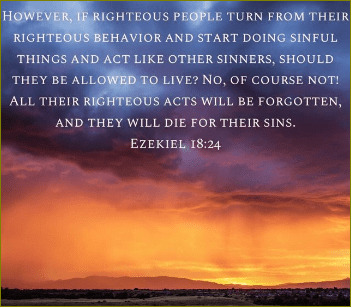
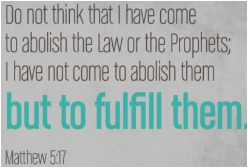



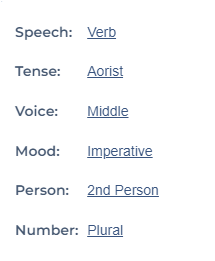










 Considering the Bible