18 This charge I entrust to you, Timothy, my child, in accordance with the prophecies previously made about you, that by them you may wage the good warfare,
19 holding faith and a good conscience. By rejecting this, some have made shipwreck of their faith,
20 among whom are Hymenaeus and Alexander, whom I have handed over to Satan that they may learn not to blaspheme.
Rejection. Paul is warning Timothy of the results of ignoring a good conscience. No – that is not right! It is not a matter specifically of ignoring to maintain a good conscience, which by the way is dangerous, but Paul speaks of some, who we will meet soon, as rejecting faith and a good conscience.
Two actions are being described in this verse.
Holding
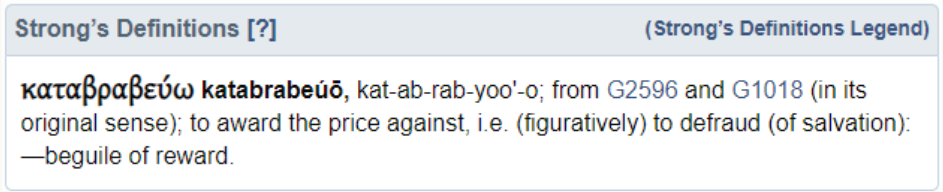
G2192 – ἔχω échō To have, to hold, to own or possess.
This is a typical term to define ownership or to keep within close proximity, to cling to or to be closely joined to. The thought communicated is typical of Paul’s writings, and that is to maintain a close relationship with the Lord, and the two vehicles to maintain this relationship is faith and a good conscience. Paul is highlighting Timothy’s continued efforts for his ministry.
Rejecting
G683 – ἀπωθέομαι apōthéomai. To push off, cast away or to thrust away from. This seems to be a deliberate action on the part of the subject. This isn’t a matter of human frailty, in that we all fall down occasionally. Paul is using a word here that speaks of a decision to reject faith and a good conscience. To be able to reject something implies the possession of the thing being rejected – how can you reject something you do not have!. May we safely assume that the two men mentioned in this passage were believers at one time?
Two men are given as examples, who have rejected faith and a good conscience.
Hymenaeus
Hymenaeus shows up in one other passage in the New Testament. Paul is speaking of him as swerving from the truth, and upsetting the faith of some. Pray tell, Paul – what is Hymanaeus teaching that is so bad that you are calling him out for it?
2 Timothy 2:16-18
But avoid irreverent babble, for it will lead people into more and more ungodliness, and their talk will spread like gangrene. Among them are Hymenaeus and Philetus, who have swerved from the truth, saying that the resurrection has already happened. They are upsetting the faith of some.
Only that the general resurrection has occurred in the past! Consider if you were a believer during this time, and heard that you missed the resurrection. Talk about gutting the gospel! The fellow was causing tremendous damage in the church, and is to be considered an enemy of the gospel in my opinion. And in Paul’s opinion too, if I’m reading him right.
Alexander
There are a number of Alexanders in the New Testament, or at least there could be. We just don’t know. I tend to lean to the thinking Paul is referring to Alexander the coppersmith in our passage to Timothy, since Timothy is in Ephesus and the riot in Ephesus was lead by Alexander
Acts 19:33 Some of the crowd prompted Alexander, whom the Jews had put forward. And Alexander, motioning with his hand, wanted to make a defense to the crowd.
Another reference to Alexander , that Timothy would recognize and may be the one Paul is referring to in our passage in 1 Timothy, is Alexander the Coppersmith. Personally I would find it difficult to think this is a different man Paul refers to but I will leave that up to my reader
2 Timothy 4:14 Alexander the coppersmith did me great harm; the Lord will repay him according to his deeds.
Both Hymenaeus and Alexander have rejected a good conscience and faith. The results do not appear to be characteristic of good Christian living, so I ask you my friend.
What is the result of their rejecting a good conscience and faith?
Thanks again for coming to visit. I hope you found something of interest in this post and would appreciate a comment, to begin a discussion. If you would like to receive daily posts from Considering the Bible, click on the “Follow” link below
5 The aim of our charge is love that issues from a pure heart and a good conscience and a sincere faith. 6 Certain persons, by swerving from these, have wandered away into vain discussion, 7 desiring to be teachers of the law, without understanding either what they are saying or the things about which they make confident assertions. 8 Now we know that the law is good, if one uses it lawfully, 9 understanding this, that the law is not laid down for the just but for the lawless and disobedient, for the ungodly and sinners, for the unholy and profane, for those who strike their fathers and mothers, for murderers, 10 the sexually immoral, men who practice homosexuality, enslavers, liars, perjurers, and whatever else is contrary to sound doctrine, 11 in accordance with the gospel of the glory of the blessed God with which I have been entrusted.
What a fantastic passage on the purpose of the law. When I first came to know the Lord, this basic truth, that the law was provided for sinners, law breakers, rebels and such, stunned me. I thought it was to provide guidance for the morally upright, and to a point this may be true, but external standards are provided to show we cannot maintain the standard without help, without inner strength, without the desire to please someone.
Yes, the law is good and holy, but as Paul mentions, we have to use it lawfully, or for the purpose for which it was given. It provides condemnation! But before I delve into that topic, let us consider how the passage above applies to the topic of this series.
How does 1 Timothy 1:5-11 read in relation to conditional security? I have read this passage many times, and confessedly, always dwell on the law topic within the verses, but let me refer you to verse 5 & 6.
First off, Paul speaks of the goal of his teaching or instruction. He aims to direct believers into love. This love comes from a pure heart. This love comes from a good conscience. This love comes from a sincere faith. Love is the aim of the apostles teaching. Not a spurious, feely touchy love that ebbs and flows with emotional highs and lows. This love is to be a consistent, nature based loved, a love based on character, a character developed by knowing the Lord, as opposed to knowing a law.
I hope this isn’t shocking to any of my readers, for love is the core of Christianity. Love that is found in and sourced out of the Lord Jesus, and His self sacrificial life. Paul saw the destination (or was aiming at) this condition for the believers as he taught them.
But what if believers decide this isn’t to be the focus of their faith, the target to shoot for as they live amongst others? Paul speaks of these that have swerved from this target, wandering into vain discussion. They have swerved! I understand this to mean they were on course at one time, they had caught sight of the target and was well on the way. Until. Until something pulled them away. Something distracting, tantalizing, shiny and bright!
The law.
Oh how the law feeds to the pride we live in. If (when) I focus on the law, I become a judge. A judge that has to condemn, and that conveniently turns a blind eye to my own rebellion. Love has to be jettisoned from our focus in life, for the law has no room for mercy, love or patience.
These believers that Paul refers to as swerving are not understanding what they are dabbling in, becoming those who teach (instead of learning?) and disassociate from the just, turning to the lawless to provide guidance for life. Yet the law was intended to condemn. My friend, the law either condemns, or feeds a self righteous heart.
I don’t know about you, but I want to know of the grace of God, the love of Jesus, the consolation of the Spirit, the encouragement of the saints.
Decades ago, I heard a preacher quote this diddy
The law commands but gives me neither feet nor hands, A better thing the gospel brings, it bids me fly and gives me wings!
Trust in the Living God, and out of this trust, from following the Messiah, the law will be worked out in your life, without focusing on it.
Focusing on the law will not provide the growth, encouragement or joy the gospel provides. It will not! This passage reminds me of many passages in the New Testament that speak to this topic, but to close, I offer Galatians 5:7-10.
Note Paul’s warning of the teacher in verse 10
Galatians 5:7-10
7 You were running well. Who hindered you from obeying the truth? 8 This persuasion is not from him who calls you. 9 A little leaven leavens the whole lump. 10 I have confidence in the Lord that you will take no other view, and the one who is troubling you will bear the penalty, whoever he is.
Thanks for reading, and I pray that the Spirit will give illumination to each of us as we seek to follow.
Thanks again for coming to visit. I hope you found something of interest in this post and would appreciate a comment, to begin a discussion. If you would like to receive daily posts from Considering the Bible, click on the “Follow” link below
13 while evil people and impostors will go on from bad to worse, deceiving and being deceived. 14 But as for you, continue in what you have learned and have firmly believed, knowing from whom you learned it 15 and how from childhood you have been acquainted with the sacred writings, which are able to make you wise for salvation through faith in Christ Jesus.
Paul exhorts his true son in the faith to continue in his acquired learning, in that which he has believed. If, as I understand the OSAS (once saved always saved) teaching, this continuance in the faith must be delegated to the rewards teaching. And that may be the correct understanding. But it is an option of understanding, even an understanding that brings into the text some presuppositions.
Lets take a look at the context, starting in 3:10.
2 Timothy 3
10 You, however, have followed my teaching, my conduct, my aim in life, my faith, my patience, my love, my steadfastness, 11 my persecutions and sufferings that happened to me at Antioch, at Iconium, and at Lystra–which persecutions I endured; yet from them all the Lord rescued me.
Paul is reminding his young disciple of his past commitment to his teaching, and out of that teaching, the non-didactic character of the apostle, of Paul’s purpose, faith, love, steadfastness, and his persecutions
His persecutions! He settles on the persecutions topic in the next verse, expanding his description of his sufferings, by reminding Timothy of Antioch, Iconium and Lystra. Let’s remember with Timothy of those incidents in those cities.
Antioch
Paul’s time in Antioch may be found in Acts 13:13 – 52. Paul and Barnabas had success in Antioch, even to the point that the people begged that these things might be told them the next sabbath. The people were hungry for the truth, and eventually a church grew in the city. This was bad news for those who enjoyed a tendency towards jealousy. Yes, the Jews, upon seeing the crowds following after Paul’s teaching, grew jealous, and as 13:50 states, they stirred up a persecution against Paul and Barnabas, eventually driving them out of the city. The text doesn’t describe the persecution, whether it be political, social or physical, but only the reason for it. Jealousy controlled the Jews, and the Jews drove the apostles out!
Timothy wasn’t present in Antioch, for we don’t meet him until Acts 16, but the stories swirled about and the witness of the believers included the story of the Antioch persecution.
Iconium
Iconium was Paul and Barnabas’s next stop after Antioch, and the passage referred to may be found in Acts 14:1-21. After a period of preaching, a great number of Jews and Greeks believed. Paul and Barnabas were quite successful in reaching out to the Greek population. But the text also relates of the success of the Jews in reaching out to the Greek population. The unbelieving Jews reached out to the Greeks, influencing their minds against Paul. They actually became somewhat zealous in their actions for the Greeks. Nevertheless, the city became polarized over the teaching, leading to an attempt to stone Paul and Barnabas. Upon finding out the population’s intent, Paul and Barnabas headed for the next city.
It turns out Paul and Barnabas just put off the inevitable!
Lystra
Lystra was the next stop for Paul and Barnabas, (Acts 14:8-23) and again the message was received, albiet with some misunderstanding. For Paul and Barnabas, they had to correct the Lystrian population from understanding they were gods having come down to them. After some corrective teaching, the Lystian’s settled down, but still had too high of a view of the apostles. Nevertheless, the Jews from Antioch and Lystra arrived on the scene, ready to fix that. After a short period of persuading the crowds, they stoned Paul and dragged him out of the city.
How fickle these Lystrian folk were!
Summary
Paul experienced the physical persecution we most commonly associate with the apostle Paul’s missionary journeys in Lystra. Yet these three cities are brought to Timothy’s mind in describing persecution, and it appears not only that of physical persecution. Prior to the stoning, it is obvious that intimidation, gossip, backbiting, malicious rumors, emotional blackmail, and numerous other non physical efforts at derailing the gospel were tried. Persecution is not only physical, and in mentioning these three cities as a group, Paul may be bringing this to Timothy’s mind.
12 Indeed, all who desire to live a godly life in Christ Jesus will be persecuted,
The core issue! All who live godly shall suffer persecution! This is the subject of this passage. Timothy – get ready, for if you continue in the faith, as you have seen Paul in his faith, persecution will be your reward, your companion in your ministry. Now that we have a context somewhat established, let’s continue with the portion we began with.
13 while evil people and impostors will go on from bad to worse, deceiving and being deceived. 14 But as for you, continue in what you have learned and have firmly believed, knowing from whom you learned it 15 and how from childhood you have been acquainted with the sacred writings, which are able to make you wise for salvation through faith in Christ Jesus.
Some will go from bad to worse, while you Timothy, you need to go in the opposite direction. There is no neutrality here, for Paul’s introduction of these evil people and their moral degradation, is a contrast to Timothy’s expected growth in the Lord. But in this growth, there will be resistance, and that resistance may take some form of persecution.
Paul’s exhortation then to continue is in the context of persecution, not simply believing in some fact of the gospel in some past decision. Is it fair to say that Timothy’s expected growth will include persecution, and if denied, growth will not occur? If so, does this imply that a deadness has settled on Timothy’s life and witness?
My friends, be honest with the text and consider Paul’s thoughts here. Is he simply speaking of rewards, and that if persecution is avoided, we only loose some rewards? Or might it be that if no persecution occurs, this may speak of greater things than what we want to admit? If we avoid every possible hint of persecution, is this a red light that should be going off in your mind, alerting us to a truth we naturally want to avoid?
Let me know your thoughts.
Thanks for considering these thoughts and may the Lord teach us all that which we need to know!
Thanks again for coming to visit. I hope you found something of interest in this post and would appreciate a comment, to begin a discussion. If you would like to receive daily posts from Considering the Bible, click on the “Follow” link below

Paul is writing to a church he has never visited but he has heard of some troubling teaching in this church, and he sets out to provide these believers the correction we find in this epistle.
It seems there were those who entered into the young church in order to influence believers into a life of religion, or a way of rule keeping on the surface as opposed to cultivating a heart that seeks to listen to God’s spirit. It is so common, for there will always be those gospel gunslingers that seek to put another notch in their belt when they can influence one more soul into their way of minimizing the Christ and maximizing their way of life. With that said, let us consider the passage below, and see if it has any relevance to the “Conditional Security” teaching that we are discussing in this series.
Colossians 2:4-8
I say this in order that no one may delude you with plausible arguments. For though I am absent in body, yet I am with you in spirit, rejoicing to see your good order and the firmness of your faith in Christ. Therefore, as you received Christ Jesus the Lord, so walk in him, rooted and built up in him and established in the faith, just as you were taught, abounding in thanksgiving. See to it that no one takes you captive by philosophy and empty deceit, according to human tradition, according to the elemental spirits of the world, and not according to Christ.
First, let us all agree that Paul is addressing believers, and not just any believers, but that are firm in their faith in Christ. They are solid, and depending how long they had been following Christ when Paul writes this, may be considered mature believers. They had received Christ Jesus the Lord in the past. Sometime in the past, they had entered into life by confession of sin, repentance and faith in the crucified One.
Paul then provides some teaching, even a command for these believers to follow.
So walk in Him. Does Paul provide any guidance on the way to walk in Him? Yes of course, for we are to walk in Him in like manner that we entered into life with the Son. By confession of sin, repentance and faith.
You know I was very surprised when I performed a study years back, a study on the word repentance, and I sought to find out all I could about the term. Although I am convinced that repentance is fundamentally a “change of mind”, this “brain switch” brings about a life change inevitably. What shocked me in my study was that the preponderance of times repentance was preached, it was directed to those of the community of faith. Not to ordinary dirty sinners! What? Sinners are to repent, and they will upon their realization of who God is and of His authority. But so much repentance preached to those of faith!
Yet the Word seems to emphasize the need for the faithful to repent of sinful attitudes and actions. I understand that when Paul says to walk in Him, he is directing us to a life a repentance and submission to Him, and that is how we “So walk in Him”.
Have you went through a period of repentance towards God in some attitude or action recently? A life of repentance is a life of holiness, realizing the dominance of sin in your life, and a life of humility, realizing your utter dependency on the Savior.
So, Paul says, as you have received Him, so walk in Him. This action of walking speaks of a day to day experience, a continuation of that initial seed of faith.
It was of concern to my previous OSAS (Once Saved Always Saved) way of thinking that after he speaks of faithfully walking with the Messiah, Paul mentions the danger of being taken captive. The term captive speaks of being taken away as booty, to be lead away from the truth.
Now I don’t want to make too much of this term, for I know some consider this phrase as describing the believers condition as being restricted from his full potential, even held back from living the true life, of being held under the sway of bad teaching.
As the mind goes, so goes the life!
Nevertheless, the term does speak of the one deceived as being led away as a captive, even as a slave. Might the implication be that the ownership has changed? To become a slave implies an ownership exchange.
No that can’t be what Paul is teaching, for then he would be in error, because (as I used to think) the Bible teaches OSAS, and any verses that may seem like a challenge must be ignored, or at least understood under the OSAS teaching.
Dang – It sure was easy when I let a man tell me what to believe!
What think ye?
Might Paul be hinting around, warning these mature believers, those who are firm in their faith, that they may need to consider their standing before God? He has been of this concern before with some in his churches…
1 Corinthians 10:12 Therefore let anyone who thinks that he stands take heed lest he fall.
Thanks again for coming to visit. I hope you found something of interest in this post and would appreciate a comment, to begin a discussion. If you would like to receive daily posts from Considering the Bible, click on the “Follow” link below
Now I would remind you, brothers, of the gospel I preached to you, which you received, in which you stand, and by which you are being saved, if you hold fast to the word I preached to you–unless you believed in vain. – 1 Corinthians 15:1-2
As a hardcore OSAS, this is one of the first passages that I figgered Paul got wrong.
Since I am eternally secure, and my initial faith equaled a one time contractual negotiation with God, how could the apostle Paul say such a difficult saying that seems to bring question to the remainder of the Word. A number of items arise in this passage that just scrambled my brain as an OSAS adherent.
Brothers
Paul called them brothers. Why would he call them brothers if they had not given evidence of their faith in the Living God? His time with them gave him ample evidence of the Spirit of the Living God residing in them. Remember that Paul was with this church for 18 months, not three weekends like the Thessalonians, or the very short time he had with the Philippians. He witnessed first hand what the gospel produced in these people.
Received
Paul declared that they received the gospel. To receive is to take, acquire or accept. Paul understood that at the preaching of the gospel, these brothers took the gospel, accepted it as truth and received the message into their lives. I may be overreaching to say that they did not merely accept it intellectually due to the time the apostle spent with this congregation. To receive the gospel is to become the brother he referenced them as earlier.
Note that this verb is aorist tense, that is that they received the gospel at a point in time in the past.
Stand
Paul wrote that they stood in the gospel. When I read of standing in the gospel, I am reminded of Paul’s use of the term in Ephesians 6:14, speaking to believers concerning their responsibility in their Christian life, to be firm in their convictions, to be active in their faith, to be established in the faith.
Note that this verb is perfect tense, that is the Corinthians live in the gospel, they are active believers in the Messiah.
Being Saved
Paul said they were being saved by the gospel. Now this was where I started to go off the rails in my thinking with Paul. It is amazing that he could slip from the truth of OSAS so quickly, but I would be forgiving towards him, in that I would simply “ignore” his mistakes, like he is slipping into here!
Yet the passage speaks of being saved. Describing believers (who are saved) as being saved! Why are you muddying the waters of my OSAS mind, Paul? What are you saying? It seems the salvation we received, and as believers, are standing in, is an active living salvation, that the salvation we have is working in our lives, bringing us to a maturity that is not only expected, but that God will perform in our faith.
If
Then comes that dreaded word. IF.
Some may think Paul intended to say since, instead of if here. In my research, I have found no support for this term to be translated as since. The word “if” speaks of a conditional state, dependent on someone to perform an action. “If’” is a primary particle of conditionality. Something Paul’s writes next will be what the brothers will require to perform in order to maintain their current status as brothers.
Hold fast to the word Paul preached. Do not let it slip away, as the author of Hebrews describes the falling brother in chapter 2.
Hebrews 2:1 Therefore we must pay much closer attention to what we have heard, lest we drift away from it.
Of course, if the brothers do let the gospel slip from them, if they do not hold fast to the message Paul preached, – well what does that mean? Paul’s conclusion is that they believed in vain. Did they not really believe at the initial preaching of the gospel? Is that what believing in vain refers to?
Of might it mean that they believed “in a random” sort of manner, to no purpose, to be void of result, empty. To be void of result, to not complete the initial faith they exhibited in the Messiah. Might this be where Paul is taking us. The believers in Corinth had placed their faith in the Messiah, yet it appears this “faith” may not produce the end result intended.
The argument comes down to this.
Never Brothers
Is Paul graciously calling these folks brothers, (though if OSAS is correct, Paul fears some are not) and these “never brothers” are falling away from Christ because they had no (a vain) faith? In other words, is Paul just being kind calling them brothers, but in reality have never believed in the Savior?
Currently Brothers
Is Paul accurately calling his audience brothers, and is expressing his fear of their slipping away, a danger of leaving the faith, of an apostacy within the church? Is Paul expressing a fear of their not holding fast to the word that was preached unto them?
How do you see this passage?
Thanks again for coming to visit. I hope you found something of interest in this post and would appreciate a comment, to begin a discussion. If you would like to receive daily posts from Considering the Bible, click on the “Follow” link below
Although he was a son, he learned obedience through what he suffered. And being made perfect, he became the source of eternal salvation to all who obey him,
In addressing this couplet of verses, in relation to conditional security, we need to address the New Testament understanding of what it means to believe in Jesus the Messiah. You see, the verse speaks of obeying Him, and some may consider this obedience the initial act of faith, and there is truth in that statement. The initial act of faith was an obedient act of the will of the sinner to a call of grace, to a call from the Crucified One.
Yet if we look at the tense of the verb, we find the following. If you notice on the right, BlueLetterBible.org provides a bubble which includes the parsing of the verb. (The link will take you directly to the page being referred to.)
On the left is a listing defining what these letters in the bubble refer to.
For example, the first letter, “V” teaches us that the word “obey” is a verb. The second letter speaks of the tense of the verb. In English, we think of past present and future tense. The Greek word translated as obey is in the present tense.
For the most part, as the clip on the right teaches, this is directly equivalent to our present tense, and is translated as such in this verse.
So in review, let’s consider what we have learned.
The verse does not say
…he became the source of eternal salvation to all who obeyed him. (As in referring to the initial obedience of faith)
Nor does it say
…he became the source of eternal salvation to all who believe him. (Though if we understand to believe is to obey, we could without conflict understand it as such.)
The issue is current obedience.
Where are you at in hearing the voice of God in your life. Is He speaking about something specific, that needs to obeyed? Is He allowing a period of quiet in you life, simply to provide you time to put into practice the teachings you know to be true and faithful.
The Christian life is a life of obedience, discipleship and death to self on a daily basis. Obedience is synonymous with faith, and is simply the path to life.
Do you believe?
Thanks again for coming to visit. I hope you found something of interest in this post and would appreciate a comment, to begin a discussion. If you would like to receive daily posts from Considering the Bible, click on the “Follow” link below
That is true. They were broken off because of their unbelief, but you stand fast through faith. So do not become proud, but fear. For if God did not spare the natural branches, neither will he spare you. Note then the kindness and the severity of God: severity toward those who have fallen, but God’s kindness to you, provided you continue in his kindness. Otherwise you too will be cut off.
You too will be cut off? Who is Paul speaking to here?
Romans 9-11 is sometimes considered the hotbed of Calvinism, and I tend to think this is an accurate statement since the strength of their argument for determinism is found in a few verses within this passage. When we come to Romans 11:20-22 though, Paul is finishing up his teaching on the relationship of national, ethnic Israel with the New Creation, the Body of Christ.
Paul just finished with a typical theoretical gentiles comment reflecting an attitude of superiority, when in v 19, he writes
Romans 11:19 Then you will say, “Branches were broken off so that I might be grafted in.”
The Gentile Christian in Rome may be considering the history of the nation of Israel, see their rejection of the Messiah (as a nation) and conclude that the nation of Israel was rejected, broken off, in order to bring the Gentiles in, implying the Gentiles were superior to the nation of Israel.
Will this pride thing ever stop? Earlier the Jews were warned of living in pride (Romans 2:17) and now the Gentiles are entering into proud attitudes and ideas.
Paul turns the actions of God in relation to ethnic Israel back onto the new believers, warning them of God’s severity. He acted in severity towards a nation He created, loved, was patient with, and constantly reached out to for centuries, yet they rejected His call out of pride and envy. Now they are cut off! To be an ethnic Jew is of no consequence with God. They are in the same boat as all the world and without Jesus, they have no hope!
Note that Paul speaks of God’s kindness extended to believers, provided believers continue in his kindness. We must continue in His kindness for His sake and ours.
Thanks again for coming to visit. I hope you found something of interest in this post and would appreciate a comment, to begin a discussion. If you would like to receive daily posts from Considering the Bible, click on the “Follow” link below
Revelation 22:18 – 19 I warn everyone who hears the words of the prophecy of this book: if anyone adds to them, God will add to him the plagues described in this book, and if anyone takes away from the words of the book of this prophecy, God will take away his share in the tree of life and in the holy city, which are described in this book
God will take away a believers share in the tree of Life?
Oh Carl – how can you say that it is a believer, a Christian who experiences this loss in the tree of life? Note that it is taken away, implying strongly that the one had full right of possession to the tree of life. Now I ask you – who has access to the tree of life if it is not the believer?
However you may understand Revelation 22, this passage speaks of one who has a share in the tree of life that will be taken from him. This is definitely scary stuff, yet the reason for this “taking” is due to one taking away from the words of this letter John was writing. I have not come to any settled understanding what that means, and if my readers have a reasoned suggestion I would appreciate hearing from you.
Nevertheless, in the last chapter of the book of Revelation, John gives us a dire warning from God about the eternal ownership of a share in the tree of life.
Thanks again for coming to visit. I hope you found something of interest in this post and would appreciate a comment, to begin a discussion. If you would like to receive daily posts from Considering the Bible, click on the “Follow” link below
11 And many false prophets will arise and lead many astray. 12 And because lawlessness will be increased, the love of many will grow cold. 13 But the one who endures to the end will be saved.
In our last post on Matthew 24, we looked at the previous two verses, describing the effects persecution has on some (many) believers. Many believers upon experiencing persecution / tribulation will fall away, betray one another and hate one another. I suggested this is not the character of one who follows after the Savior.
In this passage, we are not considering how believers react to persecution, but how believers react to lies.
False prophets were on the rise in the first century (how much more so in our day!) and Jesus spoke of “many” led astray. (In the previous set of verse, the “many” fell away) As an aside, I find it interesting that lawlesness is associated with false prophets, that lawlessness is a result of false prohets dragging off believers into lies. May the root cause of a societies rot be the result of believers listening to false prophets?
Jesus mentions that many will experience a love that grows cold, but the exception is the one who endures to the end, he is the one who will experience a salvation. The implication, as I understand it is that due to lawlessness, a believers love may grow cold. My question for my reader is this.
The one who endures, is he amongst those whose love has grown cold?
No matter where the enduring one finds himself, it is a matter of endurance, not a high pitched, emotional experience of love that results in salvation. The theme of endurance for the sake of a reward, whether it be eternal salvation, physical deliverance or winnning in a marathon, is throughout the Word. Emotional experience doesn’t make the difference, for many may read this reference to “love grown cold” and automatically think of the emotional feeling of love. I am not convinced that is the intent of the warning.
Might a believer experience a cooling of love and yet still endure in the faith, seeking to follow Jesus, though with less passion than before? Out of personal experience, (which is a poor way of judging truth), I will confess my love toward Jesus and our Father has waned and weakened, even cooled at times, yet I knew He was caring for me, watching over me, guiding me through dark periods.
An emotional love tends to vary from peaks to pits, and we ride the rollercoaster out of necessity. Endurance is a choice, and He has provided us the opportunity to follow Him whatever emotional experience we are in the midst of. Of course, it is so much the better when the emotion feeling is peaking, but we need to go through the valleys with Him to truly know His hand of guidance, comfort and wisdom.
Endure my brother and sister, hang on to the faith once delivered to the saints, looking unto Jesus who for the joy that was set before him endured the cross, despising the shame….
His endurance made our lives possible. Do not give up the faith, for there is a life to be gained as we follow Him.
Thanks again for coming to visit. I hope you found something of interest in this post and would appreciate a comment, to begin a discussion. If you would like to receive daily posts from Considering the Bible, click on the “Follow” link below
9 “Then they will deliver you up to tribulation and put you to death, and you will be hated by all nations for my name’s sake.10 And then many will fall away and betray one another and hate one another.
Matthew 24. The mini – apocalypse, the passage that speaks of the end times, judgement, apostacy. Scary stuff, full of dramatic images and threats, with so many opinions on what the Lord was trying to communicate to His followers.
Some who follow this topic of Conditional Security on Considering the Bible may have wondered why this passage has not shown up in the series previously. It seems it is such a slam dunk passage to support the Conditional Security position, and it may well be.
Let’s take a look at it for a few moments.
Jesus is speaking to His disciples at this time, addressing the disciples questions about His coming, and the end of the age. The very first words out of His mouth need to be heeded – “See that no one leads you astray”
He warns His disciples first and foremost of deception in this topic of His future coming into His kingdom, and that they were to be vigilant in understanding the times to come. Just before the verses we are considering today, the Lord warns His disciples that there is only one Christ, and that self proclaimed substitutes would be many. The disciples will hears of many wars and rumors of wars – Don’t be worried. There is still time.
Christians will be persecuted, even hated by other for His names sake. Tribulation will be the believers experience, and this tribulation will result in death for some, with the nations, the heathen, those who are outside the faith, hating believers.
This persecution, or this tribulation the believer experiences will result in the falling away. Because of this hatred (from the nations), many will fall away, they will skandalizō, they will be offended, they will fall away.
Who are these “many” who will fall away? Context demands that the word “many” refer to those who would be delivered up to tribulation, those who follow as disciples.
Persecution will provide opportunity for followers to fall away. Yet does this mean a loss of salvation, the abandonment of the Christian life, the turning away from following Him? It appears that the two descriptors in verse 10 describe the non-Christian, in that the non Christian is allowed to betray one another, and to hate one another. Just the very verse prior, the nations are described as hating others!
The true believer, in following Jesus is faithful to those he knows, and loves those he comes in contact with. Is Jesus describing a believer when he decides to betray instead of exercising faith, to hate instead of to love? Is that the desciption of a believer?
This is a difficult passage to understand, but the warning seems obvious, for even in persecution, to follow Jesus is to be faithful, to be one who exercises sacrificial love to those he comes in contact with.
To those reading this post, don’t wait for persecution to come to your life to decide to love others and to be faithful. Live the Christian life each day, and pray for strength to follow when persecution does arrive, for we know we all must experience some persecution in our lives. Be faithful. Love those around you with a sacrifical love.
In doing so, we may be preparing for times that will provide greater challenge than we expect.
Thanks again for coming to visit. I hope you found something of interest in this post and would appreciate a comment, to begin a discussion. If you would like to receive daily posts from Considering the Bible, click on the “Follow” link below
4 Yet you have still a few names in Sardis, people who have not soiled their garments, and they will walk with me in white, for they are worthy. 5 The one who conquers will be clothed thus in white garments, and I will never blot his name out of the book of life. I will confess his name before my Father and before his angels.
Jesus is speaking to believers in the church of Sardis, a church Jesus declares to be dead. This church is warned that He will come as a thief, and that a few names will be worthy to walk with Him. Worthy of walking with Him. There is a quality of life that is expected from the Lord to maintain the fellowship we often claim we have, yet as John in other of his writings, clearly states that we are to walk in the light (not my light), that we are to love the brethren (all of em?), that in this love of the brethren, we are overcomers (1 John 5:1-2).
Paul also teaches us that we are to walk worthy of the Lord, as in Colossians and Ephesians.
Colossians 1:10 so as to walk in a manner worthy of the Lord, fully pleasing to him: bearing fruit in every good work and increasing in the knowledge of God; Ephesians 4:1 I therefore, a prisoner for the Lord, urge you to walk in a manner worthy of the calling to which you have been called,
Yes we are to walk worthy of the Lord – a high calling that we certainly need His strength for.
Though this is a great challenge, the verse this post will concentrate on is the “blotting” verse. What in tarnation is going on in this verse, where Jesus promises to “never blot his name out of the book of life”. What does that imply? He is speaking of those who are clothed in white garments, that have conquered, that are worthy, and promises them that He will never blot his name out of the book of life!
Who is He speaking of?
Is all of creation, every living soul, recorded in the Book of Life and those who do not believe in Jesus, do they get blotted out? It seems the book of Revelation does not allow for this interpretation, since John records twice that some names were never written in the book of life.
Revelation 13:8 and all who dwell on earth will worship it, everyone whose name has not been written before the foundation of the world in the book of life of the Lamb who was slain. Revelation 17:8 The beast that you saw was, and is not, and is about to rise from the bottomless pit and go to destruction. And the dwellers on earth whose names have not been written in the book of life from the foundation of the world will marvel to see the beast, because it was and is not and is to come.
Ok, so this restriction of names within the book of life needs to be clarified. Might it be that those who have believed in Jesus as Lord and Savior, are they those whose names are written in the Book of Life?
Philippians 4:3 Yes, I ask you also, true companion, help these women, who have labored side by side with me in the gospel together with Clement and the rest of my fellow workers, whose names are in the book of life.
Ok, so if I understand the general teaching on the Book of Life, that is, that the Book of Life contains names of believers, workers in the gospel per Phillipians, then what is going on in Revelation 3:5? Are believers names are being blotted from the Book of Life?
Not specifically. Granted, the Lord states He will never blot the name of the believer/he who is worthy/ the one who conquers, out of the Book of Life, but that opens the implication of name blotting connected with unworthiness, does it not? Why would He bring up this topic of non-blotting, if there was not additional implication we need to understand?
Those who are worthy – Promise of never blotting out his name.
Those who are not worthy – no promise given.
Let us follow after Him, seeking His will. seeking His approval and finding the life that is worthy of the Lord.
Thanks again for coming to visit. I hope you found something of interest in this post and would appreciate a comment, to begin a discussion. If you would like to receive daily posts from Considering the Bible, click on the “Follow” link below
8 “‘I know your works. Behold, I have set before you an open door, which no one is able to shut. I know that you have but little power, and yet you have kept my word and have not denied my name. 9 Behold, I will make those of the synagogue of Satan who say that they are Jews and are not, but lie–behold, I will make them come and bow down before your feet, and they will learn that I have loved you. 10 Because you have kept my word about patient endurance, I will keep you from the hour of trial that is coming on the whole world, to try those who dwell on the earth. 11 I am coming soon. Hold fast what you have, so that no one may seize your crown. 12 The one who conquers, I will make him a pillar in the temple of my God. Never shall he go out of it, and I will write on him the name of my God, and the name of the city of my God, the new Jerusalem, which comes down from my God out of heaven, and my own new name.
I have thought of this passage often in the last few months, specifically the concept of having “but little power”, assuming He is speaking directly to me. Of course He is primarily speaking to a church two thousand years ago, and we can find direction, wisdom and application in carefully reading and understanding the author’s intent and message to the original readers. This is a challenge, for we are sometimes so self centered that we jump into application immediately, but let us not be in the habit of this downfall.
Regarding this passage, and the topic we are chasing, the portion that arrests my attention is verse 11. Of course, we could discuss how this passage would inform us of His soon coming for the modern church (it doesn’t) or that it describes a pre-tribulation rapture (pardon me?). Let’s not chase rabbits to some unknown (unjustified) destination!
The issue to be concerned about is holding fast! Hold fast what you have, so that no one may seize your crown.
Hang on through the difficult times!
The Lord has specifically spoke of the little power this church has, and now He commands them to hold fast. Two different words are used when addressing the church in Philadelphia, and it may be instructive to consider them.
Little Power
When the passage speaks of little power, the Greek word “power’ in verse 8 speaks of strength, power and ability. It is the Greek word dunamis, from which we get the English word dynamite. The term is modified with the adverb “little”, and not much to add to that term other than it is little, small in size, quantity or number. Tiny.
Hold Fast
Verse 11, we meet up with the command to hold fast. This term does not quantify the strength or ability of the church (little power), but of the desire to continue, the use the strength (whatever is available) to grab and hang on.
Storytime
My 8th grandchild Theo is just starting to walk. When he “takes hold” of my hand, his strength is so small, so tiny. I could despise the little strength he has – so so weak – and yet he is giving it all to hang on. I don’t whine or complain about his lack of strength, (for it is all he has) but I revel in the fact that he is hanging on, fighting to try to walk like his brother, to balance, to be with Grampa.
If you are of little strength, do not consider this to be something the Lord Jesus despises. When the Lord’s attitude towards the weak is brought to mind, I naturally return to Matthew 12.
Matthew 12:18-20
18 “Behold, my servant whom I have chosen, my beloved with whom my soul is well pleased. I will put my Spirit upon him, and he will proclaim justice to the Gentiles. 19 He will not quarrel or cry aloud, nor will anyone hear his voice in the streets; 20 a bruised reed he will not break, and a smoldering wick he will not quench, until he brings justice to victory;
A bruised reed he will not break. Consider the Master’s attitude, and hold on with what ever strength you have. If you are a mighty man of valor, hang on. (Just don’t be too proud of your mightiness, for that is also a bit of a problem don’t ya know!)
If you are struggling and sense your “little power”, hold on. He is the Savior and He is looking for your desire. Hang on and don’t let anyone seize your crown.
Thanks again for coming to visit. I hope you found something of interest in this post and would appreciate a comment, to begin a discussion. If you would like to receive daily posts from Considering the Bible, click on the “Follow” link below

10 Do not fear what you are about to suffer. Behold, the devil is about to throw some of you into prison, that you may be tested, and for ten days you will have tribulation. Be faithful unto death, and I will give you the crown of life.
11 He who has an ear, let him hear what the Spirit says to the churches. The one who conquers will not be hurt by the second death.’
As we enter into this passage in Revelation (under the topic of conditional security), I need to admit that I have had a very mixed relationship with this book.
Early in my life, Revelation was the book that “revealed” to me the Judge of all creation, a Mighty God who was holy, rightfully angry at me. Revelation provided word pictures in a seven year old’s mind of a Great White Throne, of eternal suffering and anguish, of darkness and continual pain, of an eternal fire that burned without relief. (See Testimony) Revelation exposed to a seven year old boy a destiny that was certain due to my sin. No mercy was available to that little seven year old!
Fast forward fourteen years and the Judge became my Savior. Mercy and grace was offered to a twenty-one year old alcoholic drug pushing loser and I couldn’t resist. Jesus took my guilt and punishment – How could I not follow?
Yet Revelation was still a book I shied away from. At first, a certain dispensational teaching helped me to avoid the last book of the Bible, placing all the scary stuff (chapters 6 through 19) all beyond my time on earth. I understood that I would be raptured and taken to safety while everyone else would suffer the tribulation. Sure a few verses (such as the ones we are considering today) disturbed me, but I was good at generally ignoring the book.
Yet there were verses in the second and third chapters that would still haunt me, since they were directed to churches, and I gladly identified as belonging to the body of Christ. Dispensational teaching helped out there also, for it taught that each of these churches represented a certain “age” in church history. Under dispensational teaching, Smyrna represented a church under persecution, specifically during the years just prior to Constantine.
Whew – I dodged another bullet! All this talk of suffering was getting hard to avoid, but at least this passage could be ignored safely! Yet the Bible is a consistent message, and though I found an excuse to avoid a truth in one verse, other passages reared their head and witnessed to my heart and mind as I began to listen. Eventually I abandoned dispensational teaching, for the inconsistencies and internal conflicts became too great for me to accept.
Quite an introduction to a short passage, yet this set of verses was one of the many that caused me to jettison my acceptance of dispensationalism. The mention of tribulation for ten days seemed so inconsistent with the seven years of tribulation supposedly taught in the Bible.
And what about that crown of life? Of not being hurt by the second death? This was a church the Savior was speaking to! Didn’t He understand that believers were eternally secure? (I speak as a fool!)
No matter how a believer reads this passage, it is either troubling (or greatly encouraging!)
Be faithful unto death! The passage speaks of a continual faithfulness, of being faithful to the point of death! My understanding of once saved always saved just did not fit into this passage. Wasn’t my initial expression of faith back in February 1981 enough?
Jesus said to “Fear none of those things which thou shalt suffer”. Believers in this type of church (no matter when the church exists) were to not fear the persecution! It would have a definite time (ten days, not eleven or twelve), an end would come and life would be granted. Pain from men may be experienced, but the hurt of the second death would be avoided by those believers who overcome.
The question that hangs out there is of believers who do not overcome, who are not faithful unto death. Is the crown of life withheld from them? Does the crown of life represent life or rewards for the believer? (This question was discussed in an earlier post – See Conditional Security – Revelation 2:7)
Be faithful unto death. And why not be faithful unto death? Let us not quibble over debatable issues, for He is the Savior, a Great and Mighty God who has died to rescue us. He has rescued me from my rebellion, from my rejection of truth. He is good and His love draws me constantly. Will I allow my heart to reject His continual expressions of love and grace, having witnessed His many acts of kindness in my life?
Truly, my heart can be a traitor to my own good and to my dear Savior. May the Lord give us strength in the life He provides us, in the way we are to walk, and to be faithful unto death, whether He chooses open persecution or otherwise for each of us
For He is good and the great God we have the privilege to worship! May we be faithful to Him.
Thanks again for coming to visit. I hope you found something of interest in this post and would appreciate a comment, to begin a discussion. If you would like to receive daily posts from Considering the Bible, click on the “Follow” link below
7 He who has an ear, let him hear what the Spirit says to the churches. To the one who conquers I will grant to eat of the tree of life, which is in the paradise of God.’
Here again I confused life with rewards. You see, I used to read it as – To the one who conquers, the right to receive rewards is granted. That is the way I read it when I was ensconced in the “once saved always saved” OSAS teaching. I couldn’t read it for what it seems to be saying, that is those who “conquer” (whatever that may mean) will have access to the tree of life.
Now here comes my assumption. Granted, I don’t want to sound like a 3 year old in Sunday school class, where every question is answered by “Jesus”, but the Word is centered on Him, and all prophecy, narrative, laws and poetry of the good book points to Him. If that is a safe general assumption, would it be too far a stretch to consider the tree of life to be the Master Himself, that in the symbolism of the book of Revelation, the tree of life is Jesus. Remember now, He Himself has witnessed that He is a door, bread, light and life. He did not shy away from describing Himself in various ways.
If this “assumption” is correct, that is that Jesus is the tree of life in the paradise of God, we are granted access to Him through conquering. Where am I going wrong here?
So, this is the stumper, for John is writing to a church, the church of Ephesus, and Jesus is speaking of the churches lost love. In this regard, might the conquering (for this church) be the repentance Jesus spoke of, the return to the first love, that realization of a believer getting distracted, of a forsaken love. Of a believer in desperate need of running back to the One who died for us.
Ok, here is my desire. I want my faith to be a simple faith, a faith where I am in connection with Him, where I can actually understand His will for me and I am granted the courage and boldness to follow, simply out of love for Him. A faith where I understand the Spirit’s message, with the Word of God echoing in my mind, and the character of our great Savior always before me.
You know, in these conditional security posts, I sometimes come away thinking of the negative, the “if” in it all. Yet His love is draws me and you and will continue to draw us through the trials and troubles, the doubts and struggles, the fear and pain. We need to keep our eye on Him, for He is good, He wants us home, and He has suffered for us, experiencing the trials and temptations of this old planet, and succumbing to the terrors of the cross in the Father’s will and for our good.
Looking away from Him, and to any other so called savior is the temptation we must resist. We are called to continue in a faith in the Savior, the One we need to follow.
The same apostle wrote
1 John 5:4 For everyone who has been born of God overcomes the world. And this is the victory that has overcome the world—our faith.
We can honestly say that John was consistent, for he spoke of the victory, (or the conquering?) as being our faith.
So when you hear someone tell you to keep the faith, remember that it is your faith that will conquer the enemies of our lives, for our faith in the Savior is our life, and will give us the victory, and allow us to eat from the tree of life.
For faith grants us to be in fellowship with the Savior.
Thanks again for coming to visit. I hope you found something of interest in this post and would appreciate a comment, to begin a discussion. If you would like to receive daily posts from Considering the Bible, click on the “Follow” link below

Do not be deceived: God is not mocked, for whatever one sows, that will he also reap. For the one who sows to his own flesh will from the flesh reap corruption, but the one who sows to the Spirit will from the Spirit reap eternal life. And let us not grow weary of doing good, for in due season we will reap, if we do not give up. – Gal 6:7-9 ESV
As one who spent most of his life in the Lord under the teaching of once saved always saved (OSAS), when I quickly review the passage above, I automatically think of the theme of rewards in the afterlife. It is a common teaching and given the background of the teaching I was receiving, made sense in many ways. After all, my teachers spoke confidently of the New Testament teaching the OSAS doctrine, sometimes providing a proof text to back up their claim. The few verses that do not fit the OSAS teaching must surely have a simple explanation. “Loss of rewards” is the slot this passage fell into. This response satisfied my curiosity for many years.
But as I read the passage, I want to be careful of not inserting words into the text that are not written down. We all do it, at least unintentionally I am sure, but we so often gloss over the text due to our familiarity, that the text isn’t allowed to communicate it’s actual message.
As an example, I often read verse 8 in the following manner.
For the one who sows to his own flesh will from the flesh reap corruptionloss of rewards, but the one who sows to the Spirit will from the Spirit reap rewards in the afterlifeeternal life.
Can you identify with my assumptions of the authors intent? If OSAS is the teaching of the New Testament, we must interpret the passage in a manner such as I have described. We cannot allow the verse to inform us that a continual sowing to the Spirit will result in eternal life, if we are eternally secure at the point of conversion. That just doesn’t fit the overall teaching of the New Testament!
Or does it?
As many also may know who have followed this blog, I have attempted to provide passages that bring the OSAS doctrine into question. If of interest to my reader, search Considering the Bible for “Conditional Security”. The number of posts dealing with this topic have increased greater than I had originally expected, and I still have additional passages waiting to be written and published.
When I began to have my initial doubts on OSAS, it was due to the Hebrews passages that are so often depended on. The I tripped over a passage in 1 Peter. Eventually I stumbled onto a passage in Colossians that caused quite a stir in my thinking, and as I brought the question up in a meeting, I received a reaction from a brother that mirrored my attitude regarding any challenge to the OSAS teaching. Conditional Security – Colossians 1:21-23. Since then, I have reconsidered my attitude regarding a commitment to OSAS, and found a growing number of passages that to varying degrees refute the teaching.
Maybe – just maybe – the New Testament does not provide the general overall (non-specific) OSAS teaching that my former teachers depended on.
My rose colored glasses are slipping off, and as the passages pile up that bring OSAS into question, I will also reconsider passages that OSAS depends on, in order to reconsider their meaning. One of the favorite passages I referred to in my OSAS days was John 10:28-30. That passage surprised me in my study, and allowed for a perspective I hadn’t allowed previously. Conditional Security – John 10:28-29
I suppose I have somewhat drifted from the intent of this study in Galatians to more of a general discussion on the topic of OSAS. For that I do not apologize, since I often hear the claim that general Bible teaching supports OSAS, and that a verse that may indicate otherwise requires to be “brought into line”. Let us seek to carefully reconsider “general” teachings that seem to conflict with specific Bible verses. This is a massive undertaking, and we need His grace to be open to these challenges, even if it is to simply admit blind spots we may have in our thinking.
May God provide us all wisdom and understanding as we seek to grow in our knowledge of Him and His message to us.
For we all know that He is good, and that He is good all the time.
Thanks again for coming to visit. I hope you found something of interest in this post and would appreciate a comment, to begin a discussion. If you would like to receive daily posts from Considering the Bible, click on the “Follow” link below
11 And they have conquered him by the blood of the Lamb and by the word of their testimony, for they loved not their lives even unto death.
Who was the book of Revelation written to? The unsaved? Jewish proselytes? Roman soldiers? We all know who the recipients of this final book of the Bible was written to. John makes it clear in the very first verse.
Rev 1:1
The revelation of Jesus Christ, which God gave him to show to his servants the things that must soon take place. He made it known by sending his angel to his servant John,
The message was for those who had entered into life, who had trusted in the Messiah, and who were undergoing trials, like all believers. (To be a believer is to undergo trials.)
Although some may consider the following discussion on Rev 12:11 to be based out of a vacuum, I would request your consideration of my thoughts.
The believers in the verse above were described as conquering him – the accuser of the brethren – through the blood of the lamb and by the word of their testimony. This conquering is a common theme in Revelation, and we will see it come up in our studies on conditional security in the Book of Revelation quite often. Nevertheless, for Revelation 12:11, John defines these saints as overcoming the accuser through two actions – the death of Christ (the blood of the lamb) and the word of their testimony. (As a matter of fact, their martyrdom is a third action described in the passage, but the martyrdom is a result of the first two actions and doesn’t relate to the point of todays post.)
This is an amazing claim of John, since he is the apostle who often stated the only requirement for salvation was to believe. (Check the gospel of John and few if any time does he link belief with repentance, works etc.)
The act of faith is not to be ignored or glossed over in this verse, for the object of the saint’s faith is the One who shed His blood, yet John couples that faith with the act of the saint giving testimony, of providing witness of the faith they claimed to own.
Although it may be conjecture on my part, I fear the witness we give in the modern church is somewhat acceptable to the culture we exist in. It is, at the least somewhat palatable for the culture to accept our message of “inviting Jesus into their heart”, of “doing good and going to church”, of being a “nice” Christian that doesn’t rock the boat.
Believe me, I am one who falls into this very thinking far too often, but those in John’s day were speaking of Christ, not as a King, but THE King, a Ruler over the most powerful, jealous and vengeful government the world had ever seen. The message was a dangerous message, and by preaching this message of a loving yet ruling King calling followers out of the nations, the saint would place his life on the line. Out of that commitment to the King, the saint would overcome the accuser. The saint would be strengthened in his security before His God, and confirm his own standing before his Savior.
What thinkest thou? Is the security we so desperately seek a security that is frivolous or costly at times?
What would it mean for a believer to not overcome?
Thanks again for coming to visit. I hope you found something of interest in this post and would appreciate a comment, to begin a discussion. If you would like to receive daily posts from Considering the Bible, click on the “Follow” link below
They will make war on the Lamb, and the Lamb will conquer them, for he is Lord of lords and King of kings, and those with him are called and chosen and faithful.”
Those with Him are described as chosen and faithful.
First off, it is ludicrous that “they” will make war with the Lamb. “They” can’t kill Him again, for He has an indestructible life. “They” are fighting against a Lamb – How crazy is that! A Lamb that has shed His blood for those very ones who are fighting against Him.
Yet, we are all like that are we not? When was the last time you were completely compliant, obedient to His every word and way? He will conquer His enemies, through means and methods He has established, though a sacrificial love that makes the conquering complete, effective and thorough!
It is also good to remember that He is the Lamb (and we are not) and that the Lamb will conquer. All action is described as being His!
The chosen and faithful are simply with Him. Yet those with Him are called faithful. Those with Him are not described as those who had faith, or those who once believed, or that raised their hand at a church service once.
Those with Him during His conquering are faithful. The term faithful is an adjective. For a quick reminder on what an adjective is, I refer you a definition below.
Adjectives describe or modify—that is, they limit or restrict the meaning of—nouns and pronouns.
The noun being described are “the called”, correct? They are described as faithful. To describe someone as faithful, there needs to be evidence!
Let me try to explain it in simple terms so I can understand it. (Yes – I sometimes get lost in my own thoughts!)
I don’t see a red car and declare – “That blue car sure is nice!” The evidence tells me it is a red car, even if my favorite color is blue! If I stand out in the rain, I don’t shout – “The day is sunny and bright” The adjective I naturally use describes the evidence, not my wishes.
Those that were called, that were with Him are described as faithful. The evidence of a faithful life must have been obvious, for the one who was overseeing this writing.
May we as believers, in our faltering and frail faith, exercise a life that will provide evidence of faithfulness. Proof that others may see and naturally describe us as faithful. To achieve this result, we must not look to them to see if they are noticing, but look to Him, to His conquering victories, even to the conquering our our own wills.
For He is good and He is good all the time
Thanks again for coming to visit. I hope you found something of interest in this post and would appreciate a comment, to begin a discussion. If you would like to receive daily posts from Considering the Bible, click on the “Follow” link below
so that Christ may dwell in your hearts through faith–that you, being rooted and grounded in love, – Ephesians 3:17
May may may. I had an engineering professor once teach the class that “may” will become a critical word as we enter into report writing in our careers. He was so right!
When I say “may” what do you understand?
A dictionary on the web, for the word may, “may” help. (Underlining added)
may
auxiliary verb, present singular 1st person may, 2nd may or (Archaic) may·est or mayst, 3rd may; present plural may; past might.
(used to express possibility): It may rain.
(used to express opportunity or permission): You may enter.
(used to express contingency, especially in clauses indicating condition, concession, purpose, result, etc.): I may be wrong but I think you would be wise to go. Times may change but human nature stays the same.
(used to express wish or prayer): May you live to an old age.
I find it interesting that the apostle, as he speaks to the church of Christ in Ephesus, that he speaks of the indwelling of Christ being possible, an opportunity presented, if we understand the term “may” correctly, In other words, does Paul intend to inform the believers something I am not reading? Is Pauls message to the believers in Ephesus to be understood as follows?
… that Christ actually and without debate dwells in your hearts through faith–that you, being rooted and grounded in love, are saved due to one decision in the past- Ephesians 3:17
A short post for your consideration. God is good, and His love for us is steadfast, eternal and deep. We have much to be thankful for and His love properly understood should motivate us to delve deeper into a relationship with the lover of our souls.
Be blessed today and remember His goodness, faithfulness and deep love He has expressed at Calvary for us. He is good!
Thanks again for coming to visit. I hope you found something of interest in this post and would appreciate a comment, to begin a discussion. If you would like to receive daily posts from Considering the Bible, click on the “Follow” link below
Our last set of verses we will consider in the book of Jude.
Verse 12 is the original portion I was going to provide for the sake of our topic, but as I looked through the passage, I just couldn’t resist including the passage from verse 4 on.
So let’s take a few moments, and listen to Jude as if we were hanging out 2,000 years ago in a brothers home, getting ready to worship Him.
Jude 1:11 Woe to them! For they walked in the way of Cain and abandoned themselves for the sake of gain to Balaam’s error and perished in Korah’s rebellion. Jude 1:12 These are hidden reefs at your love feasts, as they feast with you without fear, shepherds feeding themselves; waterless clouds, swept along by winds; fruitless trees in late autumn, twice dead, uprooted; Jude wild waves of the sea, casting up the foam of their own shame; wandering stars, for whom the gloom of utter darkness has been reserved forever.
Jude brings forward three Old Testament characters to describe these ungodly people, along with the predominant characteristics associated with these three.
Cain
Walking in the way of Cain. Let us remember that Cain was the first natural born human on earth and the natural inclination of this firstborn was to bring a sacrifice of his own choice to the Lord. He was religious. He is the father of religion, and in that religion, the works of envy, hatred and jealousy erupt. We see this to be a consistent attribute of religion, even to the ministry of the Lord Himself.
The work of religion is to frustrate the grace of God, and as the religious Jews sought to crucify the Savior, they brought the very act that began with Cain to its natural end.
Religion not only kills, it is also deadly, for it deceives the religious adherent, and seeks to destroy truth to support it’s own lies.
Cain killed Abel freely, since there was no social restrictions at the time, and this allowed for the the very nature of the religious to be seen clearly. Nowadays, we cover it up with niceties, with pleasant sayings and polite nods, but given the right circumstances, religion erupts into all forms of hatred, envy, works of violence and jealousy.
These certain men that had crept into the body, whether they were believers at one time or not, have woe coming upon them. But the descriptions of these ungodly men continues.
Balaam
Abandoned themselves for the sake of gain. As many who may have followed my blog, you may recall that I have a distinct concern for the professional Christian. Many who are professional Christians have serious hearts seeking the God who delivered them, but the office of the professional Christian attracts many who care not for the Lord but only seek after the gain they may receive by speaking great swelling words.
Although this description again does not help us with our topic, it is instructive to understand Jude’s position for the sake of the health of the church. Those who abandon truth to seek gain are not our allies. They are certain men who are condemned to perish.
Korah
Jude’s last character is Korah, the one who led a rebellion against Moses, God’s appointed leader.
Who do you identify in your life as God’s leader? For we need to know who our leader is in order to take the correct side, that we may determine who is walking as Korah did in the camp.
But let us be clear. There is one leader that pleases God in each of our experiences, and He is the One who sacrificed Himself for our sake. Any person who seeks to take His place as an authority in a Christian’s life is following in the rebellion of Korah.
Each of these character’s Jude provides gives the believer, upon reflection, good direction as to those who may be of danger within a congregation. It is for the believer to reflect on these characteristics and to first of all, check our own condition before the Lord. These certain men above are warnings for the church, and we ignore them to our detriment. But within these descriptions, there does not seem to be any clear teaching regarding our topic of conditional security.
Until our next verse. And I will admit that my understanding of Jude’s phrasing in this verse lends itself to various interpretations, so I try not to go beyond the limits he allows with his statements.
Jude 1:12 These are hidden reefs at your love feasts, as they feast with you without fear, shepherds feeding themselves; waterless clouds, swept along by winds; fruitless trees in late autumn, twice dead, uprooted;
The phrase I will bring to your attention is “shepherds feeding themselves”. Why does this perk my ears up? I suppose those who attain to a status of shepherd would have shown life at one time in their witness. Now granted, I may be inserting my understanding into this phrase, but consider.
As a body starts to meet, opportunities to minister are various and abundant, and for a believer to exercise the gifts given to him or her, amongst a small, close knit group of believers, allows for a very personal examination of the believers way of life. Passion for the Lord, a commitment to others, a desire to see God’s will expanded in the area all signal to the life of God in a person. These who exercise this type of passion commonly “float” to the top in the body, and become shepherds of others. And in doing so, open themselves to temptations that may be destructive, as we saw above.
Paul took up this subject when he warned Timothy that young men should not to take on leadership roles too early, for fear the converts fall into condemnation of the devil. (We will address this verse under the Conditional Security topic in a separate post!)
1 Timothy 3:6 He must not be a recent convert, or he may become puffed up with conceit and fall into the condemnation of the devil.
Although Jude does not directly address our current topic in every verse we have reviewed, many times he provides teaching that does not refute the teaching. During my time in the OSAS camp, I found that this passage was great for condemning every teacher that I didn’t like, or that didn’t carry water for my denomination, but I fear there is more to this passage than a simple us / them mentality. Jude is warning us of serious dangers that are lurking in the camp, and we need to be diligent in assessing our own hearts, judging our own actions, and being open to the leading of the Spirit in relation to the attitude, lifestyle and submission of those who seek to lead us in the way of God.
The Lord taught us of these men, and I will finish with His words.
John 10:10 The thief comes only to steal and kill and destroy. I came that they may have life and have it abundantly.
The thieves are abundant! God is good! The difference makes all the difference!
Thanks again for coming to visit. I hope you found something of interest in this post and would appreciate a comment, to begin a discussion. If you would like to receive daily posts from Considering the Bible, click on the “Follow” link below
Half way through our set of verses in the epistle of Jude and so much to consider. I have not spent a concentrated time in the book of Jude for many years and find his writing to be challenging.
Good stuff to review and consider! Let us continue with the next three verses.
Jude 1:8 Yet in like manner these people also, relying on their dreams, defile the flesh, reject authority, and blaspheme the glorious ones. Jude 1:9 But when the archangel Michael, contending with the devil, was disputing about the body of Moses, he did not presume to pronounce a blasphemous judgment, but said, “The Lord rebuke you.” Jude 1:10 But these people blaspheme all that they do not understand, and they are destroyed by all that they, like unreasoning animals, understand instinctively.
Jude again refers back to the ungodly people in verse 4, comparing the cities of Sodom with them, speaking of their defilement of flesh. Is he referring to the sexual immorality those of Sodom entered into?
Note that the basis of this defilement is their reliance on some dreams they were experiencing, which brings up a salient point. Is it wise to depend on subjective dreams or visions in finding the will of God? This verse definitely does not paint that thinking in a good light, and when we consider the objective Word that has be provided for our reference, along with the Spirit of God to give aid in understanding the message, dreams seem to be a very poor choice to rely upon.
We have the Lord we can rely on, trust in and believe, and seeking dreams for guidance is not wise. Excuse the sidebar, but for believers to abandon the Word and prayer for the sake of dreams is very much like turning my back on a flowing fountain to find relief in a broken cistern. But that is our inclination, and as such we need to be rescued from.
But back to our topic of conditional security.
This set of verse speaks of two parties. Micheal, one of the highest angels in God’s creation, did not abandon his position, but rebuked the devil correctly through the Lord, not assuming any authority of his own. Micheal did not reject authority!
This ungodly people described by Jude have no respect, no understanding of the position they consider themselves in. Jude speaks of these ungodly people as having no understanding. It seems obvious that this particular portion of Jude does not directly address our current topic, other than stating that if the ungodly were believers at one time, they have fallen far, and are in danger of destruction by their choice.
Our last portion of the passage we are dealing with will find ourselves reading Jude’s description of ungodly people. Some of his terms may shed some light on this discussion.
Hope you can join me as we finish this portion next time!
Thanks again for coming to visit. I hope you found something of interest in this post and would appreciate a comment, to begin a discussion. If you would like to receive daily posts from Considering the Bible, click on the “Follow” link below
Let’s continue with our time in Jude, by reading our next two verses.
Jude 1:6 And the angels who did not stay within their own position of authority, but left their proper dwelling, he has kept in eternal chains under gloomy darkness until the judgment of the great day– Jude 1:7 just as Sodom and Gomorrah and the surrounding cities, which likewise indulged in sexual immorality and pursued unnatural desire, serve as an example by undergoing a punishment of eternal fire.
Our first verse speaks of angels not staying within their position of authority. They had been given a position of authority, and by their own volition decided to abandon a position they had always had.
Jude describes their action with two verbs.
Not Stay
This term may also be translated as did not keep. When I see this term, I automatically think of “guarding” something. It is the term tēreō (τηρέω) and is used in many ways, of which include the manner Herod restrained Peter when he placed him in jail. He “guarded” the jail, in order to restrict Peter from escaping. It is also used multiple times of how Jesus has “kept” His disciples, guarding them from destruction in John 17:12.
John 17:12 ESV – While I was with them, I kept them in your name, which you have given me. I have guarded them, and not one of them has been lost except the son of destruction, that the Scripture might be fulfilled.
Sometimes this term refers to “keeping” or “guarding” the commands of Christ given to believers. An example such as
John 14:21 ESV – Whoever has my commandments and keeps them, he it is who loves me. And he who loves me will be loved by my Father, and I will love him and manifest myself to him.”
Jude uses this term four times in his short book, the first verse of his epistle speaking of the believers being kept for (or by) Jesus.
Jude 1:1 Jude, a servant of Jesus Christ and brother of James, To those who are called, beloved in God the Father and kept for Jesus Christ:
The last verse of his epistle places responsibility on the believer, keeping ourselves in the love of God.
Jude 1:21 ESV – keep yourselves in the love of God, waiting for the mercy of our Lord Jesus Christ that leads to eternal life.
With that short review, we see that these angels did not keep (or guard) their position, they did not value their privilege. This speaks to their estimation of grace they had received from the Lord, in His granting them a position of authority. They did not value the grace that was bestowed upon them.
Left
This term is apoleipō (ἀπολείπω), and is used only 6 times in the New Testament. It speaks to something being left behind, of something that is abandoned. Paul uses the term in 2 Tim 4:13 when he refers to a cloak, and some books and parchments he left with Carpus in Troas.
2 Timothy 4:13 When you come, bring the cloak that I left with Carpus at Troas, also the books, and above all the parchments.
The author of Hebrews speaks of a rest in Hebrews 4:8 that has been left behind for believers.
Hebrews 4:8 For if Joshua had given them rest, God would not have spoken of another day later on.
The author of Hebrews also uses it in the negative sense when he speaks in Hebrews 10:26, referring to the great sacrifice our Lord provided.
Hebrews 10:26 ESV – For if we go on sinning deliberately after receiving the knowledge of the truth, there no longer remains a sacrifice for sins,
No other sacrifice is available, no other option other than the one sacrifice provided through the Lamb of God. There is nothing left behind that is available for the one seeking to know God. All other options are abandoned and to be jettisoned from our thinking as of any merit!
So the angels left, abandoned and forsook their first estate. Why is Jude using this example of a created being actively abandoning a position of grace to enter into judgement?
A warning? Of course, but is this example an “apples to apples” comparison with a believer’s potential experience? Is he being somewhat hyperbolic, frivolous or extending a threat in using this warning when applied to believers who many teach are eternally secure?
I mentioned the angels actively abandoning a position of grace above. As you may remember, I use Blue Letter Bible as my default study tool and for good reason, since it is very intuitive and provides the tools that assist me in my writing. One of those tools is Greek parsing, which identifies properties within each verb of the text.
Looking at the verb “left” in our verse, the following parsing comes up.
Note the description of the voice as being active. For a verse to have the active voice, this signifies the subject as the doer of the action. In this verse, the angels abandoned their estate. They were not acted upon, as if they were kicked out of their estate, but the angels performed this action of abandonment.
As a matter of fact, this voice is also used when Jude speaks of the angels not “keeping” their first estate above. Both actions, that of not keeping, and that of abandoning, were actions the angels executed.
How does Jude expect us to interpret this, for if we are eternally secure, this example of the angels abandoning their first estate seems to not quite be applicable. Is Jude bringing this example up simply to warn of judgement for the lost? Possibly, yet it seems he labors the concept of the angels having a good thing and walking away, with the resultant judgement coming to get them!
Jude continues with using Sodom and Gomorrah as a similar example of indulging in sexual immorality. Is Jude referring to the angels here, for there is no mention of the specific sin they chased after in their abandonment of their grace. I think not, but Jude does refer to the ungodly people in verse 4 as changing the grace of God into sensuality. I think Jude is reaching back to verse 4 when he brings up the topic of the cities of Sodom and Gomorrah. The judgement the cities of Sodom underwent is an example of that which these ungodly people within the body will experience.
As an aside, it is interesting that the removal of all believers from Sodom and Gomorrah is spoken of often in the Word, and that all true believers (although few) were rescued from the judgment that fell on the region. But I don’t see where this verse addresses our topic of a believers security.
In conclusion, the example Jude uses of the angels leaving their estate brings our current topic of conditional security to the forefront, and is provided for my reader to consider. No matter where my gentle reader may land on this topic, it is only right to remember that our God is a covenant keeping God and that in every instance where we may think He has abandoned us, we are mistaken! He is actively keeping us, guarding us from destruction.
As believers, we need to seek His will, conform to His nature, and look to be like Him. In the discipline of seeking Him, of understanding His grace to us and appreciating His constant care for us, we will be careful in not estimating His love for us as less than it is, chasing after some alternative as the angels above did. And coming into destruction.
He is good all the time!
Thanks again for coming to visit. I hope you found something of interest in this post and would appreciate a comment, to begin a discussion. If you would like to receive daily posts from Considering the Bible, click on the “Follow” link below
This passage will require multiple posts, but to introduce the passage, it is good to review the complete section and get an overall impression of the message Jude intended his hearers to hear. Take a few seconds to slowly read through this passage as if you had just received it from the apostle and your local body of believers were hearing it for the first time.
Jude 1:4 For certain people have crept in unnoticed who long ago were designated for this condemnation, ungodly people, who pervert the grace of our God into sensuality and deny our only Master and Lord, Jesus Christ. Jude 1:5 Now I want to remind you, although you once fully knew it, that Jesus, who saved a people out of the land of Egypt, afterward destroyed those who did not believe. Jude 1:6 And the angels who did not stay within their own position of authority, but left their proper dwelling, he has kept in eternal chains under gloomy darkness until the judgment of the great day– Jude 1:7 just as Sodom and Gomorrah and the surrounding cities, which likewise indulged in sexual immorality and pursued unnatural desire, serve as an example by undergoing a punishment of eternal fire. Jude 1:8 Yet in like manner these people also, relying on their dreams, defile the flesh, reject authority, and blaspheme the glorious ones. Jude 1:9 But when the archangel Michael, contending with the devil, was disputing about the body of Moses, he did not presume to pronounce a blasphemous judgment, but said, “The Lord rebuke you.” Jude 1:10 But these people blaspheme all that they do not understand, and they are destroyed by all that they, like unreasoning animals, understand instinctively. Jude 1:11 Woe to them! For they walked in the way of Cain and abandoned themselves for the sake of gain to Balaam’s error and perished in Korah’s rebellion. Jude 1:12 These are hidden reefs at your love feasts, as they feast with you without fear, shepherds feeding themselves; waterless clouds, swept along by winds; fruitless trees in late autumn, twice dead, uprooted; Jude 1:13 wild waves of the sea, casting up the foam of their own shame; wandering stars, for whom the gloom of utter darkness has been reserved forever.
My intent in this passage is to try to define if Jude is communicating to the body of believers something that has become corrupted, something that has fallen away from an original condition. Has a certain group within the body fallen away from their original standing, or has the body simply been deceived by false teachers?
Some who read may be of the persuasion that condition security is blasphemy, and I understand that thinking, for as many know, I lived in that camp for decades. To even consider this teaching, if you are of this understanding is commendable for it shows a teachable spirit, and an openness to the Word of God.
With that said, it is important for each of you to exercise discernment (and not simply an angry argumentative spirit!) when considering this (and any passages) within this topic.
Let’s consider the first two verses with this post.
Jude 1:4-5
4 For certain people have crept in unnoticed who long ago were designated for this condemnation, ungodly people, who pervert the grace of our God into sensuality and deny our only Master and Lord, Jesus Christ. 5 Now I want to remind you, although you once fully knew it, that Jesus, who saved a people out of the land of Egypt, afterward destroyed those who did not believe.
I would like to consider the two actions taken by the ungodly people in verse 4. To pervert and to deny.
To pervert is to change, transfer, exchange or to change sides. Now of course the action of exchanging is being done on the grace of God, and it cannot be said, as far as I understand, the change described by Jude is directly described as on the people, that is from godly to ungodly. That does not make any sense, so I will not attempt to make that link. The exchange is grace into sensuality! That seems abundantly clear.
Yet is Jude speaking of people who have known the grace of God in their life and turned it into an excuse to simply live by their sensual nature? Or is he referring to people who have taken the factual truth of the grace of God and simply exchanged the truth of the grace of God it into an opportunity to tickle their audiences ears, to gain a following and to reap some type of selfish benefit? This is a question the verse actually does not addresses directly, but the fact that they “crept in” may speak of these ungodly people as never having the life we share.
Again, the term “deny” may be considered in the same manner, where the denial is a not so much as an inner truth that these ungodly people decide to act upon, but a teaching that these folk, who may have never known the life of the Spirit decide to propagate.
Yet the passage speaks of denying our Master, not the message, or the teaching, or the truth of the identity of the Lord, but Jesus Himself. Again, did they know Him and deny Him, or did they continue in their denial of true belief as they entered into this congregation?
How did they fool (having “crept” in) this group of believers?
One more verse to consider.
5 Now I want to remind you, although you once fully knew it, that Jesus, who saved a people out of the land of Egypt, afterward destroyed those who did not believe.
Jesus saved a people, yet destroyed those who did not believe. Wow, there is a lot to unpack with this phrase.
My initial thinking is Jesus saved a people (multiple individuals who exercised faith in the God Moses taught) yet prior to entering the promised land, fell away into apostacy, sinned against God and became rebellious. fighting against the leadership of Moses and the Lord who rescued them. Of these who did not believe, yet exercised belief initially, Jesus destroyed them. A clear reference to the conditional security teaching topic referred to in this series.
Yet, might Jude be saying something different? Might he be speaking of “a people group” eventually known as the Israelites, who was rescued out of Egypt, and in the wilderness certain people within the group, proved by their actions to be unbelievers all along. In other words, out of the group that was rescued, certain individuals were destroyed due to their lack of personal faith.
Even as I say that, I fear I may be inserting words into the text that may not be intended. I expect my reader to take into consideration this freedom I am taking and judge rightly.
Is Jude referring to individuals who exercised faith on the night of the Passover and then fell away, only to be destroyed? Or is he speaking of the group as a whole whom Jesus rescued, out of which certain individuals showed their true colors and were judged accordingly.
What think ye? Let me know if the comment section if you see a particular phrase that helps you understand this passage clearly.
One thing that is clear to me at this point is that Jesus is a rescuing Savior and a keeping Savior. Jude refers to Him as such in the opening verse, and this is His nature to save and to keep. Will we cooperate with our Savior, seek Him and desire to follow, imperfectly as we are, with all our foibles and faults? He is the Lord of all, and He is able to keep us, He is of the nature to keep us and has died to deliver us from our doom.
Is that important to you, or is the tremendous act of grace that He has performed on our behalf something that is easily ignored in your life? Consider
Thanks again for coming to visit. I hope you found something of interest in this post and would appreciate a comment, to begin a discussion. If you would like to receive daily posts from Considering the Bible, click on the “Follow” link below
Romans 8:12-14 12 So then, brothers, we are debtors, not to the flesh, to live according to the flesh. 13 For if you live according to the flesh you will die, but if by the Spirit you put to death the deeds of the body, you will live. 14 For all who are led by the Spirit of God are sons of God.
I am sure my readers will agree with me that the 8th chapter of Romans is speaking to believers, those who are on the path of following Jesus, seeking to obey Him. There is some that may think Paul was referring to himself as an unbeliever in the previous chapter, but I know of no argument that claims Paul is not speaking to (and of) true believers in this chapter. As a matter of fact, this passage begins with
“So then, brothers, we…”
Paul even includes himself in this group he is addressing in this passage.
In this passage he speaks of our obligations and uses a financial image to make his point. He is coming back to a similar financial concept he used in Romans 6, where he spoke of “wages” of sin. In this passage, he brings in the financial thought of being a debtor, one who is obliged to pay something to another party.
In Paul’s mind (I think) he is drawing for us a picture of obligation to align our thinking towards who we are to serve. If I am obliged to pay someone something, due to a debt incurred, my efforts will result in paying the one I am in debt to.
Think of a mortgage. I receive the right to live in a house and say it is mine, but every month I go to work in order to have funds to make a payment to my bank. My bank receives the fruit of my labor throughout each month of working simply because of this agreed upon debt. I am a debtor to the bank. The bank is the master in this situation, for I am obliged to pay the bank an agreed upon sum of funds to maintain my living conditions. My end of the bargain is the eventual owning of the building I call home. I will eventually own the home. Eventually.
Let’s return to the passage we started with. Paul is speaking to believers, to brothers, defining who we are in debt to, who we owe our service to, who we are obliged to pay with our lives.
Prior to our salvation, we were debtors to the flesh, to the old nature that drove us away from the True God. Our end of the bargain with the flesh was that we were provided wages, and the wages of this sinful bent away from God was death, or separation from God. A definitely bad “mortgage” situation!
In delivering a sinner from this dreadful condition of slavery to the flesh and of receiving a payment of death, the Spirit of God has given life to our mortal bodies. (Romans 8:11) Out of this amazing gift of life, obligations are now “up for grabs”, for it appears the believer has a choice.
Remain in the old life, obligingly paying the flesh service (without requiring to!) or to live to the Spirit, putting to death the deeds of the body. This seems so obvious and such a slam dunk for the believer to understand and to obey. But let me ask you.
What are the deeds of the body? What is the result living by the Spirit, in that the deeds of the body are put to death? How can I kill the deeds of the flesh?
A few years ago, I heard a teacher refer to Galatians as Paul’s practice book for his magnum opus letter of Romans. (Some practice book!) But there may be something to this thinking, since large swaths of Romans seems to have seed thoughts in the book of Galatians. One passage I would refer you to is in Galatians 5, where Paul speaks of walking in the Spirit, with the result being the believer not fulfilling the lust of the flesh. Echoes of Romans 8?
Let’s take a moment to consider Paul’s list of the works of the flesh he provides us in Galatians 5:19- 21.
Now the works of the flesh are evident: sexual immorality, impurity, sensuality, idolatry, sorcery, enmity, strife, jealousy, fits of anger, rivalries, dissensions, divisions, envy, drunkenness, orgies, and things like these. I warn you, as I warned you before, that those who do such things will not inherit the kingdom of God.
Now before we go any further, please do not fall into the trap I fell into by seeking to set up rules that would restrict these activities. Doing this breeds pride, which blooms into strife, dissensions envy and the such. Sure I wasn’t drunk, but I dang well made sure made everyone knew of my religious achievements! And how much better I was than them! Wow.
Such foolishness, for Paul is not telling us to restrict our activities from some list in order to attain some status, for he doesn’t even give us a full list that we can check off. At the end of the passage, he adds to the list of specific works of the flesh “things like these”. How can I check off a non specific work – so frustrating! But that may be the point!
Both in Romans and in Galatians, the focus is on following Someone, not on some set of rules or self determination that will keep us from obeying these dastardly former debtors called the deeds of the flesh. For if we walk by the Spirit, these works of the flesh will not be evident in our lives. The fruit produced in our lives will be of the Master’s character.
But the fruit of the Spirit is love, joy, peace, patience, kindness, goodness, faithfulness, gentleness, self-control; against such things there is no law.
Notice that we are not even to follow after the fruits of the Spirit, but the Spirit Himself, and in doing so, the fruits will be evident in our lives. With all this said, let’s return to our original passage in Romans 8, and the key phrase that drives this particular post. Notice that Paul speaks of the believer dying.
Read Romans 8:13 one more time.
For if you live according to the flesh you will die, but if by the Spirit you put to death the deeds of the body, you will live.
How are you doing so far in your pilgrimage? In your walk with the Lord, has the fruit of the Spirit become evident in your life?
Please understand that continual fruit produced in our lives is an extended life long goal, and that recurring temptations (and the falling into these temptations) may produce setbacks, but is not to be the overall trajectory of the believers life. Following the Master, since He is so different than own nature, suggests periods of confusion, disappointment, struggle and failure in our own lives, as we learn of His ways.
My friends, an honest evaluation is encouraged for those who claim to be believers in the Messiah. He has given us great encouragement that by following Him, He provides fruit in our lives for others to see.
Can we be open to an honest assessment of our walk with the Lord? Golly, the judgement of a non-believer may be beneficial for our learning. If we hear from family, close friends or acquaintances that we are a judging, hateful or divisive person, we should consider their words! A discerning spirit is required, but sometimes the harshest statements I have heard have been the most beneficial for my spiritual life.
One thing I want to make clear though is that I am definitely not advocating a self judgement here, a navel gazing exercise that produces no good result. A bit further into this passage, Paul speaks of the Spirit bearing witness with our spirit. This is an additional witness the Lord provides, but out of our current passage, and with the reference to fleshy deeds being indicative of the believer living according to the flesh, I would like to encourage the reader to understand how others interpret our lives in relation to deeds of the flesh / fruit of the Spirit.
Seek out an honest friend, or a mature believer, one that you know speaks the truth. Do not seek out a “nice” person! Not much good hearing nice things about yourself, for if you are like me, nice things are always being said in my head about wonderful me!
Also, better if this person has a history with you for an extended period of time. Ask difficult questions, for this is the time to check.
Living according to the flesh will pay out in death and the clock is ticking!
Thanks again for coming to visit. I hope you found something of interest in this post and would appreciate a comment, to begin a discussion. If you would like to receive daily posts from Considering the Bible, click on the “Follow” link below
No one who denies the Son has the Father. Whoever confesses the Son has the Father also. Let what you heard from the beginning abide in you. If what you heard from the beginning abides in you, then you too will abide in the Son and in the Father. And this is the promise that he made to us–eternal life. I write these things to you about those who are trying to deceive you. But the anointing that you received from him abides in you, and you have no need that anyone should teach you. But as his anointing teaches you about everything, and is true, and is no lie–just as it has taught you, abide in him. And now, little children, abide in him, so that when he appears we may have confidence and not shrink from him in shame at his coming. If you know that he is righteous, you may be sure that everyone who practices righteousness has been born of him. – 1 John 2:15-29 ESV
Although this entire passage is very excellent, verse 24 is where I would like to draw your attention. John is placing the responsibility of abiding in doctrinal truth squarely on the disciples shoulders.
What? Carl – are you saying we have to maintain doctrinal purity to keep our salvation? Be careful before you jump into too many assumptions. The doctrinal purity being referred to here is in one subject, that is the person of Jesus being the Christ.
North American Christians have classified biblical teaching into a multiplicity of compartments, splitting hairs over issues that are of no eternal significance. John is dealing with the person of the Christ in this passage, – not how many angels fit on the head of a pin.
As disciples, we are responsible to follow the One who delivered us. We should desire and seek to please the right Person. This Person is described in the apostolic teaching we have been given in the New Testament.
Do you seek to understand who He is? Are you constantly referring back to the Biblical record for answers, and to compare the Scriptures against any and all teachers?
John is addressing the gnostic error that teaches that Jesus isn’t the Christ. But Carl – everyone knows that Jesus’ last name is Christ – no worries!
I think there is a bit more to it than that!
Thanks again for coming to visit. I hope you found something of interest in this post and would appreciate a comment, to begin a discussion. If you would like to receive daily posts from Considering the Bible, click on the “Follow” link below