Considering the Bible

  • Testimony
  • Purpose
  • Contact Me
  • Home
  • About
  • Calvin’s Concerns – Do You Affirm Total Depravity?

    2021-04-21

    In our previous post, I tried to give some of my interactions and history with the Calvinistic thought process and teachings.

    With this post, I would like to introduce you to the teacher I referred to earlier. He is a former Calvinist also, and has recanted, and has become a bit of a lightning rod for provisionism soteriology teaching.

    Many of his videos are quite lengthy, and have kept my interest now for weeks. What I would like to do is offer his “60 Second Soteriology” clips to introduce you to Mr Leighton Flowers.

    I do hope you will consider the teaching with an open mind.


    ← Back

    Thank you for your response. ✨

    Warning
    Warning
    Warning
    Warning

    Warning.

    Follow Considering the Bible on WordPress.com

    Thanks again for coming to visit. I hope you found something of interest in this post and would appreciate a comment, to begin a discussion.


    Share this:

    • Email a link to a friend (Opens in new window) Email
    • Print (Opens in new window) Print
    • Share on Telegram (Opens in new window) Telegram
    Like Loading…
  • Calvin’s Concerns – God is Certainly Better than a Levite!

    2021-04-20

    A few weeks back, I published the first of a series of posts offering 60 second video discussions on alternatives to the popular Calvinistic teaching in our churches these days.

    The videos were provided by Dr. Leighton Flowers, and addressed a number of topics that related to Calvinism and it’s resultant effects on the believer.

    Since then I have had a number of discussions in the comment sections, and it has made me reconsider a general teaching of Calvinism.

    You see, I was reminded recently of the Parable of the Good Samaritan, and how both the priest and the Levite passed by the man who had been beaten by robbers.

    As Jesus was describing this story, it seems evident that the beaten man was a kinsman, a fellow Israelite. Jesus only called out the Samaritan as the “foreigner”, and this only accentuates the tension of the story.

    Fellow, religious Israelites “looked on him, and passed by on the other side” They saw the beaten man but ignored him.

    The dirty Samaritan did not simply look on him, but you know the story – He bound up his wounds, poured oil and wine on them, took him to an inn, paid for his care, and promised to return with further payment.

    Now we all know the story, and how this is a challenge to believers to consider even “enemies:” as neighbors to be loved, even as thyself. (Note that Jesus stated self love as a fact, and not a goal!) This is a tantamount challenge, if you are honest with yourself, and yet Jesus lived this way, loving His enemies to the point of death, even death on the cross.

    BUT

    If I understand Calvinism, and the teaching of reprobation, it appears God is worse than the priest and the Levite. At least the priest and the Levite simply ignored the beaten man. According to standard Calvinistic teaching, based on my understanding, all the poor souls that are not elect are denied any help from God in regeneration, resulting in the damnation of their souls. This denial of help, of delivering the “beaten man” was decided in eternity past, when God decided who would be chosen for salvation, and who would be damned to eternal destruction, (to the praise of His glory?).

    Yes, the teaching of Calvinism makes out the character of God to be worse than the priest and the Levite. Something about this just doesn’t make sense!

    Of course, if the God described by Calvinism is true, I can feel pretty good about myself. You see, I am only as bad as the Levite in many ways. I certainly do not wish or plan for the destruction of any person. Kinda proud of my righteousness, (as I try to convince myself of this horrendous teaching!)

    This isn’t the God I serve. He is full of mercy, and loving to a fault, spreading His grace to all who would listen and follow. He is good in the truest sense of the word, and in Him there is no darkness.

    Be thankful for our Creator Savior God. He has supplied the wine and oil of healing for those of us who are beaten and abandoned. He is good.


    ← Back

    Thank you for your response. ✨

    Warning
    Warning
    Warning
    Warning

    Warning.

    Follow Considering the Bible on WordPress.com

    Thanks again for coming to visit. I hope you found something of interest in this post and would appreciate a comment, to begin a discussion.

    Share this:

    • Email a link to a friend (Opens in new window) Email
    • Print (Opens in new window) Print
    • Share on Telegram (Opens in new window) Telegram
    Like Loading…
  • Psalms for Psome – Ps 8

    2021-04-18

    My wife and I are reading through the Psalms in our evening reading and occasionally a nugget of the Psalms jumps out of the page. Don’t you love it when, after years of reading the “Old Book” passages become alive, reinforcing old teachings or simply warming your heart.

    This is the book of Psalms, and it is rich.

    I pray I can communicate a portion of the blessing we receive from this wonderful book.

    Psalm 8 is a wonderful psalm, full of contrasts and comparisons. Throughout the psalm, David is in awe of the greatness of our God, of the creation he has provided, and the position God has placed man in .

    First, lets read the passage and take your time. We should never rush the Psalms!

    Psalm 8:1 – 9

    O LORD, our Lord, how majestic is your name in all the earth! You have set your glory above the heavens.
    Out of the mouth of babies and infants, you have established strength because of your foes, to still the enemy and the avenger.
    When I look at your heavens, the work of your fingers, the moon and the stars, which you have set in place,
    what is man that you are mindful of him, and the son of man that you care for him?
    Yet you have made him a little lower than the heavenly beings and crowned him with glory and honor.
    You have given him dominion over the works of your hands; you have put all things under his feet,
    all sheep and oxen, and also the beasts of the field,
    the birds of the heavens, and the fish of the sea, whatever passes along the paths of the seas.
    O LORD, our Lord, how majestic is your name in all the earth!

    As you read through this passage, did you notice it sounded somewhat New Testamental? This psalm is quoted multiple times in the New Testament and the way that the New Testament authors used the Old Testament statements have always challenged my thinking. It is a worthy endeavor to seek to align our thinking with the Lord and His apostles. See end of the post for verses to consider.

    With that challenge for you, let’s consider one verse out of this psalm. My wife and I settled on verse 4 to discuss as we read through the psalm. Given the littleness of man in relation to God’s majesty, what is it that man can claim that would draw the attention of the Creator God, the One who created the heavens and the earth.

    If the stars and the moon, in David’s mind, caused wonder, imagine the expected multiplied impression as we moderns understand the expanse, not only of our own universe, but of the billions of universes that God flung into existence with the mere expression of a word. How insignificant in comparison to the created universes is lowly “man”, not to mention in comparison the the One who created all.

    What is man? David informs us, through creation, that we are insignificant, and yet God is mindful of us. Mindful is the thought of remembering us, recalling our condition and existence, of calling to record.

    God thinks on us. His concern and remembrance of a tiny part of His creation can not be based on our relation to the extent of the universe. The universe, and all universes were created at the pleasure of the Godhead, and man is the one who God has thoughts on.

    Yet the psalm continues with speaking of the son of man. The Old Testament writers used Hebrew poetry, where they would repeat a thought in a second line, as opposed to our modern simply poetry of ending the line with a rhyme. David was linking “man” with “son of man’ in this next line. Yet we know that the New Testament author in Hebrews applies this passage to the Son of Man.

    What is the Son of Man, that you (God) care for Him. That is a striking thought, if I am understanding the text. Of course, looking at it from one perspective, the Son of Man is the Father’s great love, a “caring” that is limitless.

    From an opposing view, as He hung on the cross, and the Father looked away, the constant “care” of the Father was broken, ruptured from all of eternity. Darkness descended and relation was broken.

    As believers, in the midst of darkness, we are to look to the Savior. Consider the contrasts the Psalm provides and how different He is from our base understanding. We are insignificant, and yet consider ourselves to be of utmost importance. He knows our frailty, weakness, and brokenness and yet thinks on us, loves us and gives all for us.

    Truly a psalm that speaks of contrasts, of a love that is showered on insignificant man, and of a love that was severed for the Significant One.

    Consider the blessing of knowing our God and give thanks.

    He is majestic!


    Mat 21:16

    and they said to him, “Do you hear what these are saying?” And Jesus said to them, “Yes; have you never read,
    “‘Out of the mouth of infants and nursing babies
    you have prepared praise’?”

    Hebrews 2:6-7

    It has been testified somewhere,
    “What is man, that you are mindful of him,
    or the son of man, that you care for him?

    You made him for a little while lower than the angels;
    you have crowned him with glory and honor,

    1 Corinthians 15:27

    For “God has put all things in subjection under his feet.” But when it says, “all things are put in subjection,” it is plain that he is excepted who put all things in subjection under him.

    Ephesians 1:22

    And he put all things under his feet and gave him as head over all things to the church,


    ← Back

    Thank you for your response. ✨

    Warning
    Warning
    Warning
    Warning

    Warning.

    Follow Considering the Bible on WordPress.com

    Thanks again for coming to visit. I hope you found something of interest in this post and would appreciate a comment, to begin a discussion.

    Share this:

    • Email a link to a friend (Opens in new window) Email
    • Print (Opens in new window) Print
    • Share on Telegram (Opens in new window) Telegram
    Like Loading…
  • Parable Surprises – The Rich Man and Barns

    2021-04-17

    This parable is a response to an unknown crowdster, that wanted to “see tha money”. I don’t think he knew what he was getting into!

    Let’s take a look at

    The Parable of The Rich Man and Barns

    Luke 12:16-21

    16 And he told them a parable, saying, “The land of a rich man produced plentifully, 17 and he thought to himself, ‘What shall I do, for I have nowhere to store my crops?’ 18 And he said, ‘I will do this: I will tear down my barns and build larger ones, and there I will store all my grain and my goods. 19 And I will say to my soul, “Soul, you have ample goods laid up for many years; relax, eat, drink, be merry.”‘ 20 But God said to him, ‘Fool! This night your soul is required of you, and the things you have prepared, whose will they be?’ 21 So is the one who lays up treasure for himself and is not rich toward God.”

    As mentioned in our introduction, we have a number of questions that will provide guidance in understanding each of these parables. Let’s review and delve into this parable.

    Questions to Consider

    Who were the audience?

    Luke 12:13 mentions a crowd being present. Jesus had been teaching and a crowd came together to hear the Master. The disciples of course were present.

    When did the Lord give this parable?

    Specifically, I can not find a time or location this parable was taught. Others with greater abilities than I place it in the region of Galilee.

    Where did the Lord teach the parable?

    It seems this parable was taught in the early years of the Lord’s ministry.

    Why did the Lord give this message?

    As mentioned in the introduction, the parable was given in response to a man in the crowd wanting resolution over an inheritance.

    During our Lord’s time, it seems the scribes of the law were addressed in the matter of the laws of inheritance.

    One of the laws of inheritance that may seem foreign to us nowadays is the right of the first born. The first born would receive twice the amount of inheritance than any of the other siblings. So, for example, out a 2 million dollar inheritance between two brothers, the first born would receive 1.3 million buckaroos, while the younger brother only $667,000. (Poor little rich boy!)

    In our society that would cause constant complaints, a commission should be set up to study and strike down such an unjust law. That is our problem – this was Old Testament Israel, set up originally as a theocracy, with laws that picture the supremacy of the first born, looking to the Savior as a fulfillment. But I digress.

    As mentioned, sometimes scribes were addressed regarding inheritance laws. But Jesus would not get pulled down into this specific issue since it was not his mission. He simply asked the man the following.

    Luke 12:14

    … “Man, who made me a judge or arbitrator over you?”

    What a question. In the matters of this man’s familial conflicts and greed, He would not get involved. And yet, upon His resurrection, God made Jesus a judge over all.

    Romans 2:16

    16 on that day when, according to my gospel, God judges the secrets of men by Christ Jesus.

    This question, or shall I say demand, from a stranger in the crowd, brings Jesus to the topic of covetousness, and the teaching of this particular parable.

    What was the message for the original audience?

    The message for the original audience is to be on guard over covetousness. The covetousness in this parable takes the form of the rich man seeking comfort and ease in his future life. He has had a bumper crop, to no credit of his own efforts – the God of creation provided the bounty – and yet in the midst of this great success financially, the rich man thought of the ease it may provide for his own soul.

    Luke 12:19

    ….“Soul, you have ample goods laid up for many years; relax, eat, drink, be merry.”’

    Jesus was addressing priorities, for in the very next verse, God called this man a fool. Why? The rich man had no earthly future upon which to enjoy his goods, and the statement implies that all the goods this rich man accumulated would be dispersed to an unknown recipient.

    I don’t want to make this parable walk on 50 legs, finding parallels in every word, but this question from God is startling, for the condemnation from God is two fold in my eyes this morning.

    • The rich man was not prepared for death.
      • He wasn’t prepared for death in that he had planned for “many years of relaxation and rest”. Back in the garden, God told us to “till the garden”. Labor is not a part of the curse, but part of the original creation, a blessing that is instilled in us by the Creator. Why was relaxation and rest the top priority for this rich man?
      • The rich man did not consider the Creator regarding the length of his lifespan. No man knows of his time, and it behooves us to be prepared, even daily for death. This is not something that is encouraged in our culture, or even in our churches very often. We so often want our best life now. This may not be wide! Tonight his soul is required of him.
    • The rich man was not prepared for death.
      • He wasn’t prepared for death in that he hadn’t directed his earthly possessions to his descendants (if he had any) or to worthy causes. This is a bit stunning, for what does it matter to the Creator of the universe where this rich mans paltry possessions end up? Whose will they be?
      • We began this post considering a man who had issues with an inheritance. His initial question from the crowd began this post. Inheritance in the Old Testament was a common topic, and this phrase is directing me to consider its implications. ( A quick search for the word inheritance shows it coming up over 200 times in the Scriptures.)

    Although the topic is covetousness, there seems to also be an undercurrent of priorities to be applied to one’s life.

    Could it be as simple as the priorities of God first, family and friends next, and then finally yourself?

    In answering this question, I began with my thinking that it addresses covetousness in the believers life, and that is true, but in this parable, priorities are used to reveal the covetous life.

    What is the message for us today?

    In reading this parable over the years I have had a number of reactions to it. When I read it quickly, or think about it without reading it (don’t do that), I come away from it thinking all retirement investing as being sinful.

    Is that the intended message for us today?

    Of course, if covetousness is controlling your plans for retirement, or generally for your future, consider your ways.

    If you are planning for a time when you may no longer be able to provide for yourself or loved ones, then this may be considered careful planning.

    In setting priorities, we need to remember that becoming a burden on others should not be a goal in our lives. Balance in our lives regarding our financial decisions needs to be reviewed, and the previously discussed priorities of God, family and self (in that order) need to be reapplied as necessary

    You know, as I think of this topic, it reminds me of two items that may help in understanding the intent of the parable

    Prioritizing Honesty with God

    Recently my wife and I were in the book of Acts, and read of Ananias and Saphira. I posted earlier on the surprise of a small statement in the text about Barnabas selling a field. He sold a field, not all of his fields, or most of his fields. It doesn’t tell us what percentage he sold. It seems unimportant. He performed a loving action for his brothers.

    Ananias and Sapphira were different – They also sold a field, and lied about giving all of the funds to the church. The amount didn’t seem to be the problem – it was the lie that they gave all when they only gave some. I wonder if things would have turned out differently if they admitted they only gave some?

    In prioritizing God in our financial decisions, honesty is a priority. After all, it is all of His, and we are simply “tilling the garden”, not owning the field!

    As an aside, I find that being anonymous in my giving is also beneficial, in order that my motives may approach an honest simplicity.

    Prioritizing Others after Death

    Early in our married life, I shunned many offers of life insurance, thinking it showed a lack of faith in God. I wanted to honor God in every decision, and as I sought to understand His will for our lives, I came up against 1 Timothy 5:8.

    1 Timothy 5:8

    8 But if anyone does not provide for his relatives, and especially for members of his household, he has denied the faith and is worse than an unbeliever.

    Out of context, I understood this verse to speak of supplying food and shelter for my family and I still believe that. Consider 2 Thessalonians 3:10

    …If anyone is not willing to work, let him not eat

    But as I considered the context of 1 Timothy 5, I began to see something that would require an attitude adjustment.

    The context of this verse is in relation to widows. 1 Timothy 5:3 speaks of honoring widows, and of family members caring for the widow in the next verse. Then verse 8 pops up, speaking of one not supplying for members of his household, and that he is worse than an unbeliever. It may be addressing the living relatives of the widow, but I was impressed with the need of supplying for my wife and family in the event of my death. Out of that period of time, I revised my thinking (it’s called repentance) and took out a life insurance policy for my wife and children.

    Please understand that I am not a life insurance salesman, nor is anyone in my family a life insurance salesman. This is not a life insurance commercial!

    I currently have a policy that will supply funds for my wife (my children are out of the house now) in the event of my passing before her. Is this a solution for all? That is for you to seek God in. There may be many ways for the believer to honor God and love his family in place of having a policy as I have.

    In the midst of the insurance struggle that was raging in my mind and heart, I also was drawn to the topic of a last will. Nothing specifically in the Scriptures directed me in this matter but love for my wife and family constrained me to get one done. But gosh golly, gee willikers, this parable may be addressing the need of a will, when we look at Luke 12:20.

    ….whose will they be?

    Your thoughts and comments are always welcomed and I look forward to any insight you may add in the comments. Thanks so much for visiting. May the Lord bless you and keep you in all His ways.


    ← Back

    Thank you for your response. ✨

    Warning
    Warning
    Warning
    Warning

    Warning.

    Follow Considering the Bible on WordPress.com

    Thanks again for coming to visit. I hope you found something of interest in this post and would appreciate a comment, to begin a discussion.

    Share this:

    • Email a link to a friend (Opens in new window) Email
    • Print (Opens in new window) Print
    • Share on Telegram (Opens in new window) Telegram
    Like Loading…
  • Calvin’s Concerns – Do You Believe In Prevenient Grace?

    2021-04-16

    In our previous post, I tried to give some of my interactions and history with the Calvinistic thought process and teachings.

    With this post, I would like to introduce you to the teacher I referred to earlier. He is a former Calvinist also, and has recanted, and has become a bit of a lightning rod for provisionism soteriology teaching.

    Many of his videos are quite lengthy, and have kept my interest now for weeks. What I would like to do is offer his “60 Second Soteriology” clips to introduce you to Mr Leighton Flowers.

    I do hope you will consider the teaching with an open mind.


    ← Back

    Thank you for your response. ✨

    Warning
    Warning
    Warning
    Warning

    Warning.

    Follow Considering the Bible on WordPress.com

    Thanks again for coming to visit. I hope you found something of interest in this post and would appreciate a comment, to begin a discussion.

    Share this:

    • Email a link to a friend (Opens in new window) Email
    • Print (Opens in new window) Print
    • Share on Telegram (Opens in new window) Telegram
    Like Loading…
  • Love Like Jesus – Without Demands

    2021-04-15

    lovelikejesus_157x157

    Lately, I have been exclusively in the Apostle John’s writings, in my personal readings, my blog writing, and my time with my wife.

    John reiterates one theme, over and over again in my opinion, and that is that we are to love one another, to love like Jesus, to love.

    It is refreshing to be reminded of the core mission of believers.

    Love like Jesus.

    Without Demands

    Love is the goal of all of Christian life.  Love that is displayed in the life of Jesus.  The life and death of Jesus.  This love is described in 1 Corinthians 13.  Let’s consider

    Love does not insist on its own way

    It has been years since a brother once instructed me to replace the term “love” with “Jesus” to get a better understanding of who He is.  

    Jesus does not insist on His own way

    1 Cor 13 - his own

    This is a difficult study, in that the suggestion of my brother seems to go against the lordship of Jesus. I mean, the lordship of Christ, by definition is to have His way.

    Maybe I am getting ahead of myself. Lets look at some passages that may flesh out the idea of “insisting on it’s own way” and consider it’s message.

    Lets look at some passages that describe the act of love in not insisting on it’s own way

    Not Insisting

    Romans 15:1-3

    We who are strong have an obligation to bear with the failings of the weak, and not to please ourselves. Let each of us please his neighbor for his good, to build him up. For Christ did not please himself, but as it is written, “The reproaches of those who reproached you fell on me.”

    This passage is teaching of the willingness of the Christ to give up what was pleasing to Himself, (not insisting on his own way) in the plan of God.

    Luke 22:42

    …”Father, if you are willing, remove this cup from me. Nevertheless, not my will, but yours, be done.”

    Again, when the most excruciating time in Jesus life was upon Him, He did not insist on His own way, but desired the Father’s will to be done.

    Philippians 2:3

    Do nothing from selfish ambition or conceit, but in humility count others more significant than yourselves.

    Paul is directing the believers in Philippi to not insist on their desires but to consider others more significant, to be open to other believers. To consider others to be more significant, would necessarily consider their ways to be worthy of considering, and by implication, we would need to be willing to be malleable, not insisting on our ways.

    1 Corinthians 10:24

    Let no one seek his own good, but the good of his neighbor.

    Another time where Paul instructs believers to seek the good of their neighbors. The same logic can be applied as with the Philippian passage.

    1 Corinthians 14:4

    He that speaketh in an unknown tongue edifieth himself; but he that prophesieth edifieth the church.

    It is becoming apparent that the believer is to be willing to adjust, to be flexible, to not insist on their ways in an expression of true Christian love.

    And yet there are passages that speak of the believers responsibility to be inflexible, to stand and not be moved

    Insisting

    Jude wanted to fight over something, definitely not a “give in” attitude.

    Jude 1:3

    Beloved, although I was very eager to write to you about our common salvation, I found it necessary to write appealing to you to contend for the faith that was once for all delivered to the saints.

    To contend, or to earnestly contend, comes from the Greek word epagōnizomai. Can you see the “agony” in the Greek word? Jude was not willing to give in or “not insist” on a certain truth. The gospel was non-negotiable.

    Of course, there may be some out there that consider every teaching, from end times to modes of baptism to be “gospel truth” and every secondary and tertiary teaching they hold to to be worthy of dying for. Convictions of belief are good and should be established in our lives, and yet we are to handle some truths with a kid glove, understanding that other truly born again believers hold to different teachings. This is where discernment comes in.

    Before that discussion, let’s consider one more passage that speaks of a believer insisting on his own way.

    Paul was preaching the gospel, teaching the unity of the body of Christ, when Peter came to visit the Galation church. All was well, until Peter joined a group from Jerusalem, separating himself from the others, and causing Paul a kinipshin fit.

    Paul insisted on correction. He did not allow Peter’s decision to eat with the Judaizers to potentially split the Church into two factions

    Galatians 2:12-14

    For before certain men came from James, he was eating with the Gentiles; but when they came he drew back and separated himself, fearing the circumcision party.

    And the rest of the Jews acted hypocritically along with him, so that even Barnabas was led astray by their hypocrisy.

    But when I saw that their conduct was not in step with the truth of the gospel, I said to Cephas before them all, “If you, though a Jew, live like a Gentile and not like a Jew, how can you force the Gentiles to live like Jews?”

    Paul wasn’t willing to let this go. He insisted on his own way.

    So what can we learn from this?

    1 Corinthains 13 teaches us that love does not insist on its own way, and yet there are passages that show the very leaders of the Church, even the author of 1 Corinthians, insisting on thier own way.

    One point in this conflict may be helpful to consider. When it comes to self sacrifice, to giving up your own ways in order to consider a fellow believers thoughts and actions, show some grace and sacrifice your way for the body.

    I once attended a church that was voting on the color of shingles to be placed on the roof of the building. You would have thought they were arguing over the divinity of Christ.

    Be at peace with one another as much as is possible. It takes two to tangle, and if you give up your rights and ways, peace may erupt in the body. How wonderful!

    When it comes to sacrificing the truth about the person of Christ, and the message the Word of God provides us, INSIST – do not budge!

    In the context of 1 Corinthians, where the body was being ripped apart with infightings over gifts, and tongues etc. giving way is a powerful reminder of the attitude and mind of Christ. We need to practice the mind of Christ without giving up the truth of Christ.

    Jesus replacing Love

    So is my brother’s suggestion of replacing the term love with Jesus accurate and helpful?

    Jesus does not insist, He does not demand.

    As I mentioned at the beginning of this post, this one aspect of love seems to fight against the Lordship of Christ.

    He does make demands on His people. You shall not lie, steal, commit adultery. You shall love the Lord with all your heart, soul and mind. He does expect obedience and that indicates His Words are commands, demands, items He insists on.

    One verse that has caught me off guard is in 2 Corinthians 6:1, where Paul states that he works together with God.

    2 Corinthians 6:1

    Working together with him, then, we appeal to you not to receive the grace of God in vain.

    Notice that Paul “works together” with God. He is the Lord, but am I off base to think that the Lord of all actually considers our thoughts, and adjusts His plans in order to work together with us? Prayer is the very topic I am thinking of in this instance, and it may need to be considered in a separate post, but it is amazing that the One who is above all, considers our thoughts and concerns in the grand scheme of all things.

    He truly is a great God!

    Please join me in our next study where we will consider how love relates to irritability.

    I look forward to comments and discussion.  May the Lord give you an understanding heart and a willing spirit to consider the Bible and all it’s wealth.


    ← Back

    Thank you for your response. ✨

    Warning
    Warning
    Warning
    Warning

    Warning.

    Follow Considering the Bible on WordPress.com

    Thanks again for coming to visit. I hope you found something of interest in this post and would appreciate a comment, to begin a discussion.

    Share this:

    • Email a link to a friend (Opens in new window) Email
    • Print (Opens in new window) Print
    • Share on Telegram (Opens in new window) Telegram
    Like Loading…
  • Calvin’s Concerns – Do You Believe Calvinism Makes God Unjust?

    2021-04-14

    In our previous post, I tried to give some of my interactions and history with the Calvinistic thought process and teachings.

    With this post, I would like to introduce you to the teacher I referred to earlier. He is a former Calvinist also, and has recanted, and has become a bit of a lightning rod for provisionism soteriology teaching.

    Many of his videos are quite lengthy, and have kept my interest now for weeks. What I would like to do is offer his “60 Second Soteriology” clips to introduce you to Mr Leighton Flowers.

    I do hope you will consider the teaching with an open mind.


    ← Back

    Thank you for your response. ✨

    Warning
    Warning
    Warning
    Warning

    Warning.

    Follow Considering the Bible on WordPress.com

    Thanks again for coming to visit. I hope you found something of interest in this post and would appreciate a comment, to begin a discussion.

    Share this:

    • Email a link to a friend (Opens in new window) Email
    • Print (Opens in new window) Print
    • Share on Telegram (Opens in new window) Telegram
    Like Loading…
  • Psalms for Psome – Ps 7

    2021-04-13

    My wife and I are reading through the Psalms in our evening reading and occasionally a nugget of the Psalms jumps out of the page. Don’t you love it when, after years of reading the “Old Book”, passages come alive, reinforcing old teachings or simply warming your heart.

    This is the book of Psalms, and it is rich.

    I pray I can communicate a portion of the blessing we receive from this wonderful book.

    Its been years since we dealt with Miles. He was a big ol’ fella, our neighbor for about 5 years, and at the start, was pleasant, friendly, aw shucks he was even neighborly.

    But something “broke” in Miles, or more likely, his true colors came out, and he started to attack our family. Specifically my sweet wife. My sweet little wife.

    Miles eventually poisoned the neighborhood against us, dragged my wife into court, had the police and the RCMP (federal Canadian police – similar to the FBI) come to our door, and berated us on the local radio station.

    Meanwhile, in the Simpson home, we were reading through the Old Testament, connecting with David when he was being chased by that King Saul. David never retaliated, threatened or caused Saul any harm. He had opportunity to seek revenge – that is for sure, but he trusted the Lord, which meant no revenge.

    Me and that sweeet wife of mine decided to pray and seek no revenge. To be fair, most of this burden fell on my wife since she was a stay at home mom, home schooling our children, and Miles was on disability, at his home all day long. She sought a peaceful life and after close to three years, the Lord delivered us from Miles.

    Psalm 7

    14 Behold, the wicked man conceives evil and is pregnant with mischief and gives birth to lies.
    15 He makes a pit, digging it out, and falls into the hole that he has made.
    16 His mischief returns upon his own head, and on his own skull his violence descends.
    17 I will give to the LORD the thanks due to his righteousness, and I will sing praise to the name of the LORD, the Most High.

    You see, Miles dug a pit for us to fall in, to trap us and to cause us pain. Please do not think that we were without temptations, anger, frustrations and fears. Much frustration!

    But the Lord worked it out for Miles to give up, sell his home and move to a new community, which eventually filled up with young families. By the way, did I tell you one of his major complaints were the number of children we had? No? Well, lets just say he didn’t love our youngins, which always shocks me, since they are the bestest youngins!!!

    When we look back at that time, I think the Lord also added wee bit of humor to the situation, in that I received a job offer in another city and sold our home just months after he moved. Poor Miles. He loved that home and wanted us to leave so he could have “peace”. Eventually his anger and hatred forced him to give up and move away.

    He fell into the hole he dug for us.

    Sometimes the Lord just adds a bit extra “justice” to the way He takes care of His people.


    ← Back

    Thank you for your response. ✨

    Warning
    Warning
    Warning
    Warning

    Warning.

    Follow Considering the Bible on WordPress.com

    Thanks again for coming to visit. I hope you found something of interest in this post and would appreciate a comment, to begin a discussion.

    Share this:

    • Email a link to a friend (Opens in new window) Email
    • Print (Opens in new window) Print
    • Share on Telegram (Opens in new window) Telegram
    Like Loading…
  • Psalms for Psome – Ps 6

    2021-04-12

    My wife and I are reading through the Psalms in our evening reading and occasionally a nugget of the Psalms jumps out of the page. Don’t you love it when, after years of reading the “Old Book” passages become alive, reinforcing old teachings or simply warming your heart.

    This is the book of Psalms, and it is rich.

    I pray I can communicate a portion of the blessing we receive from this wonderful book.

    In our prayers as believers, we have been given many wonderful promises, promises such as

    Hebrews 4:16

    Let us then with confidence draw near to the throne of grace, that we may receive mercy and find grace to help in time of need.

    The throne of grace, where mercy flows, and help is available. What a fantastic promise to depend on, to believe. This privilege of the believer is a precious truth, one that, I can safely safe many of us do not appreciate fully.

    This is a truth that we have constantly, and that as we reach out to the Father is humility and with confession, we can believe we have brought our petitions before Him and that we will receive mercy and help.

    This psalm is the first of seven penitential psalms David authored. David was in deep despair and trouble in Psalm 6. He is physically sick and spiritually troubled. He is pleading with God to turn, yet this is a displeasure he has brought upon himself. His sin before God brought this distance and the pain and fear he is experiencing is a grace that God provides to get his attention.

    Brother/sister, are you struggling with doubt or despair?

    Two thoughts come to mind. The first is the simple decision of the Lord to simply allow us to have a barrenness in our lives, a time of dryness and quietness from the Lord that seems unexplainable. I will confess this has been my experience in the past, and has caused me to search the Word and my relation with Him.

    The second, which sadly is the more common for myself at least, is the experience of bring the doubt and despair upon myself. My hardness of heart in listening to the voice of God has caused me to commit sin again Him, either in attitude or actions. I fear we all fall at times in our walk with Him. Have you knowledge of sin against God in your life? This doubt and despair may be a gracious act of God, seeking to get your attention.

    David committed sin against the Lord and was in the depths of despair and anguish. He speaks of his end being in Sheol, of his death. His experience is that of life and death. He weeps and wails, seeking relief. In the midst of his grief, David writes the following

    Psalm 6:8-9

    Depart from me, all you workers of evil, for the LORD has heard the sound of my weeping. The LORD has heard my plea; the LORD accepts my prayer.

    Did the weeping and wailing “pay” for his sins, satisfy the Lord and force the Father’s hand in forgiving His child? Some may think this way, but I speculate those who think thus may not have experienced a child’s tears of sorrow.

    When one of my children approached me in humble contrition for a wrong they committed against my self, their mother, or worse yet, against themselves, all I could think of are ways to find resolution and to restore what was lost.

    Granted, I am a sinner with little wisdom, but I recognize that Jesus often used our experiences to compare and demonstrate the Fathers love for His children. (Take a few moments to consider how often He used our parental experiences as a basis to explain the Father’s greater love for His children.)

    David prayed to the Lord, he approached the throne of grace in humility and contrition. He boldly states “The Lord has heard my plea; the Lord accepts my prayer” This is the experience of Hebrews 4.

    May we experience that confidence as we seek His pleasure.


    ← Back

    Thank you for your response. ✨

    Warning
    Warning
    Warning
    Warning

    Warning.

    Follow Considering the Bible on WordPress.com

    Thanks again for coming to visit. I hope you found something of interest in this post and would appreciate a comment, to begin a discussion.

    Share this:

    • Email a link to a friend (Opens in new window) Email
    • Print (Opens in new window) Print
    • Share on Telegram (Opens in new window) Telegram
    Like Loading…
  • Let Me Tell You a Story – The Blizzard of ’21

    2021-04-11
    let-me-tell-you-a-story.jpg

    It was a quiet Saturday, but little did we know what lay ahead for us for the next few days. 

    Yes, I am referring to the blizzard of ’21, where we received up to 2″ of snow, temperatures that plummeted to 16 degrees Fahrenheit, and a complete shutdown of the power grid, along with the resultant darkness, loss of heat and breaking water pipes.

    As a Canadian who has lived through minus 40 degree weather,  experienced 2 or more feet of snow (in one “dump”), and experienced 6 months of winter, year in and year out, it became apparent once again the blessing of living in Houston.

    But Carl – you were without power for over 52 hours, a water pipe in your attic burst, with water gushing out, tearing up both the second and first floor ceilings, and you woke with the house temperature barely above 40 degrees.  Two days of 8 blankets on the bed, reading during the day, and finding ways to charge your phone for communication .  Two days where we had no distractions, where my wife and I were confined to our bed to stay warm.  Two days of considering our situation.  Two days of being still.

    You see, we are a blessed people, and I will readily admit we had what amounts to a minor inconvenience.  We heard reports of horrendous experiences of folks during this blizzard.  Some folk died during this trial, and we are so sorry to hear of this tragedy.

    When trials come into your life, many distractions can accompany the struggle.  At one point in our two day trouble, I began to consider this as an opportunity.  What could I do, other than to be with my wife, to be quiet, and (eventually) to be thankful for the mercies we experience every day.

    I do hope those who may be reading this have not suffered from the cold snap we experienced, or from other trials recently.  If so, and you would allow us to pray for you, please do not hesitate to share via the comment box below.

    Thanks muchly and have a blessed day walking with the Savior.

    ← Back

    Thank you for your response. ✨

    Warning
    Warning
    Warning
    Warning

    Warning.

    Follow Considering the Bible on WordPress.com

    Share this:

    • Email a link to a friend (Opens in new window) Email
    • Print (Opens in new window) Print
    • Share on Telegram (Opens in new window) Telegram
    Like Loading…
  • Parable Surprises – The Unequal Debts

    2021-04-10

    This parable speaks of debt, and a few parables use this topic, since it was a common condition in the first century. A bit later in the career of the Lord He uses this topic in a somewhat lengthy parable of a man being forgiven a humongous debt. It is one of the more disturbing parables I can think of. But I am getting ahead of myself (again!).

    Let’s take a look at

    The Parable of The Unequal Debts

    Luke 7:41-43

    41 “A certain moneylender had two debtors. One owed five hundred denarii, and the other fifty. 42 When they could not pay, he cancelled the debt of both. Now which of them will love him more?” 43 Simon answered, “The one, I suppose, for whom he cancelled the larger debt.” And he said to him, “You have judged rightly.”

    As mentioned in our introduction, we have a number of questions that will provide guidance in understanding each of these parables. Let’s review and delve into this parable.

    Questions to Consider

    Who were the audience?

    According to Luke 7:36 and following verses, a Pharisee by the name of Simon invited Jesus into his home for a meal. Simon had also invited “others” to the meal according to Luke 7:49, and of course there was that instigator, that sinful woman.


    When did the Lord give this parable?

    During the Lord’s Galilean ministry, which was in His first year of public ministry.

    By the way, I have recently found an interesting graphic of a timeline of the ministry of the Lord Jesus here. The website BibleTimeLines.com supplies this information. Visit to check the info out. I hope it is useful for your review and information.

    Where did the Lord teach the parable?

    Simon the Pharisee likely lived in the region of Galilee, near either the city of Capernaum or Nain. Both these cities were on the northwest shore of the Sea of Galilee.

    Why did the Lord give this message?

    Simon asked a question. Under his breath! If’n I ask a question under my breath, I surely don’t expect anyone to respond. I usually do this type of complaining in order to justify my own bias’s. Jesus would take this opportunity to help Simon understand a basic truth, that had great implications.

    I think if he had closed the door to his home and the woman couldn’t get in, everything would have been different. Of course I am being waggish at this point. But it raises a question in my mind. How did a woman, whom the general audience and Simon had disdain for, enter into the home?

    Simon invited Jesus into his home, but the woman wasn’t invited. She entered the home of a Pharisee to bless the Master. What utter audacity! This is totally unexpected.

    And what is more, Simon didn’t rebuke the sinful woman, but muttered under his breath, saying to himself that Jesus surely isn’t a prophet since this “sort of woman” was touching him.

    It is truly warped what religion does to those engulfed in it. For a sinful woman to touch someone, to become “an issue” is beyond me.

    Lets recap. A woman dowsing Jesus feet with ointment gave offence to a Pharisee, who had little estimation of who Jesus was. (It seems Simon thought of Jesus as simply a failed prophet!)

    What was the message for the original audience?

    Jesus responds to Simon’s thoughts in telling this story. Remember now, that Simon is thinking Jesus is simply a failed prophet, a prophet who is lacking in the basic understanding of the moral character of a woman, and is failing in keeping Himself “pure”.

    Jesus tells a parable about two debtors, the sinful woman and Simon. The sinful woman owed 10 times the amount of debt than Simon. Of course, during the parable, Simon would not have recognized that he was the one owing a debt, but that will come later in Jesus explanation of the parable to Simon.

    Both debtors were in debt. To the moneylender. Who is this moneylender Jesus? Looking back on this parable, we all have the privilege’s of knowing the “punchline”, but Simon is not wary of this yet. He is still in a fog!

    This is the power of a parable, since it takes us out of the story until it is too late. This is what I call the Nathan principle, since Nathan the prophet did this so well with King David when he asked of judgment on the rich man who took the poor man’s sheep.

    Both debts were forgiven by the moneylender, and a simple question was asked.

    Who loves more?

    Simon was a careful Pharisee, for he said “I suppose…” I am thinking the light is starting to dawn on Simon. This woman obviously loves Jesus.

    The reactions of the two debtors reveals their estimation of the Son of God, their understanding of who this Jesus is. This estimation of who He is, is what fuels each of their reactions to the Messiah.

    The audience finally get it. Who forgives debt / sins? A failed prophet? You can think that Simon, but it doesn’t change reality. The woman understood, that sinful woman!

    What is the message for us today?

    If I were there in Simon’s place, as he was “getting the point”, I would be preparing myself for a shaming.

    My lack of love to Jesus would have been based on my wrong estimation of Him.

    Simon thought He was a failed prophet, but the parable and His explanation makes it clear who Jesus is. Jesus is the Great Moneylender. The One to whom we all owe debt. If we could be honest with ourselves, like the woman, sinful as she was, and realize our debt, and the scope of forgiveness He provides to us, we would simply love Him and seek ways to show it.

    This parable speaks to us as to our estimation of who this Jesus of Nazareth is. Is He a failed prophet, a misguided teacher, a good man?

    What is your estimation of this Man named Jesus?

    Who do you say He is?


    ← Back

    Thank you for your response. ✨

    Warning
    Warning
    Warning
    Warning

    Warning.

    Follow Considering the Bible on WordPress.com

    Thanks again for coming to visit. I hope you found something of interest in this post and would appreciate a comment, to begin a discussion.

    Share this:

    • Email a link to a friend (Opens in new window) Email
    • Print (Opens in new window) Print
    • Share on Telegram (Opens in new window) Telegram
    Like Loading…
  • Psalms for Psome – Ps 5

    2021-04-09

    My wife and I are reading through the Psalms in our evening reading and occasionally a nugget of the Psalms jumps out of the page. Don’t you love it when, after years of reading the “Old Book” passages become alive, reinforcing old teachings or simply warming your heart.

    This is the book of Psalms, and it is rich.

    I pray I can communicate a portion of the blessing we receive from this wonderful book.

    Psalm 5:1

    To the choirmaster: for the flutes. A Psalm of David.

    Give ear to my words, O LORD; consider my groaning.

    In the old KJV, the last word is translated as meditation, and having spent a considerable time in the authorized version, it is how I have understood this verse. I considered it to have a positive connotation about it, that is, to meditate meant to think on the things of God in a methodical, unhurried praiseworthy manner.

    Reading the ESV version above makes me reconsider. The word has a number of definitions, including “musings”, “meditation”, even “complaint”. Gesenius’ Hebrew-Chaldee Lexicon speaks of this term as from a Hebrew root word meaning “heat, fervor of mind”

    This sheds a bit different light on the passage for me. Is David bringing his complaints to the Lord? Is this an acceptable way to approach the Creator and Savior?

    Let me share a verse that has always shocked me when I read it. Of course, I am not in the same situation as Jeremiah, seeing his beloved country being run over by the enemy, and his countrymen becoming hardened to the call of repentance toward God. But this verse has always intrigued me.

    Jeremiah 12:1

    Righteous are you, O LORD, when I complain to you; yet I would plead my case before you. Why does the way of the wicked prosper? Why do all who are treacherous thrive?

    It appears that coming to the Lord includes the freedom to express our concerns and complaints. It is good to remember that Jeremiah approached the Lord as such, but did not remain in this attitude.

    Such was the fate of David by the time he concluded his musings of the fifth Psalm.

    My wife an I have noticed that in the Psalms, as the author may start out with a concern, a complaint or a question, by the time he gets to the end of the psalm, it is resolved, or at least the author is at peace, with praise flowing from his pen to the Lord.

    Psalm 5:11 – 12

    But let all who take refuge in you rejoice; let them ever sing for joy, and spread your protection over them, that those who love your name may exult in you.
    For you bless the righteous, O LORD; you cover him with favor as with a shield.

    Questions, complaints, concerns, problems, setbacks, dilemmas, hassles and predicaments are decision points in our lives. We can sit in the problem, suffering the impact of the negative, or go to the Lord, express our concern or trials to Him who has suffered all trials, and humbly receive the correct perspective on life, renewing our mind to think properly, soberly and righteously, that is, of a servant.

    Thanks for dropping by Considering the Bible and spending a few moments with me. Please leave a comment if you have a moment. Have a blessed day.


    ← Back

    Thank you for your response. ✨

    Warning
    Warning
    Warning
    Warning

    Warning.

    Follow Considering the Bible on WordPress.com

    Thanks again for coming to visit. I hope you found something of interest in this post and would appreciate a comment, to begin a discussion.

    Share this:

    • Email a link to a friend (Opens in new window) Email
    • Print (Opens in new window) Print
    • Share on Telegram (Opens in new window) Telegram
    Like Loading…
  • Love Like Jesus – Without Rudeness

    2021-04-08

    lovelikejesus_157x157

    Lately, I have been exclusively in the Apostle John’s writings, in my personal readings, my blog writing, and my time with my wife.

    John reiterates one theme, over and over again in my opinion, and that is that we are to love one another, to love like Jesus, to love.

    It is refreshing to be reminded of the core mission of believers.

    Love like Jesus.


    Without Rudeness

    Love is the goal of all of Christian life.  Love that is displayed in the life of Jesus.  The life and death of Jesus.  This love is described in 1 Corinthians 13.  Let’s consider.

    Love is not rude.

    It has been years since a brother once instructed me to replace the term “love” with “Jesus” to get a better understanding of who He is.  

    Jesus is not rude

    1 Cor 13 - rude

    As many who read these posts know, I am Canadian by birth, and the typical characteristic of a Canadian is that they are sooooo polite. One of our favorite words is “sorry”, and my mother drilled it in my head to say “please” and “thank-you” everytime I opened my mouth.

    This rude thing – I got it. I am the most unrude fella you will come across (A bit arrogant aren’t we Carl?)

    Sorry ’bout that mate!

    This anti-description of love is only spoken of twice in the New Testament. The other passage is also in 1 Corinthians.

     1 Corinthians 7:36

    If anyone thinks that he is not behaving properly toward his betrothed, if his passions are strong, and it has to be, let him do as he wishes: let them marry—it is no sin.

    One thing to notice regarding my definition of “rude” is based on speech. This Greek term is a verb, and not simply a description of a fella saying the right polite words. Don’t get me wrong – Christians should exhibit honor to others in their speech, and part of that is politeness as I have described.

    I think Paul has a bigger picture going on here in this passage. Notice that the Greek word we are looking at begins with “a”. This is the prefix a Greek writer would use to negate the word. We do the same today, when we use “athiest” to describe one who says no to God, or to the existence of God.

    Lets look at the term without the negation.

    Paul uses the greek word euschēmonōs to call for proper, decent or seemly behavior on the part of believers

    Romans 13:13

    Let us walk properly as in the daytime, not in orgies and drunkenness, not in sexual immorality and sensuality, not in quarreling and jealousy.

    Okay – walking properly is described in negatives in this verse and confronts self control, sexual fidelity, anger/pride and jealousy. Nothing specifically about politeness Carl – You may want to reconsider your limited assumption at the beginning of the post!

    1 Corinthians 14:40

    But all things should be done decently and in order.

    Paul is giving a summary conclusion at the end of a chapter dealing with tongues and prophecy. These gifts, that is the tongues gift, was being coveted by the Corinthians. It was showy, flashy and “proved” God was talking to and through you.

    No matter where you stand on the tongues issue, be decent! Behave properly in the exercise of your gift in the body of Christ. Being argumentative, proud and “rude” does not further the Kingdom.

    1 Thessalonians 4:12

    so that you may walk properly before outsiders and be dependent on no one.

    Paul does not restrict a believers responsibility to act properly to those within the church. This is a characteristic of the spirit led believer, that is to act decently, properly and seemly amongst those who do not share the faith we have.

    Being argumentative, proud and “rude” does not further the Kingdom.

    Jesus replacing Love

    So is my brother’s suggestion of replacing the term love with Jesus accurate and helpful?

    Let’s summarize the idea of rudeness described in our passage. To be rude is to not behave properly, decently and in an orderly fashion.

    Was Jesus rude in speaking to the Pharisse’s in Matthew 23, giving a scathing indictment on their actions. Remember, rude is an action word and may not apply to a prophet declaring the truth. So I think not. He was simply expressing love in giving them warning!

    Well, how about when He overturned the temple trade tables, and whipped the animals out of the Temple. This is an action that may be construed as rude, but for two things.

    1. It was His Father’s house!

    It was not done in an unseemly way. Check out the description of how Jesus prepared for this action.

    John 2:15

    And making a whip of cords, he drove them all out of the temple, with the sheep and oxen. And he poured out the coins of the money-changers and overturned their tables.

    2. This action took time!

    It is informative to note that the Lord took the time to “make a whip of cords”. This speaks of a deliberateness, a time of controlled anger, of planning and performing in a specific manner. I suppose this statement removes from my thinking that He simply reacted to the situation. A bad situation, that He addressed in a proper manner. The very definition of not being rude

    Please join me in our next study where we will consider love as not demanding!

    It would be silly for me to insist you come visit next time, but it would be good to see you visit, as we continue considering the Bible and the message we are hearing on the topic of love.

    I look forward to comments and discussion.  May the Lord give you an understanding heart and a willing spirit to consider the Bible and all it’s wealth.


    ← Back

    Thank you for your response. ✨

    Warning
    Warning
    Warning
    Warning

    Warning.

    Follow Considering the Bible on WordPress.com

    Thanks again for coming to visit. I hope you found something of interest in this post and would appreciate a comment, to begin a discussion.

    Share this:

    • Email a link to a friend (Opens in new window) Email
    • Print (Opens in new window) Print
    • Share on Telegram (Opens in new window) Telegram
    Like Loading…
  • Calvin’s Concerns – Didn’t Jesus Say Only Sheep Can Believe?

    2021-04-07

    In our previous post, I tried to give some of my interactions and history with the Calvinistic thought process and teachings.

    With this post, I would like to introduce you to the teacher I referred to earlier. He is a former Calvinist also, and has recanted, and has become a bit of a lightning rod for provisionism soteriology teaching.

    Many of his videos are quite lengthy, and have kept my interest now for weeks. What I would like to do is offer his “60 Second Soteriology” clips to introduce you to Mr Leighton Flowers.

    I do hope you will consider the teaching with an open mind.


    ← Back

    Thank you for your response. ✨

    Warning
    Warning
    Warning
    Warning

    Warning.

    Follow Considering the Bible on WordPress.com

    Thanks again for coming to visit. I hope you found something of interest in this post and would appreciate a comment, to begin a discussion.

    Share this:

    • Email a link to a friend (Opens in new window) Email
    • Print (Opens in new window) Print
    • Share on Telegram (Opens in new window) Telegram
    Like Loading…
  • Psalms for Psome – Ps 4

    2021-04-06

    My wife and I are reading through the Psalms in our evening reading and occasionally a nugget of the Psalms jumps out of the page. Don’t you love it when, after years of reading the “Old Book” passages become alive, reinforcing old teachings or simply warming your heart.

    This is the book of Psalms, and it is rich.

    I pray I can communicate a portion of the blessing we receive from this wonderful book.

    I had a teacher who once told me that I should never identify as the hero as I read a Bible passage. Look for the bad guy and identify with him.

    It made sense since we all have a streak of evil in us, and that is the corrupting influence we fight against each day. One of the strengths of this evil in us, is the power it receives by going unnoticed, ignored or downplayed. It loves to hide behind a self righteous attitude of judgement and high estimation of self. Of course, I love it when I feel like I am righteous, feel the glory of my self, and not of the goodness of God.

    It is truly a fine line to walk, understanding my own weakness, and the strength of the Lord, my own corruption and the life of a resurrected Savior, my own sin and the righteousness of God, my own ignorance and the wisdom He can provide.

    When we read the following verse, I automatically did not associate with the author. I immediately considered Jesus, reading this passage, and identifying with the author, only in His situation, it was an absolute reflection of His condition.

    Psalm 4:2

    O men, how long shall my honor be turned into shame?
    How long will you love vain words and seek after lies? Selah

    His honor was turned to shame on that fateful day. Every day up to that day, He suffered indignities and slights, doubting and mocking, shame heaped on Him out of jealousy and hatred.

    But alas, I may have mis-spoke.

    On the cross, His glory shone out, in radiance, for us that have seen the truth.

    Who would give like He did? Who would accept the shame in order to lift a weak, dirty soul out of the pit? Who would bear under the vain words of liars and cheats, in order to give them truth and grace?

    No – He was most glorious on the cross, for those who would ponder the extremes He suffered under, and to the purposes He sought to achieve. He satisfied His Father, loved His people and turned everything upside down.

    Praise Him for His most wonderful life!


    ← Back

    Thank you for your response. ✨

    Warning
    Warning
    Warning
    Warning

    Warning.

    Follow Considering the Bible on WordPress.com

    Thanks again for coming to visit. I hope you found something of interest in this post and would appreciate a comment, to begin a discussion.

    Share this:

    • Email a link to a friend (Opens in new window) Email
    • Print (Opens in new window) Print
    • Share on Telegram (Opens in new window) Telegram
    Like Loading…
  • Let Me Tell You a Story – Division

    2021-04-05
    let-me-tell-you-a-story.jpg

    Let me settle your fears right away. The division I speak of is not the mathy kind, but of division amongst Christians. But I am getting ahead of myself.

    A few days ago,  I entered into a discussion with a superior at my office, and we eventually chatted about church, and spoke of the Lord Jesus.  I was mildly surprised by this since I wasn’t sure of where he stood in relation to the Lord.  To be honest, I am still not sure, but that is something I don’t have to worry about since I am not his judge.  I do hope I can speak of Him more often with my superior.

    The story I want to share has a sadness about it, that I’m afraid many, if not all that read have had some experience with. 

    During our chat, he mentioned that the church he attends was allowing musical instruments during one of the main services, and that this was causing much concern among some of the parishioners.  I expressed my shock that this would become a sticking point within the congregation, and he continued sharing of another church from his youth.  

    The body of believers at the time decided to consider allowing instruments into the worship service, and the fallout was a complete church split.  Hundreds of believers torn away from brothers and sisters. How sad to hear of a passion to “be biblical”, and yet not exercise love for their brother and sister.  

    John 13:34-35

    A new commandment I give unto you, That ye love one another; as I have loved you, that ye also love one another. By this shall all men know that ye are my disciples, if ye have love one to another.

    Somewhat shortsighted, possibly even a bit blind may I suggest?

    2 Peter 1:5 – 19

    For this very reason, make every effort to supplement your faith with virtue, and virtue with knowledge, and knowledge with self-control, and self-control with steadfastness, and steadfastness with godliness, and godliness with brotherly affection, and brotherly affection with love.
    For if these qualities are yours and are increasing, they keep you from being ineffective or unfruitful in the knowledge of our Lord Jesus Christ. For whoever lacks these qualities is so nearsighted that he is blind, having forgotten that he was cleansed from his former sins.

    It is easy to point fingers at believers decades ago that suffered through a church split due to a divisive spirit, but what of us? Do we seek to find differences between our brothers and sisters, or do we seek to find the one similarity, the one unifying truth that we all need to focus on.

    He is the One we are to seek after. Can you love a brother or sister that has a different perspective than yourself? Can you find fellowship with a believer of another teaching?

    Remember, the commandment was to love one another, not necessarily agree with one another. His disciples came from extremely different occupations, from fishermen to tax collectors to zealots. These are surely strange “bedfellows” and yet they were specifically chosen by the Father to exhibit a microcosm of the church.

    Try to understand your brother and sister in the Lord, and look beyond the noise to love the person for whom Christ died. The alternate isn’t good news!

    Galatians 5:15

    But if you bite and devour one another, watch out that you are not consumed by one another.

    Thanks for dropping by Considering the Bible. Hope you found encouragement and a bit of a challenge. Please leave a comment if you have a few moments to share.


    ← Back

    Thank you for your response. ✨

    Warning
    Warning
    Warning
    Warning

    Warning.

    Follow Considering the Bible on WordPress.com

    Share this:

    • Email a link to a friend (Opens in new window) Email
    • Print (Opens in new window) Print
    • Share on Telegram (Opens in new window) Telegram
    Like Loading…
  • Psalms for Psome – Ps 3

    2021-04-04

    My wife and I are reading through the Psalms in our evening reading and occasionally a nugget of the Psalms jumps out of the page. Don’t you love it when, after years of reading the “Old Book” passages become alive, reinforcing old teachings or simply warming your heart.

    This is the book of Psalms, and it is rich.

    I pray I can communicate a portion of the blessing we receive from this wonderful book.


    Psalm 3:5-6

    I lay down and slept; I woke again, for the LORD sustained me.
    I will not be afraid of many thousands of people who have set themselves against me all around.

    We had five chillun, and I remember using this verse occasionally to speak of sleeping with one of my chillun. It was an effort to help this youngin find some peace.

    The actual recounting of this story is much more than settling a child’s fear of the dark.

    King David was on the run. His subjects were turncoats, or at least every one of them suspect. Shimei cursed him as he fled from his city, the city of David. His trusted advisor, Ahithophel, an anti-type of Judas, turned traitor. His son, Absalom was leading the revolt against David.

    Yet David states

    I lay down and slept; I woke again, for the Lord sustained me

    In the tsunami of upheaval that David was experiencing, he slept. He slept.

    David went to sleep that night, thinking he may not wake up. He could be the target for assassination, the final blow that could cement Absolam as King of Israel. But David slept.

    Another saint fell asleep prior to “certain” death.

    Acts 12:7

    And behold, an angel of the Lord stood next to him, and a light shone in the cell. He struck Peter on the side and woke him, saying, “Get up quickly.” And the chains fell off his hands.

    Peter, in the 12 chapter of Acts, had been arrested. Herod, seeing that the death of James pleased the Jews, was on a potential killing streak, and had scheduled Peter’s execution for the next day. But God had different plans for His man. He sent an angle, that had to kick the apostle awake.

    David slept when being chased by his own son. Peter slept when a murderous king had plans on him.

    There may be a time when a crisis hits our lives brothers. Peaceful sleep is possible, since it is the Lord that sustains us.

    May God be pleased to strengthen our hearts and minds.


    ← Back

    Thank you for your response. ✨

    Warning
    Warning
    Warning
    Warning

    Warning.

    Follow Considering the Bible on WordPress.com

    Thanks again for coming to visit. I hope you found something of interest in this post and would appreciate a comment, to begin a discussion.

    Share this:

    • Email a link to a friend (Opens in new window) Email
    • Print (Opens in new window) Print
    • Share on Telegram (Opens in new window) Telegram
    Like Loading…
  • Parable Surprises – The Wise and Foolish Builders

    2021-04-03

    This particular parable is one of the most recognizable parable in the English language. This is the second of the parables found in the sermon on the mount and as mentioned in the previous post, it is intended for Christians to understand, and heed.

    It’s utter simplicity of message has one point to it, and that point is… Hang on, let’s read it first.

    The Parable of The Wise and Foolish Builders

    Matthew 7:24-27

    24 “Everyone then who hears these words of mine and does them will be like a wise man who built his house on the rock. 25 And the rain fell, and the floods came, and the winds blew and beat on that house, but it did not fall, because it had been founded on the rock. 26 And everyone who hears these words of mine and does not do them will be like a foolish man who built his house on the sand. 27 And the rain fell, and the floods came, and the winds blew and beat against that house, and it fell, and great was the fall of it.”

    As mentioned in our introduction, we have a number of questions that will provide guidance in understanding each of these parables. Let’s review and delve into this parable

    Questions to Consider

    Who were the audience?

    As mentioned in the previous post, the audience is the disciples primarily. Some of the crowd may have hears it, dang it all of the crowd may have heard it, but without being a committed follower, many of these teachings may have fallen on deaf ears. As a matter of fact, let’s remember that is the purpose of the parables.

    Selective teaching based on the recipients!

    When did the Lord give this parable?

    The Sermon on the mount was one of Jesus earliest messages, and many believe it was given in the first year of His ministry.

    Where did the Lord teach the parable?

    I got some nice graphic in our previous post that is nice eye candy, but for the sake of brevity, tradition speaks of the mount of the beatitudes being on the northwest shore of the sea of Galilee, just a stones throw away from Capernaum.

    Why did the Lord give this message?

    This parable was not initiated by the enemies of the Lord, in asking some challenging question, or in trying to trip Him up. This teaching is directed to those who want to follow, and is not defensive in its posture.

    Even saying that, I can’t think of one question that set the Messiah into defensive mode. He has all knowledge, full of grace and truth and is the embodiment of wisdom. Those that question or challenge Him were using the gift of intelligence He gave to them against Him – how utterly ridiculous!

    Back to the question at hand. He gave us this parable to associate true success in living with heeding His word.

    What was the message for the original audience?

    The parable’s message was to direct the disciples attention to the Lordship of Christ, to the hearing of His teaching, His instruction and to understand the message, maybe struggle with it, but ultimately follow His lead.

    By the way, if you do not struggle with the life of faith, consider if you are living a life of faith. Many give lip service to the words of the Messiah. I admit I am guilty of this crime too often.

    The message was to hear His word and do it! I think James gave us a great summary of this parable in verse 22 of his first chapter.

    … be doers of the word, and not hearers only, deceiving yourselves.

    What is the message for us today?

    A couple of questions back I mentioned that the parable’s intention was to associate true success with heeding His word. I though I heard a harumph as some may have read that, thinking how utterly simplistic.

    Really Carl – How bout those who have obeyed and been destitute, martyred, betrayed by family and friends? How can you make a statement like “true success in living is associated with heeding His word”, without considering the history of the church?

    By the way, this very thinking of worldly / financial success as being God’s best is rampant in the modern church and needs to be repented of!

    If He speaks the truth, (which is why you have placed your faith in Him), this means we are to align our crooked thoughts with His priorities. So if that is correct, lets consider what one thing in Jesus life was of paramount importance?

    I will give you a moment…

    Success, in the modern mind, is a two car garage, a buck or two in the bank, a comfortable home and a loving family. Jesus had none of that, except for the loving family. Ooops, well at least His mother loved Him.

    And yet He was so successful in God the Father’s eyes, that He raised Him from the dead, never to see corruption again.

    I’m thinking that is perty successful!

    So, how are you gauging your success?

    By the way, I am still waiting on your response to my question above, about what was of paramount importance to Jesus. I will let you respond in the comments, to give you time to consider.


    ← Back

    Thank you for your response. ✨

    Warning
    Warning
    Warning
    Warning

    Warning.

    Follow Considering the Bible on WordPress.com

    Thanks again for coming to visit. I hope you found something of interest in this post and would appreciate a comment, to begin a discussion.

    Share this:

    • Email a link to a friend (Opens in new window) Email
    • Print (Opens in new window) Print
    • Share on Telegram (Opens in new window) Telegram
    Like Loading…
  • Song Squawk – Hide the Beer, The Pastor’s Here

    2021-04-02

    In the mid nineties, I had a little red Buick and a big ol’ bass box in the trunk, and would listen to “Christian Rock”, cranked to 11.

    (What did you say?  Huh?  Can  you say that again, I didn’t hear you….)

    I have gotten away from that genre for many reasons, the least of which may be a loss of hearing, but some songs have stuck with me over the decades.

    The artist’s I listened to sought to reflect Scriptural teaching for the most part. They ranged from “preaching” pop culture religion to significant theological teaching. As I listened to the lyrics, I found some to be quite challenging.

    To be honest, I listened because I could justify the rock beat with “sanctified lyrics”.

    Occassionaly I will post a song, supply the lyrics and make a comment or two. If you decide to listen to the tune, turn the speaker down unless you are already deaf. Some of the songs tend to have a certain “volume” about them!


    This post will consider the song

    Hide the Beer, The Pastor’s Here – by The Swirling Eddies

    The song looks like a commentary on the average Christian’s fear of the Pastor, and how we seek to hide our real life from the professional beleiver. I think this song speak more to the hypocrisy in all our lives, and how the professional believer can find ways to mask his hypocrisy.

    As she packed her bags and gathered her books
    “Scripture Man” gave her that lustful look
    Yes, lust is his brew, but no one sees through
    His minty-fresh breath ain’t reeking

    More to it than I first expected

    Take a listen!

    Hide the Beer, The Pastor’s Here – by The Swirling Eddies

    Hide the Beer, The Pastor’s Here – by The Swirling Eddies

    The straw runs down his arm and leg
    Under the carpet
    Out to the keg
    A secret party tonight at Point Loma
    And the hate in your heart you’re hiding well
    But the booze on your breath is easy to smell
    There’s a six pack to hide on the Oral U side
    Let’s drive through Oklahoma

    And hide the beer!
    The pastor’s here!
    Hide the beer!
    Think of your career!
    He might find out that we’re human beings
    Bring us all down to the wrack and the ruin

    She had a beer as an evening snack
    When the “Scripture Man” planned a sneak attack
    Suspension’s the buzz out at Wheaton
    As she packed her bags and gathered her books
    “Scripture Man” gave her that lustful look
    Yes, lust is his brew, but no one sees through
    His minty-fresh breath ain’t reeking

    When the coast is clear, you can kiss me, dear
    Together we’ll have hell to pay
    So wear a beard
    The pastor’s here
    Put the R-rated movie away

    Let me know what you think of the lyrics, and of the tunes!


    ← Back

    Thank you for your response. ✨

    Warning
    Warning
    Warning
    Warning

    Warning.

    Follow Considering the Bible on WordPress.com

    Thanks again for coming to visit. I hope you found something of interest in this post and would appreciate a comment, to begin a discussion.

    Follow Considering the Bible on WordPress.com

    Thanks again for coming to visit. I hope you found something of interest in this post and would appreciate a comment, to begin a discussion.
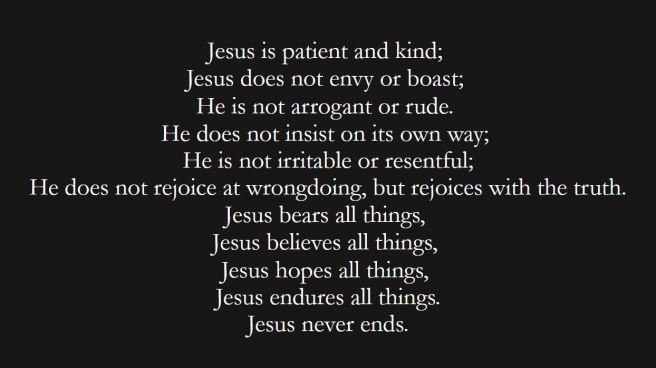
    Share this:

    • Email a link to a friend (Opens in new window) Email
    • Print (Opens in new window) Print
    • Share on Telegram (Opens in new window) Telegram
    Like Loading…
  • Love Like Jesus – Without Arrogance

    2021-04-01

    lovelikejesus_157x157

    Lately, I have been exclusively in the Apostle John’s writings, in my personal readings, my blog writing, and my time with my wife.

    John reiterates one theme, over and over again in my opinion, and that is that we are to love one another, to love like Jesus, to love.

    It is refreshing to be reminded of the core mission of believers.

    Love like Jesus.

    Without Arrogance

    Love is the goal of all of Christian life.  Love that is displayed in the life of Jesus.  The life and death of Jesus.  This love is described in 1 Corinthians 13.  Let’s consider

    Love is not arrogant

    It has been years since a brother once instructed me to replace the term “love” with “Jesus” to get a better understanding of who He is.  

    Jesus is not arrogant

    1 Cor 13 - arrogant

    Arrogance

    The fifth term that describes what love is not is arrogance

    This term is often translated in the KJV as “puffed up” and I always chuckled when I read those passages. It seemed so descriptive.

    Paul was careful when he chose this term to describe what love is not, since there is another term translated as boast in the New Testament.

    That word is kauchēsis, Strong’s # G2746. This word is used to describe the boasting in the Lord that Paul (and all believers) exhibit in their lives. It is the act of glorying in the Lord. It is a positive characteristic of the believer, and it is used of our estimation of the Lord and of His people.

    Pauls boasts of the church in Corinth.

    2 Corinthians 7:4

    I am acting with great boldness toward you; I have great pride in you; I am filled with comfort. In all our affliction, I am overflowing with joy.

    Paul boasts of his fellow workers

    2 Corinthians 8:24

    So give proof before the churches of your love and of our boasting about you to these men.

    The word we are looking at in our current study is physioō, and this word closely imitates our common thought of pride, arrogance, haughtiness, selfish elevation over others. The root word describes the bellows used to blow a fire. (A bit of an association with hot air!)

    Love does not boast, does not inflate itself, does not tell everyone to “look at me”, listen to me, I’m more important than that fellow over there. As a matter of fact, I’m more important than you. Me me me me…..

    It is interesting that the majority of the time this word is used is in 1 Corinthians. The only other time this word is used in the New Testament is in Colossians 2:18, where Paul describes enemies of the gospel, being puffed up without reason about visions they have had!

    Again, it is important to remember the nature of the Corinthian church. This group of believers were immature, fleshy, and in division! Boasting is a tool used to create division, of pitting self over a brother.

    As many who read these posts have come to realize, I have a struggle with how to handle knowledge. My relationship with knowledge brought about great boasting in my life early on, to the point of defining my knowledge as the pure doctrine of the gospel, mocking discussion and discourse with other believers. I somehow convinced myself (I wasn’t convincing any one else!) that I had the pure teaching. How proud and haughty.

    In the following passage, Paul addresses the Corinthian’s relationship with idols in the City. It is my go to verse when I consider how to handle knowledge. We all possess (some) knowledge. Remember that love builds up the fellow believer.

    1 Corinthians 8:1

    Now concerning food offered to idols: we know that “all of us possess knowledge.” This “knowledge” puffs up, but love builds up.

    One of my Old Testament memory verses speaks on this topic. Hannah was praising the Lord for the answered prayer of God in giving her a son, Samuel. She had weaned her son, and brought him back to the temple, giving her son to the Lord.

    As you many remember, Hannah’s husband had a second wife, Penninah, who bore children and mocked Hannah for her barrenness. 1 Samuel speaks of Penninah provoking Hannah, seeking to irritate Hannah.

    Hannah’s prayer speaks of the Rock, our God and then slips into a portion concerning Penninah.

    1 Samuel 2:3

    Talk no more so very proudly,
    let not arrogance come from your mouth;
    for the LORD is a God of knowledge,
    and by him actions are weighed.

    Boasting of oneself, in the believers life, as he seeks to love like Jesus, is excluded.

    Micah 6:8

    He has told you, O man, what is good;
    and what does the LORD require of you
    but to do justice, and to love kindness,
    and to walk humbly with your God?

    Walk humbly with thy God. This characteristic of a believer is such a rare commodity in the days we live in.

    Jesus replacing Love

    So is my brother’s suggestion of replacing the term love with Jesus accurate and helpful?

    Jesus is not arrogant

    This term is so closely linked to our previous discussion on boasting that I will refer the reader to our previous post – Love Like Jesus – Without Boasting.

    In summary, Jesus, the Son of God cannot be arrogant since His own word’s define His attitude of life, that is of gentleness and humility.

    Philippians 2:5

    Have this mind among yourselves, which is yours in Christ Jesus,

    Please join me in our next study where we will consider a sister characteristic of being “puffed up”. Hope you can join me as we continue our study.

    I look forward to comments and discussion.  May the Lord give you an understanding heart and a willing spirit to consider the Bible and all it’s wealth.


    ← Back

    Thank you for your response. ✨

    Warning
    Warning
    Warning
    Warning

    Warning.

    Follow Considering the Bible on WordPress.com

    Thanks again for coming to visit. I hope you found something of interest in this post and would appreciate a comment, to begin a discussion.
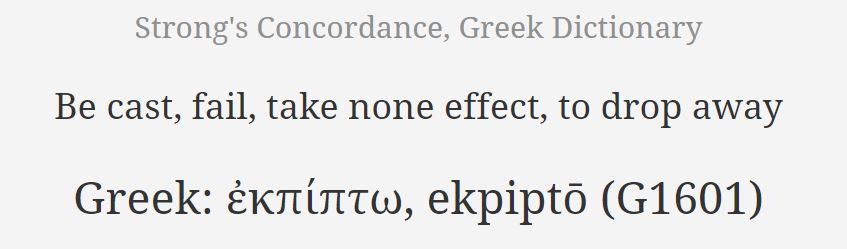
    Share this:

    • Email a link to a friend (Opens in new window) Email
    • Print (Opens in new window) Print
    • Share on Telegram (Opens in new window) Telegram
    Like Loading…
  • Calvin’s Concerns – Choice Meats

    2021-03-31

    In our previous post, I tried to give some of my interactions and history with the Calvinistic thought process and teachings.

    With this post, I would like to introduce you to the teacher I referred to earlier. He is a former Calvinist also, and has recanted, and has become a bit of a lightning rod for provisionism soteriology teaching.

    Many of his videos are quite lengthy, and have kept my interest now for weeks. What I would like to do is offer his “60 Second Soteriology” clips to introduce you to Mr Leighton Flowers.

    I do hope you will consider the teaching with an open mind.


    ← Back

    Thank you for your response. ✨

    Warning
    Warning
    Warning
    Warning

    Warning.

    Follow Considering the Bible on WordPress.com

    Thanks again for coming to visit. I hope you found something of interest in this post and would appreciate a comment, to begin a discussion.

    Share this:

    • Email a link to a friend (Opens in new window) Email
    • Print (Opens in new window) Print
    • Share on Telegram (Opens in new window) Telegram
    Like Loading…
  • Calvin’s Concerns – A Contradiction?

    2021-03-30

    As you may remember, I lived as a Calvinist for a number of years, teaching the “doctrines of grace” in a Sunday School Class for Adults, and in Small Group studies for years.

    During this time, certain verses and passages seemed to niggle at the back of my mind, but I sought to ignore them and refused to consider alternate ways of looking at the Word, and the God of the Bible.

    Certain verses seemed to be in contradiction with the general teaching of Calvin.

    One of those teachings were the apparent hatred God has for some sinners, to the point where He would not allow regeneration of their souls prior to their activating the faith required to please God. Yes – that is a common teaching in the reformed thought, that God regenerates a lost sinner prior to the sinner responding to the call of salvation.

    Any sinner that is not regenerated, given life eternal, is relegated to eternal suffering. This brings up a number of issues in my mind, which include the justice of God in condemning a sinner for not able to respond to the Gospel of Christ.

    Nevertheless, the topic I want to consider is the Love of God in relation to the sinner.

    Many times in the New Testament, (golly – bunches of times in the Old Testament) believers are enjoined to love thier enemies.

    Matthew 5:44

    But I say to you, Love your enemies and pray for those who persecute you,

    or

    Romans 12:20

    To the contrary, “if your enemy is hungry, feed him; if he is thirsty, give him something to drink; for by so doing you will heap burning coals on his head.”

    What has that got to do with Calvinism? The doctrines of grace teach that God does not love His enemies, but of the destruction and eternal torment of sinners, the enemies of God. They will suffer throughout eternity and this will supposedly bring glory and honor to the Father.

    Wait a minute

    We are told to imitate Him, as dear children.

    Ephesians 5:1

    Therefore be imitators of God, as beloved children.

    or, consider

     Matthew 5:48

    You therefore must be perfect, as your heavenly Father is perfect.

    So what is your point Carl?

    Are we to hate our enemies or love them? If we follow the teaching of Calvin, it seems in order to follow our Father in relation to His enemies, we would have the right to do damage to them. After all, according to the God depicted by Calvin, destruction of the enemies of God pleases Him.

    Never mind all the passages that speak of our not taking revenge, or that God is love. I found that once I admitted to myself that the logic of Calvinism had some weakness, the whole scheme tumbled down.

    If you are considering the teaching of Calvin, remember to keep a gentle spirit, an open mind to the passages of Scripture that give you pause, and flee from the pride of a “higher spirituality”

    To be loved by the suffering Savior and His gracious Father is enough.


    ← Back

    Thank you for your response. ✨

    Warning
    Warning
    Warning
    Warning

    Warning.

    Follow Considering the Bible on WordPress.com

    Thanks again for coming to visit. I hope you found something of interest in this post and would appreciate a comment, to begin a discussion.

    Share this:

    • Email a link to a friend (Opens in new window) Email
    • Print (Opens in new window) Print
    • Share on Telegram (Opens in new window) Telegram
    Like Loading…
  • Calvin’s Concerns – Discussions

    2021-03-29

    A few weeks back, I published the first of a series of posts offering 60 second video discussions on alternatives to the popular Calvinistic teaching in our churches these days.

    The videos were provided by Dr. Leighton Flowers, and addressed a number of topics that related to Calvinism and it’s resultant effects on the believer.

    Since then, I have received a number of comments in response to the videos, primarily from those that are associated with the reformed thought process (Thinking like Calvin).

    Initially, the comments were cordial, but eventually, due to my guests frustration or anger, their responses became heated, to the point that I was instructed to repent and believe the gospel.

    Passion to share your faith is commendable, but we must remember that we are called to fight the good fight, not the harsh fight. By that I mean, we are to fight with goodness, love, kindness, and patience. Condemning a brother, (or even a non-believer) usually results in loss of communication and personal offence. With no positive fruit coming from the effort. Trust me – I have spent far too long trying to argue and berate people into the kingdom!!!

    These things ought not to be.

    James 3:10

    Out of the same mouth come blessing and cursing. My brethren, these things ought not so to be.

    I would encourage all to be gracious in our discussions with those we meet, either in our workplace, over the phone, through teleconferencing, or even on a blog post, in a comment section.

    John 13:35

    By this all people will know that you are my disciples, if you have love for one another.”

    Please look for my next post on Calvin’s Concerns, where I will make an effort to consider a contradiction in Calvinism. Hope to see you there.


    ← Back

    Thank you for your response. ✨

    Warning
    Warning
    Warning
    Warning

    Warning.

    Follow Considering the Bible on WordPress.com

    Thanks again for coming to visit. I hope you found something of interest in this post and would appreciate a comment, to begin a discussion.

    Share this:

    • Email a link to a friend (Opens in new window) Email
    • Print (Opens in new window) Print
    • Share on Telegram (Opens in new window) Telegram
    Like Loading…
  • Psalms for Psome – Ps 2

    2021-03-28

    My wife and I are reading through the Psalms in our evening reading and occasionally a nugget of the Psalms jumps out of the page. Don’t you love it when, after years of reading the “Old Book” passages become alive, reinforcing old teachings or simply warming your heart.

    This is the book of Psalms, and it is rich.

    I pray I can communicate a portion of the blessing we received from this wonderful book.

    Knowing we were going to be reading Psalm 2 this evening, I figgered I was ready to discuss, given that I had read this psalm as much as any.

    Little did I know that one more time would give me more to be thankful for, and also add a question or two to consider.

    Psalm 2

    1 Why do the nations rage
    and the peoples plot in vain?
    2 The kings of the earth set themselves,
    and the rulers take counsel together,
    against the LORD and against his Anointed, saying,
    3 “Let us burst their bonds apart
    and cast away their cords from us.”

    It seems so obvious to me that the passage here speaks of the rejection and crucifixion of the Lord Jesus.

    Verse 2 speaks of the rulers and the kings counselling together. I take that as the joining of the Jewish leadership and the Gentile lords coming together to reject God. This is a common theme through the Word, where sworn enemies join forces when it comes to fighting against the Creator and Redeemer of all. (Consider Herod and Pilate)

    Luke 23:12

    And Herod and Pilate became friends with each other that very day, for before this they had been at enmity with each other.

    It is sobering to realize that those who are against the Lord will team up with absolutely anyone to fight against God.

     
    4 He who sits in the heavens laughs;
    the Lord holds them in derision.
    5 Then he will speak to them in his wrath,
    and terrify them in his fury, saying,
    6 “As for me, I have set my King
    on Zion, my holy hill.”

    The enemy has a united front. The motivation for confrontation is high. The forces against God seem insurmountable. (At least from our perspective.)

    But God has set His King on His holy hill.

    But when did this happen? When did God set His King on His holy hill? I used to think that He will be enthroned during the millennial Kingdom in the future. Not so sure anymore. There is much debate over this, but as my wife and I chatted, we considered Hebrews 12:22, where the author refers to believers coming (or having come) to Mount Zion.

    Heb 12:22

    But you have come to Mount Zion and to the city of the living God, the heavenly Jerusalem, and to innumerable angels in festal gathering,

    Jesus is the King now. Let us not forget that He is on the throne.

    Mat 28:18

    And Jesus came and said to them, “All authority in heaven and on earth has been given to me.

    Sinful actions, evil men and corrupt systems do not frustrate the sovereignty of the Lord Jesus.


    7 I will tell of the decree:
    The LORD said to me, “You are my Son;
    today I have begotten you.
    8 Ask of me, and I will make the nations your heritage,
    and the ends of the earth your possession.
    9 You shall break them with a rod of iron
    and dash them in pieces like a potter’s vessel.”

    This next set of verses are the ones that I intended to discuss with this post, but the earlier ones were too tempting to let go without a bit of comment.

    Nevertheless, it is good to remember that the apostles gave us much to consider when they supplied the Spirit’s interpretation of verse 7 in Acts 13:32 – 34

    Acts 13:32-34

    And we bring you the good news that what God promised to the fathers,
    this he has fulfilled to us their children by raising Jesus, as also it is written in the second Psalm, “‘You are my Son, today I have begotten you.’
    And as for the fact that he raised him from the dead, no more to return to corruption, he has spoken in this way, “‘I will give you the holy and sure blessings of David.’

    So often I consider the term “begotten” to refer to being born, as in my son was begotten of my wife and I. The apostle corrects this thinking by informing us that the Psalm refers to the resurrection of the Lord.

    This psalm speaks of the resurrections of the Lord Jesus and His triumph over the forces arrayed against His Father

    10 Now therefore, O kings, be wise;
    be warned, O rulers of the earth.
    11 Serve the LORD with fear,
    and rejoice with trembling.
    12 Kiss the Son,
    lest he be angry, and you perish in the way,
    for his wrath is quickly kindled.
    Blessed are all who take refuge in him.

    Consider the mercy of God, in that after the resurrection, and by that I mean after the crucifixion and torture inflicted by the kings and rulers, they are entreated to serve the Lord with fear, and to rejoice with trembling

    He is not a God I can imagine! He is much more!


    ← Back

    Thank you for your response. ✨

    Warning
    Warning
    Warning
    Warning

    Warning.

    Follow Considering the Bible on WordPress.com

    Thanks again for coming to visit. I hope you found something of interest in this post and would appreciate a comment, to begin a discussion.

    Share this:

    • Email a link to a friend (Opens in new window) Email
    • Print (Opens in new window) Print
    • Share on Telegram (Opens in new window) Telegram
    Like Loading…
←Previous Page
1 … 71 72 73 74 75 … 91
Next Page→

Create a website or blog at WordPress.com


Loading Comments...
 

    • Subscribe Subscribed
      • Considering the Bible
      • Join 692 other subscribers
      • Already have a WordPress.com account? Log in now.
      • Considering the Bible
      • Subscribe Subscribed
      • Sign up
      • Log in
      • Report this content
      • View site in Reader
      • Manage subscriptions
      • Collapse this bar
    %d