Skip to content

Considering the Bible

  • Testimony
  • Purpose
  • Contact Me
  • Home
  • About
  • Old Testament Messianic Prophecies – Prophecy #110

    2022-02-09
    Bible Scroll

    The prophecy of the Lord Jesus for our consideration and edification, written centuries prior to His earthly existence is

    Prophecy #110
    Description
    Betrayed by a familiar friend
    Old Testament Prophecy
     Psalm 41:9
    Even my close friend in whom I trusted,
        who ate my bread, has lifted his heel against me.
    New Testament Fullfillment
    John 13:18
    I am not speaking of all of you; I know whom I have chosen. But the Scripture will be fulfilled, ‘He who ate my bread has lifted his heel against me.’

    If you are just joining this blog, or are a first time visitor, welcome to Considering the Bible. We would like to offer a document that provides over 350 prophecies of the Messiah found in the Old Testament for your consideration.

    351 Old Testament Prophecies Fulfilled in Jesus Christ

    I make no claim to be able to comment on every one of these amazing prophecies in the future, but will occasionally bring one to the readers attention for their edification.

    Hopefully you will follow “Considering the Bible” and begin an interaction with us


    ← Back

    Thank you for your response. ✨

    Follow Considering the Bible on WordPress.com

    Thanks again for coming to visit. I hope you found something of interest in this post and would appreciate a comment, to begin a discussion.


    Share this:

    • Email a link to a friend (Opens in new window) Email
    • Print (Opens in new window) Print
    • Share on Telegram (Opens in new window) Telegram
    Like Loading…
  • Book Look – Heaven’s Doors – Jacob I Loved, Esau I Hated

    2022-02-08

    In oversimplified terms, universal reconciliation speaks of the eventual redemption of every soul ever created through the work of the Messiah and His sacrifice on the cross. This teaching does not remove the existence of hell, or the suffering associated with it, but it does challenge it’s never ending duration, and the purpose of the flames.

    This series of posts, on the book “Heaven’s Doors” will be my last on the topic of universal reconciliation (not universalism). I am thankful to my Calvinist friend for directing me to this “heresy”. The teaching of universal reconciliation has more Scriptural support than I imagined and is worth considering if you are of an open mind and willing to consider alternate views to expand your understanding of the Word.

    Of course if you are convinced you are completely right, without error, and doctrinally pure, this topic would be a waste of your time. Please move on!

    This post will address Jacob I Loved, Esau I Hated

    As it is written, “Jacob I loved, but Esau I hated.” – Romans 9:13

    This passage is one of a few that I have addressed under a series I called “Calvin’s Concerns“. It turns out the series has spawned off a number of posts on Romans 9. If this is of interest, please search within this blog for “Romans 9” to compile the posts available for your consideration.

    For the sake of this post, I would like to consider how this verse has been interpreted to understand that Esau is condemned to hell for all eternity. Is this a proper understanding of this passage? I would say no, and Mr. Sarris’ book repeated much of my understanding of this passage.

    Paul, in discussing Jacob and Esau, speaks to the choice of God in who to serve Him as the family through whom the Messiah would come. Eternal destiny seems to be imported into this passage by those who are fatalistic and follow after a philosophy that takes away all our responsibility of following after Him, of claiming to believe in Him as our Savior.

    During a discussion with a Calvinist, I asked if I am to hate my mother and father. Of course he knew where I was going to take him in the New Testament.

    “If anyone comes to me and does not hate his own father and mother and wife and children and brothers and sisters, yes, and even his own life, he cannot be my disciple. – Luke 14:26

    If God hates Esau in the common understanding of “hate” (i.e. to have an intense hostility towards someone), how is it that we are not to understand this call to discipleship in the same manner? Is Jesus telling us to have an intense hostility towards our parents? This creates confusion and contradiction in the Word and we know that this just ain’t so!

    So, let us compare Scripture with Scripture and see if we can find a bit of clarity for Romans 9:13. You see when I read a passage such as Luke 14:26 and consider the overarching message of the Word in relation to our parents, it seems that the command to hate our parents is to be understood as defining priorities.

    Consider the following passages that define our obligation to our parents if we are to please God.

    We are to honor our parents.

    “Honor your father and your mother, that your days may be long in the land that the LORD your God is giving you. – Exodus 20:12

    “Honor your father and mother” (this is the first commandment with a promise), – Ephesians 6:2

    We are to obey our parents as children.

    Children, obey your parents in everything, for this pleases the Lord. – Colossians 3:20

    How can we satisfy these injunctions for the believer, in relation to Luke 14:26? I believe it is in understanding that the term “hate” is a relative term, a term that defines a priority. That is, in relation to the Lord, parents are to be considered the next level of the love commitment for the believer.

    This is the same sense we are to understand Romans 9. God’s “hatred” of Esau is relative to His love for Jacob, in the arena of service for the kingdom. To state otherwise causes confusion and conflict.

    As we find in Romans 9, the choice of Jacob to be the family bringing the Savior to the world was a tremendous privilege to have bestowed upon them by God. Esau was not granted this privilege, but this does not require that Esau is doomed to eternal torment and suffering.

    Service, not salvation is the topic here folks!

    The “salvation” interpretation of Romans 9 that some believers preach and teach is possibly revealing more of their desires for the lost than that of the Master’s desires. As a former Calvinist, it disturbs me that I had such a low view of our Heavenly Father, that I viewed Him as One with mixed emotions and desires for His creation.

    Why do we sometimes struggle with the good news being really good? Is the possibility of hell not being permanent a difficult concept to accept?

    Is not the alternative as difficult to accept?

    For myself, I have spent the majority of my Christian life believing in the horrors of an eternal suffering for all that are without Christ. My understanding that the Bible teaches of the eternal never ending conscious suffering and torment of the lost to be without relief is becoming the difficult concept to accept.

    Of course, I would appreciate your thoughts and comments.


    For other books on this same topic, I would refer you to Jesus Undefeated – a 10 part series, and The Inescapable Love of God. One additional book that I have not posted on is by David Artman, Grace Saves All.


    ← Back

    Thank you for your response. ✨

    Thanks again for coming to visit. I hope you found something of interest in this post and would appreciate a comment, to begin a discussion.

    Follow Considering the Bible on WordPress.com

    Follow Considering the Bible on WordPress.com

    Thanks again for coming to visit. I hope you found something of interest in this post and would appreciate a comment, to begin a discussion.

    Share this:

    • Email a link to a friend (Opens in new window) Email
    • Print (Opens in new window) Print
    • Share on Telegram (Opens in new window) Telegram
    Like Loading…
  • Old Testament Messianic Prophecies – Prophecy #109

    2022-02-07
    Bible Scroll

    The prophecy of the Lord Jesus for our consideration and edification, written centuries prior to His earthly existence is

    Prophecy #109
    Description
    Confronted by adversaries in the Garden
    Old Testament Prophecy
     Psalm 40:14
    Let those be put to shame and disappointed altogether
        who seek to snatch away my life;
    let those be turned back and brought to dishonor
        who delight in my hurt!
    New Testament Fullfillment
    John 18:4-6
    Then Jesus, knowing all that would happen to him, came forward and said to them, “Whom do you seek?”

    They answered him, “Jesus of Nazareth.” Jesus said to them, “I am he.” Judas, who betrayed him, was standing with them.

    When Jesus said to them, “I am he,” they drew back and fell to the ground.

    If you are just joining this blog, or are a first time visitor, welcome to Considering the Bible. We would like to offer a document that provides over 350 prophecies of the Messiah found in the Old Testament for your consideration.

    351 Old Testament Prophecies Fulfilled in Jesus Christ

    I make no claim to be able to comment on every one of these amazing prophecies in the future, but will occasionally bring one to the readers attention for their edification.

    Hopefully you will follow “Considering the Bible” and begin an interaction with us


    ← Back

    Thank you for your response. ✨

    Follow Considering the Bible on WordPress.com

    Thanks again for coming to visit. I hope you found something of interest in this post and would appreciate a comment, to begin a discussion.

    Share this:

    • Email a link to a friend (Opens in new window) Email
    • Print (Opens in new window) Print
    • Share on Telegram (Opens in new window) Telegram
    Like Loading…
  • Let Me Tell You a Story – Horsehair

    2022-02-06
    let-me-tell-you-a-story.jpg

    We were having lunch in the conference room when my boss asked us if we had ever gotten popped while in elementary school. I know I know – a strange subject, but we are a strange group of fella’s – engineers you know!

    Anyway, a couple of the guys responded and I mentioned the dreaded horsehair incident and my shaking fear of being called to the principles office.

    It all started in grade 4, when my best friend (Randy) and I were out during lunch break, tossing a few stones into the farmers field and running around. When I tell you this, you should be amazed that Randy and I thought we could get away with an utter disregard for rules, that we would presume that the teachers would not see our flagrant rebellion in tossing a bit of gravel into the fields next door.

    But for some reason they didn’t see us act out our rebellion, for if they had we would’ve been dragged down to the principals office and given a good “pop”. In our school, according to Randy, our principal would, on first offence strap the open palm in order to get his point across.

    Now, please understand, I had never been to the principals office like my friend Randy had, so as we ran around that day, he mentioned his trips to the office. The one thing he warned me of, (after we tossed the stones!) was that if the principal ever called me to his office, to hope and pray he doesn’t bring out “the horsehair”. Randy explained that Principal Rainey would lay a single horsehair across the palm just prior to the strapping. Upon striking the palm, this horsehair would slice open the skin, and the blood would flow.

    Remember now, Randy and I were 9 yrs old at the time and I was what many might call a goody two shoes. Randy was a new friend, and a rebel. The rumor was that he knew the principal on a first name basis.

    So I believed him about the horsehair and started considering the wisdom of my rebellion, of my stone throwing act of defiance. But no one saw me, and I went back in to the class room after lunch break with mixed feelings. Thankful I didn’t get caught, but I sure had conscious that kept nagging at me.

    Doesn’t the proverbs tell us….

    The wicked flee when no one pursues,
        but the righteous are bold as a lion.

    I’ll tell you for the next few days, my flagrant rejection of the rules haunted me. Fear started welling up in my heart, and eventually, I became a ball of nerves. Until the dreaded day came, when only two students were called to the principals office. You guessed it. One of those students was the rebel who is writing this story. But the other one wasn’t Randy.

    It was Susan.

    Nevertheless, this wrinkle in the story didn’t relive me of my fear. I remember looking down at my palms as we were escorted to the office. Of course Susan went in first, with the principal closing the door. Why would he spank her? What did she do? She was an almost perfect student, always getting great marks and was super polite. Well it turns out she was in their for about 10 minutes, and then came out and went back to class. I tried to sneak a peak at her hands, but I didn’t see any blood dripping from them. Of course I hadn’t heard the expected wailing either, so I was even more confused.

    Principal Rainey called me in and I looked at my virgin palms one last time.

    Now, as I tell you this story, I want you to enter into my experience of the fear I felt. A little boy, expecting blood to be splattered on the walls due to this strange method of strapping. I might lose the ability to write, and the pain – oh the pain!

    All of this fear was based on two “facts”

    • Fact 1 – I had broke the school yard policy
    • Fact 2 – Randy knew what he was talking about

    Fear, as it turns out is based on the knowledge we have, and not necessarily on facts. My tossing stones created a self perception as a rebel. My belief in Randy’s experience drove the fear of someone finding out into hyperdrive.

    Technically, I deserved some discipline. Looking back, I suppose I needed a stern talking to. But for some reason I jumped over logic, and headed to the worst situation, that is of having blood spurting out of my palm, dripping on the floor and writhing in pain.

    How ridiculous!

    The principal had called me to his office for the same reason he had called Susan to the office. No discipline. Simply an effort to help us with a speech impediment we both suffered from at the time.

    Friend. that fear I lived through was self inflicted due to two “facts”. One fact, that of my stone throwing was true. The other fact, that of the dreaded horsehair, was a story, a gag, a joke, a lie (?) that I believed as true and suffered under the fear of it.

    There was no “horsehair” discipline in the school, and I never did get a “pop” in any of my schooling years. But I did learn that believing a lie is very detrimental to your mental health. Those few words out of Randy’s mouth consumed my thinking for days.

    What do you believe about God? How do you “see Him”? Does He have a horsehair hidden somewhere, just waiting to wail on your palm?

    My fear of Principal Rainey, had turned from the proper respect to be given to an adult and authority in the school, to a life crippling fear and terror.

    Consider Jesus of Nazareth. The truth. Worthy of belief? How does the expression of God through His Son, in His sacrificial death for sinners fit into this story? Where does fear fit in? What type of fear do you live in? Fear based on your assumptions, stories others have told you, rumors or out and out lies? Do you have a debilitating fear of the Most High? A fear that paralyzes you, that keeps you from asking of His will, of trying to find out what He is like?

    My friends, although He is the Most High God, the Almighty, the All knowing and ever present One, He came to the earth in humility, to die a hideous death in order to display His great love for us.

    Do not fear. Fear not, as the Bible constantly tells us. Seek Him, for He is rich in mercy and full of grace towards those who seek Him.


    ← Back

    Thank you for your response. ✨

    Thanks again for coming to visit. I hope you found something of interest in this post and would appreciate a comment, to begin a discussion.

    Follow Considering the Bible on WordPress.com

    Share this:

    • Email a link to a friend (Opens in new window) Email
    • Print (Opens in new window) Print
    • Share on Telegram (Opens in new window) Telegram
    Like Loading…
  • Psalms for Psome – Ps 35.04

    2022-02-05

    My wife and I are reading through the Psalms in our evening reading and occasionally a nugget of the Psalms jumps out of the page. Don’t you love it when, after years of reading the “Old Book” passages become alive, reinforcing old teachings or simply warming your heart.

    This is the book of Psalms, and it is rich.

    I pray I can communicate a portion of the blessing we receive from this wonderful book.

    Psalm 35
    9 Then my soul will rejoice in the LORD, exulting in his salvation.
    10 All my bones shall say, “O LORD, who is like you, delivering the poor from him who is too strong for him, the poor and needy from him who robs him?”

    As an engineer, I tend to read my profession into passages. Not trying to justify it, or to say it is the only way to understand the Word. Definitely not. But it is the standpoint I am currently in when relating to the Word.

    So when I hear David say

    All my bones shall say….

    I automatically consider David to be speaking of the very structure and foundation of his existence, that which provides support and stability in his body. (Without bones, we would simply be a quivering pile of skin, fat and organs laying on the ground!) The most tangible and structurally solid part of David’s body (his bones!) was the source of His exultation. He resonated deeply with this truth and the very essence of his being, he shouted out the unanswerable question…

    O LORD, who is like you?

    There is no one out there that is like the Lord, that behaves as the Lord does. He is the One who delivers…

    the poor from him who is too strong for him, the poor and needy from him who robs him?”

    Maybe that is why we struggle with accepting His goodness, His kindness, His abundant, overflowing grace. As with everyone we know, (including ourselves), there seems to be an agenda attached with any assistance provided, a secondary, hidden motivation benefitting the rescuing soul. Rare is the one who rescues simply out of an abundance of grace. How uncommon to find one that delivers simply out of love, and not with a side benefit. Scarce indeed is the selfless one.

    And yet, this is the One we worship. The One we look to for guidance and strength, for wisdom and patience, for understanding and comfort. He is altogether unlike any other.

    And yet we experience His loving kindness most when we are in our deepest need, when we realize our enemies are much stronger than us, when we realize we cannot win the fight. When we are in a condition of utter helplessness, the Lord, the God of Jacob is the One who delivers, the One who rescues, the One who saves us from an enemy that is much stronger than us, of whom we have no resource other than Him to find our defense.

    He is worthy to trust. Not only worthy, but altogether the only One that will not let the trusting soul be ashamed, or to be let down.

    Praise Him


    ← Back

    Thank you for your response. ✨

    Thanks again for coming to visit. I hope you found something of interest in this post and would appreciate a comment, to begin a discussion.

    Follow Considering the Bible on WordPress.com

    Share this:

    • Email a link to a friend (Opens in new window) Email
    • Print (Opens in new window) Print
    • Share on Telegram (Opens in new window) Telegram
    Like Loading…
  • Old Testament Messianic Prophecies – Prophecy #108

    2022-02-04
    Bible Scroll

    The prophecy of the Lord Jesus for our consideration and edification, written centuries prior to His earthly existence is

    Prophecy #108
    Description
    He was to preach the Righteousness in Israel
    Old Testament Prophecy
     Psalm 40:9
    I have told the glad news of deliverance
        in the great congregation;
    behold, I have not restrained my lips,
        as you know, O Lord.
    New Testament Fullfillment
    Matt 4:17
    From that time Jesus began to preach, saying, “Repent, for the kingdom of heaven is at hand.”

    If you are just joining this blog, or are a first time visitor, welcome to Considering the Bible. We would like to offer a document that provides over 350 prophecies of the Messiah found in the Old Testament for your consideration.

    351 Old Testament Prophecies Fulfilled in Jesus Christ

    I make no claim to be able to comment on every one of these amazing prophecies in the future, but will occasionally bring one to the readers attention for their edification.

    Hopefully you will follow “Considering the Bible” and begin an interaction with us


    ← Back

    Thank you for your response. ✨

    Follow Considering the Bible on WordPress.com

    Thanks again for coming to visit. I hope you found something of interest in this post and would appreciate a comment, to begin a discussion.

    Share this:

    • Email a link to a friend (Opens in new window) Email
    • Print (Opens in new window) Print
    • Share on Telegram (Opens in new window) Telegram
    Like Loading…
  • Calvin’s Concerns – Ephesians 2:8 Revisited

    2022-02-03

    Calvin’s followers seek to justify their teaching with verses that, with just a little bit of explanation, seem to reinforce their philosophy.

    You know – the Romans 9 passage, or maybe 1 Corinthians 2:14.

    Some of these passages, without considering alternate views (i.e. listening to only Calvinist teachers!) tend to reinforce the Calvinistic thought pattern.

    This series of video podcasts will provide a discussion that many Calvinists may have never heard, or considered.

    Take a few minutes, and try to have an open mind.


    ← Back

    Thank you for your response. ✨

    Thanks again for coming to visit. I hope you found something of interest in this post and would appreciate a comment, to begin a discussion.

    Follow Considering the Bible on WordPress.com

    Share this:

    • Email a link to a friend (Opens in new window) Email
    • Print (Opens in new window) Print
    • Share on Telegram (Opens in new window) Telegram
    Like Loading…
  • Old Testament Messianic Prophecies – Prophecy #107

    2022-02-02
    Bible Scroll

    The prophecy of the Lord Jesus for our consideration and edification, written centuries prior to His earthly existence is

    Prophecy #107
    Description
    His delight-the will of the Father
    Old Testament Prophecy
     Psalm 40:6-8
    In sacrifice and offering you have not delighted,
        but you have given me an open ear.[a]
    Burnt offering and sin offering
        you have not required.
    Then I said, “Behold, I have come;
        in the scroll of the book it is written of me:
    I delight to do your will, O my God;
        your law is within my heart.”
    New Testament Fullfillment
    John 4:34
    Jesus said to them, “My food is to do the will of him who sent me and to accomplish his work.
     Heb 10:5-10
    Consequently, when Christ came into the world, he said, “Sacrifices and offerings you have not desired, but a body have you prepared for me;

    in burnt offerings and sin offerings you have taken no pleasure.

    Then I said, ‘Behold, I have come to do your will, O God, as it is written of me in the scroll of the book.’”

    When he said above, “You have neither desired nor taken pleasure in sacrifices and offerings and burnt offerings and sin offerings” (these are offered according to the law),

    then he added, “Behold, I have come to do your will.” He does away with the first in order to establish the second.

    And by that will we have been sanctified through the offering of the body of Jesus Christ once for all.

    If you are just joining this blog, or are a first time visitor, welcome to Considering the Bible. We would like to offer a document that provides over 350 prophecies of the Messiah found in the Old Testament for your consideration.

    351 Old Testament Prophecies Fulfilled in Jesus Christ

    I make no claim to be able to comment on every one of these amazing prophecies in the future, but will occasionally bring one to the readers attention for their edification.

    Hopefully you will follow “Considering the Bible” and begin an interaction with us


    ← Back

    Thank you for your response. ✨

    Follow Considering the Bible on WordPress.com

    Thanks again for coming to visit. I hope you found something of interest in this post and would appreciate a comment, to begin a discussion.

    Share this:

    • Email a link to a friend (Opens in new window) Email
    • Print (Opens in new window) Print
    • Share on Telegram (Opens in new window) Telegram
    Like Loading…
  • Book Look – Heaven’s Doors – The Narrow Door

    2022-02-01

    In oversimplified terms, universal reconciliation speaks of the eventual redemption of every soul ever created through the work of the Messiah and His sacrifice on the cross. This teaching does not remove the existence of hell, or the suffering associated with it, but it does challenge it’s never ending duration, and the purpose of the flames.

    This series of posts, on the book “Heaven’s Doors” will be my last on the topic of universal reconciliation (not universalism). I am thankful to my Calvinist friend for directing me to this “heresy”. The teaching of universal reconciliation has more Scriptural support than I imagined and is worth considering if you are of an open mind and willing to consider alternate views to expand your understanding of the Word.

    Of course if you are convinced you are completely right, without error, and doctrinally pure, this topic would be a waste of your time. Please move on!

    This post will address The Narrow Door

    Our initial verse to consider is Luke 13:23-24

    And someone said to him, “Lord, will those who are saved be few?” And he said to them,
    “Strive to enter through the narrow door. For many, I tell you, will seek to enter and will not be able. – Luke 13:23-24 ESV

    Notice the question being asked. Does you understand the question as “Lord will those who are saved during the church age be few?” Or maybe, you might read it, understanding the question such as “Lord, will those who are saved in the future be few?”

    My point is that the disciple who asked Jesus this question may have been considering the smallness of the current following that Jesus had. Let’s not put words in the disciples mouth, making him say something we assume.

    Note the graphic below, with the Greek parsing provided to assist in making the point that the question was regarding their current condition, their present situation

    “Enter by the narrow gate. For the gate is wide and the way is easy that leads to destruction, and those who enter by it are many.
    For the gate is narrow and the way is hard that leads to life, and those who find it are few. Matthew 7:13-14 ESV

    In our last post, we dealt with the term “perish” and concluded that perish does not define endless suffering in hell, but describes a wasted life, a life of ruin.

    Although this passage from the Sermon on the Mount is not expressly answering the question above in Luke 13, it does speak to the “fewness” of those that find life.

    The destruction experienced by the many, spoken of in this verse is similar to perishing. The Greek word is ἀπώλεια (apōleia), and has the Strongs number of G684, with the following definition

    ἀπώλεια apṓleia, ap-o’-li-a; from a presumed derivative of G622; ruin or loss (physical, spiritual or eternal):—damnable(-nation), destruction, die, perdition, X perish, pernicious ways, waste.

    If you have not had the chance to read the previous post on Perishing ( a different but similar Greek word) , I would recommend you spend a few minutes venturing over to it. Book Look – Heaven’s Doors – Perishing.

    Again, it appears Jesus is speaking of His kingdom being experienced in the here and now, and that my assumptions is that the passage is speaking of my eternal fate. This may not be the focused intent of the verse. And yet destruction at the end of my physical life cannot be entirely discounted, for if my life is wasted, ruined by my choices, I will experience sorrow and regret, suffering and pain.

    This is a sad truth, and one that needs to be considered as we seek to know the true God and His Son Jesus Christ. This destruction, this waste or ruin of a life, of becoming useless is a terrible waste, and yet the Lord is the Redeemer of those who realize their state, repent and believe in the Son, and follow after Him.

    A few years ago, my wife and I experienced a sadness, a realization of waste that burdened us very much. In our sorrows, I was reading in the book of Joel, and fell on a verse that greatly encouraged me at that time.

    I will restore to you the years that the swarming locust has eaten, the hopper, the destroyer, and the cutter, my great army, which I sent among you. – Joel 2:25

    The Israelites had just experienced a great loss, in that swarms of locusts had ravaged their land, stripping the fields of their produce and future crops.

    The Lord speaks to their condition and promises them that He will restore (or pay back) the years that the locusts have taken from them.

    To those who are currently taking the wide road to destruction, there will come a time of suffering, of regret and of pain. There is no denying this, and yet in the midst of this destruction (in this life or the next) God’s mercy may be available.

    If this is the intent of the Biblical message, this should encourage you to reach out to Him now, for He is a merciful and kind God, One who given His All (in the sacrifice of His Son) and can provide you a life worth living in the here and now, a life that is not useless or that has been wasted.

    Trust in the Messiah. You will not regret knowing Him, for He is kind and loving, patient and yet persistent in bringing each believer to a better life, a life more like His!


    For other books on this same topic, I would refer you to Jesus Undefeated – a 10 part series, and The Inescapable Love of God. One additional book that I have not posted on is by David Artman, Grace Saves All.


    ← Back

    Thank you for your response. ✨

    Thanks again for coming to visit. I hope you found something of interest in this post and would appreciate a comment, to begin a discussion.

    Follow Considering the Bible on WordPress.com

    Follow Considering the Bible on WordPress.com

    Thanks again for coming to visit. I hope you found something of interest in this post and would appreciate a comment, to begin a discussion.

    Share this:

    • Email a link to a friend (Opens in new window) Email
    • Print (Opens in new window) Print
    • Share on Telegram (Opens in new window) Telegram
    Like Loading…
  • Old Testament Messianic Prophecies – Prophecy #106

    2022-01-31
    Bible Scroll

    The prophecy of the Lord Jesus for our consideration and edification, written centuries prior to His earthly existence is

    Prophecy #106
    Description
    The joy of His resurrection predicted
    Old Testament Prophecy
     Psalm 40:2-5
    He drew me up from the pit of destruction,
        out of the miry bog,
    and set my feet upon a rock,
        making my steps secure.
    He put a new song in my mouth,
        a song of praise to our God.
    Many will see and fear,
        and put their trust in the Lord.
    Blessed is the man who makes
        the Lord his trust,
    who does not turn to the proud,
        to those who go astray after a lie!
    You have multiplied, O Lord my God,
        your wondrous deeds and your thoughts toward us;
        none can compare with you!
    I will proclaim and tell of them,
        yet they are more than can be told.
    New Testament Fullfillment
    John 20:20
    When he had said this, he showed them his hands and his side. Then the disciples were glad when they saw the Lord.

    If you are just joining this blog, or are a first time visitor, welcome to Considering the Bible. We would like to offer a document that provides over 350 prophecies of the Messiah found in the Old Testament for your consideration.

    351 Old Testament Prophecies Fulfilled in Jesus Christ

    I make no claim to be able to comment on every one of these amazing prophecies in the future, but will occasionally bring one to the readers attention for their edification.

    Hopefully you will follow “Considering the Bible” and begin an interaction with us


    ← Back

    Thank you for your response. ✨

    Follow Considering the Bible on WordPress.com

    Thanks again for coming to visit. I hope you found something of interest in this post and would appreciate a comment, to begin a discussion.

    Share this:

    • Email a link to a friend (Opens in new window) Email
    • Print (Opens in new window) Print
    • Share on Telegram (Opens in new window) Telegram
    Like Loading…
  • Parable Surprises – Wedding Banquet

    2022-01-30

    Weddings are awesome, but sometimes full of tension and surprises. To plan a wedding is one of the more complex projects I have been involved with. Don’t get me wrong, I loved being involved with my girls in their wedding plans and taking part in the work, creating memories that will remain with them forever.

    This parable speaks of a King throwing a wedding, having completed all the preparations, and offering a celebration to His people.

    But something goes wrong. Terribly wrong. Let’s read the passage and consider the message.

    Matthew 22:2-14

    2 “The kingdom of heaven may be compared to a king who gave a wedding feast for his son, 3 and sent his servants to call those who were invited to the wedding feast, but they would not come. 4 Again he sent other servants, saying, ‘Tell those who are invited, “See, I have prepared my dinner, my oxen and my fat calves have been slaughtered, and everything is ready. Come to the wedding feast.”‘ 5 But they paid no attention and went off, one to his farm, another to his business, 6 while the rest seized his servants, treated them shamefully, and killed them. 7 The king was angry, and he sent his troops and destroyed those murderers and burned their city. 8 Then he said to his servants, ‘The wedding feast is ready, but those invited were not worthy. 9 Go therefore to the main roads and invite to the wedding feast as many as you find.’ 10 And those servants went out into the roads and gathered all whom they found, both bad and good. So the wedding hall was filled with guests. 11 “But when the king came in to look at the guests, he saw there a man who had no wedding garment. 12 And he said to him, ‘Friend, how did you get in here without a wedding garment?’ And he was speechless. 13 Then the king said to the attendants, ‘Bind him hand and foot and cast him into the outer darkness. In that place there will be weeping and gnashing of teeth.’ 14 For many are called, but few are chosen.”

    Questions to Consider

    Who were the audience?

    This parable is directed to “them”, referring to the audience in the previous parable. See Parable Surprises Wicked Servants

    When did the Lord give this parable?

    This parable was delivered to the nation and people of Israel as Jesus was preparing to establish the eternal kingdom through His death.

    Where did the Lord teach the parable?

    It appears this parable was provided in the temple, as it continues from previous parables.

    Why did the Lord give this message?

    The previous parable was given as a warning of the rejection of the Son by the Jewish leadership and the plea for individuals to flee the sinking ship and to “fall on the stone”

    This parable introduces the Lord as the King’s Son, and the central figure in the wedding prophecies throughout the Old Testament. Rejection of the invite and the resulting judgement on the nation is again spoken of, and yet the hope of an expansion of the wedding is offered. In the end, He warns of fakers, those who don’t have the wedding garment that was provided.

    What was the message for the original audience?

    There are a number of messages the Lord provided to the audience that day. Lets peruse the parable and find each.

    As I mentioned above, Jesus introduces Himself as the Kings Son, and in saying this, He is declaring to His enemies the very truth that will lead to His death. That He is the King, and no other!

    The second truth expressed may be found in verses 3 – 6, where Jesus speaks of the invite to the “bidden”, those who had been called to the wedding feast, as simply not coming. Again, just prior to the beginning of the feast the King sent forth servants again to invite the “bidden” to come to a feast already prepared, ready for a celebration Those “bidden” made light of the invitation, ignoring the invitation and continued on with their daily drudgery of farms and business. But this time, a portion of those who paid no attention to the invitation, went beyond simply ignoring the invitation, and continued into aggression upon those servants inviting them. To the death. Let’s get this straight – a portion of the invited, those “bidden” to the wedding celebration, slew the servants of the King. This group hearkens back to our previous parable.

    The third truth may be found in verses 7-9, and speaks of the overflowing grace of the King. Note that although judgement must be meted out to those murderers, the King’s ongoing attitude was not of bitterness and anger, but to find some way to lavish His grace upon a people, no matter their standing. The servants went out and gathered “all whom they found, both bad and good”. The wedding hall was filled with guests! I can’t help but to see this as referring to the gospel call after the Lord’s rejection, beating, crucifixion and resurrection. Not only from those within the nation doomed to destruction, but to all those that the servants could gather.

    In the final section Jesus focusses in on one lone individual. A man who had been invited. A man without a wedding garment. Although the passage does not state where the wedding garments came from, it is my understanding that the garments were provided by the host, that is, by the King Himself. The garments were basic robes that all attendees wore that would hide rank or status in life, thereby removing barriers to freely enjoy each others company.

    When the King saw a man who was not wearing the provided garment, He questioned him.

    Friend, how did you get in here without a wedding garment?

    You see, this man was blatantly expressing his rejection of the Kings provision by not wearing the garment. He may have been too proud to cover up his own status in life, his own garment may have been such that it exalted his own status in life over other attendees. At the very least, he rejected the Kings offer, and did not want to identify with the other wedding guests This may have been his motive and his path to doom, of his being cast into outer darkness, where there will be weeping and gnashing of teeth.

    He was rejected from the wedding feast and cast into the outer darkness. But what is the outer darkness, that has this weeping and gnashing of teeth?

    The term “outer darkness” is found three times in the Word, each time in the gospel of Matthew. (Darkness, of course is found many more times, but I am simply looking for clues on the specific term “outer darkness”.)

    12 while the sons of the kingdom will be thrown into the outer darkness. In that place there will be weeping and gnashing of teeth.” – Mat 8:12 ESV
    13 Then the king said to the attendants, ‘Bind him hand and foot and cast him into the outer darkness. In that place there will be weeping and gnashing of teeth.’ – Mat 22:13 ESV
    30 And cast the worthless servant into the outer darkness. In that place there will be weeping and gnashing of teeth.’ – Mat 25:30 ESV

    “Weeping and gnashing of teeth” (not including the phrase “outer darkness” as in the verses above) may be found an additional three times in Matthew and once in Luke.

    42 and throw them into the fiery furnace. In that place there will be weeping and gnashing of teeth. … 50 and throw them into the fiery furnace. In that place there will be weeping and gnashing of teeth. – Mat 13:42, 50 ESV
    51 and will cut him in pieces and put him with the hypocrites. In that place there will be weeping and gnashing of teeth. – Mat 24:51 ESV
    28 In that place there will be weeping and gnashing of teeth, when you see Abraham and Isaac and Jacob and all the prophets in the kingdom of God but you yourselves cast out. – Luke 13:28 ESV

    I find it interesting that the term weeping and gnashing of teeth is so specific. Let’s take a moment to look at these terms to see if the New Testament can shed some light onto our understanding.

    Weeping.

    When I read this parable initially, I associated pain with the weeping. But is that the intended meaning of the term, or is it the image we have imported, including the associated pain we have been taught of. When I am in pain, I may cry in the midst of the pain, and this may be synonymous with weeping, but is this the intended meaning here?

    The term “weeping” is the greek work klauthmos and is used only in the above verses, and the two following passages.

    “A voice was heard in Ramah, weeping and loud lamentation, Rachel weeping for her children; she refused to be comforted, because they are no more.” – Mat 2:18 ESV
    And there was much weeping on the part of all; they embraced Paul and kissed him, – Act 20:37 ESV

    These verses are instructive since they provide a background and reason for the experience of weeping. For Rachel it was the death of her children. Much sorrow and sadness. For the elders in Ephesus, again, it was sorrow and sadness of not seeing the beloved apostle Paul again that caused the weeping. As we can see from the two available passages above, the term “weeping” is associated with sadness or sorrow. The root word for “klauthmos” is “klaiō” (G2799) and has many more verses that would support this general conclusion. I will leave it to the reader for further study if of interest.

    Gnashing

    The term “gnashing” is a translation of the Greek word brygmos (G1030), from the root word brychō, (G1031)

    Brygmos is only found in the seven verses provided above, and are descriptive of some emotion that I associate with pain and suffering. I refer to Matthew 13:42, 50, where the passage speaks of a fiery furnace. The associated pain of fire must be where I am linking this gnashing of teeth with suffering.

    42 and throw them into the fiery furnace. In that place there will be weeping and gnashing of teeth. … 50 and throw them into the fiery furnace. In that place there will be weeping and gnashing of teeth. – Matthew 13:42, 50 ESV

    But I am still looking for a bit more definition. After all, Matthew 13:42,50 may be referring to multiple emotions and not necessarily linking the pain of the fire with the gnashing of teeth. There may be more going on, i.e. the suffering of fire AND an emotion associated with the gnashing of teeth. After all, we have found that weeping is generally associated with sadness, and may be experienced at the same time as suffering pain.

    So in my research, I found one time where the root word for gnashing appears in the New Testament, and to be honest, it is quite surprizing.

    brychō

    54 Now when they heard these things they were enraged, and they ground their teeth at him. – Act 7:54 ESV

    Stephen is giving his defense to the high priest and Sanhedrin, and with his defense, his audience “ground/gnashed their teeth” Why you ask? Were they suffering eternal pain and torment. No – They were enraged! Furious! Stephens defense condemned the Jewish leadership and they had had enough. Three verses later, Luke records the leadership…

    cried out with a loud voice and stopped their ears and rushed together at him. Then they cast him out of the city and stoned him.

    These guys were blind with rage! Murderous rage. The gnashing of teeth is associated with rage, anger, fury!

    In conclusion, was Jesus describing the outer darkness as a place of sadness and sorrow, combined with anger and rage? You be the judge.

    Now before some may claim I am trying to remove pain, suffering and torment from hell, (the “outer darkess”?), please rest assured that this little study is focused on the emotions described in this parable, and is not intending to limit the emotions or experiences that await those who may suffer in Gehenna.

    What is the message for us today?

    Two messages come to mind for me, and hopefully for you.

    Heed the Invite

    First, don’t ignore the invitation! Ignoring the invitation is rejecting the invitation. I speak to those who know not the Lord. If you have not sought out His grace and found Him – Seek Him. He has provided the invitation, but no response from you, no desire to accept this invite is a repitition of those who “went on their way” in the parable. No good results come from that! Therefore

    “Seek the LORD while he may be found; call upon him while he is near; Isaiah 55:6

    You will seek Me and find Me when you search for Me with all your heart. Jeremiah 29:13

    I also speak to those know the Lord. Seek the Lord. Do not ignore your part of the relationship with the Lord of glory. Don’t ignore Him and drift off to destruction.

    Therefore we must pay much closer attention to what we have heard, lest we drift away from it. Hebrew 2:1

    We must remember that He is a God who rewards those who seek Him. There is danger to avoid and rewards to be gained in seeking Him. To knowing Him.

    And without faith it is impossible to please Him, for he who comes to God must believe that He is and that He is a rewarder of those who seek Him. Hebrew 11:6

    Understand the Alternative

    The alternative to seeking the Lord, to accepting the invite, is to reject the invite from the King.

    Now I want you to know that I have two daughters, and we have sent out invitations for thier weddings to many friends and relatives. Some ignored the invitation, and that saddened us, but we didn’t go to thier town and burn it down.

    You see, I am not a King.

    I am just a poor ol’ fella that wanted to celebrate my little girl’s “happy day” and share it with others. I had no authority over those I invited. If they didn’t respond and come to the celebration, it was, at most, simply a social embarrassment for our family. At the least, we fully understood and accepted the guests declining the invitation as something they could not comply with.

    But again, I am not a King.

    Not so with Jesus. Jesus is declaring His authority over all those “bidden” to the wedding and clearly stating that ignoring the invite is an affront on his Kingdom. This does not bode well for those who ignore his grace.

    The result of rejection, specifically in this parable is destruction, sorrow and rage. Other passages describe the suffering due to the rejection of the King in many other ways, but for this parable, this passage expanded my view of the consequences of rejection. When I considered the afterlife of those who reject the King, sorrow and rage did not come to my mind.

    Have you considered the multiple results of the rejection of the One?

    Choose life and not death. Choose the King!


    ← Back

    Thank you for your response. ✨

    Thanks again for coming to visit. I hope you found something of interest in this post and would appreciate a comment, to begin a discussion.

    Follow Considering the Bible on WordPress.com

    Share this:

    • Email a link to a friend (Opens in new window) Email
    • Print (Opens in new window) Print
    • Share on Telegram (Opens in new window) Telegram
    Like Loading…
  • Psalms for Psome – Ps 35.03

    2022-01-29

    My wife and I are reading through the Psalms in our evening reading and occasionally a nugget of the Psalms jumps out of the page. Don’t you love it when, after years of reading the “Old Book” passages become alive, reinforcing old teachings or simply warming your heart.

    This is the book of Psalms, and it is rich.

    I pray I can communicate a portion of the blessing we receive from this wonderful book.

    Psalm 35
    7 For without cause they hid their net for me; without cause they dug a pit for my life.
    8 Let destruction come upon him when he does not know it! And let the net that he hid ensnare him; let him fall into it–to his destruction!

    This short passage is a continuation of the imprecatory prayer of David, of his desire and request that the Lord deal with his enemies.

    Verse 7 is providing David’s blamelessness in front of his enemies. And it speaks of the greater David’s righteousness in front of His enemies.

    David’s enemies hid a net and dug a pit (poetically speaking) for him to be entrapped in, but David boldly declared that the enemies were motivated by something other than David’s actions. He claims the actions were not cause of the enemies hatred! In other words, H actions were not the reason causing this hatred. How bold! How proud of David to claim this!

    But wait a minute. Is this not to be the condition of each believer? Is not the believer to walk in such a way as to be blameless?

    Consider David’s situation. He acquires enemies seemingly “out of nowhere”. And these enemies are hunting him down. Without reason. Is it not somewhat confusing for us when we acquire an enemy out of nowhere?

    Our lives are to be of a blameless character. Notice that I am not associating blamelessness with perfection or sinlessness. I remind you that Paul’s prayer was seeking believers to

    10…. be pure and blameless for the day of Christ, – Philippians 1:10 ESV

    Now we need to understand that to be blameless is to be without blame. (Duh – that is obvious Carl.) Ok, in other words, to be blameless is to be without any cause of stumbling another.

    If we commit a sin against a brother, we are to ask for forgiveness, and thereby enter into blamelessness. If a believer offends a non-believer, they are to seek seek reconciliation and forgiveness from the non-believer. Blamelessness must be maintained by avoiding or removing any instance of blameworthiness. (Dang – I am using big words today, no?)

    Nevertheless, you see the reason I did not assign blamelessness to the Son of God, since it may imply the requirement of forgiveness due to an unjust offense. Blamelessness is never used in relation the the Master in the New Testament Psalm 35:7 may be rightly understood as prophetic of the Son, describing His righteous actions towards those who rose up as enemies against Him.

    In verse 8, David returns to the idea of “letting” destruction come upon his enemies, and it may be of benefit to remember the principle of how the devices of the wicked boomerang on them. A bit fuller explanation may be found in the previous post Psalms for Psome – Ps 35 – B.

    Both David and Jesus had powerful enemies arrayed against them in their tribulations, and both were rescued.

    But how marvelous was the rescue of the Savior. How incredible the deliverance, even from the grave! How utterly fantastic the reclaiming of His life. He who did no harm, who was hated without cause, and who suffered such horrible treatment from His subjects, patiently enduring the shame and agony of the cruel crucifixion, how magnificent the Savior is in his resurrection!

    He is righteous. We are not. (I speak of experience, not in standing!) Our focus, at least out of this passage, is a call to blamelessness. A desire to keep “short accounts” with those we hobnob with.

    And to understand, that as we maintain (or work to become blameless) we will acquire enemies without cause. David did. Jesus did. The prophets did. The apostles did.

    Ok then, so do you got some enemies? By being blameless I mean. By doing good and not evil?

    For a believer to accumulate enemies by being offensive, rude, hateful proud or self righteous is not the calling we have brothers. Acquiring adversaries through doing good, (and not evil) is the way of the Master.

    For this is the will of God, that by doing good you should put to silence the ignorance of foolish people. – 1Peter 2:15 ESV

    By the way, where are you in relation to being blameless with your spouse, your children, your employer or even that cantankerous church member that rubs you the wrong way? Accept a position of humility in your life, and reach out to those you may suffer insult from. They may even cause you offence or hurt. Seek forgiveness and relationship with your enemy. Do good.

    For what credit is it if, when you sin and are beaten for it, you endure? But if when you do good and suffer for it you endure, this is a gracious thing in the sight of God. – 1Peter 2:20 ESV

    Remember, by doing good we may acquire enemies, but in the acquiring of these enemies, we are to remain blameless even with those who seek our harm.

    But I say to you, Love your enemies and pray for those who persecute you, – Mat 5:44 ESV

    Leave your thoughts and comments below. As always I look forward to hearing from you.


    ← Back

    Thank you for your response. ✨

    Thanks again for coming to visit. I hope you found something of interest in this post and would appreciate a comment, to begin a discussion.

    Follow Considering the Bible on WordPress.com

    Share this:

    • Email a link to a friend (Opens in new window) Email
    • Print (Opens in new window) Print
    • Share on Telegram (Opens in new window) Telegram
    Like Loading…
  • Old Testament Messianic Prophecies – Prophecy #105

    2022-01-28
    Bible Scroll

    The prophecy of the Lord Jesus for our consideration and edification, written centuries prior to His earthly existence is

    Prophecy #105
    Description
    He went about doing good
    Old Testament Prophecy
     Psalm 38:20
    Those who render me evil for good
        accuse me because I follow after good.
    New Testament Fullfillment
    Acts 10:38
    how God anointed Jesus of Nazareth with the Holy Spirit and with power. He went about doing good and healing all who were oppressed by the devil, for God was with him.

    If you are just joining this blog, or are a first time visitor, welcome to Considering the Bible. We would like to offer a document that provides over 350 prophecies of the Messiah found in the Old Testament for your consideration.

    351 Old Testament Prophecies Fulfilled in Jesus Christ

    I make no claim to be able to comment on every one of these amazing prophecies in the future, but will occasionally bring one to the readers attention for their edification.

    Hopefully you will follow “Considering the Bible” and begin an interaction with us


    ← Back

    Thank you for your response. ✨

    Follow Considering the Bible on WordPress.com

    Thanks again for coming to visit. I hope you found something of interest in this post and would appreciate a comment, to begin a discussion.

    Share this:

    • Email a link to a friend (Opens in new window) Email
    • Print (Opens in new window) Print
    • Share on Telegram (Opens in new window) Telegram
    Like Loading…
  • Calvin’s Concerns – John 10:26 Revisited

    2022-01-27

    Calvin’s followers seek to justify their teaching with verses that, with just a little bit of explanation, seem to reinforce their philosophy.

    You know – the Romans 9 passage, or maybe 1 Corinthians 2:14.

    Some of these passages, without considering alternate views (i.e. listening to only Calvinist teachers!) tend to reinforce the Calvinistic thought pattern.

    This series of video podcasts will provide a discussion that many Calvinists may have never heard, or considered.

    Take a few minutes, and try to have an open mind.


    ← Back

    Thank you for your response. ✨

    Thanks again for coming to visit. I hope you found something of interest in this post and would appreciate a comment, to begin a discussion.

    Follow Considering the Bible on WordPress.com

    Share this:

    • Email a link to a friend (Opens in new window) Email
    • Print (Opens in new window) Print
    • Share on Telegram (Opens in new window) Telegram
    Like Loading…
  • Old Testament Messianic Prophecies – Prophecy #104

    2022-01-26
    Bible Scroll

    The prophecy of the Lord Jesus for our consideration and edification, written centuries prior to His earthly existence is

    Prophecy #104
    Description
    Silent before His accusers
    Old Testament Prophecy
     Psalm 38:12-13
    Those who seek my life lay their snares;
        those who seek my hurt speak of ruin
        and meditate treachery all day long.
    But I am like a deaf man; I do not hear,
        like a mute man who does not open his mouth.
    New Testament Fullfillment
    Matt 27:12-14
    But when he was accused by the chief priests and elders, he gave no answer.

    Then Pilate said to him, “Do you not hear how many things they testify against you?”

    But he gave him no answer, not even to a single charge, so that the governor was greatly amazed.

    If you are just joining this blog, or are a first time visitor, welcome to Considering the Bible. We would like to offer a document that provides over 350 prophecies of the Messiah found in the Old Testament for your consideration.

    351 Old Testament Prophecies Fulfilled in Jesus Christ

    I make no claim to be able to comment on every one of these amazing prophecies in the future, but will occasionally bring one to the readers attention for their edification.

    Hopefully you will follow “Considering the Bible” and begin an interaction with us


    ← Back

    Thank you for your response. ✨

    Follow Considering the Bible on WordPress.com

    Thanks again for coming to visit. I hope you found something of interest in this post and would appreciate a comment, to begin a discussion.

    Share this:

    • Email a link to a friend (Opens in new window) Email
    • Print (Opens in new window) Print
    • Share on Telegram (Opens in new window) Telegram
    Like Loading…
  • Book Look – Heaven’s Doors – Perishing

    2022-01-25

    In oversimplified terms, universal reconciliation speaks of the eventual redemption of every soul ever created through the work of the Messiah and His sacrifice on the cross. This teaching does not remove the existence of hell, or the suffering associated with it, but it does challenge it’s never ending duration, and the purpose of the flames.

    This series of posts, on the book “Heaven’s Doors” will be my last on the topic of universal reconciliation (not universalism). I am thankful to my Calvinist friend for directing me to this “heresy”. The teaching of universal reconciliation has more Scriptural support than I imagined and is worth considering if you are of an open mind and willing to consider alternate views to expand your understanding of the Word.

    Of course if you are convinced you are completely right, without error, and doctrinally pure, this topic would be a waste of your time. Please move on!

    This post will address Perishing

    “For God so loved the world, that he gave his only Son, that whoever believes in him should not perish but have eternal life. – John 3:16

    It’s funny how the Lord pre-teaches a believer something only to teach him the same thing and then have to teach him in the future again. Please understand this is referring to John Doe – not me. No no no!

    I have went through multiple understandings of this great verse, and each time I am challenged, and it only opens the Word up to greater blessing and wonder.

    One of those times that challenged my thinking was March 15th, 2020, when I studied the term “perish” in the New Testament, to find out what in tarnation is being described by saying something perishes. Does it refer to eternally suffering in flames as I assume in John 3:16?

    If you are curious of my methods and findings, consider the post Perishing in Eternal Torment.

    For those who have limited time, let me summarize my findings.

    For something to perish is for it to experience a lostness, or of destruction. Of death, or to be rendered useless. To be abolished, or to end in ruin.

    Although I have provided a list of verses in the post mentioned above, let me supply one or two in order for my reader to consider.

    Luke 15 :32

    It was meet that we should make merry, and be glad: for this thy brother was dead, and is alive again; and was dead, and is found.

    In this verse, Luke is recounting the parable of the prodigal son. and the father refers to the son as dead. This is the same Greek word as used in John 3:16, translated as perish.

    How about one more verse to consider?

    Luke 21 :18
    But there shall not an hair of your head perish.

    All the time I have read the Bible, it has never occurred to me to apply the idea of endless suffering I associate with “perishing” into this verse. It seems foolish at this point to consider one hair on my head experiencing unending suffering.

    So what is the message of John 3:16?

    John 3:16 speaks of the great love of the Father in providing His only Son to whomever chooses to believe in Him. The result? The one who believes in Him will experience everlasting life and not be rendered useless. The believing one will not experience a life wasted, ruined by sin and thrown away to satisfy the call of self.

    The Father has provided the Son for our salvation from a life of waste and ruin.

    Consider your present condition. Believe in the Son that you might experience life today! Trust His way of life, a life that is counter cultural to this present evil world. A life that is energized by the Spirit and guided by the Word.


    For other books on this same topic, I would refer you to Jesus Undefeated – a 10 part series, and The Inescapable Love of God. One additional book that I have not posted on is by David Artman, Grace Saves All.


    ← Back

    Thank you for your response. ✨

    Thanks again for coming to visit. I hope you found something of interest in this post and would appreciate a comment, to begin a discussion.

    Follow Considering the Bible on WordPress.com

    Follow Considering the Bible on WordPress.com

    Thanks again for coming to visit. I hope you found something of interest in this post and would appreciate a comment, to begin a discussion.

    Share this:

    • Email a link to a friend (Opens in new window) Email
    • Print (Opens in new window) Print
    • Share on Telegram (Opens in new window) Telegram
    Like Loading…
  • Old Testament Messianic Prophecies – Prophecy #103

    2022-01-24
    Bible Scroll

    The prophecy of the Lord Jesus for our consideration and edification, written centuries prior to His earthly existence is

    Prophecy #103
    Description
    Enemies try to entangle Him by craft
    Old Testament Prophecy
     Psalm 38:12
    Those who seek my life lay their snares;
        those who seek my hurt speak of ruin
        and meditate treachery all day long.
    New Testament Fullfillment
    Mark 14:1
    It was now two days before the Passover and the Feast of Unleavened Bread. And the chief priests and the scribes were seeking how to arrest him by stealth and kill him,
     Matt 22:15
    Then the Pharisees went and plotted how to entangle him in his words.

    If you are just joining this blog, or are a first time visitor, welcome to Considering the Bible. We would like to offer a document that provides over 350 prophecies of the Messiah found in the Old Testament for your consideration.

    351 Old Testament Prophecies Fulfilled in Jesus Christ

    I make no claim to be able to comment on every one of these amazing prophecies in the future, but will occasionally bring one to the readers attention for their edification.

    Hopefully you will follow “Considering the Bible” and begin an interaction with us


    ← Back

    Thank you for your response. ✨

    Follow Considering the Bible on WordPress.com

    Thanks again for coming to visit. I hope you found something of interest in this post and would appreciate a comment, to begin a discussion.

    Share this:

    • Email a link to a friend (Opens in new window) Email
    • Print (Opens in new window) Print
    • Share on Telegram (Opens in new window) Telegram
    Like Loading…
  • Simple Thoughts – Jeremiah 33:3

    2022-01-23

    Occasionally I will be dwelling on a verse or passage, ruminating on the message, (or to be honest, wandering off into some undisciplined daydreaming), and the Lord will bless me with a truth that is so obvious, so fresh and such a blessing that I just want to share it with you.

    Such is the following passage

    1 The word of the LORD came to Jeremiah a second time, while he was still shut up in the court of the guard: 2 “Thus says the LORD who made the earth, the LORD who formed it to establish it–the LORD is his name: 3 Call to me and I will answer you, and will tell you great and hidden things that you have not known. – Jeremiah 33:1-3 ESV

    Jeremiah was in the court of the guard. As a matter of fact, Jeremiah was in the court of the guard a bunch! The phrase shows up 10 times in Jeremiah, many of the time referring to his being placed in the court of the guards, or in the cistern in the court of the guards.

    Turns out that Jeremiah was in the court of the guards until Jerusalem was taken.

    And Jeremiah remained in the court of the guard until the day that Jerusalem was taken. – Jeremiah 38:28 ESV

    The court of the guards was the Kings prison. If I understand it correctly, this meant Jeremiah was in stocks, day in and day out. one of the references of Jeremiahs imprisonment in the court of the guards mentioned that he had bread once a day to sustain his existence.

    And the Lord said…

    Call to me and I will answer you, and will tell you great and hidden things that you have not known.

    Jeremiah, the prophet of the Lord, one hated by his countrymen, prisoned by his earthly king, accused of being a traitor, and a false prophet, suffering without sustenance, was told by the Lord to …

    Call to me and I will answer you, and will tell you great and hidden things that you have not known.

    Jeremiah has been preaching of the destruction of Israel, of the imminent failure of his nation before the Lord God. In the midst of the destruction of Jerusalem, of the entire nation of Israel, the lone prophet of God is shackled in a prison. And the Lord gives him the command to call on Him.

    The Lord continues with describing the inevitable fall of Israel to the Babylonians, but check out verse 7-9, where the Lord God gives His great and mighty promise of restoration in the midst of the certain death of the nation.

    7 I will restore the fortunes of Judah and the fortunes of Israel, and rebuild them as they were at first. 8 I will cleanse them from all the guilt of their sin against me, and I will forgive all the guilt of their sin and rebellion against me. 9 And this city shall be to me a name of joy, a praise and a glory before all the nations of the earth who shall hear of all the good that I do for them. They shall fear and tremble because of all the good and all the prosperity I provide for it. – Jeremiah 33:7-9 ESV

    Jeremiah had many needs, ranging from emotional healing, adequate sustenance, deep fellowship, physical healing, pain relief… I think you get my point.

    The Lord gave him his heart’s desire – that is, that his nation would rise again, that the kingdom would continue and flourish. The Messiah would arrive, and He will execute justice and righteousness in the land.

    14 “Behold, the days are coming, declares the LORD, when I will fulfill the promise I made to the house of Israel and the house of Judah. 15 In those days and at that time I will cause a righteous Branch to spring up for David, and he shall execute justice and righteousness in the land. 16 In those days Judah will be saved, and Jerusalem will dwell securely. And this is the name by which it will be called: ‘The LORD is our righteousness.’ – Jeremiah 33:14-16 ESV

    My friends, God is good, even in the midst of very trying times. There may be trying times coming for our generation. Take heart. The same God who spoke to Jeremiah is the same God who came to execute justice and righteousness on the earth, and is the same God who will deliver us from this present evil world.

    Jesus Christ is the same yesterday and today and forever. – Hebrews 13:8 ESV

    May His name be praised and remembered as we go about our day. Be thankful for His many mercies!

    The LORD is our righteousness


    ← Back

    Thank you for your response. ✨

    Thanks again for coming to visit. I hope you found something of interest in this post and would appreciate a comment, to begin a discussion.

    Follow Considering the Bible on WordPress.com

    Share this:

    • Email a link to a friend (Opens in new window) Email
    • Print (Opens in new window) Print
    • Share on Telegram (Opens in new window) Telegram
    Like Loading…
  • Dem Dry Bones – Ezekiel 37

    2022-01-22

    This past Sunday, our Sunday School Class was delving into the famous passage of Ezekiel 37. It was a real good class, but I came away with a few questions.

    Let’s read the passage prior to getting into it.

    1 The hand of the LORD was upon me, and he brought me out in the Spirit of the LORD and set me down in the middle of the valley; it was full of bones. 2 And he led me around among them, and behold, there were very many on the surface of the valley, and behold, they were very dry. 3 And he said to me, “Son of man, can these bones live?” And I answered, “O Lord GOD, you know.” 4 Then he said to me, “Prophesy over these bones, and say to them, O dry bones, hear the word of the LORD. 5 Thus says the Lord GOD to these bones: Behold, I will cause breath to enter you, and you shall live. 6 And I will lay sinews upon you, and will cause flesh to come upon you, and cover you with skin, and put breath in you, and you shall live, and you shall know that I am the LORD.” 7 So I prophesied as I was commanded. And as I prophesied, there was a sound, and behold, a rattling, and the bones came together, bone to its bone. 8 And I looked, and behold, there were sinews on them, and flesh had come upon them, and skin had covered them. But there was no breath in them. 9 Then he said to me, “Prophesy to the breath; prophesy, son of man, and say to the breath, Thus says the Lord GOD: Come from the four winds, O breath, and breathe on these slain, that they may live.” 10 So I prophesied as he commanded me, and the breath came into them, and they lived and stood on their feet, an exceedingly great army. 11 Then he said to me, “Son of man, these bones are the whole house of Israel. Behold, they say, ‘Our bones are dried up, and our hope is lost; we are indeed cut off.’ 12 Therefore prophesy, and say to them, Thus says the Lord GOD: Behold, I will open your graves and raise you from your graves, O my people. And I will bring you into the land of Israel. 13 And you shall know that I am the LORD, when I open your graves, and raise you from your graves, O my people. 14 And I will put my Spirit within you, and you shall live, and I will place you in your own land. Then you shall know that I am the LORD; I have spoken, and I will do it, declares the LORD.” – Ezekiel 37:1-14 ESV

    The questions I had, started a week previously, when during the same class, it appeared the teacher was implying this passage was fulfilled in the modern state of Israel. I reminded the teacher that Ezekiel was an exilic prophet, that is, that he lived during the 70 year captivity of Israel by the Babylonian nation. I asked him if he thought Ezekiel’s message was intended for the audience of his day, for the surviving Jewish population in Babylon.

    After all, the nation of Israel was gutted. If Babylon hadn’t taken you into captivity, well, you were out of “luck”.

    15 The sword is without; pestilence and famine are within. He who is in the field dies by the sword, and him who is in the city famine and pestilence devour. – Ezekiel 7:15 ESV

    The sword of war would hunt you down. Famine and sickness were locked together in the capital city, with the inhabitants waiting for the end.

    24 I will bring the worst of the nations to take possession of their houses. I will put an end to the pride of the strong, and their holy places shall be profaned. – Ezekiel 7:24 ESV

    Israel was to become a wasteland, devoured by the Babylonians (the worst of the nations!), gutted of any hope. Totally hopeless!

    19 And say to the people of the land, Thus says the Lord GOD concerning the inhabitants of Jerusalem in the land of Israel: They shall eat their bread with anxiety, and drink water in dismay. In this way her land will be stripped of all it contains, on account of the violence of all those who dwell in it. 20 And the inhabited cities shall be laid waste, and the land shall become a desolation; and you shall know that I am the LORD.” – Ezekiel 12:19-20 ESV

    My point is that Israel was without any hope, they were devastated, and when Ezekiel saw the valley of dry bones, this was an accurate representation of the nation of Israel. The Lord clearly identifies the bones in verse 11 as the whole house of Israel, and of their utter hopelessness.

    11 Then he said to me, “Son of man, these bones are the whole house of Israel. Behold, they say, ‘Our bones are dried up, and our hope is lost; we are indeed cut off.’ – Ezekiel 37:11 ESV

    When the Lord asked …

    Son of man, can these bones live?

    Ezekiel must surely have connected this image with the current state of his beloved nation. The Lord was giving Ezekiel a vision of the resurrection of the nation of Israel in the midst of the most hopeless condition possible.

    But as I was listening to the class discuss this fantastic passage, I kept thinking of one passage in the New Testament. One New Testament passage that kept niggling at the back of my mind. One New Testament passage was especially leveraged in my thoughts when I came upon verse 12.

    12 Therefore prophesy, and say to them, Thus says the Lord GOD: Behold, I will open your graves and raise you from your graves, O my people. And I will bring you into the land of Israel. – Ezekiel 37:12 ESV

    Oh my goodness. Can you hear the words of the Messiah, as He was on the earth, walking amongst us?

    28 Do not marvel at this, for an hour is coming when all who are in the tombs will hear his voice – John 5:28 ESV

    The Lord GOD will speak to those in the graves, and raise them from their graves. Jesus had the audacity to say that it was merely hours until the dead would hear His voice.

    Now I am not going to get into a prolonged discussion on resurrection teaching, but it occurs to me that the general flow of Ezekiel’s prophecy may be fulfilled in the following manner.

    As the bones join together, receive sinew and muscles and even stand up, even as a great army, could this not represent the return of the Jewish people back into the land after the first captivity?

    Let’s pick up Ezekiel’s prophecy in verse 13

    13 And you shall know that I am the LORD, when I open your graves, and raise you from your graves, O my people. 14 And I will put my Spirit within you, and you shall live, and I will place you in your own land. Then you shall know that I am the LORD; I have spoken, and I will do it, declares the LORD.” – Ezekiel 37:13-14 ESV

    Check out verse 14! When, pray tell, may that verse be considered as a historical occurrence? Might Pentecost be the fulfillment of this amazing prophecy? Might the birth of the church, the true Israel, be the fulfillment of this great prophecy, a prophecy of a great army (vs 10) energized to know the Lord!

    As the prophet declared, “THEN you shall know that I am the LORD!”

    Amazing. He is so good! Praise His name, for His many acts of grace and wonder for His creation!


    ← Back

    Thank you for your response. ✨

    Thanks again for coming to visit. I hope you found something of interest in this post and would appreciate a comment, to begin a discussion.

    Follow Considering the Bible on WordPress.com

    Share this:

    • Email a link to a friend (Opens in new window) Email
    • Print (Opens in new window) Print
    • Share on Telegram (Opens in new window) Telegram
    Like Loading…
  • Old Testament Messianic Prophecies – Prophecy #102

    2022-01-21
    Bible Scroll

    The prophecy of the Lord Jesus for our consideration and edification, written centuries prior to His earthly existence is

    Prophecy #102
    Description
    His friends stood afar off
    Old Testament Prophecy
     Psalm 38:11
    My friends and companions stand aloof from my plague,
        and my nearest kin stand far off.
    New Testament Fullfillment
    Luke 23:49
    And all his acquaintances and the women who had followed him from Galilee stood at a distance watching these things.

    If you are just joining this blog, or are a first time visitor, welcome to Considering the Bible. We would like to offer a document that provides over 350 prophecies of the Messiah found in the Old Testament for your consideration.

    351 Old Testament Prophecies Fulfilled in Jesus Christ

    I make no claim to be able to comment on every one of these amazing prophecies in the future, but will occasionally bring one to the readers attention for their edification.

    Hopefully you will follow “Considering the Bible” and begin an interaction with us


    ← Back

    Thank you for your response. ✨

    Follow Considering the Bible on WordPress.com

    Thanks again for coming to visit. I hope you found something of interest in this post and would appreciate a comment, to begin a discussion.

    Share this:

    • Email a link to a friend (Opens in new window) Email
    • Print (Opens in new window) Print
    • Share on Telegram (Opens in new window) Telegram
    Like Loading…
  • Calvin’s Concerns – Romans 3:10-12 Revisited

    2022-01-20

    Calvin’s followers seek to justify their teaching with verses that, with just a little bit of explanation, seem to reinforce their philosophy.

    You know – the Romans 9 passage, or maybe 1 Corinthians 2:14.

    Some of these passages, without considering alternate views (i.e. listening to only Calvinist teachers!) tend to reinforce the Calvinistic thought pattern.

    This series of video podcasts will provide a discussion that many Calvinists may have never heard, or considered.

    Take a few minutes, and try to have an open mind.


    ← Back

    Thank you for your response. ✨

    Thanks again for coming to visit. I hope you found something of interest in this post and would appreciate a comment, to begin a discussion.

    Follow Considering the Bible on WordPress.com

    Share this:

    • Email a link to a friend (Opens in new window) Email
    • Print (Opens in new window) Print
    • Share on Telegram (Opens in new window) Telegram
    Like Loading…
  • Old Testament Messianic Prophecies – Prophecy #101

    2022-01-19
    Bible Scroll

    The prophecy of the Lord Jesus for our consideration and edification, written centuries prior to His earthly existence is

    Prophecy #101
    Description
    He was hated without a cause
    Old Testament Prophecy
     Psalm 35:19
    Let not those rejoice over me
        who are wrongfully my foes,
    and let not those wink the eye
        who hate me without cause.
    New Testament Fullfillment
    John 15:25
    But the word that is written in their Law must be fulfilled: ‘They hated me without a cause.’

    If you are just joining this blog, or are a first time visitor, welcome to Considering the Bible. We would like to offer a document that provides over 350 prophecies of the Messiah found in the Old Testament for your consideration.

    351 Old Testament Prophecies Fulfilled in Jesus Christ

    I make no claim to be able to comment on every one of these amazing prophecies in the future, but will occasionally bring one to the readers attention for their edification.

    Hopefully you will follow “Considering the Bible” and begin an interaction with us


    ← Back

    Thank you for your response. ✨

    Follow Considering the Bible on WordPress.com

    Thanks again for coming to visit. I hope you found something of interest in this post and would appreciate a comment, to begin a discussion.
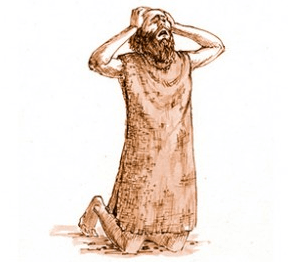
    Share this:

    • Email a link to a friend (Opens in new window) Email
    • Print (Opens in new window) Print
    • Share on Telegram (Opens in new window) Telegram
    Like Loading…
  • Book Look – Heaven’s Doors – Forfeiting Your Soul

    2022-01-18

    In oversimplified terms, universal reconciliation speaks of the eventual redemption of every soul ever created through the work of the Messiah and His sacrifice on the cross. This teaching does not remove the existence of hell, or the suffering associated with it, but it does challenge it’s never ending duration, and the purpose of the flames.

    This series of posts, on the book “Heaven’s Doors” will be my last on the topic of universal reconciliation (not universalism). I am thankful to my Calvinist friend for directing me to this “heresy”. The teaching of universal reconciliation has more Scriptural support than I imagined and is worth considering if you are of an open mind and willing to consider alternate views to expand your understanding of the Word.

    Of course if you are convinced you are completely right, without error, and doctrinally pure, this topic would be a waste of your time. Please move on!

    This post will address – Forfeiting Your Soul

    For whoever would save his life will lose it, but whoever loses his life for my sake and the gospel’s will save it.
    For what does it profit a man to gain the whole world and forfeit his soul?
    For what can a man give in return for his soul? – Mark 8:35-37

    I’m confused. I have chatted with my wife a number of times on the difference between soul, spirit and body, and if we are a three part creation or a two part creation, that is if the soul and spirit are the same entity. It is not something that keeps me up at night, but this verse we are looking at has made me consider my priorities on a number of occasions.

    Since I have read Mr. Sarris’ book, and even prior to understanding his teaching, I understood life and soul to be two different entities. You know, my life is that which I experience on earth, between birth and death, whereas my soul is understood to go on after death.

    Although I am beginning to see a few cracks in this thinking, was Jesus making a difference in these verses above. Notice that the first verse refers to “life”, with verses 36 & 37 referring to a man’s “soul”. Did Jesus intend to use two different words in these three verses?

    Lets take a closer look at what the Master said with the following interlinear tool (using Blue Letter Bible – I like it!)

    I have circled the term “life” along with the associated Greek word used in the Gospels of Jesus’ speech. Of course, we should have expected consistency in translation and we have it within this verse. Psychē, Strong’s number G5590 is translated as “life” both times. Very good.

    Mark 8:35

    Ok, let us move onto the next verse, Mark 8:36. I have likewise circled the same Greek word in the following two verses for your convenience.

    Mark 8:36

    Okay, so the Lord continues his warning in verse 36, but what is going on? Why has the same Greek word, psychē, Strong’s number G5590, been translated as “soul”?

    That must be a glitch! (A bit bothersome, no?)

    Lets take a look at the next verse!

    Mark 8:37

    Again, the Greek word is translated as “soul”, instead of “life”. I don’t get it! Why the difference? The audience in Jesus’ day didn’t hear a different word, (and therefore didn’t come away with a possibly different thought.)

    So what is it that Jesus was teaching? Was he addressing our destiny in heaven or hell, or something else?

    One explanation is that Jesus was speaking of our earthly existence, our lives, that period of time between birth and death. He was bringing the gospel of the kingdom to earth, for His followers to enter into, in this life. When I hear the term soul, I automatically think of the afterlife, but I am not sure Jesus was referring to the afterlife in this passage.

    How many people do you know that have sold their lives to gain the world, to gain possessions, prestige, power? They have sacrificed everything in this life that was of any quality. Things that are of infinite worth, such is their integrity, their honesty, their relationships, the love of God and the love of others.

    Maybe Jesus was speaking of this life, of a quality of life, of an abundant life in the here and now, and not of eternal torment in hell, of loosing all hope and of gnashing of teeth, of burning forever.

    Maybe we have understood something a bit incorrectly.

    What think thee? Leave a comment.


    For other books on this same topic, I would refer you to Jesus Undefeated – a 10 part series, and The Inescapable Love of God. One additional book that I have not posted on is by David Artman, Grace Saves All.


    ← Back

    Thank you for your response. ✨

    Thanks again for coming to visit. I hope you found something of interest in this post and would appreciate a comment, to begin a discussion.

    Follow Considering the Bible on WordPress.com

    Follow Considering the Bible on WordPress.com

    Thanks again for coming to visit. I hope you found something of interest in this post and would appreciate a comment, to begin a discussion.

    Share this:

    • Email a link to a friend (Opens in new window) Email
    • Print (Opens in new window) Print
    • Share on Telegram (Opens in new window) Telegram
    Like Loading…
  • Old Testament Messianic Prophecies – Prophecy #100

    2022-01-17
    Bible Scroll

    The prophecy of the Lord Jesus for our consideration and edification, written centuries prior to His earthly existence is

    Prophecy #100
    Description
    False witnesses rose up against Him
    Old Testament Prophecy
     Psalm 35:11
    Malicious[a] witnesses rise up;
        they ask me of things that I do not know.
    New Testament Fullfillment
    Matt 26:59
    Now the chief priests and the whole council were seeking false testimony against Jesus that they might put him to death,

    If you are just joining this blog, or are a first time visitor, welcome to Considering the Bible. We would like to offer a document that provides over 350 prophecies of the Messiah found in the Old Testament for your consideration.

    351 Old Testament Prophecies Fulfilled in Jesus Christ

    I make no claim to be able to comment on every one of these amazing prophecies in the future, but will occasionally bring one to the readers attention for their edification.

    Hopefully you will follow “Considering the Bible” and begin an interaction with us


    ← Back

    Thank you for your response. ✨

    Follow Considering the Bible on WordPress.com

    Thanks again for coming to visit. I hope you found something of interest in this post and would appreciate a comment, to begin a discussion.

    Share this:

    • Email a link to a friend (Opens in new window) Email
    • Print (Opens in new window) Print
    • Share on Telegram (Opens in new window) Telegram
    Like Loading…
←Previous Page
1 … 69 70 71 72 73 … 102
Next Page→

Create a website or blog at WordPress.com

Loading Comments...
  • Subscribe Subscribed
    • Considering the Bible
    • Join 675 other subscribers
    • Already have a WordPress.com account? Log in now.
    • Considering the Bible
    • Subscribe Subscribed
    • Sign up
    • Log in
    • Report this content
    • View site in Reader
    • Manage subscriptions
    • Collapse this bar
%d