

Considering the Bible

  • Testimony
  • Purpose
  • Contact Me
  • Home
  • About
  • Parable Surprises – Workers in the Vineyard

    2021-12-19

    This parable speaks of the benefits of waiting till the last minute to go picking grapes.

    No.

    Ok. How about this – it speaks of standing around idle in the marketplace.

    No no.

    Dang – I think I got it! This parable speaks of the benefits of not entering into a contract with an employer.

    No no no.

    How about we just read the parable and consider the message Jesus is trying to communicate to us.

    Matthew 20:1-16

    1 “For the kingdom of heaven is like a master of a house who went out early in the morning to hire laborers for his vineyard. 2 After agreeing with the laborers for a denarius a day, he sent them into his vineyard. 3 And going out about the third hour he saw others standing idle in the marketplace, 4 and to them he said, ‘You go into the vineyard too, and whatever is right I will give you.’ 5 So they went. Going out again about the sixth hour and the ninth hour, he did the same. 6 And about the eleventh hour he went out and found others standing. And he said to them, ‘Why do you stand here idle all day?’ 7 They said to him, ‘Because no one has hired us.’ He said to them, ‘You go into the vineyard too.’ 8 And when evening came, the owner of the vineyard said to his foreman, ‘Call the laborers and pay them their wages, beginning with the last, up to the first.’ 9 And when those hired about the eleventh hour came, each of them received a denarius. 10 Now when those hired first came, they thought they would receive more, but each of them also received a denarius. 11 And on receiving it they grumbled at the master of the house, 12 saying, ‘These last worked only one hour, and you have made them equal to us who have borne the burden of the day and the scorching heat.’ 13 But he replied to one of them, ‘Friend, I am doing you no wrong. Did you not agree with me for a denarius? 14 Take what belongs to you and go. I choose to give to this last worker as I give to you. 15 Am I not allowed to do what I choose with what belongs to me? Or do you begrudge my generosity?’ 16 So the last will be first, and the first last.”

    Questions to Consider

    Who were the audience?

    Back in Matthew 19:23, Jesus begins to teach his disciples of the difficulty of a rich person entering into heaven. It appears this parable is an extension of this teaching, especially when you consider the last verse of chapter 19 is identical to the last verse of our parable

    When did the Lord give this parable?

    This parable was given within three months of the passion week. For a helpful document, providing a list of all the events in Jesus Life, check out the following download.

    Events-of-Jesus-LifeDownload

    Where did the Lord teach the parable?

    During the last three months of the Lord’s time in Israel, much of it was spent in Perea, on the eastern side of the Jordan, and finally in Jerusalem.

    Why did the Lord give this message?

    NALC Devotions - November 30, 2017 - North American ...

    As mentioned in an earlier answer, this parable was given to the disciples.

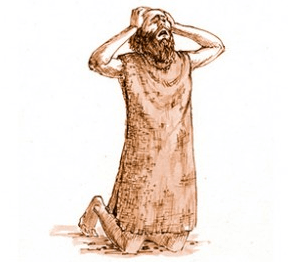
    As I have often been taught, this parable is focused on the generosity of the Master of the House, and this is true. He is gracious, and his freedom to do as He pleases is emphasized in this parable. And yet, the “punch” at the end of the parable was intended for the disciples.

    You see, He purposely told the story to emphasize the Master’s “out of the box” generosity, in order to highlight to those listening to the parable of their own sense of justice.

    What was the message for the original audience?

    The message to the disciples is simple. Be satisfied with what the Master gives you. Do not let the time of serving define your worth!

    How often has He had to teach this direct connection between the Master and His servant in the Word? How often has He had to tell His people to not compare themselves with His other children?

    Consider John 21:21- 22

    John 21:21-22

    When Peter saw him, he said to Jesus, “Lord, what about this man?”
    Jesus said to him, “If it is my will that he remain until I come, what is that to you? You follow me!”

    What is the message for us today?

    The message for us is simple to understand, and yet it is so easy to forget. Remember that the Lord is gracious to all and that comparing our selves with others is foolishness.

    2 Corinthians 10:12b

    But when they measure themselves by one another and compare themselves with one another, they are without understanding.

    How often have you seen a believer getting some attention and we find your heart falling into a jealous funk.

    You see a disciple receiving answered prayers and become discouraged, because God isn’t answering your prayers as fast or as often.

    You see a follower with (seemingly) no problems, and fall into a victimhood mentality.

    Try to understand. Do not be “without understanding”.

    The Master is full of mercy, generous to all, but it is His prerogative who and when folks will realize His mercy and we must trust His loving heart to rest in this fact!

    Agnusday.org - The Lectionary Comic

    ← Back

    Thank you for your response. ✨

    Warning
    Warning
    Warning
    Warning
    Warning.

    Thanks again for coming to visit. I hope you found something of interest in this post and would appreciate a comment, to begin a discussion.


    Follow Considering the Bible on WordPress.com

    Share this:

    • Email a link to a friend (Opens in new window) Email
    • Print (Opens in new window) Print
    • Share on Telegram (Opens in new window) Telegram
    Like Loading…
  • Book Look – Jesus Undefeated – Passage 9

    2021-12-18

    Recently I have been in discussions with some friends that read my blog fairly consistently and they have, in an effort to understand my beliefs, baited me by calling me a universalist.

    That is fair, since I may not have defined every specific teaching as they may want, most likely due to the fact I honestly haven’t come to a settled persuasion on some of the teaching they may ask about me.

    Initially, as I have stated in previous posts, I was surprised with the number of passages that support an evangelical universal reconciliation teaching. Please do not think that this teaching is the same as the “all roads lead to heaven” teaching, which I consider to be blasphemous. There is only one way to the Father, and that is through the Lord Jesus Christ.

    With this, I would like to begin delving into some of the New Testament passages Mr. Giles brought to my attention, for your consideration, edification and civil discussion.

    Regarding the book itself, I read it in one sitting, not simply because it was under 200 pages, but that it was challenging my though process and I found it enjoyable reading. If this topic interests you, please pick up a copy. It is well worth your time.

    Our ninth blog post will begin with Revelation 20:15

    This outline is taken from pages 162 – 163 of the aforementioned book.  I have simply added the verse referred to for the readers convenience.

    Wicked are in the Lake of Fire

    Revelation 20:15

    And if anyone’s name was not found written in the book of life, he was thrown into the lake of fire.

    Entrance to the Lake of Fire is based on your name not being found in the Book of Life. 

    Kindly note that the permanence of a name in the book of Life is not defined here.  That is, there may be a condition that names are added to and or removed from the book of life.  Or one other possibility is that all souls have their name ( a new name?) in the book of life, but that those who are in the Lake of Fire have not received their new name yet. 

    The giving of new names is not uncommon in the Word.  Consider Abram, Jacob, Simon and Saul.

    Either of these conditions may be possible

    Revelation 21:8

    But as for the cowardly, the faithless, the detestable, as for murderers, the sexually immoral, sorcerers, idolaters, and all liars, their portion will be in the lake that burns with fire and sulfur, which is the second death.”

    Lost sinners will be in the Lake of Fire. 

    This is a fact stated clearly in the chapter we refer to. And yet, I do not see a reference to duration of time a lost soul suffers in this verse, unless the second death is interpreted as being eternal or everlasting.  That is not clearly stated here, and we all know that the first death was not eternal or everlasting if God gets involved. 

    I would appreciate if someone could comment on the second death, and the duration being defined by way of a Bible passage.

    They are outside the gates of the New Jerusalem

    Revelation 22:14-15

    Blessed are those who wash their robes, so that they may have the right to the tree of life and that they may enter the city by the gates.

    Outside are the dogs and sorcerers and the sexually immoral and murderers and idolaters, and everyone who loves and practices falsehood.

    Entrance to the city and the right to the tree of life is only for those whose robes are washed.  This is the prerequisite of entering the city.

    It is interesting that the verb in the first verse is in the present tense, as in “Blessed are those who wash…”, not “Blessed are those who have washed…”

    The “nations of the earth” are the enemies who opposed Christ

    Revelation 20:3, 7

    and threw him into the pit, and shut it and sealed it over him, so that he might not deceive the nations any longer, until the thousand years were ended. After that he must be released for a little while.

    And when the thousand years are ended, Satan will be released from his prison

    Satan is thrown into the “pit”.  This is not necessarily the Lake of Fire.

    They are not allowed inside the New Jerusalem

    Revelation 21:27

    But nothing unclean will ever enter it, nor anyone who does what is detestable or false, but only those who are written in the Lamb’s book of life.

    This truth was stated above, and is a reminder that only those who are redeemed may enter the New Jerusalem.

    A river of Living Water flows from the Center of the City where the throne of the Lamb is.

    Revelation 22:1

    Then the angel showed me the river of the water of life, bright as crystal, flowing from the throne of God and of the Lamb

    This verse implies the river flows from the center of the city to the outskirts.  Granted that this is implied, yet a few verses later, we find that the trees planted beside the river are for the healing of the nations.  Is this the same group that were deceived by Satan and were not redeemed?  That are in the Lake of Fire??

    All who are thirsty are invited to come and drink freely

    Revelation 21:6

    And he said to me, “It is done! I am the Alpha and the Omega, the beginning and the end. To the thirsty I will give from the spring of the water of life without payment.

    Revelation 22:17

    The Spirit and the Bride say, “Come.” And let the one who hears say, “Come.” And let the one who is thirsty come; let the one who desires take the water of life without price.

    Check out Luke 16:24 to find out who is thirsty. 

    This is one of the great evangelistic verses found in the Word and yet it seems we are in the middle of two groups –  the redeemed in the city, and the damned in the Lake of Fire.  What are we to make of it?

    The gates of the city are always open, and will never shut

    Revelation 21:25

    and its gates will never be shut by day–and there will be no night there.

    The City of God will always show hospitality.  As we are instructed in this life, so be it in the next!

    The tree of Life bears fruit every month, and the leaves are for the “healing of the nations”

    Revelation 22:2

    through the middle of the street of the city; also, on either side of the river, the tree of life with its twelve kinds of fruit, yielding its fruit each month. The leaves of the tree were for the healing of the nations.

    Remember it is the nations that are healed, and not the saints, for we have already been healed.  Granted, as believers, we will partake of the tree of Life since the Lord Jesus is the source of all Life and the only true Tree of Life!

    Again I ask why the trees provide fruit for the healing of the nations, if the nations who were deceived by Satan, are condemned eternally in the Lake of Fire?

    The nations will walk by the light of the glory of God, and the Kings will enter into the city

    Revelation 21:23, 24, 26

    And the city has no need of sun or moon to shine on it, for the glory of God gives it light, and its lamp is the Lamb.

    By its light will the nations walk, and the kings of the earth will bring their glory into it,

    They will bring into it the glory and the honor of the nations.

    Okay.  The nations and the kings of the earth will enter the City. 

    Note that the verse does not state that some of the nations and some of the kings of the earth will enter the City.  THE nations.  THE kings of the earth.  This is truly an amazing verse and worthy of considering the implications of this train of thought that the apostle John seems to be providing. 

    Only those whose name is in the book of life enter the city!

    Revelation 21:27

    But nothing unclean will ever enter it, nor anyone who does what is detestable or false, but only those who are written in the Lamb’s book of life.

    Find your name in the Book of Life my friend. Look to the Savior for your Life, for He is all of Life and able to rescue the humble, giving grace to the one who comes to Him in faith.

    He is good! Do not ignore His grace!


    ← Back

    Thank you for your response. ✨

    Warning
    Warning
    Warning
    Warning
    Warning.

    Thanks again for coming to visit. I hope you found something of interest in this post and would appreciate a comment, to begin a discussion.

    Follow Considering the Bible on WordPress.com

    Share this:

    • Email a link to a friend (Opens in new window) Email
    • Print (Opens in new window) Print
    • Share on Telegram (Opens in new window) Telegram
    Like Loading…
  • Old Testament Messianic Prophecies – Prophecy #87

    2021-12-17
    Bible Scroll

    The prophecy of the Lord Jesus for our consideration and edification, written centuries prior to His earthly existence is

    Prophecy #87
    Description
    He committed Himself to God
    Old Testament Prophecy
     Psalm 22:20-21
    Deliver my soul from the sword,
        my precious life from the power of the dog!
    Save me from the mouth of the lion!
    You have rescued me from the horns of the wild oxen!
    New Testament Fullfillment
    Luke 23:46
    Then Jesus, calling out with a loud voice, said, “Father, into your hands I commit my spirit!” And having said this he breathed his last.

    If you are just joining this blog, or are a first time visitor, welcome to Considering the Bible. We would like to offer a document that provides over 350 prophecies of the Messiah found in the Old Testament for your consideration.

    351 Old Testament Prophecies Fulfilled in Jesus Christ

    I make no claim to be able to comment on every one of these amazing prophecies in the future, but will occasionally bring one to the readers attention for their edification.

    Hopefully you will follow “Considering the Bible” and begin an interaction with us


    ← Back

    Thank you for your response. ✨

    Warning
    Warning
    Warning
    Warning
    Warning.

    Follow Considering the Bible on WordPress.com

    Thanks again for coming to visit. I hope you found something of interest in this post and would appreciate a comment, to begin a discussion.

    Share this:

    • Email a link to a friend (Opens in new window) Email
    • Print (Opens in new window) Print
    • Share on Telegram (Opens in new window) Telegram
    Like Loading…
  • Let Me Tell You a Story – The Used Car Salesman

    2021-12-16
    let-me-tell-you-a-story.jpg

    It wasn’t long ago that I was in a class, a Sunday school class, for adults that is, when the concept of the used car salesman sprung to my mind. Let me start with my thinking of the proverbial used car salesman.

    Loud, talkative, self serving, overly aggressive, pushy, annoying, manipulative dishonest; need I go on?

    So Carl – what is the connection with Sunday School class and a used car salesman?

    Well let me tell you a story

    As many of you may know, we have been church going folks for over 40 yrs, listening to a man preach and teach from a pulpit. So many different men that we have been privileged to sit under, (and some that were a blessing to leave behind).

    One of those preachers was a loud man, a man who felt volume was enough, that emotion should be the prime motivator for Christian living, that thought charisma was more important than character, and that saw himself as one amongst equals – although he was more equal than the rest of us. (Get my meaning?)

    Nevertheless, after a decade of conventional church life, my wifey and I tripped into home bible studies, where a group of believers join together in a home, sometimes share a meal, have a bit of a study, and fellowship during desert – Yay for desert!. This ministry style has greatly impressed my wife and I and we love being a part of a group of caring believers. It is typically the high point of our week!

    Contrast this style of interactive dialogue within a group setting with the typical church service, where one man dominates with a monologue. One person directs the singing, all planned, rehearsed and practiced. One ministers and the rest of us sit on padded seats, passively receiving.

    So naturally, we tend to look for a sunday school class that mimics the dialogue style of the home bible study ministry we have been involved with and blessed by. We have been blessed with a class that we enjoy in our present church, and look forward to going each Sunday.

    But the used car salesman lurks about in every meeting we attend. That one who wants to dominate the airwaves, sell his scheduled teaching notes without question, plough through honest questions, and speak of their experiences and victories while others suffer quietly, feel insufficient and are downtrodden.

    Is this the correct way to minister to others – that is, to bluster your way through an allotted time, with nary a care of the one “buying” the product? Is the monologue style of ministry producing thinking Christians who can stand up and declare their beliefs, even amongst their own?

    I realize I am on a bit of a rant right now, but I love being involved in a group as a participant, and not as simply someone that is “buying a product” from the teacher.

    Consider Paul’s description of the Lord’s servant in the following passage.

    2 Timothy 2:24
    And the Lord’s servant must not be quarrelsome but kind to everyone, able to teach, patiently enduring evil,
    25 correcting his opponents with gentleness. God may perhaps grant them repentance leading to a knowledge of the truth,
    26 and they may come to their senses and escape from the snare of the devil, after being captured by him to do his will.

    Notice the terms used in this short passage, and consider if you have met a “Lord’s servant” recently.

    1. Not quarrelsome
    2. Kind
    3. Able to teach
    4. Patiently endure
    5. Correcting opponents with gentleness

    If you are in a church with a Lord’s servant, praise God. If you have a friend who lives this life, praise God even more. Even better, if you know the Lord, be the servant He wants you to be in your daily life, amongst friend and foe, loved ones and strangers.

    It is the way!

    Thanks for putting up with my rant! I sometimes need to realign my thinking regarding Christianity and I find that writing helps me to get my thoughts in order.

    If you have a comment or question you would like to provide, please take advantage of the comment box below. Thanks again, and may the Lord bless you in you daily walk with him.


    ← Back

    Thank you for your response. ✨

    Warning
    Warning
    Warning
    Warning
    Warning.

    Thanks again for coming to visit. I hope you found something of interest in this post and would appreciate a comment, to begin a discussion.

    Follow Considering the Bible on WordPress.com

    Share this:

    • Email a link to a friend (Opens in new window) Email
    • Print (Opens in new window) Print
    • Share on Telegram (Opens in new window) Telegram
    Like Loading…
  • Old Testament Messianic Prophecies – Prophecy #86

    2021-12-15
    Bible Scroll

    The prophecy of the Lord Jesus for our consideration and edification, written centuries prior to His earthly existence is

    Prophecy #86
    Description
    They parted His garments
    Old Testament Prophecy
     Psalm 22:18
    they divide my garments among them,
        and for my clothing they cast lots.
    New Testament Fullfillment
    John 19:23-24
    When the soldiers had crucified Jesus, they took his garments and divided them into four parts, one part for each soldier; also his tunic. But the tunic was seamless, woven in one piece from top to bottom,

    so they said to one another, “Let us not tear it, but cast lots for it to see whose it shall be.” This was to fulfill the Scripture which says, “They divided my garments among them, and for my clothing they cast lots.” So the soldiers did these things,

    If you are just joining this blog, or are a first time visitor, welcome to Considering the Bible. We would like to offer a document that provides over 350 prophecies of the Messiah found in the Old Testament for your consideration.

    351 Old Testament Prophecies Fulfilled in Jesus Christ

    I make no claim to be able to comment on every one of these amazing prophecies in the future, but will occasionally bring one to the readers attention for their edification.

    Hopefully you will follow “Considering the Bible” and begin an interaction with us


    ← Back

    Thank you for your response. ✨

    Warning
    Warning
    Warning
    Warning
    Warning.

    Follow Considering the Bible on WordPress.com

    Thanks again for coming to visit. I hope you found something of interest in this post and would appreciate a comment, to begin a discussion.

    Share this:

    • Email a link to a friend (Opens in new window) Email
    • Print (Opens in new window) Print
    • Share on Telegram (Opens in new window) Telegram
    Like Loading…
  • Book Look – Jesus Undefeated – Passage 8

    2021-12-14

    Recently I have been in discussions with some friends that read my blog fairly consistently and they have, in an effort to understand my beliefs, have baited me by calling me a universalist.

    That is fair, since I may not have defined every specific teaching as they may want, most likely due to the fact I honestly haven’t come to a settled persuasion on some of the teaching they may ask about me.

    Initially, as I have stated in previous posts, I was surprised with the number of passages that support an evangelical universal reconciliation teaching. Please do not think that this teaching is the same as the “all roads lead to heaven” teaching, which I consider to be blasphemous. There is only one way to the Father, and that is through the Lord Jesus Christ.

    With this, I would like to begin delving into some of the New Testament passages Mr. Giles brought to my attention, for your consideration, edification and civil discussion.

    Regarding the book itself, I read it in one sitting, not simply because it was under 200 pages, but that it was challenging my though process and I found it enjoyable reading. If this topic interests you, please pick up a copy. It is well worth your time.

    Our eighth blog post will begin with passage Hebrews 12:6-11

    Passage 8

    Hebrews 12:6-11

    For the Lord disciplines the one he loves, and chastises every son whom he receives.”

    It is for discipline that you have to endure. God is treating you as sons. For what son is there whom his father does not discipline?

    If you are left without discipline, in which all have participated, then you are illegitimate children and not sons.

    Besides this, we have had earthly fathers who disciplined us and we respected them. Shall we not much more be subject to the Father of spirits and live?

    For they disciplined us for a short time as it seemed best to them, but he disciplines us for our good, that we may share his holiness.

    For the moment all discipline seems painful rather than pleasant, but later it yields the peaceful fruit of righteousness to those who have been trained by it.

    As we visit this passage, we find that there are a number of verses within the passage that are helpful to Mr. Giles discussion, primarily reflecting on the nature of chastening and how it benefits the recipients, and reflects on the purpose of the discipline.

    Mr. Giles initially refers to John 3:16, to remind the reader of the love of God for the entire world, and connects this passage to this thought. He then calls the readers attention to the phrase “all have become partakers” of God’s discipline. Hs argument is that all of humanity become partakers of God’s discispline, since God loves the world. The author of Hebrews then goes on to describe the result of the discipline (for all) in the receiving of life.

    Mr. Giles also approaches the purpose of discipline, or God’s intended purpose of chastisement, and that is of restoration, of discipline being for “our profit”. The concept of punishment for the sake of retribution is not broached in this passage but the restorative love of God is, and the end result in that holiness is produced. At no place within this passage is the concept of God’s wrath.

    Mr. Giles gives us a progression that is based on the teaching of God’s love for the world (John 3:16), that goes like this

    1. Everyone endures discipline
    2. Everyone is treated as a son or daughter
    3. Everyone endures a “painful” discipline
    4. Everyone becomes a partaker of His holiness

    For Mr. Giles argument to convince me, I would need to understand the authors intended audience. My current understanding of the passage is that it relates to believers, and that all believers go through a disciplinary process.

    He has assumed in a few of his texts that all of humanity are “in Christ”, which admittedly is a difficult teaching to follow. In my opinion and at this time in my life, it is a weak argument but the following verses were provided to show the Fatherhood of God for all of humanity.

    Acts 17:26-28

    And he made from one man every nation of mankind to live on all the face of the earth, having determined allotted periods and the boundaries of their dwelling place,
    that they should seek God, and perhaps feel their way toward him and find him. Yet he is actually not far from each one of us,
    for “‘In him we live and move and have our being‘; as even some of your own poets have said, “‘For we are indeed his offspring.’

    Ephesians 3:14-15

    For this reason I bow my knees before the Father,
    from whom every family in heaven and on earth is named,

    Luke 3:38

    the son of Enos, the son of Seth, the son of Adam, the son of God.

    Ephesians 4:4-6

    There is one body and one Spirit–just as you were called to the one hope that belongs to your call–
    one Lord, one faith, one baptism,
    one God and Father of all, who is over all and through all and in all.

    In all of the verses he has provided, there is an argument for seeing all of humanity possibly being considered, and I will leave it with my readers to arrive at their own conclusions.

    If you happen to have passages that would provide additional support for this teaching, please provide. I am always willing to understand this teaching, but currently do not see this passage (Hebrews 12:6-11) as strong as some may assume.

    Our next post will address Revelation chapters 20 – 22. It shocked me more than the Philippian passage. I hope you will join me.


    ← Back

    Thank you for your response. ✨

    Warning
    Warning
    Warning
    Warning
    Warning.

    Thanks again for coming to visit. I hope you found something of interest in this post and would appreciate a comment, to begin a discussion.

    Follow Considering the Bible on WordPress.com

    Share this:

    • Email a link to a friend (Opens in new window) Email
    • Print (Opens in new window) Print
    • Share on Telegram (Opens in new window) Telegram
    Like Loading…
  • Old Testament Messianic Prophecies – Prophecy #85

    2021-12-13
    Bible Scroll

    The prophecy of the Lord Jesus for our consideration and edification, written centuries prior to His earthly existence is

    Prophecy #85
    Description
    Stripped Him before the stares of men
    Old Testament Prophecy
     Psalm 22:17-18
    I can count all my bones—
    they stare and gloat over me;
    they divide my garments among them,
        and for my clothing they cast lots
    New Testament Fullfillment
    Luke 23:34-35
    And Jesus said, “Father, forgive them, for they know not what they do.” And they cast lots to divide his garments.

    And the people stood by, watching, but the rulers scoffed at him, saying, “He saved others; let him save himself, if he is the Christ of God, his Chosen One!”

    If you are just joining this blog, or are a first time visitor, welcome to Considering the Bible. We would like to offer a document that provides over 350 prophecies of the Messiah found in the Old Testament for your consideration.

    351 Old Testament Prophecies Fulfilled in Jesus Christ

    I make no claim to be able to comment on every one of these amazing prophecies in the future, but will occasionally bring one to the readers attention for their edification.

    Hopefully you will follow “Considering the Bible” and begin an interaction with us


    ← Back

    Thank you for your response. ✨

    Warning
    Warning
    Warning
    Warning
    Warning.

    Follow Considering the Bible on WordPress.com

    Thanks again for coming to visit. I hope you found something of interest in this post and would appreciate a comment, to begin a discussion.

    Share this:

    • Email a link to a friend (Opens in new window) Email
    • Print (Opens in new window) Print
    • Share on Telegram (Opens in new window) Telegram
    Like Loading…
  • Psalms for Psome – Ps 34.4

    2021-12-12

    My wife and I are reading through the Psalms in our evening reading and occasionally a nugget of the Psalms jumps out of the page. Don’t you love it when, after years of reading the “Old Book” passages become alive, reinforcing old teachings or simply warming your heart.

    This is the book of Psalms, and it is rich.

    In our previous post, I supplied an introduction to this psalm that may be beneficial for review if you have not read it. Psalms for Psome – Ps 34 – A

    Lets continue with Psalm 34

    7 The angel of the LORD encamps around those who fear him, and delivers them.
    8 Oh, taste and see that the LORD is good! Blessed is the man who takes refuge in him!
    9 Oh, fear the LORD, you his saints, for those who fear him have no lack!
    10 The young lions suffer want and hunger; but those who seek the LORD lack no good thing.
    11 Come, O children, listen to me; I will teach you the fear of the LORD.

    Fear of the Lord. It is seldom mentioned in our churches and we are the weaker for it. And yet, what exactly is the fear of the Lord. Based on this short snippet from the hand of David, we find the following.

    • Groups who fear the Lord are protected by an angel
    • Groups who fear the Lord are delivered by the angel
    • Groups who fear the Lord are exhorted to experience the Lord
      • This is not something that would be encouraged by a “fearful” presence, so something must be more complex than what we default to.
    • Groups who fear the Lord find Him good
    • The man who fears the Lord is blessed.
      • Fear of the Lord seems to be related to refuge – Interesting!
    • Groups who fear the Lord have no lack
      • Fear of the Lord is related to the One who supplies all of our need.
    • Groups who fear the Lord lack no good thing
      • Notice that fear seems to be connected with seeking the Lord.
      • In my earthly understanding, when I fear something, I tend to think of avoiding the one who causes my fear, yet the fear of the Lord is the equivalent of seeking the Lord – Very Interesting!!
    • Fear of the Lord can be taught.
      • The fear of the Lord is not a simple emotional reaction to a threat, as I often consider fear. The fear of the Lord is a state of mind that is to be learned, practiced and lived in.

    A story of relating to fear has been helpful for me. As you may know, I work with railroads, and a healthy fear of trains is a beneficial attitude on site. They are powerful monsters of mass and motion, and if I follow a few principles the Class 1 Railroads have laid down, I can work around and with these behemoths safely. At times, these massive mechanical projectiles are hurtling through a space at high velocities, unable to stop. Standing on the train I’m safe. Standing 15 ft away from the tracks I’m safe. Standing on a bridge over the tracks I’m safe. During these times, I am amazed at the trains, their shear massive size and unyielding power.

    Yet if I stand in front of a train, I am doomed! A dead man. Without hope. One spot that I shouldn’t be. On the tracks. Why do I stay off the tracks. Fear of the train!

    Why should you stay off the wrong side of God. You will be doomed.

    Yet any location you take to view the train, other than on active tracks, you will be safe, and possibly enjoy some benefit of the train. You may find, as I have, that trains are fantastic mechanisms of strength and power.

    Likewise, learn of God and His Son Jesus Christ, taste and see the benefits of such a good and loving Creator. In all of your learning of the goodness and mercy of the Lord, do one thing for me.

    Stay off the tracks!


    ← Back

    Thank you for your response. ✨

    Warning
    Warning
    Warning
    Warning
    Warning.

    Thanks again for coming to visit. I hope you found something of interest in this post and would appreciate a comment, to begin a discussion.

    Follow Considering the Bible on WordPress.com

    Share this:

    • Email a link to a friend (Opens in new window) Email
    • Print (Opens in new window) Print
    • Share on Telegram (Opens in new window) Telegram
    Like Loading…
  • Book Look – Jesus Undefeated – Passage 7

    2021-12-11

    Recently I have been in discussions with some friends that read my blog fairly consistently and they have, in an effort to understand my beliefs, have baited me by calling me a universalist.

    That is fair, since I may not have defined every specific teaching as they may want, most likely due to the fact I honestly haven’t come to a settled persuasion on some of the teaching they may ask about me.

    Initially, as I have stated in previous posts, I was surprised with the number of passages that support an evangelical universal reconciliation teaching. Please do not think that this teaching is the same as the “all roads lead to heaven” teaching, which I consider to be blasphemous. There is only one way to the Father, and that is through the Lord Jesus Christ.

    With this, I would like to begin delving into some of the New Testament passages Mr. Giles brought to my attention, for your consideration, edification and civil discussion.

    Regarding the book itself, I read it in one sitting, not simply because it was under 200 pages, but that it was challenging my though process and I found it enjoyable reading. If this topic interests you, please pick up a copy. It is well worth your time.

    Our seventh blog post will begin with passage 7, 1 Corinthians 3:11-15

    Passage 7

    1 Corinthians 3:11-15

    For no one can lay a foundation other than that which is laid, which is Jesus Christ.

    Now if anyone builds on the foundation with gold, silver, precious stones, wood, hay, straw–

    each one’s work will become manifest, for the Day will disclose it, because it will be revealed by fire, and the fire will test what sort of work each one has done.

    If the work that anyone has built on the foundation survives, he will receive a reward.

    If anyone’s work is burned up, he will suffer loss, though he himself will be saved, but only as through fire.

    Is Paul referring to all of humanity in this passage?

    How about every Christian in this passage?

    Or might Paul be referring to leaders in the church as the “one laying a foundation?

    Many times the New Testament speaks of the apostles as foundations of the church, and as those who laid a foundation. Just one verse before Mr. Giles suggested passage above, we find the reference to one laying a foundation, namely Paul the apostle. Could he be referring to himself, and his fellow apostles, as the topic of this passage?

    I tend to think that he is specifically referring to his peers in this instance, and that when the Day arrives, the work (of building the early church) will show if the apostles perform faithfully.

    After all, Paul speaks of the fire testing “one’s work”, and that the test will reveal the type of work, that is on the foundation. The foundation is not in discussion here, it is the superstructure, the church as a body, that is the object under investigation. The church built on the foundation will be tested.

    The church in Corinth had leadership issues, struggling with Paul’s apostleship. Paul was speaking of the worth of the work he had done, and in a sideways manner, spoke of his work as worthy of the testing. Some may build with cheaper material – that is the builders decision, yet the fire will come and test each builders material.

    But look – great news – both builders will be saved. Those who built on the foundation with good materials, and those who built on the foundation with bad materials.

    I am not sure this passage supports the teaching Mr. Giles suggests, since it appears that the topic is Christian leadership and the testing of it’s quality. Note that this is a rewards passage (vs 14), and the only ones referred to in the passage are the ones that build on the foundation of Jesus Christ.

    What are your thoughts? Share your opinion below and lets chat!


    ← Back

    Thank you for your response. ✨

    Warning
    Warning
    Warning
    Warning
    Warning.

    Thanks again for coming to visit. I hope you found something of interest in this post and would appreciate a comment, to begin a discussion.

    Follow Considering the Bible on WordPress.com

    Share this:

    • Email a link to a friend (Opens in new window) Email
    • Print (Opens in new window) Print
    • Share on Telegram (Opens in new window) Telegram
    Like Loading…
  • Old Testament Messianic Prophecies – Prophecy #84

    2021-12-10
    Bible Scroll

    The prophecy of the Lord Jesus for our consideration and edification, written centuries prior to His earthly existence is

    Prophecy #84
    Description
    They pierced His hands and His feet
    Old Testament Prophecy
     Psalm 22:16
    For dogs encompass me;
        a company of evildoers encircles me;
    they have pierced my hands and feet
    New Testament Fullfillment
    John 19:34-37
    But one of the soldiers pierced his side with a spear, and at once there came out blood and water.

    He who saw it has borne witness–his testimony is true, and he knows that he is telling the truth–that you also may believe.

    For these things took place that the Scripture might be fulfilled: “Not one of his bones will be broken.”

    And again another Scripture says, “They will look on him whom they have pierced.”
    John 20:27
    Then he said to Thomas, “Put your finger here, and see my hands; and put out your hand, and place it in my side. Do not disbelieve, but believe.”

    If you are just joining this blog, or are a first time visitor, welcome to Considering the Bible. We would like to offer a document that provides over 350 prophecies of the Messiah found in the Old Testament for your consideration.

    351 Old Testament Prophecies Fulfilled in Jesus Christ

    I make no claim to be able to comment on every one of these amazing prophecies in the future, but will occasionally bring one to the readers attention for their edification.

    Hopefully you will follow “Considering the Bible” and begin an interaction with us


    ← Back

    Thank you for your response. ✨

    Warning
    Warning
    Warning
    Warning
    Warning.

    Follow Considering the Bible on WordPress.com

    Thanks again for coming to visit. I hope you found something of interest in this post and would appreciate a comment, to begin a discussion.

    Share this:

    • Email a link to a friend (Opens in new window) Email
    • Print (Opens in new window) Print
    • Share on Telegram (Opens in new window) Telegram
    Like Loading…
  • Calvin’s Concerns – Comment Response 14 – Romans 9:11

    2021-12-09

    As mentioned in the introduction, I have been been discussing the differences between Calvinism and Provisionalism with a fellow blogger. One particular response grabbed my attention and I am trying to understand his position, by referring to his proof texts and logic.

    This is the sixth (and final) portion of his response (in red), along with the corresponding verses he referred to. I shall seek to comment on the verses and find his argument within the verses he has provided.

    Original Comment

    God is saving a people unconditionally Romans 9:11 according to election God promises to save a people and He can’t wait around for someone who has no desire or the ability to come. I will rely on scripture that he shows mercy unconditionally to whom he chooses.

    Romans 9:11 – though they were not yet born and had done nothing either good or bad–in order that God’s purpose of election might continue, not because of works but because of him who calls–

    I suppose my friends comments – “God is saving a people unconditionally Romans 9:11” is a bit confusing for me in that the verse does not speak of salvation but of election. I fear he may be equating “election” with “personal individual salvation” and in the proof text verse he has supplied through this series, I have found no convincing argument to agree with his assumption.

    Paul gives us the purpose of election, and I find one of the better explanations of election to be found at Soteriology 101.

    For this final response, I would like to supply a video for your viewing pleasure and consideration. It is an overview, and under 5 minutes in length.

    How about you? Are you convinced that God has “determined” your salvation? Are you convinced that God has “determined” some to burn in hell, eternally, consciously and without relief? How do you see the passages we have discussed in this series?

    I have offered multiple times to discuss with my friend over the phone, but without any response. If any are out there that would like to discuss one on one, I would appreciate the opportunity to understand your position.

    I thank you for following this series of posts discussing a Calvinists response to an earlier post. I do hope you will join me in our next series of “Considering the Bible” and take part in the discussion.


    ← Back

    Thank you for your response. ✨

    Warning
    Warning
    Warning
    Warning
    Warning.

    Follow Considering the Bible on WordPress.com

    Thanks again for coming to visit. I hope you found something of interest in this post and would appreciate a comment, to begin a discussion.


    Share this:

    • Email a link to a friend (Opens in new window) Email
    • Print (Opens in new window) Print
    • Share on Telegram (Opens in new window) Telegram
    Like Loading…
  • Old Testament Messianic Prophecies – Prophecy #83

    2021-12-08
    Bible Scroll

    The prophecy of the Lord Jesus for our consideration and edification, written centuries prior to His earthly existence is

    Prophecy #83
    Description
    He thirsted
    Old Testament Prophecy
     Psalm 22:15
    my strength is dried up like a potsherd,
        and my tongue sticks to my jaws;
        you lay me in the dust of death.
    New Testament Fullfillment
    John 19:28
    After this, Jesus, knowing that all was now finished, said (to fulfill the Scripture), “I thirst.”

    If you are just joining this blog, or are a first time visitor, welcome to Considering the Bible. We would like to offer a document that provides over 350 prophecies of the Messiah found in the Old Testament for your consideration.

    351 Old Testament Prophecies Fulfilled in Jesus Christ

    I make no claim to be able to comment on every one of these amazing prophecies in the future, but will occasionally bring one to the readers attention for their edification.

    Hopefully you will follow “Considering the Bible” and begin an interaction with us


    ← Back

    Thank you for your response. ✨

    Warning
    Warning
    Warning
    Warning
    Warning.

    Follow Considering the Bible on WordPress.com

    Thanks again for coming to visit. I hope you found something of interest in this post and would appreciate a comment, to begin a discussion.

    Share this:

    • Email a link to a friend (Opens in new window) Email
    • Print (Opens in new window) Print
    • Share on Telegram (Opens in new window) Telegram
    Like Loading…
  • Psalms for Psome – Ps 34.3

    2021-12-07

    My wife and I are reading through the Psalms in our evening reading and occasionally a nugget of the Psalms jumps out of the page. Don’t you love it when, after years of reading the “Old Book” passages become alive, reinforcing old teachings or simply warming your heart.

    This is the book of Psalms, and it is rich.

    In our previous post, I supplied an introduction to this psalm that may be beneficial for review if you have not read it. Psalms for Psome – Ps 34 – A

    Lets continue with Psalm 34:4-6

    4 I sought the LORD, and he answered me and delivered me from all my fears.
    5 Those who look to him are radiant, and their faces shall never be ashamed.
    6 This poor man cried, and the LORD heard him and saved him out of all his troubles.

    David speaks of three actions, all directed to the One who is the Savior.

    Seeking the Lord

    In David’s plight, his self inflicted trouble, in his humiliation and shame, he sought the Lord. When he had nothing but trouble, he asked for the Lord’s mercy. In his fear before Achish, he asked for deliverance from his situation. David had nothing to offer to the Lord but fears, yet the Lord took pleasure in answering David’s prayer and delivering him from his fears.

    Fear.

    This last two years have seen an increase (exponentially) of fear pedaling upon the population. Many nights I would fall into fitful periods of sleep, expecting to die of a man made disease. If death wasn’t chasing me, utter poverty and sorrow would surely engulf me and my loved ones. There seemed to be no escape. I begged for mercy before the Lord, and yet I continued to struggle with fear, a debilitating fear.

    David tells us he was delivered from all his fears. He sought the Lord. May I suggest he didn’t seek the Lord for self preservation, but simply sought the Lord. He looked for the Lord in this time of his life. There is a difference!

    Looking to the Lord

    Above I suggested David looked for the Lord in his trial. In this verse, David speaks of looking to the Lord. In my mind, there is a difference, and I find it instructive to consider the difference.

    To “look to” someone is an admission of dependency, of admitting of a need, and that the One we look to is the only One that can help.

    Consider it this way.

    So many little boxes Where are the P’s, and all the ID’s

    When I am at work and chatting with my mechanical engineer, I tell him I am “looking to” him to complete the P&ID’s. I have no skill, ability, knowledge, understanding or thoughts on the package I need from him. Dang it, it has only been a few weeks that I knew what those dang letters meant! (Piping & Instrument Diagram). But I looked to him for delivering this to our client. He, that is my mechanical engineer, delivered the package. He was able. I was not. When I told him I was “looking to him” for the package, I was admitting my ignorance, and inability to perform the action.

    Same with David in this situation. He “looked to” the Lord, since he had no strength, or understanding, no wisdom or ability to perform the required deliverance.

    And he was radiant! This is life changing! Quit trying to fix everything Carl – You are out of your depths! Look to the One who is mighty, and joy will flood your soul, radiance will be the fruit of my admission of weakness.

    In our last post we referred to John 3:30, where John the Baptist declared – “He must increase, but I must decrease.” So much could be said about this verse, yet the connection with David in Psalm 34 seems so obvious in my deliberations

    Look to the Lord, and quit looking to your own self for the answers!

    Crying to the Lord

    When I was an itty bitty youngin, I tended to be a weepy fella. I would cry at the drop of a hat, to the point where I was tagged with a nickname that emphasized my “weakness” (No – I am not going to reveal my nickname!)

    David is not speaking of weeping in this verse. This is a call out for help. This term is used in Genesis 1:5, where the Word states “God called the light day….” It is a very common term for declaring, for stating, for proclaiming. It can imply an emotional call out to the Lord of heaven, but emotion is not the focus here, but that of calling out a truth, a fact, confessing a reality.

    David stated facts. Consider the following three facts in this verse.

    1. He was a poor man
    • Destitute in his strength, wisdom, understanding, conditions, situations, trials…. He stated his need. Oh the blessedness of understanding our need for the Lord.
    1. The Lord heard him
    • The Lord is one whose ears are open, especially astute to the truth, for He is the truth and the fountain of all life. He resonates with our confessing truth, (whether it be good or bad truth, from our standpoint)
    • David isn’t speaking simply of the Lord receiving vibrations of David’s vocal chords, but of hearing the need, of understanding David’s cry.
    1. The Lord Delivered him out of all his troubles
    • This is a timely reminder that in the midst of our trials and troubles, He is the deliverer. Of course we must see this as a call to deliver others out of their troubles when we are able, but the point of the verse is the the future king of Israel was at the mercy of his circumstances, with Saul nipping at his heals, and in front of an enemy king!
    • At some point in our lives our situation may seem hopeless, but remember that He is the Savior, and not we ourselves.

    We need to understand our neediness before the Creator Redeemer, our Savior, the Lord Jesus Christ.

    But more so than that, and primarily the source of our understanding our need, is a correct view of God, the Almighty God who is all knowing, full of wisdom, exercising mercy upon generations and Who is Love.

    May His name be honored in our lives today.


    ← Back

    Thank you for your response. ✨

    Warning
    Warning
    Warning
    Warning
    Warning.

    Thanks again for coming to visit. I hope you found something of interest in this post and would appreciate a comment, to begin a discussion.

    Follow Considering the Bible on WordPress.com

    Share this:

    • Email a link to a friend (Opens in new window) Email
    • Print (Opens in new window) Print
    • Share on Telegram (Opens in new window) Telegram
    Like Loading…
  • Old Testament Messianic Prophecies – Prophecy #82

    2021-12-06
    Bible Scroll

    The prophecy of the Lord Jesus for our consideration and edification, written centuries prior to His earthly existence is

    Prophecy #82
    Description
    Suffered agony on Calvary
    Old Testament Prophecy
     Psalm 22:14-15
    I am poured out like water,
        and all my bones are out of joint;
    my heart is like wax;
        it is melted within my breast;
    my strength is dried up like a potsherd,
        and my tongue sticks to my jaws;
        you lay me in the dust of death.
    New Testament Fullfillment
    Mark 15:34-37
    And at the ninth hour Jesus cried with a loud voice, “Eloi, Eloi, lema sabachthani?” which means, “My God, my God, why have you forsaken me?”

    And some of the bystanders hearing it said, “Behold, he is calling Elijah.”

    And someone ran and filled a sponge with sour wine, put it on a reed and gave it to him to drink, saying, “Wait, let us see whether Elijah will come to take him down.”

    And Jesus uttered a loud cry and breathed his last.

    If you are just joining this blog, or are a first time visitor, welcome to Considering the Bible. We would like to offer a document that provides over 350 prophecies of the Messiah found in the Old Testament for your consideration.

    351 Old Testament Prophecies Fulfilled in Jesus Christ

    I make no claim to be able to comment on every one of these amazing prophecies in the future, but will occasionally bring one to the readers attention for their edification.

    Hopefully you will follow “Considering the Bible” and begin an interaction with us


    ← Back

    Thank you for your response. ✨

    Warning
    Warning
    Warning
    Warning
    Warning.

    Follow Considering the Bible on WordPress.com

    Thanks again for coming to visit. I hope you found something of interest in this post and would appreciate a comment, to begin a discussion.
    Share this:

    • Email a link to a friend (Opens in new window) Email
    • Print (Opens in new window) Print
    • Share on Telegram (Opens in new window) Telegram
    Like Loading…
  • Psalms for Psome – Ps 34.2

    2021-12-05

    My wife and I are reading through the Psalms in our evening reading and occasionally a nugget of the Psalms jumps out of the page. Don’t you love it when, after years of reading the “Old Book” passages become alive, reinforcing old teachings or simply warming your heart.

    This is the book of Psalms, and it is rich.

    In our previous post, I supplied an introduction to this psalm that may be beneficial for review if you have not read it. Psalms for Psome – Ps 34 – A

    Lets continue with Psalm 34

    1 I will bless the LORD at all times; his praise shall continually be in my mouth.
    2 My soul makes its boast in the LORD; let the humble hear and be glad.
    3 Oh, magnify the LORD with me, and let us exalt his name together!

    David speaks here of a decision he has made, of faithfully blessing the Lord from this point forward.

    To bless the Lord. To provide anything to the Lord is impossible, since He is the self sufficient One, the eternal Father, the Holy One of Israel. How could David expect to be able to increase the blessing of the One who is the source of all blessing?

    But I am thinking wrong here!

    He is the never changing God. So true, yet He is the living God, the One who experiences jealousy, anger and joy. David is speaking of blessing the Lord. To bless, in it’s root meaning is to kneel, to adore, to praise and to reflect the beauty of the One who is beautiful. To praise the One who alone is praiseworthy, who rescues, who provides, who protects and guides. He is the only One worthy of all blessing.

    David’s soul boasts in the Lord. Let the humble hear and be glad. Boasting and humility in the same verse? Is there a clue here as to the correct position of humility in the saint?

    To Boast in the Lord is to be humble. Pride in my own person can not (should not) exist when the Lord is the One who is elevated.

    2 Corinthians 10:17-18 “Let the one who boasts, boast in the Lord.” For it is not the one who commends himself who is approved, but the one whom the Lord commends.

    True humility is the replacement of my boasting of me, myself and I, with boasting on the Lord Jesus Christ and His loving Father.

    Note that this is a reality that exists in the soul, in the heart of the believer who is seeking the Lord. This internal boasting, this self admiration is to be replaced with admiration, love and blessing to the Lord of heaven!

    He is all, we are not!

    As we understand and live in this truth, as we grow into this maturity of decreasing in our own estimation , the humble will hear and be glad! Those of like position before the Almighty, in a position of kneeling before the Mighty One, and boasting of His greatness, find gladness in others joining them.

    Decrease in your own estimation, realize your smallness before the Living God, replace the smug boasting of your person, with the boasting of the One who is worthy.

    He alone is praiseworthy.

    Praise Him for all His mercies, for all His provisions, for all His guidance. Praise Him for His sacrifice for our lives, for His suffering and humiliation, for His redemption of His enemies, for His forgiveness, for His grace and overflowing kindness.

    Praise Him, all ye saints! For He is God, and we are not!


    ← Back

    Thank you for your response. ✨

    Warning
    Warning
    Warning
    Warning
    Warning.

    Thanks again for coming to visit. I hope you found something of interest in this post and would appreciate a comment, to begin a discussion.

    Follow Considering the Bible on WordPress.com

    Share this:

    • Email a link to a friend (Opens in new window) Email
    • Print (Opens in new window) Print
    • Share on Telegram (Opens in new window) Telegram
    Like Loading…
  • Psalms for Psome – Ps 34.1

    2021-12-04

    My wife and I are reading through the Psalms in our evening reading and occasionally a nugget of the Psalms jumps out of the page. Don’t you love it when, after years of reading the “Old Book” passages become alive, reinforcing old teachings or simply warming your heart.

    This is the book of Psalms, and it is rich.

    I pray I can communicate a portion of the blessing we receive from this wonderful book.

    This chapter is full of recognizable verses, verses that beg to be considered, dwelled upon, meditated over and to give thanks for!

    Before we get into the text, lets consider the background to this psalm.

    Psalm 34

    1 Of David, when he changed his behavior before Abimelech, so that he drove him out, and he went away.

    This psalm opens, giving a bit of historical background to the writing of the psalm. David changed his behavior, and it was out of fear that he put on this front. David’s behavior, and his situation is fleshed out a in a bit more detail in 1 Samuel 21 By the way, Achish and Abimelech are the same king! Abimelech is like a title for the king of Gath

    1 Samuel 21:10 – 15

    And David rose and fled that day from Saul and went to Achish the king of Gath.
    And the servants of Achish said to him, “Is not this David the king of the land? Did they not sing to one another of him in dances, ‘Saul has struck down his thousands, and David his ten thousands’?”
    And David took these words to heart and was much afraid of Achish the king of Gath.
    So he changed his behavior before them and pretended to be insane in their hands and made marks on the doors of the gate and let his spittle run down his beard.
    Then Achish said to his servants, “Behold, you see the man is mad. Why then have you brought him to me?
    Do I lack madmen, that you have brought this fellow to behave as a madman in my presence? Shall this fellow come into my house?”

    This is the behavior of a man after God’s own heart?

    Come come now friends, before we judge the future king of Israel, let us consider our own lives. We are all made of the same stuff – weakness and dust, fears and flesh. David humiliates himself after a terrible decision to run to the enemy of God’s people. A terrible decision causing circumstances that strikes fear in David’s heart, ending up with his acting a fool in front of an enemy king.

    Definitely not a high point for David!

    And yet he writes this awesome psalm of praise to the Lord, not looking upon his own humiliation but upon God’s deliverance in the midst of his own foolish mistakes!

    Our next post will consider the first 11 verses. Hope you can join me as we journey through this fantastic psalm.

    ← Back

    Thank you for your response. ✨

    Warning
    Warning
    Warning
    Warning
    Warning.

    Thanks again for coming to visit. I hope you found something of interest in this post and would appreciate a comment, to begin a discussion.

    Follow Considering the Bible on WordPress.com

    Share this:

    • Email a link to a friend (Opens in new window) Email
    • Print (Opens in new window) Print
    • Share on Telegram (Opens in new window) Telegram
    Like Loading…
  • Old Testament Messianic Prophecies – Prophecy #81

    2021-12-03
    Bible Scroll

    The prophecy of the Lord Jesus for our consideration and edification, written centuries prior to His earthly existence is

    Prophecy #81
    Description
    His blood poured out when they pierced His side
    Old Testament Prophecy
     Psalm 22:14
    I am poured out like water,
        and all my bones are out of joint;
    my heart is like wax;
        it is melted within my breast
    New Testament Fullfillment
    John 19:34
    But one of the soldiers pierced his side with a spear, and at once there came out blood and water.

    If you are just joining this blog, or are a first time visitor, welcome to Considering the Bible. We would like to offer a document that provides over 350 prophecies of the Messiah found in the Old Testament for your consideration.

    351 Old Testament Prophecies Fulfilled in Jesus Christ

    I make no claim to be able to comment on every one of these amazing prophecies in the future, but will occasionally bring one to the readers attention for their edification.

    Hopefully you will follow “Considering the Bible” and begin an interaction with us


    ← Back

    Thank you for your response. ✨

    Warning
    Warning
    Warning
    Warning
    Warning.

    Follow Considering the Bible on WordPress.com

    Thanks again for coming to visit. I hope you found something of interest in this post and would appreciate a comment, to begin a discussion.

    Share this:

    • Email a link to a friend (Opens in new window) Email
    • Print (Opens in new window) Print
    • Share on Telegram (Opens in new window) Telegram
    Like Loading…
  • Book Look – Jesus Undefeated – Passage 6

    2021-12-02

    Recently I have been in discussions with some friends that read my blog fairly consistently and they have, in an effort to understand my beliefs, have baited me by calling me a universalist.

    That is fair, since I may not have defined every specific teaching as they may want, most likely due to the fact I honestly haven’t come to a settled persuasion on some of the teaching they may ask about me.

    Initially, as I have stated in previous posts, I was surprised with the number of passages that support an evangelical universal reconciliation teaching. Please do not think that this teaching is the same as the “all roads lead to heaven” teaching, which I consider to be blasphemous. There is only one way to the Father, and that is through the Lord Jesus Christ.

    With this, I would like to begin delving into some of the New Testament passages Mr. Giles brought to my attention, for your consideration, edification and civil discussion.

    Regarding the book itself, I read it in one sitting, not simply because it was under 200 pages, but that it was challenging my thought process and I found it enjoyable reading. If this topic interests you, please pick up a copy. It is well worth your time.

    Our sixth blog post will begin with passage 6, Philippians 2:10-11

    Passage 6

    Philippians 2:10-11

    so that at the name of Jesus every knee should bow, in heaven and on earth and under the earth,

    and every tongue confess that Jesus Christ is Lord, to the glory of God the Father.

    This passage surprised me. Not that every knee should bow and every tongue confess.

    No, I have always understood this passage to describe every soul that has ever existed to come to the realization of the Lordship and Deity of Jesus Christ, either joyfully as believers confessing the Lord or grudgingly under compulsion, by those who rejected the Messiah in their lives on earth.

    It makes sense and caused no challenge to my general thinking of the afterlife. After all, I was on the “right side” and it wasn’t an issue for me at the time. No cause to research the passage any further, until I picked up Mr. Giles book.

    This passage, when considering the translation of the greek word exomologeō within the passage shook my thinking. You see, this greek work is translated as “confess” in our passage, as in

    …every knee should bow, in heaven and on earth and under the earth, and every tongue exomologeō that Jesus Christ is Lord.

    This word is not the simple word for confess, as in agreeing, or saying the same thing as another. That would be the Greek word homologeō, and I think it is obvious that the last few letters are similar to the word mentioned above. The difference is the beginning of the word, and Paul used our special word here in Philippians instead of the simple word for confess.

    So, what’s the big deal Carl?

    This word, exomologeō that we find in our passage in Phillippians has the following definition found in Thayers Greek Lexicon. (underline by author)

    ….. Philippians 2:11 R G L text Tr text WH]; (ἐξ either forth from the heart, freely, or publicly, openly [cf. Winers Grammar, 102 (97)]); active and deponent middle to confess, to profess;

    Notice the difference? It isn’t simply confessing. It’s more than that!

    Ok – let’s try The NAS New Testament Greek Lexicon

    ex-om-ol-og-eh’-o 

    • to confess
    • to profess
      • acknowledge openly and joyfully
      • to one’s honour: to celebrate, give praise to
      • to profess that one will do something, to promise, agree, engage

    There is a difference in the reason for the confessing. Notice the first sub – bullet above. To acknowledge openly and joyfully.

    Joyfully? What?

    I have always understood that those who rejected the Messiah would confess Him as Lord, but under compulsion, and grudgingly. If every tongue confesses joyfully of the Lord Jesus Christ, that messes up my nice tidy eschatology.

    Why would someone who hated Jesus his whole life, and at the end, when there is no hope of redemption, no hope of love or mercy, but only eternal fire and conscience eternal torment, why would that person joyfully confess Jesus as Lord?

    Paul states that every knees will bow and every tongue joyfully confess (exomologeo) that Jesus Christ is Lord to the glory of God.

    What are we to make of this finding?

    How good is this good news???


    Additional study for those interested!

    Consider the use of this Greek word in the New Testament, and see if this definition of “joyfully confess”, fits your previous understanding. Let me know if one or more of these verses “pop” for you. I’ll tell you now – Philippians was a surprise, but a couple more below brought some additional light to the message.

    Matthew 3:6: “him in Jordan, confessing their sins.”
    Matthew 11:25: “Jesus answered and said, I thank thee, O Father, Lord of heaven”
    Mark 1:5: “the river of Jordan, confessing their sins.”
    Luke 10:21: “in spirit, and said, I thank thee, O Father, Lord of heaven”
    Luke 22:6: “And he promised, and sought opportunity to betray him unto them”
    Acts 19:18: “many that believed came, and confessed, and showed their deeds.”
    Romans 14:11: “to me, and every tongue shall confess to God.”
    Romans 15:9: “as it is written, For this cause I will confess to thee among the Gentiles,”
    Philippians 2:11: “And that every tongue should confess that Jesus Christ is Lord,”
    James 5:16: ” Confess your faults one to another, and pray one for another, that”
    Revelation 3:5: “book of life, but I will confess his name before my”

    Thanks for joining and considering the Bible with me. Your thoughts are always welcome, and I look forward to discussing the Word with you.

    ← Back

    Thank you for your response. ✨

    Warning
    Warning
    Warning
    Warning
    Warning.

    Thanks again for coming to visit. I hope you found something of interest in this post and would appreciate a comment, to begin a discussion.

    Follow Considering the Bible on WordPress.com

    Share this:

    • Email a link to a friend (Opens in new window) Email
    • Print (Opens in new window) Print
    • Share on Telegram (Opens in new window) Telegram
    Like Loading…
  • Old Testament Messianic Prophecies – Prophecy #80

    2021-12-01
    Bible Scroll

    The prophecy of the Lord Jesus for our consideration and edification, written centuries prior to His earthly existence is

    Prophecy #80
    Description
    They seek His death
    Old Testament Prophecy
     Psalm 22:12-13
    Many bulls encompass me;
        strong bulls of Bashan surround me;
    they open wide their mouths at me,
        like a ravening and roaring lion.
    New Testament Fullfillment
    John 19:6
    When the chief priests and the officers saw him, they cried out, “Crucify him, crucify him!” Pilate said to them, “Take him yourselves and crucify him, for I find no guilt in him.”

    If you are just joining this blog, or are a first time visitor, welcome to Considering the Bible. We would like to offer a document that provides over 350 prophecies of the Messiah found in the Old Testament for your consideration.

    351 Old Testament Prophecies Fulfilled in Jesus Christ

    I make no claim to be able to comment on every one of these amazing prophecies in the future, but will occasionally bring one to the readers attention for their edification.

    Hopefully you will follow “Considering the Bible” and begin an interaction with us


    ← Back

    Thank you for your response. ✨

    Warning
    Warning
    Warning
    Warning
    Warning.

    Follow Considering the Bible on WordPress.com

    Thanks again for coming to visit. I hope you found something of interest in this post and would appreciate a comment, to begin a discussion.

    Share this:

    • Email a link to a friend (Opens in new window) Email
    • Print (Opens in new window) Print
    • Share on Telegram (Opens in new window) Telegram
    Like Loading…
  • Book Look – Jesus Undefeated – Passage 5

    2021-11-30

    Recently I have been in discussions with some friends that read my blog fairly consistently and they have, in an effort to understand my beliefs, have baited me by calling me a universalist.

    That is fair, since I may not have defined every specific teaching as they may want, most likely due to the fact I honestly haven’t come to a settled persuasion on some of the teaching they may ask about me.

    Initially, as I have stated in previous posts, I was surprised with the number of passages that support an evangelical universal reconciliation teaching. Please do not think that this teaching is the same as the “all roads lead to heaven” teaching, which I consider to be blasphemous. There is only one way to the Father, and that is through the Lord Jesus Christ.

    With this, I would like to begin delving into some of the New Testament passages Mr. Giles brought to my attention, for your consideration, edification and civil discussion.

    Regarding the book itself, I read it in one sitting, not simply because it was under 200 pages, but that it was challenging my though process and I found it enjoyable reading. If this topic interests you, please pick up a copy. It is well worth your time.

    Our fifth blog post will begin with passage 5, Colossians 1:14, 19-20. Mr Giles provides a very good introduction to the passage and supplies points that I had never considered before. I do hope you will take a few minutes to consider this passage with me.

    Passage 5

    Colossians 1:14, 19-20

    in whom we have redemption, the forgiveness of sins.

    For in him all the fullness of God was pleased to dwell,

    and through him to reconcile to himself all things, whether on earth or in heaven, making peace by the blood of his cross.

    As my readers may notice, this passage is the Colossian equivalent to the previous post Book Look – Jesus Undefeated – Passage 4 on this topic.

    With this difference, Paul makes a slightly astounding comparison. But before we get to the comparison, consider the following two key verses in this book that defend the complete and utter unapologetic claim that Jesus is God Almighty.

    Colossians 1:19 ESV – For in him all the fullness of God was pleased to dwell,

    Colossians 2:9 ESV – For in him the whole fullness of deity dwells bodily,

    Notice that both of these verses state that the fullness of God, all the fullness of God, not a portion of the fullness of God, not a certain percentage of the fullness of God, but all the fullness of God dwells in Him. He is the Messiah – God with us! The term “all” in these verses are the basis of this claim, in that Paul did not state –

    For in Him deity dwells

    Dang, we can say that about believers and we are simply beggars at the throne of God, granted tremendous privilege’s based on the righteousness of our Savior! He is the One in whom ALL the fullness of Deity dwells

    OK Carl – as a believer, I understand and believe that Jesus is God. What is the point?

    Let’s go back to the context of the original verses

    Colossians 1:19-20

    For in him all the fullness of God was pleased to dwell, and through him to reconcile to himself all things, whether on earth or in heaven, making peace by the blood of his cross.

    Paul introduces the same phraseology as in Ephesians, but this time the “all things” is compared with the deity of the Lord Jesus.

    This causes me to stop and consider how to understand Paul’s message. In Ephesians, the “all things” of verse 10 was related to the mystery of God’s will, set forth in Christ. The Ephesian passage speaks to uniting “all things” in Him. This passage speaks of reconciling all things to Himself.

    Reconciling, dear reader!

    The Greek term used in this passage is ἀποκαταλλάσσω apokatallássō, and is used to define three different actions by God toward sinners.

    • to reconcile completely,
    • to reconcile back again,
    • bring back a former state of harmony

    You see, an argument in the Ephesian passage could be that the unity referred to is a forced unity, a uniting of all things based on the authority of the Messiah. Jesus is the Lord and has all authority and this may be Paul’s intent in Ephesians.

    The argument of authority only doesn’t hold water for me in this passage, unless my readers can provide a cogent reason for reconsidering. Paul is speaking of reconciliation, that is a bringing back, a relationship being returned to between God and “all things”. Reconciliation is an action that screams of relationship, of two “people” looking at each other, relating to one another, at peace with one another!

    Returning to consider the “all things” of verse 20, we read in Romans 8:22 that all of creation groans until the redemption of our bodies, yet when I read that passage I default to excluding most of humanity in the “all of creation” description.

    Should the “all things” of Colossians 1:20 condition our thinking when we read a passage such as Romans 8:22?

    Yet the “all things” of Colossians 1:20 must refer to a portion of humanity, since we know that some have not been reconciled. Therefore the “all things” must be understood to refer to “some things”. And if that is true, should we understand verse 19 to teach us that some of the fullness of the Godhead dwells in the Messiah?

    If not, why not? Why would Paul change the intent of the term “all” from one verse to the next. It seems a difficult verse to argue against from the Universalist Reconciliation stance.

    Your thoughts?


    ← Back

    Thank you for your response. ✨

    Warning
    Warning
    Warning
    Warning
    Warning.

    Thanks again for coming to visit. I hope you found something of interest in this post and would appreciate a comment, to begin a discussion.

    Follow Considering the Bible on WordPress.com

    Share this:

    • Email a link to a friend (Opens in new window) Email
    • Print (Opens in new window) Print
    • Share on Telegram (Opens in new window) Telegram
    Like Loading…
  • Old Testament Messianic Prophecies – Prophecy #79

    2021-11-29
    Bible Scroll

    The prophecy of the Lord Jesus for our consideration and edification, written centuries prior to His earthly existence is

    Prophecy #79
    Description
    Born the Savior
    Old Testament Prophecy
     Psalm 22:9-10
    Yet you are he who took me from the womb;
        you made me trust you at my mother’s breasts.
    On you was I cast from my birth,
        and from my mother’s womb you have been my God.
    New Testament Fullfillment
    Luke 2:7
    And she gave birth to her firstborn son and wrapped him in swaddling cloths and laid him in a manger, because there was no place for them in the inn.

    If you are just joining this blog, or are a first time visitor, welcome to Considering the Bible. We would like to offer a document that provides over 350 prophecies of the Messiah found in the Old Testament for your consideration.

    351 Old Testament Prophecies Fulfilled in Jesus Christ

    I make no claim to be able to comment on every one of these amazing prophecies in the future, but will occasionally bring one to the readers attention for their edification.

    Hopefully you will follow “Considering the Bible” and begin an interaction with us


    ← Back

    Thank you for your response. ✨

    Warning
    Warning
    Warning
    Warning
    Warning.

    Follow Considering the Bible on WordPress.com

    Thanks again for coming to visit. I hope you found something of interest in this post and would appreciate a comment, to begin a discussion.

    Share this:

    • Email a link to a friend (Opens in new window) Email
    • Print (Opens in new window) Print
    • Share on Telegram (Opens in new window) Telegram
    Like Loading…
  • Parable Surprises – The Rich Man and Lazarus

    2021-11-28

    The “go to” parable to learn of the terrors of hell.

    How often I have been under preaching and teaching that has used this passage to scare the living out of the congregation. Many preachers/teachers consider this to be the stellar passages that describe, from the lips of Jesus, the eternal fate of the lost and the bliss of the redeemed. Let’s take a few moments to consider.

    Luke 16:19-31

    19 “There was a rich man who was clothed in purple and fine linen and who feasted sumptuously every day. 20 And at his gate was laid a poor man named Lazarus, covered with sores, 21 who desired to be fed with what fell from the rich man’s table. Moreover, even the dogs came and licked his sores. 22 The poor man died and was carried by the angels to Abraham’s side. The rich man also died and was buried, 23 and in Hades, being in torment, he lifted up his eyes and saw Abraham far off and Lazarus at his side. 24 And he called out, ‘Father Abraham, have mercy on me, and send Lazarus to dip the end of his finger in water and cool my tongue, for I am in anguish in this flame.’ 25 But Abraham said, ‘Child, remember that you in your lifetime received your good things, and Lazarus in like manner bad things; but now he is comforted here, and you are in anguish. 26 And besides all this, between us and you a great chasm has been fixed, in order that those who would pass from here to you may not be able, and none may cross from there to us.’ 27 And he said, ‘Then I beg you, father, to send him to my father’s house– 28 for I have five brothers–so that he may warn them, lest they also come into this place of torment.’ 29 But Abraham said, ‘They have Moses and the Prophets; let them hear them.’ 30 And he said, ‘No, father Abraham, but if someone goes to them from the dead, they will repent.’ 31 He said to him, ‘If they do not hear Moses and the Prophets, neither will they be convinced if someone should rise from the dead.’”

    Questions to Consider

    Who were the audience?

    Luke 16 begins with teaching directed to the disciples, yet the Word informs us that the Pharisees were within ear shot, listening to every word that came out of the mouth of Jesus.

    For this parable, it seems obvious that the Pharisees, who were lovers of money, became the intended audience. Hopefully, it landed on a few willing ears that turned to Him, and rejected the love of money in their life. It appears in Acts 15, a number of Pharisees turned to the Lord, and this parable, among many others directed to the Pharisees may have been instrumental in that turning.

    When did the Lord give this parable?

    This parable was given within three months of the passion week. For a helpful document, providing a list of all the events in Jesus Life, check out the following download.

    Event of Jesus LifeDownload

    Where did the Lord teach the parable?

    During the last three months of the Lord’s time in Israel, much of it was spent in Perea, on the eastern side of the Jordan, and finally in Jerusalem.

    Why did the Lord give this message?

    For what purpose would the Lord provide this parable? Why did he provide this story?

    Did Jesus give this teaching for future Christians to know of eternal conscious suffering of the wicked in the lake of fire?

    Many times when I have heard a message on this passage, the teaching goes directly to the portion describing the condition of the rich man, and of his suffering. Rarely do I hear of the “set up” of the parable, how Luke provides a context of verses 14 through 18 to introduce the parable.

    Let’s take a minute to review.

    Luke 16:14 – 18

    The Pharisees, who were lovers of money, heard all these things, and they ridiculed him. And he said to them, “You are those who justify yourselves before men, but God knows your hearts. For what is exalted among men is an abomination in the sight of God. “The Law and the Prophets were until John; since then the good news of the kingdom of God is preached, and everyone forces his way into it. But it is easier for heaven and earth to pass away than for one dot of the Law to become void. “Everyone who divorces his wife and marries another commits adultery, and he who marries a woman divorced from her husband commits adultery.

    Why did the Lord gave a message of a rich man and a beggar? What does the text say? Remember, this is your faith that you are seeking to develop, and to grow into. Forget about all the teaching you have heard on the subject and simply allow verse 14 – 18 to introduce the story.

    Let me describe my thinking when I considered the introductory verses above. Some of my questions were…

    • Did Luke introduce this story by speaking of resurrection?
    • Did Luke introduce this parable by talking of the rapture and the end times?
    • Did Luke mention the Lake of Fire, the false prophet, the anti-Christ, the judgement seat of Christ, the Great White Throne…..

    Need I go on?

    Reread verse 14 and tell me (in the comment section below) why the Lord gave this parable to his intended audience.

    What was the message for the original audience?

    This is tough! Nevertheless, I shall take a stab at my understanding of the message to the original audience for your consideration. And as usual, a raft of questions flooded my mind, that may not at first seem apparent.

    • Why does the rich man have a dialog with Abraham rather than with God?
      • Did the Pharisees equate Abraham with God?
    • Why is Lazarus brought to Abraham rather than to God?
      • Didn’t the Jews consider God to be the judge of all mankind?
    • Why ask Abraham rather than God to have pity on him?
      • Was Abraham the Jewish equivalent of St Peter for Christians? (I am being waggish in this statement, for St Peter doesn’t have “pity pardons” for believers either!)
    • Does living in luxury make you liable to hell?
      • This is extremely bad news for all in America (and any other first world country), for we live at a level of luxury 90% of the world does not enjoy.
    • Does the rich man ignoring the existence of the beggar seal his fate?
      • This again is extremely bad news for most of us in America, and any other first world country.
    • Does being poor in this life entitle you to enter Heaven?
      • Where does the work of Christ enter into this? If being poor allows entrance to heaven, Christ died unnecessarily.
    • Why do we assume that Lazarus is buried when the story states the poor man died and was carried by the angels to Abrahams side.
      • This last point shows how we insert our assumptions – that Lazarus was buried, therefore in hades. The rich man was in hades. Lazarus was “afar off”, with Abraham.

    All of these questions lead me to think that the Lord was not giving doctrinal teaching on the hell or the lake of fire, but used a common story that pagans recited, (and that had become Jewish lore).

    What? What heresy are you pushing now Carl?

    I don’t often refer to commentaries, but in this instance I would direct the reader to the New International Greek Testament Commentary, on the Gospel of Luke, by I. Howard Marshall. I have highlighted a discussion in the pdf available below (pg 730 – 731 of 1095, or “alt” and click on link in table of contents), and provided a link for your further research.

    The Gospel of Luke A Commentary on the Greek Text by I. Howard Marshall.epub

    Was the Lord using a commonly accepted story amongst the Jews to bring home a moral lesson on the love of money? Or was he teaching on the subject of hell, precepts in the story that would be in conflict with Biblical revelation, as in the ability to enter heaven based on personal wealth. It seems to me that this parable/story is not a passage we should depend on for soteriological doctrine, but for life teaching on God’s attitude on our love of money.

    Given this background to the story of Luke 16, I would like to suggest a number of parallels in the Word that Jesus may have intended to make the story directly applicable to those within ear shot.

    Parallels, Hints and Connections

    Looking at the larger context of this parable/story, we find interesting parallels to the Jewish nation and it’s leadership

    • Judah (father of the remaining tribe composing the nation Israel) had exactly five brothers through his mother, Leah.
    • Abraham’s servant was named Eliezer.
      • Lazarus in the Greek!
    • Eliezer had no blood ties to Abraham.
      • The Jewish religion depended heavily on blood lines to justify their religious exclusivity!
    • Eliezer was a “foreigner” from Damascus (Gen. 15:2).
      • An intended parallel to the gentiles of the day?
    • The final statement of Jesus in this parable actually is prophetic
      • The Ones (the Pharisees!) who boasted in trusting Moses and the prophets refused to be convinced though Lazarus was raised from the dead.
        • Check out the reaction of the Pharisees upon the resurrection of Lazarus a bit later in the ministry of Jesus. Hint – they made plans to kill Jesus
      • Jesus summary statement condemns the ones who boasted of trusting in Moses by way of a sign – the rejection of a resurrection! He spoke the truth that would give the Pharisees ample warning of their true condition – that is they did not trust God and love Him

    Could this parable be aimed at two parties that Jesus taught on often? The Jewish ruling class, the Pharisees, the “rich man” in the story, and the rejected unclean gentile represented by Lazarus?

    What is the message for us today?

    First, I would like to mention is that I fear this passage, if used for eschatological teaching (information on hell) may provide more information on the topic than was intended. This passage implies entry into heaven by being poor, and subjection to suffering by being rich. Is there any other passage in the Bible that justifies this teaching?

    Luke tells us the end game of the parable, noting that the Pharisees who loved money – they were “rich men” – were in ear shot of the story.

    Two messages occur to me for our modern lives.

    Message 1 for us today – Don’t love money! Love God. Loving the moolah, the coin, the buck in this passage is associated with ridiculing the Messiah. Not a good thing for the one who says they love the Master!

    Jesus summary statement (verse 31) needs to be taken as the purpose of the story, and that even resurrection from the dead will not convince those who do not trust the Old Testament Scriptures. For us today, the same can be said. The Word of God is sufficient for conversion and salvation of our “5 brothers” How often have you heard of some that depend on miracles or signs to convince the lost?

    The Lord told the leaders of the religious elite that the great miracle of resurrection would not convince some, and that the lost should “hear Moses and the Prophets”. A resurrection only hardened the leaders resolve to eliminate the One they ridiculed!

    Message 2 – Depend on the Word of God, not miracles or signs!

    Consider.

    Are our religious leaders depending on miracles, signs or such to warn the lost, or to preach to the believer?

    When you share the grace of God to your neighbor, do you depend on miracles or signs in your life or on the promise of God provided in the Word of God?

    ← Back

    Thank you for your response. ✨

    Warning
    Warning
    Warning
    Warning
    Warning.

    Thanks again for coming to visit. I hope you found something of interest in this post and would appreciate a comment, to begin a discussion.

    Follow Considering the Bible on WordPress.com


    Share this:

    • Email a link to a friend (Opens in new window) Email
    • Print (Opens in new window) Print
    • Share on Telegram (Opens in new window) Telegram
    Like Loading…
  • Book Look – Jesus Undefeated – Passage 4

    2021-11-27

    Recently I have been in discussions with some friends that read my blog fairly consistently and they have, in an effort to understand my beliefs, have baited me by calling me a universalist.

    That is fair, since I may not have defined every specific teaching as they may want, most likely due to the fact I honestly haven’t come to a settled persuasion on some of the teaching they may ask about me.

    Initially, as I have stated in previous posts, I was surprised with the number of passages that support an evangelical universal reconciliation teaching. Please do not think that this teaching is the same as the “all roads lead to heaven” teaching, which I consider to be blasphemous. There is only one way to the Father, and that is through the Lord Jesus Christ.

    With this, I would like to begin delving into some of the New Testament passages Mr. Giles brought to my attention, for your consideration, edification and civil discussion.

    Regarding the book itself, I read it in one sitting, not simply because it was under 200 pages, but that it was challenging my though process and I found it enjoyable reading. If this topic interests you, please pick up a copy. It is well worth your time.

    Our fourth blog post will begin with passage 4, Ephesians 1:7-10

    Passage 4

    Ephesians 1:7-10

    In him we have redemption through his blood, the forgiveness of our trespasses, according to the riches of his grace,

    which he lavished upon us, in all wisdom and insight

    making known to us the mystery of his will, according to his purpose, which he set forth in Christ

    as a plan for the fullness of time, to unite all things in him, things in heaven and things on earth.

    Mr. Giles continues with his list of Bible passages, providing Ephesians 1:7-10 for our consideration this morning. Sometimes I like to read the passage identifying the pronoun as I read through the passage. Lets try that with this passage.

    Ephesians 1:7-10
    In him (Christ) we (believers) have redemption through his (Christ’s) blood, the forgiveness of our (believers) trespasses, according to the riches of his (Christ’s) grace, which he (Christ) lavished upon us (believers), in all wisdom and insight making known to us (believers) the mystery of his (God’s) will, according to his (God’s) purpose, which he (God) set forth in Christ as a plan for the fullness of time, to unite all things in him, things in heaven and things on earth.

    God has lavished grace on believers. This grace includes the redemption we cherish, and the forgiveness of our trespasses. Although I previously thought of these two aspects of our relationship to God as being the same thing described in two different ways, I believe these are two separate acts of grace provided to the saint. See Simple Thoughts – Colossians 1:14.

    Paul is speaking of the multiple benefits of the grace of God to the believer.

    God has allowed believers to know the mystery of His will. Within the will of God, His purpose is in the Messiah, as all things of God are centered in the Messiah. In the Messiah, God has invested all of His will, all of His plan and all of His love.

    If my thinking is correct, Paul has elevated the Christ to preeminence and only rightly so. He is the Lord of all. So why does Paul continue with the phrase “to unite all things in Him, things in heaven and things on earth”

    Unity is a grand theme in the Scriptures. This is not revelatory as the Word often describes God’s pleasure in the unity of the brethren. This is referring to the life of the brethren, yet is this the intent of the apostles message?

    The term “unite” in this verse is the Greek word anakephalaioō, and I am not going to ask anyone to pronounce it!

    Thayers Greek Lexicon is somewhat helpful.

    In Ephesians 1:10 God is said ἀνακεφαλαιώσασθαι τὰ πάντα ἐν τῷ Χριστῷ, to bring together again for himself (note the middle) all things and beings (hitherto disunited by sin) into one combined state of fellowship in Christ, the universal bond

    Vines also is referred to below

    Eph 1:10, RV, “sum up” (AV, “gather together”), of God’s purpose to “sum up” all things in the heavens and on the earth in Christ, a consummation extending beyond the limits of the church, though the latter is to be a factor in its realization.

    Ok, the plan of God is to sum up, or “combine” all things in heaven and on earth. Our God is a rebuilder, One who brings together. It is a teaching that Paul identifies later in this book when he teaches of the Christ knocking down the wall of separation between the Jew and the Gentile. Could Paul be breaching this topic in our verse here? It is a common method of his to introduce a topic somewhat generally, prior to the main teaching being fleshed out.

    Maybe.

    But what are we to make of the term “all things”. So generic. So “fuzzy”.

    Could Paul mean all souls that are in heaven and on earth? All things certainly sound inclusive, and may actually mean all things, without exception. It is a possibility!

    Could we be dogmatic on this verse? Certainly not, since it is so generic, so “fuzzy”, and yet there are “fuzzy” passages in the Old Testament, that in thier fulfillment, was much more expansive than many (all?) could have hope for or believed.

    With this passage that Mr. Giles provided, a possibility of Universal Reconciliation is allowable in my thinking at this time.

    What think you?

    ← Back

    Thank you for your response. ✨

    Warning
    Warning
    Warning
    Warning
    Warning.

    Thanks again for coming to visit. I hope you found something of interest in this post and would appreciate a comment, to begin a discussion.


    Follow Considering the Bible on WordPress.com

    Share this:

    • Email a link to a friend (Opens in new window) Email
    • Print (Opens in new window) Print
    • Share on Telegram (Opens in new window) Telegram
    Like Loading…
  • Old Testament Messianic Prophecies – Prophecy #78

    2021-11-26
    Bible Scroll

    The prophecy of the Lord Jesus for our consideration and edification, written centuries prior to His earthly existence is

    Prophecy #78
    Description
    “He trusted in God, let Him deliver Him”
    Old Testament Prophecy
     Psalm 22:8
    “He trusts in the Lord; let him deliver him;
        let him rescue him, for he delights in him!”
    New Testament Fullfillment
    Matt 27:43
    He trusts in God; let God deliver him now, if he desires him. For he said, ‘I am the Son of God.’”

    If you are just joining this blog, or are a first time visitor, welcome to Considering the Bible. We would like to offer a document that provides over 350 prophecies of the Messiah found in the Old Testament for your consideration.

    351 Old Testament Prophecies Fulfilled in Jesus Christ

    I make no claim to be able to comment on every one of these amazing prophecies in the future, but will occasionally bring one to the readers attention for their edification.

    Hopefully you will follow “Considering the Bible” and begin an interaction with us


    ← Back

    Thank you for your response. ✨

    Warning
    Warning
    Warning
    Warning
    Warning.

    Follow Considering the Bible on WordPress.com

    Thanks again for coming to visit. I hope you found something of interest in this post and would appreciate a comment, to begin a discussion.

    Share this:

    • Email a link to a friend (Opens in new window) Email
    • Print (Opens in new window) Print
    • Share on Telegram (Opens in new window) Telegram
    Like Loading…
←Previous Page
1 … 61 62 63 64 65 … 91
Next Page→

Create a website or blog at WordPress.com


Loading Comments...
 

    • Subscribe Subscribed
      • Considering the Bible
      • Join 692 other subscribers
      • Already have a WordPress.com account? Log in now.
      • Considering the Bible
      • Subscribe Subscribed
      • Sign up
      • Log in
      • Report this content
      • View site in Reader
      • Manage subscriptions
      • Collapse this bar
    %d