Don’t you love it when, after years of reading the “Old Book” passages become alive, reinforcing old teachings or simply warming your heart.
This is the book of Psalms, and it is rich. I pray I can communicate a portion of the blessing we receive from this wonderful book.
In our last post, we considered the living waters that may be found only in the Lord Jesus, the privilege we have in knowing Him and the opportunity to experience rivers of living water flowing from our hearts.
In our psalm, the Psalmist speaks of tears and sorrow. He speaks of his enemies taunting him, of those who ridiculed him regarding his God. He sought opportunity to appear before his God, but was unable. He was anxious to appear before Him and yet he was far from God, unable to enter the temple, and to be before the creator of heaven and earth.
My friend, the tension between our standing in God and our experience with God may become unbearable at times, where faith is not simply a comfort for our hearts but a lifeline of hope.
Memories
These things I remember, as I pour out my soul: how I would go with the throng and lead them in procession to the house of God with glad shouts and songs of praise, a multitude keeping festival. Psalm 42:4
Our author speaks of better days as he pours out his soul. He had precious memories of being with other worshippers, even leading them to the house of God. Memories of better days, of freely heading off to the temple to worship with others. But memories were all he had. And these memories set off reactions in his thinking, of how to deal with his current condition of being away from both God and His people.
He speaks of pouring out his soul. Often in the Old Testament, when an author used this specific term of “pouring out” it was associated with a blood offering. Consider Leviticus 4:18, 25, 30 & 34. The psalmist is pouring out his soul before God, not unlike an offering, as he remembers his previous times of praise and joy. Now he is alone, without the joy and praise of others, without the energy of the multitudes buoying his spirts. No temple, no God, no multitude, no encouragement, no direction, no joy or praise. He only had his tears to comfort him. His soul was as a sacrifice within him before God.
Internal Ruminations
Psalm 42:5
Why are you cast down, O my soul, and why are you in turmoil within me? Hope in God; for I shall again praise him, my salvation – Psalm 42:5
In the midst of this sacrifice before His God, of his pouring out his soul, he suddenly questions his state of thinking. His soul is in the midst of being poured out, the turmoil and loneliness of his life as a constant reminder of his previous joy and praise. In the midst of this felt experience, he enters a realization, a time of questioning his own perceptions, of his inner life, and he realizes this is a temporary situation. In the midst of a dry, lonely, bitter time, he considers that praise for the God of all creation is an inevitable experience.
Looking back over the years with the Lord, I have experienced the relative emotional valleys somewhat similar to this psalmist’s description. Early in my walk with Jesus, and while in a valley, I often feared that I would only and continually experience loneliness, sadness, and disappointment.
After all, believers are called to suffer and some of the sufferings described for believers may be of the internal type, as this psalmist describes. This is an experience a believer will enter into, and this psalmist provides a reason for hope. He shall yet praise Him. Praise is inevitable in this psalmist’s mind. Based on this inevitability of honest heartfelt praise to the Lord of all creation, he speaks of hoping in God. A hope that he grasps for in the midst of a serious valley in his life.
Yet as we consider our walk with the Lord, it is good to remind ourselves of the promise of all things working out together for good. This valley the psalmist was experiencing became an opportunity for a cleansing of his thinking, for a mental readjustment, a realignment of his perspective. I understand these valleys in our experience is necessary for faith to be exercised, for endurance to be increased and for a growing experience of God in our lives.
Although as saints as we are to go through bitter times, it is critical to remember that God is with us. He is at work within us and around us, and we shall have opportunity to praise Him in the near future.
Thanks again for coming to visit. I hope you found something of interest in this post and would appreciate a comment, to begin a discussion. If you know someone this post may bless, send them a link so they may join us.
The prophecy of the Lord Jesus for our consideration and edification, written centuries prior to His earthly existence is
Prophecy #228
Description
He is the Light of the Gentiles
Old Testament Prophecy
Isaiah 49:6
he says: “It is too light a thing that you should be my servant to raise up the tribes of Jacob and to bring back the preserved of Israel; I will make you as a light for the nations, that my salvation may reach to the end of the earth.”
New Testament Fullfillment
John 8:12
Again Jesus spoke to them, saying, “I am the light of the world. Whoever follows me will not walk in darkness, but will have the light of life.”
Acts 13:47
For so the Lord has commanded us, saying, “‘I have made you a light for the Gentiles, that you may bring salvation to the ends of the earth.’”
If you are just joining this blog, or are a first time visitor, welcome to Considering the Bible. We would like to offer a document that provides over 350 prophecies of the Messiah found in the Old Testament for your consideration.
I make no claim to be able to comment on every one of these amazing prophecies in the future, but will occasionally bring one to the readers attention for their edification.
Hopefully you will follow “Considering the Bible” and begin an interaction with us
As a young believer, I spent an unbalanced amount of time in the book of Romans, trying to follow Paul’s logic, and the message he was presenting to the church in Rome. Some passages seemed to be fairly simple to grasp, with others still beyond me. Don’t even ask me about Romans 5 – the more I read that passage, the less I know!
Given the strong message Paul supplies in Romans 3 concerning the requirement of faith and not works for salvation, how can we understand our topic verse today?
First off, lets read it.
to those who by patience in well-doing seek for glory and honor and immortality, he will give eternal life; – Romans 2:7 ESV
First, some background.
I am of the opinion that Paul was crouching his remarks in these early chapters of Romans, providing theological teaching with an intent to address a practical problem within this church.
Now before we go any further, if I were to ask you of the problem resident in the Roman church, what would you say? Was there heresy floating about? Some type of false doctrine infecting this body of believers?
Maybe.
But as we travel through the book of Romans, we find Paul gives his “pièce de résistance”, his crowning jewel setting forth a theological masterpiece, to a church at Rome.
Out of sixteen chapters, three quarters of the book is positional teaching. Chapters 12 through 16 are practical teaching with the following topics
Chapter 12 – rapid fire list of Christian commands,
Chapter 13 – the believers relationship with government (fitting for believers in the capital!)
Chapter 14 – a discussion on strength and weakness in faith
Chapter 15 – a continuation of the discussion on strength and weakness in faith
Chapter 16 – personal greetings to the saints in the church.
Given the amount of space Paul uses for a discussion on strength and weakness in faith, it appears there is an element of disunity fueled by pride within the body. I would suggest that those of the Jewish faith may be holding their religious heritage over their gentile brothers, and causing strife in the body.
As long an introduction to this post is, it is important to consider a possible context we find Romans 2:7. I understand Romans 1 & 2 to be Paul’s mimicking of Nathan’s methods of when he dealt with a sinning King David. (For a fuller discussion on this topic, I recommend Judge Judge Judge – δικαιοκρισία –Study 7)
If my thinking is correct about what Paul has in mind in Romans 2, he is aiming to get a mental agreement of the Jewish believers regarding the wickedness of the subjects of chapter 1, all the while setting the Jewish believers up for self identification as the sinners. (The Nathan method! – See link to earlier post for explanation.)
Given this background, how does Romans 2:7 relate to conditional security? Is Paul simply baiting the Jewish believer, teaching the sinfulness of those described in chapter 1 and then identifying the sinners as Jewish? When Paul speaks of those who “knew no law” being able to attain salvation, how would this have impacted the Jewish believer who has “obeyed the law” their entire life? (And to add a wrinkle to this convoluted thinking, if the Jewish believer had obeyed the law, why did they repent and run to Jesus for salvation! But I digress.)
Context is king here and the previous verse to our text may provide some guidance.
He will render to each one according to his works: – Romans 2:6 to those who by patience in well-doing seek for glory and honor and immortality, he will give eternal life; – Romans 2:7 but for those who are self-seeking and do not obey the truth, but obey unrighteousness, there will be wrath and fury. – Romans 2:8
Paul is speaking of God rendering judgement according to each ones works. The outcome of judgement, based on the well-doing of the subject, is that God will provide eternal life. What? It seems so strange to think of any judgement as resulting in eternal life. When I hear the word “judgement”, I automatically think of fire and brimstone! But that is a different topic for another day.
Granted, the link between works and eternal life is difficult to deal with. I think the reason this linkage between eternal life and works is difficult to deal with is that it impacts our daily decisions to live for Him. Some may say that it is at odds with the salvation by grace through faith teaching that permeates the Word, but I believe there is a solution.
Let me summarize my questions about this passage, with a challenge for my reader.
When we come to judgement for the believer, it is common to have works associated with judgement. As this post is getting a bit long, and if it has peaked my readers interest, I will recommend a study in the Word on the relationship between works and judgement for the believer. I did a search in Blue Letter Bible for “works” and considered the verses that came up. It may be surprising to the reader of their findings!
But kindly note that the suggested topic of study is “works and judgement”, not “works and justification”. Two different studies! (A bit of a hint there, my friends!)
In all of this discussion, it is of primary importance to remember the main thing, that as believers, we are to be patient in well doing, not giving up and to be faithful in what He has called us to.
May God bless you and keep you in serving Him.
Thanks again for coming to visit. I hope you found something of interest in this post and would appreciate a comment, to begin a discussion. If you would like to receive daily posts from Considering the Bible, click on the “Follow” link below
The prophecy of the Lord Jesus for our consideration and edification, written centuries prior to His earthly existence is
Prophecy #227
Description
He is Salvation for Israel
Old Testament Prophecy
Isaiah 49:6
he says: “It is too light a thing that you should be my servant to raise up the tribes of Jacob and to bring back the preserved of Israel; I will make you as a light for the nations, that my salvation may reach to the end of the earth.”
New Testament Fullfillment
Luke 2:29-32
“Lord, now you are letting your servant depart in peace, according to your word;
for my eyes have seen your salvation
that you have prepared in the presence of all peoples,
a light for revelation to the Gentiles, and for glory to your people Israel.”
If you are just joining this blog, or are a first time visitor, welcome to Considering the Bible. We would like to offer a document that provides over 350 prophecies of the Messiah found in the Old Testament for your consideration.
I make no claim to be able to comment on every one of these amazing prophecies in the future, but will occasionally bring one to the readers attention for their edification.
Hopefully you will follow “Considering the Bible” and begin an interaction with us
My favorite and I celebrated our 41st anniversary, heading off to a quiet little cabin, secretly hoping it would rain and force us to stay in, read a good book, and have a tea together.
This type of get away has become increasingly popular for us, and for this particular getaway, we chose a cabin in a tiny town, 15 minutes northeast of Fredericksburg Texas. The cabin appealed to us in that the owner claimed the deer were plentiful in the area. A little (natural) wildlife for my wifey and I is very appealing.
Nevertheless, we stayed for a couple nights, and each morning, I would get up before sunrise and head out to the porch with a coffee and my Bible, and simply experience the quietness of nature. In the quietness of the morning, I could hear the crickets chirping in the distance and a faint “ticking” noise that I didn’t recognize. Obviously it must be the deer, but I would be patient and not turn on the porch light, for fear of scaring them off. I later found out that the noise I heard is the dropping of leaves onto the ground. Yes it was that quiet!
Sitting on the porch in the quiet, allowed my thoughts to slow down, my vision to open up and the skies to speak.
And my mind thought of Psalm 19.
The heavens declare the glory of God, and the sky above proclaims his handiwork. Day to day pours out speech, and night to night reveals knowledge. There is no speech, nor are there words, whose voice is not heard. Their voice goes out through all the earth, and their words to the end of the world. In them he has set a tent for the sun, – Psalm 19:1-4
In the dark, surrounded by stillness, the voice of the heavens shout. Sitting in the quietness, the Lord allowed me to view my first falling star, and with the moon behind some clouds, each star pierced the sky. To try to imagine the distances to the stars always comes far short of reality, and the immenseness of the sky enthralls me. The sky alone speaks of the vastness of our creator, and to sit quietly under His creation brought about a sense of awe and worship I rarely experience. I recently visited Montana, and experienced a similar time with the Lord. See Let Me Tell You a Story – Montana
As the early morning allowed the sun to rise, I found myself able to view a doe in the yard, picking up some of the dry corn the owner spreads for them. To see these graceful animals so close was a blessing and reminded me of Psalm 42, where the psalmist speaks of a deer panting for water. (See Psalms for Psome – Ps 42 – A)
As a deer pants for flowing streams, so pants my soul for you, O God. – Psalm 42:1
Granted, the deer we viewed were searching for food instead of water, but my thoughts were drawn to the goodness of God in supplying both food and water to His creation. Whether it be through an owner of a cabin or the natural growth the deer depends on, God supplies.
Later that weekend, as my wifey and I were around a firepit, we watched as a dozen or so deer wandered within our view, with four of them antlered bucks. As we sat quietly, we enjoyed a bit of nature up close, for the deer were confident enough to be within 20 – 30 feet of the porch.
It was a wonderful time, and although it didn’t rain, forcing us inside to read a book, we found the Lord’s choice for our weekend to be the better option.
And a bonus add on to the weekend, internet was spotty at best – such a blessing!
Thanks again for coming to visit. I hope you found something of interest in this post and would appreciate a comment, to begin a discussion. If you would like to receive daily posts from Considering the Bible, click on the “Follow” link below
The prophecy of the Lord Jesus for our consideration and edification, written centuries prior to His earthly existence is
Prophecy #226
Description
He will restore Israel
Old Testament Prophecy
Isaiah 49:6
he says: “It is too light a thing that you should be my servant to raise up the tribes of Jacob and to bring back the preserved of Israel; I will make you as a light for the nations, that my salvation may reach to the end of the earth.”
New Testament Fullfillment
Acts 3:19-21
Repent therefore, and turn back, that your sins may be blotted out,
that times of refreshing may come from the presence of the Lord, and that he may send the Christ appointed for you, Jesus,
whom heaven must receive until the time for restoring all the things about which God spoke by the mouth of his holy prophets long ago.
Acts 15:16-17
“‘After this I will return, and I will rebuild the tent of David that has fallen; I will rebuild its ruins, and I will restore it,
that the remnant of mankind may seek the Lord, and all the Gentiles who are called by my name, says the Lord, who makes these things
If you are just joining this blog, or are a first time visitor, welcome to Considering the Bible. We would like to offer a document that provides over 350 prophecies of the Messiah found in the Old Testament for your consideration.
I make no claim to be able to comment on every one of these amazing prophecies in the future, but will occasionally bring one to the readers attention for their edification.
Hopefully you will follow “Considering the Bible” and begin an interaction with us
For this series in Philippians, I am going to limit each post to one verse, and hopefully produce a short, succinct read for my friends who follow.
1:9 And it is my prayer that your love may abound more and more, with knowledge and all discernment,
Abounding Love.
Paul consistently emphasizes one Christian characteristic over all others in his writings. If he speaks of knowledge, it was to increase love. If he speaks of discernment, it was to increase love.
To seek knowledge and discernment is a godly exercise, and yet if it gets derailed, or becomes an end game of its own, it is short sighted and misses the mark. Each endeavor of the Christian is to focus on love towards the Lord Jesus and to His people. Love is so primary in the Christian life that it would be accurate to state it is to consume the saint.
Each saint may find differing ways of expressing this love, either through service, or administration, teaching or acts of mercy, but each act of the Christian is to be motivated by love. A self sacrificing, joy filled love that reflects the Lord’s nature and character.
Don’t you love it when, after years of reading the “Old Book” passages become alive, reinforcing old teachings or simply warming your heart.
This is the book of Psalms, and it is rich.
I pray I can communicate a portion of the blessing we receive from this wonderful book.
Psalm 42:1-3
To the choirmaster. A Maskil of the Sons of Korah.
As a deer pants for flowing streams, so pants my soul for you, O God. My soul thirsts for God, for the living God. When shall I come and appear before God? My tears have been my food day and night, while they say to me all the day long, “Where is your God?”
How often I have heard the beginning verse of this psalm, thinking of the privilege of coming before God and spending time with Him, of the joys of being in His presence. The lyrics of the song “As The Deer Pants For The Waters” by Martin Nystrom addresses the first phrase of this psalm, where a desire to be before God is spoken of, where he confesses his complete reliance on the Lord.
It is a wonderful song, yet the psalmist veers into a sadder, somewhat darker & less hopeful expression of his inner being. The psalmist is hurting, and frustrated, far from God and not able to approach Him in His temple.
A Saint’s Need.
Such a popular well known introductory verse to begin a psalm that introduces a true saints desire to be with God, quickly moves into some troubling issues a saint may likely experience in this life. This introductory portion of psalm 42 provides a description of a saint’s felt need for God. I say “felt need”, since in actuality, our need of God is very real each and every day of our pilgrimage on earth. The psalmist’s statement describing this felt need is also his prayer, and is so required in the saint’s life.
The psalmist is blessed to be so thirsty, even though it hurts!
As believers, we truly are desperate for the living God. And yet, would you not agree that our experience is not reflective of this reality? Through diversions, distractions and deceptions, our realization to this actual need is not met. We spin our wheels with worry and short term goals, “keeping busy”. All the while we are missing out on aligning our experience with reality.
A Saint’s Salvation
The saint is not one who can be satisfied with still water, water that is available yet not alive, not moving, not active! Oh to have that desperation for the Source of Living Waters. The mention of living water reminds me of a two different of verses in the Gospel of John.
Jesus answered her, “If you knew the gift of God, and who it is that is saying to you, ‘Give me a drink,’ you would have asked him, and he would have given you living water.” – John 4:10
In this passage, we find the Lord giving the offer of living water to the Samaritan woman, and describing Himself as the originator and provider of this living water. Might I suggest this is the same living water that is being panted after by the deer in our Psalm.
A wee bit later, in a different setting, Jesus described the living water as a river, and not simply a personal possession. The believer becomes a conduit for this living water to gush out from. The believer!
Whoever believes in me, as the Scripture has said, ‘Out of his heart will flow rivers of living water.’” – John 7:38
Jesus was speaking to His disciples regarding their ability to provide living water out of their own lives to those around, contingent on their belief in Him. Rivers of living water, my friends. Some may experience rivers as mighty as the Amazon river, and some may have rivers not unlike Turkey Creek (a tiny creek I know of), but nevertheless, those who trust in Him shall have rivers of living water flowing from his heart.
What a tremendous promise for the believer, and yet those satiated by this river of living water exuding from a believer may never know from whence it came. The influence of the river is up to the One who guides the flow, and we are not to force who or when the effect of the living water may impact. Our promise given is to be simply be a conduit, for the ultimate source is God Himself. We are simply conduits, a channel for God to use in order to bless others and provide a glimpse of His nature.
Availability
The fact that moving waters requires an unending source of water is part of the beauty of this word picture. A water well, or a pond may have a gazillion gallons of water, but the pond has a measurable volume. Living waters never end. By definition they continue to flow. Continue to be available. Continue to be active. Continue to be cleansing.
Cleansing
A well or pond may have no visible activity, and can easily become stagnant, “stinky” and a source of death and sickness. Without movement, water can become a source of contamination and death. In contrast, living waters, moving and active, actually has the ability to cleanse itself, to be improved by it’s very activity.
This truth came home to me while I was in engineering school. A sanitation course I took required the class to analyze the effects a “babbling” river has on the waste produced from cattle grazing near a river, upstream from a population’s only water source. Could the movement of the water naturally “treat” the waste material seeping into the river upstream form the town?
We were required to calculate the distance needed to ensure water quality was safe for the population. I pulled my calculator out, found the appropriate formulas, calculated a distance, and provided an answer. (If my memory serves me right, it was much closer to the town than I expected, but I digress!)
But as I walked out of the class, it occurred to me that living, moving, active waters are self-healing, and may be part of the image spoken of in the Word.
Self healing waters, are also cleansing waters for others. The Psalmist may be considering the cleansing power of living (fresh) waters spoken of in the law, such as in Leviticus 15:13
“… And he shall bathe his body in fresh water and shall be clean. – Lev 15:13 ESV
In summary, in God we find our only source of living waters waters that cleanse and provide life. Because of God, we have the opportunity to provide living water, waters that are continuous, cleansing and healing to others.
Let me ask you a question before moving on. Are you seeing evidence of a continuous cleansing and healing spirit about you as you interact with family friends, coworkers and strangers? If I am honest with myself, I simply stop short and join with the Psalmist in admitting my need for Him.
How about you?
The Psalmist admits his need and desire for God, and as we venture through this psalm, we find he is in desperate straights, a great distance having accumulated between himself and his God. He looks for a chance to come and appear before his God, to find a closeness he had at one time. He desires to enter into the presence of God, at His temple and before His throne.
Yet his current experience is far from his deep desire. He is in the midst of those who mock him, taunting him of his allegiance to “some god out there”, experiencing weakness and ridicule, and apparently without support from God.
What a seeming contradiction, where our inner desires are not realized, and our outer conditions are beating us down, causing us pain and distress. Why put up with this emptiness and abuse? Why live a life that actually becomes a target for others, and in the midst of ridicule and mockery, find a loneliness and seeming abandonment at our time of greatest need?
Yet this is the very environment in which faith is required, exercised and tempered. But take note, it is not some faith in a religious teaching or a general truth all may agree to, but faith in the Son of Man, who is
…the founder and perfecter of our faith, who for the joy that was set before him endured the cross, despising the shame, and is seated at the right hand of the throne of God. – Hebrews 12:2
The reality we experience is full of contradictions, for we are, as believers in the crucified One, raised to heights of privilege no others have ever been granted. Yet also, at times we experience to varying degrees, depths of inner turmoil that is inexplicable and full of pain, doubt and self absorption.
At these times we must consider our Founder and Perfecter of our faith. He is good, and at times of loneliness or inner turmoil, remember His cross and the love He has proven to us.
Thanks again for coming to visit. I hope you found something of interest in this post and would appreciate a comment, to begin a discussion. If you know someone this post may bless, send them a link so they may join us.
The prophecy of the Lord Jesus for our consideration and edification, written centuries prior to His earthly existence is
Prophecy #225
Description
A Servant from the womb
Old Testament Prophecy
Isaiah 49:5
And now the Lord says, he who formed me from the womb to be his servant, to bring Jacob back to him; and that Israel might be gathered to him— for I am honored in the eyes of the Lord, and my God has become my strength—
New Testament Fullfillment
Luke 1:31
And behold, you will conceive in your womb and bear a son, and you shall call his name Jesus.
Phil 2:7
but emptied himself, by taking the form of a servant, being born in the likeness of men.
If you are just joining this blog, or are a first time visitor, welcome to Considering the Bible. We would like to offer a document that provides over 350 prophecies of the Messiah found in the Old Testament for your consideration.
I make no claim to be able to comment on every one of these amazing prophecies in the future, but will occasionally bring one to the readers attention for their edification.
Hopefully you will follow “Considering the Bible” and begin an interaction with us
Peter said to him, “You shall never wash my feet.” Jesus answered him, “If I do not wash you, you have no share with me.”
As I read the Word, and find passages that may lend themselves to the teaching of a conditional security, I shall offer up the verse or set of verses. Some, as our passage for today is an example, I previously did not consider a challenge to the OSAS (once saved always saved) position. But it does pose a bit of a challenge.
You see, the purpose of this series is not to prove any particular teaching but to provide challenges to a conventional thinking, to stir up a possible complacency, to allow for discussion (if only in your own thoughts), and to request an honest consideration of viable perspectives of Biblical teaching.
The passage above, as I understood it during my OSAS days, simply defined the fellowship condition of the believer in the daily washing of the believers sins through confession and repentance. Nothing to be related to security of salvation – a fellowship teaching only. To be quite honest, I still tend to this understanding.
Yet I wonder …..
In this passage, Jesus tries to help Peter understand the reason for His act of humility. Lets walk through John 13:10-11 to consider what is going on.
Jesus said to him, “The one who has bathed does not need to wash, except for his feet, but is completely clean. – John 13:10
OK – So you don’t need to wash if you have bathed. Got it.
Let’s dig a bit, and consider this particular word, bathed.
When the Lord spoke of the one who has bathed, He used the word λούω, Strong’s # G3068. This specific word is used six times in the New Testament in the following passages along with John 13:10.
Acts 16:33 – a washing to cleanse from the blood of wounds
Acts 9:37 – a washing of a dead person
Hebrews 10:22 – referring to “our bodies” being washed with pure water
2 Peter 2:22 – a sow being washed, yet returning to wallowing in mire
Revelation 1:5 – washed us from our sins in his own blood,
Each instance speaks of a whole body washing, or bathing, except possibly Acts 16:33. As an aside, this verse may also include the idea of whole body washing, implying the wounds were extensive, and the associated blood effectively covered the body.
With this quick study, I find nothing that contradicts my original understanding that Jesus is comparing our relationship in Him as being compared with a full body cleansing that needs not repeating, unlike a foot washing during the day which may be repeated.
And you are clean, but not every one of you.” For he knew who was to betray him; that was why he said, “Not all of you are clean.” – John 13:11
This is the verse that has given me some pause, primarily due to my struggling to identify each “you” in the passage. Let’s see if we can get some traction on this verse, by identifying each time the word “you” is used.
“You are clean”
Is Jesus referring to an individual (i.e. Peter) or to the group (i.e. the disciples). Seems this “you” is Peter, but it could be argued that the you is the plural, as in y’all, or even all y’all. (See Signs and Mighty Works of Jesus – Jesus Heals and Officials Son, under the heading “What was the message for the original audience?” for a wee explanation my understanding of y’all and all y’all)
“Not everyone of you”
Is Jesus referring to the group at this point? Is this obvious?
“Who was to betray Him”
An individual within the group – the betrayal of Judas is introduced, that the disciples were oblivious to at the time.
“Not all of you are clean”
Explanation of this last clause in verse 10, where it seems Judas is being referred to as the exception. I don’t see Jesus referring to parts (the feet?) of each of the disciples. This is how I understand Jesus when initially referring to Peter in verse 8.
No Share with Him
A final thought on this passage is that as Jesus taught Peter and the rest of the disciples, He refers to “you” (Peter) as having “no share with Him” in verse 8. This is another area where I somewhat struggle with the passage.
Let me try to explain.
The Greek word used for “share” is μέρος, Strong’s # 3313, and is used over 40 times in the New Testament. I will leave it to my readers to search this out on their own if of interest, as this post is becoming longer than intended. Nevertheless, let me start you off with one verse that may be of assistance.
Blessed and holy is the one who shares in the first resurrection! Over such the second death has no power, but they will be priests of God and of Christ, and they will reign with him for a thousand years. – Rev 20:6
As my readers search this out, it is important to remember that the word “share” is a noun, and does not carry with it any specific association. By that I mean, simply that when the word “share” is used, it does not have to refer to final salvation, but I find it interesting that at times it does.
As always, thanks for considering this difficult series, and for your encouragement as you read each post.
Thanks again for coming to visit. I hope you found something of interest in this post and would appreciate a comment, to begin a discussion. If you know someone this post may bless, send them a link so they may join us also.
If you would like to receive daily posts from Considering the Bible, click on the “Follow” link below
The prophecy of the Lord Jesus for our consideration and edification, written centuries prior to His earthly existence is
Prophecy #224
Description
Called from the womb-His humanity
Old Testament Prophecy
Isaiah 49:1
Listen to me, O coastlands, and give attention, you peoples from afar. The Lord called me from the womb, from the body of my mother he named my name.
New Testament Fullfillment
Matt 1:18
Now the birth of Jesus Christ took place in this way. When his mother Mary had been betrothed to Joseph, before they came together she was found to be with child from the Holy Spirit.
If you are just joining this blog, or are a first time visitor, welcome to Considering the Bible. We would like to offer a document that provides over 350 prophecies of the Messiah found in the Old Testament for your consideration.
I make no claim to be able to comment on every one of these amazing prophecies in the future, but will occasionally bring one to the readers attention for their edification.
Hopefully you will follow “Considering the Bible” and begin an interaction with us
After my series on the parables, I found I was drawn to look into the miracles of Jesus in the Gospels. I have never studies the mighty works of Jesus as a focused effort before and am looking forward to finding nuggets of truth that we can be encouraged by.
I have provided a general introduction, with an opportunity to download two files for your reference in my initial post Signs and Mighty Works of Jesus – Introduction. I found that the format I used for the parable posts were useful to keep me on track, and will continue to use them for this series, with some minor tweaks. With that said, let’s take a look at
Jesus Heals a Paralytic
Matthew 9:1-8
And getting into a boat he crossed over and came to his own city. And behold, some people brought to him a paralytic, lying on a bed. And when Jesus saw their faith, he said to the paralytic, “Take heart, my son; your sins are forgiven.” And behold, some of the scribes said to themselves, “This man is blaspheming.” But Jesus, knowing their thoughts, said, “Why do you think evil in your hearts? For which is easier, to say, ‘Your sins are forgiven,’ or to say, ‘Rise and walk’? But that you may know that the Son of Man has authority on earth to forgive sins”–he then said to the paralytic–“Rise, pick up your bed and go home.” And he rose and went home. When the crowds saw it, they were afraid, and they glorified God, who had given such authority to men.
Mark 2:1-12
And when he returned to Capernaum after some days, it was reported that he was at home. And many were gathered together, so that there was no more room, not even at the door. And he was preaching the word to them. And they came, bringing to him a paralytic carried by four men. And when they could not get near him because of the crowd, they removed the roof above him, and when they had made an opening, they let down the bed on which the paralytic lay. And when Jesus saw their faith, he said to the paralytic, “Son, your sins are forgiven.” Now some of the scribes were sitting there, questioning in their hearts, “Why does this man speak like that? He is blaspheming! Who can forgive sins but God alone?” And immediately Jesus, perceiving in his spirit that they thus questioned within themselves, said to them, “Why do you question these things in your hearts? Which is easier, to say to the paralytic, ‘Your sins are forgiven,’ or to say, ‘Rise, take up your bed and walk’? But that you may know that the Son of Man has authority on earth to forgive sins”–he said to the paralytic– “I say to you, rise, pick up your bed, and go home.” And he rose and immediately picked up his bed and went out before them all, so that they were all amazed and glorified God, saying, “We never saw anything like this!”
Luke 5:17-26
On one of those days, as he was teaching, Pharisees and teachers of the law were sitting there, who had come from every village of Galilee and Judea and from Jerusalem. And the power of the Lord was with him to heal. And behold, some men were bringing on a bed a man who was paralyzed, and they were seeking to bring him in and lay him before Jesus, but finding no way to bring him in, because of the crowd, they went up on the roof and let him down with his bed through the tiles into the midst before Jesus. And when he saw their faith, he said, “Man, your sins are forgiven you.” And the scribes and the Pharisees began to question, saying, “Who is this who speaks blasphemies? Who can forgive sins but God alone?” When Jesus perceived their thoughts, he answered them, “Why do you question in your hearts? Which is easier, to say, ‘Your sins are forgiven you,’ or to say, ‘Rise and walk’? But that you may know that the Son of Man has authority on earth to forgive sins”–he said to the man who was paralyzed–“I say to you, rise, pick up your bed and go home.” And immediately he rose up before them and picked up what he had been lying on and went home, glorifying God. And amazement seized them all, and they glorified God and were filled with awe, saying, “We have seen extraordinary things today.”
General Observations
I have to admit it. This is one of my favorite miracles, for it not only shows the Lord’s grace to a totally helpless soul, but also that the Lord responds to the love others have for the one needing help.
Note that at this time, per Luke’s account, Pharisees and teachers of the law were “sitting” and listening in on His teaching. When I read that they were “sitting”, I mentally replace that word with “judging”. The Pharisees and teachers of the law were listening to His teaching in order to discount Him, to test Him against a standard they had established.
This visitation of the Pharisees and teachers of the law was actually an expected occurrence, a response to the healing of the man with leprosy. You see, in the performing of the miracle of the leper, Jesus actually challenged the nation to investigate His work. (See Signs and Mighty Works of Jesus #7 – Jesus Cleanses a Man With Leprosy).
The Pharisees and teachers of the law were on assignment, listening, testing, judging and waiting for a mistake, a time when this young upstart rabbi would fail, revealing His false status. They needed some way to discount this young teacher, finding some contradiction, and thus revealing His lies and deception.
Of course the Jewish leadership were in the dubious situation of determining if He truly was the Messiah, and had to have a critical mind. This it seems does not phase the Lord, for truth can easily withstand scrutiny. As a matter of fact, truth welcomes scrutiny, for the Lord did request this testing. The trouble in this scenario is that those sent to judge this new Rabbi would allow bias, pride and jealousy to color their judgement.
Not the best attitude to have when listening to the Lord when He speaks!
Questions to Consider
Who were the audience?
As the text states, the Pharisees and teachers of the law were sitting there, possibly enjoying front row seats as it were. After all they were the important ones, were they? The house was packed, and it is safe to say the disciples were present. Beyond that, the remaining audience were locals of the city, neighbors and others who showed an interest in this new teacher. It was a packed house, with every opening clogged with people wanting to hear this new teaching.
Those who attended this teaching session were about to get blown away. Luke tells us that “amazement seized them all”. Amazed, or as Thayer’s Greek Lexicon defines the term – “a throwing of the mind out of it’s normal state”. Truly, this audience were about to experience their mind being “blown away”.
As with each miracle, it is becoming apparent to myself that as a miracle was performed, it revealed the mercy the Lord upon an individual and their loved ones. I assume many who read of the miracles see this as a primary reason for each miracle. After all, we understand Jesus to be the friend of sinners, the One who consistently reached out to the helpless and downtrodden, the weak and poor. This is not at all to be discounted, for He is the One who cares for us, for each of us in our circumstances, in our weakness and in our confusion.
Yet, the Lord in His wisdom and with His mission in mind, had a much greater purpose beyond exercising His grace and mercy to a few individuals in the nation of Israel. His ministry included healing, but healing was not an end to it own. Healings were an instrument to allow those with open eyes and ears to understand Who had arrived.
Both the Lord Jesus’ words and works testified to His person. The Pharisees and teachers of the law would find plenty to consider after this miracle!
What was the message for the original audience?
Friends Faith
As I mentioned above, this is one of my favorite miracles, and one of the reasons this is so, is because it seems it was the faith of the friends that brought about the mercy to be extended to this paralytic man. The men that brought their friend were late to the party, yet their faith would not miss this opportunity.
But these fellows destroyed a roof! Seems a bit much. Couldn’t it wait until the crowd dispersed? Couldn’t they have simply cried out to the Master until they got His attention? So many possible scenarios come to mind, but we have a recounting of this miracle that speaks of the paralytics friends desire to help their friend, and it seems these men were men of action!
Let’s take a moment to consider the roof. I have imagined it was literally pulled up by the friends in order to get to Jesus. Yet as I have researched this miracle, I found that the house the Lord was teaching in may have been in an upper room, such as we see in the famous Acts 1:13 account of Pentecost and also of Paul’s teaching in Acts 20:8. If so, typical upper rooms had flat roofs with parapets surrounding it as required per Deuteronomy 22:8. With all this background information, it is important to consider that these friends may not have went on a destruction spree, but used a “roof door”, that the owners used to access the roof when needed. The tiles of the roof may have been intended to be removed.
Nevertheless, whether the friends actually damaged the roof in order to get to Jesus, or used a common access point, where the tiles were intended to be used for access, both situations should not take away from the faith of these friends.
What I always come away from this miracle asking is, Did the paralytic have faith? Nowhere in the passage, is the paralytic specifically referred to as exercising any faith, and the Lord responded to the paralytic based on “seeing” the paralytic’s friends faith. The faith expressed in their effort to get a man who couldn’t move in front to Jesus.
Can you think of another instance in the Word, where the faith of friends or relatives impacted one who didn’t exercise faith? You may be surprised once you consider this question. I can think of at least three other miracles.
Proofs Provided
As mentioned above, I am convinced that this miracle was an offer to the Jewish leadership to consider Who He was. Without this understanding, it seems that Jesus initial statement to the paralytic of forgiven sins was “unnecessary” He had healed before without stating of the forgiveness of sins. Now, in front of a formal delegation of Pharisees and teachers of the law who had come from every village of Galilee and Judea and from Jerusalem (see Luke 5:17), Jesus throws the gauntlet down.
Immediately, the scribes and Pharisees began to question this statement. This is exactly the bait the Lord offered to the Pharisees, in order to provide “the judge and jury” a point of discussion. They were rightly thinking that only God can forgive sins, and if Jesus was merely a fallen man Himself, this would amount to blasphemy. Their logic was correct, and forced one of two conclusions.
Either this new Rabbi committed blasphemy, or the unthinkable was staring them in the face. Jesus offered them a choice of how to consider this mighty work, with an offered conclusion. Note the “that you may know” clause in the following passage
Which is easier, to say, ‘Your sins are forgiven you,’ or to say, ‘Rise and walk’? But that you may know that the Son of Man has authority on earth to forgive sins”–he said to the man who was paralyzed–“I say to you, rise, pick up your bed and go home.” – Luke 5:23-24 ESV
Obviously, to the human eye, it was easier to claim this man’s sins to be forgiven, for this was a claim that could not be refuted, since no physical evidence would be required. Of course this claim of sins forgiven, would bring about a cleaving of opinion within the nation of who this Rabbi was, with the Jewish leadership, along with most everyone else in the nation, requiring the cruel death of the Only One who truly loved them.
Yet He claimed the paralytic had received forgiveness of sins, since a physical healing, I imagine is easier for Him. You see, to heal a physical ailment did not require a direct command from the God of the Universe, but could be performed through an intermediary, such as a prophet or as we see in the New Testament, the apostles. The healing was relatively easy for the Lord, since the the forgiveness of sins required the cross.
How could One who represented God in the healing of the paralytic, also make such a bold statement of His authority to forgive sins without bringing upon himself the judgement of breaking the 9th commandment? Unless of course He truly had this authority. By tying these two conditions together, Jesus provided the judges a logical proof of His deity. And a huge problem!
No wonder they were blown away! The confusion these poor Pharisees and scribes experienced, in a very real way, was self inflicted due to their preconceived notions of Who this One was. This is the common experience of every living soul who has considered the One who came to earth, walked about in a small nation, taught the truth and died a cruel death.
The implications of this miracle were far beyond a mere physical healing!
What is the message for us today?
I suppose the message for us today would include a minimum of two applications.
Truth Seeking
First off, Jesus isn’t threatened by honest inspection or anyone asking searching questions of His personhood. He actually invited the Pharisees and scribes to inspect His ministry, and when they came to the invite, provided them copious evidence to consider.
For any to consider asking Him hard questions might offend the Master, out of some “respect” towards God seems to me to be a wee bit of an excuse to avoid the truth. If you are a truth seeker, ask the hard questions. The problem with this is that we fear we may get the evidence that causes us to make a decision.
Let’s be honest in our claim of being a truth seeker, if we do not want to accept evidence when presented. This is a contradiction that needs to be admitted to, if we claim our intent is to find the truth, and yet allow for the rejection of evidence!
Unstoppable Friends
Consider those friends of the paralytic that decided Jesus could (and would) cure the paralytic, how they carried him from his home, saw the problem of a choked house of listeners, climbed the outdoor stairs to the roof, risked their relationship with the owner of the house in removing the roof tile, interrupted the Lord in His teaching, and lowered this man to the Lord. The friend’s faith, which the Lord saw, was the impetus of the healing.
As a matter of fact, the paralytic is passive in all the accounts. He is simply lying of a cot, being carried by his friends or healed by the Lord. Only after the healing, does the paralytic become active in any way, in that he obeys the Lords command to pick up his bed, and go home.
What does this communicate to us today? How much of an impact do we have on our friends and family. Acts of goodness, that may include some risk, or inconvenience, or of an unorthodox effort, may be what is required.
After all, the Lord shocked an audience and challenged a religious leadership due to the the actions of a poor paralytics friends!
Such a fantastic miracle! He is good, and He is still providing proofs to those who ask. This day, as you go about your business, drop any attitude of criticism, and adopt an attitude of openness to His proofs!
Thanks again for coming to visit. I hope you found something of interest in this post and would appreciate a comment, to begin a discussion. If you know someone this post may bless, send them a link so they may join us also.
The prophecy of the Lord Jesus for our consideration and edification, written centuries prior to His earthly existence is
Prophecy #223
Description
He came as a Teacher
Old Testament Prophecy
Isaiah 48:16-17
Draw near to me, hear this: from the beginning I have not spoken in secret, from the time it came to be I have been there.” And now the Lord God has sent me, and his Spirit. Thus says the Lord, your Redeemer, the Holy One of Israel: “I am the Lord your God, who teaches you to profit, who leads you in the way you should go.
New Testament Fullfillment
John 3:2
This man came to Jesus by night and said to him, “Rabbi, we know that you are a teacher come from God, for no one can do these signs that you do unless God is with him.”
If you are just joining this blog, or are a first time visitor, welcome to Considering the Bible. We would like to offer a document that provides over 350 prophecies of the Messiah found in the Old Testament for your consideration.
I make no claim to be able to comment on every one of these amazing prophecies in the future, but will occasionally bring one to the readers attention for their edification.
Hopefully you will follow “Considering the Bible” and begin an interaction with us
For this series in Philippians, I am going to limit each post to one verse, and hopefully produce a short, succinct read for my friends who follow.
1:8 For God is my witness, how I yearn for you all with the affection of Christ Jesus.
Paul is calling upon God as his witness, the One who is the observer of an action, any action, as a matter of fact, of all actions. Paul is calling on God as a witness of his emotions for the Philippians, of his great longing for his friends in Philippi.
Human witnesses observe physical actions and happenings. God is a witness of emotional truths, of the inner heart and mind, of the heart of the apostle. Those inner yearnings of the apostle towards the Philippians are sourced of the Christ, and this Greek word speaks of tenderness, compassion, kindness and compassion. Paul described his emotions using a word that speaks of mercy and affection.
Have you considered that the affection of Jesus is such for you?
My wife and I are reading through the Psalms in our evening reading and occasionally a nugget of the Psalms jumps out of the page. Don’t you love it when, after years of reading the “Old Book” passages become alive, reinforcing old teachings or simply warming your heart.
This is the book of Psalms, and it is rich.
I pray I can communicate a portion of the blessing we receive from this wonderful book.
Psalm 41:11-13 By this I know that you delight in me: my enemy will not shout in triumph over me. But you have upheld me because of my integrity, and set me in your presence forever. Blessed be the LORD, the God of Israel, from everlasting to everlasting! Amen and Amen.
Let’s summarize what we have discussed in the last few posts regarding Psalm 41.
David started out this psalm with a statement of blessing upon the one who considers the poor, and the reciprocal reaction of the Lord toward the saint when he is in trouble, keeping him alive and giving the saint a good name, being called blessed in the land.
He continues with his confession of sin, and experiencing an attack from his enemies. The attack appeared to be the spreading of malice, empty words and whispering against the king.
Our last posting described the continued attack upon David and his throne through the betrayal of David’s familiar friend, Ahithophel, joining his son Absalom in the rebellion. He ended the passage from our last post with his request to the Lord to raise him up, that he may repay his enemies.
In our passage above, David states his dependence on the Lord to respond favorably to his request for deliverance. He is looking for the Lord to provide deliverance, giving a proof of His delight in him. The deliverance will provide David an opportunity to find justice over his enemies and be restored to the throne.
And then he speaks of the Lord upholding him due to his integrity.
What? Now I am confused!
In our last post I suggested the betrayal of Ahithophel may have sprung from David’s sin with Bathsheba, his greatest fall from grace. David now claims the Lord upheld him in his integrity? How does a fall from grace relate to this claimed integrity of David? David claimed an integrity during this trial, and the Lord Himself described David as one with integrity of heart when Solomon came to the throne.
And as for you, if you will walk before me, as David your father walked, with integrity of heart and uprightness, doing according to all that I have commanded you, and keeping my statutes and my rules, – 1 Kings 9:4
Am I confusing innocence with integrity? Can the saint walk in integrity, though having fallen in sin?
Let me go out on a limb and suggest that the integrity David walked in included an active response to his own sin. He did not seek to deceive his God in denying his sin before the Lord, as we will continue to see as we travel the psalms. This teaching is somewhat similar to the teaching of the New Testament believer being blameless. Let me explain.
The believer is admonished to be blameless in a number of New Testament passages, one of which is Philippians 1:10
so that you may approve what is excellent, and so be pure and blameless for the day of Christ, – Philippians 1:10
As you read the verses leading up to verse 10, you will find that Paul is encouraging the believer to grow in their knowledge and discernment. This has always fascinated me, in that the believer is encouraged to find the Lord’s will, which may include possible mistakes or errors. Through these efforts, the believer gains knowledge of the Lord’s will and thus discernment. Paul speaks of the saint “approving” what is excellent, implying that some actions are to be disapproved, and possibly an error for that particular saint. How can the saint then be blameless, if he is not in the Lord’s will completely and fully at all times?
As I walk my faith out, I may hurt of offend a brother. Let’s say I exercise my thieving side, and steal something from a brother. I then repent and go to my brother the next day, confess my fault, offer restitution and ask for forgiveness. At this point, I understand I have regained my blamelessness before my brother and God. My brother can forgive me, or reject my appeal, but he can no longer blame me in good conscience.
So, in simple terms, blamelessness is the condition of a good conscience toward our brothers and God.
It turns out that David is a stellar example of this, in that the Word describes David as a man after God’s own heart, and yet he experienced a great fall. In the midst of this fall, when challenged of his sin, he repented and found mercy.
As may be apparent by now, I do not understand blamelessness to be sinless perfection, but a brutal honesty before those we relate to. David was brutally honest with his God, and the Lord looks for this in His people.
Psalm 41 ends with David stating that the Lord set him in his presence forever. David was in the Lord’s presence at the very time of the psalm being written, and that David experienced the presence of the Lord during his time on earth. He didn’t state that he would be in the presence of the Lord in the future only, but that the Lord “set him” in His presence, even at that current time!
This is the God we serve. Out of the greatest fall in David’s life came a threat that potentially would remove David from his Throne, and extinguish his life from the earth. And yet, God “set’s” him in His presence forever.
As we walk this sod, let us remember to imitate the Lord’s grace, not allowing evil to triumph but to overcome evil with good. As you go about your day, watch for opportunities to be gracious to those who may seek your harm. Disarm your enemies with love!
But let us not forget how this relates to the Lord Jesus Christ, for the Word speaks ultimately of Him. Per verse 11, we know that God delights in His Son, and that the enemy did not shout in triumph over Him, but that His resurrection proved to be the enemies downfall.
Join me in confessing with David – Blessed be the LORD, the God of Israel! Jesus is “set” as the King over all, forever and to everlasting.
The prophecy of the Lord Jesus for our consideration and edification, written centuries prior to His earthly existence is
Prophecy #222
Description
The First and the Last
Old Testament Prophecy
Isaiah 48:12
“Listen to me, O Jacob, and Israel, whom I called! I am he; I am the first, and I am the last.
New Testament Fullfillment
John 1:30
This is he of whom I said, ‘After me comes a man who ranks before me, because he was before me.’
Rev 1:8, 17
“I am the Alpha and the Omega,” says the Lord God, “who is and who was and who is to come, the Almighty.”
When I saw him, I fell at his feet as though dead. But he laid his right hand on me, saying, “Fear not, I am the first and the last,
If you are just joining this blog, or are a first time visitor, welcome to Considering the Bible. We would like to offer a document that provides over 350 prophecies of the Messiah found in the Old Testament for your consideration.
I make no claim to be able to comment on every one of these amazing prophecies in the future, but will occasionally bring one to the readers attention for their edification.
Hopefully you will follow “Considering the Bible” and begin an interaction with us
but if your eye is bad, your whole body will be full of darkness. If then the light in you is darkness, how great is the darkness! – Mat 6:23 ESV
Security
Is the security of the believer simply a theological construct? Is there something more to the message of the Bible than just a head knowledge of security? Have I ever used a proof text to convince myself everything is good, when it seems everything in my character yells against that inner voice?
I think the Lord may have been addressing this very concern when He gave us the verse we are looking at this fine day.
Jesus is referring to a person who has “light in them”. But He calls it darkness! And what does it mean “if thine eye is evil”? The ESV translates it as “eye is bad”, but I grew up in the KJV, and the phrase “eye is evil” clicked in my reading of the Old Testament one day. I assumed to have an evil eye was to be of a murderous intent, entertaining wicked thoughts or evil schemes? I never really understood this verse until…
Deuteronomy 15:9 King James Version (KJV)
9 Beware that there be not a thought in thy wicked heart, saying, The seventh year, the year of release, is at hand; and thine eye be evil against thy poor brother, and thou givest him nought; and he cry unto the Lord against thee, and it be sin unto thee.
According to usage in Deuteronomy 15:9, that to have an evil eye is synonymous with selfishness and greed, even that of a lack of compassion to a brother.
If this is the spirit of my life, that is, of being uncompassionate to a brother in need, the Lord states that the light I think I have is simply darkness. And the self-delusion of being full of light while darkness resides, completes the “fullness of darkness”. Nothing worse than self-delusion, and that is why it is so critical to check our life against standards that are measurable, and not simply a subjective, “feel good” standard.
Compassion is a characteristic of Christianity. Without compassion, we show ourselves to not be the people we think we are. Not a very secure place!
That is unless you have convinced yourself otherwise.
Thanks again for coming to visit. I hope you found something of interest in this post and would appreciate a comment, to begin a discussion. If you would like to receive daily posts from Considering the Bible, click on the “Follow” link below
The prophecy of the Lord Jesus for our consideration and edification, written centuries prior to His earthly existence is
Prophecy #221
Description
Declares things not yet done
Old Testament Prophecy
Isaiah 46:9-10
remember the former things of old; for I am God, and there is no other; I am God, and there is none like me, declaring the end from the beginning and from ancient times things not yet done, saying, ‘My counsel shall stand, and I will accomplish all my purpose,’
New Testament Fullfillment
John 13:19
I am telling you this now, before it takes place, that when it does take place you may believe that I am he.
If you are just joining this blog, or are a first time visitor, welcome to Considering the Bible. We would like to offer a document that provides over 350 prophecies of the Messiah found in the Old Testament for your consideration.
I make no claim to be able to comment on every one of these amazing prophecies in the future, but will occasionally bring one to the readers attention for their edification.
Hopefully you will follow “Considering the Bible” and begin an interaction with us
After my series on the parables, I found I was drawn to look into the miracles of Jesus in the Gospels. I have never studied the mighty works of Jesus as a focused effort before and am looking forward to finding nuggets of truth that we can be encouraged by.
I have provided a general introduction, with an opportunity to download two files for your reference in my initial post Signs and Mighty Works of Jesus – Introduction. In our previous post on this miracle, we ventured into harmonizing the two passages, and informed my readers that this post will continue with the format we have used previously.
With that said, let’s return to the passages of the centurions servant.
Jesus Heals a Centurion’s Servant
Matthew 8:5-13
When he had entered Capernaum, a centurion came forward to him, appealing to him, “Lord, my servant is lying paralyzed at home, suffering terribly.” And he said to him, “I will come and heal him.” But the centurion replied, “Lord, I am not worthy to have you come under my roof, but only say the word, and my servant will be healed. For I too am a man under authority, with soldiers under me. And I say to one, ‘Go,’ and he goes, and to another, ‘Come,’ and he comes, and to my servant, ‘Do this,’ and he does it.” When Jesus heard this, he marveled and said to those who followed him, “Truly, I tell you, with no one in Israel have I found such faith. I tell you, many will come from east and west and recline at table with Abraham, Isaac, and Jacob in the kingdom of heaven, while the sons of the kingdom will be thrown into the outer darkness. In that place there will be weeping and gnashing of teeth.” And to the centurion Jesus said, “Go; let it be done for you as you have believed.” And the servant was healed at that very moment.
Luke 7:1-10
After he had finished all his sayings in the hearing of the people, he entered Capernaum. Now a centurion had a servant who was sick and at the point of death, who was highly valued by him. When the centurion heard about Jesus, he sent to him elders of the Jews, asking him to come and heal his servant. And when they came to Jesus, they pleaded with him earnestly, saying, “He is worthy to have you do this for him, for he loves our nation, and he is the one who built us our synagogue.” And Jesus went with them. When he was not far from the house, the centurion sent friends, saying to him, “Lord, do not trouble yourself, for I am not worthy to have you come under my roof. Therefore I did not presume to come to you. But say the word, and let my servant be healed. For I too am a man set under authority, with soldiers under me: and I say to one, ‘Go,’ and he goes; and to another, ‘Come,’ and he comes; and to my servant, ‘Do this,’ and he does it.” When Jesus heard these things, he marveled at him, and turning to the crowd that followed him, said, “I tell you, not even in Israel have I found such faith.” And when those who had been sent returned to the house, they found the servant well.
General Observations
We resolved a seeming problem with how this miracle harmonized in our last post. With this post we will return to our common format to respond to this mighty work of Christ with a dirty Roman, and religious Jews!
Questions to Consider
Who were the audience?
Neither text records the miracle actually occurring. This is a moot point, since we can assume the slave recovered as many others did upon hearing and obeying the Lord’s voice. When the slave recovered, we may safely imagine that at least the house of the centurion would have witnessed it.
The audience for the discussion is much more interesting! Were crowds following the Master as He entered the city of Capernaum? If we follow Matthews gospel as chronological, (which at times does not provide this luxury) we may understand that large crowds were following Him after His sermon on the Mount. (See Matthew 8:1)
As mentioned in many of our previous posts, the motivation, the exact reason for a specific miracle may be difficult to determine. With this miracle, the teaching that pours out from the Master’s lips provides reason enough. Of course, the preliminary motivating factor for this miracle includes faith. A Roman centurion’s faith!
Initially, I want to assign the compassion of the Lord as the reason for the miracle, in response to the centurions faith. This is definitely an underlying motivation. Yet, there seems to be a deeper reason within this discussion between the centurion (and those representing him) and the Master Himself. Matthew especially labors to explain the contradictions of what occurred to produce this discourse, and the resultant surprising outcomes! Matthew, the apostle who wrote specifically for the Jewish people, provides a message to fellow readers of the gospel, comparing the faith of a Jewish religious population with a “dirty gentile”.
What was the message for the original audience?
If we accept that the original audience included the great crowd that followed Him, we must remember that this crowd consisted of religious Jews, primarily from the region surrounding Capernaum, a city that later would become the topic of condemnation from the Master.
Jesus introduces His disappointment with the occupants of the region, comparing them with a “dirty gentile”. He often refers to those outside of the nation of Israel as examples of a faith that should have been exemplified by God’s people. (Old Testament examples of non Israeli faith include Caleb, Rahab, Ruth, Uriah, the widow of Zarapeth, Naaman, the Ninevites and Nebuchadnezzar.)
Referring to the faith of “dirty gentiles”, the Master intended to bring a realization to those who would listen, and also to shame those of the chosen nation who refused to hear. Jesus sought to break down religious pride, to even shock the religious elite into a repentance bringing true faith.
This miracle provides an opportunity for the Lord to teach those who thought they were in good standing that they may not be! No one in Israel had the faith of this Roman – a “dirty gentile”, need I remind you. No one!
This response of the Lord comes directly after the centurion speaks of authority. The centurion never mentions the term faith, only speaking of authority! This is instructive, since it is the Lord who equates authority and faith. Turns out, authority and faith go hand in hand. All faith is associated with authority, but true living faith has to be associated with the true living One of all authority. Faith in a false God, whatever that may be, is faith, but based on a non-authority.
Consider your choices during the last two years, during which we had many “authorities” telling each of us to perform certain duties. Where did you turn to for direction, when multiple voices were demanding your allegiance? Which authority did you look to for direction?
What is the message for us today?
This centurion who commands Roman soldiers compares his authority over men with the Lord’s authority over sickness, and this comparison provides the topic of faith in the Lord’s response. This centurions authority over his soldiers was used by the Master Teacher to set an an example of the One who has the greater authority.
But notice that the gospels speak of the centurion’s “highly valued” slave. This is also somewhat surprising for in the first century, slaves were simply pieces of property, even tools for the owner to do with as he pleased. When Luke refers to the slave as “highly valued” by the centurion, he used a Greek word that may also be translated as precious, dear, even honored. It appears Luke may be telling us that the slave was more than merely utilitarian to the centurion. He loved this slave.
In my imagination, this is a great mini-gospel within the story.
The centurion (as the Father) acted out of love for a sick slave (us).
The centurion (as the Father) loved the nation of Israel.
The centurion (as the Father) was beyond the religious life of the nation of Israel, yet ruled over the nation.
The centurion (as the Father) made multiple efforts to “cure” the slave, using various methods.
The centurion (as the Father) humbled himself in order to attain his goal.
In turn, the nation despised him.
There are multiple gospel parallels within this accounting of the centurion. Take a few moments to consider if I may have missed any.
Or better yet, consider who you identify with? The slave, the religious, or the dirty gentile?
Thanks again for coming to visit. I hope you found something of interest in this post and would appreciate a comment, to begin a discussion. If you know someone this post may bless, send them a link so they may join us also.
The prophecy of the Lord Jesus for our consideration and edification, written centuries prior to His earthly existence is
Prophecy #220
Description
He will be the Judge
Old Testament Prophecy
Isaiah 45:23
By myself I have sworn; from my mouth has gone out in righteousness a word that shall not return: ‘To me every knee shall bow, every tongue shall swear allegiance.
New Testament Fullfillment
John 5:22
For the Father judges no one, but has given all judgment to the Son,
Rom 14:11
for it is written, “As I live, says the Lord, every knee shall bow to me, and every tongue shall confess to God.”
If you are just joining this blog, or are a first time visitor, welcome to Considering the Bible. We would like to offer a document that provides over 350 prophecies of the Messiah found in the Old Testament for your consideration.
I make no claim to be able to comment on every one of these amazing prophecies in the future, but will occasionally bring one to the readers attention for their edification.
Hopefully you will follow “Considering the Bible” and begin an interaction with us
When I began this blog I sought to produce a few posts in order to begin discussions with folks that may have differing opinions. I had no clear understanding of where this blog may take me, or if it would simply be another effort that may fizzle. ( I had one blog earlier that “fizzled!”)
Since then, based on the encouragement provided by many of my readers, I have continued to try to sort out my thoughts in a somewhat (hopefully) coherent manner.
At hitting this milestone of 1,000 posts, I would like to thank all who have read and commented, especially those who have challenged me in my thinking, or entered into discussions with me, bringing their findings to the discussion.
Thank you again for your interest, and your continued encouragement.
My wife and I are reading through the Psalms in our evening reading and occasionally a nugget of the Psalms jumps out of the page. Don’t you love it when, after years of reading the “Old Book” passages become alive, reinforcing old teachings or simply warming your heart.
This is the book of Psalms, and it is rich.
I pray I can communicate a portion of the blessing we receive from this wonderful book.
Psalm 41:8-10 They say, “A deadly thing is poured out on him; he will not rise again from where he lies.” Even my close friend in whom I trusted, who ate my bread, has lifted his heel against me. But you, O LORD, be gracious to me, and raise me up, that I may repay them!
In our last post we spoke of a rejection that we as believers may experience in our walk with the Crucified One.
This portion of the Psalm continues the enemies efforts to destroy King David (and the greater King David).
Verse 8 speaks of the slander and evil desire of the enemy. When the passage speaks of “a deadly thing poured out on him”, I would like to consider, in my humble opinion, a more literal, descriptive rendering of the phrase. I refer you to a translation by John N. Darby, a Bible translation first published in 1890, which was intended by the author for private study, in that he maintained the Hebrew and Greek structure at the cost of readability.
A thing of Belial cleaveth fast unto him; and now that he is laid down, he will rise up no more. – Psalm 41:8 DBY
The Hebrew term translated Belial, for many of my readers may be recognizable. It speaks of worthlessness or of no profit, and refers to that which is evil, wicked and ungodly. Some Bible scholars consider the “thing” of Belial as that of a disease, and David’s description of this evil disease “clinging” to him exhibits the word picture of metal being poured out and clinging to its mold. This evil, worthless sickness clung to David.
My question to the reader is this. Is David physically sick, or is he continuing with his theme of reputation destruction that we spoke of in our earlier blog? You see, the term “thing of Belial” may also be translated as “a word of Belial” and may refer to destructive slander and reproach. Is David describing an effort by his enemies to destroy his reputation and therefore take the power of the throne from him?
I admit this is a difficult verse to understand, but when we consider verse nine, and the connection of the friend lifting his heel against him, it makes sense that this is not a physical sickness being referred to here.
Verse nine speaks of David’s familiar friend. A friend that typified wisdom, peace and soundness, one that David depended on for counsel. This friend is commonly understood to be Ahithophel, the wisest of David’s counsellors. Ahithophel turned traitor to David, joining David’s son’s revolt, counselling Absalom on how to destroy David.
Why this traitorous action on the part of Ahithophel? Years ago, as I was reading through the Old Testament, I found that Ahithophel was the grandfather of Bathsheba. This interrelated relationship within the court of David was surprising to me, and it offered a reason for Ahithophel’ s traitorous turn.
You see, during the mid point of David’s 40 year reign over Israel, he fell into sin. As his army was out gaining new territory, David stayed back. David stayed back and fell down! A bit of background may help here.
Some scholars place David’s age at approx. 50. Bathsheba’s father, Eliam, served with David as a mighty man must surely have been with the armies. Bathsheba thus must have been at least a generation younger than David. A suggested age of Bathsheba when David first “eyed” her is very early twenties. If so, David’s adultery with Bathsheba was of an older man, the King of Israel, forcing himself on a young woman.
Seeing this scenario, I could well imagine Ahithophel’ s bitterness of this sexual sin, bringing reproach on his granddaughter, and of the death of a godly husband for Bathsheba, all at the hands of his King. This act of treachery on the part of David on Ahithophel’ s family line may have been the seeds of revolt David refers to in this Psalm.
With this possibility, we can see Ahithophel’s justification for the actions he took in his turning from his King. Was it a righteous act? I can’t see that, but in Ahithophel’s mind, he may have had ample emotional impetus to cause him to turn.
Yet, when we think of the Greater King David, how can we consider Judas’ rebellion. Jesus sought to rein him in on a number of occasions, and even at the end, in the garden, spoke to Judas as friend.
Jesus said to him, “Friend, do what you came to do.” Then they came up and laid hands on Jesus and seized him. – Matthew 26:50
What did Jesus do to deserve this traitorous action on the part of Judas? Simply put, Jesus received adoration.
The setting is Jesus and his disciples at Simon the lepers house, during which a woman anointed His body for burial. Of course no-one else understood what was going on during this act of adoration, but Jesus informed them of His acceptance. This simple act of adoration, from a woman using her own “very expensive ointment”, caused a surprising reaction from some in the room.
Lets read the passage.
Now when Jesus was at Bethany in the house of Simon the leper, a woman came up to him with an alabaster flask of very expensive ointment, and she poured it on his head as he reclined at table. And when the disciples saw it, they were indignant, saying, “Why this waste? For this could have been sold for a large sum and given to the poor.”- Matthew 26:6-9
Notice that all the disciples were indignant. Wasteful! What about the poor?
Then one of the twelve, whose name was Judas Iscariot, went to the chief priests and said, “What will you give me if I deliver him over to you?” And they paid him thirty pieces of silver. Matthew 26:14-15
But Judas was a man of action. He acted on this indignation. His reaction to the adoration of the woman was to allow a traitorous act. Through his walk with the disciples, he had been known to pilfer a coin or two. Now the idol of greed was demanding action from his servant, and Judas obeyed.
Remember, in all this, Jesus did nothing of fault, unlike, it may be argued his ancestor David had deserved by committing adultery with Bathsheba and shaming Ahithophel’s family name. Jesus simply received what is due to Him, in the anointing of His body for burial.
How twisted this story is, in that an unknown woman is honored, and a chosen disciple brought to utter shame. Jesus’ familiar friend, one He had counselled and taught for three years, became a traitor. Judas betrayed his Master without cause, without any justification, without any deserved action on the part of the Greater King David. Jesus acted out of love, even for the disciple who turned on Him, calling him friend as He was being betrayed.
This psalm speaks of the pain David experienced as his counsellor betrayed him, yet he may have been simply reaping what he sowed years earlier. Jesus reaped what we sowed, in that Judas’ act of betrayal was completely based out of his own sinful desires, and might I say, our own sinful desires.
I used to think this passage corresponded with Jesus betrayal. I see now, it is more than a simple reoccurrence of David’s suffering, but a contrast of the betrayal a sinful man (David) reluctantly received against the betrayal the Sinless Man willingly accepted.
He is utterly good, and deserving of our allegiance. May we honor His name in all we do.
The prophecy of the Lord Jesus for our consideration and edification, written centuries prior to His earthly existence is
Prophecy #219
Description
He is Lord and Savior
Old Testament Prophecy
Isaiah 45:21-25
Declare and present your case; let them take counsel together! Who told this long ago? Who declared it of old? Was it not I, the Lord? And there is no other god besides me, a righteous God and a Savior; there is none besides me.
“Turn to me and be saved, all the ends of the earth! For I am God, and there is no other. By myself I have sworn; from my mouth has gone out in righteousness a word that shall not return: ‘To me every knee shall bow, every tongue shall swear allegiance.’[a]
“Only in the Lord, it shall be said of me, are righteousness and strength; to him shall come and be ashamed all who were incensed against him. In the Lord all the offspring of Israel shall be justified and shall glory.”
New Testament Fullfillment
Phil 3:20
But our citizenship is in heaven, and from it we await a Savior, the Lord Jesus Christ,
Titus 2:13
waiting for our blessed hope, the appearing of the glory of our great God and Savior Jesus Christ,
If you are just joining this blog, or are a first time visitor, welcome to Considering the Bible. We would like to offer a document that provides over 350 prophecies of the Messiah found in the Old Testament for your consideration.
I make no claim to be able to comment on every one of these amazing prophecies in the future, but will occasionally bring one to the readers attention for their edification.
Hopefully you will follow “Considering the Bible” and begin an interaction with us
A dear brother has been teaching me in Sunday School class and occasionally will ask my opinion on certain Bible topics.
One Sunday morning, he asked me if I believed in eternal security. I confessed that for most of my Christian life I was a die hard adherent to the “Once Saved, Always Saved” (OSAS) doctrine, but a few years ago, began to consider the conditional security teaching.
He told me I should read the Bible and referred me to John 10:28-29.
John 10:28-29
I give them eternal life, and they will never perish, and no one will snatch them out of my hand. My Father, who has given them to me, is greater than all, and no one is able to snatch them out of the Father’s hand. – John 10:28-29
I began to respond but he simply moved onto another topic, as if stating a set of verses settled the question without any doubt.
I fully understand this reaction since it is sufficient to answer any questions when dwelling in an echo chamber. When surrounded by those who think alike, and have the same doctrinal beliefs, debate is not a practiced art. Merely stating a verse number, a chapter in a Bible book, or even to reference a Bible book settles the question for many.
But lets consider what the passage is trying to teach us in relation to eternal security. The entire paragraph from John 10 is below.
Jesus answered them, “I told you, and you do not believe. The works that I do in my Father’s name bear witness about me, but you do not believe because you are not among my sheep. My sheep hear my voice, and I know them, and they follow me. I give them eternal life, and they will never perish, and no one will snatch them out of my hand. My Father, who has given them to me, is greater than all, and no one is able to snatch them out of the Father’s hand. I and the Father are one.” – John 10:25-30
The set of verses above have Jesus defining who His sheep are. Verse 26 is instructive, defining the reason for unbelief.
Those who do not believe are not His sheep.
Characteristics of His sheep
Jesus then goes on to define the characteristics of His sheep
The sheep hear his voice
He knows His sheep
His sheep follow Him
The sheep in this verse “hear” and “follow”. Let’s look a little to see if these word can instruct us further.
His sheep hear His voice
The word “hear” is the greek word ἀκούωakoúō, and is in the present tense. This simply means the hearing is occurring “presently”. When Jesus said this portion of Scripture, the sheep were hearing him, listening to him, learning from Him.
He knows His sheep
At first I was tempted to leave this clause out of the study, simply because it seemed to be an action performed by the Master and not the sheep, and I am trying to identify the sheep in this blog. I won’t dwell much on this clause other than to direct you to another blog I recently posted on “knowing” Inherit the Kingdom? Who Knew. Jesus uses the Greek word “ginosko” here – Consider if it implies any effort on the part of the sheep.
His sheep follow Him
The term “follow” is the greek word ἀκολουθέωakolouthéō, and is also in the present tense. Again, when Jesus gave this teaching, His sheep were presently following him, had joined Him as a disciple.
So what’s the point here Carl – This seems like a lot of work to define the obvious!
Well, when I was an adherent of OSAS, my understanding of the passage was….
My sheep heard my voice in the past, and I knew them in a contractual way , and they followed me at least for a period of time.
As an adherent of OSAS, I understood that if I made a decision for Christ 38 yrs ago, that sealed my fate. Nothing would hold me back from my future eternal life with God. Of course, the matter of obedience was addressed in the OSAS teaching, but it was simply a matter of a loss of rewards when it came to sin in my life.
But Jesus here is defining the sheep that He is giving eternal life to as active participants in the life He was sharing. No where does He refer to any past decisions or acts of faith.
OK Carl, but it is eternal life He is giving them. Once given, it is eternal!
Let’s think about that statement.
The word eternal, generally defined, is to be without beginning or ending. Giving me eternal life on Feb 20th, 1981 did not initiate eternal life! The life that is eternal is without time! What my faith on that night accomplished, was that I began to possess eternal life based on my faith in the Master. (Think about that – the difference is kinda massive!)
I heard the voice and decided to follow. I became His sheep. When was the last time you heard the voice of Jesus?
Pluck
I can hear you out there telling me all that is well and good, but Jesus said that no one was going to pluck the sheep from His hand or the Fathers hand.
Pluck. What a funny word when you say it 20 times fast!
This word is a favorite of the rapture folks. “Pluck” in John 10 is the greek word ἁρπάζω harpázō, to seize (in various applications):—catch (away, up), pluck, pull, take (by force).
Another Greek dictionary defines harpázō – seize by force; snatch up, suddenly and decisively – like someone seizing bounty (spoil, a prize); to take by an open display of force (i.e. not covertly or secretly)
Many believers will recognize harpázō as the greek word defining the rapture of believers at the second coming of the Messiah.
Notice this word is used once more in this passage.
No Man is able to Pluck
At risk of repeating myself, pluck is synonymous with “seize by force”, or “an open display of force”. No man is able to take a believer out of the hands of God by force.
During the Christian era, men have found it impossible to get true believers to renounce or deny the Master. During the first 300 years of the church, Christian blood flowed freely. So much so that the term martyr simply came to mean witness.
But free will is available to all, and true love requires the exercise of each believers free will. Men can’t take believers out of the hand of Jesus, but does this passage teach that believers cannot decide to move on to other interests?
Where are you in following the Master?
Thanks again for coming to visit. I hope you found something of interest in this post and would appreciate a comment, to begin a discussion. If you would like to receive daily posts from Considering the Bible, click on the “Follow” link below
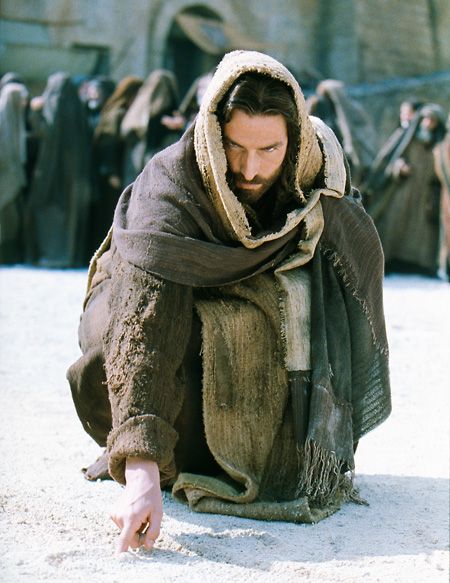




























 Considering the Bible