The prophecy of the Lord Jesus for our consideration and edification, written centuries prior to His earthly existence is
Prophecy #311
Description
Death and resurrection of Christ
Old Testament Prophecy
Jonah 1:17
And the Lord appointed a great fish to swallow up Jonah. And Jonah was in the belly of the fish three days and three nights.
New Testament Fulfillment
Matt 12:40
For just as Jonah was three days and three nights in the belly of the great fish, so will the Son of Man be three days and three nights in the heart of the earth.
Matt 16:4
An evil and adulterous generation seeks for a sign, but no sign will be given to it except the sign of Jonah.” So he left them and departed.
If you are just joining this blog, or are a first time visitor, welcome to Considering the Bible. We would like to offer a document that provides over 350 prophecies of the Messiah found in the Old Testament for your consideration.
I make no claim to be able to comment on every one of these amazing prophecies in the future, but will occasionally bring one to the readers attention for their edification.
Hopefully you will follow “Considering the Bible” and begin an interaction with us
After my series on the parables, I found I was drawn to look into the miracles of Jesus in the Gospels. I have never studies the mighty works of Jesus as a focused effort before and am looking forward to finding nuggets of truth that we can be encouraged by.
I have provided a general introduction, with an opportunity to download two files for your reference in my initial post Signs and Mighty Works of Jesus – Introduction. I found that the format I used for the parable posts were useful to keep me on track, and will continue to use them for this series, with some minor tweaks. With that said, let’s take a look at
Jesus Raises Lazarus from the Dead
John 11:1-45
Now a certain man was ill, Lazarus of Bethany, the village of Mary and her sister Martha. It was Mary who anointed the Lord with ointment and wiped his feet with her hair, whose brother Lazarus was ill. So the sisters sent to him, saying, “Lord, he whom you love is ill.” But when Jesus heard it he said, “This illness does not lead to death. It is for the glory of God, so that the Son of God may be glorified through it.” Now Jesus loved Martha and her sister and Lazarus. So, when he heard that Lazarus was ill, he stayed two days longer in the place where he was. Then after this he said to the disciples, “Let us go to Judea again.” The disciples said to him, “Rabbi, the Jews were just now seeking to stone you, and are you going there again?” Jesus answered, “Are there not twelve hours in the day? If anyone walks in the day, he does not stumble, because he sees the light of this world. But if anyone walks in the night, he stumbles, because the light is not in him.” After saying these things, he said to them, “Our friend Lazarus has fallen asleep, but I go to awaken him.” The disciples said to him, “Lord, if he has fallen asleep, he will recover.” Now Jesus had spoken of his death, but they thought that he meant taking rest in sleep. Then Jesus told them plainly, “Lazarus has died, and for your sake I am glad that I was not there, so that you may believe. But let us go to him.” So Thomas, called the Twin, said to his fellow disciples, “Let us also go, that we may die with him.” Now when Jesus came, he found that Lazarus had already been in the tomb four days. Bethany was near Jerusalem, about two miles off, and many of the Jews had come to Martha and Mary to console them concerning their brother. So when Martha heard that Jesus was coming, she went and met him, but Mary remained seated in the house. Martha said to Jesus, “Lord, if you had been here, my brother would not have died. But even now I know that whatever you ask from God, God will give you.” Jesus said to her, “Your brother will rise again.” Martha said to him, “I know that he will rise again in the resurrection on the last day.” Jesus said to her, “I am the resurrection and the life. Whoever believes in me, though he die, yet shall he live, and everyone who lives and believes in me shall never die. Do you believe this?” She said to him, “Yes, Lord; I believe that you are the Christ, the Son of God, who is coming into the world.” When she had said this, she went and called her sister Mary, saying in private, “The Teacher is here and is calling for you.” And when she heard it, she rose quickly and went to him. Now Jesus had not yet come into the village, but was still in the place where Martha had met him. When the Jews who were with her in the house, consoling her, saw Mary rise quickly and go out, they followed her, supposing that she was going to the tomb to weep there. Now when Mary came to where Jesus was and saw him, she fell at his feet, saying to him, “Lord, if you had been here, my brother would not have died.” When Jesus saw her weeping, and the Jews who had come with her also weeping, he was deeply moved in his spirit and greatly troubled. And he said, “Where have you laid him?” They said to him, “Lord, come and see.” Jesus wept. So the Jews said, “See how he loved him!” But some of them said, “Could not he who opened the eyes of the blind man also have kept this man from dying?” Then Jesus, deeply moved again, came to the tomb. It was a cave, and a stone lay against it. Jesus said, “Take away the stone.” Martha, the sister of the dead man, said to him, “Lord, by this time there will be an odor, for he has been dead four days.” Jesus said to her, “Did I not tell you that if you believed you would see the glory of God?” So they took away the stone. And Jesus lifted up his eyes and said, “Father, I thank you that you have heard me. I knew that you always hear me, but I said this on account of the people standing around, that they may believe that you sent me.” When he had said these things, he cried out with a loud voice, “Lazarus, come out.” The man who had died came out, his hands and feet bound with linen strips, and his face wrapped with a cloth. Jesus said to them, “Unbind him, and let him go.” Many of the Jews therefore, who had come with Mary and had seen what he did, believed in him,
General Observations
Talk about not getting it. I have provided the full narrative for the miracle of Lazarus coming back from the dead for the sake of describing the communication problems Jesus was facing. Consider the misunderstandings simmering in the folks associated in the recounting of the raising of Lazarus. Remember – this confusion is with those who want to understand the Messiah.
Lazarus is ill (v3)
Lazarus’ illness does not lead to death
Jesus stays away for two days.
Yet Lazarus dies
Don’t you understand? God’s glory is the purpose – his death is a side issue!
Jesus decides to go to Judea (v7)
The Jews are trying to kill you.
A description of walking in light and not stumbling
Don’t you understand? – Walk in the light (death is not a factor!)
This response from the Lord must have been very confusing to the disciples.
Lazarus has fallen asleep – I go to waken him. (v11)
Why go? we will die and the sleep will be beneficial to Lazarus.
Lazarus has died.
Ok, so why go now? He has died, and we will be in danger now without any benefit to anyone.
Don’t you understand? His death will feed your faith.
By now the disciple’s heads must have been spinning!
You could have prevented His death (v 21) – Martha
Martha, in the midst of her grief, expresses disappointment in His delay, and why He arrived then.
Jesus teaches Martha that her “brother will rise again”
Martha assumes the general resurrection.
Don’t you understand? Lazarus’ specific immediate resuscitation is offered.
Everyone who lives and believes in Me shall never die.
Another bomb in the discussion (never die?), yet Martha simply confesses Him to be the Messiah.
Don’t you understand? The Messiah will work today!
You could have prevented His death (v 32) – Mary
Where is his body?
Take away the stone
There will be an odor due to death
Don’t you understand – You will see the glory of God
You could have prevented His death (v 37) – Crowd
His abilities of preventing death have become an expectation, even by some in the crowd.
Don’t you understand? The crowds expectations will be exceeded!
Lazarus exits the tomb
Questions to Consider
Who were the audience?
The disciples, the sisters of the deceased and the crowd. All of them, as they watched the Master, asked Him questions, and tried to understand, yet fell into confusion and misunderstandings. Confusion and internal questioning must have been the general sense of the crowd right up to Lazarus walking out of the tomb.
This reminds me of the current state of our walk with the Lord. So many ways of looking at the Word and so many opinions of His follower get in the way. When He speaks, performing an action that is undeniable, it does not always answer all our questions. The confusion is often overtaken by simply seeing the bigger picture. But I am getting ahead of myself
Jesus gives us the motivation of this miracle in verse 4. It is for the glory of God and that the Son of God may be glorified through it.
I sometimes wonder if I understand what glory is. I often think of glory as a “bright shining” emanating from the person who is glorified, and that may be correct. Yet in this instance, as Jesus tells us of the glory that will be exhibited through the miracle, there is no witness in the gospels of any shining face on Jesus, or any extra light coming from the heavens.
So to be glorified in this passage may have an alternate meaning. As I do a little digging, I find that to be glorified may include the concepts of opinion and reputation. To be glorified speaks of those impacted by this miracle as changing their opinion, of His reputation growing in the minds of the crowd and of the disciples. To be glorified is to be thought of in a higher, greater way than before, to be lifted up in one’s opinion of the One glorified as to His true status, abilities, person.
This is very pertinent to those of us who say we are followers, for we are to be on a journey of discovery, of growing in our opinion of His person, of His abilities, of His character. This, in a small way, is what glorifies the Son of God.
This resuscitation (not technically a resurrection in the manner of Jesus’ resurrections, for Lazarus will die again) was the capstone of His miracles by this time in His ministry. None of His previous miracles raised one from the dead after so long of a period of time. And none of His miracles set off the Jewish leadership into making specific plans to get rid of this troublemaker!
One fallout from this miracle was that for Jesus to be glorified in this act also brought about His eventual death. Which would also glorify Him!
Is there no stopping this Messiah?
What was the message for the original audience?
As mentioned above, the messages prior to the miracle seemed to be “lost in translation” to the hearers for the most part. Either the messages were completely misunderstood, watered down, or no response was supplied. Numerous teaching efforts were recorded, and yet the miracle is what spoke loudly to those in attendance.
The message was seen in this instance, supporting His oral teaching earlier. He is the resurrection and the life. Personally, individually, and in dependence on the Father, Jesus called Lazarus from the grave, and Lazarus obeyed. Whatever or however the audience understood His teaching became a secondary issue to the fact that this miracle glorified God and the Son.
What is the message for us today?
It is easy to complain about the condition of the modern church, and this post is not intending to repeat oft mentioned issues we face as believers in the modern era. Yet the message from this miracles seems to be so obvious for me that I cannot resist from seeking to encourage those who are seeking to follow Him, to also focus on Him.
He is the resurrection. He is the life. Our petty doctrines that divide, our opinions that keep us apart, our different understandings of the Bible must be seen for what they are. At best, instructions and directions to the Master Himself, and at worst, the distraction and walls we build to become a divided church, each of us saying we own the Master, and throwing darts at our brothers.
He is Lord, and not our opinions. Priorities are critical in this instance. Worship Him, and Him only, for He is good, and He is good all the time!
Thanks again for coming to visit. I hope you found something of interest in this post and would appreciate a comment, to begin a discussion. If you know someone this blog may bless (or challenge), send them a link, so they may join us in our discussion
The prophecy of the Lord Jesus for our consideration and edification, written centuries prior to His earthly existence is
Prophecy #310
Description
Offer salvation to all mankind
Old Testament Prophecy
Joel 2:32
And it shall come to pass that everyone who calls on the name of the Lord shall be saved. For in Mount Zion and in Jerusalem there shall be those who escape, as the Lord has said, and among the survivors shall be those whom the Lord calls.
New Testament Fulfillment
Rom 10:9-13
because, if you confess with your mouth that Jesus is Lord and believe in your heart that God raised him from the dead, you will be saved.
For with the heart one believes and is justified, and with the mouth one confesses and is saved.
For the Scripture says, “Everyone who believes in him will not be put to shame.”
For there is no distinction between Jew and Greek; for the same Lord is Lord of all, bestowing his riches on all who call on him.
For “everyone who calls on the name of the Lord will be saved.”
If you are just joining this blog, or are a first time visitor, welcome to Considering the Bible. We would like to offer a document that provides over 350 prophecies of the Messiah found in the Old Testament for your consideration.
I make no claim to be able to comment on every one of these amazing prophecies in the future, but will occasionally bring one to the readers attention for their edification.
Hopefully you will follow “Considering the Bible” and begin an interaction with us
My wife and I are reading through the Psalms in our evening reading and occasionally a nugget of the Psalms jumps out of the page. Don’t you love it when, after years of reading the “Old Book” passages become alive, reinforcing old teachings or simply warming your heart.
This is the book of Psalms, and it is rich.
I pray I can communicate a portion of the blessing we receive from this wonderful book.
Psalm 49
13 This is the path of those who have foolish confidence; yet after them people approve of their boasts. Selah 14 Like sheep they are appointed for Sheol; death shall be their shepherd, and the upright shall rule over them in the morning. Their form shall be consumed in Sheol, with no place to dwell. 15 But God will ransom my soul from the power of Sheol, for he will receive me. Selah
In our earlier post, we spoke of the universality of death, the futile hope of the rich fool, of “those who trust in their wealth, and boast of the abundance of their riches” (Ps 49:6)
Our psalmist begins this portion of the psalm describing their path, the path of those who exercised their faith in a foolish confidence, an idol that could not deliver. The second half of verse 13 is somewhat disturbing, for I fear that many in the modern church fall under this influence. Lets read it once more
Psalm 49:13 This is the path of those who have foolish confidence; yet after them people approve of their boasts. Selah
The wealthy make boasts of influence, of their power and authority and how they trust in their possessions. And people left behind approve of their boasts.
By the way, did you hear how Beyonce is worth gazillions of bucks? How about Elon and his thoughts? He is so wealthy, so he must have good ideas. How about Lebron? He certainly has some wisdom we may tap into.
I know I am being facetious above, yet for those who do not follow after God only have these folk to find guidance from. With the family unit crumbing about us, the celebrity is fast becoming a primary influence on those who need guidance. (Help us O God, for we are desperately in trouble!).
What is most discomforting, is the reliance on the wealthy of those who claim to follow after God. Does this make any sense? We have One who has provided objective truth and the Spirit of God to help us in our discerning and application of this truth to our daily lives and relationships, yet we look to the wealthy and those who abuse the poor for guidance.
Take this test. Next time you attend a service, note the amount of time believers spend in discussing popular figures on TV or the internet. How these lost souls sphere of influence has increased, even within the body of Christ. As many of you know, I have been a believer for a bit over forty years, and have attended a number of very good churches. Some churches have actually found a way to introduce the pop culture directly into their worship service, using movies as a basis for their message.
As a reader, I am interested in your thoughts on this method of worship. Is it depending / trusting in the pop culture for topics, possibly diverting from the core of the gospel? Let me know.
Enough of my rant – Lets get back to the Psalm.
The wealthy man exchanges the Good Shepherd for death, for in following after idolatry (otherwise known as trusting in wealth) they exchange the truth for a lie (Romans 1) , and forsake the steadfast love of God for a vain idol (Jonah 2:8). The sheepfold they are assigned to is Sheol, the grave, the pit that will consume them. What a horrible end!
But let us be clear for this is the deserved end of all. We all follow after vanities and worthlessness. How often have we chased after smoke and mirrors, shadows of promises that were never realized but kept leading us on, giving us hope for some peace. How often have our eyes looked to an idol instead of God Himself. So very often, my eyes have been diverted by shiny objects, promises that were not based on the person of Christ, and of some thinking that convinced me of alternate methods of living.
Yet I am not my Savior. I am not the One who died for me. I am not the One who can satisfy the price of redemption, with my paltry earthly financial resources.
God will redeem my soul from the power of the grave: for he shall receive me.
He will receive me. The psalmist is speaking of his redemption from the power of the grave! Yet after considering this passage for a moment, I would like to clarify my thoughts somewhat. The psalmist, I believe, is not referring to himself, or by extension to you and I, but to the Christ, the One whose soul (life) was ransomed from the power of the grave. Death could not hold Him, for the resurrection defeated the power of the grave. God received Him.
Romans 1
4 and was declared to be the Son of God in power according to the Spirit of holiness by his resurrection from the dead, Jesus Christ our Lord,
He has the power of an indestructible life.
Hebrews 7
16 who has become a priest, not on the basis of a legal requirement concerning bodily descent, but by the power of an indestructible life.
Death no longer has any authority over the Son of Man. He is the One to whom we need to rely on, look to, receive guidance from, trust and follow after.
1 Corinthians 15
55 “O death, where is your victory? O death, where is your sting?” 56 The sting of death is sin, and the power of sin is the law. 57 But thanks be to God, who gives us the victory through our Lord Jesus Christ.
We have a claim on living forever, through the Lord Jesus Christ. Do not be distracted by the psalmist’s reference to God and think you may choose the name of the God you may worship. The New Testament makes it abundantly clear that the only One who has been granted power over death is the One who entered into death and came out of the grave victoriously.
He is the One we are to be “in” if we are to be received by God.
The prophecy of the Lord Jesus for our consideration and edification, written centuries prior to His earthly existence is
Prophecy #309
Description
He would defeat death
Old Testament Prophecy
Hosea 13:14
I shall ransom them from the power of Sheol; I shall redeem them from Death.[a] O Death, where are your plagues? O Sheol, where is your sting? Compassion is hidden from my eyes.
New Testament Fulfillment
1 Cor 15:55-57
“O death, where is your victory? O death, where is your sting?”
The sting of death is sin, and the power of sin is the law.
But thanks be to God, who gives us the victory through our Lord Jesus Christ.
If you are just joining this blog, or are a first time visitor, welcome to Considering the Bible. We would like to offer a document that provides over 350 prophecies of the Messiah found in the Old Testament for your consideration.
I make no claim to be able to comment on every one of these amazing prophecies in the future, but will occasionally bring one to the readers attention for their edification.
Hopefully you will follow “Considering the Bible” and begin an interaction with us
8 “‘I know your works. Behold, I have set before you an open door, which no one is able to shut. I know that you have but little power, and yet you have kept my word and have not denied my name. 9 Behold, I will make those of the synagogue of Satan who say that they are Jews and are not, but lie–behold, I will make them come and bow down before your feet, and they will learn that I have loved you. 10 Because you have kept my word about patient endurance, I will keep you from the hour of trial that is coming on the whole world, to try those who dwell on the earth. 11 I am coming soon. Hold fast what you have, so that no one may seize your crown. 12 The one who conquers, I will make him a pillar in the temple of my God. Never shall he go out of it, and I will write on him the name of my God, and the name of the city of my God, the new Jerusalem, which comes down from my God out of heaven, and my own new name.
I have thought of this passage often in the last few months, specifically the concept of having “but little power”, assuming He is speaking directly to me. Of course He is primarily speaking to a church two thousand years ago, and we can find direction, wisdom and application in carefully reading and understanding the author’s intent and message to the original readers. This is a challenge, for we are sometimes so self centered that we jump into application immediately, but let us not be in the habit of this downfall.
Regarding this passage, and the topic we are chasing, the portion that arrests my attention is verse 11. Of course, we could discuss how this passage would inform us of His soon coming for the modern church (it doesn’t) or that it describes a pre-tribulation rapture (pardon me?). Let’s not chase rabbits to some unknown (unjustified) destination!
The issue to be concerned about is holding fast! Hold fast what you have, so that no one may seize your crown.
Hang on through the difficult times!
The Lord has specifically spoke of the little power this church has, and now He commands them to hold fast. Two different words are used when addressing the church in Philadelphia, and it may be instructive to consider them.
Little Power
When the passage speaks of little power, the Greek word “power’ in verse 8 speaks of strength, power and ability. It is the Greek word dunamis, from which we get the English word dynamite. The term is modified with the adverb “little”, and not much to add to that term other than it is little, small in size, quantity or number. Tiny.
Hold Fast
Verse 11, we meet up with the command to hold fast. This term does not quantify the strength or ability of the church (little power), but of the desire to continue, the use the strength (whatever is available) to grab and hang on.
Storytime
My 8th grandchild Theo is just starting to walk. When he “takes hold” of my hand, his strength is so small, so tiny. I could despise the little strength he has – so so weak – and yet he is giving it all to hang on. I don’t whine or complain about his lack of strength, (for it is all he has) but I revel in the fact that he is hanging on, fighting to try to walk like his brother, to balance, to be with Grampa.
If you are of little strength, do not consider this to be something the Lord Jesus despises. When the Lord’s attitude towards the weak is brought to mind, I naturally return to Matthew 12.
Matthew 12:18-20
18 “Behold, my servant whom I have chosen, my beloved with whom my soul is well pleased. I will put my Spirit upon him, and he will proclaim justice to the Gentiles. 19 He will not quarrel or cry aloud, nor will anyone hear his voice in the streets; 20 a bruised reed he will not break, and a smoldering wick he will not quench, until he brings justice to victory;
A bruised reed he will not break. Consider the Master’s attitude, and hold on with what ever strength you have. If you are a mighty man of valor, hang on. (Just don’t be too proud of your mightiness, for that is also a bit of a problem don’t ya know!)
If you are struggling and sense your “little power”, hold on. He is the Savior and He is looking for your desire. Hang on and don’t let anyone seize your crown.
Thanks again for coming to visit. I hope you found something of interest in this post and would appreciate a comment, to begin a discussion. If you would like to receive daily posts from Considering the Bible, click on the “Follow” link below
The prophecy of the Lord Jesus for our consideration and edification, written centuries prior to His earthly existence is
Prophecy #308
Description
He would be called out of Egypt
Old Testament Prophecy
Hosea 11:1
When Israel was a child, I loved him, and out of Egypt I called my son.
New Testament Fulfillment
Matt 2:15
and remained there until the death of Herod. This was to fulfill what the Lord had spoken by the prophet, “Out of Egypt I called my son.”
If you are just joining this blog, or are a first time visitor, welcome to Considering the Bible. We would like to offer a document that provides over 350 prophecies of the Messiah found in the Old Testament for your consideration.
I make no claim to be able to comment on every one of these amazing prophecies in the future, but will occasionally bring one to the readers attention for their edification.
Hopefully you will follow “Considering the Bible” and begin an interaction with us
Sunday school was very good, very challenging for me this week. By the way, as a personal application, if you don’t belong to a small group to study the Word and love each other, I’m telling you that you are missing out on God’s work in your life.
Back to my topic of the Sunday School class, and the topic we were discussing.
You see, we were discussing the court systems Jesus went through prior to His glorification. We landed on a verse that opened up to me after chatting with the class about Jewish leadership performing capital punishment on their own authority.
What did you say Carl? Again, you are greatly mistaken Carl for the Bible speaks of the Jewish leadership not able to execute, that is to perform capital punishment. Read it again Carl!
John 18:31 Pilate said to them, “Take him yourselves and judge him by your own law.” The Jews said to him, “It is not lawful for us to put anyone to death.”
And yet the Jewish population intended to stone Jesus early in His ministry.
Luke 4:29 ESV – 29 And they rose up and drove him out of the town and brought him to the brow of the hill on which their town was built, so that they could throw him down the cliff.
How about when the adulterous woman brought to the Messiah. The Jews mentioned stoning the woman in response to her sin. Granted this was a set up to trap Jesus, but Jesus didn’t respond with the illegality of the sentence, but a personal moral application to each of the judges! (Brilliant!)
John 8:5-7 ESV – 5 Now in the Law, Moses commanded us to stone such women. So what do you say?” 6 This they said to test him, that they might have some charge to bring against him. Jesus bent down and wrote with his finger on the ground. 7 And as they continued to ask him, he stood up and said to them, “Let him who is without sin among you be the first to throw a stone at her.”
If death was what the Jews wanted, they had proven intent in the previous occurrences, but just a few short months after Jesus crucifixion, Stephen was stoned.
Acts 7:57-59 ESV – 57 But they cried out with a loud voice and stopped their ears and rushed together at him. 58 Then they cast him out of the city and stoned him. And the witnesses laid down their garments at the feet of a young man named Saul. 59 And as they were stoning Stephen, he called out, “Lord Jesus, receive my spirit.”
Stoning seemed to be allowed by the Roman authorities.
Yet the very next verse speaks of a wrinkle in the narrative, a fine point that I didn’t catch at first.
John 18:32 This was to fulfill the word that Jesus had spoken to show by what kind of death he was going to die.
You see, it wasn’t that the Jews couldn’t execute, but that they couldn’t crucify. It was the kind of death that Jesus was appointed to experience, to fulfill the prophecies of His passion. Psalm 22 (and other passages) would not be fulfilled if the Messiah was executed by stoning.
No, it had to be crucifixion, and that meant this process of condemnation had to pass through the Roman court system. His condemnation by the Jewish nation was not enough, for He is the Savior of the world and not only the Jews.
Jesus was in control of this fiasco in the courts, and every statement He made throughout both the Jewish and Roman “courts” was to gain the cross, to die for the world, to die for you and I.
Jesus is in control of this fiasco we live in today. Do you believe that?
Thanks again for coming to visit. I hope you found something of interest in this post and would appreciate a comment, to begin a discussion. If you know someone this blog may bless (or challenge), send them a link, so they may join us in our discussion
The prophecy of the Lord Jesus for our consideration and edification, written centuries prior to His earthly existence is
Prophecy #307
Description
Messiah in a glorified state
Old Testament Prophecy
Daniel 10:5-6
I lifted up my eyes and looked, and behold, a man clothed in linen, with a belt of fine gold from Uphaz around his waist. His body was like beryl, his face like the appearance of lightning, his eyes like flaming torches, his arms and legs like the gleam of burnished bronze, and the sound of his words like the sound of a multitude.
New Testament Fulfillment
Rev 1:13-16
and in the midst of the lampstands one like a son of man, clothed with a long robe and with a golden sash around his chest.
The hairs of his head were white, like white wool, like snow. His eyes were like a flame of fire,
his feet were like burnished bronze, refined in a furnace, and his voice was like the roar of many waters.
In his right hand he held seven stars, from his mouth came a sharp two-edged sword, and his face was like the sun shining in full strength.
If you are just joining this blog, or are a first time visitor, welcome to Considering the Bible. We would like to offer a document that provides over 350 prophecies of the Messiah found in the Old Testament for your consideration.
I make no claim to be able to comment on every one of these amazing prophecies in the future, but will occasionally bring one to the readers attention for their edification.
Hopefully you will follow “Considering the Bible” and begin an interaction with us
For this series in Philippians, I am going to limit each post to one verse, and hopefully produce a short, succinct read for my friends who follow.
2:6 who, though he was in the form of God, did not count equality with God a thing to be grasped,
This verse is pregnant with truth, with mystery, and as we have been considering in this portion of Philippians, the humility of the Lord Jesus. Every time I try to understand the depths He plummeted to simply become one of us, a created being, to walk in a sinful, fallen world, to identify with those who have rebelled against His goodness, I come away from my time of meditating with two outcomes.
Confusion
How can I relate to One who is willing to “come down”, to self humble to such a degree. Rarely have I had the internal desire to humble myself amongst my equals, since I prefer to walk in a show of ability, of noble character, but in reality in an inflated ego and deluded in my pride.
And yet I know our next verse is going to describe even further self humiliation of the One who made me, but we need to consider this initial step of becoming a man for today.
To step away, or better yet, to step down from the eternal position, honor, glory and authority of the Godhead and plunge to the earth as a blood and flesh creature, dependent on fallen man, and in the midst of a subjugated people that have rebelled against your will is not only incomprehensible, but completely without precedent.
No one does this! NO ONE!
When I think of the term “holy”, I typically consider the concept of sinlessness, of sanctification, of being set apart, and all of this is true. Yet tucked away in this term is the concept of “otherness”. He is holy, we are not. He is of an “other” nature. Separate from us, and yet seeking us out. He is of the character that is not restricted, affected or limited by ego and pride, for He is everything we like to think we are, and yet much more.
He is in control – We are not
He understands the situation – We do not
He has the knowledge to make informed decisions – We do not
He has the wisdom to undertake the actions required to fulfill His will – We do not
I say much more, for with our existence, and our desire to be considered more than we are by rights, we tend to boast of abilities and character that is not in the realm of truth. Out of this comes a severe insecurity, and a haunting realization that we are much less than what we try to display to others who are struggling with the same debilitating condition. But with Him, all of His perfections must also provide absolutely no insecurities, no need of boasting or requiring commitments from others to maintain a position out of fear of losing the right. He is stable, without any “shadow of turning”.
And He came down to live with us, a man that describes Himself as “gentle and lowly”.
Take my yoke upon you, and learn from me, for I am gentle and lowly in heart, and you will find rest for your souls.
The term gentle is interesting, and provides one additional slant to our discussion this morning. Meek is defined in BDAG as “not being overly impressed by a sense of one’s self-importance, gentle, humble, considerate, meek“
In His short time on this earth below, as He described Himself as gentle, this descriptor becomes so beneficial to my thoughts this morning. He walked amongst us, and was not overly impressed by a sense of one’s self importance. This is an act of divine decision, for He is of GREAT importance, the greatest of importance to all on this blue ball. And yet He did not dwell on this truth, but thought of Himself to be equal with us.
Who does this? NO ONE!
Thankfulness
A sense of awe and thankfulness attends my thinking, no matter how my comprehension settles on this truth. In this middle of my ruminations, I ask Why? Why do that which is beyond our comprehension? This is the out flowing of a character that is holy, He is not of our ilk, but a loving, kind and gentle God who seeks out those who would crucify Him. He is beyond our comprehension, and His love for each of us is beyond our understanding.
Consider the One who stepped down from a position we cannot imagine, practiced a mindset of humility, and do likewise!
He is good, and His life amongst us, when considered, is a tremendously great challenge. And this great challenge includes our willingness to die to our lies, die to our self importance, die to our pride, die to our self. Die to self so I can live unto God. Humility, a sense of gentleness and a consideration for others will be the fruits that will naturally blossom from this death.
My wife and I are reading through the Psalms in our evening reading and occasionally a nugget of the Psalms jumps out of the page. Don’t you love it when, after years of reading the “Old Book” passages become alive, reinforcing old teachings or simply warming your heart.
This is the book of Psalms, and it is rich.
I pray I can communicate a portion of the blessing we receive from this wonderful book.
Psalm 49
10 For he sees that even the wise die; the fool and the stupid alike must perish and leave their wealth to others. 11 Their graves are their homes forever, their dwelling places to all generations, though they called lands by their own names. 12 Man in his pomp will not remain; he is like the beasts that perish.
The psalmist continues with a description of what the rich man observes, the consistency of death, even the necessity of death for both the wise and the fool.
It may be good to remember at this point of the psalm, that a reference to a fool does not describe the IQ of the man, or the educational training of the man, or even the personality of the man, but the man’s attitude or standing in relation to God. Brilliant men, according to this world, are often virulently against any concept of God’s existence and fully refuse to consider God as an authority to answer to. No wonder they seek to avoid the ultimate reality of death.
The psalmist brings to the reader the futility of wealth accumulation, in that money not only provides absolutely no bargaining power in death, but that all the rich man’s possessions remain on earth, distributed to others. All of his efforts in accumulating a resource for self sufficiency becomes a massive disappointment, a final defeat in his philosophy of life, and a failure in rescuing him at a time he needs help the most.
Which brings us back to idolatry, and its effect for both the rich and poor. We so often think of ourselves as modern, enlightened, progressive and intelligent. Yet our modern society has converted the practice of idolatry to an artform, dressed it in a different suit and paraded it about as an ideal. Very few of us physically bow to a statue in the home or a sanctuary in the neighborhood, but if we are trusting wealth instead of the Father, idolatry is still the result.
Let’s take a moment to consider a few verses regarding the the identification of idolatry, it’s powerlessness and the effect on the one who chooses idolatry.
Idolatry – Identified
Col 3:5 Put to death therefore what is earthly in you: sexual immorality, impurity, passion, evil desire, and covetousness, which is idolatry.
Paul is straightforward in identifying idolatry in the book of Colossians and of course it seamlessly reinforces our psalmists theme of money and possessions being the focus of the idolater.
Idolatry – It’s Power
Judges 10:14 Go and cry out to the gods whom you have chosen; let them save you in the time of your distress.”
Although the psalm we are in spends time in describing the effects of idolatry on the worshipper, it is not alone in the Word in providing warnings of the disappointing deliverance of idolatry for the worshipper. The verse in Judges actually challenges those who have followed vain idols to continue to trust them, mocking their worship and abandoning the worshippers to a futile end. This brings us to the effect idols have on the worshipper.
Idolatry – It’s Effect
Jonah 2:8 Those who pay regard to vain idols forsake their hope of steadfast love.
A man may only worship one philosophy, one ideal, one person. This is an unalterable truth. No multitasking in our worship. Joan is clear in that when we seek after a vain idol, we actually cut ourselves off from God’s love, His steadfast mercy and kindness that we all deeply seek after and need. When we move toward an idol, we move away from God!
Back to Psalm 49, where the author speaks of the wealthy mans efforts of extending his influence (instead of his physical life) into the future, by calling lands by their own name. They seek to be remembered, yet in all of the wealthy man’s efforts, it simply becomes a failed attempt to extend their self sufficiency and self imposed honor on those who are left behind.
The end result. The rich are cut down like the beast of the field, brought to silence and cut off from those they had influence over, those they abused. Earlier in the psalm, the author speaks of the poor man’s fear in the midst of the rich man’s iniquity, and of the cheating of the rich man, how he trusted in his riches (vs 5,6). It seems the fear, though so very real at the time, when considered as the psalmist does, is answered by faith, and is the solution for the believer.
As believers, we must rest on the fact that death is a universal condition for each of us, rich and poor, wise or fools. Many are continuing to rely on their wealth or influence to avoid the unavoidable, even to the abusing of the poor and weak, but this will be addressed within the next 100 years, for all reading this post will have entered that gate, the passage from physical life to spiritual existence.
A day of equalization is coming, when all will realize the futility of depending on any idol in place of God Almighty.
The prophecy of the Lord Jesus for our consideration and edification, written centuries prior to His earthly existence is
Prophecy #306
Description
Killed before the destruction of the temple
Old Testament Prophecy
Daniel 9:26c
And the people of the prince who is to come shall destroy the city and the sanctuary. Its end shall come with a flood, and to the end there shall be war. Desolations are decreed.
New Testament Fulfillment
Matt 27:50-51
And Jesus cried out again with a loud voice and yielded up his spirit.
And behold, the curtain of the temple was torn in two, from top to bottom. And the earth shook, and the rocks were split.
If you are just joining this blog, or are a first time visitor, welcome to Considering the Bible. We would like to offer a document that provides over 350 prophecies of the Messiah found in the Old Testament for your consideration.
I make no claim to be able to comment on every one of these amazing prophecies in the future, but will occasionally bring one to the readers attention for their edification.
Hopefully you will follow “Considering the Bible” and begin an interaction with us
10 Do not fear what you are about to suffer. Behold, the devil is about to throw some of you into prison, that you may be tested, and for ten days you will have tribulation. Be faithful unto death, and I will give you the crown of life.
11 He who has an ear, let him hear what the Spirit says to the churches. The one who conquers will not be hurt by the second death.’
As we enter into this passage in Revelation (under the topic of conditional security), I need to admit that I have had a very mixed relationship with this book.
Early in my life, Revelation was the book that “revealed” to me the Judge of all creation, a Mighty God who was holy, rightfully angry at me. Revelation provided word pictures in a seven year old’s mind of a Great White Throne, of eternal suffering and anguish, of darkness and continual pain, of an eternal fire that burned without relief. (See Testimony) Revelation exposed to a seven year old boy a destiny that was certain due to my sin. No mercy was available to that little seven year old!
Fast forward fourteen years and the Judge became my Savior. Mercy and grace was offered to a twenty-one year old alcoholic drug pushing loser and I couldn’t resist. Jesus took my guilt and punishment – How could I not follow?
Yet Revelation was still a book I shied away from. At first, a certain dispensational teaching helped me to avoid the last book of the Bible, placing all the scary stuff (chapters 6 through 19) all beyond my time on earth. I understood that I would be raptured and taken to safety while everyone else would suffer the tribulation. Sure a few verses (such as the ones we are considering today) disturbed me, but I was good at generally ignoring the book.
Yet there were verses in the second and third chapters that would still haunt me, since they were directed to churches, and I gladly identified as belonging to the body of Christ. Dispensational teaching helped out there also, for it taught that each of these churches represented a certain “age” in church history. Under dispensational teaching, Smyrna represented a church under persecution, specifically during the years just prior to Constantine.
Whew – I dodged another bullet! All this talk of suffering was getting hard to avoid, but at least this passage could be ignored safely! Yet the Bible is a consistent message, and though I found an excuse to avoid a truth in one verse, other passages reared their head and witnessed to my heart and mind as I began to listen. Eventually I abandoned dispensational teaching, for the inconsistencies and internal conflicts became too great for me to accept.
Quite an introduction to a short passage, yet this set of verses was one of the many that caused me to jettison my acceptance of dispensationalism. The mention of tribulation for ten days seemed so inconsistent with the seven years of tribulation supposedly taught in the Bible.
And what about that crown of life? Of not being hurt by the second death? This was a church the Savior was speaking to! Didn’t He understand that believers were eternally secure? (I speak as a fool!)
No matter how a believer reads this passage, it is either troubling (or greatly encouraging!)
Be faithful unto death! The passage speaks of a continual faithfulness, of being faithful to the point of death! My understanding of once saved always saved just did not fit into this passage. Wasn’t my initial expression of faith back in February 1981 enough?
Jesus said to “Fear none of those things which thou shalt suffer”. Believers in this type of church (no matter when the church exists) were to not fear the persecution! It would have a definite time (ten days, not eleven or twelve), an end would come and life would be granted. Pain from men may be experienced, but the hurt of the second death would be avoided by those believers who overcome.
The question that hangs out there is of believers who do not overcome, who are not faithful unto death. Is the crown of life withheld from them? Does the crown of life represent life or rewards for the believer? (This question was discussed in an earlier post – See Conditional Security – Revelation 2:7)
Be faithful unto death. And why not be faithful unto death? Let us not quibble over debatable issues, for He is the Savior, a Great and Mighty God who has died to rescue us. He has rescued me from my rebellion, from my rejection of truth. He is good and His love draws me constantly. Will I allow my heart to reject His continual expressions of love and grace, having witnessed His many acts of kindness in my life?
Truly, my heart can be a traitor to my own good and to my dear Savior. May the Lord give us strength in the life He provides us, in the way we are to walk, and to be faithful unto death, whether He chooses open persecution or otherwise for each of us
For He is good and the great God we have the privilege to worship! May we be faithful to Him.
Thanks again for coming to visit. I hope you found something of interest in this post and would appreciate a comment, to begin a discussion. If you would like to receive daily posts from Considering the Bible, click on the “Follow” link below
The prophecy of the Lord Jesus for our consideration and edification, written centuries prior to His earthly existence is
Prophecy #305
Description
Die for the sins of the world
Old Testament Prophecy
Daniel 9:26b
And after the sixty-two weeks, an anointed one shall be cut off and shall have nothing.
New Testament Fulfillment
Heb 2:9
But we see him who for a little while was made lower than the angels, namely Jesus, crowned with glory and honor because of the suffering of death, so that by the grace of God he might taste death for everyone.
If you are just joining this blog, or are a first time visitor, welcome to Considering the Bible. We would like to offer a document that provides over 350 prophecies of the Messiah found in the Old Testament for your consideration.
I make no claim to be able to comment on every one of these amazing prophecies in the future, but will occasionally bring one to the readers attention for their edification.
Hopefully you will follow “Considering the Bible” and begin an interaction with us
In the mid nineties, I had a little red Buick and a big ol’ bass box in the trunk, and would listen to “Christian Rock”, cranked to 11.
(What did you say? Huh? Can you say that again, I didn’t hear you….)
I have gotten away from that genre for many reasons, the least of which may be a loss of hearing, but some songs have stuck with me over the decades.
The artist’s I listened to sought to reflect Scriptural teaching for the most part. They ranged from “preaching” pop culture religion to significant theological teaching. As I listened to the lyrics, I found some to be quite challenging.
To be honest, I listened because I could justify the rock beat with “sanctified lyrics”.
Occassionaly I will post a song, supply the lyrics and make a comment or two. If you decide to listen to the tune, turn the speaker down unless you are already deaf. Some of the songs tend to have a certain “volume” about them!
This post will consider the song
Multipurpose Man – by Swirling Eddies
The Swirling Eddies were a comical band that spoke sarcastically about troubles within the church and the hypocrisy of modern day believers. I suppose that is why I listened to them so often. The lyrics are a hoot!
Multipurpose Man – by Swirling Eddies
Insert Flap A into Slot 2B Roll me, roll me, roll me toward my destiny I’m a room for your love, I’m a factory for war A hungry artist knocking at the rich man’s door A morality play A pornography store A scorched-earth fire In the nuclear core
[Chorus] I’m your very own living multipurpose man Your cowardly lion and your blemished lamb And I’ll be saved, and I’ll be damned I’m your very own living multipurpose man
[Verse 2] Fold Panel 3 along the dotted line Drink me, drink me, drink me, I’m a cheap red wine An alcoholic dream, a promissory note A discouraging word in a mercenary’s throat A hangman’s noose On an old frayed rope A zephyr wind And a paper boat
[Chorus] I’m your very own living multipurpose man Your cowardly lion and your blemished lamb And I’ll be saved, and I’ll be damned I’m your very own living multipurpose man
[Bridge] A bad smell fogging up the vestibule Demigods, demagogues, wise man, fool The paper-shredding keeper of the golden rule So roll me, roll me, roll me on back to you
[Interlude] (Drink me, drink me, drink me) (Roll me, roll me over) (Wind me, wind me, wind me) (Drink me, drink me, drink me) (Roll me, roll me over) (Wind me, wind me, wind me) (Drink me, drink me, drink me) (Roll me, roll me over) (Wind me, wind me, wind me) (Drink me, drink me, drink me) (Roll me, roll me over) (Wind me, wind me, wind me) (Drink me, drink me, drink me) (Roll me, roll me over) (Wind me, wind me, wind me) (Drink me, drink me, drink me) (Roll me, roll me over) (Wind me, wind me, wind me)
[Chorus] I’m your very own living multipurpose man Your cowardly lion and your blemished lamb And I’ll be saved, and I’ll be damned I’m your very own living multipurpose man
[Bridge] A bad smell fogging up the vestibule Demigods, demagogues, wise man, fool The paper-shredding keeper of the golden rule So roll me, roll me, roll me on back to you
[Verse 3] Hook my spring between the flim and flam Wind me up, wind me, I’m a monkey band A mad whirling dervish and a hard day’s night A kamikaze pilot on his thirteenth flight An electrical storm Ben Franklin’s kite A doomsday clock At twelve midnight
[Verse 4] Fill me up, fill me, I’m a white trash can A klu klux klown and an also-ran, yeah I’m yesterdays news, I’m a small foot note A DJ caring less about this song I wrote
Let me know what you think of the lyrics, and of the tunes!
Thanks again for coming to visit. I hope you found something of interest in this post and would appreciate a comment, to begin a discussion. If you know someone this blog may bless (or challenge), send them a link, so they may join us in our discussion
The prophecy of the Lord Jesus for our consideration and edification, written centuries prior to His earthly existence is
Prophecy #304
Description
Cut off
Old Testament Prophecy
Daniel 9:26a
And after the sixty-two weeks, an anointed one shall be cut off and shall have nothing.
New Testament Fulfillment
Matt 16:21
From that time Jesus began to show his disciples that he must go to Jerusalem and suffer many things from the elders and chief priests and scribes, and be killed, and on the third day be raised.
Matt 21:38-39
But when the tenants saw the son, they said to themselves, ‘This is the heir. Come, let us kill him and have his inheritance.’
And they took him and threw him out of the vineyard and killed him.
If you are just joining this blog, or are a first time visitor, welcome to Considering the Bible. We would like to offer a document that provides over 350 prophecies of the Messiah found in the Old Testament for your consideration.
I make no claim to be able to comment on every one of these amazing prophecies in the future, but will occasionally bring one to the readers attention for their edification.
Hopefully you will follow “Considering the Bible” and begin an interaction with us
For this series in Philippians, I am going to limit each post to one verse, and hopefully produce a short, succinct read for my friends who follow.
2:5 Have this mind among yourselves, which is yours in Christ Jesus,
I spent years reading this verse, thinking that I needed the mind of Christ, ie the thoughts, knowledge, logic, reason, memory, perception and mental ability of the Messiah. This is not what Paul has in mind here – (hope you don’t mind the pun!)
When Paul speaks of mind in this passage, he is speaking of attitude, not knowledge. When you think of the Lord Jesus, with His disciples, what attitude jumps out at you? Anger with their slowness of faith? Impatience with the infighting, personal quarrels and bickering? What about His attitude regarding those who were religious and stood in the way to the kingdom? Same attitude?
My friends, as I have been studied the parables in past posts, (Parable Surprises – Introduction) and currently the miracles of the Messiah, (Signs and Mighty Works of Jesus – Introduction) I have found a man, fully cognizant of His identity and mission, yet who exhibited patience beyond human reason, an attitude of submission to the Father’s will, and of a willingness to suffer for those who fought against Him, whether they be Pharisees, the disciples, or myself.
His attitude is one of humility, a meek and gentle man, that exhibited power through love, authority through submission, and Lordship through service. His only self description of His character actually referred to His humility.
Matthew 11:29 Take my yoke upon you, and learn from me, for I am gentle and lowly in heart, and you will find rest for your souls.
His kingdom is an upside down kingdom, and drinking at the well of worldly opinion, always consuming the me me me life, will never provide the peace that we desperately seek.
Look to Him, see a Messiah who is gentle and lowly in heart, and mimic Him.
My wife and I are reading through the Psalms in our evening reading and occasionally a nugget of the Psalms jumps out of the page. Don’t you love it when, after years of reading the “Old Book” passages become alive, reinforcing old teachings or simply warming your heart.
This is the book of Psalms, and it is rich.
I pray I can communicate a portion of the blessing we receive from this wonderful book.
Psalm 49
5 Why should I fear in times of trouble, when the iniquity of those who cheat me surrounds me, 6 those who trust in their wealth and boast of the abundance of their riches? 7 Truly no man can ransom another, or give to God the price of his life, 8 for the ransom of their life is costly and can never suffice, 9 that he should live on forever and never see the pit.
The psalmist starts out with the topic of fear, yet not his fear of death, but of those who trust in their riches. During his description of his fear he introduces the universality of death. All die. Rich and poor alike. Yet in the reflection of the psalmist, he centers in on the difference between the rich and poor in death. This comparison between the rich and poor is carried on throughout the psalm. Our standing in life, whether we are rich or poor, influences us in relation the death. Our standing in life creates an environment that fosters certain attitudes during our life regarding our eventual death.
Verse 5 begins with the poor asking himself why he is experiencing fear in relation to the sins of others. The rich cheat and steal, perform iniquity with abandon and the poor man experiences this abuse, for the rich man has the power! Surprisingly the abuse is not the focus though, for the poor speaks of fear in troubling times. Can you identify with the poor man?
On a personal note, it seems obvious that in our day, fear is not simply a by-product of the rich man abusing the poor, but is actually a vehicle to influence the poor to gain power over them. It seems troubling times are ever present with us, dangers continually nipping at our heals. A continual state of fear is bubbling up in our society. For the believer, how are we to relate to this?
We must understand that for the psalmist, his wisdom brings to us the truth that death is the great equalizer. We all die, and the rich have no advantage.
Verse 7 is central. The psalmist continues the theme of how money (or possessions) impact a mans relation to his death. The passage hearkens back to the law in Exodus 21:30
If a ransom is imposed on him, then he shall give for the redemption of his life whatever is imposed on him.
This ransom speaks of paying a price that a crime requires in order to make restitution, or to balance the books due to some injustice. We often think of ransom in relation to a kidnapping, yet this is not the intended message.
The context of the Exodus passage above is that some rich man owns an ox that is known for hurting others, yet does not keep it secure, allowing the ox to gore again. If the ox kills the victim, the owner shall suffer a like sentence. He shall be put to death. Justice is harsh!
Yet the law of God allows an opportunity for the victim’s family to accept payment from the ox owner as a ransom, providing an alternate outcome for the owner. He gets to live! This ransom of the owners life is accomplished with money, whatever amount the victim’s family decides. The psalmist hearkens back to this passage with his reference to ransom, and flatly states in verse 7, there is no ransom that may be paid for the life of a man,. You may think that this is a contradiction, but consider.
The passage in Exodus did not rescue him from death, but simply delayed the eventual time of death. He will still die.
That is the very point of Psalm 49. Everyone will die, and the rich have no advantage over the poor. Money is useless when death comes knocking.
The psalmist continues with the theme of cost, and brings together the two types of men in this psalm. Money cannot ransom the rich man, nor redeem the poor man. The currency required to ransom or redeem a man’s life cannot be carnal possessions of an earthly value system. This is the stock of idolatry! To be trusting in earthly goods is not an equally good choice when compared with trusting in God, but but an affront, an insult to the Lord. Earthly goods cannot ransom a rich man, and the poor man cannot be redeemed with things under heaven.
1 Peter 1:18-19
18 knowing that you were ransomed from the futile ways inherited from your forefathers, not with perishable things such as silver or gold, 19 but with the precious blood of Christ, like that of a lamb without blemish or spot.
This portion of Psalm 49 provides the conclusion that no one shall live forever, that all will see the grave. The author speaks of the desires of the rich man who would live on this earth forever, avoiding the death that is universal.
Some who obviously have no knowledge of this psalm speak of living on earth forever. This desire is becoming mainstream news in our very lives. (Don’t get me going on the trustworthiness of news headlines, but take it for what it is worth!)
The psalm stands. We all die! Face it and prepare. Run to the One who has provided the “currency” that pleases God for the redemption of each man’s soul. His blood is the precious “coin” that provides the ransom/redemption that rich and poor alike need.
The prophecy of the Lord Jesus for our consideration and edification, written centuries prior to His earthly existence is
Prophecy #303
Description
His announcement
Old Testament Prophecy
Daniel 9:25
Know therefore and understand that from the going out of the word to restore and build Jerusalem to the coming of an anointed one, a prince, there shall be seven weeks. Then for sixty-two weeks it shall be built again[a] with squares and moat, but in a troubled time.
New Testament Fulfillment
John 12:12-13
The next day the large crowd that had come to the feast heard that Jesus was coming to Jerusalem.
So they took branches of palm trees and went out to meet him, crying out, “Hosanna! Blessed is he who comes in the name of the Lord, even the King of Israel!”
If you are just joining this blog, or are a first time visitor, welcome to Considering the Bible. We would like to offer a document that provides over 350 prophecies of the Messiah found in the Old Testament for your consideration.
I make no claim to be able to comment on every one of these amazing prophecies in the future, but will occasionally bring one to the readers attention for their edification.
Hopefully you will follow “Considering the Bible” and begin an interaction with us
7 He who has an ear, let him hear what the Spirit says to the churches. To the one who conquers I will grant to eat of the tree of life, which is in the paradise of God.’
Here again I confused life with rewards. You see, I used to read it as – To the one who conquers, the right to receive rewards is granted. That is the way I read it when I was ensconced in the “once saved always saved” OSAS teaching. I couldn’t read it for what it seems to be saying, that is those who “conquer” (whatever that may mean) will have access to the tree of life.
Now here comes my assumption. Granted, I don’t want to sound like a 3 year old in Sunday school class, where every question is answered by “Jesus”, but the Word is centered on Him, and all prophecy, narrative, laws and poetry of the good book points to Him. If that is a safe general assumption, would it be too far a stretch to consider the tree of life to be the Master Himself, that in the symbolism of the book of Revelation, the tree of life is Jesus. Remember now, He Himself has witnessed that He is a door, bread, light and life. He did not shy away from describing Himself in various ways.
If this “assumption” is correct, that is that Jesus is the tree of life in the paradise of God, we are granted access to Him through conquering. Where am I going wrong here?
So, this is the stumper, for John is writing to a church, the church of Ephesus, and Jesus is speaking of the churches lost love. In this regard, might the conquering (for this church) be the repentance Jesus spoke of, the return to the first love, that realization of a believer getting distracted, of a forsaken love. Of a believer in desperate need of running back to the One who died for us.
Ok, here is my desire. I want my faith to be a simple faith, a faith where I am in connection with Him, where I can actually understand His will for me and I am granted the courage and boldness to follow, simply out of love for Him. A faith where I understand the Spirit’s message, with the Word of God echoing in my mind, and the character of our great Savior always before me.
You know, in these conditional security posts, I sometimes come away thinking of the negative, the “if” in it all. Yet His love is draws me and you and will continue to draw us through the trials and troubles, the doubts and struggles, the fear and pain. We need to keep our eye on Him, for He is good, He wants us home, and He has suffered for us, experiencing the trials and temptations of this old planet, and succumbing to the terrors of the cross in the Father’s will and for our good.
Looking away from Him, and to any other so called savior is the temptation we must resist. We are called to continue in a faith in the Savior, the One we need to follow.
The same apostle wrote
1 John 5:4 For everyone who has been born of God overcomes the world. And this is the victory that has overcome the world—our faith.
We can honestly say that John was consistent, for he spoke of the victory, (or the conquering?) as being our faith.
So when you hear someone tell you to keep the faith, remember that it is your faith that will conquer the enemies of our lives, for our faith in the Savior is our life, and will give us the victory, and allow us to eat from the tree of life.
For faith grants us to be in fellowship with the Savior.
Thanks again for coming to visit. I hope you found something of interest in this post and would appreciate a comment, to begin a discussion. If you would like to receive daily posts from Considering the Bible, click on the “Follow” link below
The prophecy of the Lord Jesus for our consideration and edification, written centuries prior to His earthly existence is
Prophecy #302
Description
He would be holy
Old Testament Prophecy
Daniel 9:24b
to bring in everlasting righteousness, to seal both vision and prophet, and to anoint a most holy place.
New Testament Fulfillment
Luke 1:35
And the angel answered her, “The Holy Spirit will come upon you, and the power of the Most High will overshadow you; therefore the child to be born will be called holy–the Son of God.
If you are just joining this blog, or are a first time visitor, welcome to Considering the Bible. We would like to offer a document that provides over 350 prophecies of the Messiah found in the Old Testament for your consideration.
I make no claim to be able to comment on every one of these amazing prophecies in the future, but will occasionally bring one to the readers attention for their edification.
Hopefully you will follow “Considering the Bible” and begin an interaction with us
After my series on the parables, I found I was drawn to look into the miracles of Jesus in the Gospels. I have never studies the mighty works of Jesus as a focused effort before and am looking forward to finding nuggets of truth that we can be encouraged by.
I have provided a general introduction, with an opportunity to download two files for your reference in my initial post Signs and Mighty Works of Jesus – Introduction. I found that the format I used for the parable posts were useful to keep me on track, and will continue to use them for this series, with some minor tweaks. With that said, let’s take a look at
Jesus Cleanses Ten Lepers
Luke 17:11-19
On the way to Jerusalem he was passing along between Samaria and Galilee. And as he entered a village, he was met by ten lepers, who stood at a distance and lifted up their voices, saying, “Jesus, Master, have mercy on us.” When he saw them he said to them, “Go and show yourselves to the priests.” And as they went they were cleansed. Then one of them, when he saw that he was healed, turned back, praising God with a loud voice; and he fell on his face at Jesus’ feet, giving him thanks. Now he was a Samaritan. Then Jesus answered, “Were not ten cleansed? Where are the nine? Was no one found to return and give praise to God except this foreigner?” And he said to him, “Rise and go your way; your faith has made you well.”
General Observations
Ten lepers, standing at a distance. Of course they had to for leprosy required a distance from others, a space that was demanded by the law to protect the non-leper. Leprosy is a horrible disease that brings about the deadening of the nerves, and therefore the inability to feel pain. The progression of this disease results in tissue degeneration, extremities (fingers, toes, noses etc) eroding, and unintentional damage to the body due to the warning system of pain not functioning. Have you ever thought of pain as a gift? A leper may hold a coal of fire in his hand without experiencing pain, further damaging his hand, further crippling him in the process.
This disease was a much feared condition in the ancient world, and the Jewish religion provided many safeguards for the nation to restrict its spread among the population. One of these restrictions was a required space to be maintained when the leper was in the company of the non-leper. The leper also had to declare openly amongst the community his condition, by crying out “Unclean, unclean” (Leviticus 13:45).
The law did provide a process of being declared clean, and this included the leper going to the priest and requesting an examination. This process must have been one of the priests least favored responsibilities, since it may include the examination of a person who still had leprosy, making it possible for the priest to contract the disease himself.
Of course this process of examination by a priest within the nation of Israel is never recorded, and only one person in the Old Testament is ever spoken of as experiencing healing of his condition. Naaman (an enemy and foreigner to Israel) followed Elisha’s counsel and experienced a healing. As for Miriam, Moses sister, as she was dealt a judgement of leprosy for her rebellion against Moses, there is no record of her healing.
So for centuries, to be a leper was to be condemned to a life of isolation, rejection, self deterioration and poverty. Until an itinerant preacher showed up and began to heal lepers. And the blind. Raising even the dead!
The ten lepers, the twelve disciples and possibly some villagers. Yet even as I say that, for the lepers to be in the area would mean the villagers would not be. It is likely that the lepers were all alone with the Master and His disciples.
The lepers requested mercy, and Jesus is a merciful God. Later on in the apostle Paul’s writings, He is described as rich in mercy. And we know our God is One who is good to all, and that His mercy is over all that He has made (Psalm 145:9)
How often has Jesus expressed mercy to those who deserve judgement? I think of the woman caught in adultery, and the Lord not condemning her, though He was the only One who had the right. I think of the times I have missed the mark, and yet the Lord is constantly overseeing my life, guiding, comforting, challenging and directing. He is a merciful God and the lepers were in good standing at this point of the text. They identified Jesus correctly as One who was merciful and able to heal. Astute lepers!
What was the message for the original audience?
The lepers, by heading to the priest, exhibited obedience to Jesus call, received healing. The text does not teach us that upon healing, they began to venture to the priest. No, the text describes the healing to be in response to thier obedience to the command of Jesus.
Ten clean lepers. Ten lepers who had heard the voice of Jesus, acted upon the voice of Jesus, and received a physical healing of leprosy. Ten lepers who were in the process of obeying Jesus, yet one leper “disobeyed” and returned to the Master, expressing thankfulness, praising God with a loud voice, and worshipped the Rabbi.
Imagine the other nine, for they must surely have heard the one who turned to Jesus. Did they intentionally ignore the one who turned to Jesus instead of a priest? Did the group dynamic keep them in lock step to the priest’s home in order to get on with life? Did they consider the one leper to be over zealous, extreme, unbalanced, even radical?
What is the message for us today?
Do you remember when you first met Jesus? Did you experience a sigh of relief, how you escaped the flames of hell, how you found relief from judgement. Did the experience center on you or Him? Did you head to the priest (become religious) or did you turn to Jesus and give thanks.
How about today? Is there a heart of thankfulness for the person of Christ? For His ever present mercy, for the very character of Christ? Have you maintained a thankful spirit throughout your sojourn with Him? Or did a rule keep you from seeing the person of Christ?
A preacher once challenged his congregation to consider God to be the antithesis of Jesus. Non merciful, non gracious, non truthful… It is a frightful thought!
Keep your eye on the One who showed mercy to those in need. Mercy is His first desire. He loves to show mercy.
We often take for granted the nature and character of the One we follow. Let us not be like the nine who obeyed to receive, but like the one who returned to Jesus, the one who praised Him and thanked Him for His mercy, the one who left the nine to be with the One.
Give thanks to God for His abundant mercy, for His holy character, for His truthful nature and continual love towards His creation, for His guidance and direction, for His unending care, for His justice and grace, for being God!
Thanks again for coming to visit. I hope you found something of interest in this post and would appreciate a comment, to begin a discussion. If you know someone this blog may bless (or challenge), send them a link, so they may join us in our discussion
The prophecy of the Lord Jesus for our consideration and edification, written centuries prior to His earthly existence is
Prophecy #301
Description
To make reconciliation for iniquity
Old Testament Prophecy
Daniel 9:24a
and to atone for iniquity, to bring in everlasting righteousness, to seal both vision and prophet, and to anoint a most holy place.
New Testament Fulfillment
Rom 5:10
For if while we were enemies we were reconciled to God by the death of his Son, much more, now that we are reconciled, shall we be saved by his life.
2 Cor 5:18-21
All this is from God, who through Christ reconciled us to himself and gave us the ministry of reconciliation;
that is, in Christ God was reconciling the world to himself, not counting their trespasses against them, and entrusting to us the message of reconciliation.
Therefore, we are ambassadors for Christ, God making his appeal through us. We implore you on behalf of Christ, be reconciled to God.
For our sake he made him to be sin who knew no sin, so that in him we might become the righteousness of God.
If you are just joining this blog, or are a first time visitor, welcome to Considering the Bible. We would like to offer a document that provides over 350 prophecies of the Messiah found in the Old Testament for your consideration.
I make no claim to be able to comment on every one of these amazing prophecies in the future, but will occasionally bring one to the readers attention for their edification.
Hopefully you will follow “Considering the Bible” and begin an interaction with us
For this series in Philippians, I am going to limit each post to one verse, and hopefully produce a short, succinct read for my friends who follow.
2:4 Let each of you look not only to his own interests, but also to the interests of others.
Paul, in describing the humility of a Christian witness, seeks to instruct his friends of their responsibility to their neighbors. He doesn’t separate himself from the real vagaries of life on this earth, where we have to provide for those we love, care for those of our family, and support those we are closest to. These interests we naturally have are not to e ignored in order to give to others, and to be seen as super spiritual, (thereby exposing a pride that is so antithetical to Paul’s direction!)
Our neighbor, in his need, according to the way I understand Paul, is also our need and it is the wise man who can discern a proper response to the neighbor. Is it right to take from our own interest, our own family, our own loved ones, in order to provide for “others”. Yes. Yet I have somewhat of a qualifier, based on life experience, for you to consider. For you see, in my past, I would see someone in need, and simply go to fulfill that need. Without any discussion on the impact towards those I love. Looking back, this action seems to be fueled by some sense of being seen by strangers as a true Christian (?) and ignored those who were witnessing my life closest! (i.e. my fam!)
Since then, unless an emergency forces an instant decision and action, I tend to take a few minutes to discuss with those who will be impacted by the sacrifice/gift/time spent to help my neighbor, just to get buy in, to give them the respect they deserve and to simply honor those around me.
I have come to realize that a unified sacrifice is much more satisfying, much more peaceful, and much more worthwhile, for not only can the Spirit’s direction be verified, but the act of submitting to one another’s act of love towards our “neighbor” brings greater blessing to all involved.
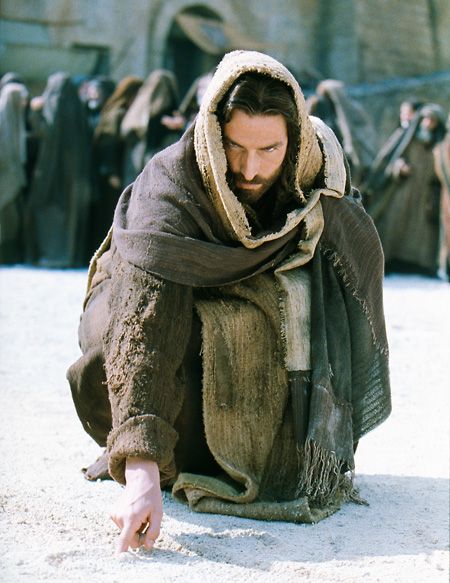











 Considering the Bible