My hope is that this series will offer my readers a chance to consider the names, characteristics and descriptions of our God in the Word.
The remaining Names of God in this series might be considered descriptors, or characteristics of the Lord. We have reviewed the three primary Names of God, along with nineteen compound Names of God in our previous posts. As we venture through these descriptors of our God, I hope we will recognize all the many characteristics of our God that we tend to take for granted.
The Word is truly rich with descriptions of the Living God, and this effort of searching in the Word was quite illuminating. He truly is the ultimate subject of the Word, and His revelation of self-descriptions, or the accolades offered Him by His priests, prophets, kings apostles and faithful truly is a blessing.
May the Name of the Lord be praised, and by thinking on His name, may you have a blessed day.
127
EYE OF THE LORD
Psalm 33:18 Behold, the eye of the LORD is on those who fear him, on those who hope in his steadfast love,
The psalter has been reminiscing of the exodus and of Gods power exhibited in the overthrow of the the Egyptian army. Prior to our description of God as the eye of the Lord, the psalter speaks of warriors and horses.
Psalm 33:16-17 – The king is not saved by his great army; a warrior is not delivered by his great strength. The war horse is a false hope for salvation, and by its great might it cannot rescue.
Might he be thinking of the Egyptian army being vanquished by the Red Sea. Of course the conclusion after considering the Egyptian army is that the strength of men is a vain strength, a false confidence. Though the power nation of the time, their strength was consumed in a matter of seconds.
Exodus 15:4 “Pharaoh’s chariots and his host he cast into the sea, and his chosen officers were sunk in the Red Sea.
God has exhibited His care and power over the small and great nations through His wisdom. This is a wonderful truth, and yet the psalter starts our verse with “Behold”.
Though God is active in the national affairs of mighty nations, that is not all there is to God. God is also resting His eye, His attention on the one who fears Him. This is not an aggregate of thousands or tens of thousands that gather as a nation, but refers to an individual, a lone person, a solitaire and single person that is of the right spirit, that is humble, fearing the Lord.
Behold the Eye of the Lord is on the individual. The solitaire man, woman or child, that fears Him and trusts in His mercy.
As I grow older in the Lord, I realize I have so little to offer Him, such an insignificant servant. One who had great dreams and aspired to much. Missionary work in far flung nations, self sacrifice for the poorest of the poor. So proud. So full of myself.
And yet my life is a “common” life, that of a husband and father who gets up every morning to go to work and comes home at night to help out around the house, watch my grandbabies occasionally and then fall asleep, only to repeat again the next day.
Yet the Eye of the Lord has been my ever present protection and guide. He is the One who works in the insignificant, amongst the common man who fears the Lord. He is the One who exhibits mercy to us, and as I get older, I see His steadfast love in the day to day experiences of His protection, guidance and comfort.
Oh to recall that His eye, the Eye of the Lord is upon those who trust the Christ. May we fear Him and to depend on His mercy for more in our lives!
For He truly is the One who is good.
I would love to hear of your favorite name, characteristic or description of the Living God. Please leave me a comment, and I will include it in the list!
Thanks again for coming to visit. I hope you found something of interest in this post and would appreciate a comment, to begin a discussion. If you know someone this blog may bless (or challenge), send them a link, so they may join us in our discussion.
24 Do you not know that in a race all the runners run, but only one receives the prize? So run that you may obtain it. 25 Every athlete exercises self-control in all things. They do it to receive a perishable wreath, but we an imperishable. 26 So I do not run aimlessly; I do not box as one beating the air. 27 But I discipline my body and keep it under control, lest after preaching to others I myself should be disqualified.
I am somewhat surprised that in our trek through passages that address the conditional security of the believer, we are just now considering 2 Corinthians 9 & 10. It may be that as a lengthy passage I felt overwhelmed in approaching it, or that it hits a few sensitive spots that need to be addressed in my own walk with the Lord. What ever the issue, let us not be fearful of the truth.
Paul begins this passage with a picture of an athlete, a runner whose goal is to run and win a race. The connecting theme between the runner and the believer is the exercise of self control in all things. He is looking to provoke the believers into exercising self control for the sake of obtaining a prize.
Yet this passage has somewhat bothered me, in that it conjures up in my mind a competitive spirit between believers. Is Paul seeking to pit believer against believer in this passage. Only one can win! Run (against your brother) to win.
But I don’t think Paul intends to communicate that believers are running against each other, but that they all need to exercise self control, as those of the world do. The world competes for a leaf that fades, and in the midst of that effort, may employ methods that are less than of the highest morals in order to get an edge.
Not so with Paul’s audience. Paul is comparing their goals with our goals – not of beating our competition – i.e. other believers, but of attaining to a reward, an eternal reward. The act of self control is similar in both competitors fields, but for the believer, the motivation is for an eternal goal, an eternal crown.
As it is with those who seek a leafy crown, some believers fall away, some are taken out of commission (go home seemingly early), and some are disqualified. And in this passage Paul is considering the threat of disqualification for himself!
Disqualified
It is the term that I couldn’t explain away when I was a young believer, so I often skipped over the verse, or connected the passage with rewards – which made some sense since Paul speaks of rewards just a verse earlier. Yet to be disqualified may mean more than simply the loss of rewards.
Disqualified is the translation of the Greek term ἀδόκιμος adókimos, and has the sense of being unapproved, rejected, worthless, a castaway, a reprobate. Harsh words.
I ask my reader to consider that if an athlete is rejected from the games, being considered not worthy of entering future competition (worthless to the judges), any rewards he may think are coming to him will also be lost. His loss is not only the rewards, but also his reputation, his name, his career, his livelihood, his very life focus that he had committed to for years.
Disqualification is a brutal set back, a judgement that one may never recover from. Remember, Paul is speaking of his own disqualification in this passage. Yes the great apostle Paul did no consider himself beyond this possibility.
Later on, he speaks of disqualification regarding those in the Corinthian church, using the very same word. (See Conditional Security – 2 Corinthians 13:5-9) There didn’t seem to be any believer that were immune to this danger! Every believer, from the apostle Paul to the young girl who served the saints a drink of water. All believers were in this potential danger of being disqualified!
However you see this passage, whether it be of service or of salvation, it is a dire warning to us all to heed the word of the Lord in keeping his ways, his commandments, his principles.
Breaking His law of love may bring about disqualification. No believer wants that, and certainly the Lord seeks to avoid this judgement on a believer. May we never give reason for this to be an issue before our Redeemer.
May we all seek Him, and His ways in our lives, for His glory and our benefit!
Thanks again for coming to visit. I hope you found something of interest in this post and would appreciate a comment, to begin a discussion. If you would like to receive daily posts from Considering the Bible, click on the “Follow” link below
As many who have followed me for a bit, I have fallen into the Psalms, and I can’t get up! (As if I would want to.) The Psalms are a majestic collection of poetry, of heart felt human experiences that constantly challenge me in my own frail attempt to follow the true King. As many of the Psalms are written by David, my study on the Psalms has spurred me on to looking at the life of David, is the main contributor to this book, and to follow the victories and tragedies of the shepherd King of Israel.
Many times in the narrative, we will see the Lord Jesus, imperfectly, yet a reflection of His spirit in a man with weaknesses.
1 Samuel 22:20-23
20 But one of the sons of Ahimelech the son of Ahitub, named Abiathar, escaped and fled after David. 21 And Abiathar told David that Saul had killed the priests of the LORD. 22 And David said to Abiathar, “I knew on that day, when Doeg the Edomite was there, that he would surely tell Saul. I have occasioned the death of all the persons of your father’s house. 23 Stay with me; do not be afraid, for he who seeks my life seeks your life. With me you shall be in safekeeping.”
One priest escaped the slaughter of our earlier passage. If you will remember, Saul had all the priests, their family, those who lived in the city of Nob, along with all the livestock put to the sword.
One priest escaped that we know of. Abiathar, a priest who followed after David in his fleeing from Saul, saw David rise to power and was faithful to David throughout most of his reign. That is until Adonijah swept Abiathar away from David, but that is for a later time to consider.
In this passage, Abiathar is seen delivering the news to David the news of the slaughter of the priests, and of those in Nob.
David admits to this priest that he knew of the danger of Doeg, and that his actions of deception to Ahimelech caused his death. And the death of those in the city.
As a thought experiment, for just a moment, what if David had told Ahimelech the truth?
Possibility #1 Siding with Saul
Ahimelech could have decided to be faithful to Saul, and either reject David’s plea for assistance, or try to capture David for the sake of the king. Surely David was not in fear of physical capture from the priest. That seems unlikely.
Might Ahimelech have informed Saul after David left, helping the king in his quest for David? Possibly, but David would be in no more danger than he was as he entered Nob. Sure, Saul may know of the time and place David was at a certain time, but David would surely find alternate safehavens to venture to.
Saul would have no reason to kill the priest. The city of Nob would have remained a peaceful place for the priests of God and their families.
The strife between Saul and David had not yet reached Ahimelech. He was limited in his ability to make an informed decision. Out of David’s decision to deceive, Ahimelech and the entire city of Nob was sacrificed on the altar of a madman’s dreams.
So what if David had provided the priest the truth of the situation?
Possibility #2 – Siding with David
If David had trusted the priest, sat him down and explained the situation, Ahimelech may have sided with David, providing him the sword, the prayers and the food. Ahimelech would have had the knowledge to decide what to do, especially in view of Doeg being witness to this interaction.
Might Ahimelech joined David at this time? Hard to say, but it would have been Ahimelech’s choice and not David’s.
Might Ahimelech have had some early warning of the danger of Saul’s request for his appearance? Surely this would provide Ahimelech some warning. Might Ahimelech have had the freedom to attach himself to David at this point, and found a new king, a sane king, though not formally in power, but under the blessing of God?
As I said, this is simply a thought experiment, but it does allow us to see that deception has consequences, that the hiding of information can have dire results.
Hundreds had been slain. One man was with David. A priest, whom David took responsibility for.
It may seem that in this passage, David almost flippantly admits his sin and moves on. The psalms speak a far different matter. Psalms 52, 64, 109 and 140 all have reference to our passage in 1 Samuel 22, and the death of those in the city of Nob. I have currently posted on Psalms 52 and 64 as I work my way through the psalms. For your convenience, the following are links to previous related posts of David’s prayers and heart after the massacre of Nob.
David carried this result of his deception for the rest of his life. Out of this catastrophe, David was surely trained unto righteousness through this memory of this tragedy.
Hebrews 12:11 For the moment all discipline seems painful rather than pleasant, but later it yields the peaceful fruit of righteousness to those who have been trained by it.
The Lord has mysterious ways, and in the midst of horrible circumstances, that may have been assisted by ourselves, we can look to the forgiveness of the One who loves us, the Lord Jesus, and of His continuing love and guidance to us for His will and our good.
May His name be praised.
Thanks again for coming to visit. I hope you found something of interest in this post and would appreciate a comment, to begin a discussion. If you know someone this blog may bless (or challenge), send them a link, so they may join us in our discussion.
Jesus in the Old Testament is a series of posts that will offer my readers a chance to consider pictures or shadows of Jesus in the Old Testament. As mentioned in the introduction to this series, some may be obvious, some may be not so obvious, and some may simply be a facet of the Lord those reading may not have considered previously.
I hope as we venture through this series, we will see the Lord in many wonderful pictures throughout the Old Testament.
SEEING JESUS IN
ABRAHAM
INTERCEDES FOR OTHERS
Genesis 18:23 Then Abraham drew near and said, “Will you indeed sweep away the righteous with the wicked?
Luke 6:12 In these days he went out to the mountain to pray, and all night he continued in prayer to God. Luke 22:45 And when he rose from prayer, he came to the disciples and found them sleeping for sorrow,
Abraham had a family member in trouble.
At the beginning of Genesis 18, three “men” stood in front of Abraham. Abraham begged them to stay for refreshment, even a meal, and it turns out these men spoke of Abraham’s future child by his wife Sarah. We have in this story the laughter of Sarah’s disbelief, and the timing of their son’s birth foretold. It was about to become real within twelve months!
Although it appears the “men” had come to discuss Abraham’s future children, they were also on their way to a city called Sodom. As Abraham assisted them on their journey, God revealed to Abraham that the “men” were on their way to judge if destruction was to fall on the City of Sodom – where Lot and his family lived.
Abraham stood still, eventually drawing near to the LORD and then began to reason with God. He actually pleaded using the very nature of God against Him. You are not unjust! What if there are 50 righteous men. Will you kill them along with the unrighteous? What about 40? 30? 20? 10?
Abraham knew his God and advocated for those in a city He may not know. Except for Lot, Lot’s wife, their three daughters and their husbands, and hopefully, two righteous slaves. If Lot’s family was considered righteous, we have the ten Abraham may have been fighting for if we have 2 additional righteous slaves. We don’t know, yet he interceded for the city, and risked the anger of the Lord in his efforts.
It turns out only four survived the judgement. Yet Abraham’s interceding was effective, for it moved the heart and will of God to allow for Abraham’s desires to be realized. Abraham interceded, and God agreed. Even though ten were not found, God rescued four. God was righteous in that no righteous soul died in that conflagration. How utterly shocking that God’s righteous nature, that Abraham argued with God about, was realized in the saving of four souls, far less than the ten Abraham prayed for!
Jesus, in His intercession, prayed for His disciples, and of those who believed through their word, and finally that the world would know that God had sent Him. Abraham sought his own will, that is, the safety of some in Sodom by the removal of judgement and destruction. Jesus sought the Father’s will, not His own will, and joined into that will of God through a judgement undeserved, to deliver all those whom He prayed for.
Billions of souls later, He is still interceding for us.
Thanks again for coming to visit. I hope you found something of interest in this post and would appreciate a comment, to begin a discussion. If you know someone this blog may bless (or challenge), send them a link, so they may join us in our discussion.
My hope is that this series will offer my readers a chance to consider the names, characteristics and descriptions of our God in the Word.
The remaining Names of God in this series might be considered descriptors, or characteristics of the Lord. We have reviewed the three primary Names of God, along with nineteen compound Names of God in our previous posts. As we venture through these descriptors of our God, I hope we will recognize all the many characteristics of our God that we tend to take for granted.
The Word is truly rich with descriptions of the Living God, and this effort of searching in the Word was quite illuminating. He truly is the ultimate subject of the Word, and His revelation of self-descriptions, or the accolades offered Him by His priests, prophets, kings apostles and faithful truly is a blessing.
May the Name of the Lord be praised, and by thinking on His name, may you have a blessed day.
126
EXALTED
Psalm 148:13 Let them praise the name of the LORD, for his name alone is exalted; his majesty is above earth and heaven.
I have been a believer for over four decades, and I remember the first time I simply considered God as being exalted.
Exalted, to be inaccessibly high, to be beyond and above, to be out of reach. As I considered His stature, His position only seemed to get greater and farther away, to be so out of reach, and yet He was with me, teaching me and stretching my understanding.
I was out late that night, walking my route with no one around, all the homes quiet, and not a dog barking for miles. Quiet. No traffic in that section of London that night. I just so happened to come to a pedestrian crossing, dang it if I still can picture it in my mind, with an old brick house converted to a corner store on my left, broken sidewalk below my feet, the curbing missing and the pavement cracked. It was, I tend to remember, a starless night with just an old street light giving some sight for me.
Yes, I remember that night forty years ago – the freedom, the loss of worry and fretting, the inner joy that was almost unbearable, and the holy fear of maintaining His presence. He cracked the door for me that night, gave me a glimpse, be it ever so small, that has remained with my memory ever since. All the surroundings became an anchor for my mind to remember such a privilege.
He is high. No matter the height you image He may dwell in, you, and I have not understood it correctly. He is very high, exalted above all and everything.
That night my only response to Him was praise. No prayer, no requests, no sharing of my burdens or concerns, no formulaic prayers. As a matter of fact I had no concerns, or burdens, or needs. I could only praise Him out of the mystery He is, out of the exalted position (weekly as I understood it) He dwells in.
He is Exalted
I would love to hear of your favorite name, characteristic or description of the Living God. Please leave me a comment, and I will include it in the list!
Thanks again for coming to visit. I hope you found something of interest in this post and would appreciate a comment, to begin a discussion. If you know someone this blog may bless (or challenge), send them a link, so they may join us in our discussion.
Early in my writing in this blog, I wrote on the topic of “What Jesus Probably Didn’t Mean”. I really enjoyed finding the intended meaning of the phrase, by simply considering the context of the passage. It was usually very challenging!
It has been quite a while since I had considered that series, and when I was a pondering, I considered that the Word, apart from the gospels, has provided numerous sayings or phrases we hear in our day to day lives. After a while of considering some of these phrases, I thought there may be some benefit in a series on this topic, considering how they were originally intended in the Word, and how we may have twisted, or watered down the intent of the message by our day to day use.
With that said, I would like to start a corollary study to my “What Jesus Probably Didn’t Mean” posts with
“What the Bible Probably Didn’t Mean”
Our first verse is one I heard very often as I grew up. My mother was widowed lady with four boys ranging from a three year old to a seventeen year old, and fought daily to keep us fed and taken care of.
I remember numerous time as I was on the couch, watching the Beverly Hillbillies or Get Smart, she would come home from work, only to find more work facing her before she fell asleep. Granted, some of that work could have been lightened by one of my brothers, but that isn’t the focus of the story!
Nevertheless, it was common to hear my mother speak of some wicked people never finding rest. Eventually I came to understand she meant herself, for as she found something to clean up, or dishes to wash, she would mutter “No rest of the wicked”.
Is that the intended message of Isaiah 60:1, that because of wickedness, work will replace a good nights sleep?
Isaiah 57:21 There is no peace,” says my God, “for the wicked.”
My momma had the saying slightly twisted, for the Word speaks of the lack of peace for the wicked. There is a difference, for though peace and rest often are associated together, there is a condition of peace for the soul, even while exhausted.
Let’s consider the conditions Isaiah was in when this passage was provided to us. Israel was in the midst of captivity due to their idolatrous lives, and Isaiah is writing in the 57th chapter of Israel’s spiritual adultery, of how God is dealing with His sinning people, and describes of how His people can find peace and restoration.
A key verse to consider in Isaiah 57:15-21 is the description of those who are with God.
Isaiah 57:15 For thus says the One who is high and lifted up, who inhabits eternity, whose name is Holy: “I dwell in the high and holy place, and also with him who is of a contrite and lowly spirit, to revive the spirit of the lowly, and to revive the heart of the contrite.
Of course, those who seek God and exhibit a contrite spirit experience the peace of God in their lives, and though they go through, at times, horrendous ordeals, the witness of the church is that peace remains with those who are humble and lowly before the Lord and others.
Those who are not lowly, who exercise a proud heart and a haughty spirit are in constant turmoil within their mind and heart. Peace eludes them for they have walked away from the source of peace pursued a different path, a path of seeking unjust gain.
Those who choose this path walk away from peace, and the many benefits of trust in God that accompany a soul that bends the knee to God.
Isaiah’s description of the wicked constantly spewing up mire and dirt, as the tossing sea speaks of the unsettled heart and the unbridled tongue throwing out vile actions and words, are spoken just prior to our verse, where God states
There is no peace for the wicked
The phrase is very true today as it was in ancient days, for those who pursue worldly gain at any cost miss out on eternal gain, the peace and tranquility of knowing God. The modern message of “no rest for the wicked” is a derivative of our original saying and describes a soul that is constantly chasing of goods and possessions, instead of being caught by God, and resting in His goodness.
When we hear someone speak this common phrase, it might be best to ask if we can give them a hand, provide support, speak of peace through our actions, because we know the One who provides the peace!
Come to think of it, I should have gotten off the couch!
Thanks again for coming to visit. I hope you found something of interest in this post. If you know someone who may find our discussions interesting or challenging, please invite them to the blog.
As always, I look forward to comments, likes and new subscribers.
My wife and I are reading through the Psalms in our evening reading and occasionally a nugget of the Psalms jumps out of the page. Don’t you love it when, after years of reading the “Old Book” passages become alive, reinforcing old teachings or simply warming your heart.
This is the book of Psalms, and it is rich.
I pray I can communicate a portion of the blessing we receive from this wonderful book.
Psalm 66:5 Come and see what God has done: he is awesome in his deeds toward the children of man. Psalm 66:6 He turned the sea into dry land; they passed through the river on foot. There did we rejoice in him, Psalm 66:7 who rules by his might forever, whose eyes keep watch on the nations– let not the rebellious exalt themselves. Selah
How is it that the psalmist invites his current audience to come and see the awesome deeds of God and then refer to actions the Lord performed hundreds of years before they were born? Psalm 66:6 goes so far as to say “There did we rejoice in him”.
Is the psalmist merely speaking in the editorial we, as referring to the entire nation of Israel? If so, this still does not address the time difference from the psalmists audience and the work being referred to.
Is the psalmist describing the ability of the group he is addressing with a past deed of God? He refers to “them” going through the river on foot, and us, his current audience rejoicing.
Why the difference in pronouns?
In my opinion (only my opinion) the psalmist is wanting to connect the existing audience with those who experienced the deed of God, and remind all that though an act of God may be performed at a particular point in time, it’s benefits extend throughout time immemorial. It is for those who follow behind to enter into this benefit, though they may not have seen, heard, felt, touched, sensed or got caught up in the experience.
The psalmist speaks of the deliverance of the children of Israel through both the Red Sean and the Jordan River, immediately changing the topic to how God rules over the nations. God saves and God guides, God delivers and God directs.
Again, the psalmist caps off his short message with a reference to the rebellious, that they do not exalt themselves. Though some may consider this a command, and it may be, and should be obeyed, I sense the psalmist is giving counsel for the sake of helping the rebellious. Not so much as threatening, but for the rebellious to consider the great deed of God and to compare themselves in reality, to live in truth.
Consider the awesome deeds of God, and in doing so, the self exaltation we crave will evaporate before His throne.
May we experience a humility that keeps us from the self appointed exaltation we so often seek. Please God – help your people to know your awesome deeds, to enter into the benefit of your work on our behalf, though we fought you all the way!
My hope is that this series will offer my readers a chance to consider the names, characteristics and descriptions of our God in the Word.
The remaining Names of God in this series might be considered descriptors, or characteristics of the Lord. We have reviewed the three primary Names of God, along with nineteen compound Names of God in our previous posts. As we venture through these descriptors of our God, I hope we will recognize all the many characteristics of our God that we tend to take for granted.
The Word is truly rich with descriptions of the Living God, and this effort of searching in the Word was quite illuminating. He truly is the ultimate subject of the Word, and His revelation of self-descriptions, or the accolades offered Him by His priests, prophets, kings apostles and faithful truly is a blessing.
May the Name of the Lord be praised, and by thinking on His name, may you have a blessed day.
125
EXACT IMPRINT
Hebrews 1:3 He is the radiance of the glory of God and the exact imprint of his nature, and he upholds the universe by the word of his power. After making purification for sins, he sat down at the right hand of the Majesty on high,
This is somewhat of a daunting name for myself as I have always associated this name with an imprint, or a stamp. Not sure where I got that idea, and I am not trying to assign error with this understanding. It is just that it doesn’t seem to connect with me. Maybe I am being too literal – Remember I tend to be too literal at times – but to associate Jesus as the imprint of God’s nature doesn’t tell me anything very specific. And I tend to associate it with a physical form that creates an imprint or stamp, and we all know that is not the message Hebrews is trying to communicate.
So I am left with a bit of a dilemma. How shall I try to write on something I don’t get? Of course – some may say that hasn’t stopped me before with most of my previous posts. That may be true!
Nevertheless, when all else fails, I started to study the phrase and looked initially at Strong’s dictionary. What a wonderful tool for the layman to take advantage of.
What I found was that the phrase “exact imprint” in the Greek New Testament is χαρακτήρ, transliterated as “charaktḗr” Now it doesn’t take a rocket scientist to see the similarity of this transliterated word to our English word “character”.
This was an amazing find for me, for if I read this passage with this substitution, we get the following…
He is the radiance of the glory of God
and the character of his nature.
He is the character of God’s nature. Wow – That helps me so much.
In my mind there are numerous passages that speak of the absolute Deity of Jesus Christ, for which I am so thankful. This one passage, though strong on this topic based on my previous understanding, has now “landed” in my understanding. I get it – at least I get it better than before, and will be one of those passages that I will return to in discussions with saint or sinner.
He is the Character – the Exact Imprint – of God’s nature! Think of that for a moment – the suffering Savior has revealed not only the heart of God, but His exact nature.
May we praise Him for who He is!
I would love to hear of your favorite name, characteristic or description of the Living God. Please leave me a comment, and I will include it in the list!
Thanks again for coming to visit. I hope you found something of interest in this post and would appreciate a comment, to begin a discussion. If you know someone this blog may bless (or challenge), send them a link, so they may join us in our discussion.
21 Then Peter came up and said to him, “Lord, how often will my brother sin against me, and I forgive him? As many as seven times?” 22 Jesus said to him, “I do not say to you seven times, but seventy-seven times. 23 “Therefore the kingdom of heaven may be compared to a king who wished to settle accounts with his servants. 24 When he began to settle, one was brought to him who owed him ten thousand talents. 25 And since he could not pay, his master ordered him to be sold, with his wife and children and all that he had, and payment to be made. 26 So the servant fell on his knees, imploring him, ‘Have patience with me, and I will pay you everything.’ 27 And out of pity for him, the master of that servant released him and forgave him the debt. 28 But when that same servant went out, he found one of his fellow servants who owed him a hundred denarii, and seizing him, he began to choke him, saying, ‘Pay what you owe.’ 29 So his fellow servant fell down and pleaded with him, ‘Have patience with me, and I will pay you.’ 30 He refused and went and put him in prison until he should pay the debt. 31 When his fellow servants saw what had taken place, they were greatly distressed, and they went and reported to their master all that had taken place. 32 Then his master summoned him and said to him, ‘You wicked servant! I forgave you all that debt because you pleaded with me. 33 And should not you have had mercy on your fellow servant, as I had mercy on you?’ 34 And in anger his master delivered him to the jailers, until he should pay all his debt. 35 So also my heavenly Father will do to every one of you, if you do not forgive your brother from your heart.”
It’s all a matter of degree. How often do I have to forgive? Do I really need to do it again? I forgave him three times already and he isn’t learning his lesson. Why keep forgiving him?
Let me submit to my gentle reader that that is the wrong way to look at the Christian life. Or at least the wrong mental stance when it comes to hearing His word for us.
We are not to consider our Christian lives as a grudging obedience of a number of commands. A life of laws pushing us around. The principles God provides us sometimes feel risky in obeying them, can take us out of our comfort zone, can actually be unfair! But we need to realize that His ways are given to us for our own good.
Let’s take a look at this parable and consider it’s implications. I have looked at this parable in a previous post that may be of interest to my reader. Find it at Parable Surprises – Unmerciful Servant
We have three subjects in this parable, with the unmerciful servant being the man to watch. He has a freaking huge debt with the King, and the King, rightly so, requires payment. A payment he can’t provide. He begs for time to pay it all back – which sounds good, but this debt was beyond that cure! Time wasn’t going to solve this problem!
So the King had two options. Sell the servant, his wife, his children and all that he had!
Or forgive him of all debt. Release the servant, and his entire family, of his debt obligation. Free him of his responsibility to the King, and allow him to continue living with his family, and to continue with his possessions.
Grasp this action, this ridiculously gracious and undeserved action this servant received. This was not per the legal code of the day, for the servant was responsible by law for the repayment. This servant was granted his life back, and the lives of his family!
But this act of grace, of forgiveness, of unbounded mercy did not translate into this servants life. There was something wrong with this servant! Something terribly wrong! For as soon as he could, he started calling in debts from those who were his equal, his fellow servants. And for paltry amounts, the sort of amount that is petty in comparison.
The parable also implies the servant was quick to find this debtor, and when confronted him, actually began to choke him, demanding payment. Now of course, he had every right to demand payment by law, but give me a break – what is wrong with this fellow?
The surprise in all of this parable is the King’s reaction. Yes he had freely provided forgiveness to the servant, but upon hearing of the flagrant disregard to responding this this act of grace, called the servant back to his throne.
‘You wicked servant! I forgave you all that debt because you pleaded with me. And should not you have had mercy on your fellow servant, as I had mercy on you?’
Remember this is the king speaking. His grace, mercy and forgiveness is being rescinded based on the servants actions!
And in anger his master delivered him to the jailers, until he should pay all his debt.
This passage shook my core when I first quit ignoring it’s principle message. We, as believers, who know of the unfathomable forgiveness granted to us in the cross of Christ, should want to forgive everyone, should have had a life experience that draws us to forgiving others.
For believers to hold resentment, refuse to forgive, to nurse a grudge or maintain hateful attitudes towards our own brothers and sisters should alarm our souls to the danger we are living in.
At the very least, holding back forgiveness may simply reveal a lack of understanding the grace provided us. An unforgiving heart and it’s resulting actions, based on this passage should warn us that our forgiveness may be rescinded some day.
For those who have never experienced the forgiveness of God, you may not think forgiveness is a blessing to the forgiver. Please understand to forgive another is a blessing that we enter into, finding freedom to live the life God intended for us.
God is good, and He rejoices to forgive.
Luke 15:7 … I tell you, there will be more joy in heaven over one sinner who repents ….
If we are believers, and have the life of God in our lives, we will experience the same joy.
Thanks again for coming to visit. I hope you found something of interest in this post and would appreciate a comment, to begin a discussion. If you would like to receive daily posts from Considering the Bible, click on the “Follow” link below
As many who have followed me for a bit, I have fallen into the Psalms, and I can’t get up! (As if I would want to.) The Psalms are a majestic collection of poetry, of heart felt human experiences that constantly challenge me in my own frail attempt to follow the true King. As many of the Psalms are written by David, my study on the Psalms has spurred me on to looking at the life of David, is the main contributor to this book, and to follow the victories and tragedies of the shepherd King of Israel.
Many times in the narrative, we will see the Lord Jesus, imperfectly, yet a reflection of His spirit in a man with weaknesses.
1 Samuel 22:11-19
11 Then the king sent to summon Ahimelech the priest, the son of Ahitub, and all his father’s house, the priests who were at Nob, and all of them came to the king. 12 And Saul said, “Hear now, son of Ahitub.” And he answered, “Here I am, my lord.” 13 And Saul said to him, “Why have you conspired against me, you and the son of Jesse, in that you have given him bread and a sword and have inquired of God for him, so that he has risen against me, to lie in wait, as at this day?” 14 Then Ahimelech answered the king, “And who among all your servants is so faithful as David, who is the king’s son-in-law, and captain over your bodyguard, and honored in your house? 15 Is today the first time that I have inquired of God for him? No! Let not the king impute anything to his servant or to all the house of my father, for your servant has known nothing of all this, much or little.” 16 And the king said, “You shall surely die, Ahimelech, you and all your father’s house.” 17 And the king said to the guard who stood about him, “Turn and kill the priests of the LORD, because their hand also is with David, and they knew that he fled and did not disclose it to me.” But the servants of the king would not put out their hand to strike the priests of the LORD. 18 Then the king said to Doeg, “You turn and strike the priests.” And Doeg the Edomite turned and struck down the priests, and he killed on that day eighty-five persons who wore the linen ephod. 19 And Nob, the city of the priests, he put to the sword; both man and woman, child and infant, ox, donkey and sheep, he put to the sword.
Nob was a small, peaceful city of priests, approx. 2 miles northeast of Jerusalem and 3 miles southeast of the capital of Gibeah, where Saul reigned under a tamarisk tree.
In our earlier passage, Doeg had revealed to Saul where David had been, and Saul was like a dog on the hunt. Get Ahimelech! And not just Ahimelech, but all of his house, even all of the priests of the city. Bring them to me!
As Ahimelech, and the priests of Nob arrived in front of Saul, in response to the kings demand, Saul, dwelling in his paranoia, makes ridiculous claims of the priest’s motivations. He exposed his baseless suspicions, claiming the priest of God had intended to subvert the king. Saul claimed that Ahimelech’s assistance was the impetus for David to rise up against the king.
Get a hold of what Saul said to Ahimelech once more.
“Why have you conspired against me, you and the son of Jesse, in that you have given him bread and a sword and have inquired of God for him,so that he has risen against me, to lie in wait, as at this day?”
Ahimelech, in Saul’s twisted thinking was the reason David was in rebellion. Have I mentioned that Saul is full blown nuts yet?
Ahimelech simply answered the king with true words, asking Saul to remember the type of man David was. David was a faithful servant, Saul’s son in law and captain over Saul’s bodyguard. Each of these known facts justified Ahimelech’s assistance to David, in support of King Saul. Ahimelech, based on David’s responses to him, understood that David was on mission for the king.
Saul’s claim that David was the arch enemy of king Saul must have come as a complete shock to Ahimelech. Can you imagine being a man after God’s will, quietly serving the community, seeking to honor the king, and then being confronted with treason?
But there was more.
Ahimelech must die. His crime? Living in Saul’s imagination as an enemy of the state, by giving aid to Saul’s son in law. Incredible!
Even as Saul gave the order to strike down Ahimelech’s household, the servants of Saul refused. This simple act of resistance may have opened the door for later retaliation, making the servants appear to take David’s side. At least in Saul’s mind it may have appeared so. That is what happens to a mind who is consumed with paranoia. Everyone is out to get you. In Saul’s mind, even his servants may have appeared to conspire against him, though in reality, they were only respecting the service of the priests.
Enter Doeg again. In our last post I suggested Doeg may have had a sense of loyalty to his men in providing David’s actions to Saul, that he may have had some positive motive. That may have been a stretch, for Doeg turns out to be a willing accomplice to this crime, a mass murderer, killing 85 priests.
85 priests! This is horrendous. Why 85 priests? Saul commanded Doeg to kill the priests. Not only Ahimelech, as if he had done anything deserving of death, but his family, his peers, all those who wore the linen ephod.
Did I say 85 died that day. Read on, for the blood letting continued on to the city of Nob. This was a blood thirst that was sustained through travelling 3 miles to the south east of Gibeah. To continue the killing only emphasizes the hysterical fever Doeg and his men were experiencing!
I can’t find any record of the number of people in the city of Nob during this time, it must have been in the hundreds. What shock for those left behind, to see wild and crazed men enter the village, bloody and with swords being used on the population. Hundreds were faced with the sword falling on them. Men and women brutally murdered, with the assailants still not satisfied. Children and infants slain, as if they posed a threat, or that they had personally assisted David. Livestock joined in as victims of Doeg and his men. Nob must have been a bloody ghost town when Doeg finished.
In all of this we see what paranoia can lead to, what an insecure and unstable man can cause by suspicious thoughts and wild accusations. Truth had no part in this encounter – Saul was seeing red and would not listen to reason.
It is amazing the unabashed brutality of Saul in this instance. A king, turning on his own people, living in a peaceful city, in service to God. And yet, was it not this same king, earlier in his reign, who was commanded by God to show no mercy to the enemy of his nation? Was he not to strike Amalek and devote to destruction all that they have?
1 Samuel 15:3 Now go and strike Amalek and devote to destruction all that they have. Do not spare them, but kill both man and woman, child and infant, ox and sheep, camel and donkey.’”
Saul showed mercy in this instance with Amalek, in direct disobedience to the Word of God,
1 Samuel 15:9 But Saul and the people spared Agag and the best of the sheep and of the oxen and of the fattened calves and the lambs, and all that was good, and would not utterly destroy them. All that was despised and worthless they devoted to destruction.
How amazing the difference in Saul’s actions here. In our current passage, we see Saul murdering his very own people, men and women who served God. Killing men, women, children and infants, ox and sheep, camel and donkey.
This disobedience in relation to Amalek brought about the loss of Saul’s kingdom and raised up a man after God’s own heart, a man that Saul would commit to hating. David lived “rent free” in Saul’s mind, letting his twisted imagination eat away at any common sense or compassion.
In all of this mass murder, David was on the run, likely with his 400 men. This early decision to visit Nob must have haunted David, for he eventually accepted that his visit to Nob brought Ahimelech, and his family and friends into the target sights of a fanatical king.
A very heavy burden for a man who loved God. A very real message to David. This king Saul was serious as a heart attack. David was being chased by a man fully committed to taking him out. And David trusted God, entering into the very mouth of the lion, looking to God for direction.
David is an incredible example of courage to obey the will of God, and is a wonderful picture of the Lord Jesus, in that even as Jesus knew of His end game, He set his face as a flint to Jerusalem.
Luke 9:51 When the days drew near for him to be taken up, he set his face to go to Jerusalem.
Jesus would not be protected as David was, from the insane leadership that was hunting Him down, but He followed God’s guidance into danger, succumbing to torture and death out of love for His Father.
And love for us.
Thanks again for coming to visit. I hope you found something of interest in this post and would appreciate a comment, to begin a discussion. If you know someone this blog may bless (or challenge), send them a link, so they may join us in our discussion.
Jesus in the Old Testament is a series of posts that will offer my readers a chance to consider pictures or shadows of Jesus in the Old Testament. As mentioned in the introduction to this series, some may be obvious, some may be not so obvious, and some may simply be a facet of the Lord those reading may not have considered previously.
I hope as we venture through this series, we will see the Lord in many wonderful pictures throughout the Old Testament.
SEEING JESUS IN
ABRAHAM
COVENANT KEEPER
Genesis 17:9 And God said to Abraham, “As for you, you shall keep my covenant, you and your offspring after you throughout their generations.
Mark 14:24 And he said to them, “This is my blood of the covenant, which is poured out for many.
Abraham, when confronted with God in the 17th chapter of Genesis, is introduced into a covenant with God. The very first verse of the chapter has God describing Himself as “God Almighty”, and that Abraham was to walk before Him blameless.
Note that Abraham was to walk before God blamelessly in order that God may make a covenant with Abraham. This covenant was a bilateral covenant, one in which both parties to the covenant had responsibilities.
We have addressed the blessing God was offering to Abraham in previous posts, but in this post we want to emphasize Abraham’s responsibility before God.
This covenant, this bilateral covenant was intended to include an everlasting possession, a promised land, and God was intended to be their God (v9).
And the sign of the covenant? Circumcision. It was to be a sign. A sign of faithfulness to the covenant. The child was to be circumcised, an act of obedience of the parents, an indication of the parent’s hope for the child and the intention of the child to walk blameless before God. The sign of circumcision that would forever identify a man as being God’s. A sign that no one saw, for it was a private, hidden sign. A sign between God and the follower.
This sign of circumcision, in this instance indicates intention; intention of the parents to lead and for the child to follow, to be blameless before God.
Centuries later, a child was born, and though He was circumcised, and the parents sought to lead Him into a life of blamelessness before God, there was to be a revolutionary, unexpected, “outrageous” fulfillment of another covenant, forever linked to this Child.
Not only was Jesus blameless before men and God, but fully righteous (there is a difference!), and without sin. His acts, thoughts and desires only reflected a complete and utter obedience to the Father above.
Yes, He was circumcised but that was a shadow of an ancient covenant that His parents rightly observed. His covenant was to be greater, as the shedding of blood is greater than the shedding of a portion of skin as a baby. A self sacrifice that would initiate the greatest covenant offered to fallen man, a death that would produce life.
He initiated the covenant, He is Lord of the covenant, and has kept His covenant with His people.
His covenant is offered to all, and to enter this covenant, it is only to look to Him, to see Who He really is, and to follow. To believe He is the One, and to leave your sin behind.
Will you enter the covenant? He has poured out His blood for the many, and the many could include you.
Thanks again for coming to visit. I hope you found something of interest in this post and would appreciate a comment, to begin a discussion. If you know someone this blog may bless (or challenge), send them a link, so they may join us in our discussion.
My hope is that this series will offer my readers a chance to consider the names, characteristics and descriptions of our God in the Word.
The remaining Names of God in this series might be considered descriptors, or characteristics of the Lord. We have reviewed the three primary Names of God, along with nineteen compound Names of God in our previous posts. As we venture through these descriptors of our God, I hope we will recognize all the many characteristics of our God that we tend to take for granted.
The Word is truly rich with descriptions of the Living God, and this effort of searching in the Word was quite illuminating. He truly is the ultimate subject of the Word, and His revelation of self-descriptions, or the accolades offered Him by His priests, prophets, kings apostles and faithful truly is a blessing.
May the Name of the Lord be praised, and by thinking on His name, may you have a blessed day.
124
EVERLASTING KING
Jeremiah 10:10 But the LORD is the true God; he is the living God and the everlasting King. At his wrath the earth quakes, and the nations cannot endure his indignation.
This name of God is our last in our mini series of “everlasting” names. It seems fitting that the Word has 7 names of God that speak in one way or another of His everlasting being.
Our last name of God is the Everlasting King, and since the listing has been alphabetical, I would not want to imply this is the least of all the names!
As Jeremiah spoke this name, He was in the midst of geopolitical upheaval that few have lived through. In the midst of this upheaval, Jeremiah speaks to a core reason for the upheaval. Idolatry.
By bending the knee to any other that the true God, brings conflict and enmity between men, and is the cause of pain throughout our history. Jeremiah mocks the very thought of idolatry, having known the True God and seeing this behavior form the view point of God.
The passage has Jeremiah speak of the vanity of idols, the uselessness of referring to an idol. Although idols can be beautiful, and intimidating, and pervasive, does not establish idols as true.
Jeremiah speaks of idols as being decorated with costly coverings, and the formation of the idol requiring great skill, yet they are simply a chunk of wood, an inanimate object that cannot speak, and that has no sentient existence.
Yet in our day, this truth is still valid, for how many idols are available for us to grovel at? Every thing created by man has the “idolatry factor” included in its existence.
I suppose the complexity of idols has grown exponentially, from a wooden block to technical marvels. Massive computers that “forecast” the future weather, or mechanical robots that are beginning to “think”. But complexity, or the increased skill set of the one creating the machine does not make the idol of greater value
The visual beauty of idols may have also greatly increased, grabbing our eyes and attention. Tremendous visual displays are everywhere, overloading our senses, providing messages for us to consider, seeking to convert the believer from God. We are in the midst of a land full of messages glaring at us through computers, billboards and most effectively the cell phone. This inundation of false beliefs delivered through visual beauty does not make the idol of greater value.
The fact that all the nations bow down to an idol, that everyone else is giving attention to an idol, whatever idol they choose, does not make the idol of greater value.
Idols, per Jeremiahs message, are pure vanity, of no value.
I would love to hear of your favorite name, characteristic or description of the Living God. Please leave me a comment, and I will include it in the list!
Thanks again for coming to visit. I hope you found something of interest in this post and would appreciate a comment, to begin a discussion. If you know someone this blog may bless (or challenge), send them a link, so they may join us in our discussion.
A few days back I discovered some additional shorts from Dr Leighton, teacher at Soteriology 101.
As I may have spoken of earlier in my posts, I spent many years consumed with the Calvinistic teaching, only to break free because of men like Dr. Flowers, who offer alternative views that make more sense and glorify God, making Him purer, and more loving.
I do hope you will consider the teaching with an open mind.
My wife and I are reading through the Psalms in our evening reading and occasionally a nugget of the Psalms jumps out of the page. Don’t you love it when, after years of reading the “Old Book” passages become alive, reinforcing old teachings or simply warming your heart.
This is the book of Psalms, and it is rich.
I pray I can communicate a portion of the blessing we receive from this wonderful book.
Psalm 66:3 Say to God, “How awesome are your deeds! So great is your power that your enemies come cringing to you. Psalm 66:4 All the earth worships you and sings praises to you; they sing praises to your name.” Selah
In our previous post we dwelled on the awesome deeds of God, and of our privilege to speak of the deeds of God to God out loud. I got a bit caught up in the theme of praise to God of His awesome deeds, that I missed a small point in the passage that I feel needs to be addressed.
Verse 3 speaks of the enemies coming to God cringing to Him, even as he then says in the very next breathe that all the earth worships God.
How awesome are your deeds! So great is your power that your enemies come cringing to you.
Is this a reluctant approach to God by the enemies? It certainly feels that way when the translators speak of cringing. And rightly so, for those who fight against God must surely find at one point in their existence the utter futility of fighting against the All-powerful God. Upon seeing their mistake, their sin, cringing is a natural response. But is it a continual cringing, reluctant and grudging response to God, to whom all praise belongs?
The Hebrew word used in this verse can speak of cringing or of submitting. Many commentators make a point of stating this term refers to a continual forced subjection, a submission that is against the will of the enemy. That may be true, yet this entire psalm speaks of all the earth giving praise, of joy being experienced throughout the earth.
Have you ever been forced to praise God? Would you consider those times as times you lived in the truth, in real joy and provided heartfelt praise? There may be an effort by some to make the enemies of God continual enemies, that they cringingly crawl to God and never repent, never find joy, never love Him.
I don’t know about you, but there was a time I cringed, I was an enemy, a hater, a lowlife, a fighter against God. Out of His mercy, He rescued me, and because of that I want others to be rescued.
When I come across a passage as above, speaking of those who “have to” praise God, I recall Philippians 2:10-11
Philippians 2:10-11
so that at the name of Jesus every knee should bow, in heaven and on earth and under the earth, and every tongue confess that Jesus Christ is Lord, to the glory of God the Father.
Could the message Paul gives here allow for cringing submission, a submission that is exterior only, and not an internal willing submission? Maybe. Maybe not.
As I have mentioned in an earlier posting, the term in Philippians for confessing doesn’t seem to have the cringing, reluctant and grudging component as suggested in an earlier post. If this is of any interest to my reader I would suggest reading Book Look – Jesus Undefeated – Passage 6.
There may yet be a time when His victory over death is complete, not only in His authority but also in the experience of all the world.
My hope is that this series will offer my readers a chance to consider the names, characteristics and descriptions of our God in the Word.
The remaining Names of God in this series might be considered descriptors, or characteristics of the Lord. We have reviewed the three primary Names of God, along with nineteen compound Names of God in our previous posts. As we venture through these descriptors of our God, I hope we will recognize all the many characteristics of our God that we tend to take for granted.
The Word is truly rich with descriptions of the Living God, and this effort of searching in the Word was quite illuminating. He truly is the ultimate subject of the Word, and His revelation of self-descriptions, or the accolades offered Him by His priests, prophets, kings apostles and faithful truly is a blessing.
May the Name of the Lord be praised, and by thinking on His name, may you have a blessed day.
123
EVERLASTING FATHER
Isaiah 9:6 For to us a child is born, to us a son is given; and the government shall be upon his shoulder, and his name shall be called Wonderful Counselor, Mighty God, Everlasting Father, Prince of Peace.
My brother-in-law once asked me if Jesus is our Father? What? Why would you even think that?
It turns out that he was asking a very good question, a question challenged me when he referred to the above verse to justify his request.
Although there are ways to address this seeming problem while referring to the Trinity as One God, that the characteristic of Fatherhood is consistent through each of the persons of the Trinity. Although it is common to refer to the Father as the One who sent Jesus the Son on mission to the earth, each of the persons in the Trinity may be thought of as Fatherly.
One additional viewpoint is that the term “Everlasting Father” speaks of Jesus as the author, or source of eternity. The phrase may be expressed as father of eternity if I understand it correctly.
No matter how you understand this name as it relates to the Savior, we have a passage that speaks of the Fatherhood of our God, and as a believer who lost his father early in his life, I have not typically thought of our God in this way. This speaks of my spiritual poverty, for to consider the Creator/Redeemer as my Father provides a life changing perspective on God.
So many impacts of relating to God as my Father come to mind, but for this post, the approachableness of God bears on my thoughts. To think that the One who has been offended by my sin, rejected by my attitudes and actions, and occasionally ignored in my thinking has His arms open to me, His door always open, and His heart ready to hear of my repentance and love to Him is a truly amazing truth.
And as a father, I have come to know the joy of my own children coming to me for advice, of their reaching out for help or guidance, of their sharing a joy or trial with me.
Is it correct to think we bring joy to the Everlasting Father when we come to Him with our burdens, our concerns, our request for guidance? As a child years back, I would think this would only be a burden for my father, but now I realize to be a father is to look for these times when your children come to you.
He is the Everlasting Father, and He waits for us to reach out, to ask for forgiveness, to seek guidance or to simply be with Him.
I would love to hear of your favorite name, characteristic or description of the Living God. Please leave me a comment, and I will include it in the list!
Thanks again for coming to visit. I hope you found something of interest in this post and would appreciate a comment, to begin a discussion. If you know someone this blog may bless (or challenge), send them a link, so they may join us in our discussion.
1 “Then the kingdom of heaven will be like ten virgins who took their lamps and went to meet the bridegroom. 2 Five of them were foolish, and five were wise. 3 For when the foolish took their lamps, they took no oil with them, 4 but the wise took flasks of oil with their lamps. 5 As the bridegroom was delayed, they all became drowsy and slept. 6 But at midnight there was a cry, ‘Here is the bridegroom! Come out to meet him.’ 7 Then all those virgins rose and trimmed their lamps. 8 And the foolish said to the wise, ‘Give us some of your oil, for our lamps are going out.’ 9 But the wise answered, saying, ‘Since there will not be enough for us and for you, go rather to the dealers and buy for yourselves.’ 10 And while they were going to buy, the bridegroom came, and those who were ready went in with him to the marriage feast, and the door was shut. 11 Afterward the other virgins came also, saying, ‘Lord, lord, open to us.’ 12 But he answered, ‘Truly, I say to you, I do not know you.’ 13 Watch therefore, for you know neither the day nor the hour.
First off, let’s assume the kingdom of heaven is the kingdom of God. There is a teaching in the church that would differentiate the two. Since Matthew was teaching to a Jewish audience in his gospel, he respected their sensibilities and referred to the kingdom as “of heaven” and not as “of God”, where a strict Jew may find unnecessary offence. (There would be plenty of necessary offence as the Jew read his gospel!)
Find the following comparison of passages, speaking of the same story, yet using different terms associated with kingdom, that may help illuminate those who struggle with this.
Kingdom of Heaven – Kingdom of God Matthew 11:11-12 – Luke 7:28 Matthew 13:11 – Mark 4:11 Matthew 13:11 – Luke 8:10 Matthew 13:24 – Mark 4:26 Matthew 13:31 – Mark 4:30 Matthew 13:31 – Luke 13:18 Matthew 13:33 – Luke 13:20 Matthew 18:3 – Mark 10:14 Matthew 18:3 – Luke 18:16 Matthew 22:2 – Luke 13:29
Oh, but you say, this message was for those who would experience the physical, re-establishment of Israel as the Messiah’s nation to rule over. Kingdom speech, whether using “of God” or “of the kingdom” referred to the nation of Israel realizing the promises of God in the Old Testament, of becoming the nation that would have as it’s King He who would subdue the world, every nation bring subservient to the King and His nation.
This was a manner of thought I lived in for a period of my Christian life, and thought the body of Christ was a distinctly different group under God, as if God had two families. I shied away from passages when an apostle referred to the Body of Christ as the Kingdom, or simply overlooked the implication. Yet the apostles did not mind referring to the church as the Kingdom.
Starting in Acts, and searching for kingdom references until Revelation, we have 31 passages. Granted there are a couple in Revelation that refers to the kingdom of this world, but suffice to say, the early church had no problem with the church being referred to as a kingdom.
With all my previous arguments for not considering this passage in Matthew for my own standing before God, but as only for an ancient people, let us try to understand the principle message and the application for us today.
In the culture of the day, a wedding took the form of three stages. The first being the engagement, in which two fathers would make an agreement concerning their children. The next stage was a betrothal, where the children, now of marrying age, would make a formal mutual promise to each other. The last stage, the actual marriage ceremony, would occur approx. twelve months after the betrothal. Not necessarily exactly twelve months, as the custom allowed for the bridegroom to come unexpectantly. Jesus picks up this cultural norm to apply to His coming to get His bride, the church.
And as the bridegroom would arrive, as he travelled to the brides home, the virgins of the wedding party would meet him and return to the place of marriage with the bridegroom. It seems in this parable, the ten virgins had been given a possible time of the bridegrooms appearance, and headed to the meeting place to wait. And as we know from the parable, five of these virgins knew the bridegroom was coming that night. Or were they were just lazy? Certainly they were foolish!
At the risk of boring my reader with my past beliefs, the very teaching I followed, that allowed me to disregard a passage as this for my own life, produced this same condition in my heart. I would never say it out load, but I knew Jesus was coming back soon, and I planned accordingly. Short term plans, just getting by, ignoring long term problems that might arise from my short term thinking. Sound familiar?
Jesus is coming back, and He may be coming back before you are done reading this post. But He may be coming back in 10,000 years. My planning, as it was for these virgins, must be for the worst case scenario, where the bridegroom may “be delayed”.
Another application of this passage is that we are not to rely on others for that with which we are responsible. I can’t rely on my wife’s faith to be credited to my life. I can’t assume my child’s faith will somehow bring me into good standing with God. I need my own oil, and I need my own oil now. Assuming I have enough oil to make it may be fatal. And for the foolish virgins, it turned out to be fatal, for the very purpose of their life at the time was to be at the marriage feast.
They were refused! They were refused because they were not ready for an extended period of waiting.
Have you been waiting for years for the Lord’s return? Possibly decades? Personally, I have been granted the privilege of knowing the Lord for 43 years now, and have went through many times of discouragement, disappointment and disillusionment. As I look back, He has always been there for me, showing grace, forgiveness and guidance. In those years, He has provided encouragement as I look to Him, as I seek Him out, as I consider (and sometimes reject) popular teaching if the Bible teaches differently.
He will be coming back on His schedule, whether it be today or in the year 2924. No one knows, but we have the blessing of knowing Him today, preparing for His return as we look to Him, as we ask for His guidance, blessing and strength.
God is good, and we need to be prepared daily for a long term faithful walk with Him. Short term thinking may cause you discouragement, disappointment and disillusionment that will war against your soul.
God is good, and we can trust Him, for He is good, all the time, even until 2925. (And beyond)
Thanks again for coming to visit. I hope you found something of interest in this post and would appreciate a comment, to begin a discussion. If you would like to receive daily posts from Considering the Bible, click on the “Follow” link below
As many who have followed me for a bit, I have fallen into the Psalms, and I can’t get up! (As if I would want to.) The Psalms are a majestic collection of poetry, of heart felt human experiences that constantly challenge me in my own frail attempt to follow the true King. As many of the Psalms are written by David, my study on the Psalms has spurred me on to looking at the life of David, is the main contributor to this book, and to follow the victories and tragedies of the shepherd King of Israel.
Many times in the narrative, we will see the Lord Jesus, imperfectly, yet a reflection of His spirit in a man with weaknesses.
1 Samuel 22:6-10 6 Now Saul heard that David was discovered, and the men who were with him. Saul was sitting at Gibeah under the tamarisk tree on the height with his spear in his hand, and all his servants were standing about him. 7 And Saul said to his servants who stood about him, “Hear now, people of Benjamin; will the son of Jesse give every one of you fields and vineyards, will he make you all commanders of thousands and commanders of hundreds, 8 that all of you have conspired against me? No one discloses to me when my son makes a covenant with the son of Jesse. None of you is sorry for me or discloses to me that my son has stirred up my servant against me, to lie in wait, as at this day.” 9 Then answered Doeg the Edomite, who stood by the servants of Saul, “I saw the son of Jesse coming to Nob, to Ahimelech the son of Ahitub, 10 and he inquired of the LORD for him and gave him provisions and gave him the sword of Goliath the Philistine.”
Remember in our previous passage, David had found a certain security at the cave of Adullum, and though many came to follow him at the cave, it was a place of relative safety and security from Saul. That is, until the Lord spoke to David and told him to go into the lions mouth. To go back to Saul’s kingdom, to go to a place of far less safety. With 400 men following David, it was only a matter of time for Saul to hear that David was “back in town”.
This is instructive for me, in that in David’s obedience, the action appears to favor Saul’s goals. Opportunity opens up for Saul to get his man, and to keep his kingdom. David was a sitting duck, almost appearing to ask to be caught.
Yet in the mysteries of God, this act of obedience only gave David the opportunity to see the faithfulness of God in His protection from Saul. In my imagination, if David had settled in a different land. away from Saul and his minions, he may have rid the time of Saul’s kingdom out, waiting patiently for the promise to come true. But that was not to be, for David was to be exercised in his faith, was to see the goodness of God (in the midst of trial and turmoil), was to experience.
Let’s take a moment to consider Saul. A petulant, self centered man committed to the destruction of David, a young man who had served Saul faithfully. Saul was a man that alienated his children in order to protect his own status, and in this scene we have him whining about his circumstances in front of those he was to lead. (By the way, if you are a leader of any ilk, whining is not a good look on you. Lead, don’t whine!)
First he sought to buy votes. It is a poor politicians method of gaining power, by enticing the populace – his servants in this case, with worldly goods. David wouldn’t be so kind as offering fields and vineyards to the servants, implying that Saul had provided these things! Had Saul provided fields and vineyards to his servants yet? Who knows. Yet he appealed to their baser nature.
v8… No one discloses to me when my son makes a covenant with the son of Jesse. None of you is sorry for me or discloses to me that my son has stirred up my servant against me, to lie in wait, as at this day.”
Then he claims his servants were traitorous. They were unwilling to rat out Jonathon, implying Saul thought they knew of Jonathon’s connection with David. Saul was questioning their loyalty, and assuming the worst. In his paranoia, he claims all his servants had conspired against him. He goes so far as to claim his son is the one who instigated David’s rebellion. This man is nuts!
And as self absorbed men reveal, they rely on pity for support. “None of you is sorry for me…”
When was the last time you looked up to a leader who exhibited this type of treatment towards his people? Saul was not in his right mind!
And as the first verse tells us, Saul had a spear in his hand. Many times we have seen that Saul is not reluctant to use a spear he is holding onto, and at this time of instability. the spear may fly if someone doesn’t do something soon!
Enter Doeg. Not a stellar chap in any stretch of the imagination, but he was the chief of Saul’s herdsmen (1 Samuel 21:7). Might the servants in this passage may be the same? The instability of Saul and the danger it may pose for the servants may have been the impetus to reveal David’s recent appearance in Nob.
Maybe, but most likely, Doeg was one that would take advantage of a situation, and not worry about morality, right over wrong, or the outcome of his actions, other than getting something out of it!
So Doeg spilled his guts!
For Doeg also, it must have seemed like God’s will for him to be at the very same place as David, and then days/weeks later, have an opportunity to gain favor from this king. Opportunity!
Consider our own lives. We sometimes have situations that seem to line up for us, that are obviously the correct way to go, that provide apparent blessings and goodness for our own lives.
Yet I would challenge us to consider the revealed will of God when things are coincidentally lining up for us. Will the next step violate the character of God if we follow through? Will our words, decisions or actions cause harm to others, and go against God’s will for our lives.
For Doeg, he saw opportunity and jumped. As believers, we should be wary of circumstances that are lining up, but always consider the way of the Lord, His will in every decision.
We don’t want to look like a Doeg!
Thanks again for coming to visit. I hope you found something of interest in this post and would appreciate a comment, to begin a discussion. If you know someone this blog may bless (or challenge), send them a link, so they may join us in our discussion.
Jesus in the Old Testament is a series of posts that will offer my readers a chance to consider pictures or shadows of Jesus in the Old Testament. As mentioned in the introduction to this series, some may be obvious, some may be not so obvious, and some may simply be a facet of the Lord those reading may not have considered previously.
I hope as we venture through this series, we will see the Lord in many wonderful pictures throughout the Old Testament.
SEEING JESUS IN
ABRAHAM
FRUITFUL
Genesis 17:6 I will make you exceedingly fruitful, and I will make you into nations, and kings shall come from you.
Hebrews 6:14 saying, “Surely I will bless you and multiply you.”
Earlier on in Genesis, the Lord spoke to Abram of the many offspring He would produce through Abram. We reviewed this topic in Genesis 15:5 a couple of weeks ago. See Jesus in the Old Testament – Abraham – 13 if of interest.
Although this occurrence seems to be of a similar massage as before in Genesis 15, the message is slightly different, in that God comes to Abram speaking of fruitfulness. In the middle of this message of fruitfulness, God informed Abram of two things.
Abram would now be Abraham.
God was to establish a covenant with Abraham. A covenant of circumcision to be obeyed.
So my ears perk up – How does fruitfulness and circumcision relate to each other?
Let’s take a moment and consider some passages that may shed some light on the idea of circumcision, and see if it connects with fruitfulness.
When God initiated the command of circumcision, it was directedly related to the obedience of the believer to the Word of God. Notice two verses that directly speak of the covenant of circumcision and obedience linked together.
Genesis 17:9 And God said to Abraham, “As for you, you shall keep my covenant, you and your offspring after you throughout their generations.
Genesis 17:10 This is my covenant, which you shall keep, between me and you and your offspring after you: Every male among you shall be circumcised.
As mentioned in earlier post, Abram would have many offspring, speaking to the quantity of children he could claim as from his loins. But I wonder – Is there such a thing as an offspring that is not fruitful?
To be fruitful, as we find through the witness of the Word, speaks of obedience. Fruitfulness is the result of obedience. Many reading may know of believers, all in various states of fruitfulness. Some even may not be exhibiting any fruit in their lives, and yet they are offspring.
Where are you going with this Carl?
I am suggesting that there is a difference between the quantity of children and the quality of children. Consider Isaac – he had two sons (quantity), but one son was of a different quality, experienced a different fruitfulness, compared to the other.
In Genesis 15, Abram was addressing his lack of any children when speaking to God, that he only had a servant to pass down to. God said he would have many physical children.
In this passage, I would suggest that out of the many, many offspring of Abraham, some would be fruitful, obedient offspring.
Abraham, to be sure, was exceedingly fruitful. Joseph was exceedingly fruitful. Moses, Joshua, Samuel, David, the prophets, faithful priests. All fruitful.
Yet there was One who is the epic topic of this verse. He is the ever fruitful, ever blessed One who, through life eternal would continually produce fruit to God, even through us, if we listen and obey.
He is the Fruitful One
Thanks again for coming to visit. I hope you found something of interest in this post and would appreciate a comment, to begin a discussion. If you know someone this blog may bless (or challenge), send them a link, so they may join us in our discussion.
My hope is that this series will offer my readers a chance to consider the names, characteristics and descriptions of our God in the Word.
The remaining Names of God in this series might be considered descriptors, or characteristics of the Lord. We have reviewed the three primary Names of God, along with nineteen compound Names of God in our previous posts. As we venture through these descriptors of our God, I hope we will recognize all the many characteristics of our God that we tend to take for granted.
The Word is truly rich with descriptions of the Living God, and this effort of searching in the Word was quite illuminating. He truly is the ultimate subject of the Word, and His revelation of self-descriptions, or the accolades offered Him by His priests, prophets, kings apostles and faithful truly is a blessing.
May the Name of the Lord be praised, and by thinking on His name, may you have a blessed day.
122
EVERLASTING ROCK
Isaiah 26:4 Trust in the LORD forever, for the LORD GOD is an everlasting rock.
This name is one more description of our God with the Hebrew term olam used to describe Him. As a matter of fact, there will be a total of eight Names of God that include the this Hebrew word.
For those who may find this post and not have been following the series, check some of my earlier posts to consider what the message is, and how it may be understood. Or do a search on eternal/everlasting within this blog.
For our God to be called an everlasting rock, at first seems to be a misnomer, for what rock have you ever found that is not from antiquity.
If we believe the scientists who say they know, rocks have been in existence for 13.8 billion (or is it trillion) years. That kinda smacks of everlasting. And if we understand the law of the conservation of matter, the rock (or at least it’s components) will always exist.
But all of this is simply restricted thinking, since both these statements above cannot prove their claim, as in the age of the rock, nor has the law of conservation considered anything outside of creation in their theory.
Both statements remove God from the analysis, and come up short for the sake of the believer. Let me clarify one point. To be honest, the conservation of matter is an important theory by which mankind can see the faithfulness of God in the stability of creation. At least it should bring a man to a humility when he observes this consistency in creation, but I fear we have lost humility before God, and replaced it with a pride of knowledge – So sad. But I digress!
For our God to be called a Rock, is to call Him as the One who is stable, immovable, unchanging and of great weight. He is the everlasting Rock, the God who is the same yesterday, today and forever, never changing in His character, in His nature, in His abilities, unless by voluntarily abdicating His privilege’s for a greater purpose.
The concept of God as being of great weight may make you think I am thinking pounds, tons and grams. My friend – this is not my thought when I bring the concept of great weight to your thoughts.
For a rock to have great weight many also bring the idea of influence, or even authority.
Let me tell you a short story, about a your husband who was trying to supply for his family, and found an odd job digging out material from beside a house foundation. I spent the better part of the morning and most of the afternoon laboring away, until I hit a large rock aprox. equal to my hip when in the hole.
My job was to excavate along the foundation, and the rock was in the way. Eventually I freed the rock from the material surrounding it, and as gravity would have it, the rock “influenced my movements” until a co-worker returned to the site. Yes, it pinned me to the wall, and though it was a heavy sucker, what I remember most is that it influenced my ability to move. I was locked up, helpless and without any hope until someone came to my rescue.
That inanimate rock influenced me, made it’s will dominant over mine, and stopped me from completing my work.
Our God is the Everlasting Rock, and His influence steers our lives. Sometimes against our will, sometimes with our will, sometimes to change our will. But His influence is very real, especially if you open your eyes to the many times you may have been frustrated with life, or found disappointment with your circumstances, or needed to change your mind due to circumstances beyond your control.
You see, He is in control, and as the Everlasting Rock, He is a shelter for us, a foundation for us, a stability for our lives, but He is also the great influence. He is the Rock.
Matthew 21:44 And the one who falls on this stone will be broken to pieces; and when it falls on anyone, it will crush him.”
Consider the Rock, and how you relate to Him. Until we come to understand He is the the One who has the greater weight, the greater influence, the final decider, we are be on very shaky ground.
Don’t let the Rock crush you simply because of stubbornness.
I would love to hear of your favorite name, characteristic or description of the Living God. Please leave me a comment, and I will include it in the list!
Thanks again for coming to visit. I hope you found something of interest in this post and would appreciate a comment, to begin a discussion. If you know someone this blog may bless (or challenge), send them a link, so they may join us in our discussion.
And Jesus answered them, “Truly, I say to you, if you have faith and do not doubt, you will not only do what has been done to the fig tree, but even if you say to this mountain, ‘Be taken up and thrown into the sea,’ it will happen.
Jesus mentioned mountains being moved in two passages in Matthew. The one above and once when He healed a demoniac in Matthew 17. I would like to consider the verse in Matthew 21 in this post.
Bumper stickers and posters are emblazoned with this sentiment, some even including the reference to the sea. Yet was Jesus providing this teaching to His students to encourage them in their prayers regarding really hard things? Let’s think about this.
Jesus had entered Jerusalem on the colt of a donkey, being praised by the city of Jerusalem. After entering the Temple, Jesus cleansed the Temple, rebuking the leaders of the Temple. His rebuke, of describing the leaders as those who had made the Temple a place where robbers felt safe (from God?) is rife with religious tension. He begins to heal the blind and lame in the temple, and defends the praise offered from those who received Him to the chief priests and Pharisees.
After a full day of activities, Jesus resorts to the little town of Bethany for the night. In the morning, as He and his disciples were on the way back to Jerusalem, Jesus curses a fig tree, with it withering up, even as the disciples watched.
Matthew 21:19 And seeing a fig tree by the wayside, he went to it and found nothing on it but only leaves. And he said to it, “May no fruit ever come from you again!” And the fig tree withered at once.
The disciples were shocked! Immediately they asked the Lord – “How did the fig tree wither at once?”
Upon this question we have our passage for the day. It is initiated because of the death of a fig tree, a very, very uncommon circumstance in the ministry of the Lord.
Can anyone remember why the fig tree was cursed? It only had leaves, no fruit. It looked alive but produced nothing of benefit for man. Jesus made permanent the condition of the fig tree, and it withered immediately.
Jesus, as He and his men are heading back into Jerusalem, is giving His disciples a picture of the fate of Jerusalem, for it too also has the appearance of life, but produces no fruit, nothing of benefit for man.
Numerous times Jesus referred to Jerusalem/Israel as a fig tree. Consider Matthew 24:32-35, where Jesus links the present generation in Jerusalem with a fig tree putting forth it’s leaves.
In the Old Testament, Israel is compared to a fig tree.
Hosea 9:10 Like grapes in the wilderness, I found Israel. Like the first fruit on the fig tree in its first season, I saw your fathers. But they came to Baal-peor and consecrated themselves to the thing of shame, and became detestable like the thing they loved.
Ok, but why didn’t Jesus continue with the fig tree metaphor if He was going to speak of Jerusalem? What is this mention of mountains have to do with this withered fig tree?
Mountains also are a metaphor used in the Old Testament to refer to a political power.
Isaiah 66:20 And they shall bring …. to my holy mountain Jerusalem…
Daniel 9:16 “… let your anger and your wrath turn away from your city Jerusalem, your holy hill….
Holy hill in this translation is the same Hebrew word used in other passages and translated as mountain.
Psalm 2:6 As for me, I have set my King on Zion, my holy hill.”
Ok, so we have briefly established the metaphors of a fig tree and a mountain as referring to the same object, that is the city of Jerusalem. Although there may be an implied difference between fig tree and mountain when referring to Israel that may be interesting to pursue, I will leave that study for another time. Suffice it to say, that as Jesus was heading back to Jerusalem, with the city within sight of the disciples, He cursed a fig tree and made reference to its upcoming death.
The type of death this fig tree / mountain was to experience was to be “thrown in the sea”. Let us not be shackled to a literal interpretation at this point, for the reference to the sea is also illuminating if we allow the Old Testament to speak to us
Ezekiel 26:3 therefore thus says the Lord GOD: Behold, I am against you, O Tyre, and will bring up many nations against you, as the sea brings up its waves.
Many nations = sea bringing it’s waves
Psalm 144:7 Stretch out your hand from on high; rescue me and deliver me from the many waters, from the hand of foreigners,
Isaiah 60:5 ….because the abundance of the sea shall be turned to you, the wealth of the nations shall come to you.
So let’s recap. Jesus cleanses the temple, defends the praise offered to Him to the temple leaders, and as He is heading back into Jerusalem the next day, prophecies of Jerusalem’s demise through a miracle. This death of Jerusalem would occur in one generation, 40 years later, when the Romans would come and disperse what remained of the nation of Israel into the nations surrounding them.
70 AD was the fulfillment of this saying of Jesus before the disciples, and in their ministry, their prayers for the success of the church brought about the end of the nation of Israel.
As a matter of fact, Jesus, in the message of a dead fig and a wet mountain, was informing the disciples of their call to bring about world change – the end of Israel as a theocracy, a nation that was to deliver God’s message to the nations.
That mission was now to be performed by the church.
We sometimes see Matthew 21:21 as a call to persevere in prayer through a difficult time, and by application this verse speaks to our needs.
But we often sanitize the sayings of Jesus so much, we forget the radical message He sometimes provided. This passage certainly provides a challenge to the disciples, a world changing challenge.
Governments topple due to prayer. History tells us that Israel fell to the Romans. The church marched on!
My wife and I are reading through the Psalms in our evening reading and occasionally a nugget of the Psalms jumps out of the page. Don’t you love it when, after years of reading the “Old Book” passages become alive, reinforcing old teachings or simply warming your heart.
This is the book of Psalms, and it is rich.
I pray I can communicate a portion of the blessing we receive from this wonderful book.
Psalm 66:1 To the choirmaster. A Song. A Psalm. Shout for joy to God, all the earth; Psalm 66:2 sing the glory of his name; give to him glorious praise! Psalm 66:3 Say to God, “How awesome are your deeds! So great is your power that your enemies come cringing to you. Psalm 66:4 All the earth worships you and sings praises to you; they sing praises to your name.” Selah
This psalm is anonymous and no particular time is referenced in the passage. It is a psalm of praise for all the earth to enter into.
Note that right from the very first verse, the message is joy, loud joy, and that it is expected from all the earth. Joy and praise to the God of all creation.
The psalmist even gives us practical guidance on how we are to praise the Lord. Say to God, that is speak out to God the contents of verse 3 & 4.
“How awesome are your deeds! So great is your power that your enemies come cringing to you. All the earth worships you and sings praises to you; they sing praises to your name.”
At the risk of analyzing this expression of joy to the point of dryness and mere facts, let us nevertheless consider the psalmist’s direction.
Awesome Deeds
To speak of the awesomeness of His deeds, means we need to rehearse in our hearts the very deeds He has performed. The many personal acts of rescue He has performed in your life, the many ways He has provided for you and your loved ones, the protection He has provided. In the midst of this exercise, be specific.
Beyond the personal ministry the Lord has performed in you own life, think beyond your own world and consider the many awesome deeds He has performed recently in your church, at your work, amongst your friends.
Let us not forget the many ways God has moved amongst the nations, how He has delivered many from difficult circumstances of national crisis, or weather related catastrophes. His hand is in the mess!
Even greater deeds are worthy to praise Him for, as we remember the history of the church, of the many ways He has brought about growth and continuity through the years, especially through persecution, trials and tribulations. The church is still marching on, in the midst of a rising hatred of the true God.
One awesome deed that I cannot ignore is the Word of God, it’s existence for our guidance and life giving message. Many are the attacks on the Word, yet it stands against all foes!
The awesome deed that takes the cake? For us in the modern era, the resurrection of the Lord Jesus shines forth, is the capstone of all awesome deeds, representing the tremendous love of God for fallen humans, the glory of God hanging on a cross, suffering for lost men and women. A death that is to be remembered, not only due the depth of injustice performed on an innocent – no a righteous man – but also by the willingness of the Savior to take the death, to suffer the torture, to lay His own life down. This mighty deed is most mighty! And yet three days later, He rose from the dead.
When we as believer’s think of the awesome deeds of God, we are not a poverty stricken people. We are rich in the knowledge of the many many mighty and awesome deeds of the Lord.
As the Psalmist teaches us, speak out of the mighty and awesome deeds of God. He is not a God who is far away, distant from His people, and away from the heartbeat of each of us. Say to God, whether we feel like it or not, of the mighty deeds He has performed. Though our inner man may praise God through out the day, we as believers are the only ones who will speak of the mighty awesome deeds of God to God, and those within earshot!
One thing the psalmist does not direct us to do in this passage is to argue for the truth. Simply speak it out. There is power, and great joy in the speaking of the truth. There are times when we are to defend the truth, to exercise an “apologetic” a robust argument for the truth of the gospel! The psalmist is directing us to simply speak it out, to say it to God with our voice, to offer the sacrifice of our lips unto God
In the next passage, the psalmist continues to speaks of the awesome deeds God has done, and refers back to the crossing of the Red Sea, and the Jordan river. He makes much of the deeds that were in the past for the nation.
My hope is that this series will offer my readers a chance to consider the names, characteristics and descriptions of our God in the Word.
The remaining Names of God in this series might be considered descriptors, or characteristics of the Lord. We have reviewed the three primary Names of God, along with nineteen compound Names of God in our previous posts. As we venture through these descriptors of our God, I hope we will recognize all the many characteristics of our God that we tend to take for granted.
The Word is truly rich with descriptions of the Living God, and this effort of searching in the Word was quite illuminating. He truly is the ultimate subject of the Word, and His revelation of self-descriptions, or the accolades offered Him by His priests, prophets, kings apostles and faithful truly is a blessing.
May the Name of the Lord be praised, and by thinking on His name, may you have a blessed day.
121
EVERLASTING NAME
Isaiah 63:12 who caused his glorious arm to go at the right hand of Moses, who divided the waters before them to make for himself an everlasting name,
Isaiah again speaks of God with the term “everlasting” and in our verse this morning, he speaks of the everlasting name as the goal of God’s actions in this world.
But let us consider what it means to have a “name”. Is it simply the combination of verbal noises that string together a complex (or simple) sound to identify a person. When someone lets the term “Carl” slip from their mouth, I identify with that noise. Is that all Isaiah speaks of? Simply a method of identifying a person?
I think not.
Isaiah reaches back in the history of Israel, and reminds the nation of God’s deliverance from Egypt, focusing on the crisis God resolved when there was no hope, for the Red Sea was in front of them and the Egyptian army was behind them, and there was no escape.
Although the nation had experienced 10 previous plagues, or at least had witnessed them, for they were saved through them, let’s remember that they were passive in those plagues. They watched as God provided judgement on their captives.
In this deliverance, the nation was not passive, but had to venture out between walls of water, moving forward based on the message Moses provided them. They walked through their deliverance, and saw the enemy consumed by the very walls that were held back by the power of God.
Exodus 14:29-31 But the people of Israel walked on dry ground through the sea, the waters being a wall to them on their right hand and on their left. Thus the Lord saved Israel that day from the hand of the Egyptians, and Israel saw the Egyptians dead on the seashore. Israel saw the great power that the Lord used against the Egyptians, so the people feared the Lord, and they believed in the Lord and in his servant Moses.
The people obeyed the word of Moses, walked a path through death, and experienced in a deeper way, the salvation of God than they had in Egypt.
His name was elevated in the Israelite’s lives, not simply by observation but by experience.
This lone act became a central story for the nation, a time referred to when times were tough, when the way of God seemed impossible. The nation could look back, and in the looking back at God’s salvation on the shore of the Red Sea, associated His name with the deliverance!
His reputation had been established for the nation in this deliverance. His name had become renown, and His identity was that of a saving God. From that point on, (though He is always a saving God) the Israelites had a miracle that was a basis for His reputation.
Of course since then, the Lord has provided many more works that have established His name and brought renown to His person. His everlasting name has only increased in stature, in fame and glory.
For the Everlasting Name of God is now associated with the Lord Jesus, His person and His works, and the story we have now is of His death and resurrection, of His reigning in the heavens and over His creation.
He is the Everlasting Name!
I would love to hear of your favorite name, characteristic or description of the Living God. Please leave me a comment, and I will include it in the list!
Thanks again for coming to visit. I hope you found something of interest in this post and would appreciate a comment, to begin a discussion. If you know someone this blog may bless (or challenge), send them a link, so they may join us in our discussion.
5 She who is truly a widow, left all alone, has set her hope on God and continues in supplications and prayers night and day,
6 but she who is self-indulgent is dead even while she lives.
7 Command these things as well, so that they may be without reproach.
8 But if anyone does not provide for his relatives, and especially for members of his household, he has denied the faith and is worse than an unbeliever.
This particular passage impacted me years back in relation to the purchase of insurance. Yes I know – What are you talking about Carl.
Story Time
When my favorite and I were first married, we entered into a training that forced us to live by faith in the USA. As Canucks, we could not work, and had to focus solely on the gifts of the Lord through His people. So many ways He provided, and we were almost always on the edge, yet never without!
After the training, we entered civilian life – (is that the right term?) and began to minister in a very small foreign church, while I did language learning, and worked to put food on the table for my wee precious family. Those were difficult days, and yet the Lord was always there, taking care of us, talking to us, disciplining us – (too many times if I am honest with you) – but as before, we were living on the edge. Living by faith. Hand to mouth.
Until I read this little passage, and considered how I was not able to provide for my family if my wife became a widow. Yes, I think this passage is speaking in the context of widowhood, and to the men who may not be providing for their wives future.
I had two choices.
I could go gold mining and strike it rich, or set 20 bucks aside each month to give my wife an insurance policy – just in case! Please don’t understand that I am saying this is the only way to obey this passage, but I found it to be the solution before God in our case.
Thankfully, she hasn’t needed it as I am still kicking, but I am glad the passage brought me up short, for though she didn’t complain about the life we lived, I know this small act gave her some comfort.
Now, I realize this particular set of verses may not address the state of the one who does not provide for his relatives, (for I was a believer at the time) but in my understanding, it does speak of a believers actions as worse than an unbeliever.
Does this speak of a loss of life with the Lord, of an intentional act of the will to turn my back on the Lord and walk away for good? Good question! I can’t answer that, for the believer is always in a state of growth (at least he should be), may not have considered this situation for his family, or is concentrating on other areas of obedience. Each situation is for the Lord to judge.
But I think it does address the importance in the faith of the believer’s love for his family. If he doesn’t provide, it is equal to denying the faith, even becoming worse than an unbeliever! Such harsh words!
The question for my reader is. Does the believer appear to be an infidel (an unbeliever) – a terrible witness – or might the “believer” actually have become an infidel (denying the faith) in reality by abandoning the needs of the family, turning his back on those who need him?
It is a tough verse, and the definition of providing for “his relatives” may be difficult to nail down. I leave it with my reader to consider what Paul may actually be saying to his people.
Thanks again for coming to visit. I hope you found something of interest in this post and would appreciate a comment, to begin a discussion. If you would like to receive daily posts from Considering the Bible, click on the “Follow” link below
As many who have followed me for a bit, I have fallen into the Psalms, and I can’t get up! (As if I would want to.) The Psalms are a majestic collection of poetry, of heart felt human experiences that constantly challenge me in my own frail attempt to follow the true King. As many of the Psalms are written by David, my study on the Psalms has spurred me on to looking at the life of David, is the main contributor to this book, and to follow the victories and tragedies of the shepherd King of Israel.
Many times in the narrative, we will see the Lord Jesus, imperfectly, yet a reflection of His spirit in a man with weaknesses.
1 Samuel 22:3-5
3 And David went from there to Mizpeh of Moab. And he said to the king of Moab, “Please let my father and my mother stay with you, till I know what God will do for me.” 4 And he left them with the king of Moab, and they stayed with him all the time that David was in the stronghold. 5 Then the prophet Gad said to David, “Do not remain in the stronghold; depart, and go into the land of Judah.” So David departed and went into the forest of Hereth.
David escaped the hands of King Saul, running to the Philistine country, to the King of Gath for a possible hideout, or place of safety. That didn’t turn out, and he shamed himself in finding escape. Now he is taking his parents to the country of Moab.
Why Moab? And why Mizpah? Why not keep his parents with him, to keep an eye on them and to defend them from any danger?
Jesse and David’s mother are descendants of a woman from Moab. Her name is Ruth and there must have been some strong connections to the country of Moab for David to take his parents into a foreign nation for protection. Not only connections in Moab, but at this point, it may not have been beyond Saul’s effort to get David by way of capturing his parents. Moab was a good location, and in taking them there, he exercised his care for his parents in the midst of his own trials!
Ok Moab has a connection with David’s family, but what about Mizpeh? Why there, and where might it be?
Moab was on the eastern side of the dead sea, far from the hand of Saul.
As for Mizpeh, the likely location is in the hills of Moab, east of the dead sea. It is a place that occurs a number of times in the Scripture and is associated with the concepts of witness and a watchtower. As a matter of fact, the name means a watchtower or a lookout, and by implication would seem to be a good defensive position to be in for any future skirmish or attack. This was to be David’s parents home for the foreseeable future!
The king of Moab was to watch for David’s parents, which surely strengthened this relationship for the future as David rose to prominence in the nation of Israel.
Once David’s parents had been taken care of, the prophet Gad shows up in David’s presence. This is the first time Gad appears in the life of David, but it is not the last. Gad became a personal prophet to David and was used at times to direct or rebuke David in his goings in and out.
We will see him again in future posts, but for now his message is to return to Israel, to the tribe of Judah. What? Did not David just flee from this region of danger? Is he not on the run from the king of Israel? Was it not beginning to look like David was just starting to become established with a small army congregating about him?
Why the sudden change?
Humanly speaking, this advise was ridiculous. Leave an established stronghold and enter the very area that represents danger. Strategically, I would imagine this direction from Gad was not expected by David, nor desired.
But David did it. He ventured into danger based on the message of a prophet, a man of God.
Although it is not certain, the forest of Hereth is likely southeast of the cave of Adullum, approximately 15 miles south of Jerusalem. In the land of Judah, and within the grasp of Saul, David’s stay in this desolate area was most likely brief.
David was open to the direction of God, as he stated to the king of Moab.
1 Samuel 22:4 …till I know what God will do for me
God provided direction, and David would know it from the mouth of the prophet. But surely not the direction he anticipated. The Forest of Hereth was closer to danger, had less physical defensive positions available and provided less available resources for sustenance. Other than the Word of God directing David, I do no see any advantage for David in relocating here!
Have you experienced the direction of God in a totally unexpected way? If so, were you open to God’s loving hand, accept His wisdom and hear enough to step out?
It may take you into apparent danger, (or actual danger) but it is much safer in the will of God than in a cave with hundreds of soldiers protecting you.
Thoughts to think on!
Thanks again for coming to visit. I hope you found something of interest in this post and would appreciate a comment, to begin a discussion. If you know someone this blog may bless (or challenge), send them a link, so they may join us in our discussion.
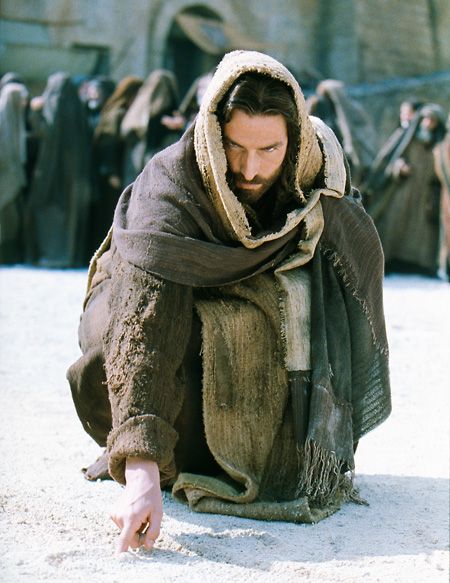






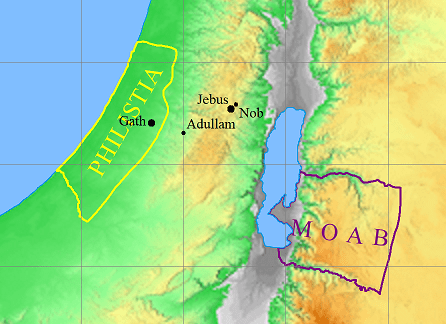

 Considering the Bible