
My hope is that this series will offer my readers a chance to consider the names, characteristics and descriptions of our God in the Word.
The remaining Names of God in this series might be considered descriptors, or characteristics of the Lord. We have reviewed the three primary Names of God, along with nineteen compound Names of God in our previous posts. As we venture through these descriptors of our God, I hope we will recognize all the many characteristics of our God that we tend to take for granted.
The Word is truly rich with descriptions of the Living God, and this effort of searching in the Word was quite illuminating. He truly is the ultimate subject of the Word, and His revelation of self-descriptions, or the accolades offered Him by His priests, prophets, kings apostles and faithful truly is a blessing.
May the Name of the Lord be praised, and by thinking on His name, may you have a blessed day.
166
GIFT OF GOD
John 4:10 Jesus answered her, “If you knew the gift of God, and who it is that is saying to you, ‘Give me a drink,’ you would have asked him, and he would have given you living water.”
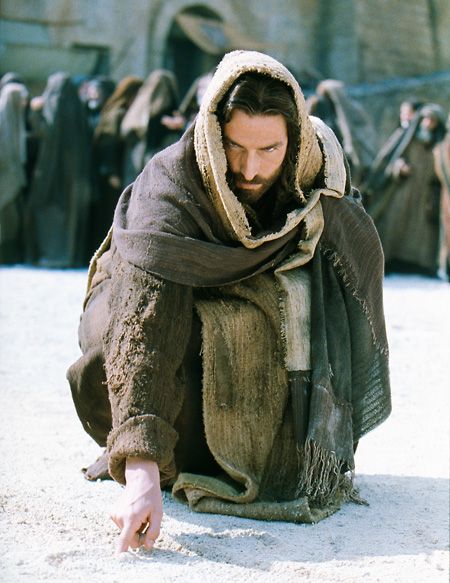
Can Jesus raise a curious mind? Can He bring interest to the forefront. Does He not draw people out of their self involved little world to see bigger pictures?
The Samaritan woman is one of my favorite characters in the early chapters of John, only for the sake of Jesus choosing her to openly confess His Messiahship. Dang – He hadn’t even told the disciple as yet, though they openly expressed their suspicions.
A question for my reader. Is Jesus asking her one question or two? Is it the same question?
Is it equal in intent to say that the gift of God is He that is asking for water? Is He equating in this verse that He is the gift of God? I realize He uses the word “and”, expressing commonly the addition of a thought.
But might He be a Hebrew prophet (and much more) and follow in the tradition of speaking one truth, and then clarifying that truth with another statement. It is very common in the proverbs, and in the prophets.
I had a chance to discuss this form of communicating in a post a few years back called Did Jesus go to Hell? When you arrive to that post, do a quick search for poetry and the paragraph will pop up.
Nevertheless, as we know from passages later in John, and throughout the New Testament, and Old, Jesus is the gift of God to undeserving saints and sinners.
This woman was simply the first to hear it from His own lips. What a fantastic story of her redemption and release from bondage.
I would love to hear of your favorite name, characteristic or description of the Living God. Please leave me a comment, and I will include it in the list!
Thanks again for coming to visit. I hope you found something of interest in this post and would appreciate a comment, to begin a discussion. If you know someone this blog may bless (or challenge), send them a link, so they may join us in our discussion.
Revelation 21:27 But nothing unclean will ever enter it, nor anyone who does what is detestable or false, but only those who are written in the Lamb’s book of life.
Revelation. What a book. If you understand it, you don’t. Every time I try to enter it’s mysteries, I come out of it with more questions. Yet every time I enter it, I also come out of it knowing one single truth.
Jesus wins in the end.
How we get there is up to Him, and by His grace I’m gonna hang on, but He wins in the end, and that is a great comfort to us.
For the passage above, let’s consider the context of the verse. The portion of Revelation this verse is found in has John describing the new Jerusalem, after experiencing the New Heaven and the New Earth (Revelation 21:1-8).
Verse 8 end the first passage on a very sour note.
Revelation 21:8 But as for the cowardly, the faithless, the detestable, as for murderers, the sexually immoral, sorcerers, idolaters, and all liars, their portion will be in the lake that burns with fire and sulfur, which is the second death.”
A disturbing verse for what it says and what it does not say. Nowhere in that passage does John speak of those in the lake of death as being faithless. Not once are those who are suffering related to how they believed or did not believe in Jesus. It is an assumption I always made, and other passages surely connect our faith with our destiny, but for this verse, that connection is absent. Interesting – disturbing but also intriguing!
On to our passage in Revelation 21:9-27. A bulk of the passage describes the “physical” appearance of the holy city of Jerusalem. Verses 11 through 21 speak of the walls and the gates, which is worthy of comment, but we need to focus on the topic Carl!
Verse 22- 26 speaks of no temple, as expected, but that
22 ….its temple is the Lord God the Almighty and the Lamb.
He is all in all!
Verse 23 – 26 speaks of the needs of the city – there is none, and
25 …its gates will never be shut by day—and there will be no night there.
Amazing – No restriction to the city. It’s gates will never be shut by day, yet there is no night. The gates will always be open!
What is entering the City? The glory and honor of the nations. Now that alone bears to ask a multitude of questions, but I digress again! I gotta get to the point.
How about we read verse 27 in full once more.
Revelation 21:27 But nothing unclean will ever enter it (the City), nor anyone who does what is detestable or false, but only those who have asked Jesus into their heart, trusting Him at some point in the past to secure an unalterable contract between God and them, without concern for life decisions since.
Ok I stretched the point out only to ensure you didn’t go from this blog thinking something wrong.
The verse speaks of equating those written in the Lambs book of Life as those who are not unclean, nor doing what is detestable or false.
These descriptions have nothing to do with our very real heart feelings, but as to actual actions in our lives. If we are to be truthful with ourselves, we should not feel saved if we are living unsaved.
As men and women on this earth, we have a tremendous capacity to deceive ourselves. Check your life. Be honest with yourself.
Thanks again for coming to visit. I hope you found something of interest in this post and would appreciate a comment, to begin a discussion. If you would like to receive daily posts from Considering the Bible, click on the “Follow” link below
As many who have followed me for a bit, I have fallen into the Psalms, and I can’t get up! (As if I would want to.) The Psalms are a majestic collection of poetry, of heart felt human experiences that constantly challenge me in my own frail attempt to follow the true King. As many of the Psalms are written by David, my study on the Psalms has spurred me on to looking at the life of David, is the main contributor to this book, and to follow the victories and tragedies of the shepherd King of Israel.
Many times in the narrative, we will see the Lord Jesus, imperfectly, yet a reflection of His spirit in a man with weaknesses.
1 Samuel 26:13-16
13 Then David went over to the other side and stood far off on the top of the hill, with a great space between them. 14 And David called to the army, and to Abner the son of Ner, saying, “Will you not answer, Abner?” Then Abner answered, “Who are you who calls to the king?” 15 And David said to Abner, “Are you not a man? Who is like you in Israel? Why then have you not kept watch over your lord the king? For one of the people came in to destroy the king your lord. 16 This thing that you have done is not good. As the LORD lives, you deserve to die, because you have not kept watch over your lord, the LORD’s anointed. And now see where the king’s spear is and the jar of water that was at his head.”
David’s beef is with Saul, but in this portion of Scripture, David takes on Abner.
Let’s take a moment to consider who Abner is.
First off, he is the “general”, or commander in chief of Saul’s troops. He is first cousin to the king, and he it is who brought David to Saul after his giant killing! He eventually became a king maker when Saul’s army was defeated at Gilboa, and setting up Saul’s (weak) son Ish-bosheth, he essentially became a power broker in the Northern Kingdom.
It is assumed he was at the battle of Gilboa, in which his king died, and for a period of 7 years, was the military leader David would have to face when war broke out between Israel (Ish-bosheth) and Judah (David).
One other item that seems pertinent to this short time considering Abner is the type of culture he existing in. Israel, and the surrounding nations were based on an honor/shame based society. Throughout the Word, shame appears twice as often as guilt. Honor appears over 115 times in the Old Testament. All this to provide a background to David’s message to Abner – not King Saul.
David – “Will you not answer, Abner?”
Although this is the literal translation, and provides us the formal request from David to discuss the previous (unknown) entrance and theft of the Kings spear and water bottle, I really like the NLT, where it catches, what I think was David’s intended message
David – “Wake up, Abner!” (NLT)
Of course Abner responds, hopefully understanding that the camp had been infiltrated with the spear and jug gone!
Abner – “Who are you who calls to the king?”
Again, the NLT brings out a possible intent of the response from Abner.
Abner – “Who is it?”
Having opened up a line of communication, David brings his volleys of questions, all based on the shame associated with failing to guard the king.
David – “Are you not a man? Who is like you in Israel? Why then have you not kept watch over your lord the king? For one of the people came in to destroy the king your lord.
Abner, David implies, you have a reputation of being a man’s man, a fighter, a general, a leader. Is this true? You have a reputation that is unlike any other in Israel. You are the top of the pile, the confidant of the king, the protector of the throne! No one in Israel is like you.
If that is true, why did you let down the guard, ignore the safety of the King. As a matter of fact Abner, by allowing the enemy in the camp, it appears the enemy has more respect for the king than you. The enemy, (David and his cohort), only took a weapon, which could have easily been used against the king, and a jug of water. They respected the king’s life, even proving their allegiance to the king over your own.
What shame! What an utterly devastating attack on Abner!
David continues with Abner, pronouncing a death sentence on him, depending on the Lord for the timing and occurrence. Death was deserved.
David was kicking sand in Abner’s eyes and he did it very effectively. All the camp of Israel, all 3,000 soldiers of Ahab, may have heard this message. If not, the rumor mill would provide the details for all to know.
Abner received a gut punch to his life at this time is his military career. I wonder how it all washed out in the end, as Abner and David face off in future conflicts.
Let me ask my reader. Golly – let me as my reader a bunch of questions!)
Do you think we as a society have walked away from a honor/shame based society?
How about as God’s people?
Do you personally relate to the social valuation of honor and shame for your life?
Might the assigning of shame perform any benefit to the bearer of it?
Could this shift be related to the hardening of our conscience as our society slips further and further from the Word of God?
Thoughts that keep me up at night. Have a good day, and be thankful for a God who is honorable, and seeks to keep us from shame! May His name be praised!
Thanks again for coming to visit. I hope you found something of interest in this post and would appreciate a comment, to begin a discussion. If you know someone this blog may bless (or challenge), send them a link, so they may join us in our discussion.

Jesus in the Old Testament is a series of posts that will offer my readers a chance to consider pictures or shadows of Jesus in the Old Testament. As mentioned in the introduction to this series, some may be obvious, some may be not so obvious, and some may simply be a facet of the Lord those reading may not have considered previously.
I hope as we venture through this series, we will see the Lord in many wonderful pictures throughout the Old Testament.
SEEING JESUS IN
Amos
Tradesman
Amos 7:14 Then Amos answered and said to Amaziah, “I was no prophet, nor a prophet’s son, but I was a herdsman and a dresser of sycamore figs.
Mark 6:3 Is not this the carpenter, the son of Mary and brother of James and Joses and Judas and Simon? And are not his sisters here with us?” And they took offense at him.
Amos had no qualifications for the position of prophet, at least in the eyes of the ruling class. His message to Jeroboam, the king of the Northern Kingdom had been relayed to king Jeroboam by Amaziah the priest of Bethel. See Amos 7:10-13. The message contained harsh judgment on the king and that the northern kingdom would be taken away captive.
Amaziah, the priest then took the position of protecting the apostate king, and warned Amos off to Judah, the Southern Kingdom. Go cause trouble to the south, for that is where you come from. Don’t bother us in the north!
Amos response? I’m a nobody Amaziah. A simple herdsman, and a picker of fruit. A farmer, not professional priest with all the adornment and pomp. A simple man, who has been called by God to head north, to provide a warning to this nation, to supply a Word of the LORD to the people who have walked away from Him. I am no danger to you! How dangerous can a farmer be? I am here to provide a message of deliverance from doom!
How like the Master, who until He took on His ministry of warning and providing the Word of the LORD to His generation, was a simple carpenter, a builder of “things”, a man who worked with His hands.
He acquired no institutional learning other than the mandatory training of all Jewish boys. He learned of the Torah, the Law and Jewish history from His family, and some formal schooling where He may have learned the three “R’s”, that is reading writing and ‘rithmetic.
Other than that, Jesus was untrained (thankfully) of any institutional process. His training came from time with the Father. Copious focused times with the Father, receiving His mission, not unlike Amos, to provide warning and the Word to a nation in trouble.
Amos and Jesus were untrained tradesmen, who heard the call of God and did not let some man made requirement for earthly education stop them from fulfilling their God given ministry.
Are you a highly trained professional Christian? Be thankful for your training, for God can use it, but understand from the example of Amos and Jesus, the crucial training for ministry is directly from the Lord.
Are you a tradesman, possibly a layman in the church? Be thankful for such an example as we see in Amos and our Lord. Be careful in dwelling only under the LORD’s direction. For we also need to understand from the example of Amos and Jesus, the crucial training for ministry is directly from the Lord.
Thanks again for coming to visit. I hope you found something of interest in this post and would appreciate a comment, to begin a discussion. If you know someone this blog may bless (or challenge), send them a link, so they may join us in our discussion.

My hope is that this series will offer my readers a chance to consider the names, characteristics and descriptions of our God in the Word.
The remaining Names of God in this series might be considered descriptors, or characteristics of the Lord. We have reviewed the three primary Names of God, along with nineteen compound Names of God in our previous posts. As we venture through these descriptors of our God, I hope we will recognize all the many characteristics of our God that we tend to take for granted.
The Word is truly rich with descriptions of the Living God, and this effort of searching in the Word was quite illuminating. He truly is the ultimate subject of the Word, and His revelation of self-descriptions, or the accolades offered Him by His priests, prophets, kings apostles and faithful truly is a blessing.
May the Name of the Lord be praised, and by thinking on His name, may you have a blessed day.
165
GENTILES HOPE
Romans 15:12 And again Isaiah says, “The root of Jesse will come, even he who arises to rule the Gentiles; in him will the Gentiles hope.”
I have developed a listing of names to pull from as I write this series and last night as I glanced at the next name to consider, I saw our topic – Gentiles Hope. For some reason I was thinking of the mystery made known to the Gentiles, found in Colossians.
Doh.
Maybe it was that the term “Gentiles” may be a mysterious word to some of my readers. To be a gentile is to be a non-Jew. I’m a Gentile – at least I was. (Biblically, there are three types of folk on earth. Consider 1 Corinthians 10:31 )
You may be a gentile. If so, and we had been born over 2,000 years ago, we had no direct link to God Almighty unless we submitted to the Jewish faith. Some Gentiles knew nothing of the Jewish faith, being so distanced from the land of promise. (Somewhat like today, with so many lost unknowing of the Christ and His church). So to be a Gentile was to be a non-Jew. And Jesus is the Hope of the Gentile.
Paul, as the Apostle to the Gentiles, begins a portion of Romans 15 developing the Old Testament promise of God bringing in the Gentiles into a living relationship with Him.
Let’s get the flow of Paul’s message in the previous verses.
8 For I tell you that Christ became a servant to the circumcised to show God’s truthfulness, in order to confirm the promises given to the patriarchs,
9 and in order that the Gentiles might glorify God for his mercy. As it is written, “Therefore I will praise you among the Gentiles, and sing to your name.“
10 And again it is said, “Rejoice, O Gentiles, with his people.”
11 And again, “Praise the Lord, all you Gentiles, and let all the peoples extol him.”
12 And again Isaiah says, “The root of Jesse will come, even he who arises to rule the Gentiles; in him will the Gentiles hope.”
Our name this morning is the capstone verse of Paul’s argument, after tripping off many Old Testament verses that speak of Jesus being the answer to God’s promise given to the patriarchs regarding the Gentiles.
Hold up. The Gentiles were always in God’s plan, even within the promise to the patriarchs?
Let’s go way back in time to Genesis, and see what Paul is speaking of.
When God chose Abraham, the promise of the Gentiles Hope was provided.
Genesis 12:3 I will bless those who bless you, and him who dishonors you I will curse, and in you all the families of the earth shall be blessed.”
That promise refers to the Gentiles, even before they were separated from the Jewish nation. All of the families of the earth!
Consider also, that God narrowed down to One Man the Gentiles Hope, that through the verses above, God doesn’t mention that the Gentiles will have hope in a religion, or a system of approaches to God, or a law, or even a specific lifestyle. The Hope of the Gentiles is a Man, and that Hope has been realized for many Gentiles.
Thank you Jesus for providing not only the Hope of the Gentiles, prior to your arrival, but Hope for the Gentiles even as we have come to know You.
From one Gentile to my fellow Gentiles. Hope in Jesus, for He is your only hope of eternal life!
I would love to hear of your favorite name, characteristic or description of the Living God. Please leave me a comment, and I will include it in the list!
Thanks again for coming to visit. I hope you found something of interest in this post and would appreciate a comment, to begin a discussion. If you know someone this blog may bless (or challenge), send them a link, so they may join us in our discussion.

A little while ago, I produced a verse by verse series in Philippians. I really enjoyed that exercise and have been wondering if I should take on another book. Well it turns out that 1 Thessalonians is the victim of my machinations, and hopefully, the thoughts produced by this fantastic book will edify and encourage the reader.
As with Philippians I am going to limit each post to one verse, and hopefully produce a short, succinct read for my friends who follow.
A little background before we dig into this letter from Paul. It is a precious letter in that it is the first of Paul’s letters to the churches he founded and directed, so we may see in this writing, many seed thoughts he develops in messages to other churches.
So a bit of background.
The Thessalonian church was birthed after the Philippian church, quickly and under very stressful circumstances.
You see, Paul would always go to the cities where there was a synagogue (with the exception of Philippi) to reason first with those who had background in the Old Testament. It was a logical place to spread the Word since it seems so obvious that the Messiah Jesus was the fulfillment of all the prophecies scattered throughout the Old Testament.
But there was resistance! The most ungodly of resistance erupted, those who hate God and despise any mention of our Lord. You may assume it was some humanists, or antichrist movement. It turns out that the resistance Paul experienced in the city of Thessalonica was of the Jews. A bit surprising when I first read that years ago.
And you may ask – How did they cause resistance? Violence. They used violence in an effort to quell the preaching of the gospel.
Acts 17:5 But the Jews were jealous, and taking some wicked men of the rabble, they formed a mob, set the city in an uproar, and attacked the house of Jason, seeking to bring them out to the crowd.
As an aside, it seems obvious that if violence is the first method of taking out a new way of thinking, those unleashing the violence obviously cannot win the debate, or provide an appeal for their adherents to remain. To be violent is a sign of weakness, a sign of the inability to provide cogent arguments against the opposing view. But this is the Jews only option, for who can argue against a man who rose from the dead?
It turns out that due to this violence, Paul and Silas moved on to the next city after only 3 Sabbaths. This could be as little as 15 days, and out of that 15 days, a church was born, and the life of Christ began spreading throughout the city!
Acts 17:7 and Jason has received them (the apostles), and they are all acting against the decrees of Caesar, saying that there is another king, Jesus.”
The life of Christ began, but the opposition did not stop.
Note the earthly wisdom of the Jews. They knew they had no chance in the arena of religion, so they went political, spreading the news of Jesus being the King. Nothing like some competition for the ruling class to get up in arms over it. And get up in arms they did, for though they did not restrain the apostles, they did get hold of a fellow named Jason, who provided shelter for the apostles. How dare he!
As government often does, they will threaten some judgement on a traitor, for if Jason is following another king, he is a traitor to the king before! Note the solution to this “traitorous” activity of Jason, is to fine Jason. Money. An opportunity to make (or take?) a buck. Kinda sad, for the Jews had influenced an arm of the government to exercise a desired discipline, but it turns out the government was satisfied with a couple of bucks.
Nevertheless, Paul and his helpers made a huge impact on this city, and though Paul never returned, this letter from him holds many truths believers find comfort and challenge in.
I hope during our journey through Paul’s first letter to the Thessalonians, we can find up to date applications for the believers life in the here and now.
My wife and I are reading through the Psalms in our evening reading and occasionally a nugget of the Psalms jumps out of the page. Don’t you love it when, after years of reading the “Old Book” passages become alive, reinforcing old teachings or simply warming your heart.
This is the book of Psalms, and it is rich.
I pray I can communicate a portion of the blessing we receive from this wonderful book.
Psalm 69 is a psalm of sorrow, of apparent defeat and deep emotional stress, of a distress in the heart and of being overwhelmed, of a weariness of soul, and of a waiting for an answer from God. It is a psalm that speaks of loneliness, of disappointment and of extended trials.
As we venture through the psalmist’s deep confession, his pain and his sorrow, we will encounter passages that will be referred to in the New Testament, providing a recounting of the sorrow of Jesus.
Psalm 69:9 For zeal for your house has consumed me, and the reproaches of those who reproach you have fallen on me. Psalm 69:10 When I wept and humbled my soul with fasting, it became my reproach. Psalm 69:11 When I made sackcloth my clothing, I became a byword to them. Psalm 69:12 I am the talk of those who sit in the gate, and the drunkards make songs about me.
My apologies – I got carried away with the last post, and will pick up where we left off previously. Verse 9 was just too much for me!
As mentioned in the previous post, it seems every verse in this portion of Psalm 69 speaks of the human experience of Jesus. Verse 9 was directly linked to the Lord’s life by way of the apostles, and we can rest assured their interpretation is worth trusting. For the next three verses, I will provide suggested links, understanding that I offer these thoughts to the reader for their consideration.
Psalm 69:10 When I wept and humbled my soul with fasting, it became my reproach.
David, in the midst of this trial that he is recounting for us, surely wept and fasted, looking for relief from his God. Even in his sorrow and weakness, his enemies attacked him, bringing further shame and disgrace on the king. Might he be recounting the time Shimei cursed him and his men as he was leaving the City of Jerusalem?
2 Samuel 16:5 When King David came to Bahurim, there came out a man of the family of the house of Saul, whose name was Shimei, the son of Gera, and as he came he cursed continually. 2 Samuel 16:6 And he threw stones at David and at all the servants of King David, and all the people and all the mighty men were on his right hand and on his left. 2 Samuel 16:7 And Shimei said as he cursed, “Get out, get out, you man of blood, you worthless man!
Shimei cursed continually, throwing stones at David, along with all his cohorts, cursing the king, calling him a worthless man! David had to take this in front of his men, those whom he had known for decades and that respected him. Men that he led into battle, and that brought victory to the nation for over three decades. In a shame based society like ancient Israel, this was the deepest of cuts!
David is recounting a time when he truly went through a very deep and painful experience. Can you imagine David being called a worthless man, in front of his closest allies and friends, even at his lowest point in life? Yet David accepted the reproach.
2 Samuel 16:10 But the king said, “What have I to do with you, you sons of Zeruiah? If he is cursing because the LORD has said to him, ‘Curse David,’ who then shall say, ‘Why have you done so?’”
Was it an undesired shame he accepted? I think. Yet for Jesus, though a reproach was planned for Him, He considered the reproach to be of greater riches than all the treasures available to Him. David may have accepted it as a disciple of God. Jesus turned to it, He chose the reproach and chased after it, turning to the cross and the shame, knowing of the glory to come.
Hebrews 11:26 He considered the reproach of Christ greater wealth than the treasures of Egypt, for he was looking to the reward.
During the ministry of Jesus, He is pictured in the gospels as a friendly, approachable, accepting, challenging and kind man. Though at times he gets perty dang ticked off at religious people, His person seems to be very social, welcoming, willing to interact with people, not out in the middle of the desert avoiding interaction. His time of rubbing shoulders with those he knew did not consist of evident reproaches.
Yet the time would come when it would become obvious that He would willingly accept reproach. Note that David also accepted the reproach of Shimei as he states a few verses after Shimei shows up.
Truly, the picture of the Savior in His accepting the reproach and shame, when compared to David, shines out as Savior that again is beyond any human expectation. He is more than we could imagine, so much more than we deserve, and such a great Savior!
My hope is that this series will offer my readers a chance to consider the names, characteristics and descriptions of our God in the Word.
The remaining Names of God in this series might be considered descriptors, or characteristics of the Lord. We have reviewed the three primary Names of God, along with nineteen compound Names of God in our previous posts. As we venture through these descriptors of our God, I hope we will recognize all the many characteristics of our God that we tend to take for granted.
The Word is truly rich with descriptions of the Living God, and this effort of searching in the Word was quite illuminating. He truly is the ultimate subject of the Word, and His revelation of self-descriptions, or the accolades offered Him by His priests, prophets, kings apostles and faithful truly is a blessing.
May the Name of the Lord be praised, and by thinking on His name, may you have a blessed day.
164
FULLNESS OF GOD
Colossians 1:19 For in him all the fullness of God was pleased to dwell
God dwelling with man. He has sought many ways to dwell with man.
Creation comes to mind. God provided an idyllic environment (‘cept for one tree) that would provide both man and woman opportunity to be with Him, to know Him and to love Him.
Man rejected the offer of dwelling with God.
Oh but then there was the opportunity to obey, or to be in tune with that fragile conscience, and to seek God through prayer. During the time of Seth, people began to call on God. Promising for a time, yet in the background the general population was deteriorating. Did you know that at Seth’s death, Noah’s birth was only 14 years later? That is incredible, and speaks of the seeming downgrading of the population, to the point that full scale judgement was to fall during Noah’s time.
So it seems that man rejected the offer of dwelling with God again.
Ok, so with Noah a new arrangement, a new start, a realization that rejecting God and His presence ends in catastrophe. And yet by the time God was about to call out a nation for His own name, only one man was found that seemed intent to know God.
What is going on? I though we were generally good people?
So mankind rejects the offer of dwelling with God again.
That man I just mentioned, Abraham, well he wanted to follow God, and He is considered the Father of our faith, rightly so. He was groundbreaking in his relationship with God, and God found someone that sought Him
But as we all know, he lived in a time when most around him rejected God, knew nothing of God and they mocked Abraham as he seeking God.
So mankind rejected the opportunity to find dwelling with God. Again.
From Abraham, a family began, a dysfunctional family (like mine) made up of men and women that wandered and rejected God for the most part. As the family grew into tribes, a young man was rescued from the reeds in order to provide another opportunity for God to dwell with man. Eventually God rescued the tribes through this man, delivered them to a new land and provided them a tabernacle. The tabernacle housed the very presence of God. This was truly a huge step on God’s part to take, and the privilege the Israelites were granted was beyond any nation on earth.
Yet we know that the nation rejected the dwelling of God, rejected all the counsel, became apostate, was taken into captivity, rescued and brought back to the land. Mercy upon mercy, yet the nation became hardened, trying to create a sense of dwelling with God, all the while rejecting Him.
So mankind rejected the opportunity to find dwelling with God, even upon privilege and the exhibition of tremendous mercy. Rejection again.
A baby born to a young girl. A highly unlikely solution to the problem, for He had no training, no status, no riches or obvious advantage. Yet this little child actually was the dwelling of God. And let me make this a bit clearer. It pleased God to dwell in this child, even as He grew into a young man.
Man generally rejected the opportunity to dwell with God, and yet God was continually reaching out to man in so many ways. It wasn’t simple indifference on the part of so many, but outright rejection of the opportunity to experience the dwelling of God.
Granted, there were saints in the Old Testament that experienced God dwelling with them, being with them, training, teaching, comforting, guiding, feeding them. Yes there were many great men through the ages.
But I can find nowhere in the Word a statement describing any saint as experiencing all the fullness of God. Not only that, but that God was pleased to dwell fully in the man.
Oh the Spirit may have been with David and Isaiah, Moses and Jeremiah in mighty ways, empowering them to do mighty acts for God. Yet at times it seems the Spirit was willing to pull back, to leave for a period of time. Even David was fearful of the Spirit leaving him.
Nothing like that with Jesus though.
God was completely comfortable in the body of the Lord, residing in Him. Jesus – God and human. Consider what it means when Paul states that it pleased God to dwell completely and without reservation, fully in the flesh and blood body of the man Jesus. No reluctance, no hesitancy, no struggle. To dwell completely and fully. Not a portion of the Spirit, but without any doubts or uncertainty.
It has been the intent and desire of God since creation to dwell with man. That Man is Jesus, and He is the only One who has experienced this. Only as we seek Jesus, do we have opportunity to experience God’s dwelling, for God’s dwelling may only be found in Jesus.
Are you pleased to dwell with Jesus?
I would love to hear of your favorite name, characteristic or description of the Living God. Please leave me a comment, and I will include it in the list!
Thanks again for coming to visit. I hope you found something of interest in this post and would appreciate a comment, to begin a discussion. If you know someone this blog may bless (or challenge), send them a link, so they may join us in our discussion.
Hebrews 4:11 ESV – Let us therefore strive to enter that rest, so that no one may fall by the same sort of disobedience.
I was chatting with a friend recently, a brother I have know for over a decade, a brother that used to enter into some Bible discussions with me at a previous employer.
Nothing to extended, for we were not being paid to discuss the location of the New Jerusalem, or to relieve the tension between Calvinism and Arminianism, but when my brother would come in my office with a question, we would consider what the Word says, discuss a few moments and let it ruminate. It was a good environment to work in, I learned bunches, and the people were great.
But that was over a decade ago, and my brother and I parted ways due to different choices for our careers. But lately he has taken the opportunity to reach out, and we had broke bread together just a few days ago. In the midst of the lunch, I let slip that I have a blog, and he has been reading.
Out of that reading, our recent chat revolved around the topic of conditional security and the once saved always saved teachings. During the discussion, I referred to a passage in Hebrews on this topic, (of which there are numerous passages addressing this topic), and the topic of striving came up.
What is it to strive? The apostle exhorts us to strive to enter rest, which is a paradox in my mind, but let us not get too distracted. (Besides the verse has been considered in Paradoxical Passages – Hebrews 4:11)
So – to strive, to persevere, to be diligent or to endeavor to do. The Greek word is σπουδάζω spoudázō, and it simply means to exert yourself, to give diligence, even to hasten or to make haste. Note that there is the idea of effort (exerting, laboring) and the component of time (hasten, make haste) in this word.
Do not both these ideas of exerting and hastening rest within the very same character of one “striving” I have yet to meet someone striving that is not giving it all he or she has. Not a partial effort, but with the strength provided, pushing forward. I have also never met someone who striving that is not striving now. He or she isn’t planning on striving in 2 years. How foolish of an idea that is. To strive is to be active now.
Strive to enter that rest, the sabbath rest. Yes this rest the apostle speaks of is a sabbath rest provided for the believer
Hebrews 4:9 So then, there remains a Sabbath rest for the people of God,
So if we don’t strive to enter that sabbath rest, what might the outcome be? Let’s read Hebrews 4:11 one more time.
Let us therefore strive to enter that rest, so that no one may fall by the same sort of disobedience.
So let me get this straight. The apostle is writing to believers, and providing instruction – that is to strive to enter a rest – so that no one, no believer, may fall. Does that not imply that believers may fall?
Are you still depending on your own works in some way to add to your salvation? Do you consider your efforts to add (or subtract) from the finished work of Christ on the cross, His complete salvation?
Enter the rest He has provided, not only in your initial decision to lay it before Him and follow, but in your daily walk with Him. There is a rest for the people of God.
Are you walking in it, even today? He is good, and His rest is beyond our own doing!
Thanks again for coming to visit. I hope you found something of interest in this post and would appreciate a comment, to begin a discussion. If you would like to receive daily posts from Considering the Bible, click on the “Follow” link below

As many who have followed me for a bit, I have fallen into the Psalms, and I can’t get up! (As if I would want to.) The Psalms are a majestic collection of poetry, of heart felt human experiences that constantly challenge me in my own frail attempt to follow the true King. As many of the Psalms are written by David, my study on the Psalms has spurred me on to looking at the life of David, is the main contributor to this book, and to follow the victories and tragedies of the shepherd King of Israel.
Many times in the narrative, we will see the Lord Jesus, imperfectly, yet a reflection of His spirit in a man with weaknesses.
1 Samuel 26:6-12
6 Then David said to Ahimelech the Hittite, and to Joab’s brother Abishai the son of Zeruiah, “Who will go down with me into the camp to Saul?” And Abishai said, “I will go down with you.” 7 So David and Abishai went to the army by night. And there lay Saul sleeping within the encampment, with his spear stuck in the ground at his head, and Abner and the army lay around him. 8 Then Abishai said to David, “God has given your enemy into your hand this day. Now please let me pin him to the earth with one stroke of the spear, and I will not strike him twice.” 9 But David said to Abishai, “Do not destroy him, for who can put out his hand against the LORD’s anointed and be guiltless?” 10 And David said, “As the LORD lives, the LORD will strike him, or his day will come to die, or he will go down into battle and perish. 11 The LORD forbid that I should put out my hand against the LORD’s anointed. But take now the spear that is at his head and the jar of water, and let us go.” 12 So David took the spear and the jar of water from Saul’s head, and they went away. No man saw it or knew it, nor did any awake, for they were all asleep, because a deep sleep from the LORD had fallen upon them.
A deep sleep. Oh what a wonderful gift from God to have a deep sleep. Especially for Saul, for this provided an opportunity for David’s expression of mercy to be performed.
Imagine David and Abishai sneaking into the camp, and one of Saul’s 3,000 men stirs, wakens and alerts the camp. The entire army is about to wipe David and Abishai off the earth! All of David’s intentions would go up in smoke! But let us start the passage starts. David is looking for a volunteer to enter the camp of the enemy. Abishai, a willing soldier, and David’s nephew jumps on this opportunity.
Now a bit of understanding of who Abishai was. He was a most honored commander of the second rank of David’s officers, a giant killer like his uncle (2 Samuel 21:15-17), the brother of Joab and Asahel, and eventually took part in the killing of Abner, which David condemned, even pronouncing a curse on him. He was a mighty man of valor and was experienced in battle, to the point of wielding his spear to kill 300 men in battle (1 Chronicles 11:20, 2 Samuel 23:18). In one battle, Abishai killed 18,000 Edomites in the Valley of Salt (1 Chronicles 18:12). Talk about your killing machine – this guy was an ultimate soldier!
So naturally it is safe to assume that by entering the camp of king Saul, Abishai was intending to spill some blood! As this is the first time Abishai shows up in the narrative, he may not have been in the cave when David showed mercy to the king previously.
I love it where Abishai asks so politely to murder the king. He is so committed to David, that even the actions he wants to do, for the sake of David, is subject to David’s wishes and not his own nature of the “killing machine” we find later in his life!
1 Samuel 26:8 Then Abishai said to David, “God has given your enemy into your hand this day. Now please let me pin him to the earth with one stroke of the spear, and I will not strike him twice.”
David stops Abishai, relating his decision to the anointing on Saul as being a government ruler, a king over Israel. Saul’s life continued on this occasion based on the status, or calling he received from God, and not his personal character or righteous/unrighteous acts.
David saw three viable options of Saul’s death.
The Lord will strike Saul
His day will come to die
He will go down in battle
Remember now, that David has received the anointing to be the next king. Could he not reason that Saul had lost the status of rightful king, no longer being the anointed? That as the called of God, David represented God and may act as the Lord’s representative, striking Saul?
Maybe. I know many may use this reasoning, in order to get an end result they wish for, but David was exercising faith in God in this act of mercy, and establishing the importance of stability within his own kingdom based on God’s will for the nation. God would raise and lower kings on His timetable and manner.
David, in the middle of 3,000 men, and with the king, his greatest enemy at his feet, took the time to explain his faith to his nephew. Again, David establishes his faith in front of his men, a faith that allows for mercy, a faith that is counter cultural, and that seems ridiculous. Why waste this opportunity?
David took the spear and the water jug. The Lord kept the army of Saul asleep. And I can just imagine Abishai scratching his head as he follows his Master through an army intent on killing them.
There will be times in our lives, at least in my life, where I have been completely flummoxed at what God was doing. As I sought to follow Him through an army of enemies (both physical and spiritual), I scratched my head bald for trying to understand.
But He is the Master and though some experiences may be confusing, some experiences may be counter cultural, some experiences against our nature, and some experiences seem to be opportunities lost, there is One whom we need to follow, whether we understand or not.
After all, Jesus is the anointed, ever living King! Let’s trust Him as we are in the midst of multiple enemies, living for Him.
Thanks again for coming to visit. I hope you found something of interest in this post and would appreciate a comment, to begin a discussion. If you know someone this blog may bless (or challenge), send them a link, so they may join us in our discussion.
Texting with a friend, (an international friend who lives far away), and the topic came up of the definition of church, where it is, how it occurs, and when it happens.
A little background. My brother volunteers at a coffee shop in his home town that is a ministry for those that are down on their luck. He has recently been chatting with a fellow who is struggling over trials in his life, and of course he invited his friend to church on Sunday.
For some reason, he never attended the church. Eventually the questions of where church happens, when a church starts to exist and how church occurs lifted its head in my mind. A few verses came to mind in the middle of last night and I would like to offer them to the reader for their consideration.
Where church happens?
As you may know through reading previous posts on this blog, I personally favor a home church, or at least a home based fellowship. Can this be properly called a church according to the Word?
Throughout the New Testament, churches were always referred to as being in a home.
Romans 16:5 Greet also the church in their house. Greet my beloved Epaenetus, who was the first convert to Christ in Asia.
1 Corinthians 16:19 The churches of Asia send you greetings. Aquila and Prisca, together with the church in their house, send you hearty greetings in the Lord.
Colossians 4:15 Give my greetings to the brothers at Laodicea, and to Nympha and the church in her house.
Philemon 1:2 and Apphia our sister and Archippus our fellow soldier, and the church in your house:
Saul, a great enemy of the church, knew exactly where to go to find a church. Homes
Acts 8:3 But Saul was ravaging the church, and entering house after house, he dragged off men and women and committed them to prison.
In my mind, I find little direct support for the creation of a separate building to hold “church in” from the Word. Of course some may consider the hall of Tyrannus to be the seed bed of the modern church edifice.
Acts 19:9 But when some became stubborn and continued in unbelief, speaking evil of the Way before the congregation, he withdrew from them and took the disciples with him, reasoning daily in the hall of Tyrannus.
Would you consider the intent of this verse to be directing believers into halls for the sake of living “churchlife”? I am not convinced. It appears that moving into the hall of Tyrannus was an effort on Paul’s part to provide a teaching area for disciples, since the synagogue had become so poisonous to Paul’s “reasoning and persuading them about the kingdom of God.”
Remember that the city of Ephesus had become a major hub of Christian ministry, a city with an increasing number of believers. Yet this hall of Tyrannus is never described as a church, for it seems that the idea of church was firmly lodged in Luke’s mind of not being a building, but a group of people, a group of believers.
Please don’t consider this a call to abandon the modern church life, with the pews, pulpits and professional preachers. It is what it is, but consider the root teaching of where church happens. It is organic, not highly organized, not full of overhead and organizational structure. It was a simple home where believers lived and met together, not a separate edifice.
When church starts to exist?
When does a church begin to exist? Is it with the binding of the church covenant? The filing of existence with the government?
How about when the elders of a church are called into formal existence? Might that be a good point to consider church formally beginning? Maybe, for you see when Paul left the island of Crete, he wrote to Titus and informed him of the need to appoint elders in every town.
Titus 1:5 This is why I left you in Crete, so that you might put what remained into order, and appoint elders in every town as I directed you–
Yes, I know that Paul did not specifically call any of these congregations “church” in his letter to the young preacher. A valid point, and he did mention that it is what remained to be put into order.
A possible answer to our question “When does a church start” may be that spiritual leadership is called into existence.
I wish to make a finer point on this for the sake of clarity. For a man to declare himself a elder, or spiritual leader does not make it so. Flashy signs and expensive advertising makes not an elder, no matter how hard they may proclaim their self importance. Elders are not self proclaimed, but appointed/chosen by other believers who have been appointed/chosen by other believers who have – never mind – you get my point I think.
How church occurs?
Are pews required? A pulpit? Is church to be centered about watching a band perform? Or a prescribed time of listening to a monologue from a professional preacher? Maybe. At least in our culture this is the accepted manner in which church occurs.
Yet to find where those who attend a body that are all integrally linked together emotionally through a living connection with Jesus seems to be, in my mind the end goal.
How church occurs depends on the saints involved. Is their a prescribed plan for church to occur within? Should it be heavy on singing, more of a teaching body, centered around a meal and personal connections? As mentioned above, to be considered a church seems to be associated with the establishment of elders, men who are able and willing to lead a body of believers on the path of following Jesus.
Another reason elders may be the causation of church formation may be for the exercise of church discipline.
Matthew 18:15-17 “If your brother sins against you, go and tell him his fault, between you and him alone. If he listens to you, you have gained your brother. But if he does not listen, take one or two others along with you, that every charge may be established by the evidence of two or three witnesses. If he refuses to listen to them, tell it to the church. And if he refuses to listen even to the church, let him be to you as a Gentile and a tax collector.
Although Jesus does not mention elders, and that the relationship complaint is to be resolved through telling it to the church, representatives of the church – elders – would provide the guidance to the body for the exclusion of this brother from the body.
Now if this body of believers is as I imagine, that of a tight knit group of people congregating in a home, having shared struggles and personal concerns with others, this exclusion from the body may be much more effective than what the modern church provides.
So in conclusion, I want to admit this post wasn’t so much of a story as a brief look into what a church is. That is on me, but I started on a good topic and couldn’t shut up!
My friend has told me that the soul he is trying to reach has returned to the cafe, and is still asking questions. For him, this may be a form of what he considers church. So be it!
If I know my brother, he will exercise patience and care for him, hoping and praying him into the kingdom. And I am looking forward to hearing of how the Spirit of God will draw this soul into a relationship with our Lord.
Church life will occur after that!
Thanks again for coming to visit. I hope you found something of interest in this post and would appreciate a comment, to begin a discussion. If you know someone this blog may bless (or challenge), send them a link, so they may join us in our discussion
My hope is that this series will offer my readers a chance to consider the names, characteristics and descriptions of our God in the Word.
The remaining Names of God in this series might be considered descriptors, or characteristics of the Lord. We have reviewed the three primary Names of God, along with nineteen compound Names of God in our previous posts. As we venture through these descriptors of our God, I hope we will recognize all the many characteristics of our God that we tend to take for granted.
The Word is truly rich with descriptions of the Living God, and this effort of searching in the Word was quite illuminating. He truly is the ultimate subject of the Word, and His revelation of self-descriptions, or the accolades offered Him by His priests, prophets, kings apostles and faithful truly is a blessing.
May the Name of the Lord be praised, and by thinking on His name, may you have a blessed day.
163
FULL OF GRACE AND TRUTH
John 1:14 And the Word became flesh and dwelt among us, and we have seen his glory, glory as of the only Son from the Father, full of grace and truth.
Jesus is full of grace and truth.
To be full is to be complete, lacking in nothing, thoroughly permeated, filled to the brim, perfect.
He is spoken of as being full of the Holy Spirit.
Luke 4:1 And Jesus, full of the Holy Spirit, returned from the Jordan and was led by the Spirit in the wilderness.
To be full implies there is no room for anything else in the vessel. In our verse, John speaks of Jesus as being full of two characteristics, and by stating this, he may be thinking of an Old Testament passage that refers to the same two characteristics that God described Himself as being.
Exodus 34:6 The LORD passed before him and proclaimed, “The LORD, the LORD, a God merciful and gracious, slow to anger, and abounding in steadfast love and faithfulness,
Steadfast Love. חֶסֶד cheçed. Kindness, favor, mercy. As God passed by Moses, one of the descriptions he heard was of the kindness and mercy of God.
Faithfulness. אֶמֶת ʼemeth. Faithfulness, firmness, truth. The second descriptor of our God that Moses heard, that John recounts to us of Jesus is that of reliability, sureness, faithfulness and truth, that which confirms to reality! He must conform to reality, for He is the source of all reality, and as the fruit so is the tree!
So as John was describing the Prophet from Nazareth to his readers, He continued linking Jesus with the eternal, calling Him out as the Lord of Lords, the God of gods. Linking Him with the God Moses wrote of, abounding in grace and truth, unable to fit anything else into His nature. Abounding, full of grace and truth.
In all of Jesus actions, the base motivator is grace and truth. Combined, for without truth, the actions have no lasting stability, and without grace, the actions become harsh, hard and without life.
No, He is a God who loves, acting out of a gracious, truth based nature! He is Full of Grace and Truth. He proved it while walking amongst us, and if you know Him, He continues to prove it to us daily in our lives for His glory.
Thank you Jesus!
I would love to hear of your favorite name, characteristic or description of the Living God. Please leave me a comment, and I will include it in the list!
Thanks again for coming to visit. I hope you found something of interest in this post and would appreciate a comment, to begin a discussion. If you know someone this blog may bless (or challenge), send them a link, so they may join us in our discussion.
Thoughts on the topic of speech from the book of wisdom
This will be my second post on the topic of speech from the book of proverbs. Proverbs has much to say on the topic and due to the shear number of verses available on this topic, will provide ate a number of posts related to it
Speech
How does speech relate to prosperity, life and peace? Much in every way, and Solomon, ever the graphic storyteller, has some word pictures that are meant to stick in the mind, somewhat like an ear-worm – that constant tune you can’t get out of your head. Solomon wants to provide us mind worms, pictures in our mind that need to rise to our thoughts as we walk through our lives.
12:18 There is one whose rash words are like sword thrusts, but the tongue of the wise brings healing.
Solomon, and others in the proverbs, often speak of the effect of our words on others. This passage is a great description of the man or woman who speaks without thinking, exposing their heart and inflicting the hurt on those around them.
To speak rashly is to speak thoughtlessly, without consideration of those hearing. It is the sign of a self absorbed person, sometimes justifying their hurtful words by pleading their “honesty” about a situation, or claiming they are simply speaking the truth, all the while ignoring the importance of providing the truth in love, to seek the intended effect of helping those who may need to hear a hard saying.
For myself, I have fallen into this type of person, saying something that comes to mind, blurting it out, often amongst many, to the detriment of the one I should be seeking to care for. Yes – many may laugh, and I walk away, seeming the victor in the exchange, but at what cost.
I slip a knife in a soul, a soul that may already by hurting, pull it out and walk away, letting those I leave behind fend for themselves. Note that it is not only those who I knife that are impacted, but those who may be sitting on the sidelines of the discussion, they also know that I carry a knife, a sword that I am not afraid to use.
Let me tell you of someone that doesn’t carry a knife. She is a real sweetheart, willing to listen to others. She often speaks of how people will come to her and start sharing their lives with her. She is a lady who works retail, with strangers (customers) coming to the store. I can’t tell you how often I have heard her speak of a customer sharing with her of a child’s passing, of a broken marriage, of a health crisis, of family troubles or conflicts. In the middle of work, she has been known to hug a customer due to the pain they are living through, or of a customer coming to look for this lady, to express their thankfulness.
Yes, this is my wife I speak of, and she has always been like this, a good listener, one who keeps her lips closed while others are speaking. Oh I imagine she may have a knife, but I can’t remember a time when she has pulled it out to stab someone. She is one who listens. She lets others speak, and eventually, due to her willingness to listen, and not to thrust a sword of thoughtless, rash words into the conversation, she finds people open up, share deeper pain, and greater sorrows. They feel they can trust her.
Meanwhile, the fella who can cut and walk, who can thrust a sword with great skill, who can speak thoughtless and rash words, he rarely has anyone approach him for counsel. He is one who has a reputation of pain, and few and far between are those who willingly come to a knife fight when they are looking for help, for a listening ear, for a kind soul.
The tongue of the wise brings healing. Thoughtless rash words cut, maim, inflict pain, and create walls.
Which are you? Do people come to you for advise, for counsel, as a friend? Do you find that few if any enter into sensitive issues with you, asking for help?
My friend, put the sword away. Listen to those who may come to you. Do not inflict pain on any with thoughtless rash words. You will only drive those away, who may need your help!
18:21 Death and life are in the power of the tongue: and they that love it shall eat the fruit thereof.
Those who understand this cause and effect, that will put the sword down and open the ear, providing wise responses for those needing to hear, they will experience the fruit of acts of love to others. They shall experience good responses from those who have learned to trust them, of those who esteem them and return to them with thankful hearts.
My wife and I are reading through the Psalms in our evening reading and occasionally a nugget of the Psalms jumps out of the page. Don’t you love it when, after years of reading the “Old Book” passages become alive, reinforcing old teachings or simply warming your heart.
This is the book of Psalms, and it is rich.
I pray I can communicate a portion of the blessing we receive from this wonderful book.
Psalm 69 is a psalm of sorrow, of apparent defeat and deep emotional stress, of a distress in the heart and of being overwhelmed, of a weariness of soul, and of a waiting for an answer from God. It is a psalm that speaks of loneliness, of disappointment and of extended trials.
As we venture through the psalmist’s deep confession, his pain and his sorrow, we will encounter passages that will be referred to in the New Testament, providing a recounting of the sorrow of Jesus.
Psalm 69:9 For zeal for your house has consumed me, and the reproaches of those who reproach you have fallen on me. Psalm 69:10 When I wept and humbled my soul with fasting, it became my reproach. Psalm 69:11 When I made sackcloth my clothing, I became a byword to them. Psalm 69:12 I am the talk of those who sit in the gate, and the drunkards make songs about me.
Ok who wrote this? I say that sarcastically, for I know King David wrote it, but gosh golly, all I can see in this passage is the New Testament witness of Jesus.
Psalm 69:9 For zeal for your house has consumed me
For David, this phrase described his desire to be close to the tabernacle, to be passionate to see God’s tabernacle become the Temple. It was a distraction of the highest magnitude, a desire that left all other goals in life to be secondary.
Remember my friend, this is the king of Israel, a world power at the time, and David was not consumed with status, power, wealth or image. He was focused on the source of all goodness and righteousness.
Mark 11:15 And they came to Jerusalem. And he entered the temple and began to drive out those who sold and those who bought in the temple, and he overturned the tables of the money-changers and the seats of those who sold pigeons. Mark 11:17 And he was teaching them and saying to them, “Is it not written, ‘My house shall be called a house of prayer for all the nations’? But you have made it a den of robbers.”
John 2:16 And he told those who sold the pigeons, “Take these things away; do not make my Father’s house a house of trade.” John 2:17 His disciples remembered that it was written, “Zeal for your house will consume me.”
For Jesus, this zeal was intensified in His life, but not for some physical representation of God’s temple. (I mean no disrespect to King David in this instance.) Jesus was looking to the Temple of God being the people of God that God would reside in, for that has been the plan all along. A group of people who seek God, who allow God to reside in them (as a group) and exhibit the nature of God to those outside the group.
Jesus passion led Him to the cross. His zeal was all consuming, and for a time in the temple, Jesus passion exploded on the scene, for those in the temple were users of people, profiting off those who seek God, instead of living a life of self sacrifice for others. The very antipathy of God’s desire was being witnessed by the very Son of Man in the Temple of God. How utterly inviting for passion to erupt!
Psalm 69:9B
Psalm 69:9 …and the reproaches of those who reproach you have fallen on me.
For the king of Israel to suffer personal reproaches strikes me as odd, for many, if not all kings in the ancient days would not suffer insult or shame from any in their kingdom. Those who verbally attacked a kings person were usually punished, jailed, beaten or worse.
Yet for David, as he followed after God, realizing who God is and what God is like, willingly accepted the shame aimed at God as his own.
His passion, they may say, is extreme, just too much, he has his head in the clouds and is of no earthly good. Hatred – undeserved as mentioned in verse 4 – experienced by David from his enemies, provided for David additional instances where he would bear the burden of being a believer in the midst of unbelief.
Romans 15:3 For Christ did not please himself, but as it is written, “The reproaches of those who reproached you fell on me.”
For Jesus, for Paul to say that He did not please Himself may be one of the greatest understatements written. Going without sleep to be alone with the Father, watching his followers disappoint Him and yet continue to invest time and effort into them, healing and preaching to the masses, knowing they will turn on Him, going for weeks without food, not having anyone but Satan know, performing a baptism ritual in identifying with sinful people, reserving judgement in order to save, turning the cheek for the sake of love.
My friend – He took the hatred and shame the world spewed onto a holy God, He took it Himself, and in the midst of all the injustice. the pain, the loneliness and ingratitude, He continued to love God with all His heart mind and soul, and every neighbor who has ever lived.
How can we truly grasp the width, depth and length of His grace and mercy towards us. It is almost as if the expanse of His grace to us is beyond belief, that is simply can’t be true, it is too good to be true.
But He rose from the grave, with hundreds seeing Him, and His church has marched on, grasping ever so slightly (at least for myself) the tremendous grace He has provided us.
My hope is that this series will offer my readers a chance to consider the names, characteristics and descriptions of our God in the Word.
The remaining Names of God in this series might be considered descriptors, or characteristics of the Lord. We have reviewed the three primary Names of God, along with nineteen compound Names of God in our previous posts. As we venture through these descriptors of our God, I hope we will recognize all the many characteristics of our God that we tend to take for granted.
The Word is truly rich with descriptions of the Living God, and this effort of searching in the Word was quite illuminating. He truly is the ultimate subject of the Word, and His revelation of self-descriptions, or the accolades offered Him by His priests, prophets, kings apostles and faithful truly is a blessing.
May the Name of the Lord be praised, and by thinking on His name, may you have a blessed day.
162
FRUIT OF YOUR WOMB
Luke 1:42 and she exclaimed with a loud cry, “Blessed are you among women, and blessed is the fruit of your womb!
What is it to be “Fruit”.
A simple question, no? Fruit is that which comes from something, a positive (usually) effect of some originating source.
Consider an apple. No an orange – Let’s consider an orange – I like oranges better! Where do oranges come from? An orange tree of course. The orange is the “fruit” or product, or natural result of the orange tree.
This is the general definition of fruit, but of course in this instance we are speaking of a ladies womb.
For the creation of life within a womb, when fertilization occurs, the baby is fully potential, having a genetic code that is complete, and the tiny cells immediately and rapidly divide and multiply for 9 months within the womb. At some determined time, the aggregated cells (I call it a baby!) are ready to be physically separate from the mother, although still completely dependent on her. This child will mimic the mother, or father in many ways, carrying characteristics that cannot be denied. Strengths and weaknesses, sinful tendencies and selfish leanings.
As we all know, the fruit is the product of the source, right?
The womb is a small, but expandable, completely dark, warm environment that is protected by the mother. The womb is a place where miracles happen, life erupts and grows, a newly created soul is created.
A created soul, a spark of life created, right?
Except for one singular time. One solitary time, an exception is made regarding the creation of a soul.
I would offer to my reader that in this case, the soul was not created. He – Jesus – has been from everlasting to everlasting and is no created soul. He is the giver of life to each and every person on earth.
He resided in a safe warm environment, the womb of Mary, the source of life for each of her other children. Under the care of Mary, He was protected, growing as everyone of us did in the womb, increasing in physical size, yet with a self that had been severely limited (by His own choice) in order to be the Servant Messiah, the Son of Man, and Son of God. For a time on earth, He was safe and secure from those who would hunt Him down. Protected for a period of time, only to be born to die, to face an inevitable crucifixion.
The incarnation, on it’s own, is an incredible truth, that when meditated upon, and should foster a spirit of humility within each of us.
So many questions arise in my mind, that cannot be answered, and that may never be answered, but let us be content to consider one thing. He is the Fruit of the Womb, the perfect Fruit, the eternal Fruit of Mary’s womb.
He entered this world though the womb of a needy servant, growing into the Man that would be crucified for our sins.
I would love to hear of your favorite name, characteristic or description of the Living God. Please leave me a comment, and I will include it in the list!
Thanks again for coming to visit. I hope you found something of interest in this post and would appreciate a comment, to begin a discussion. If you know someone this blog may bless (or challenge), send them a link, so they may join us in our discussion.
1 Timothy 4:16 Keep a close watch on yourself and on the teaching. Persist in this, for by so doing you will save both yourself and your hearers.
In Paul’s closing days, he wrote to Timothy, his child in the faith, reminding him that he needed to persist.
Persist. Other translations use “persevere”, or “continue”. As you may know, I use the Blue Letter Bible web site for much of my research and they provide a parsing option of the Greek words used in the Word. Notice that to persevere is in the present tense – an action Paul expected to be occurring in the present, and was second person, to be applied to the reader. Paul isn’t speaking of Timothy persevering in the faith in order for others to become Christians. He was giving this command to Timothy for his own salvation
Now I provide this information as overkill, for the English also provides the same message. Timothy was to persevere in the faith for his own life, and for the teaching he provided.
Both arenas of effort were included. How often have you seen a Bible teacher dig into the Word, bring out doctrinal truth, and yet the witness is sullied due to his own life being shipwrecked with unfaithfulness and sin.
But Carl, is not Paul referring to sanctification before God in this passage? Does Paul not go on to say that this lack of perseverance will damage his sanctification before God.
Is that what he says? Let’s read that portion of verse 16 once more.
…by so doing you will save both yourself and your hearers.
Heck, let’s go back to the BLB and it’s parsing chart.
The word Paul uses is σώζω sṓzō, and I cannot find it translated as sanctification in my studies. It refers to preserving from danger, or to deliver from destruction, to rescue, or to keep safe and sound. The New Testament concept of sanctification comes from the Greek word ἅγιος hágios, and speaks of holiness, consecration or separateness from evil. Two different concepts, though linked, in the eternal life we are blessed to experience.
Notice that with this verb, it is future tense. Paul is speaking of salvation in the future for both his own life and those of the congregation. He and his current congregation will ensure their salvation by persevering in previous activities Paul lined out for Timothy.
…save both yourself and your hearers.
Paul taught this to a believer, a leader in the church!
If OSAS (Once Saved Always Saved) is correct, this makes no sense!
Thanks again for coming to visit. I hope you found something of interest in this post and would appreciate a comment, to begin a discussion. If you would like to receive daily posts from Considering the Bible, click on the “Follow” link below
As many who have followed me for a bit, I have fallen into the Psalms, and I can’t get up! (As if I would want to.) The Psalms are a majestic collection of poetry, of heart felt human experiences that constantly challenge me in my own frail attempt to follow the true King. As many of the Psalms are written by David, my study on the Psalms has spurred me on to looking at the life of David, is the main contributor to this book, and to follow the victories and tragedies of the shepherd King of Israel.
Many times in the narrative, we will see the Lord Jesus, imperfectly, yet a reflection of His spirit in a man with weaknesses.
1 Samuel 26:1-5 1 Then the Ziphites came to Saul at Gibeah, saying, “Is not David hiding himself on the hill of Hachilah, which is on the east of Jeshimon?” 2 So Saul arose and went down to the wilderness of Ziph with three thousand chosen men of Israel to seek David in the wilderness of Ziph. 3 And Saul encamped on the hill of Hachilah, which is beside the road on the east of Jeshimon. But David remained in the wilderness. When he saw that Saul came after him into the wilderness, 4 David sent out spies and learned that Saul had indeed come. 5 Then David rose and came to the place where Saul had encamped. And David saw the place where Saul lay, with Abner the son of Ner, the commander of his army. Saul was lying within the encampment, while the army was encamped around him.
The Ziphites are at it again. They want the kings favor, and have travelled once more to Gibeah to rat out David. See Life of David – 16.02 for the Ziphites earlier effort to provide information to King Saul of David’s whereabouts. As a matter of fact, David and his men are very close to the previous location in 1 Samuel 23:19. were he and his men were hiding amongst the Ziphites in the strongholds at Horesh, on the hill of Hachilah, which is south of Jeshimon?
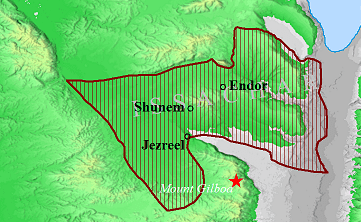
This time, the Ziphites reveal that David is east of Jeshimon. I add a map to let my reader remember that to rat out David required a sizable effort on the part of the Ziphites to travel to Gibeah where the King resided. They had to travel over 26 miles (as the crow flies) to deliver David.
For some reason (desperation, or indifference) Saul did not require verification of the Ziphites information. Last time he sent them home to get more information. This time he simply gathers his 3,000 man army to take on David.
This story is so reminiscent of the earlier effort on David’s life. In that “battle”, David showed mercy to Saul when he had provided an opportunity of vulnerability. Do you remember Saul entering the cave to “concentrate”, in the very cave David and his men were in. Do you remember David stealthily cutting a piece of the kings robe off? Do you remember how Saul reacted to this mercy of David?
Repentance.
Saul repented of his actions based on the mercy of David. So why is he going to do the very same thing he repented of, supposedly repenting in front of his army not long before. As mentioned earlier, Saul was driven by jealousy, and was uncontrolled in his actions. Obviously Saul was not the leader he should be, and this encounter would also provide a chance for Saul to be humbled in the sight of his army.
David had spies actively checking the area for trouble, and sure enough, they found Saul and his army in the general location, providing information to David of the danger. Remember last count, David’s men number 600. Saul has 3,000. Saul has 5 times the men David has. Obviously the wisest action on David’s part is to flee, to find a location other than next to Saul. Saul didn’t stick to his word from the previous encounter. Surely his words were empty, and this constant harassment would never end until one of these men had passed on.
The constant threat of Saul and his army must have been so tiring for David. The temptation to cause pain or suffering to the king surely would be escalating. David had a choice to make.
End it here, take a stand and fight, or run.
But that is a false dichotomy. There is another option for David in this instance. We will get into that option in the next post, but for now, let us remember that when faced with a seeming decision between two choices, it is often true that other options are available. It is not always an “either/or” condition that we are restricted to for decision making. Implied limits on choices actually harm us in our decision making efforts
David was not restricted to two options, but was open to a third, bolder move. Can you guess what it was?
In our daily lives, when we may be presented with an either/or choice, take a moment and consider alternative actions, alternative actions that would honor God, exercise wisdom and reflect a love for your neighbor.
Thanks again for coming to visit. I hope you found something of interest in this post and would appreciate a comment, to begin a discussion. If you know someone this blog may bless (or challenge), send them a link, so they may join us in our discussion.
Jesus in the Old Testament is a series of posts that will offer my readers a chance to consider pictures or shadows of Jesus in the Old Testament. As mentioned in the introduction to this series, some may be obvious, some may be not so obvious, and some may simply be a facet of the Lord those reading may not have considered previously.
I hope as we venture through this series, we will see the Lord in many wonderful pictures throughout the Old Testament.
SEEING JESUS IN
Amos
Booth of David
Amos 9:11 “In that day I will raise up the booth of David that is fallen and repair its breaches, and raise up its ruins and rebuild it as in the days of old,
John 1:14 And the Word became flesh and dwelt among us, and we have seen his glory, glory as of the only Son from the Father, full of grace and truth.
Amos is preaching to the Northern Kingdom, and bringing judgement as a message. The Northern Kingdom was about to fall to the Assyrians, and in the midst of this message, Amos provided hope, a message that spoke of the future kingdom of God, and the tabernacle of David.
The ESV uses the term “booth” to translate the Hebrew סֻכָּה sook-kaw’, and it is typically describing a temporary shelter. Amos is not speaking of the temple built by Solomon, but of a tabernacle.
Consider – Is Amos bringing to the Northern Kingdoms attention the old days, when the ark of the covenant would reside in a collapsible tent, constructed under the care of Moses, with the glory of God manifesting as a pillar of fire or a vertical cloud over it.
For this passage in Amos, the tabernacle (or the booth) of David had fallen. Note that he refers to the tabernacle of David, but I assumed (wrongly) that the tabernacle was associated with Moses in this verse. I need to read the Scriptures for what it says!
Yes, the original tabernacle was built and managed by Moses. The tabernacle of David is something far different.
1 Chronicles 15:1 David built houses for himself in the city of David. And he prepared a place for the ark of God and pitched a tent for it.
David, even while the original tabernacle (associated with Moses) stood, took the ark of the covenant from the Holy of Holies, brought it to Mount Zion, pitched a tent, and began a completely new order of worship.
1 Chronicles 16:37 So David left Asaph and his brothers there before the ark of the covenant of the LORD to minister regularly before the ark as each day required, 1 Chronicles 16:38 and also Obed-edom and his sixty-eight brothers, while Obed-edom, the son of Jeduthun, and Hosah were to be gatekeepers. 1 Chronicles 16:39 And he left Zadok the priest and his brothers the priests before the tabernacle of the LORD in the high place that was at Gibeon
Notice that Zadok the priest was in Gibeon, while Asaph and his brothers were to minister before the ark of the covenant, the very heart of the original tabernacle. (Somehow, if I had been Zadok, I think I would have felt ripped off!)
There is so much more to speak of, but Amos is speaking of a tent/tabernacle/booth containing only the ark of the covenant, in Jerusalem, with direct access to the ark for worship.
When James speaks of the tabernacle of David in Acts, there is much more to the word picture than I first imagined. The tabernacle of David represented direct access to the ark, representing God Himself. The tabernacle of David was a simpler, much more humble tent than the original tabernacle. The tabernacle of David was approached by many in Jerusalem, and singing was a large component of the worship.
During the reign of David, the tabernacle of David was a beautiful picture of Jesus, being the approachable Messiah, humble in appearance, available for worship, and lastly, a temporary structure, for the day would come that the tabernacle of the body of Jesus would be tore down!
Thankfully, God raised Jesus from the dead, and from the empty grave, the Messiah restored the tabernacle of David, which we humbly call the church nowadays.
The tabernacle of David, the body of Christ, is open for the remnant of mankind, and for all the gentiles called by the name of the Lord. May the increase of the David’s tabernacle be great, and may we remember that like David’s tabernacle of old, the New Testament tabernacle of David is to be approachable, humble and realize it’s own temporary status on earth.
Thanks again for coming to visit. I hope you found something of interest in this post and would appreciate a comment, to begin a discussion. If you know someone this blog may bless (or challenge), send them a link, so they may join us in our discussion.
My hope is that this series will offer my readers a chance to consider the names, characteristics and descriptions of our God in the Word.
The remaining Names of God in this series might be considered descriptors, or characteristics of the Lord. We have reviewed the three primary Names of God, along with nineteen compound Names of God in our previous posts. As we venture through these descriptors of our God, I hope we will recognize all the many characteristics of our God that we tend to take for granted.
The Word is truly rich with descriptions of the Living God, and this effort of searching in the Word was quite illuminating. He truly is the ultimate subject of the Word, and His revelation of self-descriptions, or the accolades offered Him by His priests, prophets, kings apostles and faithful truly is a blessing.
May the Name of the Lord be praised, and by thinking on His name, may you have a blessed day.
161
FRIEND OF TAX COLLECTORS AND SINNERS
Matthew 11:19 The Son of Man came eating and drinking, and they say, ‘Look at him! A glutton and a drunkard, a friend of tax collectors and sinners!’ Yet wisdom is justified by her deeds.”
Our last post dealt with God considering Himself as a Friend of Abraham. We spoke of how rare it was for someone to be called a Friend of God in the Old Testament , and that only Moses was somewhat considered the same as Abraham in this select club, that is of being a friend of God.
To be a friend of God in the Old Testament seemed to be linked with trustworthiness, in that both Abraham and Moses were faithful to the call of God on their lives.
As mentioned in the previous post, all that went loosey goosey in the New Testament, for as Jesus rubbed shoulders with those in the nation, He presented Himself as a Friendly One, to the point that the religious leaders of Israel tried to use it against Him.
They noticed that He liked to be around “low life’s”, the “dregs of society” and “losers”. Little did they know that it is those very people who do not have some self imposed understanding of who the Messiah is that actually creates barriers to seeing the truth.
Jesus was called a friend of tax collectors and sinners! Little did the enemies of Jesus understand that to openly be friendly with “sinners” would blow up the church! Flocks of “losers” would rush to be accepted by a God who would exhibit friendliness with then.
The Pharisees had it all wrong. Their pride and obstinance blinded them to the greatest power to influence someone else. Although the Lord’s enemies described Him as a friend of tax collectors and sinners, this didn’t go far enough. As he strode amongst the “unwashed” He cared for them, healing them, listening and teaching a radical love of God, of a simple repentance and faith in God (and not in man)!
Yes, Jesus was a friend of tax collectors and sinners, but it goes far deeper than that. His death of the cruel cross proved that He was a friend of “tax takers and sinless religious judges” – those who hated Him, those who mocked Him and spread slander about Him.
Yes a friend of tax collectors and sinners. But so much more!
I would love to hear of your favorite name, characteristic or description of the Living God. Please leave me a comment, and I will include it in the list!
Thanks again for coming to visit. I hope you found something of interest in this post and would appreciate a comment, to begin a discussion. If you know someone this blog may bless (or challenge), send them a link, so they may join us in our discussion.
Thoughts on the topic of speech from the book of wisdom
This will be my second post on the topic of speech from the book of proverbs. Proverbs has much to say on the topic and due to the shear number of verses available on this topic, will provide ate a number of posts related to it
Speech
How does speech relate to prosperity, life and peace? Much in every way, and Solomon, ever the graphic storyteller, has some word pictures that are meant to stick in the mind, somewhat like an ear-worm – that constant tune you can’t get out of your head. Solomon wants to provide us mind worms, pictures in our mind that need to rise to our thoughts as we walk through our lives.
15:7 The lips of the wise disperse knowledge: but the heart of the foolish doeth not so.
Solomon speaks of knowledge here. If I had written this passage, I would have mentioned wisdom, or discernment, and not simply knowledge. Knowledge can be gained by a book, it can be dry, and factual, unchanging and uninteresting.
Is that what Solomon is speaking? Is he simply talking of the wise telling facts and figures, data and information?
I think not for as I do a bit of research, I find that the term for knowledge in this verse is דַּעַת daʻath, and comes from the root word in Hebrew of “to know” יָדַע yâda. Now if you have followed me for any time you will realize where I am going to go with this.
(Of course, if you are new here – Welcome to the blog, and take a moment to consider Inherit the Kingdom? Who knew? It is a very early post from back in 2019 that may provide you good background to where I am going with Proverbs 15:7)
Ok back to Proverbs 15:7 and knowledge. As mentioned, the Hebrew word has roots back to יָדַע yâda, “to know” and includes shades of meaning that are not limited to my preconceived erroneous thoughts above.
To know in the Hebrew includes the skill to discriminate, to distinguish, to admit, to consider, to know by experience, to learn, to be wise, to find out. To know in the Hebrew is quite an inclusive term that is most appropriate for this verse. Thankfully I didn’t write this Proverb!
Nevertheless, the lips of the wise disperse knowledge. It is the nature of love to share, the nature of wisdom to be distributed. To those who have learned of Christ, both experientially and doctrinally, having scoured the Word for His truth, and walked this world in light of your findings, you can’t help but want to provide your witness. Though we live in a world that is increasing in it’s hostility to knowledge and wisdom, there are bright spots where we find those who accept the dispersal of knowledge.
Yet the lips of the wise disperse knowledge, whether there are receptive ears to hear or not.
The heart, the very life center of the fool does not disperse knowledge. The life center of a fool disperses excuses, complaints, “feelings” (whatever that means), wickedness, selfishness and in the end, death. The heart of a fool has no knowledge, discernment or wisdom to provide, little lone disperse.
Empty, with nothing to provide to anyone, self centered and all alone, the fool becomes less and less.
The lips of the wise disperse knowledge. The image I get from this short passage is of the one who is wise never running out of knowledge to disperse, and if I may suggest, this knowledge is fresh and lively, not dependent on yesterdays knowledge, but dependent on the living experience of knowing the Savior.
The well is deep with the Savior and the knowledge available is abundant, wide, deep and new every morning.
Don’t be a fool, decreasing in your life. Seek the Living One, and have lips that disperse knowledge!
My wife and I are reading through the Psalms in our evening reading and occasionally a nugget of the Psalms jumps out of the page. Don’t you love it when, after years of reading the “Old Book” passages become alive, reinforcing old teachings or simply warming your heart.
This is the book of Psalms, and it is rich.
I pray I can communicate a portion of the blessing we receive from this wonderful book.
Psalm 69 is a psalm of sorrow, of apparent defeat and deep emotional stress, of a distress in the heart and of being overwhelmed, of a weariness of soul, and of a waiting for an answer from God. It is a psalm that speaks of loneliness, of disappointment and of extended trials.
As we venture through the psalmist’s deep confession, his pain and his sorrow, we will encounter passages that will be referred to in the New Testament, providing a recounting of the sorrow of Jesus.
Let’s read the next three verses of this revealing psalm.
Psalm 69:6 Let not those who hope in you be put to shame through me, O Lord GOD of hosts; let not those who seek you be brought to dishonor through me, O God of Israel. Psalm 69:7 For it is for your sake that I have borne reproach, that dishonor has covered my face. Psalm 69:8 I have become a stranger to my brothers, an alien to my mother’s sons.
David was the king, an outspoken adherent of the God of Israel, many times expressing his faith, leading the nation as an example. From his early days of slaying Goliath, and the many battles he successfully waged for Saul, throughout his own reign, he constantly exhibited a living faith in the LORD God of hosts. During the good and the bad, David stood with God.
His faith in God was drawing others into a living faith within the kingdom. During the most difficult days of his reign, his actions, though confusing at times, resulted in exhibiting an understanding of God that was almost New Testamental.
Consider when he lost his first child with Bathsheba. He finished mourning after the child passed. He knew of the resurrection, of the hope for life after the grave. The clean himself up upon the notice of the child’s death was shocking for the people around him, and yet so very instructive!
That was then. This is now. This period of David’s life had all the potential to completely decimate the faith of others in the kingdom. He was accepting of the responsibility that the faith he lived, was consequential to others.
This attitude showed a deep love for others, in the midst of a fiery trial. Remember, David was being crushed at this time, his very existence as a king, and possibly as a breathing person, was on the line, and he is concerned about others, and how his life, with disappointments and defeats, may cause others to lose hope.
He is concerned for others, for their hope to not be impacted by his suffering, and yet he speaks of reproach that he bore, for the sake of the Lord.
He is concerned for the sake of his brethren. He is concerned for the sake of the Lord. Can you feel the tension he is in? He has taken on the life of a disciple, seeking to serve God at his own expense, and yet in this costly life, a life that experiences a crushing of pride, a life that may experience temporal disappointments, he is concerned that as his brethren may see his difficulties, they would not be set back.
David speaks of one specific trial that cut deep. His estrangement from his mother’s sons. He is estranged, away from his kin, living the life of a foreigner in relation to his closest family ties.
But wait. Why does he mention his mother’s sons? Is he simply being poetic, saying the same thing in the next stanza? There is a possibility that something else may be going on.
Psalm 51:5 Behold, I was brought forth in iniquity, and in sin did my mother conceive me.
Is David speaking of not belonging within the “proper” family of Jesse? It is coincidental that when Samuel called for the sons of Jesse to come before him, only the first seven sons were presented to him. What was David? Chopped liver? Yes he was out tending sheep, but did not Jesse have servant s for this task if needed?
No matter whether David was the result of one of his parents being unfaithful, or that he had simply been rejected by his brothers due to his call by God, the situation was very discouraging. The Word speaks of David becoming a stranger, an alien to the family. It was a process he was undergoing, and that with every rejection, every separation from his brothers, it provided fuel for the enemy to cause shame and reproach.
If David underwent all this internal conflict and strife, turmoil of his spirit, what can we say about the greater David? After all the Scriptures were written about Him.
Consider the first verse we looked at this morning in relation to the Lord Jesus. We sometimes look to Him and see an invincible, no-holds-barred type of Savior, One that could not disappoint.
Yet in the garden, might He have had this type of conflict within His soul? What massive turmoil went on in His soul in the garden? The next 24 hours would be His greatest test, His greatest opportunity to “drop the ball”, yet in the garden He, the Giver of Life, faced death. The very thing that was completely opposite of His nature was to consume Him, to overpower Him, to cause Him to be absolutely and completely alone.
I don’t know about you, and this is conjecture on my part admittedly, but I think He must have ventured into the very same doubt and worry that David expressed above, the fear that
… those who hoped in God not be put to shame through Jesus.
He saw the death, the shame, the mocking and the cruel treatment, the temptations of failing His mission. (I am convinced Jesus could not have failed, yet the fears of potential failure must have been massive, ripping at His heart, soul and mind!) The spiritual warfare must have been gut wrenching!
On the other side of the grave, after potential failure became resounding success, we can be thankful that the Scriptures provide this promise for us.
Romans 10:11 For the Scripture says, “Everyone who believes in him will not be put to shame.”
My friends – Consider the One who suffered in the Garden. Take a moment and consider the warfare He experienced, though we truly cannot.
And during that warfare, His disciple slept. And He loved them to the end. For that is the type of Savior we have!
My hope is that this series will offer my readers a chance to consider the names, characteristics and descriptions of our God in the Word.
The remaining Names of God in this series might be considered descriptors, or characteristics of the Lord. We have reviewed the three primary Names of God, along with nineteen compound Names of God in our previous posts. As we venture through these descriptors of our God, I hope we will recognize all the many characteristics of our God that we tend to take for granted.
The Word is truly rich with descriptions of the Living God, and this effort of searching in the Word was quite illuminating. He truly is the ultimate subject of the Word, and His revelation of self-descriptions, or the accolades offered Him by His priests, prophets, kings apostles and faithful truly is a blessing.
May the Name of the Lord be praised, and by thinking on His name, may you have a blessed day.
160
FRIEND OF ABRAHAM
Isaiah 41:8 But you, Israel, my servant, Jacob, whom I have chosen, the offspring of Abraham, my friend;
Abraham was a friend of God. No – sorry, but that is wrong – I have my tenses mixed up!
Consider that the prophet Isaiah is speaking of Abraham as being God’s friend, present tense. Isaiah, hundreds of years after Abraham, is declaring, as so many of the prophets do, that those who have fallen asleep are not without companionship, and that companionship is God Himself.
Abraham is the only person in the Word declared to be a friend of God. Well, sort of. Moses was described as one to whom God would speak to as a friend.
Exodus 33:11 Thus the LORD used to speak to Moses face to face, as a man speaks to his friend.
These two men are the only two men in the Old Testament that are called a friend of God. Amazing.
Consider what it means to be a friend. It must be understood that to be, or to have a friend, two people are involved. Also, I cannot state that I am a friend to someone who hates me. At least I can’t in all honesty call my enemy a friend unless I am seeking to turn them to my friend.
A friend is someone who seeks my best and will avoid inflicting pain on me. A friend is someone I can trust, and that should be able to trust me.
Was it not such with both Abraham and Moses. God requested actions from them, and they sought to comply, and out of a Master/servant relationship, friendship grew. God could, in a sense trust Abraham. He could sort of trust Moses.
But things get all loosey goosey when God comes down to earth. He is not calling anyone friend based on whether He can trust them. Granted, He does speak to His apostles as friends, having experienced a Servant Master relationship with them for a period of time. I think there was an element of trust between Him and His men.
John 15:15 No longer do I call you servants, for the servant does not know what his master is doing; but I have called you friends, for all that I have heard from my Father I have made known to you.
This relationship of friendship though, seems to be dependent on information provided to them, and not specifically their trustworthiness, as it was with Abraham and Moses.
Things in relation to being a friend of God are morphing a little bit here. But consider Jesus next statement, when His betrayer approaches Him with armed guards.
Matthew 26:50 Jesus said to him (Judas), “Friend, do what you came to do.” Then they came up and laid hands on Jesus and seized him.
Jesus knew what was about to happen, and yet He called the man who would become the poster boy of betrayal a friend. This is simply astounding, that He extended friendship to a man who was stabbing Him in the back.
Jesus is the Friend of God, the true Friend of God, in that He has shown by His actions the attitude God has toward those who love God, those who are learning of God, and to those who despise God.
For God, there has only been One who is completely trustworthy, only One who knows all from the Father, and the only One who has exhibited God’s love to the worst of sinners.
Abraham and Moses were called friends of God, only in that they reflected the true Friend of God, Jesus the Messiah.
I would love to hear of your favorite name, characteristic or description of the Living God. Please leave me a comment, and I will include it in the list!
Thanks again for coming to visit. I hope you found something of interest in this post and would appreciate a comment, to begin a discussion. If you know someone this blog may bless (or challenge), send them a link, so they may join us in our discussion.
Matthew 10:21-22 Brother will deliver brother over to death, and the father his child, and children will rise against parents and have them put to death, and you will be hated by all for my name’s sake. But the one who endures to the end will be saved.
The previous post spoke of how Jesus was warning His apostles of the dangers of being a believer, and of how they would recognize true believers as they went about the tribes of Israel, preaching of the Messiah.
The passage above was referred to in order to make the point that families may be split down the middle in relation to who Jesus is, and that rightness with God is not simply due to some physical bloodline, but association and relationship with Jesus and His men.
The purpose of this post is to focus on the last phrase of the provided verses.
But the one who endures to the end will be saved.
Endurance. The verb speaks of “staying under”, or “remaining behind” To endure is the English translation of the Hebrew ὑπομένω hupŏmĕnō. In our journeys through the Bible, we have broached this word a number of times. If interested, check out the following posts.
Suffice it to say, this concept pops up in the Scripture many times. In the context of our passage this morning, Jesus is telling us that to be saved we need to “stay under”, or “remain behind”, to not cut and run when the times are difficult.
But there is a finer point on His message I believe, for in the very next verse He instructs His disciples to flee, to cut and run, to not remain in the town if persecution comes.
Matthew 10:23 When they persecute you in one town, flee to the next, for truly, I say to you, you will not have gone through all the towns of Israel before the Son of Man comes.
So what is this endurance thing all about? Surely the Lord is not speaking of staying in a local area simply to be stubborn. He wants His people to be mobile, agile and able to move, able to escape persecution.
So if it isn’t the willingness to remain in a specific location no matter what happens, no matter what the local population wants to do to you, what might He be instructing He people to endure?
Consider verse 21. I think it gives some guidance.
Brother will deliver brother over to death
Father deliver his his child over to death
Children will rise against parents and have them put to death
This is the dissolution of society, at least in the disciples world. The very building blocks of social order are the family unit. Jesus isn’t speaking of some stranger in some far off town persecuting the believer, and staying around to take it. No – it is the closest of family that is out to get them.
This endurance is relational, an endurance to stay committed to the ways of Christ, even amongst the closest of family. In the midst of resistance within your family, when those closest to you may betray you, may deny you, may bring authorities to your doorstep, will you endure, will you stay under for the sake of the name of the Lord?
To endure to the end will result in salvation.
Jesus is the great example, for His own family rejected Him, His closest friends denied Him, one who He broke bread with betrayed Him.
Look to Him to consider how He endured. No lashing out, no condemning or vengence spoken of. When an “enemy” lost an ear, He healed it. When they spit and mocked Him, He endured.
Hebrews 12:1 Therefore, since we are surrounded by so great a cloud of witnesses, let us also lay aside every weight, and sin which clings so closely, and let us run with endurance (hupŏmĕnō) the race that is set before us,
Truly amazing. He is truly amazing. And we have been called to the same endurance. The same endurance, but note – without Him, we will not succeed.
Thanks again for coming to visit. I hope you found something of interest in this post and would appreciate a comment, to begin a discussion. If you would like to receive daily posts from Considering the Bible, click on the “Follow” link below
As many who have followed me for a bit, I have fallen into the Psalms, and I can’t get up! (As if I would want to.) The Psalms are a majestic collection of poetry, of heart felt human experiences that constantly challenge me in my own frail attempt to follow the true King. As many of the Psalms are written by David, my study on the Psalms has spurred me on to looking at the life of David, is the main contributor to this book, and to follow the victories and tragedies of the shepherd King of Israel.
Many times in the narrative, we will see the Lord Jesus, imperfectly, yet a reflection of His spirit in a man with weaknesses.
1 Samuel 25:39-42
39 When David heard that Nabal was dead, he said, “Blessed be the LORD who has avenged the insult I received at the hand of Nabal, and has kept back his servant from wrongdoing. The LORD has returned the evil of Nabal on his own head.” Then David sent and spoke to Abigail, to take her as his wife. 40 When the servants of David came to Abigail at Carmel, they said to her, “David has sent us to you to take you to him as his wife.” 41 And she rose and bowed with her face to the ground and said, “Behold, your handmaid is a servant to wash the feet of the servants of my lord.” 42 And Abigail hurried and rose and mounted a donkey, and her five young women attended her. She followed the messengers of David and became his wife.
Consider the last 2 to 3 weeks for Abigail. She was the wife of a wealthy, though foolish man, who was in the midst of harvest, bringing in bounty from the fields. She lived the life of privilege, having five young women tend to her every need. Since no offspring is mentioned, she may have been a very young woman, with much to look forward to.
Her husband appeared to be completely in control of his business. He had many workers providing help for the harvest and seemed to experience every good thing God could provide.
When resistance, or difficulty came to the household, she could rest easy, for Nabal was not one to let anyone simply take advantage of the business or household. It was just a few days back when she witnessed her husband upbraiding some young soldiers as they came “begging”, and may have thought nothing of it.
Then a servant comes to her and shatters her idyllic life. An army was approaching, 400 men with swords, being led by a man that was highly successful at winning battles against experienced armies. What chance did Nabal’s household have? And this approaching army was coming for blood, simply because Nabal spoke foolishness.
Her actions showed her to be wise, acting quickly to head off a massacre. She led a small contingent of Nabal’s household, taking with her gifts of food, into a confrontation with the approaching army. Things may have turned out very poorly for her, but she met a man that could be reasoned with.
Her actions impacted David’s resolve to inflict massive damage and death on her masters household, and allowed God to bring about a focused, end result. Nabal’s death was at the hand of God, and the household was spared the bloodshed it seemed at one point destined to experience.
Abigail had kept her household safe. Although she lost a husband, there is no record of her assuming the property rights and taking over the business. It was a possible outcome that she would then take Nabal’s place of leadership in the business. Rare but possible.
Now shift over to David. He had been a man on the run, and his family life was simply non-existent. He witnessed a woman who exercised great wisdom and humility, having saved him from a huge mistake. He had been denied his first wife, Mical, by his father-in-law, and realized that Abigail had recently become a widow.
Does it not make sense that he take her as his wife, for the very simple reason of relieving her of her widowhood? He initiated the death march on Nabal, and though God finished the work, Abigail experienced the fallout of widowhood.
Consider the courtship of David and Abigail. Servants told her to be his wife. That’s it. No wooing, no romance, no mystery of relationship. Get over here woman – be my wife!
Abigail submitted to the servants message and became David’s wife. It seems this action of taking wives was to become an issue for David. In our very next verse, we find that David found another woman and he “took her” also.
1 Samuel 25:43-44
43David also took Ahinoam of Jezreel, and both of them became his wives. 44 Saul had given Michal his daughter, David’s wife, to Palti the son of Laish, who was of Gallim.
Herein begins the wife taking life of David.
Michal
1 Samuel 18:20-27 1 Samuel 19:11-17 1 Samuel 25:44 2 Samuel 3:13-14
Ahinoam of Jezreel
1 Chronicles 3:1 2 Samuel 3:2 2 Samuel 2:2
Abigail of Carmel
1 Chronicles 3:1 2 Samuel 2:2 2 Samuel 3:3
Macaah, daughter of Talmai, king of Geshur
1 Chronicles 3:2 2 Samuel 3:3
Haggith
1 Chronicles 3:2 2 Samuel 3:4
Abital
1 Chronicles 3:3 2 Samuel 3:4
Eglah
1 Chronicles 3:3 2 Samuel 3:5
Bathsheba
2 Samuel 11 – 12 1 Kings 1
These are his wives that we know of. Concubines were part of David’s life also. This “taking of wives” caused David much heartache in his future reign. Where did he get this idea that it was an acceptable way to live before the Lord? Did not Samuel provide guidance for this part of his life.
Deuteronomy 17:17 And he (the king) shall not acquire many wives for himself, lest his heart turn away, nor shall he acquire for himself excessive silver and gold.
Could David have been ignorant of this direction from his God? Did he see multiple wives as the “normal” lifestyle due to his spiritual mentor Samuel having many wives? That is not possible since there is no mention of Samuel having any wife little lone multiple wives.
So where did the future king get this idea? Was it just that he was virale, needing the attention of more than one wife? Was it a power play to extend his influence over other nations? (Notice Maacah, was of the kingdom of Geshur)
Was it that Saul provided an example of multiple wives? For all of Saul’s weaknesses, he restrained himself to one wife, Ahinoam, and one concubine Rizpah.
David took Abigail, and followed suit with seven other women. Who knows how many concubines. Why he took so many wives we may never know, except for Bathsheba, but we will get to her eventually. Family strife was the norm for David, and eventually it would bring him to the brink of loosing his kingdom.
David and women. A point of weakness in this man of God!
Thanks again for coming to visit. I hope you found something of interest in this post and would appreciate a comment, to begin a discussion. If you know someone this blog may bless (or challenge), send them a link, so they may join us in our discussion.