My wife and I are reading through the Psalms in our evening reading and occasionally a nugget of the Psalms jumps out of the page. Don’t you love it when, after years of reading the “Old Book” passages become alive, reinforcing old teachings or simply warming your heart.
This is the book of Psalms, and it is rich.
I pray I can communicate a portion of the blessing we receive from this wonderful book.
Psalm 74:12 Yet God my King is from of old, working salvation in the midst of the earth. Psalm 74:13 You divided the sea by your might; you broke the heads of the sea monsters on the waters. Psalm 74:14 You crushed the heads of Leviathan; you gave him as food for the creatures of the wilderness. Psalm 74:15 You split open springs and brooks; you dried up ever-flowing streams. Psalm 74:16 Yours is the day, yours also the night; you have established the heavenly lights and the sun. Psalm 74:17 You have fixed all the boundaries of the earth; you have made summer and winter.
Asaph is in the midst of a crisis of faith. He sees the desolation the enemy has performed on the sanctuary, and the apparent lack of concern of the God of Israel. And he is struggling. No matter how he views the conditions he is in, or the thoughts that pass through his mind, he is reminded of the God he worships, and the might of His Savior.
Even in nature, God has revealed His ability to take on the fiercest enemy with ease. For those of ancient Israel, to consider the creatures of the deep is to refer to the most dangerous and hostile region on the earth.
The Old Testament speaks of the sea, and of it’s characteristics to the faithful Israelite.
Isaiah 57:20 But the wicked are like the tossing sea; for it cannot be quiet, and its waters toss up mire and dirt.
The New Testament also gives witness to the contents of the sea, with the evil spirits seeming to want to return to the sea through the swine.
Mark 5:13 So he gave them permission. And the unclean spirits came out and entered the pigs; and the herd, numbering about two thousand, rushed down the steep bank into the sea and drowned in the sea.
Returning to our passage in Psalm 74, we see Asaph considering the topic of the deep. At first glance it may seem like he is going down a completely different road than previously, but as he is looking over all the desolation, he is reminded that God has worked in this condition previously.
At some time in the past, in the Psalmist’s mind, a creature by the name of Leviathan challenged God. Now I don’t know if Leviathan is an actual physical creature of the sea, or is a type of Satan in some way, or if Leviathan may be describing the overlords of Egypt prior to the nations escape. No matter for in a dark and desperate situation God was able to crush the head of His enemy.
As Asaph considered the God he worshipped, he confessed that God was able to crush the enemy, He was able to dominate and restore. Yet before his very eyes, he only sees desolation. God has crushed the head of the enemy before, but during Asaph’s musings here, God is silent, quiet – apparently gone.
Yet God is his King. Though God is silent, Asaph recalls the God he serves. God is able, but at times ability to do a task and the execution of that task are two different things. Asaph is living in that gap between God’s ability and God’s execution of His salvation.
In our next post, Asaph makes his plea, but for this mornings post, let us remember that sometimes God is silent, even in terrible times. It may be a testing time, a period of difficulty each of us have to go through. It is at these times that we need to stir up memories of how God has performed His mighty acts of salvation for us in the past.
Mighty Act of Salvation
For the believer in the church, the mighty act of salvation, when Jesus crushed the head of Leviathan on the cross, is to be the foundation of all our hope. Nothing can (or should) replace that monumental and mighty act of dominance over the serpent!
Above and beyond that foundational basis for our faith, the Lord often grants times in our lives when His hand is openly evident to the believer who has eyes to see. His activity in our lives, in acts of mercy, help, encouragement, miracles and protection are sometimes unnoticed by the believer.
I would strongly encourage those reading to take a few minutes and consider the work of God in your walk with Him. Remember who the King is, my friend. Even in the darkest times, His throne is still able, still present and still of grace.
As many who have followed me for a bit, I have fallen into the Psalms, and I can’t get up! (As if I would want to.) The Psalms are a majestic collection of poetry, of heart felt human experiences that constantly challenge me in my own frail attempt to follow the true King. As many of the Psalms are written by David, my study on the Psalms has spurred me on to looking at the life of David, is the main contributor to this book, and to follow the victories and tragedies of the shepherd King of Israel.
Many times in the narrative, we will see the Lord Jesus, imperfectly, yet a reflection of His spirit in a man with weaknesses.
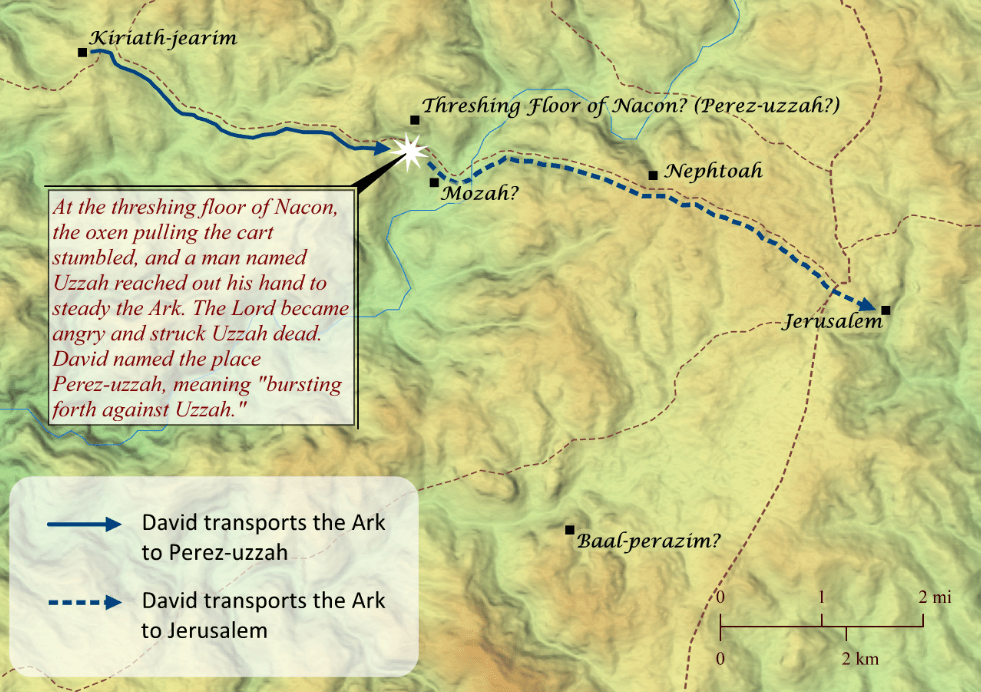
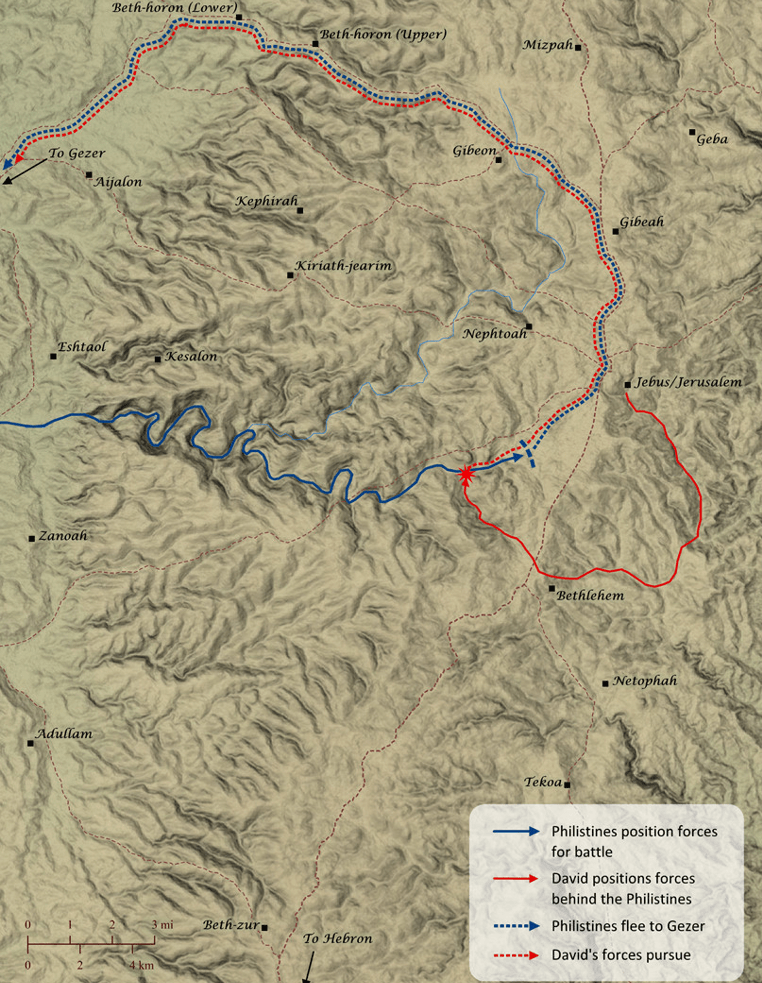
2 Samuel 5:6-10
10 And the king and his men went to Jerusalem against the Jebusites, the inhabitants of the land, who said to David, “You will not come in here, but the blind and the lame will ward you off” – thinking, “David cannot come in here.” 7 Nevertheless, David took the stronghold of Zion, that is, the city of David. 8 And David said on that day, “Whoever would strike the Jebusites, let him get up the water shaft to attack ‘the lame and the blind,’ who are hated by David’s soul.” Therefore it is said, “The blind and the lame shall not come into the house.” 9 And David lived in the stronghold and called it the city of David. And David built the city all around from the Millo inward. 10 And David became greater and greater, for the LORD, the God of hosts, was with him.
What a history for the city of Jerusalem. First spoken of in Genesis 14 when referring to Melchizedek, whom I believe was the Lord Himself, all the way to becoming the city of God, the geographical focal residence of God on earth.
Of course, there were times the city contained somewhat less glorious inhabitants.
As the tribes of Israel entered the land, they were instructed to take the land. All the land, with the strongholds throughout the area. Future Jerusalem was a city that had not been taken.
Judah attempted to take Jebus in the early times of the judges.
Judges 1:8 And the men of Judah fought against Jerusalem and captured it and struck it with the edge of the sword and set the city on fire.
You have to hand it to the tribe of Judah for the attempt, for the city is considered to be a very easily defendable city, but it turns out the nation could not keep the city under their control.
Judges 1:21 But the people of Benjamin did not drive out the Jebusites who lived in Jerusalem, so the Jebusites have lived with the people of Benjamin in Jerusalem to this day.
This is amazing since once taken, the city’s own defense would be in the victor’s favor. Yet the nation could not maintain dominance of the city.
Over 400 years had to pass before a king would take control of Jerusalem, a king who saw the importance of the city, not only as a stronghold, but also as a unifying location for a capital city. Hebron, David’s current capital was far to south now that the northern tribes were joined the kingdom, and Jerusalem became the city David had eyes for.
And David took the city.
But I don’t suppose David’s motivation for taking the city of Jerusalem was only strategic, political and covenantal related. There may have been a bit of motivation supplied by the very Jebusites themselves. Referring to David’s army as men who couldn’t fight disabled soldiers is a fairly significant slap in the face to David. That alone is enough for David to teach the Jebusites a lesson, and while the world watched David gain power, taking Jebus became a necessity!
David took the city unconventionally, for if I understand the passage, the defeat of the Jebusite’s came by stealth, ingenuity and out of the box thinking. A water stack was to be used to gain access for a small band of men to enter and attack the inhabitants. A bit reminiscent of the attack on Babylon by the Persians hundreds of years later, as they took the city of Babylon by entering through a river. But I digress.
David took the city, and David kept the city. Jerusalem, the city on a hill, became the city David would rule from, the city the Temple would be built in, and the city that would be the focus of all things spiritual in the nation of Israel.
But it would also become the city Israel would loose to Babylon 400 years after David’s victory.
In the last days of Jerusalem, Jeremiah echoed the sentiment of the Jebusites, turning the insult onto the city itself. Jerusalem was unable to defend itself, though strategically positioned, against the disabled Chaldean (Babylonian) soldier coming against it.
Jeremiah 37:10 For even if you should defeat the whole army of Chaldeans who are fighting against you, and there remained of them only wounded men, every man in his tent, they would rise up and burn this city with fire.’”
Jerusalem, though a easily defendable city, could be taken by the cripple and disabled. What a insult to the mighty city of David, and yet, as we venture through the Old Testament prophets, we see the continual sliding of Jerusalem from David’s pinnacle to Jeremiah’s day.
Never would the city rise to the heights of glory as in the days of David and his son Solomon. Even after the Babylonian captivity, the city never found strength and power in the region.
Jerusalem became a regional capital for a portion of Israel, primarily Judah and Benjamin, with the 10 northern tribes lost to the Assyrian assault many years previously.
And the temple, though rebuilt, did not contain the Ark of the Covenant, and the nation, what was left of it, could never claim the presence of God residing among them.
Jerusalem was a hollowed out city when compared with the former day’s of glory. It never ascended to it’s former glory, until one opportunity – one Person entered it’s gates.
David’s Son, Jesus the Messiah entered the gates of Jerusalem, and proclaimed the kingdom of God to be present. Not just the kingdom of Israel, but the kingdom of God! Jesus, the Greater Son of David entered the “City of Peace”, declared His Kingship and offered Jerusalem a glory greater than David’s.
We know what happened. Although given the greatest opportunity it had ever been granted, Jerusalem chose poorly, and rejected the King. A generation later, it fell to the Romans, and great was the fall of it. A horrendous and tragic end for what was once the “City on a Hill”.
The kingdom of God though continued, growing exponentially, beyond the geograpic limitations of a small city under the control of Gentile nations.
We also have opportunities provided in our lives. Some opportunities, like David in seeing the stronghold of Jerusalem, need unconventional methods to overcome.
Some opportunities, like hearing the voice of God, simply need open ears and a willing heart to accept.
Thanks again for coming to visit. I hope you found something of interest in this post and would appreciate a comment, to begin a discussion. If you know someone this blog may bless (or challenge), send them a link, so they may join us in our discussion.
My wife and I are reading through the Psalms in our evening reading and occasionally a nugget of the Psalms jumps out of the page. Don’t you love it when, after years of reading the “Old Book” passages become alive, reinforcing old teachings or simply warming your heart.
This is the book of Psalms, and it is rich.
I pray I can communicate a portion of the blessing we receive from this wonderful book.
Psalm 74:9 We do not see our signs; there is no longer any prophet, and there is none among us who knows how long. Psalm 74:10 How long, O God, is the foe to scoff? Is the enemy to revile your name forever? Psalm 74:11 Why do you hold back your hand, your right hand? Take it from the fold of your garment and destroy them!
Asaph is continuing in his struggle with the decimation of the sanctuary of God. Note that in his very lamentation of the conditions the nation is in, he speaks of signs, and that there is no prophet among them that can provide a timeline.
That screams of the human experience, of a man who is desperate to know, to be given guidance, to have someone who can provide answers. There is only silence. Deafening silence.
When a believer in in such a condition, I would suggest it is the worst of times and the best of times. (with apologies to Mr Dickens!)
Worst of Times
The worst of times, since the committed believer has cast in his entire life before the Lord, committed to the way of God, and now is in the middle of a decimation, when all appearances are dire and dark, when there is no communication from on high.
Dare I say that this is not the expectation of the typical believer when he signs up for the faith. If he is taught properly, he should understand, that difficult days will come, that to enter the kingdom of God we should expect many tribulations.
Acts 14:22 …. saying that through many tribulations we must enter the kingdom of God.
But in the midst of the tribulation, the trial or the struggle, the believer expects the presence of God to be available, to be near, to be with him.
After all, it is a promise of the very One who suffered for us, who died completely alone, under judgement and abandoned by all, so that we never need be alone.
Matthew 28:20 ….And behold, I am with you always, to the end of the age.”
Yet it appears Asaph is voicing the very thoughts I have had when going through a trial. The very thoughts many through the years have voiced.
A very quick review of the psalms provides a small sampling of the cries of those before us, when the very presence of God seemed so far away, when He seemed so distant and reluctant to enter into the fight.
Psalm 35:17 How long, O Lord, will you look on? Rescue me from their destruction, my precious life from the lions! Psalm 79:5 How long, O LORD? Will you be angry forever? Will your jealousy burn like fire? Psalm 89:46 How long, O LORD? Will you hide yourself forever? How long will your wrath burn like fire?
This feels like an abandonment, a loss of connection, an isolation from the source of life. From the Written Word, we find many instances when the prophet, priest or king has experienced this loss. It seems this is not an uncommon experience for the committed to go through.
It certainly appears we have a conflict in the message. Faithful men of God have voiced the experience of abandonment, as Asaph has in this psalm. And yet the Master has promised to never leave us.
What can we say about this? What is going on?
Best of Times
Given the conditions Asaph was facing, to describe them as the best of times may seem ridiculous. I admit it. To be under persecution, under desolation, to only see the bleak and dark times, AND to not sense the person of God in the midst of the trial is rough. Very rough.
As with Asaph, I could admit that all my thoughts during these difficult times swirl around the struggle, around the doubts and possible further disappointing news in the coming days. No news of rescue, or even hearing of future relief. No one is able to provide a schedule when the Lord will provide relief. The coming days stretch out to a hopeless horizon.
So how is this condition of seeming abandonment the best of times? I realize I have not made a good case for this, but let me try steer the discussion to make the point.
You just need to stay with me till the end.
Remember that the psalmist spoke of no signs for the believer? I think this may hold a clue for the believer to enter into the best of times, even though he has seemingly been abandoned by God.
Asaph seemed to be expecting a sign to find relief, even as I do in the midst of a trial. But even as I refer to signs, I realize I am opening up a pandora’s box of thinking.
What is the intent of signs?
The intent of signs may be multiple, but for this poor ol’ fella, signs were primarily provided to a people group that had depended on signs throughout their history. Even the apostle will give us the general truth of the Jewish mindset towards God.
1 Corinthians 1:22 For Jews demand signs and Greeks seek wisdom,
Some demanded signs. We will address that topic in the next portion, but for now, we need to consider that the intent of signs was to point the watcher to a subject. Specifically, signs were to bring the witness to the God who provided the sign. Whether it be Elijah with the fire from heaven or the Son providing sight to the blind, each sign was provided to direct the witness of the sign to the God who provided the sign.
In summary sign were to direct the focus of those who witnessed the sign to God.
Not to provide eye candy, or a mode of life to maintain relationship with God. Imagine the only time your son loves you is when you flash a $50 in front of his eyes? Not an exact comparison, but somewhat similar to providing signs to maintain a relationship. Somewhat beggarly in my mind.
Are signs required?
John 4:48 So Jesus said to him, “Unless you see signs and wonders you will not believe.”
It seems during the discussion with the officials request for healing of his son, Jesus declares to the crowd that they need signs. As you may know, I am a citizen of Texas and as a citizen, have learned that to include two or more in a conversation, I use the term y’all.
As far as I understand this passage, if we were to translate Jesus statement in Texan, it might be…..
Unless y’all see signs and wonders y’all will not believe.
It seems there was an element in the crowd that Jesus was calling out to, that had began to require signs from the Lord. Though He healed the officials son, it was remotely, without anyone in the vicinity seeing this miracle, therefore negating the benefit to those demanding it.
Are signs a replacement for faith?
Signs can be wonderful experiences in the believers life, even initiating the faith of the saint. During our walk with the Lord we may experience miracles, mighty works, and amazing coincidences.
As I have testified to many, my family recently experienced a miraculous healing of my little grandson. He was found face down in the pond, not breathing, blue in the face and not responsive. The ambulance came and many thought he was gone.
It was the mercy of God in restoring this little fella, and just a few short days after his recovery, he told his momma that he know who made him.
Amazing grace and mercy! I was on top of the world, telling those I know and those I had never met. It lasted for about a week. Interruptions, distractions and responsibilities brought about a fading of the experience. It is so with all signs.
Don’t get me wrong – I am so thankful for His mercy in restoring little Theodore. He is quite the youngin’
But for the believer, it is the promise of God that stands the test of time. At any time, for any reason, in the midst of any trial, the Word of God is available to strengthen the believer, to focus the believer, to guide the believer, to encourage the believer, even when all feels desperate, dark and hopeless.
When I think of an Old Testament saint who typifies this very truth, I think of David as he was on the brink of mutiny, with his men turning on him, having lost his family and every hope gone. I have spoke on this passage earlier, but 1 Samuel 30:6 is a precious truth in the worst of times
6 And David was greatly distressed, for the people spoke of stoning him, because all the people were bitter in soul, each for his sons and daughters. But David strengthened himself in the LORD his God.
David was delivered by God from death even as future king was on the cusp of the grave at this time. He found encouragement in the valley of death in God alone. The Greater Son of David was not delivered from death. Yet He trusted His Father when all was going wrong. And He was delivered through death! What an amazing life Jesus led.
To mimic Him is such a high calling. To simply trust His Word when all of life is in desolation, even when the enemy has run roughshod through our lives, let us always return to the promise of God. Let us experience the best of times with the knowledge that God is with us even when all is falling apart, when all is collapsing, when all is dire and dark.
It is the walk of faith. May we have strength from God to walk it, finding victory even in the midst of disappointments and discouragements.
How did the ol’ prophet describe this walk of faith?
Habakkuk 3:17-19
17 Though the fig tree should not blossom, nor fruit be on the vines, the produce of the olive fail and the fields yield no food, the flock be cut off from the fold and there be no herd in the stalls, 18 yet I will rejoice in the LORD; I will take joy in the God of my salvation. 19 GOD, the Lord, is my strength; he makes my feet like the deer’s; he makes me tread on my high places. To the choirmaster: with stringed instruments.
As many who have followed me for a bit, I have fallen into the Psalms, and I can’t get up! (As if I would want to.) The Psalms are a majestic collection of poetry, of heart felt human experiences that constantly challenge me in my own frail attempt to follow the true King. As many of the Psalms are written by David, my study on the Psalms has spurred me on to looking at the life of David, is the main contributor to this book, and to follow the victories and tragedies of the shepherd King of Israel.
Many times in the narrative, we will see the Lord Jesus, imperfectly, yet a reflection of His spirit in a man with weaknesses.
2 Samuel 5:1-5 1 Then all the tribes of Israel came to David at Hebron and said, “Behold, we are your bone and flesh. 2 In times past, when Saul was king over us, it was you who led out and brought in Israel. And the LORD said to you, ‘You shall be shepherd of my people Israel, and you shall be prince over Israel.’” 3 So all the elders of Israel came to the king at Hebron, and King David made a covenant with them at Hebron before the LORD, and they anointed David king over Israel. 4 David was thirty years old when he began to reign, and he reigned forty years. 5 At Hebron he reigned over Judah seven years and six months, and at Jerusalem he reigned over all Israel and Judah thirty-three years.
He is King. He has been accepted by the nation after what seemed like a never ending time of persecution by the very people who now come before him. He who persecuted him has been defeated, and the previous kingdom has been vanquished, even though a puppet king was installed. Those who troubled him have seen the error of their ways, repented and made covenant with the King appointed by God.
I am speaking of David in this instance, but in this short passage, it seems foolish to ignore this picture of Jesus being crowned by God and yet persecuted by the people. Jesus, King of all and owning all authority, yet being chased and persecuted in His church, by the very people He came to serve and save. Though David’s reign is an extended reign, speaking of a test being passed, (for 40 is often associated with testing in the Bible), how much more can we imagine the eternal victory and reign of the Savior, for He passed every test, every temptation, every trial to become the perfect and all righteous King of all.
Back to the text.
The elders came to David and the first thing out of their mouth was this identification of sameness, of being of his bone and flesh.
This seems to be such an obvious point to make that almost seems redundant. Of course David and the Israelites were of the same “bone and flesh”. But let us think about this for a moment.
David was ruling in Hebron, and the tribe of Judah had received him as their king. Eleven other tribes had remained with Saul and his throne, even after his death. Let us remember that David was of the tribe of Judah, and this direct connection could be proven and utilized to justify his reign over Judah. The connection was very direct, personal and in the mind of those in the other tribes, able to be leveraged to prioritize Judah over all of the other tribes.
The northern tribes had to find a connection to being parity before the King and his “favorite” tribe. And hence the claim of same “bone and flesh”. The leaders of the eleven tribes hailed back to Abraham, Isaac and Jacob, claiming – rightly so – that the King of Israel is over all the tribes, that each and every tribe had an equal right to their king.
Though he be but a human, the King was to rule over all the tribes.
I can’t help but to turn back to the image displayed in this passage regarding our King, the eternal King Jesus. Though He initially came for the people of a nation to submit to Him, in their rejection, He has accepted all others also into His Kingdom.
No longer can some claim a “bone and flesh” ownership to the True King. No longer may this be used to include or exclude others from His Kingdom, for He has partook of the “same things” of all creation, not of one or any other group or tribe, nation or people group.
Hebrews 2:14 Since therefore the children share in flesh and blood, he himself likewise partook of the same things, that through death he might destroy the one who has the power of death, that is, the devil,
He became human to rescue lost humans, and though a Jew by nationality, this identification was never His end focus. He rightly sought and gained the throne over all, not just one nation out of many.
True subjects of the Kingdom, those who understand Who the King is and His incredible mission to draw those subjects to Him, will worship Him in spirit and truth, not lean on physical associations, such as “bone and flesh”. How limiting and divisive!
John 4:23 But the hour is coming, and is now here, when the true worshipers will worship the Father in spirit and truth, for the Father is seeking such people to worship him.
David was about to rule over the nation, bring it to the brink of greatness, dominating his enemies and producing a fighting force that was unstoppable.
A great king was on the move! A Greater King is currently on the move! Watch for His hand in your life, and listen to His counsel, for He wants to guide us.
Let us be willing to come before Him.
Thanks again for coming to visit. I hope you found something of interest in this post and would appreciate a comment, to begin a discussion. If you know someone this blog may bless (or challenge), send them a link, so they may join us in our discussion.
My wife and I are reading through the Psalms in our evening reading and occasionally a nugget of the Psalms jumps out of the page. Don’t you love it when, after years of reading the “Old Book” passages become alive, reinforcing old teachings or simply warming your heart.
This is the book of Psalms, and it is rich.
I pray I can communicate a portion of the blessing we receive from this wonderful book.
Psalm 74:4 Your foes have roared in the midst of your meeting place; they set up their own signs for signs. Psalm 74:5 They were like those who swing axes in a forest of trees. Psalm 74:6 And all its carved wood they broke down with hatchets and hammers. Psalm 74:7 They set your sanctuary on fire; they profaned the dwelling place of your name, bringing it down to the ground. Psalm 74:8 They said to themselves, “We will utterly subdue them”; they burned all the meeting places of God in the land.
Asaph is describing the complete desolation of the sanctuary of God. Not only a desolation of the sanctuary, but the apparent overpowering of the God behind the sanctuary. This is the overarching struggle for Asaph, for his faith in the God of Israel is in a God who parts the water, who delivers nations from bondage, who provides offspring to barren women and wins battles by unconventional means.
How could this desolation be happening? Asaph knows God can do something, but there is no response. It is as if God has abandoned His people. As we spoke of in our last post, Asaph called out for God to run to their rescue. God had abandoned them, and He needed to be reminded of His covenant with His people, for how could the foes find victory if God was still present?
Those foes in the sanctuary had no regard for the importance of the structure, what it represented and what they were doing.
Or did they?
Notice the last verse in our reading this morning. In their effort to subdue those of the land of Israel, the foes knew they needed to cripple the faith of the people. The synagogues (or local meeting places) along with the temple/tabernacle needed to be destroyed for victory over the people.
In order to subdue the people, all the meeting places of the people had to be destroyed. This is and has been the adversaries strategy for eons. Subdue the people, by destroying community, by tearing apart the body of Christ.
Even as the enemy took wild stokes of their axe on the structure of the sanctuary, so today we find an onslaught of attacks on the truth of God, the faith of the believer and the desire of the enemy to keep believers separate from each other.
During my weekday commute, I have been listening to the beatitudes in Matthew. Since it is not a time of study, I have been listening to the passage out of paraphrase called the Message. The passage in chapter 5 speaks of another reason for persecution by the enemies of faith.
Matthew 5:10-12
You’re blessed when your commitment to God provokes persecution. The persecution drives you even deeper into God’s kingdom. Not only that – count yourselves blessed every time people put you down or throw you out or speak lies about you to discredit me. What it means is that the truth is too close for comfort and they are uncomfortable. You can be glad when that happens – give a cheer, even! – for though they don’t like it, I do! And all heaven applauds. And know that you are in good company. My prophets and witnesses have always gotten into this kind of trouble.
Not only do our foes know that to “defeat God”, they need to defeat the people of God. They hate the truth, for as they vigorously deny it, they are witness to the undeniability of its reality. Every time we join together in true worship, whether it be in massive congregations or small home studies, the sanctuary of God is revealed to the lost, the truth of the gospel is displayed to the foe, and an illogical hatred erupts in the heart and mind of those opposed to God and His people.
The foes destroying the sanctuary of God in our verses were not haphazard in their strategy of desolation. The battle plan has never been altered for time immemorial. Sure – the specific conditions are different, the faces may be unfamiliar, but the intended results are always the destruction of a unified, cohesive body of Christ, a congregation that is focused on the holy, and that seeks to follow the Truth.
As we seek to follow the truth, opposition will come in some form or another. It is the way of the world, that the god of this world does all he can to “swing the axe” within the sanctuary.
May we be strong believers, seeking to honor God, even as we may be entering a time of contradiction, when it appears God is quiet.
May we be faithful, knowing the heart of God even if He is quiet.
My wife and I are reading through the Psalms in our evening reading and occasionally a nugget of the Psalms jumps out of the page. Don’t you love it when, after years of reading the “Old Book” passages become alive, reinforcing old teachings or simply warming your heart.
This is the book of Psalms, and it is rich.
I pray I can communicate a portion of the blessing we receive from this wonderful book.
Psalm 74:1 A Maskil of Asaph. O God, why do you cast us off forever? Why does your anger smoke against the sheep of your pasture? Psalm 74:2 Remember your congregation, which you have purchased of old, which you have redeemed to be the tribe of your heritage! Remember Mount Zion, where you have dwelt. Psalm 74:3 Direct your steps to the perpetual ruins; the enemy has destroyed everything in the sanctuary!
Before we dig into this psalm, it may be good to recognize that the background to this psalm is somewhat debatable. Does Asaph refer to the times of the tabernacle being overtaken at Shiloh, as the Philistines took the ark and defeated the Israelites? Asaph does speak of Shiloh in a future Psalm, of God’s abandonment of the tabernacle at Shiloh.
Or might this description of the sanctuary being destroyed be referring to the Babylonian invasion, with the author being of the sons of Asaph.
These questions will not be resolved in this post of course, but the fact that this psalm may refer to one of multiple falls of the sanctuary speaks of the impact of our own selfish behavior in relation to the people of God.
As we ignore (or refuse) to be the church, our enemy will come and seek to destroy, whether it be by outside or inside forces. Worse yet, and for Asaph the focus of this Psalm, is that God Himself pulls away from the sanctuary, allowing the sanctuary to be defiled, destroyed and abandoned, giving our enemy an apparent victory.
The topic of God abandoning His sanctuary, abandoning His people is the struggle Asaph speaks of in this psalm. As with Psalm 73, where Asaph struggled with the ease of the wicked, this psalm also provides us a glimpse into the faith struggle of this great man of God.
Our introductory verses speak of Asaph’s shock, of how God had cast off His people forever. Let us not dull the sharpness of this question. To be cast off is to be spurned, to be forcefully rejected.
David warned his son of this danger!
1 Chronicles 28:9 “And you, Solomon my son, know the God of your father and serve him with a whole heart and with a willing mind, for the LORD searches all hearts and understands every plan and thought. If you seek him, he will be found by you, but if you forsake him, he will cast you off forever.
This question of being cast off flies in the face of the constant claims of God’s promises for the people of God. Asaph will attempt to remind God of who He is and how He has made claims and promises to the people He has led.
The Sheep of His pasture
This phrase speaks of God’s ownership of His people. Some may relate this phrase to God’s ownership of Israel due to His creative acts, that the nation is His due to the original creation, and they were the chosen people for His purposes.
The concept of creation and purchasing is intertwined in Asaph’s plea to God.
The congregation He purchased
קָנָה qânâh – To purchase, sometimes to create. Moses used this term in relating to the nation being redeemed from Egypt.
Exodus 15:13a “You have led in your steadfast love the people whom you have redeemed.
Eve declared she had “gotten” a man with the help of God using the same term.
Genesis 4:1 Now Adam knew Eve his wife, and she conceived and bore Cain, saying, “I have gotten a man with the help of the LORD.”
God has created this nation of Israel out of nothing, for what nation has ever begun from a promise to a single barren man? His creation of the nation of Israel truly mimics His creation at the beginning. Out of nothing, God creates all things!
Asaph understands this, and reminds our God of His ownership and purchase of the people He is acting against.
The people He redeemed
גָּאַל gâʼal
Those He redeemed are the people of His inheritance. The redemption spoken of here looks back to the time when they were under bondage, when they had no strength, no freedom, and no hope. After the sanctuary had been destroyed, these redeemed were again experiencing the same condition of bondage and the loss of hope.
Asaph is reminding his God of the redemption He provided and is now effectively lost to His people. How could this happen?
Based on these descriptions of how God has related to the nation, Asaph implores Him to pay attention, to act, to run to their rescue, to come and help. God has obviously been absent, even working actively against the sheep of His pasture. Asaph is asking for His return, His turning back to His people.
The works of God are mysterious, and as the people of God, we understand so little at times. Even as we see through a glass darkly, and at times when the Lord may be teaching very hard lessons, we have the knowledge those of the Old Testament only imagined. Our God, no matter the situations we find ourselves in, know of the Messiah, of His acts of sacrifice, of His showing the love of God to weak, broken and helpless sinners.
We know of His person, for He walked with us, and died for us. He is with us, and we can take comfort in the midst of trials we don’t fully understand. For Asaph, he will continue to struggle with the conditions he is living in, just as we might.
Thankfully, we have the blessing of knowing the One who proved the love of God for us.
As many who have followed me for a bit, I have fallen into the Psalms, and I can’t get up! (As if I would want to.) The Psalms are a majestic collection of poetry, of heart felt human experiences that constantly challenge me in my own frail attempt to follow the true King. As many of the Psalms are written by David, my study on the Psalms has spurred me on to looking at the life of David, is the main contributor to this book, and to follow the victories and tragedies of the shepherd King of Israel.
Many times in the narrative, we will see the Lord Jesus, imperfectly, yet a reflection of His spirit in a man with weaknesses.
5 Now the sons of Rimmon the Beerothite, Rechab and Baanah, set out, and about the heat of the day they came to the house of Ish-bosheth as he was taking his noonday rest. 6 And they came into the midst of the house as if to get wheat, and they stabbed him in the stomach. Then Rechab and Baanah his brother escaped. 7 When they came into the house, as he lay on his bed in his bedroom, they struck him and put him to death and beheaded him. They took his head and went by the way of the Arabah all night, 8 and brought the head of Ish-bosheth to David at Hebron. And they said to the king, “Here is the head of Ish-bosheth, the son of Saul, your enemy, who sought your life. The LORD has avenged my lord the king this day on Saul and on his offspring.” 9 But David answered Rechab and Baanah his brother, the sons of Rimmon the Beerothite, “As the LORD lives, who has redeemed my life out of every adversity, 10 when one told me, ‘Behold, Saul is dead,’ and thought he was bringing good news, I seized him and killed him at Ziklag, which was the reward I gave him for his news. 11 How much more, when wicked men have killed a righteous man in his own house on his bed, shall I not now require his blood at your hand and destroy you from the earth?” 12 And David commanded his young men, and they killed them and cut off their hands and feet and hanged them beside the pool at Hebron. But they took the head of Ish-bosheth and buried it in the tomb of Abner at Hebron.
Due to the history of the Beerothites, and the likelihood of these men being mere mercenaries, this action of assassination should not surprise us. These men saw an opportunity, but did not consider David’s history with those killing for his sake and took action. A fatal mistake!
I mentioned the history of the Beerothites in an earlier post, of how this tribe had deceived Joshua and entered into a treaty with the nation of Israel under false pretenses. Now, three centuries later, this tribe provides two mercenaries to perform a treasonous act against their king.
For treason, these two men did not disappoint. Walking into the palace, and stabbing the king in broad daylight is gutsy. To leave the palace with the head of the king is beyond audacious – that is simply foolhardy. Yet they were able to do this act of treason, seemingly without any concern of getting caught. Was it that they were part of the royal guard, or was is that since Abner had been taken out of the picture, they entire security around the king was lax. I will leave that with my reader.
These two game changers, having committed a capital offence head off to the upcoming king, a man they seemingly know little of. Surely they didn’t hear the story of that fellow who presented to David the news of Saul’s death. If that man had killed Saul, as David understood, it could be reasoned it was in war, and bad things happen in war. But that reasoning did not wash with David, for that fellow was put to death for raising his hand against the Lord’s anointed!
These fellows had no excuse. No war, the king was at a weak time, and the army that should protect is the killing machine?
Verse 11 is the key verse, where David lays into these fools.
How much more, when wicked men have killed a righteous man in his own house on his bed, shall I not now require his blood at your hand and destroy you from the earth?”
Suffice to say – they died. And David sought to honor Ish-bosheth with entombing him in Abner’s tomb.
Saul had no tomb? What is David doing in laying to rest Ish-bosheth in Abner’s tomb. It is not that Hebron was King Saul’s capital city – that was Gibeah.
If my reader has any possible reasoning for David to provide this specific honor to Ish-bosheth, please let me know in the comments.
Otherwise, this treacherous act of two mercenaries has set the stage for David to rule all of Israel. We will begin to shift in the story of David from watching a man on the run, one who was treated like an enemy by the powers that reigned, to one who ascended to the throne, reigning as God had promised.
Throughout the early years of David, we have seen many instances where David’s life reflected the persecuted life of his Greater Son.
So many similarities to Jesus as He walked among us.
Now as we enter a time where David is enthroned, we will find a man besot with sin, struggling with his own demons, and yet being led by the Father, receiving promises from God and establishing Israel on a path of tremendous world influence, spreading the glory of God throughout the region.
Jesus is also on the throne, ruling over the Kingdom of heaven. His ascension centuries back has become the King of all nations.
Revelation 15:3 And they sing the song of Moses, the servant of God, and the song of the Lamb, saying, “Great and amazing are your deeds, O Lord God the Almighty! Just and true are your ways, O King of the nations!
Jesus’ rule continues throughout eternity, and His righteous reign will lead each of us to greater victories as we follow the One who is our Master.
Thanks again for coming to visit. I hope you found something of interest in this post and would appreciate a comment, to begin a discussion. If you know someone this blog may bless (or challenge), send them a link, so they may join us in our discussion.
My wife and I are reading through the Psalms in our evening reading and occasionally a nugget of the Psalms jumps out of the page. Don’t you love it when, after years of reading the “Old Book” passages become alive, reinforcing old teachings or simply warming your heart.
This is the book of Psalms, and it is rich.
I pray I can communicate a portion of the blessing we receive from this wonderful book.
Psalm 73:27 For behold, those who are far from you shall perish; you put an end to everyone who is unfaithful to you. Psalm 73:28 But for me it is good to be near God; I have made the Lord GOD my refuge, that I may tell of all your works.
Let’s remember the rollercoaster ride Asaph has spiritually taken. Early in the Psalm, he was paying attention to those in Israel who were finding success financially, who were enjoying a comfortable life, who had acquired image and power in the community. It seemed that these folk, that Asaph called “wicked” were doing just fine!
As a matter of fact, not only were they doing fine, it appeared God was allowing unrighteousness to gain a foothold, for those whom Asaph called “wicked” were snubbing their nose at God, ignoring the covenant they belonged to, without any negative impact.
Everything seemed so backwards for Asaph, and for all appearances, so real, so factual, so true, and so easy. No need for morning prayers, or torah reading. Observance of temple rituals could be ignored, and the required sacrifices were put on hold.
The life of the wicked that Asaph observed was the life to choose.
He wanted it, and was entering into the sin of envy, which was bringing him to the doorstep of idolatry. He freely admitted his conflict, and was experiencing an inner battle that was relentless, with the ultimate victor seeming to be the lifestyle of the wicked, with all the trappings of ease, comfort and possessions.
That is until he entered the sanctuary of God and he finally understood the reality instead of a image he perceived of both the wicked and his own life.
In our short passage this morning, Asaph is concluding his findings, and provides a stark difference of the future of both the wicked and the righteous. Earlier he had mentioned how his efforts had all been in vain, useless efforts for success in life.
Psalm 73:13 – All in vain have I kept my heart clean and washed my hands in innocence.
He sees things completely different now.
Any efforts Asaph performed in being near to God are no longer considered a burden, a vanity or a problem. He sees that the lifestyle and focus of the wicked is taking them farther and farther away from God. The term Asaph uses regarding the actions of the wicked is an adjective describing a removing, a departure, a going away from. The lifestyle and choices of the wicked are not neutral, and God has not provided any allowance for a wicked lifestyle. The judgement of the wicked’s lifestyle is that it takes the worker away from God.
God is still the center of all, and those chasing the life of the wicked are running far from God. They are becoming remote, and as they are moving away from God, the source of all life, it is obvious the end result is perishing.
No life! God will put an end to the unfaithful!
For Asaph, and for all who have any sense, it is good to be near God. He doesn’t speak of his end, or of his destiny as he did regarding the wicked, but of his current condition of seeking God, of his present blessing. For Asaph, his condition is “good”. The term speaks of wealth, prosperity, favor, goodness and of a better condition. All that Asaph was being lured away from God by the appearances of the wicked were supplied by the very nearness of God.
As we make the Lord our God our refuge from the temptations and lurings of the world and the wicked, we will find a life of reality, the best of life and enjoy satisfying blessings in God alone.
May we be full of the goodness of God in our lives such that we also tell of all the works of God with those we rub shoulders with, even boasting of the goodness of God when compared with the frail, unstable and fearful lifestyle of the wicked.
As many who have followed me for a bit, I have fallen into the Psalms, and I can’t get up! (As if I would want to.) The Psalms are a majestic collection of poetry, of heart felt human experiences that constantly challenge me in my own frail attempt to follow the true King. As many of the Psalms are written by David, my study on the Psalms has spurred me on to looking at the life of David, is the main contributor to this book, and to follow the victories and tragedies of the shepherd King of Israel.
Many times in the narrative, we will see the Lord Jesus, imperfectly, yet a reflection of His spirit in a man with weaknesses.
4 Jonathan, the son of Saul, had a son who was crippled in his feet. He was five years old when the news about Saul and Jonathan came from Jezreel, and his nurse took him up and fled, and as she fled in her haste, he fell and became lame. And his name was Mephibosheth.
Saul’s kingdom was falling, and his son Ish-bosheth would soon be dethroned, even executed. The end was near for the family of Saul, and the northern tribes knew that the recent death of Abner, their only real hope, indicated King David was in the ascendency. Not only was the political situation fragile for the northern tribes, with a king who was frozen in fear, those of the lineage of Saul understood the downfall meant their necks were on the line, and any direct descendent of Saul, a potential king in the line of Saul, would surely be a threat to the incoming power found in the throne of David.
Even a five year old boy presented a potential threat to an incoming power, and this nurse, upon hearing of the death of both Saul and Jonathon, this little boys father, had the foresight to understand the danger Jonathon’s boy was in. Her flight though, fueled by good intentions, was unwarranted, for the King coming was already under a covenant with this boy’s father, a covenant that would provide for Jonathon’s child, protect him and show the type of king David was.
Yet through the concern and fear of the nurse, young Mephibosheth would live his life as a cripple, restricted in his ability to serve in any army, to serve as a strong leader, and become a picture of the regal line of Saul in the future. He was somewhat helpless, due to an accident outside of his control, and we shall see in future passages of the covenant keeping character of the new and coming King of Israel.
David would not only show mercy to Mephibosheth in sparing his life, but also provide him his grandfathers lands, and treat him as a son of the king, inviting him to continually eat at the kings table.
2 Samuel 9:13 So Mephibosheth lived in Jerusalem, for he ate always at the king’s table. Now he was lame in both his feet.
What type of King brings a potential enemy to his table?
What type of King invites a potential threat to live in the very capital city of the nation, the center of political power?
What type of King provides for a cripple, one who is unable to serve, even one who would be considered a burden to take care of?
2 Samuel 9:7 And David said to him, “Do not fear, for I will show you kindness for the sake of your father Jonathan, and I will restore to you all the land of Saul your father, and you shall eat at my table always.”
What type of King would return a lost inheritance to a former enemy? David returned to Mephibosheth the lands of his grandfather, a sizable estate, and a house that he had no right to other than through a covenant David made with his father.
David sought to follow the Lord in his kingdom, and in this quick character review of Mephibosheth, a crippled heir of Saul, we see a coming King who was not typical, was not as expected, and who sought to reign in truth and under covenant.
What a King!
Thanks again for coming to visit. I hope you found something of interest in this post and would appreciate a comment, to begin a discussion. If you know someone this blog may bless (or challenge), send them a link, so they may join us in our discussion.
My wife and I are reading through the Psalms in our evening reading and occasionally a nugget of the Psalms jumps out of the page. Don’t you love it when, after years of reading the “Old Book” passages become alive, reinforcing old teachings or simply warming your heart.
This is the book of Psalms, and it is rich.
I pray I can communicate a portion of the blessing we receive from this wonderful book.
Psalm 73:23 Nevertheless, I am continually with you; you hold my right hand. Psalm 73:24 You guide me with your counsel, and afterward you will receive me to glory. Psalm 73:25 Whom have I in heaven but you? And there is nothing on earth that I desire besides you. Psalm 73:26 My flesh and my heart may fail, but God is the strength of my heart and my portion forever.
Asaph has been through a struggle. From temptation through inner trials and finally to a final triumph through a realization of the glories of God and his own sinfulness. He has finally settled in a good place. A place of rest, of peace before the Lord, and a deeper understanding his place before God.
Four areas of blessing are realized by this man of faith.
Security
While Asaph was in his struggle, watching the rich get richer, the wealthy dodge judgement, the prosperous avoiding discomfort and pain, Asaph was struggling to keep his heart pure. At times, I imagine his heart was not quite hitting the mark, slightly less pure than the desired goal! A bit impure, a bit jealous of the lost, a bit envious. And we know the seriousness of envy. It is the precursor to full blown idolatry.
Yes – Asaph was dancing with dangerous partners when he envied the ways of the rich. Even in his wanderings, Asaph confesses that the Lord was his security, his faithful God, his only hope through the dark, the hand that was ever present in his life.
Guidance
Asaph may have been breaching this topic in our previous verse when he speaks of God holding his right hand. He comes out and clearly states the guiding ability and performance of God in his life, specifically speaking of God’s counsel.
Counsel is another word for advice, and the Scriptures give abundant testimony to the wisdom of receiving counsel.
In Asaph’s specific case, I lean to understanding his referencing the inner counsel that he eventually became attuned to as he entered the sanctuary of God. To my fellow believers, we know that in the still quietness, if we are willing to hear, the Lord will provide guidance in alignment with his revealed Word.
As an aside to this topic, it is wise for the believer to consider the importance of counsel from other believers. I have for too long sought only the inner counsel, without allowing for believers to give guidance. Proverbs addresses this truth numerous times.
Proverbs 11:14 Where there is no guidance, a people falls, but in an abundance of counselors there is safety. Proverbs 15:22 Without counsel plans fail, but with many advisers they succeed. Proverbs 24:6 for by wise guidance you can wage your war, and in abundance of counselors there is victory.
One note of clarity. The word speaks of a multitude of counsellors. Having one counsellor may be the equivalent of having an echo chamber. Not wise at all. Be wise and get bunches of counsel!
Sufficiency
What is it for something to be sufficient? Does it imply that for something or someone to be sufficient is the availability of everything you could imagine? Is it a way to denote that all things are good, or is it that nothing bad, or evil will enter my experience?
For something, or in Asaph’s case, for someone to be sufficient, simply means that God is enough. It is not referring to the limitless abilities of God to perform, provide or produce for His saint. For God to be sufficient for Asaph means that God is enough.
We humans are a temporal, time and space based creature. We are limited in every possible manner. We can’t even understand what it means to be limitlessness, to be eternal, to possess all powerful or all knowledge. We are limited creatures and have limited needs, though they may seem great to us as we live in our bubble.
God is bigger than our bubble!
Ephesians 3:20 Now to him who is able to do far more abundantly than all that we ask or think, according to the power at work within us,
Though Paul speaks of God as being able to do far more abundantly than all that we ask or think, for Asaph, his personal faith findings are that God is enough.
Paul spoke of the abilities of God, and they are truly limitless, but for sufficiency’s to be considered speaks the language of satisfaction, not abilities. Satisfaction of the saint’s deepest needs fulfilled in Christ. As for the wants of the believer, they may be ignored since they are but distractions, but that for which the saint was made for, satisfaction is found in God Himself. He satisfies the saint in areas he may not even understand!
There is a difference, and may I suggest that realizing the sufficiency, the “enoughness” of God in our hearts is a tremendous blessing for the believer to enter into.
Strength
My heart is ticking away. It has been ticking away for over 67 years. 2,817,995,627 beats, give or take. Close to three billion beats. That is crazy, and thankfully that ol’ ticker has never missed or skipped a beat!
That particular physical truth astounds me, and except for this past couple minutes, I have been blissfully ignorant of this exceptional display of the keeping power of God over my physical life.
How much more am I unaware of the strength God provides in the midst of trials and blessings, sickness and weakness, struggles and victories. One day, I will find out my incredible ignorance of God’s strength being provided to my insignificant life, the continual faithful infusion of His mighty hand, and His power provided despite my pride and arrogance.
To think I am the source and strength of all my blessings! Poppycock! (Of course, I blame Him for any and all my failures, but even in this, it shows my darkness of mind!)
He is my strength, especially in my weakness, in my realization that I have no real ability, no real strength, no real wisdom, knowledge or discernment. I could go on with what I am not, but to what profit?
He is our strength.
For Asaph, as he fought his way through this Psalm, and provides for us the wisdom he accrued through it, he can honestly say his head is screwed on straight now.
He is in a good place, seeing God for who God is, and Asaph for who Asaph is.
As many who have followed me for a bit, I have fallen into the Psalms, and I can’t get up! (As if I would want to.) The Psalms are a majestic collection of poetry, of heart felt human experiences that constantly challenge me in my own frail attempt to follow the true King. As many of the Psalms are written by David, my study on the Psalms has spurred me on to looking at the life of David, is the main contributor to this book, and to follow the victories and tragedies of the shepherd King of Israel.
Many times in the narrative, we will see the Lord Jesus, imperfectly, yet a reflection of His spirit in a man with weaknesses.
2 Samuel 4:1-12 1 When Ish-bosheth, Saul’s son, heard that Abner had died at Hebron, his courage failed, and all Israel was dismayed. 2 Now Saul’s son had two men who were captains of raiding bands; the name of the one was Baanah, and the name of the other Rechab, sons of Rimmon a man of Benjamin from Beeroth (for Beeroth also is counted part of Benjamin; 3 the Beerothites fled to Gittaim and have been sojourners there to this day).
David’s kingdom was shaken by the murder of Abner, with David taking charge, openly declaring a curse on Joab, openly mourning over Abner’s death, and personally fasting over the circumstances that caused this injustice. In all his actions, the Word speaks of the people of Hebron, nay, all the people and all Israel recognizing the actions of the king, and being pleased.
2 Samuel 3:36 And all the people took notice of it, and it pleased them, as everything that the king did pleased all the people. 2 Samuel 3:37 So all the people and all Israel understood that day that it had not been the king’s will to put to death Abner the son of Ner.
As a study in contrasts, the writer of 2 Samuel provides Ish-bosheth’s mighty acts of leading his people. Doh – not so mighty, for Ish-bosheth crawled up into a fetal position (metaphorically speaking of course!) and waited.
Now I don’t suppose I would venture a guess as to what he was waiting for, but in times of numbing fear, it is fair to say that nothing else enters the mind. Fear is a controlling, all powerful emotion that consumes the one living in it.
Ish-bosheth waited. And his people were dismayed, even terrified at the outcomes of his leadership, at the condition of their nation. Meanwhile, these same subjects of Ish-bosheth were looking south. That David sure was a leader!
Ish-bosheth’s days were numbered, for David will surely come into his decapitated, weak nation, take it militarily and rid the united nation of Israel of any future threat of the lineage of king Saul. Ish-bosheth would have to die!
Enter Rachab and Baanah, two brothers that had a past. During the conquest of Canaan, under the leadership of Joshua, those of Beeroth, along with three other Hivite towns deceived Joshua with a ruse, entered into a treaty with Israel that caused dissension in the ranks of the Israeli army, and was a blot on Joshua’s leadership. Read about this deception and the result of it in Joshua 9
They were a people that were to be conquered, not assimilated into the covenant nation!
Joshua made sure that this deception would be noted in the annals of Israel’s history, for he pronounced a curse on them, stating they would be restricted to areas of service to the nation of Israel only.
Joshua 9:23 Now therefore you are cursed, and some of you shall never be anything but servants, cutters of wood and drawers of water for the house of my God.”
Over three centuries later, the Beerothites were still a presence in the nation, with these two men serving as men leading raiding bands for Saul, and Saul’s son.
The term for “raiding bands” has a wide definition, ranging from a formal division of an army, to describing a marauding band of robbers, effectively mercenaries, guns for hire, men who had no allegiance but to the mighty buck!
Yes Ish-bosheth’s days were numbered, but not from the armies of David, but of his own, from treachery within his own ranks.
Ish-bosheth was a man used by Abner, who trusted Abner, obeyed Abner and was abandoned by Abner. Is it any wonder that the Word constantly instructs us to trust the Lord and not man?
Trust Him today for whatever challenges you may be facing. He is good to those of a pure heart and a humble spirit.
Thanks again for coming to visit. I hope you found something of interest in this post and would appreciate a comment, to begin a discussion. If you know someone this blog may bless (or challenge), send them a link, so they may join us in our discussion.
My wife and I are reading through the Psalms in our evening reading and occasionally a nugget of the Psalms jumps out of the page. Don’t you love it when, after years of reading the “Old Book” passages become alive, reinforcing old teachings or simply warming your heart.
This is the book of Psalms, and it is rich.
I pray I can communicate a portion of the blessing we receive from this wonderful book.
Psalm 73:16 But when I thought how to understand this, it seemed to me a wearisome task, Psalm 73:17 until I went into the sanctuary of God; then I discerned their end. Psalm 73:18 Truly you set them in slippery places; you make them fall to ruin. Psalm 73:19 How they are destroyed in a moment, swept away utterly by terrors! Psalm 73:20 Like a dream when one awakes, O Lord, when you rouse yourself, you despise them as phantoms. Psalm 73:21 When my soul was embittered, when I was pricked in heart, Psalm 73:22 I was brutish and ignorant; I was like a beast toward you.
Asaph, prior to our passage this morning, and after the last fifteen verses describing the perceived benefits of living as the wicked live, is in the middle of a inner battle I believe all believers must go through.
Psalm 73:14 For all the day long I have been stricken and rebuked every morning. Psalm 73:15 If I had said, “I will speak thus,” I would have betrayed the generation of your children.
He speaks of being stricken and rebuked, over and over again, every morning. He knows once he speaks his heart, damage will fall on the faithful, but the evidence is so obvious. There just seems to be so much “proof” provided that it creates an inner conflict for the believer.
Psalm 73:16 But when I thought how to understand this, it seemed to me a wearisome task,
Asaph was being worn down, confessing that the situation he was considering was a wearisome task. The inner battle was wearing on him, and it seemed he was in a position of eventual defeat.
That is until. Until he entered the sanctuary of God. The solution for Asaph actually was available throughout his struggles. His perspective on life had been infected by the perceived and temporary ease of the wicked one’s life, without considering the actual and long term impact of the person of God.
Asaph as he entered the sanctuary of God, became aware of two truths.
Ruination of the wicked
Asaph understood no longer the perceived ease of the wicked, but the eventual, long term ruination of the wicked. Not only the ruination, but the very footing they consider to be stable, is a slippery place. One mistake, one happening, one uncontrollable incident, and everything they count on falls apart! There seemed to be a perceived future, but that was all smoke and mirrors, for Asaph say there was no actual future for the wicked. The ruination was certain, for he states that God Himself set them in slippery places, and God Himself makes them fall to ruin.
Sinfulness of the Saint
Being away from the Lord, for the saint is a very dangerous situation. After entering the sanctuary of God, Asaph faces his own heart as he looks to the Lord. He admits to his own sinfulness before God, how brutish he had become!
As he uses the term brutish, I think of violence, as in brutality, but the term speaks of foolishness, even stupidity. The term is used in Psalms two additional times.
Psalm 49:10 For he sees that even the wise die; the fool and the stupid alike must perish and leave their wealth to others. Psalm 92:6 The stupid man cannot know; the fool cannot understand this:
He further defines him life before God as a beast, and this term usually refers to cattle or livestock. The Hebrew word for beast carries with it the idea of a mute animal, a silent beast. Might he be possibly referring to the wicked’s lifestyle as impacting his freedom of speech before the Lord and His people? He has mentioned earlier his reluctance to speak of his finding’s and this is to his credit!
But he was restricted in his communication to the people of God. Thankfully he restrained from speaking of his logical findings, but this also may have brought a hesitation of speaking of the goodness of God before the people.
He was silent, conflicted and strickened. What a sad, (and for myself, a familiar) place to be!
Asaph needed to enter the sanctuary of God. When he did, all the perceived benefits of the wicked disappeared!
For modern believers in the Messiah, what does it mean to enter the sanctuary of God? Many may consider that constant attendance to a church building is the equivalent for the saint today. This may be so, but I am hesitant to state this is a perfect application, for there are many church buildings that have been constructed in order to provide a sense of security, a sense of power and influence that may distract from the very person of God. Never mind the variable of the teaching disbursed from the pulpit. Many – not all thankfully – in today’s modern church have a teaching that is suspect, with a dependance on the Word being weak, and sometimes completely absent, or worse yet hostile to the Word.
With all of that said, to enter the sanctuary of God for the believer today is to draw near to the throne of God.
Hebrews 4:16 Let us then with confidence draw near to the throne of grace, that we may receive mercy and find grace to help in time of need.
For the New Testament believer, the sanctuary of God is present and available at all times and in every location, for the sanctuary of God is the Lord Jesus, His holy Spirit and the Father Himself. As we approach the throne of God in our formal and informal prayers, our thoughts are lifted away from the untoward methods and mealy, meager goals of the wicked, and to higher, loftier and eternal matters that can only be recognized as we dwell on the many glories of our God.
As many who have followed me for a bit, I have fallen into the Psalms, and I can’t get up! (As if I would want to.) The Psalms are a majestic collection of poetry, of heart felt human experiences that constantly challenge me in my own frail attempt to follow the true King. As many of the Psalms are written by David, my study on the Psalms has spurred me on to looking at the life of David, is the main contributor to this book, and to follow the victories and tragedies of the shepherd King of Israel.
Many times in the narrative, we will see the Lord Jesus, imperfectly, yet a reflection of His spirit in a man with weaknesses.
2 Samuel 3:31-39 31 Then David said to Joab and to all the people who were with him, “Tear your clothes and put on sackcloth and mourn before Abner.” And King David followed the bier. 32 They buried Abner at Hebron. And the king lifted up his voice and wept at the grave of Abner, and all the people wept. 33 And the king lamented for Abner, saying, “Should Abner die as a fool dies? 34 Your hands were not bound; your feet were not fettered; as one falls before the wicked you have fallen.” And all the people wept again over him. 35 Then all the people came to persuade David to eat bread while it was yet day. But David swore, saying, “God do so to me and more also, if I taste bread or anything else till the sun goes down!” 36 And all the people took notice of it, and it pleased them, as everything that the king did pleased all the people. 37 So all the people and all Israel understood that day that it had not been the king’s will to put to death Abner the son of Ner. 38 And the king said to his servants, “Do you not know that a prince and a great man has fallen this day in Israel? 39 And I was gentle today, though anointed king. These men, the sons of Zeruiah, are more severe than I. The LORD repay the evildoer according to his wickedness!”
Joab was a loose cannon, and because of Joab’s tendency to allow his desires to overtake any wisdom he may have entertained, this act of murder left a big mess on the doorstep of King David.
Remember, David had at this point only been crowned king of Judah, and was reigning in Hebron. Abner, at least to many of David’s people was considered of the enemy camp. Many may not have known of the back office type of discussions being had between Abner and David in seeking to return the kingdom to one king!
So when Joab killed Abner, it may have been perceived by many of David’s citizens that he gave the order.
For many kings in ancient times, this may have been an appropriate order to give, effectively taking an enemies key military leader out of contention, weakening the opponents and their king. Dominance by force would be much easier by taking advantage of this action!
David would not pursue this action. As a matter of fact, he has indicated multiple times and in multiple ways that his kingdom was not involved in this death.
1. A declaration
Initially David provided a declaration of the kingdoms innocence in this murder.
2 Samuel 3:28 Afterward, when David heard of it, he said, “I and my kingdom are forever guiltless before the LORD for the blood of Abner the son of Ner.
2. A Cursing
Secondly, he openly placed a curse on his own general! A public curse on Joab was pronounced, and not only on Joab, but on the family of Joab’s father, Zeruiah.
2 Samuel 3:29 May it fall upon the head of Joab and upon all his father’s house, and may the house of Joab never be without one who has a discharge or who is leprous or who holds a spindle or who falls by the sword or who lacks bread!”
3. Mourning imposed on Joab
David requires the murderer to mourn over Abner. David calls on all the people to mourn over Abner, but the one to note is Joab, for he is the one who is known to be the murderer, and now is ordered to take part in the mourning ceremony for the man he hated enough to murder.
4. Lamenting for Abner
David participates in the mourning for his enemies general, and leads the time of mourning with a lament for a man struck down by his own general.
He speaks of the injustice acted upon Abner, the shameful death he experienced, all of this reflecting on his own general Joab. David goes so far as to say Abner’s death was as one who fall before the wicked. Of course, the association of the wicked with Joab is obvious.
The tension in the air must have been thick enough to cut with a knife!
5. Personal fasting
In all of this public expressions of distaste for this action, David was acting upon this murder in a personal way. His fasting was only found out when the people came to provide food for him. Up until then, David’s decision to fast had been a personal matter, a decision he had made quietly and before the Lord.
This is a great indication that David was no mere politician, putting on a show for those watching. This death of Abner was a personal blow to David, and in the mind of David represented the wrong way of establishing a righteous throne.
Of course this very personal decision, once exposed, only caused a greater admiration of the people for their future king.
6. Personal communication to his servants
Even after his interactions with the “people and all Israel”, in that they understood David as guiltless in this murder, David makes two further statements to his servants, emphasizing his godly approach in reigning over the Lord’s people.
One positive statement regarding his enemies general, a man that had hunted him under King Saul’s authority. David declared Abner “a prince and a great man”!
Was Abner a saint? No, not by a long shot, but David sought to honor the man in truth and found characteristics in Abner’s life that were positive and relatable to the people.
One negative statement regarding his own general, and his family. These men, the sons of Zeruiah (Joab and his brother Abishai) were more severe than David.
To be severe is to be stubborn, obstinate, stiff necked. As an application for our own lives, it is instructive that stubbornness is not the way of the one born of the spirit, for we are to be a teachable people, a people that are compliant to the Lord’s direction.
To be faithful is not the equivalent of stubbornness.
This last statement of David to his servants reveals a key indication to those in service to David that the king was not going to follow the accepted ways of the neighboring kings. He will seek to make judgements on actions, not personality or celebrity. He will condemn unrighteous acts. Yes, it is true that if he were to condemn this murder per the Law, Joab would be dead. (See Life of David – 31.07, for a discussion on David’s decision regarding Joab)
Nevertheless, David was departing from the accepted methods of gaining power, and seeking to establish a kingdom that was not only different, but that followed after the God who had called them into existence.
A fantastic effort and attitude on David’s part, and one that typifies the unexpected reactions from one who follows God.
May we be of the same spirit, finding even towards our enemies a gracious attitude that will draw them into the kingdom, unite the kingdom and serve the kingdom.
It is the way of the kingdom!
Thanks again for coming to visit. I hope you found something of interest in this post and would appreciate a comment, to begin a discussion. If you know someone this blog may bless (or challenge), send them a link, so they may join us in our discussion.
My wife and I are reading through the Psalms in our evening reading and occasionally a nugget of the Psalms jumps out of the page. Don’t you love it when, after years of reading the “Old Book” passages become alive, reinforcing old teachings or simply warming your heart.
This is the book of Psalms, and it is rich.
I pray I can communicate a portion of the blessing we receive from this wonderful book.
Psalm 73:4 For they have no pangs until death; their bodies are fat and sleek. Psalm 73:5 They are not in trouble as others are; they are not stricken like the rest of mankind. Psalm 73:6 Therefore pride is their necklace; violence covers them as a garment. Psalm 73:7 Their eyes swell out through fatness; their hearts overflow with follies. Psalm 73:8 They scoff and speak with malice; loftily they threaten oppression. Psalm 73:9 They set their mouths against the heavens, and their tongue struts through the earth. Psalm 73:10 Therefore his people turn back to them, and find no fault in them. Psalm 73:11 And they say, “How can God know? Is there knowledge in the Most High?” Psalm 73:12 Behold, these are the wicked; always at ease, they increase in riches. Psalm 73:13 All in vain have I kept my heart clean and washed my hands in innocence. Psalm 73:14 For all the day long I have been stricken and rebuked every morning. Psalm 73:15 If I had said, “I will speak thus,” I would have betrayed the generation of your children.
In our last post, we considered verses 4-9, where Asaph describes the conflict going on in his heart regarding the wicked one’s experience in life and his behavior. They enjoy a full and powerful life, even while abusing their neighbor and rejecting any authority God has in their lives. This is confusing for this man of God, but he is not willing to abandon his argument quite yet.
His thinking is quite logical, for he make an observation, and then comes to a conclusion, by stating “therefore” We will continue with his thinking this morning and find out where his logical pathway leads him, but before we go any further, let us read the passage once more.
No God No Justice No Followers
Psalm 73:10 Therefore his people turn back to them, and find no fault in them. Psalm 73:11 And they say, “How can God know? Is there knowledge in the Most High?”
Asaph is coming to a dangerous tipping point in his logical argument. He sees the wicked’s life of ease with no apparent discipline being applied by God, and comes to a conclusion.
If this is the way the world works, why fight it? If God is allowing the wicked to flourish without any repurcussion, as all the evidence proves, the conclusion must be that God has taken His hand away from the personal lives of the people of His nation. Maybe God has revised His requirements? Maybe God has lowered His expectations, or realized He has demanded too much. Maybe God simply doesn’t care anymore.
Wow. This logical progression of Asaph takes us down a very dark and slippery slope, and I suspect this thinking has been the cause of many a followers downfall. Even as Asaph describes this thinking process, he comes to the conclusion that this situation actually provides, or might I say encourages the faithful to “turn back to them” and find “no fault in them”.
The faithful are turning back to the wicked, and find no fault in them. Is not Asaph describing those who have previously sought God turning away from Him. The faithful are seeing the abundance and freedom of the wicked, taking the bait, and by so joining the wicked, agreeing with the methods and attitudes of the wicked.
The result is a denial of God by those who seek the life of the wicked. Asaph has provided us the spiralling downfall of the faithful as they observe the wicked and make unholy choices.
Conclusion
Psalm 73:12 Behold, these are the wicked; always at ease, they increase in riches. Psalm 73:13 All in vain have I kept my heart clean and washed my hands in innocence. Psalm 73:14 For all the day long I have been stricken and rebuked every morning. Psalm 73:15 If I had said, “I will speak thus,” I would have betrayed the generation of your children.
Asaph makes his summary statements in these verses and repeats his foundational observation. The wicked have it easy, implying the righteous do not. The wicked have riches, implying the righteous do not.
In the midst of the righteous mans life of “struggle and poverty”, Asaph wonders if it is worth clinging to the old truth. The call of God demands a clean heart and innocent hands. What is the benefit? Why go through all this trial and trouble?
My friend, if I have followed Asaph’s thoughts and conclusions in my thinking once, I have followed his thinking a dozen times. Many times the believer observes the evidence provided, sees the logic of this train of thought, but has no real defense against it. After all, it is the way of the world.
Notice though, that Asaph provides the faithful man’s inner turmoil. All this evidence is tempting, yet he is strickened and rebuked every morning. He just can’t take that last step of joining the wicked, for his heart is telling him he is missing something, and if he succumbs to his logical conclusions, he will only add to the weakening of God’s people as he abandons the God of Israel. He knows the end result, even as he is hinting at it in this verse.
As turmoil and indecision enters our hearts over life changing decisions, we may need to consider the inner struggle as a blessing, a cleansing, even an renewing of our thinking. As we enter this struggle, it will be a battle to prove our devotion to the God of our salvation. Riches, ease and comfort can not be our gods, if we are to be called by His name.
Thankfully Asaph provides us good news in the next passage, a resolution to his thinking, a missed piece of evidence that changes all the perceived truth he has accumulated. Asaph’s struggle came to an end, and it came to an end decisively!
It is a solution for the faithful to consider as they may wander towards the lifestyle of the wicked.
As many who have followed me for a bit, I have fallen into the Psalms, and I can’t get up! (As if I would want to.) The Psalms are a majestic collection of poetry, of heart felt human experiences that constantly challenge me in my own frail attempt to follow the true King. As many of the Psalms are written by David, my study on the Psalms has spurred me on to looking at the life of David, is the main contributor to this book, and to follow the victories and tragedies of the shepherd King of Israel.
Many times in the narrative, we will see the Lord Jesus, imperfectly, yet a reflection of His spirit in a man with weaknesses.
2 Samuel 3:26-30 26 When Joab came out from David’s presence, he sent messengers after Abner, and they brought him back from the cistern of Sirah. But David did not know about it. 27 And when Abner returned to Hebron, Joab took him aside into the midst of the gate to speak with him privately, and there he struck him in the stomach, so that he died, for the blood of Asahel his brother. 28 Afterward, when David heard of it, he said, “I and my kingdom are forever guiltless before the LORD for the blood of Abner the son of Ner. 29 May it fall upon the head of Joab and upon all his father’s house, and may the house of Joab never be without one who has a discharge or who is leprous or who holds a spindle or who falls by the sword or who lacks bread!” 30 So Joab and Abishai his brother killed Abner, because he had put their brother Asahel to death in the battle at Gibeon.
Joab shows himself to be the treacherous man that we spoke on in our earlier post. The treachery is multifaceted and for a moment, I would like to consider Joab’s act in relation to his king.
First off, though the text does not reveal David’s acceptance of Joab’s claim that Abner was a spy, there was no order from Joab’s king to perform this act of murder. As a matter of fact, David decried this treachery and the passage describes David as not knowing of Joab’s plans to bring Abner back to Hebron.
Secondly, why bring Abner back to Hebron? Hebron was a city of refuge per Joshua 20:7, a city that protected those who accidentally killed a man from the “avenger of death”, any man who may seek to kill in revenge. It is not clear why Joab would request Abner’s return instead of simply pursuing him, other than deceiving Abner into thinking David called him back. Let’s remember the situation Abner was in. Abner had previously killed Joab’s brother, in a defensive battle, and it could be argued that Abner could flee to a city of refuge. Of course as a man of war, this was not strictly required or expected, but the tidbit about Joab taking Abner to the gate offers an interesting twist to the story.
Joab, in taking Abner to the gate, could claim his righteousness of killing Abner outside of the city of refuge. Never mind that he lured Abner back in deception, and with cunning forethought, planned the murder of Abner, executing the murder in similar manner as his brothers death.
2 Samuel 2:23 …. Abner struck him in the stomach with the butt of his spear, so that the spear came out at his back. …
Yes Joab was not guilty of executing Abner in the city of refuge, but that seems be of little consequence in David’s mind. This act of Joab brings to mind the condition Jesus found Himself in in relation to the Jewish leadership in His day.
In the midst of one of Jesus most scathing rebukes to the Jewish leadership of His day, He pronounced the famous “swallowing a camel” hyperbole, describing how the Jews worried about a specific minor command in the midst of forgetting the major emphasis of the Word.
Matthew 23:23 “Woe to you, scribes and Pharisees, hypocrites! For you tithe mint and dill and cumin, and have neglected the weightier matters of the law: justice and mercy and faithfulness. These you ought to have done, without neglecting the others. Matthew 23:24 You blind guides, straining out a gnat and swallowing a camel!
Is not Joab an early Pharisee in this manner!? Are we all not a little bit like Joab, that in the middle of sin, we find some act we can boast about that calms a raging conscience! How diabolical we can be!
Our passage continues with David’s response to such an act. Let’s remember that David is establishing his kingdom, seeking to bring in the tribes to the north, and for this murder to be seen as sanctioned, or at least approved by the king may provide a perception of his kingdom as being vengeful, even brutal.
So what should David do? Exodus gives some direction in relation to premeditated murder, a sin Abner was obviously guilty of.
Exodus 21:14 But if a man willfully attacks another to kill him by cunning, you shall take him from my altar, that he may die.
David declares a curse on Joab and all his father’s house. Where is the judgement? Why did not David simply put Joab to death? It was early in his kingdom, so in providing this expansive curse on Joab and his family may have been an act of mercy somewhat. It may also have been an admission of weakness on David’s part since condemning Joab at this point might have turned Joab’s entire army against the king. I will let my readers come to a conclusion on this matter!
The curse on Joab and his family falls into five categories
One who has a discharge
David is laying a curse of uncleanness on Joab and his family, which would require the one with the discharge to be ostracized from the community of Israel. Many associate this discharge with the modern disease of gonorrhoea. See Leviticus 15:2 and 15:31
One who is leprous
David repeats a judgement of uncleanness on Joab’s family, this time calling out leprosy as the judgement. This would also require removal from the community of Israel. See Leviticus 13:45
One who holds a spindle
This particular curse may involve a disability requiring a crutch. One other possibility may be the one cursed would work a spindle, implying a man so poor he can only perform menial labor such as spinning on a spindle. Worse yet, one or more of Joab’s family may be inclined to be unwarriorlike, or so opposed to the military life, that they seek a “domestic” life instead. Consider Proverbs 31:19
One who falls by the sword
A “deep cut” for a man of war is to have a family member killed in the line of action. Warriors mourn those who have fallen in war, yet there may also be other emotions associated the death of a family member in war
One who lacks bread
Poverty. At this point in Joab’s life, he is riding the gravy train, with more and more potential wealth and influence on the way. To have a family member experience poverty implies much misfortune or poor decision making, or simply a non-disciplined life. All are painful conditions for Joab to associate with in his family.
David does in the future seek to have Joab pay accordingly for this treachery, but for now, David’s principle intent is to separate his kingdom from this act.
The curse is laid on Joab and David instead of killing Joab as per Exodus, allows Joab to continue through as lead general for over 3 decades under his reign.
But judgement would come upon Joab, even by the son of David. It may be deferred, but it wasn’t dismissed.
Likewise, we can all agree that judgement is deserved by all, but we often think that since judgement hasn’t fallen yet, we need not worry. King David had his son execute Joab, even as David lies on his death bed.
1 Kings 2:5 “Moreover, you also know what Joab the son of Zeruiah did to me, how he dealt with the two commanders of the armies of Israel, Abner the son of Ner, and Amasa the son of Jether, whom he killed, avenging in time of peace for blood that had been shed in war, and putting the blood of war on the belt around his waist and on the sandals on his feet. 1 Kings 2:6 ESV – Act therefore according to your wisdom, but do not let his gray head go down to Sheol in peace.
David made sure the judgement required was the judgement exercised. Joab was to die!
Thanks again for coming to visit. I hope you found something of interest in this post and would appreciate a comment, to begin a discussion. If you know someone this blog may bless (or challenge), send them a link, so they may join us in our discussion.
My wife and I are reading through the Psalms in our evening reading and occasionally a nugget of the Psalms jumps out of the page. Don’t you love it when, after years of reading the “Old Book” passages become alive, reinforcing old teachings or simply warming your heart.
This is the book of Psalms, and it is rich.
I pray I can communicate a portion of the blessing we receive from this wonderful book.
Psalm 73:4 For they have no pangs until death; their bodies are fat and sleek. Psalm 73:5 They are not in trouble as others are; they are not stricken like the rest of mankind. Psalm 73:6 Therefore pride is their necklace; violence covers them as a garment. Psalm 73:7 Their eyes swell out through fatness; their hearts overflow with follies. Psalm 73:8 They scoff and speak with malice; loftily they threaten oppression. Psalm 73:9 They set their mouths against the heavens, and their tongue struts through the earth. Psalm 73:10 Therefore his people turn back to them, and find no fault in them. Psalm 73:11 And they say, “How can God know? Is there knowledge in the Most High?” Psalm 73:12 Behold, these are the wicked; always at ease, they increase in riches. Psalm 73:13 All in vain have I kept my heart clean and washed my hands in innocence. Psalm 73:14 For all the day long I have been stricken and rebuked every morning. Psalm 73:15 If I had said, “I will speak thus,” I would have betrayed the generation of your children.
As we finished our last post on the first three verses of this psalm we found that Asaph confessed his heart, speaking of his envy of the wicked.
Psalm 73:3 For I was envious of the arrogant when I saw the prosperity of the wicked.
Quite the confession for a man of God to openly declare. Remember, envy is directly linked to covetousness and is equal with idolatry.
Colossians 3:5 Put to death therefore what is earthly in you: sexual immorality, impurity, passion, evil desire, and covetousness, which is idolatry.
In this passage, Asaph describes the arrogant, and it is impressive. His perception of the arrogant leaves us with a life of leisure, fatness, image and status. He must surely have spent time witnessing the life of the arrogant, seen their success, and may have joined in their methods of gaining comfort.
He details his analysis of the wicked, of their experiences and finally describes his despair, for while he focuses on the wicked, he expresses he may have chosen the wrong side.
Our passage naturally breaks down into four portions, with each set of verses developing the foundation for the next. Notice the repetition of the word “therefore” in verse 6 and 10. To have the term “therefore” introduced in the passage is to indicate that the given data is the basis, or the reason for the following thoughts.
Lets consider.
No Need of God
Psalm 73:4 For they have no pangs until death; their bodies are fat and sleek. Psalm 73:5 They are not in trouble as others are; they are not stricken like the rest of mankind.
Asaph begins his description of the wicked with the comfort they experience. No pangs until death, no hunger, no trouble, no suffering. They are a cut above the rest. While others have trials, they do not.
No challenges, trials, problems or concerns. They have a cushy life! So then why bother with God? Any claim of God’s authority being observed in their life is smothered by the apparent success they have in their sin. Although I may be jumping the gun regarding our proceeding through this passage, I can’t help but think of this concept in the Proverbs.
Proverbs 1:32 For the simple are killed by their turning away, and the complacency of fools destroys them;
Comfort, ease, complacency all lead to a path of rejection of God. If it were not so, many in the developed nations should be flocking to praise God for the blessings they experience. But alas this is not so. Comfort puts us to sleep in relation to the God who provides. Ironically, comfort kills.
I was chatting with my daughter a few days back and she mentioned a friend that complained about the most insignificant issues in life. She off handedly told him he needs bigger problems.
My friends, we need to realize the bigger problems we have. The luxuries and comforts we have can become the first step to spiritual lethargy, luring us into a refusal to consider God in all His call in our lives.
No God – No Justice
Psalm 73:6 Therefore pride is their necklace; violence covers them as a garment. Psalm 73:7 Their eyes swell out through fatness; their hearts overflow with follies. Psalm 73:8 They scoff and speak with malice; loftily they threaten oppression. Psalm 73:9 They set their mouths against the heavens, and their tongue struts through the earth.
Asasph saw that the wicked were excelling in life and this must have confused him, for as a believer in the God of Israel, he knew the justice and righteousness of God. Why were these wicked not experiencing a commensurate justice in their lives These wicked had no trials in life, and that just seemed unfair!
Asaph speaks of the wicked being full of pride, and always involved in violence. Even in this sinful life, they experienced fatness, and they partied hard, enjoying the excesses their lives produced.
They had no mercy or love toward their fellow Israelite, but spoke hostile words, continuing in their sin by coercing and forcing their will on others. It didn’t stop with their fellow Israelites, their national brothers. This attitude naturally continued against God, for any hatred or abuse toward God’s people is a result of the hatred resident in the heart of the wicked towards God.
1 John 4:20 If anyone says, “I love God,” and hates his brother, he is a liar; for he who does not love his brother whom he has seen cannot love God whom he has not seen.
Asaph is confused throughout this psalm due to the apparent success of these wicked men, even in their continued brash behavior towards both man and God.
Many times I have experienced this confusion, this disconnect of how the world works and the lack of immediate justice that the wicked seem to live in. It is a great temptation to use the evidence we see as a reason to abandon the God we love.
In our next post, we will see that Asaph has not come to the end of his slipping. For now, let us consider the insidious temptation that Asaph is experiencing here, and if we find any evidence of his train of thought in our own thinking, understand the end result.
Envy of the wicked is a pathway of abandoning the God we serve.
As many who have followed me for a bit, I have fallen into the Psalms, and I can’t get up! (As if I would want to.) The Psalms are a majestic collection of poetry, of heart felt human experiences that constantly challenge me in my own frail attempt to follow the true King. As many of the Psalms are written by David, my study on the Psalms has spurred me on to looking at the life of David, is the main contributor to this book, and to follow the victories and tragedies of the shepherd King of Israel.
Many times in the narrative, we will see the Lord Jesus, imperfectly, yet a reflection of His spirit in a man with weaknesses.
2 Samuel 3:20-25
20 When Abner came with twenty men to David at Hebron, David made a feast for Abner and the men who were with him. 21 And Abner said to David, “I will arise and go and will gather all Israel to my lord the king, that they may make a covenant with you, and that you may reign over all that your heart desires.” So David sent Abner away, and he went in peace. 22 Just then the servants of David arrived with Joab from a raid, bringing much spoil with them. But Abner was not with David at Hebron, for he had sent him away, and he had gone in peace. 23 When Joab and all the army that was with him came, it was told Joab, “Abner the son of Ner came to the king, and he has let him go, and he has gone in peace.” 24 Then Joab went to the king and said, “What have you done? Behold, Abner came to you. Why is it that you have sent him away, so that he is gone? 25 You know that Abner the son of Ner came to deceive you and to know your going out and your coming in, and to know all that you are doing.”
Three powerful men converge on a day that ends with a reckoning for Abner.
But I am getting ahead of myself. Let’s consider these three men on that monumental day.
David
David received King Ish-Bosheth’s head general, General Abner in peace. He not only received him in peace, but he also made a feast for Abner and his men.
Now remember, this is the same general that hunted David while under King Saul’s leadership. He is the same general that set up Ish-Bosheth as a king over the northern tribes, in direct rebellion against the will of God for a united kingdom under God. Abner is the same general that led an army against Joab, David’s general only a short while back.
Would it not be best – humanly speaking – for David to take Abner, imprison him and make a showing of how David would rule so that al the nation might fear? It would be my first instinct, but let’s recall two points to consider.
First, in our previous study, remember that Abner has previously communicated with David in this effort of unifying the nation, that he was seeking to restore the kingdom under one king and that king was to be David! In our last study, Abner was working with the northern tribes elders to consolidate them under David, and as we may suspect, word of this activity may have gotten back to David.
Secondly, David was not the type of king I relate to commonly. He made decisions that seemed to be counterproductive. Such is the case here as he had the perfect opportunity to treat Abner according to his “sins”, to pass judgement upon him and to exact a vengeance on Abner for all the pain David may have experienced.
But David was not the kind of leader that I am accustomed to. Surely David had his spies in the nation and I assume David realized that it was to Abner’s advantage to allow him to lead a delegation for peace with the northern tribes. This effort on the part of his former enemy Abner, though selfish and somewhat exposing him as a trustless leader in relation to Ish-bosheths, would prove to be fruitful towards David total reign over Israel.
So David received Abner, made a feast for Abner, heard Abner’s plan of reconciling the nation to the true king, and then sent Abner away “in peace”
Abner
If you have been following this series, you know that I have a certain attitude with this fellow Abner. A man of convenience, one who looks for advantage over faithfulness, and soldier of fortune that will jump ship when necessary. I realize this may be harsh, but to understand that upon Saul’s death, Abner elevated Ish-bosheth onto the throne of Saul, attempting to thwart the known plan of God to unite Israel under David. I suppose that may have looked like allegiance to his former employer, and that may be true, but shortly after, he turned on his master, abandoning Ish-bosheth in favor of David. Fickle, advantageous and unlikable.
In this encounter with David, Abner spoke of his efforts to join all Israel under David. He was working his diplomatic skills, positioning himself as a king maker, a nation healer and potentially a leader within the new kingdom.
Joab
We haven’t spent as much time on Joab as Abner, but for a bit of history on David’s general, he was David’s nephew, and was David’s general throughout most of his reign. He won some amazing victories over the Philistines, Ammonites and Edomites. A skilled warrior and an asset to David’s war machine.
But with this skill set of military leadership came a treachery that seemed to define this man. Lets remember earlier on when Abner fled from the battlefield of Gibeah, and as he fled, he turned on Joab’s brother Asahel, killing him. Joab broke pursuit, but he didn’t forget the death of his brother.
We shall see in the next post that Joab took matters into his own hands in relation to executing justice upon Abner. For now, and relating to this text, let us consider Joab’s possible mindset.
He sees that Abner has been with David, that Abner is an accomplished warrior, and that David’s kingdom will suddenly expand greatly due to Abner’s influence. David must certainly be considering a place for Abner in his administration. A perfect place might be as general of the united armed forces of Israel.
On top of that concern of a possible demotion, or even job loss, Joab still has the matter of his brother’s death to contend with. This additional threat of Abner sliding into Joab’s position may have set in stone the decision to take care of the problem immediately.
Joab was certainly a man of action, a man of military might, but also, as with most men of power, self willed, even to the point of being treacherous. As we venture into David’s reign, we shall encounter Joab many times.
These three men played important parts in the life of the nation. Each had their weaknesses and strengths, and with some honest introspection, we may possess some of these very qualities within ourselves.
Thankfully, the Lord Jesus is the One who can save us from ourselves, transforming even the worst of men, (even I), into saints before the Lord, as we stare intently at His glory!
2 Corinthians 3:18 And we all, with unveiled face, beholding the glory of the Lord, are being transformed into the same image from one degree of glory to another. For this comes from the Lord who is the Spirit.
May we all look to Him, gaze upon Him and in the gazing become a bit like Him!
What a promise! What a Savior!
Thanks again for coming to visit. I hope you found something of interest in this post and would appreciate a comment, to begin a discussion. If you know someone this blog may bless (or challenge), send them a link, so they may join us in our discussion.
My wife and I are reading through the Psalms in our evening reading and occasionally a nugget of the Psalms jumps out of the page. Don’t you love it when, after years of reading the “Old Book” passages become alive, reinforcing old teachings or simply warming your heart.
This is the book of Psalms, and it is rich.
I pray I can communicate a portion of the blessing we receive from this wonderful book.
We are entering Book three of the Psalms, and as discussed in out previous post, Psalms for Psome – Ps 72.06, this section of Psalms has a theme that is similar to the book of Leviticus, and emphasizes the correct approach to our God, holiness in the believers life and actions and proper heart felt worship of the Lord.
We also will be missing the pen of David in this portion, with his input decreasing. New authors we may have never encountered in the Psalms will appear, even Moses in the 90th Psalm. For this Psalm, we meet again the author of Psalm 50, and we will be reading his writings from Psalm 73 through to Psalm 83.
He served as a chief musician and prophet during the reign of David, and produced some of the most difficult passages in the Psalms to understand. His influence was not quelled by his passing, for there was a group of musicians and poets that came behind him, calling themselves the sons of Asaph, continuing in worship even through the days of Ezra.
With this short introduction to our author, lets consider Psalm 73, a psalm that speaks of the importance of focus for the believer!
Psalm 73:1 A Psalm of Asaph. Truly God is good to Israel, to those who are pure in heart. Psalm 73:2 But as for me, my feet had almost stumbled, my steps had nearly slipped. Psalm 73:3 For I was envious of the arrogant when I saw the prosperity of the wicked.
Asaph begins his message with a claim of the goodness of God, but he wants to be understood clearly. He may have simply stated “God is good to Israel”, but that was not clear enough for Asaph. He needed to define who Israel was that God was good to.
To those who are pure of heart.
We have previously discussed the concept of the remnant in this blog, and I simply want to remind my gentle reader that within the nation of Israel, within the population of the nation of Israel, there existed those who loved and followed after God. Those who had the faith of Abraham, and not simply some biological tie to the man of faith by claiming the blood of Abraham was coursing through their veins.
The only blood that mattered in God’s eyes was the blood of His Son. Bloodlines of the patriarchs of old, were only important in order to identify the Son, to provide a way of defining through which family of man the promised Messiah would come.
It has always been about faith, and any claim to superiority through some blood line has always been an affront to God, even in the days of the Messiah.
John 8:37 I know that you are offspring of Abraham; yet you seek to kill me because my word finds no place in you.
The very bloodline that was a claim to superiority before God was the same bloodline that crucified the God they claimed favored them.
Asaph is making clear that those who are of faith in God will experience the goodness of God. Yet even as I say that, those whose hearts are pure have times of weakness, times when focus is blurred, distracted and our minds wander into dangerous thinking. Such was Asaph’s experience in this Psalm.
To think that a man of God such as Asaph came so close to stumbling in his walk with God is so sad, and yet in his stumbling, he recounts for us his mistake, his error in his thinking, his error in focus.
And he get’s to the problem immediately in verse 3.
Envious of the arrogant
As a quick reminder, envy and jealousy are not synonyms, though they are related. To be jealous is related to the fear of loosing something one already has, be it a possession or a person. Envy is associated with what others possess, and is the act of desiring to have what they have. Envy is linked to covetousness, and is associated with idolatry.
Asaph is in trouble here!
One question I do have for my reader.
Is Asaph envious of the things the arrogant have, or might he be admitting to being envious of the ability to be arrogant. For those who can freely exhibit an arrogance tend to not hesitate to acquire, to obtain and to seek all they can.
Is he simply wanting things, or is he wanting the ability to get things?
What thinkest thou? Leave me a comment below if you have an opinion.
For our time this morning, Asaph provides us a warning, and the warning is for the believer to maintain correct focus, to look to the goodness of God, not the abundance of garbage the arrogant obtain!
As many who have followed me for a bit, I have fallen into the Psalms, and I can’t get up! (As if I would want to.) The Psalms are a majestic collection of poetry, of heart felt human experiences that constantly challenge me in my own frail attempt to follow the true King. As many of the Psalms are written by David, my study on the Psalms has spurred me on to looking at the life of David, is the main contributor to this book, and to follow the victories and tragedies of the shepherd King of Israel.
Many times in the narrative, we will see the Lord Jesus, imperfectly, yet a reflection of His spirit in a man with weaknesses.
2 Samuel 3:17-19
17 And Abner conferred with the elders of Israel, saying, “For some time past you have been seeking David as king over you. 18 Now then bring it about, for the LORD has promised David, saying, ‘By the hand of my servant David I will save my people Israel from the hand of the Philistines, and from the hand of all their enemies.’” 19 Abner also spoke to Benjamin. And then Abner went to tell David at Hebron all that Israel and the whole house of Benjamin thought good to do.
Abner is a busy bee in this little passage! Can you imagine the appointments, the scheduling, the conference calls and the backroom discussions?
Of course I am being a bit sarcastic, but it goes without saying that Abner, the chief of staff and lead general for Ish-bosheth, the king of the northern tribes, is focusing on the dissolution of his masters authority over the northern kingdom in this passage.
To think of Abner as a traitor, as a Benedict Arnold, seems fitting in my thinking. He was a man who sought his own desires first and foremost, and this activity only reinforces what we know of him.
He realizes he was on a loosing team, and now that his feelings have been hurt because Ish-bosheth tried to put his foot down in relation to Saul’s concubine Rizpah, he convinces himself he has a reason to turn on his master. To be honest about this whole scene, it appears he simply was using the interaction with Ish-bosheth concerning Rizpah as a smokescreen to betray his master.
He saw the writing on the wall, and was looking for a reason to figuratively stab ol Ish-bosheth in the back. And what is even worse, if this scenario can become worse, is that Abner set Ish-bosheth on the throne. Now he is going to abandon him.
Kind of a scummy guy if you ask me.
I have a disdain for this man, even though he was used by God to bring the nation together under the anointed king David.
In the end, Abner presented himself in front of David to provide the kingdom to him. Abner took it upon himself to be in charge of David’s team of negotiators, while he was taking a paycheck from Ish-bosheth.
It really astounds me that this man was trusted by anyone in the land.
Beyond the scummy aspect already described, one additional layer of despicableness that seems to top of this man’s character is in verse 18, where he seems to associate himself with the Lord’s plans for David and all of Israel.
Now then bring it about, for the LORD has promised David, saying, ‘By the hand of my servant David I will save my people Israel from the hand of the Philistines, and from the hand of all their enemies.’”
He refers to the promise of the LORD to David as a reason to bring about his own plans to present before David. It is one thing to waver from one position to another for convenience sake, or for self advantage, or even for his own survival. But now he is all righteous and holy, bringing about God’s plan for the nation.
I can just imagine that as he lays his head down at night, he has dreams of his victory parade, with him in the most prominent spot, all the people cheering him and thanking him for being so instrumental in delivering Israel from it’s enemies. By golly, he may even allow David in the parade, just to show how magnanimous of a fellow that he is.
As you can tell, I am struggling to find a positive thing to say about this man.
Nevertheless, in the end, David is one step closer to reigning over the nation, and the nation is on the brink of entering a golden age.
And Abner will be taken care of.
Thanks again for coming to visit. I hope you found something of interest in this post and would appreciate a comment, to begin a discussion. If you know someone this blog may bless (or challenge), send them a link, so they may join us in our discussion.
My wife and I are reading through the Psalms in our evening reading and occasionally a nugget of the Psalms jumps out of the page. Don’t you love it when, after years of reading the “Old Book” passages become alive, reinforcing old teachings or simply warming your heart.
This is the book of Psalms, and it is rich.
I pray I can communicate a portion of the blessing we receive from this wonderful book.
Before we begin this psalm that refers of the true king, pictures the Messiah, and describes the ultimate kingdom, it may be good to mention there is some discussion on the author. Per the ESV, verse 1 seems to speak of this psalm as originating (humanly) from Solomon, David’s son. There is an argument that the psalm was written by David himself (see the last verse) and he wrote it “of Solomon” in his reign, as David looked into the future potential of his son.
Although I am of the opinion David wrote this psalm, no matter how you see this topic, let us delve into this psalm that speaks over and over again of the greater Son of David, the true King of all.
Psalm 72:18 Blessed be the LORD, the God of Israel, who alone does wondrous things. Psalm 72:19 Blessed be his glorious name forever; may the whole earth be filled with his glory! Amen and Amen! Psalm 72:20 The prayers of David, the son of Jesse, are ended.
This last few verses contain the doxology of the second book of the Psalms. This idea of the psalms being comprised of “books” was not mentioned before in our studies, but it is an interesting concept to consider.
For my readers interest, I have provided a simple table to describe the concept and for your consideration.
Prior to digging into the doxology, it is good to remember that when David ends this psalm, he refers to it being the end of the prayers of David. So an obvious question I can hear my reader offer is – How can that be, if we find David’s writings in later psalms, such as 86, 101, 103, 108-110, 122, 124, 121, 133, and 138-145. There are a number of possible explanations.
The author may simply be speaking of the end of his prayers in Psalm 72. He may also be referring to the end of a collection of David’s psalms. Psalms added to the book of Psalms may not be in the authors mind at the time of writing.
Nevertheless, David has provided us a Psalm that includes his hopes and prayers for the Solomonic kingdom, and in so doing has given us a Psalm that shows us Jesus Christ as King.
In the final doxology, the author expresses his desire and hope for not only his son, but that the name of the Lord God of Israel be blessed forever, and that the whole earth be filled with His glory.
David knew the end game, for he expressed God’s will perfectly in this last passage, even as Moses and Habakkuk spoke of their desire.
Numbers 14:21 But truly, as I live, and as all the earth shall be filled with the glory of the LORD,
Habakkuk 2:14 For the earth will be filled with the knowledge of the glory of the LORD as the waters cover the sea.
My question for my reader to consider this morning is this.
While David, and the other prophets were expressing this great desire of the saints, would they have understood it included the death of the Son of God to accomplish the will of God?
My friends, we know how serious God is in completing Hios plan for all of creation, for it took the death of His Son to seal the deal. We have this truth, and we have this confidence, that as the Father brought the Son out of the grave, He also will accomplish His will in spreading the glory of God throughout the whole earth.
As many who have followed me for a bit, I have fallen into the Psalms, and I can’t get up! (As if I would want to.) The Psalms are a majestic collection of poetry, of heart felt human experiences that constantly challenge me in my own frail attempt to follow the true King. As many of the Psalms are written by David, my study on the Psalms has spurred me on to looking at the life of David, is the main contributor to this book, and to follow the victories and tragedies of the shepherd King of Israel.
Many times in the narrative, we will see the Lord Jesus, imperfectly, yet a reflection of His spirit in a man with weaknesses.
2 Samuel 3:12-16
12 And Abner sent messengers to David on his behalf, saying, “To whom does the land belong? Make your covenant with me, and behold, my hand shall be with you to bring over all Israel to you.” 13 And he said, “Good; I will make a covenant with you. But one thing I require of you; that is, you shall not see my face unless you first bring Michal, Saul’s daughter, when you come to see my face.” 14 Then David sent messengers to Ish-bosheth, Saul’s son, saying, “Give me my wife Michal, for whom I paid the bridal price of a hundred foreskins of the Philistines.” 15 And Ish-bosheth sent and took her from her husband Paltiel the son of Laish. 16 But her husband went with her, weeping after her all the way to Bahurim. Then Abner said to him, “Go, return.” And he returned.
So the negotiations begin. Abner, the power broker has initiated his intent to the new king David, with an open question.
To whom does the land belong?
We must remember the promise of God for this nation was a land that the tribes of Israel could possess. Although it was never in the will of God to have a man rule over the people as a king, (although it seems it was in the permissive will), for Abner to speak of the land as belonging to someone implies it belongs to the king.
In this assumption, or this request as to who owned the land, I feel Abner may have been appealing to David’s desire to rule/own all of Israel. Some translations read the Hebrew to reflect this
Then Abner sent messengers to David, saying, “Doesn’t the entire land belong to you? Make a solemn pact with me, and I will help turn over all of Israel to you.”
When David receives this message, I imagine his thoughts go to the land being God’s, and that as the anointed ruler, he desires it to be unified. Abner appealed on the level of David’s thirst for power. David received the offer understanding the importance of a unified nation for the sake of the Lord.
Given my assumptions of altruism with David, we should also understand that David was a strategist, and sought to take advantage of the position of power he was in.
Having had his wife taken by Saul was an act of shame and a show of power by Saul. David wanted his wife back. Not only because of their relationship being torn apart by Saul, but also to strengthen his position as king. Remember he was ascending to Saul’s throne, and as Saul’s son-in-law, the reestablishment of his marriage to Saul’s daughter would strengthen his position before the nation.
I love the fact that David responded to Ish-bosheth, taking the message from Abner but responding to the king instead. Not only was this the proper channels to follow, it did not allow any claim of deception on the part of David. Abner was lurking behind the scenes under Ish-bosheth’s rule, but David was having no part of it!
David simply made a demand to Ish-bosheth. Give me my wife. I paid for her and she is mine.
By now, Ish-bosheth must be quaking in his boots. Abner, his general is a threatening force in his kingdom, and the opposing forces were making legitimate demands that would weaken his own position. And what was Ish-bosheth to do? He stood up to Abner and was put in his place. David was no less a man of war.
Ish-bosheth was done. He sent Michal, his sister back to David, reestablishing David as a rightful heir through Saul’s daughter.
The final portion of this passage continues to reveal the type of man Abner was. Seemingly at the drop of a hat, Paltiel, Michal’s second husband, has his wife is taken from him. His devotion to this woman is admirable, and yet in his weakness and loss, Abner observes the man’s devotion and simply tells him to “Go return”. Although there was no other option for this poor man, Abner’s command seems to sum up his general hardness!
In summary, three men are considered in this passage.
Abner, a man seeking advantage wherever he may find it. It doesn’t seem Abner considers fidelity an important aspect of life. He simply seeks advantage. How can he control a situation, and find dominance. He is always clawing to the top of the heap!
Ish-bosheth, a man who has no hope. It turns out that his greatest fear of Abner’s mutiny will be realized, and yet in the near future, he finds Abner’s death only to increase his fears. It is as if his only hope was Abner, and Abner was his greatest threat. What a terrible position to be in!
David is the man ascending to the throne. He is being given a path without bloodshed that will establish his kingdom and bring Israel to it’s greatest physical glory!
It is amazing that varied objectives from these three men all come together to bring about a purpose that will provide good to the nation, power to the king, and glory to the God of Israel.
God was on the march, taking a young man through suffering, and sitting him on throne of Israel.
Does this remind you of anyone?
Thanks again for coming to visit. I hope you found something of interest in this post and would appreciate a comment, to begin a discussion. If you know someone this blog may bless (or challenge), send them a link, so they may join us in our discussion.
As many who have followed me for a bit, I have fallen into the Psalms, and I can’t get up! (As if I would want to.) The Psalms are a majestic collection of poetry, of heart felt human experiences that constantly challenge me in my own frail attempt to follow the true King. As many of the Psalms are written by David, my study on the Psalms has spurred me on to looking at the life of David, is the main contributor to this book, and to follow the victories and tragedies of the shepherd King of Israel.
Many times in the narrative, we will see the Lord Jesus, imperfectly, yet a reflection of His spirit in a man with weaknesses.
2 Samuel 3:6-11
6 While there was war between the house of Saul and the house of David, Abner was making himself strong in the house of Saul. 7 Now Saul had a concubine whose name was Rizpah, the daughter of Aiah. And Ish-bosheth said to Abner, “Why have you gone in to my father’s concubine?” 8 Then Abner was very angry over the words of Ish-bosheth and said, “Am I a dog’s head of Judah? To this day I keep showing steadfast love to the house of Saul your father, to his brothers, and to his friends, and have not given you into the hand of David. And yet you charge me today with a fault concerning a woman. 9 God do so to Abner and more also, if I do not accomplish for David what the LORD has sworn to him, 10 to transfer the kingdom from the house of Saul and set up the throne of David over Israel and over Judah, from Dan to Beersheba.” 11 And Ish-bosheth could not answer Abner another word, because he feared him.
Rizpah, at my first reading of this text, seemed to be the trigger for Abner to abandon Ish-bosheth. I assumed that Ish-bosheth was becoming overly sensitive to Abner’s personal life, or that he wanted to lord it over Abner, trying to control the man that controlled him.
Let’s back up a bit. Rizpah was the mother of two of Saul’s sons, and effectively Saul’s wife, though specifically described as a concubine in this passage. Her two sons, Armoni and Mephibosheth were of the royal lineage of the house of Saul. This positions Rizpah in a powerful position, and for Abner to be connected with her, only amplifies his position of power within the northern tribes.
We understand Ish-bosheth as a man of a weak temperament, one that was placed into the position of a king by Abner, not that he had taken the throne by force, or even by assumption. It did not appear that Ish-bosheth had any inner motivation to aspire to be king. Abner placed him on the throne.
Now Ish-bosheth is in a sticky wicket. His life is dependent on remaining on the throne, for any successor will need to eliminate him to secure their own kingship. With this unsettling understanding creeping up into Ish-bosheth’s mind, every suspicious action flared into a threat.
Abner and Rizpah? Definite threat in Ish-bosheth’s mind! Was it a real threat? No one knows the mind of Abner, but for Ish-bosheth, this had to be dealt with, which is a surprising show of strength from a man who seemed to be so sheepish. But Ish-bosheth’s accusation became his very downfall! Abner was the power behind the throne, and for Ish-bosheth to slur him, turned out to be worse than the current situation!
Rizpah became a fulcrum that was used to bring Ish-bosheth’s kingdom to it’s knees. Later in the story of David, we shall find Rizpah to be quite the woman of conviction and of commitment to her family, but for now, we see that she was a passive participant in the expansion of David’s kingdom.
Abner also makes note that Ish-bosheth charges him with a fault concerning Rizpah. What might that fault be? It seems Ish-bosheth accused Abner was seeking to acquire the kingdom of Saul through a relation with Rizpah.
And I love how Abner, though seeming to be insulted, claims his own goodness, and uses this charge of Ish-bosheth’s as the reason for his abandoning the very man he set up as king! He speaks of his steadfast love to the house of Saul, even as he intends to abandon Ish-bosheth. He speaks of how he has not given Ish-bosheth into the hands of David, even as he plans to give him up. Abner goes so far as to say he will accomplish for David what the Lord has sworn for him, as though Abner was the key to the will of God.
Abner was quite the self righteous pompous blowhard!
And Ish-bosheth had set his future in motion, realizing his days were numbered, and completely controlled by the man who he tried to control.
Abner, as we shall see in the next post, started immediately to work his “magic” in transferring the kingdom over to David. Though full of hypocrisy and pride, Abner was in a very specific way, used of God to bring the kingdom back together again. Of course the country was split in two due primarily to his actions of setting up a competitive kingdom to the north, even as he knew David would be the rightful king!
No matter the situation, Abner sought to find advantage for his own position in life. He was the center of the universe, and all things, and actions needed to surrender to his will.
He is a stunning picture of the one who has not identified with Jesus, who has not accepted “not my will but thine” as a life commitment before God.
Galatians 5:24 And those who belong to Christ Jesus have crucified the flesh with its passions and desires.
Abner knew of God’s promise, yet he sought his own will, even though Abner’s desires used and abused a helpless man that was unlucky enough to be a son of Saul. For the immediate future, Abner was the power broker, the most influential man in the land. Nothing could stop him!
Nothing at all!
Thanks again for coming to visit. I hope you found something of interest in this post and would appreciate a comment, to begin a discussion. If you know someone this blog may bless (or challenge), send them a link, so they may join us in our discussion.
My wife and I are reading through the Psalms in our evening reading and occasionally a nugget of the Psalms jumps out of the page. Don’t you love it when, after years of reading the “Old Book” passages become alive, reinforcing old teachings or simply warming your heart.
This is the book of Psalms, and it is rich.
I pray I can communicate a portion of the blessing we receive from this wonderful book.
Before we begin this psalm that refers of the true king, pictures the Messiah, and describes the ultimate kingdom, it may be good to mention there is some discussion on the author. Per the ESV, verse 1 seems to speak of this psalm as originating (humanly) from Solomon, David’s son. There is an argument that the psalm was written by David himself (see the last verse) and he wrote it “of Solomon” in his reign, as David looked into the future potential of his son.
Although I am of the opinion David wrote this psalm, no matter how you see this topic, let us delve into this psalm that speaks over and over again of the greater Son of David, the true King of all.
Psalm 72:15 Long may he live; may gold of Sheba be given to him! May prayer be made for him continually, and blessings invoked for him all the day! Psalm 72:16 May there be abundance of grain in the land; on the tops of the mountains may it wave; may its fruit be like Lebanon; and may people blossom in the cities like the grass of the field! Psalm 72:17 May his name endure forever, his fame continue as long as the sun! May people be blessed in him, all nations call him blessed!
This portion of the psalm speaks of the abundance of the Kingdom, prosperity flowing throughout the Kingdom with the focus rightly so on the King Himself. The poor and needy that was previously spoken of in the previous post is under King Jesus, offering up gifts of gold to the King.
I take the subject of these verses to be the King, and specifically King Jesus prophetically. As throughout this psalm, so much is provided to correspond with the Son in His reign that it over shadows the possible immediate intent of David’s desire for His own son Solomon’s earthy reign.
Gold is given to the King, not silver or some inferior metal, but only the finest of materials.
The fields are so heavy with grain, when the wind blows, the grain acts as the cedars of Lebanon, the cedars of Lebanon that were so famous. The agricultural prosperity spoken of here describes the waving action of the grains to not be unlike the wind whipping through the massive cedars of Lebanon. A picture in my mind of oversized grain stalks so large that as they move in the wind, a cracking occurs as with the cedars in their movements.
This picture of prosperity is incredible, but the psalmist goes further. He speak of the waving action of this grain to be on the tops of the mountains. Not the valleys, where all the lush rich earth is, but on the top on mountain tops, where the rain and wind typically erode the good soil and create a barren area. No successful farmer sought out the top of mountains or hills for farming, yet under the King, even the top of hills or mountains brought forth abundance.
And yet when I sat down this morning, my focus was not on the prosperity of the land, great as it is under the King, but on the King Himself, as David describes Him, for he speaks of the King living, or as he starts this portion out as – Long may he live. Let’s take a moment to consider.
Live
Live is the translation of the Hebrew word חָיָהchâyâh, to live or preserve, even quicken recover or retore to life. This term may simply refer to life, to the standard meaning we all accept, but it also was used of the restoration of life. Consider the following passages where we find it being used.
2 Kings 13:21 And as a man was being buried, behold, a marauding band was seen and the man was thrown into the grave of Elisha, and as soon as the man touched the bones of Elisha, he revived and stood on his feet.
Job 14:14 If a man dies, shall he live again? All the days of my service I would wait, till my renewal should come.
Isa 26:14 They are dead, they will not live; they are shades, they will not arise; to that end you have visited them with destruction and wiped out all remembrance of them.
1Kings 17:22 And the LORD listened to the voice of Elijah. And the life of the child came into him again, and he revived.
Ezekiel, as he is questioning the Lord in the famous chapter on dead bones, uses this term multiple times to describe life coming back onto the carcasses he sees.
Even the apostate king of Israel, most likely Jehoram, knew of God’s ability to raise up from the dead.
2 Kings 5:7 And when the king of Israel read the letter, he tore his clothes and said, “Am I God, to kill and to make alive, that this man sends word to me to cure a man of his leprosy? Only consider, and see how he is seeking a quarrel with me.”
Again and again in the Old Testament, this term is used revivification, of quickening, of restoration.
Is David speaking of the resurrection of the King, of the eternal life that He accomplished for mankind at His resurrection? How could a believer not see David’s claim here describing the greatest feat of Jesus, and of his continual “long living of the King”, describing the Kingdom ruled by Him who lives forever!
But there is more. (Man this passage is great!) He not only speaks of the length of the Kings life, but of the Kings continuance. To describe the Kings continuance is not specifically speaking of the length of His reign but more so the manner of the Kingdom’s increase!
Increase
Increase is the translation of the Hebrew word נוּןnûwn, to propagate, or increase. The term is only used once in the Old Testament, and it has the meaning of to propagate by shoots, to multiply, as many plants do by shoots!
The increase of the King’s fame, and of His Kingdom is described as the propagation of His life in the same manner that a plant does through shoots.
Can anyone hear the Lord speaking of this increase in John 15, where we are the branches and He is the Vine. Without Him, we can do nothing. Consider the message the Lord is sharing with His disciples in this. In Him, we propagate out the Kingdom.
John 15:5 I am the vine; you are the branches. Whoever abides in me and I in him, he it is that bears much fruit, for apart from me you can do nothing.
David may be describing in one word a concept the Lord expanded on with His disciples! Though a grain of wheat was buried, the life that exploded out of that burial produced the greatest fruit imaginable. All increase through each believers connection with the King, the natural propagation of life through the shoots finding their life in the root!
John 12:24 Truly, truly, I say to you, unless a grain of wheat falls into the earth and dies, it remains alone; but if it dies, it bears much fruit.
All of the previous actions, the life from the dead and the propagation, or increase of His fame has the fallout of blessing on the people, and that all nations are blessed.
Again, as I have been studying in the Old Testament, I have come to see the many times the nations are included into the plan of God, that from the very beginning, all of creation was to experience the blessing of God.
Here again, the promise of God to Abraham echoes, speaking of the nations being blessed through Abraham.
Genesis 12:3 I will bless those who bless you, and him who dishonors you I will curse, and in you all the families of the earth shall be blessed.”
In Abraham, all the families of the earth will be blessed, and we know that the complete fulfillment of this blessing is found in and only through Abrahams Greatest Son, King Jesus who truly lives forever, escaping the grave and reigning as His Kingdom continually expands, increasing His fame throughout the world.
What a great piece of Scripture! May the Lord increase His fame in each of our lives, so that we reflect it to those we rub shoulders with each and every day.
As many who have followed me for a bit, I have fallen into the Psalms, and I can’t get up! (As if I would want to.) The Psalms are a majestic collection of poetry, of heart felt human experiences that constantly challenge me in my own frail attempt to follow the true King. As many of the Psalms are written by David, my study on the Psalms has spurred me on to looking at the life of David, is the main contributor to this book, and to follow the victories and tragedies of the shepherd King of Israel.
Many times in the narrative, we will see the Lord Jesus, imperfectly, yet a reflection of His spirit in a man with weaknesses.
2 Samuel 3:2-5
2 And sons were born to David at Hebron: his firstborn was Amnon, of Ahinoam of Jezreel; 3 and his second, Chileab, of Abigail the widow of Nabal of Carmel; and the third, Absalom the son of Maacah the daughter of Talmai king of Geshur; 4 and the fourth, Adonijah the son of Haggith; and the fifth, Shephatiah the son of Abital; 5 and the sixth, Ithream, of Eglah, David’s wife. These were born to David in Hebron.
It is of note that this short, seemingly insignificant passage has in it a listing of some of David’s greatest challenges, battles that many may feel he was unsuccessful in. A listing a future sons, some that cost him much pain!
Let’s take a few moments to consider each of these men.
Amnon
Amon was David’s firstborn, and as such was destined for the throne. He was born while David was King of Judah, and was always living in an environment of privilege and entitlement.
The attitude David had towards Amnon is somewhat disturbing, for though he had an emotional love towards the young man, it seems he was reluctant to discipline him. His actions belied him, and in support of this general attitude towards Amnon, a variant reading in the dead sea scrolls provides a commentary to David’s anger towards Amnon raping his daughter.
2 Samuel 13:21 When King David heard of all these things, he was very angry.
Dead Sea Scrolls add – But he did not punish his son Amnon, because he loved him, for he was his firstborn.
Remember what is going on here! Amnon raped David’s daughter, and then rejected her, dumping even greater shame on Tamar after the crime. She was an Israelite princess! David’s daughter. What was going on in his head?
This was the beginning of the fruits of rebellion that took over David’s household. Soon, it would spread, and the devastation would be greater than he could have expected!
Chileab
Chileab, an unknown character to myself is relatively quiet in relation to the family of David. Born of Abigail, the former wife of Nabal, Chileab’s name means “like his father” and may reflect the emphasis David intended, to distance his child from Abigail’s former husband. Hebrew mythology and tradition speak of Chileab highly, even suggesting he was a righteous and holy man. Otherwise, the Scriptures are relatively quiet concerning him other than he also went by the name Daniel.
1 Chronicles 3:1 These are the sons of David who were born to him in Hebron: the firstborn, Amnon, by Ahinoam the Jezreelite; the second, Daniel, by Abigail the Carmelite,
Absalom
Absalom will be the subject of many studies in future posts covering chapters 14 through 17. Suffice to say, Absalom was a man would exercises revenge on Amnon, and exercised a treachery on his own father, seeking to take the kingdom.
And he had hair!
Adonijah
Earlier we spoke of David’s attitude to discipline in relation to Amnon. Again, the Word describes David’s attitude towards his son Adonijah in relation to discipline.
1 Kings 1:6 His father had never at any time displeased him by asking, “Why have you done thus and so?” He was also a very handsome man, and he was born next after Absalom.
This general truth speaks volumes to the permissive parenting so prevalent in todays world. Please understand I am not advocating any type of parental abuse for that also is a reaction that is ungodly. But discipline is a requirement in parenting, especially in the very young years. We are to parent the child, not be his friend!
Nevertheless, Adonijah also was a son who rejected his father’s rule, though in this case, it was in relation to his fathers wishes for Solomon to be on the throne.
He was cunning and gathered an army to frustrate his fathers wishes and steal the kingdom away. Even after his defeat, he sought to scheme away the kingdom by requesting David’s nurse as a wife. Solomon saw this as a continuing threat and dealt with his half brother!
Shephatiah
Shephatiah is another son of David that does not show up in the Biblical narrative other than in the genealogies of David. What is interesting, at least in my mind, is that another man was called Shephatiah, a Haruphite that joined David in Ziklag, while he was on the run. He became one of David’s mighty men. Coincidence or was there a relationship in David’s mind between this mighty man and David’s wishes for his fifth son?
1 Chronicles 12:5 Eluzai, Jerimoth, Bealiah, Shemariah, Shephatiah the Haruphite;
Ithream
Ithream is Davids sixth son, and again is mentioned only in two genealogies within the Old Testament. He was of the offspring of the great king David, and his name speaks of “profit of the people” or “excellence of the people” This may reflect the coming abundance of the nation that was becoming evident as David’s rule grew in influence and power.
Ithream otherwise was a man that does not appear to be influential in the kingdom.
In many of these son’s of David, there appears to be a general disregard for discipline and a fallout of rebellion by the young men. Much, if not all of these difficult situations may be the result of David’s preoccupation with kingdom affairs, with his own understanding of the duties of a father, or simply his having no flesh and blood example to live by.
Remember Samuel as a father figure? He also struggled with his own sons, seeing them rebel and be consumed by the anger of the Lord due to rebellion. Of course, we could say the same for Samuel, as his example Eli also had rebellious sons.
How critical for today’s men of God to have godly examples to follow in fathering the next generation! May those who are in the position of fathering children take heart, for the calling is high, and it’s success or failure is consequential.
May God have mercy on us fathers, and give us strength to relate to those who look to us as examples to live by!
Thanks again for coming to visit. I hope you found something of interest in this post and would appreciate a comment, to begin a discussion. If you know someone this blog may bless (or challenge), send them a link, so they may join us in our discussion.