For anyone who eats and drinks without discerning the body eats and drinks judgment on himself. That is why many of you are weak and ill, and some have died. But if we judged ourselves truly, we would not be judged. But when we are judged by the Lord, we are disciplined so that we may not be condemned along with the world. – 1 Corinthians 11:29-32
Come on Paul, condemned with the world?
We can never be condemned with the world! Believers are rescued from this present evil world (Galations 1:4) and Jesus promised that we have overcome the world.
I personally believe there are no contradictions in our God breathed Bible. So how dare Paul break my security bubble by saying that if we are not disciplined, there is the risk of being condemned along with the world.
Note he says along with the world – with, by association, companionship, resemblance, possession, instrumentality, addition, etc.
I thought when we first got saved, condemnation along with the world was forever removed from our lives. And yet Paul brings this topic up to believers in Corinth.
As some who follow, I have written posts regarding the difference between judging and condemning, and found that judging may have a positive connotation to it. Think of when you win a formal debate, or a foot race. The audience judges you the winner!
The word Paul uses in this verse is condemn, and is not used in any sense of a positive judgement as described above. Check out the list below for all the times this word “condemn” is used, and consider the context of our verse in consideration today, as it relates to believers.
Can believers be condemned with the world? Take note of the multiple times Paul refers to judgement by ourselves or the Lord, previous to his using the “c” word.
New Testament verses containing the Greek word katakrinō, translated as condemn.
Matthew 12:41, 42 The men of Nineveh will rise up at the judgment with this generation and condemn it, for they repented at the preaching of Jonah, and behold, something greater than Jonah is here. The queen of the South will rise up at the judgment with this generation and condemn it, for she came from the ends of the earth to hear the wisdom of Solomon, and behold, something greater than Solomon is here.
Matthew 20:18 “See, we are going up to Jerusalem. And the Son of Man will be delivered over to the chief priests and scribes, and they will condemn him to death
Matthew 27:3 Then when Judas, his betrayer, saw that Jesus was condemned, he changed his mind and brought back the thirty pieces of silver to the chief priests and the elders,
Mark 10:33 saying, “See, we are going up to Jerusalem, and the Son of Man will be delivered over to the chief priests and the scribes, and they will condemn him to death and deliver him over to the Gentiles.
Mark 14:64 You have heard his blasphemy. What is your decision?” And they all condemned him as deserving death.
Mark 16:16 Whoever believes and is baptized will be saved, but whoever does not believe will be condemned.
Luke 11:31 The queen of the South will rise up at the judgment with the men of this generation and condemn them, for she came from the ends of the earth to hear the wisdom of Solomon, and behold, something greater than Solomon is here.
Luke 11:32 The men of Nineveh will rise up at the judgment with this generation and condemn it, for they repented at the preaching of Jonah, and behold, something greater than Jonah is here.
John 8:10 Jesus stood up and said to her, “Woman, where are they? Has no one condemned you?”
John 8:11 She said, “No one, Lord.” And Jesus said, “Neither do I condemn you; go, and from now on sin no more.”
Romans 2:1 Therefore you have no excuse, O man, every one of you who judges. For in passing judgment on another you condemn yourself, because you, the judge, practice the very same things.
Romans 8:3 For God has done what the law, weakened by the flesh, could not do. By sending his own Son in the likeness of sinful flesh and for sin, he condemned sin in the flesh,
Romans 8:34 Who is to condemn? Christ Jesus is the one who died–more than that, who was raised–who is at the right hand of God, who indeed is interceding for us.
Romans 14:23 But whoever has doubts is condemned if he eats, because the eating is not from faith. For whatever does not proceed from faith is sin.
1 Corinthians 11:32 But when we are judged by the Lord, we are disciplined so that we may not be condemned along with the world.
Hebrews 11:7 By faith Noah, being warned by God concerning events as yet unseen, in reverent fear constructed an ark for the saving of his household. By this he condemned the world and became an heir of the righteousness that comes by faith.
2 Peter 2:6 if by turning the cities of Sodom and Gomorrah to ashes he condemned them to extinction, making them an example of what is going to happen to the ungodly;
Thanks again for coming to visit. I hope you found something of interest in this post and would appreciate a comment, to begin a discussion. If you would like to receive daily posts from Considering the Bible, click on the “Follow” link below
For this very reason, make every effort to supplement your faith with virtue, and virtue with knowledge, and knowledge with self-control, and self-control with steadfastness, and steadfastness with godliness, and godliness with brotherly affection, and brotherly affection with love. For if these qualities are yours and are increasing, they keep you from being ineffective or unfruitful in the knowledge of our Lord Jesus Christ. For whoever lacks these qualities is so nearsighted that he is blind, having forgotten that he was cleansed from his former sins. Therefore, brothers, be all the more diligent to confirm your calling and election, for if you practice these qualities you will never fall. For in this way there will be richly provided for you an entrance into the eternal kingdom of our Lord and Savior Jesus Christ. – 2 Peter 1:5-11 ESV
If these things (that is – faith, virtue, knowledge, self-control, steadfastness, godliness, brotherly affection and finally love) abound, Peter tells his audience they will not be unfruitful.
He that lacks these things (that is – faith, virtue, knowledge, self-control, steadfastness, godliness, brotherly affection and finally love), Peter goes on to tell the lost that they are so nearsighted, they are blind. Nope – Can’t say that -. I can’t make that audience shift here. Peter is continuing to speak to believers, when he defines them as blind and forgetful.
Seeing this comparison, Peter then states that if we give diligence to “make our calling and election sure” we will have an entrance ministered unto us abundantly.
Ok, so here is the problem – “…. confirm your calling and election” (See below for gk definition of “confirm”)
If we pursue the many steps that Peter speaks of, then my election is confirmed. Consider some of the questions implications, my friend.
What if we spend our entire life seeking these characteristics and then in the last five years, throw it all away. Will my election be confirmed?
Who is it that knows of this surety? Is it a matter of confidence for God or myself? It must be a matter of confidence for myself if I practice these characteristics.
Remember this is dealing with confirmation of our salvation, not the purchasing or final deliverance of our souls. That is the grace of our Lord completing that. Our diligence in working on these characteristics provides us confirmation of our entrance into the eternal kingdom.
Is anyone else thinking of Ezekiel 18:24? 1 Peter and Ezekiel deal with somewhat different topics. This passage is not dealing directly with conditional security of the believer (as Ezekiel 18) but it does address a believer’s own understanding of his security with the Lord. What I mean is that the perception of the saint and the reality of the situation may be surprising when found out.
So lets review –
If I practice these traits in my life I will have confidence in my salvation.
If I don’t practice these traits in my life, I loose confidence in my salvation.
But some might say that even without this confidence (due to my diligence in supplementing my salvation), I can still be confident of my salvation.
Am I missing something?
Word study on “Confirm” from Vines Expository Dictionary
G949 βέβαιος [ A-2,Adjective,G949, bebaios ] “firm, steadfast,” is used of (a) God’s promise to Abraham, Romans 4:16; (b) the believer’s hope, Hebrews 6:19, “steadfast;” (c) the hope of spiritual leaders regarding the welfare of converts, 2 Corinthians 1:7, “steadfast;” (d) the glorying of the hope, Hebrews 3:6, “firm;” (e) the beginning of our confidence, Hebrews 3:14, RV, “firm” (AV, “steadfast”); (f) the Law given at Sinai, Hebrews 2:2, “steadfast;” (g) the testament (or covenant) fulfilled after a death, Hebrews 9:17, “of force;” (h) the calling and election of believers, 2 Peter 1:10, to be made “sure” by the fulfillment of the injunctions in 2 Peter 1:5-7; (i) the word of prophecy, “made more sure,” 2 Peter 1:19, RV, AV, “a more sure (word of prophecy);” what is meant is not a comparison between the prophecies of the OT and NT, but that the former have been confirmed in the person of Christ (2 Peter 1:16-18). See FIRM.
Thanks again for coming to visit. I hope you found something of interest in this post and would appreciate a comment, to begin a discussion. If you would like to receive daily posts from Considering the Bible, click on the “Follow” link below
And this is love, that we walk according to his commandments; this is the commandment, just as you have heard from the beginning, so that you should walk in it. For many deceivers have gone out into the world, those who do not confess the coming of Jesus Christ in the flesh. Such a one is the deceiver and the antichrist. Watch yourselves, so that you may not lose what we have worked for, but may win a full reward. Everyone who goes on ahead and does not abide in the teaching of Christ, does not have God. Whoever abides in the teaching has both the Father and the Son.
This passage starts out as many passages in John’s epistles start out, describing love and how love is defined through obeying the commandments – no – let’s be clear – through obeying His commandments. We must remember that in John’s mind, when the term “commandments” comes up, He is referring to the words of Jesus, the full revelation of God’s will, and not simply to Moses commandments from Sinai.
As we have noted in earlier posts, Jesus reinterpreted the Mosaic code to provide His followers the fully orbed character of God reflected in His commandments, through examples He gave us and teachings He has supplied us. A good example of Jesus reinterpretation of the Mosaic commands may be found when He taught His understanding of God’s commandments in contrast to some of the laws in the decalogue.
You have heard that it was said…But I say to you
This is a radical teaching that must have shocked the religious Jew, but I am starting down a rabbit trail, for this is not the principle reason for this post.
We just need to understand that when John speaks of commands, he is referring to what Jesus taught, as opposed to referring back to Moses. This connection in John’s mind, linking “commandment” and “love” is further supported by checking out the verse prior to our passage, and John 13:34.
John, in verse 7 then introduces some deceivers he wants to warn his loved ones of. The one characteristic John uses to describe a deceiver is that they
do not confess the coming of Jesus in the flesh
Is the Christ a partaker of flesh? Did He walk the earth as a man, fully God and die a death for all? This teaching of His humanity, is a watershed teaching that John is directing his people to hold on to. The issue for John is the believers faith in the correct Messiah, One who walked the earth fully human, and fully God.
Quite a while back, I provided a series of posts on 1 John, and addressed this topic. For those who may want to check it out, see 1 John – Testing to Know – Test 11
John is speaking of those who are teaching of Jesus as not God in the flesh. John describes them as deceivers and the antichrist. (What? The antichrist during John’s lifetime? – Something to discuss in a different post!)
Let’s focus on the next verse. John says
Watch yourselves so that you may not lose what wehave worked for, but may win a full reward.
Notice the pronoun change in this verse. John speaks of the believers loosing what the apostles have worked for. The believers were provided a gift, presumably the teaching of Jesus coming in the flesh, that has been delivered to the saints. Per John’s discussion so far, deceivers are out and about, drawing believers away from a central teaching of Christianity.
As an OSAS (One Saved, Always Saved) believer previously, I always found refuge in the last phrase of verse 8, in that he was concerned the believers
…may win a full reward.
Taken alone, this verse might lend itself to a believer maintaining his salvation, but loosing his reward in glory, yet the next verse gives me some pause.
Everyone who goes on ahead and does not abide in the teaching of Christ, does not have God. Whoever abides in the teaching has both the Father and the Son.
How do I dance away from the implications John is communicating in this verse. A number of items to draw your attention to.
John is speaking to believers. When he writes of anyone who
does not abide in the teaching of Christ
he speaks of believers, for only believers abide in the teaching of Christ. He then makes a direct connection with those who do not abide as not having God. John does not speak of the rewards of God, but of God Himself. He then clarifies this warning further by defining who has both the Father and the Son as those who abide in the teaching of
the coming of Jesus Christ in the flesh
As believers, we must abide, remain, dwell, continue in the core teachings of the Word. This is a foundational teaching, a teaching that defines one as a believer. Many claim to be Christian nowadays. Claiming to be a believer, yet refusing to confess that Jesus Christ came in the flesh. How can that be? John says it cannot be.
God the Son was (and is) a man that walked the earth from conception through the crucifixion, resurrection and ascension, currently sitting in heaven, praying for His people. Do not listen to those who may take verses out of context, or speak from some logical basis, or simply deny (or avoid) the teaching John provided us.
We must cling to the written Word, and walk in the truth of Jesus Christ, loving one another if we are not to join the deceivers and antichrists. The apostles provided a New Testament record so that we may walk properly. As we abide in the truth of Jesus’ humanity, we shall not loose the full reward of knowing God and His Son Jesus Christ.
Be blessed today in the truth of Jesus Christ, and of His immense sacrifice for us, even in the taking on of flesh for the sake of those who despised and rejected Him.
He is good, all the time!
Thanks again for coming to visit. I hope you found something of interest in this post and would appreciate a comment, to begin a discussion. If you would like to receive daily posts from Considering the Bible, click on the “Follow” link below
16 If anyone sees his brother committing a sin not leading to death, he shall ask, and God will give him life–to those who commit sins that do not lead to death. There is sin that leads to death; I do not say that one should pray for that.
All wrongdoing is sin, but there is sin that does not lead to death.
In our last post, as we were looking at this passage, we admitted to five questions that came to mind. We tried to deal with the first two of the five in our first post. Let’s tackle our last three questions.
What is sin not leading to death?
What is the specific sin that leads to death?
Why are we told not to pray?
Ok – So let’s dive in, but as a quick review, let’s summarize our earlier findings.
“Does this verse refer to believers?”
Yes
What is meant when the apostle speaks of death?
Separation
Onward to our next three questions.
What is a sin not leading to death?
How can John say this? Is not the wages of sin death? Does not the soul that sins die?
Note the indefinite article associated with sin not leading to death. It is “a sin”, a singular sin (?), not necessarily a continuous lifestyle, and not specifically identified. Note also, that this sin is seen by the brother. It is a visible sin, not a sin of thought, but of action or attitude. The Word speaks of the remedy for this situation as the appropriate rebuke of the sinning believer, with the sinful brother’s confession and restitution (if required) offered to God and the offended party.
Unintentional Sin
I would like to add one additional thought before moving on to our next section. Could an Old Testament passage possibly shed some light on John’s reference to “a sin” in this passage? The book of Numbers speaks of unintentional and intentional sin, which may be in the back of John’s mind.
Consider
Numbers 15:27-28
If one person sins unintentionally, he shall offer a female goat a year old for a sin offering. And the priest shall make atonement before the LORD for the person who makes a mistake, when he sins unintentionally, to make atonement for him, and he shall be forgiven.
As we discuss of sin not leading to death and of sin leading to death, the Numbers passage may provide some background to John’s teaching regarding sin in a covenant family. So let us proceed unto “sin that leads to death”.
What is sin that leads to death?
John now speaks of sin (not “a” sin) that leads to death. No indefinite article here, and no reference to a brother “seeing” this condition of sin.
Let’s return to the passage from Numbers to see if intentional sin is discussed, and the result of this sin.
Numbers 15:30 But the person who does anything with a high hand, whether he is native or a sojourner, reviles the LORD, and that person shall be cut off from among his people.
Cut off! Removed from the covenant people. Separated from the covenant people. Separated, my friends. Where have I heard that term before?
Let’s consider a few additional Old Testament verses of the same vein.
Deuteronomy 29:19-20
one who, when he hears the words of this sworn covenant, blesses himself in his heart, saying, ‘I shall be safe, though I walk in the stubbornness of my heart.’ This will lead to the sweeping away of moist and dry alike. The LORD will not be willing to forgive him, but rather the anger of the LORD and his jealousy will smoke against that man, and the curses written in this book will settle upon him, and the LORD will blot out his name from under heaven.
Stubbornness of heart. I would humbly suggest this is the issue in our passage in John, and that this stubbornness of heart leads to an apostacy, or a falling away from faith.
My friends, we need to be open to the Lord’s words, no matter how difficult the message may seem.
I have a friend with whom I chat with, an old friend who I love dearly, but he has informed me that he will not consider some questions I pose to him. Is he in danger of being cut off? I think not, since his desire is to know God deeper personally in his life, and most of the question I ask are of a secondary bible topic. Yet I feel an open and honest discussion of alternate views of the Bible that honor the Lord Jesus will only open up opportunities to know Him better, and to understand His family of believers.
Generally, an attitude of presumption (see Deuteronomy 29:19 above) may be one of the more dangerous positions for a believer to settle into, and allows for a dropping of our guard on many (if not all) of the attacks we may have to fight in our walk with the Master. And what is the result of this stubbornness of heart?
No forgiveness. The Bible actually states “The LORD will not be willing to forgive him“. This is one of the most startling phrases in the Word and when read with a sober mind, should shock each and everyone of us that have tasted that the Lord is good, that He is a merciful and loving God.
But this passage is not the only passage that speaks of unforgiveness towards a covenant people. Consider the following.
Leviticus 20:3 I myself will set my face against that man and will cut him off from among his people, because he has given one of his children to Molech, to make my sanctuary unclean and to profane my holy name.
Offering children up in human sacrifice to a false god is worthy of being cut off (separated) from the covenant people.
Leviticus 20:6 “If a person turns to mediums and necromancers, whoring after them, I will set my face against that person and will cut him off from among his people.
Looking for spiritual guidance from anyone other than God results in being cut off (separated) from a covenant people.
Leviticus 17:10″If any one of the house of Israel or of the strangers who sojourn among them eats any blood, I will set my face against that person who eats blood and will cut him off from among his people.
The blood represents life, and is the God-given opportunity for atonement. The eating of the blood is a direct affront to God’s provision. Result? To be cut off from God’s people.
Leviticus 26:17 ESV – I will set my face against you, and you shall be struck down before your enemies. Those who hate you shall rule over you, and you shall flee when none pursues you.
Jeremiah and Ezekiel use this same terminology of the Lord setting His face against His people and His nation.
Jeremiah 44:11 ESV – “Therefore thus says the LORD of hosts, the God of Israel: Behold, I will set my face against you for harm, to cut off all Judah.
Ezekiel 14:8 ESV – And I will set my face against that man; I will make him a sign and a byword and cut him off from the midst of my people, and you shall know that I am the LORD.
Ezekiel 15:7 ESV – And I will set my face against them. Though they escape from the fire, the fire shall yet consume them, and you will know that I am the LORD, when I set my face against them.
Each of the previous verses have spoken of the intent of the Lord in relation to the sin of His people. Jeremiah let’s us know of the reality of the Lord setting His face against His people.
Jeremiah 21:10 ESV – For I have set my face against this city for harm and not for good, declares the LORD: it shall be given into the hand of the king of Babylon, and he shall burn it with fire.’
The reality of this verse occurred during the Babylonian siege and the following captivity, where death reigned down on the Israelites, and many were dragged off to another land. A truly horrific time in the nations history, a time which would sadly be repeated.
In summary, the sin that leads to death is not specifically defined by John, for it may have been an obvious condition brought about by many means, but with one main characteristic.
I would suggest the sin unto death is a falling away from God, from a desire to follow after God, to regard His commands (which are not burdensome – 1 John 5:3) as not worthy to consider, and to return to an existence of living in darkness, rejecting His guidance and provision.
I would suggest this to be a decision by a believer to actively (or passively) walk away from God, to determine to separate himself from the mercy of the Lord.
A continual and persistent willful disobedience to God.
Apostacy.
Why are we told not to pray?
In keeping with considering Old Testament references in seeking to understand 1 John 5, when he instructs believers to “not pray” for the believer in this condition, I would offer the following passages.
Jeremiah 7:16 “As for you, do not pray for this people, or lift up a cry or prayer for them, and do not intercede with me, for I will not hear you.
Jeremiah 11:14 “Therefore do not pray for this people, or lift up a cry or prayer on their behalf, for I will not listen when they call to me in the time of their trouble.
Jeremiah 14:11 The LORD said to me: “Do not pray for the welfare of this people.
Granted, the only person instructed not to pray for the people in the Old Testament is the prophet Jeremiah, and it is instructive that he was the prophet left with the covenant people just prior to their destruction. Up until the end, the Lord was continually looking for those who may return to Him to return. To experience His forgiveness.
Look to the Lord continually. As a spirit of stubbornness against Him rises in your heart, confess, admit your weakness and seek the Lord’s mercy.
After this study, I realize my need of His grace more than ever and pray that those who read this post would be encouraged to seek Him out of love for Him, and not out of fear. He is constantly seeking us and we need to be pliable in His hands for His glory and our good.
For the Lord is good all the time.
Thanks again for coming to visit. I hope you found something of interest in this post and would appreciate a comment, to begin a discussion. If you would like to receive daily posts from Considering the Bible, click on the “Follow” link below

16 If anyone sees his brother committing a sin not leading to death, he shall ask, and God will give him life–to those who commit sins that do not lead to death. There is sin that leads to death; I do not say that one should pray for that.
All wrongdoing is sin, but there is sin that does not lead to death.
My friends, this is a tough passage!
So many questions that seem to conflict with general Bible teaching, or at least my understanding of what the Bible teaches. Which is good, for we need to be challenged by the Word, and to have our minds renewed by it’s teaching. We should never be content with our current understanding, which so often veers from our original understanding.
Let’s try to answer these question in two posts. Our first post on this tough passage will dwell on the following two questions. (Taking the relatively easy questions first cause I’m a bit of a chicken on the last three!)
Does this verse refer only to believers throughout its teaching?
What is meant when the apostle speaks of death?
Our second post will consider the final three questions.
What is sin not leading to death?
What is the specific sin that leads to death?
Why are we told not to pray?
So, let us begin with our first two questions.
Does this verse refer only to believers throughout its teaching?
Of the following questions, this one seems the easiest to answer, yet has had the greatest impact on my own Bible understanding when I let the verse speak for itself. It seems obvious that the apostle is instructing the believer to pray (or not to pray) for a brother, in both the act of sinning not unto death and of sinning unto death. No other person (i.e. a non-believer) is brought into the verse to suggest otherwise.
This is alarming, at least from a position of a “once saved always saved” adherent, since the passage states that a believer could enter into sin that leads to death. But I am getting ahead of myself, for we need to understand term “death” before we can try to understand what the apostle is trying to communicate to us.
What is meant when the apostle speaks of death?
When you hear the term death, what comes to mind? A grave? Sorrow? Non-existence?
A quick look into the Greek definition of θάνατοςthánatos, reveals that the word typically means separation. The term generally refers to separation in two ways.
Thánatos may refer to the separation of the soul of a man from his physical body, with the body returning to dust.
Thánatos may be used in speaking of the spiritual separation of man from God, as a result of the original sin, or our own sinful thoughts and actions.
Generally, I understand this term in relation to either the physical or the spiritual realm. The Word speaks of both, as the following verses illustrate.
Physical death of believers in Corinth
1 Corinthians 11:27-30
Whoever, therefore, eats the bread or drinks the cup of the Lord in an unworthy manner will be guilty concerning the body and blood of the Lord. Let a person examine himself, then, and so eat of the bread and drink of the cup. For anyone who eats and drinks without discerning the body eats and drinks judgment on himself. That is why many of you are weak and ill, and some have died.
Physical death of Ananias
Acts 5:3-5 But Peter said, “Ananias, why has Satan filled your heart to lie to the Holy Spirit and to keep back for yourself part of the proceeds of the land? While it remained unsold, did it not remain your own? And after it was sold, was it not at your disposal? Why is it that you have contrived this deed in your heart? You have not lied to man but to God.” When Ananias heard these words, he fell down and breathed his last. And great fear came upon all who heard of it.
Physical death of Sapphira
Acts 5:9 – 10
But Peter said to her, “How is it that you have agreed together to test the Spirit of the Lord? Behold, the feet of those who have buried your husband are at the door, and they will carry you out.” Immediately she fell down at his feet and breathed her last. When the young men came in they found her dead, and they carried her out and buried her beside her husband.
Spiritual death.
Romans 6:23 For the wages of sin is death…
Ezekiel 18:20 The soul who sins shall die…
James 5: 20 …whoever brings back a sinner from his wandering will save his soul from death and will cover a multitude of sins.
How is spiritual death to be understood in relation to believers?
The previous verses imply that believers may experience spiritual death, since both verses were addressed to covenant people in a relationship with God. See Conditional Security – Romans 6:11-23 for further information on this particular topic.
I hope to look at Ezekiel 18:20 in an upcoming post.
Regarding James 5, I have written on this passage in an earlier post. (See Conditional Security – James 5:19-20). I do not understand the death this erring brother was close to experiencing to be simply physical death, and if of interest, check out the associated posting provided above.
Currently, I am of the opinion that during the Lord’s time on earth, the unforgivable sin could, and was committed, but was directly associated with the generation the Lord was addressing at the time of His sojourn on earth.
Of course, the heart of the unforgivable sin (assigning an unclean spirit to the Spirit of God in Jesus) may be a very real possibility today. I would call it apostacy, but that word may be interpreted in various manners and may communicate different things to different people. Definitely worthy of a study on it’s own, but this particular post is getting a bit long in the tooth!
Ok, so with that review of who the apostle was addressing (believers) and a concept of what the concept of death communicates to us (separation) from the pages of the Word, I suggest we consider the impact of this conclusion. For myself, it raises conflicts in my mind that I truly need to resolve, but that I surely cannot do within this current post.
In our next post we will make an effort to address the difficult questions for this verse. Of course, as we venture through this passage, I look to my readers for thier understanding also.
Please take advantage of the comment box below to provide your thoughts.
No matter your position, the Lord has proven to us that He seeks to give us life and that life is in His Son. Look to Him for your hope and faith, knowing that His love is ever-present and never failing.
Look to Him.
In all your doubts and confusion, disappointments and concerns, look to Him.
Thanks again for coming to visit. I hope you found something of interest in this post and would appreciate a comment, to begin a discussion. If you would like to receive daily posts from Considering the Bible, click on the “Follow” link below
21 Therefore put away all filthiness and rampant wickedness and receive with meekness the implanted word, which is able to save your souls.
22 But be doers of the word, and not hearers only, deceiving yourselves.
With the book of James (as in all of the Scripture) it is imperative to understand who the apostle is writing to. For our passage today, is this passage directed to those outside the church, or to believers? If we look at the passage independently of the context, it may appear to be addressed to non believers, especially when James speaks of receiving…
with meekness the implanted word, which is able to save your souls.
But let us not be single verse believers and consider the context. James makes sure we are to understand this passage as applying to believers in verse 19.
Jas 1:19 Know this, my beloved brothers: let every person be quick to hear, slow to speak, slow to anger;
Ok – So we know that James intends for his brothers in the faith to be hearing this message, but what does the passage have to say in regards to conditional security?
Receive with Meekness
Believers are to receive with meekness the implanted word. If the Word is implanted (another nod to James speaking to believers), we have received it already, correct? What more do we need?
Let’s consider the term “recieve”. As I have mentioned in this blog previously, I am no Greek geek, but depend on desktop studies of others to try to understand the implications of the original language for our studies.
For the word “receive” I refer to BLB (Blue Letter Bible) as a resource for our study. Under the tools button for each verse, a tab shows up allowing for an interlinear data base to come up. Using the reverse tab, the following data comes up for our word “receive”
At this point, since receive is a verb, I click on the right hand button (V-XXX-XX) to find the “parsing” of the verb.
One more step to understand what all this means. Each of the underlined terms are hot links to help us understand the verb we are looking at.
An easy one for myself is the mood of the verb in this instance. Our verb has the imperative mood. This is a command. Believers are to actively take part in receiving the Word.
Voice speaks of who is performing the action. A middle voice notes that the subject (the beloved brethren in this case) is the agent of the action. The believer is performing the action of receiving. All of this is simply stating what seems obvious from the English translation.
The aorist tense is what helps me to understand that this action as not limited to a past decision or act of faith. The aorist tense has no regard to the past present or future. It defines a point in time, sometimes referring to the past, and yet this is too limiting.
If I understand the passage correctly, James is telling the believers to receive (at some point in time) the Word of God, which is already implanted in our souls as believers. To receive the Word, we must remove filthiness and wickedness, (another action of the believer).
I have previously seen this passage as a call to sanctification, a passage that speaks of our responsibility to understand and obey God’s will for our lives. Without the next phrase, I would be certain it is a sanctification passage. It’s just that I kinda struggle with what James is telling believers about saving their souls.
Able to Save your Souls
Saving your soul. What in tarnation is that? I thought our souls were saved at the point of conversion, when we first believed.
Maybe other translations translate this term differently? All of the popular English translations use the phrase “save your souls” in this verse, except for the NIV, which translates it as “save your life”. So what is James trying to tell us?
Notice that the implanted word is “able” to save our souls. Ability is an interesting word when it comes to reading the Word. Some that I have interacted with on other blogs interpret the ability to perform an act as synonymous with the completion of the same act.
When I think of the ability to save, I think of the boys in the furnace back in the book of Daniel.
Daniel 3:17-18 If this be so, our God whom we serve is able to deliver us from the burning fiery furnace, and he will deliver us out of your hand, O king. But if not, be it known to you, O king, that we will not serve your gods or worship the golden image that you have set up.”
Notice that the boys confessed God’s ability, but not the outcome (in relation to the furnace). The young Hebrew men spoke of God’s ability to save His children, but allowed for God to choose how to save his children.
To be able to do a task is to have sufficient power to accomplish that task. In relation to our passage today, I understand James is telling believers that the Word has sufficient power to save our souls. I am not convinced James is speaking of the final result, that is the saving of our soul, but of a potential result.
So is this a sanctification verse or a security passage?
But let us not end with simply a question but an affirmation that comes shining through this passage. God is able and has supplied all the needs of the saint. He is the provider of everything the believer requires to save our souls. He is the Savior and we are the ones who need Him so.
Thanks again for coming to visit. I hope you found something of interest in this post and would appreciate a comment, to begin a discussion. If you would like to receive daily posts from Considering the Bible, click on the “Follow” link below
Remember your leaders, those who spoke to you the word of God. Consider the outcome of their way of life, and imitate their faith.
We find our passage today in the midst of the final chapter of the book of Hebrews, where the apostolic author (whomever it may be!) is guiding the Hebrew believers in the exercising of their faith. Granted, in this passage I will not go so far as to state the intent of the author is to communicate a conditional security message, yet I will request your consideration of the passage in light of our topic.
For the readers information, I have provided my understanding of this passage in a series of five posts under the title Christian Accountability A review may help in understanding my general perspective on this passage.
Some of the questions that arise in my mind are as follows.
Why remember our leaders?
Is not our faith a “personal faith in our personal Savior”? What bearing or influence should those who have went before us have on our lives?
Why imitate the leader?
It is often stated amongst the enlightened believers of the 21st century, that we have a “personal” faith with the Messiah, and that He leads us in our own “personal” path. This has an element of truth to it, yet I fear this thinking allows for too much personal interpretation.
As a believer, I may be able to justify many types of behavior, feeling it is a leading of the Spirit of God. As an example, I may feel I need to lie about this one itty bitty thing in order to relieve a temptation. Surely God loves me, and this is His leading. This may reside under the “personal” leading of God justification for some believers, yet when compared with Scripture and the working out of our salvation, allows too much freedom, leading to slavery.
We need to personally witness a faithful example of walking with the Lord. A leader who speaks the Word of God is the choice of the apostle for the believer to come alongside. Time with this type of believer allowing for the witness of the working out of the glory of God in a sinful earthling, is of great benefit.
Now I would caution you, that when I speak of a leader who speaks the Word of God, this does not, in my mind at least, require a paid professional church employee. If you have a close relationship with a pastor, reverend, deacon or such, good on you. But this may be a condition many of us may not have available.
Why does the author remind us of the type of leader to imitate?
He speaks of the leader who spoke the Word of God. As mentioned above, the leader needs to be one who relies on the Word of God for direction in his own life and speaks of the Word of God to others.
A teacher who speaks of his opinion as if from God, but without the foundation of the written Word of God, is to be avoided. Run away from this one.
Why is the believer exhorted to consider the outcome of this leader?
This is where the rubber meets the road, my friends.
The leaders who spoke the Word of God, revealing the Lord Jesus to an apostate nation, came under persecution from their own countrymen. The Hebrew believers were being tempted to fall back into a dead religion, destined for extinction, and to abandon the Lord Jesus for a sacrificial religion that became blasphemous before God.
This departure from the true God has been addressed throughout the book. Even within this passage, although not directly, the author continues to seek every opportunity to guide the believer into experiencing true faith. A faith that is not simply internal, but also an objective experience that may be measured by others witness, and therefore gauge his own growth and maturity.
Fellow believers provide this challenge! Don’t refuse it, but take advantage of this opportunity to learn of real life faith from those who are a bit further down the road than yourself.
As a caution, do not hear me in saying that we are in competition with one another in our experience with the Master, as we do have various callings, yet the moral temperature of our walk requires challenging, especially when pressure bears upon us to “look the other way”.
Look unto Jesus for leading, and as His apostle has exhorted us in this passage, to those who have went before us. He is good, in giving us so many opportunities to experience His life with others.
Thanks again for coming to visit. I hope you found something of interest in this post and would appreciate a comment, to begin a discussion. If you would like to receive daily posts from Considering the Bible, click on the “Follow” link below
As a young believer, I spent an unbalanced amount of time in the book of Romans, trying to follow Paul’s logic, and the message he was presenting to the church in Rome. Some passages seemed to be fairly simple to grasp, with others still beyond me. Don’t even ask me about Romans 5 – the more I read that passage, the less I know!
Given the strong message Paul supplies in Romans 3 concerning the requirement of faith and not works for salvation, how can we understand our topic verse today?
First off, lets read it.
to those who by patience in well-doing seek for glory and honor and immortality, he will give eternal life; – Romans 2:7 ESV
First, some background.
I am of the opinion that Paul was crouching his remarks in these early chapters of Romans, providing theological teaching with an intent to address a practical problem within this church.
Now before we go any further, if I were to ask you of the problem resident in the Roman church, what would you say? Was there heresy floating about? Some type of false doctrine infecting this body of believers?
Maybe.
But as we travel through the book of Romans, we find Paul gives his “pièce de résistance”, his crowning jewel setting forth a theological masterpiece, to a church at Rome.
Out of sixteen chapters, three quarters of the book is positional teaching. Chapters 12 through 16 are practical teaching with the following topics
Chapter 12 – rapid fire list of Christian commands,
Chapter 13 – the believers relationship with government (fitting for believers in the capital!)
Chapter 14 – a discussion on strength and weakness in faith
Chapter 15 – a continuation of the discussion on strength and weakness in faith
Chapter 16 – personal greetings to the saints in the church.
Given the amount of space Paul uses for a discussion on strength and weakness in faith, it appears there is an element of disunity fueled by pride within the body. I would suggest that those of the Jewish faith may be holding their religious heritage over their gentile brothers, and causing strife in the body.
As long an introduction to this post is, it is important to consider a possible context we find Romans 2:7. I understand Romans 1 & 2 to be Paul’s mimicking of Nathan’s methods of when he dealt with a sinning King David. (For a fuller discussion on this topic, I recommend Judge Judge Judge – δικαιοκρισία –Study 7)
If my thinking is correct about what Paul has in mind in Romans 2, he is aiming to get a mental agreement of the Jewish believers regarding the wickedness of the subjects of chapter 1, all the while setting the Jewish believers up for self identification as the sinners. (The Nathan method! – See link to earlier post for explanation.)
Given this background, how does Romans 2:7 relate to conditional security? Is Paul simply baiting the Jewish believer, teaching the sinfulness of those described in chapter 1 and then identifying the sinners as Jewish? When Paul speaks of those who “knew no law” being able to attain salvation, how would this have impacted the Jewish believer who has “obeyed the law” their entire life? (And to add a wrinkle to this convoluted thinking, if the Jewish believer had obeyed the law, why did they repent and run to Jesus for salvation! But I digress.)
Context is king here and the previous verse to our text may provide some guidance.
He will render to each one according to his works: – Romans 2:6 to those who by patience in well-doing seek for glory and honor and immortality, he will give eternal life; – Romans 2:7 but for those who are self-seeking and do not obey the truth, but obey unrighteousness, there will be wrath and fury. – Romans 2:8
Paul is speaking of God rendering judgement according to each ones works. The outcome of judgement, based on the well-doing of the subject, is that God will provide eternal life. What? It seems so strange to think of any judgement as resulting in eternal life. When I hear the word “judgement”, I automatically think of fire and brimstone! But that is a different topic for another day.
Granted, the link between works and eternal life is difficult to deal with. I think the reason this linkage between eternal life and works is difficult to deal with is that it impacts our daily decisions to live for Him. Some may say that it is at odds with the salvation by grace through faith teaching that permeates the Word, but I believe there is a solution.
Let me summarize my questions about this passage, with a challenge for my reader.
When we come to judgement for the believer, it is common to have works associated with judgement. As this post is getting a bit long, and if it has peaked my readers interest, I will recommend a study in the Word on the relationship between works and judgement for the believer. I did a search in Blue Letter Bible for “works” and considered the verses that came up. It may be surprising to the reader of their findings!
But kindly note that the suggested topic of study is “works and judgement”, not “works and justification”. Two different studies! (A bit of a hint there, my friends!)
In all of this discussion, it is of primary importance to remember the main thing, that as believers, we are to be patient in well doing, not giving up and to be faithful in what He has called us to.
May God bless you and keep you in serving Him.
Thanks again for coming to visit. I hope you found something of interest in this post and would appreciate a comment, to begin a discussion. If you would like to receive daily posts from Considering the Bible, click on the “Follow” link below
Peter said to him, “You shall never wash my feet.” Jesus answered him, “If I do not wash you, you have no share with me.”
As I read the Word, and find passages that may lend themselves to the teaching of a conditional security, I shall offer up the verse or set of verses. Some, as our passage for today is an example, I previously did not consider a challenge to the OSAS (once saved always saved) position. But it does pose a bit of a challenge.
You see, the purpose of this series is not to prove any particular teaching but to provide challenges to a conventional thinking, to stir up a possible complacency, to allow for discussion (if only in your own thoughts), and to request an honest consideration of viable perspectives of Biblical teaching.
The passage above, as I understood it during my OSAS days, simply defined the fellowship condition of the believer in the daily washing of the believers sins through confession and repentance. Nothing to be related to security of salvation – a fellowship teaching only. To be quite honest, I still tend to this understanding.
Yet I wonder …..
In this passage, Jesus tries to help Peter understand the reason for His act of humility. Lets walk through John 13:10-11 to consider what is going on.
Jesus said to him, “The one who has bathed does not need to wash, except for his feet, but is completely clean. – John 13:10
OK – So you don’t need to wash if you have bathed. Got it.
Let’s dig a bit, and consider this particular word, bathed.
When the Lord spoke of the one who has bathed, He used the word λούω, Strong’s # G3068. This specific word is used six times in the New Testament in the following passages along with John 13:10.
Acts 16:33 – a washing to cleanse from the blood of wounds
Acts 9:37 – a washing of a dead person
Hebrews 10:22 – referring to “our bodies” being washed with pure water
2 Peter 2:22 – a sow being washed, yet returning to wallowing in mire
Revelation 1:5 – washed us from our sins in his own blood,
Each instance speaks of a whole body washing, or bathing, except possibly Acts 16:33. As an aside, this verse may also include the idea of whole body washing, implying the wounds were extensive, and the associated blood effectively covered the body.
With this quick study, I find nothing that contradicts my original understanding that Jesus is comparing our relationship in Him as being compared with a full body cleansing that needs not repeating, unlike a foot washing during the day which may be repeated.
And you are clean, but not every one of you.” For he knew who was to betray him; that was why he said, “Not all of you are clean.” – John 13:11
This is the verse that has given me some pause, primarily due to my struggling to identify each “you” in the passage. Let’s see if we can get some traction on this verse, by identifying each time the word “you” is used.
“You are clean”
Is Jesus referring to an individual (i.e. Peter) or to the group (i.e. the disciples). Seems this “you” is Peter, but it could be argued that the you is the plural, as in y’all, or even all y’all. (See Signs and Mighty Works of Jesus – Jesus Heals and Officials Son, under the heading “What was the message for the original audience?” for a wee explanation my understanding of y’all and all y’all)
“Not everyone of you”
Is Jesus referring to the group at this point? Is this obvious?
“Who was to betray Him”
An individual within the group – the betrayal of Judas is introduced, that the disciples were oblivious to at the time.
“Not all of you are clean”
Explanation of this last clause in verse 10, where it seems Judas is being referred to as the exception. I don’t see Jesus referring to parts (the feet?) of each of the disciples. This is how I understand Jesus when initially referring to Peter in verse 8.
No Share with Him
A final thought on this passage is that as Jesus taught Peter and the rest of the disciples, He refers to “you” (Peter) as having “no share with Him” in verse 8. This is another area where I somewhat struggle with the passage.
Let me try to explain.
The Greek word used for “share” is μέρος, Strong’s # 3313, and is used over 40 times in the New Testament. I will leave it to my readers to search this out on their own if of interest, as this post is becoming longer than intended. Nevertheless, let me start you off with one verse that may be of assistance.
Blessed and holy is the one who shares in the first resurrection! Over such the second death has no power, but they will be priests of God and of Christ, and they will reign with him for a thousand years. – Rev 20:6
As my readers search this out, it is important to remember that the word “share” is a noun, and does not carry with it any specific association. By that I mean, simply that when the word “share” is used, it does not have to refer to final salvation, but I find it interesting that at times it does.
As always, thanks for considering this difficult series, and for your encouragement as you read each post.
Thanks again for coming to visit. I hope you found something of interest in this post and would appreciate a comment, to begin a discussion. If you know someone this post may bless, send them a link so they may join us also.
If you would like to receive daily posts from Considering the Bible, click on the “Follow” link below
but if your eye is bad, your whole body will be full of darkness. If then the light in you is darkness, how great is the darkness! – Mat 6:23 ESV
Security
Is the security of the believer simply a theological construct? Is there something more to the message of the Bible than just a head knowledge of security? Have I ever used a proof text to convince myself everything is good, when it seems everything in my character yells against that inner voice?
I think the Lord may have been addressing this very concern when He gave us the verse we are looking at this fine day.
Jesus is referring to a person who has “light in them”. But He calls it darkness! And what does it mean “if thine eye is evil”? The ESV translates it as “eye is bad”, but I grew up in the KJV, and the phrase “eye is evil” clicked in my reading of the Old Testament one day. I assumed to have an evil eye was to be of a murderous intent, entertaining wicked thoughts or evil schemes? I never really understood this verse until…
Deuteronomy 15:9 King James Version (KJV)
9 Beware that there be not a thought in thy wicked heart, saying, The seventh year, the year of release, is at hand; and thine eye be evil against thy poor brother, and thou givest him nought; and he cry unto the Lord against thee, and it be sin unto thee.
According to usage in Deuteronomy 15:9, that to have an evil eye is synonymous with selfishness and greed, even that of a lack of compassion to a brother.
If this is the spirit of my life, that is, of being uncompassionate to a brother in need, the Lord states that the light I think I have is simply darkness. And the self-delusion of being full of light while darkness resides, completes the “fullness of darkness”. Nothing worse than self-delusion, and that is why it is so critical to check our life against standards that are measurable, and not simply a subjective, “feel good” standard.
Compassion is a characteristic of Christianity. Without compassion, we show ourselves to not be the people we think we are. Not a very secure place!
That is unless you have convinced yourself otherwise.
Thanks again for coming to visit. I hope you found something of interest in this post and would appreciate a comment, to begin a discussion. If you would like to receive daily posts from Considering the Bible, click on the “Follow” link below

A dear brother has been teaching me in Sunday School class and occasionally will ask my opinion on certain Bible topics.
One Sunday morning, he asked me if I believed in eternal security. I confessed that for most of my Christian life I was a die hard adherent to the “Once Saved, Always Saved” (OSAS) doctrine, but a few years ago, began to consider the conditional security teaching.
He told me I should read the Bible and referred me to John 10:28-29.
John 10:28-29
I give them eternal life, and they will never perish, and no one will snatch them out of my hand. My Father, who has given them to me, is greater than all, and no one is able to snatch them out of the Father’s hand. – John 10:28-29
I began to respond but he simply moved onto another topic, as if stating a set of verses settled the question without any doubt.
I fully understand this reaction since it is sufficient to answer any questions when dwelling in an echo chamber. When surrounded by those who think alike, and have the same doctrinal beliefs, debate is not a practiced art. Merely stating a verse number, a chapter in a Bible book, or even to reference a Bible book settles the question for many.
But lets consider what the passage is trying to teach us in relation to eternal security. The entire paragraph from John 10 is below.
Jesus answered them, “I told you, and you do not believe. The works that I do in my Father’s name bear witness about me, but you do not believe because you are not among my sheep. My sheep hear my voice, and I know them, and they follow me. I give them eternal life, and they will never perish, and no one will snatch them out of my hand. My Father, who has given them to me, is greater than all, and no one is able to snatch them out of the Father’s hand. I and the Father are one.” – John 10:25-30
The set of verses above have Jesus defining who His sheep are. Verse 26 is instructive, defining the reason for unbelief.
Those who do not believe are not His sheep.
Characteristics of His sheep
Jesus then goes on to define the characteristics of His sheep
The sheep hear his voice
He knows His sheep
His sheep follow Him
The sheep in this verse “hear” and “follow”. Let’s look a little to see if these word can instruct us further.
His sheep hear His voice
The word “hear” is the greek word ἀκούωakoúō, and is in the present tense. This simply means the hearing is occurring “presently”. When Jesus said this portion of Scripture, the sheep were hearing him, listening to him, learning from Him.
He knows His sheep
At first I was tempted to leave this clause out of the study, simply because it seemed to be an action performed by the Master and not the sheep, and I am trying to identify the sheep in this blog. I won’t dwell much on this clause other than to direct you to another blog I recently posted on “knowing” Inherit the Kingdom? Who Knew. Jesus uses the Greek word “ginosko” here – Consider if it implies any effort on the part of the sheep.
His sheep follow Him
The term “follow” is the greek word ἀκολουθέωakolouthéō, and is also in the present tense. Again, when Jesus gave this teaching, His sheep were presently following him, had joined Him as a disciple.
So what’s the point here Carl – This seems like a lot of work to define the obvious!
Well, when I was an adherent of OSAS, my understanding of the passage was….
My sheep heard my voice in the past, and I knew them in a contractual way , and they followed me at least for a period of time.
As an adherent of OSAS, I understood that if I made a decision for Christ 38 yrs ago, that sealed my fate. Nothing would hold me back from my future eternal life with God. Of course, the matter of obedience was addressed in the OSAS teaching, but it was simply a matter of a loss of rewards when it came to sin in my life.
But Jesus here is defining the sheep that He is giving eternal life to as active participants in the life He was sharing. No where does He refer to any past decisions or acts of faith.
OK Carl, but it is eternal life He is giving them. Once given, it is eternal!
Let’s think about that statement.
The word eternal, generally defined, is to be without beginning or ending. Giving me eternal life on Feb 20th, 1981 did not initiate eternal life! The life that is eternal is without time! What my faith on that night accomplished, was that I began to possess eternal life based on my faith in the Master. (Think about that – the difference is kinda massive!)
I heard the voice and decided to follow. I became His sheep. When was the last time you heard the voice of Jesus?
Pluck
I can hear you out there telling me all that is well and good, but Jesus said that no one was going to pluck the sheep from His hand or the Fathers hand.
Pluck. What a funny word when you say it 20 times fast!
This word is a favorite of the rapture folks. “Pluck” in John 10 is the greek word ἁρπάζω harpázō, to seize (in various applications):—catch (away, up), pluck, pull, take (by force).
Another Greek dictionary defines harpázō – seize by force; snatch up, suddenly and decisively – like someone seizing bounty (spoil, a prize); to take by an open display of force (i.e. not covertly or secretly)
Many believers will recognize harpázō as the greek word defining the rapture of believers at the second coming of the Messiah.
Notice this word is used once more in this passage.
No Man is able to Pluck
At risk of repeating myself, pluck is synonymous with “seize by force”, or “an open display of force”. No man is able to take a believer out of the hands of God by force.
During the Christian era, men have found it impossible to get true believers to renounce or deny the Master. During the first 300 years of the church, Christian blood flowed freely. So much so that the term martyr simply came to mean witness.
But free will is available to all, and true love requires the exercise of each believers free will. Men can’t take believers out of the hand of Jesus, but does this passage teach that believers cannot decide to move on to other interests?
Where are you in following the Master?
Thanks again for coming to visit. I hope you found something of interest in this post and would appreciate a comment, to begin a discussion. If you would like to receive daily posts from Considering the Bible, click on the “Follow” link below
After this many of his disciples turned back and no longer walked with him. So Jesus said to the twelve, “Do you want to go away as well?” Simon Peter answered him, “Lord, to whom shall we go? You have the words of eternal life, and we have believed, and have come to know, that you are the Holy One of God.” Jesus answered them, “Did I not choose you, the twelve? And yet one of you is a devil.” He spoke of Judas the son of Simon Iscariot, for he, one of the twelve, was going to betray him. – John 6:66-71 ESV
Consistency of the Eternal Security Teaching
A passage like the one referred to above gave me heartache as an adherent of the eternal security doctrine. Usually, when I came to a passage such as this, I simply ignored the implications of the text, or even worse, ignored the text.
But when I did read the passage, and tried to explain it to myself or others, I would attempt to differentiate between two groups within the passage.
(Now that I have started to see the consistency of the conditional security teaching within the Scriptures, this problem has lessened considerably.)
A common method I used to explain the passage went something like this.
The “disciples” that turned away were merely professors, whereas the apostles (the twelve) were “real Christians”.
The only problem is that a “real Christian”, by my previous explanations, ends up denying Jesus. And another one betrays Jesus. And both Peter and Judas were connected with Satan/devil at one time in the ministry of the Lord.
OK, so then I really should have considered an entirely separate special subgroup of believer/professors. Or maybe Peter was never really saved before his denial. And Judas – well – he is a study all on his own. But no matter how often I tried to understand this conundrum, I couldn’t make it fit in the once saved only saved thinking. Things just got fuzzier. So I just decided it was a mystery that wasn’t meant to be understood.
Or maybe, there is such a thing as conditional security.
What think ye? Let me know with a comment below.
Blessings
Thanks again for coming to visit. I hope you found something of interest in this post and would appreciate a comment, to begin a discussion. If you would like to receive daily posts from Considering the Bible, click on the “Follow” link below
“You are the salt of the earth, but if salt has lost its taste, how shall its saltiness be restored? It is no longer good for anything except to be thrown out and trampled under people’s feet. – Matthew 5:13
The Lord is describing a characteristic of His disciples. The metaphor Jesus uses this time is to describe His disciples as “salt”. During Jesus ministry, He spoke some very difficult and hard sayings. Out of all His hard sayings, I would definitely include the one we are looking at tonight.
One thing that bothered me (very much), prior to my allowing this verse to say what it says, is the idea of salt becoming saltless. To be salt is to be salt, right? And one of salt’s chief characteristic is its savour. Without savour, it is useless, good for nothing, and worthy of being cast out.
How does this relate to the disciple? A disciple who isn’t constantly learning (remember – to be a disciple is to be a learner!) has lost his savour (is not in the process of learning.) A disciple isn’t a disciple without being in the process of learning and following.
Security in Being “Cast Out”?
I don’t understand how salt can become saltless. I seem to think that the principle message is to maintain the status of the disciple. A believer who “settles” is in danger of drifting away.
One thing I am sure of is that terms like “good for nothing”, “cast out” and to be “trodden under foot of men” do not engender a feeling of security.
For a man or woman who is salt, to become one who was salt, is a terrifying concept, according to the verse above.
Continue to follow and learn. He is calling you.
Thanks again for coming to visit. I hope you found something of interest in this post and would appreciate a comment, to begin a discussion. If you would like to receive daily posts from Considering the Bible, click on the “Follow” link below
You will recognize them by their fruits. Are grapes gathered from thornbushes, or figs from thistles? So, every healthy tree bears good fruit, but the diseased tree bears bad fruit. A healthy tree cannot bear bad fruit, nor can a diseased tree bear good fruit. Every tree that does not bear good fruit is cut down and thrown into the fire. – Matthew 7:16-19 ESV
Security
Is there a relationship between the works/fruits of a person and their destiny? If there is, could a sense of security be a fruit from a life well lived? A life that is meek, humble, gracious, giving, self-sacrificing, loving, faithful, patient…. A life that reflects the Master’s character?
A couple of points in my mind come to the surface.
The Lord states:
A good tree gives good fruit.
A good tree does not give corrupt fruit.
A corrupt tree gives evil fruit.
A corrupt tree does not give good fruit.
If the fruit is good, the tree is good. Trees that do not bring forth good fruit are cut down due to their fruit bearing ability.
Trees are not judged on the quality of their sap, or the strength of their trunk, the amount of leaves they produce or the depth of their roots, the quality of the wood they are made of, or the height of their branches! If the fruit is not good, the wood is simply burned up.
Is it possible for a believer to produce consistent, continually bad fruit? Is the fruit bearing of a believer, a proof of the life we claim we have? Is fruit a conditional aspect of our Christian lives, ie, a result of obedience to the Master?
Security In a Believers life
If so, could a sense of security be in direct relation to the fruit/works produced in a believers life?
(Huh? Where am I going wrong here?)
Security – that state of being free from danger or threat, if experienced throughout a believer’s life, brings about the ultimate security that is real (and not merely theoretical).
In the midst of allowing Jesus to live through us and producing the fruit of love, joy, peace, patience, self-sacrifice and humility, He rescues us in our weakness and fallenness, showing Himself strong. But we must trust Him now, in our daily battles, to know the real security.
He is my Security.
Thanks again for coming to visit. I hope you found something of interest in this post and would appreciate a comment, to begin a discussion. If you would like to receive daily posts from Considering the Bible, click on the “Follow” link below
Why are you bringing this passage into the topic of conditional security Carl? This verse is obviously in the Bible for the sake of evangelism.
How often have you used Romans 6:23 in presenting the gospel to the lost, or heard someone refer to it in a gospel presentation. Romans 6:23 is a critical verse in the common “Romans Road” method of sharing the gospel.
With that background to the passage, how can the topic of conditional security become associated with it? Am I simply looking for any verse to wrap up into a conditional security teaching? I hope not – You be the judge!
Let’s consider the passage by first reading it.
So you also must consider yourselves dead to sin and alive to God in Christ Jesus. Let not sin therefore reign in your mortal body, to make you obey its passions. Do not present your members to sin as instruments for unrighteousness, but present yourselves to God as those who have been brought from death to life, and your members to God as instruments for righteousness. For sin will have no dominion over you, since you are not under law but under grace. What then? Are we to sin because we are not under law but under grace? By no means! Do you not know that if you present yourselves to anyone as obedient slaves, you are slaves of the one whom you obey, either of sin, which leads to death, or of obedience, which leads to righteousness? But thanks be to God, that you who were once slaves of sin have become obedient from the heart to the standard of teaching to which you were committed, and, having been set free from sin, have become slaves of righteousness. I am speaking in human terms, because of your natural limitations. For just as you once presented your members as slaves to impurity and to lawlessness leading to more lawlessness, so now present your members as slaves to righteousness leading to sanctification. For when you were slaves of sin, you were free in regard to righteousness. But what fruit were you getting at that time from the things of which you are now ashamed? For the end of those things is death. But now that you have been set free from sin and have become slaves of God, the fruit you get leads to sanctification and its end, eternal life. For the wages of sin is death, but the free gift of God is eternal life in Christ Jesus our Lord. – Romans 6:11-23
Take a look at that last verse. Yes – Romans 6:23. I will wager a penny that many of my readers have this verse committed to memory. I know I do, and have had it wobbling around in my head for close to 40 years. But many years ago, a brother by the name of Jim challenged me to consider the passage above. He asked a very pointed question (further below) that I fought against for years. After hearing the question, and when this passage came to mind, I simply ignored Jim’s question, it and referred to passages that seemed to support my “unconditional security” understanding of the Scriptures.
Paul is discussing the servant-hood of the believer in this passage. It is commonly accepted that by this time in the epistle, he has laid the foundation of the gospel and is dealing with the present condition and sanctification of the believer.
What was the question Jim asked?
“Why did Paul mention death in verse 23 of this passage?”
It can not simply refer to physical death, can it? Notice that Paul begins to conclude his thoughts on service to God by defining the fruit of our service (unto holiness) and the end being everlasting life. All through the passage, Paul is referring to believers and suddenly brings the topic of death into the mix.
Why?
The thing that really confused me, even as a young believer, was that as evangelicals, we use verse 23 to evangelize the lost, which is in the middle of an extended teaching on the Christians responsibility to serve God.
The question above was put to me over 25 years ago, but God is faithful and in my many wanderings and detours, some things just kept hanging on in my mind. The idea that death is an option by way of choice for the believer is a fearful thought, and yet I sense an authority I welcome and a growing respect that I have lacked far too long towards Him.
As always, your thoughts on this passage are always welcome.
Thanks again for coming to visit. I hope you found something of interest in this post and would appreciate a comment, to begin a discussion. If you would like to receive daily posts from Considering the Bible, click on the “Follow” link below
16 “For God so loved the world, that he gave his only Son, that whoever believes in him should not perish but have eternal life.
Recently I have blogged about conditional security.
During these posts, I have not addressed verses that I used when I defended the “Once Saved Always Saved” (OSAS) teaching.
I suppose it is easy to pick the low hanging fruit of the common conditional security verses to defend this position, but sooner or later I will have to discuss OSAS verses, at least to be honest with myself.
Therefore, I will occasionally post to the blog a verse or passage that seems to support the OSAS position. I say “seems” since I am in the midst of the study of the OSAS passages. I consider it wise to seek to understand the opposing side’s argument without prejudging. I suppose that is why I have had so many adjustments in my thinking in the last 5-10 years. Come to think of it, adjustments are another way of describing repentance – a changing of the mind.
This verse is pregnant with meaning and offers much to discuss, but I will restrain myself to the topic at hand. A key to this verse I believe, in relation to the topic of security, is the word believe. As far as I can tell, believe is a present tense participle which might be translated as – “the continually believing ones” If this is so, then the idea of entering a salvation contract by signing on the dotted line with single past belief seems to be weak.
Initially Considering Conditional Security
One of the verses that made me initially consider the conditional security topic was also in John 3, where the Master states – You must be born again”
I think I understood Him to say “You must become born again”, but that isn’t what He said. You see, to be something is a present condition. To be an engineer is not to simply begin on a career based on a momentary decision, but a lifetime of decisions based on that first decision. To be born again, although dependent on the initial decision to repent and trust, must be maintained on a lifetime of decisions stemming from the initial commitment.
Security in the Person of Christ
Earlier I mentioned that the tense of believing is a key to the verse in understanding the impact on conditional security. Another item of interest in the verse is the concept of eternal life.
Is eternal life dependent on time? (Remember that God created time and He existed prior to the creation, therefore eternality is outside of the realm of time.)
Why all this metaphysical junk?
Sometimes when I would teach on OSAS, I would make the argument that since eternal life was a gift, and by definition it was eternal/forever, it could not be returned.
But I think I missed the bigger picture. Eternal life is in the person of Christ. (1 John 5:11) If I am in Christ, I enjoy the benefits (and responsibilities) of eternal life. If I intentionally depart from the Living One, I remove myself from the eternal life that is in the Son.
Nowadays I consider eternal life to be the quality of life (in the Son) instead of simply a quantity of life (from the Son).
Thanks again for coming to visit. I hope you found something of interest in this post and would appreciate a comment, to begin a discussion. If you would like to receive daily posts from Considering the Bible, click on the “Follow” link below
8 Remember Jesus Christ, risen from the dead, the offspring of David, as preached in my gospel,
9 for which I am suffering, bound with chains as a criminal. But the word of God is not bound!
10 Therefore I endure everything for the sake of the elect, that they also may obtain the salvation that is in Christ Jesus with eternal glory.
11 The saying is trustworthy, for: If we have died with him, we will also live with him;
12 if we endure, we will also reign with him; if we deny him, he also will deny us;
13 if we are faithless, he remains faithful–for he cannot deny himself.
The security of the believer is a topic I seem to find popping up in daily conversations with other believers. I have spent the greater part of my Christian life teaching and defending the eternal security of the believer, (sometimes called the “once saved always saved” teaching), but after considering some of the “difficult verses” in the Word, I think I have to reconsider this position.
Conditional Security
One passage that has “difficult verses” that needs consideration is 2 Timothy 2:8-13. And wouldn’t you know it, but we were in Sunday School a while back and the topic of eternal security popped up again. We began to look at 2 Timothy 2:8-13, and the context was security, suffering, denial and commitment.
Verse 10 speaks of the elect, out of which they may obtain the salvation…
Notice that Paul says that he endures all things for the elects sake, that they may obtain the salvation. I do not think this is the same as ….for the elects sake, that they shall obtain the salvation…
In my thinking this allows for two interpretations.
Out of the group of elect, a subgroup of those who actually obtain salvation exists, based on the choices made by those within the group of the elect. This implies that there are some of the elect that never obtain salvation.If there are some in the elect that never obtain salvation, why are they called the elect? I suppose the simplest explanation would be that Paul is referring to the nation of Israel as the elect, but this isn’t a very satisfying explanation. I don’t see him mentioning Israel within the letter and he is speaking to a gentile convert concerning a gentile church.
Out of the group of the elect there are some that do not remain in the salvation that is in Christ Jesus. The context seems to lean, in my opinion, towards this interpretation. Paul’s immediate context is endurance. Paul is speaking of suffering, commitment and denial within the Christian church, and specifically to Timothy, a Christian. He reminds Timothy, in verse 12, of the faithful saying, if we endure, we shall also reign with him: if we shall deny him, he also will deny us.
A fine Christian man within the Sunday School class made a valiant effort at defending the eternal security position. Even after class, we chatted about the benefits of open discussion between believers, and we assured each other that Christianity needs to allow for this openness.
As an adherent of eternal security, I use to struggle to explain this verse. I no longer am so sure of the eternal security teaching and as I open myself up to the possibility that our salvation is conditional, I find that throughout the Word, choices made by believers have had eternal consequences.
Let me know what you think. I am hopeful that your comments and questions will stir up some good discussion!
Thanks again for coming to visit. I hope you found something of interest in this post and would appreciate a comment, to begin a discussion. If you would like to receive daily posts from Considering the Bible, click on the “Follow” link below
12 Blessed is the man who remains steadfast under trial, for when he has stood the test he will receive the crown of life, which God has promised to those who love him.
A while back, a preacher chose the book of James to speak on, and it set me thinking. That particular week, we were discussing James 1:12 in Sunday School class and questions on eternal security came to mind again.
Questions like
When will temptation stop?
We had looked at the verses in the beginning of the book (verses 1-4) and it seemed obvious that the “trying of our faith” could stop any time I chose. If I was sick and tired of resisting sin, or of the mockery from my peers, or decided to live a life focused on my wants, all I had to do was to choose to live that life. I could find relief from any faith-based trial simply by giving up my faith.
What is the purpose of being tried?
Again, the first few verses of the chapter indicates that the trial produces patience in the saint.
Patience is a rare commodity in this fast paced society. Patience is that tool that God uses to bring about the mature man, the man who is considered complete, lacking nothing. (vs 4). In short, trials produce maturity (if we endure!)
What is the crown of life?
We didn’t get to discuss this question, but it seems to be the critical issue in the conditional security / eternal security debate.
If the crown of life is a reward to Christians who endure, do those Christians who do not endure simply receive no crown?
If so, might the crown of life be more aptly named the crown of endurance? or the crown of patience?
But if the crown of life is synonymous with eternal life, James is describing something much more important.
Security Problems
The last question is a problem.
What if a believer simply gives up and chases the temptation instead of enduring?
No big deal, right.
The crown of life is simply a reward for faithfulness. At least I get to go to heaven when I die.
Maybe even meet up with Demas.
Somehow I fear this thinking may be producing a shallow, complacent “believer”.
Thanks again for coming to visit. I hope you found something of interest in this post and would appreciate a comment, to begin a discussion. If you would like to receive daily posts from Considering the Bible, click on the “Follow” link below
14 “But if you will not listen to me and will not do all these commandments,
15 if you spurn my statutes, and if your soul abhors my rules, so that you will not do all my commandments, but break my covenant,
16 then I will do this to you: I will visit you with panic, with wasting disease and fever that consume the eyes and make the heart ache. And you shall sow your seed in vain, for your enemies shall eat it.
17 I will set my face against you, and you shall be struck down before your enemies. Those who hate you shall rule over you, and you shall flee when none pursues you.
18 And if in spite of this you will not listen to me, then I will discipline you again sevenfold for your sins,
19 and I will break the pride of your power, and I will make your heavens like iron and your earth like bronze.
20 And your strength shall be spent in vain, for your land shall not yield its increase, and the trees of the land shall not yield their fruit.
21 “Then if you walk contrary to me and will not listen to me, I will continue striking you, sevenfold for your sins.
22 And I will let loose the wild beasts against you, which shall bereave you of your children and destroy your livestock and make you few in number, so that your roads shall be deserted.
23 “And if by this discipline you are not turned to me but walk contrary to me,
24 then I also will walk contrary to you, and I myself will strike you sevenfold for your sins.
25 And I will bring a sword upon you, that shall execute vengeance for the covenant. And if you gather within your cities, I will send pestilence among you, and you shall be delivered into the hand of the enemy.
26 When I break your supply of bread, ten women shall bake your bread in a single oven and shall dole out your bread again by weight, and you shall eat and not be satisfied.
27 “But if in spite of this you will not listen to me, but walk contrary to me,
28 then I will walk contrary to you in fury, and I myself will discipline you sevenfold for your sins.
29 You shall eat the flesh of your sons, and you shall eat the flesh of your daughters.
30 And I will destroy your high places and cut down your incense altars and cast your dead bodies upon the dead bodies of your idols, and my soul will abhor you.
31 And I will lay your cities waste and will make your sanctuaries desolate, and I will not smell your pleasing aromas.
32 And I myself will devastate the land, so that your enemies who settle in it shall be appalled at it.
33 And I will scatter you among the nations, and I will unsheathe the sword after you, and your land shall be a desolation, and your cities shall be a waste.
34 “Then the land shall enjoy its Sabbaths as long as it lies desolate, while you are in your enemies’ land; then the land shall rest, and enjoy its Sabbaths.
35 As long as it lies desolate it shall have rest, the rest that it did not have on your Sabbaths when you were dwelling in it.
36 And as for those of you who are left, I will send faintness into their hearts in the lands of their enemies. The sound of a driven leaf shall put them to flight, and they shall flee as one flees from the sword, and they shall fall when none pursues.
37 They shall stumble over one another, as if to escape a sword, though none pursues. And you shall have no power to stand before your enemies.
38 And you shall perish among the nations, and the land of your enemies shall eat you up.
39 And those of you who are left shall rot away in your enemies’ lands because of their iniquity, and also because of the iniquities of their fathers they shall rot away like them.
40 “But if they confess their iniquity and the iniquity of their fathers in their treachery that they committed against me, and also in walking contrary to me,
41 so that I walked contrary to them and brought them into the land of their enemies–if then their uncircumcised heart is humbled and they make amends for their iniquity,
42 then I will remember my covenant with Jacob, and I will remember my covenant with Isaac and my covenant with Abraham, and I will remember the land.
43 But the land shall be abandoned by them and enjoy its Sabbaths while it lies desolate without them, and they shall make amends for their iniquity, because they spurned my rules and their soul abhorred my statutes.
44 Yet for all that, when they are in the land of their enemies, I will not spurn them, neither will I abhor them so as to destroy them utterly and break my covenant with them, for I am the LORD their God.
45 But I will for their sake remember the covenant with their forefathers, whom I brought out of the land of Egypt in the sight of the nations, that I might be their God: I am the LORD.”
I was on my way to see my grandson play some flag football, and listening to the book of Leviticus. You know, when I am listening to Leviticus, I honestly don’t expect to hear something that arrests my thoughts and get me to thinking.
The following passage did just that.
It seems the Lord is warning His people of their conditional security throughout this passage.
Throughout the passage, the mercy of God seems to scream out at me. When I was strongly encased in the eternal security camp, this passage usually brought a confusion to my thinking that I either did not want to discuss, or simply considered the passage to not be applicable to me.
After all, it was a completely different covenant! What could this passage teach me as a Christian?
Conditional Security
As we consider this passage, I would like to preface it with a few comments
I realize this passage is speaking to Old Covenant believers, but I would like to consider the security God offered His people at that time.
Hebrews 13:8
Jesus Christ the same yesterday, and to day, and for ever.
We have this passage in the Word for our edification – that is, we can learn from it as Paul expected us to.
Romans 15:4
For whatsoever things were written aforetime were written for our learning, that we through patience and comfort of the scriptures might have hope.
I also see a progression of rebellion and apostasy, leading from the loss of security to entering into war with the covenant God.
It occurred to me as I was listening to the passage that this may typify the progression of a backsliding Christian. If so, it may be highly instructive to heed the passage as a warning for ourselves.
Lets read the passage.
Leviticus 26:14-45
Initial Disobedience of a Covenant People
14 But if ye will not hearken unto me, and will not do all these commandments; 15 And if ye shall despise my statutes, or if your soul abhor my judgments, so that ye will not do all my commandments, but that ye break my covenant:
Response of the Covenant God – Security is Slipping Away!
16 I also will do this unto you; I will even appoint over you terror, consumption, and the burning ague, that shall consume the eyes, and cause sorrow of heart: and ye shall sow your seed in vain, for your enemies shall eat it. 17 And I will set my face against you, and ye shall be slain before your enemies: they that hate you shall reign over you; and ye shall flee when none pursueth you.
A Refusal to Repent
18 And if ye will not yet for all this hearken unto me, Continued Action of the Covenant God – Further Loss of Security then I will punish you seven times more for your sins. 19 And I will break the pride of your power; and I will make your heaven as iron, and your earth as brass: 20 And your strength shall be spent in vain: for your land shall not yield her increase, neither shall the trees of the land yield their fruits.
Before we continue, it may be important to bring up the phrase that struck me on my ride to the football game. You see, when the term “contrary” came up, it struck me as odd, and in my study afterwards, I found out that it is synonymous with hostility.
A few things are worth noting. * The hostility originates with the covenant people. * The hostility is a response from God towards those already at war with Him. * The hostility in verse 28 becomes extreme
Hostility from the Covenant People – Open Oppression
21 And if ye walk contrary unto me, and will not hearken unto me; Continued Action of the Covenant God – Increasing Danger I will bring seven times more plagues upon you according to your sins. 22 I will also send wild beasts among you, which shall rob you of your children, and destroy your cattle, and make you few in number; and your high ways shall be desolate.
Continued Hostility from the Covenant People – Increasing Rebellion
23 And if ye will not be reformed by me by these things, but will walk contrary unto me; Introduction of Hostility from a Covenant God 24 Then will I also walk contrary unto you, and will punish you yet seven times for your sins. It is difficult to place where all security has vanished for the covenant people, but from this point on, it seems this is it. When the covenant God speaks of hostility towards His people, it seems evident that security has evaporated! 25 And I will bring a sword upon you, that shall avenge the quarrel of my covenant: and when ye are gathered together within your cities, I will send the pestilence among you; and ye shall be delivered into the hand of the enemy. 26 And when I have broken the staff of your bread, ten women shall bake your bread in one oven, and they shall deliver you your bread again by weight: and ye shall eat, and not be satisfied.
Hostility of the Covenant People
27 And if ye will not for all this hearken unto me, but walk contrary unto me;
Extreme Hostility of the Covenant God
28 Then I will walk contrary unto you also in fury; and I, even I, will chastise you seven times for your sins. 29 And ye shall eat the flesh of your sons, and the flesh of your daughters shall ye eat. 30 And I will destroy your high places, and cut down your images, and cast your carcases upon the carcases of your idols, and my soul shall abhor you. 31 And I will make your cities waste, and bring your sanctuaries unto desolation, and I will not smell the savour of your sweet odours. 32 And I will bring the land into desolation: and your enemies which dwell therein shall be astonished at it. 33 And I will scatter you among the heathen, and will draw out a sword after you: and your land shall be desolate, and your cities waste. 34 Then shall the land enjoy her sabbaths, as long as it lieth desolate, and ye be in your enemies’ land; even then shall the land rest, and enjoy her sabbaths. 35 As long as it lieth desolate it shall rest; because it did not rest in your sabbaths, when ye dwelt upon it. 36 And upon them that are left alive of you I will send a faintness into their hearts in the lands of their enemies; and the sound of a shaken leaf shall chase them; and they shall flee, as fleeing from a sword; and they shall fall when none pursueth. 37 And they shall fall one upon another, as it were before a sword, when none pursueth: and ye shall have no power to stand before your enemies. 38 And ye shall perish among the heathen, and the land of your enemies shall eat you up. 39 And they that are left of you shall pine away in their iniquity in your enemies’ lands; and also in the iniquities of their fathers shall they pine away with them.
Prior to the offer of restoration, the Lord describes the end of the covenant people, that is of those left.
….they shall pine away.
What does that mean? The word is a verb meaning to waste away, to rot away. It means to dissipate, to decompose, to putrefy; used of Israel as a people in exile (Lev_26:39; Eze_4:17; Eze_24:23; Eze_33:10)… Prior to any restoration conditions offered, all security and safety has evaporated, with no hope.
Conditions of Restoration – An Opportunity to Regain Security?
40 If they shall confess their iniquity, and the iniquity of their fathers, with their trespass which they trespassed against me, and that also they have walked contrary unto me; 41 And that I also have walked contrary unto them, and have brought them into the land of their enemies; if then their uncircumcised hearts be humbled, and they then accept of the punishment of their iniquity: 42 Then will I remember my covenant with Jacob, and also my covenant with Isaac, and also my covenant with Abraham will I remember; and I will remember the land. 43 The land also shall be left of them, and shall enjoy her sabbaths, while she lieth desolate without them: and they shall accept of the punishment of their iniquity: because, even because they despised my judgments, and because their soul abhorred my statutes. 44 And yet for all that, when they be in the land of their enemies, I will not cast them away, neither will I abhor them, to destroy them utterly, and to break my covenant with them: for I am the LORD their God.
At this point in the progression of apostasy and restoration, it may be necessary to remind those of the eternal security camp that the refusal to cast away His people comes after the condition of restoration has been performed.
What are the conditions to regain security?
1. If they shall confess their iniquity 2. If they shall confess the iniquity of their fathers with their trespass which they trespassed against me 3. If they shall confess that also they have walked contrary unto me 4. If they shall confess that I also have walked contrary unto them 5. If they shall confess that God brought them into the land of their enemies 6. if then their uncircumcised hearts be humbled 7. if they then accept of the punishment of their iniquity
Lets continue
45 But I will for their sakes remember the covenant of their ancestors, whom I brought forth out of the land of Egypt in the sight of the heathen, that I might be their God: I am the LORD.
Security is a blessing, and this security is available to those who satisfy the conditions.
Thanks again for coming to visit. I hope you found something of interest in this post and would appreciate a comment, to begin a discussion. If you would like to receive daily posts from Considering the Bible, click on the “Follow” link below

I attend a church that occasionally teaches the eternal security of the Christian. This mornings service was good. Don’t get me wrong – it usually is – but the message this morning was in the book of James, and the pastor made some comments that triggered my thinking about the book.
One of those comments was that the book of James has difficult passages in it. I definitely agree. As a former eternal security adherent, I was always confused about the passage considered in this post.
Another comment that the pastor made was that James addressed his letter to believers. This is obvious in many passages, as it is important to remember this in the passage we are considering today.
This also bothered me as a believer when I supported the eternal security teaching.
Lets read the passage before we dig in.
19 My brothers, if anyone among you wanders from the truth and someone brings him back,
20 let him know that whoever brings back a sinner from his wandering will save his soul from death and will cover a multitude of sins.
Security Problems
James is describing a situation where one believer errs from the truth, and another believer converts this sinning brother from his errors. The problem is that James describes this as “saving a soul from death”
This is a big problem if eternal security is true. Eternal security teaches that true believers are eternally secure, with no danger of falling away. But James doesn’t seem to know of this security. He describes one of these brothers – the erring one, as being in the state of death. The erring brothers conversion is described as his soul being saved from death.
Now of course the word “soul” may be translated as “life”. But that fact isn’t supported by the context of James message. Notice that James does not say that the brother may die, or is in danger of dying, which may support the death as being a physical death. The experience of the erring brother was one of death. The physically alive brother was in the state of (spiritual) death. Therefore, the translation of “soul” makes sense to me and the general teaching of the scriptures in relation to eternal security seems weakened again in my thinking.
What think ye? Where might I be erring in my thinking here?
Thanks again for coming to visit. I hope you found something of interest in this post and would appreciate a comment, to begin a discussion. If you would like to receive daily posts from Considering the Bible, click on the “Follow” link below
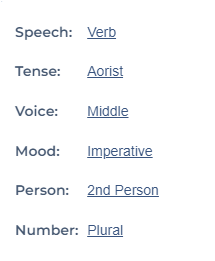
To those who have been with me for a time, this is a repost of a previous standalone post from back in March of 2020. I find it to be relevant to the topic and offer it to those who may have joined this blog recently.
My intent with the previous posting was to remind us that the claiming of His friendship had some conditions. Although this is an Old Testament promise, please consider if this truth may be applicable to our standing before Him in our present day.
Exodus 23:20-22
20 “Behold, I send an angel before you to guard you on the way and to bring you to the place that I have prepared.
21 Pay careful attention to him and obey his voice; do not rebel against him, for he will not pardon your transgression, for my name is in him
22 “But if you carefully obey his voice and do all that I say, then I will be an enemy to your enemies and an adversary to your adversaries.
Being The Lord’s Enemy
The Old Testament seems to always have a special little problem when I read it. But this time, it is not just a little problem. As I was reading Exodus this morning I came across the verse above and it stopped me in my reading for a couple of reasons.
God will be an enemy?
An Enemy Does Not Obey
Many times I have heard or thought myself of how the Lord is on the side of a certain people group. Take for instance in the Old Testament. It was commonly thought (correctly at times) that the people of Israel had God on their side. I suppose that is how it appears, (I hope I am not splitting hairs here) but it seems that is not exactly what is going on here. The initial condition that has to be met is that the people “pay careful attention to him and obey his voice”, “do not rebel against him” and “carefully obey his voice and do all that I say”, THEN God will be an enemy to their enemies, an adversary to their adversaries.
Note that the obedience to the voice of the Lord brings the people into the will and desire of the LORD Himself. The “enemy” here does not gain an adversary in God if the people of God obey God. God’s enemy does not change (unless of course they change into His friends). The people simply join God in having the same enemy.
Is our motivation in obeying God simply to earn a big brother to beat up a personal enemy that may have hurt our feelings or made us cry.
Huh.
An Enemy Is Not Pardoned
What is tarnation is going on with verse 21? “he will not pardon your transgressions: for my name is in him”
I don’t know about you but whenever I hear “my name is in him” I automatically think of a theophany. Also the fact that the one referred to is “an angel”, I want to think it is a preincarnate appearance of the Lord Himself. Usually the Old Testament mentions “the Angel of the Lord” as what is commonly accepted as a theophany – I don’t know. If it is the Lord Himself or a representative (angel), the message is the same.
I fear that sometimes modern nations fall into this wrong-headed thinking. They give lip service to God and call on Him to fight for their nation.
This gives me pause. Why would God do this when the Word clearly describes His nation as a holy nation of saints that is pulled from each nation on earth.
1 Peter 2:9
But ye are a chosen generation, a royal priesthood, an holynation, a peculiar people; that ye should shew forth the praises of him who hath called you out of darkness into his marvelous light:
I suppose judgement must fall on nations who do evil, (and maybe that is the idea of verse 21?), but to think that God is pleased when innocents die in war, or enlisted men are killed simply due to an imaginary line in the sand, this is beyond my understanding. I admit my past desire to see justice after 9/11, but looking back on those days, I see my understanding of God’s will for this planet was wrong.
My Confusion
If someone can explain verse 21 to me, I sho nuff would appreciate it. How could it be said that he (God or God’s messenger) would not pardon their transgressions, when many times the Old Testament clearly states that the Lord Himself is plenteous in mercy
Psalm 86:5
For you, O Lord, are good and forgiving, abounding in steadfast love to all who call upon you.
Ps 86:15
But you, O Lord, are a God merciful and gracious, slow to anger and abounding in steadfast love and faithfulness.
Ps 103:8
The LORD is merciful and gracious, slow to anger, and plenteous in mercy.
It is good to remember His mercy to us as we stumble through this life, through misunderstandings, through fears, through trials and bad decisions.
He is plenteous in mercy, and that draws me to Him. Oh to love Him just a bit more today. Simply for the sake of how wonderful He is.
Thanks again for coming to visit. I hope you found something of interest in this post and would appreciate a comment, to begin a discussion. If you would like to receive daily posts from Considering the Bible, click on the “Follow” link below
Then if anyone says to you, ‘Look, here is the Christ!’ or ‘There he is!’ do not believe it. For false christs and false prophets will arise and perform great signs and wonders, so as to lead astray, if possible, even the elect. See, I have told you beforehand. So, if they say to you, ‘Look, he is in the wilderness,’ do not go out. If they say, ‘Look, he is in the inner rooms,’ do not believe it. – Mathew 24:23-26 ESV
Security
True security depends on truth. (Duh)
Let me tell you a story of how the great Teacher prophesied of an impossible danger.
A long time ago, in a land far, far away, the great Teacher told His students (disciples) of a danger they were not to worry about. He only had a few days left with them before departing, so instead of giving the students (disciples) information that would directly impact their lives, He decided to share what some saints consider a hypothetical situation that would be misunderstood by the students (disciples) He was speaking to.
Security is found in the Truth
Lead astray, if possible, even the elect? Deceive many believers?
The Lord seems to be directing this warning to His current followers at least. I realize that the last passage could make this a hypothetical situation, but then why give the warning if it was not possible. Could it be that the possibility of being deceived is dependent on the “elect” and not on the Elector?
In other words, if a saint is following, the deception is not possible. Security is experienced in the believer through their faith relationship with the Lord, and God will protect.
Who by God’s power are being guarded through faith for a salvation ready to be revealed in the last time. – 1Pe 1:5 ESV
Otherwise, if a believer tends to wander, (by his own choice), the deception is very possible and the security spoken of may be simply self deception.
This is a difficult, scary situation, but sometimes we have to recognize that the King does not appear to be safe, and that at times a challenge may appear to be beyond our hope.
This concept reminds me of the last lines in the chronicles of Narnia, where Susan and the Beaver are speaking of the Great Lion, Aslan
“Aslan is a lion- the Lion, the great Lion.” “Ooh” said Susan. “I’d thought he was a man. Is he-quite safe? I shall feel rather nervous about meeting a lion”…”Safe?” said Mr Beaver …”Who said anything about safe? ‘Course he isn’t safe. But he’s good. He’s the King, I tell you.”
Whether the Master was speaking to His apostles of their possible falling away, or to us, we are all to cling to Him, to see Him as our only hope, our only salvation, the only One who truly is good in His Royal Bearing and Being.
Trust in Him for He is good. Seek Him in your daily walk and do not turn your heart from Him. Ask for His help, His guidance, His wisdom, His boldness, even as disappointment, discouragement and disillusionment crowds your thoughts and heart. That is when trust becomes real, and when the security has an opportunity be realized
Thanks again for coming to visit. I hope you found something of interest in this post and would appreciate a comment, to begin a discussion. If you would like to receive daily posts from Considering the Bible, click on the “Follow” link below
25 Consequently, he is able to save to the uttermost those who draw near to God through him, since he always lives to make intercession for them.
I would like to look at what seems to be an unassailable eternal security stronghold verse today. My intent is to look at the verse for what it says, in relation to the believers security .
So often I have found that in my zeal to understand the Word that I find “my truth”. What I mean is that I may have an agenda or teaching, and find support for it in the Word. This is a difficult issue to handle, since I am not a blank slate, but I come to the Scriptures with a history, a bias and a weak mind.
With my limitations clearly stated, I still intend to consider how the passage relates to the security of the believer, with an honest mind and open heart.
Conditional or Eternal Security
Is it the authors intent to discuss the eternal security question? Lets consider the phrases in this verse and try to understand what the apostle (or apostolic representative) is trying to say.
He is Able
Roget thesaurus gives me my first clue as to what is being communicated to us as believers. The thesaurus has a definition for “able” as “capable of performing”, “having an innate capacity”, and uses words like capable, competent and strong as synonyms.
Strong’s dictionary is also helpful.
“Able” is the translation of the greek word dunamai, a very familiar greek term for many believers. G1410, dunamai, Of uncertain affinity; to be able or possible: – be able, can (do, + -not), could, may, might, be possible, be of power.
Hopefully, it is obvious to you, as it is to me, that to be able to perform an action does not inform us that the action is being (or even will be) performed! It is simply a description of the capacity of the Messiah, in His office of High Priest. And yet we know He is a loving and merciful God.
Shall we presume that since He has the ability to save to the uttermost, that He will do so independently of all other considerations? Is the eternal security doctrine falling into this trap?
Is there a condition upon which the ability to save to the uttermost becomes reality in a persons life? And is this reality in a persons life that which is the security believers seek?
Coming to God
The condition in this passage is that those that will be saved, must come unto God by Him.
It is important at this point in the study to realize that all verbs in this passage are “present tense” which in the Greek signifies continuous or habitual action, and often reflects a lifestyle.
This speaks volumes when you consider the verb “come” in this text. Those that are being saved, even to the uttermost, are those who come (continuously) to God via the Great High Priest.
This is the condition upon which His abilities to save are released.
But lets consider one more aspect that I found intriguing.
To the Uttermost
When the author is describing the abilities of our Great High Priest, he states that Jesus is able to save “to the uttermost” I have always come away from this verse, wondering what exactly this means and I am glad this study is forcing me to consider it. You see, what I have found is that “to the uttermost” refers to the result of the sanctifying work of God in a believers life.
Uttermost is the English translation of the Greek παντελής (pantelēs). This word speaks of completely, or perfectly, that the action being performed is finished. It is a rare word in the New Testament, used only in Hebrews 7:25 (our verse today) and in Luke 13:11 in a negative sense.
Luke 13:11
And, behold, there was a woman which had a spirit of infirmity eighteen years, and was bowed together, and could in no wise lift up herself.
She could in no wise lift herself up. She could not “completely” lift herself up. She couldn’t “finish” standing straight!
If the eternal security teaching is true, then I would have hoped that the previous term would have a time element associated with it. What I mean is that the saving action of our Great High Priest would be perpetual based on my initial coming to Him. Sadly, I am not sure this verse supports such a teaching.
So lets recap
To be able to do something does not necessarily imply action.
The Great High Priest has conditions to be met prior to a saving work being performed.
Those coming to God are described as continuously coming. A lifestyle of coming to God! With each coming, the High Priest is able to save, that is completely save. (I take this to mean in a sanctifying process.)
Praise God.
But I still have a problem!
He Ever Liveth
Lets consider the next phrase – He ever liveth to make intercession. Again the present tense, He is always alive in order to always make intercession.
I suppose at this point I have a question that I am not sure if the verse answers.
Does He make intercession for us since we are His children, or does He make intercession for us as we come to God by Him?
I am not going to loose any sleep over it, since we both know that as believers, we are to constantly seek His favor and help.
It is just so great that He is there when we seek Him. He is Good, and He is able! Let us seek Him.
Thanks again for coming to visit. I hope you found something of interest in this post and would appreciate a comment, to begin a discussion. If you would like to receive daily posts from Considering the Bible, click on the “Follow” link below
13 Let no one say when he is tempted, “I am being tempted by God,” for God cannot be tempted with evil, and he himself tempts no one.
14 But each person is tempted when he is lured and enticed by his own desire.
15 Then desire when it has conceived gives birth to sin, and sin when it is fully grown brings forth death.
16 Do not be deceived, my beloved brothers.
In an earlier blog, we considered James 1:12 in relation to the security question. The very next week in Sunday School, we continued on in the passage and came across the verses below. During the class, the teacher suggested I ask my question to another believer in the church. That was a welcome offer since it gave me a chance to meet another believer.
So after Sunday School we ventured off to discuss the following passage.
My basic question for both teachers was.. • When James mentions death, is he referring to spiritual or physical death? • If James’ warning is referring to physical death, what threat is that? Everyone dies! • But if James’ warning is referring to spiritual death, what does that mean?
The believer that I got to chat with boldly stated that the death being referred to in this passage is spiritual. I was somewhat surprised when he said this, since I assumed he would be defending the eternal security doctrine. I asked him how this spiritual death applies to believers. He said it doesn’t. He gave me an illustration of when he preaches on a Sunday morning. He sometimes preaches to the congregation as believers, and sometimes directs his message to the lost within the group. I told him I understood his analogy, but the text seemed to be directed to believers. (See James 1:2, 9, 16, 19, 2:1, 5, 14, 15, 3:1, 10, 12, 4:11, 5:10, 12, and 5:19)
He held on to the idea that James is warning the lost within the congregation. He also mentioned that sin and death was brought up by Paul in Romans 6, but I didn’t see how that strengthened his position in the security discussion. I am afraid he has fallen into a trap that is very familiar to me, that is the practice of bringing my preconceived ideas into a passage. I didn’t mention that to him since he was kind enough to chat with me, and I have found that a well placed question left alone is very powerful. I often think of the fellow who asked me about sin and death in Romans 6:23. He just asked, but I couldn’t let it go. Nevertheless, I told him I appreciated his time and hopefully will be able to discuss other issues in the future.
One of the side issues that came out of this discussion was the curiosity of other believers that passed by. By the end of the discussion, the youth pastor and another christian was involved in the discussion. Each partook in the discussion. I hope it was an edifying time.
I am thankful for the body that my wife and I have found. I pray we can be useful for the Lord among His people.
Thanks again for coming to visit. I hope you found something of interest in this post and would appreciate a comment, to begin a discussion. If you would like to receive daily posts from Considering the Bible, click on the “Follow” link below