Continue in the Faith
Follow Considering the Bible on WordPress.com

Thanks again for coming to visit. I hope you found something of interest in this post and would appreciate a comment, to begin a discussion.
Continue in the FaithFollow Considering the Bible on WordPress.com
Thanks again for coming to visit. I hope you found something of interest in this post and would appreciate a comment, to begin a discussion.
Quite awhile ago I sent out an email to a number of prominent pastors (8 or 9) within the area I live in. One out of the nine responded in an effort to minister. The following conversation is with that one pastor who sought to help. I appreciate his willingness to enter into a discussion with me.
This third post is simply some wanderings and considerations I have had after my discussion with the Pastor! Give me some feed back if I’m way out of line.
Consider 1 Corinthians 9:12
Remember that the topic of this passage is support (not salary) of an apostle, a traveling minister. These verses, IMHO, do not apply to elders and pastors of local churches, who are able to maintain outside employment to assist the local body if in need.
1 Corinthians 9:12
If others (referring to other apostles – check the context!) share this rightful claim on you, do not we (Paul and his party) even more? Nevertheless, we (Paul and his party) have not made use of this right, but we (Paul and his party) endure anything rather than put an obstacle in the way of the gospel of Christ.
Is not Paul stating that using this “right”, (that is, support from a body of believers) actually hinders (places an obstacle in the way) the gospel? This is an apostle (not an elder or pastor) teaching this truth about an apostles right to support, which Paul is refusing to exercise.
How can local pastors refer to this same passage (1 Corinthians 9) to establish this right they believe they have, and yet miss this verse?
One important item that I need to clarify, for I know what some may be thinking. I am not advocating abandonment of the Christian minister. Support and salary are two completely different topics, and the New Testament exhorts believers to support those who are ministering among them.
Support for a Christian minister, coming from those blessed from his ministry, is a direct relational blessing. If believers would remove themselves from unbiblical obligations, they could freely give funds, gifts and blessings to Biblically directed recipients, such as:
An additional verse that some may appeal to, to justify the salaried position within the family of God is Galatians 6:6.
Gal 6:6
6 Let the one who is taught the word share all good things with the one who teaches.
Two things to notice
I love the opportunity to assist those I know of that are in need, or that I “sense” may need a “blessing”. I believe the Lord is able to direct His people to assist His people. Is that wrong? Too simplistic? Too ideal?
It is becoming obvious to me, that salaried positions for local elders/pastors seems to be foreign to the New Testament.

Help me find justification for the salaried position, so that I can sense that the modern church is still somewhat on track.
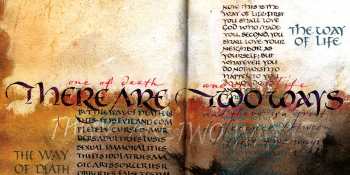
Although not scripture, it is interesting to review what an early church document reveals how Christians treated this topic.

Notice what the Didache (Also known as “The Teaching of the Twelve.”) teaches.
Chapter 11. Concerning Teachers, Apostles, and Prophets.

Let every apostle that comes to you be received as the Lord. But he shall not remain except one day; but if there be need, also the next; but if he remain three days, he is a false prophet. And when the apostle goes away, let him take nothing but bread until he lodges; but if he ask money, he is a false prophet.
A little later in chapter 11…
But whoever says in the Spirit, Give me money, or something else, you shall not listen to him; but if he says to you to give for others’ sake who are in need, let no one judge him.
Wow
This topic, since I have been considering it for a period of time, was on my mind this morning, when I was visiting with a brother. He mentioned that the church he belongs to is putting on a Christmas pageant and that they had sold 14,000 tickets, ranging from $8 to $14 each. I mentioned that, at an average price of $10 per ticket, that church pulled in $140,000, and that this should pay for the minister’s salary.
Oh no no, he says – Our pastor makes $200,000, plus benefits, vacation and a yearly month-long sabbatical. Oh and this particular church has a $20,000,000 capital budget for renovations and building projects.
Silver and gold have I none – Peter – 1st century
Follow Considering the Bible on WordPress.com
Thanks again for coming to visit. I hope you found something of interest in this post and would appreciate a comment, to begin a discussion.

Quite awhile ago I sent out an email to a number of prominent pastors (8 or 9) within the area I live in. One out of the nine responded in an effort to minister. The following conversation is with that one pastor who sought to help. I appreciate his willingness to enter into a discussion with me.
Our previous post supplied the initial question and the pastors response. This post will supply my response and appreciation to this pastor. I am still gonna call him Pastor X cause I still think it’s cool.
My response follows.
Pastor X
Thanks for getting back to me on this. Some of these verses seem to be helping with the argument for a salaried position but after looking at their context and setting, it doesn’t seem to be as strong an argument as I thought. I have been a believer for many years now, and have used the very same verses to defend my thinking in this topic, but …

OLD TESTAMENT BASIS
As for your reference to the levitical priesthood, we are under a New Covenant where each believer is a priest before God. I fear that I do not see any direct NT link between professional Christians (clergy) and the Levitical priesthood. (Although if you know of any clergy performing the levitical sacrifices to satisfy the old covenant that these provisions were specified under, let me know.)
THE RIGHT OF SUPPORT

Your point referring to 1 Corinthians seems to be an argument for an itinerant preacher, and not a stationary pastor. The right of support (support same as a salary?) is valid, but not necessarily for the local pastor/priest associated with one local church body. The apostle Paul did much traveling, where the “pastor” (actually elders) of the churches were stationary and could hold down a “secular” job while ministering to the believers in their group.
As a matter of fact, Paul spoke in Acts that the elders/pastors were to give to the church and not be a burden to the group. They were to help the weak and remember that it is more blessed to give than receive. Notice that the context includes the topic of coveting silver and gold.
Acts 20:33-35
33 I coveted no one’s silver or gold or apparel.
34 You yourselves know that these hands ministered to my necessities and to those who were with me.
35 In all things I have shown you that by working hard in this way we must help the weak and remember the words of the Lord Jesus, how he himself said, ‘It is more blessed to give than to receive.’”
1 Peter 5:1-3 seems to address this same topic. (I think Peter is addressing motivation in these verses.)
Peter is kinda rough – using terms like “shameful gain”.
Calm down Peter – you need to get with the program.
1 Peter 5:1-3
1 So I exhort the elders among you, as a fellow elder and a witness of the sufferings of Christ, as well as a partaker in the glory that is going to be revealed:
2 shepherd the flock of God that is among you, exercising oversight, not under compulsion, but willingly, as God would have you; not for shameful gain, but eagerly;
3 not domineering over those in your charge, but being examples to the flock.
DOUBLE HONOR

When you referred to 1 Timothy 5:17-18, this is the set of verses that started this concern for me.
1 Timothy 5:17-19
17 Let the elders who rule well be considered worthy of double honor, especially those who labor in preaching and teaching.
18 For the Scripture says, “You shall not muzzle an ox when it treads out the grain,” and, “The laborer deserves his wages.”
As I was studying these verses earlier, I found that honor = Strongs greek # 5091. Thayer definitions below.
Strong’s # G5091, τιμάω timaō
Thayer Definition:
1) to estimate, fix the value
1a) for the value of something belonging to one’s self
2) to honour, to have in honour, to revere, venerate
As I look at these definitions, there doesn’t seem to be any specific thought of money being an issue. This of course does not take away from your argument, that Paul could be gently breaching the salary concept. But if he is, then we need to put widows on a salary, since the same word for honor is used in verse 3.
1 Timothy 5:3
3 Honor widows who are truly widows.
And we need to ensure that all slaves are placing their masters on a salary, since this word is also used in verse 1 of chapter 6.
1 Timothy 6:1
1 Let all who are under a yoke as bondservants regard their own masters as worthy of all honor, so that the name of God and the teaching may not be reviled.
Surely, the church of the living Christ is a priesthood of believers. At times, I fear that having paid clergy can work against the church body, creating a group of believers dependent on a paid staff (clergy).
As an aside, I found that Peter used the word cleros (a root for the english word “clergy”?) to define all of God’s people in 1 Peter 5:3. Kinda found that to be ironic!
I heard a believer once say that to find the strength of a church, one needs only to remove the pastor. I realize this is very difficult stuff, and I have feared even bringing this topic up for many months. I am thankful that you responded so quickly and sought to help.
If I am missing something, or you find that I am not understanding a truth, please be assured that I would be very happy to continue this discussion. It is truth that believers need to seek, and not just to blindly follow traditions.
Thanks again for your ministry.
Rom 5:3
Carl
Pastor X has not had the opportunity to reply with any additional exhortations or instruction. I appreciate this mans desire to help me, and I hope the best for him and his ministry.
After receiving the pastors notes, and waiting for a response, my mind started wandering and considering. Some of those wanderings and considerings will be in our next post.
Hope to see you there.
Follow Considering the Bible on WordPress.com
Thanks again for coming to visit. I hope you found something of interest in this post and would appreciate a comment, to begin a discussion.
Quite awhile ago I sent out an email to a number of prominent pastors (8 or 9) within the area I live in. One out of the nine responded in an effort to minister. The following conversation is with that one pastor who sought to help. I appreciate his willingness to enter into a discussion with me.
This is the initial email I sent out! The next post will supply my response and appreciation to this pastor. I am gonna call him Pastor X cause I think it’s cool.
Brother
I am a Christian, having been saved at the age of 21 from a life of drug abuse and alcoholism. I have sought to walk with the Lord ever since. If I could take a few minutes of your time, I would appreciate it.

My question is this. Does the Word of God explicitly instruct any congregation to commit to a pastor a salaried position?
I have been a believer for more than half my life and have been involved (heavily) in Baptist church’s, but have been challenged lately in my studies to find clear direction for this issue. I would appreciate your assistance with this and await your reply.
Carl
The following text came from one pastor in a local church.
Carl,
Thanks for sending us your email. The Word of God is clear that salaried positions within the church are entirely permissible.
OLD TESTAMENT BASIS
In the Old Testament, the Levites (those who worked in the temple) received support in the form of food, money, and even lodging. See, for example, Numbers 18:20-21 and Hebrews 7:5.
Numbers 18:20-21
20 And the LORD said to Aaron, “You shall have no inheritance in their land, neither shall you have any portion among them. I am your portion and your inheritance among the people of Israel.
21 “To the Levites I have given every tithe in Israel for an inheritance, in return for their service that they do, their service in the tent of meeting,
Hebrews 7:5
5 And those descendants of Levi who receive the priestly office have a commandment in the law to take tithes from the people, that is, from their brothers, though these also are descended from Abraham.
THE RIGHT OF SUPPORT
In 1 Corinthians 9:3-15, Paul argued extensively that those who work hard to sow spiritual seed should be able to reap material blessing as well. However, Paul did not use that right (notice he calls it a “right”), but rather preached free of charge so that no one could accuse him of preaching the gospel for material gain, like so many false teachers did.

3 This is my defense to those who would examine me.
4 Do we not have the right to eat and drink?
5 Do we not have the right to take along a believing wife, as do the other apostles and the brothers of the Lord and Cephas?
6 Or is it only Barnabas and I who have no right to refrain from working for a living?
7 Who serves as a soldier at his own expense? Who plants a vineyard without eating any of its fruit? Or who tends a flock without getting some of the milk?
8 Do I say these things on human authority? Does not the Law say the same?
9 For it is written in the Law of Moses, “You shall not muzzle an ox when it treads out the grain.” Is it for oxen that God is concerned?
10 Does he not certainly speak for our sake? It was written for our sake, because the plowman should plow in hope and the thresher thresh in hope of sharing in the crop.
11 If we have sown spiritual things among you, is it too much if we reap material things from you?
12 If others share this rightful claim on you, do not we even more? Nevertheless, we have not made use of this right, but we endure anything rather than put an obstacle in the way of the gospel of Christ.
13 Do you not know that those who are employed in the temple service get their food from the temple, and those who serve at the altar share in the sacrificial offerings?
14 In the same way, the Lord commanded that those who proclaim the gospel should get their living by the gospel.
15 But I have made no use of any of these rights, nor am I writing these things to secure any such provision. For I would rather die than have anyone deprive me of my ground for boasting.
DOUBLE HONOR
First Timothy 5:17-19 states that the elders who direct the affairs of the church, especially those who work hard at preaching and teaching, are worthy of “double honor.” And why is this? Because the worker is worthy of his wages, and Paul uses the Old Testament image of the ox not being muzzled when he treaded out the grain.
5:17-19
17 Let the elders who rule well be considered worthy of double honor, especially those who labor in preaching and teaching.
18 For the Scripture says, “You shall not muzzle an ox when it treads out the grain,” and, “The laborer deserves his wages.”
19 Do not admit a charge against an elder except on the evidence of two or three witnesses.
Clearly, the Bible teaches that it is permissible (and even wise) for a local church to pay those who work hard at shepherding the flock, preaching, and teaching. In some contexts (like Paul’s), it may be wise for a pastor not to accept a salary. Bi-vocational work may advance the Gospel further in some instances. Paying salaries to pastors allows them to concentrate all of their mental and physical energies on doing the work of shepherding, preaching, and teaching, thus allowing them to do these tasks most effectively.
I hope this helped.
Blessings,
Pastor X
Our next post will include my response and appreciation for this pastors desire to help me understand. Hope you can visit and comment.
Follow Considering the Bible on WordPress.com
Thanks again for coming to visit. I hope you found something of interest in this post and would appreciate a comment, to begin a discussion.

A brother recently commented on an earlier post regarding this very passage, and I thought it would be wise to look into it. It is one of the passages that made me consider conditional security many many years ago.
Let’s remember that the conditional clause could be translated as If, as is the case we are faithless, he remains faithful
This portion of the passage, for both the OSAS follower and those of the other persuasion, may be used to justify thier position in the following way
An OSAS follower might argue…
If you are truly saved years back, but have slipped on slid away somewhat, God remains faithful. He cannot deny Himself and will keep the promise of takiing you home based on your initial faith.
Those other believers might argue…
This phrase is a description of the faithfulness of the Master to His own nature. If the servant abandons the Master, the Master will not change His nature to allow a denier to be in fellowship with Him.
No matter the perspective you take in looking at this final clause, it is comforting to know that He remains faithful, or true to His own nature.
Our faithlessness cannot affect His faithfulness. He is God and we are not. He is true to His own nature in the present, has been true to His own nature prior to creation, and will continue to be true to His own nature after the consummation of all things.
He is faithful.
How ’bout us?
Let us be faithful to the Only One who deserves our trust.
Follow Considering the Bible on WordPress.com
Thanks again for coming to visit. I hope you found something of interest in this post and would appreciate a comment, to begin a discussion.

A brother recently commented on an earlier post regarding this very passage, and I thought it would be wise to look into it. It is one of the passages that made me consider conditional security many many years ago.
Follow Considering the Bible on WordPress.com
Thanks again for coming to visit. I hope you found something of interest in this post and would appreciate a comment, to begin a discussion.
In our last post we considered Jeremiah’s message of the temple being the Jewish nations Place of Safety and Permanence instead of the Lord. Temple worship had become a replacement for proper living.
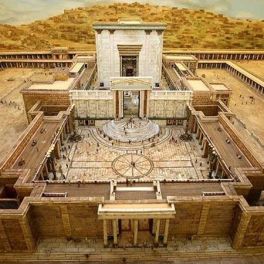
In this post we want to look Jeremiahs message to the people, describing the temple as their place of absolution.
Lets read the passage one more time.
Jeremiah 7:1-15
1 The word that came to Jeremiah from the LORD:
2 “Stand in the gate of the LORD’s house, and proclaim there this word, and say, Hear the word of the LORD, all you men of Judah who enter these gates to worship the LORD.
3 Thus says the LORD of hosts, the God of Israel: Amend your ways and your deeds, and I will let you dwell in this place.
4 Do not trust in these deceptive words: ‘This is the temple of the LORD, the temple of the LORD, the temple of the LORD.’
5 “For if you truly amend your ways and your deeds, if you truly execute justice one with another,
6 if you do not oppress the sojourner, the fatherless, or the widow, or shed innocent blood in this place, and if you do not go after other gods to your own harm,
7 then I will let you dwell in this place, in the land that I gave of old to your fathers forever.
8 “Behold, you trust in deceptive words to no avail.
9 Will you steal, murder, commit adultery, swear falsely, make offerings to Baal, and go after other gods that you have not known,
10 and then come and stand before me in this house, which is called by my name, and say, ‘We are delivered!’–only to go on doing all these abominations?
11 Has this house, which is called by my name, become a den of robbers in your eyes? Behold, I myself have seen it, declares the LORD.
12 Go now to my place that was in Shiloh, where I made my name dwell at first, and see what I did to it because of the evil of my people Israel.
13 And now, because you have done all these things, declares the LORD, and when I spoke to you persistently you did not listen, and when I called you, you did not answer,
14 therefore I will do to the house that is called by my name, and in which you trust, and to the place that I gave to you and to your fathers, as I did to Shiloh.
15 And I will cast you out of my sight, as I cast out all your kinsmen, all the offspring of Ephraim.
Consider

These worshipers were heading into the temple! Why complain about these folks? At least they were worshiping the true God, right? Jeremiah says to amend your ways. Worship without right living is hypocrisy and worthy of judgement. (And judgement was on its way!) The Temple of the Lord had become a stumbling block to the nation of Israel.
The second stumbling block for the Olkd Testament believers were that they viewed the temple as their:
Will you steal, murder, commit adultery, swear falsely, make offerings to Baal, and go after other gods that you have not known, and then come and stand before me in this house, which is called by my name, and say, ‘We are delivered!’–only to go on doing all these abominations? Has this house, which is called by my name, become a den of robbers in your eyes?
Those of Jeremiah’s day were not only seeing the temple as a place of permanence and safety, but also of forgiveness and absolution. Would I be going to far to think the temple was considered a refuge from judgment and responsibility before God.
Note that the temple is referred to as a “den of thieves”. A den of thieves is what thieves return to after they perform their evil deeds, in order to hide from justice, and be encouraged by other thieves to continue in their merciless acts and faithless lifestyles.
Jeremiah was defining these worshipers as thieves who were returning to their hide-out! That is crazy!!!
The temple had become a place of refuge for those who had performed “criminal” acts!
Who says the Bible is not relevant for today? The Word is relevant for today if we are willing to seek the truth. When we seek relevance through following the culture of our day, devote ourselves to some famous (or not so famous) Bible teacher/preacher or by appealing to false “safety nets” that are gimmicks, it seems to me that we “trust lying words”.
Don’t get me wrong – there are some Bible teacher/preachers that are good, but I fear most are simply using the sacred ministry as a worldly career. Fully reject those that are using the ministry to have a career, and with the few that may be left, we should constantly remind ourselves that those teacher/preachers are servants of God (1 Corinthians 4:1) and not our masters in the faith. (2 Corinthians 1:24)
Trusting in religious trappings or messages other than in God is the big message I get from Jeremiah! How many times have you chatted with a believer and you reference your denomination’s position, what your pastor/priest thinks, or the opinion of some famous Christian personality?
How often have you heard a believer tell you that the nation of Israel is Gods Chosen people today? What happened to the Church as the people of God? How can God have two chosen people?
Trusting in a future fulfillment of old covenant promises after the Jewish nation rejected the old covenant responsibilities (over and over again), I fear is is simply foolishness! It seems to me that the old covenant promises were conditional, and having rejected those promises by crucifying the Messiah, the promises of God were taken away from the nation of Israel, and given to a nation/people that would bring forth the fruits (Matthew 21:43).
Read the book of Hebrews to understand the urgency of the writer to convince the Hebrew people to leave behind the Old Covenant and grasp unto Jesus as the only hope. The nation of Israel had very few days left and the end was upon them. The Hebrew people would be dispersed and the theocracy would never be reestablished.
Do not seek something that isn’t promised!
Let us not trust in lying words!
Follow Considering the Bible on WordPress.com
Thanks again for coming to visit. I hope you found something of interest in this post and would appreciate a comment, to begin a discussion.
A brother recently commented on an earlier post regarding this very passage, and I thought it would be wise to look into it. It is one of the passages that made me consider conditional security many many years ago.
Follow Considering the Bible on WordPress.com
Thanks again for coming to visit. I hope you found something of interest in this post and would appreciate a comment, to begin a discussion.

A brother recently commented on an earlier post regarding this very passage, and I thought it would be wise to look into it. It is one of the passages that made me consider conditional security many many years ago.
Romans 6:3-5
3 Do you not know that all of us who have been baptized into Christ Jesus were baptized into his death?
4 We were buried therefore with him by baptism into death, in order that, just as Christ was raised from the dead by the glory of the Father, we too might walk in newness of life.
5 For if we have been united with him in a death like his, we shall certainly be united with him in a resurrection like his.
2 Timothy 2:11 seems straightforward, but as I dwell on this phrase, I’m reminded that I have considered our death in the Messiah to be an academic truth. Something that I “believe” but not understand how to practice in my daily life. I have not considered it to be a truth that is “practical”.
I am not so sure about this way of thinking!
Follow Considering the Bible on WordPress.com
Thanks again for coming to visit. I hope you found something of interest in this post and would appreciate a comment, to begin a discussion.

In our last post, we considered Jeremiah’s demands upon the Jewish nation and the three weightier matters of the law that never changes, that God expects from His people.
Temple worship as a replacement for proper living is considered sin, and Jeremiah simply does not mince words in this passage.
In this post we want to look at the idol that the Jewish nation had erected in place of God, the lying words that they trusted in.
How could Jeremiah make such blatant claims as he does in this passage without riling up the very people who assumed they were the most righteous, those who attended “The Temple of the Lord”.
How is it that “The Temple of the Lord”, referred to in Jeremiah 7, is applicable to the modern-day Christian?
Lets read the passage one more time.
Jeremiah 7:1-15
1 The word that came to Jeremiah from the LORD:
2 “Stand in the gate of the LORD’s house, and proclaim there this word, and say, Hear the word of the LORD, all you men of Judah who enter these gates to worship the LORD.
3 Thus says the LORD of hosts, the God of Israel: Amend your ways and your deeds, and I will let you dwell in this place.
4 Do not trust in these deceptive words: ‘This is the temple of the LORD, the temple of the LORD, the temple of the LORD.’
5 “For if you truly amend your ways and your deeds, if you truly execute justice one with another,
6 if you do not oppress the sojourner, the fatherless, or the widow, or shed innocent blood in this place, and if you do not go after other gods to your own harm,
7 then I will let you dwell in this place, in the land that I gave of old to your fathers forever.
8 “Behold, you trust in deceptive words to no avail.
9 Will you steal, murder, commit adultery, swear falsely, make offerings to Baal, and go after other gods that you have not known,
10 and then come and stand before me in this house, which is called by my name, and say, ‘We are delivered!’–only to go on doing all these abominations?
11 Has this house, which is called by my name, become a den of robbers in your eyes? Behold, I myself have seen it, declares the LORD.
12 Go now to my place that was in Shiloh, where I made my name dwell at first, and see what I did to it because of the evil of my people Israel.
13 And now, because you have done all these things, declares the LORD, and when I spoke to you persistently you did not listen, and when I called you, you did not answer,
14 therefore I will do to the house that is called by my name, and in which you trust, and to the place that I gave to you and to your fathers, as I did to Shiloh.
15 And I will cast you out of my sight, as I cast out all your kinsmen, all the offspring of Ephraim.
Consider
These worshipers were heading into the temple! Why complain about these folks? At least they were worshiping the true God, right?
Jeremiah says to amend your ways. Worship without right living is hypocrisy and worthy of judgement. (And judgement was on its way!)

The Temple of the Lord had become a stumbling block to the nation of Israel.
DON’T TRUST LYING WORDS
What were the “lying words” the worshipers trusted? “The house of the Lord, the house of the Lord, the house of the Lord.”
The worshipers were trusting in lying words which were diverting their trust from the living God to the temple.
They viewed the temple as:
Consider Jeremiahs core message again
….if you truly amend your ways and your deeds, if you truly execute justice one with another, if you do not oppress the sojourner, the fatherless, or the widow, or shed innocent blood in this place, and if you do not go after other gods to your own harm, then I will let you dwell in this place, in the land that I gave of old to your fathers forever.
A conditional promise. Do you see it? If if if if … then.
The Jewish nation had obligations to the covenant they entered into with the Lord at Mt Sinai. Jeremiah was calling the nation to its roots, its past, its obligations and responsibilities. He was not adding tasks or changing the contract. The people had walked away from the agreement, and the prophet was faithfully exhibiting the mercy and long-suffering of the Lord with His people. But the long suffering patience of the Lord was coming to a close and His prophet was warning His people, even as the Babylonians were on the way.
Yes, the Jews of Jeremiah’s day saw the Babylonians coming. It was obvious to all, but the religious Jews refused to acknowledge God’s judgement that was about to fall on their nation and considered the temple (how ironic!) to be their place of protection. How short of a memory we humans have. Obviously they had not learned about using God as a talisman or lucky charm. As a matter of fact, God reminds them of Shiloh later in the passage, and how the Philistines (those dirty dogs!) were able to defeat the Israelites and confiscate the very idol (the Ark of the Covenant) they were trusting in.

As an aside, consider how Jeremiah’s conditional promise with the Old Testament nation of Israel could apply to the New Testament nation of the Church.
If is a big word.
Believers today would do well if we considered our relationship with the Lord in the context of “if” when the Word calls for it.
It was surprising for me to realize the extent of that two letter word in the New Testament – Check it out in my ongoing series “Conditional Security”
Join me on our next blog when we find out the Jewish nation also viewed the temple as a place of absolution.
Follow Considering the Bible on WordPress.com
Thanks again for coming to visit. I hope you found something of interest in this post and would appreciate a comment, to begin a discussion.

In our last post, we considered the distraction of the Temple of the Lord.
Jeremiah 7 arrests me, makes me wonder and consider how “The Temple of the Lord” is applicable to the modern day Christian?
What did Jeremiah say? First off, let’s read the passage one more time.
Jeremiah 7:1-15
1 The word that came to Jeremiah from the LORD:
2 “Stand in the gate of the LORD’s house, and proclaim there this word, and say, Hear the word of the LORD, all you men of Judah who enter these gates to worship the LORD.
3 Thus says the LORD of hosts, the God of Israel: Amend your ways and your deeds, and I will let you dwell in this place.
4 Do not trust in these deceptive words: ‘This is the temple of the LORD, the temple of the LORD, the temple of the LORD.’
5 “For if you truly amend your ways and your deeds, if you truly execute justice one with another,
6 if you do not oppress the sojourner, the fatherless, or the widow, or shed innocent blood in this place, and if you do not go after other gods to your own harm,
7 then I will let you dwell in this place, in the land that I gave of old to your fathers forever.
8 “Behold, you trust in deceptive words to no avail.
9 Will you steal, murder, commit adultery, swear falsely, make offerings to Baal, and go after other gods that you have not known,
10 and then come and stand before me in this house, which is called by my name, and say, ‘We are delivered!’–only to go on doing all these abominations?
11 Has this house, which is called by my name, become a den of robbers in your eyes? Behold, I myself have seen it, declares the LORD.
12 Go now to my place that was in Shiloh, where I made my name dwell at first, and see what I did to it because of the evil of my people Israel.
13 And now, because you have done all these things, declares the LORD, and when I spoke to you persistently you did not listen, and when I called you, you did not answer,
14 therefore I will do to the house that is called by my name, and in which you trust, and to the place that I gave to you and to your fathers, as I did to Shiloh.
15 And I will cast you out of my sight, as I cast out all your kinsmen, all the offspring of Ephraim.
In our previous post, it became obvious that “The Temple of the Lord” supplied an opportunity for deceptive words to be spread about the Jewish nations security.
Jeremiah was calling the nation back to a personal responsibility to the Lord, instead of trusting in simply going to church – I mean going to temple.
Is this call to personal responsibility something new for these Jewish worshipers? Is Jeremiah demanding completely new requirements upon these folk? Were they ignorant of the Lords demands on their lives?
Consider
Leviticus 19 :18
You shall not take vengeance or bear a grudge against the sons of your own people, but you shall love your neighbor as yourself: I am the LORD.
Lev 19 :34
You shall treat the stranger who sojourns with you as the native among you, and you shall love him as yourself, for you were strangers in the land of Egypt: I am the LORD your God.
Deuteronomy 10 :18-19
He executes justice for the fatherless and the widow, and loves the sojourner, giving him food and clothing.
19 Love the sojourner, therefore, for you were sojourners in the land of Egypt.
Mic 6:8
He has told you, O man, what is good; and what does the LORD require of you but to do justice, and to love kindness, and to walk humbly with your God?
Zechariah 7:8-10
And the word of the LORD came to Zechariah, saying,
9 “Thus says the LORD of hosts, Render true judgments, show kindness and mercy to one another,
10 do not oppress the widow, the fatherless, the sojourner, or the poor, and let none of you devise evil against another in your heart.”
This concern carried over into the New Testament, When the Lord Himself summarized the “weightier matters of the law”.
Matt 23:23
“Woe to you, scribes and Pharisees, hypocrites! For you tithe mint and dill and cumin, and have neglected the weightier matters of the law: justice and mercy and faithfulness. These you ought to have done, without neglecting the others.

When I read this passage in Jeremiah, I can’t help but think of the Lord Jesus while He was on earth, talking to the religious men of His day. Of course, it is obvious He quoted Jeremiah in Matthew 21:13, where it is written “My house shall be called the house of prayer; but ye have made it a den of thieves.” (Check out Jeremiah 7:11 for the connection!)
What I think is awesome is the connection of the thoughts of Jeremiah and the thoughts of Jesus. Three issues are raised in both of these men’s messages, and I’m a thinking they are as follows.
Judgement
It is obvious where Jesus refers to this thought, so compare it with Jeremiah when he states “thoroughly execute judgment between a man and his neighbor”
Mercy
Again, the Lord’s reference to mercy is echoed in Jeremiahs statement “ye oppress not the stranger, the fatherless, and the widow, and shed not innocent blood in this place”
Faith
Jesus finishes His classification of the weightier matters of the law by referring to faith. Is this Jeremiah concern, when he mentions “neither walk after other gods to your hurt”?
Consider
I am always surprised how applicable the Old Testaments message is for today’s Christian!
Consider the Temple of the Lord and how you relate to it.
Do you hear Jeremiahs message as a rebuke to your dependence on your physical church.
Or do you hear Jeremiahs message as a rebuke to your dependence on your spiritual church?
What? What are you talking about Carl? Hang on – let me explain.
I read in the New Testament where the church (the invisible spiritual church) is the body of Christ, a living organism that is comprised of all believers. If you see the church that way, Jeremiahs message is still so applicable.
When you see a brother or sister, how do you relate to them? Do you see them as a potential safety net in case trouble enters your life?
This “fault” in my faith came crashing in on me a while back.
I remember experiencing a very disappointing, troubling time in my life, and I reached out to a brother and sister for encouragement and counsel. I hoped they could assist in a specific way. They rejected my concerns.
My trust was not in the Lord – my trust was in “the believer”.
The Temple of the Lord is a tremendous blessing that believers can live in and with, but we need to trust in the Living God, and not “The Temple of the Lord”!
In our next post we will consider the misplaced trust Jeremiah was preaching about when he preached, “Behold, ye trust in lying words, that cannot profit.”
Follow Considering the Bible on WordPress.com
Thanks again for coming to visit. I hope you found something of interest in this post and would appreciate a comment, to begin a discussion.

It’s been a while since I have blogged on the topic of “Conditional Security”. Probably too long.
I admit, I struggle with the topic, and yearn for the days when I was convinced of the “Once Saved Always Saved” (OSAS) belief.
But I have considered what “those other believers” teach (as if there is such a group as “those other believers”!), and have found their argument to have some strength.
How do you handle other opinions and teachings within the church? Are they a threat? Do you automatically consider the source heretical?
Generally, when a believer teaches something your denomination avoids or condemns, do you assume your group is right, or do you test the teaching by studying the Word? Simply refusing it since you may not have been taught it seems shortsighted, and kinda arrogant.
I fell into that religious swamp for far too many years, and I thank God that He gave me the willingness to consider opposing teachings. I was in a religious ghetto, an echo chamber that was creating a spirit of deadness in me.
Don’t live in da ghetto brudder!
Consider some opposing view that good Christian men and women believe. Be challenged by it and do not avoid it. Search the Scripture to see if it be so.
Okay, enough of my rant. Back to conditional security.
This particular set of verses may seem to argue against conditional security, and if that be, that be good. We all need to be corrected by the Word, to be humble enough to admit that our knowledge base is tiny, somewhat full of hot air, and shot through with bias’s and wrong motivations.
If the Bible teaches something that we are to rely on, it needs to be clearly taught and without contradictions. The rest is potential fodder for destructive argument and distractive red herrings. But I digress (again).
Let’s consider the passage.
Follow Considering the Bible on WordPress.com
Thanks again for coming to visit. I hope you found something of interest in this post and would appreciate a comment, to begin a discussion.
In years past, I delved into the doctrine of hell and came across the teaching often referred to as Universal Reconciliation (UR). As a tried and true Eternal Torment (ET) believer, I struggled with the initial concept of this teaching.
Emotionally, this is my baby, this is my hope against all hope, my desire and heart. But my heart is a deceitful animal and my flesh often (always?) whispers sweet nothings in my ear. I so want to believe this in my heart, but my head is screaming no. My understanding of the Word, at this point, will not allow this to become a settled belief.
But if I am honest with myself, the doctrine has much more biblical support than I first assumed. (More support than ET?) A recent post on this blog “God – What is HE like?” gives a list of verses that UR proponents point to in order to justify this teaching. It may be interesting to consider in light of the quotes supplied below.
I’ve read that a great many of the church fathers expressed their faith in this teaching, and the following are quotes from them.
The Church Fathers on Universal Reconciliation (UR)
The mass of men (Christians) say there is to be an end to punishment and to those who are punished.
St. Basil the Great
There are very many in our day, who though not denying the Holy Scriptures, do not believe in endless torments.
Augustine (354-430 A.D.)
For the wicked there are punishments, not perpetual, however, lest the immortality prepared for them should be a disadvantage, but they are to be purified for a brief period according to the amount of malice in their works. They shall therefore suffer punishment for a short space, but immortal blessedness having no end awaits them…the penalties to be inflicted for their many and grave sins are very far surpassed by the magnitude of the mercy to be showed to them.
Diodore of Tarsus, 320-394 A.D.
And God showed great kindness to man, in this, that He did not suffer him to continue being in sin forever; but as it were, by a kind of banishement, cast him out of paradise in order that, having punishment expiated within an appointed time, and having been disciplined, he should afterwards be recalled…just as a vessel, when one being fashioned it has some flaw, is remoulded or remade that it may become new and entire; so also it happens to man by death. For he is broken up by force, that in the resurrection he may be found whole; I mean spotless, righteous and immortal.
Theophilus of Antioch (168 A.D.)
Wherefore also he drove him out of paradise and removed him far from the tree of life, not because He envied him the tree of life, as some dare assert, but because He pitied him and desired that he should not be immortal and the evil interminable and irremediable.
Iraneaus of Lyons (182 A.D.)
These, if they will, may go Christ’s way, but if not let them go their way. In another place perhaps they shall be baptized with fire, that last baptism, which is not only painful, but enduring also; which eats up, as if it were hay, all defiled matter, and consumes all vanity and vice.
Gregory of Nazianzeu, Bishop of Constantinople. (330 to 390 A.D.) Oracles 39:19
The Word seems to me to lay down the doctrine of the perfect obliteration of wickedness, for if God shall be in all things that are, obviously wickedness shall not be in them. For it is necessary that at some time evil should be removed utterly and entirely from the realm of being.
St. Macrina the Blessed
In the end and consummation of the Universe all are to be restored into their original harmonious state, and we all shall be made one body and be united once more into a perfect man and the prayer of our Savior shall be fulfilled that all may be one.
St. Jerome, 331-420
For it is evident that God will in truth be all in all when there shall be no evil in existence, when every created being is at harmony with iteself and every tongue shall confess that Jesus Christ is Lord; when every creature shall have been made one body.
Gregory of Nyssa, 335-390
The wicked who have committed evil the whole period of their lives shall be punished till they learn that, by continuing in sin, they only continue in misery. And when, by this means, they shall have been brought to fear God, and to regard Him with good will, they shall obtain the enjoyment of His grace.
Theodore of Mopsuestia, 350-428
We can set no limits to the agency of the Redeemer to redeem, to rescue, to discipline in his work, and so will he continue to operate after this life.
Clement of Alexandria
Do not suppose that the soul is punished for endless eons (apeirou aionas) in Tartarus. Very properly, the soul is not punished to gratify the revenge of the divinity, but for the sake of healing. But we say that the soul is punished for an aionion period (aionios) calling its life and its allotted period of punishment, its aeon.
Olnmpiodorus (AD 550)
Wherefore, that at the same time liberty of free-will should be left to nature and yet the evil be purged away, the wisdom of God discovered this plan; to suffer man to do what he would, that having tasted the evil which he desired, and learning by experience for what wretchedness he had bartered away the blessings he had, he might of his own will hasten back with desire to the first blessedness …either being purged in this life through prayer and discipline, or after his departure hence through the furnace of cleansing fire.
Gregory of Nyssa (332-398 A.D.)
That in the world to come, those who have done evil all their life long, will be made worthy of the sweetness of the Divine bounty. For never would Christ have said, “You will never get out until you hqave paid the last penny” unless it were possible for us to get cleansed when we paid the debt.
Peter Chrysologus, 435
I know that most persons understand by the story of Nineveh and its king, the ultimate forgiveness of the devil and all rational creatures.
St. Jerome
“In the end or consummation of things, all shall be restored to their original state, and be again united in one body. We cannot be ignorant that Christ’s blood benefited the angels and those who are in hell; though we know not the manner in which it produced such effects. The apostate angels shall become such as they were created; and man, who has been cast out of paradise, shall be restored thither again. And this shall be accomplished in such a way, that all shall be united together by mutual charity, so that the members will delight in each other, and rejoice in each other’s promotion. The apostate angels, and the prince of this world, though now ungovernable, plunging themselves into the depths of sin, shall, in the end, embrace the happy dominion of Christ and His saints.”
COMMENTARY ON THE NEW TESTAMENT – Jerome (347-420 A.D.)
Our Lord is the One who delivers man [all men], and who heals the inventor of evil himself.
Gregory of Nyssa (332-398 A.D.), leading theologian of the Eastern Church
While the devil thought to kill One [Christ], he is deprived of all those cast out of hades, and he [the devil] sitting by the gates, sees all fettered beings led forth by the courage of the Saviour.
Athanasius, the Great Father of Orthodoxy
Our Lord descends, and was shut up in the eternal bars, in order that He might set free all who had been shut up… The Lord descended to the place of punishment and torment, in which was the rich man, in order to liberate the prisoners.
Jerome
In the liberation of all no one remains a captive! At the time of the Lord’s passion the devil alone was injured by losing all the of the captives he was keeping.
Didymus, 370 AD
While the devil imagined that he got a hold of Christ, he really lost all of those he was keeping.
St. Chrysostom, 398 AD
Stronger than all the evils in the soul is the Word, and the healing power that dwells in him, and this healing He applies, according to the will of God, to everyman. The consummation of all things is the destruction of evil…to quote Zephaniah: “My determination to gather the nations, that I am assemble the kings, to pour upon them mine indignation, even say all my fierce anger, for all the earth shall be devoured with the fire of my jealousy. For then will I turn to the people a pure language that they may all call upon the name of the Lord, to serve Him with one consent”…Consider carefully the promise, that all shall call upon the Name of the Lord, and serve him with one consent.
Origen (185 to 254 A.D.) He founded a school at Caesarea, and is considered by historians to be one of the great theologians and exegete of the Eastern Church.
The nations are gathered to the Judgment, that on them may be poured out the wrath of the fury of the Lord, and this in pity and with a design to heal. in order that every one may return to the confession of the Lord, that in Jesus’ Name every knee may bow, and every tongue may confess that He is Lord. All God’s enemies shall perish, not that they cease to exist, but cease to be enemies.
Jerome (340 to 420 A.D), commenting on Zephaniah 3:8-10
Mankind, being reclaimed from their sins, are to be subjected to Christ in he fullness of the dispensation instituted for the salvation of all.
Didymus the Blind
So then, when the end has been restored to the beginning, and the termination of things compared with their commencement, that condition of things will be re-established in which rational nature was placed, when it had no need to eat of the tree of the knowledge of good and evil; so that when all feeling of wickedness has been removed, and the individual has been purified and cleansed, He who alone is the one good God becomes to him “all,” and that not in the case of a few individuals, or of a considerable number, but He Himself is “all in all.” And when death shall no longer anywhere exist, nor the sting of death, nor any evil at all, then verily God will be “all in all”
Origen, De Prinicipiis, 3.6.3. (Origen founded a school at Caesarea, and is considered by historians to be one of the great theologians and exegete of the Eastern Church.)
The Son “breaking in pieces” His enemies is for the sake of remolding them, as a potter his own work; as Jeremiah 18;6 says: i.e., to restore them once again to their former state.
Eusebius of Caesarea (65 to 340 A.D). Bishop of Caesarea
Our Savior has appointed two kinds of resurrection in the Apocalypse. ‘Blessed is he that hath part in the first resurrection,’ for such come to grace without the judgment. As for those who do not come to the first, but are reserved unto the second resurrection, these shall be disciplined until their appointed times, between the first and the second resurrection.
Ambrose, Bishop of Milan (340-397 A.D.)
We think, indeed, that the goodness of God, through His Christ, may recall all His creatures to one end, even His enemies being conquered and subdued…. for Christ must reign until He has put all enemies under His feet.
Origen (185 to 254 A.D.) He founded a school at Caesarea, and is considered by historians to be one of the great theologians and exegete of the Eastern Church.
For it is needful that evil should some day be wholly and absolutely removed out of the circle of being.
Gregory of Nyssa (332-398 A.D.), leading theologian of the Eastern Church
In the present life God is in all, for His nature is without limits, but he is not allin all. But in the coming life, when mortality is at an end and immortality granted, and sin has no longer any place, God will be all in all. For the Lord, who loves man, punishes medicinally, that He may check the course of impeity.
Theodoret the Blessed, 387-458
When death shall no longer exist, or the sting of death, nor any evil at all, then truly God will be all in all.
Origen
All men are Christ’s, some by knowing Him, the rest not yet. He is the Savior, not of some and the rest not. For how is He Savior and Lord, if not the Savior and Lord of all?
Clement of Alexandria
What think ye? This is a list of fallible men’s thoughts and I by no means imply the list carries the weight of Scripture.
I suppose the quotes above bear the same weight as, I suppose, an elder or deacon you may know in your church, whom has lived for Christ and is worthy of listening to and comparing with Scripture.
Follow Considering the Bible on WordPress.com