My hope is that this series will offer my readers a chance to consider the names, characteristics and descriptions of our God in the Word.
Our first three names are considered His primary names!
The Word is truly rich with descriptions of the Living God, and this effort of searching in the Word was quite illuminating. He truly is the ultimate subject of the Word, and His revelation of self-descriptions, or the accolades offered Him by His priests, prophets, kings apostles and faithful truly was a blessing.
May the Name of the Lord be praised, and by thinking on His name, may you have a blessed day.
3
ADONAI (LORD)
Deut. 6:4 Hear, O Israel: The LORD our God, the LORD is one.
In our last post, we spoke of the Tetragrammaton, in other word the 4 letters that we understand represents the name Jehovah, or Jahweh.
In this post we are going to consider the Hebrew word Adonai, as the third and last primary name of our God. Adonai is the Hebrew word for Lord, referring to someone who has power and authority.
As discussed in our first post, Adonai is also used to refer to earthly rulers frequently in the Word, but of course not in the absolute sense as when referring the our God. The Creator and Sustainer of all things is by His very nature the Lord (Adonai) and Master (Adonai) of all things.
We may fight this truth, deny this truth, ignore this truth, but until we submit to this truth, we will never find peace. And the truth of His lordship is not dependent on our opinion of this claim He makes. He is Lord whether we like it or not.
My advice you ask? Submit to the truth, as far as you understand it, that Jesus is Lord (Adonai) and that you want to be a disciple, a learner of what that means in every area of your life.
Peace will find you when you submit. And it is a glorious peace, for you see, He is Lord and He is good, all the time!
I would love to hear of your favorite name, characteristic or description of the Living God. Please leave me a comment, and I will include it in the list!
Thanks again for coming to visit. I hope you found something of interest in this post and would appreciate a comment, to begin a discussion. If you know someone this blog may bless (or challenge), send them a link, so they may join us in our discussion.
As we have been venturing through the Psalms, getting lost in the volume of the book, and the many nuggets of truth laid out for believers, I have come to realize (again and again) the beauty of the book, the depth of the book, the expanse of the human experience the book describes and allows us to join into.
We started with a quick dip into one of the most amazing chapters in the Word, one that has impacted my life in various stages of my Christian faith. It is a psalm that spoke to my wife and I as we were reading that night, but it began a journey through the psalms that has continued for over a year, and I suspect may continue to hold me.
With that said, I would like to offer those who read my bumbling efforts to understand one of the great books of the greatest book ever delivered to the human race, an ongoing summary of the findings and blessings I have enjoyed discovering.
As you can tell from the expanding list of posts, the Psalms have got a hold on me!
Jesus in the Old Testament is a series of posts that will offer my readers a chance to consider pictures or shadows of Jesus in the Old Testament. As mentioned in the introduction to this series, some may be obvious, some may be not so obvious, and some may simply be a facet of the Lord those reading may not have considered previously.
I hope as we venture through this series, we will see the Lord in many wonderful pictures throughout the Old Testament.
SEEING JESUS IN
ADAM
DEEP SLEEP
Genesis 2 21 So the LORD God caused a deep sleep to fall upon the man, and while he slept took one of his ribs and closed up its place with flesh.
Matthew 27 50 And Jesus cried out again with a loud voice and yielded up his spirit.
Adam’s “deep sleep” speaks of the Messiah’s death, of a death that was purposed for the creation of a partner, a new life out of the death.
Thanks again for coming to visit. I hope you found something of interest in this post and would appreciate a comment, to begin a discussion. If you know someone this blog may bless (or challenge), send them a link, so they may join us in our discussion.
My hope is that this series will offer my readers a chance to consider the names, characteristics and descriptions of our God in the Word.
Our first three names are considered His primary names!
The Word is truly rich with descriptions of the Living God, and this effort of searching in the Word was quite illuminating. He truly is the ultimate subject of the Word, and His revelation of self-descriptions, or the accolades offered Him by His priests, prophets, kings apostles and faithful truly was a blessing.
May the Name of the Lord be praised, and by thinking on His name, may you have a blessed day.
2
JEHOVAH (LORD)
Genesis 4:1 Now Adam knew Eve his wife, and she conceived and bore Cain, saying, “I have gotten a man with the help of the LORD.”
Exodus 3:14God said to Moses, “I am who I am.” And he said, “Say this to the people of Israel: r‘I am has sent me to you.’ ”
This name of God, from the Old Testament is of even greater mystery than our first name, Elohim which introduced the concept of multiple persons in the godhead. Jehovah, or as some scholars prefer Yahweh, is our feeble attempt to understand YHWH, the tetragrammatron, (meaning four letters). No vowels. Four consanants.
The problem with knowing the correct pronunciation of YHWH is that out of respect for the God of Israel, the Jews would not pronouce his name for fear of saying it wrong.
The “four letters” were God’s self revelatory illumination to Moses in Exodus 3:14, as to who was speaking to him. He is the self existant One, the only One who depends on no one else for anything. We are created, He is uncreated. We exist in Him, He is self existant. We are empty shells always needing needing needing. He is the self sufficient One.
Up until Genesis 4:1, Moses referred to God as “LORD God”, or the compound name Jehovah Elohim. Until this verse, all activities were describing Gods actions (creation, commanding, taking, causing, banishment, etc) as first person.
Genesis 4 begins referring to the Lord as Jehovah as the primary name, not a compound name. This verse speaks of Eve’s description of God, due to her giving birth to Cain.
For today, it may well be a good reminder that our God is the One who depends on no one out of necessity, He has no one to answer to, and He is the only One who is not created, but the One who is self existant. I expect that to dwell on this truth today will be a stabilizing influence in our lives, and will honor the One to whom honor is due.
I would love to hear of your favorite name, characteristic or description of the Living God. Please leave me a comment, and I will include it in the list!
Thanks again for coming to visit. I hope you found something of interest in this post and would appreciate a comment, to begin a discussion. If you know someone this blog may bless (or challenge), send them a link, so they may join us in our discussion.
My wife and I are reading through the Psalms in our evening reading and occasionally a nugget of the Psalms jumps out of the page. Don’t you love it when, after years of reading the “Old Book” passages become alive, reinforcing old teachings or simply warming your heart.
This is the book of Psalms, and it is rich.
I pray I can communicate a portion of the blessing we receive from this wonderful book.
Psalm 52:5 But God will break you down forever; he will snatch and tear you from your tent; he will uproot you from the land of the living. Selah Psalm 52:6 The righteous shall see and fear, and shall laugh at him, saying, Psalm 52:7 “See the man who would not make God his refuge, but trusted in the abundance of his riches and sought refuge in his own destruction!”
David just completed the introductory verses of Ps 52, describing the boasting of the mighty man, referring to Doeg the Edomite, as he ratted on David to Saul.
We noticed in our last study that Doeg and David had some similarities, in that they were both men associated with a deceitful tongue. Remember that David was lying to Ahimelech when he spoke of his circumstances. Granted we may readily admit that Doeg was a man who sought to deceive, destroy and devour, whereas David fell into deception at a weak point in his life. All that may be true, but as we spoke last time, David will speak of the outcome of a deceitful, destructive devouring tongue, even though David fell into that very condition for a short time. Yet, David did not shy away from the holiness and righteousness of God, even if it condemned him. That, in my mind, is a wonderful testimony of the truth and inspiration of the Word. Sin isn’t covered up, even by the author who performed a sin.
Nevertheless, our passage today speaks of God’s judgement on the mighty man who devours, destroys and deceives, and the reaction of the righteous when the mighty man is broken.
Verse 5 begins with the statement that God will break the mighty man down forever. Reading it for the first time, I assumed David was speaking of Doeg’s destruction, his death and eternal judgement. Even as I say that, I am not sure that is what David intended me to understand, for as we read the following verse, David speaks of the mighty man torn from his home (tent) and uprooted from the land of the living. Yes, seeing land of the living may refer to the death of the mighty man. That may be the intent of David’s message.
But, consider what it means to be broken. God will break the mighty man down forever. May this expression be synonymous to a humbling of the mighty man? God is able to humble the mighty man, we know that. And I think you may agree with me that being taken into captivity (or at least from his home and land) is a most humbling event.
Still though Carl, when David refers to the land of the living, he must be speaking of Doegs death. Well might that be, but consider that the land of the living may also reference a land full of vibrant life, much vegetation, wildlife, plenty of water and resources for a population. The land of the living may be our present condition, pre-death.
Consider Psalm 27:13
I believe that I shall look upon the goodness of the LORD in the land of the living!
This makes some sense to this feeble mind, even as David continues in verse 6, stating that the righteous will see and fear the outcome of the mighty man. And laugh at him!
If David is describing what we consider to be eternal conscious torment, how would laughing be appropriate for the righteous man? I am not convinced that David, or any OT prophet had the understanding of the afterlife – especially for the unrighteous – that we say we have today!
David finished this three verse middle portion of Psalm 52 with a statement from the righteous man’s lips, speaking of the mighty man’s own destruction, how the life of the mighty man showed that he was in reality seeking refuge in his own destruction!
What a difficult truth to grapple with! To seek refuge in our own destruction. What is it for us to seek our own hurt, our own pain, to avoid life and turn from it? I believe if my reader has walked with the Lord for any period of time, they will admit to the pull of the old man, dragging us away from life, away from real blessing, away from the fountainhead of all goodness.
He rescues us from the guilt of sin in our initial salvation, but our walk with Him is our rescue from a life of sin, a life of rebellion, a life of seeking death. Sanctification during our time on earth is the battle to say no to seeking our own hurt, and to pursue the blessing of knowing the One True God.
Let us admit that our daily lives are not simply a time for us to wait for the end to be delivered to heaven, but that even today, He is actively working in us to do His good will, to conform us to His dear Son, to imitate God, walking in the way of love.
My friends, this condition is somewhat common amongst both the mighty and the humble. The difference is that only the humble understand how treacherous and strong the old man is, for the mighty man never challenges the old man, but simply follows his whims.
Follow after Him and say no to your old man. It is the path He walked.
My hope is that this series will offer my readers a chance to consider the names, characteristics and descriptions of our God in the Word.
Our first three names are considered His primary names.
The Word is truly rich with descriptions of the Living God, and this effort of searching in the Word was quite illuminating. He truly is the ultimate subject of the Word, and His revelation of self-descriptions, or the accolades offered Him by His priests, prophets, kings apostles and faithful truly was a blessing.
May the Name of the Lord be praised, and by thinking on His name, may you have a blessed day.
1
ELOHIM (GOD)
Genesis 2:3 So God blessed the seventh day and made it holy, because on it God rested from all his work that he had done in creation.
The root word “El” of Elohim denotes strength, and reflects on the creative power of our God.
Elohim occurs over 2,500 times in the Old Testament, and is the Hebrew word meaning “mighty ones” or “gods” Yes – multiple gods! You see, when the Hebrews wanted to indicate a plural form of a word, they would add “him” to the end of the root word. So Elohim basicically means – “god who is more than one”.
Even in the earliest revelation of the Word, God introduced the seed thought of the trinity, at least introducing the multiplicity of persons in the God-head. Much revelation was to come, but God did not shy away from providing a mysterious truth from the start.
It may also surprise some of my readers to realize that elohim sometimes refers to false gods, sometimes to angels, and sometimes to human beings. This should not become a point of confusion, for the name is generic enough to be applied somewhat liberally, and our God will refine our understanding of His person through later and greater revelation.
The root term “El” is also used in what we will describe as compound names later in our study.
For today, let us consider that our God is a mighty God, a God who is mysterious and will not shy away from the truth. He seeks to bring us to higher and higher understandings of His person and character, and this first of His primary names certainly challenges us.
He is the mighty One, the One who created all things “ex nihilo”, out of nothing.
I would love to hear of your favorite name, characteristic or description of the Living God. Please leave me a comment, and I will include it in the list!
Thanks again for coming to visit. I hope you found something of interest in this post and would appreciate a comment, to begin a discussion. If you know someone this blog may bless (or challenge), send them a link, so they may join us in our discussion.
Jesus in the Old Testament is a series of posts that will offer my readers a chance to consider pictures or shadows of Jesus in the Old Testament. As mentioned in the introduction to this series, some may be obvious, some may be not so obvious, and some may simply be a facet of the Lord those reading may not have considered previously.
I hope as we venture through this series, we will see the Lord in many wonderful pictures throughout the Old Testament.
SEEING JESUS IN
ADAM
HIS IMPACT
Genesis 3 17 And to Adam he said, “Because you have listened to the voice of your wife and have eaten of the tree of which I commanded you, ‘You shall not eat of it,’ cursed is the ground because of you; in pain you shall eat of it all the days of your life; 18 thorns and thistles it shall bring forth for you; and you shall eat the plants of the field. 19 By the sweat of your face you shall eat bread, till you return to the ground, for out of it you were taken; for you are dust, and to dust you shall return.”
Romans 5 12 Therefore, just as sin came into the world through one man, and death through sin, and so death spread to all men because all sinned–
Adam’s decision to eat of the fruit brought about an escalating impact upon every descendant of his. The impact of his decision to eat of the fruit is still with us, evident in every child born, every death in nature, every argument and fight we witness or take part in! Jesus’ impact is also with us every day, evident in the new life He provides to those who seek Him, the peacemakers and humble servants He has raised up, those believers who are walking with Him. His impact will be of greater impact than Adam’s for He is the Lord of All.
Thanks again for coming to visit. I hope you found something of interest in this post and would appreciate a comment, to begin a discussion. If you know someone this blog may bless (or challenge), send them a link, so they may join us in our discussion.
As we come to a close of “Old Testament Messianic Prophecies”, I would like to offer my readers a series of posts focused on how the Bible describes the True and Living God. My hope is that this series will offer my readers a chance to consider the names, characteristics and descriptions of our God in the Word.
I do not claim to have found every possible name, combination of names, description, or characteristic of the Lord in this series. Having said this, I have found many more than I initially thought possible. The Word is truly rich with descriptions of the Living God, and this effort of searching in the Word was quite illuminating. He truly is the ultimate subject of the Word, and His revelation of self-descriptions, or the accolades offered Him by His priests, prophets, kings apostles and faithful truly was a blessing.
I will present the names in a very similar fashion as the Old Testament Prophecies series, one name/description/characteristic per post, for an opportunity for my readers to meditate on during the day.
Of course I would love to hear of your favorite name, characteristic or description of the Living God. Please leave me a comment, and I will include it in the list!
#
Name/Description/Characteristic
Bible Verse(s)
Commentary
Thanks again for coming to visit. I hope you found something of interest in this post and would appreciate a comment, to begin a discussion. If you know someone this blog may bless (or challenge), send them a link, so they may join us in our discussion.
My wife and I are reading through the Psalms in our evening reading and occasionally a nugget of the Psalms jumps out of the page. Don’t you love it when, after years of reading the “Old Book” passages become alive, reinforcing old teachings or simply warming your heart.
This is the book of Psalms, and it is rich.
I pray I can communicate a portion of the blessing we receive from this wonderful book.
Why do you boast of evil, O mighty man? The steadfast love of God endures all the day. Psalm 52:2 Your tongue plots destruction, like a sharp razor, you worker of deceit. Psalm 52:3 You love evil more than good, and lying more than speaking what is right. Selah Psalm 52:4 You love all words that devour, O deceitful tongue.
The background to this story is found in1 Samuel 21:1-2, where David is fleeing Saul. Jonathon had just challenged his father regarding David and realized Saul’s desire to kill David. Jonathon, a faithful friend, informed David and he took to running. His suspicions of Saul’s murderous intent had been verified, and now David, who once was celebrated in Israel, is now an enemy of the state!
Ahimilech
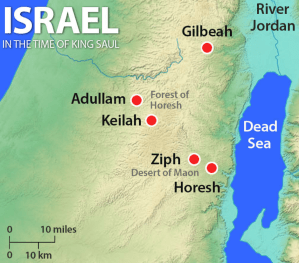
Twelve miles from Jerusalem was the priestly city of Nob, where many priests lived. One of those priests was Ahimelech, a descendant of Eli the High Priest. It appears the news feed of Saul’s intent hadn’t been updated when David approaches Ahimelech, and surely the priest assumed David was in good graces with the King. After all, David was the son in law to the King!
First thing out of Ahimelech’s mouth was David’s condition – that is, What da heck are you alone for? His general demeanor was that of fear, for the passage speaks of Ahimelech trembling. Something wasn’t right!
David used this situation to spin a yarn (tell a lie). The secrecy of the throne was a useful tool to take advantage of, and David used it to settle Ahimelech’s concern. I’m on a secret mission, with men that I need to meet up with. Don’t say anything Ahimelech. Very top secret. By the way, do you have any food?
Ahimelech eventually provides David (and his non-existent men) bread to eat. Notice that David has misled Ahimelech as to his reason for being alone, and the reason was his need of bread. There were no men that he was joining with – He was on the run all alone! David then requests a weapon, and eventually receives the sword of Goliath.
Doeg
All of this discussion happens in front of Doeg the Edomite. The name Doeg actually is the Hebrew term for “fearful”, and may give us a look into his inner demons. He was an anxious man, that was controlled by suspicions and fear. We shall see it was the wrong type of fear to be controlled by.
Doeg was a man in charge of Saul’s herdsmen, a chief of the herdsmen, and he happened to be at Nob “detained before the Lord”. An Edomite detained before the Lord? He wasn’t of the chosen people, and as we will see in the Psalm, he was not a man seeking after God’s heart. Many think he was simply at the tabernacle to fulfil some ceremonial requirement to keep his position under Saul. No matter why he was there, he heard David and Ahimelech, saw the food and weapon transfer and couldn’t wait to get back to Saul. What great information to share with the King. How advantageous to be at the right place and at the right time! How providential!
David
With that background, let’s consider Davids opening to this psalm
Psalm 52:1 To the choirmaster. A Maskil of David, when Doeg, the Edomite, came and told Saul, “David has come to the house of Ahimelech.”
Why do you boast of evil, O mighty man? The steadfast love of God endures all the day.
David is referring to Doeg when he speaks of the “mighty man” in this opening verse and describes him as one who boast’s of evil. He sets the tone of Doegs character by associating him with evil.
Let’s stand back here for a moment.
Given that David is on the run, and Doeg is an employee of Saul, is it not Doeg’s responsibility to report back to the King? Is this not the right thing for Doeg to do? King Saul is the God appointed leader of the nation of Israel. Although this will provide an opportunity for Doeg to advance in Saul’s eyes, it is also an opportunity provided to Doeg, seemingly providentially. Surely this is the will of God for Doeg to provide security to the King in informing him of his enemies whereabouts.
Is this not a plausible argument for Doeg? I suggest that many in our culture would side with Doeg, in finding an opportunity to “rat” on someone to gain favor of a government official. Of course, in Doeg’s case, this information led to the slaughter of 85 priests in the city of Nob. Sometimes an advantageous situation simply leads to death and destruction, and we need to recognize that. Such is the nature of the kingdom of this world.
Doeg’s decision is typical for those who side against the kingdom of God, in that they seek power over others, to gain self advantage in any way possible, and to find opportunities of self advancement, even as being provided by God Himself. God provides opportunities for each of us in our daily lives, but we are to be wise in determining the use of the opportunity. Consider David a bit later in his life. He was providentially provided an opportunity to kill King Saul, his enemy, yet did not for He was not seeking self advantage, but God’s honor.
Doeg was seeking his own self advantage, and David calls him out on this. This psalm contrasts the man of destruction against the man who takes refuge in God, and in our first portion of this psalm, David describes this man of destruction.
Psalm 52:2 Your tongue plots destruction, like a sharp razor, you worker of deceit. Psalm 52:3 You love evil more than good, and lying more than speaking what is right. Selah Psalm 52:4 You love all words that devour, O deceitful tongue.
He boasts of evil
His tongue plots destruction, as a razor cuts
He loves evil more than good
He loves lying more than speaking truth
His words devour
He is a liar
David doesn’t mince words here. And yet I can’t help but think David, during his time of flight from Saul, also entered into this life of deceit and lies when he spoke to Elimelech.
This Psalm doesn’t protect David from some personal incrementation, and the fact that David is bold in proclaiming God’s truth even in an instance where it condemns himself – I find that to be refreshing. How often do we see some believers padding the truth to protect their own image, decisions or habits. To honor God means that we are not honored. He is the only One who is honorable, when it comes to being a truthful witness. We have that pull in us to defend ourselves, to blame someone else, to claim it wasn’t my fault, or it was an accident. May I suggest to my gentle reader that we must admit we have that pull in us, that self desire that seeks to take advantage, to pursue our own agenda.
To realize this weakness, to agree with this truth, to live in this fact, is a much needed characteristic in the modern church nowadays. We are so often taught that we deserve God’s love, deserve God’s blessing, deserve God’s attention, because we do some act of charity or attend church once a week. Yet we turn away from the mirror when we see a bit of Doeg in us, and decide that we would rather have the affirmation of the world.
My friends, consider your base nature, as how active it is in your life. Do you find yourself speaking lies to avoid uncomfortable times, boasting of your accomplishments out of insecurity, cutting others down with your tongue in gossip and slander? Jesus spoke of taking up his cross daily. We know the cross is an instrument of death, and the death we have to face is not pleasant, affirming or enjoyable. We are to decide against ourselves, and seek to honor God, even to our own detriment. Jesus is the ultimate model of self sacrifice to honor God, and He is truly the One to follow after.
1 Peter 2:21 For to this you have been called, because Christ also suffered for you, leaving you an example, so that you might follow in his steps.
Doeg was a man committed to evil and it led to the murder of 85 of God’s priests, and the continued persecution of God’s newly chosen king.
David was a man after God’s heart, and yet had periods in his life where he was dominated by that pull of self, the desire to trust in his own thoughts, to succumb to his fears. I identify with David in these times where his humanity sneaks out and reveals itself. A man that sought God’s honor beyond his own self interests.
As we have been venturing through the Psalms, getting lost in the volume of the book, and the many nuggets of truth laid out for believers, I have come to realize (again and again) the beauty of the book, the depth of the book, the expanse of the human experience the book describes and allows us to join into.
We started with a quick dip into one of the most amazing chapters in the Word, one that has impacted my life in various stages of my Christian faith. It is a psalm that spoke to my wife and I as we were reading that night, but it began a journey through the psalms that has continued for over a year, and I suspect may continue to hold me.
With that said, I would like to offer those who read my bumbling efforts to understand one of the great books of the greatest book ever delivered to the human race, an ongoing summary of the findings and blessings I have enjoyed discovering.
Jesus in the Old Testament is a series of posts that will offer my readers a chance to consider pictures or shadows of Jesus in the Old Testament. As mentioned in the introduction to this series, some may be obvious, some may be not so obvious, and some may simply be a facet of the Lord those reading may not have considered previously.
I hope as we venture through this series, we will see the Lord in many wonderful pictures throughout the Old Testament.
SEEING JESUS IN
ADAM
TOOK HIS WIFE’S SIN UPON HIMSELF
Genesis 3 6 So when the woman saw that the tree was good for food, and that it was a delight to the eyes, and that the tree was to be desired to make one wise, she took of its fruit and ate, and she also gave some to her husband who was with her, and he ate.
1 Peter 2 24 He himself bore our sins in his body on the tree, that we might die to sin and live to righteousness. By his wounds you have been healed.
Adam took the fruit from his wife, from his wife who had already fallen into death. I often wonder if Adam recognized death in Eve as he took the fruit, and joined her in her sin. We know that the Messiah recognized sin in His bride, and not only joined us in death, but was delivered, resurrected out of death and is bringing His wife out of the death we wallow in!
Thanks again for coming to visit. I hope you found something of interest in this post and would appreciate a comment, to begin a discussion. If you know someone this blog may bless (or challenge), send them a link, so they may join us in our discussion.
My wife and I are reading through the Psalms in our evening reading and occasionally a nugget of the Psalms jumps out of the page. Don’t you love it when, after years of reading the “Old Book” passages become alive, reinforcing old teachings or simply warming your heart.
This is the book of Psalms, and it is rich.
I pray I can communicate a portion of the blessing we receive from this wonderful book.
Psalm 51
18 Do good to Zion in your good pleasure; build up the walls of Jerusalem; 19 then will you delight in right sacrifices, in burnt offerings and whole burnt offerings; then bulls will be offered on your altar.
David is closing his prayer of contrition with these final verses, and expanding his prayers beyond his own life.
His first desire is that God will do good to Zion. This is God’s heart for His people and David is expressing his own heart in connection with God. He is seeking the prosperity of Jerusalem, and this must mean the spiritual prosperity of Jerusalem, for he immediately refers to God delighting in right sacrifices.
After this entire psalm, if there is one thing that stands out, it is that the sacrifices God prescribed in the Old Testament were not only to be physically performed, but that the practice of sacrifice had a much greater meaning than a simple offering of an animal.
The greatest message of sacrifice is of the Lord Jesus Himself, and of His full and complete provision of our salvation through his sacrifice on the cross. This is the focus of the Word and we (at least I) need to be remined of it daily.
Yet David speaks to the believer also in this psalm, describing the sacrificial system in the believers life, not only of physical sacrifice, but of the sacrifice of our will to God’s will, of the acceptance of a verdict of death in our own lives.
As he closes he speaks of “then bulls will be offered..” Bulls and goats, sheep and doves were being offered in sacrifice even as he wrote this psalm, yet David speaks of the sacrifices of a humble and contrite (broken) spirit in the believer, that is to accompany acts of worship and remembrance. When the believer humbles himself, accepts the truth of his rebellion and obstinacy, openly confesses his dark heart, and seeks renewal and restoration after a period of sin, this is when the sacrifices become pleasing in the sight of the Lord.
May God open our eyes to our own condition before Him so that we may gladly offer up sacrifices to Him in spirit and in truth!
Jesus in the Old Testament is a series of posts that will offer my readers a chance to consider pictures or shadows of Jesus in the Old Testament. As mentioned in the introduction to this series, some may be obvious, some may be not so obvious, and some may simply be a facet of the Lord those reading may not have considered previously.
I hope as we venture through this series, we will see the Lord in many wonderful pictures throughout the Old Testament.
SEEING JESUS IN
ADAM
STOOPED TO EVE’S CONDITION
Genesis 3 6 So when the woman saw that the tree was good for food, and that it was a delight to the eyes, and that the tree was to be desired to make one wise, she took of its fruit and ate, and she also gave some to her husband who was with her, and he ate.
Philippians 2 6 who, though he was in the form of God, did not count equality with God a thing to be grasped, 7 but emptied himself, by taking the form of a servant, being born in the likeness of men. 8 And being found in human form, he humbled himself by becoming obedient to the point of death, even death on a cross.
Adam, in joining Eve in her decision to eat of the forbidden fruit, and knowing the word of God in relation to this tree, joined Eve in her condition of death. Jesus also stooped to our condition of death, yet His stooping to our condition was temporary and for the lifting of our lives out of the pit of death. Praise His name!
Thanks again for coming to visit. I hope you found something of interest in this post and would appreciate a comment, to begin a discussion. If you know someone this blog may bless (or challenge), send them a link, so they may join us in our discussion.
My wife and I are reading through the Psalms in our evening reading and occasionally a nugget of the Psalms jumps out of the page. Don’t you love it when, after years of reading the “Old Book” passages become alive, reinforcing old teachings or simply warming your heart.
This is the book of Psalms, and it is rich.
I pray I can communicate a portion of the blessing we receive from this wonderful book.
Psalm 51
16 For you will not delight in sacrifice, or I would give it; you will not be pleased with a burnt offering. 17 The sacrifices of God are a broken spirit; a broken and contrite heart, O God, you will not despise.
In our last post I needed to stop on the last thought, that of praising God, and just settle in that mindset for a short period, for it is a good thing to do. He really is good, you know.
This next couple of verses, they also are super famous, with songs a plenty being written based on them. Yet David continues to amaze me, for he is describing concepts that go beyond what was available for the common Jewish man of his day.
During David’s time, to approach God involved sacrifice. Sacrifice of animals was the primary (only) way to approach a holy God. God established a sacrificial order to deal with personal sins, iniquities, transgressions and rebellion. Beyond the sacrificial system, which is a picture of the Christ, the Jewish man had no way to enter into God’s presence. God had provided a way for the covering of sin, but it was highly specific, detailed and required multiple steps, even an intermediary, as in the Levitical priests that would provide this service.
But read the verse above once more.
For you will not delight in sacrifice, or I would give it; you will not be pleased with a burnt offering.
Sacrifice was the prescribed method of approach to God, given by God in that time. Yet David says God does not delight in sacrifice, nor is He pleased with a burnt offering. What type of heresy is David teasing us with? Or is David a New Testamental believer that is far beyond some of our own understandings of God and His ways?
I would suggest the latter, for David understands the relationship connection with the Almighty, and the secondary religious priority of sacrificial offerings. This is not to say David no longer went to the temple to offer up sacrifices of bulls, lambs and goats, but that his thinking had shifted. Maybe he had always understood this prioritization of relationship over religion. Maybe those days in the fields with his sheep had been times of understanding God’s ways.
God is looking for sacrifices, that is true, but we understand in the church that the vicarious death of animals was a picture of the Lord Jesus, and always has been. David takes the concept of sacrifice and internalizes it, speaking of his brokenness and regret. And expresses his realization of the nature of God in that He will not despise one who comes to Him broken, humble and open to Him.
God will not despise this heart attitude. As we approach Him in humility and brokenness, we can have confidence that the Lord of Glory will receive us, minister to us, heal us and save us. One of my favorite set of verses in this vein of thinking may be found in Matthew 12:18-20, where the Lord Jesus is describing Himself, God’s Chosen Servant, and the character the Servant would display.
Matthew 12:18 “Behold, my servant whom I have chosen, my beloved with whom my soul is well pleased. I will put my Spirit upon him, and he will proclaim justice to the Gentiles. Matthew 12:19 He will not quarrel or cry aloud, nor will anyone hear his voice in the streets; Matthew 12:20 a bruised reed he will not break, and a smoldering wick he will not quench, until he brings justice to victory; Matthew 12:21 and in his name the Gentiles will hope.”
Did you catch it. A bruised reed has no strength. A smoldering wick has no life. He will not quarrel or shout, but understands the condition we are in. He is approachable in our very weakness and contrition. His character is to heal, not to destroy or to take advantage of any weakness we come to Him with.
As we walk the way, following after Him, we may stumble, even rebel against the good life. Do not hesitate to return to Him, admitting to and confessing your sin, for He is a great Father, One who delights in truth in the inward being.
As we have been venturing through the Psalms, getting lost in the volume of the book, and the many nuggets of truth laid out for believers, I have come to realize (again and again) the beauty of the book, the depth of the book, the expanse of the human experience the book describes and allows us to join into.
We started with a quick dip into one of the most amazing chapters in the Word, one that has impacted my life in various stages of my Christian faith. It is a psalm that spoke to my wife and I as we were reading that night, but it began a journey through the psalms that has continued for over a year, and I suspect may continue to hold me.
With that said, I would like to offer those who read my bumbling efforts to understand one of the great books of the greatest book ever delivered to the human race, an ongoing summary of the findings and blessings I have enjoyed discovering.
Jesus in the Old Testament is a series of posts that will offer my readers a chance to consider pictures or shadows of Jesus in the Old Testament. As mentioned in the introduction to this series, some may be obvious, some may be not so obvious, and some may simply be a facet of the Lord those reading may not have considered previously.
I hope as we venture through this series, we will see the Lord in many wonderful pictures throughout the Old Testament.
SEEING JESUS IN
ADAM
GENTILE BRIDE
Genesis 3 20 The man called his wife’s name Eve, because she was the mother of all living.
Ephesians 5 25 Husbands, love your wives, as Christ loved the church and gave himself up for her, 32 This mystery is profound, and I am saying that it refers to Christ and the church.
Both Adam and Eve were technically non-Jews, and therefore “of the nations” in the mind of the first century believer. With this point of view, Eve may be considered a gentile bride for Adam. The church is made up of Jews and Gentiles, and may be thought of as one entity, one person that has no ethnic distinction, much like Eve.
Thanks again for coming to visit. I hope you found something of interest in this post and would appreciate a comment, to begin a discussion. If you know someone this blog may bless (or challenge), send them a link, so they may join us in our discussion.
My wife and I are reading through the Psalms in our evening reading and occasionally a nugget of the Psalms jumps out of the page. Don’t you love it when, after years of reading the “Old Book” passages become alive, reinforcing old teachings or simply warming your heart.
This is the book of Psalms, and it is rich.
I pray I can communicate a portion of the blessing we receive from this wonderful book.
Psalm 51
13 Then I will teach transgressors your ways, and sinners will return to you. 14 Deliver me from bloodguiltiness, O God, O God of my salvation, and my tongue will sing aloud of your righteousness. 15 O Lord, open my lips, and my mouth will declare your praise. 16 For you will not delight in sacrifice, or I would give it; you will not be pleased with a burnt offering. 17 The sacrifices of God are a broken spirit; a broken and contrite heart, O God, you will not despise.
David has just reviewed his sins, laid them all out to the Lord, begged for forgiveness, and asked God for an act of creation, no small request. He knew he needed a clean heart, and after referring to washing away of his iniquities and purging of his sins, he still understood that the heart was the matter, the dead weight holding him down, the unrighteous influence in his pursuit of God. His heart was not in need of a repair, or medicine, as if it had any redeeming value.
He begged for the creation of a clean heart!
As the new heart is created, the natural fruit of a clean heart is described in the next three verses.
A Teacher of Transgressors
The clean heart can’t help but to share the truth with those who have it not. Whether it is with a believer who may be sliding a bit, or a lost soul who has never understood the grace of God, a clean heart is motivated to declare God’s goodness.
A Tongue of Singing
Recently, I have been listening to the old hymns, and when I am alone, I sometimes sing them to myself. (I restrict my singing around others as an act of love towards them!) At the Cross – what a hymn. Of course I usually only sing the chorus,
At the cross, at the cross where I first saw the light, And the burden of my heart rolled away, It was there by faith I received my sight, And now I am happy all the day!
What great lyrics to dwell on in the body of the song itself.
Alas, and did my Savior bleed? And did my Sovereign die? Would He devote that sacred head For such a worm as I?
Was it for sins that I had done He groaned upon the tree? Amazing pity! grace unknown! And love beyond degree!
Well might the sun in darkness hide, And shut His glories in, When Christ, the mighty Maker, died For man, His creature’s sin.
Thus might I hide my blushing face While His dear cross appears. Dissolve my heart in thankfulness, And melt mine eyes to tears.
But drops of grief can ne’er repay The debt of love I owe; Here, Lord, I give myself away, ’Tis all that I can do.
A clean heart will sing, the tongue will be loosed, and songs will erupt. But we also need to understand there are singers and there are singers. In my case, wisdom dictates my volume to be somewhat less than deafening! It is for the best!
A Mouth of Praise
A praising mouth. The joy of expressing praise to God. Of speaking of His glories, of His faithfulness, of His steadfast love, of His mercy.
Recently I have been meditating in the morning about what it mean for God to be the Highest of all. That there are no gods like Him, that none are as lofty, or above Him. The implications of this truth is growing in my mind and heart, and the blessings are such that I can not explain. Oh to try, but words fail me!
Let us pickup on verse 16 in our next post, and give yourself some time this day the Lord has given us, to consider the One who has provided all things to us, and to take a few moments to meditate on Who He is. It shall transform you!
2 Corinthians 3:18 And we all, with unveiled face, beholding the glory of the Lord, are being transformed into the same image from one degree of glory to another. For this comes from the Lord who is the Spirit.
Jesus in the Old Testament is a series of posts that will offer my readers a chance to consider pictures or shadows of Jesus in the Old Testament. As mentioned in the introduction to this series, some may be obvious, some may be not so obvious, and some may simply be a facet of the Lord those reading may not have considered previously.
I hope as we venture through this series, we will see the Lord in many wonderful pictures throughout the Old Testament.
SEEING JESUS IN
ADAM
BEGOTTEN OF GOD
Luke 3 38 the son of Enos, the son of Seth, the son of Adam, the son of God.
Acts 13 33 this he has fulfilled to us their children by raising Jesus, as also it is written in the second Psalm, “‘You are my Son, today I have begotten you.’
To be considered the son of God was Adam’s distinct privilege, until Jesus arrived on the scene, and through His death and resurrection, confirmed for all of humanity that He is the Son!
Thanks again for coming to visit. I hope you found something of interest in this post and would appreciate a comment, to begin a discussion. If you know someone this blog may bless (or challenge), send them a link, so they may join us in our discussion.
My wife and I are reading through the Psalms in our evening reading and occasionally a nugget of the Psalms jumps out of the page. Don’t you love it when, after years of reading the “Old Book” passages become alive, reinforcing old teachings or simply warming your heart.
This is the book of Psalms, and it is rich.
I pray I can communicate a portion of the blessing we receive from this wonderful book.
Psalm 51
7 Purge me with hyssop, and I shall be clean; wash me, and I shall be whiter than snow. 8 Let me hear joy and gladness; let the bones that you have broken rejoice. 9 Hide your face from my sins, and blot out all my iniquities. 10 Create in me a clean heart, O God, and renew a right spirit within me. 11 Cast me not away from your presence, and take not your Holy Spirit from me. 12 Restore to me the joy of your salvation, and uphold me with a willing spirit.
Super famous verses, some of the first verses out of the Old Testament that I memorized. Songs have been written based on David’s confession and request for restoration after his rebellion. Very famous passage!
Yet, as I reflect on the passage, I sense in the King a continuing admission of his helpless state. He begs God to do what only God can do. He begins this section in verse 7 where he refers to his need of cleansing. We have discussed the cleansing David requested in previous posts, (See Psalms for Psome – Ps 51.02) and he recalls the request again in front of the only One who can cleanse.
David then continues with a request for God, to allow, no – to provide the ability to experience joy and gladness, to hear with right ears and to find joy in the very discipline (broken bones) he experienced in his rebellion.
He pleads God to hide His face from his sins, and to blot out his iniquities. How much greater experience we have to know that His sacrifice for our sins allows us to experience forgiveness based on His mercy and love in dying for us. We no longer have to request the Father to “hide His face” from our sins, for He has dealt with our sins on the cross. We are most blessed, for we as believers have the gospel shining into our hearts, giving us light, the light of the knowledge of the glory of God in the face of Jesus Christ.
2 Corinthians 4:6
For God, who said, “Let light shine out of darkness,” has shone in our hearts to give the light of the knowledge of the glory of God in the face of Jesus Christ.
David then breaches the famous words!
Create in me a clean heart. No longer is he asking to wash his sins away! He “cuts to the core” and speaks of his heart condition, realizing he is in desperate need of a new heart, for the old heart will only drag him back into the rebellion he is desperately clawing away from. No – a new heart is what he needs, and he knows it. The depth of David’s understanding of self is astounding.
One other time in the Old Testament, the term “clean heart”:” occurs, and that is also in the Psalms, in chapter 73, verse 12. Asaph speaks of maintaining a clean heart, but some translations refer to it as a pure heart. Ezekiel is the prophets that speaks of a new heart, that of those who in the New Covenant will be granted, as they look to the Messiah.
A clean heart. A pure heart. A new heart. Out of a sinful existence this is a very real possibility for those who wish it. The freedom that comes from a clean heart, the boldness, the restfulness and openness a clean heart provides. Oh to have a clean heart continually!
He speaks to God concerning his fear of being cast away, of having the Spirit of God taken from him. This is a topic I would like to reserve for a separate post in the Conditional Security series I am venturing though. Watch for it.
He finally requests God for restoration. He has confessed, he has requested, now he looks to God for his restoration, and not only restoration, but that God would uphold him in this restoration. For you see, David claimed the very same thing Jude spoke of in his book where it is written..
Jude 1:24 Now to him who is able to keep you from stumbling and to present you blameless before the presence of his glory with great joy,
In the midst of trials and troubles, self inflicted pain and worries, as we look to Him for help, He may be found. As you may be going through confession and contrition over sin, realize that it is a sign of life. Do not refuse it, do not ignore it, for He looks to those who are brokenhearted, and delights to see truth in the inward man, in the heart!
As we have been venturing through the Psalms, getting lost in the volume of the book, and the many nuggets of truth laid out for believers, I have come to realize (again and again) the beauty of the book, the depth of the book, the expanse of the human experience the book describes and allows us to join into.
We started with a quick dip into one of the most amazing chapters in the Word, one that has impacted my life in various stages of my Christian faith. It is a psalm that spoke to my wife and I as we were reading that night, but it began a journey through the psalms that has continued for over a year, and I suspect may continue to hold me.
With that said, I would like to offer those who read my bumbling efforts to understand one of the great books of the greatest book ever delivered to the human race, an ongoing summary of the findings and blessings I have enjoyed discovering.
Jesus in the Old Testament is a series of posts that will offer my readers a chance to consider pictures or shadows of Jesus in the Old Testament. As mentioned in the introduction to this series, some may be obvious, some may be not so obvious, and some may simply be a facet of the Lord those reading may not have considered previously.
I hope as we venture through this series, we will see the Lord in many wonderful pictures throughout the Old Testament.
SEEING JESUS IN
ADAM
ENTERED WORLD IN SINLESS STATE
Genesis 1 31 And God saw everything that he had made, and behold, it was very good. And there was evening and there was morning, the sixth day.
2 Corinthians 5 21 For our sake he made him to be sin who knew no sin, so that in him we might become the righteousness of God.
For Adam, He came into existence in a state of innocence, brought into a life ignorant to evil, sin and wrong doing. For the Lord, He entered the world in a sinless state, and maintained this state throughout His life of sacrifice and offering.
Thanks again for coming to visit. I hope you found something of interest in this post and would appreciate a comment, to begin a discussion. If you know someone this blog may bless (or challenge), send them a link, so they may join us in our discussion.
My wife and I are reading through the Psalms in our evening reading and occasionally a nugget of the Psalms jumps out of the page. Don’t you love it when, after years of reading the “Old Book” passages become alive, reinforcing old teachings or simply warming your heart.
This is the book of Psalms, and it is rich.
I pray I can communicate a portion of the blessing we receive from this wonderful book.
Psalm 51
3 For I know my transgressions, and my sin is ever before me. 4 Against you, you only, have I sinned and done what is evil in your sight, so that you may be justified in your words and blameless in your judgment. 5 Behold, I was brought forth in iniquity, and in sin did my mother conceive me. 6 Behold, you delight in truth in the inward being, and you teach me wisdom in the secret heart.
David is rehearsing his sins before the Lord, recounting his knowledge of them, informing the Lord of the constant reminders of his rebellion. He can not avoid the knowledge of his sins, and his witness is not to inform the Lord of His sins, for the Lord knows! David is giving us the result of the sin, that is the ever present remembrance of the sin against his God running through his thoughts. The sleepless nights, the constant looking over his shoulder, the fear and suspicion he is experiencing because of his sin.
Yet I would suggest it isn’t the sin that is the problem. Wait wait wait – don’t hang up on me right yet. For when you compare David with another King, say Manasseh, or one of the rebellious northern kings later on, would you not agree their sins were as offensive as David’s? But I suspect the killing and raping performed by the other kings were not haunting them as they were David.
So why such a heavy burden David? Why are you in such a struggle over your sin? Can anyone guess?
You see, David was a man in love with the Lord and his sins were a personal affront to the One He worshipped. He hurt his Master, and this betrayal to his first love is what struck his heart.
This is so instructive, for there is a lesson for us in this history of the King of Israel. Upon an act of sin, the true believer is struck with a sense of condemnation, a guilt of conscience and a foreboding fear that is the result of being a believer. If you can freely sin in front of the Lord, take note, for this may be telling you more than you want to admit to. Note that some may claim “freedom in Christ” as a cloak of covering for their habitual sins. My friend – if you know you are in opposition to God’s will for your life, claiming “freedom in Christ” must be seen as a ludicrous claim.
Of course, after the rebellion, confession of sin is available for the believer, but once sin gets ahold, confession can become a difficult exercise to perform. Who wants to go before the Lord out of a period of rebellion? True confession is not a flippant repetition of words, but a coming clean, an admission of wrongdoing. For some acts of sin, confession may not be enough, for restitution towards those we sin against is often described in the Word as necessary.
But even as we must come before Him in our shame at times, we know He is a loving God, a forgiving God and a merciful God. Our God is One who delights in truth, even the truth of admitting to our sin.
Story time
Years ago, as we had a young family, my chillun would sometimes seek to do it their way as opposed to obeying their parents. Of course at times things would blow up for them and then they had a decision to make. Fess up, come to Mom and Dad and accept the resultant consequences, or hide it and damage relationship with Mom and Dad.
When they chose to come to us and fess up, my heart was literally warmed that they wanted to be right with us. The critical issue wasn’t that they admit we were right, but that they wanted to maintain communication between us. I delighted in seeing them come to me even though their previous actions may have caused pain.
How much more for the Lord, who delights in truth within the inner being, of the believer admitting to an offense in order to repair a relationship, and not simply a recitation of some rote repetition of words to follow a religious requirement.
If you have something nagging you in your conscience – rejoice! It is good to be in a state of conviction. No conviction of sin before the Lord may mean a hardened conscience which is definitely bad news, very bad news! Note that I did not say it is good to remain in a state of conviction – Get to the cross and admit your sin. Ask Him for forgiveness, for His is a merciful God, who delights in seeing His children come to Him in contrition.
Praise Him for His many mercies to us in our weakness and frailty. He is good, all the time
Jesus in the Old Testament is a series of posts that will offer my readers a chance to consider pictures or shadows of Jesus in the Old Testament. As mentioned in the introduction to this series, some may be obvious, some may be not so obvious, and some may simply be a facet of the Lord those reading may not have considered previously.
I hope as we venture through this series, we will see the Lord in many wonderful pictures throughout the Old Testament.
SEEING JESUS IN
ADAM
MIRACULOUS BIRTH
Genesis 2 7 then the LORD God formed the man of dust from the ground and breathed into his nostrils the breath of life, and the man became a living creature.
Luke 1 27 to a virgin betrothed to a man whose name was Joseph, of the house of David. And the virgin’s name was Mary. 31 And behold, you will conceive in your womb and bear a son, and you shall call his name Jesus.
Both Adam and Jesus were “born” miraculously.
Granted, Adam was created out of the dust of the ground, but even Eve was not created in such a mysterious way. Likewise Jesus, in His humanity was created in the womb of a virgin, miraculously as no other man has been created
Thanks again for coming to visit. I hope you found something of interest in this post and would appreciate a comment, to begin a discussion. If you know someone this blog may bless (or challenge), send them a link, so they may join us in our discussion.
My wife and I are reading through the Psalms in our evening reading and occasionally a nugget of the Psalms jumps out of the page. Don’t you love it when, after years of reading the “Old Book” passages become alive, reinforcing old teachings or simply warming your heart.
This is the book of Psalms, and it is rich.
I pray I can communicate a portion of the blessing we receive from this wonderful book.
Psalm 51
1 To the choirmaster. A Psalm of David, when Nathan the prophet went to him, after he had gone in to Bathsheba. Have mercy on me, O God, according to your steadfast love; according to your abundant mercy blot out my transgressions. 2 Wash me thoroughly from my iniquity, and cleanse me from my sin!
I honestly tried to finish the above two verses in our last post but the mercy concept just ate me up. Can we revisit this passage for a short time, and consider verse 2?
As I mentioned in the earlier post, David is taking the sacrificial system that the priests worked at, and as prescribed by God, and internalized it, applying the washing and cleansing performed at the brazen altar to actions he needs for his life, actions that need to be done by God.
Let’s consider the first phrase – Wash me thoroughly from my iniquity
Wash
Out of the 51 times this term is found in the Old Testament, Leviticus has the overwhelming number of occurrences (31 times), and is used for the cleansing of those that have been defiled. It is used of anyone who has become defiled, and the required cleansing of the garments (and/or his flesh) required to be performed in order to become clean before God and remain in the camp of Israel. Leviticus is the book of holiness and as such speaks of the methods required to be practiced by the Israelites to walk before the Lord in a prescribed way. Without this cleansing, approaching the Lord was not allowed, with the person actually retaining his iniquity.
Leviticus 17:16 But if he does not wash them or bathe his flesh, he shall bear his iniquity.”
When I hear of washing spoken, especially in this reference, I have the picture of water flowing over my heart, like a waterfall, crystal clear, warm and comforting, gently washing any filth off my “skin”. I’m afraid this picture is simply not the image I should imagine as I read this passage.
The term translated as washed in the second verse is כָּבַסkâbaçkāḇas, and is related to a term which means to trample. The term describes the washing of garments by the stamping of the feet. This type of washing is not the image I had in mind above! The garment is being scrubbed with much force, underfoot and seemingly without mercy. I have an image in my mind of being down at the river bank, with the garments being rubbed/scrubbed against the rocks, a somewhat forceful undertaking. No gentle flow of water comforting the subject, but of trampling, crushing, scouring.
David is begging the Lord to wash him, to “trample on him” in order to produce the cleansing required, that the washing would rid him of his iniquity. This term “iniquity” isn’t used much nowadays, but it speaks of perversity or depravity, a moral evil, and we certainly can see a connection with this concept in David’s past actions. He has, in one decision on the roof of his house, fallen into a depravity that seemed impossible prior to it’s occurrence. This was the man who followed after God’s heart, and yet fell to such a depth of sin. Consider this for our own lives my friend.
1 Corinthians 10:12 Therefore let anyone who thinks that he stands take heed lest he fall.
cleanse
This term is what I expected, but it does have a few implications that are of interest. Again, it is a term that the book of Leviticus uses heavily (43 times out of 80 verses in the Old Testament), and relates to the cleansing of the defiled one who seeks to be clean before the Lord. The term speaks of purity, and of a cleansing both ceremonially and morally. It came from a root term meaning “to be bright”. It is used very often in relation to the cleansing of leprosy.
David connects this cleansing to his “sin”, the familiar term we associate with evil in our lives. Since this psalm is speaking of confession sin, it may be good to review all of the ways David speaks of sin in this Psalm
Phrase or Word
Hebrew
Synonyms
v1 …blot out my transgressions
פֶּשַׁעpeshaʻ
Rebellion, trespass, revolt
v2…my iniquity
עָוֺןʻâvôn
Perversity, depravity, iniquity
v2…my sin
חַטָּאָהchaṭṭâʼâh
Sin, sinful, guilt of sin, condition of sin
v3…my transgressions
פֶּשַׁעpeshaʻ
Rebellion, trespass, revolt
v3…my sin
חַטָּאָהchaṭṭâʼâh
Sin, sinful, guilt of sin, condition of sin
v4… I sinned
חָטָאchâṭâʼ
To miss the mark, to lose oneself, to induce sin, to cause to sin
David expressed his sin in multiple terms, and multiple ways to make his confession before God. Granted two of the references are possibly speaking of David’s conception (brought forth in iniquity, in sin did my mother…), yet it is David’s description of not only his deeds in relation to God, but his condition before God, his history, his very existence.
You might notice in the table above a repetition of 3 Hebrew root words, that speak of an escalation of evil in the human experience.
châṭâʼ – to miss the mark. May refer to an unintentional sin. May speak of inability to hit the mark, or lack of skill in hitting a mark.
ʻâvâh – to bend or distort. To know the good and to twist or distort.
pâshaʻ – to rebel or revolt. to act defiantly, to know the good and to fight against it
King David was asking for forgiveness, yet he did not shy away from expressing the multiple ways he had offended God. He sought a washing and a cleansing from his sin, and he knew the only One who could provide this was the One whom he had offended.
His name is Jesus and He is the One who not only knows your sin, He entered into our existence in order to deliver us from all our inabilities, distortions and rebellion. Will you look to Him for your salvation, for your deliverance from a wasted life, from a life of distortion and revolt against the truth?
He is the Savior and He is the Lord. Confession of sin is to be addressed to Him, for He died to provide full forgiveness to those who seek Him.