We were on the way to church, enjoying the beautiful day the Lord provided, and as we travelled, I stopped off at a C-store to pick up some Peace Tea for my best friend. She really likes the peach and raspberry flavors!
So as I was away from the truck, she stumbled over a you tube short that spoke volumes to me.
I believe I have informed those who follow my blog that I am a reformed “know it all”. Give me a Bible teaching and I will argue it to the end, cutting and hacking the opponent until I am victorious! I needed to win! I was brutal, and thankfully I have been humbled, being exposed for the Pharisee I was. Thankfully the Lord’s mercy is pulling me out of this mud pit of a life style! What a mess!
Some of my posts may have this tendency in my spirit sneak through, and for that I ask for forgiveness if my approach or manner of communicating was not out of love. Of course if the Scripture offends you, you have bigger fish to fry than to be offended with me – who am I but someone who is trying to learn along side of others.
Back to the point of this post. I won bible arguments, and for some reason, thought I was “doing the Lord’s work”! The post my wife found for us is a short post of Nick Freitas.
It spoke volumes to me, realizing the untold opportunities I had squelched due to my argumentative nature and pride of self! Of the pain inflicted on others to make myself feel good. Shameful!
What think you?
Could it be that loosing an argument, or at least avoiding an argument may actually win people to Christ?
Thanks again for coming to visit. I hope you found something of interest in this post and would appreciate a comment, to begin a discussion. If you know someone this blog may bless (or challenge), send them a link, so they may join us in our discussion
My wife and I are reading through the Psalms in our evening reading and occasionally a nugget of the Psalms jumps out of the page. Don’t you love it when, after years of reading the “Old Book” passages become alive, reinforcing old teachings or simply warming your heart.
This is the book of Psalms, and it is rich.
I pray I can communicate a portion of the blessing we receive from this wonderful book.
Psalm 69 is a psalm of sorrow, of apparent defeat and deep emotional stress, of a distress in the heart and of being overwhelmed, of a weariness of soul, and of a waiting for an answer from God. It is a psalm that speaks of loneliness, of disappointment and of extended trials.
As we venture through the psalmist’s deep confession, his pain and his sorrow, we will encounter passages that will be referred to in the New Testament, providing a recounting of the sorrow of Jesus.
Let’s continue reading this beautiful psalm.
Psalm 69:4 More in number than the hairs of my head are those who hate me without cause; mighty are those who would destroy me, those who attack me with lies. What I did not steal must I now restore? Psalm 69:5 O God, you know my folly; the wrongs I have done are not hidden from you.
“Without cause” is the Hebrew term חִנָּם chinnâm, and it can be translated as “devoid of cost”, “without reason”, “without advantage”, “for nothing”, or “to cost nothing”.
The hatred David’s enemies provide to him freely given to him due to nothing that he has done. That seems to be the message.
Now I understand that the Scriptures are God Breathed, and have a message for each of us, with the burden on us to seek to understand the message in it’s original intent, and to find application for us in our daily lives and circumstances.
Since we are in the psalms, and the author is David, I would suggest David is describing his feelings here, not an absolute truth.
Consider that if this trial was during the rebellion of Absalom, with David having been the King for close to 4 decades. As a military strategist and warrior, along with being an political animal, he surely had left a trail of reasons for some to hate him.
For instance, consider David’s counsellor Ahithophel. He turned on David during this time, joining with Absalom. Did he turn on David for no reason?
Not so sure, for if we read the Word, Ahithophel may have been the grandfather of Bathsheba. That is, if Eliam, Bathsheba’s father is the same Eliam described as Ahithophel’s son in 2 Samuel 23:34, we have a connection.
2 Samuel 11:3 …”Is not this Bathsheba, the daughter of Eliam, the wife of Uriah the Hittite?”
2 Samuel 23:34… Eliam the son of Ahithophel the Gilonite,
Now I realize I am not an Old Testament grandfather, but if someone murdered my grandbaby’s husband and committed adultery with my grandbaby, I tend to think I may have cause for some hatred! (Can you tell I got me some granddaughters? They will always be my grandbabys!)
So what is the reason for this rabbit trail Carl?
My point is that David may have felt guiltless in his circumstances, and the relative suffering he was undergoing may have been much exaggerated to what true justice may have deemed. For him to say “without cause” may have expressed his perception of his history, as opposed to living in reality. Now of course, there surely was much more going on that I do not understand, but David was suffering in this Psalm, suffering greater than I have experienced. It is with no judgement that I make this observation, but only for the sake of understanding David’s situation, his crushing heart ache, and the prayers he is crying out to God in.
David may have exaggerated his condition, for he may have given some cause for the hatred. Rightly or wrongly, David was suffering through a trial.
Yet he said “without cause”. Curious how that entered into the Word, for centuries later, the greater Son of David actually found his situation fit this statement.
John 15:25 But the word that is written in their Law must be fulfilled: ‘They hated me without a cause.’
Not only did Jesus’ situation fit this statement of David, He taught us that the Scripture was not merely coincidental in that it fit Jesus’ situation, but that was intended to be fulfilled in Him. David, the prophet spoke of his Greater Son in his prayer, and Jesus fulfilled this statement absolutely, having not sinned against His Father nor any man.
He truly was hated without cause.
Let’s consider how John wrote the same expression in the Greek. “Without cause” is an English translation of the Greek term δωρεάν dōreán, and may also be translated as “freely”, “in vain”, “as a gift” or “for naught”.
Where might I have read of this very same concept or thought in the New Testament? Hmmmm. Oh I remember!
Romans 3:24 and are justified by his grace as a gift, through the redemption that is in Christ Jesus,
So, we see that the Christ received hatred freely, without cause and from many. This was the consummate exercise of injustice.
His death and resurrection provided believers justification freely, without cause and for many. This is the consummate exercise of grace, freely granted to each of us.
May we remember Him, His trials for us and His grace towards us. May His name be praised.
My hope is that this series will offer my readers a chance to consider the names, characteristics and descriptions of our God in the Word.
The remaining Names of God in this series might be considered descriptors, or characteristics of the Lord. We have reviewed the three primary Names of God, along with nineteen compound Names of God in our previous posts. As we venture through these descriptors of our God, I hope we will recognize all the many characteristics of our God that we tend to take for granted.
The Word is truly rich with descriptions of the Living God, and this effort of searching in the Word was quite illuminating. He truly is the ultimate subject of the Word, and His revelation of self-descriptions, or the accolades offered Him by His priests, prophets, kings apostles and faithful truly is a blessing.
May the Name of the Lord be praised, and by thinking on His name, may you have a blessed day.
158
FREE GIFT
Romans 5:15 But the free gift is not like the trespass. For if many died through one man’s trespass, much more have the grace of God and the free gift by the grace of that one man Jesus Christ abounded for many.
Paul is describing the salvation provided by Jesus as a free gift, and as believers we understand that there is no way we could pay our way out of the rebellion that is in our heart and that we have practiced in our lives. The only option we had before a holy and righteous God was that of a free gift of salvation to be provided.
In this passage he is contrasting two men and their actions, along with the consequences of those actions.
The first is Adam, and the trespass of Adam, along with the resulting fall of all of mankind. He represented both you and I in that action, and as the child of Adam, we have that same rebellion of heart.
But some would decry – That is not fair. Why should I suffer due to the actions of another, so long ago. We ”know” we could have done so much better than Adam, and complain (at least internally) that we got the short end of the stick in this deal.
What might the Old Testament saint have thought? The mud and mire they were sinking in as they carried the burden of rebellion due to someone else. Might it have seemed unfair for some? A source of complaint against God? Surely it was.
In the midst of this seeming unfairness, God had established a legal system that would provide consequences for all from the heads of their families. As Adam did wrong, all following in Adam’s lineage would suffer, owning the rebellious heart along with the judgement of death to be passed on each.
But this system of consequences being passed onto family members is a two edged sword. Yes, Adam provided a “free gift” of death for his lineage, but this also provided an opportunity for God to start a new lineage, a lineage that could receive a different free gift, a more extensive free gift.
It occurs to me that even in those systems and processes that God has ordained, that seem to be to our detriment, those same processes and systems may be turned around by the Lord Himself and provide greater blessing than we can imagine.
But that still may provide us opportunity to complain about His ways and His will. It is for us to be thankful in all things.
Paul’s message is much deeper than the scratching I have feebly entered into, but the fact that Jesus has created a new lineage for the many who are experiencing death by Adam is an amazing statement.
Death for the many due to Adam. Life for the many due to Jesus.
May we who are of the many praise the name of Jesus for His ever expanding grace to the most undeserving of people
I would love to hear of your favorite name, characteristic or description of the Living God. Please leave me a comment, and I will include it in the list!
Thanks again for coming to visit. I hope you found something of interest in this post and would appreciate a comment, to begin a discussion. If you know someone this blog may bless (or challenge), send them a link, so they may join us in our discussion.
Jesus in the Old Testament is a series of posts that will offer my readers a chance to consider pictures or shadows of Jesus in the Old Testament. As mentioned in the introduction to this series, some may be obvious, some may be not so obvious, and some may simply be a facet of the Lord those reading may not have considered previously.
I hope as we venture through this series, we will see the Lord in many wonderful pictures throughout the Old Testament.
SEEING JESUS IN
Amos
Plumb Line
Amos 7:7-8 This is what he showed me: behold, the Lord was standing beside a wall built with a plumb line, with a plumb line in his hand. And the LORD said to me, “Amos, what do you see?” And I said, “A plumb line.” Then the Lord said, “Behold, I am setting a plumb line in the midst of my people Israel; I will never again pass by them;
Romans 3:23-26 for all have sinned and fall short of the glory of God, and are justified by his grace as a gift, through the redemption that is in Christ Jesus, whom God put forward as a propitiation by his blood, to be received by faith. This was to show God’s righteousness, because in his divine forbearance he had passed over former sins. It was to show his righteousness at the present time, so that he might be just and the justifier of the one who has faith in Jesus.
What in tarnation is a plumb line?
One dictionary defines it as a piece of string with a weight attached to one end, used either to test if something vertical, such as a wall, is exactly straight, or to find the depth of water.
For Amos, the first portion of the definition applies for us. The plumb line would check for straightness, but more specifically to test for vertical trueness. The plumb line does not cause the crookedness, nor nor can it be blamed if poor workmanship is to be blamed.
The plumb line is used to show that the wall is not vertical. The plumb line is used to show whether the wall was constructed properly and remains. It is an impartial judge.
In this instance, Amos saw that the plumb line was not giving the nation good news. When the nation was compared with the plumb line, crookedness became evident.
Now specifically, the vision was as depicted, yet I can’t help to see that the outworking of the vision may have been the application of the law of God against the people of God. When the law of God is brought forward to to judge whether the people of God were upright and straight, the law is strict, harsh and impartial.
Yes, the people were continually under the law, with expectations of living under the law. Failure in both the northern kingdom, which Amos is addressing, and the southern kingdom was common, with the mercy of God being extended over and over again.
This mercy was not available for the norther kingdom this time. When the plumb line was consulted, the verdict was given. The Lord said,
vs 9 I will never again pass by them
For the northern kingdom, judgement had been given, with no mercy available. Not one chapter later, this judgement is reiterated, stating
Amos 8:2 And he said, “Amos, what do you see?” And I said, “A basket of summer fruit.” Then the LORD said to me, “The end has come upon my people Israel; I will never again pass by them.
God will never again pass by them. Interesting terminology. Pass by them. Hmmmm
Exodus 12:12 For I will pass through the land of Egypt that night, and I will strike all the firstborn in the land of Egypt, both man and beast; and on all the gods of Egypt I will execute judgments: I am the LORD.
The Israelites were witness to a deliverance that crippled their masters in Egypt, and the night of the passover, that effected their freedom, Moses wrote of the Lord passing through the land of Egypt, executing judgement.
For Israel, the Lord had “passed by”, had provided mercy to the nation in their sin. This was to stop, and judgement was to be executed. He is the Lord. The nation was dispersed, with many put to death by the Assyrians. The nation never recovered.
When we look to the Law of God, the standard is the person of God. It reflects His holiness, and by doing so, reveals all unholiness and unrighteousness. No wonder it is maligned, despised and ignored by the masses. It judges! It condemns!
In the days of the theocracy of Israel, mercy was provided, and it seemed the law of God was not applied evenly, even seemingly making the law of God of no effect. For the Law of God to be executed consistently, continually and with legal force, none under the Law would survive.
Yet the nation of Israel, at least the southern nation, though sinful, continued to be protected, carried through a captivity and returned to the land to bring forth the Law of God in human form, the Messiah.
He truly was a plumb line for the nation to experience. He lived the Law of God perfectly, and because of that was condemned by sinners, and experienced the outworking of the Law of God,
His death completed many actions for the salvation we so richly enjoy, but for our post today, we can be reminded that His death also showed that the law of God was satisfied, even though it appeared to be applied unevenly, and that any mercy shown to the people of God previously was to be satisfied at the cross. All sin was dealt with at the cross, past present and future, and though Jesus acted as a plumb line in the land during His sojourn, He also provided the satisfaction of justice the plumb line revealed was necessary.
He is the plumb line, He that is the perfect representation of the Law of God, showing us how far we have fallen, and thankfully, showing us how far He will go to redeem us.
Thank you Jesus for being the standard, and satisfying the standard set. You are truly everything we could hope for!
Thanks again for coming to visit. I hope you found something of interest in this post and would appreciate a comment, to begin a discussion. If you know someone this blog may bless (or challenge), send them a link, so they may join us in our discussion.
My hope is that this series will offer my readers a chance to consider the names, characteristics and descriptions of our God in the Word.
The remaining Names of God in this series might be considered descriptors, or characteristics of the Lord. We have reviewed the three primary Names of God, along with nineteen compound Names of God in our previous posts. As we venture through these descriptors of our God, I hope we will recognize all the many characteristics of our God that we tend to take for granted.
The Word is truly rich with descriptions of the Living God, and this effort of searching in the Word was quite illuminating. He truly is the ultimate subject of the Word, and His revelation of self-descriptions, or the accolades offered Him by His priests, prophets, kings apostles and faithful truly is a blessing.
May the Name of the Lord be praised, and by thinking on His name, may you have a blessed day.
157
FOUNTAIN OF LIVING WATERS
Jeremiah 2:13 for my people have committed two evils: they have forsaken me, the fountain of living waters, and hewed out cisterns for themselves, broken cisterns that can hold no water
In our last post, we considered Zechariah 13:1, in which God calls the Messiah a fountain, a fountain whose purpose was to supply cleansing for an individual upon repentance. Zechariah made much of the individual responding to the piercing of the Messiah.
He gave us a beautiful picture of the sinner coming to the Lord, realizing the cost Jesus paid to provide a cleansing from sin and responding in repentance, finding the cleansing so desperately needed.
It is coincidental that Zechariah’s verse came before Jeremiah’s in our study, for it seems that it reflects the general order of salvation for all, even for us millennia later. As Zechariah may be describing the initial act of getting right with God, that initial repentance, resulting in justification before a holy God, Jeremiah may be describing the life after the initial cleansing. All of this supposition is simply my thoughts, the thoughts of a fellow that has been taught a certain salvation process.
Could Zechariah’s passage be applied to a believer as he continues on his walk with God, seeking to keep his life clean, resorting to that fountain of cleansing as we follows the Lord (1 John 1:9) Of course. Might Jeremiah’s description of a fountain of living water be the reality of first salvation? Of course!
But consider Jeremiah’s message. His verse is of a people who walked away from their God, they had known God and departed from Him. Jeremiah is crying over their departure, of the apostacy of the people of God. He described their former blessing, that of God as the living water. Jeremiah is emphasizing the nature of the water when he describes it as a fountain, and as living. Both these descriptions speak of movement, of life, of energy.
We have addressed the thought behind God being described as a fountain in our previous post, but Jeremiah goes on to describe this bubbling, spring of water as living. To be described as living has the same general message as a fountain, that is that God is alive, fresh, and full of energy, providing life and renewal, even of revival.
It seems Jeremiah can’t describe God as the source of life enough, he can’t emphasize the life provided from God enough. Movement and energy, life and renewal is his message, and that it can only be found in God.
Yet those who are of the people of God sought to make their own god, a lifeless and death dealing source that could not hold “dead water”, for a cistern holds non-moving dead water. No, the people of God could not even build a working cistern, for their “cistern”, their god they trusted in, was dry as a bone, lifeless and broken.
An illusion of hope for the thirsty soul, a distraction and a trap, for the thirsty soul might never consider an alternative, a much better and lively source of water. That broken cistern may become a weight about that thirsty souls neck, requiring much work to constantly maintain and repair that cistern, the hauling of water to it, the disappointment of it’s inadequacies in providing any hope.
Such is the condition Jeremiah found himself in.
Are you servicing a broken cistern? There is an alternative, and He is full of life, abundant in energy and is not only a cleansing fountain, but the provider of His own life for you.
The apostle John speaks of living water in two discourses of the Lord. The first is with the Samaritan woman, and speaks of life provided by the Son.
John 4:10 Jesus answered her, “If you knew the gift of God, and who it is that is saying to you, ‘Give me a drink,’ you would have asked him, and he would have given you living water.”
Even greater, John picks up on this concepts chapters later, and describes the one who has believed in Jesus, who has taken the water offered to the Samaritan women, as a source for others, a continual source for others.
John 7:38 Whoever believes in me, as the Scripture has said, ‘Out of his heart will flow rivers of living water.’”
Living water doesn’t stay put. He is constantly moving, providing life and energy to the saint and to those who interact with the saint.
Consider the source and type of water you rely on. Is it active, alive and full of energy? Is the water fresh, and life producing? For if your water is stale, bitter and sparse, you may be building a broken cistern. He is waiting for your return. Full of life and ready to cleanse.
I would love to hear of your favorite name, characteristic or description of the Living God. Please leave me a comment, and I will include it in the list!
Thanks again for coming to visit. I hope you found something of interest in this post and would appreciate a comment, to begin a discussion. If you know someone this blog may bless (or challenge), send them a link, so they may join us in our discussion.
My wife and I are reading through the Psalms in our evening reading and occasionally a nugget of the Psalms jumps out of the page. Don’t you love it when, after years of reading the “Old Book” passages become alive, reinforcing old teachings or simply warming your heart.
This is the book of Psalms, and it is rich.
I pray I can communicate a portion of the blessing we receive from this wonderful book.
Psalm 69 is a psalm of sorrow, of apparent defeat and deep emotional stress, of a distress in the heart and of being overwhelmed, of a weariness of soul, and of a waiting for an answer from God. It is a psalm that speaks of loneliness, of disappointment and of extended trials.
As we venture through the psalmist’s deep confession, his pain and his sorrow, we will encounter passages that will be referred to in the New Testament, providing a recounting of the sorrow of Jesus.
Let’s read the first three verses of this revealing psalm.
Psalm 69:1 To the choirmaster: according to Lilies. Of David. Save me, O God! For the waters have come up to my neck. Psalm 69:2 I sink in deep mire, where there is no foothold; I have come into deep waters, and the flood sweeps over me. Psalm 69:3 I am weary with my crying out; my throat is parched. My eyes grow dim with waiting for my God.
Some place this psalm at the end of David’s life, possibly during the rebellion of Absalom his son. He certainly expresses deep sorrow, and a feeling of complete abandonment. If it was during this time of conflict with his flesh and blood, the inner turmoil must have been horrific.
Imagine the call of God on your life in combination with the betrayal of your own son. Consider the treachery and the emotional storm to navigate through. Place yourself in David’s position – God has placed you on the throne, and yet your own blood is your greatest enemy and the one seeking to destroy your life’s work.
Where is God in all of this? How could God allow this to happen? Why have you abandoned me?
Of course, much of this pain may be related to the sin of the King with Bathsheba, and his murderous actions towards her husband. Nathan spoke of the pain David brought upon himself, and the guilt David carried only multiplied the bitter betrayal.
Those who have children that are reading this post – be thankful for children who are faithful, who love you and support you. But for those true believers who have children that have walked away from God, that pain is very real. A parent’s regrets and doubts are constantly splashed up on the mind. Sleepless nights, going over and over the mistake made, the unchangeable history of wrong actions.
Yet this is not the situation David was in. Absalom did not simply walk away from the faith of his father, but he became David’s enemy, his greatest threat, a betrayer of the most heinous type, holding the very heart of the king in his hands, squeezing the life out of it.
David confesses his helplessness by speaking of being in “mire”. Mire speaks of a substance that has no bearing capacity, that will not provide support. Not only does is not provide support, it engulfs the person, even as they sink. The situation becomes worse as time moves on, and with every struggle against the surroundings, the problem only increases. The mire increases it’s hold of the sufferer. There is no self help in this situation, for it is only a matter of time before the mire overwhelms the entire person. It may be considered that the faster the sinking the better, for death is inevitable unless outside help arrives.
But as David speaks of finding no support for his own safety, that he can find no foothold, nothing he can save himself by, he also has no response from God.
No response.
He is waiting on God, yet continues to sink ever deeper. Wailing out for the Lord, but silence. He speaks of his eyes growing dim, another way of him saying he sees no way out of him circumstances.
Let’s remember who wrote this psalm. The writer is he who was after God’s heart, the mighty king David, who vanquished many by the guidance and power of God. He had walked before God since he was a young man, even as a child, and had experienced continual deliverances. He was no neophyte, who at the least disappointment with God, began to whine. God had delivered him often but in the midst of this abandonment, the very faithfulness of God was being questioned.
If this psalm was written upon the occasion of Absalom’s rebellion, we know from other passages that God allowed David to suffer, leaving his throne, his city and his temple, realizing that he may never return. God allowed him to suffer, yet in the end, David returned to his city and his dynasty continued as promised by his God.
But we also know that this psalm describes the Messiah’s abandonment, and during His abandonment, the mercy of rescue was not provided, the pulling out of the mire was not supplied. He suffered a horrific whipping, a cruel mocking, public shame and the torture of crucifixion. No mercy. No rescue. No deliverance from death.
David reluctantly entered this ultimate trial. Jesus set his face as a flint to enter into this trial. David suffered but was rescued from death, a death at the hands of his child. Jesus suffered and was murdered by His own people.
David’s turmoil was beyond my comprehension, and yet Jesus’s was far greater, far deeper, far more painful and far more mysterious.
Even as His death was galloping toward Him, He cried out to God….
“Eli, Eli, lema sabachthani?” that is, “My God, my God, why have you forsaken me?”
Such an abandonment that David feared and yet escaped, his greater Son suffered through, dying all alone, forsaken by God.
How can we understand that? How can we comprehend this mystery?
My brothers and sisters – there is no comprehension for our feeble minds, neither here on this globe or in eternity. We cannot understand the depths of God’s work, His wisdom, His mercy or grace.
We can only worship such a God.
If my gentle reader is experiencing a sense of abandonment, a sense of hopelessness, look to the One who truly passed through the ultimate loneliness. Consider His mental and spiritual torture of abandonment, His struggle and turmoil to the point of death. He entered into His death through abandonment. Today He promises us keep us from abandonment.
Hebrews 13:5 …for he has said, “I will never leave you nor forsake you.”
No abandonment, no forsaking, but we must look to Him, who is the only One who has been totally abandoned!
My hope is that this series will offer my readers a chance to consider the names, characteristics and descriptions of our God in the Word.
The remaining Names of God in this series might be considered descriptors, or characteristics of the Lord. We have reviewed the three primary Names of God, along with nineteen compound Names of God in our previous posts. As we venture through these descriptors of our God, I hope we will recognize all the many characteristics of our God that we tend to take for granted.
The Word is truly rich with descriptions of the Living God, and this effort of searching in the Word was quite illuminating. He truly is the ultimate subject of the Word, and His revelation of self-descriptions, or the accolades offered Him by His priests, prophets, kings apostles and faithful truly is a blessing.
May the Name of the Lord be praised, and by thinking on His name, may you have a blessed day.
156
Fountain
Zechariah 13:1 “On that day there shall be a fountain opened for the house of David and the inhabitants of Jerusalem, to cleanse them from sin and uncleanness.
Can you imagine what the Old Testament saint thought when this passage was read? I know the picture in my mind is of some ornate sculpture that spouts water in the air, or of a large pool of water with some type of moving water being shot in the air.
If this is the picture that forms in your mind, take the eraser out and wipe it clean, for this is not the picture Zechariah is trying to communicate to his listeners.
To speak of a fountain in the Old Testament referred to a spring of water, a bubbling brook or simply a well of fresh water. Nothing that is flamboyant, or necessarily appealing to the eyes, other than the hope of life that is represented by seeing the moving water.
This verse follows after (or may be considered part of) Zechariah’s great prophecy of “Him whom they pierced”.
Zechariah 12:10-14 “And I will pour out on the house of David and the inhabitants of Jerusalem a spirit of grace and pleas for mercy, so that, when they look on me, on him whom they have pierced, they shall mourn for him, as one mourns for an only child, and weep bitterly over him, as one weeps over a firstborn. On that day the mourning in Jerusalem will be as great as the mourning for Hadad-rimmon in the plain of Megiddo. The land shall mourn, each family by itself: the family of the house of David by itself, and their wives by themselves; the family of the house of Nathan by itself, and their wives by themselves; the family of the house of Levi by itself, and their wives by themselves; the family of the Shimeites by itself, and their wives by themselves; and all the families that are left, each by itself, and their wives by themselves.
I added this long passage for our reading to remind my reader that the image of pouring, or of releasing a spirit of grace feeds directly into our image of a fountain in the next very next chapter.
One other truth that I surely skipped over in my previous readings of this passage is the individuality of the mourning for each as they look on the One them they have pierced. Notice the repeated reference to “by itself” or “by themselves” Individual mourning is the message, and this action is the precursor the the fountain of cleansing God provides.
Even greater is the truth that the mourning is a result of God pouring our this “spirit of grace and pleas of mercy” in order that this mourning may occur. Reread verse 10 above. The spirit of grace was needed in order to or “so that” they shall mourn at the sight of Him whom they pierced.
Zechariah speaks of God providing the spirit of grace to individuals, enabling them to mourn the death of Him whom they pierced. This leads to a fountain opened for cleansing.
Such a rich description of the crucifixion, of a time when those who looked to the Messiah, gazing upon the One who hung on a torturous cross, dying in front of all. He was pierced, bleeding out His life, and Zechariah speaks of it as a cleansing fountain.
Again, this picture of a fountain that I started this post with is so offensive to the truth of this vision that Zechariah is trying to communicate.
The Fountain is a cleansing fountain, with the living water actually the blood of God flowing from His body. His cleansing blood flowed due to the beatings, the whippings and the excruciating death His judges exacted upon Him.
John 19:34 But one of the soldiers pierced his side with a spear, and at once there came out blood and water. John 19:37 And again another Scripture says, “They will look on him whom they have pierced.”
The Fountain was opened for us, never to be closed. He is the Fountain which provides the cleansing, a cleansing of those who mourned of His death, a cleansing from sin and uncleanness.
Next time I think or read this verse, my thoughts will not turn to some garish sculptured fountain, but steered to the cross, to a Man who is all alone, tortured, bleeding out and dying, in order to provide for my cleansing.
May our thoughts be centered on His love for us, and lead us to a more holy and cleansed life to honor Him who bled for us.
I would love to hear of your favorite name, characteristic or description of the Living God. Please leave me a comment, and I will include it in the list!
Thanks again for coming to visit. I hope you found something of interest in this post and would appreciate a comment, to begin a discussion. If you know someone this blog may bless (or challenge), send them a link, so they may join us in our discussion.
Jesus in the Old Testament is a series of posts that will offer my readers a chance to consider pictures or shadows of Jesus in the Old Testament. As mentioned in the introduction to this series, some may be obvious, some may be not so obvious, and some may simply be a facet of the Lord those reading may not have considered previously.
I hope as we venture through this series, we will see the Lord in many wonderful pictures throughout the Old Testament.
SEEING JESUS IN
Amos
Burden Bearer
–
Matthew 11:30 For my yoke is easy, and my burden is light.”
The topic of Amos as a burden bearer is not found in any particular verse of Amos but is related directly to the person of Amos, specifically the name his father gave him. For you see the name Amos actually has the meaning of “burden”.
In Amos’ call to prophecy, he laid out burdens (judgements) against the nations surrounding Israel. As we read the book of Amos, we find that this burden was not limited to those around his nation. He had to speak to Israel, the northern kingdom.
Amos was required to bear his burden to his very own nation, and this burden of prophecy is a foreshadow of the true Prophet Jesus, who delivered His burden of rebukes to His people. Not only was the responsibility to expose sin a burden for Amos, this burden was amplified many fold for the Messiah, for as He is greater than Amos, so His burden of prophecy is greater, delivered to the faithless and twisted nation of Israel.
Matthew 17:17 And Jesus answered, “O faithless and twisted generation, how long am I to be with you? How long am I to bear with you? Bring him here to me.”
Whereas Amos delivered his burden on the people of the northern kingdom, with the eventual dispersement of the ten tribes throughout the nations, the nation of Israel (the southern kingdom) was still standing, and for those who were faithful to God, this provided was an escape from judgement. Amos’ burden was heavy, yet in the midst of this judgement, those who sought refuge could find it in the southern kingdom.
Jesus, as mentioned above, also delivered His burden to the remaining people of God centuries later, and this judgement was final in relation to a physical kingdom. No nation of Israel would remain, no kingdom of God that could be physically found. Nothing to flee to. No country. No land. No nation. No government.
For we as believers know that the kingdom of God is not found, in a place, or through a government, or by any nation, but in a Person. The One who not only carried the burden of prophecy to His people, as Amos had, but also accepted the judgement each of us deserved, dying a tortuous death and breaking away from the tomb, to provide us an escape, a Savior who who continues to bear our burdens.
With His burden of reconciliation for the world completed, He has invited those who seek Him, to join Him in understanding His nature, His character and to become more like Him as they follow.
Matthew 11:30 For my yoke is easy, and my burden is light.”
Thanks again for coming to visit. I hope you found something of interest in this post and would appreciate a comment, to begin a discussion. If you know someone this blog may bless (or challenge), send them a link, so they may join us in our discussion.
My hope is that this series will offer my readers a chance to consider the names, characteristics and descriptions of our God in the Word.
The remaining Names of God in this series might be considered descriptors, or characteristics of the Lord. We have reviewed the three primary Names of God, along with nineteen compound Names of God in our previous posts. As we venture through these descriptors of our God, I hope we will recognize all the many characteristics of our God that we tend to take for granted.
The Word is truly rich with descriptions of the Living God, and this effort of searching in the Word was quite illuminating. He truly is the ultimate subject of the Word, and His revelation of self-descriptions, or the accolades offered Him by His priests, prophets, kings apostles and faithful truly is a blessing.
May the Name of the Lord be praised, and by thinking on His name, may you have a blessed day.
155
FOUNDER OF SALVATION
Hebrews 2:10 For it was fitting that he, for whom and by whom all things exist, in bringing many sons to glory, should make the founder of their salvation perfect through suffering.
Our previous Name of God, the Founder and Perfector of faith discussed the concept of a Founder. It is the very same word that we found in the previous passage.
It speaks of a leader, One who ventures into the unknown.
Jesus is the great Founder. He is described in our earlier post as the Founder of faith, but in this description, we find that He is the Founder, or leader of our salvation.
I ask my reader – Is there a difference? As you may expect, I consider this name to provide additional insight into the person of Jesus Christ, and hopefully I can communicate this distinction.
The difference, as can be surmised, is what Jesus is being described as “founding” or leading His followers into. In the previous post, the passage described His way of life, the faith He displayed for us to follow after. It is a faith of self denial, of self sacrifice, of full surrender to the Father’s will, even every moment of His life. Challenging to say the least, even at my best times with Him!
For this passage, His leading of His followers is to the goal of salvation, not to a way of life as in our previous verse.
Early in my faith, when salvation was discussed (or thought about), I defaulted to a location or destiny after death. And this is the intent of the passage if I understand it correctly.
Yet as I grow as a believer, I find the path and the goal is tending to melt together, for as I follow the path, I find salvation to actually be hinted at at various times in the way He protects and guides, somehow providing me an opportunity to experience His salvation a bit at a time.
Now don’t consider me some whacked out heretic yet, for I am still looking forward to being absent from the body and to be present with the Lord. There have been periods of time in my life where the Lord saves me in minor (or major) trials or temptations. He has been so kind, patient and gentle with this ol’ man in the past (and present), that looking back, I have understood His saving grace just a wee bit more with each of His “salvations”.
He is good, and as He leads, we are to follow, though at times under much trial and temptation. Hang on to Him for He is the One who Leads us into salvation, even though as He suffered, we may also suffer for Him.
He is good!
I would love to hear of your favorite name, characteristic or description of the Living God. Please leave me a comment, and I will include it in the list!
Thanks again for coming to visit. I hope you found something of interest in this post and would appreciate a comment, to begin a discussion. If you know someone this blog may bless (or challenge), send them a link, so they may join us in our discussion.
My wife and I are reading through the Psalms in our evening reading and occasionally a nugget of the Psalms jumps out of the page. Don’t you love it when, after years of reading the “Old Book” passages become alive, reinforcing old teachings or simply warming your heart.
This is the book of Psalms, and it is rich.
I pray I can communicate a portion of the blessing we receive from this wonderful book.
Psalm 68:32 O kingdoms of the earth, sing to God; sing praises to the Lord, Selah Psalm 68:33 to him who rides in the heavens, the ancient heavens; behold, he sends out his voice, his mighty voice. Psalm 68:34 Ascribe power to God, whose majesty is over Israel, and whose power is in the skies. Psalm 68:35 Awesome is God from his sanctuary; the God of Israel–he is the one who gives power and strength to his people. Blessed be God!
Our final portion of this fantastic psalm speaks of the God who in David’s sight has risen, not only in the lifting up of the ark, glorious as that must have been, but even greater in the realization that all the kingdoms of the earth will acknowledge the greatness of God, even to sing of God, sing praises to Him.
For David, he may have saw this in a physical realm, thinking that the theocracy of Israel would be the eternal dominating nation over the kings of the world.
For those of us who have met the Savior and are learning of Him, we have such a greater hope, such a stronger salvation, such a more personal connection through a suffering Savior. As Israel triumphed over their neighbors through the power of God, much could be ascribed to the God of Israel. David spoke of His greatness of God in the wars that Israel entered into, and how the Lord delivered the nation of Israel in His faithfulness.
Yet, in the final act, when the Living God willingly laid down His life for the sake of His enemies, all the physical victories paled in estimation.
We have such a great salvation, a salvation that could not be understood, imagined or comprehended in the days of old, when David was seeing God rise up. He didn’t see the whole of it!
And dare I say, we also are very weak in comprehending God’s glories in the saving work of Jesus.
May His name be praised, though we grasp so little of His mercy and grace found in the Only One!
I can’t tell you how often I am driving to work and as I am pulling into my parking spot, a passage I am listening to takes on a slightly different perspective, provides a different meaning. As you may know, I grew up in the church upon my salvation at the old age of 21, and delved into studying the old King James Version This passage this time was found in the book of James, chapter 2.
James 2:12 (KJV) So speak ye, and so do, as they that shall be judged by the law of liberty. 13 For he shall have judgment without mercy, that hath shewed no mercy; and mercy rejoiceth against judgment.
This passage spoke to me of end time judgement, of the great white throne, of the end of life. The believer was to be judged by the law of liberty, and that judgment was to be without mercy to those who showed no mercy. The last phrase just seemed to be tacked on. I was never quite sure of the intent or reason it was just hanging onto the last of the verse. Don’t get me wrong – I thought it bode some type of good news for the one being judged, but it just didn’t click!
Fast forward 30 years and I begin to read the ESV, along with other translations.
James 2:12 (ESV) So speak and so act as those who are to be judged under the law of liberty. 13 For judgment is without mercy to one who has shown no mercy. Mercy triumphs over judgment.
This verse seemed to clear up that hanging portion, where James speaks of mercy triumphing over judgement, and it continued to offer great hope, though the judgement spoke of was without mercy!
Enter the paraphrase version of the Message, and this morning as I parked my jalopy, this passage was brand new, and I understand it differently.
James 2:12 (MSG) Talk and act like a person expecting to be judged by the Rule that sets us free. 2:13 For if you refuse to act kindly, you can hardly expect to be treated kindly. Kind mercy wins over harsh judgment every time.
As the previous versions spoke of judgement, and the law of liberty, I envisioned end of life judgements as I spoke of above. Yet this passage is in the middle of a portion of Scripture that describes a “respect of persons” problem in my life, that is my estimation of a person’s worth based on his or her appearance. Check the chapter out for a quick review.
James then enters into this talk of judgement. Judgement based on a rule that sets us free. Might this rule of freedom, this law of liberty, be that which frees us to be kind, loving joyful, faithful, gentle, and the such?
Might James be addressing how we relate to those less fortunate, and that by refusing to act kindly to the less fortunate, we should expect the same. We should expect to be treated unkindly. Isn’t it true that this is standard operating procedure for this world, to make judgements that result in unkind actions towards the poor?
And that last phrase?
A believers kind mercy will win in the end, though judgement by others may be inevitable, it is not the final word. Kind mercy has greater impact on others than exercising judging attitudes.
James message? Be kind to those less fortunate. It is our calling! This passage is for today, and not for end of life judgements. James is teaching in real world, present time life situations.
I tell you, it blew me away, for the rest of my walk that morning was consumed with how blunt I had been in my understanding of the Word and it’s message to me.
Thanks again for coming to visit. I hope you found something of interest in this post and would appreciate a comment, to begin a discussion. If you know someone this blog may bless (or challenge), send them a link, so they may join us in our discussion
My hope is that this series will offer my readers a chance to consider the names, characteristics and descriptions of our God in the Word.
The remaining Names of God in this series might be considered descriptors, or characteristics of the Lord. We have reviewed the three primary Names of God, along with nineteen compound Names of God in our previous posts. As we venture through these descriptors of our God, I hope we will recognize all the many characteristics of our God that we tend to take for granted.
The Word is truly rich with descriptions of the Living God, and this effort of searching in the Word was quite illuminating. He truly is the ultimate subject of the Word, and His revelation of self-descriptions, or the accolades offered Him by His priests, prophets, kings apostles and faithful truly is a blessing.
May the Name of the Lord be praised, and by thinking on His name, may you have a blessed day.
154
FOUNDER AND PERFECTER OF FAITH
Hebrews 12:2 looking to Jesus, the founder and perfecter of our faith, who for the joy that was set before him endured the cross, despising the shame, and is seated at the right hand of the throne of God.
Could we speak of Jesus as the founder of our faith only? Of course. Might we talk of Jesus as the perfecter of our faith only. Surely this is true.
Yet for this name of God, we have both of these descriptors combined together, to bring together a mind picture for our edification.
To be a Founder is to be a leader, one who takes the lead, who ventures out into unknown territory.
Many men have ventured out, and due to the newness of the effort, unknown enemies and unexpected obstacles, adjustments had to be made by the founder/leader, revisions to their plans were reluctantly accepted, and at times the final expected result of the efforts were not realized. Success was not guaranteed for founders/leaders which may speak of why their are so few leaders/founders
Yet Jesus led. He led unexpectantly, into a path that no man ever considered. He took the apparent path of failure, of suffering, of humility and loss. He continued to lead directly into the jaws of death, wavering but never succumbing, asking for alternate wills from His Father, yet humbly accepting the worse news. And He continued to lead into the tomb.
He is the author, the leader, the founder of our faith. And He is the Perfecter, not only in His example of living the faith He preached, but following the Father’s will perfectly, without making adjustments, revisions or excuses to the calling He received.
He ventured out into a dark world, never making an adjustment to His calling, and providing us the high calling of a faith that has been walked perfectly.
He walked the faith from start (as the Founder) to the end (as the Perfecter), and through out it all, no fault was found. Never was the path ever walked, from start to finish, as He walked it even to death of the cross!
Though human, He is beyond mere humanity, as we are so frail and incapable of so much, yet He was tempted, and that without failure, to display the perfect life!
No wonder God elevated Him to be seated at the right hand of the throne of God!
I would love to hear of your favorite name, characteristic or description of the Living God. Please leave me a comment, and I will include it in the list!
Thanks again for coming to visit. I hope you found something of interest in this post and would appreciate a comment, to begin a discussion. If you know someone this blog may bless (or challenge), send them a link, so they may join us in our discussion.
My wife and I are reading through the Psalms in our evening reading and occasionally a nugget of the Psalms jumps out of the page. Don’t you love it when, after years of reading the “Old Book” passages become alive, reinforcing old teachings or simply warming your heart.
This is the book of Psalms, and it is rich.
I pray I can communicate a portion of the blessing we receive from this wonderful book.
Psalm 68:28 Summon your power, O God, the power, O God, by which you have worked for us. Psalm 68:29 Because of your temple at Jerusalem kings shall bear gifts to you. Psalm 68:30 Rebuke the beasts that dwell among the reeds, the herd of bulls with the calves of the peoples. Trample underfoot those who lust after tribute; scatter the peoples who delight in war. Psalm 68:31 Nobles shall come from Egypt; Cush shall hasten to stretch out her hands to God.
Lets continue in Psalm 68, where David is describing the God of Israel as rising up, bringing power to the nation, and delivering the tiny nation surrounded by enemies. His methods are unconventional to say the least, but David only concerned with God’s faithfulness, and Israel’s continued resting under His blessings.
David continues with his prayers in seeking God to continue His work in and for the nation of Israel. Think about it. It is one thing to begin strong, and by this time in the history of the nation, God had proved Himself over and over. David isn’t resting on his laurels, presuming that past victories secures future success. David is looking to God for His continuation of His power over Israel’s enemies.
Interestingly, David sees this power to be related to the temple, and rightly so, for he understood that the military success of Israel was not by human wisdom or strategy, but by the Spirit of God directing and empowering His people. This direction was hard linked to the temple, and David, of all the kings of Israel, knew of this connection well.
Centuries pass and the truth remains, that the source of strength and power of the people of God is God Himself. This never changes!
Zechariah 4:6 Then he said to me, “This is the word of the LORD to Zerubbabel: Not by might, nor by power, but by my Spirit, says the LORD of hosts.
As success follows success for the Israelites, and the enemies realize they are fighting much more than a small nation of slaves who came out of Egypt, the enemies come to their senses. David speaks of the humbling of the nations surrounding him. Mortal kings are generally known for their pride and arrogance, but for kings to bear gifts to Israel speaks of a humility and an admittance that they have come to the end of their rope, that they have no resources available to defeat Israel, their god is so weak, weaker than the God of Israel!
But to get to this humility, God is called upon by the warrior king David to
Rebuke the beasts
David describes beasts that dwell among the reeds, herds of bulls with the calves of the people. God is to speak correction to these bulls, these enemies of Israel.
Now we must remember when God speaks, it is not merely the compression of air from a voice box to produce sound. For God to speak is for God to expect and have results occur.
Consider Isaiah 17:13
The nations roar like the roaring of many waters, but he will rebuke them, and they will flee far away…
Notice that upon the rebuke of God, they (the enemies) will flee away. It is not that the enemies will consider God’s rebuke and then decide if they will accept it. Actually, for God’s rebuke to be directed to a nation will result in the nation fleeing.
Trample underfoot those who lust after tribute
This is a difficult portion to understand, as this psalm has presented many difficult portions. Nevertheless, God’s next action requested by King David is to trample, or to stamp down. In some passages, it is translated as hasten, or humble thyself
Proverbs 6:3 then do this, my son, and save yourself, for you have come into the hand of your neighbor: go, hasten, and plead urgently with your neighbor. ESV
Proverbs 6:3 Do this, then, my son, and free yourself, for you have put yourself in your neighbor’s power: Go, humble yourself, and plead with your neighbor. CSB
Proverbs 6:3 Do this now, my son, and be delivered, For thou hast come into the hand of thy friend. Go, trample on thyself, and strengthen thy friend, YLT
How this works out in this verse is a mystery to me, other than the truth that those who seek the high life through money very often are humbled by the very thing they chase after. No matter how it works out, or how this passage is understood, the action of God trampling those who are against Israel is being requested by King David. No mincing of words for David is escalating the requests for God’s actions on the enemy!
scatter the peoples who delight in war.
To be scattered is a judgement that was left to the very end for the nation of Israel herself, as if that was the worst punishment that could be inflicted on a nation. Babylon came to scatter the people of Israel for 70 years, only to be restored under the mercy of God, and for the future provision of salvation through the Messiah. The second scattering of the nation, under the mighty Roman empire ended up without the same mercy, being permanent.
David was seeking this type of action by God on the enemies of Israel. This type of action seems irreversible for a nation, for only under the hand of God has any nation ever returned, and that only once after the Babylonian captivity!
There was no recovery for any nation if scattered. Absorption of the nation into other cultures would be inevitable, and the unified personality, dreams, and nature of any nation scattered would come to an end. This is David’s way of asking for the complete domination of any and all of Israel’s enemies.
Poetic? Yes!
Graphic? Yes!
Eventual? Yes!
In the end, all the enemies of God will be dominated by the Living God. Through pain, sorrow, humiliation, and death, the Living God, Jesus Christ, has become the King of Kings. The time will come when all mortal kings will acknowledge this truth. For Jesus has suffered pain, experienced sorrow, faced humiliation, and passed through death in order to draw all men to Him.
My hope is that this series will offer my readers a chance to consider the names, characteristics and descriptions of our God in the Word.
The remaining Names of God in this series might be considered descriptors, or characteristics of the Lord. We have reviewed the three primary Names of God, along with nineteen compound Names of God in our previous posts. As we venture through these descriptors of our God, I hope we will recognize all the many characteristics of our God that we tend to take for granted.
The Word is truly rich with descriptions of the Living God, and this effort of searching in the Word was quite illuminating. He truly is the ultimate subject of the Word, and His revelation of self-descriptions, or the accolades offered Him by His priests, prophets, kings apostles and faithful truly is a blessing.
May the Name of the Lord be praised, and by thinking on His name, may you have a blessed day.
154
FORERUNNER
Hebrews 6:20 where Jesus has gone as a forerunner on our behalf, having become a high priest forever after the order of Melchizedek.
The high priest in the Old Testament, when he entered behind the veil, did so as a representative of the nation of Israel. On the day of Atonement, the high priest was to provide a temporary atonement for his own sin, and the sin of the nation. His entrance into the Holy of Holies required him to remove his sacred outer garments, and enter with only the linen tunic.
Leviticus 16:4 He is to put on the sacred linen tunic, with linen undergarments next to his body; he is to tie the linen sash around him and put on the linen turban. These are sacred garments; so he must bathe himself with water before he puts them on.
He entered the Holy of Holies to represent himself and the nation, to present blood from a bull, and to sprinkle this blood on the mercy seat. Upon completion of this ministry, the High Priest was to exit the Holy of Holies. His ministry was completed for one more year, at least in relation to the atonement (or covering over) of his and the nations sins.
He was not to remain behind the veil, not to make any other claims of his authority behind the veil. He entered behind the veil in the simplest of garments, signifying humility before God. Before the people, he had lavish garments, with gold and jewels and fine colored threads. Not so for before God
Consider Jesus, our Forerunner.
He entered the Holy of Holies completely humbled by the death He experienced, by the suffering and torture of His passion. Yet the author of Hebrews speaks of Him as though He was the tip of a spear, the edge of a knife, the lead spy going into the land. He was the One going ahead, venturing into new territory, doing what no man has ever attempted. As He ventured into the Holy of Holies, He was not merely representing His followers, but He was making claims of ownership for His people.
He wasn’t entering the Holy of Holies as the Old Testament priest, temporarily and with other blood than His own. He offered His own blood, not for His own sins, for He had none, but for the eternal payment for our sins. Nothing temporary about the True High Priest as a Forerunner for His people, and until we enter into glory with Him, He has entered and claimed it for His people.
Jesus has gone as a forerunner into the Father’s presence on our behalf. He is our Forerunner, perfect, sinless, high and lifted up.
May His name be praised amongst His people, His congregation and those who are seeking to be with Him in glory.
I would love to hear of your favorite name, characteristic or description of the Living God. Please leave me a comment, and I will include it in the list!
Thanks again for coming to visit. I hope you found something of interest in this post and would appreciate a comment, to begin a discussion. If you know someone this blog may bless (or challenge), send them a link, so they may join us in our discussion.
It may have been a week ago when I wrote on Forgiveness and Justice, and since then, I have come across a passage in Romans that has brought an alternate idea to my mind, a concept that provides an alternate reaction to injustice other that through forgiveness
Romans 12:16 Live in harmony with one another. Do not be haughty, but associate with the lowly. Never be wise in your own sight. Romans 12:17 Repay no one evil for evil, but give thought to do what is honorable in the sight of all. Romans 12:18 If possible, so far as it depends on you, live peaceably with all. Romans 12:19 Beloved, never avenge yourselves, but leave it to the wrath of God, for it is written, “Vengeance is mine, I will repay, says the Lord.” Romans 12:20 To the contrary, “if your enemy is hungry, feed him; if he is thirsty, give him something to drink; for by so doing you will heap burning coals on his head.” Romans 12:21 Do not be overcome by evil, but overcome evil with good.
And what might that idea be Carl?
Revenge.
Is not revenge a form of justice, and we know God loves justice. Is revenge not a way of creating a fair and equitable resolution to the injustice we all suffer?
But I am getting ahead of myself. What is revenge?
The Greek word is ἐκδικέω ekdikéō, from which we get the translation “avenge” in our verse. A few years ago, I penned a blog series about a Christian’s relationship to judging (Judge Judge Judge), I recorded a short study on dikē. I think the root word may be recognized in our word for revenge.
With that connection, I submit to my reader that revenge has the component of judgement. Not judgement as in condemnation, although it may include it, but the judgement is the determination that a certain action was unjust.
Two items to consider.
Emotion & Knowledge (of circumstance)
A judge is to be impassionate about the determination of any righteousness being broken. Not only is the judge to be impartial, and without emotional connections to the plaintiff or the defendant, but he is to have knowledge of all the circumstances of the occurrence being judged.
How inadequate we are in both these arenas of ability, when we seek to make a judgement on the actions of another, to determine if injustice has be inflicted on us
Knowledge of the Law
The second item to consider when we seek to make judgement, beyond the emotional bias and the lack of knowledge of the circumstances from both parties perspective, is the intimate knowledge of the law, or standard by which we are to make judgement.
Of course I have intimate knowledge of the law I want to use, the law of Carl, the law that is malleable and forever favoring my weaknesses, while harshly falling on my inflictor of pain!
That law is deceptive, and full of hypocrisies. It may appear fair to myself, but it is not a standard that anyone else accepts.
The law by which all judgement is to be determined is of course the law of God, the standard which we are too often incapable to discern when we are hurt or treated poorly.
It is in these times when we have been, in our opinion or in truth, treated unfairly that we need to pull back and not make judgement on the circumstances.
Our word in Romans actually is translated as “take revenge”, as in it is our prerogative to make a judgement and determine the punishment based on the judgement. Our judgement of the injustice! Our decision on the severity of the punishment!
Paul suggests we do not take revenge. Take it cool, try not to make any judgement in order to determine a punishment, and then to inflict it on someone, even though they may not even understand my actions. Seems fair!
Golly. That is not what Paul is saying. Let us read it once more, though it is a difficult word!
Romans 12:19 Beloved, never avenge yourselves, but leave it to the wrath of God, for it is written, “Vengeance is mine, I will repay, says the Lord.”
Never. Never avenge yourselves. As we have ventured through this short review, it has been important to remember that it is in the heart and mind, that revenge begins. I quickly can make a decision or judgement that what I experience is “unfair” or “unjust”. As a matter of fact, my decision making skills in this regard are instantaneous
Even if the action is not a perceived injustice, but in actual fact a unjust action against me, inflicted on me with evil intent, Paul tells us to never take revenge
We ain’t got the knowledge, and we ain’t got the impartiality to make a just judgement. And we certainly don’t know the law as intimately as the true Judge, the law that is the standard for judgement to be determined and justice to be accomplished
With Paul, I theoretically echo his admonition to each of us.
Romans 12:19 – 21 c…it is written, “Vengeance is mine, I will repay, says the Lord.” To the contrary, “if your enemy is hungry, feed him; if he is thirsty, give him something to drink; for by so doing you will heap burning coals on his head.” Do not be overcome by evil, but overcome evil with good.
May this teaching Paul provides become less theoretical and increase in practical application in our lives.
When your spouse says something that may offend you, don’t make an internal judgement and decide on how to get back at her. Either talk with him/her about it, or simply forgive them.
When your boss, who is extremely busy, cannot answer an important question you need answered, realize the situation make an informed decision based on your current knowledge and do your best. And don’t harbor unjust thoughts towards him or her.
When a church friend or official looks like they are not “walking properly”, make an effort to openly discuss with them the appearance of impropriety. Sitting back and stewing about it, or spreading gossip is not the type of action that is pleasing to the Lord.
When I started this post, I said there was an option on how to deal with injustice other than through forgiveness. For the lost, this is the only alternative. For the believer this is not an available option, though it is too often exercised.
Relating to believers, I was wrong in my earlier statement! Revenge and the believer are not to be in the same room!
Let the Lord, the One who has intimate knowledge of the true law, has the capability to be impartial between two parties, and knows all the circumstances of the infraction; let Him be the judge and the One who passes the sentence.
He is the Only One who will do it correctly.
Thanks again for coming to visit. I hope you found something of interest in this post and would appreciate a comment, to begin a discussion. If you know someone this blog may bless (or challenge), send them a link, so they may join us in our discussion
My hope is that this series will offer my readers a chance to consider the names, characteristics and descriptions of our God in the Word.
The remaining Names of God in this series might be considered descriptors, or characteristics of the Lord. We have reviewed the three primary Names of God, along with nineteen compound Names of God in our previous posts. As we venture through these descriptors of our God, I hope we will recognize all the many characteristics of our God that we tend to take for granted.
The Word is truly rich with descriptions of the Living God, and this effort of searching in the Word was quite illuminating. He truly is the ultimate subject of the Word, and His revelation of self-descriptions, or the accolades offered Him by His priests, prophets, kings apostles and faithful truly is a blessing.
May the Name of the Lord be praised, and by thinking on His name, may you have a blessed day.
153
FOOLISHNESS OF GOD
1 Corinthians 1:25 For the foolishness of God is wiser than men, and the weakness of God is stronger than men.
Paul is reaching out to the Corinthians, the wise, rich, independent, strong and sinless Corinthians. A church that had attained, that was above the fray and that was beyond reproach. A group of believers that had come to understood a better way.
Throughout Paul’s letter to the Corinthians, he is sarcastic, biting and ruthless in his treatment of each of their many topics of division within their body.
Who to follow, how to relate to others, sexual “freedom” issues, marriage and divorce concerns, spiritual gifts, how to properly worship, who to worship, and the very heart of the gospel was blurry or denied. They even struggled with the resurrection.
So every time I pick up a letter associated with the Corinthians, I think of two churches. The first church almost 2000 years ago, west of Athens in Greece. And another church somewhat more recent!
Given that background, consider Paul’s intent when he speaks of the all knowing, all wise God as associated with foolishness. Paul is sarcastic to an infinite level, or he is relating to his audience in their pride.
He obviously is speaking to them from their standpoint, for they had come to the point in their “spiritual maturity” that the methods God uses in bringing souls into His kingdom, providing them life and love was actually foolishness.
And of course this is true for any who consider God’s kingdom when in another kingdom. Everything to do with Christianity and God’s truth seems so upside down, so inefficient, so backwards and against reason.
Could not the wisdom of man improve God’s methods, of providing greater results and better outcomes for the church? The Corinthians had surely found out the foolishness of God in their spiritual growth. They could do better!
My friend, when I read Corinthians, I read my autobiography, for I am constantly ruminating on how to avoid (or improve – how proud!) the simple truth of the Christ, how He is the answer to all conflicts, sin issues and relationship problems.
For the name of God to be associated with foolishness speaks of my pride. His ways are so far above us that when we step out of the Spirit, we simply revert to the “Corinthian” way of thinking. He is not foolish of course. We are. Yet to communicate to a foolish people, Paul hung this name on our God.
And there is wisdom in that!
1 Corinthians 3:18 ESV – Let no one deceive himself. If anyone among you thinks that he is wise in this age, let him become a fool that he may become wise.
Are we not to be foolish for God, accepting the “insulting name” from the other kingdom with some honor? To be foolish from the worlds viewpoint is to reject the basic tenants of the world’s order, of it’s expectations and allowances, of how a man centered society works.
If you consider the methods God uses to reach others foolish, consider which camp you lean towards. The Corinthians were joining the wrong camp, listening to the wrong counsellor, and walking away from true wisdom, love, peace and joy.
The “foolishness of God” associated with our God speaks to our fallen, and proud condition. This insult of degrading the wisdom of God to foolishness is common for those outside of the body. Not only is it common, it is the only option for those who are blind. Not so for those who have had their eyes opened!
And yet God is willing to continue putting up with this insult in order for people to truly trust in Him instead of themselves.
He truly is the wisdom of God, even as some of His own people assign foolishness to His ways! Let us humble ourselves and line up with the wisdom of God, accepting God’s ways as best.
I would love to hear of your favorite name, characteristic or description of the Living God. Please leave me a comment, and I will include it in the list!
Thanks again for coming to visit. I hope you found something of interest in this post and would appreciate a comment, to begin a discussion. If you know someone this blog may bless (or challenge), send them a link, so they may join us in our discussion.
My wife and I are reading through the Psalms in our evening reading and occasionally a nugget of the Psalms jumps out of the page. Don’t you love it when, after years of reading the “Old Book” passages become alive, reinforcing old teachings or simply warming your heart.
This is the book of Psalms, and it is rich.
I pray I can communicate a portion of the blessing we receive from this wonderful book.
Psalm 68:24 Your procession is seen, O God, the procession of my God, my King, into the sanctuary– Psalm 68:25 the singers in front, the musicians last, between them virgins playing tambourines: Psalm 68:26 “Bless God in the great congregation, the LORD, O you who are of Israel’s fountain!” Psalm 68:27 There is Benjamin, the least of them, in the lead, the princes of Judah in their throng, the princes of Zebulun, the princes of Naphtali.
Let’s remember the general topic of this psalm. David is writing to describe the entrance of the ark into the city of David. But more significantly, it is not simply the delivery of the ark that David has envisioned in this psalm, but the rising up of God in this action. His very first verse speaks of God arising, and His enemies scattering.
Throughout this psalm, David is describing God as One who helps the helpless (v5-6), produces results with the unlikely (vs (11-12) acts selflessly in His victory march (vs 18) and bears His people up (vs 19), instead of being supported by them.
He is altogether different than those who rule over us by the ways of men! For this we must be so thankful.
This particular passage is describing the procession of God into the sanctuary. Taken alone, we might look at verses 24 – 27 as a fairly sanitary, well rehearsed, orderly procession, and for the most part, from David’s standpoint, I am sure those bringing the ark are of such a reverent stance.
Yet the procession is spoken of immediately after the psalmist speaks of God’s foot “wading in blood” and dogs (scavengers, not pets as we commonly think of them as) lapping up their share of blood.
This is such a gruesome picture, a picture of violence sometimes described in the psalms. This particular occurrence of a warring King with bloody feet speaks of complete and utter domination over the enemy. This picture describes an imagery the Hebrew people would understand.
This image reminds me of a number of other times in the Word that speaks of the Lord being associated with blood and judgement.
Consider Isaiah 63:1
Who is this who comes from Edom, in crimsoned garments from Bozrah, he who is splendid in his apparel, marching in the greatness of his strength? “It is I, speaking in righteousness, mighty to save.”
Isaiah continues in verse 3
“I have trodden the winepress alone, and no one from the nations was with Me. I trampled them in My anger and trod them down in My fury; their blood spattered My garments, and all My clothes were stained
and again in verse 6
I trampled the nations in My anger; in My wrath I made them drunk and poured out their blood on the ground.”
The typical Hebrew saw the God of all creation as their Savior in physical battles, providing them strength, wisdom and power over their national enemies. Of course, there were those of the remnant who understood the spiritual salvation that we as New Testament believers understand, even though dimly.
When my thoughts think of bloody feet, one verse comes to mind.
Revelation 19:13
He is dressed in a robe dipped in blood, and His name is The Word of God.
The King of Kings is arriving from heaven, and the picture John provides is that of the victorious One, with His robe dipped (or sprinkled) with blood. Note also that He is on a white horse, (typical of a Victorious General leading a procession after defeating His enemies) being described in such a way, before He enters battle. You see, after the King is described as having blood on His robe, it is then that the King slays the enemies with the sword coming from His mouth.
Revelation 19:21
And the rest were slain by the sword that came from the mouth of him who was sitting on the horse, and all the birds were gorged with their flesh.
Okay – so whose blood is on his robe/feet? The enemies have not been slain. Is it not surely His blood, speaking of His victory over death, signaling to the enemies that He is no longer subject to their threats or attacks.
He is even now in procession, leading His church, those who have been captured, and willingly follow after Him. He is victorious and the blood is the witness! No better verse to close than the verse the psalmist provides us!
Psalm 68:26 “Bless God in the great congregation, the LORD, O you who are of Israel’s fountain!”
Israel’s fountain is a fountain of blood, drawn from Emmanuel’s veins! Take a moment and enjoy this old old hymn. Be still and listen carefully, enter into the message.
What great truth’s were provided in the old hymns.
The dying thief rejoiced to see that fountain in his day And there may I, though vile as he, wash all my sins away
May you be blessed in the Lord today, as you consider how great He is!
My hope is that this series will offer my readers a chance to consider the names, characteristics and descriptions of our God in the Word.
The remaining Names of God in this series might be considered descriptors, or characteristics of the Lord. We have reviewed the three primary Names of God, along with nineteen compound Names of God in our previous posts. As we venture through these descriptors of our God, I hope we will recognize all the many characteristics of our God that we tend to take for granted.
The Word is truly rich with descriptions of the Living God, and this effort of searching in the Word was quite illuminating. He truly is the ultimate subject of the Word, and His revelation of self-descriptions, or the accolades offered Him by His priests, prophets, kings apostles and faithful truly is a blessing.
May the Name of the Lord be praised, and by thinking on His name, may you have a blessed day.
152
FLAGSTAFF
Isaiah 30:17 A thousand shall flee at the threat of one; at the threat of five you shall flee, till you are left like a flagstaff on the top of a mountain, like a signal on a hill.
Be honest with me. Have you ever considered this passage to direct your thoughts to the God we serve, specifically that the term “Flagstaff” might refer to the Lord Himself?
Granted at first, I assumed not, but as I pondered, I considered that this term is very appropriate for the God we serve. Let me try to explain.
The old KJV translates this Hebrew term as beacon, as do some other popular translations. Some other versions translate it as a flag, or a mast. The message Isaiah is speaking of is that of a lone pole or mast, a beacon that all can see, that is alone, well seen, stable and strong.
What catches my imagination is the concept of being high above all, the mast not only being tall, but also being on top of a mountain. Nothing is above this mast, and as all of the nation of Israel flees from a threat, the nation of Israel will also see a flagstaff, a beacon or a mastpole, a single One that is resolute in the face of threats, setting His face as it were to Jerusalem, determined to hang on a cross for all to see.
Consider Him, who as the threats were poured out, He was resolute, being seen by all. The threats turned out to be real, and yet He persisted!
In His battles, He was left all alone, hanging on a rugged cross, His body broken, and His life snuffed out. The threats were realized by those who spit them out, but so were the promises of God who spoke them centuries earlier, for the singular One became the Risen King three days later.
His cross was on top of mount Calvary. Those in the area could not help but see Him.
Psalm 2:6 As for me, I have set my King on Zion, my holy hill.
He is currently enthroned on Zion, God’s holy mountain, for all who will open their eyes to see.
He is the Flagstaff, raised for all to see. Will you consider Him, His claims as the Messiah King?
I would love to hear of your favorite name, characteristic or description of the Living God. Please leave me a comment, and I will include it in the list!
Thanks again for coming to visit. I hope you found something of interest in this post and would appreciate a comment, to begin a discussion. If you know someone this blog may bless (or challenge), send them a link, so they may join us in our discussion.
2 Chronicles 6:28 “If there is famine in the land, if there is pestilence or blight or mildew or locust or caterpillar, if their enemies besiege them in the land at their gates, whatever plague, whatever sickness there is, 2 Chronicles 6:29 whatever prayer, whatever plea is made by any man or by all your people Israel, each knowing his own affliction and his own sorrow and stretching out his hands toward this house, 2 Chronicles 6:30 then hear from heaven your dwelling place and forgive and render to each whose heart you know, according to all his ways, for you, you only, know the hearts of the children of mankind, 2 Chronicles 6:31 that they may fear you and walk in your ways all the days that they live in the land that you gave to our fathers.
We were in church on Sunday and was listening to the preacher teach on prayer, and as he was reading through the above passage, verse 30 caught my ear.
The passage begins with Solomon asking God to forgive those who are suffering under a famine, a pestilence, a blight, or mildew or locust or caterpillar, even if their enemies besiege them at the gates – whatever the plague many be, Solomon asks God to hear their prayer from heaven, and to forgive them.
During his reading, I was tracking with the preacher, but then he read out the following
and render to each whose heart you know, according to all his ways
Forgiveness and justice? If we are forgiven, why does Solomon suddenly revert to associating what the Israelite gets with what he does, with the way he walks and lives his life?
Something seemed off in my mind, and as usual, when misunderstanding a passage of Scripture, what was off was my mind, my way of thinking!
You see, during his reading I had brought into my thinking that forgiveness removed the past, removed history from my life, removed my past actions and wrongdoings, with all the impacts and damage that come as a result of walking in sin.
Forgiveness removes guilt, and restores relationship. Forgiveness does not change the past. Forgiveness can change the future, but the past is cast in stone!
So often we think that forgiveness is the cure all for a life of sin, that we can run with the devil and get right with God at the end, with all our destructive ways somehow becoming rainbows and lollipops. Our rebellion will leave scars on our lives and the lives we touch, but thankfully, with the forgiveness provided by the Lord, we have hope that under His leadership, our ways will produce opportunity for blessings to flow from our lives.
As we follow Him, and understand how blessed He is, and how often and deeply He blesses us, we are to follow in the same, and provide blessing to others.
For Solomon, I can imagine him telling us that the blessings God renders to each of our hearts is according to all of our ways. Rebellion produces bitterness, anger, resentment, confusion, hatred, and such.
But be careful, for this is not simply a tit for tat type of message, for our hearts have to be changed in order to produce the ways God is pleased with. Our hearts have to be forgiven, in order for us to truly forgive others, to reach out to those we may have hurt and find ways to bless them.
Forgiveness and justice are related, but not the way I originally thought in my broken mind. Justice occurs to every single person on this earth. It may be delayed, or seem out of place at times, but justice is an unavoidable reality for each of us. Forgiveness provides us the strength to accept the just results of a life poorly lived, the wisdom to resolve those acts of sin against others in the past (if possible), and the power to be different, to be a blessing instead of a selfish &#!!!*%. His death provided us the opportunity for forgiveness of our sins, and His resurrection provides us this power to live a life of blessing others.
Galatians 6:7 Do not be deceived: God is not mocked, for whatever one sows, that will he also reap. Galatians 6:8 For the one who sows to his own flesh will from the flesh reap corruption, but the one who sows to the Spirit will from the Spirit reap eternal life. Galatians 6:9 And let us not grow weary of doing good, for in due season we will reap, if we do not give up.
My friend – Get right with God as early as possible, so that you may experience the opportunity of being a blessing to others and as a side benefit, allow the God of justice to render to your life the blessings He wants to shower on you. But as we who know the Lord, He is One who does hoard blessings to Himself but is gracious, giving and loving. As we share, we will find out that God renders blessings to those whose ways are a blessing.
Be a blessing to someone today. Go out of your way to help someone, to surprise them with a kind word or action. And be blessed by blessing them.
Thanks again for coming to visit. I hope you found something of interest in this post and would appreciate a comment, to begin a discussion. If you know someone this blog may bless (or challenge), send them a link, so they may join us in our discussion
My hope is that this series will offer my readers a chance to consider the names, characteristics and descriptions of our God in the Word.
The remaining Names of God in this series might be considered descriptors, or characteristics of the Lord. We have reviewed the three primary Names of God, along with nineteen compound Names of God in our previous posts. As we venture through these descriptors of our God, I hope we will recognize all the many characteristics of our God that we tend to take for granted.
The Word is truly rich with descriptions of the Living God, and this effort of searching in the Word was quite illuminating. He truly is the ultimate subject of the Word, and His revelation of self-descriptions, or the accolades offered Him by His priests, prophets, kings apostles and faithful truly is a blessing.
May the Name of the Lord be praised, and by thinking on His name, may you have a blessed day.
150
FIRSTBORN OF THE DEAD
Revelation 1:5 and from Jesus Christ the faithful witness, the firstborn of the dead, and the ruler of kings on earth. To him who loves us and has freed us from our sins by his blood
Was it not just a few posts back that the Name of God we considered was “Firstborn from the Dead”? (It was – check it out here if you missed it)
If you did read it, you may be thinking to yourself this is a repeat. Let me assure you this is not a repeat.
The previous name considered the Jesus as being raised from the dead, and though it spoke of the resurrection, it was primarily related to His preeminence. That is that He was first and greatest, that His resurrection was and is the ultimate sign of His Kingship and the only recognized ultimate authority presented by God to all of creation.
This name speaks of King Jesus as the Firstborn of the Dead, with the implication that He is the first to be raised from amongst many. The emphasis of His resurrection in this verse is to communicate that the resurrection is associated with those who had passed on, that were in the state of physical death. He is the first to exit from that population with a new body.
Those who were in the population of the dead had hope, for He was pulled from the pit, and they also, as other passages teach, were pulled from the pit also, because of His leading out of the grave.
His resurrection is associated with our resurrection, and our resurrection is utterly impossible without His breaking the chains of death.
John is telling those in Revelation (and us) that the resurrection of the Firstborn is the signal that resurrection is an accomplished fact, that death is not the end, that resurrection is available to the dead, and that others, though not the first, surely followed Him out of the grave.
Speak of the resurrection today. Speak of the Firstborn from the Dead, and of the Dead. Let one person know that Jesus is the One who provided us life and a life completely beyond our understanding.
He is the Firstborn of the Dead. We shall all enter that realm of death some day, with our only hope of being delivered in the person of Jesus, who has gone on before us to lead the way.
He is the Resurrection and the Life!
I would love to hear of your favorite name, characteristic or description of the Living God. Please leave me a comment, and I will include it in the list!
Thanks again for coming to visit. I hope you found something of interest in this post and would appreciate a comment, to begin a discussion. If you know someone this blog may bless (or challenge), send them a link, so they may join us in our discussion.
My wife and I are reading through the Psalms in our evening reading and occasionally a nugget of the Psalms jumps out of the page. Don’t you love it when, after years of reading the “Old Book” passages become alive, reinforcing old teachings or simply warming your heart.
This is the book of Psalms, and it is rich.
I pray I can communicate a portion of the blessing we receive from this wonderful book.
Psalm 68:19 Blessed be the Lord, who daily bears us up; God is our salvation. Selah Psalm 68:20 Our God is a God of salvation, and to GOD, the Lord, belong deliverances from death. Psalm 68:21 But God will strike the heads of his enemies, the hairy crown of him who walks in his guilty ways. Psalm 68:22 The Lord said, “I will bring them back from Bashan, I will bring them back from the depths of the sea, Psalm 68:23 that you may strike your feet in their blood, that the tongues of your dogs may have their portion from the foe.”
Our God is a God who bears us up. He supports us, provides strength, motivation and energy, direction and guidance.
He bears us up daily.
In our text, the psalmist uses a term that describes a burden, a load to be carried, and for the Lord, the load is Israel, and by extension ourselves. Each day He carries us, bearing us as the burden that He has taken on as His task.
Each day, He carries us through our trials, through our victories and through our heartbreaks. The picture is of a mighty One with a load on His back, moving the burden, His people, from point A to point B.
He speaks of His people being His burden later in Isaiah, when He reminds them of the duration of His lifting His people, even from birth.
Isaiah 46:3-4 “Listen to me, O house of Jacob, all the remnant of the house of Israel, who have been borne by me from before your birth, carried from the womb; even to your old age I am he, and to gray hairs I will carry you. I have made, and I will bear; I will carry and will save.
There is much that can be spoken of regarding the goodness and kindness of God toward His people in our verse in Psalm 68. The psalmist speaks of God being the Blessed One, Our Salvation, and the deliverer from death! He is the deliverer from death! So great is our God that He is the deliverer from death. May His Name be praised.
The link between Psalm 68 and Isaiah 46 begs me to consider the duration of His carrying us in both passages. Isaiah makes it clear that He will carry His people, even to gray hairs, or to the end of life. God is faithful to His people.
Take note of the psalm, where he again speaks of time passing.
striking the heads of His enemies, the hairy crown of him who walks in his guilty ways
Let me explain my thoughts.
God bears us as a burden, yet He strikes the head of the guilty, those who are the enemy of His people. The author speaks of the hairy crown of the guilty being struck.
So which is it? Does He carry His people even to gray hair (old age) or does He strike those who walk in guilty ways? As His people, we must confess that we have not obeyed His will perfectly! At times we fall into sin and incur guilt in our lives before Him. And with guilt comes the striking!
Let us not fool ourselves to think “strike” may mean a glancing blow, or a simple nudge to correct the guilty. The word used is מָחַץ mâchats, and Strong’s dictionary provides synonyms such as “to crush, smash or violently plunge; figuratively, to subdue or destroy”
He carries His people, but the guilty He crushes. To refine the message better, it is the one “who walks in his guilty ways” that is struck.
Now as I continue in this post, I need to reiterate that I have no training in the ancient languages, and I rely only on the skimpiest understanding of verbs. With that said, the term “walk” in relation to the guilty in this verse refers to a continuous action. The NASB catches this thought somewhat clearer.
Psalm 68:21 Surely God will shatter the head of His enemies, The hairy crown of him who goes on in his guilty deeds. NASB
The NET captures the thought without any chance of misunderstanding
Psalm 68:21 Indeed God strikes the heads of his enemies, the hairy foreheads of those who persist in rebellion.
For the believer, we are to bless the Lord for His many mercies, for the constant carrying of His people. We are without hope without Him.
Yet the Word speaks of those who persist in rebellion as being the ones who will be struck!
How important is it for us as His people to trust and obey. To be in persistent rebellion against the One who carries us is to fall into great danger. Are not our lives are to be of a constant learning of the Holy One and a recurring, continual repentance of our known rebellion against Him. He carries us as a burden, and as He carries, we have the privilege of learning of Him.
I can’t help but think of the Lord as He spoke to His disciples (and us) when He voiced these words of His burden.
Matthew 11:29-30 Take my yoke upon you, and learn from me, for I am gentle and lowly in heart, and you will find rest for your souls. For my yoke is easy, and my burden is light.”
His yoke is easy, and His burden is light (or manageable). This is the God who carries His people, and He continues to invite those who are heavy laden (with burdens) to find rest in Him. And as we find rest in Him, we are provided a yoke and burden to join in with Him.
He carries us. We need to learn from Him. As we learn of how great of a God we have come to know, we are to follow after Him, changing our minds (repentance) and actions (obedience) to reflect what we know of Him. As we learn we find a different burden, a manageable burden that He shares with us.
And yet in all of our lives, He carries us! He is the God to be blessed by a thankful people, for all His mercies. Praise His name for His many mercies.
My hope is that this series will offer my readers a chance to consider the names, characteristics and descriptions of our God in the Word.
The remaining Names of God in this series might be considered descriptors, or characteristics of the Lord. We have reviewed the three primary Names of God, along with nineteen compound Names of God in our previous posts. As we venture through these descriptors of our God, I hope we will recognize all the many characteristics of our God that we tend to take for granted.
The Word is truly rich with descriptions of the Living God, and this effort of searching in the Word was quite illuminating. He truly is the ultimate subject of the Word, and His revelation of self-descriptions, or the accolades offered Him by His priests, prophets, kings apostles and faithful truly is a blessing.
May the Name of the Lord be praised, and by thinking on His name, may you have a blessed day.
149
FIRST FRUITS
1 Corinthians 15:20 But in fact Christ has been raised from the dead, the firstfruits of those who have fallen asleep.
Paul has been arguing convincingly that the resurrection of Christ is a fact, and now he is simply stating this truth. Jesus has been raised from the dead.
Note that Paul describes Jesus by the act of resurrection, and then hangs on the Lord the description of His being firstfruits. Surely he is hearkening back to the Old Testament for his Jewish readers.
Let’s consider the Old Testament background Paul uses when speaking of first fruits. What might Paul want us to understand?
Old Testament Background
To my surprise, this term refers to more than simply an apple or banana. It isn’t restricted to fruits in the way I default to. The first fruits in the Old Testament included grain, olive oil, new wine, sheep wool, herds and flock, and of course fruit as I originally thought. It seems the common theme in this list is that it is the bounty of the people that was considered fruit, fruit of the field, and fruit of the animal. Fruit that the people relied on for sustenance.
Timing
Ok so I understand fruit, yet he refers to the first fruits. What is the significance of first fruits? At the risk of stating the obvious, this reference was related to time, to the earliest produce on the farm.
Consider Deuteronomy 18:4 The firstfruits of your grain, of your wine and of your oil, and the first fleece of your sheep, you shall give him.
As the Lord directed the believer to provide a sacrifice of his first bounty, the farmer would be sacrificing early harvest produced on his farm. An act of faith, since his family may be depending on food from the field.
Quality
But let us continue. To be firstfruits is not simply a timing designation, but a quality designation!
Numbers 18:12 All the best of the oil and all the best of the wine and of the grain, the firstfruits of what they give to the LORD, I give to you.
So we have the first in time, and the first in quality. How may this may apply to the name of God we are considering.
For the faithful Hebrew who has converted from dead works to the Living God, this spoke of the Messiah in both time and quality. He is the first out of the grave, but as the Hebrew would know, much more fruit would come from the field. Paul implies this strongly by associating Jesus as first fruit of those who have fallen asleep. The harvest would continue from the field of those who had fallen asleep. This implication for the Hebrew must have been a strong encouragement.
But note that it is God that is providing the first fruit, for He is the One offering the Son in His resurrection. Jesus was the first chronologically to be raised from the dead.
Do I hear some speaking of Lazarus, or the little girl Elisha raised, or of the child raised by Jesus between two little towns in Israel? My friends, those who rose prior to Jesus were destined to return to the grave. They would die again, and this is where the idea of quality comes into greater focus.
The first fruits were the best of the early harvest. In this regard, the resurrection of Jesus is the best possible fruit to be offered, for His body will never perish, He will never to die again. He has a non perishable body, immortal, never to visit the grave again.
Timing (again)
By the way, I can’t help but offer one additional truth about the topic of timing relating to first fruits. The Feast of First fruits in the Jewish calendar occurred two days after the Passover. “Coincidentally“, this is the very day of the resurrection.
So many coincidences when it comes to the Lord fulfilling prophecies. I write that with extreme irony, for if you have an interest in prophecies fulfilled in the person of Jesus, I would refer you to a series of 351 blog posts on this site called Old Testament Messianic Prophecies. A download link has been provided for the full list with each post. If you have any trouble downloading it, please contact me. I would be happy to send it to you.
He is truly the First Fruits of those who have fallen asleep, and the truth of this name is so far greater than the shadow we read of in the Old Testament.
May His name be praised in the congregation and in our lives!
I would love to hear of your favorite name, characteristic or description of the Living God. Please leave me a comment, and I will include it in the list!
Thanks again for coming to visit. I hope you found something of interest in this post and would appreciate a comment, to begin a discussion. If you know someone this blog may bless (or challenge), send them a link, so they may join us in our discussion.
My hope is that this series will offer my readers a chance to consider the names, characteristics and descriptions of our God in the Word.
The remaining Names of God in this series might be considered descriptors, or characteristics of the Lord. We have reviewed the three primary Names of God, along with nineteen compound Names of God in our previous posts. As we venture through these descriptors of our God, I hope we will recognize all the many characteristics of our God that we tend to take for granted.
The Word is truly rich with descriptions of the Living God, and this effort of searching in the Word was quite illuminating. He truly is the ultimate subject of the Word, and His revelation of self-descriptions, or the accolades offered Him by His priests, prophets, kings apostles and faithful truly is a blessing.
May the Name of the Lord be praised, and by thinking on His name, may you have a blessed day.
148
FIRSTBORN OF ALL CREATION
Colossians 1:15 He is the image of the invisible God, the firstborn of all creation.
Let us remember the ancient meaning of the term “firstborn” as mentioned earlier in our posts. The term rose from a chronological setting in a family to become one to describe priority, preeminence, and authority.
Small snippets of modern culture retain this idea, in that the oldest sibling is to be the one that leads, that is the one who is thought of as more responsible.
In this particular verse, we are not talking of a nuclear family, or a tribe, even of a country, but of all creation, seen and unseen. He is the firstborn of all creation!
As you can read in the verse, Paul taught that Jesus was God, and then introduced the name we are considering. It would seem ridiculous for any to think Paul equated Jesus with God and then “demoted” Him somehow by including Jesus as amongst those created. His position is of firstborn, of the One responsible for and having authority over all creation.
He is the Creator and as Paul teaches a bit later, the sustainer of all creation.
Colossians 1:17 And he is before all things, and in him all things hold together.
There may be some who would use this passage to teach Jesus is less than God, but the reasoning seems weak, and the context of the passage fights against the idea.
He is the Firstborn of all creation, as as such should be worshipped and not denigrated to a mere part of creation. He took on a created body as part of His mission for our salvation, but that is an expression of His compassion for us, not of His inclusion in the created order.
I would love to hear of your favorite name, characteristic or description of the Living God. Please leave me a comment, and I will include it in the list!
Thanks again for coming to visit. I hope you found something of interest in this post and would appreciate a comment, to begin a discussion. If you know someone this blog may bless (or challenge), send them a link, so they may join us in our discussion.
Don’t you love it when, after years of reading the “Old Book” passages become alive, reinforcing old teachings or simply warming your heart.
This is the book of Psalms, and it is rich.
I pray I can communicate a portion of the blessing we receive from this wonderful book.
Psalm 68:15 O mountain of God, mountain of Bashan; O many-peaked mountain, mountain of Bashan! Psalm 68:16 Why do you look with hatred, O many-peaked mountain, at the mount that God desired for his abode, yes, where the LORD will dwell forever? Psalm 68:17 The chariots of God are twice ten thousand, thousands upon thousands; the Lord is among them; Sinai is now in the sanctuary. Psalm 68:18 You ascended on high, leading a host of captives in your train and receiving gifts among men, even among the rebellious, that the LORD God may dwell there.
As we are venturing through this difficult psalm, let’s remember the general topic of the psalm. David set the tone as he spoke of God rising up, of God leading in battle, and of God establishing His rule over others.
One other guiding principle I need to call to memory is that I am reading poetry. Poetry that employs word pictures, imagery and symbols to communicate a message for the people of Israel in ancient days. One word picture is that of mountains. This thinking came back to me as I researched for the location of the mount of Bashan. I can find the land of Bashan, which is to the north east of the Jordan River, where half the tribe of Manasseh settled, but I can’t find a physical mountain called Bashan.
Let’s get with the intent of the psalmist and consider mountains to represent governments, and proceed. The passage speaks of the mount of Bashan fuming with jealousy, for the Lord has chosen to dwell in Mount Zion, Sinai the holy place.
Two governments are discussed in this passage, being compared, and God’s choice is declared. The mighty mountain of Bashan does not have God dwelling in it, the government is that of men alone, without God. The government of God, His kingdom is that which is found in the Holy Place, in God Himself.
At this point, we come across a set of verses that should remind the believer of a passage in Ephesians.
Psalm 68:18
Ephesians 4:8
You ascended on high, leading a host of captives in your train and receiving gifts among men
Therefore it says, “When he ascended on high he led a host of captives, and he gave gifts to men.”
David is watching God ascend into Jerusalem, if my understanding is correct. He is ascending to His rightful place of honor, victorious with those He conquered following in submission into the city of David. Yet a thousand years later Paul sees a completely different, much, much more expanded application of this passage.
Ascending to the heavens having conquered death, and leading a host of captives, Paul can only see Jesus as the God who is victorious. Jesus, in His resurrection and ascension is the Lord who is in the Holy place, and has conquered His enemies by dying for them.
How incredible is the King, that His plan was to conquer us by winning us over to His love. In my mind, this is something that is completely from left field, a fully unimaginable turn of events as I have been reading through this passage. And yet Paul tweaks this passage to emphasize the character of our God.
Can you identify the difference?
Heck – I can’t wait for your response. In the Old Testament, the King received gifts from men, even those He conquered. Not so under King Jesus, for as He led His captives, He gave gifts to men. Completely without precedent, for what King gives gifts to those He conquers?
He is not of this world and the more I understand of Him and His ways, the more I am mystified by His ways, shocked by His grace and stumped by the completely sacrificial love He exhibited, He endured, He suffered through, to conquer us.
I often close with “God is good and He is good all the time”, and that is so true, yet this morning as I dwell on this one aspect of our God, and the plans He has designed and completed for an ol’ fool like me, and for other sinners that have bowed the knee, I stand simply amazed at His grace.
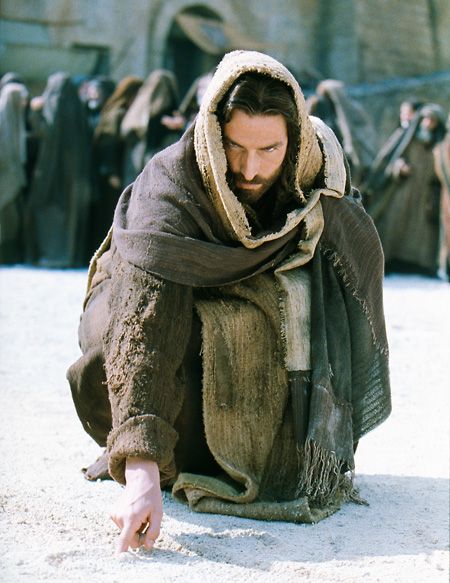




 Considering the Bible