Psalm 26:9 Do not sweep my soul away with sinners, nor my life with bloodthirsty men, Psalm 26:10 in whose hands are evil devices, and whose right hands are full of bribes.
Psalm 26 is a psalm of David, a man who followed after God through struggles, disappointments, persecutions and trials. Even as a young teenager, he knew the Lord and spent many hours communing with the God of Israel while with his sheep.
Considered a nobody by his father, for he was never considered when Samuel requested to see Jesse’s sons, he nevertheless honored his father and trusted the Lord throughout his life. Even during times of persecution, of which produced a psalm as we read this morning, he looked to the Lord and begged for understanding, for the Lord to vindicate him (vs 1), for the Lord to examine him (vs 2), and declared his innocence in comparison to those who sought his life (vs 4-7).
David makes the case for his integrity, and has an open heart for the Lord’s work in his life. The first 7 verses of this psalm are a fantastic example of the Christian life before the Lord. David was so New Testamental!
So it is somewhat shocking that David pleads God not to take away his soul with sinners in verse 9. On top of that plea, he continues with begging that the Lord not gather his life with bloodthirsty men.
What is going on here?
Might it be that he is simply requesting that he not die in the presence of sinners? Maybe.
In the ESV, which is the version I typically use, the term “sweep away” speaks of receiving, removing, collecting and gathering. It isn’t quite clear to me if David is begging to be saved from being gathered with sinners in their judgement/destiny or to be separated from them in the act of death. Or possibly to be separated from them in their sinful actions.
Too many questions, but the verse is admittedly surprising.
Immediately after this plea to God for His protection, David returns to his previous confidence.
Psalm 26:11 But as for me, I shall walk in my integrity; redeem me, and be gracious to me. Psalm 26:12 My foot stands on level ground; in the great assembly I will bless the LORD.
Maybe I shouldn’t have looked at this verse as I seem to be producing more questions than answers. Thankfully, I know there are readers that follow my blog, and I would reach out to them for suggestions on the passage above.
Until then, I will continue to consider the passage. And I may come back to it if the Lord gives me any clarity. Nevertheless, may the Lord bless you as you travel the pilgrim way today.
Thanks again for coming to visit. I hope you found something of interest in this post and would appreciate a comment, to begin a discussion. If you would like to receive daily posts from Considering the Bible, click on the “Follow” link below
My hope is that this series will offer my readers a chance to consider the names, characteristics and descriptions of our God in the Word.
The remaining Names of God in this series might be considered descriptors, or characteristics of the Lord. We have reviewed the three primary Names of God, along with nineteen compound Names of God in our previous posts. As we venture through these descriptors of our God, I hope we will recognize all the many characteristics of our God that we tend to take for granted.
The Word is truly rich with descriptions of the Living God, and this effort of searching in the Word was quite illuminating. He truly is the ultimate subject of the Word, and His revelation of self-descriptions, or the accolades offered Him by His priests, prophets, kings apostles and faithful truly is a blessing.
May the Name of the Lord be praised, and by thinking on His name, may you have a blessed day.
249
GREAT IS OUR LORD
Psalm 147:5 Great is our Lord, and abundant in power; his understanding is beyond measure.
As we consider the names of God, we see the same modifier describing different aspects or characteristics of our God. Such is the case for our current streak of Names.
Since we began in Post 245 – Great and Awesome Name, we have considered the modifier “Great” included in our descriptions. This should not surprise us, for our God is Great, but what does that mean?
Let’s consider some shades of meaning in relation to the term “Great”.
SIZE The first possible meaning might include the concept of size. You know – the fire was great, as in it was a large fire!
SIZE (in comparison) We sometimes call animals of the same genus “great” to differentiate them from others of like nature. An example might include the “Great Blue Heron”, or the “Great Grey Owl”. Great in this case relates to a comparison amongst the same type of animal
SIZE (numerically) How about the way great is used in relation to quantity? There was a great number of students waiting to go into class.
QUALITY Quality may be described when using great, as in – the cheese was great, better than I had ever tasted!
SUPERIORITY Great may be used in relation to character, to the noble and good life lived by a man or woman. She was a great servant of those in need.
SKILLFUL I have a friend that is adept, very skillful at learning languages. She is a great linguist!
CHIEF OR PRINCIPAL Great is sometimes used when describing the principal or main building on a site. I recently visited a ranch in Texas and had meetings in the “great” house.
ENTHUSIASTIC To be considered great in relation to enthusiasm would describe one who loves a certain topic or activity, and then be described as great. Something like – Frank was a great lover of hotdogs. (He wasn’t passive towards those dogs!)
There may be more shades of meaning I have missed, but to call our God Great may include some or all of these shades of meanings.
Which shade of meaning might you consider your favorite? Is there any shade of meaning that you might consider not applicable to God?
Let me know in the comments.
I would love to hear of your favorite name, characteristic or description of the Living God. Please leave me a comment, and I will include it in the list!
Thanks again for coming to visit. I hope you found something of interest in this post and would appreciate a comment, to begin a discussion. If you know someone this blog may bless (or challenge), send them a link, so they may join us in our discussion.
My hope is that this series will offer my readers a chance to consider the names, characteristics and descriptions of our God in the Word.
The remaining Names of God in this series might be considered descriptors, or characteristics of the Lord. We have reviewed the three primary Names of God, along with nineteen compound Names of God in our previous posts. As we venture through these descriptors of our God, I hope we will recognize all the many characteristics of our God that we tend to take for granted.
The Word is truly rich with descriptions of the Living God, and this effort of searching in the Word was quite illuminating. He truly is the ultimate subject of the Word, and His revelation of self-descriptions, or the accolades offered Him by His priests, prophets, kings apostles and faithful truly is a blessing.
May the Name of the Lord be praised, and by thinking on His name, may you have a blessed day.
248
GREAT HIGH PRIEST
Hebrews 4:14 Since then we have a great high priest who has passed through the heavens, Jesus, the Son of God, let us hold fast our confession.
Years ago, my son decided to read through the Old Testament, and as he was going through the Pentateuch, he made a comment I will never forget.
“Those priests were butchers!”
From a young man who had spent most of his life preparing food, as he had read the duties of the Priest, he interpreted it as equal to the task of a butcher. I had read the same passages many times and never came away with that impression.
My concept of the priest was flavored more from the ones who interacted with the Messiah in the New Testament. Businessmen, politicians and religious imposters. A dangerous mix for the people of God to be under!
Was the priest intended to be a butcher? Is that the message we should take away from our reading of the Old Testament? Or maybe, the priest was to be a manager of people, one who controlled and manipulated people and goods.
To be a priest entailed many tasks that I do not intend to venture into with this short post, but two items need to be considered as we think of our God as the Great High Priest.
The High Priest in the Old Testament was a prefigure of the Messiah in many ways. For the purpose of brevity and to relate to this post, consider the High Priest before a holy God and before a sinful people.
Before a Holy God
As the priest entered the presence of God, he “carried” the people on his heart. His approach before a holy God was for the people, as he carried a broken, sinful people on his heart, pleading before the Righteous and Holy God for a people who were not worthy, who had sinned and fallen short of the glory of God.
His “ministry” was of a broken heart for the people he represented.
Exodus 28:30 And in the breastpiece of judgment you shall put the Urim and the Thummim, and they shall be on Aaron’s heart, when he goes in before the LORD. Thus Aaron shall bear the judgment of the people of Israel on his heart before the LORD regularly.
Before Sinful People
His behavior before his people was likewise towards them. It was the prophet that did much of the rebuking, correcting and chastisement in the nation as they rebelled against God, though correction of the people was not out of the priest’s job description. When required, he chastised the people.
But for the faithful Israelite, who came before the priest with an offering, with a lamb, a goat or a pigeon, the priest was of the receiving nature. He was approachable, without rebuke to the one who sacrificed in the right spirit. Proper sacrifice was received gladly, with open arms.
For our time together this morning, consider both of these attributes in the Lord Jesus as our High Priest. Were not sinful broken people on the heart of the Messiah as He faced the judgement of sin in His body on the cross? Though He suffered such horrendous injustice in His service for His people, He has not turned to His people in anger due to this injustice. He is not holding some grudge, or demanding some retribution from His people. He is approachable, with open arms, receiving His people as they come with their own sacrifices of praise and love to Him.
The apostle encourages the people of God to draw near to our High Priest, a High Priest that is able to sympathize with our weakness, having experienced the power of temptation.
Hebrews 4:15 For we do not have a high priest who is unable to sympathize with our weaknesses, but one who in every respect has been tempted as we are, yet without sin. Hebrews 4:16 Let us then with confidence draw near to the throne of grace, that we may receive mercy and find grace to help in time of need.
Jesus is our true Great High Priest, and all other images in my mind of a butcher and a businessman vanish as I see His arms open up!
Let us then with confidence draw near to the throne of grace
I would love to hear of your favorite name, characteristic or description of the Living God. Please leave me a comment, and I will include it in the list!
Thanks again for coming to visit. I hope you found something of interest in this post and would appreciate a comment, to begin a discussion. If you know someone this blog may bless (or challenge), send them a link, so they may join us in our discussion.
2 Corinthians 12:21 I fear that when I come again my God may humble me before you, and I may have to mourn over many of those who sinned earlier and have not repented of the impurity, sexual immorality, and sensuality that they have practiced.
Paul is reaching out to his church in Corinth. As you may remember, Corinth was a church that Paul founded and had spent much time there, discipling the faithful, and exhorting them to continue in the faith. Paul spent 18 months with this church, much longer than most of his plants.
Acts 18:11 And he stayed a year and six months, teaching the word of God among them.
While there, he wasn’t acting in the evangelist mode as much as the Bible teacher, and the Corinthians had the blessing of being under Paul’s teaching for an extended period of time!
If he personally knew a people claiming Christ, it was in Corinth, but as he eventually moved on under the leading of God, he heard rumors, stories of the Corinthians acting like little children, bickering and fighting with one another. Acting unChristian.
The reports of this church’s activities included some sin that even the heathen don’t put up with. And yet he designated them as saints, believers.
1 Corinthians 1:2 To the church of God that is in Corinth, to those sanctified in Christ Jesus, called to be saints together with all those who in every place call upon the name of our Lord Jesus Christ, both their Lord and ours:
Paul goes so far as to speak of the Corinthians surety in the faith.
1 Corinthians 1:6 even as the testimony about Christ was confirmed among you–
But in our verse this morning, we find Paul speaking of mourning. A requirement of mourning over many of those he has declared to be saints.
Mourning is typically associated with death, with grief over the loss of a loved one. While there is hope, mourning is not the word I think of. For Paul to bring this word into the discussion may breach our topic of conditional security, for he has established these as saints, and is now fearing the mourning required at the death of a loved one.
May this mourning be associated with physical death? We know some in the church were judged because of their sin and were taken home early, as we read in 1 Corinthians 11.
1 Corinthians 11:30 That is why many of you are weak and ill, and some have died.
But when Paul speaks of physical death amongst the believers, it is in the context of judgment, without any reference to mourning, sorrow or grief. It is a matter of judgement.
For our verse here, I suggest Paul may be breaching a far greater death, not simply of a saint being judged and taken home early, though still a believer.
Might Paul be introducing the mourning required in the loss of a believer from the faith? Just a few verses later Paul is asking these folks to check themselves out. They need to examine themselves, test themselves, to see if they pass or fail.
2 Corinthians 13:5 Examine yourselves, to see whether you are in the faith. Test yourselves. Or do you not realize this about yourselves, that Jesus Christ is in you?–unless indeed you fail to meet the test!
Now some may be thinking Paul is writing this to a mixed audience, those who are of the faith and those who are simply watching from outside. Some may think that Paul has two audiences in mind, and this testing is for the self-deluded outsider, the professor and not the possessor of the Christian life. This may make sense, except for the fact I don’t recall him addressing any outsiders throughout this letter.
He continues to address believers, bringing to mind the responsibilities and lifestyle requirements of the believer, sometimes rebuking the believer, and speaking to those who have made claims of new life.
How do you understand his reference to mourning in relation to the saints he was about to visit?
Leave me a comment – I am curious of my readers opinions!
Thanks again for coming to visit. I hope you found something of interest in this post and would appreciate a comment, to begin a discussion. If you would like to receive daily posts from Considering the Bible, click on the “Follow” link below
As many who have followed me for a bit, I have fallen into the Psalms, and I can’t get up! (As if I would want to.) The Psalms are a majestic collection of poetry, of heart felt human experiences that constantly challenge me in my own frail attempt to follow the true King. As many of the Psalms are written by David, my study on the Psalms has spurred me on to looking at the life of David, is the main contributor to this book, and to follow the victories and tragedies of the shepherd King of Israel.
Many times in the narrative, we will see the Lord Jesus, imperfectly, yet a reflection of His spirit in a man with weaknesses.
5 Now the sons of Rimmon the Beerothite, Rechab and Baanah, set out, and about the heat of the day they came to the house of Ish-bosheth as he was taking his noonday rest. 6 And they came into the midst of the house as if to get wheat, and they stabbed him in the stomach. Then Rechab and Baanah his brother escaped. 7 When they came into the house, as he lay on his bed in his bedroom, they struck him and put him to death and beheaded him. They took his head and went by the way of the Arabah all night, 8 and brought the head of Ish-bosheth to David at Hebron. And they said to the king, “Here is the head of Ish-bosheth, the son of Saul, your enemy, who sought your life. The LORD has avenged my lord the king this day on Saul and on his offspring.” 9 But David answered Rechab and Baanah his brother, the sons of Rimmon the Beerothite, “As the LORD lives, who has redeemed my life out of every adversity, 10 when one told me, ‘Behold, Saul is dead,’ and thought he was bringing good news, I seized him and killed him at Ziklag, which was the reward I gave him for his news. 11 How much more, when wicked men have killed a righteous man in his own house on his bed, shall I not now require his blood at your hand and destroy you from the earth?” 12 And David commanded his young men, and they killed them and cut off their hands and feet and hanged them beside the pool at Hebron. But they took the head of Ish-bosheth and buried it in the tomb of Abner at Hebron.
Due to the history of the Beerothites, and the likelihood of these men being mere mercenaries, this action of assassination should not surprise us. These men saw an opportunity, but did not consider David’s history with those killing for his sake and took action. A fatal mistake!
I mentioned the history of the Beerothites in an earlier post, of how this tribe had deceived Joshua and entered into a treaty with the nation of Israel under false pretenses. Now, three centuries later, this tribe provides two mercenaries to perform a treasonous act against their king.
For treason, these two men did not disappoint. Walking into the palace, and stabbing the king in broad daylight is gutsy. To leave the palace with the head of the king is beyond audacious – that is simply foolhardy. Yet they were able to do this act of treason, seemingly without any concern of getting caught. Was it that they were part of the royal guard, or was is that since Abner had been taken out of the picture, they entire security around the king was lax. I will leave that with my reader.
These two game changers, having committed a capital offence head off to the upcoming king, a man they seemingly know little of. Surely they didn’t hear the story of that fellow who presented to David the news of Saul’s death. If that man had killed Saul, as David understood, it could be reasoned it was in war, and bad things happen in war. But that reasoning did not wash with David, for that fellow was put to death for raising his hand against the Lord’s anointed!
These fellows had no excuse. No war, the king was at a weak time, and the army that should protect is the killing machine?
Verse 11 is the key verse, where David lays into these fools.
How much more, when wicked men have killed a righteous man in his own house on his bed, shall I not now require his blood at your hand and destroy you from the earth?”
Suffice to say – they died. And David sought to honor Ish-bosheth with entombing him in Abner’s tomb.
Saul had no tomb? What is David doing in laying to rest Ish-bosheth in Abner’s tomb. It is not that Hebron was King Saul’s capital city – that was Gibeah.
If my reader has any possible reasoning for David to provide this specific honor to Ish-bosheth, please let me know in the comments.
Otherwise, this treacherous act of two mercenaries has set the stage for David to rule all of Israel. We will begin to shift in the story of David from watching a man on the run, one who was treated like an enemy by the powers that reigned, to one who ascended to the throne, reigning as God had promised.
Throughout the early years of David, we have seen many instances where David’s life reflected the persecuted life of his Greater Son.
So many similarities to Jesus as He walked among us.
Now as we enter a time where David is enthroned, we will find a man besot with sin, struggling with his own demons, and yet being led by the Father, receiving promises from God and establishing Israel on a path of tremendous world influence, spreading the glory of God throughout the region.
Jesus is also on the throne, ruling over the Kingdom of heaven. His ascension centuries back has become the King of all nations.
Revelation 15:3 And they sing the song of Moses, the servant of God, and the song of the Lamb, saying, “Great and amazing are your deeds, O Lord God the Almighty! Just and true are your ways, O King of the nations!
Jesus’ rule continues throughout eternity, and His righteous reign will lead each of us to greater victories as we follow the One who is our Master.
Thanks again for coming to visit. I hope you found something of interest in this post and would appreciate a comment, to begin a discussion. If you know someone this blog may bless (or challenge), send them a link, so they may join us in our discussion.
My hope is that this series will offer my readers a chance to consider the names, characteristics and descriptions of our God in the Word.
The remaining Names of God in this series might be considered descriptors, or characteristics of the Lord. We have reviewed the three primary Names of God, along with nineteen compound Names of God in our previous posts. As we venture through these descriptors of our God, I hope we will recognize all the many characteristics of our God that we tend to take for granted.
The Word is truly rich with descriptions of the Living God, and this effort of searching in the Word was quite illuminating. He truly is the ultimate subject of the Word, and His revelation of self-descriptions, or the accolades offered Him by His priests, prophets, kings apostles and faithful truly is a blessing.
May the Name of the Lord be praised, and by thinking on His name, may you have a blessed day.
247
GREAT GOD
Daniel 2:45 just as you saw that a stone was cut from a mountain by no human hand, and that it broke in pieces the iron, the bronze, the clay, the silver, and the gold. A great God has made known to the king what shall be after this. The dream is certain, and its interpretation sure.”
Daniel is beckoned before the Babylonian King Nebuchadnezzer, after the king experienced a startling dream. He had watched in his night visions as a massive structure was erected before him, made of various metals.
Now this is the first time Daniel is brought before the king, and the task was daunting. Not only interpret a dream, but determine the dream? Recount the contents of the dream the the king.
Very unexpected!
Daniel and his friends prayed, and in Daniels next appearance, he not only interpreted the dream according to truth, but also was able to provide the contents of the dream to the king.
Daniel spoke of “a great God” in his confession before the king, and as this most likely was the first time before the King, Daniel introduced the King of Kings to the king of Babylon in a somewhat generic way. Daniel would be before the king many times, and would have national/worldwide influence before this king. This initial introduction Daniel was somewhat restrained, for he only revealed the contents of a dream. After all, it was only a message to a king regarding his kingdom’s eventual fall.
An additional passage is found in the Old Testament regarding our Great God.
Nehemiah 8:6 And Ezra blessed the LORD, the great God, and all the people answered, “Amen, Amen,” lifting up their hands. And they bowed their heads and worshiped the LORD with their faces to the ground.
In this passage, we have another man of God describing our God as great. Ezra was addressing a community of faith, who were ready and willing to hear the Word of God.
The reaction of the people of God was amazing. As Ezra opened the book of the law, the people stood. As he read the book of the law, the people wept. Imagine that! Weeping in the congregation of God’s people, due to the reading of the Book of the Law.
Revival in the congregation was breaking out, for the Word reflected their failure, their sin and their disobedience, yet their hearts were open to the Lord.
One man revealed a dream. One man revived a nation. Both actions were attributed the our Great God.
Paul also speaks of our Great God, providing us clear indication of the identity of the One on the cross.
Titus 2:13 waiting for our blessed hope, the appearing of the glory of our great God and Savior Jesus Christ,
Take note that we have went from the indefinite article “a” in describing God with Daniel – (a Great God), through to the definite article “the” in Ezra’s declaration (the Great God) to Paul’s possessive description of God.
He is our Great God.
Lord Jesus – we look to You, our Great God for a time of revival as in Ezra’s day, a period of open hearts in front of the open Book.
Help us have open hearts to Your ways!
I would love to hear of your favorite name, characteristic or description of the Living God. Please leave me a comment, and I will include it in the list!
Thanks again for coming to visit. I hope you found something of interest in this post and would appreciate a comment, to begin a discussion. If you know someone this blog may bless (or challenge), send them a link, so they may join us in our discussion.
My hope is that this series will offer my readers a chance to consider the names, characteristics and descriptions of our God in the Word.
The remaining Names of God in this series might be considered descriptors, or characteristics of the Lord. We have reviewed the three primary Names of God, along with nineteen compound Names of God in our previous posts. As we venture through these descriptors of our God, I hope we will recognize all the many characteristics of our God that we tend to take for granted.
The Word is truly rich with descriptions of the Living God, and this effort of searching in the Word was quite illuminating. He truly is the ultimate subject of the Word, and His revelation of self-descriptions, or the accolades offered Him by His priests, prophets, kings apostles and faithful truly is a blessing.
May the Name of the Lord be praised, and by thinking on His name, may you have a blessed day.
246
GREAT AND AWESOME GOD
Daniel 9:4 I prayed to the LORD my God and made confession, saying, “O Lord, the great and awesome God, who keeps covenant and steadfast love with those who love him and keep his commandments,
Daniel was a righteous man.
Of all the men in the Old Testament, Daniel shines as a glowing example of a man committed to the God of Israel. To show the status of Daniel in the mind of God, Ezekiel lumps him in with Noah and Job as men of faith, men whose righteousness could not hold back the judgement on Israel.
Ezekiel 14:20 even if Noah, Daniel, and Job were in it, as I live, declares the Lord GOD, they would deliver neither son nor daughter. They would deliver but their own lives by their righteousness.
Daniel was a righteous man.
But we find Daniel starting to pray in this verse, and our verse this morning is the beginning of a prayer to God that dwells on confession, describing rebellion, sin, wickedness, transgression, disobedience, unfaithfulness, shame, iniquity, and the departing from the Lord by the nation now in captivity.
Daniel provides for us a prayer of confession unlike any in the Word, for he was in the midst of conditions directly resulting from centuries of sinful choices by the nation. He was righteous, but he also was carried away in the judgement, carried away to Babylon.
In this passage, Daniel is identifying with the rebellious nation, taking his place with the people who rejected the Lord. He is such a great picture of the Lord Jesus, in that though He was completely sinless, He came and identified with us!
And he begins his prayer by speaking of the Lord as the Great and Awesome God. In calling God this, Daniel continues by giving us further explanation as to why the Lord should be called by this name.
Our Great and Awesome God is faithful. Daniel speaks of God’s faithfulness to those who have rejected His covenant. To those who have departed from Him. To those who have rejected God.
Now, if you haven’t reacted to this “slip” in my earlier description of Daniels’s prayer, I want to draw your attention to my heresy. Daniel does not speak of our Great and Awesome God keeping covenant with sinners, but with those who keep the covenant, those who love God and keep (or obey) His commands.
Daniel, after describing the faithfulness of God the covenant keeping people, then goes on and describes the people of Israel, (including himself) as an undeserving, sinful and rebellious people. The covenant is for those who obey (Daniel comes to mind). No covenant is referred to here for those who reject God.
This is no small omission, for without the covenant, there is no “legal” responsibility on God’s part to act. God has a covenant with those who obey.
This is a big problem is God was only and always committed to the Sinai covenant, but even though the covenant is broken, smashed by those who promised to keep it, the Person of God has a heart, a love for the people that goes beyond the covenant.
The heart of God is a heart of mercy, of forgiveness, and exemplifies the GREAT AND AWESOME GOD we recognize in the Father and His Son Jesus Christ.
I would love to hear of your favorite name, characteristic or description of the Living God. Please leave me a comment, and I will include it in the list!
Thanks again for coming to visit. I hope you found something of interest in this post and would appreciate a comment, to begin a discussion. If you know someone this blog may bless (or challenge), send them a link, so they may join us in our discussion.
1 John 2:15 Do not love the world or the things in the world. If anyone loves the world, the love of the Father is not in him. 1 John 2:16 For all that is in the world–the desires of the flesh and the desires of the eyes and pride of life–is not from the Father but is from the world. 1 John 2:17 And the world is passing away along with its desires, but whoever does the will of God abides forever.
I used to spend hours every night delivering newspapers to over 400 homes in the city of London Ontario. Yes, I was an adult newspaper “boy” and it was a great job for a young married man to have. It provided sufficient funds to care for my young wife, provided ample time to spend with my beautiful wife, and I was readily available as we waited for our first born to enter the world, for I worked for less than four hours each morning! And in those nightly four hours, walking the streets of London, mindlessly following a path that rarely changed, I began a habit of Bible memorization that has been of tremendous benefit to my own spiritual life. To those reading, I encourage this discipline in your walk with the Master, for He often calls to mind a passage from my memory to provide guidance, encouragement and often correction!
All that to say that this mornings passage was one of the first passages I memorized as a multiple verse challenge.
Early in my faith, I understood that John wrote his epistle to believers in order to encourage them in the agreement they entered into upon initial faith in the Messiah. This agreement was a static, “set in stone” promise of a believers destiny based on an initial faith at a point in time in the past.
Nowadays, I am of the understanding that this salvation we are privileged to enter into is not dependent on a contract of sorts, but on a continuing living faith in the Son of God, Jesus Christ.
For those interested in my findings, I published a series of posts beginning with 1 John – Testing to Know – Introduction. In summary, I am of the opinion John was providing tests for the believer, as the believer seeks to follow the Lord, some tests to check his life against in order to know if he has the Son, which is to have eternal life.
My faith has shifted from depending on a night in February of 1981, when I initially confessed my sin and asked for His salvation. Now, the issue I need to address is my life reflecting the character of Jesus, growing, yet admittedly never attaining the perfection He calls us to. Again, it is not that any believer attains, but that all believers rely on the Son and not on an agreement. We are to trust in the Lord, not an agreement, or covenant, fantastic as it is!
The Lord is full of mercy and plenteous in forgiveness. This re-understanding of salvation magnifies the grace of God towards the one following the Master. Many times I have wandered and His faithful ministry in my life has pulled me back to Him over and over again. The great challenge for the believer is to continue to follow, to be faithful, to continue to believe, to continue to rely on the Savior, to do that which He commands in the midst of trials, temptations disappointments and victories.
As we follow, we slowly, and incrementally become more like Him, which is the point. We are called Christians, for the term actually means little Christs, and was given to us as a derogatory name given by the world to each follower of Christ.
So when we come to our topic verses, this revised understanding presents a challenge that is much more complex than I first thought.
Let me do a real quick study through the verses.
Love
John refers to love three times in verse 15. All three words are of the root word for agape. When referring to the believers relation to the world, the word agapáō a present active imperative, speaking of a continual, ongoing love for the world. This is the verbal form of “agape love”
When referring to the love of the Father, the word is revised to agápē , the same word only this time in the noun form.
It is somewhat surprising that John used the same word relating to both the world and God. After studying the term agape, I have come to understand it as the word that describes a sacrificial love that is bestowed on something or someone out of the character of the giver and not based on the recipient’s actions or efforts.
After a brief review, this use of agape for the world is quite appropriate, for the world certainly does not deserve our love, and if we bestow this sacrificial love onto the world, the sacrifice of our lives, time and talent is just that – sacrificed to a non – worthy recipient.
World
John uses this word bunches! Twenty three times in this short 5 chapters. The kicker is that the word “world” has a broad meaning, for even a cursory review of the passages in John reveal this. Consider.
“World” speaks of the inhabitants of His creation. People.
John 3:16 “For God so loved the world, that he gave his only Son, that whoever believes in him should not perish but have eternal life.
“World” speaks of the creation itself – matter space and time.
John 9:32 Never since the world began has it been heard that anyone opened the eyes of a man born blind.
“World” speaks of the mission field for those who are sent by Jesus.
John 17:18 As you sent me into the world, so I have sent them into the world.
“World” speaks of followers present with Jesus at the time, and as Jesus prepared for death, He was about to depart from them. It is a temporary location!
John 13:1 Now before the Feast of the Passover, when Jesus knew that his hour had come to depart out of this world to the Father, having loved his own who were in the world, he loved them to the end.
And of course our present verses in 1 John, which speak of something believers are not to love.
Now to think. Might John be speaking of people in our passage? No that makes no sense. When he speaks of the world, is he speaking of creation? This doesn’t fit the logic of the passage. Ok, might he be referring to the mission field in our passage? That is silly, for He has sent us out into it.
I think John 13:1 may bring the some clarity to the discussion, for it speaks of a temporary condition, and John goes on to speak of the believer living forever in verse 17.
All of that is good, and helpful (I hope) but is there something more, something a bit more concrete to this reference to the world in John’s thinking?
The term κόσμοςkósmos, translated as world, may also describe an ordered arrangement, an order or government, even a decoration or adornment, an aggregate of goods, pleasures, riches and goods that distract, that appeal, that seduce the believer from God.
In my mind, it speaks of any temptations presented to the believer to pull them away from the Christ, the Son of God. John goes on to describe all that is in the world – fleshly desires, visual desires and a life of pride, as being not from the Father, and by inference, is a competing force in the believers life.
Ok, all that to say the world is temporal, enticing and not of God. How does this relate to the series topic of conditional security? Let’s read John’s summary one more time.
1 John 2:17 And the world is passing away along with its desires, but whoever does the will of God abides forever.
Note John uses the word “but”. “But” is a term that speaks of exclusion or of difference. The world is passing away. The desires for / of the world is passing away. These are temporal.
The one doing the will of God lives forever, an statement of eternality. John relates this to obedience, but John is the apostle who continually speaks of faith in his writings.
Here he speaks of ποιέωpoiéō, doing. And for those interested in the tense of poiéō? It also is a present active verb, speaking on continuity, continuing, constancy.
My understanding of depending on a contract entered into with God in February of 1981 for my salvation has taken a hit with studies like this. Now no matter how some may consider my findings, the message of the Word is consistent.
Trust God today. Do what He commands today. Look to Jesus for guidance, strength, direction, knowledge, wisdom today.
Look to Jesus for life today!
Thanks again for coming to visit. I hope you found something of interest in this post and would appreciate a comment, to begin a discussion. If you would like to receive daily posts from Considering the Bible, click on the “Follow” link below
As many who have followed me for a bit, I have fallen into the Psalms, and I can’t get up! (As if I would want to.) The Psalms are a majestic collection of poetry, of heart felt human experiences that constantly challenge me in my own frail attempt to follow the true King. As many of the Psalms are written by David, my study on the Psalms has spurred me on to looking at the life of David, is the main contributor to this book, and to follow the victories and tragedies of the shepherd King of Israel.
Many times in the narrative, we will see the Lord Jesus, imperfectly, yet a reflection of His spirit in a man with weaknesses.
4 Jonathan, the son of Saul, had a son who was crippled in his feet. He was five years old when the news about Saul and Jonathan came from Jezreel, and his nurse took him up and fled, and as she fled in her haste, he fell and became lame. And his name was Mephibosheth.
Saul’s kingdom was falling, and his son Ish-bosheth would soon be dethroned, even executed. The end was near for the family of Saul, and the northern tribes knew that the recent death of Abner, their only real hope, indicated King David was in the ascendency. Not only was the political situation fragile for the northern tribes, with a king who was frozen in fear, those of the lineage of Saul understood the downfall meant their necks were on the line, and any direct descendent of Saul, a potential king in the line of Saul, would surely be a threat to the incoming power found in the throne of David.
Even a five year old boy presented a potential threat to an incoming power, and this nurse, upon hearing of the death of both Saul and Jonathon, this little boys father, had the foresight to understand the danger Jonathon’s boy was in. Her flight though, fueled by good intentions, was unwarranted, for the King coming was already under a covenant with this boy’s father, a covenant that would provide for Jonathon’s child, protect him and show the type of king David was.
Yet through the concern and fear of the nurse, young Mephibosheth would live his life as a cripple, restricted in his ability to serve in any army, to serve as a strong leader, and become a picture of the regal line of Saul in the future. He was somewhat helpless, due to an accident outside of his control, and we shall see in future passages of the covenant keeping character of the new and coming King of Israel.
David would not only show mercy to Mephibosheth in sparing his life, but also provide him his grandfathers lands, and treat him as a son of the king, inviting him to continually eat at the kings table.
2 Samuel 9:13 So Mephibosheth lived in Jerusalem, for he ate always at the king’s table. Now he was lame in both his feet.
What type of King brings a potential enemy to his table?
What type of King invites a potential threat to live in the very capital city of the nation, the center of political power?
What type of King provides for a cripple, one who is unable to serve, even one who would be considered a burden to take care of?
2 Samuel 9:7 And David said to him, “Do not fear, for I will show you kindness for the sake of your father Jonathan, and I will restore to you all the land of Saul your father, and you shall eat at my table always.”
What type of King would return a lost inheritance to a former enemy? David returned to Mephibosheth the lands of his grandfather, a sizable estate, and a house that he had no right to other than through a covenant David made with his father.
David sought to follow the Lord in his kingdom, and in this quick character review of Mephibosheth, a crippled heir of Saul, we see a coming King who was not typical, was not as expected, and who sought to reign in truth and under covenant.
What a King!
Thanks again for coming to visit. I hope you found something of interest in this post and would appreciate a comment, to begin a discussion. If you know someone this blog may bless (or challenge), send them a link, so they may join us in our discussion.
My hope is that this series will offer my readers a chance to consider the names, characteristics and descriptions of our God in the Word.
The remaining Names of God in this series might be considered descriptors, or characteristics of the Lord. We have reviewed the three primary Names of God, along with nineteen compound Names of God in our previous posts. As we venture through these descriptors of our God, I hope we will recognize all the many characteristics of our God that we tend to take for granted.
The Word is truly rich with descriptions of the Living God, and this effort of searching in the Word was quite illuminating. He truly is the ultimate subject of the Word, and His revelation of self-descriptions, or the accolades offered Him by His priests, prophets, kings apostles and faithful truly is a blessing.
May the Name of the Lord be praised, and by thinking on His name, may you have a blessed day.
245
GREAT AND AWESOME NAME
Psalm 99:3 Let them praise your great and awesome name! Holy is he!
We find our verse this morning in a Psalm that highlights the holiness of God, and for a brief moment, before I opened the full psalm, I assumed the “them” in this verse, referred to the nation of Israel, for they were God’s people and they had been privileged to know of His holiness, His “otherness”, His separated status.
I rattle on about this for it was many years that I understood holiness to be principally referring to the sinlessness of God. Now, I do not want to imply that sinlessness is not included in the term “holy”. I just want to confess that I think it describes a much greater concept than simply a negative about God, that He has no sin.
He is without sin, sinless and apart from sin. But for God to be called holy is to describe God as being different, other than what we understand, righteous in a way we may not fully understand, unless we dwell on Jesus, and the manner in which He lived among us.
Jesus was holy, separated from sinners, as the apostle tells us, but we know He lived amongst the worst of sinners, the “dregs” of society, a friend of sinners.
Hebrews 7:26 ESV – For it was indeed fitting that we should have such a high priest, holy, innocent, unstained, separated from sinners, and exalted above the heavens.
The contrast between our understanding of holiness and how He lived out His holy life often astounds me.
I often think of sin as the Old Testament describes it. If I touch it, it defiles me, and my responsibility is to stay away from all contamination. Haggai describes my understanding in his second chapter
Haggai 2:12 ‘If someone carries holy meat in the fold of his garment and touches with his fold bread or stew or wine or oil or any kind of food, does it become holy?’” The priests answered and said, “No.” Haggai 2:13 Then Haggai said, “If someone who is unclean by contact with a dead body touches any of these, does it become unclean?” The priests answered and said, “It does become unclean.”
Non Transferable Holiness does not transfer to items. Any item that is holy is alone holy. Whatever it meant to be holy, to be separate, to be consecrated to the temple, or to the priest, or to God, alone was holy.
Isolated Holiness was to be protected by isolation. If a sinful person or item touched a holy item, it became unclean.
For many years, I understood that to be holy was to stay away from sin, and by inference, away from sinners, seeking to keep my life pure by isolation. Fat chance at success with this, for it produced a believer that was ineffective, lonely, self righteous and somewhat angry.
But then I started noticing that Jesus drank with sinners, went to parties, touched lepers and forgave adulterous women, raising them up by their unclean, sinful hand. How could He do that, and remain holy, separate from sinners, as Hebrew speaks?
As a follower, does this example of Jesus’ holy life amongst sinners allow me to go out drinking and partying? For some believers, this may be allowed, but due to my past, my running from God in my youth, my teenage alcoholism and previous drug habits, I knew I had to refrain from certain activities to avoid temptation. Eventually my thinking morphed and I thought my abstinence from those who partook was my holiness. How little I understood!
Everything turned upside down when Jesus arrived, for when a sinful person touched Him, power was transferred from Him to the sinful person. Forgiveness and healing, illumination and understanding flowed from Him. His was a life of non-isolation, of being in the midst of all who welcomed Him, and even amongst those who hated Him. He was simply put – unbelievable!
I realize I have focused on the holiness of God in this post, but so many thoughts were flooding my mind of how Great and Awesome Jesus, in His life amongst us, actually was. His holiness, His “otherness” is so foreign to my standard thinking of God that when I am caught in the conflict between my thinking and His message, I tend to blurt out the praise I have for Him, weak as it is.
May we praise the Great and Awesome name of Jesus, for He is Holy. He is so different from us and He calls us to a holy life, a different life than we are living. A life of change and growth, a life of holiness amongst the hurting and the sinful.
I would love to hear of your favorite name, characteristic or description of the Living God. Please leave me a comment, and I will include it in the list!
Thanks again for coming to visit. I hope you found something of interest in this post and would appreciate a comment, to begin a discussion. If you know someone this blog may bless (or challenge), send them a link, so they may join us in our discussion.
My hope is that this series will offer my readers a chance to consider the names, characteristics and descriptions of our God in the Word.
The remaining Names of God in this series might be considered descriptors, or characteristics of the Lord. We have reviewed the three primary Names of God, along with nineteen compound Names of God in our previous posts. As we venture through these descriptors of our God, I hope we will recognize all the many characteristics of our God that we tend to take for granted.
The Word is truly rich with descriptions of the Living God, and this effort of searching in the Word was quite illuminating. He truly is the ultimate subject of the Word, and His revelation of self-descriptions, or the accolades offered Him by His priests, prophets, kings apostles and faithful truly is a blessing.
May the Name of the Lord be praised, and by thinking on His name, may you have a blessed day.
244
GRACIOUS AND MERCIFUL
2 Chronicles 30:9 For if you return to the LORD, your brothers and your children will find compassion with their captors and return to this land. For the LORD your God is gracious and merciful and will not turn away his face from you, if you return to him.”
Our passage this morning is found in the middle of King Hezekiah’s preparation for the first Passover the nation would enter since Joshua. Shocking, for even King David did not celebrate the Passover.
Nevertheless, this Passover was marked by a number of special situations.
First off, King Hezekiah, in his desire to celebrate the Passover, allowed this celebration to be performed a month late. The Temple had just been cleansed and the priests were in need to be sanctified. The people of the north were invited and time was required for cleansing and travel to occur.
This was an allowance provided in the law found in Numbers 9:6-11.
Secondly, the temple had been closed by Hezekiah’s father, King Ahaz for 16 years. This about face by Hezekiah was a bold stance of faith for this young king, for he may have been as young as twenty-five years old as he ascended the throne of Judah.
Thirdly, Hezekiah invites the northern tribes. This is an astounding request, for the northern tribes had been conquered years before Hezekiah ascended the throne. To invite the northern tribes could have been interpreted by the reigning Assyrians as an effort to reconsolidate the nation of Israel as the original twelve tribes.
Definitely a risky move, but one that showed Hezekiah’s desire to celebrate the Passover properly!
And this is the context of our verse. Hezekiah is calling out to the northern tribes, pleading with them to return to the Lord, to celebrate the Passover and to recommit to the covenant they had abandoned. Though they had been overtaken by foreigners, a proof that they had abandoned the Lord according to Deuteronomy 28:25 passage, mercy and grace was available to them, for the Lord their God is a gracious and merciful God.
Did they return? A few did, but sadly, the majority of the northern tribes remained conquered.
It is interesting that the message spoke of both mercy and grace. Both terms are used exclusively of God, and are combined a few times in the Old Testament, revealing the character of our God as we know Him in the Lord Jesus.
He truly is gracious and merciful to His people and as we recognize His grace and mercy towards us, we will be drawn to honor Him in our lives, returning to Him as we wander, and seeking to celebrate His goodness in our lives.
He is our gracious and merciful God.
I would love to hear of your favorite name, characteristic or description of the Living God. Please leave me a comment, and I will include it in the list!
Thanks again for coming to visit. I hope you found something of interest in this post and would appreciate a comment, to begin a discussion. If you know someone this blog may bless (or challenge), send them a link, so they may join us in our discussion.
Luke 9:23, 26 And he said to all, “If anyone would come after me, let him deny himself and take up his cross daily and follow me. For whoever is ashamed of me and of my words, of him will the Son of Man be ashamed when he comes in his glory and the glory of the Father and of the holy angels.
Months back, we journeyed into a passage regarding Jesus’ denial of the believer before the Father in heaven. For a review for those interested, I am supplying a link for your convenience. Conditional Security – Matthew 10:32-33.
At first glance, our Luke 9 appears to be the parallel passage to Matthew 10 message from the Lord. Such is not the case, for the parallel is in Luke 12:8,9.
It is not exactly the same topic, for in the Matthew verses, Jesus is speaking of how He will respond before the Father based on our relation with Him. Verse 23 is a simple statement of qualification that precedes a passage that is somewhat similar to Matthew 10:32-33 and Luke 12:8,9
A quick table will provide a comparison.
Now before we proceed, it may be wise to consider some differences. In Matthew 10 and Luke 12, the warning is of denial before the Father. Might this occur even daily in our lives, that as we walk with Him and fall into a denial of some type, Jesus may also reflect this denial before the Father in heaven.
Before we go any further, I need to ask – Is all denial of eternal consequence? Of course not, for we simply need to consider Peter. Some denial is not permanent.
For the passage this morning, it appears to be specifically describing an experience of shame Jesus will go through when He appears in glory.
The first two passages resulted in a denial of our person before the Father. This morning’s passage centers on the shame Jesus will experience at His great revealing.
Shame we experience regarding the Word of God, either the written declaration we possess in our hands or of the Living Son of God, which resides with us in our bodies, may trigger a shame based emotion in Jesus at His coming.
In a believers life, periods of weakness, doubt and shame may occur. Is this a desirable situation? Of course not. Can God work in these periods of dryness, periods of pain and doubt, periods where we are confused, possibly questioning His Word, and pursuing wrong solutions? Of course He can, and thankfully He does.
Yet if we continue to lay the cross down, continue to seek our ways and not His, there is a danger of bringing shame on the Lord at His coming.
For those who may be experiencing difficult times, please be encouraged in that God is still there for you, that He is working in and around you for His glory and your benefit. The charge for us as we struggle in down times is that we do not abandon in the struggle the very strength of God found in His Word and in His Son. None of us wants Jesus to experience any shame on His day, but in our struggles we need to continue in depending on His Word and His Way. It is upside down from what the world teaches, and we desperately need to be reminded of His will and way we are to pursue daily.
Don’t lay down the cross! It is a daily choice that produces life in each of us, as we die to our old desires.
Thanks again for coming to visit. I hope you found something of interest in this post and would appreciate a comment, to begin a discussion. If you would like to receive daily posts from Considering the Bible, click on the “Follow” link below
As many who have followed me for a bit, I have fallen into the Psalms, and I can’t get up! (As if I would want to.) The Psalms are a majestic collection of poetry, of heart felt human experiences that constantly challenge me in my own frail attempt to follow the true King. As many of the Psalms are written by David, my study on the Psalms has spurred me on to looking at the life of David, is the main contributor to this book, and to follow the victories and tragedies of the shepherd King of Israel.
Many times in the narrative, we will see the Lord Jesus, imperfectly, yet a reflection of His spirit in a man with weaknesses.
2 Samuel 4:1-12 1 When Ish-bosheth, Saul’s son, heard that Abner had died at Hebron, his courage failed, and all Israel was dismayed. 2 Now Saul’s son had two men who were captains of raiding bands; the name of the one was Baanah, and the name of the other Rechab, sons of Rimmon a man of Benjamin from Beeroth (for Beeroth also is counted part of Benjamin; 3 the Beerothites fled to Gittaim and have been sojourners there to this day).
David’s kingdom was shaken by the murder of Abner, with David taking charge, openly declaring a curse on Joab, openly mourning over Abner’s death, and personally fasting over the circumstances that caused this injustice. In all his actions, the Word speaks of the people of Hebron, nay, all the people and all Israel recognizing the actions of the king, and being pleased.
2 Samuel 3:36 And all the people took notice of it, and it pleased them, as everything that the king did pleased all the people. 2 Samuel 3:37 So all the people and all Israel understood that day that it had not been the king’s will to put to death Abner the son of Ner.
As a study in contrasts, the writer of 2 Samuel provides Ish-bosheth’s mighty acts of leading his people. Doh – not so mighty, for Ish-bosheth crawled up into a fetal position (metaphorically speaking of course!) and waited.
Now I don’t suppose I would venture a guess as to what he was waiting for, but in times of numbing fear, it is fair to say that nothing else enters the mind. Fear is a controlling, all powerful emotion that consumes the one living in it.
Ish-bosheth waited. And his people were dismayed, even terrified at the outcomes of his leadership, at the condition of their nation. Meanwhile, these same subjects of Ish-bosheth were looking south. That David sure was a leader!
Ish-bosheth’s days were numbered, for David will surely come into his decapitated, weak nation, take it militarily and rid the united nation of Israel of any future threat of the lineage of king Saul. Ish-bosheth would have to die!
Enter Rachab and Baanah, two brothers that had a past. During the conquest of Canaan, under the leadership of Joshua, those of Beeroth, along with three other Hivite towns deceived Joshua with a ruse, entered into a treaty with Israel that caused dissension in the ranks of the Israeli army, and was a blot on Joshua’s leadership. Read about this deception and the result of it in Joshua 9
They were a people that were to be conquered, not assimilated into the covenant nation!
Joshua made sure that this deception would be noted in the annals of Israel’s history, for he pronounced a curse on them, stating they would be restricted to areas of service to the nation of Israel only.
Joshua 9:23 Now therefore you are cursed, and some of you shall never be anything but servants, cutters of wood and drawers of water for the house of my God.”
Over three centuries later, the Beerothites were still a presence in the nation, with these two men serving as men leading raiding bands for Saul, and Saul’s son.
The term for “raiding bands” has a wide definition, ranging from a formal division of an army, to describing a marauding band of robbers, effectively mercenaries, guns for hire, men who had no allegiance but to the mighty buck!
Yes Ish-bosheth’s days were numbered, but not from the armies of David, but of his own, from treachery within his own ranks.
Ish-bosheth was a man used by Abner, who trusted Abner, obeyed Abner and was abandoned by Abner. Is it any wonder that the Word constantly instructs us to trust the Lord and not man?
Trust Him today for whatever challenges you may be facing. He is good to those of a pure heart and a humble spirit.
Thanks again for coming to visit. I hope you found something of interest in this post and would appreciate a comment, to begin a discussion. If you know someone this blog may bless (or challenge), send them a link, so they may join us in our discussion.
My hope is that this series will offer my readers a chance to consider the names, characteristics and descriptions of our God in the Word.
The remaining Names of God in this series might be considered descriptors, or characteristics of the Lord. We have reviewed the three primary Names of God, along with nineteen compound Names of God in our previous posts. As we venture through these descriptors of our God, I hope we will recognize all the many characteristics of our God that we tend to take for granted.
The Word is truly rich with descriptions of the Living God, and this effort of searching in the Word was quite illuminating. He truly is the ultimate subject of the Word, and His revelation of self-descriptions, or the accolades offered Him by His priests, prophets, kings apostles and faithful truly is a blessing.
May the Name of the Lord be praised, and by thinking on His name, may you have a blessed day.
243
GRACIOUS GOD
Jonah 4:2 And he prayed to the LORD and said, “O LORD, is not this what I said when I was yet in my country? That is why I made haste to flee to Tarshish; for I knew that you are a gracious God and merciful, slow to anger and abounding in steadfast love, and relenting from disaster.
Our God is a Gracious God. He is the same God Jonah knew, but for one experience. Jonah did not quite know the depth of grace we as believers may experience by living after the appearance of Jesus.
But the human heart hasn’t changed, for as Jonah confessed the truth of the very character of our Gracious God, we also teach, sing and confess of the graciousness of our God.
As Jonah knew of the Graciousness of God and feared the results, we too know of His Graciousness and fear the potential result.
How often have I halted, hesitated or avoided speaking to my neighbor or an acquaintance due to the same reason Jonah expressed here.
Fear of persecution?
Is it fear of persecution? I dare say this is not Jonah’s complaint, for he doesn’t address the recipients reaction to the message.
Upset of Normality
Is it a desire to maintain a status quo? I think that may be some of the concern Jonah has, since he was a part of the inner group, and he was sent to a group that was outside. Many the infusion of acceptance of the outer group would dilute the specialness of the inner group? Evan as I write that, it seems to be foolish, but how often have I witnessed this?
As my wife and I attended a well established church years ago we had a few friends come visit the service. They were energetic, unconventional and to say the least unorthodox due to the newness of their association with church. The church was small, and as I mentioned, well established. If I remember right, they actually sat in someone’s pew seat! (Don’t they understand Jesus died for that saint to sit in that pew seat?).
To say the least, the friends, after a few visits, decided not to return. And status quo was maintained!
Injustice
Is it a sense of injustice? Ta-daaa! That is the ringer folks, for as we glory in the forgiveness we have been freely granted, we tend to want to see justice fall on others.
We sometimes dress this thinking up with terms like righteousness and holiness, with our desire to express the need for justice to be inflicted on “our enemies”, but somehow that defeats the very word of the Master when He challenged us to live as He did.
Matthew 5:44 But I say to you, Love your enemies and pray for those who persecute you.
For grace to be realized in life, a sense of injustice has to first be accepted in our own lives, but then we also have to allow this to be offered and experienced in the lives of others.
As an aside, as I have considered the idea of universal salvation (through Jesus alone, for He is the only Savior), I have had many in the church rebut me with the very argument of injustice. That would be unfair they say. I have heard believers state that “they deserve” to burn in hell. So loving!
Why do we as believers in our Gracious God hesitate to consider the Graciousness of God from beyond our own understanding?
As a thought experiment, consider the days prior to the Lord’s appearance. Many, if not all in Israel never anticipated such an explosion of faith when He appeared, or the rapid spread of the the church outside the boundaries of the land of Israel, beyond the bloodline of Abraham. Many sought to restrict the growth, keep it within the inner group, and maintain a status quo. But the real stumbling block was the open, graciously free invitation to all. That was simply unacceptable. The graciousness of God was too much!
He is the same Gracious God, who surprised the Jews of Jesus day. May He surprise us in our daily lives, and may we be open to the work of God, rejecting our self centered desire for justice, and reveling in the Gracious God we love and honor!
I would love to hear of your favorite name, characteristic or description of the Living God. Please leave me a comment, and I will include it in the list!
Thanks again for coming to visit. I hope you found something of interest in this post and would appreciate a comment, to begin a discussion. If you know someone this blog may bless (or challenge), send them a link, so they may join us in our discussion.
My hope is that this series will offer my readers a chance to consider the names, characteristics and descriptions of our God in the Word.
The remaining Names of God in this series might be considered descriptors, or characteristics of the Lord. We have reviewed the three primary Names of God, along with nineteen compound Names of God in our previous posts. As we venture through these descriptors of our God, I hope we will recognize all the many characteristics of our God that we tend to take for granted.
The Word is truly rich with descriptions of the Living God, and this effort of searching in the Word was quite illuminating. He truly is the ultimate subject of the Word, and His revelation of self-descriptions, or the accolades offered Him by His priests, prophets, kings apostles and faithful truly is a blessing.
May the Name of the Lord be praised, and by thinking on His name, may you have a blessed day.
242
GRACE OF GOD
Titus 2:11 For the grace of God has appeared, bringing salvation for all people,
It may not be the most accurate of understandings, but as I grew in the Lord, and read this passage, I found that I couldn’t help but replace “grace of God” in this verse with Jesus.
After all, He has appeared, in all His glory and grace, exhibiting the beauty of holiness as He rubbed shoulders with sinners, and the righteousness of the Law as He knelt down before that woman’s accusers.
He is in all ways, and from every standpoint, the grace of God, having appeared to a small group of people for a short time, but due to His victory over sin and death, having walked out of the grave, has been with us forever through His Spirit.
I am so thankful that the grace of God is bringing salvation to most people, and that His victory will have some effect on His creation.
Of course I am being somewhat sarcastic, for the passage speaks of bringing salvation for all people. Many within the church would state that the intent of the passage is that Jesus made salvation possible, but for salvation to be realized, the faith of the hearer has to be exercised!
Amen and amen. This is the message of the grace of God, and yet if I understand the teaching of a universal salvation, all will come to Jesus at some point, either prior to death, or in the fires of judgement.
We seek the prior to death option!
Paul may have been concerned that those who interpreted this statement of “bringing salvation to all men” in the universal sense may have concluded that there was no need to fight against sin and ungodliness! This was unacceptable in Paul’s mind, for it produced an understanding of the grace of God as simply a license to sin.
Unacceptable.
The grace of God, understood properly as per Paul’s teaching has much to say regarding training and waiting under the tutelage of Jesus, the Grace of God Himself.
Titus 2:12-13 training us to renounce ungodliness and worldly passions, and to live self-controlled, upright, and godly lives in the present age, waiting for our blessed hope, the appearing of the glory of our great God and Savior Jesus Christ.
Paul may have taught of salvation brought for all, but this teaching does not provide an opportunity for license to sin, but is the greater motivation to live soberly, upright and godly lives, for we shall see Him, the Grace of God, our God and Savior Jesus Christ.
However you understand this topic, may God bless you, and keep you and continue to reveal the Grace of God, Jesus Christ in your life!
I would love to hear of your favorite name, characteristic or description of the Living God. Please leave me a comment, and I will include it in the list!
Thanks again for coming to visit. I hope you found something of interest in this post and would appreciate a comment, to begin a discussion. If you know someone this blog may bless (or challenge), send them a link, so they may join us in our discussion.
Romans 8:6 For to set the mind on the flesh is death, but to set the mind on the Spirit is life and peace. Romans 8:7 For the mind that is set on the flesh is hostile to God, for it does not submit to God’s law; indeed, it cannot. Romans 8:8 Those who are in the flesh cannot please God.
Passages within the Word that speak of this topic may be abused by those who promote an understanding of conditional security. I would like to be as honest with the text as I can be, and want to inform those reading that there are arguments that justify thinking Paul is applying these verses to the unregenerate.
Even verse 9, where Paul informs those who are his audience that they are not in the flesh.
Romans 8:9 You, however, are not in the flesh but in the Spirit, if in fact the Spirit of God dwells in you. Anyone who does not have the Spirit of Christ does not belong to him.
Note however, he did not specifically define them as not having the mind of the flesh, but only that they are not in the flesh. Could Paul be speaking of two different conditions – that of being in the flesh, and of having a mind set on the flesh? Is this his intent? I will leave that to my reader to consider!
Paul summarizes some spiritual facts for believers.
Verse 5 – those who live according to the flesh set their mind on the flesh.
Verse 6 – to set their mind on the flesh is death
Verse 7 – a mind set on the flesh is hostile to God
Verse 7 – a mind set on the flesh does not (cannot) submit to God’s law
Verse 8 – Those in the flesh cannot please God
Verse 9 -Believers are not in the flesh
Ok, so this summary seems to direct us to the conclusion that verses 5 – 9 do not apply to believers, and would negate this chapter as being applicable to the topic at hand. That is, if Paul had finished his teaching at this point! But Paul digs in and keeps challenging believers. To minimize repeating myself, I have written on verses 12-14 previously – See Conditional Security – Romans 8:12-14
To summarize though, Paul makes a point of our obligations to the flesh in the following verses, specifically in verse 12, and with the inclusion of the conditional word “if” of verse 13, it seems to be a decision that is incumbent on the believer.
In our passage this morning, Paul provides us some introductory spiritual facts and guidance for our everyday life.
Paul provides, in my humble opinion, characteristics of those whose mind dwells upon or is “set” on the flesh, as having a certain outcome resulting in death. He also provides characteristics of those whose mind dwells upon and is “set” on the things of the Spirit.
What does that mean in our day to day life? What helps me is to compare the characteristics of the Spirit with my own life, with my thinking, with the focus of my mind and consider the resultant fruit/work that is produced.
Those whose mind is set on the flesh will experience the following works of the flesh in their lives.
Galatians 5:19 – 21 Now the works of the flesh are evident: sexual immorality, impurity, sensuality, idolatry, sorcery, enmity, strife, jealousy, fits of anger, rivalries, dissensions, divisions, envy, drunkenness, orgies, and things like these. I warn you, as I warned you before, that those who do such things will not inherit the kingdom of God.
Those whose mind is set on the Spirit will experience the following fruit of the Spirit in their lives.
Galatians 5:22 – 23 But the fruit of the Spirit is love, joy, peace, patience, kindness, goodness, faithfulness, gentleness, self-control; against such things there is no law.
Where is your mind set?
Our lives are the result of our decisions, and those decisions are based on the information that is available. Paul is blunt. If we constantly focus on the things of the flesh death will be the result.
Let us set our minds on the things of the Spirit, for as we do, He will develop the abundant life in us and continue to bring His fruit through us and to others.
And a key for us in this struggle? Where is our mind set?
You got to admit – it’s a no brainer!
Thanks again for coming to visit. I hope you found something of interest in this post and would appreciate a comment, to begin a discussion. If you would like to receive daily posts from Considering the Bible, click on the “Follow” link below
As many who have followed me for a bit, I have fallen into the Psalms, and I can’t get up! (As if I would want to.) The Psalms are a majestic collection of poetry, of heart felt human experiences that constantly challenge me in my own frail attempt to follow the true King. As many of the Psalms are written by David, my study on the Psalms has spurred me on to looking at the life of David, is the main contributor to this book, and to follow the victories and tragedies of the shepherd King of Israel.
Many times in the narrative, we will see the Lord Jesus, imperfectly, yet a reflection of His spirit in a man with weaknesses.
2 Samuel 3:31-39 31 Then David said to Joab and to all the people who were with him, “Tear your clothes and put on sackcloth and mourn before Abner.” And King David followed the bier. 32 They buried Abner at Hebron. And the king lifted up his voice and wept at the grave of Abner, and all the people wept. 33 And the king lamented for Abner, saying, “Should Abner die as a fool dies? 34 Your hands were not bound; your feet were not fettered; as one falls before the wicked you have fallen.” And all the people wept again over him. 35 Then all the people came to persuade David to eat bread while it was yet day. But David swore, saying, “God do so to me and more also, if I taste bread or anything else till the sun goes down!” 36 And all the people took notice of it, and it pleased them, as everything that the king did pleased all the people. 37 So all the people and all Israel understood that day that it had not been the king’s will to put to death Abner the son of Ner. 38 And the king said to his servants, “Do you not know that a prince and a great man has fallen this day in Israel? 39 And I was gentle today, though anointed king. These men, the sons of Zeruiah, are more severe than I. The LORD repay the evildoer according to his wickedness!”
Joab was a loose cannon, and because of Joab’s tendency to allow his desires to overtake any wisdom he may have entertained, this act of murder left a big mess on the doorstep of King David.
Remember, David had at this point only been crowned king of Judah, and was reigning in Hebron. Abner, at least to many of David’s people was considered of the enemy camp. Many may not have known of the back office type of discussions being had between Abner and David in seeking to return the kingdom to one king!
So when Joab killed Abner, it may have been perceived by many of David’s citizens that he gave the order.
For many kings in ancient times, this may have been an appropriate order to give, effectively taking an enemies key military leader out of contention, weakening the opponents and their king. Dominance by force would be much easier by taking advantage of this action!
David would not pursue this action. As a matter of fact, he has indicated multiple times and in multiple ways that his kingdom was not involved in this death.
1. A declaration
Initially David provided a declaration of the kingdoms innocence in this murder.
2 Samuel 3:28 Afterward, when David heard of it, he said, “I and my kingdom are forever guiltless before the LORD for the blood of Abner the son of Ner.
2. A Cursing
Secondly, he openly placed a curse on his own general! A public curse on Joab was pronounced, and not only on Joab, but on the family of Joab’s father, Zeruiah.
2 Samuel 3:29 May it fall upon the head of Joab and upon all his father’s house, and may the house of Joab never be without one who has a discharge or who is leprous or who holds a spindle or who falls by the sword or who lacks bread!”
3. Mourning imposed on Joab
David requires the murderer to mourn over Abner. David calls on all the people to mourn over Abner, but the one to note is Joab, for he is the one who is known to be the murderer, and now is ordered to take part in the mourning ceremony for the man he hated enough to murder.
4. Lamenting for Abner
David participates in the mourning for his enemies general, and leads the time of mourning with a lament for a man struck down by his own general.
He speaks of the injustice acted upon Abner, the shameful death he experienced, all of this reflecting on his own general Joab. David goes so far as to say Abner’s death was as one who fall before the wicked. Of course, the association of the wicked with Joab is obvious.
The tension in the air must have been thick enough to cut with a knife!
5. Personal fasting
In all of this public expressions of distaste for this action, David was acting upon this murder in a personal way. His fasting was only found out when the people came to provide food for him. Up until then, David’s decision to fast had been a personal matter, a decision he had made quietly and before the Lord.
This is a great indication that David was no mere politician, putting on a show for those watching. This death of Abner was a personal blow to David, and in the mind of David represented the wrong way of establishing a righteous throne.
Of course this very personal decision, once exposed, only caused a greater admiration of the people for their future king.
6. Personal communication to his servants
Even after his interactions with the “people and all Israel”, in that they understood David as guiltless in this murder, David makes two further statements to his servants, emphasizing his godly approach in reigning over the Lord’s people.
One positive statement regarding his enemies general, a man that had hunted him under King Saul’s authority. David declared Abner “a prince and a great man”!
Was Abner a saint? No, not by a long shot, but David sought to honor the man in truth and found characteristics in Abner’s life that were positive and relatable to the people.
One negative statement regarding his own general, and his family. These men, the sons of Zeruiah (Joab and his brother Abishai) were more severe than David.
To be severe is to be stubborn, obstinate, stiff necked. As an application for our own lives, it is instructive that stubbornness is not the way of the one born of the spirit, for we are to be a teachable people, a people that are compliant to the Lord’s direction.
To be faithful is not the equivalent of stubbornness.
This last statement of David to his servants reveals a key indication to those in service to David that the king was not going to follow the accepted ways of the neighboring kings. He will seek to make judgements on actions, not personality or celebrity. He will condemn unrighteous acts. Yes, it is true that if he were to condemn this murder per the Law, Joab would be dead. (See Life of David – 31.07, for a discussion on David’s decision regarding Joab)
Nevertheless, David was departing from the accepted methods of gaining power, and seeking to establish a kingdom that was not only different, but that followed after the God who had called them into existence.
A fantastic effort and attitude on David’s part, and one that typifies the unexpected reactions from one who follows God.
May we be of the same spirit, finding even towards our enemies a gracious attitude that will draw them into the kingdom, unite the kingdom and serve the kingdom.
It is the way of the kingdom!
Thanks again for coming to visit. I hope you found something of interest in this post and would appreciate a comment, to begin a discussion. If you know someone this blog may bless (or challenge), send them a link, so they may join us in our discussion.
My hope is that this series will offer my readers a chance to consider the names, characteristics and descriptions of our God in the Word.
The remaining Names of God in this series might be considered descriptors, or characteristics of the Lord. We have reviewed the three primary Names of God, along with nineteen compound Names of God in our previous posts. As we venture through these descriptors of our God, I hope we will recognize all the many characteristics of our God that we tend to take for granted.
The Word is truly rich with descriptions of the Living God, and this effort of searching in the Word was quite illuminating. He truly is the ultimate subject of the Word, and His revelation of self-descriptions, or the accolades offered Him by His priests, prophets, kings apostles and faithful truly is a blessing.
May the Name of the Lord be praised, and by thinking on His name, may you have a blessed day.
241
GOOD TEACHER
Mark 10:17 And as he was setting out on his journey, a man ran up and knelt before him and asked him, “Good Teacher, what must I do to inherit eternal life?”
In all the ancient writings, through all the volumes of commentaries written by the ancient rabbis’ and within all the Old Testament Scriptures, no teacher, prophet, king or priest was ever called “Good Teacher”.
No teacher, prophet, king or priest in Israel would accept this title if offered to them. The rabbi’s throughout ages taught that to claim this name was equivalent to accepting the identity of God Himself.
But then the Good Teacher walked the earth.
And when a man came to Jesus, calling Him “Good Teacher”, this must have created a stir in the surrounding audience. Surely this young prophet teacher would deny any association with this title.
But Jesus didn’t refuse the name, for how could He refuse a name that was commonly accepted as belonging to deity and still be the Truth. What He did do though, was to dig into what this young man understood when he called Him that. Ever the Teacher, Jesus is the proverbial questioner, the One who could teach perfectly by asking the right question and letting it sit.
As an aside, it has been rightly said that the longest sermon Jesus ever preached, or at least that has been recorded was the Sermon on the Mount, in the gospel of Matthew. There is some who think Matthew compiled many of Jesus teachings into this one sermon, but let us assume He spoke this message completely at one time. If so, the entire sermon as written spanned up to 15 minutes. I suppose the point I am making is that He cut to the quick, He got to the point, He did not loose focus.
As I did just there with that aside. (I am horrible with chasing rabbit trails!) Nevertheless, Jesus was the Good Teacher, and He accepted that title, moving on help this man consider what he really was saying.
Are you calling Me God young man? Is that what you are doing, and if so, do you realize the implications of that statement? If I am God, (as you say), the God of the Old Testament, what you must do to “inherit eternal life” is already provided to you. The God of the Old Testament, (that is who you speak to), has provided the Law for your instruction. But in case you do not remember the Law, I, the God of the Old Testament, will remind you.
Mark 10:19 You know the commandments: ‘Do not murder, Do not commit adultery, Do not steal, Do not bear false witness, Do not defraud, Honor your father and mother.’”
Another thing (that might be an aside, – remember – I am horrible with asides/rabbit trails -) is that Jesus worked with this man, not only digging to find out what he understood, but then when challenging him, provided him as much assistance as possible. As much assistance as possible, for Jesus left off one of the last 6 commandments, knowing the young man had a struggle with a certain issue.
Jesus sought out this young man, with the passage speaking of Him loving the man, and in Luke, we find he was not simply a random man as Mark records, but a ruler, a man of position and wealth.
Luke 18:18-19 And a ruler asked him, “Good Teacher, what must I do to inherit eternal life?”
And the one commandment that Jesus left off was that cantankerous covetousness commandment, for this was the very commandment that obviously was not kept by this young man. Note that Jesus didn’t simply quote out the missing command found in Exodus 20:17.
Exodus 20:17 “You shall not covet your neighbor’s house; you shall not covet your neighbor’s wife, or his male servant, or his female servant, or his ox, or his donkey, or anything that is your neighbor’s.”
Jesus taught this man, along with all His followers, the positive side of the coveting command. Jesus opened up the commandment found in Exodus in an amazing way, showing the young man the depth of law keeping required to fully obey the God of the Old Testament.
Mark 10:21 And Jesus, looking at him, loved him, and said to him, “You lack one thing: go, sell all that you have and give to the poor, and you will have treasure in heaven; and come, follow me.”
Jesus is the Good Teacher, and if He can open up a young rich rulers heart with a few questions and prodding, we should expect the same. But with all teachers, the students need to be listening.
Has He, the Good Teacher, the God of the Old and New Testament asked you any questions lately, prodded you regarding a choice you made, or reinterpreted a passage to mean much more than first imagined?
Have you been able to hear Him?
After all, He is the Good Teacher, and Good Teachers love to teach!
I would love to hear of your favorite name, characteristic or description of the Living God. Please leave me a comment, and I will include it in the list!
Thanks again for coming to visit. I hope you found something of interest in this post and would appreciate a comment, to begin a discussion. If you know someone this blog may bless (or challenge), send them a link, so they may join us in our discussion.
My hope is that this series will offer my readers a chance to consider the names, characteristics and descriptions of our God in the Word.
The remaining Names of God in this series might be considered descriptors, or characteristics of the Lord. We have reviewed the three primary Names of God, along with nineteen compound Names of God in our previous posts. As we venture through these descriptors of our God, I hope we will recognize all the many characteristics of our God that we tend to take for granted.
The Word is truly rich with descriptions of the Living God, and this effort of searching in the Word was quite illuminating. He truly is the ultimate subject of the Word, and His revelation of self-descriptions, or the accolades offered Him by His priests, prophets, kings apostles and faithful truly is a blessing.
May the Name of the Lord be praised, and by thinking on His name, may you have a blessed day.
240
GOOD SHEPHERD
John 10:11 I am the good shepherd. The good shepherd lays down his life for the sheep. John 10:14 I am the good shepherd. I know my own and my own know me,
In my search for passages or verses that have this distinct Name of God, I retrieved only two. I was sure the Old Testament had much to say about shepherding, about God’s Shepherd and what the Good Shepherd was like.
The reason I was so sure of myself is because five years ago, I tripped over Ezekiel 34:2-4, where the Lord, through the prophet Ezekiel, exposed the shepherds of Israel, described their sin and proclaimed judgement on them. These shepherds abused, stole, killed and abandoned their sheep.
The passage spoke to me, and I found that the very characteristics of the “bad” shepherds of yesteryear were parallel to the “bad” shepherds of today. Not only that, but the points the Lord brought up describing the “bad” shepherds were rallying points for my understanding what a good shepherd actually may be described as.
Nevertheless, the Shepherd to be sent by God, found after Ezekiel’s pronouncement of judgement on the “bad” shepherds, was that God Himself would search for His sheep, seeking them out.
Ezekiel 34:11 ESV – “For thus says the Lord GOD: Behold, I, I myself will search for my sheep and will seek them out.
This is such a great summary of the nature of the Good Shepherd, and of the person of the Good Shepherd. God Himself is the Good Shepherd, and He will search and seek. By teaching His disciples He was their Shepherd, Ezekiel 34 may have been brought to the minds of the hearers.
Yet Jesus didn’t simply say He was their Shepherd, but that He was the Good Shepherd, and that He would be a giving Shepherd to His sheep, unlike those in Ezekiel. Beyond that, He would know His sheep, and His sheep would know Him. This is relationship, and not simply sone designated shepherd ruling over sheep for personal gain, as Ezekiel had described.
As a matter of fact, interspersed in the John passage, Jesus speaks of “bad” shepherds, but is blunt, renaming them as thieves and robbers. These thieves and robbers have the same characteristics as the “bad” shepherds in Ezekiel 34.
My friends, there is a competition for being your shepherd. There are many “shepherds” out there that would love to take advantage of you, take from you, abuse you and then ignore you, marketing your soul like a commodity.
Or there is the Good Shepherd, whom you can know, and who has proven His extreme love for each of us through His willing, intentional suffering and death.
Jesus is the Good Shepherd. Will you follow Him instead of your sin, taking on His yoke and obeying His leading?
Trust and obey – for there is no other way!
It is a choice you can make even now.
I would love to hear of your favorite name, characteristic or description of the Living God. Please leave me a comment, and I will include it in the list!
Thanks again for coming to visit. I hope you found something of interest in this post and would appreciate a comment, to begin a discussion. If you know someone this blog may bless (or challenge), send them a link, so they may join us in our discussion.
1 Timothy 6:3 If anyone teaches a different doctrine and does not agree with the sound words of our Lord Jesus Christ and the teaching that accords with godliness, 1 Timothy 6:4 he is puffed up with conceit and understands nothing. He has an unhealthy craving for controversy and for quarrels about words, which produce envy, dissension, slander, evil suspicions, 1 Timothy 6:5 and constant friction among people who are depraved in mind and deprived of the truth, imagining that godliness is a means of gain. 1 Timothy 6:6 But godliness with contentment is great gain,
It has been over a year since I have visited this chapter in relation to conditional security, and as we looked at that passage, we considered the influence the love of money may have on a believers faith. If of interest to review, I offer a link. Refer to Conditional Security – 1 Timothy 6:9-11
Regarding our passage today, Paul is discussing the importance of correct doctrine, or right teaching and it’s effects on both the teacher and the one taught.
This passage seems very appropriate due to my recent interactions with a close friend. As many of you may know, my daughter was baptized recently and this dear friend informed me that the ordinances of baptism (and the Lord’s supper) were never intended for the church we are a part of. Those commands, says he, were instructions for a Jewish church, a church that no longer exists. We are of a church that has instructions from Paul, and more specifically, the prison epistles. Nothing needed from John, Peter James, Luke or Mark, is needed for the church. Only Paul has authority in the church, since he received the last revelation, as my friend says, from the Lord in the Arabian desert.
Paul experienced this type of destructive teaching in his day, for he warned Timothy that there were those who would not agree with the sound words of the Lord Jesus Christ.
1 Timothy 6:3 If anyone teaches a different doctrine and does not agree with the sound words of our Lord Jesus Christ and the teaching that accords with godliness,
It is simply amazing that a so called follower of Christ would reject Jesus teaching. Not only does Paul speak of the importance of the words of Christ, he adds additional teaching that is equal with the Lord’s instructions. He speaks of teaching “that accords with godliness”.
One short passage will suffice to provide a teaching that accords with godliness.
Titus 2:11-12 For the grace of God has appeared, bringing salvation for all people, training us to renounce ungodliness and worldly passions, and to live self-controlled, upright, and godly lives in the present age,
One doctrine is to be taught from two sources, the words of Jesus and teaching that accords with godliness. It is self evident this “teaching that accords with godliness” is the accepted books of apostolic authority, based on the foundational Old Testament volumes. There was to be no separating, no dividing, no cutting up the Bible due to some desire to be better than those other “unwashed” ignorant average Christians. Conceit on the part of an erring teacher is the source of this error, at least humanely speaking.
Instead of seeking peace amongst the brethren, working towards a unity in the Body of Christ, a teaching that separates the words of the Lord Jesus from the teaching according to godliness has certain characteristics according to Paul
Characteristics of this teaching
Controversy
This is the Greek word ζήτησις zḗtēsis, and is commonly translated as controvery. Paul has much to say about the place of controversies in the church, especially for his men who were elders, overseeing the people of faith.
1 Timothy 1:4 nor to devote themselves to myths and endless genealogies, which promote speculations rather than the stewardship from God that is by faith.
2 Timothy 2:23 Have nothing to do with foolish, ignorant controversies; you know that they breed quarrels.
Titus 3:9 But avoid foolish controversies, genealogies, dissensions, and quarrels about the law, for they are unprofitable and worthless.
It is interesting that in one additional verse we find this term “controverises” (translated as debate). It is the debate Peter and the men in Acts 15 were involved in.
Acts 15:7 And after there had been much debate, Peter stood up and said to them, “Brothers, you know that in the early days God made a choice among you, that by my mouth the Gentiles should hear the word of the gospel and believe.
Peter, a take charge type of guy, brought the debate to a close, instructing those present of God’s direction, and not their thoughts! I like that. A man seeking to find unity by appealing to the words and works of God!
Regarding my recent discussions with my friend, every topic is controversial. He has the spirit of this teaching deeply embedded in this thinking about many, many topics
Quarrels about words
Logomachía λογομαχία. We can see the Greek for “word” in logos, with machia providing the root meaning of arguing, or trifling over empty or trifling matters. It makes me think of the “straining out of a gnat” image again, as we discussed in a recent post, only this time, related to teaching. These guys make a mountain out of a molehill, as my momma used to say. Major on the major items Carl!
What are the fruits of this teaching?
Envy
Teaching that accords with godliness does not produce envy, but informs the church to put it away, to reject envy as a way of thinking, as a way of life!
1 Peter 2:1 So put away all malice and all deceit and hypocrisy and envy and all slander.
Dissension
Again we see that the fruit of these conceited teachers are opposing the actual teaching of the apostles. Dissension is the same Greek word as quarreling in the following passage.
Romans 13:13 Let us walk properly as in the daytime, not in orgies and drunkenness, not in sexual immorality and sensuality, not in quarreling and jealousy.
Slander
This word surprised me, for the Greek word translated as “slander” is βλασφημία blasphēmía. I imagine Paul is referring to slandering others within the church, defaming their character, tearing down others in an effort to raise themselves up. This should not be surprising, since the fuel that keeps these teachers moving forward is conceit!
Of course, this teaching provides fuel for more and more fruit that the apostles directed the faithful from.
Ephesians 4:31 Let all bitterness and wrath and anger and clamor and slander be put away from you, along with all malice.
Evil Suspicions
Are we not to love the brethren and care for those whom the Lord has died for? To have evil suspicions speaks of a mind that is puffed up, thinking the worst of others, prideful and suspicious.
Is this not antithetical to the command to love one another in a humble and giving nature? Relationships exist amongst trust and care, and cannot exist being fed a diet of suspicious thinking
Constant Frictions
Another result of this teaching is constant friction among the people who are depraved in mind and deprived of the truth! What a sad state of affairs, for due to this false teacher, this hair splitter who rejects the words of the Lord Jesus and those words that foster godly living, boasts he has greater truth, with the result bearing friction amongst his hearers.
In the end this teacher, out of the conceit in his heart and mind, seeks to stir up controversies, thrives on friction amongst his audience, and judges his success by the financial gain he acquires by destroying lives.
Now it seems obvious this type of teacher is not producing the fruits of the Spirit, and per the common teaching of the Word, may be identified by the works he does produce. As we have seen, each is not of the Spirit.
My question for my dear reader isn’t necessarily the salvation status of this teacher, for it may be safe to say he never knew the Lord, but what of the man who has known the Lord, followed after the Lord, and is now bedeviled by a fractious, divider of the word and of the church?
Thanks again for coming to visit. I hope you found something of interest in this post and would appreciate a comment, to begin a discussion. If you would like to receive daily posts from Considering the Bible, click on the “Follow” link below
As many who have followed me for a bit, I have fallen into the Psalms, and I can’t get up! (As if I would want to.) The Psalms are a majestic collection of poetry, of heart felt human experiences that constantly challenge me in my own frail attempt to follow the true King. As many of the Psalms are written by David, my study on the Psalms has spurred me on to looking at the life of David, is the main contributor to this book, and to follow the victories and tragedies of the shepherd King of Israel.
Many times in the narrative, we will see the Lord Jesus, imperfectly, yet a reflection of His spirit in a man with weaknesses.
2 Samuel 3:26-30 26 When Joab came out from David’s presence, he sent messengers after Abner, and they brought him back from the cistern of Sirah. But David did not know about it. 27 And when Abner returned to Hebron, Joab took him aside into the midst of the gate to speak with him privately, and there he struck him in the stomach, so that he died, for the blood of Asahel his brother. 28 Afterward, when David heard of it, he said, “I and my kingdom are forever guiltless before the LORD for the blood of Abner the son of Ner. 29 May it fall upon the head of Joab and upon all his father’s house, and may the house of Joab never be without one who has a discharge or who is leprous or who holds a spindle or who falls by the sword or who lacks bread!” 30 So Joab and Abishai his brother killed Abner, because he had put their brother Asahel to death in the battle at Gibeon.
Joab shows himself to be the treacherous man that we spoke on in our earlier post. The treachery is multifaceted and for a moment, I would like to consider Joab’s act in relation to his king.
First off, though the text does not reveal David’s acceptance of Joab’s claim that Abner was a spy, there was no order from Joab’s king to perform this act of murder. As a matter of fact, David decried this treachery and the passage describes David as not knowing of Joab’s plans to bring Abner back to Hebron.
Secondly, why bring Abner back to Hebron? Hebron was a city of refuge per Joshua 20:7, a city that protected those who accidentally killed a man from the “avenger of death”, any man who may seek to kill in revenge. It is not clear why Joab would request Abner’s return instead of simply pursuing him, other than deceiving Abner into thinking David called him back. Let’s remember the situation Abner was in. Abner had previously killed Joab’s brother, in a defensive battle, and it could be argued that Abner could flee to a city of refuge. Of course as a man of war, this was not strictly required or expected, but the tidbit about Joab taking Abner to the gate offers an interesting twist to the story.
Joab, in taking Abner to the gate, could claim his righteousness of killing Abner outside of the city of refuge. Never mind that he lured Abner back in deception, and with cunning forethought, planned the murder of Abner, executing the murder in similar manner as his brothers death.
2 Samuel 2:23 …. Abner struck him in the stomach with the butt of his spear, so that the spear came out at his back. …
Yes Joab was not guilty of executing Abner in the city of refuge, but that seems be of little consequence in David’s mind. This act of Joab brings to mind the condition Jesus found Himself in in relation to the Jewish leadership in His day.
In the midst of one of Jesus most scathing rebukes to the Jewish leadership of His day, He pronounced the famous “swallowing a camel” hyperbole, describing how the Jews worried about a specific minor command in the midst of forgetting the major emphasis of the Word.
Matthew 23:23 “Woe to you, scribes and Pharisees, hypocrites! For you tithe mint and dill and cumin, and have neglected the weightier matters of the law: justice and mercy and faithfulness. These you ought to have done, without neglecting the others. Matthew 23:24 You blind guides, straining out a gnat and swallowing a camel!
Is not Joab an early Pharisee in this manner!? Are we all not a little bit like Joab, that in the middle of sin, we find some act we can boast about that calms a raging conscience! How diabolical we can be!
Our passage continues with David’s response to such an act. Let’s remember that David is establishing his kingdom, seeking to bring in the tribes to the north, and for this murder to be seen as sanctioned, or at least approved by the king may provide a perception of his kingdom as being vengeful, even brutal.
So what should David do? Exodus gives some direction in relation to premeditated murder, a sin Abner was obviously guilty of.
Exodus 21:14 But if a man willfully attacks another to kill him by cunning, you shall take him from my altar, that he may die.
David declares a curse on Joab and all his father’s house. Where is the judgement? Why did not David simply put Joab to death? It was early in his kingdom, so in providing this expansive curse on Joab and his family may have been an act of mercy somewhat. It may also have been an admission of weakness on David’s part since condemning Joab at this point might have turned Joab’s entire army against the king. I will let my readers come to a conclusion on this matter!
The curse on Joab and his family falls into five categories
One who has a discharge
David is laying a curse of uncleanness on Joab and his family, which would require the one with the discharge to be ostracized from the community of Israel. Many associate this discharge with the modern disease of gonorrhoea. See Leviticus 15:2 and 15:31
One who is leprous
David repeats a judgement of uncleanness on Joab’s family, this time calling out leprosy as the judgement. This would also require removal from the community of Israel. See Leviticus 13:45
One who holds a spindle
This particular curse may involve a disability requiring a crutch. One other possibility may be the one cursed would work a spindle, implying a man so poor he can only perform menial labor such as spinning on a spindle. Worse yet, one or more of Joab’s family may be inclined to be unwarriorlike, or so opposed to the military life, that they seek a “domestic” life instead. Consider Proverbs 31:19
One who falls by the sword
A “deep cut” for a man of war is to have a family member killed in the line of action. Warriors mourn those who have fallen in war, yet there may also be other emotions associated the death of a family member in war
One who lacks bread
Poverty. At this point in Joab’s life, he is riding the gravy train, with more and more potential wealth and influence on the way. To have a family member experience poverty implies much misfortune or poor decision making, or simply a non-disciplined life. All are painful conditions for Joab to associate with in his family.
David does in the future seek to have Joab pay accordingly for this treachery, but for now, David’s principle intent is to separate his kingdom from this act.
The curse is laid on Joab and David instead of killing Joab as per Exodus, allows Joab to continue through as lead general for over 3 decades under his reign.
But judgement would come upon Joab, even by the son of David. It may be deferred, but it wasn’t dismissed.
Likewise, we can all agree that judgement is deserved by all, but we often think that since judgement hasn’t fallen yet, we need not worry. King David had his son execute Joab, even as David lies on his death bed.
1 Kings 2:5 “Moreover, you also know what Joab the son of Zeruiah did to me, how he dealt with the two commanders of the armies of Israel, Abner the son of Ner, and Amasa the son of Jether, whom he killed, avenging in time of peace for blood that had been shed in war, and putting the blood of war on the belt around his waist and on the sandals on his feet. 1 Kings 2:6 ESV – Act therefore according to your wisdom, but do not let his gray head go down to Sheol in peace.
David made sure the judgement required was the judgement exercised. Joab was to die!
Thanks again for coming to visit. I hope you found something of interest in this post and would appreciate a comment, to begin a discussion. If you know someone this blog may bless (or challenge), send them a link, so they may join us in our discussion.
My hope is that this series will offer my readers a chance to consider the names, characteristics and descriptions of our God in the Word.
The remaining Names of God in this series might be considered descriptors, or characteristics of the Lord. We have reviewed the three primary Names of God, along with nineteen compound Names of God in our previous posts. As we venture through these descriptors of our God, I hope we will recognize all the many characteristics of our God that we tend to take for granted.
The Word is truly rich with descriptions of the Living God, and this effort of searching in the Word was quite illuminating. He truly is the ultimate subject of the Word, and His revelation of self-descriptions, or the accolades offered Him by His priests, prophets, kings apostles and faithful truly is a blessing.
May the Name of the Lord be praised, and by thinking on His name, may you have a blessed day.
239
GOOD
1 Peter 2:3 if indeed you have tasted that the Lord is good.
There are a few times in the Word when the message of God’s nature and being is simply stated. A short list is provided to remind my reader of a few of these short, succinct statements
“God is love” 1 John 4:8 “God is great” Ps 70:4 “God is holy” Psalm 99 “God is righteous” Daniel 9:19 “God is true” John 3:33 “God is one” Romans 3:30 “God is faithful” 1Corinthians 1:9
But for our time this morning, consider Peter, as he is writing to the diaspora, the scattered church, a church that was entering a cleansing persecution, and he speaks of the Lord as good.
Remember now, Peter is writing an epistle on the topic of suffering, and he has the audacity to say that the Lord is good. It might be reasoned that it is due to the believers faith in Jesus that the persecution will fall on them, and Peter describes God as being good. Might it have been better for Peter to describe God as being a Savior, or a mighty Fortress, or a Rock. No – Peter focuses on the Lord being good.
So what is Peter trying to communicate to these believers who may already have suffered much for their faith, and will likely face more trials, more problems, more temptations to give up.
Is Peter describing God as good in an ethical sense, a God who acts in conformance to a set of standards. I think not for God is the standard.
Or when he speaks of God being good, might he be describing God as simply “not bad”? This also does not make any sense, and would be of no comfort of challenge for his audience.
Might it be that Peter is describing God as benign, good to the point of being of no threat, that God is only good, and this goodness is almost likened to niceness. Now we know that being nice is not God’s nature nor is it ever commanded, nor even suggested for a Christian to be nice – See Love Like Jesus – Kindness for a short study if this interests you)
So when Peter is telling beleagured believers, suffering saints that the Lord is good, what is the point?
Peter uses the Greek word chrēstós, and the root meaning is to be useful, profitable or fit for use. As the word changes over time, it became associated with pleasantness, and kindness, even graciousness.
Jesus used this word once when referring to His yoke, in that it was chrēstós.
Matthew 11:30 For my yoke is easy, and my burden is light.”
Another time, Jesus spoke of God as chrēstós, being kind to the ungrateful and the evil.
Luke 6:35 But love your enemies, and do good, and lend, expecting nothing in return, and your reward will be great, and you will be sons of the Most High, for he is kind to the ungrateful and the evil.
As you can see, to nail this term down to one specific meaning is difficult, as least for me, but I will suggest that Peter’s intent, at least by using this term to describe the Lord, is to encourage the saints. Peter is telling them that He is One who is pleasant to know, as opposed to those who persecute, and that He is a useful God to know, since He is a saving God, who has exhibited His care for His people through suffering. He gets it, for He has entered suffering, experientially knows the fear, the dread and the pain.
Yes, the Lord is good, and He is good to all!
I would love to hear of your favorite name, characteristic or description of the Living God. Please leave me a comment, and I will include it in the list!
Thanks again for coming to visit. I hope you found something of interest in this post and would appreciate a comment, to begin a discussion. If you know someone this blog may bless (or challenge), send them a link, so they may join us in our discussion.
My hope is that this series will offer my readers a chance to consider the names, characteristics and descriptions of our God in the Word.
The remaining Names of God in this series might be considered descriptors, or characteristics of the Lord. We have reviewed the three primary Names of God, along with nineteen compound Names of God in our previous posts. As we venture through these descriptors of our God, I hope we will recognize all the many characteristics of our God that we tend to take for granted.
The Word is truly rich with descriptions of the Living God, and this effort of searching in the Word was quite illuminating. He truly is the ultimate subject of the Word, and His revelation of self-descriptions, or the accolades offered Him by His priests, prophets, kings apostles and faithful truly is a blessing.
May the Name of the Lord be praised, and by thinking on His name, may you have a blessed day.
238
GOD WHO SHOWS ME STEADFAST LOVE
Psalm 59:17 O my Strength, I will sing praises to you, for you, O God, are my fortress, the God who shows me steadfast love.
Lets take a moment to remember the psalm we are in this morning.
Psalm 59 is a psalm of David, as he was being hunted down by the government in power, by his own king. King Saul has sent assassins into the city that David is hiding out in, looking for an opportunity to kill him before the sun rises.
1 Samuel 19:11-12 Saul sent messengers to David’s house to watch him, that he might kill him in the morning. But Michal, David’s wife, told him, “If you do not escape with your life tonight, tomorrow you will be killed.” So Michal let David down through the window, and he fled away and escaped.
Not many of us have been in the same plight. Having the government focus in one man’s life is a daunting prospect, and in this psalm, David describes what he faces.
Psalm 59:3 For behold, they lie in wait for my life; fierce men stir up strife against me. For no transgression or sin of mine, O LORD
This is the beginning of Saul’s open persecution of his son in law David. Yes he had been laying traps for David, and seeking his destruction prior to this, but now Saul is marshalling the troops, bringing in specialized commandos that are on assignment to take David down.
The kicker in all of this is that David speaks of the God who shows him steadfast love. He is being hunted down by the most powerful and influential man in his nation, fueled by jealousy and animated by an evil spirit, and David has the audacity to speak of God who shows him steadfast love.
Now, for my own thinking, I had to understand the term “steadfast love” a bit better, and as I researched it, I found it is the Hebrew term חֶסֶד cheçed, and it speaks of mercy, goodness and favor.
That still doesn’t seem to help me, for David, due to the call of God on his life, is being hunted down by his king. He is facing death, and yet speaks of steadfast love, of kindness and mercy, of the goodness of God being shown to him. How does that compute?
Okay – I’m thinking that maybe David wrote this portion after he had escaped, and that may be the case, but it still doesn’t take away from the fact that David must have realized that Saul would not simple give up. This effort of Saul’s was simply the beginning of a mission that would end up with David’s head on a platter in front of Saul.
So with David speaking of God as the GOD WHO SHOWS ME STEADFAST LOVE, the context is a continual, life threatening experience. The beginning of a period in David’s life of being hunted down by professionals, of losing all the benefits and blessings in his life, a period of disruption, isolation, rejection and abandonment.
Let us not diminish David’s circumstance here. The natural man in me is thinking that David’s circumstances are directly related to the call of God on his life. The temptation to blame God for this plight would be incredible. Such an easy thought to accept.
But consider. Let us remember that God up to this point had been David’s Savior in many battles, even as a young teenager fighting wild animals. David was no stranger to conflict, to danger or to seemingly risky situations. He had experienced God’s saving work in very practical ways. He knew experientially of his God’s saving work, and he foresaw that his God would fulfill His word to him, though it be though trial.
His Son also faced the threat of death many times, and finally, and as the Word attests, willingly entered into death for our sake.
David expressed his faith by speaking of the GOD WHO SHOWS ME STEADFAST LOVE in the context of a life and death matter. Jesus though, experienced the terror of the judgement of God on His life, and willingly suffered the judgement of God on the cross for my sin.
On top of all that, He was the ultimate truth of David’s claim we read in the 3rd verse of Psalm 59.
For behold, they lie in wait for my life; fierce men stir up strife against me. For no transgression or sin of mine, O LORD
Jesus was the innocent One that was slain. No, that is wrong. He was the Righteous One that was hunted down, condemned and murdered.
David lived under the threat of death. Jesus willingly entered into death. David spoke of his innocence. Jesus lived a righteous life.
My friend, as we walk with the Lord, we also will have many challenges that may shock us, that may knock us off balance and may initially discourage us. In the very midst of the trial, remember His past faithfulness in your life. He constantly shows us mercy and steadfast love!
Look to the One who faced every threat, even death itself, and in the end, fully experienced the GOD WHO SHOWS ME STEADFAST LOVE. For God brought Him out of the grave, and He is the King.
I would love to hear of your favorite name, characteristic or description of the Living God. Please leave me a comment, and I will include it in the list!
Thanks again for coming to visit. I hope you found something of interest in this post and would appreciate a comment, to begin a discussion. If you know someone this blog may bless (or challenge), send them a link, so they may join us in our discussion.
Deuteronomy 29:18 Beware lest there be among you a man or woman or clan or tribe whose heart is turning away today from the LORD our God to go and serve the gods of those nations. Beware lest there be among you a root bearing poisonous and bitter fruit, Deuteronomy 29:19 one who, when he hears the words of this sworn covenant, blesses himself in his heart, saying, ‘I shall be safe, though I walk in the stubbornness of my heart.’ This will lead to the sweeping away of moist and dry alike. Deuteronomy 29:20 The LORD will not be willing to forgive him, but rather the anger of the LORD and his jealousy will smoke against that man, and the curses written in this book will settle upon him, and the LORD will blot out his name from under heaven.
Before I go off on this verse, it is critical to set the stage for such a harsh set of verses.
This particular passage is found in a chapter of Deuteronomy that describes the judgements upon the man who breaks the covenant the nation entered into at Sinai. As believers in the Messiah, we know that the Messiah rescued us from the curse of the law, and that obedience, absolute perfect obedience was required under the Old Covenant.
Galatians 3:12 But the law is not of faith, rather “The one who does them shall live by them.” Galatians 3:13 Christ redeemed us from the curse of the law by becoming a curse for us–for it is written, “Cursed is everyone who is hanged on a tree”–
This truth came home to me in a Sunday School discussion recently, when it seemed that the lesson was blurring the distinction between promise and law. Some in the class seemed to imply the curses may still be applied to the New Testament saint, effectively removing the salvation Jesus provided to each of us.
It is critical for each of us as believers in the Messiah to understand that we who are of Jesus are of the promise and not of the law.
So then what of the law? Very much, for the law can and does speak to us in this age of promise. As a quick review, Paul speaks of the benefits of understanding the Old Testament in many New Testament passages, teaching on multiple topics using the Law as a basis of his teaching.
For example…
A woman’s restriction in church meetings
1 Corinthians 14:34 the women should keep silent in the churches. For they are not permitted to speak, but should be in submission, as the Law also says.
An apostles right to support
1 Corinthians 9:8 Do I say these things on human authority? Does not the Law say the same? 1 Corinthians 9:9 For it is written in the Law of Moses, “You shall not muzzle an ox when it treads out the grain.” Is it for oxen that God is concerned?
The reason for the gift of tongues
1 Corinthians 14:21 In the Law it is written, “By people of strange tongues and by the lips of foreigners will I speak to this people, and even then they will not listen to me, says the Lord.”
A standard of judgment
Romans 2:12 For all who have sinned without the law will also perish without the law, and all who have sinned under the law will be judged by the law.
The relationship of the law in Christian faith
Rom 3:31 Do we then overthrow the law by this faith? By no means! On the contrary, we uphold the law.
I could continue, but just realized I am writing an introduction to the topic verses and not an independent study on the law’s relationship to the one under promise.
I do get distracted don’t I?
Back to Deuteronomy.
The passage that I would like to draw your attention to is the reference to the man’s heart in this passage. We often think of the law as a means to produce works of compliance, a set of standards that are to be met by good works, proper conduct and righteous behavior. All outwardly seen.
Yet the Lord addresses the root of the matter, even in the covenant of works. It is the heart that initially turns away, and in the turning, lies to itself. Notice the deceitfulness of our hearts, even under the covenant of works, that the man that begins to turn away, (in his heart) argues with the truth, and convinces his heart that his actions, his works that do not comply with the covenant, will not cause a danger.
His heart will bless him in his disobedience.
How fearful of a text, not only for the one under a covenant of works, but more so for us who reside under a covenant of promise, a covenant that has been written with the blood of the Messiah.
My friends, this passage reminds me of a warning passage in Hebrews, comparing the covenant of works with the covenant of promise.
Hebrews 2
1 Therefore we must pay much closer attention to what we have heard, lest we drift away from it. 2 For since the message declared by angels proved to be reliable, and every transgression or disobedience received a just retribution, 3 how shall we escape if we neglect such a great salvation? It was declared at first by the Lord, and it was attested to us by those who heard, 4 while God also bore witness by signs and wonders and various miracles and by gifts of the Holy Spirit distributed according to his will.
Note that the apostle spoke of neglect, not rejection of the salvation provided. As the man in Deuteronomy neglected and turned away, even convincing himself of his safety, a corollary may be seen in our lives, even today, as the apostle warns.
Let us “pay much closer attention”, continually seeking to listen to the One who saves, to hear from the One who guides and gives comfort and to thank and praise the One who has provided such a great salvation!
Let our hearts always lean into Him, and as we may find a coldness creep into our heart, ask Him for His heart.
Look to Him. He is good. Let us be thankful!
Thanks again for coming to visit. I hope you found something of interest in this post and would appreciate a comment, to begin a discussion. If you would like to receive daily posts from Considering the Bible, click on the “Follow” link below




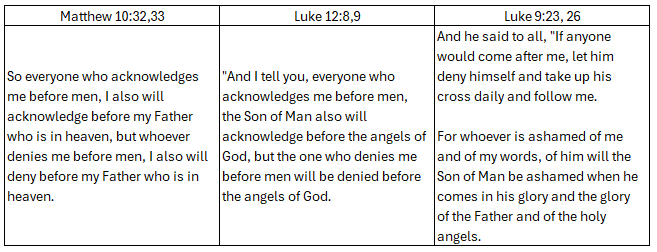
 Considering the Bible