My hope is that this series will offer my readers a chance to consider the names, characteristics and descriptions of our God in the Word.
The remaining Names of God in this series might be considered descriptors, or characteristics of the Lord. We have reviewed the three primary Names of God, along with nineteen compound Names of God in our previous posts. As we venture through these descriptors of our God, I hope we will recognize all the many characteristics of our God that we tend to take for granted.
The Word is truly rich with descriptions of the Living God, and this effort of searching in the Word was quite illuminating. He truly is the ultimate subject of the Word, and His revelation of self-descriptions, or the accolades offered Him by His priests, prophets, kings apostles and faithful truly is a blessing.
May the Name of the Lord be praised, and by thinking on His name, may you have a blessed day.
148
FIRSTBORN OF ALL CREATION
Colossians 1:15 He is the image of the invisible God, the firstborn of all creation.
Let us remember the ancient meaning of the term “firstborn” as mentioned earlier in our posts. The term rose from a chronological setting in a family to become one to describe priority, preeminence, and authority.
Small snippets of modern culture retain this idea, in that the oldest sibling is to be the one that leads, that is the one who is thought of as more responsible.
In this particular verse, we are not talking of a nuclear family, or a tribe, even of a country, but of all creation, seen and unseen. He is the firstborn of all creation!
As you can read in the verse, Paul taught that Jesus was God, and then introduced the name we are considering. It would seem ridiculous for any to think Paul equated Jesus with God and then “demoted” Him somehow by including Jesus as amongst those created. His position is of firstborn, of the One responsible for and having authority over all creation.
He is the Creator and as Paul teaches a bit later, the sustainer of all creation.
Colossians 1:17 And he is before all things, and in him all things hold together.
There may be some who would use this passage to teach Jesus is less than God, but the reasoning seems weak, and the context of the passage fights against the idea.
He is the Firstborn of all creation, as as such should be worshipped and not denigrated to a mere part of creation. He took on a created body as part of His mission for our salvation, but that is an expression of His compassion for us, not of His inclusion in the created order.
I would love to hear of your favorite name, characteristic or description of the Living God. Please leave me a comment, and I will include it in the list!
Thanks again for coming to visit. I hope you found something of interest in this post and would appreciate a comment, to begin a discussion. If you know someone this blog may bless (or challenge), send them a link, so they may join us in our discussion.
My hope is that this series will offer my readers a chance to consider the names, characteristics and descriptions of our God in the Word.
The remaining Names of God in this series might be considered descriptors, or characteristics of the Lord. We have reviewed the three primary Names of God, along with nineteen compound Names of God in our previous posts. As we venture through these descriptors of our God, I hope we will recognize all the many characteristics of our God that we tend to take for granted.
The Word is truly rich with descriptions of the Living God, and this effort of searching in the Word was quite illuminating. He truly is the ultimate subject of the Word, and His revelation of self-descriptions, or the accolades offered Him by His priests, prophets, kings apostles and faithful truly is a blessing.
May the Name of the Lord be praised, and by thinking on His name, may you have a blessed day.
148
FIRSTBORN FROM THE DEAD
Colossians 1:18 And he is the head of the body, the church. He is the beginning, the firstborn from the dead, that in everything he might be preeminent.
We have discussed the concept of first born in relation to order of birth and the leadership of the position in previous posts, but for this post, I would suggest it is a key truth of the Word for all to grasp.
To be firstborn from the dead speaks of His resurrection, of His priority, and the final proof of His Messiahship, of the extent of the salvation provided, of the thoroughness of God’s plan.
The Lord Himself passed through the realm of the dead, and in His passing through the realm of the dead, was delivered from amongst the dead, received a new body that death could no longer touch, received the scepter of Kingship from the Father, and is the Only Authority recognized by God in all of creation.
Yes there are other authorities as mentioned in Romans 13 and Ephesians 6, but we know them from what the Word teaches, as “sub authorities” even instruments in the outworking of the Kings will.
To be the Firstborn was a privilege and carried responsibilities. To be the Firstborn from the dead brought about true eternal life and all authority was granted to the King, to rule His subjects in the manner He sees fit.
Thankfully, for those who follow Him, we know He is good and He is good all the time!
I would love to hear of your favorite name, characteristic or description of the Living God. Please leave me a comment, and I will include it in the list!
Thanks again for coming to visit. I hope you found something of interest in this post and would appreciate a comment, to begin a discussion. If you know someone this blog may bless (or challenge), send them a link, so they may join us in our discussion.
1 John 3:15 Everyone who hates his brother is a murderer, and you know that no murderer has eternal life abiding in him.
I have spent much of my life trying to grasp the intent of John in his first letter. Much of my early time in my faith walk centered on 1 John 5:13 as the purpose of the book.
1 John 5:13 I write these things to you who believe in the name of the Son of God, that you may know that you have eternal life.
It seemed to my understanding John wrote it as a treatise for believers, to provide assurance of salvation based on an initial belief. He says it right in the verse! How could I deny John’s message?
Of course I read this passage over and over again with my Once Saved Always Saved (OSAS) glasses on, reinforcing my understanding of salvation being no more than a binding contract with God upon my initial faith. My eternal salvation hung on that night of Feb 19, 1981, when I bent the knee and confessed my sin, repented of my ways, and trusted in the Lord. After that night, my salvation was eternally secured, and praise God, He is faithful in every instance of my walk. He has been so good to me and my family, and provided all that we need and much of what we wish for. But I digress.
As I read this book of 1 John, I settled on a few of the favorite verses, such as 5:13, and of course 1:9, the great escape clause in the start of the book – you know, where we can get forgiveness by confession. I really liked that verse!
That was then and this is now.
As you may know, my opinion on the book has been tweaked, as I sought to understand the book through a series of posts a year or so back. For some background to my travels through this book I would refer my reader to 1 John – Testing to Know – Introduction.
Suffice to say, my general sense of the book is that John provides self tests for believers to check themselves out on as they walk with Jesus. John provides a number of tests – I think I found 12 within the book – to help believers understand that the Christian life is a provable, testable reality we can and should test and recognize within our lives.
Our verse above is the heart of such a test. I will refer to this short passage supplied, since it hits the point hard. Hate your brother – You ain’t got life. Now of course we all fall into sin, loosing our love for others as we seek our own ways, but this verse speaks of hatred as a verb, indicating an action performed by the subject, with the verb in its present tense, meaning it is a continuous action.
The verse prior speaks of those who do not love the brothers (believers) abiding in death. To abide, or remain in death. To choose to stay in the realm of death.
Love and hate are action words (verbs) that are being contrasted in this passage, and John is telling us the source of these decisions. If I hate, I am like a murderer, and abide in the realm of death. If I love, I have passed out of death, and abide in Him, having eternal life.
A believer who constantly, consistently and continually hates on a brother is living in a self deception that may one day be irrevocable. The hatred will be set in a stony heart, reigning over the life of the hater, a slave to the decision to hate. When this occurs is between God and the believer, and I am confident God provides abundant warnings (as John provides one here) to pull the believer back to life. It is the love of God continually inviting us back!
Is it not only right to love our brother and sister, to forgive those who may have hurt us, to mimic the Savior who forgave us our own sin?
Hatred is a choice my brother, and as we harbor this hatred, we may find it overpowers us, deadening our souls and forcing an abandonment of a faith that produces good things in our life. Good things such as….
love
joy
peace
patience
kindness
goodness
faithfulness
gentleness
self-control
I have recently been in the book of Galatians, and as I was listening to the Message translation, I came across the same passage, yet with a non-standard list, it provoked me to reconsider the list of fruit for my own life. Consider.
affection for others
exuberance about life
serenity
a willingness to stick with things
a sense of compassion in the heart
a conviction that a basic holiness permeates things and people
involved in loyal commitments
not needing to force our way in life
able to marshal and direct our energies wisely
We have a choice in our walk with God. To hate is to depart from God, for God is love. and to hate is to be of the devil. May we seek to love those we come in contact with, those who are a blessing, and to those who are not.
It is for us to enjoy the life of love, abandoning the act of hatred, along with the death associated with it.
May God teach us of His ways.
Thanks again for coming to visit. I hope you found something of interest in this post and would appreciate a comment, to begin a discussion. If you would like to receive daily posts from Considering the Bible, click on the “Follow” link below
As many who have followed me for a bit, I have fallen into the Psalms, and I can’t get up! (As if I would want to.) The Psalms are a majestic collection of poetry, of heart felt human experiences that constantly challenge me in my own frail attempt to follow the true King. As many of the Psalms are written by David, my study on the Psalms has spurred me on to looking at the life of David, is the main contributor to this book, and to follow the victories and tragedies of the shepherd King of Israel.
Many times in the narrative, we will see the Lord Jesus, imperfectly, yet a reflection of His spirit in a man with weaknesses.
1 Samuel 25:2-9 2 And there was a man in Maon whose business was in Carmel. The man was very rich; he had three thousand sheep and a thousand goats. He was shearing his sheep in Carmel. 3 Now the name of the man was Nabal, and the name of his wife Abigail. The woman was discerning and beautiful, but the man was harsh and badly behaved; he was a Calebite. 4 David heard in the wilderness that Nabal was shearing his sheep. 5 So David sent ten young men. And David said to the young men, “Go up to Carmel, and go to Nabal and greet him in my name. 6 And thus you shall greet him: ‘Peace be to you, and peace be to your house, and peace be to all that you have. 7 I hear that you have shearers. Now your shepherds have been with us, and we did them no harm, and they missed nothing all the time they were in Carmel. 8 Ask your young men, and they will tell you. Therefore let my young men find favor in your eyes, for we come on a feast day. Please give whatever you have at hand to your servants and to your son David.’” 9 When David’s young men came, they said all this to Nabal in the name of David, and then they waited.
We are introduced to Nabal and his fair wife Abigail in this passage, a couple of the most unlikely pairing. While Nabal comes off as harsh, stiff-necked, and rude, Abigail is described as beautiful, and more importantly discerning. Of course, in the days of arranged marriages, this union may have been more to the benefit of the parents than the bride, but that is shear conjecture.
Let’s take a few minutes and consider Nabel. First off, he was filthy rich, literally owning thousands of sheep and goats. He had it all, and was living the high life. Rich in physical goods. Rich in things. Rich accomplishments. Rich rich rich.
His story reminds me of a story in the New Testament, a parable the Lord spoke, where a rich man tore down his barns to build bigger barns.
Luke 12:16-18 “The land of a rich man produced plentifully, and he thought to himself, ‘What shall I do, for I have nowhere to store my crops?’ And he said, ‘I will do this: I will tear down my barns and build larger ones, and there I will store all my grain and my goods.
Nabal, at this time of the year, was experiencing the same sense of wealth and self sufficiency that the rich man in the parable was enjoying. Eventually, God would speak to Nabal in the same manner as He does the rich man in the parable, but I am getting ahead of myself. Back to the passage for the day.
Nabal was shearing his sheep, a time of harvesting for a rancher like Nabal, a time of potential thanksgiving and rejoicing, of hopefully sharing and giving to others out of an abundance. This time of abundance provided Nabal a huge opportunity to be a blessing to others. To be gracious to those less fortunate.
It seems David was less fortunate, for he approached Nabal in the form of ten servants, requesting a charity, based on his own charity to Nabal in the past. It seems David, in the past had spent time protecting Nabal’s sheep (and shepherds) as a charity, for it does not appear that there had been any formal agreement between the two men. As the future king of Israel, David seems to have taken on the spirit of protection over those of Israel, and during this time, the Philistines were consistently finding opportunity to make raids into the country side.
Just a few chapters earlier, David rescued Keilah from the Philistines in chapter 23, and later in the same chapter, Saul had to break off his pursuit of David to return home due to the Philistines attacking his property.
It seems it was common for the Philistines to cause skirmishes along the southern border at this time, and the region including Maon and Camel, where Nabal and Abigail lived, was a prime location for the Philistines to consider. I cannot find a specific time where the flocks of Nabal were under any direct threat from an enemy, but that might be there very point. David and his men kept them safe.
David sent a formal delegation of his men to Nabal, representing themselves in a humble manner, reminding Nabal of their voluntary service of protection, and requesting a kind response out of Nabal’s abundance. An act of thankfulness to those who provided a shield for Nabal’s servants and sheep.
I am sure most of my readers recall how Nabal reacted, and we shall get to that next post, but for this passage, let’s consider the thankful spirit that Nabal could have provided but didn’t.
Is it not right to live in a thankful spirit to God, for the many blessings He has provided? Relating to this passage, specifically for the protection we may not realize is provided to us. David’s men came to Nabal to inform him of protection. I get the sense this may have been the first time Nabal knew of this added benefit for his shepherds and sheep in the wilderness.
No matter the situation you may find yourself in today, we have an opportunity to be thankful, to be gracious to others, to be a blessing. Nabal was “harsh and badly behaved”, and his life, like the rich man in the parable above, is impacted negatively, not only in our opinion of him, but also in the length of life.
Be a blessing to others today. Take a moment today to reflect on all the blessings God has provided to you. Consider God’s active protection from your enemies, protection that is beyond your experience, or understanding, for there is much going on about us that we do not see. But the Lord is there, encircling your family, your business, your church, your life.
For it is true that God is good all the time.
Thanks again for coming to visit. I hope you found something of interest in this post and would appreciate a comment, to begin a discussion. If you know someone this blog may bless (or challenge), send them a link, so they may join us in our discussion.
My hope is that this series will offer my readers a chance to consider the names, characteristics and descriptions of our God in the Word.
The remaining Names of God in this series might be considered descriptors, or characteristics of the Lord. We have reviewed the three primary Names of God, along with nineteen compound Names of God in our previous posts. As we venture through these descriptors of our God, I hope we will recognize all the many characteristics of our God that we tend to take for granted.
The Word is truly rich with descriptions of the Living God, and this effort of searching in the Word was quite illuminating. He truly is the ultimate subject of the Word, and His revelation of self-descriptions, or the accolades offered Him by His priests, prophets, kings apostles and faithful truly is a blessing.
May the Name of the Lord be praised, and by thinking on His name, may you have a blessed day.
147
FIRSTBORN AMONG MANY BROTHERS
Romans 8:29 For those whom he foreknew he also predestined to be conformed to the image of his Son, in order that he might be the firstborn among many brothers.
As discussed in our previous post, to be firstborn implied, or emphatically stated a number of truths that were taught in the Old Testament, and can be seen in the Lord Jesus in His fulfillment.
One concept that I did not list, nor did I find called out in the Old Testament, was the relation of the firstborn with siblings. Don’t get me wrong – the firstborn was just that. the first born child of many.
In the New Testament, Paul makes a point of describing the siblings of the firstborn and the destiny of those who follow Him as brothers. Jesus is the Firstborn of course, but the purpose of his existence, at least in this passage, was for the expansion of the family, and the character of those in the family.
The Firstborn among many brothers. As we read through the Word, we come across quantitative words, such as “much”, “more” and “many”, to describe amounts of a topic. To consider “many brothers” a description of a worldwide expansion of the family of faith in the crucified One seems to be an incredible understatement.
An incredible understatement of truth, in my opinion, that seems consistent with the tenor of Scripture, for the Word doesn’t seem to try to communicate to impress, but to inform. Whether the “many” in this verse refers to thousands, as was true in the days of Paul, or the current tens of billions, (considering those who have sent before,) it makes no matter to the message.
He is the Firstborn of Many Brothers, and the end quantity is yet to be fathomed! May His name be praised for His great ability to lead such a massive family!
I would love to hear of your favorite name, characteristic or description of the Living God. Please leave me a comment, and I will include it in the list!
Thanks again for coming to visit. I hope you found something of interest in this post and would appreciate a comment, to begin a discussion. If you know someone this blog may bless (or challenge), send them a link, so they may join us in our discussion.
My hope is that this series will offer my readers a chance to consider the names, characteristics and descriptions of our God in the Word.
The remaining Names of God in this series might be considered descriptors, or characteristics of the Lord. We have reviewed the three primary Names of God, along with nineteen compound Names of God in our previous posts. As we venture through these descriptors of our God, I hope we will recognize all the many characteristics of our God that we tend to take for granted.
The Word is truly rich with descriptions of the Living God, and this effort of searching in the Word was quite illuminating. He truly is the ultimate subject of the Word, and His revelation of self-descriptions, or the accolades offered Him by His priests, prophets, kings apostles and faithful truly is a blessing.
May the Name of the Lord be praised, and by thinking on His name, may you have a blessed day.
145
FIRSTBORN
Hebrews 1:6 And again, when he brings the firstborn into the world, he says, “Let all God’s angels worship him.”
We start another mini series with our Names of God series, focusing in on the term Firstborn.
To be firstborn in ancient Israel was to be of an elevated status. To be firstborn was to be associated with
There may be even more associations of the “first born” with special status, privilege or responsibility through the Word, but the previous list is sufficient for the topic.
Kindly notice that the list is providing only a foundation for our understanding of Firstborn, for it makes reference only to the topic in the Old Testament.
Our first reference to this term is found in Luke 2:7
Luke 2:7 And she gave birth to her firstborn son and wrapped him in swaddling cloths and laid him in a manger, because there was no place for them in the inn.
Our Firstborn was born in poverty, fulfilled each of the typologies above, and has become even greater than the Old Testament sought to teach us.
He is the Messiah, the One who is God’s FirstBorn.
In the following posts on looking at the term Firstborn, the Word will provide us detailed and specific ways our understanding of Firstborn will be expanded.
Hope you can join me.
I would love to hear of your favorite name, characteristic or description of the Living God. Please leave me a comment, and I will include it in the list!
Thanks again for coming to visit. I hope you found something of interest in this post and would appreciate a comment, to begin a discussion. If you know someone this blog may bless (or challenge), send them a link, so they may join us in our discussion.
Revelation 2:4 But I have this against you, that you have abandoned the love you had at first. Revelation 2:5 Remember therefore from where you have fallen; repent, and do the works you did at first. If not, I will come to you and remove your lampstand from its place, unless you repent.
Two topics arise in this short passage regarding conditional security. The messages in verse 4 of abandoning the love, and in verse 5 of removing your lampstand need to be considered.
Left
To leave is not to apostatize, as I expected, but is the Greek term aphiemi, which has the meaning of to leave, leave alone, forsake or neglect.
The Ephesian church had left their first love behind, they had departed from that first love and yet continued to exhibit all the ear marks of a very orthodox, “healthy” church.
We don’t read of this church actively leaving that first love, or in the process of leaving that first love. They have left it (past tense), departed from their first love and seemed to be existing quite fine in all appearance. As a matter of fact, some semblance of a church existed for centuries in Ephesus, for by the year 431 AD, The Fourth Ecumenical Council was convened in Ephesus. It was at this council Mary was declared as the Mother of God Theotokos.
So in review, we have a church that was the center of great teaching through Paul, a sending church, a center for early theological debate and a very orthodox church, but by the time of this letter, around 69 AD, the church began living for truth and not for Christ. By the time of Constantine and the Roman nation accepting Christianity as the state approved religion, the church had continued to exist, yet it’s decay had become evident to all true believers and the lamp had been pulled.
Removing
Though the church had left their first love, the Lord did not immediately remove their lampstand. He petitioned the church body to repent, to change her mind about her priorities, to do the works she had first performed to exhibit their love.
But what is it for a church to have it’s lampstand removed? As mentioned above, the church had continued to physically exist up to the 5th century as a body representing God, recognized at least by the state. It was as influential as any church at the time, for the state convened a very important convention to determine a theological teaching.
So what is going on? Two options are allowable for the reader to consider.
The church had repented and was a vibrant living branch of the vine, a body fully alive to it’s Redeemer and Lord. No removal of the lampstand had been necessary and the church continued in a loving relationship with her Lord and the faithful.
The other option was that the church continued in its cold orthodox “letter of the law” only existence, and the removal of a lampstand was executed.
This last option, though difficult to accept, may be the correct outcome of the message. Let me explain.
The Lord has described the churches as lampstands.
Revelation 1:20 As for the mystery of the seven stars that you saw in my right hand, and the seven golden lampstands, the seven stars are the angels of the seven churches, and the seven lampstands are the seven churches.
To be described as lampstands forces us to remember the purpose of a lampstand. Is it too much to consider the lampstands purpose was to shine a type of light, the gospel of Jesus. The light of the gospel in the cities referred to here emanated from the church body. No other source is provided. The life of Christ was to be flowing though these church bodies to the cities, just as oil was used to create light for it’s surroundings.
But let us not make the mistake that thinking a group of people congregating together and calling themselves Christians creates a lampstand. The lampstand is simply a vehicle for the oil to produce light. For a group of people to be a true lampstand, the correct oil is critical. For any “oil” other than the Spirit of God, to be the “fuel” for their light, would be a misuse of the lampstand, and represent the Lord incorrectly. For a church to depend on anyone or anything, other than God is to be condemned to having it’s life giving authority from God to be removed.
A very similar truth of the kingdom of God being removed, or taken away from a group of people may be found in Matthew 21:43.
Matthew 21:43 ESV – Therefore I tell you, the kingdom of God will be taken away from you and given to a people producing its fruits.
As we know, the nation of Israel existed for 40 years after she crucified her Lord. In this instance the Lord gave the nation, and it’s inhabitants a full generation to repent prior to her destruction. Many individual Israelites followed the Master, yet as a nation, she rejected the truth and continued to persecute those who followed her Messiah. It did not end well for the nation.
Does this passage directly address a conditional security teaching as this series seeks to find out? In my opinion, the passage speaks of the death of a lampstand, of a body of believers, transitioning from a loving relationship with God, to a dead relationship with their truth.
Might some within the church have apostatized? Possibly, but this isn’t the intent of the passage. The judgement of removal is directed to the church body within the city, and not directly to an individual.
Let me know your thoughts.
Be blessed my friends and may the Lord continue to work in you to produce His good pleasure.
Thanks again for coming to visit. I hope you found something of interest in this post and would appreciate a comment, to begin a discussion. If you would like to receive daily posts from Considering the Bible, click on the “Follow” link below
As many who have followed me for a bit, I have fallen into the Psalms, and I can’t get up! (As if I would want to.) The Psalms are a majestic collection of poetry, of heart felt human experiences that constantly challenge me in my own frail attempt to follow the true King. As many of the Psalms are written by David, my study on the Psalms has spurred me on to looking at the life of David, is the main contributor to this book, and to follow the victories and tragedies of the shepherd King of Israel.
Many times in the narrative, we will see the Lord Jesus, imperfectly, yet a reflection of His spirit in a man with weaknesses.
1 Samuel 25:1 1 Now Samuel died. And all Israel assembled and mourned for him, and they buried him in his house at Ramah. Then David rose and went down to the wilderness of Paran.
When we last saw David, he was magnanimous towards Saul, the ever loyal, forgiving and grace filled future king of Israel. A great portrait of a great man. After that passage, I felt as if he was larger than life, a true example, a king worthy of following as an Israelite in the day.
By the time we get to the end of chapter 25, we are going to see a man who doesn’t appear to be the same man. He becomes churlish, offended and intends to kill a man simply for not providing for his troops. Nabal and Abigail play a large role in this chapter, but we will come to them soon.
For this single verse, we have the prophet Samuels death recorded.
Samuel was the child prodigy and prophet of Israel that was the direct result of prayers of grief being sent up to God by Hannah. He was trained in the temple and called by God at a very early age during the time of the judges and would eventually become the final judge and the mediator of the transition from judges ruling over Israel, to a monarchy system of leadership.
He anointed Saul, and watched as the kingdom transitioned over the years. Saul was tested on a number of occasions, and failed to meet the test, finding that the kingdom was to be removed from his lineage. Samuel then was called by God to search out a replacement, under the scrutiny of Saul, which must have been somewhat nerve racking. Nevertheless, Samuel surprisingly found a young boy, anointed him, and set his life on fire. Saul would not allow this to succeed and the trials of David’s life began.
Take a minute and consider Samuels situation. He was to be loyal to the king, yet he knew the future king David was the right man. He was to be loyal to a corrupt king (Saul) in the midst of knowing the truth, and serving the future king. If you are a believer, this must ring bells for your own life.
We are to obey worldly governments (Rom 13) yet our allegiance is to the true King. Has it not been this way for all believers? Do we not all have some human authority over us that may at time require obedience that is odds to our love for the Master?
Samuel died, and David arose. God’s work would continue, and David is destined for the throne. But immediate needs of food for his troops had to be satisfied, and he headed south to the wilderness of Paran.
This is the last we see of a David full of grace, humble, and endlessly patient with those around him! Things are going to get nasty, and he doesn’t come out of this chapter looking good. But he is on a mission and God uses those whom he has chosen for his purposes.
And for that, I am truly grateful.
Thanks again for coming to visit. I hope you found something of interest in this post and would appreciate a comment, to begin a discussion. If you know someone this blog may bless (or challenge), send them a link, so they may join us in our discussion.
My hope is that this series will offer my readers a chance to consider the names, characteristics and descriptions of our God in the Word.
The remaining Names of God in this series might be considered descriptors, or characteristics of the Lord. We have reviewed the three primary Names of God, along with nineteen compound Names of God in our previous posts. As we venture through these descriptors of our God, I hope we will recognize all the many characteristics of our God that we tend to take for granted.
The Word is truly rich with descriptions of the Living God, and this effort of searching in the Word was quite illuminating. He truly is the ultimate subject of the Word, and His revelation of self-descriptions, or the accolades offered Him by His priests, prophets, kings apostles and faithful truly is a blessing.
May the Name of the Lord be praised, and by thinking on His name, may you have a blessed day.
144
FIRST AND THE LAST
Isaiah 41:4 Who has performed and done this, calling the generations from the beginning? I, the LORD, the first, and with the last; I am he.
Is this a statement of chronology? My question speaks of a timeline. Is the name of God in this verse speaking of God’s actions in relation to the generations from the beginning?
There are similar names of God, we have considered, such as Alpha & Omega, that may seem to refer to the same idea as in this verse, but I would suggest for your consideration, the similarities are on the surface only.
Both speak of limits, but as mentioned in Names of God – ALPHA AND OMEGA – 26, the emphasis on Alpha and Omega is regarding His message. It is complete message, and extends the full gamut of necessary information for His creation.
In our verse above, it is not the message that is referred to as much as the person of God with His people. He has performed what was needed, no matter the time frame, ever since the beginning of relating to His generations from of old.
He was with the beginning of the generations, and He states He is with the last generation. The duration of time spoken of is in relation to the people He is working with. But let us not forget, His existence is not dependent on our existence. (As a matter of fact it is quite the opposite!)
He is the eternal One, the Only Being before us and the Only Being after us. Our verse speaks of His constant care for us as a people, from the start through to the end. His faithfulness is a great constant for us, and is a great comfort for His people of every day and time.
I would love to hear of your favorite name, characteristic or description of the Living God. Please leave me a comment, and I will include it in the list!
Thanks again for coming to visit. I hope you found something of interest in this post and would appreciate a comment, to begin a discussion. If you know someone this blog may bless (or challenge), send them a link, so they may join us in our discussion.
My hope is that this series will offer my readers a chance to consider the names, characteristics and descriptions of our God in the Word.
The remaining Names of God in this series might be considered descriptors, or characteristics of the Lord. We have reviewed the three primary Names of God, along with nineteen compound Names of God in our previous posts. As we venture through these descriptors of our God, I hope we will recognize all the many characteristics of our God that we tend to take for granted.
The Word is truly rich with descriptions of the Living God, and this effort of searching in the Word was quite illuminating. He truly is the ultimate subject of the Word, and His revelation of self-descriptions, or the accolades offered Him by His priests, prophets, kings apostles and faithful truly is a blessing.
May the Name of the Lord be praised, and by thinking on His name, may you have a blessed day.
143
FATHER’S SON
2 John 1:3 Grace, mercy, and peace will be with us, from God the Father and from Jesus Christ the Father’s Son, in truth and love.
What might this name be telling us. First off, I considered this to be an obvious truth, a statement that simply retells a fact that every one would agree to. A son has a father. Every son has had a father. I first thought it was a description that spoke an obvious truth, and that offered no additional information.
But I fear I am wrong, for to say a Father’s Son does not simply provide a definition of an obvious truth, but implies much more.
To call Jesus Christ the Father’s Son provides the believer much to understand, for a Son’s is defined by the Father’s character. Though the Son is a distinct person in the trinity, to call Jesus the Father’s Son speaks volumes, for the Father’s character is mirrored in the Son.
When you think of God Almighty, do you see Jesus? When you think of God the Omnipotent One, do you see Jesus? When you think of God the Eternal One, do you see Jesus? When you think of God the Creator, do you see Jesus? When you think of God the King, do you see Jesus? When you think of God the Holy One, do you see Jesus?
Every description of God the Father may be understood as of the Son, for Jesus is the Father’s Son
I would love to hear of your favorite name, characteristic or description of the Living God. Please leave me a comment, and I will include it in the list!
Thanks again for coming to visit. I hope you found something of interest in this post and would appreciate a comment, to begin a discussion. If you know someone this blog may bless (or challenge), send them a link, so they may join us in our discussion.
17 For it is time for judgment to begin at the household of God; and if it begins with us, what will be the outcome for those who do not obey the gospel of God? 18 And “If the righteous is scarcely saved, what will become of the ungodly and the sinner?”
In our last posting on this passage in 1 Peter, we considered the context, the audience Peter is speaking to and some timing considerations. In this post, I would like to suggest an Old Testament passage that Peter may have in mind as he writes to us.
A Background for Peter?
During the Babylonian invasion, a prophet named Ezekiel gave us the following passage, and may provide some background to Peters thoughts in his warnings. We will pick up where God directs the commencement of judgement upon the city of Jerusalem, including the sanctuary.
Ezekiel 9:5-6 5 And to the others he said in my hearing, “Pass through the city after him, and strike. Your eye shall not spare, and you shall show no pity. 6 Kill old men outright, young men and maidens, little children and women, but touch no one on whom is the mark. And begin at my sanctuary.” So they began with the elders who were before the house.
According to Ezekiel, judgement was to begin at the sanctuary, similar to Peter’s warning at his time of writing. The judgement was to be without pity, upon young and old, women and children. All the inhabitants of the city were considered worthy of judgement, even those in the sanctuary. Those who attended the sanctuary may suffer! Yet there is an exception. Those with a mark.
Ezekiel 9:3-4
3 Now the glory of the God of Israel had gone up from the cherub on which it rested to the threshold of the house. And he called to the man clothed in linen, who had the writing case at his waist. 4 And the LORD said to him, “Pass through the city, through Jerusalem, and put a mark on the foreheads of the men who sigh and groan over all the abominations that are committed in it.”
Prior to judgement falling on Jerusalem and the sanctuary, God ordered “the man clothed in linen” to put a mark on the foreheads of those who mourned over the sin of the nation. Those who mourned over the sin of the nation could easily be described as people who sought God, and eschewed sin. Those who were marked were deep in a culture that was full of “the ungodly and sinner”, and they were marked by their heart response to the culture they were in. Due to their faith, their heart of pain, they were saved from the judgement. The city would be ravaged, burned and tore down. Death was everywhere, blood flowing, bodies strewn, even in the sanctuary. A horrible tragedy, second only to the Roman invasion of Jerusalem.
Surely those who were marked must have felt they were scarcely saved from this total destruction of Jerusalem.
The marked were saved. The ungodly and the sinner were put to death.
Might Peter be considering this Old Testament passage to provide warning for the church prior to the Roman invasion coming in the late 60’s? Many parrallels suggest that in my mind.
I would suggest it is also a warning for our own lives? Are we not in the midst of a decadent, sinful culture, within a population committing abominations, in a land that is covered with the blood of the unborn, full of injustice and crime?
What may seem even worse, is that whatever is left of the church is following after a vile culture. The church needs a cleansing, a time of mourning over all the abominations committed in it.
Please look to the Lord for mercy in our days, that we would mourn over the evil committed, even in the church.
Thanks again for coming to visit. I hope you found something of interest in this post and would appreciate a comment, to begin a discussion. If you would like to receive daily posts from Considering the Bible, click on the “Follow” link below
As many who have followed me for a bit, I have fallen into the Psalms, and I can’t get up! (As if I would want to.) The Psalms are a majestic collection of poetry, of heart felt human experiences that constantly challenge me in my own frail attempt to follow the true King. As many of the Psalms are written by David, my study on the Psalms has spurred me on to looking at the life of David, is the main contributor to this book, and to follow the victories and tragedies of the shepherd King of Israel.
Many times in the narrative, we will see the Lord Jesus, imperfectly, yet a reflection of His spirit in a man with weaknesses.
1 Samuel 24:16-22
16 As soon as David had finished speaking these words to Saul, Saul said, “Is this your voice, my son David?” And Saul lifted up his voice and wept. 17 He said to David, “You are more righteous than I, for you have repaid me good, whereas I have repaid you evil. 18 And you have declared this day how you have dealt well with me, in that you did not kill me when the LORD put me into your hands. 19 For if a man finds his enemy, will he let him go away safe? So may the LORD reward you with good for what you have done to me this day. 20 And now, behold, I know that you shall surely be king, and that the kingdom of Israel shall be established in your hand. 21 Swear to me therefore by the LORD that you will not cut off my offspring after me, and that you will not destroy my name out of my father’s house.” 22 And David swore this to Saul. Then Saul went home, but David and his men went up to the stronghold.
Saul is on stage in this passage. Good wordsmithing. Sounds convincing. Logical. Hopeful. And yet David went back to the stronghold!
Saul put on a performance full of tears, recounting David’s righteous acts and his own wickedness. He took time to speak of David’s righteousness and his own sin.
Saul admits that the Lord’s hand was in his choice of cave to enter, and that the Lord placed him in David’s hands to kill him. Saul even openly admits, to those who were within ear shot, that David will be king, and that Israel shall prosper under David’s rule. This is quite surprising since David must have heard it, David’ men most likely heard it, and Saul’s men may have heard it. After all, this wasn’t a private call on a secure phone line! This was a public discussion.
Ok – so Saul seems to be admitting David to be the better man, a future king of Israel and a good leader. After setting David up, he goes in for the kill. He asks David to swear not to harm his offspring once he takes the kingdom.
From Saul’s perspective this is a huge request, for he is looking to do the very opposite to David. Is not Saul seeking to remove competition for the throne by seeking to kill David, even though he hasn’t attempted to take the throne?
Saul wanted more than he was able to provide David. How could Saul ask for something so beyond normal expectations? It was common that when a king ascended a throne, the prior kings descendants would be killed in order to remove any future claim to the throne. Monarchies work this way. And Saul definitely considered Israel a monarchy, where his family were of the royal blood!
But as an aside, do we see evidence of David considering Israel to be a monarchy? I would suggest that David is acting in ways that conform to a theocracy, a nation ruled over by God. Actions of the human leader were to be directed by the God of the nation, and were not to fall to the level of a simple monarchy, where a man had authority. God provided the laws of the nation at Sinai, and the people entered into covenant with God as their ruler. God was the One who led them from captivity, led them to a covenant at Sinai, and then led them to the land, eventually abdicating to the wishes of the people in their seeking a human leader.
To be the king was to be a replacement for God. Though this was an accepted condition of state by the time David came on the scene, his rule typifies that of a godly king, one who loved the law of God. Sinner that he was in many of his decisions, he listened for God’s voice more than any other at the time.
But lets discuss the request of Saul the monarch. A request for David to not harm his offspring! This request shows Saul to be hedging his bets, to get David, the one more righteous than he, to promise no harm upon his offspring.
This sounds mildly familiar. Let’s go back a few chapters, when David first fled from Saul. Jonathon, Saul’s son provided military intelligence to David concerning his father, initiating David’s flight from Saul. Jonathon, who was loyal to David, sought protection. Let’s read about it below.
1 Samuel 20:14 If I am still alive, show me the steadfast love of the LORD, that I may not die; 1 Samuel 20:15 and do not cut off your steadfast love from my house forever, when the LORD cuts off every one of the enemies of David from the face of the earth.” 1 Samuel 20:16 And Jonathan made a covenant with the house of David, saying, “May the LORD take vengeance on David’s enemies.” 1 Samuel 20:17 And Jonathan made David swear again by his love for him, for he loved him as he loved his own soul.
Jonathon sought David to swear protection for him and his house (vs 15). Saul is seeking the same promise. Coincidence? Likely, for Saul is seeking protection from his enemy, whereas Jonathon was seeking protection by his friend.
Nevertheless, David agreed to the request from Saul. He swore to not cut off Saul’s offspring after him, and not destroy Saul’s name out of his father’s house. This promise becomes a snare for David later. We shall return to this promise in later posts.
A couple of lessons to consider out of this passage.
Tears do not equal truth!
Saul cried out a confession, tearing up, and within two chapters, Saul is on the hunt for David again. His emotional repentance was a show and were without any fruits fit for this repentance.
David correctly did not trust him, as we see him going back to the cave.
Beware the boasting!
The more applicable lesson for myself is that when someone begins to boast about you, beware! Saul spoke in glowing terms of David’s righteousness, of his rising to the throne, and when David was softened up, Saul went in for the kill. Promise me the world David. Promise me you won’t hurt my family, even though this is unheard of for a new king to promise, and leaves him open to challenges constantly.
Be careful what you give your word to when things look so promising!
May we have the wisdom to understand when these traps are presented before us.
Thanks again for coming to visit. I hope you found something of interest in this post and would appreciate a comment, to begin a discussion. If you know someone this blog may bless (or challenge), send them a link, so they may join us in our discussion.
My hope is that this series will offer my readers a chance to consider the names, characteristics and descriptions of our God in the Word.
The remaining Names of God in this series might be considered descriptors, or characteristics of the Lord. We have reviewed the three primary Names of God, along with nineteen compound Names of God in our previous posts. As we venture through these descriptors of our God, I hope we will recognize all the many characteristics of our God that we tend to take for granted.
The Word is truly rich with descriptions of the Living God, and this effort of searching in the Word was quite illuminating. He truly is the ultimate subject of the Word, and His revelation of self-descriptions, or the accolades offered Him by His priests, prophets, kings apostles and faithful truly is a blessing.
May the Name of the Lord be praised, and by thinking on His name, may you have a blessed day.
142
FATHER OF GLORY
Ephesians 1:17 that the God of our Lord Jesus Christ, the Father of glory, may give you the Spirit of wisdom and of revelation in the knowledge of him,
In our Names of God series, we sometimes come across a mini series where a common name for God, such as Father in our current series, is modified with various nouns or adjectives.
Our name this morning is the Father of Glory. Paul refers to our Father as the Father of Glory, as God is the source of glory, that all glory emanates from Him, and that there is no glory apart from God the Father.
But what is glory?
First thing that comes to my mind is bright shining light, a blinding flash that no one can gaze at. Is that the intent of Paul when He calls God the Father of Glory?
Maybe. He speaks God as dwelling in unapproachable light in 1 Timothy
1 Timothy 6:15 ….he who is the blessed and only Sovereign, the King of kings and Lord of lords, who alone has immortality, who dwells in unapproachable light, whom no one has ever seen or can see. To him be honor and eternal dominion. Amen.
Yet I want to understand what glory is, especially if it is not a direct synonym for light.
Glory is a translation of the Greek word δόξα dóxa, and principally has the root meaning of opinion, or estimate.
I heard many moon ago a preacher tell me that the original meaning of the word dóxa, was weight. He explained that for a man to be “dóxa” meant he was heavy (fat). Back so long ago, only the rich and powerful were able to gain “weight”, that is to be heavy or fat. The association of weight and authority was established, but of course “dóxa” morphed as words do, coming to speak of authority, and finally settling on reputation, opinion and estimate.
Often when we think of high reputation or opinion we think of a man’s glory, of the reputation he has, of what others consider of his person. His peers may speak highly of him, their estimate of his person may be of honor and praise.
Translate that to the One who is above all others, even above our own imagination or thoughts. Even His acts toward us is beyond our imagination and understanding, how much more He Himself!
There was a time when I couldn’t shake the idea of God being heavy, but after a time I correctly transferred the thought of glory as describing reputation. For God to be glorious though, we should not consider His glory to be relative to any standard other than His own. His glory is magisterial, as the ultimate King on the throne of the entire universe. No-one is to be considered to be equal, no could be.
His glory, or reputation is not to be shared with any other, with any of creation, but only His own person. His glory cannot be estimated, but it can be declared. But let us remember that His glory, in this particular verse, is associated with His Son, and His willingness to provide those who love the Son a spirit of wisdom, and a knowledge of Himself.
May the glory of the Father of glory be declared today.
I would love to hear of your favorite name, characteristic or description of the Living God. Please leave me a comment, and I will include it in the list!
Thanks again for coming to visit. I hope you found something of interest in this post and would appreciate a comment, to begin a discussion. If you know someone this blog may bless (or challenge), send them a link, so they may join us in our discussion.
My hope is that this series will offer my readers a chance to consider the names, characteristics and descriptions of our God in the Word.
The remaining Names of God in this series might be considered descriptors, or characteristics of the Lord. We have reviewed the three primary Names of God, along with nineteen compound Names of God in our previous posts. As we venture through these descriptors of our God, I hope we will recognize all the many characteristics of our God that we tend to take for granted.
The Word is truly rich with descriptions of the Living God, and this effort of searching in the Word was quite illuminating. He truly is the ultimate subject of the Word, and His revelation of self-descriptions, or the accolades offered Him by His priests, prophets, kings apostles and faithful truly is a blessing.
May the Name of the Lord be praised, and by thinking on His name, may you have a blessed day.
141
FATHER OF THE FATHERLESS
Psalm 68:5 Father of the fatherless and protector of widows is God in his holy habitation.
When an child is abandoned by a father, he has no leader, no support, no strong voice to listen to, no example to look to. For both the son and the daughter, to be abandoned by a father leaves life long damage, a sense of not belonging, of living without purpose, for a child needs to seek favor, especially of his or her father.
Single parent mothers seek to fill this void, and many make valiant efforts, but a child abandoned by his or her father will never recover fully from this abandonment.
As the verse speaks of widows, the psalmist may be referring to the death of the head of a household. A tragedy in any estimation. Yet the claim of fatherlessness may also imply a chosen abandonment, a decision of the father/husband to leave a family behind. How terrible for the child.
The good news though is that a faithless man in a child’s life may be replaced by a faithful God. As a matter of fact, this weakness, this pain and mental suffering may be used by the Lord to guide them into a relationship with a greater Father, a kinder Father, a loving Father.
As those who read this blog may know, I lost my father to a train accident when I was very young. Bitterness, alienation, a lack of strong guidance and direction resulted in my falling into a deep hole of depression and rebellion. When a young lady directed me to the Father above, I could not resist, for the longing to have someone give guidance, to forgive me of my hatred, anger and sin, to love me despite how broken I was, – it was too much to resist.
He is the Father to the fatherless, and such a good one.
I would love to hear of your favorite name, characteristic or description of the Living God. Please leave me a comment, and I will include it in the list!
Thanks again for coming to visit. I hope you found something of interest in this post and would appreciate a comment, to begin a discussion. If you know someone this blog may bless (or challenge), send them a link, so they may join us in our discussion.
17 For it is time for judgment to begin at the household of God; and if it begins with us, what will be the outcome for those who do not obey the gospel of God? 18 And “If the righteous is scarcely saved, what will become of the ungodly and the sinner?”
The question that has to be grappled with is who is Peter talking of?
As a former adherent of OSAS (Once Saved Always Saved), I automatically considered those who do not obey the gospel of God as those who have never obeyed the gospel of God. That is, Peter is speaking of both those in the church (believers) and those outside of the church (unbelievers).
Context
Starting at verse 12, Peter begins his challenge to believers to not be surprised at the fiery trial that was to come upon them. He continues to speak to believers as they share in Christ’s sufferings (vs 13) and are insulted for the name of Christ (vs 14).
He connects suffering and insults with believers. A trial is coming and includes suffering and insults.
He proceeds to warn believers not to suffer as a murderer, a thief, an evildoer or a meddler (vs 15). How can Peter assume this is a possibility? Was not the church of purer stock than to have evil doers in it’s ranks? Were there meddlers in the group? Murderers? Is it not obvious that Christians are to mimic the Lord Jesus, and these actions are definitely not of the character of God.
Peter sums up the discussion on the general attitude of the believer who suffers as a believer, standing up for Christ. No shame. Glorify God.
Audience
Next comes our verses, where Peter does not indicate that he is going to talk of both believers and unbelievers. Remember, just a verse or two earlier, Peter described some of his audience as suffering as a murderer.
If Peter does not change the focus of his audience, when he speaks in verse 17, might he be referring to rebellious Christians when he speaks of “those who do not obey the gospel of God”? Might Peter be speaking of those who may have started out on the journey with the Lord, and for some reason decided no longer to believe?
Timing
There is also a consideration of timing implied in verse 17 of this passage. I have inserted my assumptions (italicized) in the passage to help explain how I often read this passage.
For it is time for judgment to begin at the household of God; and if it begins with us (household of God), what will be the outcome (after the household of God has suffered) for those who (outside of the household of God) do not obey the gospel of God.
I sometimes compartmentalize this verse into two time periods, one period for believers suffering during their lives on earth for the Messiah, and the second time period referring to the lost souls suffering after death in eternal fires.
Is this the intent of Peter? What might Peter be thinking when he provides us this passage. Join me in my next blog to consider a possible source of some of Peter’s thoughts
Until then, as the household of God, let us give thanks for His mercies, and seek to live unto His glory!
Thanks again for coming to visit. I hope you found something of interest in this post and would appreciate a comment, to begin a discussion. If you would like to receive daily posts from Considering the Bible, click on the “Follow” link below
As many who have followed me for a bit, I have fallen into the Psalms, and I can’t get up! (As if I would want to.) The Psalms are a majestic collection of poetry, of heart felt human experiences that constantly challenge me in my own frail attempt to follow the true King. As many of the Psalms are written by David, my study on the Psalms has spurred me on to looking at the life of David, is the main contributor to this book, and to follow the victories and tragedies of the shepherd King of Israel.
Many times in the narrative, we will see the Lord Jesus, imperfectly, yet a reflection of His spirit in a man with weaknesses.
1 Samuel 24:8-15
8 Afterward David also arose and went out of the cave, and called after Saul, “My lord the king!” And when Saul looked behind him, David bowed with his face to the earth and paid homage. 9 And David said to Saul, “Why do you listen to the words of men who say, ‘Behold, David seeks your harm’? 10 Behold, this day your eyes have seen how the LORD gave you today into my hand in the cave. And some told me to kill you, but I spared you. I said, ‘I will not put out my hand against my lord, for he is the LORD’s anointed.’ 11 See, my father, see the corner of your robe in my hand. For by the fact that I cut off the corner of your robe and did not kill you, you may know and see that there is no wrong or treason in my hands. I have not sinned against you, though you hunt my life to take it. 12 May the LORD judge between me and you, may the LORD avenge me against you, but my hand shall not be against you. 13 As the proverb of the ancients says, ‘Out of the wicked comes wickedness.’ But my hand shall not be against you. 14 After whom has the king of Israel come out? After whom do you pursue? After a dead dog! After a flea! 15 May the LORD therefore be judge and give sentence between me and you, and see to it and plead my cause and deliver me from your hand.”
David refused to take advantage of a situation that seemed to be destiny. Was it not God working to provide David an opportunity to ascend to the throne? Was God not inviting David to take matters into his own hands?
It may have seemed that way, and if David did not have the convictions he had, he may have reasoned such. But David had convictions. He knew the Lord and did not succumb to a temptation to fast track God’s will. What a stellar fellow!
And loyal – David, when Saul left the cave, exposed himself to the king (and his army of 3,000 men) to speak of his submission to Saul, and to reason with him.
David had proof, that he was able to get near Saul, and refused to take vengeance on the king. He admitted to the king that God had provided him an opportunity to resolve this battle between the two of them, but refused it. He would not commit treason!
Yet David was all about justice. As he addressed his earthly sovereign, he called on the Greater Sovereign to judge between the two of them. Yet, even in this statement, David again refused to take part in any action against his king.
Truly, as I think on this interaction between the current and the future king, David stands out as other worldy, not practical, without earthly wisdom and not driven to success.
Have you ever sought to obey God and them been defamed by your brother, mocked by your sister, ridiculed by your peers because your actions are actually not benefitting you or your loved ones? Can you hear them even now?
Carl – You are not taking advantage of God’s obvious opportunities for self advancement?
Carl – You should be taking care of your family!
Carl – Think of all the good you could do if you took advantage of the situation.
Yes – to hear God’s direction and to follow will cost you, even if it is doubt about the outcome, and possible loss of advantage – that is earthly advantage!
Nevertheless, David does make a statement that seems obvious at first, but what a great statement for this situation!
Out of the wicked comes wickedness.
Of course out of the wicked comes wickedness. How obvious this statement seems, almost a waste of breath, until I recognized David was calling Saul a wicked man. He called Saul a wicked man, spoke truth to power! This is awesome, a true prophet, a man after the truth. And as a sidebar, David was also claiming that he was not a wicked man.
Years later, Jesus would speak of bad fruit from a bad tree. This truth is so obvious, irrefutable and cutting, that I need to recall this when dealing with those who fight the gospel, hate truth, and display treachery or wickedness. It isn’t a personal attack – Simply a truth statement!
Like my momma used to say, if the shoe fits….
David closes his plea/warning to Saul, bringing his selflessness into focus. I think.
He refers to himself as a dead dog, even a flea. Who is David that Saul would chase after him? Yet Saul knew who David was, and that he was a righteous man, one destined for the throne.
David didn’t have to make claims. His life was on display for all to see, and God was making it obvious that David was the better man, the one destined for good. He could safely state self deprecating claims about himself, only adding honor to his name in the mean time.
Proverbs 27:2 Let another praise you, and not your own mouth; a stranger, and not your own lips.
How often have you met one who cannot speak enough about them selves? David didn’t follow that thought, but diminished himself in front of the king.
There is One who could speak of Himself without any stain of self glory being attributed to Him, for He truly is worthy, more worthy of each and every statement He made of Himself. And yet, when He described Himself to His disciples, He sought to be know as One who was gentle and lowly of heart!
Proverbs 27:2 Let another praise you, and not your own mouth; a stranger, and not your own lips.
How amazing is He, that in the very person of God Almighty, Jesus revealed Himself to those closest to Him as gentle and lowly of heart.
Jesus, though His name alone is worthy of all praise, wanted to be thought of as gentle and lowly of heart, thereby only bringing greater honor upon Himself. He is the only One, and we are only right to praise His name only.
Jesus in the Old Testament is a series of posts that will offer my readers a chance to consider pictures or shadows of Jesus in the Old Testament. As mentioned in the introduction to this series, some may be obvious, some may be not so obvious, and some may simply be a facet of the Lord those reading may not have considered previously.
I hope as we venture through this series, we will see the Lord in many wonderful pictures throughout the Old Testament.
SEEING JESUS IN
AHASUERUS
SAVIOR OF THE JEWS
Esther 8:1 On that day King Ahasuerus gave to Queen Esther the house of Haman, the enemy of the Jews. And Mordecai came before the king, for Esther had told what he was to her.
Acts 13:23 ESV – Of this man’s offspring God has brought to Israel a Savior, Jesus, as he promised.
It is an amazing fact, that though God is in the background in the book of Esther, His fingerprints are all over it. To think that a Persian king, with a rebellious wife would save a tiny nation from a powerful and favored statesman by a stiff necked man and his orphaned cousin is a bit ludicrous, but such is the wisdom of God.
At no time in the narrative is it obvious that Ahasuerus was called to provide protection for the Jews, or that the king was destined to become a protector of God’s people. The danger the Jewish nation faced was far greater, more powerful and for most of the book, hidden from those who would be impacted by Haman’s plans.
Though Ahasuerus became a savior for the Jewish nation, the similarity with Jesus somewhat ends there. Yes, the king of Persia saved the nation, but it appears it was due to manipulation by Queen Esther, and her cousin Mordecai, and not a focused intent by the king to do justice!
Nowhere can we find any place in the gospels that Jesus was manipulated, nor did He become a Savior for the Jewish people out of ignorance. He understood of the dangers of the situation the Jewish people were under, and He had a solution that only He could provide.
Ahasuerus eventually hung Haman, the enemy of the Jews, on a stake, a precursor the the cross. Haman, the enemy of the Jews, died for his own sins. Amazingly, the King provided rights to the Jewish people to fend off any resistance from the Persian populace.
Esther 8:11 …the king allowed the Jews who were in every city to gather and defend their lives, to destroy, to kill, and to annihilate any armed force ….
The king allowed the Jews to defend themselves against his own people, his own Persian populace!
Jesus eventually hung on a cross as the greatest friend the Jewish people could have hoped for. Though they saw Jesus as an enemy, He died for their sins, and out of this unjust suffering, provided the right to become the sons of God, able to stand against any resistance of the true enemy of their souls.
Ephesians 6:13 Therefore take up the whole armor of God, that you may be able to withstand in the evil day, and having done all, to stand firm.
Yes, Jesus is the Savior of the Jews but of course His salvific effects spread far and wide, even to our lives beyond the border of Israel. He is the Savior of the Jews, but He is also the Savior of the world.
John 4:42 They said to the woman, “It is no longer because of what you said that we believe, for we have heard for ourselves, and we know that this is indeed the Savior of the world.”
Trust Him.
He is the King of Kings, over and above any Persian monarch that may have been manipulated to be a deliverer. He is so much more!
Thanks again for coming to visit. I hope you found something of interest in this post and would appreciate a comment, to begin a discussion. If you know someone this blog may bless (or challenge), send them a link, so they may join us in our discussion.
My hope is that this series will offer my readers a chance to consider the names, characteristics and descriptions of our God in the Word.
The remaining Names of God in this series might be considered descriptors, or characteristics of the Lord. We have reviewed the three primary Names of God, along with nineteen compound Names of God in our previous posts. As we venture through these descriptors of our God, I hope we will recognize all the many characteristics of our God that we tend to take for granted.
The Word is truly rich with descriptions of the Living God, and this effort of searching in the Word was quite illuminating. He truly is the ultimate subject of the Word, and His revelation of self-descriptions, or the accolades offered Him by His priests, prophets, kings apostles and faithful truly is a blessing.
May the Name of the Lord be praised, and by thinking on His name, may you have a blessed day.
140
FATHER OF OUR LORD JESUS CHRIST
Romans 15:6 that together you may with one voice glorify the God and Father of our Lord Jesus Christ.
I have five children. I speak specifically to the fathers out there that may read this post.
As you have watched your children grow, become independent, take on challenges and mimic your character (to a point) I ask you to recall your heart experience as your child grew. I have seen my children take on challenges that quite literally scare me, that challenge my trust, that bring fear to my heart, fear that they may not succeed, that they may be hurt, or that I might loose them.
As fathers we have connections with each child that is unique, that no one can enter into other that the two of us. Shared experiences, memories, decisions and outcomes all are specific to my self and my child. No one else can understand the connection, nor should they try.
Some experiences are full of joy, full of triumph, full of surprise. Some are full of pain, and suffering and loss. Each experience is solely mine and my child to own. Each experience, as I remember them, even the difficult times, brings a smile to my face, for I know my children, and their hearts through these experiences.
Translate that to the Father of the Lord Jesus Christ.
I often think of our Father in heaven as somewhat passive, somewhat out of the picture as we read of the Lord Jesus’ experience on this earth, of His frustrations with the disciples, of His patience with the Jewish religious leadership, of His willing submission to those He created, of His prayers in the garden, of His humiliation and suffering, of His being nailed to the cross and His eventual death.
We must remember two things in my mind. The Father was with Him in all these trials. In every decision, the Father was where the buck stopped, He was responsible for the trials Jesus went through to complete our salvation. He and His Son experienced times we are not able to comprehend, we will never understand, and that are solely the Father’s and the Son’s.
I understand I am translating a human experience into the Divine, and with that I admit many of the parallels may be weak, inconsistent or somewhat incorrect. Yet as the Lord Jesus taught us from the simplest of our own experiences in His parables, applying our earthly familiarity to heavenly truths, I offer this thought for my reader to consider.
The Father of our Lord Jesus Christ was with Jesus in each of His trials and victories, and finally as the Son rose from the grave, the Father alone understood the full impact and repercussions of this mighty act.
His smile must have been massive!
I would love to hear of your favorite name, characteristic or description of the Living God. Please leave me a comment, and I will include it in the list!
Thanks again for coming to visit. I hope you found something of interest in this post and would appreciate a comment, to begin a discussion. If you know someone this blog may bless (or challenge), send them a link, so they may join us in our discussion.
Early in my writing in this blog, I wrote on the topic of “What Jesus Probably Didn’t Mean”. I really enjoyed finding the intended meaning of the phrase, by simply considering the context of the passage. It was usually very challenging!
It has been quite a while since I had considered that series, and when I was “a pondering”, I considered that the Word, apart from the gospels, has provided numerous sayings or phrases we hear in our day to day lives.
Let’s take a moment to consider Ecclesiastes 1:9 and what it’s original intent as compared with our understanding today
Ecclesiastes 1:9 What has been is what will be, and what has been done is what will be done, and there is nothing new under the sun.
How often have you heard a peer or friend speak on nothing new under the sun, and think of the great philosopher Solomon as he wrote Ecclesiastes.
He began his treatise speaking of the vanity, or emptiness of life under the sun. One on the greatest kings mankind had ever seen, Solomon understood the futility of life under the sun. He constantly uses the term “under the sun” to speak of his arena of his experience of futility.
Ecclesiastes 1:3 What does man gain by all the toil at which he toils under the sun?
Ecclesiastes 1:14 I have seen everything that is done under the sun, and behold, all is vanity and a striving after wind.
I won’t labor my reader with a complete list of verses Solomon uses “under the sun”, for it is many, but we should note that Solomon commonly connects the idea of nothing new, of futility and vanity of life with our lives under the sun.
And as he states, there is nothing new under the sun.
For our modern use of this phrase, we often use it to refer to the monotony of life, the constant waking up, and laying down, the repetition of life, and that all our experiences are similar to all our previous experiences. Tedious repetition, boring, lacking in any variety, a numbing, ponderous, drab and wearisome experience.
We use it to complain about our dreary experience, and for the most part so does Solomon. He defines it over and over again in the book, even to the point that the description of tediousness and vanity becomes wearisome.
And yet he adds the restriction to this discussion of a drudging life as being “under the sun”. This restriction is what our modern society has so sadly missed, for we surely do have a repetitive life from cradle to grave, and if without any hope from beyond the sun, it can become a most numbing experience, an experience that shows no hope of changing.
Yet Solomon implies that beyond the sun, there is not this vanity of life. If only One who is beyond the sun could provide a life that is not full of tedium and vanity. But our culture ignores this exception, assuming that this is it, there is no more, only adding to the vanity of life the option of only hopelessness.
When you hear the phrase “nothing new under the sun”, it would be wise to remember that the One above the sun, has come down below the sun, to provide a connection to life beyond the sun.
He has provided a life that can transform the tediousness to a life of purpose and with a goal we do not deserve. Let this culture repeat this phrase, for they know not the One above the sun, but let us also remember that in the day to day life we have been given, He who is beyond the sun provides us purpose, guidance, strength and a goal to honor Him.
Thanks again for coming to visit. I hope you found something of interest in this post. If you know someone who may find our discussions interesting or challenging, please invite them to the blog.
As always, I look forward to comments, likes and new subscribers.
My hope is that this series will offer my readers a chance to consider the names, characteristics and descriptions of our God in the Word.
The remaining Names of God in this series might be considered descriptors, or characteristics of the Lord. We have reviewed the three primary Names of God, along with nineteen compound Names of God in our previous posts. As we venture through these descriptors of our God, I hope we will recognize all the many characteristics of our God that we tend to take for granted.
The Word is truly rich with descriptions of the Living God, and this effort of searching in the Word was quite illuminating. He truly is the ultimate subject of the Word, and His revelation of self-descriptions, or the accolades offered Him by His priests, prophets, kings apostles and faithful truly is a blessing.
May the Name of the Lord be praised, and by thinking on His name, may you have a blessed day.
139
FATHER OF SPIRITS
Hebrews 12:9 Besides this, we have had earthly fathers who disciplined us and we respected them. Shall we not much more be subject to the Father of spirits and live?
Our next five names of God will include the term “Father”. It seems appropriate that our first verse refers to earthly fathers as a comparison, and brings to mind my own earthly father.
He was a man I remember faintly, for he was taken from us when I was very young. I do have a few faint memories of him, and of my interactions with him. He was the authority in my home, the father figure that was larger than life, that would work long days to provide for the family. In my mind, he was perfect.
One summer day, when I was home from school, my momma found I had done something wrong and told me to “wait till your father get’s home”.
I spent the rest of that day, holed up in my bedroom, worrying about what my father was going to do to me, how he would deal with me. Hours and hours of waiting, until later that night, when he got home, and as he sat in his lazy boy chair with his feet in the air, he called me to his presence.
I told him of my error, and understood I had done bad. He looked at me and said, “Don’t do it again”.
That was it. I spent what seemed like forever in my mind waiting for the hammer to fall, but when I was in front of him, he showed mercy.
This was a microcosm of what I would later start to understand of the mercy of God.
Did he understand the trial, the self cleansing, the regret I had been through. Highly doubtful – he was probably just tired and dealt with me quickly so he could have a few minutes of rest.
Did he require justice to be enacted to provide forgiveness to me? No – his decision was based most likely on the long day he had and the insignificance of the error in his mind.
My story has many inaccuracies of forgiveness that the Father of Spirits provides, but I tell it to speak of the respect I had for my father. The very mention of his name when it came to correction in the home was enough to make a 6 year old boy quiver in his boots!
He was taken from me shortly after this experience, but my thoughts of my earthly father circle around the idea of respect and of mercy.
The apostle is writing with the very same concern, but to be translated to the Greater Father, the Father of Spirits, the One who is over all of creation. He does not tire, nor consider our actions insignificant. He is ever watching over us as a loving Father.
Should we not be subject to Him? He is worthy, and the benefit of life will be granted to us in our subjection to Him!
He is good, and He is good all the time!
I would love to hear of your favorite name, characteristic or description of the Living God. Please leave me a comment, and I will include it in the list!
Thanks again for coming to visit. I hope you found something of interest in this post and would appreciate a comment, to begin a discussion. If you know someone this blog may bless (or challenge), send them a link, so they may join us in our discussion.
Titus 1:15 To the pure, all things are pure, but to the defiled and unbelieving, nothing is pure; but both their minds and their consciences are defiled. Titus 1:16 They profess to know God, but they deny him by their works. They are detestable, disobedient, unfit for any good work.
I have recently published a number of passages in the Conditional Security series (including here, here and here) that included the Greek term ἀδόκιμος adókimos. This term is often translated as disqualified, failed, failed to meet a test or, in our verse above “unfit”. Other translations use terms such as reprobate, worthless, and disapproved.
As I read this passage previously, I did not make such a connection. I had not associated these folk that Paul is warning Titus about as being believers, but of those who are of the circumcision, as verse 10 refers to.
Titus 1:10 For there are many who are insubordinate, empty talkers and deceivers, especially those of the circumcision party.
But then I noticed note that Paul does not state only those of the circumcision, but especially those of the circumcision. And lets consider the wider context.
Paul’s discussion prior to referring to the circumcision is a description of elders, believers who supposedly had been previously tested to fill the position of an elder. Elders who may have taught the believers, or oversaw believers who taught in the church.
Whoever the folk are that are insubordinate, empty talkers and deceivers, they are upsetting whole families (verse 11) with their teaching. Are these teachers unsaved folk, for they are described as subordinate, empty talkers and deceivers? Does not Paul command Titus to “rebuke them sharply”, in order to bring them into the faith?
Lets read that verse together
Titus 1:13 This testimony is true. Therefore rebuke them sharply, that they may be sound in the faith,
Ooops – that may be a slip on my part. Did Paul command Titus to bring them into the faith through rebuke?. No, it appears Paul is telling Titus to straighten them up, to bring them to a soundness in the faith! These folk seem to have a faith that exists, but not in a healthy manner.
Is the previous context of elders, those who watch over the church, teaching us that the subordinate, empty talking deceivers (verse 10) as those in the church? Believers who have enough experience to be teachers within the home churches of the area?
It seems Paul is wanting Titus (and the elders) to rebuke believers, those who are insubordinate, empty talking deceivers, who have slipped from the truth of the gospel. The rebuke is for believers who have turned away from the truth. Consider verse 14, and the influence of people who have turned away on these teachers.
Titus 1:14 not devoting themselves to Jewish myths and the commands of people who turn away from the truth.
These teachers, may be pursuing and propagating a teaching of the circumcision (some food laws possibly) are professing to know God, and yet their mind and conscience are defiled, they deny God, and are disqualified.
The more I read this passage and try to understand the intent of the apostle, I am coming away thinking this passage is speaking of believers who have been lured away from the simple gospel by false teachers, and are, or beginning to, walk away from the Messiah.
Most of this post has dwelt with Paul’s description of these teachers being disqualified. He also brings to the discussion the idea of denial. Let me remind my reader that to deny is to disavow, reject and refuse. It is commonly synonymous with renouncing something or someone, typically that had been accepted previously.
When Paul uses a term such as deny, I can’t help but think he is speaking of those who at one time did not deny the Messiah, but had accepted, believed and followed.
When Paul uses a term such as disqualified I can’t help but think he is speaking of those who at one time were not disqualified, but had entered the contest, joined the fight and found success, even victory.
Let me know your thoughts. Is Paul speaking of believers in this passage and directing Titus do bring them back to a soundness of faith?
I would appreciate your thoughts.
Thanks again for coming to visit. I hope you found something of interest in this post and would appreciate a comment, to begin a discussion. If you would like to receive daily posts from Considering the Bible, click on the “Follow” link below
As many who have followed me for a bit, I have fallen into the Psalms, and I can’t get up! (As if I would want to.) The Psalms are a majestic collection of poetry, of heart felt human experiences that constantly challenge me in my own frail attempt to follow the true King. As many of the Psalms are written by David, my study on the Psalms has spurred me on to looking at the life of David, is the main contributor to this book, and to follow the victories and tragedies of the shepherd King of Israel.
Many times in the narrative, we will see the Lord Jesus, imperfectly, yet a reflection of His spirit in a man with weaknesses.
1 Samuel 24:1-7 1 When Saul returned from following the Philistines, he was told, “Behold, David is in the wilderness of Engedi.” 2 Then Saul took three thousand chosen men out of all Israel and went to seek David and his men in front of the Wildgoats’ Rocks. 3 And he came to the sheepfolds by the way, where there was a cave, and Saul went in to relieve himself. Now David and his men were sitting in the innermost parts of the cave. 4 And the men of David said to him, “Here is the day of which the LORD said to you, ‘Behold, I will give your enemy into your hand, and you shall do to him as it shall seem good to you.’” Then David arose and stealthily cut off a corner of Saul’s robe. 5 And afterward David’s heart struck him, because he had cut off a corner of Saul’s robe. 6 He said to his men, “The LORD forbid that I should do this thing to my lord, the LORD’s anointed, to put out my hand against him, seeing he is the LORD’s anointed.” 7 So David persuaded his men with these words and did not permit them to attack Saul. And Saul rose up and left the cave and went on his way.
In our last post we saw that David was rescued by outside influences. Saul was hot on the trail of David until he found out that the Philistines were attacking Israel, probably his own estate. (See previous post for reasoning on this statement)
Saul had to fight off the Philistines, for the sake of his nation, (or maybe his estate!) Nevertheless, Saul took care of his required business and got back to his focus – killing David!
After a spy informed him of David’s whereabouts, he gathered 3,000 of Israel’s finest warriors and headed out to kill the next king of Israel.
Now a word about Wildgoats’ Rocks. It is another name for Engedi, and this location, per our map to the right, is on the western shore of the Dead Sea, but the map doesn’t rightly describe the topography of the area. Enter Google Maps, to give us an idea of the rock formation of the area.
No wonder they called this area Wildgoats’ Rocks, for the only animals in this area were goats, who could climb the escarpment. This location is also an oasis, fervently green amongst some of the dryest areas on earth. Truly a contradiction of expectations.
It is in this location, Saul sought out David. Traveling up and down the coast, looking for traces of David, having no success. Eventually taking advantage of the many caves found in the escarpment, Saul took advantage of the caves to find some privacy to poop. (everybody gotta poop!) Even the king! All this hunting takes a lot out of a guy, and this happened to be the time Saul had to set aside to sit down and think!
Where would David be? How can I find him? What resistance will he put up? All these thoughts must have been twirling in his head as he was distracted for a few moments. And while Saul was fuming about finding David, he unwittingly had stepped into the very cave David and his men were gathered.
To all appearances, God had delivered Saul to David. Even his men reminded David of God’s plans to deliver Saul to him. But I do not recall any promise from God to David of delivering Saul to him.
Where did David’s men get this information? Was it a popular rumor, based on the men’s desire to see justice for David? Had the men heard from God? I can’t find any record of it! Might this simply be the zeal of the men to justify killing the king? I think so.
But not with David.
David did not listen to his men, for he was to lead them, and listen to God. Listening to men as opposed to God is a great challenge for a Christian leader, but I digress.
David was of such a sensitive heart towards God, that he could not hurt the King even though Saul was hunting him down. Stealthily, he crawled up to the kings robe, possibly taken off during Saul’s “distraction”, (for who wants to poop with a robe on – that just gets nasty!)
The deed was done – David got a snippet of the kings robe, without harming the king. Without the king noticing. Without the king realizing he wasn’t alone! Amazing stealth.
David cut a piece of Saul’s robe, and notice his reaction when he got back to his men.
And afterward David’s heart struck him, because he had cut off a corner of Saul’s robe
David was convicted of cutting a piece off the Kings robe! How could he allow Saul’s death?
The LORD forbid that I should do this thing to my lord, the LORD’s anointed, to put out my hand against him, seeing he is the LORD’s anointed.
David would not allow his men to kill his enemy! How crazy is that? How utterly extreme is that!
It is as if David is a picture of a future King who would tell his men (and women) to not kill their enemies, but HE went just a bit further. He actually stated we are to love our enemies!
Matthew 5:44 But I say to you, Love your enemies …
Thanks again for coming to visit. I hope you found something of interest in this post and would appreciate a comment, to begin a discussion. If you know someone this blog may bless (or challenge), send them a link, so they may join us in our discussion.
Jesus in the Old Testament is a series of posts that will offer my readers a chance to consider pictures or shadows of Jesus in the Old Testament. As mentioned in the introduction to this series, some may be obvious, some may be not so obvious, and some may simply be a facet of the Lord those reading may not have considered previously.
I hope as we venture through this series, we will see the Lord in many wonderful pictures throughout the Old Testament.
SEEING JESUS IN
AHASUERUS
OBEDIENT WIFE
Esther 2:17 the king loved Esther more than all the women, and she won grace and favor in his sight more than all the virgins, so that he set the royal crown on her head and made her queen instead of Vashti.
Matthew 21:43 Therefore I tell you, the kingdom of God will be taken away from you and given to a people producing its fruits.
As we learned in our previous post, Ahasuerus put away his rebellious wife Vashti. Her rebellion was dealt with swiftly and in front of all the kingdom. Vashti was provided no opportunities to humble herself, ask forgiveness or submit. It was over for her!
The wife of Jehovah was dealt with differently. In the gentle and caring fashion of the Father, Israel was provided many offers to return to their marriage with God.
Hosea 14:1 Return, O Israel, to the LORD your God, for you have stumbled because of your iniquity.
Yet she was not to be convinced. Though provided opportunities to repent, she did not.
Ahasuerus would spend months looking for his new wife, a wife that would exhibit humility and honor his name. When he found Esther, she won grace and favor from the King. His love was showered on her and the king found the bride of his hopes.
For Israel, the time came for the Messiah. As he appeared, the last offer of return was given to the nation. Jesus the Son was sent, and though the nation rejected the servants (prophets), surely they would listen to the Son.
Sad to say the nation rejected their Savior, but in the wisdom of God, He provided a way for all those who were of the physical nation to join the spiritual nation of Israel, otherwise known as the church. A church that is powered by the Spirit of God to enable those who follow after the King to be an obedient people, an obedient wife the the King.
1 Peter 2:9 ESV – But you are a chosen race, a royal priesthood, a holy nation, a people for his own possession, that you may proclaim the excellencies of him who called you out of darkness into his marvelous light.
Even in the darkest of times, when it appears all is lost and that any privilege granted by being in the nation was to be ripped away, the Lord Himself provides the opportunity and the power to be the obedient wife.
Oh, the depth of the riches and wisdom and knowledge of God! How unsearchable are his judgments and how inscrutable his ways!
Ahasuerus found his obedient wife. Jesus has found His obedient wife.
Let us follow after our blessed Master, submit to His will and seek to obey in every request and command He issues to us.
May His name be lifted up in our lives!
Thanks again for coming to visit. I hope you found something of interest in this post and would appreciate a comment, to begin a discussion. If you know someone this blog may bless (or challenge), send them a link, so they may join us in our discussion.
My hope is that this series will offer my readers a chance to consider the names, characteristics and descriptions of our God in the Word.
The remaining Names of God in this series might be considered descriptors, or characteristics of the Lord. We have reviewed the three primary Names of God, along with nineteen compound Names of God in our previous posts. As we venture through these descriptors of our God, I hope we will recognize all the many characteristics of our God that we tend to take for granted.
The Word is truly rich with descriptions of the Living God, and this effort of searching in the Word was quite illuminating. He truly is the ultimate subject of the Word, and His revelation of self-descriptions, or the accolades offered Him by His priests, prophets, kings apostles and faithful truly is a blessing.
May the Name of the Lord be praised, and by thinking on His name, may you have a blessed day.
138
FAITHFULNESS
Isaiah 11:5 Righteousness shall be the belt of his waist, and faithfulness the belt of his loins.
In this passage the emphasis is on consistency. Of the proven acts of God that indicate the outworking of the nature of God, of His faithful nature.
It is one thing to know someone who is completely faithful in his core being, in his nature, it is another thing to experience the on going and consistent outworking of that nature upon your own experience.
This continual trustworthiness of God in day to day promise keeping is what is being addressed in this passage.
For His faithfulness to be described as the belt of His loins speaks of the items that protects His honor, that upholds the respect due to Him. Both righteousness and faithfulness are compared to as a belt, and therefore there is a strong link with these two characteristics of God’s nature.
He works out His will faithfully, in righteousness. All of His nature is in harmony within His being as He works out His will. He is not in inner turmoil over His decisions, nor does He reconsider His will, outside of His own nature.
As I try to explain my thoughts, I ask my reader to consider how I understand the righteousness of God. I would be remiss to imply that God is merely a robot complying with His nature, for though He is in harmony regarding His will, He is suffering from the fallout. A broken heart, a crucified Son, a rejecting creation, and all the unnecessary self inflicted pain His people experience.
No, but His belt is faithfulness. God is Faithfulness.
God is faithful to the New Covenant and to His Son, His faithfulness overflowing to those who have willingly joined into the covenant.
For He is Faithfulness.
I would love to hear of your favorite name, characteristic or description of the Living God. Please leave me a comment, and I will include it in the list!
Thanks again for coming to visit. I hope you found something of interest in this post and would appreciate a comment, to begin a discussion. If you know someone this blog may bless (or challenge), send them a link, so they may join us in our discussion.
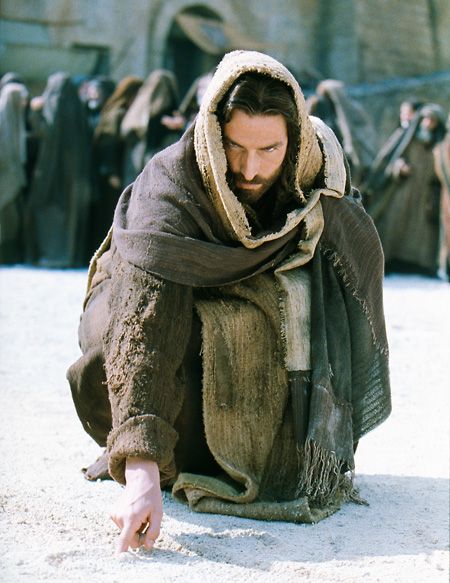






 Considering the Bible