The prophecy of the Lord Jesus for our consideration and edification, written centuries prior to His earthly existence is
Prophecy #215
Description
His is a worldwide compassion
Old Testament Prophecy
Isaiah 42:1-6
Behold my servant, whom I uphold, my chosen, in whom my soul delights; I have put my Spirit upon him; he will bring forth justice to the nations. He will not cry aloud or lift up his voice, or make it heard in the street; a bruised reed he will not break, and a faintly burning wick he will not quench; he will faithfully bring forth justice. He will not grow faint or be discouraged[a] till he has established justice in the earth; and the coastlands wait for his law. Thus says God, the Lord, who created the heavens and stretched them out, who spread out the earth and what comes from it, who gives breath to the people on it and spirit to those who walk in it: “I am the Lord; I have called you[b] in righteousness; I will take you by the hand and keep you; I will give you as a covenant for the people, a light for the nations,
New Testament Fullfillment
Matt 28:19-20
Go therefore and make disciples of all nations, baptizing them in the name of the Father and of the Son and of the Holy Spirit,
teaching them to observe all that I have commanded you. And behold, I am with you always, to the end of the age.”
If you are just joining this blog, or are a first time visitor, welcome to Considering the Bible. We would like to offer a document that provides over 350 prophecies of the Messiah found in the Old Testament for your consideration.
I make no claim to be able to comment on every one of these amazing prophecies in the future, but will occasionally bring one to the readers attention for their edification.
Hopefully you will follow “Considering the Bible” and begin an interaction with us
As mentioned in our first post (Outside the Camp – A), I had just finished a study in Matthew 8, of Jesus cleansing a leper (See Signs and Mighty Works of Jesus) and was in discussion with my favorite wifey. We considered the following two verses and started comparing lepers with believers.
Therefore let us go to him outside the camp and bear the reproach he endured. – Hebrews 13:13
He shall remain unclean as long as he has the disease. He is unclean. He shall live alone. His dwelling shall be outside the camp. – Leviticus 13:46
This post will continue with our thoughts and hopefully provide an opportunity for my readers to discuss additional parallels you may see between lepers and the New Testament believer.
Both communities consist of people who live under a death sentence.
The leper understood the disease would kill him and lived with this truth everyday, as their nerve endings quit working, organs began to shut down and their vision began to slip away.
The New Testament believer is also to understand his day to day experience of living under a death sentence, of carrying a cross and dying daily while in the Christian community. Our experiential feelings of love and belonging to this old world is to die as we grow closer to the One who delivered us.
Both communities have no one else they can trust in.
Both communities, as they experience separation from the greater society, naturally learn to trust in their own community and hopefully in the God who protects and guides them. For the typical modern church adherent, this need for trust within the community is fostered through relationships beyond the Sunday morning entertainment hour. Both communities, in reality have only One they can trust in for their lives.
Both communities experience suffering.
The leper would experience the suffering of exclusion and rejection, of the constant reminder of being out of the camp, away from family and friends. Much of the pain the leper would experience would not be associated with the physical realm, since they could not feel any pain as the nerves died. The suffering would be emotional and spiritual, since it appeared that their disease separated them from the God of the universe.
The New Testament believer also experiences suffering, but in our situation, the suffering may also include physical pain, along with the mental, emotional and spiritual suffering referred to above.
Both communities need to to be thankful for pain
The lack of pain for the leper sometimes caused greater damage to their body, as the leper would inadvertently allow further damage to their body by not recognizing the pain. A case in point is the common occurrence of a leper picking up a hot item, burning their skin and allowing this damage to continue.
The pain we normally experience is actually a gift, in that it guards us from unnecessary damage. The church is to be thankful for the pain of association with the Lord, as the early apostles gave witness. Sad to say, this avoidance of pain is actually encouraged in the modern church, under the teaching that we are to have our best lives now, that we as “children of the King” should only have blessing and good things in our lives. Pain and suffering is to be rejected by simply claiming healing or relief. Some of this teaching actually recommends we command God to remove pain.
Our thoughts on this connection between a leper and a believer are incomplete at best. As you read through this series on lepers and believers, and thoughts came to mind, please comment below. If you know someone this post may bless, send them a link so they may join us also.
Thanks again for coming to visit. If you would like to receive daily posts from Considering the Bible, click on the “Follow” link below
The prophecy of the Lord Jesus for our consideration and edification, written centuries prior to His earthly existence is
Prophecy #214
Description
The Light (salvation) of the Gentiles
Old Testament Prophecy
Isaiah 42:6
“I am the Lord; I have called you[a] in righteousness; I will take you by the hand and keep you; I will give you as a covenant for the people, a light for the nations,
New Testament Fullfillment
Luke 2:32
a light for revelation to the Gentiles, and for glory to your people Israel.”
If you are just joining this blog, or are a first time visitor, welcome to Considering the Bible. We would like to offer a document that provides over 350 prophecies of the Messiah found in the Old Testament for your consideration.
I make no claim to be able to comment on every one of these amazing prophecies in the future, but will occasionally bring one to the readers attention for their edification.
Hopefully you will follow “Considering the Bible” and begin an interaction with us
For this series in Philippians, I am going to limit each post to one verse, and hopefully produce a short, succinct read for my friends who follow.
1:6 And I am sure of this, that he who began a good work in you will bring it to completion at the day of Jesus Christ.
After considering my last post, you will understand I believe this good work Paul refers to as the Philippians giving gifts of love to their apostle. (In other words, I do not see any context here that drives an eternal security teaching.) See the post Conditional Security – Philippians 1:3-11 for supporting nformation for this statement.
Nevertheless, Paul was confident because they had already proven themselves to be faithful to their calling of supporting their beloved apostle. He had no doubt this body of believers would continue. God was at work in these believers in supporting thier missionay apostle. No documentation was necessary, no promissory notes were signed, no contractural commitments negotiated.
They loved him and gave gifts every chance they had. And Paul was so thankful.
I recently finished a study in Matthew 8, of Jesus cleansing a leper (See Signs and Mighty Works of Jesus), and was chatting with my favorite wife during our Saturday morning tea time, rocking in our rocking chairs, and enjoying each other’s company.
We chatted about what I had found during my study. Lepers were considered rejects and outcasts, and were required to live “outside the camp”. As soon as that term was mentioned, I thought of Hebrews, where the apostle (or his representative) wrote.
Therefore let us go to him outside the camp and bear the reproach he endured. – Hebrews 13:13
As I studied the previously mentioned miracle, I recalled one other time this phrase occurred. It was in Leviticus 13, where Moses defined the lepers banishment from the camp. The leper was to be quarantined from those in the camp, and were forced to be “outside of the camp”
He shall remain unclean as long as he has the disease. He is unclean. He shall live alone. His dwelling shall be outside the camp. – Leviticus 13:46
Am I correct in thinking the author of Hebrews is actually equating Jesus with those who were outside of the camp, and exhorting believers to join Him outside the camp. He writes of the reproach the Lord Jesus endured, being outside the camp. To bear reproach is to experience disapproval, criticism and/or disappointment. The religious body of the nation of Israel surely poured reproach on the Lord Jesus in their dogged criticism of His teaching and His character. This reproach intensified until the ultimate rejection by the religious elite , resulting in the execution of God, the cruel crucifixion of Israel’s King.
As I have learned through my four decades of learning of the Word and the Author of life, “religion kills”. Only in the Lord Jesus do we find the source of life and His life is found through going to him, outside the camp.
This seed thought got us to thinking. Is not the church called out to be different (holy) and incur the reproach of the world? In what other ways does this description of a lepers’ colony help us understand the parallel existence of the New Testament church?
Let’s consider.
Both communities are rejected by the society they are associated with.
This parallel is somewhat obvious. Numbers 5:1-4 actually commands those in the camp to send lepers away, for they defile the camp.
In our New Testament experience, the tables flip somewhat, and “the camp”, defined in the Old Testament as being where God dwells (the nation of Israel), now is the very camp that has been rejected. To follow God, believers are to go to Him outside the camp, bearing His reproach. This is the very argument Hebrews brings to those first century believers associated with Judaism.
Both communities seek to be accepted by the society they are associated with.
As a comparison to the previous point, the leper most assuredly desired to be a part of the camp, to be accepted by the society he had been rejected by.
Sadly, it appears that during the church age, (if my understanding of church history is accurate), the established church has also sought acceptance of the world. This desire to be accepted seems evident in a couple ways in my understanding. Firstly, the established church sought acceptance by forcing morals upon the society, as in the medieval times, mixing spiritual authority with political force. Another way the church has sough to be accepted by society is to beg, or at least to mimic the society, in order to be accepted.
I am thankful that the church has had a remnant of believers walk away from the camp in order to maintain their allegiance to the One waiting for us outside the camp.
Both communities are small when compared to the society they are associated with.
Although highly contagious, the leper colony was to be isolated from the general populace and therefore be relatively small in relation to the camp. The infection could not spread if isolated.
So it is with the church, as it is a counter culture that has few that find it, that follow after Him and that openly confess Jesus as Lord.
It is challenging if we follow this metaphor of an infection a bit further and consider Christianity as an infectious disease that spreads rapidly if allowed.
Both communities are considered useless to the society they are associated with.
The leper colony was considered of no importance to the greater society, much like our modern society regards the church. Much of the disregard for the leper colony was due to their physical disfigurement and the ever present fear of infection. This disease resulted in a life of poverty, isolation and rejection. The greater society would not consider the leper colony of any importance.
Is not the church also considered a relic, a cast off that is not to be listened to. How often have you recently heard of the world’s desire to leave the church to history, forging a new society full of promise. The church is a “leper” in the world’s eyes. I suggest we embrace this attitude of the world towards us, in that we truly are a rejected people, and forgo any desire to join with them. Let us speak out as a conscience to a society that has no conscience, as ones who know the truth.
We may be considered useless to the world, but that isn’t our calling.
In closing, does it offend you that to be a believer is likened to a leper? Is there a social stigma with Christianity that is unacceptable to you, or that causes you a discomfort? Our life in Christ includes our dying to this old world and rejecting its opinion of the Master.
Our thoughts on the leper/believer connection will continue in our next post. As you read through this post, and thoughts came to mind, please comment below. If you know someone this post may bless, send them a link so they may join us also.
Thanks again for coming to visit. If you would like to receive daily posts from Considering the Bible, click on the “Follow” link below
The prophecy of the Lord Jesus for our consideration and edification, written centuries prior to His earthly existence is
Prophecy #213
Description
The nations shall wait on His teachings
Old Testament Prophecy
Isaiah 42:4
He will not grow faint or be discouraged[a] till he has established justice in the earth; and the coastlands wait for his law.
New Testament Fullfillment
John 12:20-26
Now among those who went up to worship at the feast were some Greeks.
So these came to Philip, who was from Bethsaida in Galilee, and asked him, “Sir, we wish to see Jesus.”
Philip went and told Andrew; Andrew and Philip went and told Jesus.
And Jesus answered them, “The hour has come for the Son of Man to be glorified.
Truly, truly, I say to you, unless a grain of wheat falls into the earth and dies, it remains alone; but if it dies, it bears much fruit.
Whoever loves his life loses it, and whoever hates his life in this world will keep it for eternal life.
If anyone serves me, he must follow me; and where I am, there will my servant be also. If anyone serves me, the Father will honor him.
If you are just joining this blog, or are a first time visitor, welcome to Considering the Bible. We would like to offer a document that provides over 350 prophecies of the Messiah found in the Old Testament for your consideration.
I make no claim to be able to comment on every one of these amazing prophecies in the future, but will occasionally bring one to the readers attention for their edification.
Hopefully you will follow “Considering the Bible” and begin an interaction with us
“You are the salt of the earth, but if salt has lost its taste, how shall its saltiness be restored? It is no longer good for anything except to be thrown out and trampled under people’s feet. – Matthew 5:13
The Lord is describing a characteristic of His disciples. The metaphor Jesus uses this time is to describe His disciples as “salt”. During Jesus ministry, He spoke some very difficult and hard sayings. Out of all His hard sayings, I would definitely include the one we are looking at tonight.
One thing that bothered me (very much), prior to my allowing this verse to say what it says, is the idea of salt becoming saltless. To be salt is to be salt, right? And one of salt’s chief characteristic is its savour. Without savour, it is useless, good for nothing, and worthy of being cast out.
How does this relate to the disciple? A disciple who isn’t constantly learning (remember – to be a disciple is to be a learner!) has lost his savour (is not in the process of learning.) A disciple isn’t a disciple without being in the process of learning and following.
Security in Being “Cast Out”?
I don’t understand how salt can become saltless. I seem to think that the principle message is to maintain the status of the disciple. A believer who “settles” is in danger of drifting away.
One thing I am sure of is that terms like “good for nothing”, “cast out” and to be “trodden under foot of men” do not engender a feeling of security.
For a man or woman who is salt, to become one who was salt, is a terrifying concept, according to the verse above.
Continue to follow and learn. He is calling you.
Thanks again for coming to visit. I hope you found something of interest in this post and would appreciate a comment, to begin a discussion. If you would like to receive daily posts from Considering the Bible, click on the “Follow” link below
The prophecy of the Lord Jesus for our consideration and edification, written centuries prior to His earthly existence is
Prophecy #212
Description
He brings hope for the hopeless
Old Testament Prophecy
Isaiah 42:3
a bruised reed he will not break, and a faintly burning wick he will not quench; he will faithfully bring forth justice.
New Testament Fullfillment
John 4
Now when Jesus learned that the Pharisees had heard that Jesus was making and baptizing more disciples than John
(although Jesus himself did not baptize, but only his disciples),
he left Judea and departed again for Galilee.
And he had to pass through Samaria.
So he came to a town of Samaria called Sychar, near the field that Jacob had given to his son Joseph.
Jacob’s well was there; so Jesus, wearied as he was from his journey, was sitting beside the well. It was about the sixth hour.
A woman from Samaria came to draw water. Jesus said to her, “Give me a drink.”
(For his disciples had gone away into the city to buy food.)
The Samaritan woman said to him, “How is it that you, a Jew, ask for a drink from me, a woman of Samaria?” (For Jews have no dealings with Samaritans.)
Jesus answered her, “If you knew the gift of God, and who it is that is saying to you, ‘Give me a drink,’ you would have asked him, and he would have given you living water.”
The woman said to him, “Sir, you have nothing to draw water with, and the well is deep. Where do you get that living water?
Are you greater than our father Jacob? He gave us the well and drank from it himself, as did his sons and his livestock.”
Jesus said to her, “Everyone who drinks of this water will be thirsty again,
but whoever drinks of the water that I will give him will never be thirsty again. The water that I will give him will become in him a spring of water welling up to eternal life.”
The woman said to him, “Sir, give me this water, so that I will not be thirsty or have to come here to draw water.”
Jesus said to her, “Go, call your husband, and come here.”
The woman answered him, “I have no husband.” Jesus said to her, “You are right in saying, ‘I have no husband’;
for you have had five husbands, and the one you now have is not your husband. What you have said is true.”
The woman said to him, “Sir, I perceive that you are a prophet.
Our fathers worshiped on this mountain, but you say that in Jerusalem is the place where people ought to worship.”
Jesus said to her, “Woman, believe me, the hour is coming when neither on this mountain nor in Jerusalem will you worship the Father.
You worship what you do not know; we worship what we know, for salvation is from the Jews.
But the hour is coming, and is now here, when the true worshipers will worship the Father in spirit and truth, for the Father is seeking such people to worship him.
God is spirit, and those who worship him must worship in spirit and truth.”
The woman said to him, “I know that Messiah is coming (he who is called Christ). When he comes, he will tell us all things.”
Jesus said to her, “I who speak to you am he.”
Just then his disciples came back. They marveled that he was talking with a woman, but no one said, “What do you seek?” or, “Why are you talking with her?”
So the woman left her water jar and went away into town and said to the people,
“Come, see a man who told me all that I ever did. Can this be the Christ?”
They went out of the town and were coming to him.
Meanwhile the disciples were urging him, saying, “Rabbi, eat.”
But he said to them, “I have food to eat that you do not know about.”
So the disciples said to one another, “Has anyone brought him something to eat?”
Jesus said to them, “My food is to do the will of him who sent me and to accomplish his work.
Do you not say, ‘There are yet four months, then comes the harvest’? Look, I tell you, lift up your eyes, and see that the fields are white for harvest.
Already the one who reaps is receiving wages and gathering fruit for eternal life, so that sower and reaper may rejoice together.
For here the saying holds true, ‘One sows and another reaps.’
I sent you to reap that for which you did not labor. Others have labored, and you have entered into their labor.”
Many Samaritans from that town believed in him because of the woman’s testimony, “He told me all that I ever did.”
So when the Samaritans came to him, they asked him to stay with them, and he stayed there two days.
And many more believed because of his word.
They said to the woman, “It is no longer because of what you said that we believe, for we have heard for ourselves, and we know that this is indeed the Savior of the world.”
After the two days he departed for Galilee.
(For Jesus himself had testified that a prophet has no honor in his own hometown.)
So when he came to Galilee, the Galileans welcomed him, having seen all that he had done in Jerusalem at the feast. For they too had gone to the feast.
So he came again to Cana in Galilee, where he had made the water wine. And at Capernaum there was an official whose son was ill.
When this man heard that Jesus had come from Judea to Galilee, he went to him and asked him to come down and heal his son, for he was at the point of death.
So Jesus said to him, “Unless you see signs and wonders you will not believe.”
The official said to him, “Sir, come down before my child dies.”
Jesus said to him, “Go; your son will live.” The man believed the word that Jesus spoke to him and went on his way.
As he was going down, his servants met him and told him that his son was recovering.
So he asked them the hour when he began to get better, and they said to him, “Yesterday at the seventh hour the fever left him.”
The father knew that was the hour when Jesus had said to him, “Your son will live.” And he himself believed, and all his household.
This was now the second sign that Jesus did when he had come from Judea to Galilee.
If you are just joining this blog, or are a first time visitor, welcome to Considering the Bible. We would like to offer a document that provides over 350 prophecies of the Messiah found in the Old Testament for your consideration.
I make no claim to be able to comment on every one of these amazing prophecies in the future, but will occasionally bring one to the readers attention for their edification.
Hopefully you will follow “Considering the Bible” and begin an interaction with us
After my series on the parables, I found I was drawn to look into the miracles of Jesus in the Gospels. I have never studies the mighty works of Jesus as a focused effort before and am looking forward to finding nuggets of truth that we can be encouraged by.
I have provided a general introduction, with an opportunity to download two files for your reference in my initial post Signs and Mighty Works of Jesus – Introduction. I found that the format I used for the parable posts were useful to keep me on track, and will continue to use them for this series, with some minor tweaks. With that said, let’s take a look at
Jesus Cleanses a Man With Leprosy
Matthew 8:1-4
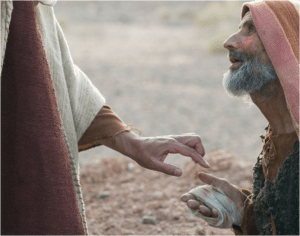
When he came down from the mountain, great crowds followed him. And behold, a leper came to him and knelt before him, saying, “Lord, if you will, you can make me clean.” And Jesus stretched out his hand and touched him, saying, “I will; be clean.” And immediately his leprosy was cleansed. And Jesus said to him, “See that you say nothing to anyone, but go, show yourself to the priest and offer the gift that Moses commanded, for a proof to them.”
Mark 1:40-45
And a leper came to him, imploring him, and kneeling said to him, “If you will, you can make me clean.” Moved with pity, he stretched out his hand and touched him and said to him, “I will; be clean.” And immediately the leprosy left him, and he was made clean. And Jesus sternly charged him and sent him away at once, and said to him, “See that you say nothing to anyone, but go, show yourself to the priest and offer for your cleansing what Moses commanded, for a proof to them.” But he went out and began to talk freely about it, and to spread the news, so that Jesus could no longer openly enter a town, but was out in desolate places, and people were coming to him from every quarter.
Luke 5:12-14
While he was in one of the cities, there came a man full of leprosy. And when he saw Jesus, he fell on his face and begged him, “Lord, if you will, you can make me clean.” And Jesus stretched out his hand and touched him, saying, “I will; be clean.” And immediately the leprosy left him. And he charged him to tell no one, but “go and show yourself to the priest, and make an offering for your cleansing, as Moses commanded, for a proof to them.”
General Observations
This miracle speaks to a medical condition that plagued the nation of Israel for it’s entire existence. Leprosy was an incurable sickness throughout the world until very recently. The curse of leprosy produces nerve damage, resulting in blindness, kidney failure, muscle weakness and disfigurement. Beyond the medical suffering, the leper became a social outcast, condemned to being “outside the camp”.
To this day, to call someone a leper, is to imply a status of an outcast!
Questions to Consider
Who were the audience?
Rockies
Matthew speaks of the miracle occurring as great crowds followed Him down the mountain. If we understand Matthew to be chronological here, this occurred after the Lord gave the nation of Israel the Beatitudes, the laws for Kingdom living. Luke mentions this miracle as happening in one of the cities. As an aside, this does not force a contradiction in the gospels, since it was not uncommon for a city to be at the base of a mountain.
Mount of Beatitudes
Also, it is good to understand that in Israel, a mountain is not the equivalent of the Rocky Mountains on the west coast of Canada. The Mount upon which the Lord gave the Beatitudes is commonly believed to be near Capernaum and is actually 25 meters below sea level. (Yes the top of the mountain is actually 25 meters (~80 feet) below seal level!)
On first review, it seems the miracle was provided to alleviate this lepers suffering. This is the nature of our Lord, in providing deliverance for those who are suffering, looking to Him for salvation.
Alleviating the leper was not the primary reason for the miracle, for this miracle was a challenge to the nation. A challenge to the priests of Israel to research the miracle and make some decisions.
Let me explain.
The Old Testament book of Leviticus addresses leprosy in chapters 13 & 14. Chapter 13 provides detailed instructions on diagnosing the disease. Chapter 14 gives instructions to the priest on what to do if a leper was cleansed.
Throughout the nations history, no leper had been cured. Moses and Miriam were miraculous occurrences of leprosy, both in there acquiring the disease and healing of the disease. No priest’s had ever needed to refer to Leviticus 14 for directions on how to proceed. Leprosy was a death sentence for it’s victims.
Because of this non-occurrence of healing for a leper in Israel, and the Scriptures providing detailed instructions for a priest, the Pharisees reasoned that any healing of leprosy would be a Messianic miracle. This would initiate an investigation phase by the priesthood into the miracle, in order to validate the miracle. If this investigation determined the leprosy was cleansed, and the miracle was a bona fide healing, a second investigation would begin. The Pharisees would then launch an investigation of the One who performed the miracle, asking questions to the miracle worker to determine is the Messiah had truly arrived.
With this miracle, Jesus told the Pharisees to investigate. As my wife mentioned this morning, the Lord was telling the Pharisees to “get to work”! As expected, after this miracle, the gospels record instances of groups of Pharisees attending His ministry, watching His movements, questioning (and condemning) Him.
Jesus did not shy away from challenges to His ministry. He is the truth and provided the proof to those of an open mind and heart. He also understood this investigation would lead to His crucifixion, due to the hardness of the Pharisees position, and dependence on their religion.
He is the truth, and there is no denying it! For Him, to declare the truth will result in His death. For us, to deny the truth is to result in our death.
He is the One who is great! We certainly are not, and need His love and grace.
What was the message for the original audience?
The original audience, that is the great crowd, saw a miracle no other Israelite had ever seen. Multiple witnesses could be called upon for verification. The message they received, if they were literate in the Word, was one of a miracle worker being introduced formally to the nation, of One who claimed to provide proofs of His position as Messiah, and was openly declaring His claims as Messiah.
Oh, and also, they saw a leper get healed before their very eyes! How cool was that? Consider the rarity of this action of touching the leper. The passage in Matthew states that “And Jesus stretched out his hand and touched him“. This is not to be discounted, since the nation had instructed every little boy and girl that to touch a leper was to become unclean, acquire the disease itself, and be rejected socially and religiously.
Jesus touched the leper and Jesus cleansed him. He did not simply declare the leper clean.
He had declared miracles before without touch, and was fully capable of standing far off and healing this leper, yet He made a point of touching the leper, the unclean, the rejected. This is backwards to the logic provided in the Old Testament. Haggai instructs us that uncleanness is transferred to the clean, and that cleanliness is not transferred to the the unclean.
Then Haggai said, “If someone who is unclean by contact with a dead body touches any of these, does it become unclean?” The priests answered and said, “It does become unclean.” – Haggai 2:13
Jesus was no typical rabbi!
What is the message for us today?
Two messages seem obvious to me.
First, Jesus is the Messiah. His claims are verifiable and He wants you to investigate. He has provided multiple evidences of His Messiahship, and our ignoring of the proofs falls back on us if we ignore or reject. His greatest proof of who He is, is the resurrection. He is risen and is by very nature and work, King of Kings and Lord of Lord.
Secondly, He is a God who is not far off. He is a God who touches, who reaches out to us.
This truth came home to me during a class I taught years back. I began to hug my class mates as they entered our home, and although I was not faithful in maintaining this practice, I found that this simple act of touching opened people up to discussing issues and concerns in their lives, providing assistance (if wise) and ultimately directing them to the Lord for solutions.
The act of touching, physically touching one who is hurting, is powerful. Amongst sinners and saints, the act of touching is a catalyst for the formation of trust. How much more, when the God of the universe reaches out and touches one who is in need?
Who have you touched today? Be like Jesus, and reach out to one who is in need.
The prophecy of the Lord Jesus for our consideration and edification, written centuries prior to His earthly existence is
Prophecy #211
Description
Meek and lowly
Old Testament Prophecy
Isaiah 42:2
He will not cry aloud or lift up his voice, or make it heard in the street;
New Testament Fullfillment
Matt 11:28-30
Come to me, all who labor and are heavy laden, and I will give you rest.
Take my yoke upon you, and learn from me, for I am gentle and lowly in heart, and you will find rest for your souls.
For my yoke is easy, and my burden is light.”
If you are just joining this blog, or are a first time visitor, welcome to Considering the Bible. We would like to offer a document that provides over 350 prophecies of the Messiah found in the Old Testament for your consideration.
I make no claim to be able to comment on every one of these amazing prophecies in the future, but will occasionally bring one to the readers attention for their edification.
Hopefully you will follow “Considering the Bible” and begin an interaction with us
A sharing with someone else. I believe this verse hints at Paul’s thankfulness for a very specific partnership the Philippians participated with Paul in. I think he is broaching the topic of dirty mammon, filthy lucre, cold hard cash. (For my reasons for thinking this way, consider the post Conditional Security – Philippians 1:3-11)
If my thinking is correct, Paul is speaking of a very real world need in a beautifully wrapped phrase which the Philippians would understand without him having to blurt it out. Classy. Subdued. Humble and gracious.
This verse speaks of the Apostle using a specific word with intent meant for the audience. Only after getting involved with the book, and Paul’s intimate history with this church, do we understand what the Philippians understood.
Grace in our speech. A message to his loved ones, expressing gratitude for their real world gifts.
My wife and I are reading through the Psalms in our evening reading and occasionally a nugget of the Psalms jumps out of the page. Don’t you love it when, after years of reading the “Old Book” passages become alive, reinforcing old teachings or simply warming your heart.
This is the book of Psalms, and it is rich.
I pray I can communicate a portion of the blessing we receive from this wonderful book.
Psalm 41:1-3
To the choirmaster. A Psalm of David.
Blessed is the one who considers the poor! In the day of trouble the LORD delivers him; the LORD protects him and keeps him alive; he is called blessed in the land; you do not give him up to the will of his enemies. The LORD sustains him on his sickbed; in his illness you restore him to full health.
Consider the poor.
Note that David did not simply state that the one blessed is the one who gives to the poor. No, it is not simply giving, but “considering the poor” that is “considered” here.
What is David trying to say here? To consider is to give attention to, to understand, to be prudent. I think of it as wisdom in supplying needs in order to help the one suffering, instead of simply sacrificing out of guilt or some external obligation. There is a way we help that hurts those we seek to help.
One of the first times I understood this concept was when a brother and I were out door knocking and evangelizing. We came across a young couple that was willing to listen, and we shared the gospel. Eventually, we were told they needed some diapers, which we were happy to retrieve for them. This gave us an opportunity to return and visit! Eventually they needed more formula, some food, a few more diapers, a bit of gas and a bus ticket. We continued to supply, yet there was something wrong. It just seemed wrong.
This family had funds for what some may consider luxury items (large tv, new stereo, a vehicle…), and our assistance was supplementing a lifestyle of desire, not need. Might I suggest that if I “considered the poor” in this instance today, I may have hesitation to express charity to the extent we did so long ago. Something to consider in each situation. Wisdom is needed!
You may wonder where this family is in relation to the gospel. I don’t remember either the husband or wife coming to church with us, making a decision for Christ or showing any real interest other than getting one more diaper.
To be honest, my brother and I got so caught up in supplying the “need”, in order to show Christian charity, we abandoned the original intent of our first visit. We eventually “considered the poor” in this instance, and moved on to others that might receive a message instead of milk us for money.
Charity can also become a crutch for those receiving, creating a dependence on the charity. This is a common concern amongst some charities that simply exist to maintain the status quo of supplying an immediate need, as opposed to solving a root problem. Don’t get me wrong, thinking I know of a solution, but in the personal interactions we have with the poor, David advises us to consider. To ponder the best solution for each particular case. To exercise wisdom in our efforts to assist the poor.
The one who wisely seeks to help the poor properly, without seeking self gratification, will be helped by the Lord in his day of trouble. Consider the day of trouble the saint falls into, and that the Lord will help, for our good and not to our detriment. The Lord Himself considers the poor.
The term poor refers to weakness, a lowliness, even a neediness. We are definitely poor, weak and needy. As we read these verses, it occurs to me that they could apply to the poor, or to the saint who considers the poor. Either way, to consider the poor, and to mimic the Lord’s mercy is enough for the saint.
As we learn of Him and His grace and mercy toward us, we are to follow His example, exercise a heart toward the poor, and consider ways to assist the poor for their good, and not simply ours.
The prophecy of the Lord Jesus for our consideration and edification, written centuries prior to His earthly existence is
Prophecy #210
Description
The Servant-as a faithful, patient redeemer
Old Testament Prophecy
Isaiah 42:1-4
Behold my servant, whom I uphold, my chosen, in whom my soul delights; I have put my Spirit upon him; he will bring forth justice to the nations. He will not cry aloud or lift up his voice, or make it heard in the street; a bruised reed he will not break, and a faintly burning wick he will not quench; he will faithfully bring forth justice. He will not grow faint or be discouraged[a] till he has established justice in the earth; and the coastlands wait for his law.
New Testament Fullfillment
Matt 12:18-21
“Behold, my servant whom I have chosen, my beloved with whom my soul is well pleased. I will put my Spirit upon him, and he will proclaim justice to the Gentiles.
He will not quarrel or cry aloud, nor will anyone hear his voice in the streets;
a bruised reed he will not break, and a smoldering wick he will not quench, until he brings justice to victory;
and in his name the Gentiles will hope.”
If you are just joining this blog, or are a first time visitor, welcome to Considering the Bible. We would like to offer a document that provides over 350 prophecies of the Messiah found in the Old Testament for your consideration.
I make no claim to be able to comment on every one of these amazing prophecies in the future, but will occasionally bring one to the readers attention for their edification.
Hopefully you will follow “Considering the Bible” and begin an interaction with us
You will recognize them by their fruits. Are grapes gathered from thornbushes, or figs from thistles? So, every healthy tree bears good fruit, but the diseased tree bears bad fruit. A healthy tree cannot bear bad fruit, nor can a diseased tree bear good fruit. Every tree that does not bear good fruit is cut down and thrown into the fire. – Matthew 7:16-19 ESV
Security
Is there a relationship between the works/fruits of a person and their destiny? If there is, could a sense of security be a fruit from a life well lived? A life that is meek, humble, gracious, giving, self-sacrificing, loving, faithful, patient…. A life that reflects the Master’s character?
A couple of points in my mind come to the surface.
The Lord states:
A good tree gives good fruit.
A good tree does not give corrupt fruit.
A corrupt tree gives evil fruit.
A corrupt tree does not give good fruit.
If the fruit is good, the tree is good. Trees that do not bring forth good fruit are cut down due to their fruit bearing ability.
Trees are not judged on the quality of their sap, or the strength of their trunk, the amount of leaves they produce or the depth of their roots, the quality of the wood they are made of, or the height of their branches! If the fruit is not good, the wood is simply burned up.
Is it possible for a believer to produce consistent, continually bad fruit? Is the fruit bearing of a believer, a proof of the life we claim we have? Is fruit a conditional aspect of our Christian lives, ie, a result of obedience to the Master?
Security In a Believers life
If so, could a sense of security be in direct relation to the fruit/works produced in a believers life?
(Huh? Where am I going wrong here?)
Security – that state of being free from danger or threat, if experienced throughout a believer’s life, brings about the ultimate security that is real (and not merely theoretical).
In the midst of allowing Jesus to live through us and producing the fruit of love, joy, peace, patience, self-sacrifice and humility, He rescues us in our weakness and fallenness, showing Himself strong. But we must trust Him now, in our daily battles, to know the real security.
He is my Security.
Thanks again for coming to visit. I hope you found something of interest in this post and would appreciate a comment, to begin a discussion. If you would like to receive daily posts from Considering the Bible, click on the “Follow” link below
The prophecy of the Lord Jesus for our consideration and edification, written centuries prior to His earthly existence is
Prophecy #209
Description
A shepherd-compassionate life-giver
Old Testament Prophecy
Isaiah 40:11
He will tend his flock like a shepherd; he will gather the lambs in his arms; he will carry them in his bosom, and gently lead those that are with young.
New Testament Fullfillment
John 10:10-18
The thief comes only to steal and kill and destroy. I came that they may have life and have it abundantly.
I am the good shepherd. The good shepherd lays down his life for the sheep.
He who is a hired hand and not a shepherd, who does not own the sheep, sees the wolf coming and leaves the sheep and flees, and the wolf snatches them and scatters them.
He flees because he is a hired hand and cares nothing for the sheep.
I am the good shepherd. I know my own and my own know me,
just as the Father knows me and I know the Father; and I lay down my life for the sheep.
And I have other sheep that are not of this fold. I must bring them also, and they will listen to my voice. So there will be one flock, one shepherd.
For this reason the Father loves me, because I lay down my life that I may take it up again.
No one takes it from me, but I lay it down of my own accord. I have authority to lay it down, and I have authority to take it up again. This charge I have received from my Father.”
If you are just joining this blog, or are a first time visitor, welcome to Considering the Bible. We would like to offer a document that provides over 350 prophecies of the Messiah found in the Old Testament for your consideration.
I make no claim to be able to comment on every one of these amazing prophecies in the future, but will occasionally bring one to the readers attention for their edification.
Hopefully you will follow “Considering the Bible” and begin an interaction with us
After my series on the parables, I found I was drawn to look into the miracles of Jesus in the Gospels. I have never studies the mighty works of Jesus as a focused effort before and am looking forward to finding nuggets of truth that we can be encouraged by.
I have provided a general introduction, with an opportunity to download two files for your reference in my initial post Signs and Mighty Works of Jesus – Introduction. I found that the format I used for the parable posts were useful to keep me on track, and will continue to use them for this series, with some minor tweaks. With that said, let’s take a look at
Jesus Provides a Catch of Fish
Luke 5:1-11
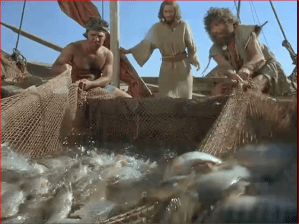
On one occasion, while the crowd was pressing in on him to hear the word of God, he was standing by the lake of Gennesaret, and he saw two boats by the lake, but the fishermen had gone out of them and were washing their nets. Getting into one of the boats, which was Simon’s, he asked him to put out a little from the land. And he sat down and taught the people from the boat. And when he had finished speaking, he said to Simon, “Put out into the deep and let down your nets for a catch.” And Simon answered, “Master, we toiled all night and took nothing! But at your word I will let down the nets.” And when they had done this, they enclosed a large number of fish, and their nets were breaking. They signaled to their partners in the other boat to come and help them. And they came and filled both the boats, so that they began to sink. But when Simon Peter saw it, he fell down at Jesus’ knees, saying, “Depart from me, for I am a sinful man, O Lord.” For he and all who were with him were astonished at the catch of fish that they had taken, and so also were James and John, sons of Zebedee, who were partners with Simon. And Jesus said to Simon, “Do not be afraid; from now on you will be catching men.” And when they had brought their boats to land, they left everything and followed him.
General Observations
This is the first time Jesus provides a catch of fish for His disciples. It is the only time He provides a catch of fish prior to His resurrection, and only Luke records this miracle. The fact that this is the only gospel that records a catch of fish was somewhat surprising to myself. I expected multiple gospel accounts.
The miracle was intended for the disciples, for the Lord told His disciples to put out into the deep, implying the miracle occurred away from the crowds on the shore He had been teaching earlier.
Questions to Consider
Who were the audience?
As I mentioned above, the principal audience was the disciples, and all others on the two boats that were to push out to the deep. Whether the crowds could see or understand what was going on is not clear, and is not disclosed as to it’s impact other than the disciples that were initially dumbfounded by the mighty work.
I understand Jesus to perform His miracles for specific purposes, some of which are clearly identified within the text, and some of which are somewhat veiled. By that I mean, each of the miracles are intended to exhibit the identity of this Rabbi that was speaking new words, that He was the One that the nation waited for, longed for and hoped for.
Yet, this one miracle has a specific purpose. The purpose was not to supply food to the disciples family, for as the test states…
And when they had brought their boats to land, they left everything and followed him.
The mighty catch of fish may have simply rotted in the sun, which I highly doubt, but the point is that the focus of the disciples lives took a major turn here. They no longer identified themselves as fishermen, for they left everything behind them. It is interesting that though the text states they left it all, this is not to be understood as they gave it away, sold it or in some way gave up ownership. No, we need to remember that later in the gospels (John to be specific), Peter is out fishing again, presumably on his boat with his equipment.
What was the message for the original audience?
What was the message. Let’s read it once more.
“Do not be afraid; from now on you will be catching men.”
The message was directed to Peter, yet I am confident the other disciples heard the message. Can you imagine the Lord looking you in the eye and telling you “Do not be afraid”? Afraid of what though? They had just experienced a gold rush of profits!
When I first read this passage years ago, I thought Peter’s initial reaction was ludicrous. Pull those fish in, bank the profits and buy your wife a Maserati. How wrong was I in seeing earthly gain as the intent of the message. Peter’s ears were of a different ilk. Peter reacted properly.
…when Simon Peter saw it, he fell down at Jesus’ knees, saying, “Depart from me, for I am a sinful man, O Lord.”
The fish were simply a vehicle to stir Peter’s conscience and soul. He ignored the fish, and confessed Jesus as Lord. The text does not state that Peter simply was astonished, but that he recognized the source of this miracle, understood the authority of the One who stood beside him and confessed Jesus as Lord.
And Peter told the Lord to depart. To go away, for he was sinful. He had the natural reaction that anything (anyone) holy could not be with the unholy. He surely did not understand, as we most likely do not understand, the great desire of the Holy One to be with His creation, to find a way to be with His people. He has sought us out since the garden, and continues to seek us as we wander away. Seeking us to the point of death, even death on the cross.
Peter also confessed his sinfulness. What specifically was Peter confessing to at this time? Was it that he argued with the Lord about His initial command to set out into the deep? Maybe. At least that would be the immediate thing in my mind. Yet he didn’t confess an act of sin, but that he was a sinful man. This is instructive in my mind, since his confession spoke of his condition, and not just a single act of omission or commission.
I am of the understanding that when we recognize who Jesus is and His character, power and grace, the natural reaction is to see ourselves in the light of that understanding, to see our weakness, rebellion, and general disregard for God and His ways.
What is the message for us today?
The message for us today is “Do not be afraid”. From a stance of boldness, of a proper fearlessness, the result will be that we will “catch men”. You see, I don’t understand the phrase “You will be catching men” as a command so much as a result of understanding Who Jesus is.
So was Jesus telling Peter (and the other disciples) to not fear Him? Would that be consistent with the Biblical narrative of God’s desire to be with His people, to be in relation with Him? Peter obviously reacted in fear, as I know I would have, seeing this miracle occur in front of my very eyes. The fact that Jesus could produce an overabundance after Peter and the gang had failed, must have caused a multitude of emotions, but the overarching one was of fear.
How often the disciples must have asked each other – “Who is this that can…..”
For us today, the message seems clear. Understand who this One is, who God is, and the unbounded power and love He has expressed in the cross.
Peter began to understand because of the experience of the miraculous fish. He experienced many miraculous events. Yet Peter would admit that the greater proof of Jesus’ deity and our relation to Him must be based in the prophetic Word. Peter truly was an eye witness of His power. He actually heard the voice from the heavens, declaring the identity of Jesus. And what does Peter tell us to do? Should we seek our own miracles, dreams, or visions, finding a basis to believe in Jesus through miracles?
For we did not follow cleverly devised myths when we made known to you the power and coming of our Lord Jesus Christ, but we were eyewitnesses of his majesty. For when he received honor and glory from God the Father, and the voice was borne to him by the Majestic Glory, “This is my beloved Son, with whom I am well pleased,” we ourselves heard this very voice borne from heaven, for we were with him on the holy mountain. And we have the prophetic word more fully confirmed, to which you will do well to pay attention as to a lamp shining in a dark place, until the day dawns and the morning star rises in your hearts, – 2 Peter 1:16-19
With his witness of all the miracles, Peter directs believers to the prophetic word. This “knowledge” needs to find it’s roots in the Word of God, and to be understood through prayer, meditation and obedience to the known will of God.
Don’t seek miracles. Give the Lord freedom to grant at His pleasure. Crack open a Bible and find a foundation safe and secure for your faith. Gain a boldness through understanding the strength and power of the Lord Jesus, of His desire to be with you. Reject the attitude of telling Jesus to depart. Admit your sinfulness to the Lord Himself, and admit to yourself that Jesus is seeking you.
The prophecy of the Lord Jesus for our consideration and edification, written centuries prior to His earthly existence is
Prophecy #208
Description
He will come to reward
Old Testament Prophecy
Isaiah 40:10
Behold, the Lord God comes with might, and his arm rules for him; behold, his reward is with him, and his recompense before him.
New Testament Fullfillment
Rev 22:12
“Behold, I am coming soon, bringing my recompense with me, to repay each one for what he has done.
If you are just joining this blog, or are a first time visitor, welcome to Considering the Bible. We would like to offer a document that provides over 350 prophecies of the Messiah found in the Old Testament for your consideration.
I make no claim to be able to comment on every one of these amazing prophecies in the future, but will occasionally bring one to the readers attention for their edification.
Hopefully you will follow “Considering the Bible” and begin an interaction with us
For this series in Philippians, I am going to limit each post to one verse, and hopefully produce a short, succinct read for my friends who follow.
1:4 always in every prayer of mine for you all making my prayer with joy,
Prayer
Paul prayed for his church. No, that statement is not true, if I understand Paul.
He prayed for his friends. He prayed for individuals that were on his heart. I do not understand Paul as thinking of the church in Philippi as an organization that needed to meet some arbitrary budget, or that his authority in the church needed to be stengthened, or that the expansion plans were not hitting goals.
Nope. He prayed for people. And in those prayers, the predominant theme he naturally expressed was that of joy. Joy is the theme of this letter and I find it interesting, even revealing that it is associated with prayer at it first occurrence.
Pray for people, and remember the joy of loving those you pray for.
Don’t you love it when, after years of reading the “Old Book” passages become alive, reinforcing old teachings or simply warming your heart. This is the book of Psalms, and it is rich.
I pray I can communicate a portion of the blessing we receive from this wonderful book.
Psalm 40
16 But may all who seek you rejoice and be glad in you; may those who love your salvation say continually, “Great is the LORD!” 17 As for me, I am poor and needy, but the Lord takes thought for me. You are my help and my deliverer; do not delay, O my God!
The Lord is great, but I am poor and needy.
Let’s recount the historical reason for David writing this psalm. Many believe this psalm was written after the revolution of Absalom, and that David was back on the throne of Israel, nearing the end of his life.
He had experienced the greatest of betrayal in his life, and had been brought to the very edge of defeat and death by his son and a trusted friend. The depth of despair David experienced also brought with it a humility and gratefulness that is expressed in the final verses of this great psalm.
Also, it is instructive to note that the last two verses have two subjects, that is those who seek God and the author himself. The author looks to those who seek God, and desires joy and gladness for them in their chasing after God. He desires the best for them as they seek God.
For himself, he admits to his poverty and need. Please remember that the author is King David, and is near the end of his rule, where he rules over the most prosperous and militarily mighty nation in the area. His expansion of his rule saw few limits and the Lord gave him victory many, many times. He was the king of Israel, and is considered the greatest king that ruled over the nation.
Yet he saw himself as poor and needy. The word poor may be translated as afflicted. To be afflicted is to be in need, subject to oppression or abuse, and admitting to the need for deliverance.
How is it that David could honestly say these things, while sitting on the throne of Israel, and reigning over God’s people?
David was in the enviable position of understanding where he stood in relation to the great God we serve. Although he is considered one of histories greatest kings, he considered himself as poor and needy, a man before God, stripped of his earthly strength, and bowing before Him. David was great because he did not consider himself.
If this was the only one we might consider in the final verses, it would be enough, but I ask you to consider the greater David, the Lord Jesus Christ, for as we have seen though this psalm, the subject turns to the Messiah, and we can see glimpses of His life throughout the passage.
Consider Jesus, in relation to the claim of being poor and needy, One who voluntarily left all power and glory to be brought to a point of poverty and need, to being one who needed deliverance from God, who experienced affliction, poverty, humiliation and ultimately death.
David was rescued from the pit, but Jesus entered the grave, having prayed for deliverance. This exercise of trust in the Father is unexplainable, if He was not continually and always in the presence of the Father, communing with the Father, being One with Him.
His trust in the Father during His experience of poverty and affliction is amazing, and His willingness to enter death, while not deserving the condemnation is beyond any sense of logic or understanding.
The psalmist, at the end of this psalm, prayed for God not to delay. The Lord also prayed for deliverance. God delivered David. All appearance of deliverance for Jesus, in the eyes of the disciples was snuffed out at the point of death. It seemed the Father had delayed, had not delivered the greater David.
We must understand that the deliverance that was expected and the deliverance that was supplied was dependent on our understanding of the goal. Any one of us, being in the sandals of the disciples, would have seen this as the disciples did, as a great failure, a massive disappointment. If only God had not delayed in delivering Jesus from death.
But love is like that.
He truly is the leader of our salvation, the One who loved first, best and always.
The prophecy of the Lord Jesus for our consideration and edification, written centuries prior to His earthly existence is
Prophecy #207
Description
“Behold your God”
Old Testament Prophecy
Isaiah 40:9
Go on up to a high mountain, O Zion, herald of good news;[a] lift up your voice with strength, O Jerusalem, herald of good news;[b] lift it up, fear not; say to the cities of Judah, “Behold your God!”
New Testament Fullfillment
John 1:36
and he looked at Jesus as he walked by and said, “Behold, the Lamb of God!”
John 19:14
Now it was the day of Preparation of the Passover. It was about the sixth hour. He said to the Jews, “Behold your King!”
If you are just joining this blog, or are a first time visitor, welcome to Considering the Bible. We would like to offer a document that provides over 350 prophecies of the Messiah found in the Old Testament for your consideration.
I make no claim to be able to comment on every one of these amazing prophecies in the future, but will occasionally bring one to the readers attention for their edification.
Hopefully you will follow “Considering the Bible” and begin an interaction with us
Why are you bringing this passage into the topic of conditional security Carl? This verse is obviously in the Bible for the sake of evangelism.
How often have you used Romans 6:23 in presenting the gospel to the lost, or heard someone refer to it in a gospel presentation. Romans 6:23 is a critical verse in the common “Romans Road” method of sharing the gospel.
With that background to the passage, how can the topic of conditional security become associated with it? Am I simply looking for any verse to wrap up into a conditional security teaching? I hope not – You be the judge!
Let’s consider the passage by first reading it.
So you also must consider yourselves dead to sin and alive to God in Christ Jesus. Let not sin therefore reign in your mortal body, to make you obey its passions. Do not present your members to sin as instruments for unrighteousness, but present yourselves to God as those who have been brought from death to life, and your members to God as instruments for righteousness. For sin will have no dominion over you, since you are not under law but under grace. What then? Are we to sin because we are not under law but under grace? By no means! Do you not know that if you present yourselves to anyone as obedient slaves, you are slaves of the one whom you obey, either of sin, which leads to death, or of obedience, which leads to righteousness? But thanks be to God, that you who were once slaves of sin have become obedient from the heart to the standard of teaching to which you were committed, and, having been set free from sin, have become slaves of righteousness. I am speaking in human terms, because of your natural limitations. For just as you once presented your members as slaves to impurity and to lawlessness leading to more lawlessness, so now present your members as slaves to righteousness leading to sanctification. For when you were slaves of sin, you were free in regard to righteousness. But what fruit were you getting at that time from the things of which you are now ashamed? For the end of those things is death. But now that you have been set free from sin and have become slaves of God, the fruit you get leads to sanctification and its end, eternal life. For the wages of sin is death, but the free gift of God is eternal life in Christ Jesus our Lord. – Romans 6:11-23
Take a look at that last verse. Yes – Romans 6:23. I will wager a penny that many of my readers have this verse committed to memory. I know I do, and have had it wobbling around in my head for close to 40 years. But many years ago, a brother by the name of Jim challenged me to consider the passage above. He asked a very pointed question (further below) that I fought against for years. After hearing the question, and when this passage came to mind, I simply ignored Jim’s question, it and referred to passages that seemed to support my “unconditional security” understanding of the Scriptures.
Paul is discussing the servant-hood of the believer in this passage. It is commonly accepted that by this time in the epistle, he has laid the foundation of the gospel and is dealing with the present condition and sanctification of the believer.
What was the question Jim asked?
“Why did Paul mention death in verse 23 of this passage?”
It can not simply refer to physical death, can it? Notice that Paul begins to conclude his thoughts on service to God by defining the fruit of our service (unto holiness) and the end being everlasting life. All through the passage, Paul is referring to believers and suddenly brings the topic of death into the mix.
Why?
The thing that really confused me, even as a young believer, was that as evangelicals, we use verse 23 to evangelize the lost, which is in the middle of an extended teaching on the Christians responsibility to serve God.
The question above was put to me over 25 years ago, but God is faithful and in my many wanderings and detours, some things just kept hanging on in my mind. The idea that death is an option by way of choice for the believer is a fearful thought, and yet I sense an authority I welcome and a growing respect that I have lacked far too long towards Him.
As always, your thoughts on this passage are always welcome.
Thanks again for coming to visit. I hope you found something of interest in this post and would appreciate a comment, to begin a discussion. If you would like to receive daily posts from Considering the Bible, click on the “Follow” link below
The prophecy of the Lord Jesus for our consideration and edification, written centuries prior to His earthly existence is
Prophecy #206
Description
Preceded by forerunner
Old Testament Prophecy
Isaiah 40:3-4
A voice cries: “In the wilderness prepare the way of the Lord; make straight in the desert a highway for our God. Every valley shall be lifted up, and every mountain and hill be made low; the uneven ground shall become level, and the rough places a plain.
New Testament Fullfillment
John 1:23
He said, “I am the voice of one crying out in the wilderness, ‘Make straight the way of the Lord,’ as the prophet Isaiah said.”
If you are just joining this blog, or are a first time visitor, welcome to Considering the Bible. We would like to offer a document that provides over 350 prophecies of the Messiah found in the Old Testament for your consideration.
I make no claim to be able to comment on every one of these amazing prophecies in the future, but will occasionally bring one to the readers attention for their edification.
Hopefully you will follow “Considering the Bible” and begin an interaction with us
If you have been following my ramblings for the past few months, you may remember that I spend some time in a parking lot, walking to the top and back down, praying for my family and friends, or memorizing a verse that I am trying to master. During my walks, as many of you may remember, I tend to wander in my thinking, ending up in a place in my mind I hadn’t intended. This post is the result of such wandering.
For some unknown reason, I began to consider the concept of courage, and the many commands in the Word of believers told to “fear not”. I have found that the Word actually speaks the words “do not fear” (or some similar phrase) over 100 times. Some of these verses are directed to individuals in specific historic circumstances, but the example provided can be very instructive. Other passages, especially in the gospels or epistles can be applied directly to us as believers. This is incredible, and reveals to me that fear is a huge issue that God often addresses with in His people.
As an aside, it is important to understand that if you are in a dangerous situation, fear is a healthy emotion, and is not to be rejected. Fear in an unsafe condition actually may save your life.
No, this post is about a non-defined, non justified fear that has no basis in truth, paralyzing (or controlling) us without any clear danger defined. Out of this condition of fear, God has a solution. Don’t be afraid. Be courageous.
It seems incredibly obvious to me now that fear is a decision to live in. Now don’t get me wrong, that when I am in the midst of fear, when the panic hits and the terror strikes, making a simple decision to be courageous, and reject fear is not my first consideration. I usually fall into the fear trap, get wrapped up in it’s tentacles and tremble. Usually, I actually feed the fear monster, by thinking of or listening to fear mongering. This is very easy to do in this society of social networking. Bad news sells!
But Good News heals. Only after I spend some quiet with the Lord, do I regain my sense of control over this emotion.
Let’s consider the emotion of anger. In the past I have grown in my rejection of unjustified anger. How is it that fear is any different in the way the Word addresses a solution for believers. The Word tells us to not be angry.
But now you must put them all away: anger, wrath, malice, slander, and obscene talk from your mouth. – Col 3:8 ESV
It seems to be a straight forward command. A decision that one can make to humbly admit our weakness and depend on Him. And yet, in the midst of the sexual immorality, impurity, sensuality, idolatry, sorcery, enmity, strife, jealousy, fits of anger, rivalries, dissensions, divisions, envy, drunkenness, orgies, there appears to be no escape, no other way. (Consider Gal 5:19-21 for this list of sins)
A walking with the Lord rescues us from these debilitating choices, these temptations that are overpowering for the one who is seemingly alone!
But let us return to the topic at hand.
When I finally recover from an “attack of the fearries”, I usually think of the time I went back to college in my mid 30’s, when I once again fell into fear. Paralyzed by fear if my memory serves me right.
I was a latecomer in the class, starting the semester a week late, one of the older students, with the peer clicks firmly established and the pecking order obvious. I don’t recall any reason fear crept up my spine and nestled in my mind, but it settled in for a long stay. For weeks, I was quiet, not looking at anyone, or entering into any conversations with other students. It seemed hopeless.
The fear that had controlled my actions for weeks was literally shattered while I was in the hallway next to my soils class, and I read the following Scripture.
“Behold, God is my salvation; I will trust, and will not be afraid; for the LORD GOD is my strength and my song, and he has become my salvation.” – Isa 12:2
All I could hear was that my fear was revealing my lack of faith. There were two attitudes the prophet spoke of. Either trust or be afraid. Trust resulted in not being afraid. I will trust, and not be afraid. This was a seminal moment for me and I have often thought of this time in future periods or fear.
Is there a time in your life when you could state you exercised faith and experienced fear at the same time. The Bible tells us that fear is something we can reject through trust in the Living God.
Can it be that believers want it to be more complicated? Let me know of your experiences with fear and how the Lord has provided deliverance for His child.
Thanks again for coming to visit. I hope you found something of interest in this post and would appreciate a comment, to begin a discussion. If you would like to receive daily posts from Considering the Bible, click on the “Follow” link below
The prophecy of the Lord Jesus for our consideration and edification, written centuries prior to His earthly existence is
Prophecy #205
Description
To have a ministry of miracles
Old Testament Prophecy
Isaiah 35:5-6
Then the eyes of the blind shall be opened, and the ears of the deaf unstopped; then shall the lame man leap like a deer, and the tongue of the mute sing for joy. For waters break forth in the wilderness, and streams in the desert;
New Testament Fullfillment
Matt 11:2-6
Now when John heard in prison about the deeds of the Christ, he sent word by his disciples
and said to him, “Are you the one who is to come, or shall we look for another?”
And Jesus answered them, “Go and tell John what you hear and see:
the blind receive their sight and the lame walk, lepers are cleansed and the deaf hear, and the dead are raised up, and the poor have good news preached to them.
And blessed is the one who is not offended by me.”
If you are just joining this blog, or are a first time visitor, welcome to Considering the Bible. We would like to offer a document that provides over 350 prophecies of the Messiah found in the Old Testament for your consideration.
I make no claim to be able to comment on every one of these amazing prophecies in the future, but will occasionally bring one to the readers attention for their edification.
Hopefully you will follow “Considering the Bible” and begin an interaction with us















 Considering the Bible