The prophecy of the Lord Jesus for our consideration and edification, written centuries prior to His earthly existence is
Prophecy #267
Description
Resurrected and live forever
Old Testament Prophecy
Isaiah 53:10c
he shall see his offspring; he shall prolong his days;
New Testament Fulfillment
Rom 6:9
We know that Christ, being raised from the dead, will never die again; death no longer has dominion over him.
If you are just joining this blog, or are a first time visitor, welcome to Considering the Bible. We would like to offer a document that provides over 350 prophecies of the Messiah found in the Old Testament for your consideration.
I make no claim to be able to comment on every one of these amazing prophecies in the future, but will occasionally bring one to the readers attention for their edification.
Hopefully you will follow “Considering the Bible” and begin an interaction with us
No one who denies the Son has the Father. Whoever confesses the Son has the Father also. Let what you heard from the beginning abide in you. If what you heard from the beginning abides in you, then you too will abide in the Son and in the Father. And this is the promise that he made to us–eternal life. I write these things to you about those who are trying to deceive you. But the anointing that you received from him abides in you, and you have no need that anyone should teach you. But as his anointing teaches you about everything, and is true, and is no lie–just as it has taught you, abide in him. And now, little children, abide in him, so that when he appears we may have confidence and not shrink from him in shame at his coming. If you know that he is righteous, you may be sure that everyone who practices righteousness has been born of him. – 1 John 2:15-29 ESV
Although this entire passage is very excellent, verse 24 is where I would like to draw your attention. John is placing the responsibility of abiding in doctrinal truth squarely on the disciples shoulders.
What? Carl – are you saying we have to maintain doctrinal purity to keep our salvation? Be careful before you jump into too many assumptions. The doctrinal purity being referred to here is in one subject, that is the person of Jesus being the Christ.
North American Christians have classified biblical teaching into a multiplicity of compartments, splitting hairs over issues that are of no eternal significance. John is dealing with the person of the Christ in this passage, – not how many angels fit on the head of a pin.
As disciples, we are responsible to follow the One who delivered us. We should desire and seek to please the right Person. This Person is described in the apostolic teaching we have been given in the New Testament.
Do you seek to understand who He is? Are you constantly referring back to the Biblical record for answers, and to compare the Scriptures against any and all teachers?
John is addressing the gnostic error that teaches that Jesus isn’t the Christ. But Carl – everyone knows that Jesus’ last name is Christ – no worries!
I think there is a bit more to it than that!
Thanks again for coming to visit. I hope you found something of interest in this post and would appreciate a comment, to begin a discussion. If you would like to receive daily posts from Considering the Bible, click on the “Follow” link below
The prophecy of the Lord Jesus for our consideration and edification, written centuries prior to His earthly existence is
Prophecy #266
Description
An offering for sin
Old Testament Prophecy
Isaiah 53:10b
when his soul makes an offering for guilt,
New Testament Fulfillment
Matt 20:28
even as the Son of Man came not to be served but to serve, and to give his life as a ransom for many.”
Gal 3:13
Christ redeemed us from the curse of the law by becoming a curse for us–for it is written, “Cursed is everyone who is hanged on a tree”–
If you are just joining this blog, or are a first time visitor, welcome to Considering the Bible. We would like to offer a document that provides over 350 prophecies of the Messiah found in the Old Testament for your consideration.
I make no claim to be able to comment on every one of these amazing prophecies in the future, but will occasionally bring one to the readers attention for their edification.
Hopefully you will follow “Considering the Bible” and begin an interaction with us
After my series on the parables, I found I was drawn to look into the miracles of Jesus in the Gospels. I have never studies the mighty works of Jesus as a focused effort before and am looking forward to finding nuggets of truth that we can be encouraged by.
I have provided a general introduction, with an opportunity to download two files for your reference in my initial post Signs and Mighty Works of Jesus – Introduction. I found that the format I used for the parable posts were useful to keep me on track, and will continue to use them for this series, with some minor tweaks. With that said, let’s take a look at
Jesus Heals Many Sick in Gennesaret
Matthew 14:34-36
And when they had crossed over, they came to land at Gennesaret. And when the men of that place recognized him, they sent around to all that region and brought to him all who were sick and implored him that they might only touch the fringe of his garment. And as many as touched it were made well.
Mark 6:53-56
When they had crossed over, they came to land at Gennesaret and moored to the shore. And when they got out of the boat, the people immediately recognized him and ran about the whole region and began to bring the sick people on their beds to wherever they heard he was. And wherever he came, in villages, cities, or countryside, they laid the sick in the marketplaces and implored him that they might touch even the fringe of his garment. And as many as touched it were made well.
General Observations
Gennesaret is a land that was incredibly fertile, to the point the Rabbi’s called it the Garden of God”. The very name Gennesaret comes from two Hebrew words. “Gan” in the Hebrew means garden, with the second portion from the Hebrew “sarim”. meaning prince. Gennesaret may mean “princely gardens” and in the days of Christ, this small area of the northwest coast of the Sea of Galilee (also known as the Sea of Gennesaret) was home to an area full of fruits and vegetables. The land could produce not only a multiple variety of food stuffs, but each crop would produce an abundant harvest!
Gennesaret, being just west of Capernaum was a central base of operations for the Lord during His early ministry, when the miraculous acts of the Lord increased in intensity. This very passage speaks of the healing of many. And the apostles provide very little information when compared with the many miracles that are spoken of. It’s almost as if the apostles are starting to see a pattern in the physical healing and the effect of it.
Yet as we continue in our series on the mighty works of Jesus, we will begin to see the Lord leaving this northern region where He performed so many of His miracles, and where His ministry went through a period a tremendous popularity. As we see Him moving into His next phase of ministry, it is good to remember that His time in the north was planned from centuries before.
The prophet Isaiah spoke of the Messiahs ministry in the land of Zebulon and the land of Naphtali in his 9th chapter and Matthew connected Jesus’ ministry with this prophecy.
Matthew 4:14-16 so that what was spoken by the prophet Isaiah might be fulfilled: “The land of Zebulun and the land of Naphtali, the way of the sea, beyond the Jordan, Galilee of the Gentiles– the people dwelling in darkness have seen a great light, and for those dwelling in the region and shadow of death, on them a light has dawned.”
The people had seen a great light, and on them a light had dawned. This period of time when the Lord was in the region provided multiplied proofs of His identity, and at no time since has a people had such a bright light shine (in relation to miracles produced).
Everyone recognized Him and they all understood He was a great miracle worker, but for some reason this region fell under condemnation by the Lord later in His ministry.
Matthew 11:21-24 “Woe to you, Chorazin! Woe to you, Bethsaida! For if the mighty works done in you had been done in Tyre and Sidon, they would have repented long ago in sackcloth and ashes. But I tell you, it will be more bearable on the day of judgment for Tyre and Sidon than for you. And you, Capernaum, will you be exalted to heaven? You will be brought down to Hades. For if the mighty works done in you had been done in Sodom, it would have remained until this day. But I tell you that it will be more tolerable on the day of judgment for the land of Sodom than for you.”
Questions to Consider
Who were the audience?
Per the passage, everyone in the region of Gennesaret were either witnesses or recipients of the Lord’s presence. When I say everyone, (and being an engineer by trade), I automatically think of the population that would be in the area. This was difficult to determine with a desktop search, but the area itself is generally considered to be about 3 miles long from south to north and about 1¼ miles broad, form shore to rocky foothills. Given that this area was predominantly a farmers paradise, I intended to calculate a potential population, assume a percentage of sick amongst the population and provide a number of healings performed. I nixed that foolishness, since even within the passage the author describes the extent of coverage as being “all that region”. I will not attempt to define the limits of “all that region” for that may cover cities like Capernaum, maybe even Bethsaida. Dang it all if even as I read the passage again, the verse speaks of going into villages and cities also.
This explosive burst of miracles performed by the Lord might well have encompassed many more than I first thought. Nevertheless, the audience was massive, most likely (in my humble opinion) greater than the 5,000 He recently fed.
He sure was popular!
When did the Lord perform this mighty work?
One additional assumption of mine that was wrong when I first considered this miracle, or should I say period of miracles, is the duration described within this short passage. The passage speaks of the Messiah going from village to city, and throughout the countryside. This surely was not an hour stint (as I assumed) where He stopped for a quick visit. We are not even told if He had plans upon arriving here that was interrupted by the crowds!
Again, the duration of this prolonged period of miracles can only be guessed at, yet it seems to beg a day or two, maybe more. He travelled through the area, and the population retrieved the sick to meet with Him. This was not a efficiently planned ministry stop over that catered to the Messiah’s crowded day planner!
The passage does not provide a motivation of the Lord in the healing of multitudes, and it seems He was somewhat passive in the act of healing. Yes, the passage speaks of the crowd imploring Him, requesting healings, yet the action of healing also is described as the woman with a blood disorder. See Jesus #14 – Jesus Heals a Woman in the Crowd.
Remember that the woman simply took the healing. She didn’t approach the Master for permission, but simply took power from Him by touching the fringe of His garment. (Desperate for a healing or great faith?)
The fringe of his garment seemed to be a key for the crowds in getting what they wanted, for in both passages in describing this mighty work, the fringe of His garment is referred to. Even as the crowd clambered about Him, grabbing and clutching, He provided the light necessary, in the form of miracles to see the truth of His person.
But I have to ask myself if the physical healing became a stumbling lock to receiving spiritual healing? Nothing in this specific passage addresses this concern of mine, yet I wonder…
What was the message for the original audience?
The message to the original audience was that He was a patient and beneficent miracle healer. At no time in either of these passages in Matthew or Mark is there any description of those being healed as confessing Him for who He was. Now I realize silence is not a good basis to build a teaching on, yet the intent of the miracles, if I understand them correctly, is not simply the physical healing, but identification of the Great Healer being present, the One of whom the nation of Israel (and the world) needed to recognize as the Messiah, the Deliverer sent by God.
Yet, and it seems anticlimactic to say this, but all we have is many multiple physical healings, and that is all. And since this region came under condemnation by the Master a bit later in His ministry, I assume this display, or notification of His arrival was not received as intended.
What is the message for us today?
The message that screams out to me is the tremendous patience and goodness of God in the person of Jesus Christ. Let’s recall that this period of time originally began with the Master seeking a time of rest and regrouping with His men.
Mark 6:31 And he said to them, “Come away by yourselves to a desolate place and rest a while.” For many were coming and going, and they had no leisure even to eat.
This intended plan was dashed, for instead of rest, He fed five thousand, spent a night in prayer, rescued the disciples on the sea (walked on the water out to their boat in the early morning), and now was besieged by even greater crowds than the day before. Yet He continued in the midst of tiredness, frustration of intended effects, and a broken expectation of rest with His disciples.
One item that seems to echo in my thoughts is that the display of miracles by the Master did not produce a vibrant Christian experience, or revolutionize the area, produce a spiritual revival or initiate a great missionary effort. It was simply physical healing for multitudes that seemingly produced no real spiritual fruit.
Sad, since this area is known as a fruitful garden!
Might that be something for us to understand in our efforts to those who are outside the Body? Is the existence of miracles, (or at least the claim of miracles), automatically a sign of healthy spiritual life and fervor? Do miracles produce spiritual life!
Matthew 7:22 – 23 On that day many will say to me, ‘Lord, Lord, did we not prophesy in your name, and cast out demons in your name, and do many mighty works in your name?’ And then will I declare to them, ‘I never knew you; depart from me, you workers of lawlessness.’
As I mentioned above, it seemed Jesus was mighty popular during this period of His ministry, yet the popularity didn’t translate into the intended effect of changed lives. No repentance or true faith is spoken of, yet He sure was popular!
Jesus is somewhat popular in our society nowadays, and yet when I ask who He is, I receive many various descriptions from declared believers. Popularity of Jesus is dependent on the understanding we each have of Him, and if we see Him only as a miracle healer, One who is there to serve us, this may be replicating the people of Gennesaret.
Did I mention that this region was never spoken of in a positive manner after this explosion of light?
Food for thought.
Thanks again for coming to visit. I hope you found something of interest in this post and would appreciate a comment, to begin a discussion. If you know someone this blog may bless (or challenge), send them a link, so they may join us in our discussion
The prophecy of the Lord Jesus for our consideration and edification, written centuries prior to His earthly existence is
Prophecy #265
Description
God’s will that He die for mankind
Old Testament Prophecy
Isaiah 53:10a
Yet it was the will of the Lord to crush him; he has put him to grief;
New Testament Fulfillment
John 18:11
So Jesus said to Peter, “Put your sword into its sheath; shall I not drink the cup that the Father has given me?”
If you are just joining this blog, or are a first time visitor, welcome to Considering the Bible. We would like to offer a document that provides over 350 prophecies of the Messiah found in the Old Testament for your consideration.
I make no claim to be able to comment on every one of these amazing prophecies in the future, but will occasionally bring one to the readers attention for their edification.
Hopefully you will follow “Considering the Bible” and begin an interaction with us
For this series in Philippians, I am going to limit each post to one verse, and hopefully produce a short, succinct read for my friends who follow.
1:22 If I am to live in the flesh, that means fruitful labor for me. Yet which I shall choose I cannot tell.
If. What a huge word. The unknown “if”, of course, implies choice, options, possibilities. Some options are out of our reach, only to be completed by the One who has the power to direct our lives. Some options are open to us, and yet knowing the Lord’s will, may become untenable though possible.
Paul speaks of choosing in this passage, and it seems he is considering the desires of his heart, not the actual decision to live or die – No that is beyond him. Authorities above him will determine his time of death. I speak as a fool here, for we know the Authority Who determines our time of release.
It is the desire of living for Christ or dying that he is hashing out in his mind. He is looking at two options, both of which a good options in his mind. This is instructive to consider.
When you approach a fork in the road, do you consider one way to be wrong and one way to be right? Surely this may occur, yet I would suggest that forks in the road of your life may both be beneficial. The decision may be difficult only in that you seek God’s will, but that either path will be of good effect on your life.
This is the conundrum Paul faces. Are you in the midst of a conundrum? Work it out, looking to the Lord for resolution, or to find peace in the matter.
My wife and I are reading through the Psalms in our evening reading and occasionally a nugget of the Psalms jumps out of the page. Don’t you love it when, after years of reading the “Old Book” passages become alive, reinforcing old teachings or simply warming your heart.
This is the book of Psalms, and it is rich.
I pray I can communicate a portion of the blessing we receive from this wonderful book.
Psalm 45:6-9
Your throne, O God, is forever and ever. The scepter of your kingdom is a scepter of uprightness; you have loved righteousness and hated wickedness. Therefore God, your God, has anointed you with the oil of gladness beyond your companions; your robes are all fragrant with myrrh and aloes and cassia. From ivory palaces stringed instruments make you glad; daughters of kings are among your ladies of honor; at your right hand stands the queen in gold of Ophir.
Earlier, in our previous posts, we have stated their are implications that this King in not the common, run of the mill King that ascended the throne of Israel, and then descended into shame and eventually death. This King was gracious, and received blessing for ever! We have seen where the passage describes this King as meek, and the battle not as expected.
In our next passage, the Psalmist blurts it out. He can’t hold it back. It is boiling over, the identity of this King cannot be retrained any further. Any why should it be, for this King is the ultimate King, a King that is a King over all other Kings.
The author of Hebrews sees this passage as descriptive of the Lord Jesus, and His identification as God.
Hebrews 1:8 But of the Son he says, “Your throne, O God, is forever and ever, the scepter of uprightness is the scepter of your kingdom.
The Son is God, and His throne is forever and ever. This is the cornerstone of Christianity, the foundation of our faith, the center and circumference of all we understand. The eternal God, in the person of Jesus Christ is the ruling King.
The psalmist continues his description of the King, describing His scepter as a scepter of righteousness. As monarchies are a fading method of government in our modern societies, it may serve us well to understand the accoutrements of the King.
For a King, three outward forms of recognition are commonly associated with his royal identity.
The Throne
The passage speaks of the Kings throne, and this is the only fixed item of the three. The King would go to the throne, ascend the throne, and the throne was for no other. Since the psalmist describes this throne as the throne of God, and remembering the eternal nature of God, this ascension could not be speaking of the Father God and His ascending, since that would imply a time of His not being King. This ascension, in my understanding, is of the God-man Jesus Christ, after His resurrection, after the period with His disciples, when He visibly rose to the heavens in bodily form, to reign over the Kingdom of God.
The Scepter
Our passage also describe the scepter of the King and this item is not as familiar to our modern way of thinking. What did a scepter represent? First off, the scepter is typically a staff held by the monarch during his time on the throne, and represents the Kings authority, or sovereignty. His authority to make decisions that will without any formal recourse will be implemented simply on the desire of the King.
A common misconception is that sovereignty is synonymous with control, and I have yet to find this association in the Word. Authority of a King is not lessened by his granting a measure of freedom to His subjects. As a matter of consideration, a wise and benevolent King would grant a measure of freedom to his subjects in order to express their allegiance or rebellion. Complete and absolute control of a “king” over his subject’s every decision would mimic a dictatorship, and not a healthy kingdom.
The scepter represented the Kings authority, and provided the King a symbol, or a tool, to exhibit His decision to an audience. His internal ruminations of all aspects required to be considered in the making of a wise and righteous decision could be communicated to his audience by the use of his scepter. The scepter did not posses the authority, but only represented it
The Crown
Of course a crown identifies the ruler as the head of the nation, in combination with the throne and scepter. The crown is often associated with a coronation ceremony, mixing the crown and the anointing of the King together, and represents a symbol of achievement, or attainment for the one crowned.
Our King wore a crown, and it brought blood to His brow. The crown of thorns the guards impaled on our Saviors head, was a wretched attempt by the Romans to mock His claim of authority. The mockery He endured
Yet it wasn’t just mockery that this one (of many) evil acts was intended to inflict on our Lord.
Many identify this crown of thorns as being woven from a plant called Euphorbia. If this is the correct plant, it has a toxic sap that irritates the skin and eyes, causing painful inflammation. Considering the massive suffering He would undergo in the next hours, with the whipping and the eventual crucifixion, this initial effort of humiliation brought with it an associated physical pain.
Each aspect of His suffering carried with it multiple areas of attack, including the physical, emotional, volitional and spiritual arenas of His life. In every arena of possible suffering, He experienced depths of pain, loneliness, shame and abandonment that I can not imagine, or comprehend.
Sometimes it is good to dwell on one aspect of His suffering for us, for the entire passion is unfathomable. Take a few minutes considering the Messiah’s crown of thorns.
He is the King, yet He suffered prior to His glory.
The prophecy of the Lord Jesus for our consideration and edification, written centuries prior to His earthly existence is
Prophecy #264
Description
No deceit in his mouth
Old Testament Prophecy
Isaiah 53:9c
and there was no deceit in his mouth.
New Testament Fulfillment
1 Pet 2:22
He committed no sin, neither was deceit found in his mouth.
If you are just joining this blog, or are a first time visitor, welcome to Considering the Bible. We would like to offer a document that provides over 350 prophecies of the Messiah found in the Old Testament for your consideration.
I make no claim to be able to comment on every one of these amazing prophecies in the future, but will occasionally bring one to the readers attention for their edification.
Hopefully you will follow “Considering the Bible” and begin an interaction with us
For this my son was dead, and is alive again; he was lost, and is found.’ And they began to celebrate.
How often have I told myself about the parables, that they aren’t intended to build doctrine from, for they were intended as a life lesson for the audience, usually intended for a specific topic for a specific audience.
I admit the parable of the prodigal was intended to rebuke the Pharisees in their rejection of sinners and tax collectors coming into the kingdom. (The love of the Father in seeking and receiving His rebellious son is the set up for the end of the parable!) The punch of the parable is the last few verses of the parable, where Jesus addresses the older brother, and the jealous anger toward sinners and tax collectors coming into the kingdom that the older brother (Pharisees) exhibited.
But verse 24, couched in the middle of the parable provides some support for the conditional security teaching if we read of this rebel as a son of the Father. He, as a son, rebels against the Fathers love, and leaves his home. As we know the story, he eventually realizes his mistake and comes back looking for work. Little did he know (or remember) the immense love of His Father.
In talking with the older brother, the Father described His son as dead and yet he lives again. The son left his Father, literally walking away from his Father, breaking relationship with his Father and acting as if the Father no longer existed. Remember dear reader, he originally asked for his share of the inheritance, revealing his desire to see his own Father dead. The son’s rejection seemed absolute, and yet we need to deal with his initial and continued description as a son by Jesus and the Father in the parable.
It is noteworthy to recall that the son initiated this action, and that in all of the telling of this parable, the Father is seen as the One who sought wholeness and relationship within His family. The Father is never described as One initiating, encouraging or supporting any attitude of broken relationship within His family. It was the son’s decision only, and as the Father watched the son walk away, I am sure the heart broke and the tears flowed!
Remember, as I mentioned at the beginning of the post, this secondary understanding of the parable is only a possibility. If in my studies I had not found other scriptural support for this teaching, I am sure I would not mention (or even notice) this topic in reviewing this passage.
What do you think? Is there any support for the teaching of conditional security within the parable of the prodigal son. Let me know in the comments.
Be blessed.
Thanks again for coming to visit. I hope you found something of interest in this post and would appreciate a comment, to begin a discussion. If you would like to receive daily posts from Considering the Bible, click on the “Follow” link below
The prophecy of the Lord Jesus for our consideration and edification, written centuries prior to His earthly existence is
Prophecy #263
Description
Innocent and had done no violence
Old Testament Prophecy
Isaiah 53:9b
although he had done no violence,
New Testament Fulfillment
Luke 23:41
And we indeed justly, for we are receiving the due reward of our deeds; but this man has done nothing wrong.”
John 18:38
Pilate said to him, “What is truth?” After he had said this, he went back outside to the Jews and told them, “I find no guilt in him.
If you are just joining this blog, or are a first time visitor, welcome to Considering the Bible. We would like to offer a document that provides over 350 prophecies of the Messiah found in the Old Testament for your consideration.
I make no claim to be able to comment on every one of these amazing prophecies in the future, but will occasionally bring one to the readers attention for their edification.
Hopefully you will follow “Considering the Bible” and begin an interaction with us
After my series on the parables, I found I was drawn to look into the miracles of Jesus in the Gospels. I have never studies the mighty works of Jesus as a focused effort before and am looking forward to finding nuggets of truth that we can be encouraged by.
I have provided a general introduction, with an opportunity to download two files for your reference in my initial post Signs and Mighty Works of Jesus – Introduction. I found that the format I used for the parable posts were useful to keep me on track, and will continue to use them for this series, with some minor tweaks. With that said, let’s take a look at
Jesus Walks on Water
Matthew 14:22-33
Immediately he made the disciples get into the boat and go before him to the other side, while he dismissed the crowds. And after he had dismissed the crowds, he went up on the mountain by himself to pray. When evening came, he was there alone, but the boat by this time was a long way from the land, beaten by the waves, for the wind was against them. And in the fourth watch of the night, he came to them, walking on the sea. But when the disciples saw him walking on the sea, they were terrified, and said, “It is a ghost!” and they cried out in fear. But immediately Jesus spoke to them, saying, “Take heart; it is I. Do not be afraid.” And Peter answered him, “Lord, if it is you, command me to come to you on the water.” He said, “Come.” So Peter got out of the boat and walked on the water and came to Jesus. But when he saw the wind, he was afraid, and beginning to sink he cried out, “Lord, save me.” Jesus immediately reached out his hand and took hold of him, saying to him, “O you of little faith, why did you doubt?” And when they got into the boat, the wind ceased. And those in the boat worshiped him, saying, “Truly you are the Son of God.”
Mark 6:45-52
Immediately he made his disciples get into the boat and go before him to the other side, to Bethsaida, while he dismissed the crowd. And after he had taken leave of them, he went up on the mountain to pray. And when evening came, the boat was out on the sea, and he was alone on the land. And he saw that they were making headway painfully, for the wind was against them. And about the fourth watch of the night he came to them, walking on the sea. He meant to pass by them, but when they saw him walking on the sea they thought it was a ghost, and cried out, for they all saw him and were terrified. But immediately he spoke to them and said, “Take heart; it is I. Do not be afraid.” And he got into the boat with them, and the wind ceased. And they were utterly astounded, for they did not understand about the loaves, but their hearts were hardened.
John 6:16-21
When evening came, his disciples went down to the sea, got into a boat, and started across the sea to Capernaum. It was now dark, and Jesus had not yet come to them. The sea became rough because a strong wind was blowing. When they had rowed about three or four miles, they saw Jesus walking on the sea and coming near the boat, and they were frightened. But he said to them, “It is I; do not be afraid.” Then they were glad to take him into the boat, and immediately the boat was at the land to which they were going.
General Observations
Mark says the disciples were to go to Bethsaida? In the feeding of the five thousand, the gospels tell us they were already at Bethsaida. What is going on?
Mark 6:45 states that they were to pass over to Bethsaida, to the other side. This was a point of confusion for myself until I considered a passage in John. You see, John describes their trip as being “across the sea to Capernaum”. So, is Bethsaida located also near Capernaum?
Well, to this day, there is research being performed by archeologists on the exact location of the town of Bethsaida. Even if Bethsaida is successfully located, it was also common in ancient days to have two towns named the same.
A solution to this conundrum may exist in the naming of cities in the ancient world. John describes another Bethsaida in John 12:21, calling it “Bethsaida of Galilee” Could Bethsaida of Galilee be a settlement near Capernaum? If so, this may be the solution.
As an aside, I understand the gospel of Mark to be the gospel Peter oversaw in the writing, and that he gave direction to Mark in the recording of the the life of Jesus. If this is true, consider that Mark did not concern himself with Peter’s walking on the water, or that the Lord rescued him from his sinking.
Questions to Consider
Who were the audience?
This miracle had a limited audience, in that the only ones who witnessed this incredible happening were the disciples themselves. Mark is specific in stating in Mark 6:49 & 50 that “they saw Him walking on the sea”…”and they all saw Him and were terrified”
This miracle was provided for the disciples and spoke to their relationship with the One walking on water. It is also interesting that all other miracles performed were for the sake of the sick, infirmed or dead. This miracle was “self inflicted”, in that the Lord Himself was the object of the miracle. He did the miraculous, that is, He walked on the water!
When did the Lord perform this mighty work?
Immediately after He fed the five thousand. This is important to remember as we go through this miracle.
Mark 6:48 states that the Lord saw His disciples were making headway across the water “painfully”. The Greek word used here to describe the disciples situation is basanizō and has the meaning of a testing, or to question by applying torture, to torment, to vex with grievous pains, or to be harassed or distressed. The disciples were in the middle of a fight for their lives, in the very arena that many thought of themselves as experts – four of them were fishermen, after all.
Matthew 14:24 describes the progress of the disciples as being a long way from the land, beaten by the waves, with the wind against them. He also uses the same word when describing the treatment of the waves on the disciples. They were being tormented by the waves!
Even John, in his abbreviated recounting of this miracle, speaks of the sea becoming rough, with a strong wind blowing.
In all of this torment that the disciples were experiencing, Jesus acts like a Savior, saving His people from a perilous situation. He had work for them and He loved them, and this was a perfect opportunity for a teachable moment. And this moment of teaching occurred by His walking on the water.
You know, I wouldn’t have expected this. As I imagined myself in the boat struggling with surviving a storm I may have never experienced, I would never have thought my deliverance would be through One who simply walked on the very water that was trying to kill me. And on top of that, He walked on water as if He was going to pass them by!
He is truly not like us!
What was the message for the original audience?
In Matthews portrayal, Peter had stepped out on the water but took his eyes off of the Lord, concentrating on his surroundings. He “noticed” the impossibility of his actions, the potential danger surrounding him, and I think that sinking feeling he felt, as his knees, waist (and shoulders?) were going under! The sea had not calmed down yet, and Peter was walking on water in the midst of a terrible storm.
In his sinking, Peter cried out the Jesus in the proper way. “Lord, save me.” Reaching out to Peter, Jesus not only delivered him, but also addressed Peter’s fear by speaking to him of his “little faith”.
In Marks recounting of the miracle, he simply states the disciples were “utterly astounded”. They were beside themselves, completely amazed. Mark doesn’t recount any command from the Lord in stilling the sea. As a matter fact, none of the gospels recount the Lord speaking to the wind or sea as He did in a previous crossing. (See Signs and Mighty Works of Jesus #12 – Jesus Calms a Storm). No command for nature to calm down, to settle down, to quit raging!
But that doesn’t mean He didn’t address a storm. For you see, the topic of overcoming fear is a recurring theme of this miracle. Fear of the storm, fear of a ghost the disciples thought they saw, Peter’s fear of sinking. In the midst of an incredibly fierce storm, Jesus provided relief for His disciples, not by calming the storm on the sea, but by instruction to the disciples to understand who He was.
He told His disciple to not be afraid due to His presence.
Matthew 14:27 …“Take heart; it is I. Do not be afraid.”
Mark 6:50 …“Take heart; it is I. Do not be afraid.”
John 6:20 ….“It is I; do not be afraid.”
This approach to the miracle helps me to understand the last phrase Mark adds to this miracle.
Mark 6:52 for they did not understand about the loaves, but their hearts were hardened.
Their fear was based on not catching the message of the feeding of the five thousand. If Jesus could provide for the five thousand, could He not protect His disciples? Did the disciples still not catch who they were hanging out with? Even after the storm calmed down, the disciples were amazed, utterly astounded, because they didn’t catch the intended message of the feeding of the five thousand.
Matthew closes the description of this miracle with the disciples worshipping Him, claiming He is the Son of God!
What is the message for us today?
If you are a new believer, you will see the Lord come to your aid in many wonderful, exciting and various ways. Many times as a young believer, the Lord performed acts of mercy toward yours truly that were intended to give me understanding of who my Savior is. Too few times, I got the message. I hope I am catching the message better as I mature.
If you are a maturing believer, recount the times when the Lord fed your five thousand, when He proved Himself in your past. Translate that message into whatever situation you find yourself in presently.
There is no guarantee the situation will change, just like the storm didn’t cease immediately for the disciples, yet if we understand who He is, another storm may just quit raging!
Thanks again for coming to visit. I hope you found something of interest in this post and would appreciate a comment, to begin a discussion. If you know someone this blog may bless (or challenge), send them a link, so they may join us in our discussion
The prophecy of the Lord Jesus for our consideration and edification, written centuries prior to His earthly existence is
Prophecy #262
Description
Buried in a rich man’s grave
Old Testament Prophecy
Isaiah 53:9a
And they made his grave with the wicked and with a rich man in his death,
New Testament Fulfillment
Matt 27:57
When it was evening, there came a rich man from Arimathea, named Joseph, who also was a disciple of Jesus.
If you are just joining this blog, or are a first time visitor, welcome to Considering the Bible. We would like to offer a document that provides over 350 prophecies of the Messiah found in the Old Testament for your consideration.
I make no claim to be able to comment on every one of these amazing prophecies in the future, but will occasionally bring one to the readers attention for their edification.
Hopefully you will follow “Considering the Bible” and begin an interaction with us
For this series in Philippians, I am going to limit each post to one verse, and hopefully produce a short, succinct read for my friends who follow.
1:21 For to me to live is Christ, and to die is gain.
One of my first memory verses, primarily due to its shortness. Yet it packs a tremendous truth.
Life and death. How does a Christian view death? Is it the enemy? Yes. Yet Jesus conquered the effects of death on our lives. We still have to pass through death’s door, and it is important to realize that the enemy (death) is not to be entered on a whim. It is a great reality!
What are you speaking of Carl?
Consider the Lord’s entrance to the experience of death. He sought the Father’s will, and yet asked for “this cup” to be removed from Him. Death was staring Him in the face, and He sought God’s will above succumbing to the very real presence and fear of death.
Paul was also looking death in the face, and realized that without Christ, He may succumb to fear and shame. Yet His hope was in Christ, who entered death and rose the victor.
Death will come knocking my friend, either through natural causes or other means. Look to the One who has supplied all your needs for the strength and courage to avoid a shameful death.
My wife and I are reading through the Psalms in our evening reading and occasionally a nugget of the Psalms jumps out of the page. Don’t you love it when, after years of reading the “Old Book” passages become alive, reinforcing old teachings or simply warming your heart.
This is the book of Psalms, and it is rich.
I pray I can communicate a portion of the blessing we receive from this wonderful book.
In our last post we spoke of the theme of love, of the psalm as depicting a marriage between a King and His bride, and of a battle the King would enter into. Although the first verse did not describe the warfare motif, we do enter into it here.
Let’s read on to get a sense of the direction this psalm takes us
Psalm 45:2-5
You are the most handsome of the sons of men; grace is poured upon your lips; therefore God has blessed you forever. Gird your sword on your thigh, O mighty one, in your splendor and majesty! In your majesty ride out victoriously for the cause of truth and meekness and righteousness; let your right hand teach you awesome deeds! Your arrows are sharp in the heart of the king’s enemies; the peoples fall under you.
The subject of this passage is the superlative subject, the most handsome One, One who exercises gracious speech, One who is blessed forever. He is the stellar, highest example of the created being, and yet is blessed forever. Did you get that? He is described as created yet obtaining eternal blessing. Alone, without the next few verses, an argument for the hypostatic union (that is, the union of God and man in the person of Jesus Christ) could be made. He is a man. He has eternal blessing, implying His eternal existence. Truly we are entering into a very high truth about this King! And we are finding this King to be a gracious One, and that characteristic is worthy of resting on for a moment to consider.
Years back, a preacher challenged me to consider God as not good. A thought exercise that revealed to me some great truths I take for granted.
Gracious Lips
One truth is the gracious words of the Messiah. What if His words were judgmental, condemning and filled with contempt toward His rebelling creation! Could not an argument be made that He has a right for this attitude toward His sinning people? This is the importance of the revelation we are provided, since without it, it would be a logical conclusion, based on our experience, that His speech would be more like ours. How frightful!
Consider any passage in the New Testament, and replace Jesus with yourself. Consider your response to the disciples as they frustrate you. Consider your speech those who constantly wanted something. Consider your reactions to those seeking your destruction, even from the time of birth! Even in His rebukes, He showed restraint, grace, patience and a meekness that is impossible to comprehend. If He exercised the tongue I exercise, bitterness, anger and jealousies would be commonplace.
But He didn’t, since He is a good God, One whose lips have been filled with grace and truth.
Battle Ready
The topic of a battle is entered into in verse 3. The King, described as the most handsome, gracious and blessed, will now enter into battle.
Weapon of War
A sword. The King has girded a sword to His thigh, in preparation for the battle. In Old Testament picture form, this description brings to our imagination a King ready to shed blood, to vanquish his enemies though death and destruction, through subjection by force and brutality. This sword, in the theocracy of Israel, represented dominion over other countries and peoples for the sake of the Kings throne. Yet this picture, even within this Psalm, needs to be reconsidered, for the psalmist will surprise us in the next verse.
Cause of War
The King will ride out victoriously, for a specific cause or reason, and that reason is threefold.
Truth
As we are well aware in our modern society, truth is the first fatality of war, with propaganda used to support the reason for a war, to support the moral of the troops, to keep the nation unified (?) and to justify bloodshed and destruction. This King, in His march to war, is going out to war because of truth, even to spread truth, in response to truth. Truth is the banner this King is basing the war upon.
Meekness
This term is where a hint is dropped that the typical picture of a blood lusting King is not being described. A King that is seeking an expansion of His Kingdom for the purpose of worldly power and riches. This King described is going to battle for the sake of meekness.
Meekness speaks of gentleness, even condescension. How can any king wage war as we know it without a bravado, an elevated ego of self importance, of a “look at me” leadership quality. This description of meekness, or of gentleness, reminds me the true King, the King who is being described over and over again in this Psalm.
Matthew 11:29 is the only self description Jesus provides of His person.
Take my yoke upon you, and learn from me, for I am gentle and lowly in heart, and you will find rest for your souls.
This battle is not the type of battle I expected as I began reading this Psalm.
Righteousness
Our last characteristic of the cause of this battle or war is righteousness. Righteousness, in my mind is the perfect balancing of all of the characteristics of our God. Even in the Old Testament, love was the dominant, overarching characteristic of our God, for the Old Testament often stated His love for the nation, or in His practice of His patient calling back of the nation.
One psalmist could not repeat the truth of the Lord’s “stedfast love” enough. Psalm 136 repeats this truth every verse, for 26 verses. God’s steadfast love endures forever.
Result of War
A battle field strewn with corpses, blood flowing into waterways, the stench of death permeating the area with columns of smoke rising from the fires. Is this the picture you are seeing in this psalm? Bodies with arrows sticking out of the enemies chest?
Let’s take a hint from the description of why the King is waging war, and consider the One who is leading the battle. It must be obvious by now that the battle is spiritual, that the Gentle King is waging war with His Sword, a sword that cuts into us, into our very being and not simply into our body.
Hebrews 4:12 For the word of God is living and active, sharper than any two-edged sword, piercing to the division of soul and of spirit, of joints and of marrow, and discerning the thoughts and intentions of the heart.
His arrows are sharp. The weapons Jesus uses to conquer His enemies pierce the heart. No blood is seen in this picture other than the blood of our sacrificial King in drawing us to Him, turning us from enemies to worshippers. Those Jesus is conquering, do fall under Him, but not in death, but as a result of the gift of life, in worshipping Him.
The result of this war is to conquer, but through love and not hatred, though compassion and meekness, not destruction and pride. How different is our Messiah. how utterly beyond our imagination His work toward us.
Let us be different, not for the sake of simply being different, but for the sake of following after our “battling” King!
For He is good, all the time, and His steadfast love endures forever!
The prophecy of the Lord Jesus for our consideration and edification, written centuries prior to His earthly existence is
Prophecy #261
Description
Dies for the sins of the world
Old Testament Prophecy
Isaiah 53:8d
stricken for the transgression of my people?
New Testament Fulfillment
1 John 2:2
He is the propitiation for our sins, and not for ours only but also for the sins of the whole world.
If you are just joining this blog, or are a first time visitor, welcome to Considering the Bible. We would like to offer a document that provides over 350 prophecies of the Messiah found in the Old Testament for your consideration.
I make no claim to be able to comment on every one of these amazing prophecies in the future, but will occasionally bring one to the readers attention for their edification.
Hopefully you will follow “Considering the Bible” and begin an interaction with us
“When the unclean spirit has gone out of a person, it passes through waterless places seeking rest, and finding none it says, ‘I will return to my house from which I came.’ And when it comes, it finds the house swept and put in order. Then it goes and brings seven other spirits more evil than itself, and they enter and dwell there. And the last state of that person is worse than the first.”
Security
Many of the parables taught by the Lord address the issue of the security of the believer. It is also important to remember that the parables are given to make a specific point.
I remember as a young believer, being told not to make a parable “walk on all four legs” I am not sure what that means now that I think about it, but the message I got back then was to find one primary message from each parable. Some parables are obvious. Some (possibly due to my obtuseness) are not that obvious.
This one seems obvious. Notice in the passage that the house had been cleaned and garnished, but no occupant was mentioned. Jesus tells this parable immediately upon casting out a demon from a mute man. He is cleaning up the house of Israel, and has just released a demon from one of it’s citizens. Jesus then responds to the evil generation of the house of Israel (See Matthew 12:45) in warning them of their future condition. He will continue to address this “evil generation” many times in the gospels, warning them of their future and final state.
The Lord had just cast out a mute demon from a man and immediately “some of them” (See Luke 11:15) continued with their claim of the Lord being empowered by Satan. Jesus had provided ample evidence to the nation of His identity, yet they turned to a lie. Instead of embracing the God of deliverance, this evil generation condemned a guiltless man, crucified their God, and became a house that was open for demons.
For the previous three years, Jesus had been cleaning the nation (the house of Israel), in this particular instance, rescuing a victim of demon possession, while the leaders condemned the Deliverer. With the final rejection of God in the flesh, the nation should only expect those of the evil horde to return and possess the man (also called the house in this passage, ie. the nation of Israel) with many more than before.
Security and Obedience
Some may say that the nation of Israel had promises from God that made this scenario impossible to occur. Promises directly from God that guaranteed a bright and glorious future for the physical nation of Israel. After all, Israel was the recipient of the promises of God. Surely God’s promises could be counted on for security. To find a discussion on this topic I refer you to an earlier set of five posts for your consideration. The series starts with Promises to Israel – An Introduction
This passages lends itself to the truth of conditional security, generally teaching that, although many promises were granted to the nation of Israel, their continued stubborn refusal to submit to the Master left them open to “alternate influences” and a final destiny that was warned of often in the Old Testament and many times by the Master while walking amongst them.
Thanks again for coming to visit. I hope you found something of interest in this post and would appreciate a comment, to begin a discussion. If you would like to receive daily posts from Considering the Bible, click on the “Follow” link below
The prophecy of the Lord Jesus for our consideration and edification, written centuries prior to His earthly existence is
Prophecy #260
Description
Killed
Old Testament Prophecy
Isaiah 53:8c
that he was cut off out of the land of the living,
New Testament Fulfillment
Matt 27:35
And when they had crucified him, they divided his garments among them by casting lots.
If you are just joining this blog, or are a first time visitor, welcome to Considering the Bible. We would like to offer a document that provides over 350 prophecies of the Messiah found in the Old Testament for your consideration.
I make no claim to be able to comment on every one of these amazing prophecies in the future, but will occasionally bring one to the readers attention for their edification.
Hopefully you will follow “Considering the Bible” and begin an interaction with us
After my series on the parables, I found I was drawn to look into the miracles of Jesus in the Gospels. I have never studies the mighty works of Jesus as a focused effort before and am looking forward to finding nuggets of truth that we can be encouraged by.
I have provided a general introduction, with an opportunity to download two files for your reference in my initial post Signs and Mighty Works of Jesus – Introduction. I found that the format I used for the parable posts were useful to keep me on track, and will continue to use them for this series, with some minor tweaks. With that said, let’s take a look at
Jesus Feeds 5,000
Matthew 14:13-21
Now when Jesus heard this, he withdrew from there in a boat to a desolate place by himself. But when the crowds heard it, they followed him on foot from the towns. When he went ashore he saw a great crowd, and he had compassion on them and healed their sick. Now when it was evening, the disciples came to him and said, “This is a desolate place, and the day is now over; send the crowds away to go into the villages and buy food for themselves.” But Jesus said, “They need not go away; you give them something to eat.” They said to him, “We have only five loaves here and two fish.” And he said, “Bring them here to me.” Then he ordered the crowds to sit down on the grass, and taking the five loaves and the two fish, he looked up to heaven and said a blessing. Then he broke the loaves and gave them to the disciples, and the disciples gave them to the crowds. And they all ate and were satisfied. And they took up twelve baskets full of the broken pieces left over. And those who ate were about five thousand men, besides women and children.
Mark 6:30-44
The apostles returned to Jesus and told him all that they had done and taught. And he said to them, “Come away by yourselves to a desolate place and rest a while.” For many were coming and going, and they had no leisure even to eat. And they went away in the boat to a desolate place by themselves. Now many saw them going and recognized them, and they ran there on foot from all the towns and got there ahead of them. When he went ashore he saw a great crowd, and he had compassion on them, because they were like sheep without a shepherd. And he began to teach them many things. And when it grew late, his disciples came to him and said, “This is a desolate place, and the hour is now late. Send them away to go into the surrounding countryside and villages and buy themselves something to eat.” But he answered them, “You give them something to eat.” And they said to him, “Shall we go and buy two hundred denarii worth of bread and give it to them to eat?” And he said to them, “How many loaves do you have? Go and see.” And when they had found out, they said, “Five, and two fish.” Then he commanded them all to sit down in groups on the green grass. So they sat down in groups, by hundreds and by fifties. And taking the five loaves and the two fish, he looked up to heaven and said a blessing and broke the loaves and gave them to the disciples to set before the people. And he divided the two fish among them all. And they all ate and were satisfied. And they took up twelve baskets full of broken pieces and of the fish. And those who ate the loaves were five thousand men.
Luke 9:10-17
On their return the apostles told him all that they had done. And he took them and withdrew apart to a town called Bethsaida. When the crowds learned it, they followed him, and he welcomed them and spoke to them of the kingdom of God and cured those who had need of healing. Now the day began to wear away, and the twelve came and said to him, “Send the crowd away to go into the surrounding villages and countryside to find lodging and get provisions, for we are here in a desolate place.” But he said to them, “You give them something to eat.” They said, “We have no more than five loaves and two fish–unless we are to go and buy food for all these people.” For there were about five thousand men. And he said to his disciples, “Have them sit down in groups of about fifty each.” And they did so, and had them all sit down. And taking the five loaves and the two fish, he looked up to heaven and said a blessing over them. Then he broke the loaves and gave them to the disciples to set before the crowd. And they all ate and were satisfied. And what was left over was picked up, twelve baskets of broken pieces.
John 6:1-15
After this Jesus went away to the other side of the Sea of Galilee, which is the Sea of Tiberias. And a large crowd was following him, because they saw the signs that he was doing on the sick. Jesus went up on the mountain, and there he sat down with his disciples. Now the Passover, the feast of the Jews, was at hand. Lifting up his eyes, then, and seeing that a large crowd was coming toward him, Jesus said to Philip, “Where are we to buy bread, so that these people may eat?” He said this to test him, for he himself knew what he would do. Philip answered him, “Two hundred denarii worth of bread would not be enough for each of them to get a little.” One of his disciples, Andrew, Simon Peter’s brother, said to him, “There is a boy here who has five barley loaves and two fish, but what are they for so many?” Jesus said, “Have the people sit down.” Now there was much grass in the place. So the men sat down, about five thousand in number. Jesus then took the loaves, and when he had given thanks, he distributed them to those who were seated. So also the fish, as much as they wanted. And when they had eaten their fill, he told his disciples, “Gather up the leftover fragments, that nothing may be lost.” So they gathered them up and filled twelve baskets with fragments from the five barley loaves left by those who had eaten. When the people saw the sign that he had done, they said, “This is indeed the Prophet who is to come into the world!” Perceiving then that they were about to come and take him by force to make him king, Jesus withdrew again to the mountain by himself.
General Observations
This miracle is recounted in all of the gospels, and as such we have much to consider as we venture through the texts. The passage speaks of supply in the face of want, of the patience of the Master as He seeks some down time, of the disciples riding high on a recent victory. This passage has it all, and hopefully we can find a small nugget of truth that will give us guidance for the day.
Questions to Consider
Who were the audience?
Those who witnessed this miracle were those who actively participated in the work, that is the disciples, along with those who passively participated, by consuming food until they were satisfied.
Regarding the number in the crowd, the gospels tell us of five thousand men, along with women and children. Of the number of women and children, some have suggested an equal number of women (as wives) and an even greater number of children, since the assumption is that family units were present. This may be so, and if so, the volume of the audience fed that day could be as high as twenty thousand.
Since this was the time of the festivals, as John 6:4 describes, it may be that the crowd consisted primarily of men, since festival attendance was required of the males only (Deuteronomy 16:16).
No matter the number, whether five thousand or twenty thousand, the audience was huge and this miracle stands out as a well known work of God, that had somewhat surprising results.
It is good to remember some of the happenings just prior to this miracle, and the reason Jesus sought solitude. John the Baptist had just been martyred, and this not only reinforced the obvious course of the Messiah’s ministry and life, but indicated a step closer to the inevitable confrontation with the powers that be.
The disciples had also just returned from their first missionary journey with tales of victory, and Jesus may have sought a time of reflection and review with the disciples.
Beyond both of these pivotal occurrences, Mark 6:31 simply states that the Lord sought some relief from the constant “coming and going” of the masses. He simply wanted a break.
Mark 6:32 speaks of the Master and His disciples heading to a desolate place for rest, while Luke 9:10 speaks of the town called Bethsaida.
Bethsaida is an interesting little town, in that Jesus included it with the town of Chorazin when He condemned the people of the region for their rejection of His ministry.
Matthew 11:21 “Woe to you, Chorazin! Woe to you, Bethsaida! For if the mighty works done in you had been done in Tyre and Sidon, they would have repented long ago in sackcloth and ashes.
It is reported that the town/village of Bethsaida was abandoned in 65 AD due to the advance of the Roman armies. It is no longer a populated area.
Bethsaida is also referenced in John 1:44 as the hometown of Peter Andrew and Philip.
John 1:44 Now Philip was from Bethsaida, the city of Andrew and Peter.
Grassy plain of Bethsaida
There is some debate amongst scholars and archeologist as to whether Bethsaida was on the shore of Galilee or approx. 6 miles inland (as the map above indicates). For our purposes in this post, let us understand the miracle occurred outside of the town, on a grassy solitary place.
Why did the Lord perform this mighty work?
As with the last miracle, Jesus saw the great crowd and had compassion on them. They were like sheep without a shepherd. Out of this compassion, the Lord began to teach them many things. (The miracle of the feeding was, humanly speaking, an afterthought.)
Consider the compassion of the Lord, as He recognized them as shepherdless sheep, and that He began to teach, even though He sought solitude. Even as the disciples realized the lateness of the day, and was advising the Lord to “send them away”, He wouldn’t abandon the crowd. Remember – He originally came to this desolate place to find some quiet, and to reconnect with the disciples.
Something else may be going on here that is not explicitly said within the text. The disciples had just returned from a victorious missionary journey. Tasks assigned during this journey included preaching the kingdom of God, healing the sick, raising the dead, cleansing lepers, and driving out demons. (see Matthew 10:8). They had just returned from exercising authority over sickness, demons and death!
Could they not feed a few hungry souls?
But alas, the Lord’s patience is present with His people, though we are such slow learners. He took what the disciples provided to Him and multiplied the scraps to feed multitudes. I suppose He was not only teaching the multitudes, but also His disciples by the actions He continually performed in front of them!
He is the Great Teacher!
What was the message for the original audience?
For the crowds, they received a meal from a miracle working preacher, after He taught the crowd of the kingdom of God. I am curious what the Lord taught, but would not be surprised if He didn’t provide instruction on the temporariness of a meal. But that is my imagination running away with the story!
The crowds may have seen the miracle, or they may not have. Over five thousand men would have created a distance that may have restricted many from seeing how this food was provided. Complete conjecture on my part, but one thing is certain, in that when Jesus raised His eyes to heaven and said a blessing, He did so to honor and thank His heavenly Father.
For the disciples, the message was somewhat different. I like what the Lord said in Matthew 14:16
“They need not go away; you give them something to eat.”
I can just imagine the thoughts running through the disciples minds. Just as they recounted their successful missionary journey, they were being challenged to provide food for multitudes. This wasn’t part of the program – Jesus spoke of glamorous healings, and sensational raising’s of the dead. Producing food for irritating crowds had not been in the original instruction from the Lord! What’s worse – after they abdicated their ability to produce the food, (which I fully understand!), they were each assigned the task of a waiter and table cleanup for the masses. This was definitely a drop in status.
Also, it would be so good to hear the inflection of the disciples voice when they brought the loaves and fish to Jesus. Do you suppose the disciples came to the Lord with someone’s lunch, with a hopeless, “what can we do” attitude? I know that is my first response to a seemingly impossible request from the Lord.
Could the message for the disciples be somewhat different than what I first imagined when I approched this miracle? Could it include a realignment for the disciples thinking, an effort to bring them back down to earth, in that they still had so much to learn?
What is the message for us today?
Be prepared to be stretched.
Personally, I have been in a bit of a holding pattern recently, and as you may see, the emphasis of the passage is speaking of being stretched, used and entering new areas of service that may not be comfortable. New ventures that may be at first areas of failure, yet the Lord is ever patient with His people, and His mercy teaches us that He will be there for us as we seek Him. He is the Great Teacher!
Be prepared to learn
And we claim to be the students, the disciples as we Christians call ourselves. To be a disciple is to be a learner, but do you feel you have learned it all, that you are fully instructed in the ways of the Lord, that you are a guide to the blind and teacher of the ignorant?
Hold up a bit my friend, for this type of pride has caused me more harm than good. As a matter of fact, I can’t recall any good that it has provided to anyone!
Be prepared to be corrected, to be reproved, to come down a notch, to wait on tables even though you have recently moved a mountain. Be a good student, and as you seek Him, some humble pie may need to be consumed!
Thanks again for coming to visit. I hope you found something of interest in this post and would appreciate a comment, to begin a discussion. If you know someone this blog may bless (or challenge), send them a link, so they may join us in our discussion
The prophecy of the Lord Jesus for our consideration and edification, written centuries prior to His earthly existence is
Prophecy #259
Description
He would be judged
Old Testament Prophecy
Isaiah 53:8b
that he was cut off out of the land of the living, stricken for the transgression of my people?
New Testament Fulfillment
John 18:13-22
First they led him to Annas, for he was the father-in-law of Caiaphas, who was high priest that year.
It was Caiaphas who had advised the Jews that it would be expedient that one man should die for the people.
Simon Peter followed Jesus, and so did another disciple. Since that disciple was known to the high priest, he entered with Jesus into the courtyard of the high priest,
but Peter stood outside at the door. So the other disciple, who was known to the high priest, went out and spoke to the servant girl who kept watch at the door, and brought Peter in.
The servant girl at the door said to Peter, “You also are not one of this man’s disciples, are you?” He said, “I am not.”
Now the servants and officers had made a charcoal fire, because it was cold, and they were standing and warming themselves. Peter also was with them, standing and warming himself.
The high priest then questioned Jesus about his disciples and his teaching.
Jesus answered him, “I have spoken openly to the world. I have always taught in synagogues and in the temple, where all Jews come together. I have said nothing in secret.
Why do you ask me? Ask those who have heard me what I said to them; they know what I said.”
When he had said these things, one of the officers standing by struck Jesus with his hand, saying, “Is that how you answer the high priest?”
If you are just joining this blog, or are a first time visitor, welcome to Considering the Bible. We would like to offer a document that provides over 350 prophecies of the Messiah found in the Old Testament for your consideration.
I make no claim to be able to comment on every one of these amazing prophecies in the future, but will occasionally bring one to the readers attention for their edification.
Hopefully you will follow “Considering the Bible” and begin an interaction with us
For this series in Philippians, I am going to limit each post to one verse, and hopefully produce a short, succinct read for my friends who follow.
1:20 as it is my eager expectation and hope that I will not be at all ashamed, but that with full courage now as always Christ will be honored in my body, whether by life or by death.
From the previous verse Paul stated he expected deliverance. He now speaks of his expectations and hope of not being ashamed. Might the deliverance Paul speaks of in the previous verse be a deliverance from shame?
The next phrase seems to clear up the issue of Paul’s expectation of physical deliverance, since he is suggesting this deliverance may be accomplished by death.
Paul seeks to honor Christ in his body.
If I am reading this passage correctly, he is more concerned of experiencing shame than death. This is enlightening to me, since shame is not a topic we speak of in the modern church to often. Shame and courage are directly linked in this verse, and associated with the Messiah. To be courageous is to relegate shame to the rear. We all have areas of our lives that we have experienced shame, those times when we performed deeds we want no one to know of. Yet the Lord knows and forgives.
Paul is looking to avoid the need for forgiveness, through faith and courage. As death approaches Paul, he resolved to look to the Master for his strength.
My wife and I are reading through the Psalms in our evening reading and occasionally a nugget of the Psalms jumps out of the page. Don’t you love it when, after years of reading the “Old Book” passages become alive, reinforcing old teachings or simply warming your heart.
This is the book of Psalms, and it is rich.
I pray I can communicate a portion of the blessing we receive from this wonderful book.
Todays passage is found in Psalm 45, one of a number of royalty / coronation psalms, with the passage speaking of two parties in a wedding.
Verse 2 – 9 speaks of the bridegroom, whilst verses 10 – 17 describes the royal bride. Given a number of verses within the body of the psalm, it becomes apparent this psalm is Messianic, and deliver to it’s readers a description of the Lord Jesus Christ as the Bridegroom, and of the church as His bride.
Hopefully, this will become more evident as we dig into this truly amazing portion of Scripture.
Let’s being with verse 1.
Psalm 45:1
To the choirmaster: according to Lilies. A Maskil of the Sons of Korah; a love song. My heart overflows with a pleasing theme; I address my verses to the king; my tongue is like the pen of a ready scribe.
The psalmist begins this passage, giving us notice that this psalm is a song of love. And as a psalm of love, he is overflowing with anticipation, anxious to speak to (or of) the King, prepared to offer his body to be used of God to provide truths he can’t hold back.
How wonderful when the heart is bubbling with an excitement that overflows its banks. The psalmist speaks of his heart overflowing, and the term he uses occurs only once in the Word. This word refers to a bubbling of a fountain or the boiling of water, with the intent of the word communicating the noise associated with the action of the water. This “overflowing” of his heart is resulting in a noise or sound that is of a pleasant theme. And we have previously understood that the psalm’s theme is love, but we have not delved into the breadth, and length, and depth, and height of this love.
Theme
He speaks of the “bubbling of his heart ” as resulting in a pleasant theme. How understated the Word is at times. As we venture into this passage, we will begin to find that this no ordinary love, for that alone is wonderful. No – this is an eternal love springing from the King of Glory, and the psalm simply states it is a pleasant theme. At the risk of introducing my confusion, how could this theme of love simply be pleasant? Is it not a theme that is to be described as miraculous, phenomenal, transcendent, extraordinary?
Let us not depend on superlatives to describe a truth the Scripture describes as pleasant. Let us not go beyond the excitement the author is experienceing, and describ it incorrectly. The theme of love is pleasant, and as we enter further into the passage, we will see that the source of this love is worthy of greater superlatives. The love the psalmist speaks of will be elevated based on the source of the love. Currently, he is speaking of a topic, and not the Person we will be introduced to shortly that will expand the beuty of this topic!
Purpose
The psalmist goes on to declare His purpose. He will address, or utter his message to the King. Many Bibles translate this portion as the psalmist uttering his message of the King, or about the King. Entering this passage, we will become convinced of its Messianic message. Considering this, both translations may have a ring of truth to them. The psalmist speaks to the King, the God and Father of the Lord Jesus, and of the King, the Son of God, Jesus the Christ.
Preparation
The psalmist speaks of his readiness, of his willingness, of his desire to be of service, to listen only (as a scribe) and to record the message of the Author. He is one seeking to be a servant, and not an author, a willing scribe, not interjecting his own thoughts, but only the thoughts of the Author.
Scribes were known as scholars in the Old Testament, principally involved in the accurate transmission of documents of importance. A major characteristic of a scribe was an obsession with accuracy, the continuous rigor of exactness in the message, that the message not be interjected with his own thoughts or reasonings. Transmission of the message was the only intent of the scribes efforts.
Of course with this attitude of accuracy, the scribe also became an expert in the message, absorbing the message, becoming a human container of the truth he toiled so diligently to maintain for the next generation.
Consider our own time with the Word of the King. How scribal are we, in the absorption of the Word? Is it becoming a part of you? Is it working its way through you in your life, in the way you think and act, and eventually in how you speak? Is the message of love interrupting your life, making you consider your ways, changing your perceptions of what is important and what is of no consequence?
This psalm will continue to describe One who, if you follow, will interrupt your life, remold your thoughts, cause you to change your purpose and provide you times of struggle, introducing His ways, which are not our ways. This will inevitably cause struggles in your thoughts, feelings, speech and lifestyle.
For you see, this King is interested in truth, meekness and righteousness. If we are honest with ourselves, we tend toward lies, pride and selfishness. There will be a battle. The battle waged will not be as we expect, but it will be productive, gaining the desire of the King.
The prophecy of the Lord Jesus for our consideration and edification, written centuries prior to His earthly existence is
Prophecy #258
Description
Confined and persecuted
Old Testament Prophecy
Isaiah 53:8a
By oppression and judgment he was taken away; and as for his generation, who considered
New Testament Fulfillment
Matt 26:47-27:31
While he was still speaking, Judas came, one of the twelve, and with him a great crowd with swords and clubs, from the chief priests and the elders of the people.
Now the betrayer had given them a sign, saying, “The one I will kiss is the man; seize him.”
And he came up to Jesus at once and said, “Greetings, Rabbi!” And he kissed him.
Jesus said to him, “Friend, do what you came to do.” Then they came up and laid hands on Jesus and seized him.
And behold, one of those who were with Jesus stretched out his hand and drew his sword and struck the servant of the high priest and cut off his ear.
Then Jesus said to him, “Put your sword back into its place. For all who take the sword will perish by the sword.
Do you think that I cannot appeal to my Father, and he will at once send me more than twelve legions of angels?
But how then should the Scriptures be fulfilled, that it must be so?”
At that hour Jesus said to the crowds, “Have you come out as against a robber, with swords and clubs to capture me? Day after day I sat in the temple teaching, and you did not seize me.
But all this has taken place that the Scriptures of the prophets might be fulfilled.” Then all the disciples left him and fled.
Then those who had seized Jesus led him to Caiaphas the high priest, where the scribes and the elders had gathered.
And Peter was following him at a distance, as far as the courtyard of the high priest, and going inside he sat with the guards to see the end.
Now the chief priests and the whole council were seeking false testimony against Jesus that they might put him to death,
but they found none, though many false witnesses came forward. At last two came forward
and said, “This man said, ‘I am able to destroy the temple of God, and to rebuild it in three days.’”
And the high priest stood up and said, “Have you no answer to make? What is it that these men testify against you?”
But Jesus remained silent. And the high priest said to him, “I adjure you by the living God, tell us if you are the Christ, the Son of God.”
Jesus said to him, “You have said so. But I tell you, from now on you will see the Son of Man seated at the right hand of Power and coming on the clouds of heaven.”
Then the high priest tore his robes and said, “He has uttered blasphemy. What further witnesses do we need? You have now heard his blasphemy.
What is your judgment?” They answered, “He deserves death.”
Then they spit in his face and struck him. And some slapped him,
saying, “Prophesy to us, you Christ! Who is it that struck you?”
Now Peter was sitting outside in the courtyard. And a servant girl came up to him and said, “You also were with Jesus the Galilean.”
But he denied it before them all, saying, “I do not know what you mean.”
And when he went out to the entrance, another servant girl saw him, and she said to the bystanders, “This man was with Jesus of Nazareth.”
And again he denied it with an oath: “I do not know the man.”
After a little while the bystanders came up and said to Peter, “Certainly you too are one of them, for your accent betrays you.”
Then he began to invoke a curse on himself and to swear, “I do not know the man.” And immediately the rooster crowed.
And Peter remembered the saying of Jesus, “Before the rooster crows, you will deny me three times.” And he went out and wept bitterly.
When morning came, all the chief priests and the elders of the people took counsel against Jesus to put him to death.
And they bound him and led him away and delivered him over to Pilate the governor.
Then when Judas, his betrayer, saw that Jesus was condemned, he changed his mind and brought back the thirty pieces of silver to the chief priests and the elders,
saying, “I have sinned by betraying innocent blood.” They said, “What is that to us? See to it yourself.”
And throwing down the pieces of silver into the temple, he departed, and he went and hanged himself.
But the chief priests, taking the pieces of silver, said, “It is not lawful to put them into the treasury, since it is blood money.”
So they took counsel and bought with them the potter’s field as a burial place for strangers.
Therefore that field has been called the Field of Blood to this day.
Then was fulfilled what had been spoken by the prophet Jeremiah, saying, “And they took the thirty pieces of silver, the price of him on whom a price had been set by some of the sons of Israel,
and they gave them for the potter’s field, as the Lord directed me.”
Now Jesus stood before the governor, and the governor asked him, “Are you the King of the Jews?” Jesus said, “You have said so.”
But when he was accused by the chief priests and elders, he gave no answer.
Then Pilate said to him, “Do you not hear how many things they testify against you?”
But he gave him no answer, not even to a single charge, so that the governor was greatly amazed.
Now at the feast the governor was accustomed to release for the crowd any one prisoner whom they wanted.
And they had then a notorious prisoner called Barabbas.
So when they had gathered, Pilate said to them, “Whom do you want me to release for you: Barabbas, or Jesus who is called Christ?”
For he knew that it was out of envy that they had delivered him up.
Besides, while he was sitting on the judgment seat, his wife sent word to him, “Have nothing to do with that righteous man, for I have suffered much because of him today in a dream.”
Now the chief priests and the elders persuaded the crowd to ask for Barabbas and destroy Jesus.
The governor again said to them, “Which of the two do you want me to release for you?” And they said, “Barabbas.”
Pilate said to them, “Then what shall I do with Jesus who is called Christ?” They all said, “Let him be crucified!”
And he said, “Why? What evil has he done?” But they shouted all the more, “Let him be crucified!”
So when Pilate saw that he was gaining nothing, but rather that a riot was beginning, he took water and washed his hands before the crowd, saying, “I am innocent of this man’s blood; see to it yourselves.”
And all the people answered, “His blood be on us and on our children!”
Then he released for them Barabbas, and having scourged Jesus, delivered him to be crucified.
Then the soldiers of the governor took Jesus into the governor’s headquarters, and they gathered the whole battalion before him.
And they stripped him and put a scarlet robe on him,
and twisting together a crown of thorns, they put it on his head and put a reed in his right hand. And kneeling before him, they mocked him, saying, “Hail, King of the Jews!”
And they spit on him and took the reed and struck him on the head.
And when they had mocked him, they stripped him of the robe and put his own clothes on him and led him away to crucify him.
If you are just joining this blog, or are a first time visitor, welcome to Considering the Bible. We would like to offer a document that provides over 350 prophecies of the Messiah found in the Old Testament for your consideration.
I make no claim to be able to comment on every one of these amazing prophecies in the future, but will occasionally bring one to the readers attention for their edification.
Hopefully you will follow “Considering the Bible” and begin an interaction with us
For anyone who eats and drinks without discerning the body eats and drinks judgment on himself. That is why many of you are weak and ill, and some have died. But if we judged ourselves truly, we would not be judged. But when we are judged by the Lord, we are disciplined so that we may not be condemned along with the world. – 1 Corinthians 11:29-32
Come on Paul, condemned with the world?
We can never be condemned with the world! Believers are rescued from this present evil world (Galations 1:4) and Jesus promised that we have overcome the world.
I personally believe there are no contradictions in our God breathed Bible. So how dare Paul break my security bubble by saying that if we are not disciplined, there is the risk of being condemned along with the world.
Note he says along with the world – with, by association, companionship, resemblance, possession, instrumentality, addition, etc.
I thought when we first got saved, condemnation along with the world was forever removed from our lives. And yet Paul brings this topic up to believers in Corinth.
As some who follow, I have written posts regarding the difference between judging and condemning, and found that judging may have a positive connotation to it. Think of when you win a formal debate, or a foot race. The audience judges you the winner!
The word Paul uses in this verse is condemn, and is not used in any sense of a positive judgement as described above. Check out the list below for all the times this word “condemn” is used, and consider the context of our verse in consideration today, as it relates to believers.
Can believers be condemned with the world? Take note of the multiple times Paul refers to judgement by ourselves or the Lord, previous to his using the “c” word.
New Testament verses containing the Greek word katakrinō, translated as condemn.
Matthew 12:41, 42 The men of Nineveh will rise up at the judgment with this generation and condemn it, for they repented at the preaching of Jonah, and behold, something greater than Jonah is here. The queen of the South will rise up at the judgment with this generation and condemn it, for she came from the ends of the earth to hear the wisdom of Solomon, and behold, something greater than Solomon is here.
Matthew 20:18 “See, we are going up to Jerusalem. And the Son of Man will be delivered over to the chief priests and scribes, and they will condemn him to death
Matthew 27:3 Then when Judas, his betrayer, saw that Jesus was condemned, he changed his mind and brought back the thirty pieces of silver to the chief priests and the elders,
Mark 10:33 saying, “See, we are going up to Jerusalem, and the Son of Man will be delivered over to the chief priests and the scribes, and they will condemn him to death and deliver him over to the Gentiles.
Mark 14:64 You have heard his blasphemy. What is your decision?” And they all condemned him as deserving death.
Mark 16:16 Whoever believes and is baptized will be saved, but whoever does not believe will be condemned.
Luke 11:31 The queen of the South will rise up at the judgment with the men of this generation and condemn them, for she came from the ends of the earth to hear the wisdom of Solomon, and behold, something greater than Solomon is here.
Luke 11:32 The men of Nineveh will rise up at the judgment with this generation and condemn it, for they repented at the preaching of Jonah, and behold, something greater than Jonah is here.
John 8:10 Jesus stood up and said to her, “Woman, where are they? Has no one condemned you?”
John 8:11 She said, “No one, Lord.” And Jesus said, “Neither do I condemn you; go, and from now on sin no more.”
Romans 2:1 Therefore you have no excuse, O man, every one of you who judges. For in passing judgment on another you condemn yourself, because you, the judge, practice the very same things.
Romans 8:3 For God has done what the law, weakened by the flesh, could not do. By sending his own Son in the likeness of sinful flesh and for sin, he condemned sin in the flesh,
Romans 8:34 Who is to condemn? Christ Jesus is the one who died–more than that, who was raised–who is at the right hand of God, who indeed is interceding for us.
Romans 14:23 But whoever has doubts is condemned if he eats, because the eating is not from faith. For whatever does not proceed from faith is sin.
1 Corinthians 11:32 But when we are judged by the Lord, we are disciplined so that we may not be condemned along with the world.
Hebrews 11:7 By faith Noah, being warned by God concerning events as yet unseen, in reverent fear constructed an ark for the saving of his household. By this he condemned the world and became an heir of the righteousness that comes by faith.
2 Peter 2:6 if by turning the cities of Sodom and Gomorrah to ashes he condemned them to extinction, making them an example of what is going to happen to the ungodly;
Thanks again for coming to visit. I hope you found something of interest in this post and would appreciate a comment, to begin a discussion. If you would like to receive daily posts from Considering the Bible, click on the “Follow” link below
The prophecy of the Lord Jesus for our consideration and edification, written centuries prior to His earthly existence is
Prophecy #257
Description
Sacrificial lamb
Old Testament Prophecy
Isaiah 53:7c
like a lamb that is led to the slaughter
New Testament Fulfillment
John 1:29
The next day he saw Jesus coming toward him, and said, “Behold, the Lamb of God, who takes away the sin of the world!
1 Pet 1:18-19
knowing that you were ransomed from the futile ways inherited from your forefathers, not with perishable things such as silver or gold,
but with the precious blood of Christ, like that of a lamb without blemish or spot.
If you are just joining this blog, or are a first time visitor, welcome to Considering the Bible. We would like to offer a document that provides over 350 prophecies of the Messiah found in the Old Testament for your consideration.
I make no claim to be able to comment on every one of these amazing prophecies in the future, but will occasionally bring one to the readers attention for their edification.
Hopefully you will follow “Considering the Bible” and begin an interaction with us
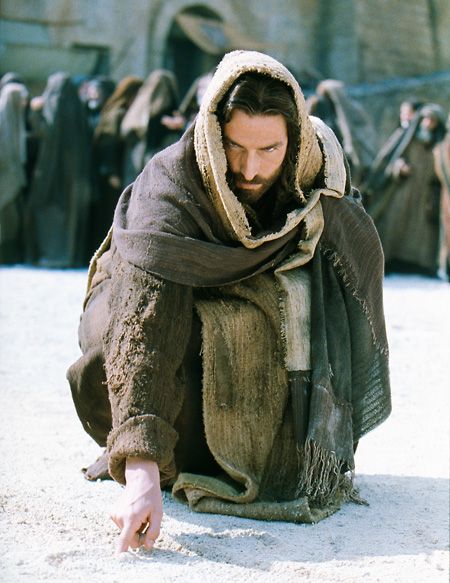

















 Considering the Bible