The prophecy of the Lord Jesus for our consideration and edification, written centuries prior to His earthly existence is
Prophecy #277
Description
Resurrected by God
Old Testament Prophecy
Isaiah 55:3
Incline your ear, and come to me; hear, that your soul may live; and I will make with you an everlasting covenant, my steadfast, sure love for David.
New Testament Fulfillment
Acts 13:34
And as for the fact that he raised him from the dead, no more to return to corruption, he has spoken in this way, “‘I will give you the holy and sure blessings of David.’
If you are just joining this blog, or are a first time visitor, welcome to Considering the Bible. We would like to offer a document that provides over 350 prophecies of the Messiah found in the Old Testament for your consideration.
I make no claim to be able to comment on every one of these amazing prophecies in the future, but will occasionally bring one to the readers attention for their edification.
Hopefully you will follow “Considering the Bible” and begin an interaction with us
For this series in Philippians, I am going to limit each post to one verse, and hopefully produce a short, succinct read for my friends who follow.
1:26 so that in me you may have ample cause to glory in Christ Jesus, because of my coming to you again.
Amazing. Believers may find cause to glory in Christ Jesus through a simple man who is seeking God’s will. And Paul is not shy in stating that his continuing with them in service to them may provide “ample” cause to glory in Christ Jesus.
If it wasn’t the apostle Paul, I would think this man to be overly arrogant, yet his trust in the Lord, and his desire to serve the brethren yells out humility and meekness. A man that was putty in the hands of the Master and who struggled to know the will of God, eventually realizing to serve the church, his brethren in Christ, was the proper path he was to seek. This man would bring opportunity to the church to glory in Christ.
Out of that decision, or realization, Paul saw multiple fruits, not only of his own joy, and that of the churches continuing joy, but of their potential growth, and an opportunity to glory in Christ through the apostle.
Are there any additional fruits that Paul’s speaks of in this wonderful book? I will leave that for your comments.
My wife and I are reading through the Psalms in our evening reading and occasionally a nugget of the Psalms jumps out of the page. Don’t you love it when, after years of reading the “Old Book” passages become alive, reinforcing old teachings or simply warming your heart.
This is the book of Psalms, and it is rich.
I pray I can communicate a portion of the blessing we receive from this wonderful book.
Psalm 46
4 There is a river whose streams make glad the city of God, the holy habitation of the Most High. 5 God is in the midst of her; she shall not be moved; God will help her when morning dawns. 6 The nations rage, the kingdoms totter; he utters his voice, the earth melts. 7The LORD of hosts is with us; the God of Jacob is our fortress. Selah
In our last post we considered the fears a saint may reject if we know our God as a refuge and strength, who is not only able to help the saint, but most assuredly, He is available to the saint. We found that the passage may describe a situation that is not unlike our own, where we find systems breaking down, moral corruption and social decay. The psalmist spoke of the earth moving and the mountains shaking. Turbulent catastrophes that have the natural result being the striking of fear in the population. A natural result of catastrophes is fear, but for the saint, as the psalmist describes our God as a provider of strength and ever available, would allow the saint to reject this fear! There is a refuge to be found and a strength to rely on!
The psalmist continues with describing a river. A river that has streams feeding into it. The picture in my mind is of a mighty river, with many tributaries (streams) feeding into it. It appears the psalmist is drawing a contrast with the water based upheaval in the previous verse, of the water roaring and the mountains crashing into the sea.
You see, this river isn’t turbulent, roaring or destructive as the fear inducing sea is above. It makes glad the city of God. It produces joy, or merriment. No fear in this scene, for the joy replaces the fear.
And yet the psalmist seems to be stating this is a current condition for the saint, that the fear discussed in verse 2, which the saint decides not to live in, is contrasted or replaced with this experience of joy and peace.
Don’t get me wrong when I mention we can choose to reject fear as if that was something any person can do. Fear is not to be replaced by dogged determinism, by simply saying no to fear, but by chasing after or deciding to have the joy of the Lord that He provides.
If He doesn’t provide this joy (but praise God He does), all the decision making of the most determined person out there to reject fear would still simply leave him full of pride. What a fearful place to be! But this river that provides joy is only at the City of God, the church of the Living Savior.
God is in the midst of her, and we cannot speak of this truth without understanding that the city of God is the church, a body of believers that have confessed Jesus as Lord and seek to follow after Him in their crippled, weak and imperfect ways. This church will not be moved, or as the Master said
Matthew 16:18 …I will build my church, and the gates of hell shall not prevail against it
The psalmist continues with describing the stability of the church, the city of God. God shall help her and that right early, or just at the break of dawn. Many of the popular translations refer to the dawn breaking in relation to when God will help the church. This implies in my thinking that the church may have to go through dark periods of trial prior to the help received from God. This requires the faith that is so critical at times when it seems the God who is available doesn’t seem to be paying attention.
The nations rage, the kingdoms totter; he utters his voice, the earth melts.
In support of the thinking that the first few verses as speaking of national catastrophe as opposed to geological ruination of the planet, the psalmist speaks of the heathen raging, resulting in the moving of a kingdom. We have political upheaval being described here, where those who do not live in the city of God (heathen) are raging, making noise, and causing kingdoms to move. As we see disruptions in our society, and voices demanding change to satisfy their wants, we see kingdoms change. Whether in the west or the east, the power of the combined voice of the people will change kingdoms. Mob raging makes change happen!
Multiplied voices of heathen can rage. And move a kingdom.
He simply utters His voice. A single voice pronouncing a statement. A declaration that changes everything. The earth, as a result of His declaration, is spoken of as melting away, dissolving, being consumed!
This declaration is not defined in this passage, but may I suggest a New Testament reference?
The declaration that “melts” the earth is
concerning his Son, who was descended from David according to the flesh and was declared to be the Son of God in power according to the Spirit of holiness by his resurrection from the dead, Jesus Christ our Lord, Romans 1:3-4
His resurrection is the “declaration” we need to run to, we need to take refuge in, the resurrection that produced the City of God, and has given a river of joy to all who follow.
The psalmist returns to reminding us that God is a refuge. Notice that God is the refuge, and not the city of God, blessing that it is.
He alone is our refuge and strength, a very present help in time of need.
The prophecy of the Lord Jesus for our consideration and edification, written centuries prior to His earthly existence is
Prophecy #276
Description
Intercede to God in behalf of mankind
Old Testament Prophecy
Isaiah 53:12e
and makes intercession for the transgressors.
New Testament Fulfillment
Luke 23:34
And Jesus said, “Father, forgive them, for they know not what they do.” And they cast lots to divide his garments.
Rom 8:34
Who is to condemn? Christ Jesus is the one who died–more than that, who was raised–who is at the right hand of God, who indeed is interceding for us.
If you are just joining this blog, or are a first time visitor, welcome to Considering the Bible. We would like to offer a document that provides over 350 prophecies of the Messiah found in the Old Testament for your consideration.
I make no claim to be able to comment on every one of these amazing prophecies in the future, but will occasionally bring one to the readers attention for their edification.
Hopefully you will follow “Considering the Bible” and begin an interaction with us
In the mid nineties, I had a little red Buick and a big ol’ bass box in the trunk, and would listen to “Christian Rock”, cranked to 11.
(What did you say? Huh? Can you say that again, I didn’t hear you….)
I have gotten away from that genre for many reasons, the least of which may be a loss of hearing, but some songs have stuck with me over the decades.
The artist’s I listened to sought to reflect Scriptural teaching for the most part. They ranged from “preaching” pop culture religion to significant theological teaching. As I listened to the lyrics, I found some to be quite challenging.
To be honest, I listened because I could justify the rock beat with “sanctified lyrics”.
Occassionaly I will post a song, supply the lyrics and make a comment or two. If you decide to listen to the tune, turn the speaker down unless you are already deaf. Some of the songs tend to have a certain “volume” about them!
This post will consider the song No More Hell tp Pay by glam rockers Stryper, from their 8th
These guys were super popular in the day, but I never got hooked to their style of music. Nevertheless, some of my readers may be waiting for my inclusion of this super famous Christian band in my list of songs.
No More Hell to Pay – Stryper
Full lyrics follow.
I am taking it a day at a time and I don’t care what the doubting voices say I am lifting up the Name that will shine and the light of heaven’s brighter everyday
Oh, I know that it’s rough though I know there is pain Even so when it’s tough I will not be ashamed!
If the darkness reveals the end of days I’ll follow You till there’s no more hell to pay! You have given me a gift I won’t deny and You’re offering a better world to come The sorrow of tomorrows left so far behind with the joy of what this life will soon become
If I’m deep in the storm, if I’m caught in the rain From the time I was born it’s You that always remained!
If the sun has fallen from the sky and the stars that shine begin to hide When the night has stolen everyday I’ll follow You till there’s no more hell to pay!
If the sun has fallen from the sky and the stars that shine begin to hide When the night has stolen everyday I’ll follow You till there’s no more hell to pay!
Take a listen!
No More Hell to Pay – Stryper
Let me know what you think of the lyrics, and of the tunes!
The prophecy of the Lord Jesus for our consideration and edification, written centuries prior to His earthly existence is
Prophecy #275
Description
Sin-bearer for all mankind
Old Testament Prophecy
Isaiah 53:12d
yet he bore the sin of many,
New Testament Fulfillment
1 Pet 2:24
He himself bore our sins in his body on the tree, that we might die to sin and live to righteousness. By his wounds you have been healed.
If you are just joining this blog, or are a first time visitor, welcome to Considering the Bible. We would like to offer a document that provides over 350 prophecies of the Messiah found in the Old Testament for your consideration.
I make no claim to be able to comment on every one of these amazing prophecies in the future, but will occasionally bring one to the readers attention for their edification.
Hopefully you will follow “Considering the Bible” and begin an interaction with us
After my series on the parables, I found I was drawn to look into the miracles of Jesus in the Gospels. I have never studies the mighty works of Jesus as a focused effort before and am looking forward to finding nuggets of truth that we can be encouraged by.
I have provided a general introduction, with an opportunity to download two files for your reference in my initial post Signs and Mighty Works of Jesus – Introduction. I found that the format I used for the parable posts were useful to keep me on track, and will continue to use them for this series, with some minor tweaks. With that said, let’s take a look at
Jesus Feeds 4,000
Matthew 15:32-39
Then Jesus called his disciples to him and said, “I have compassion on the crowd because they have been with me now three days and have nothing to eat. And I am unwilling to send them away hungry, lest they faint on the way.” And the disciples said to him, “Where are we to get enough bread in such a desolate place to feed so great a crowd?” And Jesus said to them, “How many loaves do you have?” They said, “Seven, and a few small fish.” And directing the crowd to sit down on the ground, he took the seven loaves and the fish, and having given thanks he broke them and gave them to the disciples, and the disciples gave them to the crowds. And they all ate and were satisfied. And they took up seven baskets full of the broken pieces left over. Those who ate were four thousand men, besides women and children. And after sending away the crowds, he got into the boat and went to the region of Magadan.
Mark 8:1-13
In those days, when again a great crowd had gathered, and they had nothing to eat, he called his disciples to him and said to them, “I have compassion on the crowd, because they have been with me now three days and have nothing to eat. And if I send them away hungry to their homes, they will faint on the way. And some of them have come from far away.” And his disciples answered him, “How can one feed these people with bread here in this desolate place?” And he asked them, “How many loaves do you have?” They said, “Seven.” And he directed the crowd to sit down on the ground. And he took the seven loaves, and having given thanks, he broke them and gave them to his disciples to set before the people; and they set them before the crowd. And they had a few small fish. And having blessed them, he said that these also should be set before them. And they ate and were satisfied. And they took up the broken pieces left over, seven baskets full. And there were about four thousand people. And he sent them away. And immediately he got into the boat with his disciples and went to the district of Dalmanutha. The Pharisees came and began to argue with him, seeking from him a sign from heaven to test him. And he sighed deeply in his spirit and said, “Why does this generation seek a sign? Truly, I say to you, no sign will be given to this generation.” And he left them, got into the boat again, and went to the other side.
General Observations
The first thing to observe is that this miracle appears to be similar to the feeding of the 5,000. Some may want to consider this miracle as the same miracle told two different times, yet a careful reading exposes too many differences to consider that to be true. Consider.
Disparities
Feeding the 5,000
Reference
Feeding the 4,000
Reference
Authors
Matthew, Mark, Luke & John
Matthew & Mark
Why would Matthew & Mark revise the miracle of the 5,000 with the following differences?
Audience
Jewish
Gentile
Location
Bethsaida
Luke 9:10
Decapolis
Mark 7:31
Sitting arrangement
“on the green grass”
Matthew 14:19
“on the ground”
Mark 8:6
Fast duration
one day
Matthew 14:15
three days
Mark 8:2
Source of food
a boy
John 6:9
disciples
Mark 8:5
Number of Loaves
Five
Matthew 14:17; Mark 6:38; Luke 9:16; John 6:9
Seven
Matthew 15:34 Mark 8:5-7
Number of Fishes
Two
see above
Few Little Fish
see above
Quantity of Leftovers
12 Baskets
Matthew 14:20 Mark 6:43 Luke 9:17 John 6:13
7 Baskets
Matthew 15:37 Mark 8:8
Crowd Size
5,000
Matthew 14:21 Mark 6:44 Luke 9:14 John 6:10
4,000
Matthew 15:38 Mark 8:9
Basket Description
kophinous
This Greek word refers to a small basket, a wicker basket
spuridas
This Greek word refers to a reed basket, as hamper. (See Acts 9:25 – Paul was able to escape Damascus in this type of basket)
One last difference in the two miracles may be found in the words of Jesus Himself
Matthew 16:9-10 Do you not yet perceive? Do you not remember the five loaves for the five thousand, and how many baskets you gathered? Or the seven loaves for the four thousand, and how many baskets you gathered?
Jesus referred to the two miracles as separate occasions, which is the potential reason Matthew and Mark recorded this second feeding. So, as we enter our passage, let’s not forget this is a second feeding of a multitude.
Questions to Consider
Who were the audience?
As mentioned above, this audience was primarily gentile, and as Matthew describes, consisted of four thousand men, besides women and children. Mark simply mentioned 4,000 people. A full audience size, as discussed in our previous post on the feeding of the 5,000, may have consisted of as many as 16,000 people, given that each man may have brought a wife and an average of a couple of children. (See Signs and Mighty Works of Jesus #19 – Jesus Feeds 5,000)
No matter how you slice it, this crowd was massive, and defining the crowd to a specific size greater than the 4,000 may be an effort in futility. Whether it be 4,000 or 16,000 feeding such a crowd from a few fish and loaves makes a point. That point may have been directed to the audience consisting of 12 men who experienced this miracle first hand in the delivery of it!
As mentioned above, the Lord performed this miracle in the region of the Decapolis, amongst a primarily gentile crowd. See Signs and Mighty Works of Jesus – Introduction for downloadable reference file.
Why did the Lord perform this mighty work?
I have compassion on the crowd, because they have been with me now three days and have nothing to eat.
Jesus had compassion on the crowd. He knew the crowd was at a point where if they were sent away, they would faint on their way. Some in the crowd were at their physical limits, and Jesus saw their suffering. Three days of following the Master, and now the crowd had nothing to eat.
I suppose a more important question is how would the disciples respond to this similar request of the Lord, based on His stated compassion for a crowd of gentiles. Besides this, the present location seems even more desperate than in the feeding of the 5,000, since in the previous location, the disciples mentioned villages to send the crowds to. Not so in this instance.
In all of these challenges, we must remember that the feeding of some stomachs was not the end goal, for they would need to be fed again and again. Not only were the crowd in need, the disciples were being challenged with a problem that they had already seen the Lord supply for.
What was the message for the original audience?
Note how the disciples addressed the compassion of the Master. A compassion for a primarily gentile crowd. In our previous miracle, the disciples suggest to the Lord the release of the crowds in order to get themselves food. In this miracle, no suggestion is given by the disciples. Might they have learned to trust somewhat, to have some patience in the exercising of the Lord’s ways? I would like to think so. Yet, as the Lord breached the topic of the audience going home (echoing the disciples desire from the earlier feeding?), the disciples asked the big question.
How can one feed these people with bread here in this desolate place? Mark 8:4
Where are we to get enough bread in such a desolate place to feed so great a crowd? Matthew 15:33
Could the disciples be breaching their own inability, speaking of their weakness in providing for such need, and looking to the Lord for His provision? I want to hear this response as an open question, a question that reflects their own lack, in order for the Lord to provide, to supply what they cannot.
What is the message for us today?
As with so many of these miracles, the messages to each of us may be highly personal. The following are points that are real to me.
Weakness
The disciples, as I mentioned above, were evidently not as self assured, not as “in charge” of the situation as in the previous feeding. They did not initiate a solution for the Lord to agree to, but simply asked an open question. No mention of sending the crowd away. They asked questions, allowing the Lord to initiate a solution, to allow Him to provide in His way, for they had experienced this problem once before. And given that they had experienced this very situation previously, they did not come to Him suggesting (or demanding) the same solution. This, in my opinion, is a sign of growth, and although the disciples were often upbraided for their lack of faith, it is refreshing to see change in their lives because of Him.
In our lives, a realization of our weakness is critical to allow the Lord to have His way in our lives. A constant demanding of God to perform according to our will, of having a faith that has specific definite expectations may lead more to disappointment. It is a paramount mission of the believer to be like Him, as He says
Not my will, but thine be done
Patience
Closely linked to the characteristic of weakness, is the increasing ability to exercise patience in the midst of trying circumstances. If we are in the midst of a comfortable, highly regulated and safe environment, (as many may be who are reading this post), the appearance of patience is a relatively easy character trait to display, for there may be little that forces us to be pushed to a limit, to a breaking point.
Consider the disciples and the growing problem of the crowd going without food. The situation was coming to a breaking point, where it was evident that some in the crowd were in a very bad situation. Even the disciples were coming to the end of their supplies, for 7 loaves amongst 13 men is “scraping the bottom of the barrel”!
At different times in our lives, patience will be required in order to obtain the promises. For a consideration of the importance of patience in the Christian life, I would refer you to a post within a series I wrote on Hebrews 12:9-11 (Patience – Required to Inherit the Promises)
Timing
This last application, closely related to patience, is the one that seemingly bites me in the behind the most. Exercising patience to an expected end is required for the believer, but as a weak man, I find I fail in fully realizing the timing of the Lord. Of course, some instances force my acceptance of the timing of the Lord, since I realize I have no ability to change a situation – It is up to the Lord to decide when and how.
Yet, it is somewhat comforting to see the Lord allow a situation to occur, (as in the increasing need of feeding 4,000), whether through our own poor planning or even our inability to foresee problems. A period of doing without is allowed in the will of the Master, yet it is His compassion that breaks through to provide, to allow relief in the entire scheme of things.
As the Lord brings relief, and in His timing, consider the message He may be providing, and not simply the provision to satisfy the immediate need.
As you can see, this miracle speaks to weakness, patience and timing, and they are all aspects of a Christian life that is dependent on the actions of the Lord.
We are to be dependent. He is dependable. Seems this is the will of God, and that He keeps His end of the bargain up.
Are you being stretched in the experience of weakness, patience and the timing of the Lord?
Thanks again for coming to visit. I hope you found something of interest in this post and would appreciate a comment, to begin a discussion. If you know someone this blog may bless (or challenge), send them a link, so they may join us in our discussion
The prophecy of the Lord Jesus for our consideration and edification, written centuries prior to His earthly existence is
Prophecy #274
Description
Numbered with the transgressors
Old Testament Prophecy
Isaiah 53:12c
and was numbered with the transgressors;
New Testament Fulfillment
Mark 15:27-28
And with him they crucified two robbers, one on his right and one on his left.
If you are just joining this blog, or are a first time visitor, welcome to Considering the Bible. We would like to offer a document that provides over 350 prophecies of the Messiah found in the Old Testament for your consideration.
I make no claim to be able to comment on every one of these amazing prophecies in the future, but will occasionally bring one to the readers attention for their edification.
Hopefully you will follow “Considering the Bible” and begin an interaction with us
For this series in Philippians, I am going to limit each post to one verset, and hopefully produce a short, succinct read for my friends who follow.
1:25 Convinced of this, I know that I will remain and continue with you all, for your progress and joy in the faith,
Paul has given us a glimpse in his thought patterns, his reasoning and his desires. He was a man who had like passions as we, although focused on the will of God much more intensely than I. His heart is that of a man who has two possibilities in his life and will sacrifice his greatest reward for the sake of his brethren, for a church he rarely sees, but loves.
Two goals are in Paul’s mind for the Philippians.
Progress in the Faith
Growth, maturity, greater understanding of God’s will for your life, increased boldness, courage, self sacrifice for others. Need I go on? We are to grow, and to encourage others to grow. Progress in the faith my friends. Standing still actually equates to slippage, to regression and falling behind, a withering.
Joy in the Faith
In all our maturity, if joy is missing, this should be an alarm going off in our hearts. A deep seated joy is the ever present partner of a living faith, a growing and prospering faith.
Do not hear that I speak of happiness. This is not the message. Joy is that strength of heart that provides encouragement, hope and a knowledge of His goodness in your life that we do not deserve. An ever present resident in our life that addresses the doubts and fears, that we can experience in the midst of trial and trouble, in the midst of grief and sorrow.
A mystery to be clear, and yet the very possession of the believer who is growing in the faith
My wife and I are reading through the Psalms in our evening reading and occasionally a nugget of the Psalms jumps out of the page. Don’t you love it when, after years of reading the “Old Book” passages become alive, reinforcing old teachings or simply warming your heart.
This is the book of Psalms, and it is rich.
I pray I can communicate a portion of the blessing we receive from this wonderful book.
Psalm 46
1 To the choirmaster. Of the Sons of Korah. According to Alamoth. A Song. God is our refuge and strength, a very present help in trouble. 2 Therefore we will not fear though the earth gives way, though the mountains be moved into the heart of the sea, 3 though its waters roar and foam, though the mountains tremble at its swelling. Selah
Psalm 46, such a well known psalm, consists of a number of passages within it that are very familiar. Our first verse is such a verse, speaking of God and our need of Him in troubling times
The psalmist begins with declaring God’s abilities first.
Abilities
Notice our opening phrase “God is our refuge and strength” does not speak of any specific time or occurrence in the saints life where God was needed. This phrase sets forth a truth of God, in that His nature is that of protecting and providing. Yes, the psalmist refers to God as “our” refuge, and we shall venture into the relationship we are privileged to enjoy with this All-Sufficient One. But let us consider the God the psalmist presents to us in this verse
Protection
God is a refuge.
When this term refuge appears in my reading, I usually ask which danger is present that requires the refuge, for a refuge is not required when all is at peace. A refuge is needed during dangerous times. Therefore as the psalmist speaks of God as a refuge, he is also indirectly expressing a danger that is present.
A common alternate translation for this Hebrew word is a shelter, and it is sometimes related to the physical arena.
Isaiah 4:6 There will be a booth for shade by day from the heat, and for a refuge and a shelter from the storm and rain.
More often than not, this term speaks of the spiritual arena, where it caries with it the idea of hope, a shelter from lies and deception, even from ourselves. Consider Psalm 62:8
Trust in him at all times, O people; pour out your heart before him; God is a refuge for us. Selah
One of my favorite verses in the Psalms speaks of God’s people openly pouring out their hearts before God, and then declares God as our refuge. Is the Psalmist telling me that I can have freedom in expressing my heart before God without fear of danger?
I cannot resist one final verse on the topic of God being a refuge.
Hebrews 6:18 – so that by two unchangeable things, in which it is impossible for God to lie, we who have fled for refuge might have strong encouragement to hold fast to the hope set before us.
As believers, we have fled for refuge in the Lord Jesus. Jesus is a refuge!
Provision
Not only is God a refuge, He is a providing God.
The psalmist speaks of God as providing strength, or might. This term is used in multiple applications, ranging from strengths in the personal, social, political, and physical arenas. Implications of this term include boldness of the one receiving the strength, for if one has strength, fear and intimidation fade into the background. Note that confidence (or boldness) is also associated with the sense of safety provided by a refuge. Consider Hebrews 6:18 above.
Since it is God that is providing strength, one more implication is that we are weak. In all our strengths, God is stronger. In areas we deem we have sufficient strength, it may be necessary to reconsider our position. Our self estimation may become a dangerous position for us to reside in.
But I understand that God is One who protects us and provides shelters, even from ourselves. He is overall and superior to us in everyway, though the psalmist focuses on protection and provision in this first verse.
God can (is able) to provide and protect, but is He too far away, is He too busy, or is He not interested? Foolish questions as I write them, yet how often have you quietly thought the same? The psalmist addresses our thoughts, with the very pleasant outcome that God is not only able, but available!
Availabilities
He also is available.
One who can provide and protect, but that isn’t available is of no comfort or use to those who are in danger, to those who are weak and in need. But the psalmist does not describe God as One who is unwilling or unavailable.
The truth of His continual existence gives confidence, but this term does not directly speak only of a continual existence, for we know of God as being the eternal, everlasting One. This term speaks of a One who is not hiding from those who seek Him, but of One who is “findable” (Is that a word?)
When we read the term “present” in this verse, the root meaning in the Hebrew seems to be “to attain”, or “to find”. Could we, without damage to the message the Psalmist is providing us, consider this phrase to be understood as ” a very findable help in trouble”?
This very thought is continued into the New Testament in the book of Hebrews.
Hebrews 4:16 Let us then with confidence draw near to the throne of grace, that we may receive mercy and find grace to help in time of need.
The Hebrews author speaks of the believer finding grace to help. Not only is this passage speaking to the “findability” of help in the Lord, but also of the provision of mercy as we may receive.
Let’s consider verse 2 & 3
We have spent the majority of this post on one phrase within the first verse, and rightly so, for if we understand Who God is, or should I say, if we are learning of Who our God is, (for He is more than we can ever fully know), we can enter into the experience the psalmist describes in the two verses above.
Therefore we will not fear though the earth gives way, though the mountains be moved into the heart of the sea, though its waters roar and foam, though the mountains tremble at its swelling. Selah
The Psalmist uses the logical term “Therefore” in verse 2, and as a young believer I was taught to always check why the “therefore” was there for! To remember that the message following the “therefore” is based on the previous information, this being the God Who is described in verse 1.
One last dip into verse 1 is important to bring up. He is our refuge and strength. The earlier descriptions focused on Who God is, and rightly so, but in all of that description, we need to come back to the relationship with God that is stated, and upon which the therefore is there for!
No matter the disasters that occur, fear is a decision that is not required to be entered into as a saint belonging to the Living God. But what is the fear caused by?
Earth Giving Way
The psalmist speaks of the earth giving way. That ain’t good, no matter how you slice it! The Hebrew term for earth in this verse is ‘ereṣ, and is translated as “earth” over 700 times in the Old Testament. But the Hebrew word is used over 2,500 times in the Old Testament, with it translated as “land” more than 60% of the time.
Therefore, if the psalmist was speaking of the physical earth, the entire planet we exist on, he may be describing catastrophic geological upheaval that results in a near or complete loss of all life on earth (for if the earth is the subject, the geological changes would result in massive death and destruction.)
If the psalmist is thinking land, as opposed to earth, he may be describing massive changes within the “land” (of Israel), and speaking of a national localized upheaval. Something to consider.
Mountains Moving
Moving onto the shaking mountains, there are some places in the Old Testament that the terminology of mountains speak of kingdom, of political power structures.
One of these examples may be found in Jeremiah, where he addresses the Babylonian Kingdom, and addresses it as a “destroying mountain”
Jeremiah 51:24-25 “I will repay Babylon and all the inhabitants of Chaldea before your very eyes for all the evil that they have done in Zion, declares the LORD. “Behold, I am against you, O destroying mountain, declares the LORD, which destroys the whole earth; I will stretch out my hand against you, and roll you down from the crags, and make you a burnt mountain.
One other example may be found in the book of Daniel, where Daniel speaks of the God of heaven setting up a kingdom.
Daniel 2:35, 44-45
Then the iron, the clay, the bronze, the silver, and the gold, all together were broken in pieces, and became like the chaff of the summer threshing floors; and the wind carried them away, so that not a trace of them could be found. But the stone that struck the image became a great mountain and filled the whole earth.
And in the days of those kings the God of heaven will set up a kingdom that shall never be destroyed, nor shall the kingdom be left to another people. It shall break in pieces all these kingdoms and bring them to an end, and it shall stand forever, just as you saw that a stone was cut from a mountain by no human hand, and that it broke in pieces the iron, the bronze, the clay, the silver, and the gold. …
For this short study on “earth” and “mountains”, my intent is to offer my reader a possible interpretation of the circumstances the psalmist is describing. (If the entire earth is being referred to, fear may not be the issue at all for we all shall have perished!)
This understanding of the psalmists message in relationship to government stability is so applicable to us who are watching the current upheaval within our own systems, and a national breakdown that seems to have no good end in sight. Deterioration of our moral and social order that we took for granted just a decade ago has suddenly given way to a new thinking, and a new way of understanding our culture and way of life. Supply systems are broken and misinformation is rampant. It is impossible to determine what is correct, and therefore what to base decisions on. Things are out of control!
Yet, as we shall be refreshed to see in the next passage, there is a source we can find gladness in. Verse 1 speaks of our God as a refuge and a strength. A findable help in times of trouble.
Our current days are sufficient to require every believer to reach out to our God, to find Him and to take the shelter and provision He gladly provides.
In finding Him, we shall loose the fear we may be walking in, as we see things falling apart. Take courage my friend, in the Lord and Him only, for He is good.
The prophecy of the Lord Jesus for our consideration and edification, written centuries prior to His earthly existence is
Prophecy #273
Description
He would give up his life to save mankind
Old Testament Prophecy
Isaiah 53:12b
because he poured out his soul to death
New Testament Fulfillment
Luke 23:46
Then Jesus, calling out with a loud voice, said, “Father, into your hands I commit my spirit!” And having said this he breathed his last.
If you are just joining this blog, or are a first time visitor, welcome to Considering the Bible. We would like to offer a document that provides over 350 prophecies of the Messiah found in the Old Testament for your consideration.
I make no claim to be able to comment on every one of these amazing prophecies in the future, but will occasionally bring one to the readers attention for their edification.
Hopefully you will follow “Considering the Bible” and begin an interaction with us
As some may know, I walk in the morning prior to going into the office. During my walk, I try to pray, and ask the Lord for strength for the day, for each of my children, that they would understand the goodness of God, for my wife and her continued blessing to others (primarily thinking selfishly here somewhat), and for friends, siblings and those who come to mind.
Of course during this time, I confess my weakness, my failings, my sin before God and my regrets. Sometimes this becomes a focus of my time alone with Him and it becomes “all about me”. Don’t get me wrong in this, for I recognize that in our fellowship with the Lord, we must address, agree with and confess our failings, weakness and sin before Him, just to reside in truth with Him.
Yet at times I find I dwell on my own experience, my own condition, my own trials. During these times, I also tend to sense something pushing me, something that is motivating me to dwell on my sin, in some way to make up for my failings. A selfishness, even in my confession of being selfish, a sort of penitence to appease my conscience? I can’t say and I refuse to dwell on my dwelling on my failures. (See a rabbit hole starting to open up?)
This is a deadly trap in my opinion, for it can become a downward cycle for the believer. True repentance is absolutely required when sin is in the life. But repentance is a result of godly grief, and the godly grief is not an end of itself. Note that Paul, in speaking to the Corinthians, does not focus on a believer experiencing grief (or sorrow), but that the godly sorrow produces a repentance. Once repentance occurs, the grief is assumedly gone.
2 Corinthians 7:9-10
As it is, I rejoice, not because you were grieved, but because you were grieved into repenting. For you felt a godly grief, so that you suffered no loss through us. For godly grief produces a repentance that leads to salvation without regret, whereas worldly grief produces death.
So in all of my dwelling in confession and contrition, I first off need to realize that the grief is merely a vehicle taking me to a solution, an opportunity to confess sin (or to reject the false guilt!) and repent (change my mind). Upon repentance, I may experience (or I am to receive by faith) the active forgiveness the Lord provides based on His faithfulness and justice!
In all of this discussion, I have somewhat veered from the purpose of the post, for I was intending to ask my reader, as I have recently asked myself during my prayers and confessions.
What motivates me to follow Him? Why?
This question needs to be reviewed in the believers life occasionally and during my walk that one morning it seemed to be crystalized in the following thought.
Am I following Him to stay out of hell, (pushed by fear), or am I following Him to know Him, (pulled by love)?
I confess my Christian life has been primarily fueled by a fear of hell. My testimony is available to read for any who may want to understand my background. The details of hell are not the issue, for as many may know, there are multiple ways to understand hell as described in the Bible, all of which is horrible! But that is not the issue in this post. The issue is what motivates a believer to follow after Him?
Is fear a proper motivator for the mature Christian life? Let me ask a bit better question, for there is a place for the believer to walk in the “fear of the Lord”. I suppose the better, or more focused question would be – Is fear of our destiny a proper motivator for a mature Christian life?
Some corollary questions that rise from this thinking might be suggested as follows
Does fear produce the fruits of the Spirit?
Is a walk of fear described by Paul in his writings as the normal expectation for the believer?
Will fear perfect the believer?
This last question hits the mark for my thinking on the subject, and as “luck” would have it, is directly discussed by the apostle the Lord loved, when he wrote his first letter.
1 John 4:16-18
16 So we have come to know and to believe the love that God has for us. God is love, and whoever abides in love abides in God, and God abides in him.
17 By this is love perfected with us, so that we may have confidence for the day of judgment, because as he is so also are we in this world.
18 There is no fear in love, but perfect love casts out fear. For fear has to do with punishment, and whoever fears has not been perfected in love.
John begins this portion with two actions on the part of the believer – that is to know and the believe God’s love for us.
To Know
To know is to understand, perceive, to get acquainted with. This is the knowledge of experience, and not of a cold calculated factual head knowledge. This is the same “know” that is used as a Jewish idiom for sexual intercourse. Very experiential. Very relationship based. This knowledge also has the implication of a time element, for experiential knowledge demands time to be developed.
To Believe
To believe is synonymous with commitment. To believe God’s love is to be committed to it, to place confidence in that love, and this is a (hopefully) ongoing result of experientially knowing the love of God in your life, whether it be through blessing or suffering, for the love of God is not limited by either.
Through this experiential knowledge and commitment, through an abiding in love and of love abiding in us, we may find love being perfected in us.
Now what does “perfected” mean or imply? To be perfect in our modern thinking implies something that is absolutely without blemish, error or stain. Irreproachable, impeccable, flawless and indefectible.
Is this John’s message for us? It seems the Greek word John uses has the meaning of “finished” or that which is wanting nothing for completeness. I find it surprising that this term is used to describe some believers within the most morally corrupt church in the New Testament.
1 Corinthians 2:6 Yet among the mature we do impart wisdom, although it is not a wisdom of this age or of the rulers of this age, who are doomed to pass away.
The mature (same Gk word as perfect in 1 John) referred to in this verse are still in need of wisdom, which Paul is describing in this passage. This maturity/perfection described here is a relative perfection. Much to be gained yet.
1 Corinthians 14:20 Brothers, do not be children in your thinking. Be infants in evil, but in your thinking be mature.
Paul speaks to the same church, and tells them not to think like children, but like mature adults.
This term also speaks of integrity and virtue. Consider Hebrews 5:14, where the apostle refers to the mature/perfect as having their powers of discernment trained by continual practice.
14 But solid food is for the mature, for those who have their powers of discernment trained by constant practice to distinguish good from evil.
These believers completeness is in the midst of training, or a period of growth if I understand the passage.
As John speaks of love being perfected in us, I am beginning to see that this is describing the continuing growth process of the believer, leaving behind the self absorbed life and fear driven motivation that typifies someone I know.
I realize this “Let Me Tell You a Story” post has slipped into a bit of a study, but that morning in the garage was one more time when the Lord showed me an aspect of mercy in relating to Him. My focus is not to be on me me me, but to be on Him. As I relate to Him and His absolute perfection in love, holiness and righteousness, the love that resides in my life (due to Him) will be relatively perfected, or matured as He continues to work for His will in and with me.
If you have read this and experience the same understanding, please let me know. If you understand an alternative perspective to this glorious verse, please inform. Your experience may be a blessing to those who read and will be an encouragement to myself.
Thanks again for coming by and sharing in the experience of a pilgrim with the Lord.
Thanks again for coming to visit. I hope you found something of interest in this post and would appreciate a comment, to begin a discussion. If you know someone this blog may bless (or challenge), send them a link, so they may join us in our discussion
The prophecy of the Lord Jesus for our consideration and edification, written centuries prior to His earthly existence is
Prophecy #272
Description
Exalted by God because of his sacrifice
Old Testament Prophecy
Isaiah 53:12a
Therefore I will divide him a portion with the many, and he shall divide the spoil with the strong,
New Testament Fulfillment
Matt 28:18
And Jesus came and said to them, “All authority in heaven and on earth has been given to me.
If you are just joining this blog, or are a first time visitor, welcome to Considering the Bible. We would like to offer a document that provides over 350 prophecies of the Messiah found in the Old Testament for your consideration.
I make no claim to be able to comment on every one of these amazing prophecies in the future, but will occasionally bring one to the readers attention for their edification.
Hopefully you will follow “Considering the Bible” and begin an interaction with us
After my series on the parables, I found I was drawn to look into the miracles of Jesus in the Gospels. I have never studies the mighty works of Jesus as a focused effort before and am looking forward to finding nuggets of truth that we can be encouraged by.
I have provided a general introduction, with an opportunity to download two files for your reference in my initial post Signs and Mighty Works of Jesus – Introduction. I found that the format I used for the parable posts were useful to keep me on track, and will continue to use them for this series, with some minor tweaks. With that said, let’s take a look at
Jesus Heals a Deaf and Dumb Man
Mark 7:31-37
Then he returned from the region of Tyre and went through Sidon to the Sea of Galilee, in the region of the Decapolis. And they brought to him a man who was deaf and had a speech impediment, and they begged him to lay his hand on him. And taking him aside from the crowd privately, he put his fingers into his ears, and after spitting touched his tongue. And looking up to heaven, he sighed and said to him, “Ephphatha,” that is, “Be opened.” And his ears were opened, his tongue was released, and he spoke plainly. And Jesus charged them to tell no one. But the more he charged them, the more zealously they proclaimed it. And they were astonished beyond measure, saying, “He has done all things well. He even makes the deaf hear and the mute speak.”
General Observations
If I’m looking at a map of Tyre and Sidon, and Jesus’ eventual destination in this passage, that is the Sea of Galilee, it appears the route is unnecessarily long. And why head north, when the Sea of Galilee is southeast of Tyre?
Is Mark implying that Jesus had a specific purpose in the area of Sidon that He doesn’t refer to. This is definitely a possibility for the Lord performed so many miracles and taught so many folks, that this may be a location that has simply not been recorded for our instruction. After all, as John tells us…
… there are also many other things that Jesus did. Were every one of them to be written, I suppose that the world itself could not contain the books that would be written.
An alternative reason He went through Sidon to eventually go southeast may have been simply an opportunity for Jesus and His disciples to finally get an extended time of quietness. Much had occurred in the recent weeks and the Lord had mentioned a number of times that they as a group needed to regroup and find some solitude. (See Mark 6:31, Mark 7:24 for examples)
Questions to Consider
Who were the audience?
The only ones present, per the text, was the Master, those who brought the deaf man, and a crowd. Yes even in the Decapolis, where He had been banished from due to the swine incident, He had accumulated a gathering, a crowd of those who followed Him as He was on His way.
The deaf man brought to the Messiah had a speech impediment of some kind, implying at the least that he had been deaf his entire life and his speech reflected this condition. Could the man communicate at all? Was it that he could not make a sound, or that in making the sound, no one could easily understand? Given that the ones who brought the deaf man begged Jesus to lay His hands on the deaf man, I am leaning to understand the man couldn’t communicate clearly.
As a matter of fact, the last verse mentions that those who were astonished at this miracle proclaim that He (Jesus) makes even the deaf hear and the mute to speak! Was this specific to this miracle? Possibly, or the fame of the Master simply preceded Him!
It is interesting that Mark mentions they were in the region of the Decapolis, a region that encompassed ten cities, (hence the name Deca – polis.) To be in the Decapolis was to be in a Gentile majority population, on the eastern shore of the Sea of Galilee. The Decapolis was in the region belonging to the half tribe of Manasseh, so technically they were still in the promised land, but the Jewish influence was minimal, and the Gentile population looked down upon the Jewish way of life.
It isn’t the first time the group was in the region, for Jesus was in the area when He healed the demon possessed man and sent the swine swimming. At that time, He had been booted out of the area by the locals. Seems it didn’t stick!
Why did the Lord perform this mighty work?
Since the Lord charged the deaf man and all who witnessed the miracle to tell no one, it seems obvious that the mighty sign was not provided in order to get the news out of the Messiah having come. Jesus wanted this one to be a miracle that was without outward purpose, one that was a response only to the recipient, and his friends. This intended purpose was frustrated, as it seems the group began to speak of the miracle after being charged not to by the One who provided the miracle. Even after numerous times of being charged by Jesus to stay quiet, they continued to proclaim the miracle.
It appears the Lord’s will was frustrated by a group of “thankful” witnesses! He gave hearing and speech to the deaf man, and it is safe to assume He could take it away. Yet, He sought their obedience to refrain from speaking of the miracle, and in their disobedience of preaching, brought about an even greater group of those who followed Him.
But was this a positive outcome?
Of course every one of this increasing group may be following after Jesus for the right reason, but there is going to be a winnowing of the group soon. Those who were following simply for the “eye candy” of miracles, (or in this instance “ear” candy?) or for the food that may be provided would be given teaching that would cause a falling away. This may have been a reason the Lord charged them to remain quiet, for the group needed to be reduced, not enlarged, for it to be effective for His purposes.
High numbers of adherents do not equal great strength in this instance!
What was the message for the original audience?
The Word states that He took the deaf man aside from the crowd, seemingly continuing with the theme of keeping this particular miracle an isolated, non spreading work of God. Being pulled aside from the crowd, Jesus touched both this mans ears and his tongue, those members of his body that were dead or crippled, and He provided life to them through a simple command.
The message of the miracle was two fold.
Open Up
First, to the one receiving the miracle, the message was of healing. For his ears and tongue to be opened. Open up. Be opened thoroughly.
Shut Up
Given that the original audience had been reduced to a few for the sake of witnessing the miracle, the second message is also clearly evident.
Shut up! Do not tell anyone. Do not mention it, do not proclaim it, do not say anything about it, do not declare it! Just walk away, take the miracle and just SHUT UP!
Just think of the first thing this deaf man heard. Tell no one. He had just received the gift of communication, and was immediately restricted from using the gift. Yet does not the One who provides for us all good gifts, have the right to tell us to self restrict the gifts He provides?
What is the message for us today?
In our daily lives, it seems clear that to provide the message of God’s self sacrificing love is a message that is to have no restrictions. Preach it far and wide!
And yet in the providence of God’s timing, my wife and I were just in the Gospel of Matthew, where the Lord speaks thus.
Matthew 7:6 “Do not give dogs what is holy, and do not throw your pearls before pigs, lest they trample them underfoot and turn to attack you.
As we chatted about this verse it seemed that Jesus was giving His church a restriction in order to provide a safeguard for themselves. The issue my wife and I still are unsure of, is the nature or identification of who the pigs and dogs are in our lives.
What characteristics would specifically identify these two groups for us, in order to give us guidance in not throwing our pearls before them? I find it coincidental at the very least that Peter uses the same two animals (dogs and swine) in a verse describing a particular group of people he also warns the church of.
2 Peter 2:22
What the true proverb says has happened to them: “The dog returns to its own vomit, and the sow, after washing herself, returns to wallow in the mire.”
Jesus was not the only One who spoke hard or difficult sayings. Peter, like his Master, brought up a very uncomfortable topic by referring to both dogs and pigs. So does Peter give us some guidance on who dogs and pigs are when they are referred to in the Word. The verse immediately proceeding 2:22 gives us plenty to consider!
2 Peter 2:21
For it would have been better for them never to have known the way of righteousness than after knowing it to turn back from the holy commandment delivered to them.
Peter begins this lengthy passage in chapter 2 with the topic of false prophets/teachers, and describes them as irrational animals in verse 12 (as the proverb Peter refers to also describes them). These teachers knew the truth but had abandoned it!
He provides examples of false teachers bringing in destructive heresies (vs 1), forsaking the right way (vs 15), being entangled and overcome by defilement (vs 20) and finally as those turning back from the way of righteousness (vs 21). Peter summarizes his warning of false teachers in the last few verses of the chapter, in the specific verse we are considering.
So where is the false teacher in your circle of experience? Peter said they would enter in and be among us.
Please don’t consider this an encouragement to start heresy hunting! The issue in my mind is that hunting for false teachers is an exercise in futility somewhat. If we know the Word, (or better yet, if we are increasing in the knowledge of the Savior), the teaching these heretics provide will stick out like a sore thumb.
Also, my estimation of a false teacher may be different than yours, not because we do not have an absolute standard to judge by, but due to our growing but limited ability to understand the standard to be judged by. The standard I refer to is the Spirit provided Word of God of course.
When I first became a believer, I considered every teacher not adhering to my narrow understanding of the denominational teaching I was a part of to be somewhat heretical. This is to my shame, since I elevated a denomination over the Word itself. The denomination is not perfect in their understanding, as I surely am not.
So where does this lead me? A sense of humility and a guarded stance to those I understand, at this time, to be false teachers. How shall I respond to this miracle, and the command to SHUT UP in my situation? Provide nothing holy to false teachers. No effort of correcting them, no time spent watching them, and definitely not supporting them with prayers or financial gifts. They are the enemy in the camp!
Instead seek the Lord in the Word and through prayer. Continue to compare teachers in your circle with the message of the Word. Charlatans, seeking a following by tickling your ears are actually exploiting you, treating you like a commodity, and eventually will abandon you in your hour of need, as the Lord described the hired hand in John 10:12.
Follow after the Messiah, and if He tells you to shut up, SHUT UP!
Thanks again for coming to visit. I hope you found something of interest in this post and would appreciate a comment, to begin a discussion. If you know someone this blog may bless (or challenge), send them a link, so they may join us in our discussion
The prophecy of the Lord Jesus for our consideration and edification, written centuries prior to His earthly existence is
Prophecy #271
Description
The sin-bearer for all mankind
Old Testament Prophecy
Isaiah 53:11c
and he shall bear their iniquities.
New Testament Fulfillment
Heb 9:28
so Christ, having been offered once to bear the sins of many, will appear a second time, not to deal with sin but to save those who are eagerly waiting for him.
If you are just joining this blog, or are a first time visitor, welcome to Considering the Bible. We would like to offer a document that provides over 350 prophecies of the Messiah found in the Old Testament for your consideration.
I make no claim to be able to comment on every one of these amazing prophecies in the future, but will occasionally bring one to the readers attention for their edification.
Hopefully you will follow “Considering the Bible” and begin an interaction with us
For this series in Philippians, I am going to limit each post to one verse, and hopefully produce a short, succinct read for my friends who follow.
1:24 But to remain in the flesh is more necessary on your account.
Given that Paul has considered the resurrection of his own body, and the glory of being with Christ, he turns to the immediate need of others.
Is this not typical of One who follows after the Master. Taking personal desires, and subjugating them to the needs of others. Self sacrifice for the life of another is the hallmark of love that the Lord exhibited on the cross for each of us.
My wife and I are reading through the Psalms in our evening reading and occasionally a nugget of the Psalms jumps out of the page. Don’t you love it when, after years of reading the “Old Book” passages become alive, reinforcing old teachings or simply warming your heart.
This is the book of Psalms, and it is rich.
I pray I can communicate a portion of the blessing we receive from this wonderful book.
Psalm 45:13-17
All glorious is the princess in her chamber, with robes interwoven with gold. In many-colored robes she is led to the king, with her virgin companions following behind her. With joy and gladness they are led along as they enter the palace of the king. In place of your fathers shall be your sons; you will make them princes in all the earth. I will cause your name to be remembered in all generations; therefore nations will praise you forever and ever.
With our final portion of Psalm 45 before us, we see the procession of the princess to the King, of her glory, typified by her wedding robes.
Her procession to the King is described as joyous and with gladness. She is not described as being of a sober nature but with anticipation for the ceremony of marriage to be performed. Note that she has those who minister to her, not unlike the church today, where we have ministering spirits.
Hebrews 1:14
Are they not all ministering spirits sent out to serve for the sake of those who are to inherit salvation?
Verse 14 states, “She is led to the King”, and the following verse speaks of her being “led along as they enter the palace of the King”. The bride is led, and not allowed to determine her course of entry before the King. Her and her companions are dependent on some unknown servant of the King to bring her to Him. A servant that is not described, a silent servant that is not directly referred to.
When I consider the act of leading for the believer today, I invariably turn to John 16.
John 16:13-14
When the Spirit of truth comes, he will guide you into all the truth, for he will not speak on his own authority, but whatever he hears he will speak, and he will declare to you the things that are to come. He will glorify me, for he will take what is mine and declare it to you.
The Spirit does not speak of Himself but of the Master. The Spirit will guide us, as the Bride was guided (or led) to the King. As the One leading the Bride in this passage, the Spirit is One who serves the King, directs all attention to the King, leads those who follow to the King and not to Himself. In our modern church, this truth may need to be considered for some who may place an emphasis not wholly on the Son of God.
Verse 16 speaks of sons and fathers. In the midst of the theme of the Bride being instructed to “forget he fathers house”, the passage speaks of a replacement of the fathers with sons. In a marriage, children would be expected, and typically become the focus of the bride. In the typology of this Psalm, I understand that the emphasis described in this passage of the marriage would be to produce sons. Multiplication of the Kings nature and character would be the emphasis, as opposed to looking backward to the fathers of the faith.
And don’t miss the intended outcome for these sons. They are to become princes in all the earth. Princes! How wonderful that the church will be elevated to a status of princes, no – not just princes but to a status of a joint heir.
Romans 8:17
and if children, then heirs—heirs of God and fellow heirs with Christ, provided we suffer with him in order that we may also be glorified with him.
And yet let us not forget that in all of the marriage and family discussion within this wonderful psalm, one purpose is to be remembered. One end result of each of the previous actions is to be realized. and what is that end goal, the purpose of each action and description above?
It is simply that His name is to be remembered, and the nations praise Him. God, in all His glory and attributes, in all His wisdom and strength, in all His mercy and grace is to be recalled, and based on His excellent glories, the nations will praise Him forever and ever.
The marriage of the King to His bride has one intended long-term effect, and that is to glorify the Godhead and bring praise from the nation to His throne.
Romans 11:36
For from him and through him and to him are all things. To him be glory forever. Amen.
Let us take part in this today, as we go about our daily lives. Remember Him, think of His many acts of grace toward you, and praise Him in the midst of your day. For He is good, all the time!
The prophecy of the Lord Jesus for our consideration and edification, written centuries prior to His earthly existence is
Prophecy #270
Description
God’s servant would justify man
Old Testament Prophecy
Isaiah 53:11b
by his knowledge shall the righteous one, my servant, make many to be accounted righteous,
New Testament Fulfillment
Rom 5:8-9, 18-19
but God shows his love for us in that while we were still sinners, Christ died for us.
Since, therefore, we have now been justified by his blood, much more shall we be saved by him from the wrath of God.
Therefore, as one trespass led to condemnation for all men, so one act of righteousness leads to justification and life for all men.
For as by the one man’s disobedience the many were made sinners, so by the one man’s obedience the many will be made righteous.
If you are just joining this blog, or are a first time visitor, welcome to Considering the Bible. We would like to offer a document that provides over 350 prophecies of the Messiah found in the Old Testament for your consideration.
I make no claim to be able to comment on every one of these amazing prophecies in the future, but will occasionally bring one to the readers attention for their edification.
Hopefully you will follow “Considering the Bible” and begin an interaction with us
Romans 8:12-14 12 So then, brothers, we are debtors, not to the flesh, to live according to the flesh. 13 For if you live according to the flesh you will die, but if by the Spirit you put to death the deeds of the body, you will live. 14 For all who are led by the Spirit of God are sons of God.
I am sure my readers will agree with me that the 8th chapter of Romans is speaking to believers, those who are on the path of following Jesus, seeking to obey Him. There is some that may think Paul was referring to himself as an unbeliever in the previous chapter, but I know of no argument that claims Paul is not speaking to (and of) true believers in this chapter. As a matter of fact, this passage begins with
“So then, brothers, we…”
Paul even includes himself in this group he is addressing in this passage.
In this passage he speaks of our obligations and uses a financial image to make his point. He is coming back to a similar financial concept he used in Romans 6, where he spoke of “wages” of sin. In this passage, he brings in the financial thought of being a debtor, one who is obliged to pay something to another party.
In Paul’s mind (I think) he is drawing for us a picture of obligation to align our thinking towards who we are to serve. If I am obliged to pay someone something, due to a debt incurred, my efforts will result in paying the one I am in debt to.
Think of a mortgage. I receive the right to live in a house and say it is mine, but every month I go to work in order to have funds to make a payment to my bank. My bank receives the fruit of my labor throughout each month of working simply because of this agreed upon debt. I am a debtor to the bank. The bank is the master in this situation, for I am obliged to pay the bank an agreed upon sum of funds to maintain my living conditions. My end of the bargain is the eventual owning of the building I call home. I will eventually own the home. Eventually.
Let’s return to the passage we started with. Paul is speaking to believers, to brothers, defining who we are in debt to, who we owe our service to, who we are obliged to pay with our lives.
Prior to our salvation, we were debtors to the flesh, to the old nature that drove us away from the True God. Our end of the bargain with the flesh was that we were provided wages, and the wages of this sinful bent away from God was death, or separation from God. A definitely bad “mortgage” situation!
In delivering a sinner from this dreadful condition of slavery to the flesh and of receiving a payment of death, the Spirit of God has given life to our mortal bodies. (Romans 8:11) Out of this amazing gift of life, obligations are now “up for grabs”, for it appears the believer has a choice.
Remain in the old life, obligingly paying the flesh service (without requiring to!) or to live to the Spirit, putting to death the deeds of the body. This seems so obvious and such a slam dunk for the believer to understand and to obey. But let me ask you.
What are the deeds of the body? What is the result living by the Spirit, in that the deeds of the body are put to death? How can I kill the deeds of the flesh?
A few years ago, I heard a teacher refer to Galatians as Paul’s practice book for his magnum opus letter of Romans. (Some practice book!) But there may be something to this thinking, since large swaths of Romans seems to have seed thoughts in the book of Galatians. One passage I would refer you to is in Galatians 5, where Paul speaks of walking in the Spirit, with the result being the believer not fulfilling the lust of the flesh. Echoes of Romans 8?
Let’s take a moment to consider Paul’s list of the works of the flesh he provides us in Galatians 5:19- 21.
Now the works of the flesh are evident: sexual immorality, impurity, sensuality, idolatry, sorcery, enmity, strife, jealousy, fits of anger, rivalries, dissensions, divisions, envy, drunkenness, orgies, and things like these. I warn you, as I warned you before, that those who do such things will not inherit the kingdom of God.
Now before we go any further, please do not fall into the trap I fell into by seeking to set up rules that would restrict these activities. Doing this breeds pride, which blooms into strife, dissensions envy and the such. Sure I wasn’t drunk, but I dang well made sure made everyone knew of my religious achievements! And how much better I was than them! Wow.
Such foolishness, for Paul is not telling us to restrict our activities from some list in order to attain some status, for he doesn’t even give us a full list that we can check off. At the end of the passage, he adds to the list of specific works of the flesh “things like these”. How can I check off a non specific work – so frustrating! But that may be the point!
Both in Romans and in Galatians, the focus is on following Someone, not on some set of rules or self determination that will keep us from obeying these dastardly former debtors called the deeds of the flesh. For if we walk by the Spirit, these works of the flesh will not be evident in our lives. The fruit produced in our lives will be of the Master’s character.
But the fruit of the Spirit is love, joy, peace, patience, kindness, goodness, faithfulness, gentleness, self-control; against such things there is no law.
Notice that we are not even to follow after the fruits of the Spirit, but the Spirit Himself, and in doing so, the fruits will be evident in our lives. With all this said, let’s return to our original passage in Romans 8, and the key phrase that drives this particular post. Notice that Paul speaks of the believer dying.
Read Romans 8:13 one more time.
For if you live according to the flesh you will die, but if by the Spirit you put to death the deeds of the body, you will live.
How are you doing so far in your pilgrimage? In your walk with the Lord, has the fruit of the Spirit become evident in your life?
Please understand that continual fruit produced in our lives is an extended life long goal, and that recurring temptations (and the falling into these temptations) may produce setbacks, but is not to be the overall trajectory of the believers life. Following the Master, since He is so different than own nature, suggests periods of confusion, disappointment, struggle and failure in our own lives, as we learn of His ways.
My friends, an honest evaluation is encouraged for those who claim to be believers in the Messiah. He has given us great encouragement that by following Him, He provides fruit in our lives for others to see.
Can we be open to an honest assessment of our walk with the Lord? Golly, the judgement of a non-believer may be beneficial for our learning. If we hear from family, close friends or acquaintances that we are a judging, hateful or divisive person, we should consider their words! A discerning spirit is required, but sometimes the harshest statements I have heard have been the most beneficial for my spiritual life.
One thing I want to make clear though is that I am definitely not advocating a self judgement here, a navel gazing exercise that produces no good result. A bit further into this passage, Paul speaks of the Spirit bearing witness with our spirit. This is an additional witness the Lord provides, but out of our current passage, and with the reference to fleshy deeds being indicative of the believer living according to the flesh, I would like to encourage the reader to understand how others interpret our lives in relation to deeds of the flesh / fruit of the Spirit.
Seek out an honest friend, or a mature believer, one that you know speaks the truth. Do not seek out a “nice” person! Not much good hearing nice things about yourself, for if you are like me, nice things are always being said in my head about wonderful me!
Also, better if this person has a history with you for an extended period of time. Ask difficult questions, for this is the time to check.
Living according to the flesh will pay out in death and the clock is ticking!
Thanks again for coming to visit. I hope you found something of interest in this post and would appreciate a comment, to begin a discussion. If you would like to receive daily posts from Considering the Bible, click on the “Follow” link below
The prophecy of the Lord Jesus for our consideration and edification, written centuries prior to His earthly existence is
Prophecy #269
Description
God fully satisfied with His suffering
Old Testament Prophecy
Isaiah 53:11a
Out of the anguish of his soul he shall see and be satisfied;
New Testament Fulfillment
John 12:27
Now is my soul troubled. And what shall I say? ‘Father, save me from this hour’? But for this purpose I have come to this hour.
If you are just joining this blog, or are a first time visitor, welcome to Considering the Bible. We would like to offer a document that provides over 350 prophecies of the Messiah found in the Old Testament for your consideration.
I make no claim to be able to comment on every one of these amazing prophecies in the future, but will occasionally bring one to the readers attention for their edification.
Hopefully you will follow “Considering the Bible” and begin an interaction with us
After my series on the parables, I found I was drawn to look into the miracles of Jesus in the Gospels. I have never studies the mighty works of Jesus as a focused effort before and am looking forward to finding nuggets of truth that we can be encouraged by.
I have provided a general introduction, with an opportunity to download two files for your reference in my initial post Signs and Mighty Works of Jesus – Introduction. I found that the format I used for the parable posts were useful to keep me on track, and will continue to use them for this series, with some minor tweaks. With that said, let’s take a look at
Jesus Heals a Gentile Woman’s Demon-Possessed Daughter
Matthew 15:21-28
And Jesus went away from there and withdrew to the district of Tyre and Sidon. And behold, a Canaanite woman from that region came out and was crying, “Have mercy on me, O Lord, Son of David; my daughter is severely oppressed by a demon.” But he did not answer her a word. And his disciples came and begged him, saying, “Send her away, for she is crying out after us.” He answered, “I was sent only to the lost sheep of the house of Israel.” But she came and knelt before him, saying, “Lord, help me.” And he answered, “It is not right to take the children’s bread and throw it to the dogs.” She said, “Yes, Lord, yet even the dogs eat the crumbs that fall from their masters’ table.” Then Jesus answered her, “O woman, great is your faith! Be it done for you as you desire.” And her daughter was healed instantly.
Mark 7:24 -30
And from there he arose and went away to the region of Tyre and Sidon. And he entered a house and did not want anyone to know, yet he could not be hidden. But immediately a woman whose little daughter had an unclean spirit heard of him and came and fell down at his feet. Now the woman was a Gentile, a Syrophoenician by birth. And she begged him to cast the demon out of her daughter. And he said to her, “Let the children be fed first, for it is not right to take the children’s bread and throw it to the dogs.” But she answered him, “Yes, Lord; yet even the dogs under the table eat the children’s crumbs.” And he said to her, “For this statement you may go your way; the demon has left your daughter.” And she went home and found the child lying in bed and the demon gone.
General Observations
Tyre specifically has had a very interesting past. Ezekiel prophesied of Tyre’s destruction in the 26th chapter of his book, with that destruction coming in waves, like the sea. A very interesting passage for another time!
Babylon, under Nebuchadnezzar besieged the island city about 600 yrs before Jesus visited. Tyre then came under attack by Alexander the Great, who eventually built the earthen causeway to the island in order to defeat the city/state.
By the time the Lord arrived, the city had been rebuilt, and the Roman dominance of the area made Tyre an influential center. Thirteen centuries after the Masters visit, the original city finally fell.
Questions to Consider
Who were the audience?
Jesus entered into a house. No mention of the house’s inhabitants are included in the telling of this miracle, but we can safely assume it had a limited audience, including the house owner’s family, the disciples and this woman, this Gentile, Syrophoenician woman. Mathew calls her “a Canaanite woman”. Jesus refers to her as a dog.
Wow Can this woman catch a break? Well, it seems she caught a break before the story closed!
An interesting thing to notice of Tyre (and Sidon) is that although they were considered Roman cities during the time of Jesus, these two cities were within the promised land designated to the allotment of Asher. Therefore, as Jesus entered the region of Tyre and Sidon, He was not in Roman territory, but remained in the promised allotment of Asher, one of Jacobs 12 sons. Although this region was in the promised land, the population of the area was predominantly Roman, with a small Jewish population.
To the Jewish population, Jesus was sent. To a minority within a larger population.
Why did the Lord perform this mighty work?
This Syrophoenician woman had great faith. The dogged, non-stop faith of this desperate mother earned her the honor of this positive answer. Jesus went beyond His own stated mission (of being sent to the lost sheep of Israel) in order for this miracle to be performed.
He went beyond His stated purpose, His stated mission, His word.
What was the message for the original audience?
The interaction between the Lord and this woman deserves a few moments to consider, for this woman faced a number of barriers or restrictions in getting what she desperately needed.
Restriction 1 – Seeming Indifference
Initially she had to ignore the Lord’s seeming indifference to her plea. He simply did not answer a word.
Restriction 2 – Obvious Rejection
On top of this disappointment, the disciples sought the Lord to rid themselves of her annoying crying. They actually begged Jesus to get rid of her. (At least they referred to Jesus for the decision to reject her, instead of simply getting rid of her on their own!)
Restriction 3 – Purpose of the Messiahs Mission
In response to the disciples, He reminded them of His mission to the lost sheep of Israel. He had a mission, and was focused on this mission, at least for the disciples sake.
This message must have been heard by the woman, for she did not give up. Her child was possessed and in dire need. She was desperate, and in need of the miracle workers touch. His mission was of no importance to her, and she kept pleading, begging for her daughters life, begging with a simple plea –
Matthew 15:25 ….Lord, help me
In the context of Jesus mission to the lost sheep of Israel, He responds with a somewhat shocking statement.
Matthew 15:26 ….It is not right to take the children’s bread and throw it to the dogs
He, in the context of the passage refers to the lost sheep of Israel as children, and that His ministry is likened to bread for their sustenance.
Throwing bread to the dogs is not right! A couple additional clarifications helps me in understanding this response.
Restriction 4 – Focus of His Mission
First off, the term “throw” refers to “casting”, “scattering” or to “let go of a thing without concern of where it lands”. Jesus has spoken of His focused ministry, and to “throw” miracles around without any care of where they land is the next wall she has to climb over to get her daughters health.
I don’t know about you, but veiled references of rejection hurt, since the comment gives an element of interpretation that forces the hearer/receiver to juggle the message around in the skull. A veiled rejection bugs me more than a straight out clear statement! But don’t worry, we may be coming up to a full on derogatory reference that is a clear rejection!
Restriction 5 – Derogatory References?
It is amazing how often I have to be corrected. Yesterday, when my wife and I were having our morning tea/coffee, we read through this short passage and I mentioned that the term “dogs” referred to the wild dogs that roamed the countryside, and that the Lord used this terminology to set up one final wall for this woman to climb over to get what she wanted. I think I am a fool. For you see, the term Jesus used was kynarion, and it is used in the New Testament four times, each of these times in this discourse with this Canaanite woman.
If Jesus had intended to refer to this woman as a wild dog (as I incorrectly thought), He may have used the term kyōn. This term, meaning “wild cur” is always reproachful, and is used five times in the New Testament. Three of these uses follow
Matthew 7:6 “Do not give dogs what is holy…. Philippians 3:2 ESV – Look out for the dogs, look out for the evildoers…. Revelation 22:15 ESV – Outside are the dogs and sorcerers and the sexually immoral …
No, the Lord softened the message, and did not continue in building a wall for this woman to mentally crawl over. This message may have been in response to her plea for help in Matthew 15:25 – Help me Lord. Let me try to explain.
I think He was sending a message to her that, although she was not of the “lost sheep of Israel” she was in the house, for this term was often used to describe “little dogs”, dogs that lived in the house, that were within the household. He was setting her up, giving her a picture of children at a table with “little dogs” nearby.
Yes, it seemed He wasn’t going to intentionally divert His focus from the lost sheet of Israel by “throwing” a piece of bread to a pet. That message seemed to be caught by this woman, for her faith spoke of her request as simply a crumb falling from the table! Her humility is astounding, for she not only reduced the image of the request (from bread to merely a crumb), but also the method of delivery, (from the Lord “throwing” to simply falling from the table.)
A crumb accidentally falling from the Master’s table. She was no longer asking for a piece of bread – no – simply a crumb, a little morsel, that which wouldn’t be missed, available due to His ministry to the lost sheep of Israel, a surplus from provisions given to the children at the table.
This woman fought to get her miracle. She did not give up, she saw the opportunity the Lord provided in His response and continued with her request, modifying the understanding of the plea, but never giving up on the request. The size of the bread and the method of receiving were of no importance to the woman. It was who provided the crumb which was the core issue. This is the nature of faith that Jesus commended her for.
What is the message for us today?
I am sure there are many messages for our learning today, but the following two speak to me, and hopefully to you.
Fighting Faith
We are to have a “fighting faith”, but by speaking of a “fighting faith” I do not mean the type of faith that argues every point of doctrine that is possible. No – not at all. That is simply a sign of insecurity and immaturity.
A fighting faith refers to a determined hanging on to the faith that was delivered to us, and for us to live under. A faith that is continuous, consistent, and that it does not simply take the first answer it gets. A faith that is worked out by love.
Galatians 5:6 For in Christ Jesus neither circumcision nor uncircumcision counts for anything, but only faith working through love.
Certainly, a desperation of circumstances plays a role in the working out of our faith, for this woman was in front of the Messiah due to her desperate circumstance, a daughter severely appressed by a demon. We must remember that as we venture through this life, emergencies, trials, difficulties, problems, adversities and hardships will be about us, sometimes seemingly everywhere, and may appear there is no overcoming of. Some of these trials may remain, some are to be climbed over. Either way, disappointments are inherent in exercising faith, for without disappointments, faith would not be required. A fighting faith will continue to look to Him for answers, even in the midst of seeming restrictions.
Catch the Message
Yet this Gentile woman teaches us to “catch a message”. She caught the implication of the Lord’s use of “little dogs”, and continued the pursuit, finding opportunity in the message she heard. Truly an amazing discussion between the Lord and a “little dog”.
Do you approach the Word looking for opportunity or restrictions? I know, as a natural pessimist, I tend to see restrictions. This woman, this “little dog”, this non-Israeli, looked for opportunity, and in the search found the request she sought.
Not only did she receive her daughter back, she provided an example to us of one who looked for an opportunity before God, and kept asking util she found it! Truly a tenacious woman in front of our Good God. Somewhat reminiscent of a non-Israelite named Abraham, fighting for his nephew Lot in the City of Gomorrah.
Those non-Israelites sure provide stellar examples of seeking and finding God!
Thanks again for coming to visit. I hope you found something of interest in this post and would appreciate a comment, to begin a discussion. If you know someone this blog may bless (or challenge), send them a link, so they may join us in our discussion
The prophecy of the Lord Jesus for our consideration and edification, written centuries prior to His earthly existence is
Prophecy #268
Description
He would prosper
Old Testament Prophecy
Isaiah 53:10d
the will of the Lord shall prosper in his hand.
New Testament Fulfillment
John 17:1-5
When Jesus had spoken these words, he lifted up his eyes to heaven, and said, “Father, the hour has come; glorify your Son that the Son may glorify you,
since you have given him authority over all flesh, to give eternal life to all whom you have given him.
And this is eternal life, that they know you, the only true God, and Jesus Christ whom you have sent.
I glorified you on earth, having accomplished the work that you gave me to do.
And now, Father, glorify me in your own presence with the glory that I had with you before the world existed.
If you are just joining this blog, or are a first time visitor, welcome to Considering the Bible. We would like to offer a document that provides over 350 prophecies of the Messiah found in the Old Testament for your consideration.
I make no claim to be able to comment on every one of these amazing prophecies in the future, but will occasionally bring one to the readers attention for their edification.
Hopefully you will follow “Considering the Bible” and begin an interaction with us
For this series in Philippians, I am going to limit each post to one verse, and hopefully produce a short, succinct read for my friends who follow.
1:23 I am hard pressed between the two. My desire is to depart and be with Christ, for that is far better.
Paul now admits to being caged in, restricted, press together between these two option, that of living for the brethren and dying to be with Christ. Paul’s confession of his desire to be with Christ must surely have had a profound effect on his church in Philippi, for they knew of his love for them, and yet Christ was the priority, the lynchpin of Paul’s life, the very goal. This must have translated to the individuals of the tiny church he speaks to, for they must also focus on the Lord, as we in the modern church need to realize.
Paul’s desire is to depart (note that he doesn’t day die) and to be with Christ.
As the apostle often taught of resurrections, he must mean the departure from this existence, not necessarily from his body, for he surely expected a resurrected body to be granted to him. Resurrection day is approaching my friends.
My wife and I are reading through the Psalms in our evening reading and occasionally a nugget of the Psalms jumps out of the page. Don’t you love it when, after years of reading the “Old Book” passages become alive, reinforcing old teachings or simply warming your heart.
This is the book of Psalms, and it is rich.
I pray I can communicate a portion of the blessing we receive from this wonderful book.
Psalm 45:10-12
Hear, O daughter, and consider, and incline your ear: forget your people and your father’s house, and the king will desire your beauty. Since he is your lord, bow to him. The people of Tyre will seek your favor with gifts, the richest of the people.
With the beginning of verse 10, our view transitions from the King/Bridegroom, to the Bride.
Instructions hearkening back to the original “leaving of your parents, cleaving to your husband” ring true in this passage, as the Bride is directed to hearken, incline her ear, and consider to forget her people and her father’s house. In our modern world (with our modern thinking), this seems so harsh, so destructive to a positive relationship with the brides family.
Consider some of the saintly women in the Old Testament that left their family behind, to be joined to a man for life.
Sarah left her family behind, following Abraham into a wilderness. left her family on the witness of a servant, without seeing Isaac, her future husband. Rachel also left her family behind, although Jacob did stay with her family for two decades. Eventually, she also left her parents and family.
Yet the bride is instructed, not only to leave her family behind, but also her people, or the tribe/nation she was associated with. Her entire identity was to be “lost” in order to find her new life with the Bridegroom.
My very own wife has experienced both these separations in a stepped process, as the very day of our wedding was the day we left her hometown and family and moved 4 hours away. Of course, we had the modern convenience of transportation to visit her family on a rare occasion, but eventually our lives pulled us farther and farther away, eventually leaving the nation we grew up in. My favorite has went through numerous cultural and national transitions in her commitment to her hubby. The passage goes on to say …
and the king will desire your beauty
Now don’t get me wrong, for I am no king, but as I have grown old with my favorite, I have caught myself staring at her, desiring her more every year we are together. My view of her beauty has evolved from seeing a gorgeous lady to a deeper realization of who this lady is. Of course I love to look at her, for she is “pertier” today than when I married her. But beyond my favorites physical appearance, and with each experience we have, my understanding of her character, personality and commitment shines through.
Is this not the very call of God on each of His people. Our identity in and with this world is to be lost in order to gain the name of Christ.
Galatians 6:14 ESV – But far be it from me to boast except in the cross of our Lord Jesus Christ, by which the world has been crucified to me, and I to the world.
My wife and I have been together for over 40 years now, through thick and thin. Her commitment to his family is fierce and her heart breaks for every pain we go though. She goes without in order to provide, and is willing to be stretched to ease her families times of trouble. My estimation of this lady has consistently grown and my desire has only increased as she works out this principle.
This Psalm directs the Kings bride to forget her own people and family, in order to focus on her mate. Out of this commitment, the King will greatly desire her beauty. Note that transition. The Psalm speaks of the brides responsibilities of abandoning her family and friends in order for the King to greatly desire her. The King seeks full and total allegiance from His bride, and out of this loyalty or fidelity to the King, the King’s desire would increase.
As the bride of Christ, our fidelity to Him is to be absolute. Is it fair to say that as we fight the good fight to be faithful to the true King, our efforts, desires and willingness increase the Kings love toward us? Is that heresy? I think not, for even while walking with us on this ball of mud, the Savior had those He attended to more than others. His love for each of us is exorbitant, and it is hard to understand the grace He has exercised toward us. Yet, in some way that I fear I am failing at describing, our fidelity to Him does effect His desire toward each of us.
If that is so, let us seek to “forget our people and our father’s house”, in order to remember Him and His great love toward us. Let us consider His ways, and walk in them, in order for all to see that we have a Bridegroom that we love.
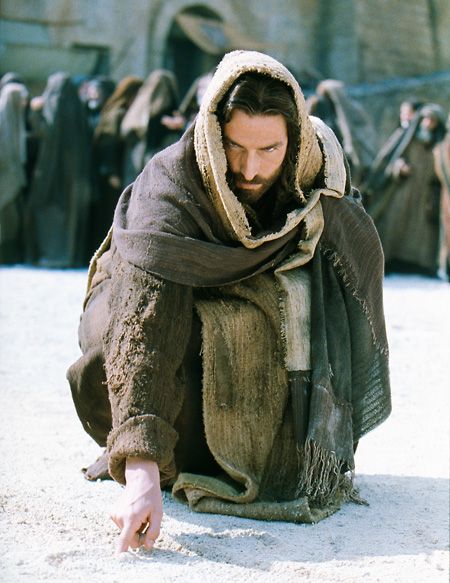











 Considering the Bible