Jesus in the Old Testament is a series of posts that will offer my readers a chance to consider pictures or shadows of Jesus in the Old Testament. As mentioned in the introduction to this series, some may be obvious, some may be not so obvious, and some may simply be a facet of the Lord those reading may not have considered previously.
I hope as we venture through this series, we will see the Lord in many wonderful pictures throughout the Old Testament.
SEEING JESUS IN
Aaron
Day of Consecration
Exodus 29:4 You shall bring Aaron and his sons to the entrance of the tent of meeting and wash them with water.
Luke 3:21-22 21 Now when all the people were baptized, and when Jesus also had been baptized and was praying, the heavens were opened, 22 and the Holy Spirit descended on him in bodily form, like a dove; and a voice came from heaven, “You are my beloved Son; with you I am well pleased.”
To enter into God’s presence, Moses was to wash the priest in front of the tent, prior to their entering. Before their ministry before the Lord would start, the priest had to be cleansed.
Now as we know, much of the Old Testament included pictures and themes would be shadows representing the Lord Jesus when He appeared on the earth. I am confident that my readers can see the parallel of how this worked out 2000 years ago in the Lord’s life.
Of course the cleansing was personally unnecessary for the Lord in that He was clean before the Father prior to entering into ministry. His baptism was the public outworking of this Old Testament image for those who were present and for us who read the Word.
Prior to His formal entrance into ministry before His Father, the Lord Jesus associated Himself with us, and with this image of the first priests, undergoing the outward expression of cleansing before the Father.
After this cleansing, Jesus was to embark on a most remarkable ministry as the ultimate High Priest in the presence of the Father, even to the point of offering Himself as the ultimate sacrifice.
He is the Consecrated One and has been formally introduced to His creation as the Priest to be before the Holy One, bring One acceptable sacrifice – Himself – before the throne of God.
He is the Consecrated One.
Thanks again for coming to visit. I hope you found something of interest in this post and would appreciate a comment, to begin a discussion. If you know someone this blog may bless (or challenge), send them a link, so they may join us in our discussion.
My hope is that this series will offer my readers a chance to consider the names, characteristics and descriptions of our God in the Word.
The remaining Names of God in this series might be considered descriptors, or characteristics of the Lord. We have reviewed the three primary Names of God, along with nineteen compound Names of God in our previous posts. As we venture through these descriptors of our God, I hope we will recognize all the many characteristics of our God that we tend to take for granted.
The Word is truly rich with descriptions of the Living God, and this effort of searching in the Word was quite illuminating. He truly is the ultimate subject of the Word, and His revelation of self-descriptions, or the accolades offered Him by His priests, prophets, kings apostles and faithful truly is a blessing.
May the Name of the Lord be praised, and by thinking on His name, may you have a blessed day.
46
BANNER OF ISRAEL
Psalm 60:4 You have set up a banner for those who fear you, that they may flee to it from the bow. Selah
The background to this psalm is the victory over Edom in the wars described in 2 Samuel 8:3-14. It seems that while Israel was fighting to the north and east, they were flanked by three nations (Edom, Philistia and Moab) to the south, coming in from the rear, with Israel suffering serious losses and falling into confusion.
David speaks of a banner being lifted up, for those who fear God – the true Israel – to rally about.
When under fire all around, those who fear God will realize the banner has been lifted up for us also.
The Banner of Israel was lifted up to defeat the enemy, and to show the way for battle.
The Banner of Israel is our rallying point, for when we are overwhelmed, we need to return to the simple message of the One who hung on the cross, for all to see.
The Banner of Israel is naturally the focus of those who fear God, and as we focus on Him, we come to find strength in Him and encouragement from fellow soldiers to continue the battle.
Look to the Banner of Israel as you live your day for Him.
I would love to hear of your favorite name, characteristic or description of the Living God. Please leave me a comment, and I will include it in the list!
Thanks again for coming to visit. I hope you found something of interest in this post and would appreciate a comment, to begin a discussion. If you know someone this blog may bless (or challenge), send them a link, so they may join us in our discussion.
For this series in Philippians, I am going to limit each post to one verse, and hopefully produce a short, succinct read for my friends who follow.
3:10 that I may know him and the power of his resurrection, and may share his sufferings, becoming like him in his death,
In our last post we considered who might find Paul in Christ and understood that Paul wasn’t concerned about who was looking at him, whether it be God or man, but that he was in Christ.
So what is it to be found in Christ? Paul continues his thought by speaking of knowing Him.
To be in Christ is to know Him, and since He is the eternal One, this is an ongoing knowledge. An intimate experiential knowledge nevertheless, for Paul uses the Greek term γινώσκω ginṓskō, (not εἴδω, eídō) to identify the type of knowledge he is speaking of.
I have written previously on this topic of experiential knowledge and refer you to an earlier post Inherit the Kingdom? Who Knew? for a personal story that may help in understanding the knowledge Paul spoke of.
We in the modern world tend to want to find ourselves, to enter into self realization, to understand what makes us tick and in that knowledge, find our place in this world. In “finding ourselves” we are able to love ourselves and then love others, or so the saying goes.
Not sure who started the requirement for believers to love themselves, but it wasn’t the Lord. You may want to read an earlier post on this subject of self love, and how that relates to the Christian life. Check out What Jesus Probably Didn’t Mean – Matthew 22:39
Per Paul, this is the very definition of not being in Christ, but of being in self. He spoke of this aberration of Christianity a number of times. Consider 2 Timothy 3:2
For people will be lovers of self, lovers of money, proud, arrogant, abusive, disobedient to their parents, ungrateful, unholy,
Yes Paul’s desire was to know Christ, and since He is the eternal One, our knowing Him will be an eternal process, an ever increasing personal relational knowledge of His character, grace, holiness, humility and power.
Paul want’s to “know” Him and the power of His resurrection. Is the power that Paul refers to here a continual process as is the “knowing”? Is Paul simply speaking of the last day and of his physical resurrection to life? Might Paul be speaking of a continual knowledge of His power also? Given the
Share sufferings
Like Him in his death
Thanks again for coming to visit. I hope you found something of interest in this post and would appreciate a comment, to begin a discussion. If you know someone this blog may bless (or challenge), send them a link, so they may join us in our discussion
My wife and I are reading through the Psalms in our evening reading and occasionally a nugget of the Psalms jumps out of the page. Don’t you love it when, after years of reading the “Old Book” passages become alive, reinforcing old teachings or simply warming your heart.
This is the book of Psalms, and it is rich.
I pray I can communicate a portion of the blessing we receive from this wonderful book.
Psalm 57:4-5 4 My soul is in the midst of lions; I lie down amid fiery beasts– the children of man, whose teeth are spears and arrows, whose tongues are sharp swords.
5 Be exalted, O God, above the heavens! Let your glory be over all the earth!
David enters into a description of his enemies, possibly reflective of his condition in a cave, where he is likely in the company of various wild life. The pictures of his present condition are three-fold.
Lions
David’s first description of his pursuers is that of lions, and not that they are simply pursuing, but that he is in the midst of them. His soul is in the midst of them, his very life is surrounded by these “lions”.
I can’t help but think of a preacher by the name of Peter, who described our lives as somewhat similar, in that we have one likened to a lion seeking us out.
1 Peter 5:8 Be sober-minded; be watchful. Your adversary the devil prowls around like a roaring lion, seeking someone to devour.
But as David did centuries ago, let us remember that God is a rescuing God, the Lion of the Tribe of Judah is our Savior.
The lions are real threats to our safety, but the Lion we have come to know is able to rescue. He is able!
Fiery Beasts
David speaks of lying down amongst the fiery beasts. ”Fiery beasts” is a difficult term for me to understand – What was David trying to say to the Lord? The term generally speaks of a burning, or a scorching. Destruction resulted from these beasts. Their intent was to destroy, not to consume. It was enough to simply kill for the sake of killing.
And David speaks of lying down in the midst of this destruction. I can’t believe he was implying the beasts were overwhelming him and that he was simply giving up, lying down to accept the inevitable. No – David had a purpose, and this purpose God had for him enabled him to figuratively lie down in the midst of this danger.
I can’ t help but believe that this is much like Peter’s experience of lying down with the soldiers prior to his death in Acts 12:7?
Acts 12:7
And behold, an angel of the Lord stood next to him, and a light shone in the cell. He struck Peter on the side and woke him, saying, “Get up quickly.” And the chains fell off his hands.
Peter was on his way to the sword, just as James had suffered. And Peter was asleep!
Children of Men
David finishes his description of those chasing him with those who would assassinate his character, spread lies about his actions, defame his life and seek to destroy his future. Their teeth and tongues are weapons, and David’s reputation, especially in a honor based society such as Old Testament Israel, was the most sensitive area of his life. Death may come to David, but for his memory to be destroyed would be the deepest cut.
Not only would his enemies lie to find him, and use threats to get information about his whereabouts, the deepest impact for David may be the loss of any honor his name would suffer in the nation.
Israel was an honor based society, and the greatest damage a man experienced was to be of a damaged character, a vile man, one who was not regarded by his “neighbor”. The loss of reputation, and the implication of shame on his life was a blot that he could not remove if it stuck in the general populace.
As Jesus entered into this same social environment, we find that His reputation as a “good teacher” was stripped from Him, and He hung on a cross, taking the shame and insults flung on Him from those with tongues as sharp swords. They knew they had to defame Him to kill Him, and the enemies of God struck swiftly to accomplish their goal.
His reputation was destroyed as He hung on the cross, shame clinging to Him, hanging with crooks and rebels, taking the place of a murderer.
But we know Jesus didn’t stay on the cross, nor did He stay in the grave. He has risen and His reputation, for those who seek the truth, has not only been restored, but elevated to a point where no man can compare or defame again.
He is not the “good teacher” we thought He was, but God has revealed Him as Lord and King.
My hope is that this series will offer my readers a chance to consider the names, characteristics and descriptions of our God in the Word.
The remaining Names of God in this series might be considered descriptors, or characteristics of the Lord. We have reviewed the three primary Names of God, along with nineteen compound Names of God in our previous posts. As we venture through these descriptors of our God, I hope we will recognize all the many characteristics of our God that we tend to take for granted.
The Word is truly rich with descriptions of the Living God, and this effort of searching in the Word was quite illuminating. He truly is the ultimate subject of the Word, and His revelation of self-descriptions, or the accolades offered Him by His priests, prophets, kings apostles and faithful truly is a blessing.
May the Name of the Lord be praised, and by thinking on His name, may you have a blessed day.
45
BALM OF GILEAD
Jeremiah 8:22 Is there no balm in Gilead? Is there no physician there? Why then has the health of the daughter of my people not been restored?
What in tarnation is balm? And is there something special about Gilead?
The background to the question Jeremiah asks is the utter upcoming destruction of the nation of Israel. The nation created by God, and sustained by God through many trials and terrors is now on edge of captivity. God’s mercies through the ages have been many, and they have been rescued by the Father many many times.
Yet Jeremiah fears the worst, for he is calling out to the nation to seek out the balm of Gilead, a medicinal oil that was well known for it’s healing properties in the nation of Israel.
Of course Jeremiah was not referring to the literal balm (or oil) of Gilead, for he is speaking of the sickness within the nation of Israel. This sickness, which would bring about the captivity of Israel, was not simply skin deep, but a matter of the heart. The literal balm of Gilead was known to treat surface cuts, heal burns, and relieve pain by soothing the hurt areas on the body. Jeremiah is somewhat sarcastic in this verse, referring to the balm as if that would be the minimum effort for healing on the part of the nation. Yet as we know, no literal balm of Gilead could have healed the nation, but our Balm of Gilead, our Great Physician is able to heal, and He is the One Jeremiah is pointing to in our verse.
A little later in Jeremiahs ministry in chapter 46:11, he calls on the nation to retrieve this balm from Gilead.
Go up to Gilead, and take balm, O virgin daughter of Egypt! In vain you have used many medicines; there is no healing for you.
In our day and age, the balm of gilead may be purchased online. Whether it is the actual balm referred to in our verse, I will leave that to my gentle reader. No matter, for we all need to seek out our Balm of Gilead, the Great Physician, the One who heals hearts and not simply relieves pain on a surface.
I would love to hear of your favorite name, characteristic or description of the Living God. Please leave me a comment, and I will include it in the list!
Thanks again for coming to visit. I hope you found something of interest in this post and would appreciate a comment, to begin a discussion. If you know someone this blog may bless (or challenge), send them a link, so they may join us in our discussion.
17 As for the rich in this present age, charge them not to be haughty, nor to set their hopes on the uncertainty of riches, but on God, who richly provides us with everything to enjoy. 18 They are to do good, to be rich in good works, to be generous and ready to share, 19 thus storing up treasure for themselves as a good foundation for the future, so that they may take hold of that which is truly life.
Paul is amazing in his instruction, for as some of my dear brothers may suggest, to follow after the Christ is to give up all possessions, to sell your stuff and leave it all behind. For some this is the appropriate call on their lives, and to those so called, it is a high calling.
Yet Paul does not leave the rest of us without a responsibility in relation to the riches in this present age. To be rich in this present age – a phrase that speaks of the source or foundation of the riches, as opposed to the time we experience the riches. He is instructing Timothy to admonish those who have accumulated “things of this world”, material wealth, goods and investments with the following instruction . As we consider this passage, we can see that Paul is speaking of two worlds that the believer lives in, the material and the spiritual.
If a believer is not called upon to physically leave behind his goods to follow the Master (which also has a trap of producing a prideful attitude), the saint is then challenged with the requirement to prioritize his goods to a much lower level in the believers life.
Note what it is that Paul focuses on. Two “don’ts” and three “do’s”.
Don’t be haughty
A large (or medium, even a small bank account) is no reason to consider yourself better than a brother in the Lord. As I speak to my brothers in my blog, we tend to measure our success in life with the toys we have.
This is a mindset that needs to be rejected.
Paul is speaking of our current attitude toward others in this verse, based on the riches of this present age.
Don’t hope in material goods
Paul then breaches our faith, or our hope for the future, based on the riches we have accumulated. This is tantamount to opposing our faith in God. Each of us who have material goods needs to wash our minds and hearts of any detrimental hope we may have in our savings.
Wisdom dictates we store up for the future, that we do what we can to prepare for the future, yet our hope is not on the material goods we accumulate, but on the God who gives us the strength each day to work, love and care for others.
Do good
Paul speaks of our actions to enter into as one who may have trusted in his goods. Do good. Simple. He simply speaks of doing good, and leaves it up to the believer to find opportunities to “do” good.
Be generous
The next two “do’s” are better described as who we are to become, and not exactly specific (or even general) actions or works we are to enter into.
It is a state of being, to “be” generous. When an opportunity arises that can be taken care of, a generous man will do what he can to relieve it. It will be an automatic response, not necessarily a calculated response.
Be ready
Not only are we to be generous, but we are to be ready. This speaks of continuing in the attitude of generosity.
In all of this charge to the rich of this world, Paul instructs Timothy to inform the rich that this life will produce a “good foundation” for the future” in order that the rich maytake hold of life.
May take hold of life?
Isn’t he speaking to believers? Do they not have in their possession the life of God by faith in the Messiah? What is all this talk of a foundation for the future, of them leading lives that produce conditions to take hold of life?
Am I suggesting that providing generous gifts to charities and churches will get you to heaven? Not so! There is only one way and we all know it isn’t by our actions.
And yet, it is our actions that prove we have the life.
How are your actions and attitudes lately? Have you considered the life you are living in relation to Paul’s exhortation to Timothy?
Do good – Paul did not put any limits on this command, and be generous as the Lord directs.
Grab the life in this life. Paul gives us the instructions on how to do it!!!
Thanks again for coming to visit. I hope you found something of interest in this post and would appreciate a comment, to begin a discussion. If you would like to receive daily posts from Considering the Bible, click on the “Follow” link below
As many who have followed me for a bit, I have fallen into the Psalms, and I can’t get up! (As if I would want to.) The Psalms are a majestic collection of poetry, of heart felt human experiences that constantly challenge me in my own frail attempt to follow the true King. As many of the Psalms are written by David, my study on the Psalms has spurred me on to looking at the life of David, is the main contributor to this book, and to follow the victories and tragedies of the shepherd King of Israel.
Many times in the narrative, we will see the Lord Jesus, imperfectly, yet a reflection of His spirit in a man with weaknesses.
The passage before us is the set up for the famous chapter telling the story of a young shepherd taking out a giant of an enemy! Even the most unread Christian has heard of the story. It is very familiar to many, but as we venture through, I believe we will see some details and truths that will be a blessing and challenge for us to consider.
In our last post on this upcoming victory of David over the giant, we considered the nation attacking them and the location of the battlefield. The Philistine army was encamped within the boundaries of Israel, choosing the location to their advantage, waiting for Israel to show up.
Until we get to the internal concerns of the Israeli armed forces, lets take a minute to consider the problem they were facing.
Goliath.
1 Samuel 17:4-7 4 And there came out from the camp of the Philistines a champion named Goliath of Gath, whose height was six cubits and a span. 5 He had a helmet of bronze on his head, and he was armed with a coat of mail, and the weight of the coat was five thousand shekels of bronze. 6 And he had bronze armor on his legs, and a javelin of bronze slung between his shoulders. 7 The shaft of his spear was like a weaver’s beam, and his spear’s head weighed six hundred shekels of iron. And his shield-bearer went before him.
It turns out that Goliath, although the most famous of giants, was not the only giant to be roaming the area. There appeared to be multiple giants in the region, a descendant of Rapha. During David’s reign, many of the giants fell, and there may be a lesson in that for us.
One victory spurs on additional victories. One bold move by a young shepherd emboldened other warriors to take on giants. I can hear the apostle Paul speaking of this same concept in Philippians
Philippians 1:14 And most of the brothers, having become confident in the Lord by my imprisonment, are much more bold to speak the word without fear.
There is some debate as to whether Goliath was a Philistine, or hired as a mercenary to fight for them.
His appearance, and his boasting brought about fear and trembling, working the very effect the Philistines were seeking to have.
Consider that Goliath was over 9 feet tall. For the sake of getting a feel for the scale of this man’s height, I would refer you to Robert Wadlow. In the past, I have visited Ripley’s Museum and seen a statue of Robert Wadlow, the tallest man in recorded history. His height reached 8′ 11″.
To be dwarfed by a giant like Wadlow had an impact on me, yet his bearing was that of a thin man, a man that was not of the warrior bearing as Goliath. To see Goliath, a warrior decked out in all the defensive armor as Goliath must have intimidated everyone. Surely this was Goliath’s greatest psychological power over his combatants.
And yet Goliath did not simply depend only on his natural stature, but also on his weapons of warfare, both offensive and defensive.
His defensive protection included a helmet of bronze to protect his head. As we know from the account of the battle, it didn’t help him against David’s stone. He also wore a bronze coat of mail, or body armor weighing over 120 pounds. His final protective equipment was that of armor on his legs. He was suited out for every conventional protection, taking no chances in any battle!
His offensive weapons included a javelin and a spear. It appears the javelin may also be understood to be the sword that David turned on Goliath, chopping his head off! The spear alone is described as massive, with a head equivalent to 16 pounds.
On top of all of this protection, Goliath had an armor bearer, holding a shield before him. This guy was intimidating and protected.
Goliath left nothing to chance! He was larger, stronger, more experienced, more confident, over protected and trained in wielding the sword and spear. For those who heard of his challenge, it must have seemed to be a suicide mission.
Everything was playing out for Goliaths goals. He knew he had the advantage, and everyone around him knew he had the advantage. He had every physical advantage, had the upper hand in psychological warfare, and came against a nation that wasn’t able to equal his challenge.
It was a slam dunk for Goliath. Even if King Saul came out to battle, Goliath still had the advantage. Remember that of all the men of Israel, Saul was the tallest, and as the King, he should have led the country into the fight Goliath demanded!
The only slip Goliath made was to defy the Living God. Up until then, everything was going Goliath’s way.
But a young inexperienced teenager heard the slur against his God, and in his inexperience, in his blind faith, in his trusting self sacrifice, he stepped up.
And Goliath fell down.
But I am getting ahead of myself. Our next passage will look at the slurs that Goliath spread, the defiance that became his downfall.
Oh how the mighty have fallen!
Thanks again for coming to visit. I hope you found something of interest in this post and would appreciate a comment, to begin a discussion. If you know someone this blog may bless (or challenge), send them a link, so they may join us in our discussion.
I picked up a book called “Toxic Charity” by Robert D. Lupton, mostly due to the unexpected title of the book. How could charity be toxic?
Very early in the book, he makes the claim that much of the giving’s of the average American giver is either wasted or actually harms the people it is targeted to help.
Ok – if the title to the book didn’t pique my interest, this opening thought certainly did.
What gives? What is the basis of this type of statement? How could the good intentions of a giving society actually harm those they intend to assist?
I have only started the book, and I expect I will provide an additional post as I finish it, but for the time being, there is one excerpt that I want to provide, which is a quote Mr Lupton provides from a french philosopher by the name of Jacques Ellul. He wrote a book many years ago, called Money and Power, in which he wrote
“It is important that giving be truly free. It must never degenerate into charity, in the pejorative sense. Alms giving is Mammon’s perversion of giving. It affirms the superiority of the giver, who thus gains a point on the recipient, binds him, demands gratitude, humiliates him and reduces him to a lower state than he had before.”
This quote struck me for I know that to those I have provided some charity to in the past, many, if not all of those impacts on the giver and the gifted occur. Even as my wife and I had recognized some of these impacts earlier, and sought to “anonymize” a gift through a third person or organization, the effect on the gifted was not removed but simply out of our eye sight. Not a great solution, for even as the giver, I have to admit I felt a certain superiority over those in need, which is simply an admission of my pride.
Notice that the effect on the gifted one, the one who receives the gift, is that it humiliates him, and reduces him to a lower state than before.
Have you paid attention to those who are assisted by a charity or organization? I am thankful for the ones who find a way to escape the need for assistance, but I will confess that in my experience, many who accept help today will most likely need help tomorrow, and then demand help on the third day.
Is this a call to close the billfold and reject showing mercy? Absolutely not, for as I have entered into the second and third chapters of the book, found that the problem is not that money is being offered, but the manner in which it is managed and distributed.
I will close with an oath Mr. Lupton has provided in the book that reflects where his heart is in this difficult topic
The Oath for Compassionate Service
Never do for the poor what they have (or could have) the capacity to do for themselves
Limit one-way giving to emergency situations
Strive to empower he poor through employment, lending, and investing, using grants sparingly to reinforce achievements
Subordinate self intersts to the needs of those being served.
Listen closely to those you seek to help, especially to what is not being said – unspoken feelings may contain essential clues to effective service.
Above all, do no harm
I will continue to read the book, for it is holding my interest. Hopefully I will have the opportunity to provide a second post when I have finished reading it. Until then, let me know your thoughts on giving, and how you see this type of thinking.
My hope is that this series will offer my readers a chance to consider the names, characteristics and descriptions of our God in the Word.
The remaining Names of God in this series might be considered descriptors, or characteristics of the Lord. We have reviewed the three primary Names of God, along with nineteen compound Names of God in our previous posts. As we venture through these descriptors of our God, I hope we will recognize all the many characteristics of our God that we tend to take for granted.
The Word is truly rich with descriptions of the Living God, and this effort of searching in the Word was quite illuminating. He truly is the ultimate subject of the Word, and His revelation of self-descriptions, or the accolades offered Him by His priests, prophets, kings apostles and faithful truly is a blessing.
May the Name of the Lord be praised, and by thinking on His name, may you have a blessed day.
44
AWESOME GOD
Nehemiah 1:5 And I said, “O LORD God of heaven, the great and awesome God who keeps covenant and steadfast love with those who love him and keep his commandments,
In our society these days, to hear the term “awesome” brings to mind something that is amazing, that tickles the mind, that entertains or provides a momentary thrill. Sometimes it simply refers to that which is simply eye candy, something that our senses consume but has no lasting beneficial effect.
The term used to carry the meaning of terror, or fear. It would never be associated with light matters such as the taste of a doughnut or the sound of a country song, the appearance of a special effect in a movie or TV show.
For Nehemiah to describe God as an awesome God would illicit thoughts of dread, of reverence in the most holy sense. Nehemiah was not placing our God in the same category as a hamburger, or a new car, something we may consider as awesome today.
A majority of times, this term translated as awesome in our verse is translated as either fear or to be afraid.
To terrify.
A sense of fear that constricts the stomach, weakens the knees, troubles the mind, produces a cold clammy sweat, and encompasses the entire attention of the “victim”. A mind consumed with one source of fear, without any worthy distractions able to wrest it from that source of fear.
This “Awesome” God is the God who Nehemiah describes as the One who keeps covenant and steadfast love with those who love him and keep his commandments.
Steadfast love from the very source of fear inducing numbness. How can we ever understand our God? But alas – it isn’t for us to understand our God – but to simply love Him and keep His commandments.
Selah
I would love to hear of your favorite name, characteristic or description of the Living God. Please leave me a comment, and I will include it in the list!
Thanks again for coming to visit. I hope you found something of interest in this post and would appreciate a comment, to begin a discussion. If you know someone this blog may bless (or challenge), send them a link, so they may join us in our discussion.
For this series in Philippians, I am going to limit each post to one verse, and hopefully produce a short, succinct read for my friends who follow.
3:9 and be found in him, not having a righteousness of my own that comes from the law, but that which comes through faith in Christ, the righteousness from God that depends on faith–
Paul had just mentioned of his own righteousness, a righteousness that had been granted to him by the family he had been born into and by the efforts he had expended, in order to maximize in the opportunities he had been granted.
Is that not how each of our lives are? We are in a situation, whether good or bad, that was not of our doing. We were born in a situation that we had no choice in. Out of that situation, we are granted choices. Choices to be made to determine our destiny no matter what our present condition.
Paul made a choice to give up – no – to reject that which was granted to him and that he centered his entire life on, to receive a righteousness through a completely different channel. Not through the law, but through faith. Through the life of another Man, where Paul’s pride and ego were not the fueling motivation for life, but a life of self sacrificial love to One who died for him, and that sought the best for others.
He sought to be found in him. To have an active faith that God and man would find him in.
As an aside, is Paul referring to this position he seeks to be in, that is where he may be found, to be the result of others looking of of God looking? Now before I am shut out of your thinking, when Paul says “may be found in Him” he does not mention who might find him “in Christ” This has always been an assumption on my part that Paul is referring to God finding him in Christ, in order to be justified before the Father. Yet I do not see where Paul identifies the one who would “find him”. Might it be that he isn’t concerned about the finder, and that in my mind, that opens up the possibility that Paul’s was not worried about who found him, but simply the truth of being found.
With all that said, (and I do get wordy at times), my intent is to state that truth is manifested to both God and men, and that Paul’s decision to be in Christ would be evident to both God and men.
Who ever was looking, when they looked at Paul, they found him in Christ. It was obvious he was in Christ, for he was mimicking the Lord in His life and teaching, in his attitudes and efforts.
Will you be found in Him, even today?
Thanks again for coming to visit. I hope you found something of interest in this post and would appreciate a comment, to begin a discussion. If you know someone this blog may bless (or challenge), send them a link, so they may join us in our discussion
My wife and I are reading through the Psalms in our evening reading and occasionally a nugget of the Psalms jumps out of the page. Don’t you love it when, after years of reading the “Old Book” passages become alive, reinforcing old teachings or simply warming your heart.
This is the book of Psalms, and it is rich.
I pray I can communicate a portion of the blessing we receive from this wonderful book.
Psalm 57:1-3
1 To the choirmaster: according to Do Not Destroy. A Miktam of David, when he fled from Saul, in the cave.
Be merciful to me, O God, be merciful to me, for in you my soul takes refuge; in the shadow of your wings I will take refuge, till the storms of destruction pass by.
2 I cry out to God Most High, to God who fulfills his purpose for me.
3 He will send from heaven and save me; he will put to shame him who tramples on me. Selah God will send out his steadfast love and his faithfulness!
This psalm is in the same general history of David’s life as our previous one, though instead describing his appearance before king Achish of Philistia and acting insane to escape being held by the Philistines, he is speaking of his flight from Saul being hot on his trail.
As the psalm begins, we find him in a cave, hiding from Saul. The future king of Israel had nothing to lay his head upon, no comforts or bounty. He was in survival mode, and I imagine the conditions were as rough as they will ever be for this man of God, running from the earthly powers chasing him.
As his first cry out to God, he is seeking mercy from the Lord. He has not abandoned the promise of God, in that he knows this “storm of destruction” will pass. He is actively requesting mercy, and yet he is resting in the promise God has provided.
This is amazing, for as a young believer, I often looked down on those who struggled with life conditions, and yet they claimed to know the Lord of glory. I confess my silliness as a youth, for I have come to realize that this condition, that is of having the peace of God in combination with a heart requesting mercy, is not an uncommon state for the believer.
As a matter of fact, it is the heart of living a life of faith.
When difficulties, even persecutions are upon you, crushing you, it is the heart of the believer to reach out to our Father, asking Him for protection, relief, direction, wisdom, – any type of mercy that He may provide.
For David, he is looking for refuge in the Lord, and as we have considered this topic in an earlier post (Psalms for Psome – Ps 43.01), his desire to take refuge reinforces the reality of this ever present danger in his life.
He finds true refuge in the Lord, and not in the cave, or in his ability (so far) to escape from his enemies. His refuge is in the One he cannot see, but that he knows.
He knows God has a purpose for him and the nation of Israel. He knows that eventually God will send from heaven the salvation he so desperately needs, for this condition cannot remain if his purpose is to be fulfilled.
David again refers to his enemies trampling on him, and as we saw in our last Psalm, this term speaks of his enemies panting in the chase, expending all their energy in the chase. The enemies were real and determined to get David, to put him to rest, to get him out of the equation. David must die!
Two wills are being described in these verses, that of God’s will and man’s will. God’s will is to rescue David, but man has determined to kill him.
Thankfully, David was rescued, delivered to reign as the second king of Israel, becoming one of the greatest men in the Old Testament and expanding the kingdom to it’s largest borders! He had a destiny and God brought him through the storm.
His Son, the greater David, experienced the same conflict, that of rescue or death. He entered into death without the rescue David experienced. To all appearances, man’s will succeeded in getting Him out of the way.
How must Jesus have had such greater faith in going through death to get His and our deliverance?
David finishes this short passage with the phrase
God will send out his steadfast love and his faithfulness!
How can we not see that God has sent out His steadfast love and faithfulness for us?
My hope is that this series will offer my readers a chance to consider the names, characteristics and descriptions of our God in the Word.
The remaining Names of God in this series might be considered descriptors, or characteristics of the Lord. We have reviewed the three primary Names of God, along with nineteen compound Names of God in our previous posts. As we venture through these descriptors of our God, I hope we will recognize all the many characteristics of our God that we tend to take for granted.
The Word is truly rich with descriptions of the Living God, and this effort of searching in the Word was quite illuminating. He truly is the ultimate subject of the Word, and His revelation of self-descriptions, or the accolades offered Him by His priests, prophets, kings apostles and faithful truly is a blessing.
May the Name of the Lord be praised, and by thinking on His name, may you have a blessed day.
43
AUTHOR OF LIFE
Acts 3:15 and you killed the Author of life, whom God raised from the dead. To this we are witnesses.
The Spirit has fallen on the church, and Peter has preached his first sermon with thousands coming to faith. In chapter 3, Peter takes part in the healing of a crippled man, similar to the good works Jesus had performed as He walked amongst them. This miracle continues the wake up call to the people of Israel, grabbing their attention in the very heart of their religious life at the temple.
Peter had their attention, and he had an opportunity to preach, and preach he did.
Can you imagine Peter’s opportunity here to threaten or coerce those who did not believe in the previous sermon. But let us not consider Peter’s motivation to be such, for although he spoke harsh truth, his message was cushioned with an admission of ignorance on the part of those hearing.
As I mentioned, Peter spoke harsh words to those who were present, revealing the contradiction of actions they were committed to just a few months back when they killed the Author of Life. Some translations speak of the Lord’s name as Prince of Life and there may be justification for this, yet to hear Peter describe Jesus as the Author of Life rings true for me.
He had just described the audiences earlier desire to have one who ended life, a murderer, to be released, and now Peter describes Jesus as the One who is the Author of Life, speaking of Him as the originator of Life, the One who created life. As if He created life only to be denied life by those He “authored”.
The Greek term for author (ἀρχηγός archēgós) in this verse speaks of One who goes ahead, is a chief leader, One who leads by example.
In all this contradiction, the Author of Life can’t help but to continue to offer life to those who are ignorant, to those who seek death and reject life.
He is the Author of Life, no matter what we think or do. He is seeking you and will not give up, for He not only has life to share, but is the very Author of Life.
I would love to hear of your favorite name, characteristic or description of the Living God. Please leave me a comment, and I will include it in the list!
Thanks again for coming to visit. I hope you found something of interest in this post and would appreciate a comment, to begin a discussion. If you know someone this blog may bless (or challenge), send them a link, so they may join us in our discussion.
4 For everyone who has been born of God overcomes the world. And this is the victory that has overcome the world–our faith. 5 Who is it that overcomes the world except the one who believes that Jesus is the Son of God?
The faith we live is the victory we are granted to walk in and I understand the victory to be a daily occurrence, a battle with the influences of this old world.
A personal story may help me explain my thoughts.
My wife and I were recently out for a meal with some folks and a lady requested if I had seed a recent movie. I understood this movie had an agenda, and I mentioned this to her. Now before we go any further, let me confess this lady is a believer, she attends a conservative church, does many charitable works and confesses the Lord. Yet she found my understanding of the movie to be offensive.
I made a comment to the effect that the movie appealed to her since it fit her worldview. It did not “fit” my worldview as it was peddling what I considered a radically progressive worldview, seeking to normalize an offensive lifestyle unto the populace.
We are both believers, but I would suggest that if my estimation of “the world” is correct, she may not be overcoming “the world” in this area. Now before someone think I am judging harshly, I readily admit my own worldview, or how I perceive truth, is not any better, for I have blind spots and opinions that are in opposition to the faith I confess.
With this being said, I would suggest the faith we have is to be in opposition to the world, that as believers we are to be a counterculture, a people that tests the thoughts being offered to us, filter those thoughts through the Word, and reject all that do not line up with the general teaching of the Word.
But let us not reject out of a position of pride, but handle the position we take out of humble spirit, always seeking to provide a loving answer, a solid response and to act in grace with mercy to those who oppose.
In my study of this verse, I tripped over a Matthew Henry quote that seems to capture many of my suspected thoughts on this verse.
Self-denial is required, but true Christians have a principle which carries them above all hindrances. Though the conflict often is sharp, and the regenerate may be cast down, yet he will rise up and renew his combat with resolution. But all, except believers in Christ, are enslaved in some respect or other, to the customs, opinions, or interests of the world. Faith is the cause of victory, the means, the instrument, the spiritual armor by which we overcome. In and by faith we cleave to Christ, in contempt of, and in opposition to the world. Faith sanctifies the heart, and purifies it from those sensual lusts by which the world obtains sway and dominion over souls. It has the indwelling Spirit of grace, which is greater than he who dwells in the world. The real Christian overcomes the world by faith; he sees, in and by the life and conduct of the Lord Jesus on earth, that this world is to be renounced and overcome. He cannot be satisfied with this world, but looks beyond it, and is still tending, striving, and pressing toward heaven. We must all, after Christ’s example, overcome the world, or it will overcome us to our ruin.
Are you overcoming the world, or is it overcoming you?
Thanks again for coming to visit. I hope you found something of interest in this post and would appreciate a comment, to begin a discussion. If you would like to receive daily posts from Considering the Bible, click on the “Follow” link below
As many who have followed me for a bit, I have fallen into the Psalms, and I can’t get up! (As if I would want to.) The Psalms are a majestic collection of poetry, of heart felt human experiences that constantly challenge me in my own frail attempt to follow the true King. As many of the Psalms are written by David, my study on the Psalms has spurred me on to looking at the life of David, is the main contributor to this book, and to follow the victories and tragedies of the shepherd King of Israel.
Many times in the narrative, we will see the Lord Jesus, imperfectly, yet a reflection of His spirit in a man with weaknesses.
The passage before us is the set up for the famous chapter telling the story of a young shepherd taking out a giant of an enemy! Even the most unread Christian has heard of the story. It is very familiar to many, but as we venture through, I believe we will see some details and truths that will be a blessing and challenge for us to consider.
Our first three verses speaks to us of the Philistine nation and the location chosen for this fateful clash of nations.
1 Samuel 17:1-3 1 Now the Philistines gathered their armies for battle. And they were gathered at Socoh, which belongs to Judah, and encamped between Socoh and Azekah, in Ephes-dammim. 2 And Saul and the men of Israel were gathered, and encamped in the Valley of Elah, and drew up in line of battle against the Philistines. 3 And the Philistines stood on the mountain on the one side, and Israel stood on the mountain on the other side, with a valley between them.
It appears the Philistines were confident in approaching Israel, for they had already ventured into the tribe of Judah’s land, had set up camp at Ephes-dammim near Socoh, and waited for the nation of Israel to appear. They were truly the thorn in Israel’s side during and prior to Saul’s monarchy.
If you recall, they were the nation that took the Ark of the Covenant from the nation, suffered debilitating disease in various of their cities and eventually sent it back the Israel.
In thier next battle with the nation of Israel, they met with Israel at Mizpeh, and as the battle was raging, the Lord “thundered with a mighty sound against the Philistines” confusing the enemy and securing a victory for Israel.
Now both of these instances had provided the Philistines proof of a miraculous intervention of the Israeli God, yet we we see them taking on the nation again.
From their first appearance in Judges, with battles over the cities of Gaza, Ashkelon and Ekron, through Shamgar’s killing of 600 Philistines, Samson’s suicidal domination over the nation, and now into Samuel’s and Saul’s time, they were a confident lot of a nation.
Tenacious.
Determined.
I would suggest their determination is best summed up in 1 Samuel 4:7-9
7 the Philistines were afraid, for they said, “A god has come into the camp.” And they said, “Woe to us! For nothing like this has happened before. 8 Woe to us! Who can deliver us from the power of these mighty gods? These are the gods who struck the Egyptians with every sort of plague in the wilderness. 9 Take courage, and be men, O Philistines, lest you become slaves to the Hebrews as they have been to you; be men and fight.”
The Philistines were determined, yet in the face of all the miraculous victories, this determination may be also considered stubbornness. A blind stubbornness that refuses to consider their history with Israel. Wisdom for them may have not been their strong suit.
Nevertheless, here they are, knocking on Israel’s door, picking a fight, using a giant as their secret weapon. This approach has to work, right?
The Philistines chose the location of the battle field, having encamped on the slopes north of the stream cutting through the valley of Elah, in between Azekah and Socoh.
This epic battle took place at Ephes-dammim, so called for the battles waged here. Ephes-dammim actually means “boundary of bloods” and is also referred to as Pas-dammin elsewhere in the Scriptures. The area consisted of a flat valley with two hills running east west along the stream.
Valley east of Azekah. The Philistines would have been encamped on the left, with Israel on the right
As mentioned above, the valley was cut with a stream running through it, though the modern pictures above do not show it. Might this be the stream that David resorted to for his stones? In the very sight of the Philistines?
But who was paying attention to a young teenage Israelite when the Philistines had such might and power by the name of Goliath. Surely the Philistines were confident in their chances against the little nation of Israel, with such a mighty giant on their side.
But we know where their confidence lies, don’t we? (Hint – Not in the Living God!)
Thanks again for coming to visit. I hope you found something of interest in this post and would appreciate a comment, to begin a discussion. If you know someone this blog may bless (or challenge), send them a link, so they may join us in our discussion.
Jesus in the Old Testament is a series of posts that will offer my readers a chance to consider pictures or shadows of Jesus in the Old Testament. As mentioned in the introduction to this series, some may be obvious, some may be not so obvious, and some may simply be a facet of the Lord those reading may not have considered previously.
I hope as we venture through this series, we will see the Lord in many wonderful pictures throughout the Old Testament.
SEEING JESUS IN
Aaron
Anointed with Water & Oil
Exodus 29:4, 7 You shall bring Aaron and his sons to the entrance of the tent of meeting and wash them with water. You shall take the anointing oil and pour it on his head and anoint him.
Acts 4:26 The kings of the earth set themselves, and the rulers were gathered together, against the Lord and against his Anointed–
Acts 10:38 how God anointed Jesus of Nazareth with the Holy Spirit and with power. He went about doing good and healing all who were oppressed by the devil, for God was with him.
Aaron (and his sons) were to be washed with the water prior to taking on their priestly robes and the office God called him to. This was one of the actions to be performed on Aaron in their consecration to the Lord. A washing with water, not simply to take the dust off from the day of milling about the camp, but to represent the cleanliness required for the minister if they were to be accepted before God.
A time of dressing the priest, with robes, breastplates, turbans and the ephod prior to the second “anointing”, this time with oil. The oil was to be applied to the head, and we don’t know exactly how much oil was applied. I often think of the oil as coming from a small vessel, possibly only a few ounces, but that is conjecture at best.
One reference in the Psalms speaks of the oil being applied to Aaron’s head and it running down the beard. The Psalmist likens this to unity amongst brethren, but we will leave that discussion for a later time
Psalm 133:2 It is like the precious oil on the head, running down on the beard, on the beard of Aaron, running down on the collar of his robes!
No matter, for the picture of Aaron receiving the water and the oil typifies our Greater Aaron, who took a baptism to identify with His people, and was immediately anointed by the Father with the Holy Spirit, for the ministry He would enter into for the souls of men and women.
His consecration with water was not required to cleanse Him of any filthiness, but to associate with those He came to save. The oil from heaven, the Spirit of God lighting on the Son of Man, signified the power He would minister in, providing proofs of His amazing claims.
He is the Greater Aaron and truly a High Priest, beyond our imagination!
Thanks again for coming to visit. I hope you found something of interest in this post and would appreciate a comment, to begin a discussion. If you know someone this blog may bless (or challenge), send them a link, so they may join us in our discussion.
My hope is that this series will offer my readers a chance to consider the names, characteristics and descriptions of our God in the Word.
The remaining Names of God in this series might be considered descriptors, or characteristics of the Lord. We have reviewed the three primary Names of God, along with nineteen compound Names of God in our previous posts. As we venture through these descriptors of our God, I hope we will recognize all the many characteristics of our God that we tend to take for granted.
The Word is truly rich with descriptions of the Living God, and this effort of searching in the Word was quite illuminating. He truly is the ultimate subject of the Word, and His revelation of self-descriptions, or the accolades offered Him by His priests, prophets, kings apostles and faithful truly is a blessing.
May the Name of the Lord be praised, and by thinking on His name, may you have a blessed day.
42
ARM OF THE LORD
Isaiah 51:9 Awake, awake, put on strength, O arm of the LORD; awake, as in days of old, the generations of long ago. Was it not you who cut Rahab in pieces, who pierced the dragon?
In our last post on the Names of God, we considered “Arm of Redemption”, with the psalmist referring back to the deliverance of the nation from Israel
In our current verse, Isaiah cries out to the Arm of the Lord, and in his cry, refers back to the days of old, and the generations long ago, who experienced that same deliverance from Egypt.
Instead of the psalmist referring to the capability of the arm, Isaiah speaks to who the Arm is. It is no angelic arm, though God has angels that are more than capable to cut down entire armies, such as the Assyrian army in the days of Hezekiah. This Arm is OF the Lord. and Isaiah is the only one in the Old Testament who uses this phrase.
The only other place in Isaiah that this name comes up is in the most famous of his chapters, describing our Messiah.
Isaiah 53:1 Who has believed what he has heard from us? And to whom has the arm of the LORD been revealed?
Isaiah’s question as to whom the Arm of the Lord has been revealed is answered for us today, for all believers have had the revelation of the Messiah, and may I suggest, the Arm of the Lord has been revealed to all who know the story of the resurrection.
True, believing the message brings tremendous benefits – nay – it brings life and light. Those who have heard the message of the resurrection and rejected it – to them the Arm of the Lord has also been revealed, and it is to their harm and destruction that they reject.
But He has been revealed
It is a question for us all, for the Arm of the Lord in Isaiah’s mind and his message is the Messiah, and He has been revealed.
I would love to hear of your favorite name, characteristic or description of the Living God. Please leave me a comment, and I will include it in the list!
Thanks again for coming to visit. I hope you found something of interest in this post and would appreciate a comment, to begin a discussion. If you know someone this blog may bless (or challenge), send them a link, so they may join us in our discussion.
For this series in Philippians, I am going to limit each post to one verse, and hopefully produce a short, succinct read for my friends who follow.
3:8 Indeed, I count everything as loss because of the surpassing worth of knowing Christ Jesus my Lord. For his sake I have suffered the loss of all things and count them as rubbish, in order that I may gain Christ
Paul counts everything as loss, and then speaks of having suffered the loss of all things as rubbish. I understand “these things” as that which his detractors still clung to, the reputation and religious pride afforded them in the pharisaical religion.
Some translators replace rubbish with “dung”, that which is the refuse of an animal. Paul counts “those things” as not simply something that has no value, but that it is of a detrimental value. If I understand Paul, he is describing a balance sheet of worth to the Philippians. He is a bit of an accountant in this and the following verses. That which was highly prized is now considered a negative, a burden, a debt, a hindrance on the balance sheet of his life.
Notice how this also provides a slap in the face to those who cherish the life of a committed pharisee, who considered themselves the chosen of God, and that the dirty Gentiles were as such to God. A good pharisee would consider a gentile to be of worth equal to an off scouring of an old plate, or the refuse of a dog.
Things have completely flipped for Paul, and there is only one reason for this radical change in lifestyle and faith.
Jesus.
Thanks again for coming to visit. I hope you found something of interest in this post and would appreciate a comment, to begin a discussion. If you know someone this blog may bless (or challenge), send them a link, so they may join us in our discussion
My wife and I are reading through the Psalms in our evening reading and occasionally a nugget of the Psalms jumps out of the page. Don’t you love it when, after years of reading the “Old Book” passages become alive, reinforcing old teachings or simply warming your heart.
This is the book of Psalms, and it is rich.
I pray I can communicate a portion of the blessing we receive from this wonderful book.
Psalm 56:12-13
12 I must perform my vows to you, O God; I will render thank offerings to you. 13 For you have delivered my soul from death, yes, my feet from falling, that I may walk before God in the light of life.
Our final two verses in this psalm provides David’s summary of Gods rescue from the danger he is in. The first phrase, speaking of his vows to God is an obligation to God on David’s part. It is a requirement to perform his vows that he has spoke to the Lord.
Vows are a very stigmatized, old fashioned concept in our modern world, and for that we are the worse off. To be one who keeps vows is a rarity in our culture, even to the point that vow breakers are heralded as brave and daring, heralded by other oath-breakers as being hero’s! Does anyone out there hear Romans 1:32 ringing in their ears?
Romans 1:32 Though they know God’s righteous decree that those who practice such things deserve to die, they not only do them but give approval to those who practice them.
To be cheered on by oath-breakers should alarm us!
Although the vow David mentions is surely related to His commitment to provide a thank offering to the Creator, the application for the modern Christian is easy to provide. What vows are you keeping? The most common vow that Christians struggle with is the marriage vow.
A quick story time to depict this condition.
When we first moved to Texas, we landed in a small town in the panhandle, east of Amarillo. It seemed everyone went to church in that town, and two of my boys were in high school at the time. One afternoon, one of my boys came home and began to question if we as a couple would remain married. This came out of left field for my wife and we later found out that our son was the only student in his class that had not suffered through a divorce within the family unit.
This is incredible, and shocked us, since it seemed to be an acceptable way of life in that little town to break vows. Now I realize that it takes two to tango, and the culture feeds on division of relationships, but every family was broken! So sad! Surely we are a broken people in such a terrible need of the healing of our Savior!
When I consider vows, David has written on the topic back in Psalm 15, where he describes a vow in verse 4
Psalm 15:4 in whose eyes a vile person is despised, but who honors those who fear the LORD; who swears to his own hurt and does not change;
It is easy to swear to something that is pleasurable. That is the definition of hedonism. I will only do that which pleases me. I am committed to that which I enjoy. What type of person does this create? One that cannot be trusted, that can not maintain a relationship, either human or divine, and one that ultimately destroys his own soul.
My friends. If things are stressed between you and your spouse, start to fix offences in the relationship, ask for forgiveness for wrongdoings, (perceived or actual) and communicate your heart to your partner. Open your heart and mind to them, be willing to suffer accusations and reproaches that need to be voiced.
Romans 15:3 For Christ did not please himself, but as it is written, “The reproaches of those who reproached you fell on me.”
Keep your vows, even when it hurts and the struggle is real. Find ways to communicate with those who need it most. Trust God and love those who you are committed to!
My hope is that this series will offer my readers a chance to consider the names, characteristics and descriptions of our God in the Word.
The remaining Names of God in this series might be considered descriptors, or characteristics of the Lord. We have reviewed the three primary Names of God, along with nineteen compound Names of God in our previous posts. As we venture through these descriptors of our God, I hope we will recognize all the many characteristics of our God that we tend to take for granted.
The Word is truly rich with descriptions of the Living God, and this effort of searching in the Word was quite illuminating. He truly is the ultimate subject of the Word, and His revelation of self-descriptions, or the accolades offered Him by His priests, prophets, kings apostles and faithful truly is a blessing.
May the Name of the Lord be praised, and by thinking on His name, may you have a blessed day.
41
ARM OF REDEMPTION
Psalm 77:15 You with your arm redeemed your people, the children of Jacob and Joseph. Selah
The psalmist is speaking of the deliverance of the nation of Israel from the Egyptian bondage they suffered under for four centuries.
It was not simply God who performed a few miracles to deliver them from the furnace of Egypt, but it was God with His arm.
Seems like a strange description of how the people of Israel were delivered, and I would like to suggest a few possible understandings of this passage.
First off, I made the assumption that the arm referred to the Messiah, and that it was a connection of the Messiah with God in the deliverance of Israel. This may be valid.
My second consideration was that the arm represented strength and as such, it was the strength of God that provided Israel deliverance from Egypt. This may be valid, but I would like to suggest one additional perspective.
Could the Psalmist be describing the deliverance as something that God performed without even breaking a sweat. Hear me out my friend, for it is only the arm of God that is referred to. Could the psalmist be saying something like – You only needed to flex your arm in providing deliverance for the nation.
Did God stand up to deliver Israel? Did He put his back into the effort? I speak as a fool in describing these actions as if God had a back, or even an arm, but as the Psalmist gets specific, it tends to make me ask some silly questions.
Nevertheless, when it comes to the strength, or the power of God, the deliverance of Israel, mighty as it was, is dwarfed when compared with the deliverance supplied through the Messiah, His sacrificial death, resurrection, and ascension.
I would love to hear of your favorite name, characteristic or description of the Living God. Please leave me a comment, and I will include it in the list!
Thanks again for coming to visit. I hope you found something of interest in this post and would appreciate a comment, to begin a discussion. If you know someone this blog may bless (or challenge), send them a link, so they may join us in our discussion.
Let no one deceive himself. If anyone among you thinks that he is wise in this age, let him become a fool that he may become wise.
Become a fool? To become wise? Something just didn’t add up at first glance,
It just didn’t make sense for me, and, as a paradox is wont to do, it took me outside of my usual way of thinking.
Early in my faith, when I came across a passage such as we are considering today, I would read it, “believe it” and move on. After all, as believers we are to trust the Lord and the message He has provided. It was my desire to believe it, for the Word has the message of eternal life, the story of the Christ who died and rose again.
How could I not believe the Word?
Yet, as I tried to understand faith, I always was a bit nebulous about my approach of to the message reading and “believing”. Years passed and I accumulated head knowledge, and the Lord was kind to his child. And then I heard a fellow speak of what faith was. And it blew me away – which speaks volumes of my ignorance, but so be it!
Faith is reading the Word, understanding the Word and then finding application of the message for my situation. For this verse, when it came to the added step of understanding the Word, this is where this verses paradox came to fruition.
Become a fool to be wise? What is Paul saying there? Remember I am one of those analytical goofs, always seeking to use a logical framework for my understanding. Things have to add up for me to feel like I understand something.
The Lord was also teaching me at the time about the kingdom spoken of by the Messiah, and of His apostles. So much relearning of what the gospel was communicating, but for this verse, the critical piece of information was that we exist in the middle of two kingdoms. The kingdom of the world, which is fading, and about to be rolled up, and the eternal kingdom, which has secure foundations, never to decay.
And we, as believers are in a transition, from the decaying world order into the glorious kingdom of His dear Son! In this transition, we are required to give up (or per Paul’s language – put off) the old worlds thoughts, attitudes, and actions that we lived in. No longer lie. No longer cheat, or steal or covet, or hate. In positive terms, to live in the Spirit as He transforms us to the people we are to be.
This is the framework Paul is speaking from when he speaks of becoming a fool. A fool to the ways we lived in prior to knowing the Messiah. We are to become ignorant of the old ways, abandon the conventional wisdom, consider old thoughts suspect, even dangerous to our soul.
To become a fool to the old ways is to replace that wisdom with the wisdom that is available from God, the wisdom found in the Messiah, in His ways, in His humility, grace, servanthood and sacrificial life style.
As you read of the life we are called to, a life of forgiveness and love, and if you consider it outdated or not applicable, please realize this may indicate which kingdom you consider worth pursuing. For where your treasure is, there will be your heart!
In what kingdom are you wise?
Thanks again for coming to visit. I hope you found something of interest in this post and would appreciate a comment, to begin a discussion. If you know someone this blog may bless (or challenge), send them a link, so they may join us in our discussion
As many who have followed me for a bit, I have fallen into the Psalms, and I can’t get up! (As if I would want to.) The Psalms are a majestic collection of poetry, of heart felt human experiences that constantly challenge me in my own frail attempt to follow the true King. As many of the Psalms are written by David, my study on the Psalms has spurred me on to looking at the life of David, is the main contributor to this book, and to follow the victories and tragedies of the shepherd King of Israel.
Many times in the narrative, we will see the Lord Jesus, imperfectly, yet a reflection of His spirit in a man with weaknesses.
Our current portion of Scripture speaks of David, the newly anointed King of Israel, being chosen by Saul’s servants as the One to serve the deposed King. How curious that of all within Saul’s kingdom, David is chosen to be a blessing to Saul. Let’s continue with the passage begun last week
1 Samuel 16:20-23, 17:5
20 And Jesse took a donkey laden with bread and a skin of wine and a young goat and sent them by David his son to Saul. 21 And David came to Saul and entered his service. And Saul loved him greatly, and he became his armor bearer. 22 And Saul sent to Jesse, saying, “Let David remain in my service, for he has found favor in my sight.” 23 And whenever the harmful spirit from God was upon Saul, David took the lyre and played it with his hand. So Saul was refreshed and was well, and the harmful spirit departed from him. 15 but David went back and forth from Saul to feed his father’s sheep at Bethlehem.
In our last post we began to see the circumstances that Saul fell into in order to provide David the conditions required to prove himself as a warrior and future king, in the very king’s court that he will someday assume. Incredible, but Saul invites the very person into his circle that will become his successor!
As a short review, Saul, in order to provide some relief from a troubling spirit from the Lord, sent his servants to Jesse requesting the service of his son David. Consider Jesse, fresh from coming off experiencing his son being anointed the next king of Israel, and then the current king has his men show up on his doorstep! Talk about suspicious coincidences!
Surely this must be bad! Very bad news for the son of Jesse! No wonder Jesse sent a donkey laden with gifts, along with the son he may never see again. How this must have confused Jesse, not to mention David himself. He had just received a promise form God about his destiny, and now he is entering the very lions mouth!
Nevertheless, David entered Saul’s service , and he served Saul to the point where Saul gained great affection for him, to the point of loving him, and appointing him to be his armor bearer. David was pulled into the inner circle quickly, with Saul seeking to keep him, that Jesse would allow him to remain.
Saul could have kept David, for he was king and had the authority to take as he pleased, but his actions speak of the respect he had for David at this time, and the desire to keep him in his service willingly. This is a redeeming trait in Saul’s life at this time, though it may have been somewhat selfish in order to satisfy his own needs. Whatever motivated Saul, David was becoming the one that Saul depended on in areas of mental health and general service.
Yet note that our last verse speaks of David splitting his time between his father and his king. David did not use this opportunity granted him of being called to a higher position to ignore his previous duties. He did not forget his father’s sheep. He was a shepherd at heart and though he would become a man of war, and a powerful king, his heart is exposed in this little verse. When he could pull away from formal duties for the king, he would seek out the welfare of his father’s sheep.
There is another Shepherd, that in His many duties, is still seeking out His sheep, for that is where His heart is. He is a Savior that is not constrained by time limitations as David was, but our Savior is constantly tending to His Father’s sheep.
He is the True Shepherd, the Greater David, a Kind and Loving King who has bled and died for us. May His name be praised for all that He is and for all that He does!
Thanks again for coming to visit. I hope you found something of interest in this post and would appreciate a comment, to begin a discussion. If you know someone this blog may bless (or challenge), send them a link, so they may join us in our discussion.
Jesus in the Old Testament is a series of posts that will offer my readers a chance to consider pictures or shadows of Jesus in the Old Testament. As mentioned in the introduction to this series, some may be obvious, some may be not so obvious, and some may simply be a facet of the Lord those reading may not have considered previously.
I hope as we venture through this series, we will see the Lord in many wonderful pictures throughout the Old Testament.
SEEING JESUS IN
Aaron
High Priest
Exodus 40:13 13 and put on Aaron the holy garments. And you shall anoint him and consecrate him, that he may serve me as priest.
Hebrews 4:14-15 14 Since then we have a great high priest who has passed through the heavens, Jesus, the Son of God, let us hold fast our confession. 15 For we do not have a high priest who is unable to sympathize with our weaknesses, but one who in every respect has been tempted as we are, yet without sin.
Although Aaron is never specifically called the high priest, he is the one chosen by God after the fiasco of the rebellion of Korah. His confirmation of the office of priest was provided through the budding of Levi’s staff, as opposed to any other tribes staff. Aaron was the first confirmed priest to minister before the Lord for the nation of Israel.
As we all know, Aaron experienced a number of faux pas events in his life. The golden calf comes to mind, along with his teaming up with his sister Miriam, in their complaining of Moses and his wife, and of their importance. Did Aaron and Miriam not speak as if they were equal with Moses? Surely God has spoken through Aaron and Miriam also! Pride and competition in ministry. How vulgar as we think of it, and yet we all, if we have served in any manner of ministry, have experienced the very same attitude.
Yet there is One who has not entered into this pride, though as we read He has been tempted as we have been. As we consider Him, He is the One through whom we hear the Word of God clearest, for He is the spoken Word walking amongst us, living as a simple rabbi, teaching and ministering to others. He could rightly speak of His greatness in comparison with others, and many times He did, yet without sin. Without any attitude of competition, or pride or one upmanship. Truly amazing that He exercised humility as He informed others of His true identity as the Messiah. The temptation to speak out of pride must have be immense!
He spoke the truth in humility and in the message gave us the opportunity to either agree or dismiss. He is the High Priest of our confession, having experienced the worst and come through it with honor and perfection. May His life be an example for us to follow, and that humility would be a mark of His people.
Thanks again for coming to visit. I hope you found something of interest in this post and would appreciate a comment, to begin a discussion. If you know someone this blog may bless (or challenge), send them a link, so they may join us in our discussion.
My hope is that this series will offer my readers a chance to consider the names, characteristics and descriptions of our God in the Word.
The remaining Names of God in this series might be considered descriptors, or characteristics of the Lord. We have reviewed the three primary Names of God, along with nineteen compound Names of God in our previous posts. As we venture through these descriptors of our God, I hope we will recognize all the many characteristics of our God that we tend to take for granted.
The Word is truly rich with descriptions of the Living God, and this effort of searching in the Word was quite illuminating. He truly is the ultimate subject of the Word, and His revelation of self-descriptions, or the accolades offered Him by His priests, prophets, kings apostles and faithful truly is a blessing.
May the Name of the Lord be praised, and by thinking on His name, may you have a blessed day.
40
AQUAINTED WITH GRIEF
Isaiah 53:3 He was despised and rejected by men, a man of sorrows and acquainted with grief; and as one from whom men hide their faces he was despised, and we esteemed him not.
As I contemplated this verse, giving some thought to the experience of grief, and the willingness of our Savior to accept this lot in His life, I found myself being pulled to the absolute unfairness of it all.
He is only good and righteous, full of joy and is the author of peace. At no time, prior to creation, was grief or sorrow a portion of His. Only at the fall was grief possibly entered into by the Godhead.
Then, as creation continued to course down the path to destruction, I imagine grief continued to be present in some way within the Godhead. I say imagined, for I am thinking as a parent, and translating my experience to the Godhead.
How unfair, how unjust for grief to be resident within the Godhead, and yet Isaiah is drawing us to the Messiah, focusing our thoughts on the human Jesus, the Savior who would live His life acquainted with grief.
To be acquainted with something is to know that experience, to enter into the experience and to understand, not theoretically but practically, actually sensing the grief. Jesus entered into grief, and this picture we have of the Messiah is supported many times in the Gospels.
What is surprising is that the word “grief” spoken of by Isaiah refers to sickness or afflictions within the body, and not only an emotional condition. Surely the grief we often think of within this verse was a very real experience of the Master, but Isaiah may be trying to draw our attention to one of the reasons for this sorrow.
Is Isaiah speaking of a sickness within the Master’s body, an ailment that He experienced? No where in the gospels can I recall where this is mentioned. His acquaintance with grief (sickness) is with the sickness of others, the pain and suffering others lived in while He was with us. The very next verse speaks of His bearing our griefs (sickness), and surely Isaiah is speaking of the spiritual sickness of those He rubbed shoulders with.
Some may suggest he is speaking of physical sickness here, yet in my understanding, this has always cheapened the cross, that His suffering was for some temporal benefit, for physical relief of pain. Don’t get me wrong, for our God is a merciful God who very often provides physical relief of us in our pain. For that we should be very thankful, but I do not see that as the emphasis of this name we are considering.
He has bore our sins, and became acquainted with our spiritual sickness in His ministry, On the cross He bore that spiritual sickness, experiencing the result of our sin in front of the Father.
He was surely acquainted with grief! How unfair! How unjust!
How like our Savior to take on the repercussions of our sin!
May His name be praised as we think on His life!
I would love to hear of your favorite name, characteristic or description of the Living God. Please leave me a comment, and I will include it in the list!
Thanks again for coming to visit. I hope you found something of interest in this post and would appreciate a comment, to begin a discussion. If you know someone this blog may bless (or challenge), send them a link, so they may join us in our discussion.
For this series in Philippians, I am going to limit each post to one verse, and hopefully produce a short, succinct read for my friends who follow.
3:7 But whatever gain I had, I counted as loss for the sake of Christ.
Paul has just declared his gain (or advantage) in relation to those whom he lived amongst. His national, tribal, lingual, and religious history was impressive. Granted, all of this was based on his comparison of himself with others. We all do it, but for Paul, he was miles ahead in the competition business, in his efforts to find acceptance before God based on his granted and achieved attributes.
But, when compared with the Christ, reality came crashing down and he realized his advantage over others was actually detrimental to his soul. Upon gazing on the Christ, and as a result of this gaze, that in this realization that the Messiah had come in the name of Jesus, he could only see his own vileness. No gain. No advantage. Only selfishness, foolishness and division resided in this way of thinking.
It is interesting to consider the two terms gain and loss.
Gain
Paul has brought up the idea of gain earlier in the letter when he spoke of the gain of going home. This gain he would have realized if he had be executed, but he sought to stay if the Lord willed, to minister to those the Lord took him to. The gain in this verse is addressing Paul’s perceived advantage based on his competitive nature with others. He had a gain, or an advantage, but when seen with the right eyes, it was all loss, and not just loss, but worse than that, but I am getting ahead of myself!
Loss
The term “loss” in interesting, especially considering the theme of competition that Paul has used to describe his former life. The term “loss” has a component in it that may communicate damage, and the root of this Greek word had a sense of dominion associated with it. That which was gain, or was an advantage to Paul, actually suffered a death blow by Paul’s decision to align with Christ. He counted, or considered his advantage in the sight of man to be a detriment, and he counted it as such.
As believers, I fear we hang onto our humanly advantages too tightly, or at least I fear I do. This may be in direct relation to my understanding of who the Christ really is, and that my eyes are not as open to the wonders of His grace and person as they could be.
May we see Him a bit clearer today, because we want to!
Thanks again for coming to visit. I hope you found something of interest in this post and would appreciate a comment, to begin a discussion. If you know someone this blog may bless (or challenge), send them a link, so they may join us in our discussion
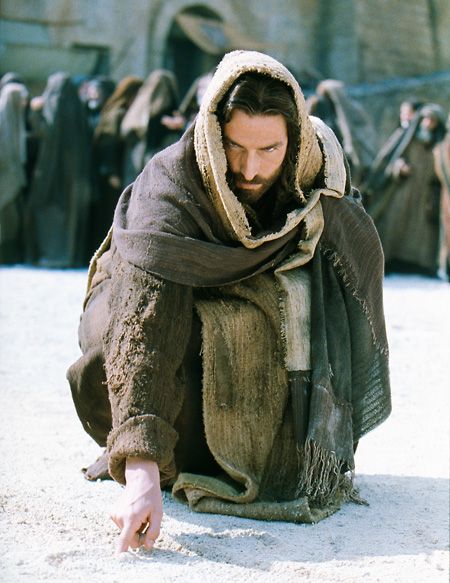







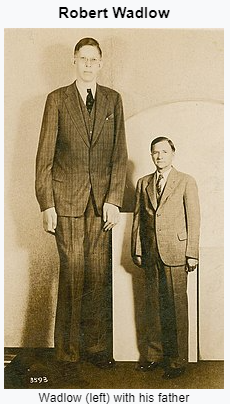
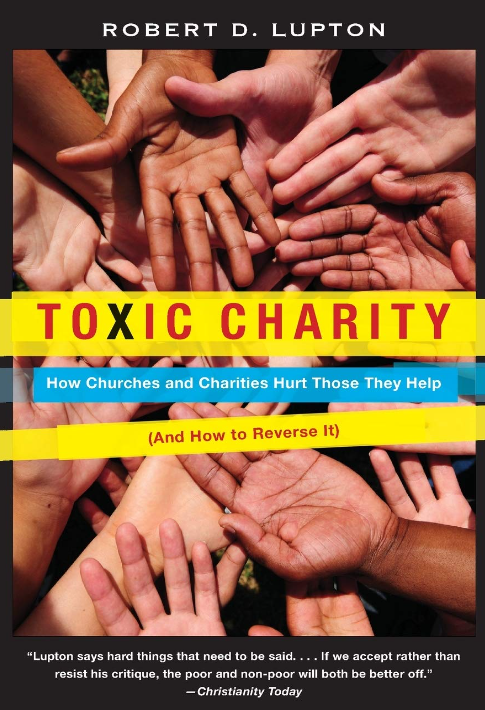


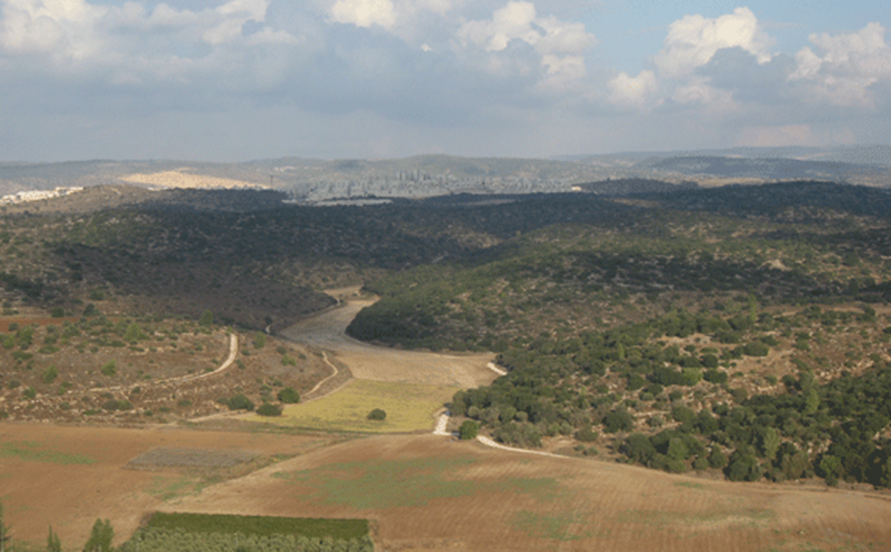

 Considering the Bible