
My wife and I are reading through the Psalms in our evening reading and occasionally a nugget of the Psalms jumps out of the page. Don’t you love it when, after years of reading the “Old Book” passages become alive, reinforcing old teachings or simply warming your heart.
This is the book of Psalms, and it is rich.
I pray I can communicate a portion of the blessing we receive from this wonderful book.
Before we begin this psalm that refers of the true king, pictures the Messiah, and describes the ultimate kingdom, it may be good to mention there is some discussion on the author. Per the ESV, verse 1 seems to speak of this psalm as originating (humanly) from Solomon, David’s son. There is an argument that the psalm was written by David himself (see the last verse) and he wrote it “of Solomon” in his reign, as David looked into the future potential of his son.
Although I am of the opinion David wrote this psalm, no matter how you see this topic, let us delve into this psalm that speaks over and over again of the greater Son of David, the true King of all.
Psalm 72:1 Of Solomon. Give the king your justice, O God, and your righteousness to the royal son!
Psalm 72:2 May he judge your people with righteousness, and your poor with justice!
Psalm 72:3 Let the mountains bear prosperity for the people, and the hills, in righteousness!
Psalm 72:4 May he defend the cause of the poor of the people, give deliverance to the children of the needy, and crush the oppressor!
David opens this psalm with one overarching topic, a topic that is of top priority in any government. This topic, if found in the government will provide the foundation for a lasting kingdom, providing security and prosperity to the people.
The topic is righteousness, and David uses multiple terms to describe this characteristic of the kingdom he foresees
72:1 – 0 Give the king your justice
justice (מִשְׁפָּט mishpâṭ, H4941) This term speaks of the act of judging, an action that rightly belongs to God Himself, who can judge properly and correctly at all times, for He alone is able to know all things affecting the decision, and to weigh the intangible aspects of the act (motivations and intent) being judged. David knows of the challenge this is for the King, and understands the critical need for God to provide!
72:1 – righteousness to the royal son
righteousness (צְדָקָה tsᵉdâqâh, H6666) Can you see the root of one of God’s name in this Hebrew word? JEHOVAH TSIDKENU In that earlier post we spoke of how there may be two righteousness’s in a culture or kingdom, one based on lies and violence and one based on peace and love. Of course, we live in a world where the claim of righteousness is based on lies and violence, but for David, he sought that righteousness that was not logical, not common, not familiar, but of God.
David is asking that the royal son be different than those kingdoms that surround him, that the son would listen to God for instruction in righteousness and not the neighbor kingdoms. And that God would grant him this righteousness!
72:2 – May he judge your people
judge (דִּין dîyn, H1777). This Hebrew word speaks of contending, or of pleading a cause. Might David be hinting to the act of directing the people, or a singular person, prior a decision to be made? Of course as a human king, David must be considering this for Solomon in relation to his inner court, for how could he anticipate all the judgements of his people.
And yet, this may be observed in Solomons judgement to cut the baby in half to bring to the truth the identity of the living child. In his “harsh” judgement, he plead the emotions of the true mother, and found the truth!
72:2 – he judge your people with righteousness,
righteousness (צֶדֶק tsedeq, H6664) This term is of the same root word as in verse 1, and as is obvious, connected with the description of God as righteousness.
72:2 – poor with justice!
righteousness (מִשְׁפָּט mishpâṭ). David speaks the same term here as in verse 1. He reiterates the need of the King to have God provide the correct understanding of each act needing a decision from the king, and produce the desired effect on the kingdom.
Note that he associates the poor (or afflicted) with the kings declaration of justice. It is too often the poor’s only defense against the powerful that the judgement of the government can be called upon. Thus the emphasis on the poor, for the powerful take whatever they want!
72:3 mountains bear prosperity … in righteousness!
Any government worth it’s salt is to provide a condition within the kingdom that provides the ability of it’s subjects to prosper. The environment needed for any within the kingdom to prosper is
72:4 May he defend the cause of the poor
Defend (שָׁפַט shâphaṭ, H8199). David continues his cry for the king to exercise righteousness, in the act of defending the afflicted. He has referred to the connection between righteousness and the poor in verse 2, and speaks again of the responsibility to judge rightly, or to govern in righteousness for the sake of the powerless, the poor and afflicted.
Some passages translate this term as “vindicate”. Is David speaking of not only a defensive position, but a proactive attitude, of not merely rescuing the afflicted, but fighting for them in righteousness? That seems obvious in theory, but David seeks it to be in practice for his royal son.
Consider
In all of this discussion on righteousness, David is setting the stage for the establishment of a kingdom that will endure.
Although we are directed to think of this psalm as being “of Solomon”, or describing the hopes David has for his direct son, in reality, this psalm speaks to the Son of David, the Messiah. Throughout this psalm David speaks of this king’s reign “to the ends of the earth”, that his name “enduring forever”, that “all kings fall down before him”, that his fame “continue as long as the sun” and that “all nations serve him”.
As we venture through this psalm, we will continually bump into statements that bring the Lord Jesus to mind, of the kingdom Jesus will (has) established.
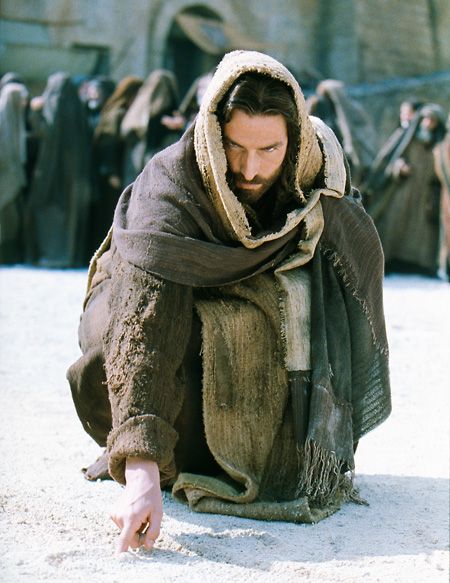
For our passage this morning, note the basis upon Jesus’ governance will be established. He is the Righteous King, and has been granted this right not only through the fact He is God, but that He has suffered and bled for us, leading His kingdom through love, peace and self sacrifice.
He is the Righteous King!


Thanks again for coming to visit. I hope you found something of interest in this post and would appreciate a comment, to begin a discussion.
 Considering the Bible