
My wife and I are reading through the Psalms in our evening reading and occasionally a nugget of the Psalms jumps out of the page. Don’t you love it when, after years of reading the “Old Book” passages become alive, reinforcing old teachings or simply warming your heart.
This is the book of Psalms, and it is rich.
I pray I can communicate a portion of the blessing we receive from this wonderful book.
Psalm 71 is a psalm written by an aged saint, a man who had walked with the Lord through many trials and triumphs. Some think this psalm represents David’s thoughts as he approaches the grave, as he ages and finds his life coming to a close.
One thing that is obvious in this psalm, that whoever wrote this psalm had an intimate experience with the Word of God. I have heard the claim that in the 24 verses of this psalm, there are up to 25 references, allusions and hints of other psalms within this reflection of an old saint. He has saturated his life with the Word, to the point that even phrasing of the old book comes through this old man’s message.
It is truly a witness of the wisdom to engage in an early and consistent immersion into the Word of God for every saint.
Let’s take a moment to consider
Psalm 71:7 I have been as a portent to many, but you are my strong refuge.
Psalm 71:8 My mouth is filled with your praise, and with your glory all the day.
Psalm 71:9 Do not cast me off in the time of old age; forsake me not when my strength is spent.
Psalm 71:10 For my enemies speak concerning me; those who watch for my life consult together
Psalm 71:11 and say, “God has forsaken him; pursue and seize him, for there is none to deliver him.”
Our aged psalmist continues, describing himself as a portent. That is a word not much used in our modern parlance, and I had to look it up, for which I am grateful.
This particular word speaks of the psalmist as a wonder, a sign or miracle, even a token of a future event. Even as his enemies brought trouble and trial into our psalmist’s life, his commitment to God, and the allowance of suffering he experienced in the midst of his trust in God, surely amazed his tormentors.
How so even today, that as the believer may be experiencing trials or troubles, his attitude of trust and his demeanor of praise to God must surely stump the wicked.
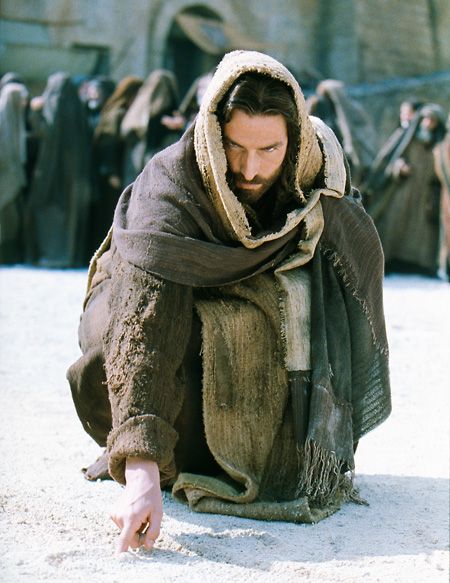
Yet even more so, consider Jesus, the Son of God, suffering under the hand of God, coming to die for sins, not of His own, for He was the sinless One, but for those who hated Him and His Father. What a sign, or a mystery for not only the lost to grapple with, but also the saints, for this act of grace truly is beyond reason, beyond logic, beyond the earthly thinking we are saturated with daily. Sacrifice for the enemy? Love those those who hate?
But let us not miss that for the psalmist, and by extension for the Lord Jesus, that they found their strong refuge in God, the One who is over all and in all. The psalmist did not look to his inner strength, his strong personality, or his cunning abilities, but outside of himself, to the Father above.
In his past, he had exhibited his faith in the trials of his life, and his detractors have been mystified. Though he has a past record of faithfulness, he does not sit on his laurels and coast though the last days of his existence. He continues to seek God, asking not to be cast off, not to be forsaken. He is not a saint that assumes all is well, but he has a passion to continue with God, to seek mercy from God, to continue to seek the will of God and to hang on, even as those around him claim God has forsaken him.
Even as Jesus was providing a full and final salvation for the worst of His enemies, they claimed God had forsaken Him. For the Sinless One to be considered forsaken by those who hated Him must have been hurtful beyond my thoughts.
Mark 15:34 And at the ninth hour Jesus cried with a loud voice, “Eloi, Eloi, lema sabachthani?” which means, “My God, my God, why have you forsaken me?”
But note the passage above, that this claim of those who hated Him actually became a truth Jesus suffered though, for the Lord turned away from the Lamb of God, forsaking His only Son. How brutal, how extreme, how utterly painful without comparison.
This claim of being forsaken by God is a common attack on those who trust God. How powerful for the enemy to make this claim to the faithful follower for it is of the deepest cut to the believers heart. Such a claim may cause the believer self doubt, which in itself may be beneficial, for we, as we age, tend to trust ourselves too much, due to our past walk with Him.
This claim may be allowed by God Himself to provide us a check, a test for our own faith, to give us opportunity to consider who we are trusting as we grow older. Some of us may have wealth we trust, or skills we trust, or relationships we trust.
A short period of self assessment may be of benefit if, and only if, we end up before the throne of Heaven again, confessing our need and admitting our weakness.
We have a promise that God will never forsake the believer, and for that we can be so thankful. We need to check our hearts to see that we have not forsaken Him, the One who was forsaken for our sakes.
May His name be praised and lifted up, and may we follow in His steps more faithfully.


Thanks again for coming to visit. I hope you found something of interest in this post and would appreciate a comment, to begin a discussion.
 Considering the Bible