
My wife and I are reading through the Psalms in our evening reading and occasionally a nugget of the Psalms jumps out of the page. Don’t you love it when, after years of reading the “Old Book” passages become alive, reinforcing old teachings or simply warming your heart.
This is the book of Psalms, and it is rich.
I pray I can communicate a portion of the blessing we receive from this wonderful book.
Psalm 69 is a psalm of sorrow, of apparent defeat and deep emotional stress, of a distress in the heart and of being overwhelmed, of a weariness of soul, and of a waiting for an answer from God. It is a psalm that speaks of loneliness, of disappointment and of extended trials.
As we venture through the psalmist’s deep confession, his pain and his sorrow, we will encounter passages that will be referred to in the New Testament, providing a recounting of the sorrow of Jesus.
Let’s read the first three verses of this revealing psalm.
Psalm 69:1 To the choirmaster: according to Lilies. Of David. Save me, O God! For the waters have come up to my neck.
Psalm 69:2 I sink in deep mire, where there is no foothold; I have come into deep waters, and the flood sweeps over me.
Psalm 69:3 I am weary with my crying out; my throat is parched. My eyes grow dim with waiting for my God.
Some place this psalm at the end of David’s life, possibly during the rebellion of Absalom his son. He certainly expresses deep sorrow, and a feeling of complete abandonment. If it was during this time of conflict with his flesh and blood, the inner turmoil must have been horrific.
Imagine the call of God on your life in combination with the betrayal of your own son. Consider the treachery and the emotional storm to navigate through. Place yourself in David’s position – God has placed you on the throne, and yet your own blood is your greatest enemy and the one seeking to destroy your life’s work.
Where is God in all of this? How could God allow this to happen? Why have you abandoned me?
Of course, much of this pain may be related to the sin of the King with Bathsheba, and his murderous actions towards her husband. Nathan spoke of the pain David brought upon himself, and the guilt David carried only multiplied the bitter betrayal.
Those who have children that are reading this post – be thankful for children who are faithful, who love you and support you. But for those true believers who have children that have walked away from God, that pain is very real. A parent’s regrets and doubts are constantly splashed up on the mind. Sleepless nights, going over and over the mistake made, the unchangeable history of wrong actions.
Yet this is not the situation David was in. Absalom did not simply walk away from the faith of his father, but he became David’s enemy, his greatest threat, a betrayer of the most heinous type, holding the very heart of the king in his hands, squeezing the life out of it.
David confesses his helplessness by speaking of being in “mire”. Mire speaks of a substance that has no bearing capacity, that will not provide support. Not only does is not provide support, it engulfs the person, even as they sink. The situation becomes worse as time moves on, and with every struggle against the surroundings, the problem only increases. The mire increases it’s hold of the sufferer. There is no self help in this situation, for it is only a matter of time before the mire overwhelms the entire person. It may be considered that the faster the sinking the better, for death is inevitable unless outside help arrives.
But as David speaks of finding no support for his own safety, that he can find no foothold, nothing he can save himself by, he also has no response from God.
No response.
He is waiting on God, yet continues to sink ever deeper. Wailing out for the Lord, but silence. He speaks of his eyes growing dim, another way of him saying he sees no way out of him circumstances.
Let’s remember who wrote this psalm. The writer is he who was after God’s heart, the mighty king David, who vanquished many by the guidance and power of God. He had walked before God since he was a young man, even as a child, and had experienced continual deliverances. He was no neophyte, who at the least disappointment with God, began to whine. God had delivered him often but in the midst of this abandonment, the very faithfulness of God was being questioned.
If this psalm was written upon the occasion of Absalom’s rebellion, we know from other passages that God allowed David to suffer, leaving his throne, his city and his temple, realizing that he may never return. God allowed him to suffer, yet in the end, David returned to his city and his dynasty continued as promised by his God.
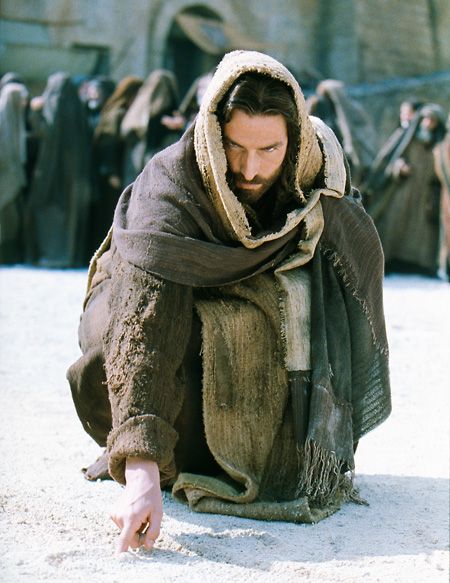
But we also know that this psalm describes the Messiah’s abandonment, and during His abandonment, the mercy of rescue was not provided, the pulling out of the mire was not supplied. He suffered a horrific whipping, a cruel mocking, public shame and the torture of crucifixion. No mercy. No rescue. No deliverance from death.
David reluctantly entered this ultimate trial. Jesus set his face as a flint to enter into this trial. David suffered but was rescued from death, a death at the hands of his child. Jesus suffered and was murdered by His own people.
David’s turmoil was beyond my comprehension, and yet Jesus’s was far greater, far deeper, far more painful and far more mysterious.
Even as His death was galloping toward Him, He cried out to God….
“Eli, Eli, lema sabachthani?” that is, “My God, my God, why have you forsaken me?”
Such an abandonment that David feared and yet escaped, his greater Son suffered through, dying all alone, forsaken by God.
How can we understand that? How can we comprehend this mystery?
My brothers and sisters – there is no comprehension for our feeble minds, neither here on this globe or in eternity. We cannot understand the depths of God’s work, His wisdom, His mercy or grace.
We can only worship such a God.
If my gentle reader is experiencing a sense of abandonment, a sense of hopelessness, look to the One who truly passed through the ultimate loneliness. Consider His mental and spiritual torture of abandonment, His struggle and turmoil to the point of death. He entered into His death through abandonment. Today He promises us keep us from abandonment.
Hebrews 13:5 …for he has said, “I will never leave you nor forsake you.”
No abandonment, no forsaking, but we must look to Him, who is the only One who has been totally abandoned!


Thanks again for coming to visit. I hope you found something of interest in this post and would appreciate a comment, to begin a discussion.
 Considering the Bible