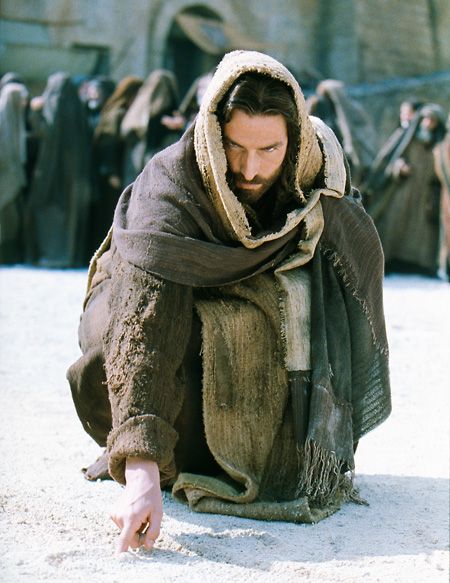

After my series on the parables, I found I was drawn to look into the miracles of Jesus in the Gospels. I have never studies the mighty works of Jesus as a focused effort before and am looking forward to finding nuggets of truth that we can be encouraged by.
I have provided a general introduction, with an opportunity to download two files for your reference in my initial post Signs and Mighty Works of Jesus – Introduction. I found that the format I used for the parable posts were useful to keep me on track, and will continue to use them for this series, with some minor tweaks. With that said, let’s take a look at
Jesus Withers the Fig Tree
Matthew 21:18-22
18 In the morning, as he was returning to the city, he became hungry. 19 And seeing a fig tree by the wayside, he went to it and found nothing on it but only leaves. And he said to it, “May no fruit ever come from you again!” And the fig tree withered at once. 20 When the disciples saw it, they marveled, saying, “How did the fig tree wither at once?” 21 And Jesus answered them, “Truly, I say to you, if you have faith and do not doubt, you will not only do what has been done to the fig tree, but even if you say to this mountain, ‘Be taken up and thrown into the sea,’ it will happen. 22 And whatever you ask in prayer, you will receive, if you have faith.”
Mark 11:12-14, 20-24
12 On the following day, when they came from Bethany, he was hungry. 13 And seeing in the distance a fig tree in leaf, he went to see if he could find anything on it. When he came to it, he found nothing but leaves, for it was not the season for figs. 14 And he said to it, “May no one ever eat fruit from you again.” And his disciples heard it. … 20 As they passed by in the morning, they saw the fig tree withered away to its roots. 21 And Peter remembered and said to him, “Rabbi, look! The fig tree that you cursed has withered.” 22 And Jesus answered them, “Have faith in God. 23 Truly, I say to you, whoever says to this mountain, ‘Be taken up and thrown into the sea,’ and does not doubt in his heart, but believes that what he says will come to pass, it will be done for him. 24 Therefore I tell you, whatever you ask in prayer, believe that you have received it, and it will be yours.
General Observations
This miracle seems to be out of place in the grand scheme of things.
First off, it involves a curse, whereas all the other miracles are, to say the least, blessings on the recipient. This miracle seemed to be fueled due to the fig tree failing to produce sustenance for the Savior. This sure seems unexpected (and petty) since He has went many days without eating previously, as in the 40 day fast, the time with the Samaritan woman, etc. I would suggest this miracle is not communicating a need to satisfy Jesus’ temporal hunger.
If hunger was truly fueling this miracle, would it not be expected that He would command the tree to produce figs, as opposed to cursing it? Something about this miracle is not communicating what it seems to be communicating.
Also, Mark tells us that it was not the season for figs, so for Jesus to curse the tree for something it was not expected to do seems out of place. Notice that the entire tree withered, whereas the curse was simply for this tree to never produce figs again. Seems extreme. Again, I would suggest this miracle is not communicating unjust punishment on a fig tree.
Questions to Consider
Who were the audience?
The only audience the text speaks of witnessing this miracle are the disciples.
When did the Lord perform this mighty work?
See https://www.bibletimelines.net/timelines/jesus-ministry
This is one of the last miracles Jesus performs as He enters His passion week, as He enters Jerusalem, the City of Peace, where in just a very short time, He would be hailed as the Messiah and then scourged and crucified as a revolutionary.
Where did the Lord perform this mighty work?
See Signs and Mighty Works of Jesus – Introduction for downloadable reference file.
Why did the Lord perform this mighty work?
As mentioned in the opening discussion, this miracle is out of character with all the other miracles in a number of ways.
Unjust Cursing?
First, let’s consider the cursing of the fig tree even though the text specifically states it was not the season of figs. It seems when Mark is speaking of the season of figs, he is referring to a time in Israel where the harvesting of figs is performed. Prior to this “season of figs”, the trees produce leaves to signify it will be producing full mature delicious figs during the fig season. Until then, the tree would be in process of producing fruit, growing figs from nibs to the full fruit.
This young fruit would often be consumed by travelers, much before the tree would produce the mature fruit, and would provide sustenance for those walking by. If this is the situation we find on the day Jesus approached the tree, the leaves on the tree were signaling to those passers by that young fruit was available.
No Fruit?
Given that the tree is leafing out, it may be assumed that nibs, or pre-figs would be available. Yet when Jesus gets closer, He states there is no fruit, not even “baby” figs. This tree was all leaf!
Given that fact, consider the location of the fig tree in relation to it’s leafyness. (Is that a word?) It is commonly understood that a fig tree with unlimited space will expend all it’s energy on leafing out and produce no fruit. Just uncontrolled, unbridled leaf growth. Since this tree was off in the distance (Mk 11:13), it may be a lone tree, and without any trees near it that would provide restrictions to the growth.
The tree was just leaf! No fruit. Deceptive, not offering even “baby” figs!
Hunger?
As I mentioned above, hunger of the Savior doesn’t make sense. Granted, the text says He was hungry, and well He may have been, but as we have ventured through the gospels, we have found that His miracles speak of greater things than what was apparent at the time. Remember the healing of the blind in our last post was identifying the blindness of those who could see, and was revealing the spiritual sight of those who were physically blind. (See Signs and Mighty Works of Jesus #34 – Jesus Restores Sight to a Blind Man). How about the water to wine miracle, where Jesus supplied the truth of His identity to the meek and lowly servants, while the proud and haughty miss out. (See Signs and Mighty Works of Jesus #1 – Jesus Turns Water into Wine)
His hunger may have been what initiated Him in approaching the fig tree, yet I suspect once seeing the “fruitless” condition of the tree, decided upon using it as a teaching time, an object lesson.
What was the message for the original audience?
Jesus cursed a fig tree and then taught on the importance of faith. Looking at this passage for the “first” time, that simply doesn’t connect for me.
Jesus seemingly is attributing faith in God with a withering of the fig tree. But He doesn’t stop there. He challenges the disciples that if they have faith, without doubting, if they…
say to this mountain, ‘Be taken up and thrown into the sea,’ it will happen.
To what purpose? First off, the withering of the tree seems extreme, and what is the connection with a mountain in the sea? Why? And when He says “this” mountain, is He referring to a specific mountain? Remember that He is the prophet par excellent, and that prophets spoke a language that was full of symbology. This symbology may play in this miracle more that first suspected
Mountains
As the prophets declared God’s word to the people throughout the ages, certain phrases or terms came to represent different ideas within the Jewish culture. For the term mountain, the Old Testament is reference to a mountain actually describes a kingdom. Consider the following.
Psalm 2:6 “As for me, I have set my King on Zion, my holy hill.”
Isaiah 66:20 And they shall bring all your brothers from all the nations as an offering to the LORD, on horses and in chariots and in litters and on mules and on dromedaries, to my holy mountain Jerusalem, says the LORD, just as the Israelites bring their grain offering in a clean vessel to the house of the LORD.
Joel 3:17 “So you shall know that I am the LORD your God, who dwells in Zion, my holy mountain. And Jerusalem shall be holy, and strangers shall never again pass through it.
Although the previous three passages refer to the Lord’s Kingdom, earthly kingdoms are also referred to in the Old Testament. Jeremiah refers to Babylon as a destroying mountain.
Jeremiah 51:25 “Behold, I am against you, O destroying mountain, declares the LORD, which destroys the whole earth; I will stretch out my hand against you, and roll you down from the crags, and make you a burnt mountain.
Zechariah also questions a great mountain, referring to the Gentile nation.
Zechariah 4:7 Who are you, O great mountain? Before Zerubbabel you shall become a plain. And he shall bring forward the top stone amid shouts of ‘Grace, grace to it!’”
Since Jesus referred to “this mountain” as He was coming out of Bethany, it seems possible that the City of Jerusalem, the seat of power in the nation of Israel, may be referred to. The distance from Bethany to Jerusalem is approx. 2 miles and Jerusalem is on the mountain to the west of Bethany. Jerusalem may be the “mountain” Jesus refers to for the disciples faith to be applied
Fig Tree
In the Word, Israel is referred to as an olive tree, a fig tree and a vine. We will consider the fig tree for this study, and it is a common thought that the fig tree symbolizes Israel’s national privileges. Hosea provides a passage likening Israel as the fig tree.
Hosea 9:10
Like grapes in the wilderness, I found Israel. Like the first fruit on the fig tree in its first season, I saw your fathers. But they came to Baal-peor and consecrated themselves to the thing of shame, and became detestable like the thing they loved.
One parable spoken of by the Lord typifies this thinking
Luke 13:6-9
And he told this parable: “A man had a fig tree planted in his vineyard, and he came seeking fruit on it and found none. 7 And he said to the vinedresser, ‘Look, for three years now I have come seeking fruit on this fig tree, and I find none. Cut it down. Why should it use up the ground?’ 8 And he answered him, ‘Sir, let it alone this year also, until I dig around it and put on manure. 9 Then if it should bear fruit next year, well and good; but if not, you can cut it down.’”
As these themes are developed in our understanding, this mighty work of Jesus is saying much more that a simple picture of a hungry man cursing a guiltless tree.
Jesus is speaking to His disciples, speaking of their ministry as a ministry that includes the “mountain” of Israel being thrown into the sea.
Oh there is one more term that may help with this teaching. When Jesus speaks of “the sea” the message may be that Israel will be dispersed amongst the nations.
Woah Carl – Now you are way out there. Where did you get that? Consider another very common picture in the Old Testament is of Israel being “the land” and the nations being “the sea”. A few verses typifying the nations as the sea follow.
Isaiah 17
12 Ah, the thunder of many peoples; they thunder like the thundering of the sea! Ah, the roar of nations; they roar like the roaring of mighty waters! 13 The nations roar like the roaring of many waters, but he will rebuke them, and they will flee far away, chased like chaff on the mountains before the wind and whirling dust before the storm.
Isaiah 57
20 But the wicked are like the tossing sea; for it cannot be quiet, and its waters toss up mire and dirt.
Jeremiah 6
23 They lay hold on bow and javelin; they are cruel and have no mercy; the sound of them is like the roaring sea; they ride on horses, set in array as a man for battle, against you, O daughter of Zion!”
What is the message for us today?
I suppose this is a difficult miracle to find application personally, for out of this miracle, the Lord was specifically instructing the disciples, (if I understand it correctly) to have faith in God to the extent that a nation would be destroyed, and not just any nation, but the nation of Israel. Of course, Israel was destroyed by the Roman army in the first century, and the disciples had to exercise this faith in God during their lives. In many ways, they had to walk away from any dependence on a national presence, on a national existence of a people called Israel, as a basis of support for the growing body of believers they would oversee. Jesus was not building the church by extending the national physical existence of Israel, but was and is developing an independent body of believers that is not associated with any particular national entity. This is the strength of the body of Christ, in so that as nations fall, the body of Christ continues, growing and maturing in the midst of disappointing kingdoms of men.
The message for us today? Have faith in God. Not in some political entity, or national power or governmental authority. One kingdom will continue, and is worthy of our loyalty, and that is the kingdom of God.
All the kingdoms of men will be dissolved and all men will come to serve Him. Other kingdoms shall pass away or be destroyed, but His is an everlasting kingdom.
Daniel 7:14 And to him was given dominion and glory and a kingdom, that all peoples, nations, and languages should serve him; his dominion is an everlasting dominion, which shall not pass away, and his kingdom one that shall not be destroyed.
Trust in God, for He is good, all the time!
Thanks again for coming to visit. I hope you found something of interest in this post and would appreciate a comment, to begin a discussion. If you know someone this blog may bless (or challenge), send them a link, so they may join us in our discussion
Come join us at Considering the Bible


 Considering the Bible
3 responses to “Signs and Mighty Works of Jesus #36 – Jesus Withers the Fig Tree”
[…] Blind Man Signs and Mighty Works of Jesus #35- Jesus Restores Sight to Two Blind Men Signs and Mighty Works of Jesus #36 – Jesus Withers the Fig Tree Signs and Mighty Works of Jesus #37 – Jesus Heals a Servant’s […]
LikeLike
[…] https://consideringthebible.com/2023/05/02/signs-and-mighty-works-of-jesus-32-jesus-cleanses-ten-lepers/https://consideringthebible.com/2023/05/23/signs-and-mighty-works-of-jesus-33-jesus-raises-lazarus-from-the-dead/https://consideringthebible.com/2023/05/30/signs-and-mighty-works-of-jesus-34-jesus-restores-sight-to-a-blind-man/https://consideringthebible.com/2023/06/06/signs-and-mighty-works-of-jesus-35-jesus-restores-sight-to-two-blind-men/https://consideringthebible.com/2023/06/13/signs-and-mighty-works-of-jesus-36-jesus-withers-the-fig-…https://consideringthebible.com/2023/06/27/signs-and-mighty-works-of-jesus-37-jesus-heals-a-servants-severed-ear/ […]
LikeLike
[…] Signs and Mighty Works of Jesus #36 – Jesus Withers the Fig Tree […]
LikeLike